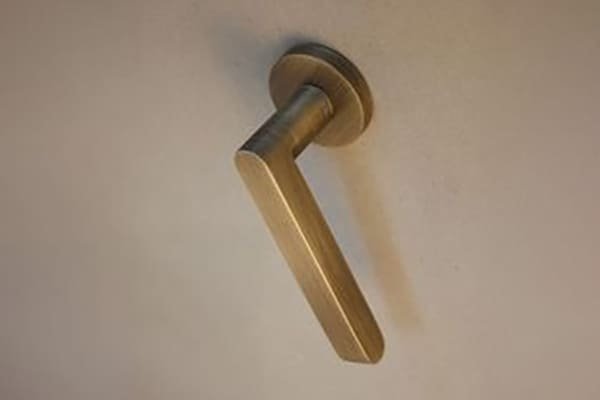
Zinc Alloy Lever Handles for Modern Homes: Are They the Right Choice?
Zinc alloy lever handles are becoming a serious option for modern interior door programs, but many buyers still worry about finish stability, hand feel, and long-term suitability. If the wrong handle is selected, a good-looking door line can create complaints. I see the solution as a balanced evaluation of material, design, finish, cost, and hardware compatibility.
Zinc alloy lever handles are a practical choice for many modern residential interior doors because they support flexible styling, rich surface finishes, solid hand feel, and controlled production cost. They are not the best answer for every door, but they can work very well when matched with the right lock body, door thickness, usage level, and finish requirements.

I work with door manufacturers and hardware buyers who rarely choose a handle based on appearance alone. They need products that look good in the showroom, assemble smoothly in production, and remain consistent across bulk orders. That is where zinc alloy deserves a closer look.
Why Are Zinc Alloy Lever Handles Popular for Modern Interior Doors?
Many modern door collections need fresh designs, fast sampling, and stable cost control. The challenge is that beautiful handles can become expensive or difficult to produce at scale. Zinc alloy lever handles help solve this because the material suits die-casting, decorative finishing, and varied shape development.
Zinc alloy lever handles are popular for modern interior doors because zinc alloy can be die-cast into clean, detailed, and comfortable shapes with relatively efficient production1. The material also supports many decorative finishes, which helps door brands build modern minimalist, soft luxury, and retro-inspired product lines without relying only on higher-cost materials.
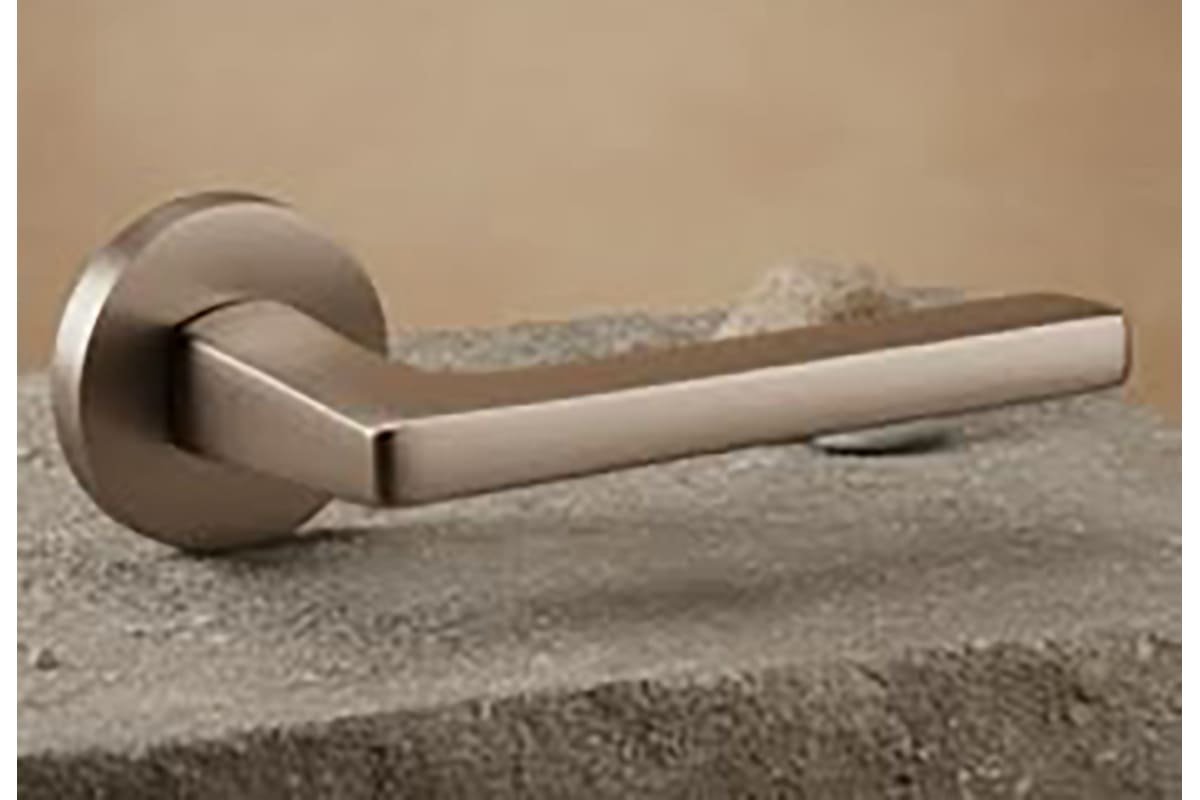
Zinc alloy supports design freedom
In my experience, buyers often start with a visual target. They may show me a slim rectangular handle, a rounded soft-edge design, or a luxury-style lever with a heavier grip. The next question is always practical: Can this shape be manufactured consistently and at the right cost?
Zinc alloy is commonly chosen because it works well with die-casting-oriented design. Common zinc alloy grades used in hardware production, such as No. 3 and No. 5 zinc alloy, are often valued for casting fluidity and mechanical performance2. Buyers should still verify the exact material specification with the supplier before confirming a project, especially for large orders or regulated markets.
For modern residential interiors, the design demand usually includes:
- Clean lines for minimalist doors
- Soft corners for comfortable daily use
- Slim rosettes or backplates for contemporary door sets
- Decorative textures for soft luxury interiors
- Retro shapes with updated surface finishes
- Consistent color matching across handles, hinges, locks, and cylinders
Zinc alloy can support many of these forms because the die-casting process allows more shape complexity than some heavily machined routes3. This does not mean every design is simple to produce. Thin sections, sharp corners, deep grooves, and unusual handle angles still need careful mold review.
Modern style is not only visual
I often remind buyers that “modern” is not just a keyword. It is a combination of shape, surface, touch, and installation effect.
A modern handle should usually feel:
- Smooth in the palm
- Balanced when pressed down
- Visually aligned with the door style
- Matched with the lock body and escutcheon
- Consistent with the project’s finish standard
This is why zinc alloy lever handles are common in residential door lines where appearance and cost need to stay balanced. They can give a solid hand feel without placing the product in the same cost position as many brass handle programs.4
Where zinc alloy fits best
Zinc alloy is often suitable for:
| Application | Suitability | Buyer Note |
|---|---|---|
| Residential interior doors | High | Check finish and lock compatibility |
| Apartment interior doors | Medium to high | Confirm usage frequency and target price |
| Mid-range door collections | High | Good balance of design and cost |
| Decorative model homes | High | Finish consistency matters |
| Heavy commercial doors | Case by case | Professional evaluation is needed |
I do not recommend treating zinc alloy as a universal material. For high-frequency commercial environments, heavy public buildings, or special fire and safety projects, buyers should review the full hardware system and ask for qualified application-specific evaluation.
How Do Zinc Alloy Lever Handles Compare With Brass, Stainless Steel, and Aluminum?
Material comparison can become emotional in hardware buying. Some buyers prefer brass because of its traditional value. Others prefer stainless steel because of its strength image. The problem is that no material wins every project. Zinc alloy lever handles should be compared by application, cost, finish effect, and production target.
Zinc alloy lever handles usually sit in a practical middle position for modern residential doors. They can offer more styling flexibility and cost control than many brass options, richer decorative finishing than some basic stainless steel handles, and a more solid feel than some lightweight aluminum designs. Final suitability depends on the door system and market segment.
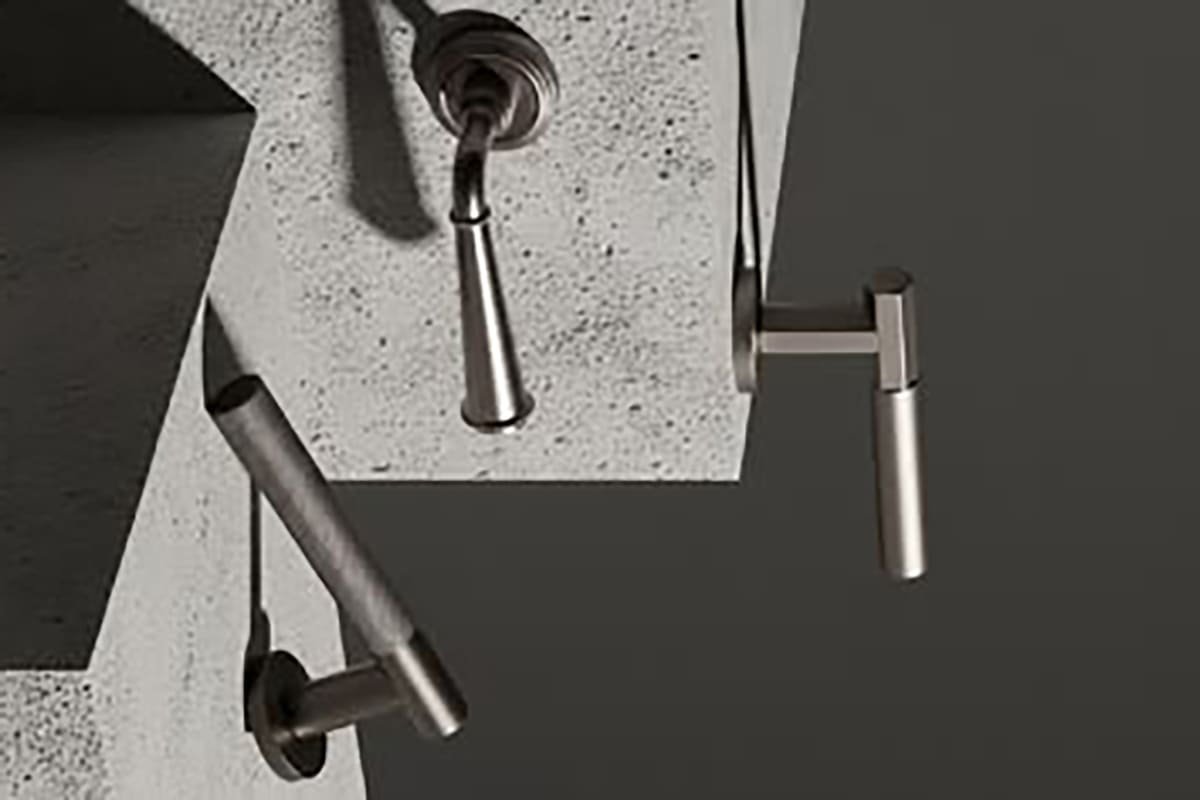
A practical material comparison
When I discuss handle materials with product managers, I try to move the conversation away from “Which material is best?” and toward “Which material fits this door line?” That small change leads to better decisions.
Here is a simple comparison for procurement evaluation:
| Material | Common Strength | Common Limitation | Typical Fit |
|---|---|---|---|
| Zinc alloy | Flexible shapes, decorative finishes, cost control | Application limits for very heavy use | Modern residential interior doors |
| Brass | Premium perception, traditional value, good machining | Higher cost position | Premium residential or classic designs |
| Stainless steel | Strong, clean, corrosion-resistant image | Styling may be less flexible depending on process | Commercial, modern, or utility designs |
| Aluminum | Lightweight, corrosion-resistant options | May feel less solid in some designs | Lightweight modern products |
This table is not a technical ranking. It is a procurement map. Each material can perform well when the design, process, and application are correct.
Why zinc alloy often wins in mid-range modern lines
For many door brands, the main issue is not the single best handle. The issue is building a complete product line at a sellable price.
Zinc alloy helps because it can support:
- Multiple design families from one development direction
- Fast visual differentiation through plating, PVD, or other finishes
- Controlled material and processing cost for batch supply
- Solid appearance and hand feel for interior residential use
- Flexible matching with locks, cylinders, hinges, and accessories
For example, a door manufacturer may want three handle options for one door series:
- Matte black minimalist handle
- Brushed gold soft luxury handle
- Antique bronze retro handle
If the base handle structure is well designed, zinc alloy can make this product planning more manageable. The buyer can serve different market tastes without completely rebuilding the hardware system each time.
Where brass or stainless steel may still be better
A responsible supplier should not say zinc alloy is better than every other material. I would not say that. Brass may still be preferred in premium classical lines, luxury villas, or markets where buyers strongly associate brass with value. Stainless steel may be preferred in areas where strength image, corrosion resistance, or specific architectural requirements are more important.5
Buyers should ask these questions:
- What is the door’s target price range?
- How often will the handle be used each day?
- Is the product for residential, hospitality, office, or public use?
- What finish is required?
- Does the buyer need CE documents, fire-rated documents, or other compliance files?
- Can the supplier provide matching locks, hinges, cylinders, and accessories?
At SDH Hardware, we often see better project results when buyers evaluate zinc alloy lever handles as part of the complete door hardware package, not as a single isolated component.
What Surface Finishes Work Best on Zinc Alloy Lever Handles?
A handle can have a good shape but still fail if the surface finish is unstable. Buyers often worry about color difference, gloss variation, rough touch, and batch inconsistency. Zinc alloy lever handles are attractive because they work well with decorative surface treatments, but the process must be controlled carefully.
Zinc alloy lever handles can support many modern finishes, including electroplated colors, PVD-style decorative effects, matte finishes, brushed looks, and antique tones.6 The best finish depends on the target market, interior style, price range, and quality standard. Buyers should confirm samples, color limits, inspection methods, and batch consistency before mass production.
Finish options for modern homes
Modern home design has expanded far beyond chrome and silver. In many markets we serve, buyers now ask for finishes such as:
- Matte black
- Satin nickel
- Brushed gold
- Gunmetal
- Coffee
- Antique bronze
- Rose gold
- Champagne
- Polished chrome
- Brushed stainless effect
Zinc alloy is useful here because its surface can be polished and prepared for decorative treatment. Its moderate hardness and polishability make it suitable for many clean and smooth handle shapes.7 However, the final result depends heavily on surface preparation, plating control, coating process, and inspection discipline.
The real B2B concern: batch consistency
For retail customers, one handle is one handle. For door factories and wholesalers, one handle is part of a batch. That changes everything.
A buyer may order 5,000 sets for a door program. If the first shipment is slightly warmer in gold tone and the second shipment is slightly cooler, the sales team may receive complaints. If the gloss level changes between batches, the door display may look inconsistent. If the touch feels rough on one batch, the whole line may lose perceived value.
This is why I suggest buyers define finish control before confirming a bulk order.
A basic finish control checklist should include:
- Approved master sample
- Color range or visual acceptance standard
- Gloss expectation
- Touch and edge smoothness requirement
- Packaging method to avoid scratches
- Inspection under agreed lighting conditions
- Batch sample retention
- Clear communication on finish name and code
How finish affects modern style
Different finishes create different product positions:
| Finish Type | Visual Style | Common Use |
|---|---|---|
| Matte black | Minimalist, modern | Interior doors, apartments, showroom doors |
| Brushed gold | Soft luxury | Higher-end residential interiors |
| Satin nickel | Neutral, clean | Broad residential markets |
| Antique bronze | Retro, warm | Classic or transitional interiors |
| Gunmetal | Modern luxury | Dark doors, premium collections |
| Polished chrome | Bright, standard | General hardware lines |
A good handle supplier should not only ask, “What color do you want?” The supplier should ask, “What door color, lock body, hinge finish, and market style will this handle match?”
Finish claims should be verified
Some buyers ask about PVD, salt spray resistance, and fire-rated documents. These topics need careful handling. I can discuss production experience and common finish choices, but any specific performance claim should be supported by valid test reports from the supplier and verified before purchase.8
For procurement teams, I recommend the following document review:
- Confirm the certificate holder and product model.
- Check whether the tested product matches the purchased product.
- Review the test date and validity where applicable.
- Ask for full reports when the project requires them.
- Do not rely only on catalog words.
This approach protects both the buyer and the supplier.
How Should Buyers Evaluate Zinc Alloy Lever Handles Before Bulk Ordering?
Many buyers choose a handle from a catalog photo and then discover problems during installation or after shipment. The handle may look correct, but the spindle, lock body, screw position, rosette, or door thickness may not match. Zinc alloy lever handles should be evaluated as part of a complete door hardware system.
Buyers should evaluate zinc alloy lever handles by checking design drawings, material specification, finish samples, lock compatibility, door thickness, hole spacing, spindle size, fixing method, packaging, inspection standards, and supplier production capacity.9 A sample approval process should come before bulk ordering, especially for customized door hardware programs.
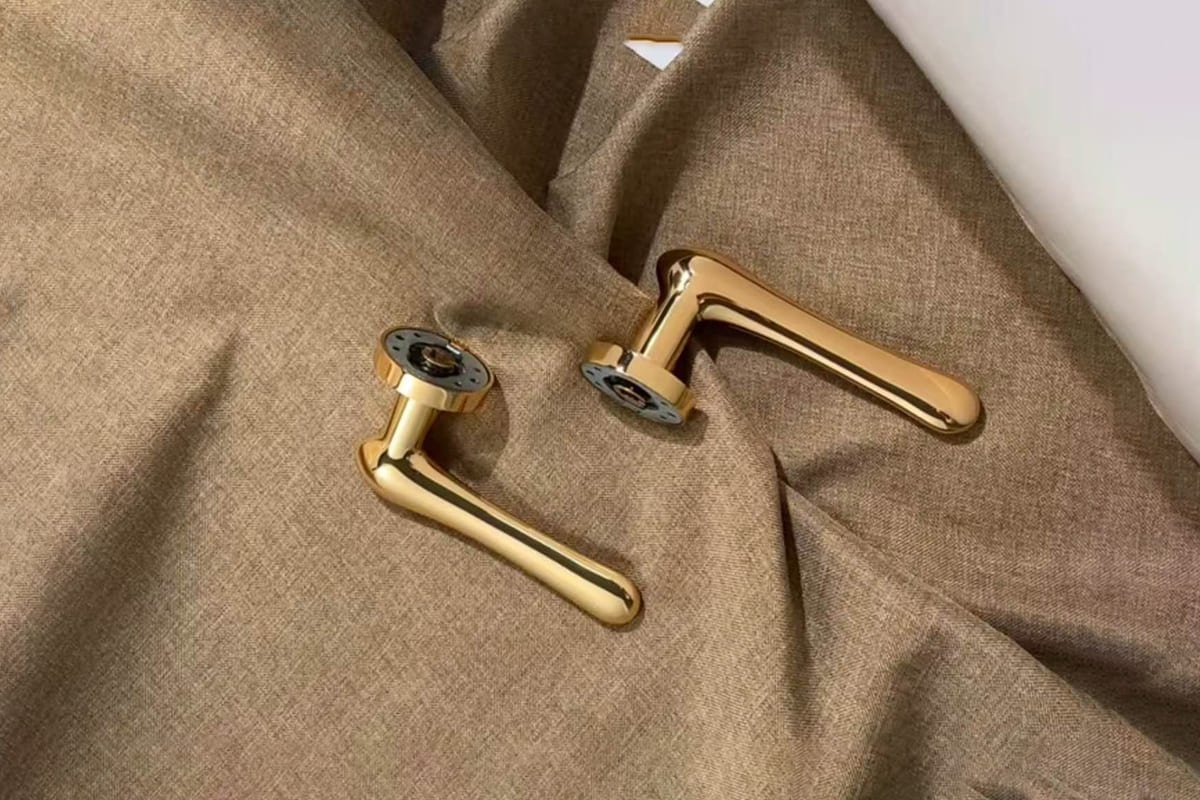
Start with the door, not the handle
I have seen buyers fall in love with a handle design before confirming the door structure. That can create avoidable trouble. A lever handle is only one part of the opening system.
Before selecting a handle, buyers should confirm:
- Door material
- Door thickness
- Door opening direction
- Lock body type
- Backset
- Center distance
- Cylinder type
- Spindle size
- Rosette or backplate dimensions
- Hinge type and finish
- Required accessories
- Target market standard
If these details are unclear, the buyer may receive a handle that looks good but does not install smoothly.
Sample approval should be structured
A professional sample process reduces risk. I usually recommend the following steps:
Confirm drawings and specifications
The buyer should check handle length, projection, rosette size, screw position, spindle size, and matching lock requirements.Review surface finish sample
The buyer should approve the finish under realistic lighting. A gold finish can look different under factory light, showroom light, and natural light.10Test assembly with the lock body
The handle should be tested with the actual mortise lock, spindle, cylinder, and door thickness.Check hand feel
The lever should return smoothly. The grip should feel comfortable. The edge should not feel sharp.Confirm packaging
The packaging should protect the finish during sea shipping, warehouse handling, and distribution.Keep a signed reference sample
Both sides should keep the approved sample for later batch comparison.
What procurement teams should ask suppliers
A good supplier discussion is specific. Buyers should not only ask for the lowest price. They should ask questions that reveal production discipline.
Useful questions include:
- What zinc alloy grade is used for this handle?
- Can you provide the material specification for review?
- What surface treatment process is used?
- How do you control color consistency across batches?
- Can you supply matching mortise locks, cylinders, hinges, and accessories?
- What inspection steps are used before shipment?
- Can you support ODM customization?
- What is the normal production lead time after sample approval?
- Are CE or fire-rated documents available for the relevant products?
- Can we verify that documents match the exact product model?
At SDH Hardware, our manufacturing background helps us discuss these details with buyers early. This is especially important for wholesalers and door factories that need repeated orders, not only one successful shipment.
Cost should be evaluated as total cost
A low unit price can become expensive if the handle causes delays, rework, finish complaints, or accessory mismatch.11 Buyers should evaluate total procurement cost.
Consider these cost factors:
| Cost Factor | Why It Matters |
|---|---|
| Unit price | Affects product margin and bidding position |
| Mold or customization cost | Affects new design development budget |
| Finish stability | Reduces complaints and returns |
| Assembly compatibility | Reduces factory installation time |
| Packaging quality | Reduces transport damage |
| Delivery reliability | Protects project schedules |
| Supplier communication | Reduces mistake risk |
For modern home door programs, zinc alloy lever handles often make sense when the buyer wants attractive design, stable supply, and controlled cost. But the final decision should still be based on the full hardware system.
When Are Zinc Alloy Lever Handles Not the Best Choice?
Zinc alloy has many advantages, but every material has boundaries. A buyer can create problems by using the right material in the wrong environment. Zinc alloy lever handles should be selected carefully when the door will face high traffic, harsh exposure, special safety requirements, or premium material expectations.
Zinc alloy lever handles may not be the best choice for every exterior door, very high-frequency commercial door, harsh corrosive environment12, or premium project that specifically requires brass or stainless steel. Buyers should review application conditions, compliance requirements, and full hardware performance before making the final selection.
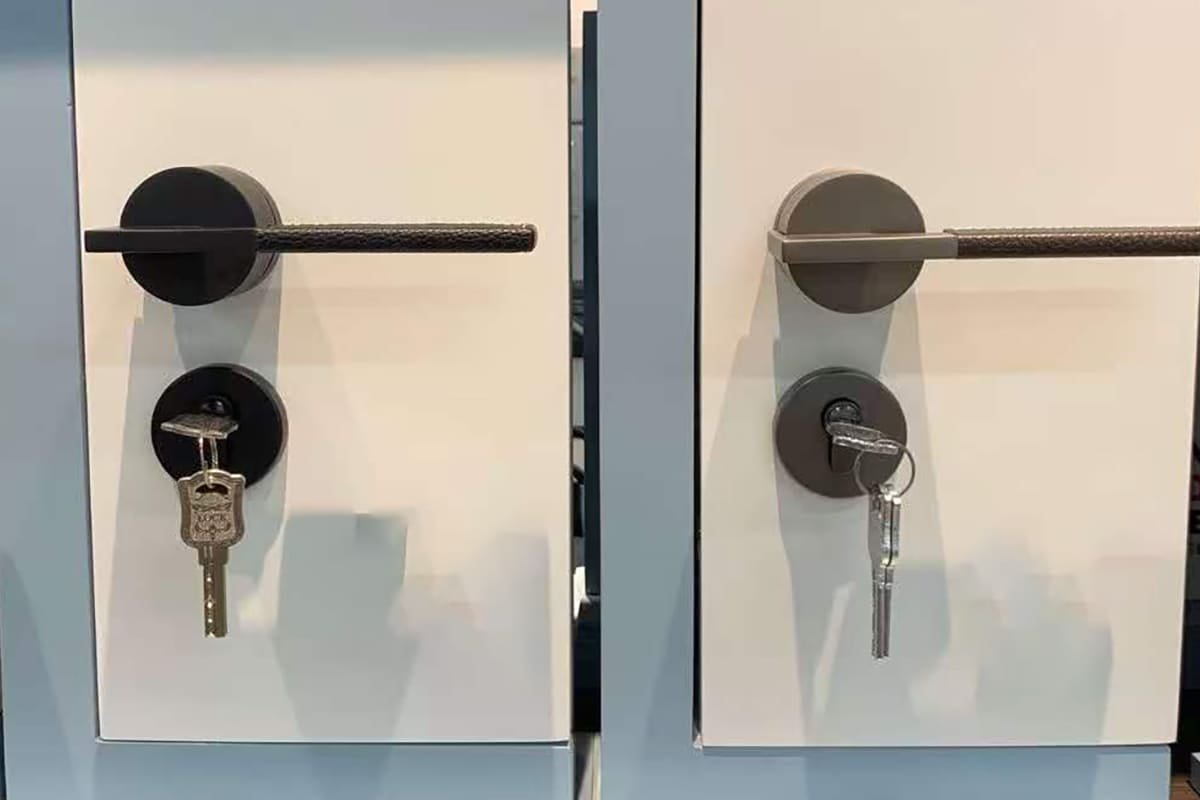
Application boundaries matter
I prefer honest material selection because it protects long-term relationships. If a buyer uses a decorative residential handle in a heavy-use public space, the problem is not only the handle. The problem is wrong application matching.
Zinc alloy is commonly used for interior residential handles, but buyers should be cautious in these cases:
- Main entrance doors exposed to outdoor conditions
- Coastal or highly corrosive environments
- Schools, hospitals, malls, or other very high-frequency public buildings
- Fire-rated door sets requiring verified system compatibility
- Security-focused doors where hardware strength is the main priority
- Luxury projects where the specification clearly requires brass or stainless steel
This does not mean zinc alloy can never be used in demanding projects. It means the buyer should not assume suitability without testing, documentation, and professional review.
Door hardware works as a system
A handle does not work alone. Its performance depends on the full system.
Key matching points include:
- Mortise lock quality
- Latch spring strength
- Handle spindle fit
- Cylinder position
- Door thickness
- Fixing screw strength
- Rosette or escutcheon design
- Hinge alignment
- Door weight
- Installation accuracy
For example, a heavy door with poor hinge alignment may make the handle feel worse, even if the handle itself is acceptable. A weak lock spring may affect handle return. A wrong spindle length may create looseness after installation. These are system issues, not only handle issues.
How to reduce wrong-use risk
Buyers can reduce risk by classifying door programs before selecting the handle.
| Door Program Type | Recommended Evaluation |
|---|---|
| Standard bedroom door | Check style, finish, lock compatibility |
| Apartment interior door | Add usage frequency and batch consistency review |
| Hotel room door | Review fire, usage, lock, and project requirements |
| Office door | Confirm traffic level and finish durability expectations |
| Exterior door | Seek application-specific material and finish evaluation |
| Fire-rated door | Verify full hardware system documents and test reports |
If a project has special performance requirements, buyers should ask qualified professionals to evaluate the complete door hardware set. This is the safest approach for fire-rated, commercial, and regulated applications.
A balanced buying decision
The strongest buying decision is not “zinc alloy or nothing.” It is a segmented decision.
A door brand may use:
- Zinc alloy handles for mid-range interior doors
- Brass handles for premium villa collections
- Stainless steel handles for commercial-style projects
- Aluminum handles for lightweight modern programs
This mix can be more profitable and more practical than forcing one material into every market.
Frequently Asked Questions
Are zinc alloy lever handles good for modern homes?
Yes, zinc alloy lever handles can be good for many modern residential interior doors. They offer flexible styling, decorative finish options, and a solid hand feel at a controlled cost position. Buyers should still confirm door type, usage frequency, lock compatibility, finish standard, and supplier quality control before ordering.
Do zinc alloy handles feel cheap?
Not necessarily. A well-designed zinc alloy handle can feel solid and comfortable in the hand. The final feeling depends on handle weight, shape, surface smoothness, spring matching, and lock body quality. Poor design or weak matching hardware can make any handle feel lower quality.
Can zinc alloy lever handles use matte black or brushed gold finishes?
Yes, zinc alloy lever handles are commonly produced with decorative finishes such as matte black, brushed gold, satin nickel, gunmetal, and antique bronze. Buyers should approve master samples and define color, gloss, touch, and inspection standards to reduce batch inconsistency.
Are zinc alloy lever handles better than brass handles?
Zinc alloy handles are not automatically better than brass handles. They are often more cost-controlled and flexible for modern interior door designs. Brass may still be preferred for premium projects, traditional designs, or markets where brass has stronger perceived value. The best choice depends on use case.
What should I check before buying zinc alloy lever handles in bulk?
You should check material specification, finish sample, door thickness, lock body compatibility, spindle size, screw position, packaging, inspection process, supplier capacity, and required certificates. You should also test samples with the actual door and lock system before confirming mass production.
Conclusion
Zinc alloy lever handles for modern homes are more than a design trend. They reflect a practical material choice for buyers who need style flexibility, finish variety, solid hand feel, and controlled cost for residential interior door programs. However, the best result depends on proper matching with the lock, cylinder, door thickness, hinges, finish standard, and usage environment. If you are developing a modern door hardware line, I recommend evaluating samples, documents, and system compatibility before bulk ordering. SDH Hardware can support that review with manufacturing experience, ODM capability, and one-stop door hardware supply.
"Zamak", https://en.wikipedia.org/wiki/Zamak. A materials-processing source on zinc die-casting alloys supports the statement that zinc alloys are commonly selected for cast components because they offer good castability, dimensional accuracy, and the ability to reproduce detailed shapes in production. Evidence role: mechanism; source type: research. Supports: Zinc die-casting alloys are widely used because their casting properties allow detailed shapes and efficient production of near-net-shape parts.. Scope note: The source may support zinc die casting generally rather than testing this specific lever-handle design. ↩
"Zamak - Wikipedia", https://en.wikipedia.org/wiki/Zamak. A technical reference on zinc die-casting alloys documents that common grades such as Zamak 3 and Zamak 5 are specified for die-cast parts and differ in mechanical properties and casting behavior. Evidence role: general_support; source type: institution. Supports: Zinc alloy grades commonly corresponding to Zamak 3 and Zamak 5 have documented die-casting uses and mechanical property profiles.. Scope note: Such a source supports the material-grade characteristics, not the suitability of every supplier’s alloy batch. ↩
"CNC Machining VS Die Casting - Watry Industries", https://watry.com/cnc-machining-vs-die-casting/. Manufacturing-process literature describes die casting as a near-net-shape process suited to producing complex metal parts with detailed features and repeatable dimensions. Evidence role: mechanism; source type: education. Supports: Die casting is a near-net-shape process capable of producing complex geometries and detailed features.. Scope note: The comparison with machining is contextual because process choice also depends on tooling cost, tolerances, production volume, and part geometry. ↩
"[PDF] MINERAL COMMODITY SUMMARIES 2025", https://pubs.usgs.gov/periodicals/mcs2025/mcs2025.pdf?utm_source=burnaby%20now&utm_campaign=burnaby%20now%3A%20outbound&utm_medium=referral. Government mineral commodity data on zinc and copper provide contextual support for the statement that zinc-based and copper-based handle programs may occupy different material-cost positions. Evidence role: general_support; source type: government. Supports: Zinc and copper-based materials have different commodity cost positions, which can affect the economics of zinc alloy versus brass products.. Scope note: Commodity price data do not directly prove finished-handle cost, which also depends on tooling, finishing, labor, yield, and supplier margin. ↩
"Revealing the Corrosion Resistance of 316 L Stainless Steel ...", https://pmc.ncbi.nlm.nih.gov/articles/PMC9920300/. Reference literature on stainless steel explains that chromium forms a passive oxide layer that improves corrosion resistance, supporting its common selection for applications where corrosion performance is a priority. Evidence role: mechanism; source type: encyclopedia. Supports: Stainless steel’s chromium-containing passive film is associated with corrosion resistance, making it suitable for applications where corrosion performance is important.. Scope note: This supports the material rationale generally and does not evaluate a specific stainless-steel door-handle product. ↩
"Study of PVD-Coated Inserts' Lifetime in High-Pressure Die Casting ...", https://www.academia.edu/128656508/Study_of_PVD_Coated_Inserts_Lifetime_in_High_Pressure_Die_Casting_Regarding_the_Requirements_for_Surface_Quality_of_Castings. Surface-engineering literature on zinc die castings supports that zinc alloy substrates can be prepared and coated using decorative finishing systems, including electroplated and vapor-deposited coatings. Evidence role: general_support; source type: paper. Supports: Zinc alloy die castings can be prepared for decorative coating systems such as electroplating and other surface treatments.. Scope note: The source would support finish feasibility in general, while color stability and durability depend on the exact pretreatment, coating stack, process controls, and use environment. ↩
"Zinc Alloy Die Casting Parts - USA Manufacturing", https://decoprod.com/zinc-die-casting-parts/. Technical literature on zinc die-cast finishing describes polishing and surface preparation as common steps before decorative coating, supporting the use of zinc alloy for smooth decorative hardware surfaces. Evidence role: mechanism; source type: research. Supports: Zinc alloy die castings are commonly finished through surface preparation steps such as polishing before decorative coating.. Scope note: This does not prove that all zinc alloy handles will have a smooth touch; final quality depends on casting quality, polishing, coating, and inspection. ↩
"Testing & Certification | CPSC.gov", https://www.cpsc.gov/Business--Manufacturing/Testing-Certification. Conformity-assessment standards such as ISO/IEC 17025 provide contextual support for verifying product performance claims through competent laboratory testing and documented test reports. Evidence role: expert_consensus; source type: institution. Supports: Recognized conformity-assessment frameworks use documented test reports and laboratory competence standards to substantiate product performance claims.. Scope note: This supports the verification principle rather than specifying which test is required for each finish or door-hardware application. ↩
"ISO 9001 Supplier Evaluation: Criteria, Forms & Scorecards", https://isocertificationgroup.com.au/blog/iso-9001-supplier-evaluation-criteria-forms-scorecards. Quality-management standards such as ISO 9001 support the general procurement practice of defining specifications, evaluating suppliers, and establishing inspection or acceptance criteria before relying on bulk supply. Evidence role: expert_consensus; source type: institution. Supports: Quality management frameworks emphasize control of externally provided products, supplier evaluation, specifications, inspection, and documented acceptance criteria.. Scope note: The standard supports procurement controls generally and does not prescribe the exact checklist for zinc alloy lever handles. ↩
"Metamerism (color) - Wikipedia", https://en.wikipedia.org/wiki/Metamerism_(color). Color-science references on illuminants and metamerism support the statement that the perceived color of a surface finish can vary between factory lighting, showroom lighting, and daylight. Evidence role: mechanism; source type: institution. Supports: Color appearance can vary under different illuminants, a phenomenon addressed in color science and metamerism literature.. ↩
"[PDF] Reducing the Costs of Poor Quality: A Manufacturing Case Study", https://scholarworks.waldenu.edu/cgi/viewcontent.cgi?article=6608&context=dissertations. Procurement and quality-cost literature on total cost of ownership supports the statement that a low unit price may be offset by downstream costs from rework, delays, quality complaints, or incompatibility. Evidence role: general_support; source type: paper. Supports: Procurement decisions based only on unit price can overlook total cost of ownership, including quality failures, rework, delays, and service costs.. Scope note: The literature supports the purchasing principle broadly, not a measured cost model for this specific handle category. ↩
"100 Year Duplex Zinc Coatings For Seawater Environments", https://www.waru.edu/sites/default/files/webform/documents/25476/DOD-AUG22-18614.pdf. Door-hardware performance standards and corrosion references provide contextual support for evaluating handles differently in exterior, high-cycle commercial, or corrosive environments. Evidence role: general_support; source type: institution. Supports: Door hardware is commonly evaluated by performance grades and environmental durability criteria, and use conditions such as cycle frequency and corrosion exposure affect suitability.. Scope note: This supports the need for application-specific evaluation but does not establish that every zinc alloy handle is unsuitable in those settings. ↩