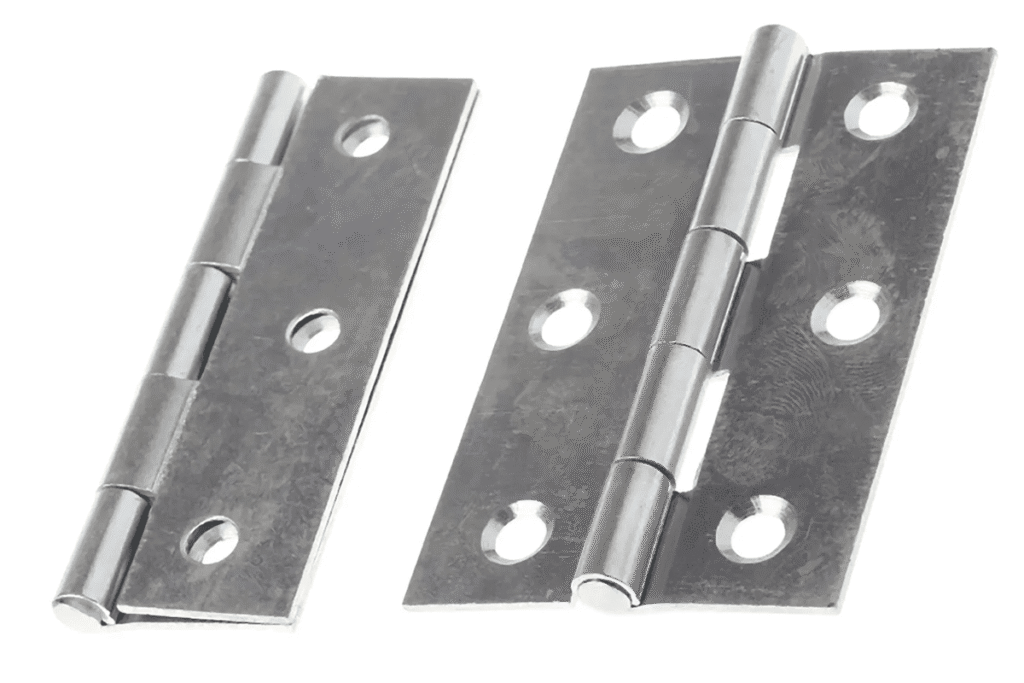
Why Are Some Hinge Pins Removable?
Removable hinge pins exist because door hardware often needs to be installed, adjusted, serviced, or replaced without removing the whole hinge from the door and frame. Without that flexibility, installers may spend more time handling heavy doors, risking scratches, misalignment, or damaged finishes. The solution is choosing the right hinge pin structure for the door’s use.
Some hinge pins are removable to make door installation, removal, maintenance, and replacement easier. They allow the door leaf to be separated from the frame without unscrewing the hinge leaves. However, removable hinge pins are not automatically better or worse; buyers must also consider door swing direction, hinge exposure, security needs, and project requirements.
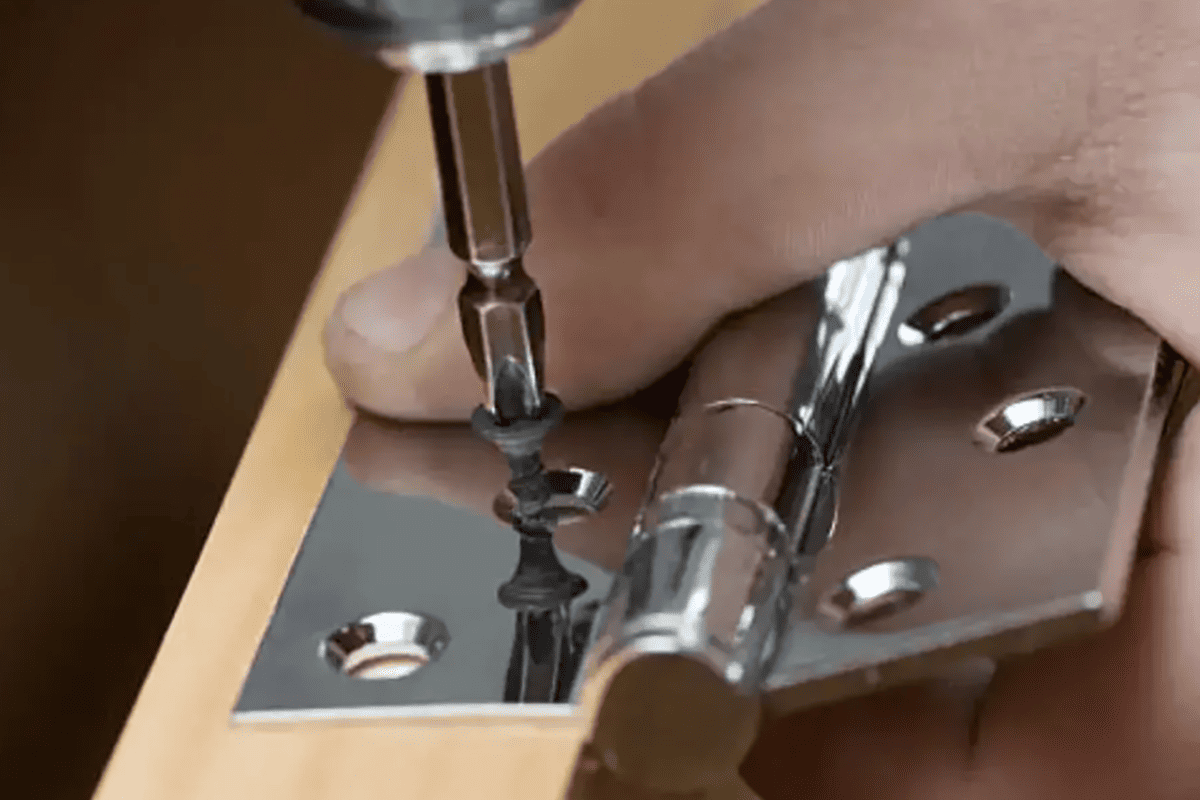
In my experience supplying architectural door hardware to door factories, importers, and hardware brands, the real question is not only “Can the pin be removed?” The better question is: Does the hinge pin structure match the door, installation process, maintenance plan, and security exposure?
What Are Removable Hinge Pins Used For?
Removable hinge pins solve a simple problem. Doors are heavy, finishes are easy to damage, and site conditions are rarely perfect. If every adjustment required unscrewing hinge leaves, installation and maintenance would become slower and riskier. Removable pins give installers and maintenance teams a cleaner way to handle the door leaf.
Removable hinge pins are used to separate the door leaf from the frame while keeping the hinge leaves fixed in place.1 This helps with installation, decoration, furniture moving, maintenance, replacement, and site adjustment. In factory and project use, they are mainly chosen for handling convenience rather than as a direct quality grade.
The basic structure
- Two hinge leaves fixed to the door and frame
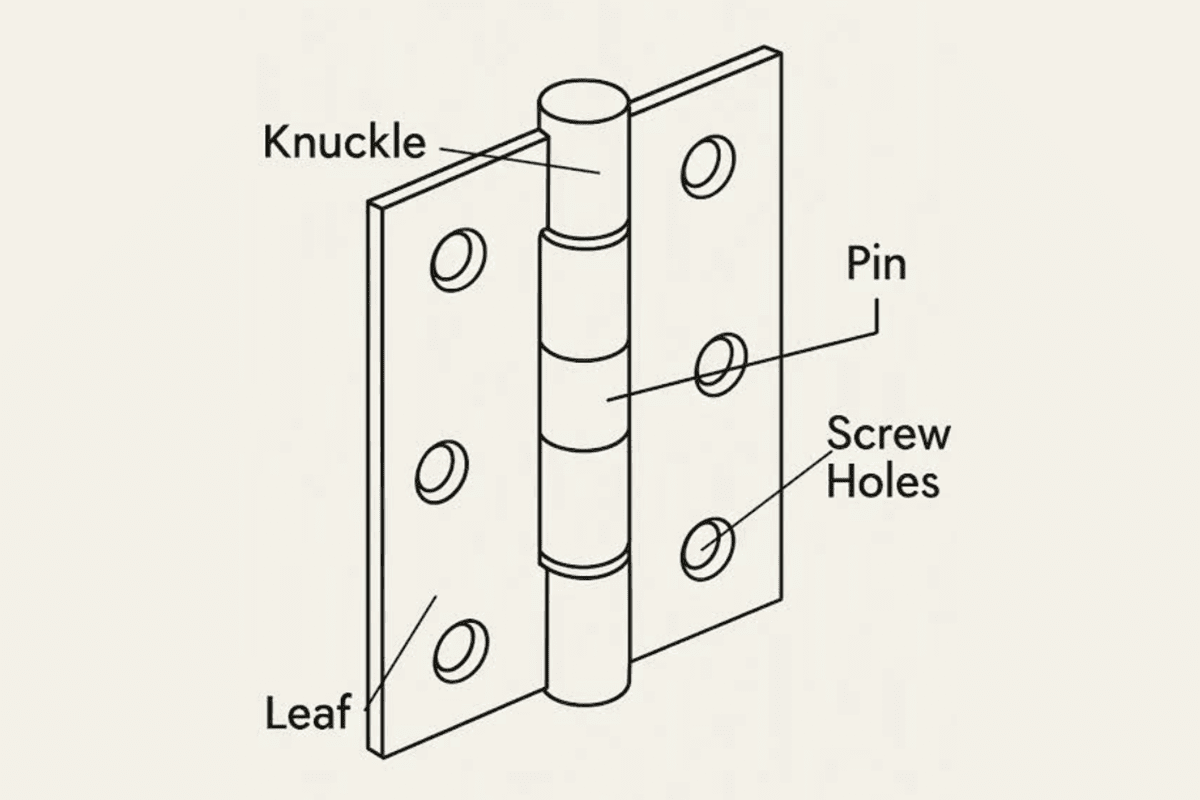
- Knuckles or barrels that interlock
- A central pin that passes through the barrels
- Bearings, washers, or bushings in some higher-duty designs
When the pin is removable, the user can separate the hinge assembly by lifting or driving out the pin, depending on the design. The door leaf can then be removed without taking screws out of the timber, steel, aluminum, or composite substrate.
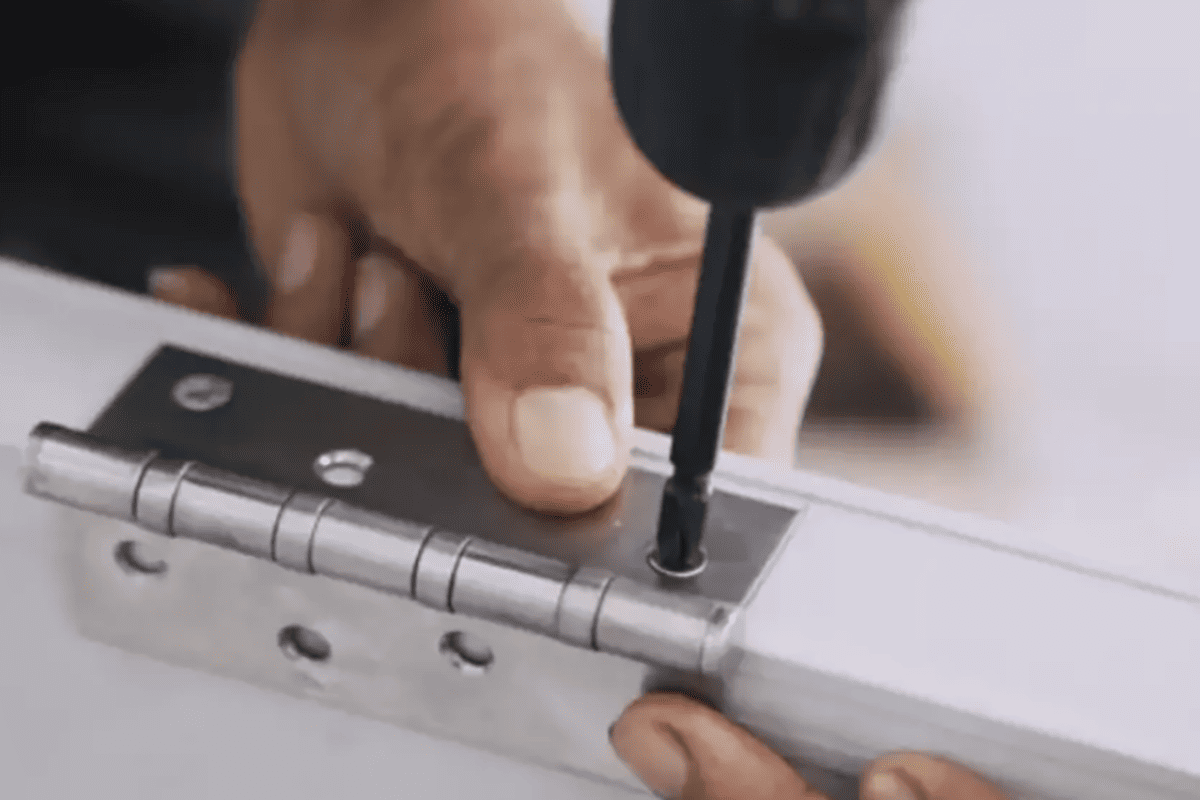
In door factory and project use, I often see removable hinge pins selected for practical reasons. A door manufacturer may install one hinge leaf on the door and the other on the frame. Later, the door can be aligned and hung on site with less repeated screw work. This can be useful when the door needs finishing, painting, packing, or temporary removal during renovation.
Common use cases for removable hinge pins
| Use case | Why removable hinge pins help | Buyer consideration |
|---|---|---|
| Door factory pre-installation | Hinge leaves can be prepared before site hanging | Check tolerance between door, frame, and hinge barrels |
| Renovation work | Door can be removed to protect the finish | Confirm workers know how to remove and reinstall pins correctly |
| Furniture moving | Door leaf can be temporarily removed for wider access | Consider door weight and number of installers needed |
| Maintenance | Door can be serviced without disturbing screw holes | Inspect pin wear, washers, and hinge alignment |
| Replacement | Door leaf or hinge component can be changed more easily | Match hinge size, thickness, material, and screw pattern |
Removable does not mean low grade
One mistake I see in sourcing discussions is treating removable hinge pins as a quality label. That is too simple. A removable pin hinge can be made well or poorly. A fixed pin hinge can also be made well or poorly.
The real quality factors include:
- Material thickness
- Pin diameter
- Knuckle forming accuracy
- Bearing design
- Surface treatment
- Load capacity
- Cycle test performance
- Corrosion resistance
- Screw quality
- Consistency across production batches
For B2B buyers, I recommend evaluating the full hinge specification rather than focusing only on whether the pin can be removed. If a project requires CE documents, fire-rated documents, or other regional compliance files, the buyer should verify the exact product documentation for the exact hinge model, size, material, and configuration.
How Do Removable Hinge Pins Help Door Factory Installation?
Door factory installation often involves repeated handling, packing, transport, and final site adjustment. If the hinge structure makes the door difficult to separate from the frame, workers may remove screws again and again. That can damage screw holes, slow production, and increase the chance of scratched door surfaces.
Removable hinge pins help door factories by allowing hinge leaves to be pre-installed while keeping the door leaf easier to handle during transport and final fitting. Installers can separate or rehang the door without unscrewing the hinge leaves, which saves time and helps protect finished surfaces during construction.
Why factories care about handling
In a factory, a hinge is not only a small metal component. It affects the whole door workflow. I have seen buyers focus first on hinge finish or packaging, but production managers often ask different questions:
- Can workers align the hinge quickly?
- Will the barrels match after coating or finishing?
- Can the door be packed safely?
- Can the installer remove the door leaf on site?
- Will the hinge still look clean after adjustment?
A removable pin structure can help when the door and frame need to be prepared separately. For example, a door factory may install hinge leaves in controlled workshop conditions. The door can then be shipped, stored, or handled with fewer full-frame movements. On site, the installer can align the hinge barrels and insert the pin or place the door onto the pin system, depending on the hinge type.
Installation benefits in practical terms
Here is how removable hinge pins can support factory and site work:
Less repeated screw removal
Repeated screw removal can weaken timber, MDF, or composite substrates.3 Keeping hinge leaves fixed reduces this risk.Easier door leaf handling
A door leaf may need to be moved separately from the frame. This is common in projects with limited space or phased installation.Reduced finish damage
Finished doors can be scratched by tools, frames, flooring work, or other trades.4 Temporary removal can protect the surface.Faster site adjustment
Installers can remove the door leaf, adjust the frame or hardware, and rehang the door more efficiently.Cleaner replacement process
If a door leaf must be replaced, workers may not need to disturb the hinge leaves already fixed to the frame.
Comparison: removable pin vs fixed pin during installation
| Feature | Removable hinge pins | Fixed or peened hinge pins |
|---|---|---|
| Door leaf removal | Easier without unscrewing leaves | Usually requires unscrewing or special method |
| Site convenience | High for maintenance and adjustment | Lower, but more controlled |
| Security exposure | Needs review on exposed hinges | Often better for exposed hinge conditions |
| Factory pre-installation | Often convenient | Also possible, but less flexible |
| Best use | Interior doors, controlled access, service-friendly openings | Security-sensitive or exposed hinge applications |
Do removable pins reduce installation skill requirements?
They help, but they do not remove the need for proper installation. A poorly mortised hinge, misaligned frame, or wrong screw selection will still create problems. In my own project discussions, I always prefer to review:
- Door weight
- Door thickness
- Frame material
- Hinge size
- Number of hinges per door
- Opening direction
- Fire or smoke requirement, if any
- Corrosion environment
- Required finish
A removable pin hinge works best when it is selected as part of a complete door hardware system. It should not be treated as a shortcut for poor door preparation.
When Do Removable Hinge Pins Make Maintenance Easier?
Maintenance becomes difficult when a door must be removed but the hinge leaves are painted over, tightly fitted, or fixed into delicate substrates. If workers have to remove all hinge screws, they may damage the frame, strip screw holes, or affect alignment. Removable pins reduce that disturbance.
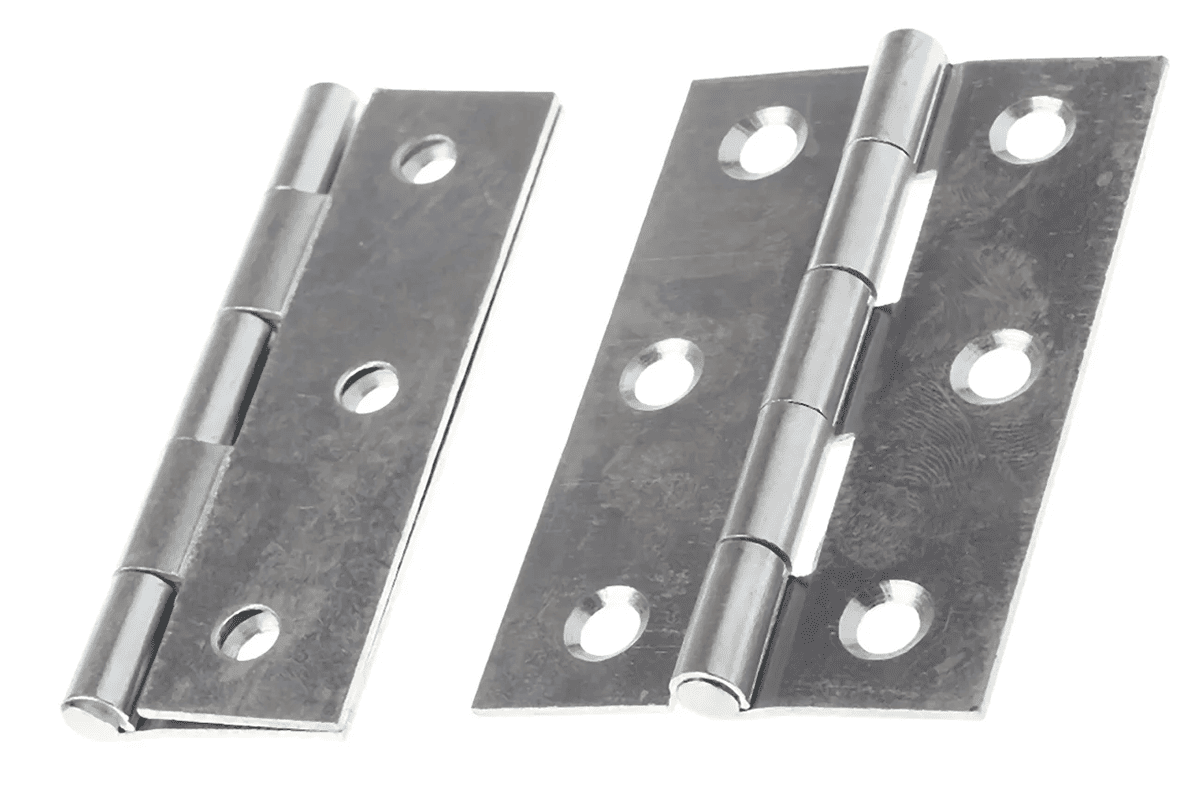
Removable hinge pins make maintenance easier when the door leaf needs to be taken off temporarily for decoration, floor work, furniture moving, hardware replacement, or alignment correction. The hinge leaves can stay fixed, so the door can often be removed and rehung with less impact on the frame and screw holes.
Maintenance situations where removable pins help
In many buildings, doors are not installed once and forgotten. They are adjusted, painted, removed, cleaned, replaced, and inspected over time. Removable hinge pins make those tasks easier in many non-security-sensitive openings.
Common examples include:
- Interior apartment doors during decoration
- Hotel room doors during replacement or refurbishment
- Office doors during flooring work
- School or hospital doors during planned maintenance
- Showroom doors during product changes
- Warehouse or utility doors when access width is temporarily needed
I once worked through a hinge selection discussion with a buyer who supplied doors for renovation contractors. Their concern was not only hinge price. They wanted a hinge structure that allowed contractors to remove door leaves before painting and reinstall them after the finish work. In that case, removable pins helped reduce visible damage and saved labor.
Why not just unscrew the hinge?
Unscrewing sounds simple, but it creates several risks:
Screw holes may loosen
Wood and composite substrates can lose holding strength after repeated screw removal.Paint or coating may crack
If hinge leaves are painted around, removal can damage the finish.Alignment may change
Even a slight position change can affect door gaps and latching.Screws may be lost or mixed
This happens often on busy sites.Frame material may be damaged
Aluminum, steel, and timber frames each have their own fixing risks.
Maintenance evaluation checklist
For bulk buyers and door manufacturers, I suggest asking these questions before choosing a pin structure:
| Question | Why it matters |
|---|---|
| Will the door be removed often? | Frequent removal favors service-friendly hinge designs |
| Is the hinge barrel exposed when the door is closed? | Exposure affects security evaluation |
| Is the door heavy? | Heavy doors need suitable hinge size, pin strength, and bearing structure |
| Is the environment corrosive? | Stainless steel or suitable surface treatment may be needed |
| Is the door fire-rated? | The exact hinge must match verified fire-rated documentation |
| Is the opening public or private? | Public-use doors may need more durable and tamper-resistant designs |
Maintenance does not mean weak security
A service-friendly hinge is not automatically insecure. Security depends on the whole hinge design, door direction, frame condition, lockset, building use, and whether the hinge side is accessible from outside.
For example, a removable pin on an internal room door may create no serious concern in normal use. The same feature on an externally exposed out-swinging door may require additional protection. That protection could include non-removable pins, security studs, interlocking tabs, peened pins, set screws, or anti-lift structures.
The main point is simple: maintenance convenience is valuable, but it should be balanced against exposure and project risk.
Are Removable Hinge Pins Secure Enough for Out-Swinging Doors?
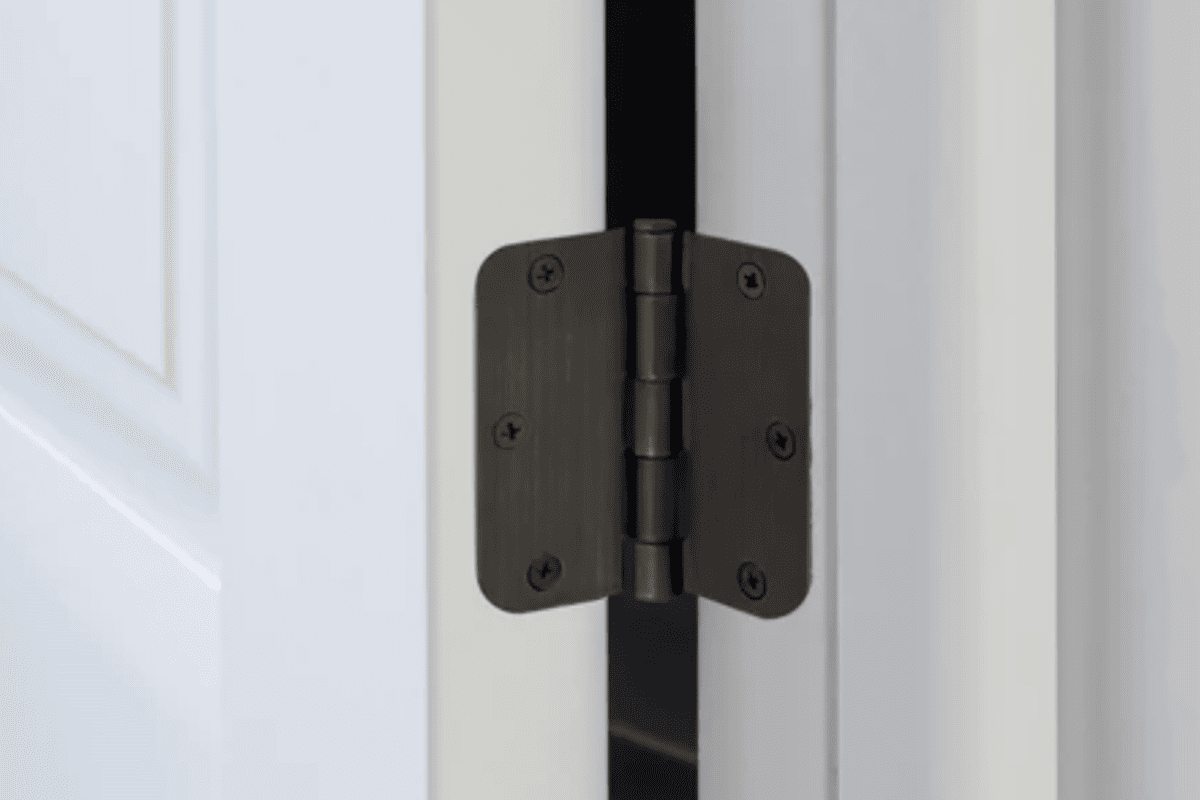
Security questions become more serious when the hinge barrel is exposed. If a door swings outward, the hinge barrels may be on the outside face. If the pins are removable and unprotected, a person may try to remove the pins.5 That possibility does not make every out-swinging door unsafe, but it does require careful evaluation.
Removable hinge pins can be suitable for some out-swinging doors only when the hinge design and project conditions address hinge exposure. For security-sensitive openings, buyers should consider non-removable pins, security studs, fixed or peened pins, set-screw systems, or anti-lift hinge designs6 that prevent door removal while closed.
Why out-swinging doors need extra review
An in-swinging door usually has hinge barrels on the protected side. An out-swinging door may have hinge barrels on the exposed side.7 This changes the risk profile.
However, I avoid making broad claims like “all out-swinging doors with removable pins are unsafe.” That statement is too general. The actual risk depends on:
- Whether the hinge barrel is accessible
- Whether the pin can be driven out when the door is closed
- Whether the hinge has security studs or interlocks
- Whether the pin is peened, fixed, or locked
- Whether the door is internal, external, public, or restricted
- Whether the lock and frame provide suitable resistance
- Whether the project has local code or insurance requirements
For B2B procurement, this is where specification discipline matters. The buyer should not only ask for “butt hinges.” The buyer should define the application.
Common anti-lift and anti-removal options
| Design option | How it helps | Typical consideration |
|---|---|---|
| Non-removable pin | Pin cannot be removed in normal installation | Good for exposed hinge applications |
| Peened pin | Pin end is mechanically deformed to resist removal | Must confirm production consistency |
| Security stud | One hinge leaf has a stud that enters the other leaf or frame | Helps keep door in place even if pin is attacked |
| Set screw pin | A hidden screw locks the pin in place | Must be installed correctly |
| Interlocking hinge design | Leaves engage mechanically when door is closed | Useful for anti-lift performance |
| Concealed hinge | Hinge is hidden when door is closed | Requires correct door/frame preparation |
Important security distinction
A removable pin is a convenience feature. A security hinge is a design solution. Sometimes the same hinge can include both serviceability and protection, but only if the design supports it.
For exposed openings, I recommend buyers confirm:
- Can the pin be removed while the door is closed?
- Does the hinge include a security stud or anti-lift feature?
- Is the hinge suitable for the door weight and opening frequency?
- Does the product documentation support the claimed application?
- Does the project require CE, fire-rated, or regional compliance documents?
- Has a qualified professional reviewed the door set as a whole?
Fire-rated and certified doors need exact documentation
If the door is fire-rated, smoke-rated, or part of a certified door set, buyers should be especially careful. A hinge that looks similar may not be interchangeable.8 The exact hinge size, material, bearing type, screw type, and installation method may be part of the tested configuration.9
At SDH Hardware, I treat CE certification and fire-rated certification as documents buyers should verify against the exact product and project requirement. I do not recommend relying on general wording. The buyer should request test reports, certificates, scope details, and model references where applicable.
How Should Buyers Specify Removable Hinge Pins or Fixed Pin Hinges?
Many hinge problems start with incomplete specifications. A buyer may request “stainless steel butt hinge” or “removable pin hinge,” but that does not define the actual door condition. Without door weight, swing direction, exposure, finish, and certification requirements, the supplier may quote a product that is technically good but not suitable.
Buyers should specify removable hinge pins or fixed pin hinges by matching the hinge structure to door swing, hinge exposure, installation workflow, maintenance needs, security level, door weight, material, finish, and required documents. The correct choice is application-based, not based on whether removable pins are “better.”
A practical specification framework
When I help buyers compare hinge pin structures, I like to start with the door application before discussing price. This avoids misunderstandings later.
A useful specification should include:
- Door type: timber, steel, aluminum, fire-rated, acoustic, interior, exterior
- Door size: height, width, and thickness
- Door weight: estimated or tested weight
- Opening direction: in-swinging or out-swinging
- Hinge exposure: visible from secure or public side
- Usage frequency: residential, commercial, hotel, school, hospital, public building
- Required hinge size: for example, 4", 4.5", or 5"
- Material: stainless steel, brass, steel, or other material
- Finish: satin stainless steel, polished, PVD, powder coating, electroplating
- Pin structure: removable, fixed, peened, set screw, security stud
- Bearing structure: plain bearing, washer, ball bearing, concealed bearing
- Documents: CE, fire-rated, salt spray, material report, drawings, inspection report
Selection table for common applications
| Application | Pin structure often considered | Reason | Caution |
|---|---|---|---|
| Interior residential doors | Removable hinge pins | Easy removal for decoration and maintenance | Not ideal if hinge side is exposed to risk |
| Hotel room doors | Removable or fixed, depending on door set | Maintenance convenience may be valuable | Fire and acoustic requirements must be verified |
| Commercial internal doors | Removable or bearing hinges | Frequent use and service access | Check cycle performance and door weight |
| Exterior out-swinging doors | Non-removable or security hinge designs | Exposed hinge barrels may need protection | Confirm anti-lift design and project requirements |
| Fire-rated doors | Documented tested hinge configuration | Compliance depends on exact product10 | Verify certificates and scope |
| Heavy doors | [Ball bearing or heavy-duty hinges | Better load support and smoother operation](https://www.hingeoutlet.com/collections/heavy-duty-hinges/commercial-ball-bearing-hinges?srsltid=AU7gw4UG9cUV87Z5LMMdVKDOHuW9qovEkMwJgbxtB7lzoP-k6zk7ZSGR)%%%FOOTNOTE_REF_11%%% | Confirm pin diameter, leaf thickness, and screw fixing |
Questions I would ask a buyer
Before recommending a hinge pin structure, I would usually ask:
- Is the hinge barrel exposed from the outside when the door is closed?
- Will the door need to be removed during installation or maintenance?
- Is the door fire-rated or part of a tested door set?
- How heavy is the door leaf?
- How many hinges will be installed per door?
- What surface finish and corrosion resistance are required?
- Is the buyer supplying a door factory, a brand customer, or a project contractor?
- Does the market require specific CE or fire documentation?
These questions help separate real requirements from assumptions.
Manufacturing quality control matters
The pin structure is only one part of hinge performance. For production orders, buyers should also review manufacturing and inspection details. In our factory work, the important quality control points include:
- Raw material inspection
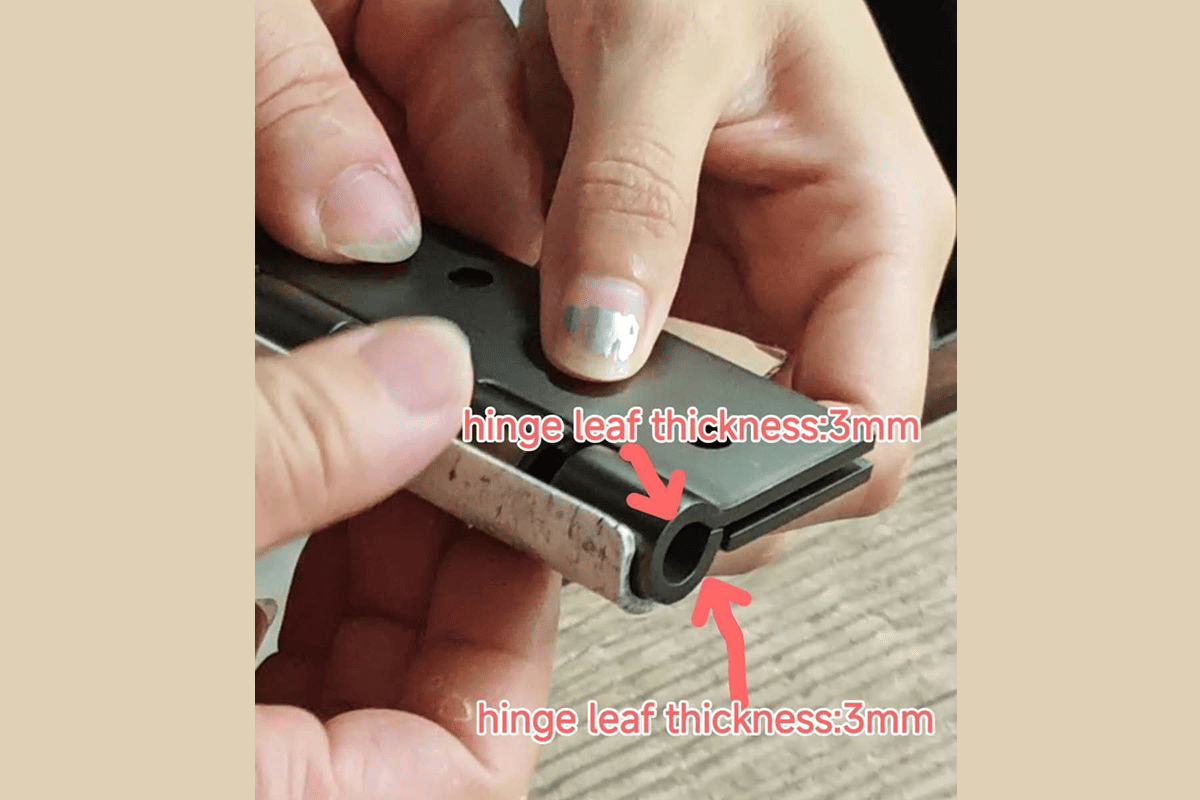
- Leaf thickness checking
- Knuckle forming accuracy
- Pin diameter control
- Bearing or washer fit
- Opening and closing smoothness
- Surface treatment consistency
- Screw hole position accuracy
- Logo or branding accuracy
- Final product inspection before packing
For OEM and ODM orders, drawings and samples should be confirmed before mass production. If the buyer requires custom packaging, laser logo, stamping, or special accessories, those details should be controlled in the order specification.
The simplest decision rule
A practical rule is this:
Choose removable hinge pins when installation, removal, and maintenance convenience are important and hinge exposure is acceptable. Choose fixed, non-removable, or anti-lift hinge designs when exposed hinge security is a major concern.
This rule is simple, but it still requires product verification. Door hardware is part of a system. The hinge, lock, frame, closer, door material, and installation quality all affect final performance.
Frequently Asked Questions
Are removable hinge pins a sign of poor hinge quality?
No. Removable hinge pins are not a quality grade by themselves. They are a structural feature. Quality depends on material, thickness, pin diameter, knuckle accuracy, bearing design, surface finish, testing, and production consistency.12 A removable pin hinge can be high quality if it is manufactured and specified correctly.
Can removable hinge pins be used on exterior doors?
They can be used on some exterior doors, but buyers must review hinge exposure and security design. If the hinge barrel is accessible from outside, non-removable pins, security studs, peened pins, or anti-lift designs may be more suitable. Project-specific requirements should always be checked.
Why do door factories like removable hinge pins?
Door factories often like removable hinge pins because they make door handling easier. Workers can pre-install hinge leaves, remove the door leaf during finishing or packing, and rehang it on site without repeatedly removing screws. This can reduce labor time and help protect finished door surfaces.
What is the difference between removable pins and non-removable pins?
Removable pins can be taken out to separate the door leaf from the frame while leaving hinge leaves fixed. Non-removable pins are fixed, peened, or otherwise secured to resist removal. Removable pins improve service convenience, while non-removable designs are often preferred for exposed or security-sensitive openings.
Should fire-rated doors use removable hinge pins?
Fire-rated doors should use hinges that match the tested and approved door set configuration. The pin structure, hinge size, material, bearing type, screws, and installation method may all matter. Buyers should verify the exact CE, fire-rated, or project documentation before selecting any hinge.
Conclusion
Removable hinge pins are used because they make installation, door removal, maintenance, replacement, and site adjustment easier. They are not automatically better, weaker, cheaper, or less secure. The right choice depends on door swing direction, hinge exposure, security needs, door weight, usage frequency, and required documentation. If you are sourcing hinges for door manufacturing, hardware branding, or bulk wholesale, I recommend reviewing the full hinge specification before confirming an order. SDH Hardware can help you compare removable, fixed, and anti-lift hinge structures for your project requirements.
"Hinge", https://en.wikipedia.org/wiki/Hinge. A neutral hinge reference defines a removable-pin hinge as one in which the central pin can be withdrawn, allowing the connected leaves to separate while the leaves themselves remain fastened. Evidence role: definition; source type: encyclopedia. Supports: A removable-pin hinge is constructed so that the central pin can be removed to separate the hinge leaves.. ↩
"Hinge - Wikipedia", https://en.wikipedia.org/wiki/Hinge. General hardware references describe a butt hinge as two leaves joined by interlocking knuckles or barrels around a pin, which supports the article's component description. Evidence role: definition; source type: encyclopedia. Supports: Butt hinges are commonly described as having leaves joined by interlocking knuckles around a pin.. Scope note: The source may describe the standard hinge structure without addressing every optional bearing or bushing variation. ↩
"Wood Handbook, Chapter 08: Fastenings", https://research.fs.usda.gov/download/treesearch/37424.pdf. Wood-fastener research shows that screw withdrawal resistance depends on the integrity of the surrounding wood or engineered-wood material, supporting the concern that repeated screw removal can weaken screw holes. Evidence role: mechanism; source type: paper. Supports: Wood and engineered wood substrates can lose fastener holding performance when screw holes are damaged or repeatedly disturbed.. Scope note: The evidence is about fastener mechanics in wood-based materials generally, not specifically about door-hinge installation cycles. ↩
"Protect Doors On Your Jobsite: Prevent Dust And Damage ...", https://www.axiomtsp.com/fr/blog/news-blogs-10/protect-doors-on-your-jobsite-prevent-dust-and-damage-during-construction-projects-and-renovations-296. Construction protection guidance notes that finished architectural elements such as doors should be protected from damage during subsequent work, providing contextual support for the article's concern about scratches and finish damage. Evidence role: general_support; source type: institution. Supports: Construction and finishing guidance recognizes that installed or finished doors need protection from damage during site work.. Scope note: The source would support the general risk of site damage rather than proving that removable hinge pins reduce that damage in every project. ↩
"That's a tiny piece of metal doing a huge job The video ...", https://www.facebook.com/Homeloveconstruction/videos/thats-a-tiny-piece-of-metal-doing-a-huge-job-the-video-explains-one-of-the-built/1311187470555143/. Architectural-security guidance identifies exposed removable hinge pins as a potential tampering point on outswinging doors and discusses protected hinge designs as a mitigation. Evidence role: expert_consensus; source type: institution. Supports: Security hardware guidance commonly treats exposed removable hinge pins as a potential tampering vulnerability and recommends protected hinge designs for exposed applications.. Scope note: Such guidance establishes a recognized risk category; actual vulnerability depends on the full door assembly, lock, frame, and installation. ↩
"Security Hinges - NRP and Sec Tab - HingeOutlet", https://www.hingeoutlet.com/collections/security-hinges-nrp-and-sec-tab/stainless-steel-hinges?srsltid=AU7gw4V7KdlwRCjahsJb2YQ6p0K_7_dG5_Q9Cu9IRgSCQeVwyOZ6yzsy. Architectural-hardware references describe non-removable pins, security studs, set screws, and anti-lift hinge features as methods used to resist hinge-side door removal. Evidence role: expert_consensus; source type: institution. Supports: Architectural hardware references recognize non-removable pins, studs, set screws, and anti-lift arrangements as hinge-security features.. Scope note: The source supports the function of these feature types generally; it does not verify the performance of any particular product model. ↩
"Amazon.com: Outswing Door Hinges", https://www.amazon.com/outswing-door-hinges/s?k=outswing+door+hinges. Door-handing references explain that outswinging doors open away from the interior or secured side, which can leave conventional hinge barrels visible on the opposite face of the opening. Evidence role: definition; source type: education. Supports: Door handing and swing references explain that an outswinging door opens away from the secured space, which can place butt-hinge barrels on the outside face depending on installation.. Scope note: The support is geometric and installation-dependent; concealed hinges or special frame designs may change hinge exposure. ↩
"How Hardware Substitutions Affect an Existing Fire Door ...", https://www.facebook.com/fb-answers/how-do-hardware-substitutions-affect-an-existing-fire-door-rating/. Fire-door standards treat the door, frame, and hardware as a listed assembly and generally require hardware substitutions to remain within the tested or approved scope, supporting the warning that similar-looking hinges may not be interchangeable. Evidence role: expert_consensus; source type: institution. Supports: Fire-door standards and listing practices restrict substitution of components in rated assemblies unless allowed by the listing, test evidence, or authority having jurisdiction.. Scope note: The exact rule varies by jurisdiction, listing, and authority having jurisdiction. ↩
"What Standards Apply to Fire Door Hinges, and How Can I ...", https://akada-hardware.com/what-standards-apply-to-fire-door-hinges-and-how-can-i-choose-compliant-hinges/. Fire-door listing and testing guidance indicates that hinges and their installation details form part of the tested door assembly, supporting the need to verify hinge size, material, bearing type, fasteners, and installation method against the approved scope. Evidence role: expert_consensus; source type: institution. Supports: Fire-door assembly listings and test reports specify approved hardware and installation details, including hinge characteristics and fasteners where relevant.. Scope note: The source would establish the compliance principle; the acceptable details must still be checked in the specific certificate or listing for the product. ↩
"Doors, Windows and Related Hardware Application Guide", https://www.ul.com/thecodeauthority/knowledge/ul-fire-rated-doors-guide. Fire-safety regulatory guidance treats rated doors as assemblies whose performance depends on listed or otherwise approved components, supporting the article's point that compliance must be verified for the exact hinge product and scope. Evidence role: expert_consensus; source type: government. Supports: Regulatory or code guidance treats fire door performance as dependent on tested, listed, or certified components and their installation conditions.. Scope note: Government guidance may state the assembly principle without naming every hinge model or commercial certification document. ↩
"Heavy Duty Hinges - HingeOutlet", https://www.hingeoutlet.com/collections/heavy-duty-hinges/commercial-ball-bearing-hinges?srsltid=AU7gw4UG9cUV87Z5LMMdVKDOHuW9qovEkMwJgbxtB7lzoP-k6zk7ZSGR. Architectural-hardware guidance distinguishes heavy-weight and bearing hinges for applications involving greater door weight or operating frequency, supporting the claim that these designs can improve load support and smoother operation. Evidence role: mechanism; source type: institution. Supports: Hardware standards and guidance distinguish heavy-weight or bearing hinges for doors subject to greater load or use frequency.. Scope note: The general bearing mechanism does not replace project-specific verification of door weight, hinge grade, number of hinges, and installation quality. ↩
"ANSI/BHMA A156.1 Butts and Hinges", https://buildershardware.com/Home-Sweet-Secure-Home/ansibhma-a1561-butts-and-hinges. Architectural-hardware hinge standards evaluate hinges through characteristics such as dimensions, material, load grade, durability cycling, corrosion resistance, and construction details, supporting the view that hinge quality is broader than pin removability. Evidence role: general_support; source type: institution. Supports: Hinge standards evaluate hinges by dimensions, materials, load, durability cycles, corrosion resistance, and other performance characteristics.. Scope note: Standards support the evaluation criteria generally; they do not by themselves prove the quality of an individual manufacturer's production batch. ↩