Why Grease Leaks Out of Hinges Over Time and How to Address It?
Grease leakage from hinges can look like a small cosmetic issue at first, but it often becomes a maintenance complaint when black stains appear on the door frame, wall, or floor. If buyers treat it only as a lubricant problem, they may miss the real causes. I look at it as an application-matching issue.
Grease leaks out of hinges over time because friction heat, high ambient temperature, gravity, wear particles, and hinge structure can make lubricant thinner and easier to migrate1. Minor grease traces may be normal, but visible black staining or continuous seepage should be reviewed during product selection, especially for high-traffic public buildings.
In hinge manufacturing, I have learned that lubrication behavior depends on more than the grease itself. Door weight, opening frequency, installation direction, bearing design, assembly control, and environmental temperature all influence whether grease stays inside the hinge or moves outward.2
What Causes Grease Leakage From Hinges Over Time?
Grease leakage from hinges usually starts quietly. A door works normally, but a small oily line appears near the hinge knuckle. If nobody checks the cause, the stain can spread and become a project complaint. The solution starts with understanding how grease moves during real door use.
Grease leakage from hinges is mainly caused by friction heat, high environmental temperature, gravity, repeated opening cycles, and the internal lubrication structure. As grease becomes less viscous, it can migrate downward or outward, especially on vertically installed hinges used in high-frequency door systems.
Friction Heat Changes Grease Behavior
A hinge looks simple from the outside, but it works under repeated sliding or rolling contact. Every time a door opens and closes, the hinge pin, knuckle, washer, bushing, or bearing surface handles load and movement. This movement creates friction.
Friction creates heat.3 The heat may be small in low-use residential doors, but it becomes more meaningful in commercial projects. I often see buyers underestimate this point when they compare hinges only by size, finish, or certificate documents.
When the hinge works many times per day, the internal temperature can rise locally.4 This can make grease softer. Softer grease has lower resistance to flow. Once viscosity drops, grease can move toward gaps in the hinge structure.
Ambient Temperature Also Matters
Summer conditions, hot corridors, sun-facing doors, mechanical rooms, and tropical markets can all influence grease behavior. In warmer environments, grease can become thinner even before the hinge starts moving.5
For B2B buyers, this matters because the same hinge may perform differently in different markets.
| Factor | Low-Risk Condition | Higher-Risk Condition |
|---|---|---|
| Door usage | Low daily cycles | High daily cycles |
| Ambient temperature | Cool indoor space | Hot climate or sun exposure |
| Door weight | Light interior door | Heavy fire-rated or commercial door |
| Installation | Moderate traffic | Public entrance or corridor |
| Cleaning sensitivity | Low visibility area | Hospital, school, mall, airport |
Vertical Installation Encourages Downward Migration
Most architectural hinges are installed vertically. Gravity naturally pulls softened grease downward.6 If the hinge has internal clearance, excess lubrication, or open paths near the knuckle, grease may move toward the lower area.
This does not always mean the hinge is defective. However, it does mean the hinge design and lubrication volume must match the application.
From a factory-side view, I pay attention to:
- Grease quantity during assembly
- Consistency of lubricant application
- Clearance between hinge components
- Surface finish of the pin and knuckle
- Bearing or washer structure
- Finished product inspection before packing
A hinge can pass basic movement checks and still show grease migration later in a demanding project. That is why procurement teams should ask suppliers not only, “What grease do you use?” but also, “How is the lubrication system controlled during production?”
Why Does Grease Leakage From Hinges Often Turn Black?
Grease leakage from hinges becomes more serious when the grease turns black. Clear or light grease traces may be less visible, but black marks can damage the appearance of doors, frames, walls, and flooring. Buyers then face cleaning costs and customer complaints.
Black grease leakage from hinges usually comes from wear debris mixing with lubricant.7 Repeated friction can generate fine metal particles or surface residue. These particles darken the grease, creating black oil stains around the hinge, especially in high-cycle doors or poorly matched applications.
Black Grease Is Often a Mixture, Not Just Dirty Oil
When two metal surfaces move against each other, microscopic wear can occur.8 Even when the hinge is properly manufactured, contact surfaces can produce tiny particles over time. These particles mix with grease and change its color.
In some hinge structures, the contact may involve:
- Pin-to-knuckle movement
- Washer-to-leaf contact
- Bushing movement
- Bearing friction
- Surface coating residue
- Dust from the site environment
The result can be a dark paste. Once this paste moves outward, it becomes a visible stain.
I do not recommend that buyers assume every black stain means immediate hinge failure. A small trace after long use may be a normal sign of lubrication migration. However, repeated black staining is a warning sign that the hinge may not match the traffic level or cleanliness requirement of the project.
Why Public Buildings Notice This Problem Faster
Public buildings usually have higher door cycles.9 A school corridor door, hospital room door, shopping mall service door, or airport access door may open far more often than a normal office door.
More cycles mean:
- More friction events
- More heat generation
- More chance of viscosity reduction
- More wear debris mixing
- More downward grease movement
- More visible staining
This is why the same hinge that seems acceptable in a low-traffic project may create complaints in a high-frequency location.
Stain Location Can Tell Buyers Something
The position of the stain can help a quality team understand the risk.
| Stain Position | Possible Indication | Buyer Action |
|---|---|---|
| Bottom of hinge knuckle | Gravity-driven grease migration | Review grease amount and hinge structure |
| Door frame near hinge | Grease pushed outward during cycles | Check traffic level and clearance |
| Wall beside frame | Continued seepage and transfer | Review application suitability |
| Floor below hinge | Excessive leakage or poor containment | Escalate to supplier quality review |
| Black ring around knuckle | Wear debris mixed with lubricant | Check friction surfaces and cycle demand |
In my experience, the most important question is not only “Why is the grease black?” The better question is, “Will this hinge continue to create visible pollution in this application?” That question connects the technical issue to procurement risk.
When Is Grease Leakage From Hinges Normal and When Is It Unacceptable?
Grease leakage from hinges is not always a failure. Minor grease traces can appear after installation and use. However, visible black staining, continuous seepage, or pollution of surrounding surfaces becomes unacceptable when it affects building appearance, maintenance cost, or brand reputation.
Grease leakage from hinges is generally normal when it is minor, occasional, and not staining nearby surfaces. It becomes unacceptable when grease repeatedly appears, turns black, runs downward, contaminates the door frame or wall, or creates cleaning complaints in commercial and public building applications.

Buyers Need Practical Acceptance Criteria
A B2B buyer should avoid extreme judgments. I would not say “any grease trace is failure.” I also would not ignore continuous black seepage. The practical approach is to define acceptable and unacceptable conditions before large orders or project supply.
Procurement teams can use a simple evaluation table.
| Condition | Typical Interpretation | Suggested Procurement Response |
|---|---|---|
| Tiny grease film near knuckle | Often normal after use | Monitor during inspection |
| Light grease trace after high cycles | May be acceptable depending on project | Confirm maintenance expectations |
| Black stain on hinge leaf | Wear debris likely mixed with grease | Review hinge structure and load |
| Oil mark on frame or wall | Maintenance concern | Discuss alternative design |
| Continuous seepage after cleaning | Quality or application mismatch risk | Require supplier review |
| Staining in hospital or mall | High complaint risk | Consider oil-free hinge options |
Application Defines the Risk Level
The same visual condition can have different business impact. A slight oil mark inside a warehouse may be acceptable. The same mark in a hospital corridor may trigger a complaint.
This is why I suggest that buyers classify projects by stain sensitivity.
Higher stain-sensitivity locations include:
- Hospitals and healthcare buildings
- Schools and universities
- Shopping malls
- Hotels
- Airports and transport hubs
- Office towers with visible public corridors
- Premium residential public areas
Lower stain-sensitivity locations may include:
- Utility rooms
- Warehouses
- Back-of-house service doors
- Low-traffic internal doors
- Temporary construction facilities
The Cost Is Not Only the Hinge Price
A hinge is a small component in a door system. However, a stain complaint can create costs beyond the product.
Potential costs include:
- Cleaning labor
- Site inspection time
- Replacement coordination
- Door removal and reinstallation
- Brand complaint handling
- Delays in project handover
- Disputes between supplier, door factory, and contractor
For importers and hardware brands, visible grease leakage from hinges can also affect customer trust. A buyer may not know whether the issue comes from grease, assembly, application, or site conditions. They only see the stain. That is why product selection must consider the end-use environment from the beginning.
I usually advise buyers to evaluate hinge leakage risk the same way they evaluate finish durability or fire-rating documents: the product must match the project condition, and the supplier must provide verifiable quality control.
How Should Buyers Address Grease Leakage From Hinges During Supplier Selection?
Grease leakage from hinges should be addressed before mass procurement, not after project complaints appear. If buyers only compare unit price, they may overlook lubrication control, hinge clearance, bearing structure, and inspection methods. A better sourcing process reduces long-term maintenance risk.
Buyers should address grease leakage from hinges by asking suppliers about hinge structure, lubrication volume control, friction surface design, production inspection, and application suitability. They should also test samples under realistic door weight, cycle frequency, temperature, and installation conditions before confirming bulk orders.
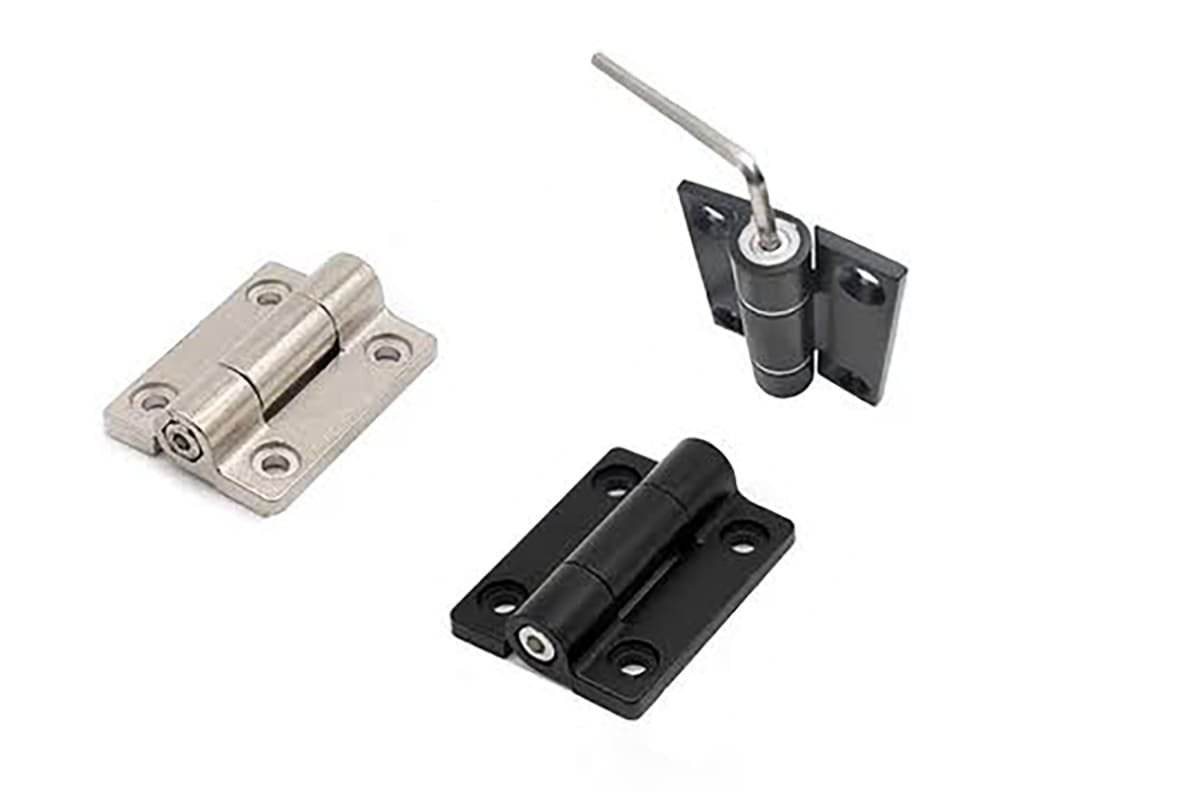
Key Questions to Ask a Hinge Supplier
A reliable supplier should be able to explain how the hinge is made and controlled. The answer does not need to sound like a laboratory report. However, it should show real production understanding.
Buyers can ask:
- What lubrication method is used during assembly?
- How is grease quantity controlled?
- What bearing, washer, or bushing structure is used?
- How does the hinge handle vertical installation?
- What inspection is done after assembly?
- What door weight and usage frequency is the hinge suitable for?
- Are oil-free or self-lubricating options available for high-traffic projects?
- Can the supplier support OEM or ODM adjustments?
At SDH Hardware, we focus on factory-direct production and full-process quality control. From a buyer’s perspective, the most useful part is not a slogan. The useful part is the ability to discuss hinge design, raw material control, production supervision, finished product inspection, and project-specific requirements.
Sample Testing Should Match the Real Project
A sample that opens smoothly on a desk does not prove long-term suitability. Buyers should test samples in a way that reflects actual use.
A practical pre-order review may include:
- Door weight simulation
- Vertical installation testing
- Repeated opening and closing checks
- High-temperature exposure review where relevant
- Visual inspection after movement cycles
- Check for oil marks near knuckles
- Surface finish inspection
- Packaging and batch consistency review
For technical procurement, I prefer clear inspection records. A supplier should be able to support drawings, product specifications, surface treatment details, and inspection arrangements after order completion.
Do Not Treat Certification as a Substitute for Application Review
CE certification and fire-rated certification are important documents for many door hardware projects.10 Buyers should verify certificates, standards, scope, and product matching. However, certification does not automatically answer every question about grease behavior in a specific high-traffic environment.11
A fire-rated hinge may still require the right structure, material, thickness, bearing design, and lubrication approach for the door system. For application-specific decisions, buyers should consult qualified door hardware professionals, project engineers, or testing bodies when necessary.
Supplier Capability Checklist
| Evaluation Area | Why It Matters |
|---|---|
| In-house production | Better control over process consistency |
| Hinge assembly experience | Better understanding of lubrication behavior |
| Testing equipment | Supports inspection and functional review |
| OEM/ODM ability | Allows project-specific adjustment |
| Product range | Supports one-stop sourcing for door hardware |
| Documentation | Helps buyers verify specifications |
| Export experience | Supports communication with importers and brands |
Supplier selection is not only about finding the cheapest hinge. It is about reducing risk across the door system.
When Are Oil-Free Hinges a Better Solution for Grease Leakage From Hinges?
Grease leakage from hinges becomes harder to accept when buildings have high traffic and strict cleanliness requirements. In these cases, improving grease alone may not solve the complaint risk. Buyers may need a different hinge structure instead of a different lubricant.
Oil-free hinges are often a better solution for grease leakage from hinges in hospitals, shopping malls, schools, airports, and other high-frequency public spaces. Self-lubricating or bearing-structure designs can reduce visible oil stains and lower cleaning complaints12, but buyers should still match the hinge to the door system.
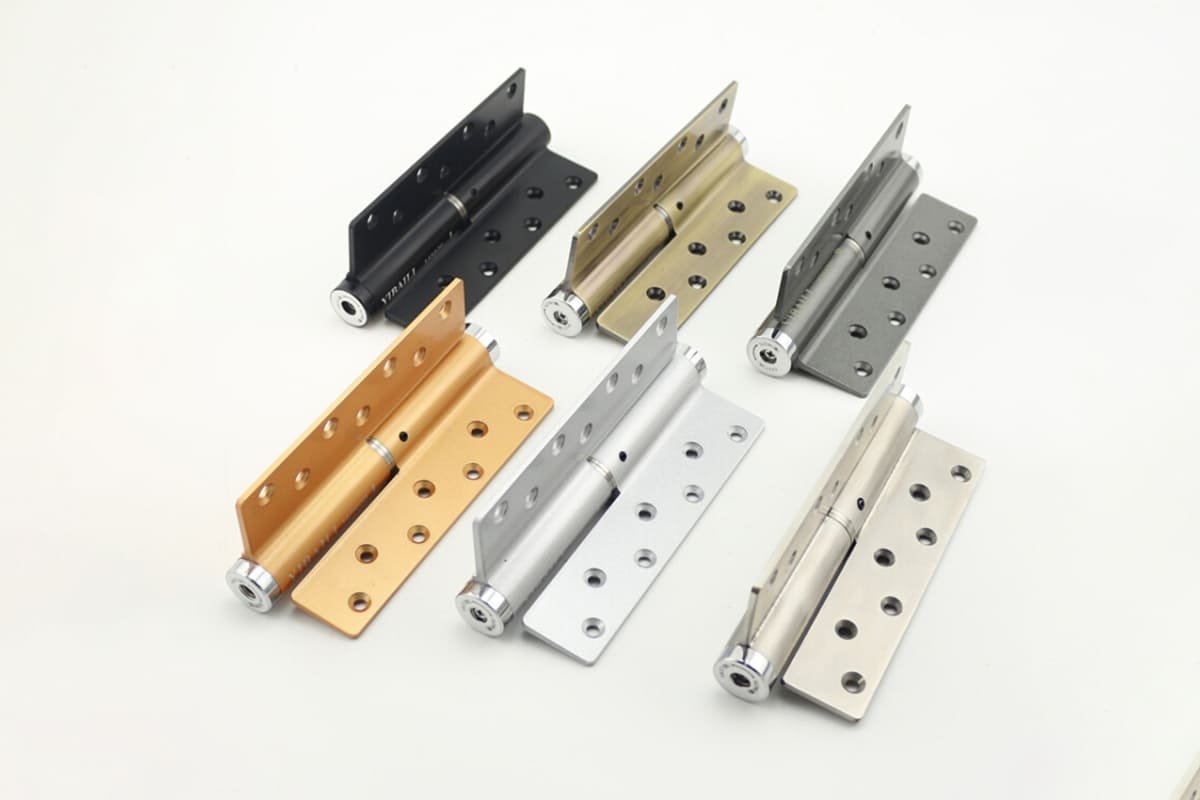
Oil-Free Does Not Mean Magic
I avoid saying that any hinge is permanently maintenance-free in every condition. Door hardware still faces load, movement, installation quality, environment, and user behavior. However, oil-free or self-lubricating hinge designs can reduce the risk of grease migration because they do not rely on traditional grease in the same way.
Depending on the design, an oil-free hinge may use:
- Self-lubricating bearing materials
- Special washer structures
- Reduced-friction bushings
- Alternative bearing systems
- Improved containment structures
- Lower-friction contact surfaces
The goal is simple: reduce the chance that black oil stains appear on visible architectural surfaces.
Best-Fit Applications for Oil-Free Hinges
Oil-free hinges are especially useful when cleaning complaints are expensive or unacceptable.
| Application | Why Oil-Free Hinges May Help |
|---|---|
| Hospitals | Clean appearance and hygiene perception matter |
| Schools | High door cycles increase staining risk |
| Shopping malls | Public visibility is high |
| Airports | Continuous traffic creates heavy use |
| Hotels | Appearance affects guest experience |
| Office towers | Property managers dislike repeated maintenance calls |
| Public service buildings | Long-term durability and low complaints are priorities |
Grease-Lubricated Hinges Still Have Their Place
Oil-free hinges should not be presented as the only correct choice. Grease-lubricated hinges can still be suitable for many applications, especially when the door cycle is moderate, the environment is stable, and the appearance risk is low.
The best choice depends on:
- Door weight
- Opening frequency
- Fire-rating requirements
- Frame and door material
- Required finish
- Budget
- Maintenance expectations
- Market standard
- Project location
For example, a standard interior door in a low-traffic commercial area may not need an oil-free hinge. A busy hospital corridor door may benefit from one. The buyer’s task is to match the hinge structure to the risk level.
How I Position Oil-Free Hinges in B2B Discussions
When I speak with door factories or hardware brand customers, I usually frame oil-free hinges as a scenario-based solution. That is more accurate than calling them universally better.
A useful selection approach looks like this:
- Identify the door usage frequency.
- Check the cleanliness sensitivity of the location.
- Review the door weight and hinge size.
- Confirm required standards and documents.
- Compare grease-lubricated and oil-free structures.
- Test samples before bulk order confirmation.
- Confirm inspection criteria with the supplier.
This approach keeps the decision practical. It also prevents overengineering low-risk projects while protecting high-visibility projects from avoidable complaints.
Frequently Asked Questions
Does grease leakage from hinges always mean the hinge is defective?
No. Minor grease traces can appear over time, especially after repeated use or in warm environments. However, continuous seepage, black staining, or pollution of the door frame, wall, or floor should be treated as a quality and application-matching concern.
Why does hinge grease become black?
Hinge grease often becomes black because fine metal particles, coating residue, or dust mix with the lubricant during repeated movement. Friction can generate wear debris, and the grease carries this material outward, creating dark stains around the hinge area.
Are oil-free hinges always better than grease-lubricated hinges?
No. Oil-free hinges are especially useful for high-traffic or cleanliness-sensitive areas, such as hospitals, schools, malls, and airports. Grease-lubricated hinges can still be suitable for moderate-use doors when the structure, lubrication control, and application are properly matched.
What should importers check before ordering hinges in bulk?
Importers should check hinge structure, material, finish, bearing or washer design, lubrication control, inspection process, certificates where required, and sample performance under realistic conditions. Buyers should also verify supplier documents and confirm project-specific suitability with qualified professionals when needed.
Can high temperature increase hinge grease leakage?
Yes. Higher ambient temperature can reduce grease viscosity and make it easier for lubricant to migrate. When high temperature combines with frequent door opening, friction heat, and vertical installation, the risk of visible grease leakage becomes higher.
Conclusion
Grease leakage from hinges is not just a “bad grease” problem. It usually comes from the combined effects of friction heat, ambient temperature, gravity, wear debris, hinge structure, and usage frequency. Minor traces may be normal, but black staining and continuous seepage deserve attention in B2B procurement. If your project involves high-traffic or stain-sensitive doors, I recommend comparing grease-lubricated and oil-free hinge designs before bulk ordering. SDH Hardware can support factory-direct hinge selection, OEM/ODM customization, and product inspection for your door hardware projects.
"Liquid Lubrication for Space Applications", https://ntrs.nasa.gov/api/citations/19920022596/downloads/19920022596.pdf. Tribology literature describes lubricating grease as a semi-solid lubricant whose apparent viscosity and flow behavior are temperature- and shear-dependent, supporting the article’s explanation that heat, clearances, gravity, and wear debris can contribute to lubricant migration in hinges. Evidence role: mechanism; source type: research. Supports: A neutral tribology source should support that lubricating grease softens with heat, can be displaced through clearances, and may carry wear particles during operation.. Scope note: This would support the general mechanism rather than prove leakage behavior for a specific hinge design. ↩
"Towards eliminating friction and wear in plain bearings ... - PMC", https://pmc.ncbi.nlm.nih.gov/articles/PMC10576080/. Architectural hardware standards and tribology references evaluate hinges and bearings by load, durability cycling, construction, and operating conditions, providing contextual support for treating grease retention as an application-dependent performance issue. Evidence role: general_support; source type: institution. Supports: A standards or engineering institution source should show that hinge performance is evaluated by load, durability cycles, bearing construction, and installation conditions.. Scope note: Such sources may not isolate grease leakage as the measured outcome. ↩
"Friction", https://en.wikipedia.org/wiki/Friction. Standard physics references explain that friction dissipates mechanical energy as thermal energy at contacting surfaces, supporting the article’s statement that repeated hinge motion can produce frictional heat. Evidence role: mechanism; source type: encyclopedia. Supports: A physics or encyclopedia source should confirm that friction dissipates mechanical energy as heat at contact surfaces.. ↩
"Frictional Heating During Sliding of Two Layers Made ... - PMC", https://pmc.ncbi.nlm.nih.gov/articles/PMC12654232/. Experimental and analytical tribology studies of repeated sliding contact show that frictional energy can produce localized temperature rises at contact interfaces, supporting the article’s inference that high-cycle hinge operation may warm internal contact surfaces. Evidence role: mechanism; source type: paper. Supports: A peer-reviewed tribology paper should support that repeated sliding or rolling contact can generate localized temperature increases.. Scope note: The evidence would be indirect if drawn from general sliding-contact or bearing studies rather than door-hinge-specific experiments. ↩
"NLGI consistency number", https://en.wikipedia.org/wiki/NLGI_consistency_number. Lubricating-grease rheology studies report that increasing temperature generally lowers apparent viscosity and changes grease consistency, supporting the article’s statement that warm environments can make hinge grease more prone to flow. Evidence role: mechanism; source type: paper. Supports: A lubricant rheology source should show that grease consistency and apparent viscosity change with temperature.. Scope note: The source would support the material behavior of grease generally, not the leakage threshold for a particular hinge. ↩
"Measuring and Modeling Grease Degradation", https://repository.lsu.edu/cgi/viewcontent.cgi?article=7732&context=gradschool_dissertations. Lubricant references describe grease softening and oil separation as temperature-sensitive behaviors that can permit flow or drainage under gravity, providing mechanistic support for downward migration in vertically oriented hinge assemblies. Evidence role: mechanism; source type: research. Supports: A lubricant testing or research source should support that softened grease or separated oil can move under gravity, especially at elevated temperature.. Scope note: This is contextual support and does not quantify migration in architectural hinges. ↩
"Wear Particle Analysis Using Ferrography", https://llis.nasa.gov/lesson/846. Lubricant-analysis literature identifies metallic wear particles and environmental contaminants as materials that can accumulate in grease during service, supporting the article’s explanation that dark hinge deposits may arise from wear debris mixed with lubricant. Evidence role: mechanism; source type: research. Supports: A lubricant-analysis or tribology source should support that wear particles and contaminants can accumulate in grease and alter its appearance.. Scope note: Color alone is not a definitive diagnostic test for hinge condition. ↩
"Modeling Adhesive Wear in Asperity and Rough Surface ...", https://pmc.ncbi.nlm.nih.gov/articles/PMC9573368/. Tribology references define wear as material loss or surface damage caused by relative motion between contacting bodies, supporting the article’s statement that moving metal hinge surfaces can generate microscopic debris. Evidence role: definition; source type: encyclopedia. Supports: A tribology reference should define wear as material removal or damage from contacting surfaces in relative motion.. ↩
"087100 – DOOR HARDWARE - Facilities and Campus Services", https://fcs.cornell.edu/087100-door-hardware. Door-hardware durability standards classify hinges by duty grade and cycle testing, reflecting the expectation that public and heavy-duty locations impose higher operating frequencies than low-use settings. Evidence role: general_support; source type: institution. Supports: A door-hardware standard or institutional guide should show that hinges are classified by duty level and durability cycles for different building-use intensities.. Scope note: Standards classify expected duty levels rather than measure actual door cycles in every public building. ↩
"Missing CE Marking on Fire Door Hinges & Locks", https://fyrup.co.uk/articles/missing-ce-marking-fire-door-hinges-locks. European regulatory guidance on CE marking for construction products and harmonized door-hardware standards supports the article’s statement that CE and fire-performance documentation can be relevant to architectural hinge procurement. Evidence role: historical_context; source type: government. Supports: An official source should explain CE marking under EU construction-product rules and the role of fire-performance standards for door hardware.. Scope note: Regulatory relevance depends on jurisdiction, product scope, and the exact standard claimed. ↩
"CE marking", https://en.wikipedia.org/wiki/CE_marking. Standards-based certification assesses products against specified test scopes, so a hinge’s CE or fire-performance documentation may not directly evaluate grease migration in a particular high-traffic installation. Evidence role: general_support; source type: institution. Supports: A standards body or official guidance source should show that certification addresses defined standard requirements and does not cover all possible application-specific performance issues.. Scope note: The limitation depends on the specific certificate, standard edition, and test scope. ↩
"Lubrication of Space Systems", https://ntrs.nasa.gov/api/citations/19940024896/downloads/19940024896.pdf. Research on self-lubricating bearing materials shows that solid or embedded lubricants can lower friction without continuous external grease application, supporting the article’s claim that such hinge designs may reduce visible oil-stain risk. Evidence role: mechanism; source type: paper. Supports: A materials or tribology paper should support that self-lubricating bearings use embedded or solid lubricant mechanisms that reduce dependence on externally applied grease or oil.. Scope note: The evidence supports the lubrication mechanism, not guaranteed elimination of staining in every door system. ↩