
Steel Door Hardware & Coordination Guide: Hinges, Locks, Closers & Panic Devices
Steel door hardware can fail as a package when buyers choose hinges, locks, closers, and panic devices one by one. A qualified item may still conflict with machining, fire requirements, access direction, or door function. The better solution is coordination before production, so every component supports the same door standard and project use.
Steel door hardware should be coordinated by confirming door weight, thickness, width, fire or smoke requirements, usage frequency, door function, handing, and access direction before ordering or machining. Hinges and closers should match door conditions first, locks should match door function, and panic devices should be treated as part of the full access and escape arrangement.
I work with door factories and project buyers who often send drawings after the door structure is already decided. At that point, small hardware conflicts can become expensive. So in this guide, I will focus on the practical checks I prefer to confirm before bulk procurement or production starts.
Why Should Steel Door Hardware Coordination Start Before Door Machining?
Steel door hardware coordination becomes difficult when machining starts too early. A door factory may already cut lock pockets, hinge positions, closer reinforcements, or panic bar fixing points. If the hardware changes later, the door leaf may need rework, and the project schedule can suffer.
Steel door hardware coordination should start before door machining because hardware affects cutouts, reinforcements, handing, fixing positions, fire performance, and access function1. Buyers should confirm the complete hardware set first, then align the door drawing, frame preparation, and production data with verified product specifications and project requirements.
Hardware Is Not Just a List of Items
In many RFQs, I see a simple list like this:
- 3 hinges
- 1 mortise lock
- 1 cylinder
- 1 lever handle
- 1 door closer
- 1 panic bar
This list looks complete, but it does not prove coordination. It does not tell me whether the closer arm conflicts with the door frame. It does not show whether the lock case fits the door thickness. It does not confirm whether the panic device works with the exterior trim. It also does not explain whether the door is fire-rated, smoke-control, high-traffic, or an emergency exit.
For steel doors, the hardware usually affects the door leaf and frame before the installer sees the site. That is why I prefer to confirm the door application first, then the hardware family, and then the machining data.
Key Variables to Confirm First
Before I recommend or check a complete hardware set, I usually ask for these details:
| Coordination Variable | Why It Matters | Typical Impact |
|---|---|---|
| [Door weight | Affects hinge and closer selection](https://buildershardware.com/ANSI-BHMA-Standards/Hardware-Highlights/A1561-2025-Butts-and-Hinges)%%%FOOTNOTE_REF_2%%% | Hinge type, quantity, closer strength |
| Door thickness | Affects lock case, spindle, cylinder, fixing screws | Lock compatibility and installation depth |
| [Door width and height | Affects closer control and panic device length](https://metechhardware.com/door-closer-power-size-guide-commercial-doors/)%%%FOOTNOTE_REF_3%%% | Closer model, arm type, panic bar size |
| Fire or smoke requirement | Affects closer function and hardware certification | Non-hold-open closer, listed hardware |
| Usage frequency | Affects durability expectations | Product grade, materials, testing data |
| Door function | Defines lock and access operation | Classroom lock, privacy lock, passage lock, escape function |
| Handing and swing direction | Affects lock, closer, panic device, and trim | Left/right orientation, push/pull side |
| Interior/exterior access | Affects panic device and outside trim | Lever, pull, cylinder, or no exterior access |
Why Product Certificates Still Need Project Review
A product may carry CE documentation, fire-rated documentation, or other test reports. These documents are useful, but they are not a substitute for project review.4 Buyers should verify:
- The exact product model on the certificate or report
- The applicable standard and test scope
- The tested door type or assembly condition
- The required rating duration or performance class
- Local authority or consultant acceptance
At SDH Hardware, we manufacture architectural door hardware and often help buyers compare product data with procurement requirements. However, I always remind customers that fire, smoke, and escape performance must be checked against the project specification and local regulations5. A hardware supplier can provide product information and coordination support, but the final compliance decision should involve qualified project professionals.
My practical rule is simple: confirm the door function before confirming the machining drawing. This avoids many preventable changes later.
Pre-Order Coordination Checklist
Before confirming a purchase order, I recommend that buyers collect:
- Door schedule
- Door leaf and frame drawings
- Door thickness and material details
- Fire or smoke rating requirement, if any
- Opening direction and handing
- Interior and exterior side definition
- Required lock function
- Required closer function
- Panic device function and exterior trim choice
- Finish requirement and corrosion environment
- Packaging, labeling, and branding needs
- Certification or inspection documents required by the project
This step is not only technical. It also protects procurement. If the door factory, hardware supplier, and project buyer approve the same data before production, the risk of wrong cutouts and mismatched accessories drops sharply.
How Should Steel Door Hardware Hinges and Closers Be Matched to Door Conditions?
Steel door hardware selection often goes wrong when hinges and closers are treated as standard accessories. A heavy, wide, high-frequency, or fire-rated steel door needs different support and control than a light internal service door. If buyers skip these door conditions, the door may sag, slam, or fail inspection.
Hinges and door closers should be selected from door conditions first. Buyers should confirm door weight, door thickness, door width, fire-rated requirement, smoke-control requirement, opening angle, usage frequency, and frame structure before choosing hinge type, hinge quantity, closer function, closer mounting method, and fixing reinforcement.
Start With Door Weight, Width, and Usage
Hinges and closers both respond to physical conditions. A door closer controls movement. Hinges carry and guide the door leaf. If the door is heavy or frequently used, both parts must be selected with more care.
I usually separate the evaluation into three layers:
Structural support
The hinges must suit the door weight, door thickness, leaf construction, and frame preparation.Controlled closing
The closer must bring the door back reliably without creating unsafe force or poor user experience.Project requirement
Fire doors, smoke-control doors, and high-traffic openings may require specific closer functions, test documents, or installation rules.
A door that looks simple on a drawing may still need special attention. For example, a wider steel door may place more leverage on the hinges and closer than a narrow door of similar weight. A door in a school, hospital, hotel corridor, or public building may also face more cycles per day than a storage room door.
Hinge and Closer Coordination Table
| Door Condition | Hinge Coordination Point | Closer Coordination Point | Buyer Check |
|---|---|---|---|
| Heavy door leaf | Verify hinge type, material, bearing design, and product data | Verify closer strength range and fixing method | Ask for tested or rated product data |
| Wide door leaf | Check leverage and hinge spacing | Confirm closing control and arm geometry | Review door width against closer data |
| Fire-rated door | Confirm hinge suitability for fire door use | Usually requires non-hold-open closer unless project allows otherwise | Verify reports and local rules |
| Smoke-control door | Confirm stable alignment and sealing support | Use closer function that supports reliable closing | Check smoke-control specification |
| High-frequency use | Review durability grade and material | Review cycle test data where required6 | Match to usage level |
| Special frame design | Confirm screw fixing and reinforcement | Confirm mounting plate or closer bracket needs | Align with door drawings |
Why Fire and Smoke Requirements Affect Closers
For fire doors and smoke-control doors, the door must generally close properly after use7. A hold-open function can conflict with this goal unless it is part of an approved system, such as an electromagnetic hold-open arrangement connected to a fire alarm system.8 The exact requirement depends on local regulations and project specifications.
So I avoid making a universal claim. Instead, I apply this procurement rule:
- Fire-rated or smoke-control door: select a non-hold-open closer unless the project specification and local authority allow a tested hold-open system.
- Non-fire internal door: hold-open or non-hold-open can be selected according to traffic flow and user needs.
- Public or high-traffic door: check closing speed, latching action, accessibility requirements, and safety expectations.
This matters because the closer is not just a convenience item. It can affect the door’s ability to return to the closed position. If the door also carries smoke seals, latches, or panic hardware, the closer must coordinate with all of them.
Reinforcement and Fixing Should Not Be an Afterthought
A steel door may need reinforcement plates or prepared fixing areas for hinges and closers. If the door closer is surface-mounted, the top rail and frame area must accept the fixing screws. If the closer uses a parallel arm or slide channel, the bracket position must match the frame design.
Buyers should ask for:
- Product installation drawings
- Hole position data
- Fixing screw specifications
- Mounting plate needs
- Frame clearance requirements
- Opening angle limits
- Arm type confirmation
I have seen small differences in closer arm selection affect the final door drawing. For this reason, I prefer to check the closer installation sheet before the door factory finalizes the reinforcement.
Practical Buyer Questions
Before ordering hinges and closers, ask:
- What is the confirmed door leaf weight?
- What is the door width and height?
- Is the door fire-rated or smoke-control?
- What usage frequency does the project expect?
- What is the door opening angle?
- Is the closer mounted on the pull side, push side, frame, or transom area?
- Does the door need hold-open, delayed action, backcheck, or adjustable closing speed?
- Does the product data support the required application?
These questions prevent many coordination errors. They also help the supplier recommend products based on door conditions instead of appearance alone.
How Should Steel Door Hardware Locks Be Matched to Door Function?
Steel door hardware lock selection can become misleading when buyers focus only on size, finish, or handle style. A lock that fits the door may still be wrong for the room function. If the access logic is unclear, users may face poor security, difficult operation, or unsafe exit behavior.
Locks should be matched to the door’s function first.9 Buyers should define how the door is used, who operates it, whether it needs key access, whether free egress is required, and whether it connects to a panic device, cylinder, lever handle, pull handle, or multi-point locking arrangement.
Lock Function Comes Before Lock Appearance
A lock case dimension matters, but it is not the starting point. The starting point is the door’s job.
A classroom door, a warehouse door, a hotel service door, a steel entrance door, and an emergency exit door may all use metal hardware. However, they do not need the same lock function. When buyers select only by backset, center distance, or faceplate size, they may miss how the door should operate during normal use and emergency use.
I usually ask the buyer to explain the door in one sentence. For example:
- “This is a classroom door that teachers control with a key.”
- “This is an exit door that must allow people to leave quickly.”
- “This is an exterior steel door that needs stronger locking points.”
- “This is an internal service door with limited access.”
- “This is a double steel door with active and inactive leaves.”
That simple sentence often reveals the correct lock category faster than a long product list.
Common Lock Coordination Questions
| Question | Why It Matters | Coordination Impact |
|---|---|---|
| Is the door for passage, privacy, security, or emergency exit? | Defines basic lock function | Lock type and trim selection |
| Is key access needed from one side or both sides? | Defines cylinder arrangement | Single cylinder, double cylinder, thumbturn, or other setup |
| [Is free exit required? | Affects safety and code compliance](http://www.osha.gov/laws-regs/regulations/standardnumber/1910/1910.36)%%%FOOTNOTE_REF_10%%% | Panic function or escape function may be needed |
| Is the door single leaf or double leaf? | Affects active/inactive leaf hardware | Flush bolts, coordinators, panic device type |
| Is the door external or internal? | Affects durability and corrosion needs | Finish, material, cylinder protection |
| Is the lock connected to access control? | Affects electrical and mechanical interface | Electric strike, latch monitoring, or special lock body |
Matching Lock Types to Use Cases
This is not a product introduction. It is a coordination map.
| Door Function | Possible Lock Direction | Buyer Must Confirm |
|---|---|---|
| Classroom or office control | Classroom lock or similar controlled access function | Key operation, lever behavior, local safety rules |
| External steel door | Mortise lock, hook lock, or multi-point lock depending on design | Door thickness, security expectation, frame keepers |
| Sliding or special steel door | Hook lock or project-specific lock | Hook engagement, strike design, door movement |
| High-security entrance | Multi-point lock or reinforced locking design | Door structure, cylinder protection, certification data |
| Emergency exit | Panic device with suitable latch or lock interface | Interior egress, exterior access, local escape regulations |
| Service room | Storeroom or controlled function lock | Who can enter, how users exit |
The lock must match the door behavior, not only the door cutout.
Door Thickness and Machining Still Matter
After the function is clear, buyers should confirm technical fit. For steel doors, the lock body must coordinate with the door thickness, lock pocket, edge preparation, and reinforcement. The spindle length, cylinder length, fixing screws, and handle roses or plates must match the door construction.
Important data includes:
- Backset
- Center distance
- Faceplate size
- Lock case depth
- Forend shape
- Latch direction
- Deadbolt throw, if applicable
- Cylinder profile
- Spindle size
- Strike plate or keeper design
- Door thickness range
- Handle or trim fixing position
If the door is already tooled for a specific lock size, the supplier must check compatibility carefully. If production has not started, buyers have more flexibility to select the correct lock function and then machine the door accordingly.
Lock Coordination With Panic Devices
Locks and panic devices often overlap on exit doors. A panic bar may control the latch from the interior side, while the exterior side may use a cylinder, lever, pull handle, or no access trim. If buyers select a mortise lock first and add a panic device later, the two products may not work together.
The coordination should answer:
- Does the panic device include its own latch?
- Does it operate a mortise lock or rim latch?
- Is the exterior trim active or fixed?
- Is key access required from outside?
- Does the door need re-entry after exit?
- Does the local regulation require a specific escape function?
- Does the product combination have verified test data where required?
This is why I treat lock selection as part of the full door operation. The lock is not only a security product. It is also an access, exit, and machining product.
How Should Steel Door Hardware Panic Devices Coordinate With Interior and Exterior Access?
Steel door hardware panic device selection can create problems when buyers treat the panic bar as a standalone accessory. The interior bar may be correct, but the exterior trim, lock interface, door handing, latch type, and escape requirement may be unclear. This causes confusion during production and installation.
Panic devices should be coordinated as complete access products. Buyers should confirm the interior escape side, exterior access requirement, door leaf type, latch or lock interface, handing, fire rating, and local egress rules before selecting the panic bar, exterior trim, cylinder, pull handle, or lever arrangement.
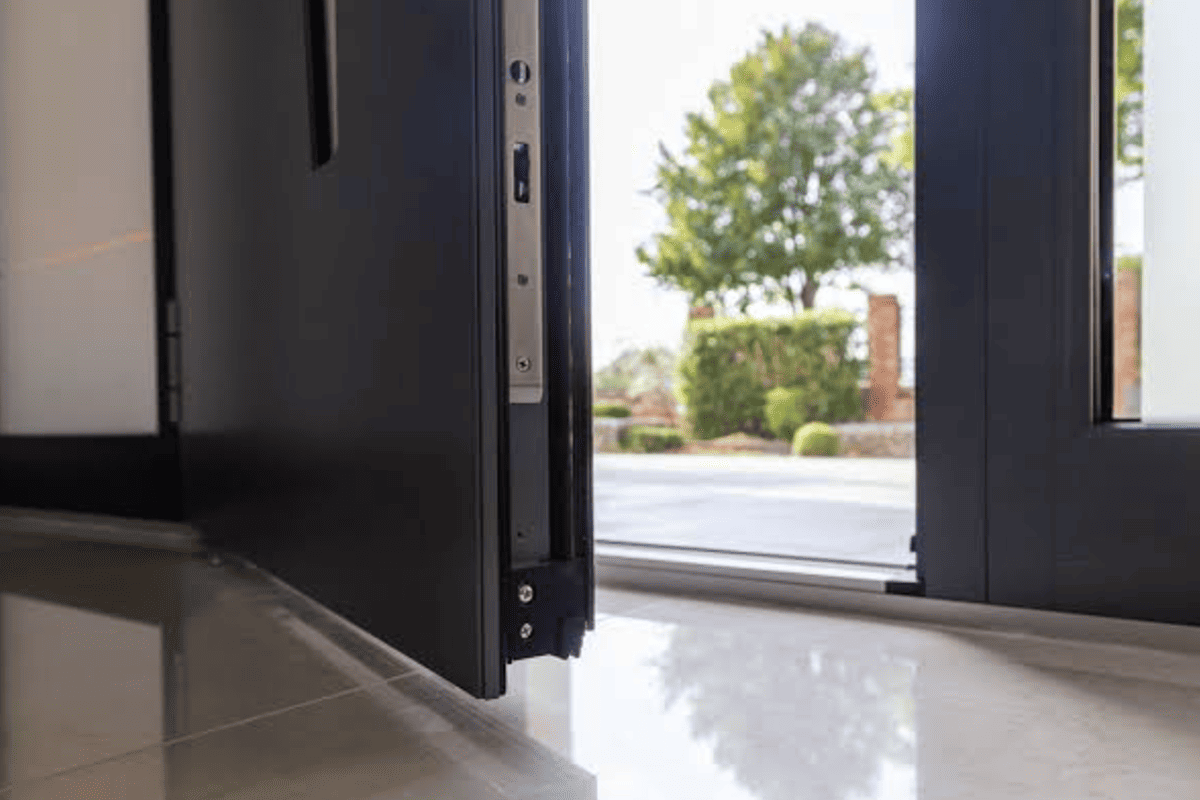
Panic Devices Start With Direction of Escape
A panic device is normally installed on the side people use to exit.11 In many projects, that means the bar is fixed on the interior side of a door connecting an internal area to an external area or escape route. However, the exterior side can vary.
The outside may have:
- No trim
- A fixed pull handle
- A keyed outside lever
- A cylinder trim
- A pull plate
- A project-specific access control trim
This is why panic hardware should not be selected as “one bar only.” The buyer must define how people leave and how authorized users enter.
Interior and Exterior Coordination Table
| Door Side | Main Question | Possible Hardware | Coordination Risk |
|---|---|---|---|
| Interior escape side | How do users exit quickly? | Panic exit bar, push bar, touch bar | Wrong handing or latch type |
| Exterior access side | Can authorized users enter? | Lever trim, pull handle, cylinder, fixed trim | Trim does not operate latch |
| Door edge | How does the door latch? | Rim latch, mortise lock, vertical rods, concealed rods | Strike or frame mismatch |
| Door frame | Where does the latch engage? | Strike plate, top/bottom strikes, keeper | Frame preparation conflict |
| Fire-rated opening | Is the device approved for this use? | Fire-rated panic device where required | Unverified certification scope |
Fire Exit and Escape Requirements Need Local Review
I cannot act as the local code authority for a project, and buyers should be careful with anyone who claims they can. Panic and emergency exit requirements depend on the country, building type, occupancy, door location, and local approval process.
A procurement team should verify:
- Whether panic hardware is required
- Whether emergency exit hardware is enough
- Whether the door is fire-rated
- Whether dogging or hold-open is allowed
- Whether exterior re-entry is required
- Whether electrical access control affects egress
- Whether the selected device has the required documentation
For fire-rated exit doors, panic device function and latch security can be sensitive. The hardware must support the intended door performance. Product certifications and fire-rated reports should be checked by model, standard, and tested configuration.
Panic Devices on Single and Double Steel Doors
Single-leaf doors are usually simpler. The panic bar operates one leaf, and the latch engages the frame. Double-leaf steel doors require more coordination.12 The active leaf, inactive leaf, meeting stile, vertical rods, flush bolts, door coordinator, and closing sequence may all matter.
For double doors, buyers should confirm:
- Which leaf opens first?
- Does each leaf need panic operation?
- Does the inactive leaf need vertical locking?
- Is there a mullion?
- Does the closer sequence need a coordinator?
- Are the doors fire-rated?
- Do the strikes fit the frame and threshold design?
If these questions are not settled before production, the factory may prepare the wrong frame holes or reinforcement plates.
Exterior Trim Is a Function Decision
A panic bar provides exit operation from the inside. The outside trim defines entry control. This detail is very important for schools, warehouses, public buildings, and commercial entrances.
Common exterior decisions include:
- Fixed pull only: People can pull the door open only when it is unlatched or unlocked by another system.
- Lever trim with cylinder: Authorized users can unlock and operate the latch from outside.
- Cylinder-only trim: A key may retract the latch or release the trim, depending on the device design.
- No exterior trim: The door is exit-only.
- Access control trim: The door may integrate with electric release or credential systems.
Each option changes the user experience and the door preparation. It may also affect security and compliance. So I recommend that buyers describe the access logic clearly before selecting the panic device model.
A Simple Panic Device Coordination Flow
I use this flow when checking panic hardware requests:
- Confirm the escape direction.
- Confirm whether the door is single or double leaf.
- Confirm whether the opening is fire-rated.
- Confirm the latch type and strike location.
- Confirm the outside access method.
- Confirm handing and door swing.
- Confirm frame and threshold preparation.
- Confirm certificates, test reports, and project approvals.
- Confirm drawings before bulk production.
This process keeps the panic device connected to the full steel door assembly instead of treating it as a late-stage accessory.
What Pre-Order Data Should Buyers Confirm for Steel Door Hardware Sets?
Steel door hardware procurement becomes risky when the buyer sends only quantities and finishes. The supplier may quote, but the quote may not prove compatibility. Without drawings, door conditions, and function details, both sides may discover conflicts after production has started.
Buyers should confirm door schedules, door drawings, hardware functions, fire or smoke requirements, door dimensions, door thickness, handing, finishes, certification needs, packaging, inspection rules, and installation data before ordering steel door hardware sets. This information helps suppliers verify compatibility and reduces machining, delivery, and installation risks.
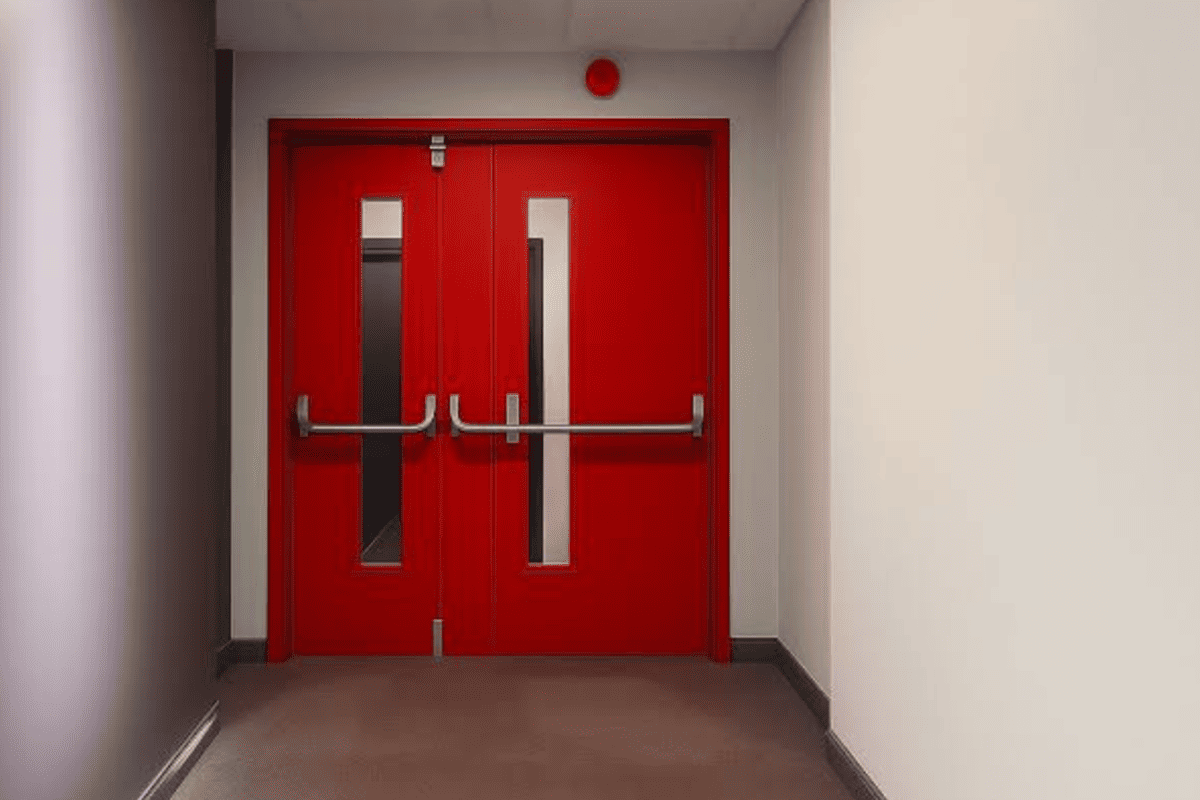
The Door Schedule Should Lead the Hardware Schedule
A strong procurement process starts with the door schedule. The door schedule shows the function of each opening. The hardware schedule then follows it. If the hardware schedule is built without the door schedule, the buyer may miss differences between doors that look similar.
For example, two steel doors may have the same size and finish. One may be a service room door. The other may be a fire-rated exit door. They should not automatically receive the same hardware set.
Conclusion
Steel door hardware coordination is a pre-production decision, not a final purchasing detail. Hinges and closers should follow door weight, width, thickness, fire or smoke requirements, and usage frequency. Locks should follow door function. Panic devices should coordinate interior escape with exterior access. Before machining or ordering, I recommend confirming drawings, product data, certifications, and local project requirements. If you need factory-side support for complete steel door hardware sets, SDH Hardware can help review specifications, drawings, samples, and OEM/ODM requirements before bulk production.
"SECTION 087111 - DOOR HARDWARE (SCHEDULED BY ...", https://fpm.usc.edu/wp-content/uploads/2021/11/087102-USC-HSC-door-hardware-Guide-Specification_1.pdf. A door-assembly standard or technical guide describes hardware preparations, reinforcements, and field modifications as part of the door and frame assembly, supporting the claim that hardware choices affect machining and rated performance; this support is contextual and does not verify any specific project drawing. Evidence role: mechanism; source type: institution. Supports: The source should support that door hardware is coordinated with door and frame preparation, reinforcement, handing, and fire-rated assembly requirements.. Scope note: Contextual support only; the cited source would not confirm compatibility for a particular hardware set. ↩
"A156.1 - 2025 Butts and Hinges", https://buildershardware.com/ANSI-BHMA-Standards/Hardware-Highlights/A1561-2025-Butts-and-Hinges. Hardware standards for hinges and controlled door-closing devices classify products by performance parameters that include door mass, supporting the claim that door weight affects hinge and closer selection; the standard does not select a specific model for a particular opening. Evidence role: mechanism; source type: institution. Supports: The source should support that door mass is a parameter used in selecting or rating hinges and closers.. Scope note: Contextual support; final selection also depends on door width, usage, mounting, and local requirements. ↩
"Door Closer Power Size Guide: How to Choose the Right ...", https://metechhardware.com/door-closer-power-size-guide-commercial-doors/. Door-control and exit-device standards use door size or related dimensional limits in product classification and application, supporting the claim that width and height affect closer control and panic-device length; the evidence is general and does not establish suitability for a specific door. Evidence role: mechanism; source type: institution. Supports: The source should support that door dimensions are relevant to closer power/control and exit-device sizing.. Scope note: General support; manufacturers' installation data and the project standard still determine exact sizing. ↩
"Doors, Windows and Related Hardware Application Guide", https://www.ul.com/thecodeauthority/knowledge/ul-fire-rated-doors-guide. Certification and fire-door standards generally treat labels and listings as limited to specified products, assemblies, and installation conditions, supporting the need for project review beyond possession of a certificate; the source would not determine acceptance by a local authority. Evidence role: expert_consensus; source type: institution. Supports: The source should show that certification or listing documents must be interpreted according to the tested product, assembly, standard, and installation conditions.. Scope note: Contextual support; local approval and project-specific compliance still require review by the responsible authority or professional. ↩
"CHAPTER 10 MEANS OF EGRESS", https://codes.iccsafe.org/content/IBC2021P2/chapter-10-means-of-egress. Building regulations and life-safety codes set requirements for fire doors, smoke-control doors, and egress hardware according to occupancy, location, and rating, supporting the statement that performance must be checked against project specifications and local rules; the source may not address the article's specific hardware products. Evidence role: general_support; source type: government. Supports: The source should support that fire, smoke, and egress-door requirements are set through building regulations or adopted codes and depend on project conditions.. Scope note: Contextual support; codes vary by jurisdiction and edition. ↩
"ANSI/BHMA Standards", https://buildershardware.com/ANSI-BHMA-Standards. Door-hardware standards commonly include durability classifications and cycle tests for products such as locks, closers, and exit devices, supporting the use of cycle-test data for high-frequency openings; the source does not prove that a particular product will perform adequately in a specific building. Evidence role: general_support; source type: institution. Supports: The source should support that architectural door hardware is commonly evaluated through durability grades or cycle testing.. Scope note: General support; real service life depends on installation, maintenance, environment, and user behavior. ↩
"Fire Doors and NFPA 80 FAQs", https://www.nfpa.org/news-blogs-and-articles/blogs/2025/04/11/fire-doors-faqs. Fire-door standards and building codes commonly require fire and smoke door assemblies to be self-closing or automatic-closing in specified applications, supporting the statement that these doors generally must close after use; exceptions depend on the adopted code and opening type. Evidence role: expert_consensus; source type: institution. Supports: The source should support that fire and smoke door assemblies are commonly required to be self-closing or automatic-closing depending on application.. Scope note: Contextual support; not every door labeled fire-rated or smoke-control is subject to the same closer requirement in every jurisdiction. ↩
"Alarm System Permit | Contact the City", https://www.manhattanbeach.gov/services/apply-for/alarm-system-permit. Fire-door and life-safety standards permit hold-open arrangements only when they release automatically under specified alarm or detection conditions, supporting the statement that ordinary hold-open functions can conflict with required closing; the exact permitted arrangement depends on the applicable code. Evidence role: mechanism; source type: institution. Supports: The source should support that fire-door hold-open devices are allowed only when arranged to release automatically under specified fire-alarm or detection conditions.. Scope note: Contextual support; requirements vary by code edition, occupancy, and local approval. ↩
"A156.2 - 2022 Locks and Latches", https://buildershardware.com/ANSI-BHMA-Standards/Hardware-Highlights/A1562-2022-Locks-and-Latches. Lock standards classify locksets by operating function, such as passage, privacy, classroom, office, and storeroom functions, supporting the claim that lock selection should follow the door's intended use; the classification alone does not determine compliance for every project. Evidence role: definition; source type: institution. Supports: The source should support that locksets are classified by functions such as passage, privacy, classroom, storeroom, or office use.. Scope note: General support; code, security policy, and egress requirements may override a simple function match. ↩
"1910.36 - Design and construction requirements for exit ...", http://www.osha.gov/laws-regs/regulations/standardnumber/1910/1910.36. Egress regulations commonly require exit-route doors to be openable from the egress side without keys, tools, or special knowledge, supporting the statement that free-exit requirements affect safety and code compliance; exceptions and special locking arrangements depend on the adopted code. Evidence role: general_support; source type: government. Supports: The source should support that egress doors are commonly regulated to allow opening from the egress side without prohibited restrictions.. Scope note: Contextual support; some occupancies and controlled-egress systems have specific exceptions. ↩
"2021 International Building Code (IBC) - 1010.2.9 Panic and ...", https://codes.iccsafe.org/s/IBC2021P1/chapter-10-means-of-egress/IBC2021P1-Ch10-Sec1010.2.9. Egress and exit-device standards define panic hardware as a releasing mechanism operated from the egress side of a door, supporting the statement that the device is normally installed on the side used for exit; the cited definition does not address every local installation detail. Evidence role: definition; source type: institution. Supports: The source should support that panic or exit devices are designed to release a latched door from the egress side.. Scope note: General support; exact placement and product type depend on code, handing, door swing, and assembly design. ↩
"QQ: Coordinators on Fire Doors", https://idighardware.com/2019/05/qq-coordinators-on-fire-doors/. Fire-door and hardware guidance for pairs of doors addresses active and inactive leaves, latching, coordinators, astragals, and closing sequence, supporting the claim that double-leaf doors require additional coordination; the source does not determine the correct arrangement for a specific opening. Evidence role: mechanism; source type: institution. Supports: The source should support that pairs of doors can require coordinated hardware such as coordinators, astragals, vertical rods, flush bolts, and proper closing sequence.. Scope note: Contextual support; requirements vary according to rating, leaf configuration, frame type, and local code. ↩
