
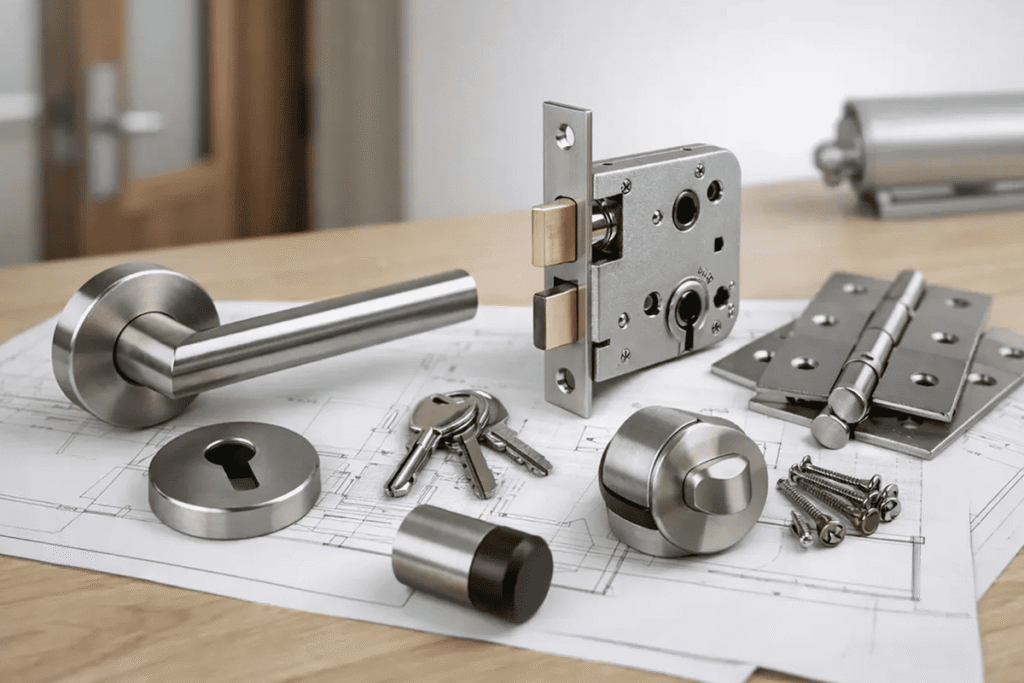
How long does a door handle last? Lifespan and differences in quality
A door handle can fail earlier than buyers expect when its material, structure, finish, and tested durability do not match the project environment. That failure creates complaints, maintenance cost, and brand risk. I usually recommend judging lifespan through usage frequency, corrosion exposure, mechanical strength, and verified quality testing instead of a simple year estimate.
A door handle can last for years or fail quickly depending on daily operating cycles, material grade, structure, surface treatment, installation, and environment. For B2B projects, I prefer to evaluate lifespan by tested cycle performance, such as EN19061 durability grades, then convert cycles into expected service time based on actual traffic levels.
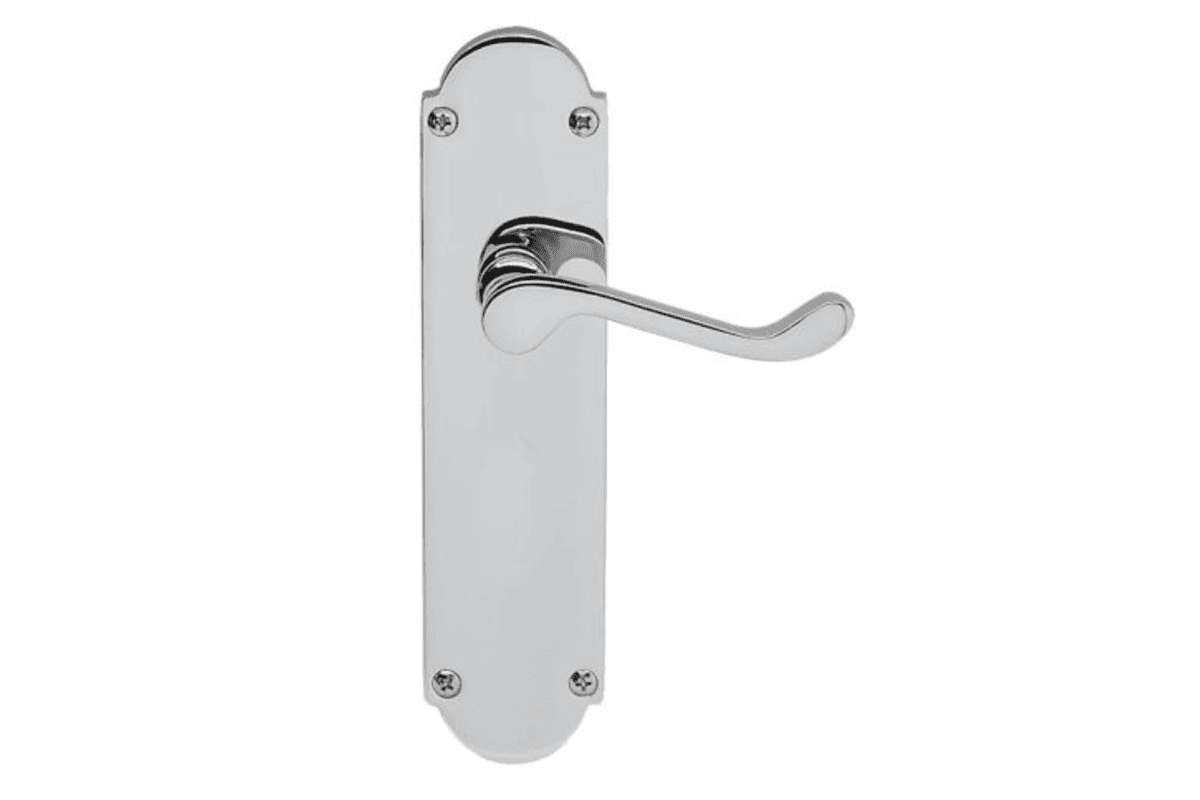
Many buyers ask for a number of years, but I think the better question is more practical: how many times will this handle be used, and under what conditions? Once we answer that, the difference between a low-cost handle and a properly specified commercial handle becomes much clearer.
How long does a door handle last in real use?
A door handle does not wear out by calendar time alone. It wears out through repeated operation, impact, humidity, chemicals, poor installation, and weak internal structure. If a project has high traffic, a vague “long-lasting” claim can create serious after-sales problems later.
A door handle’s real lifespan depends on the number of operating cycles it can withstand and the number of times it is used per day.2 A handle tested to 200,000 cycles may serve very different periods in a hotel room, school corridor, hospital, office, or commercial entrance.
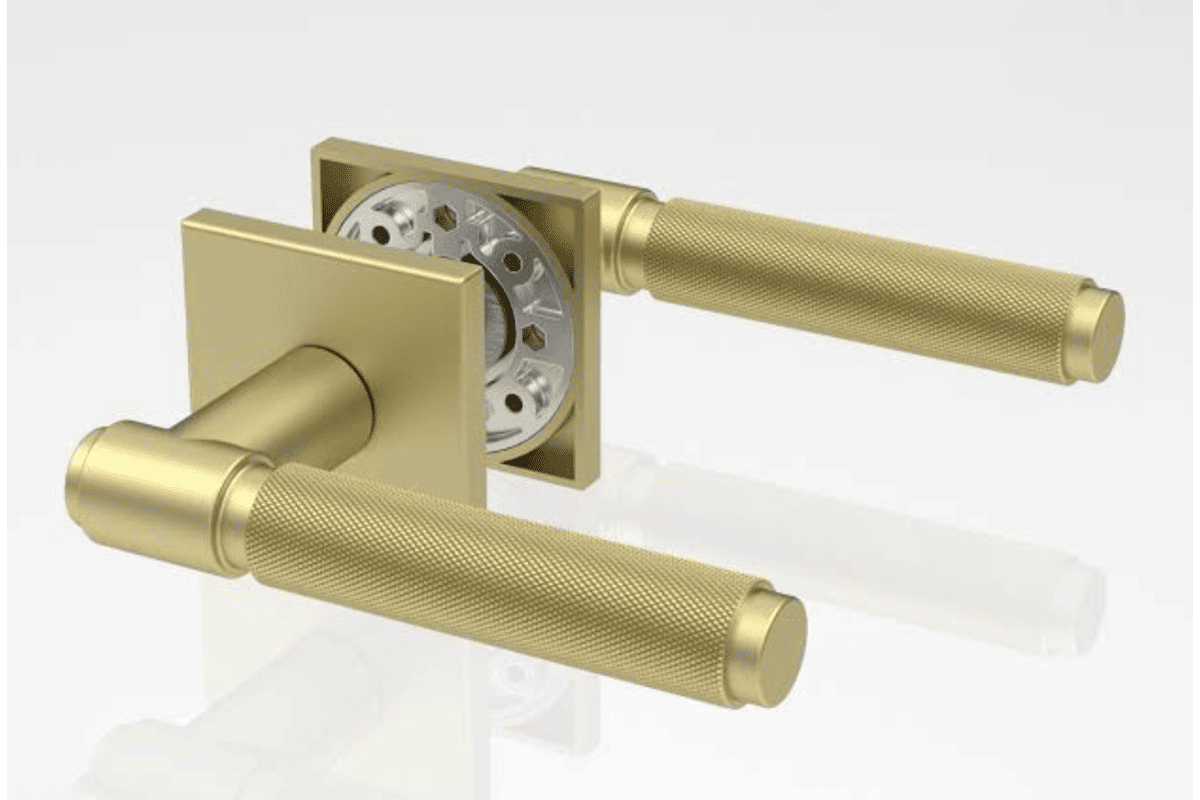
Why “years” can be misleading
I often hear buyers ask, “How many years can this handle last?” I understand the question, but in factory quality work, I prefer to translate years into cycles. One cycle usually means one complete operation, such as pressing and releasing the lever.3 A handle used 20 times per day faces a very different load from one used 1,000 times per day.
For example, if a handle is tested to 200,000 operating cycles, the estimated service period changes sharply by usage level:
| Estimated use level | Approximate operations per day | 200,000-cycle equivalent |
|---|---|---|
| Low-use private room | 20 cycles/day | About 27 years |
| Small office door | 100 cycles/day | About 5.5 years |
| School or clinic door | 300 cycles/day | About 1.8 years |
| Busy public entrance | 1,000 cycles/day | About 6.5 months |
This table is not a guarantee. It is only a way to help buyers think more clearly. Real-world performance also depends on installation alignment, user behavior, door weight, latch resistance, cleaning chemicals, and air humidity.
Functional lifespan vs appearance lifespan
I also separate functional lifespan from appearance lifespan during product evaluation.
- Functional lifespan means the lever still returns properly, the spindle fit remains stable, the rose or plate stays secure, and the handle still operates the lock smoothly.
- Appearance lifespan means the surface still looks acceptable, with limited scratches, discoloration, rust marks, coating wear, or staining.
A handle can still function well but look worn after heavy public use. This is common in schools, hospitals, airports, and commercial buildings where users carry keys, carts, tools, bags, or cleaning equipment.4 In some cases, the surface becomes the first complaint even when the internal mechanism is still acceptable.
How I estimate service suitability
When I review a handle for a project, I do not start with the sales description. I start with the application:
Where will it be installed?
Interior office, public corridor, fire-rated door, washroom, coastal building, hospital, or school?How many people will use it daily?
A staff-only door and a public entrance require different specifications.What is the environment?
Humidity, salt air, cleaning agents, and temperature changes all matter.What testing documents are available?
Buyers should verify CE documents, EN1906 test reports, fire-rated certificates where relevant, and model-specific specifications.What maintenance standard will the building follow?
Even high-quality hardware can perform poorly if it is installed badly or never inspected.
From my manufacturing experience, this method gives a more honest result than promising a fixed number of years. It also helps buyers compare suppliers on measurable quality instead of broad claims.
What door handle quality factors affect lifespan?
A door handle may look simple from the outside, but its lifespan depends on several hidden details. Buyers can miss these details when they focus only on weight, finish color, or price. That can lead to loose levers, weak rebound, surface corrosion, and customer complaints.
The main quality factors that affect door handle lifespan are material, wall thickness, lever structure, spindle fit, spring or rebound mechanism, base strength, machining precision, surface treatment, installation quality, and verified durability testing. A strong material alone cannot compensate for weak structure or poor assembly.
The material must match the environment
Material is the first filter. For commercial door hardware, common handle materials include stainless steel, zinc alloy, aluminum alloy, brass, and mixed constructions.5 Each material can work well in the right application, but each has different strengths.
| Material | Common strengths | Common concerns | Typical B2B use |
|---|---|---|---|
| 304 stainless steel6 | Good corrosion resistance, strong commercial image, suitable for many public buildings | Finish and structure still matter | Schools, hospitals, offices, public buildings |
| 201 stainless steel7 | Lower cost than 304 | Weaker corrosion resistance in humid or coastal areas | Budget interior projects |
| Zinc alloy | Good casting flexibility, many designs | Surface coating quality is critical | Residential and light commercial |
| Aluminum alloy | Lightweight, economical | Can dent or wear depending on design | Interior and regional market products |
| Brass | Premium feel, good machining | Higher cost, surface maintenance needed | Higher-end architectural projects |
I often recommend 304 stainless steel for demanding public-use projects, especially when the buyer needs a balance of corrosion resistance, mechanical strength, and long-term product image. However, I never treat 304 stainless steel as a magic answer. A poorly designed 304 handle can still perform badly.
Structure is just as important as material
A handle’s internal structure decides whether it stays stable after repeated use. When I inspect samples, I pay close attention to these areas:
- Lever wall thickness
- Base or rose strength
- Welded or assembled joint quality
- Spindle hole accuracy
- Spring cassette or rebound mechanism
- Screw fixing strength
- Contact between lever and lock body
- Tolerance control after polishing and finishing
A handle with thin walls may feel acceptable during a showroom check, but it can deform or loosen under frequent use. A weak spring mechanism may pass a basic hand test but lose rebound after repeated operation. Poor spindle fit can create shaking, noise, and uneven force transfer.
Rebound performance matters in public buildings
Rebound is one of the most practical signs of handle quality. When the lever is pressed down and released, it should return smoothly and consistently. Weak rebound creates a poor user experience, but it can also affect latch engagement.
In high-traffic buildings, rebound problems may appear faster because the handle is operated hundreds of times each day. I have seen buyers focus heavily on surface finish while ignoring rebound feel. Later, the complaint is not “the finish is wrong.” The complaint is “the handle feels loose.”
Surface quality affects both appearance and corrosion resistance8
Surface treatment must be matched to the market and installation environment. Common finishes include satin stainless steel, polished stainless steel, PVD colors, powder coating, electroplating, and painted finishes. For stainless steel handles, polishing quality and surface consistency are especially important.
Buyers should evaluate:
- Color consistency between batches
- Scratch resistance for the intended use
- Resistance to humidity and cleaning chemicals
- Salt spray or corrosion testing where relevant
- Packaging protection during transport
- Edge finishing and burr control
For coastal projects or hospitals using frequent cleaning chemicals, surface durability becomes more important.9 A handle may be mechanically strong, but visible corrosion or staining can still damage the buyer’s brand.
Installation quality can shorten service life
Even a well-made handle can fail early if it is installed on a misaligned door.10 A heavy door, tight latch, poor lock case alignment, or incorrect spindle length can overload the lever. This is why I recommend that project buyers coordinate the lock, cylinder, hinge, and handle as a system rather than buying each part in isolation.
For door factories and project suppliers, this is especially important. A complete hardware set should be checked for fit before bulk shipment. At SDH Hardware, our one-stop product range allows buyers to match lever handles with mortise locks, cylinders, hinges, and accessories more consistently. Still, each project should verify drawings, door thickness, handing, fire requirements, and installation conditions before final approval.
Why does 304 stainless steel door handle material matter?
A 304 stainless steel door handle is often selected for commercial and public projects because it offers good corrosion resistance, stable strength, and a professional appearance. However, buyers should still verify thickness, structure, finish, and test results before treating it as suitable for high-traffic use.
304 stainless steel matters because it provides better corrosion resistance than lower-grade stainless options in many environments. It is a strong choice for public buildings, but its actual lifespan still depends on design, manufacturing precision, surface finishing, installation, maintenance, and tested durability under recognized standards.
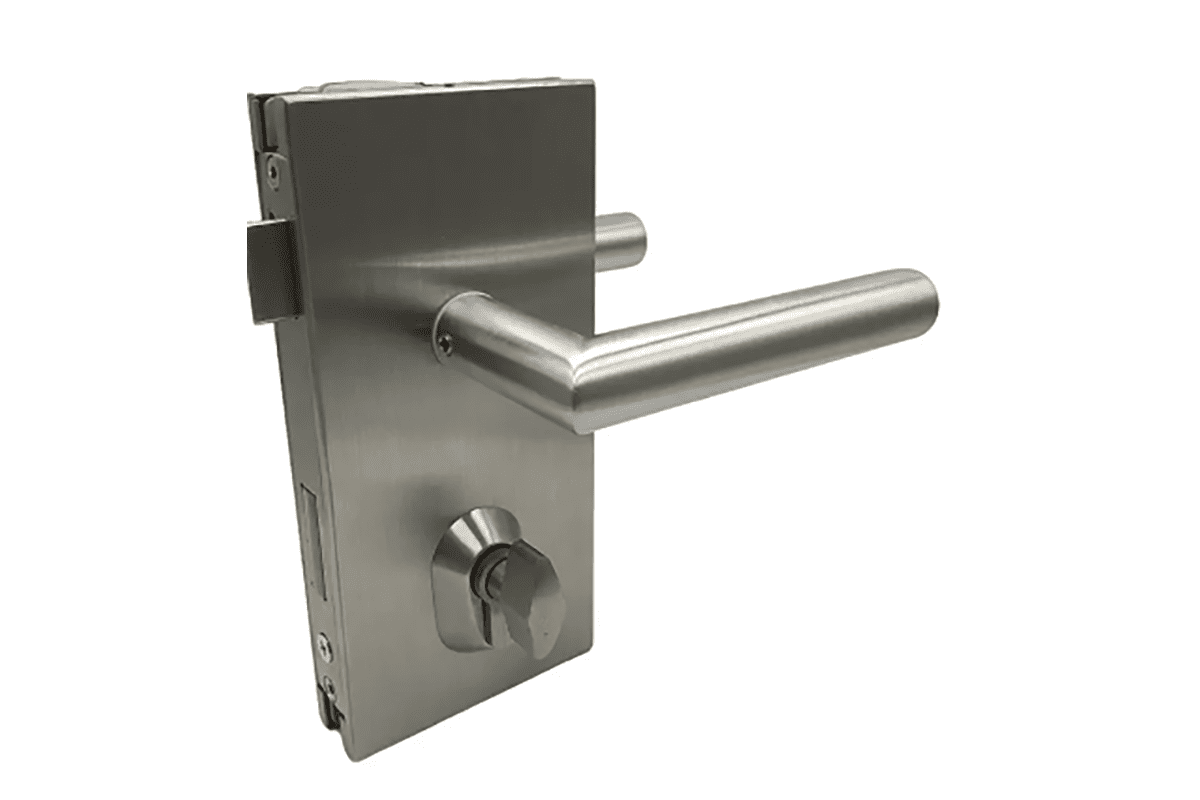
What 304 stainless steel does well
304 stainless steel is widely used because it contains chromium and nickel that support corrosion resistance. In practical terms, this means it usually performs better than lower-grade stainless steel in humid interiors, public buildings, and markets where long-term appearance matters.
For B2B buyers, 304 stainless steel can offer several advantages:
- Better corrosion resistance than many budget stainless alternatives
- Stable appearance for public and commercial projects
- Good mechanical strength when the structure is properly designed
- Professional market positioning for hardware brands
- Compatibility with many architectural styles
- Strong suitability for satin and polished finishes
In my factory work, I have seen 304 stainless steel handles perform especially well when the product is designed for the correct door type and traffic level. For schools, hospitals, offices, and public corridors, the material is often a sensible starting point.
What 304 stainless steel does not guarantee
However, I always warn buyers about one mistake: material grade is not the full specification. A supplier may say “304 stainless steel,” but the final product may still vary in thickness, internal support, finishing, assembly precision, and rebound performance.
A 304 stainless steel handle can still have problems if:
- The lever wall is too thin.
- The base plate is weak.
- The spindle hole has poor tolerance.
- The spring mechanism is not durable.
- The surface is poorly polished.
- The packaging allows scratches during shipping.
- The installation is not aligned with the lock and door.
This is why serious buyers should request more than a material claim. They should ask for technical drawings, sample inspection, material confirmation, durability test information, surface inspection standards, and packaging details.
EN1906 Grade 3 and cycle-based thinking
For high-traffic public buildings, one useful reference is EN1906, the European standard for lever handles and knob furniture. Under specified test conditions, an EN1906 Grade 3 durability classification is commonly associated with higher-frequency use than light residential products.
Based on my experience with 304 stainless steel lever handles for public buildings, buyers may evaluate models tested to at least 200,000 operating cycles11 and 40 Nm torsion12 where those figures are part of the relevant product testing. However, I would phrase this carefully:
A specific 304 stainless steel handle model may be tested to EN1906 Grade 3 requirements, including defined operating cycles and torsion performance under specified test conditions. Buyers should verify the exact report, model number, grade coding, and test scope before using the claim in project documentation.
This wording matters. A test result is not the same as a universal lifetime guarantee. The test confirms performance under controlled conditions. The real building adds variables such as impact, abuse, cleaning chemicals, installation errors, and actual traffic.
How buyers should verify 304 stainless steel claims
For procurement teams, I suggest a simple verification process:
Request material confirmation
Ask whether the visible lever, base, and key structural components are 304 stainless steel or only partially stainless.Check technical drawings
Confirm dimensions, wall thickness, spindle size, rose size, screw positions, and door thickness compatibility.Review test reports
Match the report to the exact model, not only to a similar product family.Inspect physical samples
Test the feel, rebound, finish consistency, and assembly strength before placing bulk orders.Confirm packaging and surface protection
Surface damage often occurs during transport and warehouse handling.Define acceptable quality limits
For bulk buyers, inspection standards should cover scratches, color variation, burrs, fitting accuracy, and functional operation.
At SDH Hardware, we manufacture stainless steel lever handles as part of a broader architectural hardware range. Our buyers often request ODM or OEM variations, including custom surface treatment, logo marking, packaging, and accessory configuration. I always recommend that customization should not weaken the tested structure or change the product beyond the original performance scope without re-evaluation.
How should buyers compare tested door handle durability and supplier quality?
A door handle supplier should be evaluated by more than price and appearance. If the supplier cannot explain testing, inspection, material control, and production consistency, the buyer carries the risk. This risk becomes larger in public buildings, brand programs, and repeated wholesale orders.
Buyers should compare door handle durability by checking model-specific test reports, material specifications, structural design, surface treatment quality, sample consistency, factory inspection processes, and after-production inspection options. A qualified supplier should help buyers connect test performance with the correct application, not promise one handle for every use case.

Start with application classification
The first step is to classify the project. A private apartment handle, hotel room handle, hospital corridor handle, and school entrance handle should not be evaluated in the same way.
I suggest buyers define:
- Building type
- Door type and door weight
- Interior or exterior position
- Traffic frequency
- Fire-rated requirement
- Security requirement
- Corrosion exposure
- Cleaning routine
- Target market standard
- Expected warranty and maintenance approach
This information helps the supplier recommend the correct model. It also helps the buyer avoid overbuying or under-specifying. A very heavy-duty handle may be unnecessary for a low-use interior door, while a light-duty handle may create expensive problems in a public corridor.
Compare test documents carefully
Many suppliers mention certificates in sales materials. Buyers should treat certificates as documents to verify, not slogans to accept. A proper review should check whether the document applies to the exact product, material, size, and configuration being purchased.
| Document or test item | Why it matters | What buyers should verify |
|---|---|---|
| EN1906 test report | Confirms lever handle performance under defined criteria | Model number, grade, cycles, torsion, test lab, date |
| CE documentation | Supports compliance claims for relevant markets | Product scope and applicable regulation |
| Fire-rated certification | Important for fire door assemblies | Door set compatibility and hardware scope |
| Material specification | Confirms grade and composition | 304 stainless steel claim, component coverage |
| Salt spray or corrosion test | Supports surface durability evaluation | Test hours, standard used, finish tested |
| Inspection report | Confirms shipment quality | Sample size, defects checked, acceptance criteria |
I recommend that buyers keep these documents in their supplier file. This is especially important for hardware brands and wholesalers who sell under their own name. If a failure occurs later, clear documentation supports technical investigation and customer communication.
Evaluate factory quality control
From a factory perspective, stable quality depends on process control. A good sample is not enough. The supplier must reproduce that quality across batches.
Important quality control points include:
Raw material inspection
The factory should check material grade, dimensions, and surface condition.Machining and forming control
The production process should maintain consistent tolerances.Welding or assembly inspection
Joints and fixing points must be strong and clean.Surface finishing control
Polishing, brushing, coating, or PVD processes must be stable.Functional testing
Rebound, spindle fit, screw fit, and lever movement should be checked.Final inspection
Finished goods should be inspected for appearance, dimensions, function, and packaging.Packaging review
Handles need protection against scratches, moisture, and transport damage.
At SDH Hardware, our production model is based on independent factory operations and full-process quality control, from raw material screening to finished product inspection. We also support inspection after order completion, which helps B2B customers verify shipment quality before goods leave the factory.
Compare supplier capability, not only unit price
A cheaper handle can be suitable for the right application. However, if two products look similar, the lower price may come from thinner material, weaker spring components, looser tolerances, less testing, cheaper finishing, or weaker packaging.
For door factories, brand owners, and wholesalers, supplier capability can be just as important as the product itself. I would compare suppliers using these questions:
- Can the supplier provide technical drawings after order confirmation?
- Can the supplier support OEM or ODM customization without losing quality control?
- Can the supplier match handles with mortise locks, cylinders, hinges, and accessories?
- Can the supplier explain the difference between tested cycles and real-world service life?
- Can the supplier provide CE or fire-rated documents for relevant products?
- Can the supplier maintain consistent finish color across repeat orders?
- Can the supplier handle logo marking, custom packaging, and regional specifications?
For bulk buyers, this evaluation reduces hidden risk. A reliable supplier should help the buyer protect their own customer relationships. In my experience, long-term partnerships are built through stable batches, clear communication, and honest technical boundaries.
Frequently Asked Questions
How many years should a commercial door handle last?
A commercial door handle should not be judged by years alone. Buyers should estimate daily operating cycles, environment, door type, installation quality, and tested durability. A 200,000-cycle handle may last many years in low traffic but much less in a high-traffic public entrance.
Is a 304 stainless steel door handle always better?
A 304 stainless steel door handle is often a strong choice for corrosion resistance and public-use durability, but it is not always automatically better. Thickness, structure, surface finish, rebound mechanism, spindle fit, testing, and installation quality still decide actual performance.
What is EN1906 Grade 3 for door handles?
EN1906 Grade 3 is a performance classification used for lever handles and related door furniture under defined test conditions. For certain high-traffic applications, buyers may look for models tested to 200,000 cycles and specified torsion requirements, but they should verify the exact report and product model.
Why does a door handle become loose?
A door handle can become loose because of weak internal structure, poor spindle fit, thin material, screw loosening, misaligned lock installation, heavy door resistance, or frequent high-force use. In B2B projects, buyers should inspect samples and confirm installation compatibility before bulk purchasing.
Can surface finish wear before the handle fails?
Yes. A handle may still work correctly while showing scratches, coating wear, staining, or corrosion marks. Appearance lifespan depends on surface treatment, cleaning chemicals, humidity, coastal exposure, user behavior, and packaging protection during transport and storage.
Conclusion
A door handle lasts longest when its material, structure, surface durability, and tested cycle performance match the actual traffic level and environment. I do not recommend judging quality by a fixed number of years or by material name alone. For public buildings, buyers should verify EN1906 results, inspect samples, review supplier quality control, and match the handle with the complete door hardware system. If you need factory-direct 304 stainless steel lever handles, OEM customization, or project-based hardware selection, contact SDH Hardware for technical support and quotation.
"EN 1906:2012 - Lever handles and knob furniture", https://standards.iteh.ai/catalog/standards/cen/98620aed-cd49-4257-aad1-4767b82e8c08/en-1906-2012?srsltid=AYCX9vKdwpj_MSR8RikdSCi22wzqvzZutDnGAwGYnbaRsgOrDkHtzuLb. Standards catalogues describe EN 1906 as specifying requirements and test methods for lever handles and knob furniture used on doors, supporting the article's identification of the standard; catalogue summaries do not replace the full standard text. Evidence role: definition; source type: institution. Supports: A standards body or catalogue should identify EN 1906 as the standard covering lever handles and knob furniture and describe its scope.. Scope note: The source supports the scope of EN 1906, not compliance by any particular product. ↩
"Standards - BS EN 1906", https://www.aldridgesecurity.co.uk/standards-bs-en-1906. EN 1906 and related building-hardware durability references evaluate lever handles through defined operating-cycle testing, supporting the use of cycle count as a technical basis for estimating service suitability; this does not by itself predict the exact life of a specific handle in a specific building. Evidence role: general_support; source type: institution. Supports: A neutral standards or institutional source should show that lever-handle durability is evaluated using repeated operating cycles under specified test conditions.. Scope note: The source would support the evaluation method, not the article's illustrative service-life estimates. ↩
"Standard-compliant testing of lever handles in accordance ...", https://www.hegewald-peschke.com/test-applications/standard-compliant-testing-of-lever-handles-in-accordance-with-en-1906/. Door-furniture durability test methods describe cyclic operation of the lever mechanism as repeated complete actuations, supporting the article's use of a cycle as one full press-and-release operation; the precise apparatus and movement parameters depend on the cited standard. Evidence role: definition; source type: institution. Supports: A standards or testing source should define an operating cycle for lever-handle durability testing as a complete operation of the lever mechanism.. Scope note: The support is definitional and may vary slightly by testing standard. ↩
"Best Practices for Maintaining Commercial Door Hardware", https://www.andersonlock.com/blog/best-practices-for-maintaining-commercial-door-hardware/. Facilities and architectural-hardware maintenance guidance identifies high-contact door hardware as susceptible to finish wear and surface damage in heavily used buildings, supporting the distinction between appearance life and functional life; such guidance is contextual and does not quantify wear rates for every handle type. Evidence role: general_support; source type: institution. Supports: A facilities-management or architectural-hardware source should support that high-use door hardware is subject to visible finish wear, scratches, or surface deterioration from repeated contact.. Scope note: The source would provide contextual support rather than a direct study of schools, hospitals, airports, and commercial buildings together. ↩
"Best Materials for Door Handles for a Stylish & Durable ...", https://www.yalehome.com/ae/en/stories/blogs/best-materials-for-door-handles-for-a-stylish-and-durable-upgrade. Technical references on architectural door hardware identify stainless steel, brass, aluminium, zinc alloys, and related metal constructions as common materials for door furniture, supporting the article's material classification; the source may not rank their suitability for every commercial application. Evidence role: general_support; source type: education. Supports: A university, educational, or standards-adjacent source should identify common materials used in door handles or architectural door furniture.. Scope note: The source supports the general material categories, not the performance of a particular supplier's product. ↩
"A Historical Review of Cryogenic Mechanical Testing on ...", https://tsapps.nist.gov/publication/get_pdf.cfm?pub_id=959555. Materials references describe Type 304 stainless steel as an austenitic chromium-nickel stainless steel with broad corrosion resistance and useful mechanical properties, supporting its use as a candidate material for public-use hardware; this evidence does not prove that every 304 stainless steel handle design will be durable. Evidence role: general_support; source type: research. Supports: A materials-science source should describe the corrosion resistance and mechanical properties of Type 304 stainless steel.. Scope note: The source supports material properties, while the article's application to door handles also depends on design and manufacturing quality. ↩
"201 Vs 304 Stainless Steel - What Is The Difference?", https://www.reidsupply.com/en-us/industry-news/201-vs-304-stainless-steel. Materials literature comparing 201 and 304 stainless steels generally notes that Type 201 has lower nickel content and less corrosion resistance than Type 304 in many service environments, supporting the article's caution for humid or coastal applications; actual performance still depends on finish, exposure, and maintenance. Evidence role: general_support; source type: research. Supports: A materials reference should explain that 201 stainless steel substitutes manganese and nitrogen for some nickel and generally has lower corrosion resistance than 304 in many environments.. Scope note: The support is a general materials comparison, not a project-specific corrosion prediction. ↩
"Influence of Build Angle and Polishing Roughness on ... - PMC", https://pmc.ncbi.nlm.nih.gov/articles/PMC9181854/. Corrosion studies report that surface finish and surface condition can affect corrosion initiation and visual degradation in stainless steel and coated metals, supporting the article's link between finish quality, appearance, and corrosion resistance; the magnitude of the effect varies by alloy, finish, and exposure medium. Evidence role: mechanism; source type: paper. Supports: A corrosion or materials paper should show that surface finish, roughness, or treatment can influence corrosion behavior and visible degradation of stainless steel or coated metals.. Scope note: The source may address stainless steel or coated metals broadly rather than door handles specifically. ↩
"Marine Atmospheric Corrosion of Carbon Steel: A Review - PMC", https://pmc.ncbi.nlm.nih.gov/articles/PMC5506973/. Corrosion literature identifies chloride exposure in marine environments and some cleaning or disinfecting agents as contributors to metal surface degradation, supporting the article's emphasis on surface durability in coastal and hospital settings; the evidence is contextual because specific outcomes depend on alloy, finish, concentration, and cleaning frequency. Evidence role: mechanism; source type: research. Supports: A corrosion or healthcare-facilities source should show that chloride-rich environments and certain disinfectants can contribute to corrosion or surface degradation of metals.. Scope note: The source would not prove failure of a particular handle finish under all coastal or hospital conditions. ↩
"SECTION 087111 - DOOR HARDWARE (SCHEDULED BY ...", https://fpm.usc.edu/wp-content/uploads/2021/11/087102-USC-HSC-door-hardware-Guide-Specification_1.pdf. Door-hardware installation and maintenance guidance links door or latch misalignment with increased operating force and hardware malfunction, supporting the article's statement that poor installation can shorten handle service life; the guidance is procedural rather than a controlled durability experiment. Evidence role: mechanism; source type: institution. Supports: A building-hardware or facilities-maintenance source should explain that misalignment, binding latches, or improper installation can cause excessive force and operational problems in door hardware.. Scope note: The source supports the mechanism of increased stress, not a quantified reduction in lifespan. ↩
"BS EN 1906 – Lever Handle and Knob Furniture", https://www.hoppe.com/gb-en/contacts-service/standards/bs-en-1906/. Standards summaries of EN 1906 associate Grade 3 durability classification for applicable lever-handle furniture with 200,000 operating cycles under controlled test conditions, supporting the article's cycle benchmark; this classification is not a guarantee of equivalent calendar life in service. Evidence role: statistic; source type: institution. Supports: A standards source or reliable standards summary should associate EN 1906 Grade 3 durability with 200,000 operating cycles for applicable lever-handle products.. Scope note: The source should be checked against the exact EN 1906 edition and product category. ↩
"DIN EN 1906 - HOPPE | United States & Canada", https://www.hoppe.com/us-us/door-handles/standards-and-solutions-door-handles/din-en-1906/. EN 1906 technical summaries identify torsion resistance requirements for lever handles, including specified torque values for relevant classifications, supporting the article's reference to a 40 Nm torsion benchmark where applicable; the exact requirement depends on product type, grade coding, and standard edition. Evidence role: statistic; source type: institution. Supports: A standards source should confirm whether 40 Nm torsion is specified for the relevant EN 1906 classification or test condition.. Scope note: The source must be matched to the correct EN 1906 edition and classification before applying the figure to a product claim. ↩
