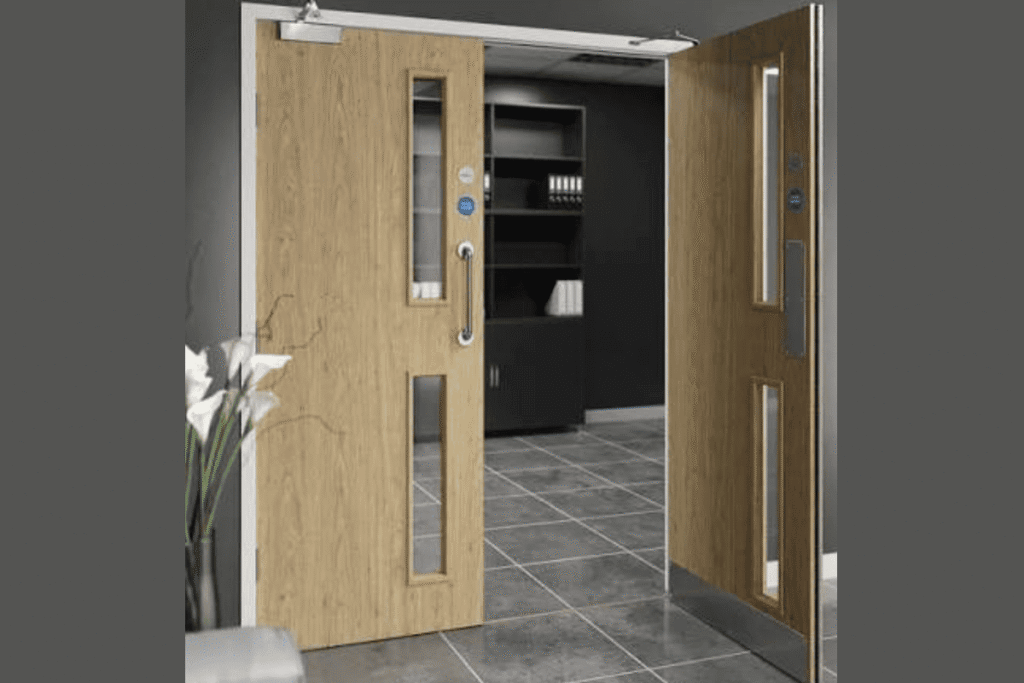
What Happens When Fire-Rated Door, Frame, and Hardware Components Are Mismatched?
Fire-rated door, frame, and hardware components can look compatible on paper, but a wrong swap can break the certified door assembly. The problem starts with one “small” change. The risk grows when inspectors ask for proof. The solution is to treat fire-rated openings as tested systems, not as loose parts.
When fire-rated door, frame, and hardware components are mismatched, the opening may lose its certified fire performance, fail site inspection, require rework, and create life-safety compliance risks. Even if one part has a higher fire rating, it must be listed for that exact door assembly, installation method, and hardware schedule.
I see this issue often in B2B projects. A lockcase is replaced because stock is short. A hinge model changes because procurement finds a lower price. A closer is selected by rating only. Each decision looks reasonable until the documentation chain breaks.
Practical note: This article is practitioner guidance, not legal, insurance, or authority-having-jurisdiction advice. Final acceptance should be confirmed with the door certificate holder, project consultant, testing body, or AHJ where required.
Why Do Fire-Rated Door, Frame, and Hardware Components Need to Be Listed Together?
Fire-rated door, frame, and hardware components are often purchased by different teams, which creates room for mistakes. Procurement may see CE marking, EN references, or “120-minute rated” wording and assume the part is acceptable. However, inspectors usually want the exact approved combination, not a general claim.
The short answer is simple: a fire-rated opening is certified as a system.1 The door leaf, frame, hinges, lockcase, closer, seals, strikes, fasteners, and installation method must match the certified hardware schedule and field of application. A higher individual rating does not automatically create compatibility.2
The System Is What Was Tested
In EN markets, fire performance is commonly supported by testing and classification evidence connected to standards such as EN 1634-13 for fire resistance testing of door and shutter assemblies. That test does not prove every possible hardware combination. It proves the tested assembly and its allowed variations.
This point is where many project teams get trapped. A component can be well made. It can have a valid declaration, certification, or test reference. It can even be used successfully on another fire door model. Still, that does not mean it belongs on this door.
In my factory-side work, I have seen inspection rejection records where the opening itself looked clean. The dimensions were correct. The label was present. The closer worked. But the lockcase was not the lockcase shown in the certified hardware schedule. The inspector asked for the approved listing. The supplier could not provide it. The result was a rectification notice.
“Same or Higher Rating” Is Not the Same as Approved
Buyers often ask me a version of this question:
“If the original lock is 60-minute rated, can I use our 90-minute lock instead?”
My answer is always cautious: only if the door certificate holder approves that exact substitution for that exact door model and application.
A higher-rated part may still change the fire behavior of the door assembly. It can affect:
- Heat transfer around hardware cut-outs
- Door leaf integrity near the lock pocket
- Latch engagement under pressure
- Hinge performance under load
- Seal compression and smoke leakage
- Closer force and closing reliability
- Fastener pull-out resistance
- Clearances between leaf and frame
A door is not only a slab. It is a controlled assembly. When hardware changes, the cut-outs, reinforcement plates, screw positions, strike preparation, intumescent protection, and installation method may also change.
A Buyer’s Documentation Chain
For procurement and quality control, I suggest looking at the fire-rated opening as a chain of documents. If one link is missing, acceptance becomes harder.
| Document or Evidence | What Buyers Should Check | Common Risk |
|---|---|---|
| Door test report reference | Door model, rating, configuration | Wrong model or missing reference |
| Classification or certification | Scope and field of application | Assumed to cover all hardware |
| Hardware schedule | Listed hinges, locks, closers, seals | Substitution without approval |
| Component DoP or CE documents | Product identity and declared performance | Valid product but wrong assembly |
| Installation instructions | Fasteners, cut-outs, clearances, seals | Installer uses local method |
| Site photos | Actual installed hardware and labels | Photos show unapproved changes |
At SDH Hardware, we manufacture architectural door hardware such as Euro mortise locks, stainless steel lever handles, butt hinges, concealed hinges, Euro brass cylinders, and door accessories. We can provide CE-related documentation and fire-rated documentation where applicable. However, I still tell buyers the same thing: component documents must be matched to the door assembly documents. They do not replace the door manufacturer’s certified hardware schedule.
Can a Fire-Rated Door Hardware Mismatch Pass If the Parts Have CE or EN Marks?
A fire-rated door hardware mismatch may appear acceptable when each component has CE, EN, or fire-rated documents. This is especially tempting under delivery pressure. The project needs doors shipped. The original hardware is unavailable. A “similar” part seems like a practical answer.
The direct answer is: CE or EN marking does not prove universal compatibility.4 It identifies declared performance for a product under its applicable scope. The hardware must still be approved for the specific fire-rated door assembly, field of application, and installation method.
CE Documents Are Important, but They Are Not Everything
CE documentation and a Declaration of Performance (DoP)5 can be very important in procurement. They help buyers verify product identity, declared characteristics, harmonized standard references where applicable, and manufacturer accountability. For example:
- A door closer may be evaluated under EN 1154
- A mechanically operated lockcase may be evaluated under EN 12209
- Emergency exit hardware may relate to EN 179
- Panic exit hardware may relate to EN 1125
These references matter. They help prevent random, unqualified hardware from entering a project. However, they do not automatically solve the fire door compatibility question.
A closer that meets EN 1154 still needs to be correct for the door size, mass, usage, mounting position, and fire door listing.6 A lockcase under EN 12209 still needs the correct latch function, backset, forend, strike, spindle position, and approved installation details.7 Panic or emergency hardware must match both the escape requirement and the door’s certified configuration.
A Frontline Case I Often See
Here is a simplified and anonymized case based on the type of issue I handle.
A door factory in an EN market had a corridor fire door package. The original hardware schedule listed a specific mortise lockcase with latch function and a defined strike. During production, the customer requested a lockcase swap because the approved item was delayed. The replacement had fire-related documentation and seemed stronger. The door sets shipped.
At site inspection, the inspector asked for proof that the replacement lockcase was included in the door’s certified hardware schedule or approved by the certificate holder. The project team only had the replacement lock’s datasheet and DoP. They did not have a written approval letter linked to the exact door model.
The result was painful:
- Several openings were flagged.
- The contractor requested corrective action.
- The door supplier had to coordinate with the certificate holder.
- Some hardware had to be removed and replaced.
- The site needed re-inspection.
The direct hardware cost was not the main problem. The bigger losses came from labor, delay, coordination, and damaged trust.
What Inspectors Usually Look For
Inspection practices vary by country, project, and authority. Still, many inspections focus on the same basic question:
“Can you prove this exact installed opening matches the approved fire door evidence?”
That proof may include:
- Door and frame identification
- Fire rating label or marking
- Approved hardware schedule
- Component datasheets
- DoP or CE documents
- Test report or classification references
- Installation method
- Approved substitutions
- Site photos after installation
If the installed lock, closer, hinge, or seal is different from the approved schedule, a buyer should expect questions. A verbal explanation rarely carries enough weight. Written evidence from the door certificate holder or manufacturer is usually needed.
Procurement Lesson
For B2B buyers, the safest purchasing habit is to buy from the approved schedule first. If a substitution is needed, approval must come before mass production or shipment.
I recommend this simple rule:
Do not buy fire door hardware only by rating. Buy by listing, function, installation compatibility, and documentation.
This rule prevents many expensive disputes. It also helps procurement teams communicate better with engineering and quality teams.
Which Functions Matter Most When Fire-Rated Door, Frame, and Hardware Components Are Selected?
Fire-rated door, frame, and hardware components must do more than survive fire exposure. They must help the door close, latch, and perform its life-safety role. A technically strong component can still be wrong if its function does not match the opening type.
The concise answer is: function selection is as critical as fire rating. Corridor doors often need self-latching locks. Escape doors need certified emergency or panic solutions. Service or shaft doors may use deadbolt-focused hardware only when the listing and egress plan allow it.
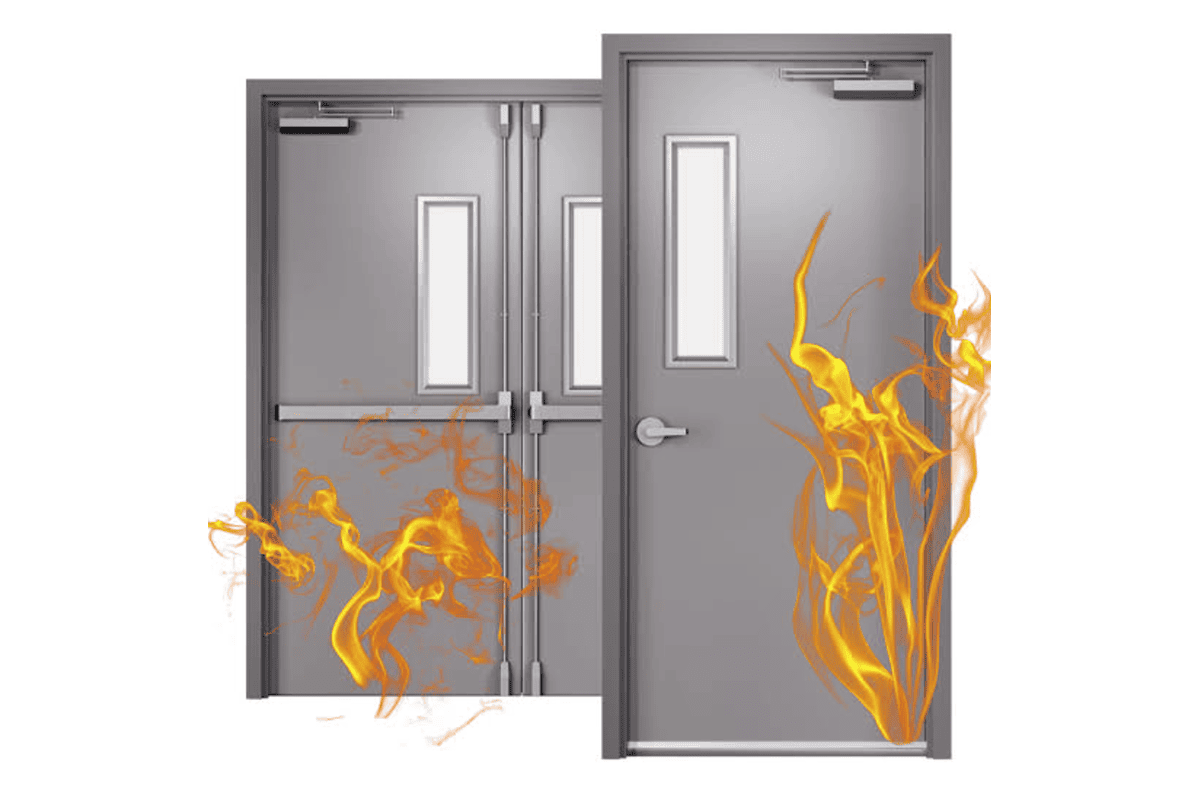
Corridor and Traffic Doors Usually Need Reliable Latching
A fire-rated corridor door is often expected to close and latch after use. The latch matters because fire pressure, smoke movement, and building airflow can push on the door. If the door closes but does not latch, the opening may not perform as intended.8
This is why a deadbolt-only lock can be risky on corridor or traffic fire doors. A deadbolt usually requires a person to lock it. If people pass through the door and leave it unbolted, the door may be closed but not latched. In many inspection contexts, that can trigger rejection.
A self-latching mortise lockcase is often the better functional choice for these openings, but it still must be the listed model or approved equivalent for that specific assembly.
Escape and Emergency Doors Need the Right Exit Hardware
Escape doors introduce another layer. The door must not only resist fire as part of a system. It must also allow safe egress.
Depending on the project and door use, hardware may need to align with standards such as:
- EN 179 for emergency exit devices
- EN 1125 for panic exit devices
A non-escape lock on an escape route can create a serious compliance and life-safety problem. A buyer should not treat this as a simple hardware preference. The project’s egress strategy, door listing, local code requirements, and authority expectations all need review.
Service, Riser, and Shaft Doors Need Careful Confirmation
In some markets, buyers ask about service doors or shaft doors, sometimes called 管井 doors in Chinese project communication. These openings may not function as public egress doors. In certain cases, deadbolt-focused solutions may be acceptable.
However, I would not make a blanket rule. Buyers should confirm:
- Whether the opening is part of an escape route
- Whether self-latching is required by the project
- Whether the door certificate allows that lock function
- Whether the authority or consultant accepts the configuration
- Whether the installation method matches the tested or approved scope
This point should be verified with the certificate holder, door manufacturer, project consultant, or AHJ.
Function Comparison for Procurement Review
| Opening Type | Common Functional Need | Hardware Risk to Avoid | Buyer Action |
|---|---|---|---|
| Corridor fire door | Self-closing and self-latching | Deadbolt-only lock with no automatic latch | Verify listed latch lock and closer |
| Stairwell door | Controlled closing and secure latching | Weak closer setting or unlisted lock | Check closer size, latch, seals, and schedule |
| Escape route door | Safe emergency or panic egress | Non-escape lock blocking exit | Verify EN 179 or EN 1125 alignment where required |
| Service or shaft door | Restricted access, sometimes deadbolt use | Assuming deadbolt is always acceptable | Confirm listing and egress plan |
| Double-leaf fire door | Correct closing sequence and latching | Wrong coordinator or inactive leaf bolts | Verify complete paired-door hardware set |
Closers, Hinges, Seals, and Fasteners Also Matter
Buyers sometimes focus only on the lock. In real inspections, other parts matter too.
A door closer must close the door from the required angle and overcome latch resistance. If the closer is too weak or adjusted badly, the door may not latch. If it is too strong, users may wedge the door open, which creates another risk.
Hinges carry load under normal use and during fire exposure. The hinge grade, material, screw pattern, quantity, and reinforcement can affect the door’s performance. A hinge with a good rating but different geometry can change clearances and load transfer.
Seals are also critical. Intumescent seals, smoke seals, and acoustic seals can interact with latching force. If installers substitute seals or install them in the wrong groove, the door may not close properly or may fall outside the tested design.
Fasteners look minor, but they are often specified for a reason. Screw length, diameter, material, and anchor type can affect performance. I have seen projects where installers used convenient local screws, then had to redo hardware fixing after quality review. The cost was small per door, but high across a full project.
What Is the Consequence Chain After a Fire-Rated Door Hardware Mismatch Is Found?
A fire-rated door hardware mismatch rarely stops at one missing document. It often creates a chain reaction. The site team asks for proof. The supplier asks the factory. The factory asks the certificate holder. Meanwhile, installation and handover schedules continue moving.
The practical consequence is: mismatched fire-rated hardware can cause document rejection, site acceptance failure, rework, re-inspection, shipment disputes, payment delays, and safety noncompliance concerns. The earlier the mismatch is found, the cheaper it is to fix.

The Documentation Chain Breaks First
Before anyone removes a lock, the first failure is usually paperwork. The installed opening must connect to the project’s approved evidence. If the hardware schedule says one hinge and the installed hinge is another, the document chain becomes unclear.
The project may then need one of the following:
- Written approval from the door certificate holder
- A revised hardware schedule
- A technical assessment
- Extended application evidence, where applicable
- Replacement hardware
- Re-inspection after correction
Any reliance on extended application, often called EXAP9, should be explicitly documented by the certificate holder or qualified authority. Buyers should not assume EXAP coverage without written evidence.
Rework Costs More Than the Component Difference
In procurement meetings, teams often compare unit prices. That is normal. However, the cost of a mismatch is not only the price of the lock or hinge.
A rejected opening can create costs in several areas:
| Cost Area | Typical Impact |
|---|---|
| Hardware replacement | New approved parts, freight, customs, urgent sourcing |
| Labor | Removal, re-cutting, filling, repainting, reinstallation |
| Door damage | Enlarged lock pockets, extra holes, finish damage |
| Site delay | Missed handover dates, coordination with other trades |
| Inspection | Rebooking, consultant review, extra reporting |
| Commercial claims | Back charges, payment withholding, reputation loss |
In one anonymized inquiry I handled, the substituted hardware saved only a small amount per set. After inspection questions, the team had to prepare new documents, arrange replacement parts, and coordinate site labor. The saving disappeared immediately.
Mismatches Can Affect Real Life Safety
The commercial side matters, but the life-safety side matters more. A fire door has a purpose. It helps compartmentalize fire and smoke.10 It protects escape routes. It gives occupants and firefighters more time.
A mismatch may cause:
- Door leaf distortion around unapproved cut-outs
- Failure to latch under heat or pressure
- Excessive smoke leakage
- Hardware loosening during fire exposure
- Exit delay during emergency use
- Inability to prove compliance after an incident
I do not present myself as a laboratory authority or AHJ. However, factory-side experience has taught me that small hardware changes can become large safety questions. This is why I prefer conservative approval procedures, especially for export projects in Europe, the Middle East, and Southeast Asia.
Why Supply Pressure Causes Bad Decisions
Most mismatches happen for practical reasons:
- The listed hardware is out of stock.
- The buyer wants a different brand.
- The project wants a lower cost.
- The installation team wants easier fitting.
- The site wants urgent delivery.
- The original specification is unclear.
These pressures are real. I deal with them often. However, supply pressure does not change the certification scope. If a project needs a substitution, the correct route is approval, not assumption.
What I Tell Door Factory Customers
When a customer asks whether a substitution is possible, I ask for the door evidence first. I need to see the relevant hardware schedule, door type, fire rating, opening use, installation method, and regional requirements. Then we can check whether our component is already listed, can be proposed for approval, or should not be used.
For SDH Hardware customers, this approach helps avoid overpromising. We can support technical files, product drawings, finish details, logo options, packaging, inspection reports, and available certifications. Still, the door assembly approval must remain tied to the door certificate holder’s evidence.
How Should Buyers Prevent Fire-Rated Door, Frame, and Hardware Components From Being Mismatched?
Fire-rated door, frame, and hardware components are easier to control before purchase than after installation. The problem becomes expensive when doors are already machined, packed, shipped, or installed. A simple review protocol can prevent most avoidable mismatches.
The best prevention is to start from the door’s certified hardware schedule, approve substitutions in writing, build a complete inspection pack, and train installers to follow the listed method. Buyers should document every change before production begins.

Step 1: Start With the Certified Hardware Schedule
The hardware schedule should be the control document. It should identify the approved components and installation requirements. Buyers should check at least:
- Door model and fire rating
- Single or double leaf configuration
- Frame type and material
- Hinge model, size, quantity, and position
- Lockcase model and function
- Strike plate model
- Door closer model and mounting method
- Seals and intumescent kits
- Fasteners and reinforcement details
- Clearances and installation instructions
If the project cannot provide this information, procurement should pause. Buying hardware first and asking documentation questions later is risky.
Step 2: Approve Substitutions Before Buying
Substitutions are sometimes necessary. Factories may need alternative suppliers. Brand owners may request private-label hardware. Wholesalers may need a regional standard or finish. These changes can be workable, but they must be controlled.
For any substitution, buyers should obtain written approval from the door certificate holder or door manufacturer. The approval should reference:
- The exact door model
- The fire rating and configuration
- The original listed component
- The proposed replacement component
- The installation method
- Any limitations or conditions
- The approval date and responsible person
Emails can be useful, but attachments should be archived carefully. I recommend saving the approval in the project quality file, not only in a salesperson’s inbox.
Step 3: Build an Inspection Pack
A good inspection pack reduces arguments at site. It helps the owner, general contractor, consultant, and installer see the same evidence.
A practical inspection pack may include:
- Door and frame ID list
- Fire rating and project location
- Approved hardware schedule
- Door test report or classification references, where shareable
- Component datasheets
- DoP or CE documentation
- Installation instructions
- Approved substitution letters
- Photos of labels and installed hardware
- Factory inspection records
- Packing list linked to door numbers
At SDH Hardware, we often support B2B customers with product drawings, customized packaging information, logo marking, and post-production inspection service. For fire-rated projects, I encourage customers to connect these normal commercial documents to the fire door approval file.
Step 4: Brief Installers Before Site Work
Installer briefing is often underestimated. Even if procurement buys the correct parts, site installation can still create a mismatch. Installers may use different screws, adjust closer power incorrectly, remove seals, enlarge holes, or mix hardware between door sets.
A short installer briefing should cover:
- Which hardware belongs to which door ID
- Approved screw types and lengths
- Correct hinge positions
- Lockcase pocket preparation
- Strike alignment
- Seal installation
- Closer mounting template and settings
- Door gap tolerances
- Photo requirements after installation
- Rule for deviations: stop and ask before changing
Conclusion
When fire-rated door, frame, and hardware components are mismatched, the risk is not only technical. It is also commercial, documentary, and life-safety related. Buyers should remember that matching means listed together, not merely “same or higher rating.” The safest path is to start with the certified hardware schedule, control every substitution in writing, and prepare inspection evidence before shipment. If you need factory-side support for compliant architectural door hardware sourcing, SDH Hardware can help review specifications, drawings, finishes, packaging, and documentation for your project.
"Fire Doors and NFPA 80 FAQs", https://www.nfpa.org/news-blogs-and-articles/blogs/2025/04/11/fire-doors-faqs. Fire-door guidance and model-code materials describe a fire door as a listed assembly whose performance depends on the door, frame, hardware, seals, and installation conditions acting together; this supports treating the opening as a certified system rather than as interchangeable parts. Evidence role: expert_consensus; source type: institution. Supports: The source should support that fire-rated doors are evaluated and accepted as assemblies that include the door leaf, frame, hardware, glazing, seals, and installation conditions.. Scope note: This supports the general principle of assembly listing, not the approval status of any specific door or hardware product. ↩
"What Happens When Fire-Rated Door Components Are ...", https://www.cdfdistributors.com/blog/post/fire-rated-door-frame-hardware-compatibility?srsltid=AYCX9vLz_jliDPM35-3k-0Ei9lhQY_1UL1_PHdd5siLTfnCK5ZvCQTwe. Fire-door inspection and listing guidance treats component substitutions as subject to the door assembly listing or approval process, indicating that a higher-rated individual component does not by itself establish compatibility with a particular fire-door assembly. Evidence role: general_support; source type: institution. Supports: The source should support that fire-door components must be within the listing or approved field of application and that higher component ratings alone do not establish compatibility.. Scope note: This is contextual support for the compatibility principle and does not evaluate any specific substitution. ↩
"BS EN 1634-1 - Assessing the fire resistance of door and ...", https://www.uktestcert.com/post/bs-en-1634-1-faqs. EN 1634-1 is identified by European standards bodies as a fire-resistance test method for doorsets, shutter assemblies, and openable windows, supporting the article’s reference to it as assembly-level fire-test evidence. Evidence role: definition; source type: institution. Supports: The source should confirm that EN 1634-1 covers fire-resistance testing for door, shutter, and openable-window assemblies, including elements of building hardware where relevant to the test specimen.. ↩
"EU Construction Products Regulation and CE marking, ...", https://www.gov.uk/guidance/eu-construction-products-regulation-and-ce-marking-including-uk-product-contact-point-for-construction-products. Official CE-marking guidance explains that CE marking and associated declarations relate to a product’s conformity and declared performance under applicable rules, supporting the point that such marking is not proof of universal compatibility with every fire-rated door assembly. Evidence role: definition; source type: government. Supports: The source should explain that CE marking indicates conformity with applicable harmonized requirements and declared performance for intended uses, not blanket compatibility with all assemblies.. Scope note: This supports the regulatory meaning of CE marking, not the fire-test status of any particular product. ↩
"Declaration of Performance and conformity - CE Marking", https://single-market-economy.ec.europa.eu/sectors/construction/construction-products-regulation-cpr/ce-marking-and-declaration-performance-and-conformity_en. Construction-products regulations describe the Declaration of Performance as the manufacturer’s formal statement of a product’s declared performance against relevant technical specifications, supporting its use for product identity and declared-characteristic verification. Evidence role: definition; source type: government. Supports: The source should support that a DoP states a construction product’s declared performance, product identification, intended use, applicable technical specification, and manufacturer responsibility.. ↩
"BS EN 1154 – Controlled Door Closing Devices", https://www.hoppe.com/se-en/contacts-service/standards/bs-en-1154/. EN 1154 materials classify controlled door-closing devices by characteristics relevant to door use, size, mass, durability, and fire or smoke applications, supporting the need to match a closer to the specific door and listed installation rather than relying on the standard reference alone. Evidence role: definition; source type: institution. Supports: The source should support that EN 1154 classifies controlled door-closing devices by performance characteristics and that closer suitability depends on application factors such as door dimensions, mass, mounting, and fire or smoke use.. Scope note: This supports the selection factors generally; the exact approval still depends on the particular fire-door assembly listing. ↩
"Classification Code for Mechanically Operated Lock", https://www.dirock.com/EN12209-Classification-Code-for-Mechanically-Operated-Lock-id43533806.html. EN 12209 is a building-hardware standard for mechanically operated locks, latches, and locking plates, supporting the article’s point that lock function and configuration must be matched to the approved door installation rather than inferred from the standard reference alone. Evidence role: definition; source type: institution. Supports: The source should support that EN 12209 concerns mechanically operated locks, latches, and locking plates and uses classifications for performance and application characteristics, while door-assembly approval remains separate.. Scope note: This is general standards support and does not prove that any named lockcase is approved for a specific doorset. ↩
"Self-Closing Doors - HPD", https://www.nyc.gov/site/hpd/services-and-information/self-closing-doors.page. Fire-door inspection guidance commonly requires fire doors to self-close and latch, supporting the mechanism that a closed-but-unlatched door may fail to maintain the intended fire separation under fire conditions. Evidence role: mechanism; source type: institution. Supports: The source should support that fire doors are commonly required to close and latch to maintain the integrity of the fire barrier during a fire.. Scope note: Requirements can vary by occupancy, jurisdiction, and door type, so the source supports the general mechanism rather than every project condition. ↩
"EN 15269-1:2019 - Extended Application of Fire ...", https://standards.iteh.ai/catalog/standards/cen/5a5bad96-eb0c-4d18-b968-a508208cf45f/en-15269-1-2019?srsltid=AYCX9vK2j12FewV5JlYbXWdcMVIA_9r4xcE5TxBr2y4xvI3SYlgJJbrA. Extended-application standards in the EN 15269 series provide rules for applying fire-resistance test results to defined variations of doorsets and related assemblies, supporting the article’s statement that EXAP coverage should be documented rather than assumed. Evidence role: definition; source type: institution. Supports: The source should explain that extended application standards, such as the EN 15269 series, define how fire-resistance test results may be extended to variations of doorsets and related assemblies.. Scope note: This explains the EXAP framework generally and does not establish whether a particular project variation is covered. ↩
"What Is Fire Compartmentation? And Where Is It Required?", https://firedoor-systems.co.uk/blog/what-is-fire-compartmentation/. Fire-safety authorities describe fire doors as passive fire-protection elements that help restrict the spread of fire and smoke between compartments and along egress paths, supporting the article’s statement about their compartmentation role. Evidence role: general_support; source type: government. Supports: The source should support that fire doors are part of passive fire protection and help limit the spread of fire and smoke between building compartments and along escape routes.. Scope note: This supports the general purpose of fire doors, not the performance of an individual installed door. ↩