
How Long Do Industrial Hinges Last?
Industrial hinges do not have one universal service life, and that uncertainty can create real procurement risk. If a hinge is underspecified, the cost is not only replacement. It can also mean door misalignment, maintenance complaints, delayed projects, and damage to a hardware brand’s reputation. The better answer is to evaluate lifespan through load, frequency, environment, installation, and manufacturing quality.
Industrial hinges last according to the application, not a fixed number of years.1 Buyers should confirm door weight, door size, hinge quantity, opening frequency, installation position, corrosion exposure, rated load, cycle-test evidence, material structure, pin design, thickness, and surface treatment before estimating durability or approving a supplier.
I manufacture and inspect door hardware, so I look at hinge life as a risk-control question. A hinge that performs well on one door may be unsuitable for another. The sections below explain how I evaluate durability before shipment, without turning test figures into unrealistic field-life promises.
What Factors Determine How Long Industrial Hinges Last?
A buyer often asks for “the lifespan” because they need a simple answer for a project or catalog. The problem is that real doors are not simple. If the application details are missing, even a strong hinge can be selected incorrectly and create long-term service issues.
The lifespan of industrial hinges depends on load, door dimensions, hinge quantity, opening frequency, installation accuracy, environment, and manufacturing consistency. A reliable selection starts with the actual door system, not only with the hinge material or a supplier’s general catalog statement.
Door Weight Is Only the Starting Point
Door weight matters, but it is not the full story. I always ask buyers to confirm the door weight, door height, door width, and hinge position together. A tall or wide door creates more leverage on the hinge axis than a smaller door of the same weight.2
For example, a 60 kg compact metal door and a 60 kg tall commercial door can place different stress on the hinge set. The second door may create greater twisting force, especially if the installation gap is uneven or the frame is not rigid.
Key application factors include:
- Door weight under normal use
- Door height and width
- Number of hinges per door
- Distance between hinges
- Opening angle
- Frame stiffness
- Door closer force
- Frequency of operation
- Indoor or outdoor exposure
- Corrosive environment, such as coastal or industrial air
Hinge Quantity Changes Load Distribution
Many procurement teams focus on the rated load of one hinge. That is useful, but the door usually works as a system. Two, three, or four hinges can distribute load differently depending on alignment and installation.
A poorly aligned three-hinge door may not share the load evenly.3 In some cases, one hinge carries more force than expected because the mounting surfaces are not flat or the screws are not seated correctly. This is why I treat installation tolerance as part of durability, not as a separate topic.
Opening Frequency Changes the Risk Profile
A storage-room door and a factory access door may use the same hinge model, but they do not age in the same way. High-frequency use increases wear on the pin, bearing area, knuckle contact surface, screws, and surrounding frame.4
For B2B selection, I usually divide applications into simple risk levels:
| Application Type | Typical Risk Concern | Selection Focus |
|---|---|---|
| Low-frequency utility door | Corrosion, basic fit | Material, finish, screw strength |
| Commercial interior door | Repeated operation | Axis stability, thickness, machining |
| Heavy industrial door | Load and impact | Load-bearing structure, pin design |
| Coastal or wet environment | Corrosion | Stainless grade, passivation, salt spray evidence |
| Fire-rated assembly | Compliance and safety | Verified certificates and compatible system testing |
Environment Can Shorten Practical Service Life
A hinge may pass a mechanical test and still suffer in a harsh environment. Moisture, salt, chemicals, dust, and temperature changes can affect surface condition and movement smoothness.5 For stainless steel hinges, 304 stainless steel is commonly used for many industrial and architectural applications, but the real corrosion performance also depends on surface treatment, finishing quality, and maintenance conditions.
I never recommend judging service life by material name alone. The application decides the risk.
For door manufacturers, hardware brands, and wholesalers, this matters because the final customer may not separate hinge problems from brand quality. If the door sags, squeaks, stains, or binds, the complaint usually returns to the supplier chain.
How Do Material and Structure Affect Industrial Hinges Durability?
Many buyers compare hinges by material first. That makes sense, but it can also create a false sense of security. A stainless steel hinge with poor thickness control, weak pin design, or rough machining may perform worse than expected in long-term use.
Material affects industrial hinges durability, but structure decides how the material carries load. Buyers should evaluate stainless steel grade, leaf thickness, knuckle design, pin diameter, axis accuracy, machining quality, welding or assembly quality, and surface treatment together before approving a hinge.
Stainless Steel 304 Is Common, But It Is Not the Whole Answer
For many industrial hinge products, 304 stainless steel is commonly used because it offers a practical balance of strength, corrosion resistance, and manufacturability. However, I would not tell a buyer that “304 automatically means long life.”
The same material can perform differently depending on:
- Actual sheet or plate thickness
- Consistency of raw material
- Cutting and forming accuracy
- Knuckle rolling quality
- Pin fit
- Surface finishing
- Load-bearing geometry
- Quality control before packing
If the hinge leaf is too thin for the door weight, the hinge may deform.6 If the pin is too small or poorly fitted, the hinge may develop play.7 If the axis is not straight, the door may feel stiff from the first installation.
Thickness and Load-Bearing Structure Matter
Thickness is easy to measure, so it is one of the first checks I like to make during product evaluation. However, thickness alone still does not tell the full story. The hinge must transfer force through the leaf, knuckle, pin, screws, and frame.
A strong hinge design usually considers:
- Leaf thickness for bending resistance
- Knuckle length and contact area for load distribution
- Pin diameter and material for axis stability
- Screw hole position for secure fixing
- Countersinking quality for flush installation
- Bearing or washer design, where applicable
- Surface flatness for proper mounting
Pin and Axis Design Are Critical
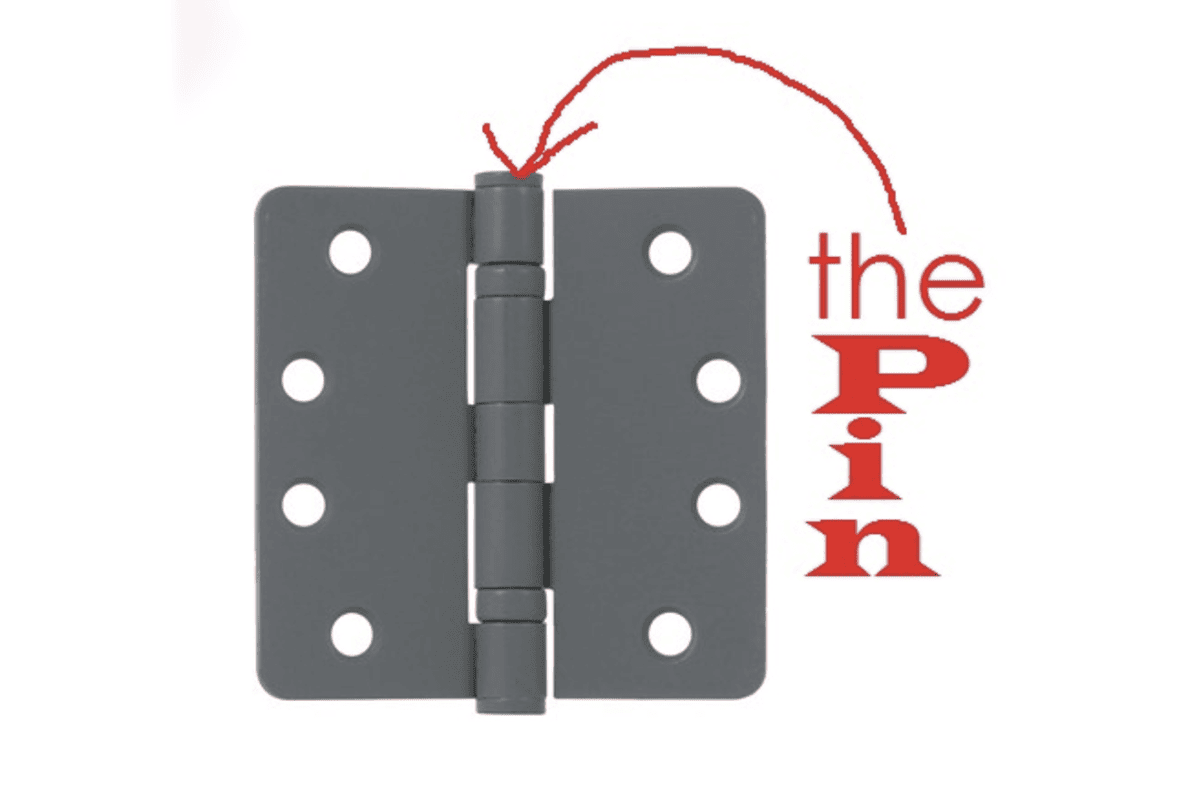
The pin is small, but it is central to hinge durability. If the pin wears, bends, loosens, or creates excessive clearance, the door can sag or move unevenly. For high-frequency doors, buyers should pay close attention to the hinge axis and rotational smoothness.
A good inspection process may include:
- Checking whether the hinge opens smoothly
- Confirming that the pin is secure
- Measuring key dimensions against drawings
- Inspecting the knuckle gap
- Checking surface defects
- Testing assembly consistency across batches
At SDH Hardware, my perspective comes from manufacturing and finished product inspection. I treat each hinge as both a metal component and a moving part. That means I care about the raw material, but I also care about how the part is formed, assembled, finished, and checked before shipment.
Surface Treatment Protects Performance
Surface treatment is not only about appearance. It affects corrosion resistance, customer perception, and movement over time.8 For stainless steel hinges, finishing quality can influence how well the product resists staining or surface corrosion in certain environments.
Common evaluation points include:
| Evaluation Item | Why It Matters | Buyer Action |
|---|---|---|
| Surface finish consistency | Affects appearance and corrosion behavior | Request samples and inspect batch consistency |
| Burr removal | Prevents installation problems and safety concerns | Check edges and screw holes |
| Neutral salt spray testing | Provides corrosion-resistance evidence | Verify test hours and conditions |
| Packaging protection | Reduces transit damage and surface scratches | Confirm packing method |
| Logo or branding quality | Supports resale and brand positioning | Review laser or stamping samples |
A hinge can look similar in photos but perform differently in real doors. This is why I recommend that B2B buyers combine drawings, samples, testing evidence, and supplier process review before placing large orders.
What Do Cycle Tests and Salt Spray Tests Tell Buyers About Industrial Hinges?
Test reports are helpful, but they can be misunderstood. The problem starts when a laboratory result is treated as a direct promise of real-world years. This can mislead procurement teams and create disputes later when site conditions are harsher than expected.
Cycle tests and salt spray tests provide useful quality evidence for industrial hinges, but they should not be converted directly into guaranteed field service years. Buyers should verify test load, cycle count, sample condition, test method, corrosion hours, and report authenticity before relying on the data.
Cycle Testing Shows Controlled Mechanical Endurance
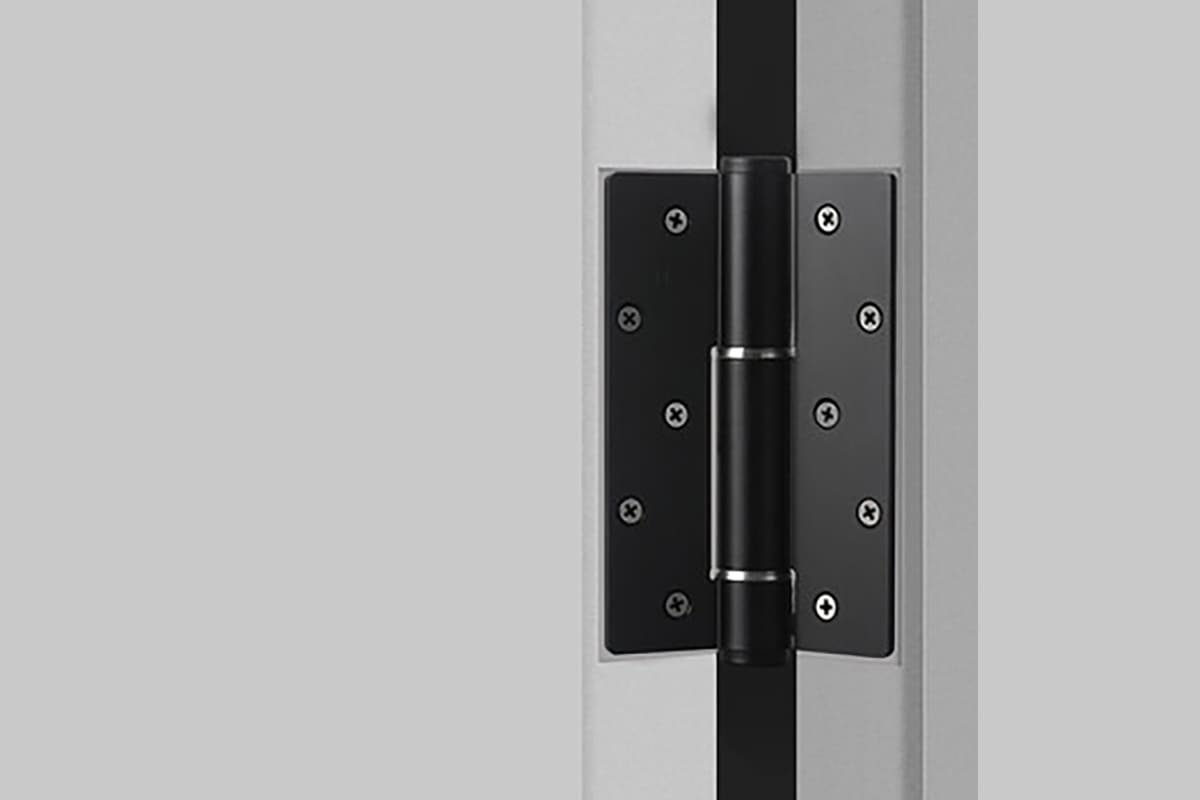
For hinge lifespan, suppliers often use cycle-test results to explain durability. In many cases, an industrial hinge may be tested under its nominal rated load for a stated number of open-close cycles. A common reference in the market is 200,000 cycles under rated load, but buyers should always verify the actual report, standard, test setup, and sample details.
A cycle test can help answer questions such as:
- Can the hinge rotate repeatedly under load?
- Does the pin remain stable?
- Does the hinge develop excessive clearance?
- Does the leaf deform during repeated operation?
- Does the product maintain basic function after testing?
However, the test is still a controlled evaluation. It does not automatically include every field condition, such as poor installation, door impact, frame movement, dust, chemical exposure, or customer misuse.
Salt Spray Testing Shows Corrosion Resistance Under Test Conditions
For surface treatment, suppliers often use neutral salt spray testing to evaluate corrosion resistance. This can be useful for comparing finishes or checking whether a product meets a required corrosion exposure time. However, buyers should confirm the exact requirements for their market or project.
A salt spray test may help evaluate:
- Surface treatment stability
- Stainless steel finishing quality
- Coating or plating performance, where applicable
- Batch consistency
- Suitability for humid or coastal environments
But salt spray hours are not the same as service years9. A coastal warehouse, a chemical plant, and a dry indoor factory place very different demands on the same hinge.
What I Ask Buyers to Verify
When a buyer sends me an inquiry, I prefer to discuss test evidence with clear boundaries. The test result is important, but the conditions behind the result are just as important.
Buyers should review:
| Test Evidence | What to Verify | Why It Matters |
|---|---|---|
| Cycle test report | Load, cycle count, hinge model, sample size | Confirms relevance to the selected product |
| Rated load statement | Door weight assumption and hinge quantity | Avoids underspecification |
| Salt spray report | Test method, hours, surface finish | Supports corrosion-risk evaluation |
| CE documentation | Product scope and issuing body | Helps confirm market compliance |
| Fire-rated certificate | Door system compatibility and rating scope | Prevents misuse in fire-door projects |
| Inspection report | Dimensions, function, finish, packaging | Reduces batch risk before shipment |
Certifications Should Be Verified, Not Assumed
SDH Hardware supplies core products that comply with EU standard specifications and are available with authoritative CE certification and fire-rated certification. Still, I always recommend that buyers verify documents for the exact product, specification, and intended application.
This is especially important for fire-rated assemblies. A hinge certificate or fire-rated document should not be treated as a general approval for every door system. The buyer should check whether the hinge, door leaf, frame, lock, closer, and installation method are compatible with the project requirement.
Why Test Results Still Matter
Even with limits, testing remains valuable. It gives procurement teams a structured way to compare suppliers. It also helps brand owners reduce uncertainty before mass purchasing.
I see testing as one part of a complete approval process:
- Confirm application details
- Select a suitable hinge design
- Review drawings and specifications
- Check material and finish
- Evaluate samples
- Verify cycle and corrosion evidence
- Confirm certificates where required
- Approve packaging and branding
- Inspect finished goods before shipment
This approach is more reliable than asking, “How many years will this hinge last?” A better question is, “Does this hinge have the design, test evidence, and production control needed for my door and market?”
How Should B2B Buyers Select Industrial Hinges to Reduce Failure Risk?
B2B buyers often face pressure to control cost, meet delivery dates, and satisfy project specifications at the same time. The danger is that a hinge may look acceptable on price and appearance but fail the real selection criteria for load, usage, and environment.
B2B buyers should select industrial hinges by matching the hinge design to the door application, then verifying supplier manufacturing capability, quality control, testing evidence, certificates, customization support, and final inspection procedures before approving bulk orders.
Start With Application Data
Before discussing price, I recommend that buyers prepare a basic hinge selection sheet. This makes communication faster and reduces mistakes.
Important details include:
- Door material
- Door height and width
- Door weight
- Number of hinges per door
- Opening frequency
- Opening angle
- Indoor or outdoor use
- Corrosion exposure
- Fire-rating requirement
- Required surface finish
- Regional standard or market requirement
- Packaging and branding needs
If the buyer cannot provide all data, the supplier should ask follow-up questions. A supplier who quotes without understanding the application may create hidden risk for both sides.
Evaluate the Supplier, Not Only the Product
For door manufacturers and hardware brands, the supplier’s process matters as much as the hinge sample. One good sample does not guarantee stable mass production. I pay close attention to whether the factory has mature production lines, inspection procedures, and testing equipment.
At SDH Hardware, our business context includes independent factory operations, more than 10 years of production experience, and a team focused on R&D, precision manufacturing, and global sales. From my manufacturing perspective, buyers should look for evidence of process control, not only sales claims.
Useful supplier evaluation points include:
| Supplier Capability | Why Buyers Should Care |
|---|---|
| In-house production capacity | Better control over schedule and consistency |
| Raw material screening | Reduces variation before production starts |
| Standardized production supervision | Controls process risk during manufacturing |
| Finished product inspection | Finds defects before shipment |
| Testing equipment | Supports function and quality evaluation |
| Customization ability | Helps match regional and project needs |
| Documentation support | Helps with compliance and resale |
Use Samples Correctly
Samples are essential, but buyers should test them in a practical way. A hinge sample should not only be photographed and approved visually. It should be checked against the door system.
A practical sample review may include:
- Measure dimensions against the drawing
- Check thickness and hole position
- Install the hinge on a sample door or fixture
- Open and close the door repeatedly
- Check smoothness and clearance
- Review finish under good lighting
- Check screw fit and countersink quality
- Compare the sample with certificate or test documents
- Confirm packaging and logo details
I have seen buyers focus heavily on surface finish and forget installation fit. The hinge looked good on the desk, but the screw hole position or countersink detail caused assembly problems. That kind of issue is preventable with a better sample review process.
Consider the Real Cost of Failure
For B2B buyers, hinge failure is rarely just the cost of a replacement hinge. The bigger cost may be operational and reputational.
Possible failure costs include:
- Door factory rework
- Delayed shipment
- Site maintenance
- Customer complaints
- Replacement labor
- Returned goods
- Project penalties
- Loss of brand trust
- Future order risk
This is why I do not recommend choosing hinges only by unit price. A slightly cheaper hinge can become expensive if it creates repeated after-sales problems.
Match Customization to Market Requirements
Many hardware brands and wholesalers need more than a standard hinge. They may require specific thickness, finishes, packaging, logos, or accessory configurations. ODM and OEM support can help, but it should be controlled through drawings and confirmed specifications.
At SDH Hardware, our product portfolio covers more than 3,000 architectural hardware articles, including Euro mortise locks, stainless steel lever handles, butt hinges, concealed door hinges, Euro brass cylinders, and door accessories. For hinge procurement, this one-stop sourcing model can help buyers keep door hardware series consistent across product lines.
However, customization should always be documented. Buyers should confirm:
- Product drawings
- Material specifications
- Surface finish codes
- Logo placement
- Packaging artwork
- Inspection criteria
- Certificate scope
- Delivery schedule
- Approved samples
A clear approval process protects both buyer and manufacturer. It also makes repeat orders more stable.
Frequently Asked Questions
Can I estimate industrial hinge lifespan by years?
I do not recommend using a universal year range. Industrial hinge lifespan depends on door weight, door size, hinge quantity, opening frequency, installation quality, and environment. A controlled cycle test can support evaluation, but it should not be converted directly into guaranteed field service years10.
Is 304 stainless steel always the best choice for industrial hinges?
304 stainless steel is commonly used and often suitable, but material name alone does not decide durability. Buyers should also check thickness, pin design, hinge structure, machining accuracy, surface finish, corrosion exposure, and quality control before choosing the best hinge for a project.
What does a 200,000-cycle hinge test mean?
A 200,000-cycle test generally means the hinge was opened and closed repeatedly under defined test conditions, often under a stated rated load. Buyers should verify the test method, load, sample model, and report details. The result is useful evidence, not a direct guarantee of service years.
Should I request salt spray testing for hinges?
Yes, salt spray testing is useful when corrosion resistance matters, especially for humid, coastal, or industrial environments. Buyers should confirm whether the test is neutral salt spray, how many hours were tested, which finish was tested, and whether the report applies to the exact hinge model.
What should wholesalers check before buying hinges in bulk?
Wholesalers should check drawings, samples, rated load, material, thickness, finish, packaging, logo requirements, cycle-test evidence, salt spray reports, and supplier inspection procedures. They should also confirm that certificates, such as CE or fire-rated documents, apply to the intended product and market.
Conclusion
Industrial hinges last according to the door application, operating frequency, environment, installation quality, and manufacturing control. I would not reduce hinge life to one fixed number of years. A safer procurement process checks load, structure, pin design, thickness, surface treatment, cycle testing, salt spray evidence, and supplier capability together. If you need factory-direct hinge selection, OEM/ODM customization, or inspection support for bulk orders, SDH Hardware can help you evaluate the right hinge specification for your market.
"How High Temperatures Affect Ball Bearing Door Hinge ...", https://www.jyhinge.com/how-high-temperatures-affect-ball-bearing-door-hinge-performance-and-service-life.html. Technical guidance on architectural hardware selection treats hinge performance as dependent on door mass, dimensions, duty cycle, installation, and exposure conditions rather than as a fixed service-life value. Evidence role: expert_consensus; source type: institution. Supports: Hinge durability depends on application variables such as load, door geometry, duty cycle, installation, and environment rather than a single universal year range.. Scope note: The source would support the evaluation framework, not prove the lifespan of any specific hinge model. ↩
"28.18 -- Open door to demonstration preparation area", https://web.physics.ucsb.edu/~lecturedemonstrations/Composer/Pages/28.18.html. Engineering mechanics texts define moment as force multiplied by perpendicular distance from the axis, supporting the conclusion that door geometry can change hinge loading even at the same door mass. Evidence role: mechanism; source type: education. Supports: A force applied at a greater distance from an axis produces a larger moment, which explains why wider or taller door geometry can increase hinge loading.. Scope note: This supports the mechanical principle; actual hinge stresses also depend on frame stiffness, hinge spacing, and installation. ↩
"How to Adjust Spring Loaded Door Hinges When ...", https://watersonusa.com/solutions/how-to-adjust-spring-door-hinges. Hardware installation guidance notes that hinge alignment and mounting accuracy affect door operation and load distribution among hinges. Evidence role: mechanism; source type: institution. Supports: Multiple hinges only distribute loads properly when aligned and mounted accurately; misalignment can concentrate load on one hinge.. Scope note: The source would provide general installation support, not a measured load distribution for the specific three-hinge example. ↩
"Studies on tribology - PMC", https://pmc.ncbi.nlm.nih.gov/articles/PMC3722018/. Tribology literature describes wear as material loss or surface damage caused by repeated relative motion under load, which is consistent with increased wear in frequently operated hinge joints. Evidence role: mechanism; source type: paper. Supports: Repeated cyclic movement and sliding contact contribute to wear in pins, bearing surfaces, and connected components.. Scope note: The source would support the wear mechanism generally, not quantify wear for a particular hinge design. ↩
"Effect of Service Temperature on Mechanical Properties of ...", https://pmc.ncbi.nlm.nih.gov/articles/PMC8587949/. Corrosion and materials references identify moisture, chloride salts, chemical exposure, particulates, and temperature as environmental factors that can influence surface degradation and moving-joint performance. Evidence role: mechanism; source type: research. Supports: Moisture, chloride salts, chemicals, particulates, and temperature variation can accelerate corrosion or wear and affect mechanical movement.. Scope note: The source would explain likely mechanisms rather than predict the condition of any installed hinge. ↩
"Bending of plates - Wikipedia", https://en.wikipedia.org/wiki/Bending_of_plates. Structural mechanics sources show that bending stiffness and stress resistance are strongly influenced by section geometry, supporting the concern that an undersized hinge leaf can deform under door loads. Evidence role: mechanism; source type: education. Supports: Component thickness affects bending stiffness and resistance to deformation under load.. Scope note: This supports the structural principle; deformation risk for a given hinge requires design dimensions, material properties, and applied load. ↩
"Vibration-Based Diagnostics of Radial Clearances and Bolts ...", https://pmc.ncbi.nlm.nih.gov/articles/PMC7766838/. Mechanical joint studies describe clearance and wear in pin joints as contributors to increased looseness and reduced positional accuracy over repeated movement. Evidence role: mechanism; source type: paper. Supports: Pin diameter, fit, and clearance influence joint stability and can contribute to looseness or play as wear develops.. Scope note: The source would support the general pin-joint mechanism, not diagnose a particular hinge failure. ↩
"Passivation (chemistry)", https://en.wikipedia.org/wiki/Passivation_(chemistry). Materials guidance on stainless steel finishing and passivation explains that surface condition and treatment influence corrosion behavior and therefore can affect long-term component performance. Evidence role: mechanism; source type: institution. Supports: Surface finish and treatment can influence corrosion resistance and functional performance of metal components.. Scope note: The source would support corrosion and surface-condition effects; customer perception is a commercial inference rather than a materials-science finding. ↩
"Salt spray test", https://en.wikipedia.org/wiki/Salt_spray_test. Corrosion-testing guidance for neutral salt spray methods treats the test as a controlled comparative exposure and warns that test duration should not be read as a direct prediction of outdoor or field service life. Evidence role: expert_consensus; source type: institution. Supports: Neutral salt spray testing is a controlled comparative corrosion test and its hours are not a direct measure of real-world service years.. Scope note: The source supports test-interpretation limits generally; correlation may exist only for specific materials, coatings, and exposure environments validated separately. ↩
"Integration and Test > Accelerated Life Testing - S3VI - NASA", https://s3vi.ndc.nasa.gov/ssri-kb/topics/38/. Reliability engineering literature cautions that laboratory durability and accelerated-life tests require valid assumptions before extrapolation to field life, because actual service conditions may differ from test conditions. Evidence role: expert_consensus; source type: research. Supports: Controlled durability or accelerated-life tests do not automatically translate into exact field service life because real-world stresses and use conditions vary.. Scope note: The source supports the caution against direct conversion, not the adequacy of any specific hinge test. ↩
