
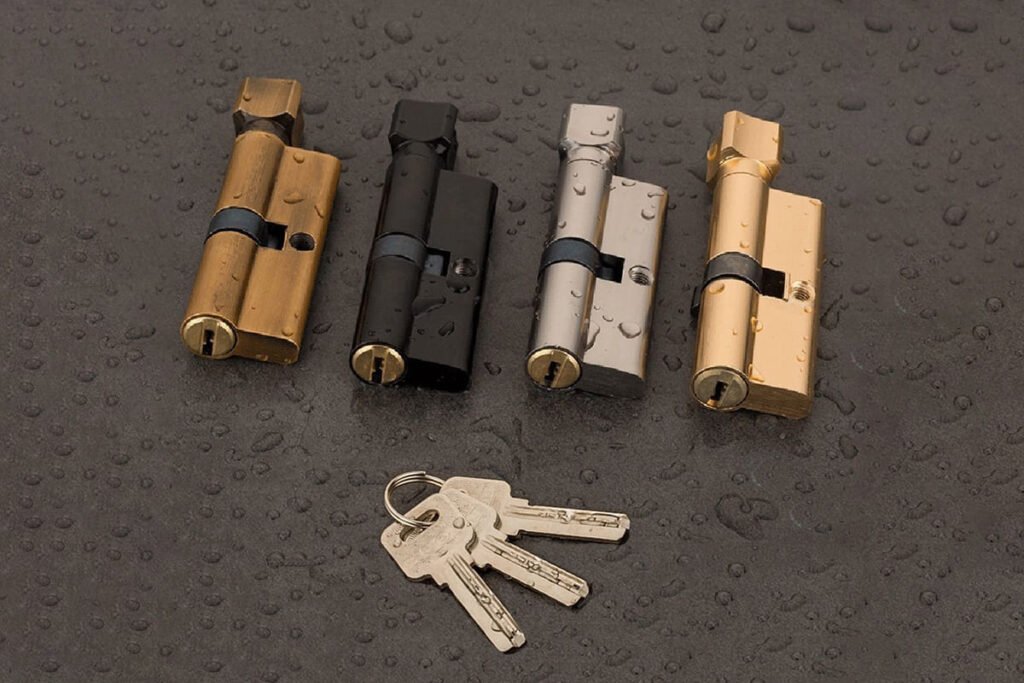
How to Measure the Correct Euro Cylinder Size
Euro cylinder size looks simple until a bulk order arrives and the cylinders do not fit the doors, locks, or fixing screws. That mistake can delay production, create rework, and cause customer complaints. The solution is to measure the door and lock as one system, not the cylinder alone.
To measure the correct Euro cylinder size, start with door thickness, add about 10 mm, and round up to the nearest 5 mm cylinder size. Then confirm the cam position, fixing screw length, mortise lock backset, and cylinder type. A correct specification includes length, cam layout, screw length, and application.
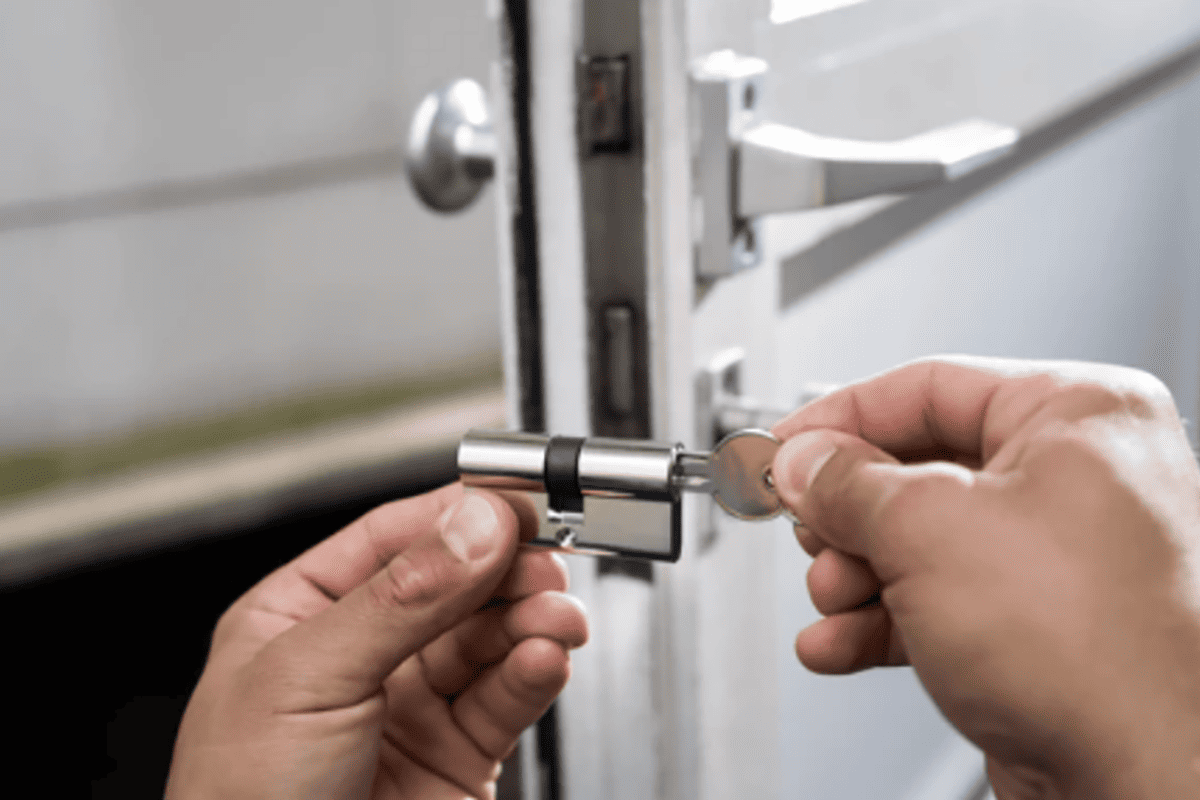
In my experience supporting B2B door hardware orders, most cylinder problems do not come from one bad measurement. They come from incomplete specification. Below, I will break down the practical checks I use when helping buyers confirm Euro cylinders before production or bulk purchasing.
How do you calculate the correct Euro cylinder size from door thickness?
Door thickness is the starting point, but it is not the whole answer. If buyers only measure the old cylinder, they may copy a previous mistake. If they only measure the door, they may miss the lock position, escutcheon thickness, or handle plate design.
The practical rule is simple: measure the total door thickness, add about 10 mm, then round up to the nearest 5 mm Euro cylinder size1. This gives enough projection for normal installation while reducing the risk of ordering a cylinder that is too short or excessively exposed.
Why door thickness comes first
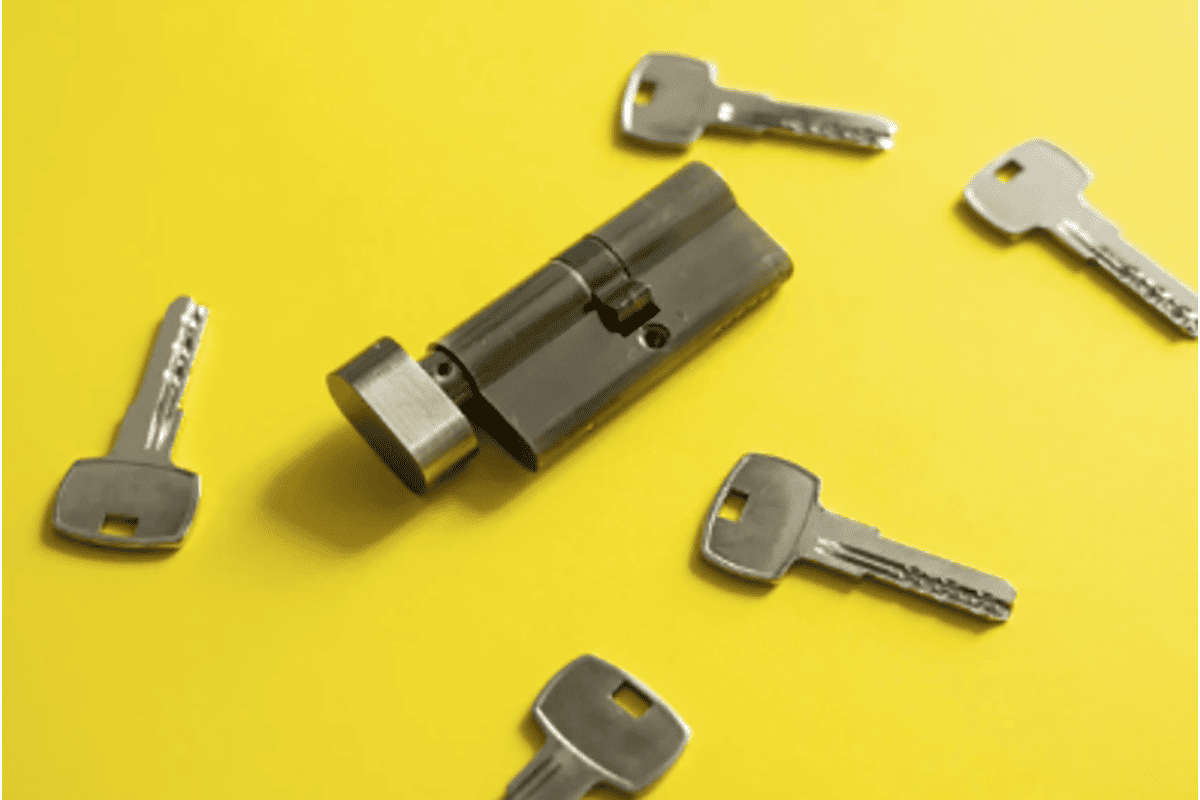
I usually begin with door thickness because it gives a reliable baseline for specification. A Euro profile cylinder passes through the mortise lock case and projects on both sides of the door.2 If the cylinder is too short, the key may not insert smoothly, the escutcheon may interfere, or installation may fail. If the cylinder is too long, it may look poor and can increase vulnerability in some applications.3
A practical sizing method is:
- Measure total door thickness.
- Add 10 mm as a working allowance.
- Round up to the nearest 5 mm standard size.
- Check internal and external projection.
- Confirm cam position and fixing screw length separately.
For example:
| Door Thickness | Add Allowance | Rounded Cylinder Size | Practical Note |
|---|---|---|---|
| 35 mm | +10 mm = 45 mm | 45 mm | Common for light internal doors |
| 40 mm | +10 mm = 50 mm | 50 mm | Often used on standard doors |
| 45 mm | +10 mm = 55 mm | 55 mm | Check handle plate thickness |
| 50 mm | +10 mm = 60 mm | 60 mm | Common for stronger door sets |
| 55 mm | +10 mm = 65 mm | 65 mm | Confirm both side projections |
This method is useful in procurement because it gives your purchasing team a repeatable rule. However, I do not recommend treating it as a final approval by itself.
Why total length can still be misleading
Euro cylinders are often described by total length, such as 60 mm, 70 mm, or 80 mm. But many cylinders are split into two sides. A 70 mm cylinder might be:4
- 35/35 mm
- 30/40 mm
- 40/30 mm
- 45/25 mm
These combinations matter when the door is not symmetrical, when the lock is not centered, or when the handle set has different inside and outside thicknesses.
In our factory order discussions, I often ask customers to confirm whether they need equal-side or unequal-side cylinders. This small step helps prevent a common problem: the total cylinder length is correct, but one side projects too much while the other side sits too deep.
What B2B buyers should confirm before ordering
Before placing a production order, I recommend preparing a simple measurement sheet. It should include:
- Door thickness
- Lock body model or drawing
- Inside and outside trim thickness
- Required total Euro cylinder size
- Side split, such as 30/30, 35/35, or 30/40
- Finish requirement
- Keying requirement, if applicable
- Quantity per size
For door factories, this avoids mismatched stock on the assembly line. For hardware brands and wholesalers, this improves SKU planning. For project buyers, this reduces installation risk across multiple door types.
Why does cam position affect Euro cylinder size selection?
Cam position creates problems because it is easy to overlook. A buyer may order the correct total length, but the cylinder still fails to operate the lock smoothly. This often happens when the door structure or mortise lock position needs a different cam layout.
Euro cylinder size selection must include cam position because the cam must align with the mortise lock mechanism.5 For non-rebated doors, a center-cam cylinder is usually suitable. For rebated doors, an offset-cam cylinder may be required because the lock position may not sit at the center of the door thickness.6
Center cam vs offset cam
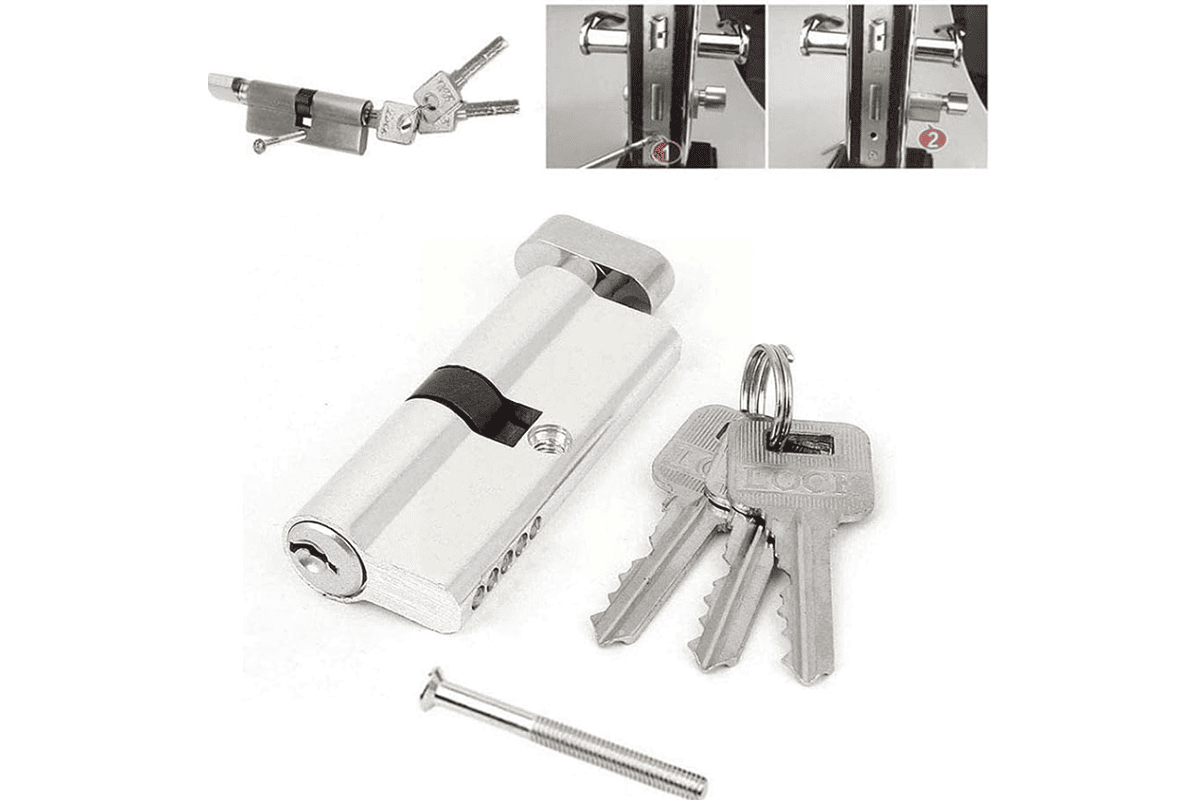
The cam is the rotating part in the middle of the Euro cylinder. When the key turns, the cam operates the mortise lock. If the cam does not align with the lock case, the cylinder may not install correctly or may not turn smoothly.
There are two broad situations buyers should understand:
| Door / Lock Condition | Common Cam Requirement | Why It Matters |
|---|---|---|
| Non-rebated door | Center cam | Lock case usually sits closer to the middle of door thickness |
| Rebated door | Offset cam may be required | Rebate changes the lock position relative to door faces |
| Unequal trim thickness | Side split must be checked | Cylinder projection may differ on each side |
| Special mortise lock | Confirm by drawing | Lock design can change cam alignment |
A center-cam cylinder has the cam positioned at the center of the total cylinder length. This is common for many standard doors. An offset-cam cylinder has unequal side lengths, so the cam sits closer to one side. This is often needed when the mortise lock is not centered.
Why rebated doors need extra attention
A rebated door has an overlapping edge.7 This design can improve sealing and appearance, but it changes how the lock and cylinder relate to the door thickness. If a buyer measures only the total thickness across the door leaf, the resulting cylinder may not match the mortise lock cam position.
I have seen buyers provide a correct door thickness but miss the rebate structure. The order then looks correct on paper, but installation becomes difficult because the cylinder cam does not match the lock follower position. This is why I always prefer to receive a door section drawing or at least a clear photo showing the rebate and lock placement.
Practical cam-position checklist
Before approving the Euro cylinder size, I suggest checking these points:
- Is the door rebated or non-rebated?
- Is the lock case centered in the door edge?
- Does the cylinder need equal or unequal side lengths?
- Is the required cam position shown in the lock drawing?
- Are handle plates or escutcheons different on each side?
- Does the sample cylinder operate smoothly before mass production?
For bulk orders, a pre-production sample is often worth the time. It can confirm physical fit, projection, key operation, and cam alignment before the full quantity is manufactured or shipped.
In B2B sourcing, a cylinder that is “the right length” can still be the wrong product if the cam position does not match the lock installation.
This is why I treat cam position as a specification item, not a small detail.
How do you choose the fixing screw length for the correct Euro cylinder size?
Fixing screw length is often forgotten because buyers focus on the cylinder body. But the screw holds the cylinder through the lock case. If the screw is too short, it may not engage. If it is too long, it may interfere or fail to tighten properly.
For the correct Euro cylinder size, check the fixing screw separately. A good rule is: fixing screw length = mortise lock backset + 10 mm. The acceptable lower limit is usually backset + 5 mm, and the upper limit is usually backset + 25 mm.
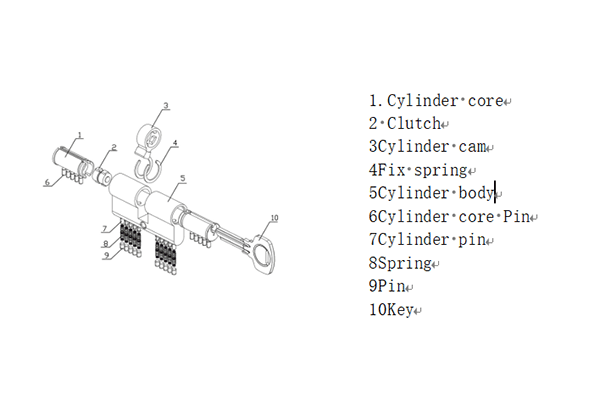
What is backset?
Backset is the distance from the door edge to the center of the cylinder hole or keyway position, depending on the lock design.8 In Euro mortise lock specification, backset is a key dimension because it affects handle position, cylinder position, and fixing screw length.
Common mortise lock backsets include values such as:9
- 25 mm
- 30 mm
- 35 mm
- 40 mm
- 45 mm
- 50 mm
- 55 mm
- 60 mm
The exact value depends on the lock model and application.
Fixing screw length rule
A simple practical rule is:
| Mortise Lock Backset | Preferred Screw Length | Acceptable Range |
|---|---|---|
| 25 mm | 35 mm | 30–50 mm |
| 30 mm | 40 mm | 35–55 mm |
| 35 mm | 45 mm | 40–60 mm |
| 40 mm | 50 mm | 45–65 mm |
| 45 mm | 55 mm | 50–70 mm |
| 50 mm | 60 mm | 55–75 mm |
| 55 mm | 65 mm | 60–80 mm |
| 60 mm | 70 mm | 65–85 mm |
The principle is:
- Preferred: backset + 10 mm
- Lower limit: backset + 5 mm
- Upper limit: backset + 25 mm
This gives enough screw engagement without excessive length.
Why screw length must be ordered correctly
In a small DIY repair, a missing screw may be solved locally. In a B2B shipment, it becomes a production problem. If 5,000 cylinders arrive with fixing screws that do not match the mortise locks, the buyer may need to source replacement screws, repack goods, delay assembly, or handle complaints from downstream customers.
I have seen this issue appear when the cylinder and mortise lock are purchased from different suppliers. The cylinder size may be correct. The finish may be correct. The key function may be correct. But the fixing screw does not suit the backset.
That is why I recommend confirming the lock model and backset at the same time as the Euro cylinder size. If the buyer is sourcing a full door hardware set, the supplier should be able to coordinate the cylinder, lock, screw, handle, and accessories as one package.
Procurement checklist for screw confirmation
Before issuing a purchase order, I suggest confirming:
- Mortise lock backset
- Required screw length
- Screw head type
- Screw diameter and thread
- Screw finish, if visible
- Quantity of screws per cylinder
- Spare screw requirement
- Packing method for screws
For wholesalers, this also affects after-sales support. A cylinder with the wrong screw is hard to sell smoothly, even if the cylinder itself is well made.
Which cylinder type should you choose besides Euro cylinder size?
Size does not define the complete product. A 60 mm cylinder may be suitable for one door and completely wrong for another because the function is different. Buyers should define the use scenario before confirming the final order.
Besides Euro cylinder size, buyers should select the correct cylinder type: double cylinder, single cylinder, bathroom cylinder, half cylinder, or security cylinder. The right type depends on access control needs, privacy requirements, door position, user behavior, and project specifications.
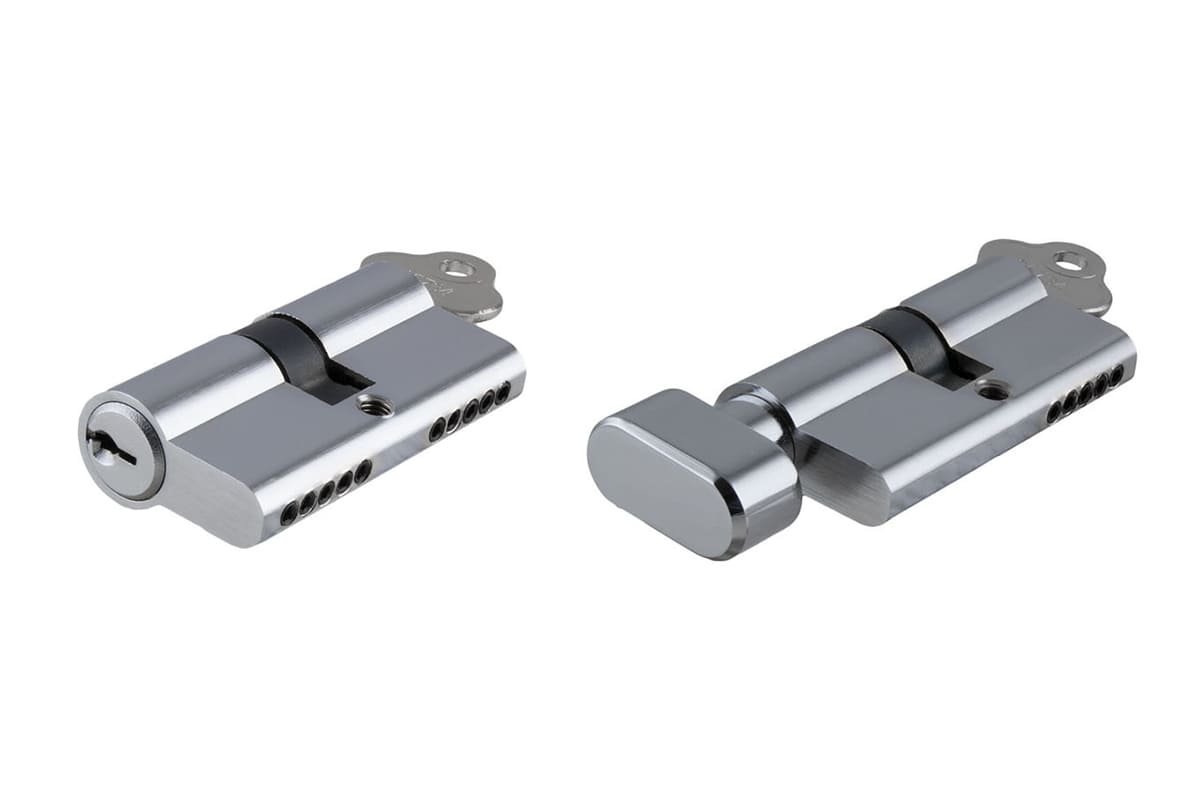
Common Euro cylinder types
Different projects need different cylinder functions. The main types include:
| Cylinder Type | Typical Use | Main Feature |
|---|---|---|
| Double cylinder | Entrance doors, office doors | Key operation from both sides |
| Single cylinder | Doors needing key outside and thumbturn inside | Convenience and emergency exit consideration |
| Bathroom cylinder | WC and privacy doors | Privacy function, often with emergency release |
| Half cylinder | Cabinets, shutters, utility doors | Key operation from one side only |
| Security cylinder | Higher-security doors | Enhanced anti-drill, anti-pick, or anti-snap features depending on design |
Double cylinder
A double cylinder allows key operation from both sides. It is common in many residential, commercial, and project doors. Buyers should confirm whether both sides require the same key profile and whether the door is part of a master key system.
For fire-rated or emergency exit doors, buyers should not assume that any double cylinder is suitable. They should verify applicable project requirements, hardware compatibility, and certification documents. SDH Hardware can provide product documents for relevant certified items, but buyers should always verify certificates for their target market and project use.
Single cylinder
A single cylinder usually has a key side and a thumbturn side.10 This design can improve convenience for internal exit because users do not need a key from the inside. However, the use of thumbturn cylinders depends on building regulations, door position, and project safety requirements11.
For procurement, the important question is: which side faces inside? If the cylinder is asymmetric, the buyer must confirm both the cylinder split and thumbturn direction.
Bathroom cylinder
Bathroom cylinders are used for privacy rather than high security. They may operate with a turn piece and include an emergency release function. These are common for hotels, apartments, public buildings, and commercial interior doors.
A buyer should confirm:
- Door thickness
- Lock case compatibility
- Indicator requirement
- Emergency release requirement
- Finish and design match with other hardware
Half cylinder
A half cylinder is used where operation is required from one side only. Common examples include storage rooms, garage doors, shutters, cabinets, and some utility applications. Half cylinders must be checked carefully because the cam position and body length are different from standard double cylinders.
For bulk orders, I recommend separating half cylinder SKUs clearly from double cylinders in the purchase list. This avoids warehouse confusion.
Security cylinder
Security cylinders may include features such as anti-drill pins, anti-pick designs, reinforced bodies, anti-snap structure, or restricted key systems.12 The exact feature set depends on the product model and standard. Buyers should request technical data sheets, test reports, and certification documents where required.
For high-risk doors, I recommend that buyers involve a qualified security professional or project consultant. A manufacturer can support specification and production, but application-specific security decisions should match local regulations, threat levels, and building requirements.
How should B2B buyers confirm Euro cylinder size before bulk ordering?
Bulk orders require more discipline than one-off replacement purchases. One unclear dimension can become thousands of wrong parts. A good confirmation process protects the buyer, the supplier, and the final customer.
B2B buyers should confirm Euro cylinder size with a full specification sheet, not only a verbal size request. The sheet should include door thickness, cylinder split, cam position, fixing screw length, lock backset, cylinder type, finish, keying requirement, certification documents, packing, and order quantity.
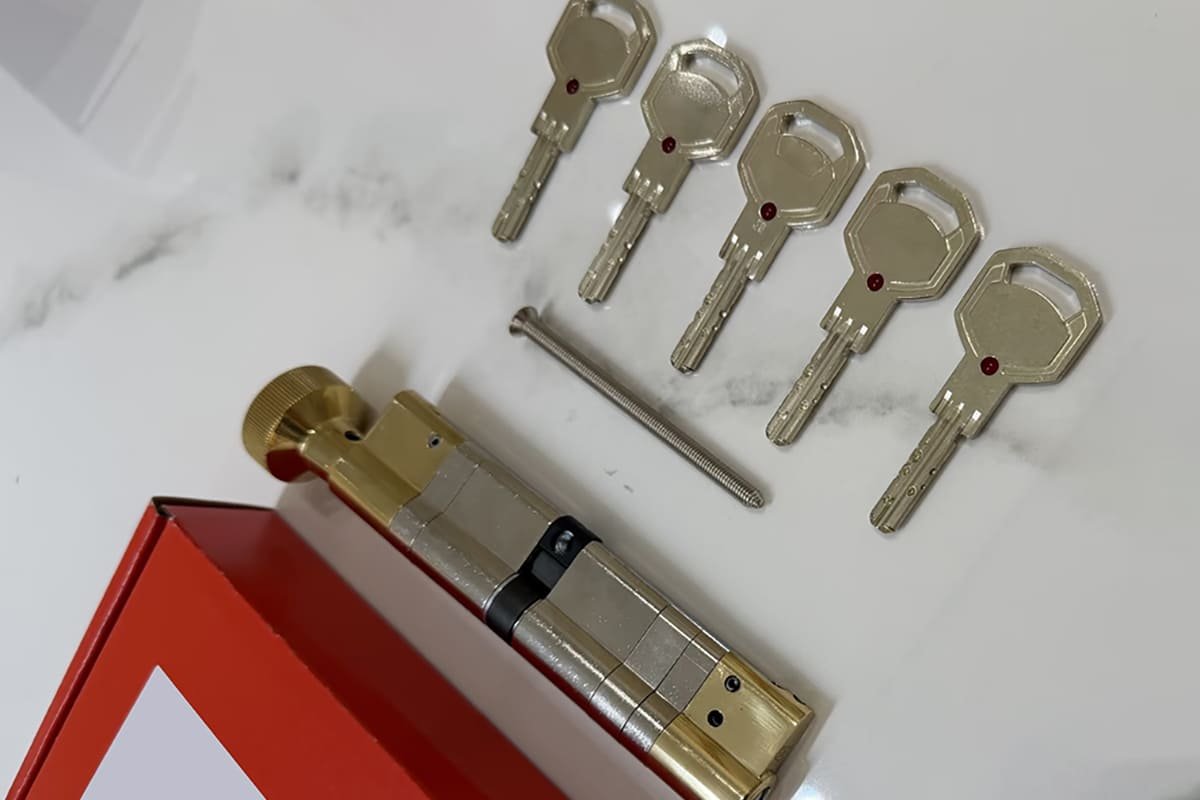
Why specification sheets reduce risk
When I support customer orders, I prefer drawings, photos, and written specification tables. This avoids confusion between total length and side split. It also helps the production team confirm the correct parts before manufacturing.
A complete specification sheet should include:
| Item | What to Confirm | Example |
|---|---|---|
| Door thickness | Total measured thickness | 45 mm |
| Cylinder size | Total length and split | 30/35 mm |
| Cam position | Center or offset | Offset cam |
| Door structure | Rebated or non-rebated | Rebated |
| Lock backset | Distance from door edge | 45 mm |
| Fixing screw | Required length | 55 mm |
| Cylinder type | Function | Double cylinder |
| Finish | Surface treatment | Satin nickel |
| Keying | Keyed alike, KD, MK, etc. | Keyed different |
| Certification | Documents to verify | CE / fire-rated document if applicable |
| Quantity | Per SKU | 2,000 pcs |
Sample approval matters
A sample is especially useful when the order includes:
- New door models
- Rebated door structures
- Offset cam cylinders
- Special finishes
- Custom logos
- Custom packaging
- Project-specific lock bodies
- Mixed cylinder types
At SDH Hardware, we manufacture architectural door hardware and support OEM/ODM orders. In that work, I have learned that the sample approval stage often catches small issues before they become expensive. A sample can confirm installation, operation, finish match, packing label accuracy, and accessory completeness.
Keying and packaging considerations
Cylinder size is only one part of the order. Buyers also need to define keying and packing. For example:
- Keyed different: Each cylinder uses a unique key.
- Keyed alike: Multiple cylinders use the same key.
- Master key system: A master key opens multiple different cylinders.
- Construction keying: Temporary access may be required during construction.
These details affect production planning, quality control, and packing accuracy.
For hardware brands and wholesalers, packaging is also important. Custom color boxes, barcode labels, laser logos, and stamping details should be approved before mass production. I always suggest matching the product label with the cylinder size and type to reduce warehouse picking mistakes.
Quality control before shipment
For bulk cylinder orders, quality inspection should cover:
- Dimensional checks
- Cam operation
- Key insertion and rotation
- Surface finish
- Screw and accessory completeness
- Packing and labeling
- Quantity per carton
- Document review, if certificates are required
Manufacturers may provide internal inspection reports, but buyers should still verify required documents for their market. For regulated or fire-rated applications, buyers should confirm that the selected lock, cylinder, door, and complete hardware set meet the project requirement as a system.
Frequently Asked Questions
What is the easiest way to measure Euro cylinder size?
The easiest method is to measure the door thickness, add about 10 mm, and round up to the nearest 5 mm size. Then confirm the cylinder split, cam position, and fixing screw length. This gives a more reliable result than measuring total cylinder length alone.
Should a Euro cylinder be flush with the door?
A Euro cylinder should usually sit close to the handle plate or escutcheon, with controlled projection. It should not be too short or excessively exposed. The ideal projection depends on door thickness, trim thickness, lock position, and security requirements.
What is the difference between 30/30 and 35/35 cylinders?
A 30/30 cylinder has 30 mm on each side of the cam, giving a total length of 60 mm. A 35/35 cylinder has 35 mm on each side, giving 70 mm total. The correct choice depends on door thickness and hardware configuration.
Do rebated doors need special Euro cylinders?
Some rebated doors may need offset-cam cylinders because the mortise lock may not sit at the center of the door thickness. Buyers should confirm the door section, lock position, and cylinder split before ordering. A sample test is strongly recommended for bulk projects.
How do I choose the fixing screw for a Euro cylinder?
Choose the fixing screw according to the mortise lock backset. A practical preferred length is backset + 10 mm. The acceptable range is usually backset + 5 mm to backset + 25 mm. Always confirm screw fit before mass production.
Conclusion
The correct Euro cylinder size depends on more than total length. I recommend starting with door thickness, adding 10 mm, and rounding to the nearest 5 mm. Then confirm cam position, fixing screw length, lock backset, and cylinder type. This process helps buyers avoid wrong stock, failed installation, and rework. If you are preparing a bulk order, send us your door thickness, door structure, mortise lock backset, cam position requirement, cylinder type, finish, and quantity before ordering.
"Euro Profile Cylinder", https://www.assaabloy.com/in/en/documents/catalogue/Euro%20Profile%20Cylinder.pdf. A technical standards or door-hardware reference should be cited to show that Euro profile cylinders are specified by dimensional length and selected according to the combined door and hardware thickness; this supports the sizing method as industry practice rather than a universal rule. Evidence role: general_support; source type: institution. Supports: The source should support that Euro profile cylinders are commonly specified by length in standard increments and that cylinder length is selected in relation to door and furniture thickness.. Scope note: The source may support the dimensional basis and standard size increments, while the exact 10 mm allowance may remain a practical rule of thumb rather than a formally standardized requirement. ↩
"EN 12209 Certified European Mortise Locks, Commercial ...", https://www.camax.cn/euro-mortise-lock. A neutral lock-design reference should be cited to define the Euro profile cylinder as a replaceable cylinder used with a mortise lock case and positioned through the door assembly. Evidence role: definition; source type: encyclopedia. Supports: The source should define a Euro profile cylinder and describe its use with mortise locks or lock cases.. Scope note: The source would define the general arrangement, not verify the fit of any specific cylinder, lock case, or door. ↩
"What is Lock Snapping with Prevention Tips (Expert Advice)", https://www.locksmiths.co.uk/faq/lock-snapping/. Crime-prevention or security guidance should be cited to explain that excessive cylinder projection can leave the cylinder more exposed to physical attack, particularly where anti-snap or protective hardware is not used. Evidence role: mechanism; source type: government. Supports: The source should support that cylinders projecting beyond the door furniture can be more exposed to attack methods such as snapping, gripping, or forced manipulation.. Scope note: This would support the security mechanism in general; actual vulnerability depends on cylinder design, door furniture, installation, and applicable security rating. ↩
"Euro Cylinder Sizes Explained: 30/30, 35/45, 40/40 and More", https://www.welock.com/blogs/news/euro-cylinder-sizes-explained?srsltid=AYCX9vK0xQZ9sYLhHAYDC3hyGFxbvmVIcJh0zhOnIPcGqB6-HfWZUJky. A door-hardware technical reference should be cited to show that Euro cylinder length is commonly expressed as two side measurements, so cylinders with the same total length may have different internal and external projections. Evidence role: definition; source type: institution. Supports: The source should explain that Euro cylinder sizes are often stated as two measurements taken from the fixing screw or cam area to each end.. Scope note: The source would support the measurement convention; it would not determine which split is correct for a particular door without the door and furniture dimensions. ↩
"Unraveling the Dramatic Spinning Key Occurrence", https://www.adh.com.au/post/the-spinning-key-occurrence. A locksmithing or architectural-hardware reference should be cited to explain that the cam is the actuating element of a Euro cylinder and must align with the lock case for proper operation. Evidence role: mechanism; source type: education. Supports: The source should explain that the cylinder cam transmits key rotation to the lock mechanism and therefore must be correctly positioned relative to the lock case.. Scope note: This supports the functional mechanism generally; exact cam requirements vary by lock case design and manufacturer drawing. ↩
"Euro Profile-Full Cylinder", https://www.allaboutdoors.com/Products/door-parts/hinged-residential-door-parts/Lock-Cylinders-Parts/Euro-Profile-Full-Cylinder?srsltid=AYCX9vKrFVCrysu6QXTw0bDYAiXc4Fv-HVhwZTJd_BArfPqfGmH12ptu. A technical door-hardware reference should be cited to show that rebated door geometry can place the lock case away from the centerline of the overall door thickness, making offset cylinder dimensions necessary in some installations. Evidence role: general_support; source type: institution. Supports: The source should support that rebated door construction can change the relative position of the lock and cylinder, sometimes requiring offset cylinder dimensions or cam placement.. Scope note: The support is contextual because not every rebated door requires an offset cam; the required cylinder depends on the door section and lock case drawing. ↩
"Overview: Architecture Terms - Library Guides", https://libguides.library.nd.edu/c.php?g=657442&p=10469725. An architectural or construction glossary should be cited to define a rebated door as one with a stepped or overlapping edge, providing context for why lock positioning may differ from a plain-edge door. Evidence role: definition; source type: education. Supports: The source should define a rebated door or rebated edge as a door construction with an overlap or stepped edge.. Scope note: The definition supports the terminology only; it does not by itself prove any particular cylinder sizing requirement. ↩
"How to Determine the Backset of Your Door", https://www.lowes.com/n/how-to/determine-the-backset-of-your-door. A door-hardware glossary should be cited to define backset as the distance from the door edge to the centerline of the relevant lock opening or operating element. Evidence role: definition; source type: institution. Supports: The source should define lock backset as the distance from the door edge or faceplate to the centerline of the lock hub, cylinder, or bore.. Scope note: The exact reference point can vary between bored locks, mortise locks, handles, and cylinder preparations, so the citation should be used to support the general definition. ↩
"Mortise Lockcases Product Catalogue.pdf", https://www.assaabloy.com/in/en/product-assets/mechanical/mechanical/assets/documents/Mortise%20Lockcases%20Product%20Catalogue.pdf. A standards-based or institutional architectural-hardware reference should be cited to document that mortise locks are supplied in multiple metric backsets, including common values in the approximate 25 mm to 60 mm range. Evidence role: general_support; source type: institution. Supports: The source should show that mortise locks are manufactured in a range of metric backsets broadly matching the listed values.. Scope note: The source may confirm typical dimensional ranges rather than every listed value for every market or lock type. ↩
"Single vs Double-Cylinder Deadbolt Which Lock Is Best for ...", https://buildwithholmes.com/resources/resources-single-vs-double-cylinder-deadbolt-lock-which-is-best-for-your-home. A neutral lock terminology reference should be cited to define a single-cylinder arrangement as one operated by a key on one side and by a thumbturn or similar device on the other. Evidence role: definition; source type: encyclopedia. Supports: The source should define a single-cylinder lock or cylinder as keyed on one side and operated by a thumbturn or turn piece on the other.. Scope note: Terminology may differ between Euro cylinders, deadbolts, and regional hardware markets, so the citation should be treated as a general definition. ↩
"California Code of Regulations, Title 8, Section 3235. Doors.", https://www.dir.ca.gov/title8/3235.html. Building-code or fire-safety guidance should be cited to show that thumbturn cylinders and similar internal-release hardware must be assessed in relation to the door’s use, escape function, and local regulatory requirements. Evidence role: expert_consensus; source type: government. Supports: The source should support that door locking hardware on escape routes or regulated doors must satisfy building-code, fire-safety, or emergency-egress requirements.. Scope note: The citation would establish the need for regulatory assessment, not prescribe a universal rule for all doors or jurisdictions. ↩
"Standards - BS EN 1303", https://www.aldridgesecurity.co.uk/standards-bs-en-1303. A lock-cylinder testing standard or security certification reference should be cited to show that higher-security cylinders are distinguished by resistance to manipulation and physical attack, as well as by key-control measures in some systems. Evidence role: expert_consensus; source type: institution. Supports: The source should support that cylinder security is assessed through features or tests related to drilling, picking, physical attack resistance, snapping, and key control.. Scope note: Standards differ by country and scheme; the citation would support the categories of security features, not certify any specific product. ↩
