

What information to include in RFQ for door hardware set
An RFQ for door hardware set can look simple, but missing details often create delays. A supplier may quote the wrong lock case, hinge, cylinder, finish, or packaging if the request is too general. The better solution is to define standards, door function, specifications, quantities, and trade terms from the start.
An RFQ for a door hardware set should include the target market standard1, door application, product specifications, quantity, finish, packaging, branding, certification needs, and shipping terms. These details help the supplier check compatibility, compliance documents, production feasibility, and real quotation conditions before preparing an accurate offer.
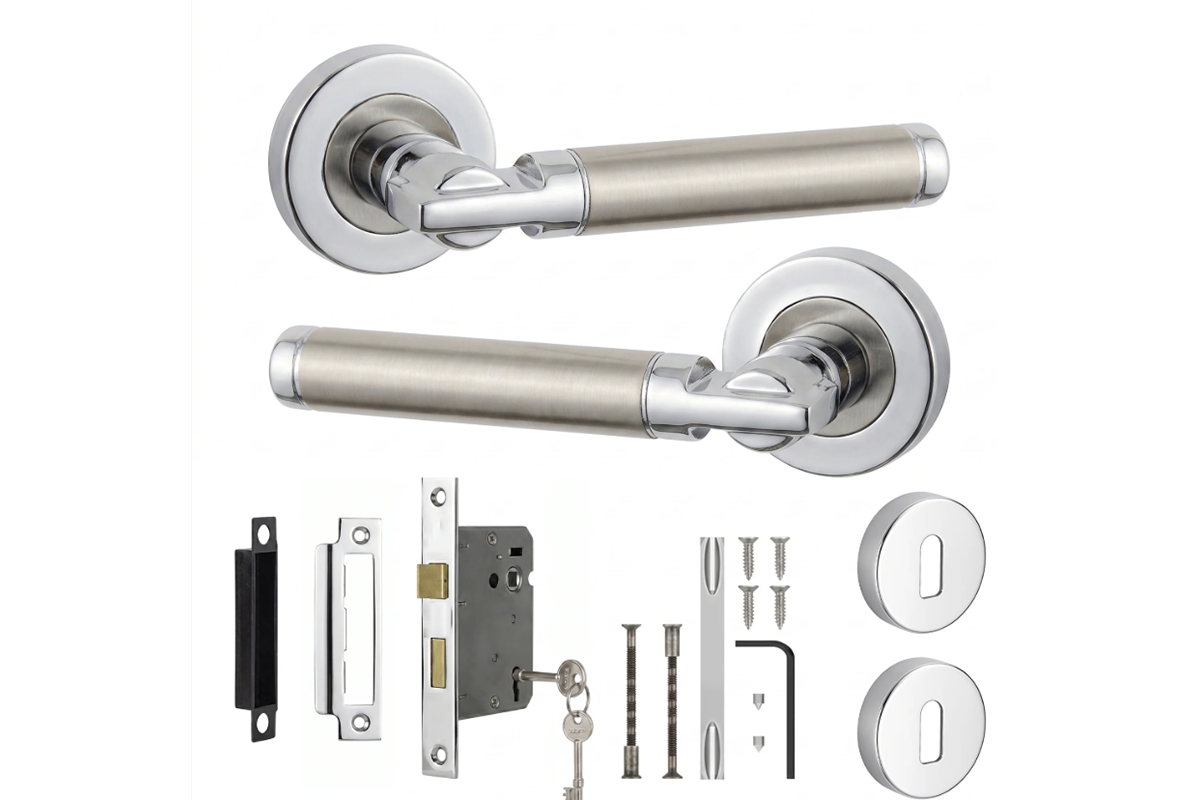
I handle RFQs for complete architectural door hardware sets almost every day. The fastest quotations usually come from buyers who explain the door, the market, and the commercial conditions clearly. The slowest quotations usually start with one sentence: “Please quote this set.”
Why should an RFQ for door hardware set start with market standards?
A door hardware quotation can go wrong quickly when the target standard is unclear. The buyer may expect European hardware, while the supplier assumes another system. This small gap can affect lock dimensions, cylinder type, handle fixing, hinge size, certifications, and installation compatibility.2
An RFQ for door hardware set should start with the required market standard, such as European standard, American standard, Middle East project requirements, or another regional specification. This tells the supplier which lock case, cylinder profile, handle dimensions, hinge format, and compliance documents should be considered before pricing.
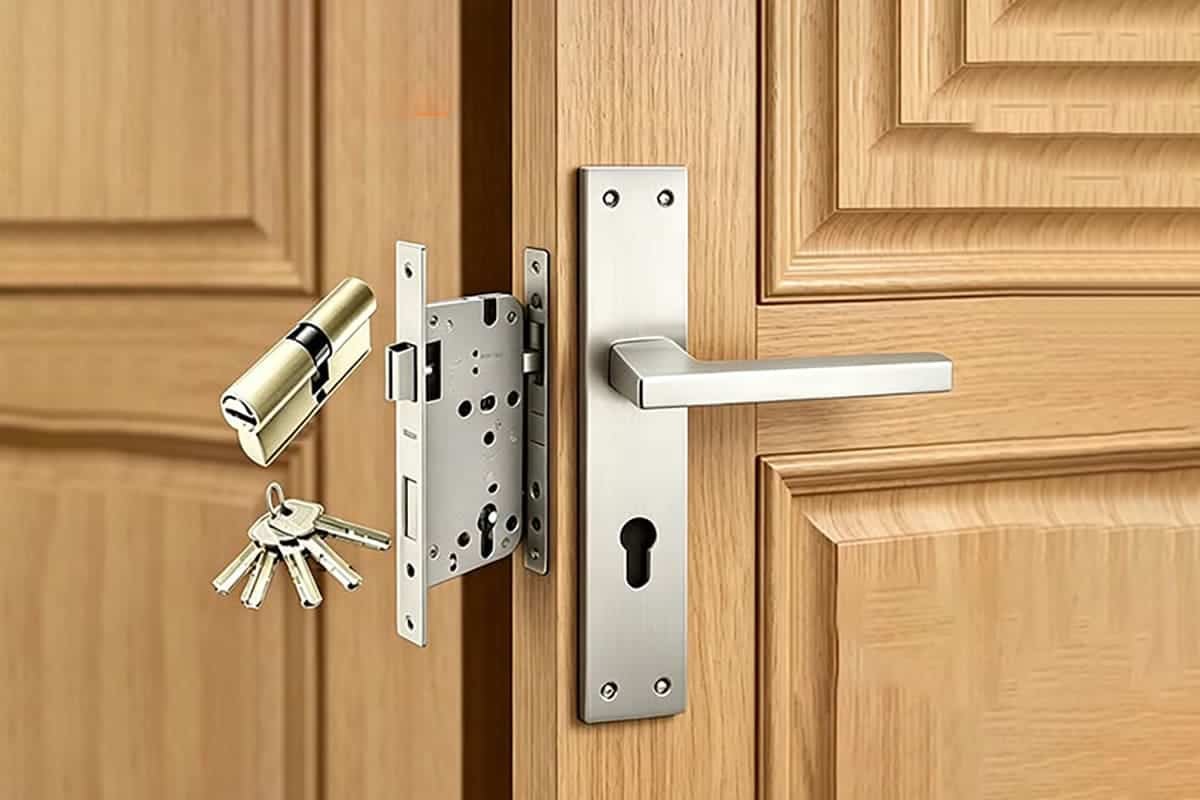
Market standard controls the whole hardware system
In my experience as a China-based architectural door hardware manufacturer, many RFQ delays start with one basic question: “Is this for Euro standard or American standard?” This question is not a formality. It changes the structure of the entire door hardware set.
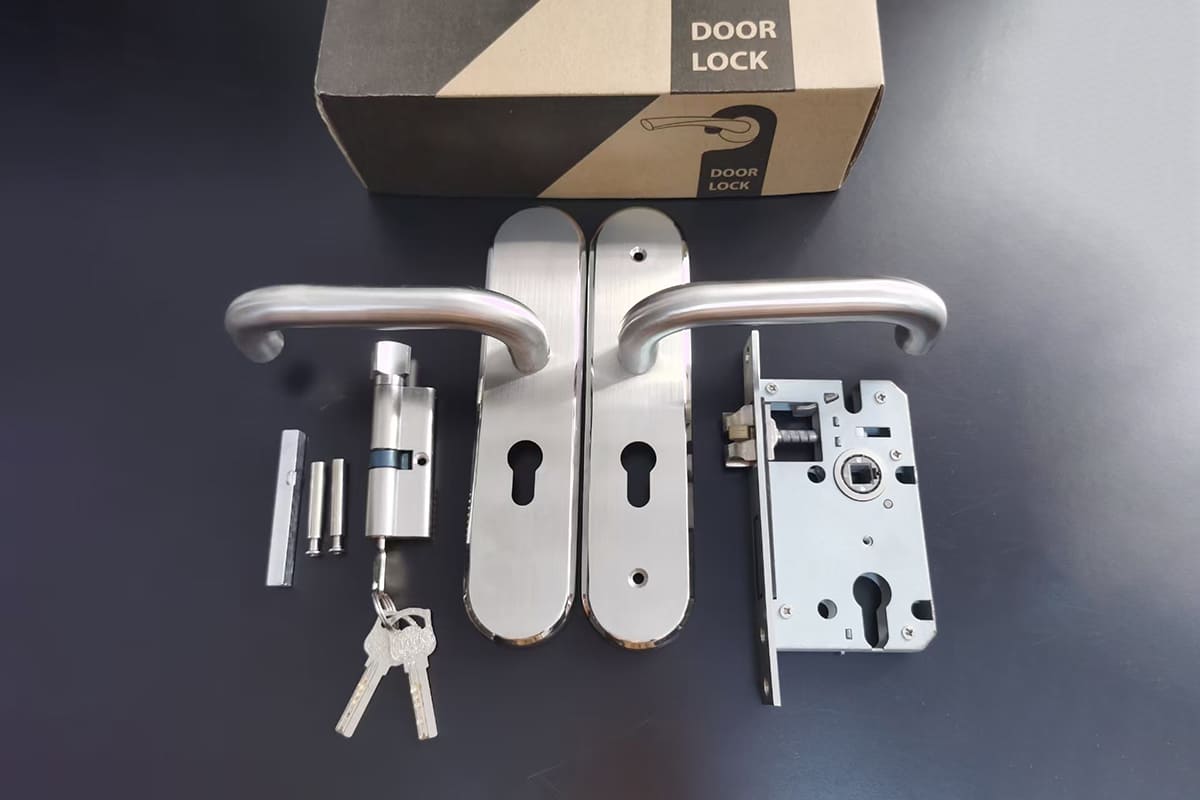
A complete set may include:
- Mortise lock body
- Lever handle
- Cylinder
- Butt hinges or concealed hinges
- Escutcheons or roses
- Strike plate
- Door stopper
- Flush bolt
- Door closer
- Accessories and screws
If the target standard is European, the buyer may need a Euro mortise lock, Euro profile cylinder, specific backset, specific center distance, and CE-related documentation. If the project follows American standard, the lock function, bore preparation, latch style, and certification expectations may be completely different.
These systems should not be treated as interchangeable.
Key differences buyers should clarify
| RFQ Item | European Standard Example | American Standard Example | Why It Matters |
|---|---|---|---|
| Lock type | Euro mortise lock | Cylindrical lock, tubular lock, or ANSI mortise lock | Door preparation and installation differ |
| Cylinder | Euro profile cylinder | Key-in-lever, rim cylinder, or mortise cylinder | Not compatible without matching hardware |
| Handle design | Lever on rose or plate | Lever set with different fixing system | Affects spindle, screws, and door prep |
| Certification | CE, EN, fire-rated documents where applicable3 | ANSI/BHMA, UL documents where applicable | Buyers must verify required documents |
| Dimensions | Backset, center distance, forend size | Bore size, latch backset, strike dimensions | Directly affects factory production and installation |
What to write in the RFQ
A buyer does not need to write a technical book. However, the RFQ should state the standard clearly.
For example:
“This RFQ is for a European standard door hardware set for wooden internal doors in the Middle East market. Please quote Euro mortise lock, Euro cylinder, stainless steel lever handle, and matching butt hinges.”
That sentence gives the supplier a useful starting point. It also reduces the risk of quoting a product that looks similar in pictures but does not fit the door.
Certification should be treated as a document to verify
If the project requires CE certification, fire-rated certification, EN testing, or another compliance document, the RFQ should mention it early. As a manufacturer, I can provide available documents for relevant SDH Hardware product lines, but buyers should still verify whether those documents match the exact product, door type, installation condition, and project requirement.
For fire-rated doors especially, professional evaluation is important. Hardware performance depends on the complete door assembly, not only one hinge or lock.4
How should an RFQ for door hardware set define door function?
A hardware set is not selected only by appearance. A bathroom door, hotel room door, classroom door, office door, and fire-rated exit door can all require different lock functions5. If the function is missing, the quotation may be technically incomplete.
An RFQ for door hardware set should define where the door will be used and how people will operate it. The RFQ should state the room type, privacy level, access method, fire-rating need, durability expectation, and any safety requirement before the supplier selects matching locks, cylinders, handles, hinges, and accessories.
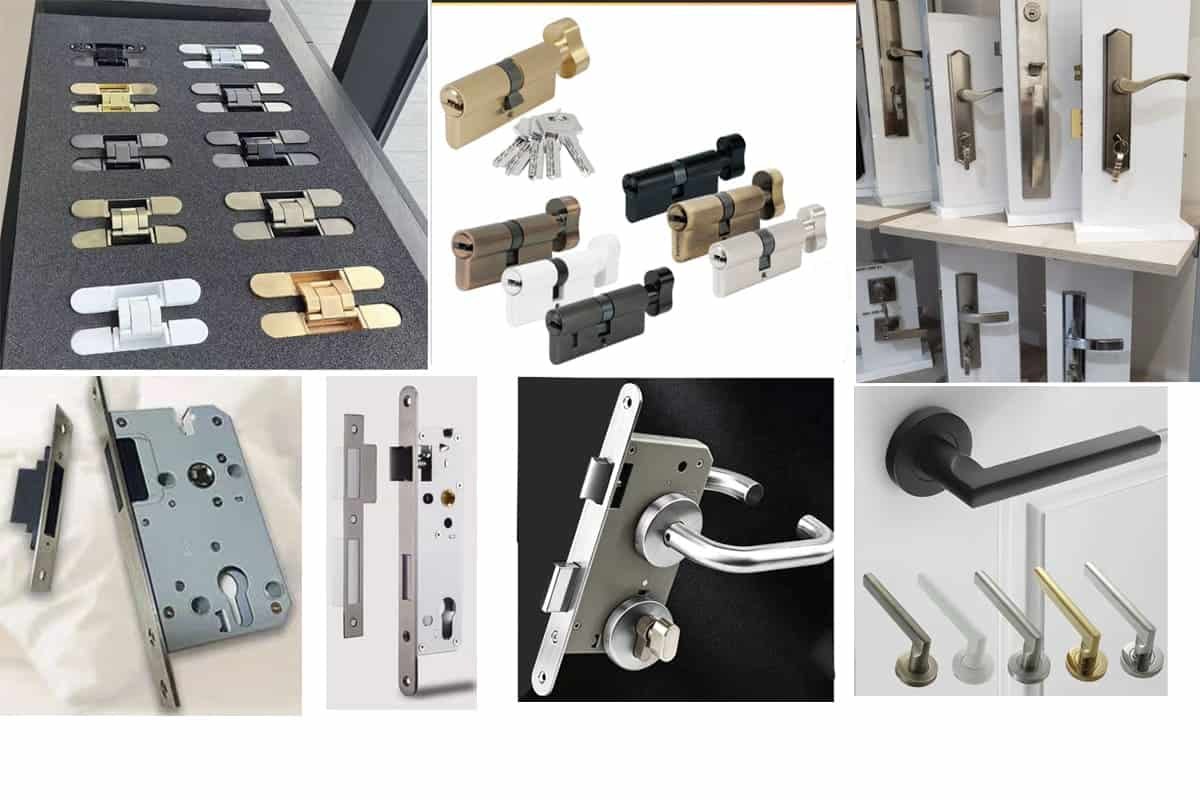
Door function changes product selection
I often receive RFQs with a photo of a handle and a lock, but no explanation of the door function. I then need to ask several follow-up questions:
- Is this for a bathroom door?
- Is this for a bedroom door?
- Is this for an office door?
- Is this for a hotel guest room?
- Is this for a classroom or public building?
- Is this for a fire-rated door?
- Does the door need a key cylinder, thumb turn, or privacy function?
These questions matter because the same handle style can be paired with different lock bodies and cylinders. A privacy bathroom set may need an emergency release.6 An office door may need a keyed cylinder. A hotel door may need electronic access hardware. A fire-rated door may need hardware supported by applicable test documents.
Common door functions and RFQ implications
| Door Function | Typical Hardware Need | RFQ Detail to Include |
|---|---|---|
| Bathroom | Privacy lock, thumb turn, emergency release | Occupancy indicator, finish, door thickness |
| Bedroom | Privacy or keyed function | Lock type, cylinder need, sound/privacy expectation |
| Office | Keyed lock, durable handle, suitable hinges | Key system, usage frequency, door material |
| Classroom | Robust lever, controlled access | Lock function, safety policy, cycle requirement |
| Hotel room | Electronic lock or mortise lock system | Access control integration, door thickness |
| Fire-rated door | Fire-rated lock, hinges, closer, accessories | Rating duration, test standard, project documents |
Function also affects durability expectations
A residential bedroom door may not need the same durability level as a school corridor door. A wholesale buyer may choose one price level for retail distribution, while a project procurement team may require higher cycle performance7 and documented compliance.
When I review an RFQ, I like to know:
- Door location: interior, exterior, corridor, restroom, hotel, villa, school, hospital, office.
- User frequency: low, medium, or high traffic.
- Security need: privacy only, key locking, master key, emergency access.
- Safety need: fire-rated, panic exit, accessibility, anti-ligature where applicable.
- Door construction: wooden door, steel door, aluminum door, fire door, acoustic door.
A practical RFQ example
A weak RFQ says:
“Please quote handle, lock, cylinder, and hinges.”
A better RFQ says:
“Please quote a European standard door hardware set for office wooden doors, 45 mm door thickness, key-locking function, satin stainless steel finish, medium to high traffic, with matching lock body, Euro cylinder, lever handle, and three butt hinges per door.”
The second version lets the supplier check compatibility and price more accurately. It also makes it easier to suggest alternatives if the requested combination is not ideal.
What product specifications belong in an RFQ for door hardware set?
A complete set must work as one system. If the buyer gives only product names, the supplier may not know the correct dimensions, material grade, finish, or matching method. This can lead to price revisions or wrong product matching later.
An RFQ for door hardware set should include product dimensions, materials, finish, door thickness, lock body size, handle type, hinge size, cylinder type, accessory list, and any drawings or samples. These specifications help the supplier confirm mechanical fit, appearance consistency, packing method, and manufacturing cost.
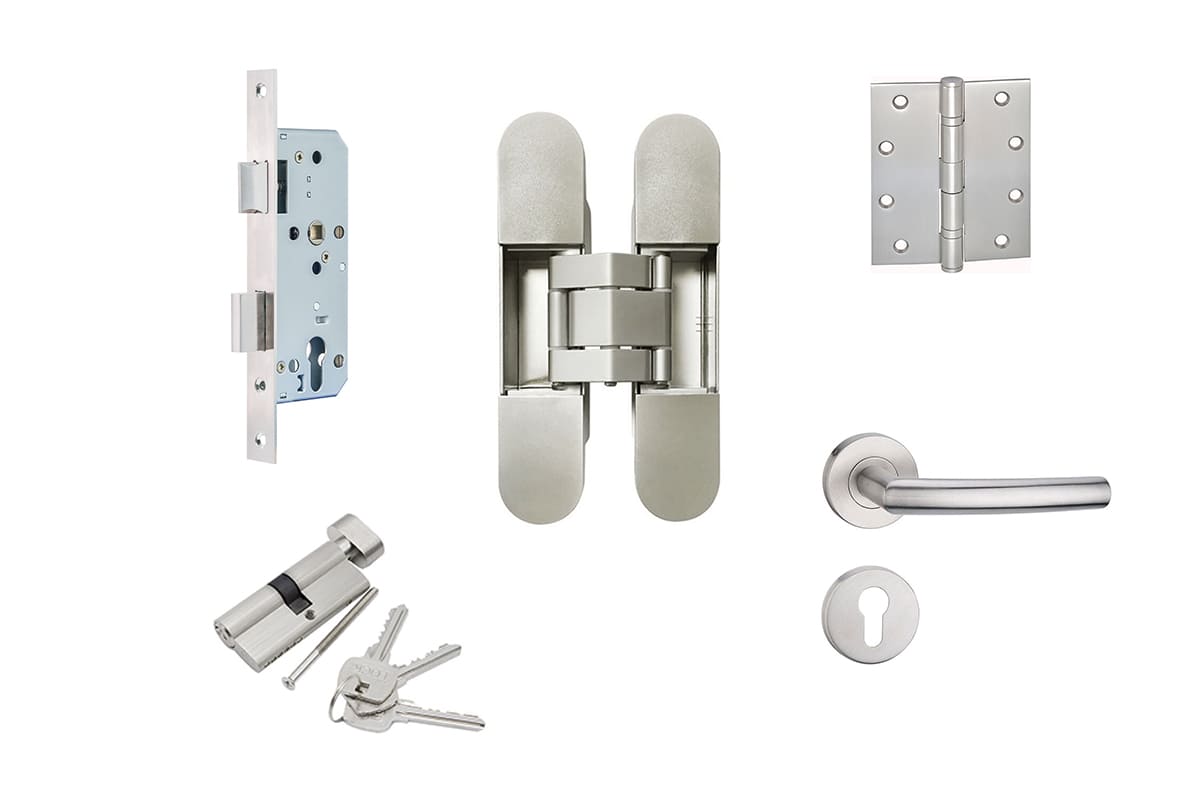
The set should be described as a system
A door hardware set is not just a collection of individual items. The lock, handle, spindle, cylinder, hinges, screws, and accessories must match the door and each other. When one detail is wrong, the whole set may fail during installation.
For example:
- A handle spindle may not match the lock follower.
- A cylinder may be too short or too long for the door thickness.
- A lock forend may not match the door edge preparation.
- Hinges may be too light for the door weight.8
- Screws may not suit the door material.
- A finish may look different across handle, hinge, and accessories.
At SDH Hardware, we manufacture and supply product families such as Euro mortise locks, stainless steel lever handles, butt hinges, concealed door hinges, Euro brass cylinders, and door accessories. When a buyer sends complete specifications, my team can check the whole set more quickly.
Core specifications to include
| Product | Specification to Include | Why It Affects Quotation |
|---|---|---|
| Mortise lock | Backset, center distance, forend size, latch/deadbolt type | Tooling, compatibility, and material cost differ |
| Lever handle | Material, rose/plate type, spindle size, fixing method | Affects production process and matching lock |
| Cylinder | Euro profile, length, key type, thumb turn, finish | Affects brass cost, keying, and security level |
| Hinges | Size, thickness, bearing type, material, finish | Affects door weight support and unit cost |
| Accessories | Door stopper, flush bolt, escutcheon, screws | Affects set completeness and packing |
| Finish | SS satin, polished, PVD, black, antique, custom color | Affects surface treatment cost and lead time |
| Door | Thickness, height, width, weight, material | Affects cylinder length, hinge capacity, lock choice |
Material and finish should be clear
Material is one of the largest price factors in architectural door hardware. A stainless steel lever handle, zinc alloy handle, brass cylinder, steel lock body, and stainless steel hinge all have different cost structures.
Buyers should state the required material if they know it. For example:
- SS304 stainless steel lever handle
- SS201 stainless steel lever handle
- Brass Euro cylinder
- Steel lock case
- Stainless steel butt hinge
- Zinc alloy escutcheon
Finish also matters. A satin stainless steel finish may be straightforward. A custom PVD finish, matte black finish, antique bronze finish, or special color may require extra confirmation, minimum order quantity, or sample approval.
Door thickness9 is small but critical
Door thickness is one of the most common missing details. It affects:
- Cylinder length
- Spindle length
- Screw length
- Handle fixing
- Lock installation
- Accessory matching
For example, a 35 mm door and a 55 mm door may not use the same cylinder length or fixing screws. If the RFQ only says “wooden door,” the supplier may quote a standard configuration that later needs adjustment.
Drawings and samples help when precision matters
For custom hardware, project matching, or brand replacement items, drawings are very useful. Buyers can include:
- Product drawings
- Door preparation drawings
- Technical datasheets
- Installation photos
- Existing sample photos
- Finish reference photos
- Packaging artwork if available
A final quotation may still need sample confirmation, especially for ODM/OEM products, private label items, or special finishes. However, drawings reduce guesswork and help suppliers judge feasibility earlier.
Why do quantity, packaging, and branding matter in a door hardware set RFQ?
A quotation is not only about the product. Quantity, packaging, and branding can change material planning, labor cost, carton design, printing cost, inspection time, and delivery schedule. If these details are missing, the supplier may quote only a basic factory price.
A door hardware set RFQ should include order quantity, set composition, packaging method, carton requirements, private label needs, logo method, and whether the order is for a project, wholesale stock, or brand distribution. These factors influence unit price, production planning, and lead time.
Quantity affects more than the unit price
Most buyers understand that quantity affects price. However, it also affects production planning and customization options. A 100-set trial order, a 2,000-set project order, and a 20,000-set annual wholesale plan are very different for a factory.
- Raw material purchasing
- Production line scheduling
- Surface treatment batch planning
- Packaging material preparation
- Logo tooling or laser setup
- Inspection workload
- Delivery timing
- Payment and shipment planning
When I receive an RFQ without quantity, I can only give a very rough range. That range may not help the buyer compare suppliers properly.
Buyers should define the set composition
A “door hardware set” can mean different things. One buyer may mean lock, handle, and cylinder. Another buyer may mean a full opening package with hinges, door closer, door stopper, flush bolt, screws, and accessories.
A good RFQ should define the set clearly.
Example:
| Set Type | Included Items |
|---|---|
| Basic internal door set | Lever handle, mortise lock, cylinder, key, screws |
| Standard project set | Handle, lock, cylinder, 3 hinges, door stopper, accessories |
| Fire-rated door set | Lock, hinges, closer, cylinder, seals, accessories where applicable |
| Hotel room set | Electronic lock, mechanical cylinder, hinges, door viewer, accessories |
This avoids a common problem: two suppliers quote “one set,” but each set includes different items. The prices then look different, but the comparison is not fair.
Packaging can change the quotation
Packaging is important for wholesalers, hardware brands, and project buyers. A factory-direct quote with neutral packing may not cover customized color boxes, printed cartons, barcode labels, installation manuals, or inner protective foam.
Buyers should mention:
- Neutral box or color box
- Brown carton or printed carton
- Barcode label requirements
- Installation instruction sheets
- Logo on box
- Logo on product
- Set packing or item-by-item packing
- Pallet packing requirements
- Drop test or export carton requirements11
At SDH Hardware, we often support customer stamping, laser logos, custom color packaging, and product drawings after order confirmation. These services can be planned better when the buyer mentions them in the RFQ.
Branding should be discussed early
Private label requirements can affect lead time and cost. A stamped logo may need tooling. A laser logo may need artwork confirmation. A custom color box may need design files and printing lead time.
The RFQ should state:
- Logo position
- Logo method
- Logo artwork format
- Packaging design status
- Label requirements
- Inspection standard for appearance
- Whether the order is OEM or ODM
This does not mean every detail must be final at RFQ stage. But the supplier should know whether private label work is expected. Otherwise, the first price may not reflect the real order condition.
Which trade and shipping terms should a door hardware set RFQ include?
Shipping terms are sometimes left until the end, but they directly affect the quotation. A supplier cannot price the same way for FOB, CIF, DDP, air freight, sea freight, or courier samples. The destination and transport method matter.
A door hardware set RFQ should include the preferred Incoterms, destination port or address, transport method, expected delivery time, and shipment type. These terms help the supplier separate product cost, local charges, freight cost, insurance, customs responsibility, and realistic production lead time.

Incoterms affect the final quotation12
Many buyers ask for “best price,” but they do not say whether they need FOB or CIF. These are not the same quotation conditions.
Common terms include:
| Trade Term | What Buyer Usually Gets | Why It Matters |
|---|---|---|
| EXW | Factory price only | Buyer handles pickup, export, freight, and customs |
| FOB | Price to loading port in China | Common for importers with forwarders |
| CIF | Product plus sea freight and insurance to destination port | Freight cost must be calculated |
| CFR | Product plus sea freight to destination port | Insurance not included |
| DAP/DDP | Delivery to destination location | Customs, duty, and local delivery must be clarified |
For many B2B door hardware buyers, FOB China port is a practical starting point. However, some project buyers prefer CIF to a destination port. The RFQ should state the preferred term clearly.
Destination port is not a small detail
Freight cost changes by destination. Shipping to Jebel Ali, Hamburg, Rotterdam, Singapore, or another port will not have the same cost. Even within the same region, rates can differ.
The RFQ should include:
- Destination country
- Destination port
- Preferred loading port if any
- Sea freight, air freight, or courier
- Container shipment or LCL shipment
- Urgent delivery requirements
- Required delivery date
If the buyer wants CIF, the supplier needs this information before quoting. If the buyer wants FOB, the supplier may only need the loading port and shipment volume estimate.
Delivery expectations should be realistic
Door hardware sets may include several product categories. Handles, locks, hinges, cylinders, and accessories may have different production processes. Custom finishes or branded packaging can add time.
A realistic delivery discussion should consider:
- Sample lead time
- Mass production lead time
- Surface treatment schedule
- Packaging production time
- Final inspection time
- Booking and shipment time
- Peak season or holiday factors
As a factory, I prefer when buyers state both the desired delivery date and the project flexibility. For example:
“Target shipment: within 45 days after deposit and packaging confirmation. Please advise if this is feasible for 3,000 complete sets.”
This gives the supplier room to confirm real production capacity instead of giving an unrealistic promise.
Payment and inspection terms also help
Although payment terms are sometimes negotiated after the first offer, they can be included in the RFQ if the buyer has a fixed requirement. Inspection terms are also useful for bulk orders.
The buyer may state:
- Payment method preference
- Deposit and balance expectation
- Third-party inspection requirement
- Factory inspection requirement
- Pre-shipment sample approval
- AQL inspection level if applicable
- Required test reports or certificates to be reviewed
At SDH Hardware, we conduct product inspection after order completion as part of our B2B service process. Still, if a buyer needs a specific inspection format or third-party inspection, the RFQ should mention it early.
Frequently Asked Questions
What is the most important detail in an RFQ for door hardware set?
The most important detail is the target standard and market. European standard, American standard, and other regional requirements affect the lock body, cylinder, handle fixing, hinge selection, installation dimensions, and compliance documents. Without this detail, the supplier may quote the wrong hardware system.
Should I include drawings in a door hardware set RFQ?
Yes, drawings are very helpful when dimensions, installation preparation, or custom design matters. Buyers can include product drawings, door preparation drawings, photos, finish references, and packaging artwork. A supplier may still request samples or confirmation before final production.
How do I describe a complete door hardware set?
Describe the set by listing every included item and its function. For example, state whether the set includes lever handle, mortise lock, Euro cylinder, hinges, door stopper, flush bolt, closer, screws, and accessories. This prevents suppliers from quoting different set compositions.
Do I need to mention certifications in the RFQ?
Yes, buyers should mention required certifications or documents early, such as CE, fire-rated documents, EN-related reports, or other project requirements. Suppliers can then check available documentation. Buyers should verify whether the documents match the exact product and project application.
Can a supplier give a final fixed price from the RFQ alone?
Sometimes, but not always. A clear RFQ supports a more accurate quotation, but final pricing may still depend on drawings, samples, finish approval, certification review, packaging artwork, logo confirmation, inspection terms, and shipping cost at the time of order.
Conclusion
A strong RFQ for door hardware set should define the market standard, door function, specifications, quantity, packaging, branding, and shipping terms before asking for price. These details help suppliers check compatibility, compliance documents, production feasibility, and real quotation conditions. In my factory-side experience, clear RFQs reduce repeated questions and prevent wrong product matching. If you are preparing a project, wholesale, or private label inquiry, send SDH Hardware your door details and target market requirements so we can help review the set professionally.
"ANSI/BHMA Standards", https://buildershardware.com/ANSI-BHMA-Standards. Recognized standards such as the ANSI/BHMA A156 series and European EN door-hardware standards establish separate requirements for locks, hinges, cylinders, and related hardware, supporting the need to state the target market standard in an RFQ. Evidence role: general_support; source type: institution. Supports: Regional door-hardware standards define different terminology, dimensions, functions, and performance requirements that affect specification and quoting.. Scope note: The standards support the general importance of market-standard identification but do not prove that every RFQ delay is caused by this omission. ↩
"EN Classification Codes Read Digit by Digit - Canton Hyland", https://cantonlock.com/news/en-classification-codes-digit-by-digit/. European standards such as EN 12209 for mechanically operated locks, EN 1303 for cylinders, and EN 1935 for hinges define component-specific requirements, which supports the claim that the selected standard can affect dimensions, cylinder selection, hinge selection, and compatibility. Evidence role: mechanism; source type: institution. Supports: Door-hardware standards specify component characteristics such as lock cases, cylinders, hinges, dimensions, grading, and testing.. Scope note: This is standards-based contextual support; exact compatibility still depends on the particular product and door preparation. ↩
"CE Marking for Construction Products", https://www.intertek.com/building/ce-marking/. European construction-product guidance explains that products covered by harmonized standards may require CE marking and performance documentation, supporting the statement that CE, EN, and fire-rated documents may be relevant to door-hardware specifications. Evidence role: general_support; source type: government. Supports: Certain construction products and door-control hardware placed on European markets may be subject to harmonized standards, CE marking, declarations of performance, or fire-performance documentation.. Scope note: The requirement is product- and market-specific; the source would not establish that every item in a door hardware set needs CE marking. ↩
"1 SECTION 087100 - DOOR HARDWARE PART 1", https://www.fitchburgma.gov/DocumentCenter/View/10469. Fire-door standards and listing systems, including NFPA 80 and UL fire-door assembly guidance, treat fire doors as assemblies whose performance depends on the door, frame, hardware, and installation, supporting the statement that a single hinge or lock does not determine fire-rated performance by itself. Evidence role: mechanism; source type: institution. Supports: Fire-door performance is evaluated at the assembly level, including the door, frame, hardware, and installation conditions.. Scope note: The source supports the assembly principle but does not assess the performance of any specific SDH Hardware product. ↩
"Lock Function Chart", https://www.hagerco.com/Files/Files/Files/bhma_lock_functions_rev_2_26_2021.pdf. ANSI/BHMA lock standards classify locksets by operational function, including privacy, passage, classroom, storeroom, and entry-type functions, supporting the article’s point that door use affects lock selection. Evidence role: definition; source type: institution. Supports: Lock standards classify locksets by function, such as privacy, passage, classroom, storeroom, and entry functions.. Scope note: The classification supports the general specification logic; the correct function for a particular project may also depend on local code and owner requirements. ↩
"Working Paper 24-03: The Lock-In Effect of Rising ...", https://www.fhfa.gov/research/papers/wp2403. BHMA lock-function descriptions identify privacy functions as intended for rooms such as bathrooms and bedrooms and commonly include emergency release from the outside, supporting the statement that a bathroom privacy set may require such a feature. Evidence role: definition; source type: institution. Supports: Privacy lock functions commonly include operation from the inside and emergency access or release from the outside.. Scope note: The source supports common lock-function practice; local building codes and project specifications determine whether the feature is mandatory. ↩
"EN 1906:2012 - Lever handles and knob furniture", https://standards.iteh.ai/catalog/standards/cen/98620aed-cd49-4257-aad1-4767b82e8c08/en-1906-2012?srsltid=AYCX9vKn8jxCZP38TFJPBTGGAGUY6bma2t8i-CZsmXuVVnnaKHIbLb8O. Door-hardware standards such as EN 1906 for lever handles and ANSI/BHMA A156 standards use cycle testing as part of durability grading, supporting the use of cycle performance as an RFQ criterion. Evidence role: mechanism; source type: institution. Supports: Door-hardware durability standards use cycle testing to classify or grade products.. Scope note: The citation would support the relevance of cycle testing generally, not the cycle rating of a specific product unless a product test report is also cited. ↩
"Understanding BS EN 1935:2002 single-axis hinge grades", https://uk.sfs.com/resources/article/understanding-bs-en-1935. EN 1935 classifies single-axis hinges using criteria that include durability, door mass, and application category, supporting the statement that hinges can be unsuitable if they are not rated for the door weight. Evidence role: mechanism; source type: institution. Supports: Hinge standards classify hinges by factors such as door mass, durability, and application conditions.. Scope note: The standard supports the selection principle; final hinge sizing also depends on door dimensions, number of hinges, closer use, and installation conditions. ↩
"EN1303 Euro Lock Cylinder Manufacturer", https://www.dirock.com/Lock-Cylinder.html. Cylinder and lock standards, including EN 1303 and DIN-related Euro-profile cylinder specifications, describe dimensional characteristics that must correspond to the door and hardware arrangement, supporting the claim that door thickness affects cylinder and fixing selection. Evidence role: mechanism; source type: institution. Supports: Cylinder and lock dimensions are selected relative to door thickness and hardware configuration.. Scope note: The source provides dimensional context; exact lengths still require the actual door thickness, trim thickness, and manufacturer installation data. ↩
"Material requirements planning with a novel lot sizing method ...", https://pmc.ncbi.nlm.nih.gov/articles/PMC12307884/. Operations-management texts describe lot sizing and order quantity as variables that affect setup, scheduling, material requirements, inventory, and lead time, supporting the article’s claim that quantity influences more than unit price. Evidence role: general_support; source type: education. Supports: Operations-management literature links order quantity and lot size to setup costs, material planning, scheduling, inventory, and lead time.. Scope note: The support is general manufacturing theory and does not quantify the effect for a particular door-hardware factory. ↩
"Standard Test Method for Drop Test of Loaded Containers ...", https://www.astm.org/d5276-19.html. Packaging standards such as ASTM D5276, ISO 2248, and ISTA procedures define drop or vertical-impact tests for transport packages, supporting the relevance of specifying drop-test or export-carton requirements in an RFQ. Evidence role: general_support; source type: institution. Supports: Transport packaging standards include drop or impact tests for filled shipping packages.. Scope note: These standards show that such tests exist; the required test level depends on product weight, shipping route, customer policy, and retailer or carrier requirements. ↩
"Know Your Incoterms", https://www.trade.gov/know-your-incoterms. The International Chamber of Commerce’s Incoterms rules define trade terms such as EXW, FOB, CIF, and DAP by allocating delivery obligations, costs, risks, and insurance responsibilities between buyer and seller, supporting the statement that Incoterms affect the final quotation. Evidence role: definition; source type: institution. Supports: Incoterms define seller and buyer responsibilities for delivery, risk transfer, transport costs, insurance, and customs-related obligations.. Scope note: Incoterms define responsibilities but do not determine the actual freight rate, duty amount, or local customs cost for a specific shipment. ↩
