
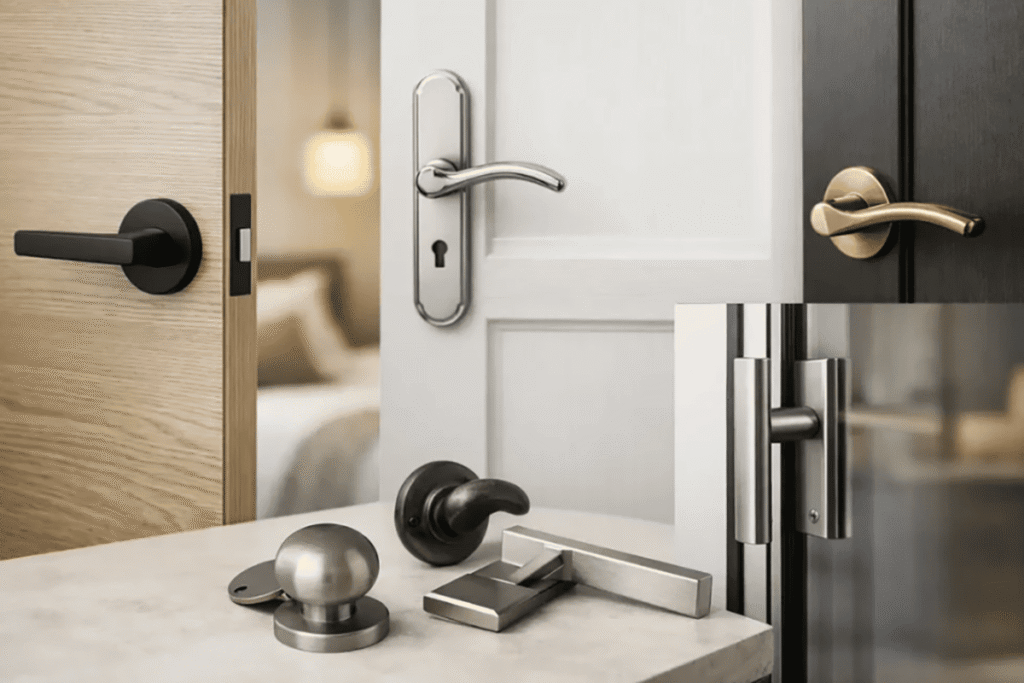
Lever Handle Rose Bushes: How To Prevent Loose Handles
Lever handle rose bushes can look like a small detail, but a weak fixing system can create loose handles, installation complaints, and costly rework after batch delivery. I have seen this issue during assembly checks in our factory. The practical solution is to evaluate the full handle set, not only the rose bush.
Loose lever handles are best prevented by specifying a complete fixing system that matches the door thickness, lock body, spindle length, screw design, washers, rose bush structure, and door material. Lever handle rose bushes matter, but looseness usually comes from combined tolerance, fixing, and installation factors rather than one isolated component.
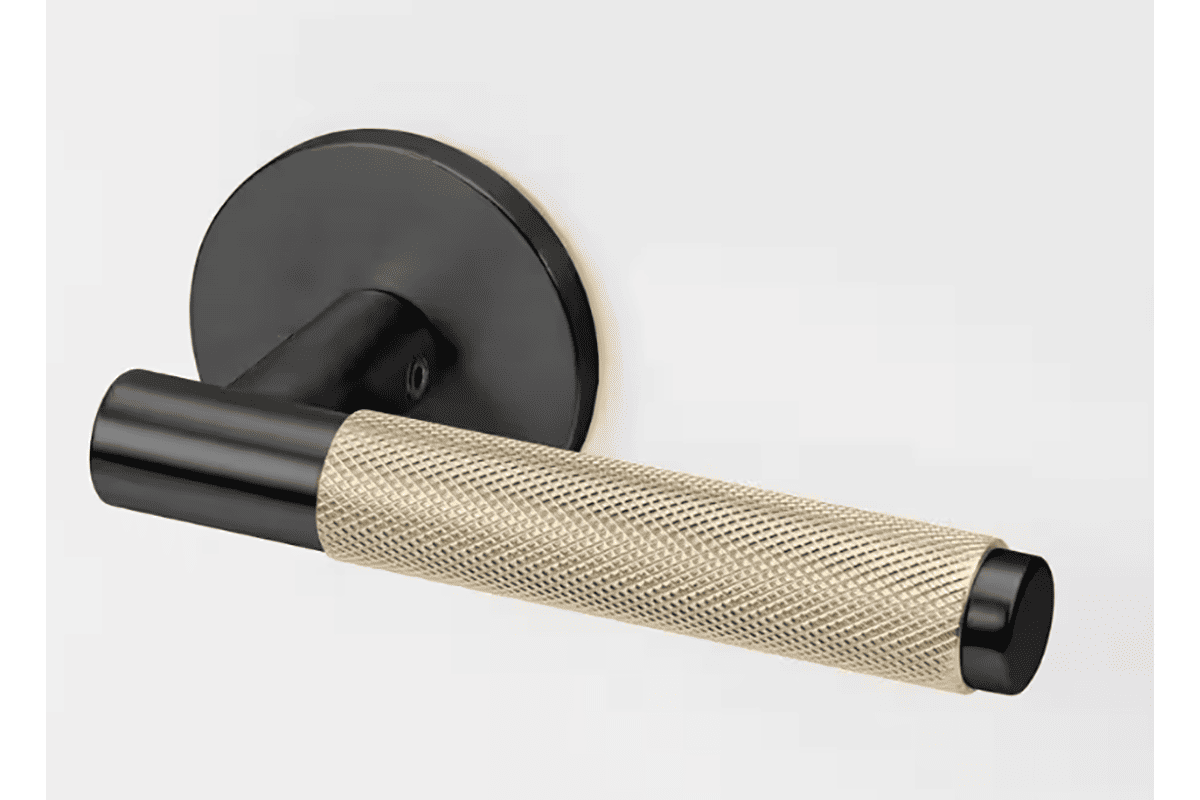
For B2B buyers, this is not only a maintenance topic. It is a procurement and quality-control topic. A stable handle assembly starts before production, when the door factory, hardware brand, or wholesaler confirms the door structure, lock body, spindle, and fastening method.
Why Do Lever Handle Rose Bushes Become Loose After Installation?
Loose handles create a simple complaint, but the cause is often hidden inside the handle assembly. If buyers focus only on the visible rose cover, they may miss the real weak point. I usually treat looseness as a system issue first, then check each component in sequence.
Loose lever handle rose bushes usually become loose because the fixing system does not properly support the handle load.1 Common causes include short screws, poor screw holding in the door, missing washers, loose spindle fit, incorrect spindle length, one-sided rose fixing, and mismatch between the lock body, door thickness, and handle set.

A Loose Handle Is Usually A System Failure
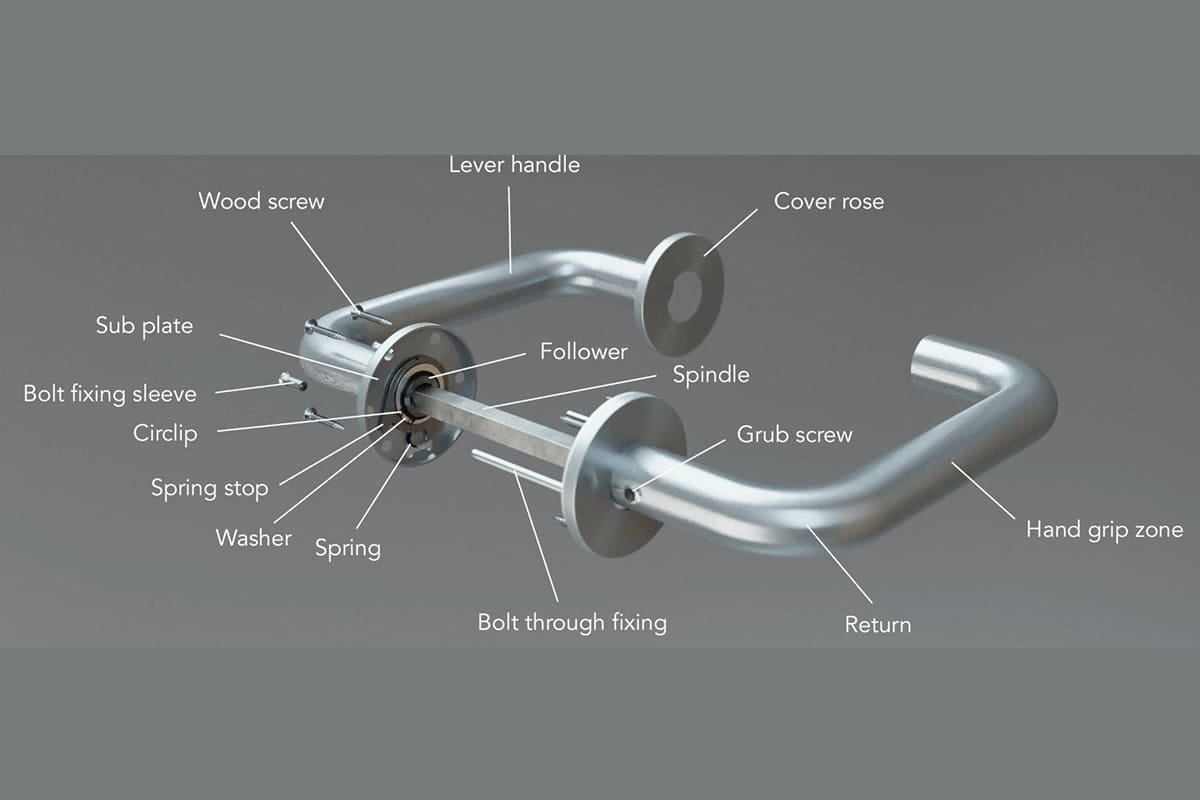
In production and inspection, I rarely see a reliable answer when someone says, “The rose bush is bad.” The rose bush may be part of the problem, but it is usually not the whole problem. A lever handle works as a connected system. The user pushes down on the handle. That force moves through the lever, the rose, the spindle, the spring cassette or return mechanism, the lock follower, the screws, and finally into the door material.2
If one part is weak, the entire handle can feel loose.
Common weak points include:
- Short screws that do not bite deeply enough into the door.
- Thin or soft door material that cannot hold screw force for long.
- Missing washers that allow movement under repeated use.
- Loose square spindle fit inside the handle or lock follower.
- Spindle length mismatch for the actual door thickness.
- One-sided fixing plates that do not clamp both sides strongly.
- Poor alignment between the lock body, rose, and handle axis.
- Over-large holes in the door face after machining or drilling.
From a factory perspective, I like to separate the issue into three groups:
| Area To Check | Typical Issue | Result For Buyer |
|---|---|---|
| Handle components | Rose bush, spring, grub screw, spindle hole tolerance | Handle feels shaky or moves on the spindle |
| Fixing components | Screws, washers, through-bolts, fixing plates | Rose becomes loose after repeated use |
| Door and lock compatibility | Door thickness, lock body follower, material strength | Handle does not sit firmly after installation |
This is why I do not recommend evaluating lever handle rose bushes as a single loose part. A good procurement specification should describe the complete handle fixing method.
What I Check First In Factory Review
When a customer asks us to review a loose-handle complaint, I usually start with a few basic questions:
- What is the door thickness?
- What lock body is being used?
- What is the square spindle size and length?
- Is the fixing one-sided or bolt-through?
- Are washers included?
- What is the door material?
- Are the screw holes pre-drilled accurately?
These questions help me understand whether the handle set was correctly matched. A strong rose bush cannot fully compensate for a spindle that is too short, a hollow-core door without support, or a fixing plate that only grips one side weakly.
For door factories and hardware brands, this matters because customer complaints often arrive after installation. At that stage, replacement costs are higher. It is much easier to prevent the issue during product matching, sample approval, and pre-order technical confirmation.
How Should Lever Handle Rose Bushes Match The Spindle And Lock Body?
The spindle is easy to overlook because buyers do not always see it after assembly. However, it is one of the most important parts in handle stability. If the spindle is too short, too loose, or poorly matched to the lock body follower, the handle can feel unstable even when the rose plate is tightly fixed.
Lever handle rose bushes should match a spindle and lock body that fit the door thickness, square hole size, and handle fixing design. The spindle should engage both handles securely, pass correctly through the lock follower, and avoid excessive play inside the square holes. Proper spindle matching reduces handle movement and long-term loosening.
Why Spindle Length Matters
The square spindle connects the two lever handles through the lock body.3 When a user pushes the handle down, the spindle transfers torque into the lock follower. If the spindle is not properly engaged, the handle may still work at first, but it may feel loose or gradually slip out of position.
A spindle can create problems in several ways:
- Too short: The spindle does not enter deeply enough into one or both handles.
- Too long: The spindle may push against the handle or prevent proper seating.
- Poor square fit: The spindle has too much play inside the handle or lock follower.
- Wrong size: The spindle does not match the lock body square hole standard.
- Incorrect door thickness allowance: The spindle was selected without considering the full door and rose assembly thickness.
In many project orders, a customer may ask for one handle model but use several door thicknesses. For example, a project may include 35 mm, 40 mm, and 45 mm doors. If the same spindle length is used for all doors without checking engagement, some doors may produce a stable result and others may not.4
Spindle Fit Is Not Only About Length
The square hole fit also matters. A spindle that is technically long enough can still cause movement if it is too loose inside the handle hub or lock follower. This movement can feel like a loose rose, even when the rose bush and screws are acceptable.
For B2B evaluation, I suggest buyers confirm these points before ordering:
| Check Point | What To Confirm | Why It Matters |
|---|---|---|
| Door thickness | Actual finished thickness, not only nominal thickness | Determines spindle length and screw length |
| Lock body follower | Square size and position | Ensures spindle rotates smoothly |
| Handle hub | Square hole fit and grub screw position | Reduces handle shake |
| Rose thickness | Total build-up on both sides | Affects spindle engagement |
| Spindle length | Correct length for door + rose + lock | Prevents short engagement or pressure |
A Practical Procurement Example
I once reviewed a case where the rose plates were blamed for looseness. After checking the assembly, the bigger issue was the spindle engagement on one side. The door thickness was slightly different from the sample door used during approval. The spindle still passed through the lock body, but it did not sit deeply enough into the handle hub on one side.
The handle could be installed. It could also pass a quick visual check. But after repeated operation, the user felt movement. In that case, a stronger rose bush alone would not have solved the issue. The buyer needed a better-matched spindle length and a clearer door thickness range in the specification.
For procurement teams, the lesson is simple: do not approve lever handle rose bushes without checking spindle compatibility. The spindle, lock body, rose assembly, and door thickness must be reviewed together.
Which Fixing Method Works Best For Lever Handle Rose Bushes?
The fixing method decides how firmly the handle assembly is held to the door. A nice rose cover can hide a weak fixing structure, so buyers should look beneath the cover. In high-use doors, the difference between one-sided screw fixing and bolt-through fixing can be very important.
Bolt-through fixing and double-sided fastening are generally more reliable for lever handle rose bushes than rose plates fixed only by one-side screws. Through-bolts clamp both sides of the door together, distribute force better, and reduce dependence on the screw-holding strength of one door face, especially on frequently used doors.5
One-Sided Screws Versus Through-Bolts
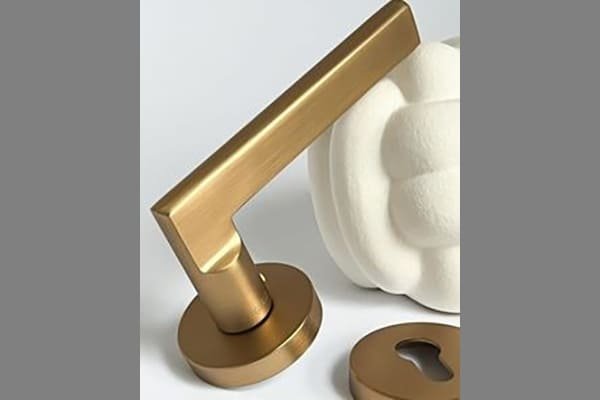
Many handle sets use screws that fasten the rose plate into one side of the door. This can work well on suitable solid doors with proper pilot holes and correct screw length. However, it can be less reliable when the door material is soft, thin, hollow, or frequently used.
Through-bolts work differently. They pass through the door and fasten from one side to the other. This creates a clamping effect. Instead of asking one door face to hold all the force, the assembly uses both sides of the door.
Here is a simple comparison:
| Fixing Method | Strength Profile | Best Used For | Buyer Caution |
|---|---|---|---|
| One-sided wood screws | Depends heavily on door material | Light-use solid timber doors | May loosen in soft or hollow doors |
| Rose plate with short screws | Easy and economical | Low-load applications | Limited holding depth |
| Double-sided fixing | Better load distribution | Medium-use doors | Requires accurate alignment |
| Through-bolt fixing | Stronger clamping structure | High-use and commercial doors | Must match lock body and hole positions |
| Fixing plate with washers | Improves stability | Doors needing added support | Washer and screw size must be specified |
Why Washers And Screw Design Matter
Washers look minor, but they help distribute pressure.6 Without washers, screw heads may concentrate force on a small area. Over time, repeated handle operation can enlarge holes or reduce clamping force. This is especially true when the door surface material is not very strong.
Screw design also matters. Buyers should review:
- Screw length: The screw must match door thickness and fixing plate depth.
- Thread type: The thread should suit the door material or fixing insert.
- Head design: The head should seat properly without damaging the rose plate.
- Corrosion resistance: The screw finish should suit the project environment.
- Washer use: Washers can improve load distribution in many assemblies.
From a manufacturing point of view, I prefer when buyers specify the full fixing kit, not only the handle style. The kit should include the correct spindle, screws, washers, fixing plates, and optional through-bolts if needed.
High-Use Doors Need More Care
Door usage level changes the fixing requirement. A bedroom door in a private home and a hotel corridor door do not experience the same load.7 A school, hospital, office, or apartment project may involve frequent use every day. In these applications, small movement can become larger over time if the fixing system is weak.
For professional buyers, I recommend classifying doors before selecting the fixing method:
- Low-use internal doors: Standard fixing may be acceptable if the door material is solid and compatible.
- Medium-use residential or office doors: Double-sided support and better screw design should be considered.
- High-use commercial doors: Through-bolt fixing and stronger structural support are usually safer options.
- Fire-rated or regulated doors: The complete hardware set should be reviewed with applicable project requirements and verified documentation.
I need to be careful here. The correct fixing method depends on the actual application, door construction, lock body, and project standard. Buyers should ask qualified professionals to evaluate project-specific requirements. However, as a manufacturer, I can say that a stable fixing structure usually reduces the risk of loose-handle complaints.
How Does Door Material Affect Lever Handle Rose Bushes?
A handle set can be well made and still become loose if the door cannot hold the fixing force. This is a common blind spot in purchasing. Buyers may compare handle weight, finish, or rose design, but they may not check whether the door material supports the selected fixing method.
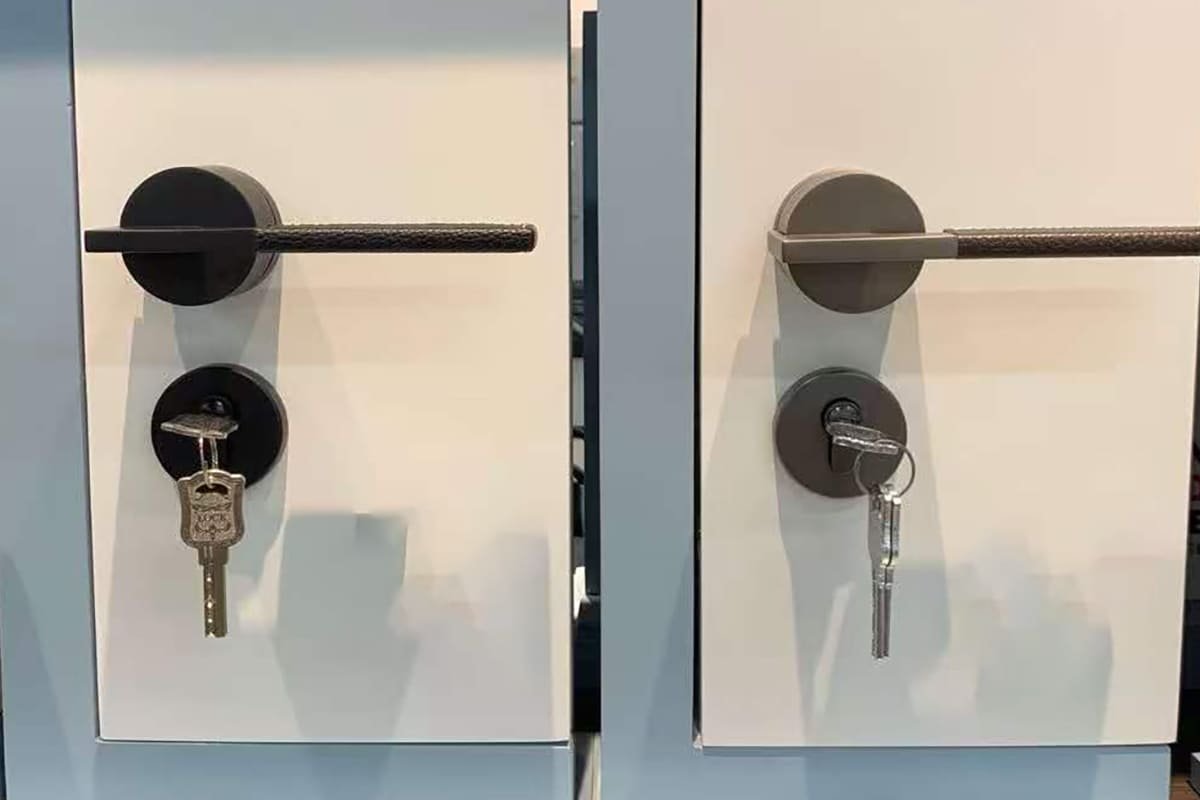
Door material affects lever handle rose bushes because screws and fixing plates rely on the door structure for support.8 Soft wood, MDF, particleboard, thin skins, and hollow-core doors may provide weaker screw holding than solid or reinforced doors. Stronger fixing methods, washers, proper screw length, and structural backing can help prevent loosening.
Different Doors Hold Screws Differently
A screw does not hold in the air. It holds because the door material resists pull-out, movement, and vibration. When the user operates the handle, the door face receives repeated force around the rose area. If the material compresses, crumbles, or flexes, the handle can become loose.
Common door materials include:
- Solid wood: Usually offers good screw holding, but soft species may still compress.
- MDF or HDF: Can be stable, but screw holding depends on density and edge conditions.
- Particleboard: May have weaker holding strength if not reinforced.
- Hollow-core doors: Often need special fixing support because the surface skin is thin.
- Metal doors: May require machine screws, threaded inserts, or prepared reinforcement.
- Fire-rated doors: Require careful hardware compatibility and verified documentation.
For hollow-core doors, ordinary screws may only grip the thin surface layer.9 That can work for light fittings, but lever handles receive repeated operating force. If the rose plate is fixed only into the skin, the assembly may loosen over time.
Why Door Thickness Also Matters
Door thickness affects both spindle length and screw selection.10 A handle set designed for one thickness range may not perform the same on a thinner or thicker door. This is why I always ask customers to confirm the actual finished door thickness before mass production.
Typical procurement details should include:
| Door Detail | Why It Matters |
|---|---|
| Finished thickness | Determines spindle and screw length |
| Core material | Affects screw holding strength |
| Face material | Affects compression around the rose |
| Reinforcement block | Improves fixing strength on hollow doors |
| Lock body backset and follower position | Affects handle alignment |
| Door preparation tolerance | Prevents misalignment and oversize holes |
How Buyers Can Reduce Risk
B2B buyers can reduce risk by connecting the door specification and handle specification early. Door factories especially should avoid treating hardware as a late-stage accessory. The handle fixing system should be part of the door design.
Helpful prevention steps include:
- Confirm whether the door has solid blocking around the lock and handle area.
- Use through-bolts when the door surface cannot provide enough holding force.
- Specify washers or fixing plates where load distribution is needed.
- Avoid oversized drilling around the rose and spindle area.
- Match screws to the door material instead of using one generic screw for every door.
- Review the lock body and handle drawings together before production.
In our factory communication, I often ask for drawings, lock body information, and door thickness before confirming a customized handle set. This may feel like extra work at the beginning. However, it usually prevents more expensive work later. A loose-handle complaint after installation can involve replacement parts, labor, shipping, and customer dissatisfaction.
What Should Buyers Check Before Ordering Lever Handle Rose Bushes?
A clear pre-order checklist is the best way to prevent avoidable loose-handle complaints. Buyers often compare price and finish first, but handle stability depends on technical matching. I recommend making the fixing system part of the purchase specification, sample review, and final inspection.
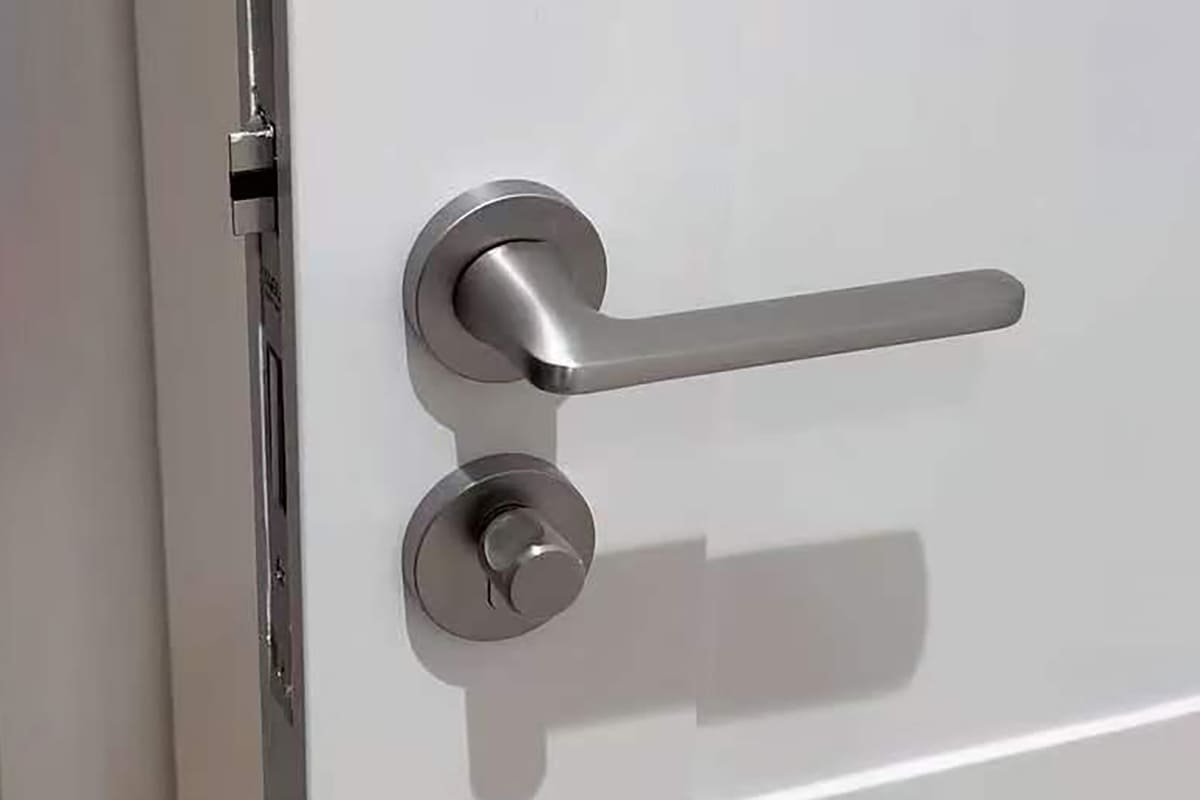
Before ordering lever handle rose bushes, buyers should confirm door thickness, door material, lock body type, spindle length, square hole fit, rose bush design, screw length, washer use, fixing plate structure, and whether through-bolts are included or optional. This checklist helps align the handle assembly with real installation conditions.
Pre-Order Technical Checklist
Here is the checklist I suggest for door factories, hardware brands, and wholesalers:
| Item | Buyer Should Confirm | Supplier Should Provide |
|---|---|---|
| Door thickness | Finished thickness range | Suitable spindle and screw options |
| Door material | Solid, hollow, MDF, metal, or reinforced | Recommended fixing method |
| Lock body | Follower size, backset, center distance | Compatibility confirmation |
| Spindle | Size, length, and engagement depth | Correct spindle with tolerance control |
| Rose bush | Structure, material, and fixing design | Drawing or sample for approval |
| Screws | Length, thread, head type, finish | Matched screw set |
| Washers | Required or not required | Washer specification if used |
| Through-bolts | Included, optional, or not suitable | Bolt size and hole position |
| Packaging | Component separation and labeling | Clear installation hardware packing |
| Inspection | Sample assembly and final QC | Inspection report or photos if agreed |
Sample Approval Should Include Assembly Testing
A handle sample can look good in a box. That does not prove it will be stable on the customer’s door. I prefer sample approval that includes actual assembly with the lock body and door thickness range.
During sample review, buyers can check:
- Does the spindle enter both handles securely?
- Does the handle return smoothly after operation?
- Does the rose sit flat on the door surface?
- Do screws tighten without stripping the material?
- Do washers or fixing plates sit correctly?
- Does the lock follower align with the handle axis?
- Is there visible or felt movement after repeated operation?
I am not suggesting that every buyer needs a laboratory setup for every order. However, a practical assembly review can catch many problems before mass production. For large projects, buyers may also request third-party or qualified professional evaluation based on the application and local requirements.
Factory Quality Control Points
From the SDH Hardware manufacturing perspective, stable handle performance depends on consistent components. We focus on R&D, precision manufacturing, assembly control, and inspection for architectural door hardware. Our core products are available with CE certification and fire-rated certification documents where applicable, and buyers should always verify certification documents against the exact product and project requirement.
For lever handle assemblies, useful QC points include:
- Dimensional control of rose bushes, handle hubs, and spindle holes.
- Surface and edge inspection to prevent poor seating.
- Accessory matching for screws, washers, spindle, and fixing plates.
- Functional checks for handle movement and return.
- Packaging checks to make sure the correct fixing parts are included.
- Drawing confirmation for customized or OEM/ODM orders.
For wholesalers and brand customers, packaging accuracy is also important. If the correct washer or screw is missing from the set, installers may substitute local parts. That can change the fixing performance. For this reason, I prefer clear component packing lists and inspection after order completion.
Frequently Asked Questions
Are lever handle rose bushes the main cause of loose handles?
Not always. Lever handle rose bushes can contribute to looseness, but the issue often involves screws, washers, spindle fit, lock body compatibility, door thickness, and door material. Buyers should evaluate the complete fixing system before concluding that the rose bush alone is defective.
Is through-bolt fixing better than normal screws?
Through-bolt fixing is generally more reliable for frequent-use doors because it clamps both sides of the door together. Normal screws can work on suitable solid doors, but they depend heavily on screw length, door material, and installation accuracy.
How do I choose the correct spindle length?
The correct spindle length depends on the finished door thickness, rose thickness, lock body position, and handle hub engagement. Buyers should confirm the full assembly dimensions with the supplier before ordering, especially when one project includes several door thicknesses.
Do hollow-core doors need special handle fixing?
Hollow-core doors often need stronger fixing support because ordinary screws may only grip the thin door skin. Buyers should consider through-bolts, washers, fixing plates, or reinforced blocking around the handle area to reduce the risk of loosening.
What should I ask my supplier before placing a bulk order?
You should ask for compatibility confirmation covering door thickness, lock body type, spindle size and length, rose bush design, screw length, washer use, through-bolt options, and packaging details. For large projects, sample assembly review is strongly recommended.
Conclusion
Lever handle rose bushes are important, but they are only one part of a stable door handle assembly. To prevent loose handles, I recommend checking the complete system: door thickness, lock body, spindle length, square hole fit, screws, washers, fixing method, and door material. For B2B buyers, this approach reduces rework and improves project consistency. If you need factory-direct support for customized lever handles, rose bushes, locks, hinges, or complete door hardware sets, SDH Hardware can help review your specifications before production.
"SECTION 087111 - DOOR HARDWARE (SCHEDULED BY ...", https://fpm.usc.edu/wp-content/uploads/2021/11/087102-USC-HSC-door-hardware-Guide-Specification_1.pdf. Architectural-hardware guidance describes lever-handle performance as dependent on the coordinated fit of the lock case, follower, spindle, roses, fasteners, and door preparation, supporting the article's system-level explanation of looseness. Evidence role: general_support; source type: institution. Supports: Lever handle stability depends on coordinated compatibility among fasteners, spindle, lock case, rose, and door preparation.. Scope note: The source may support the general mechanism and specification approach rather than documenting the exact failure rate of rose-bush looseness. ↩
"How does a Door Handle work?",
A technical reference on door-handle mechanisms explains that lever operation rotates a spindle through the lock follower or latch mechanism, providing contextual support for the described load path through the handle assembly. Evidence role: mechanism; source type: encyclopedia. Supports: A lever door handle operates by rotating a spindle that engages the latch or lock follower, with the handle assembly fixed to the door.. Scope note: General mechanism descriptions may not discuss rose-bush loosening or quantify forces at each component. ↩"List of auto parts - Wikipedia", https://en.wikipedia.org/wiki/List_of_auto_parts. Reference descriptions of door handles identify the spindle as the shaft, often square in section, that passes through the latch or lock mechanism to connect and operate paired handles. Evidence role: definition; source type: encyclopedia. Supports: Door lever handles commonly use a square spindle passing through the lock or latch mechanism to connect the two handles.. ↩
"How to fit a door handle for external doors", https://www.eraeverywhere.com/news/how-to-fit-a-door-handle/. Installation guidance for lever furniture states that spindle length must be selected in relation to the finished door thickness and handle assembly dimensions, supporting the article's warning that a single spindle length may not suit all doors. Evidence role: general_support; source type: institution. Supports: Spindle length selection should account for finished door thickness, lock position, and handle or rose build-up.. Scope note: Such guidance usually establishes compatibility requirements rather than proving that every mismatch will cause looseness. ↩
"SECTION 087111 - DOOR HARDWARE (SCHEDULED BY ...", https://fpm.usc.edu/wp-content/uploads/2021/11/087101-USC-UPC-door-hardware-Guide-Specification_1.pdf. Engineering guidance on bolted joints explains that through-bolts develop clamping force across joined members, which supports the article's statement that bolt-through door-handle fixings distribute load more broadly than one-sided screws. Evidence role: mechanism; source type: education. Supports: Through-bolts create clamping force across the full assembly and reduce reliance on withdrawal resistance from one substrate surface.. Scope note: The mechanical principle is directly relevant, but the source may not test lever handle rose bushes specifically. ↩
"Fastener Design Manual", https://ntrs.nasa.gov/api/citations/19900009424/downloads/19900009424.pdf. Mechanical-design references describe washers as components that spread fastener load over a larger bearing area, supporting the article's explanation that washers can reduce localized pressure in handle fixings. Evidence role: mechanism; source type: education. Supports: Washers increase bearing area and help distribute load from a screw or bolt head onto the supported material.. Scope note: This supports the general function of washers, not a measured improvement for a particular handle set. ↩
"087100 – DOOR HARDWARE - Facilities and Campus Services", https://fcs.cornell.edu/087100-door-hardware. Door-hardware standards such as EN 1906 and ANSI/BHMA grading systems classify lever furniture by category of use and cycle testing, supporting the article's distinction between low-use residential doors and higher-use commercial or hotel applications. Evidence role: expert_consensus; source type: institution. Supports: Door hardware standards distinguish products by grade, category of use, or operating-cycle requirements for different applications.. Scope note: Standards define test categories and performance classes; they do not measure the traffic of the specific example doors in the article. ↩
"Screw withdrawal strength of heat-treated and laminated ...", https://bioresources.cnr.ncsu.edu/resources/screw-withdrawal-strength-of-heat-treated-and-laminated-veneer-lumber-reinforced-with-carbon-and-glass-fibers/. Studies of screw withdrawal resistance in wood and wood-based panels show that holding strength depends on substrate density, composition, and fastening conditions, supporting the article's claim that door material affects handle fixing stability. Evidence role: mechanism; source type: paper. Supports: Screw holding strength varies with substrate type, density, and material structure.. Scope note: Most screw-withdrawal studies use standardized specimens rather than complete installed lever-handle assemblies. ↩
"hollow core wood door", https://www.nyc.gov/assets/hpd/downloads/pdfs/services/08b-hollow-core-wood-doors.pdf. Building-construction references describe hollow-core doors as having thin face skins over a lightweight interior, which supports the article's statement that ordinary screws may engage only the surface layer unless reinforcement is present. Evidence role: general_support; source type: education. Supports: Hollow-core doors are typically built with thin face skins over a light internal core or frame, limiting ordinary screw engagement away from solid blocking.. Scope note: Door designs vary by manufacturer, so the statement is a common construction pattern rather than a universal rule. ↩
"087100 – DOOR HARDWARE - Facilities and Campus Services", https://fcs.cornell.edu/087100-door-hardware. Architectural-hardware installation guidance identifies finished door thickness as a required dimension for selecting spindle length and appropriate fixing screws, supporting the article's statement that thickness affects both components. Evidence role: general_support; source type: institution. Supports: Lever-handle installation specifications require matching spindle and fastener dimensions to the finished door thickness.. Scope note: The source may state installation requirements without quantifying the probability of looseness from incorrect selection. ↩
