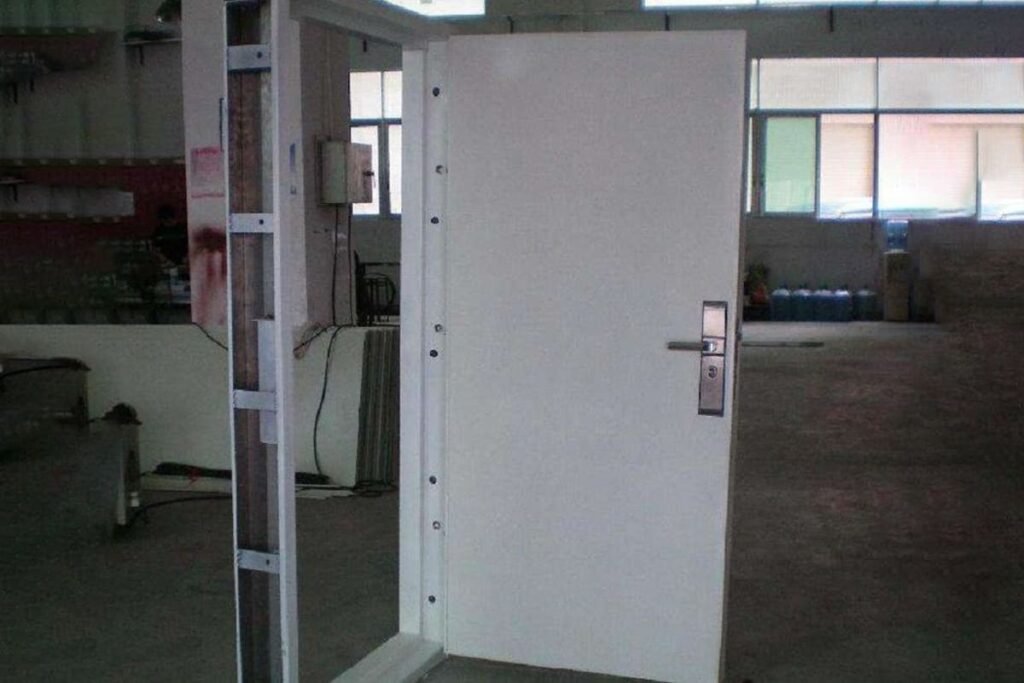
Are lift-off hinges suitable for fire doors?
Lift-off hinges create a real procurement question for fire door projects because they make door removal easier, but convenience can distract buyers from compliance. If I treat the hinge style as the answer, I may miss the real risk. The safer solution is to verify whether the exact hinge is approved for the exact fire door application.
Lift-off hinges are suitable for fire doors only when the specific hinge has valid certification, test evidence, and approval within the relevant fire door assembly, door type, installation condition, and market standard.1 Material, size, stainless steel construction, or “heavy-duty” labeling does not automatically make a lift-off hinge acceptable for a fire-rated door.2
I have seen many buyer inquiries start with the wrong question. The issue is not simply, “Can I use lift-off hinges?” The better question is, “Is this exact hinge approved for this exact fire door system?” That difference protects door factories, hardware brands, and wholesalers from compliance problems later.
Are lift-off hinges suitable for fire doors only when certified?
When buyers compare lift-off hinges for fire doors, the first problem is often assumption. A hinge may look strong, feel solid, and use stainless steel, but those features alone do not prove fire resistance. If I skip the document review, the project may face rejection during inspection.
Lift-off hinges may be used on fire doors only when the hinge is covered by valid fire-rated documentation for the required application. Buyers should verify test reports, certificates, classification scope, door type, installation method, and whether the hinge is approved as part of the complete fire door assembly.
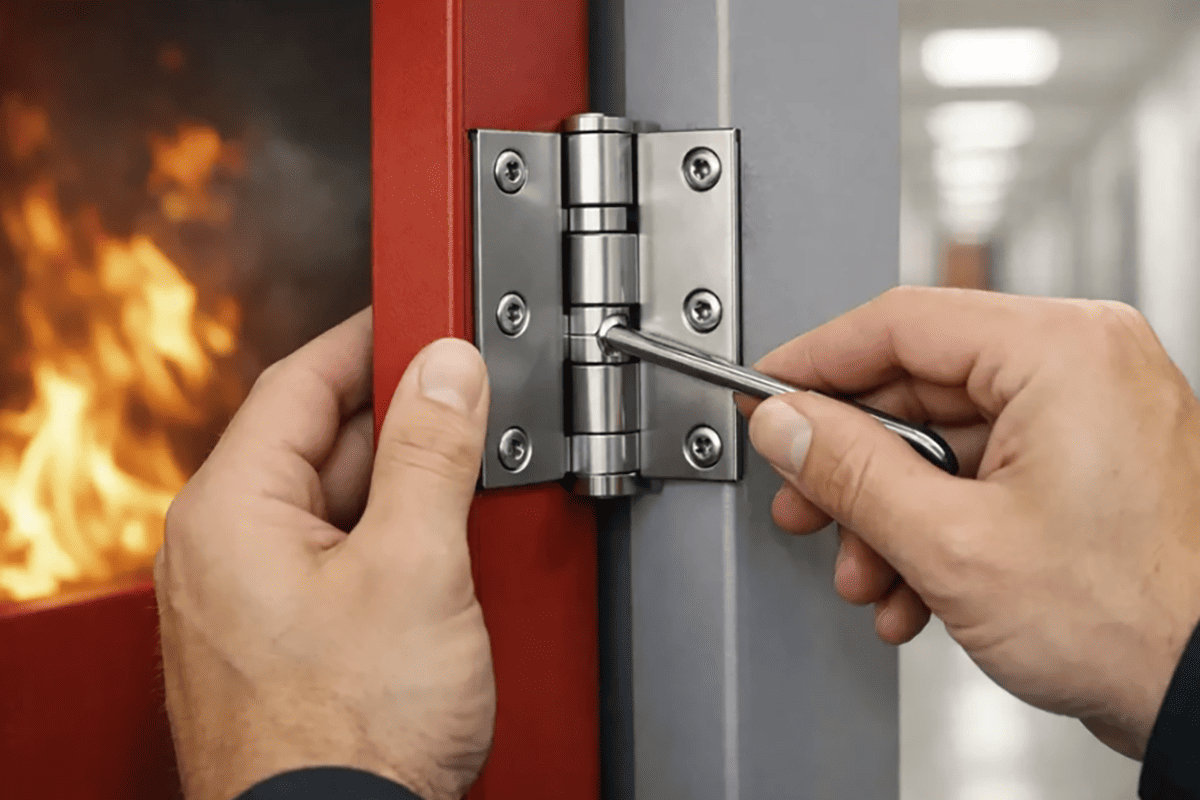
Why the hinge style is not enough
I often explain to customers that a lift-off hinge is a mechanical design, not a fire-rating result. The lift-off function allows the door leaf to be lifted away from the frame after installation. This can be useful for maintenance, replacement, and logistics. However, fire door performance depends on the whole assembly under fire conditions.3
A fire door is not judged by one visible component.4 It is normally evaluated as a system that may include:
- Door leaf core and facing material
- Door frame material and profile
- Hinges and fixing screws
- Locks, latches, closers, and seals
- Glazing, if used
- Installation gaps and fixing method
- Opening direction and door size
- Fire rating duration and test standard
In my manufacturer-side experience, buyers sometimes focus first on product convenience. They ask whether a removable door leaf will help during site installation. That question is reasonable. However, fire door acceptance usually depends on the certified scope, not on convenience.
I do not treat “lift-off” as either approved or rejected by default. I treat it as a hinge configuration that must be checked against the fire door evidence.
What certification should show
A document package should do more than display a logo. I would expect buyers to check whether the documents clearly state the hinge model, application limits, and door conditions.
| Verification item | What I would check | Why it matters |
|---|---|---|
| Hinge model | Exact item number, size, material, finish if relevant | Similar-looking hinges may not share approval |
| Fire rating | Required duration, such as 30, 60, 90, or 120 minutes where applicable | The rating must match the project requirement5 |
| Door type | Timber, steel, composite, or other approved door construction | A hinge approved on one door type may not apply to another |
| Frame type | Timber, steel, or approved frame system | Frame performance affects hinge fixing and assembly behavior |
| Load range | Door weight and size limits | Overloading may invalidate the intended application |
| Installation method | Screw type, fixing position, quantity, and orientation | Fire-rated results often depend on exact installation |
| Market standard | Applicable regional requirement | Acceptance rules vary by country and project authority6 |
I recommend that door manufacturers, hardware brands, and wholesalers keep this review step in their sourcing process. The commercial issue is bigger than whether the hinge works mechanically. The issue is whether the buyer can honestly supply it as suitable for a fire door project without overpromising.
A practical procurement view
At SDH Hardware, we manufacture architectural door hardware and handle fire-rated hardware documentation requests from B2B buyers. I see that serious customers rarely ask only for a price. They ask for certification scope, product drawings, material details, load capacity, and packing or branding options. That is the right direction.
However, I always treat fire-rated approval as a document-based and application-specific decision. I do not present a hinge as suitable for every fire door simply because it is durable. I prefer to match the product discussion to the buyer’s door type, required fire rating, target market, and required inspection documents.
For buyers, the safe process is simple:
- Define the fire door requirement first.
- Identify the exact hinge model.
- Request the supporting fire-rated documents.
- Confirm that the door assembly matches the document scope.
- Ask a qualified professional, certification body, or project authority when the application is uncertain.
This approach reduces risk before mass production, shipment, branding, or project bidding.
Why are stainless steel lift-off hinges not automatically fire-rated?
A common problem is that buyers connect material strength with fire approval. Stainless steel lift-off hinges may offer corrosion resistance and mechanical durability, but that does not prove fire-rated suitability. If I rely only on material grade, I may ignore the tested fire door assembly.
Stainless steel lift-off hinges are not automatically fire-rated because fire door suitability depends on tested performance and documented approval. Material, size, thickness, bearing design, and load rating can support product quality, but they do not replace fire test reports, certificates, or verified application scope.
Material is important, but it is not the certificate
Stainless steel is popular in architectural hardware because it can provide good corrosion resistance, stable appearance, and long service life in many environments.7 In our product discussions, customers often ask for stainless steel lever handles, butt hinges, concealed door hinges, and accessories because their markets expect durable hardware.
Still, fire-rated suitability is different from general durability. A hinge can be well made and still not be approved for a specific fire door. A hinge can also be large and strong but outside the certification scope.
I usually separate the buyer’s evaluation into two categories:
| Evaluation area | Typical question | What proves it |
|---|---|---|
| [Mechanical quality | Can the hinge carry the door under normal use? | Load tests, cycle tests, material inspection, production QC](https://epublications.marquette.edu/cgi/viewcontent.cgi?article=1162&context=mechengin_fac)%%%FOOTNOTE_REF_8%%% |
| Fire-rated suitability | Can the hinge be used on this fire door assembly? | Fire test evidence, certification, classification, approved scope |
Both categories matter. However, they are not interchangeable.
“Heavy-duty” is not the same as “fire-rated”
The phrase heavy-duty lift-off hinge can describe load capacity, leaf thickness, pin design, bearing structure, or general robustness. It does not automatically describe fire resistance. I have seen buyers use “heavy-duty” as a shortcut in supplier communication. That shortcut can cause trouble.
For example, a buyer may ask for:
- 4-inch or 5-inch lift-off hinges
- Stainless steel grade options
- High door weight capacity
- Smooth lifting function
- Brushed, polished, PVD, or other finishes
- OEM logo stamping or laser marking
Those are valid product requirements. Yet none of them confirms that the hinge is approved for a fire door. The buyer still needs to ask for fire-rated documentation and confirm the permitted application.
What quality control can and cannot prove
As a manufacturer, I care about production quality. At SDH Hardware, our process includes raw material screening, standardized production supervision, and finished product inspection. We also use testing equipment for product development and function checks. These steps help control consistency.
However, I would not confuse factory quality control with third-party fire certification. A factory may inspect:
- Dimensions and tolerances
- Pin fit and rotation
- Surface treatment quality
- Screw hole position
- Load performance under defined internal test conditions
- Packaging and labeling
- Batch consistency
These checks help buyers receive stable products. They are especially important for OEM and ODM orders, where branding and repeat supply matter. But for fire doors, the buyer still needs valid documents tied to the application.
Why overclaiming creates B2B risk
For door factories, hardware brands, and wholesalers, the risk is not only technical. The risk is also commercial and legal. If a supplier or reseller advertises a hinge as suitable for fire doors without proper documents, the downstream customer may face project rejection, delayed installation, or inspection disputes.9
I advise buyers to be careful with product descriptions such as:
- “Suitable for all fire doors”
- “Fireproof hinge”
- “Fire-rated because it is stainless steel”
- “Heavy-duty, therefore approved for fire doors”
- “Can be used for any fire door project”
Those claims are too broad. A safer description should be tied to evidence, such as:
- “Available with fire-rated documentation for specified applications”
- “Use subject to approved fire door assembly and market requirements”
- “Certification scope to be verified before project specification”
- “Application depends on door type, frame type, rating, and installation conditions”
This language is more restrained, but it protects the buyer. It also helps serious suppliers build trust.
What should buyers verify before choosing lift-off hinges for fire doors?
The main problem in hinge sourcing is incomplete project information. If I do not know the fire rating, door type, size, frame, and market standard, I cannot judge suitability responsibly. Missing details create uncertainty before quotation, sampling, and final specification.
Before choosing lift-off hinges for fire doors, buyers should verify the required fire rating, door leaf material, frame type, door size and weight, opening direction, fixing method, regional standard, certification documents, and whether the hinge is included in the tested or approved door assembly.

Start with the door, not the hinge
I recommend that buyers begin with the fire door assembly. The hinge is only one component. If the door leaf, frame, seals, closer, lock, or fixing method changes, the approval may need review.
A simple buyer checklist can prevent many mistakes:
What fire rating is required?
I would confirm whether the project needs 30, 60, 90, or 120 minutes, or another rating under the applicable market rules.What is the door leaf construction?
I would check whether the door is timber, steel, composite, or another tested construction.What is the frame type?
I would confirm whether the frame is steel, timber, or another approved system.What are the door size and weight?
I would compare the real door weight with the approved hinge application and the mechanical load range.What is the opening direction?
Lift-off hinge orientation matters because left-hand and right-hand versions may not be interchangeable.10What fixing method is required?
Screw type, screw length, reinforcement plates, and hole positions may affect acceptance.Which market standard applies?
A product accepted in one market may still need different documentation in another market.11Who will approve the final assembly?
I would identify whether the project authority, door manufacturer, lab, or certifier needs to review the hinge.
A sourcing table for B2B buyers
I use tables because they help procurement teams compare suppliers without relying only on price.
| Buyer question | Why I ask it | Supplier evidence to request |
|---|---|---|
| Is this exact model covered? | Similar models can differ in approval | Certificate, test report, model listing |
| Is the door material covered? | Fire behavior differs by door type | Application scope or classification details |
| Is my door weight acceptable? | Load affects hinge quantity and performance | Load data and approved door size range |
| Is the market covered? | Europe, Middle East, and Southeast Asia may require different acceptance routes | Relevant certificate or local approval guidance |
| Is customization allowed? | Finish, logo, screw, or size changes may affect scope | Written confirmation and document review |
| Is the installation method defined? | Wrong fixing can cause rejection | Installation drawing or approved fixing details |
Why customization needs extra care
Many B2B buyers need custom hardware. At SDH Hardware, we support ODM and OEM orders, product specification adjustment, surface treatments, accessory configurations, customer logos, custom packaging, and product drawings after order confirmation. These services are useful for hardware brands and wholesalers.
However, fire-rated applications need extra caution. A small change may be commercially simple but technically relevant. For example:
- Changing hinge leaf thickness may affect performance.12
- Changing screw hole position may affect fixing strength.
- Changing the pin structure may change the hinge behavior.
- Changing material grade may require document review.
- Changing the finish may need confirmation if the certificate limits surface treatments.
- Changing packaging or logo is usually commercial, but product marking may still matter for traceability.
I usually advise buyers to separate branding customization from structural customization. Branding changes may be easier to manage. Structural changes should always be checked against the certification scope.
How many hinges should be used?
Buyers often ask whether two, three, or four hinges are needed. I avoid giving a universal answer because the correct quantity depends on the door weight, door height, hinge model, frame reinforcement, and approval documents.
In general procurement terms, buyers should check:
- Door leaf height and width
- Actual finished door weight
- Frequency of use
- Door closer force
- Environmental conditions
- Hinge load rating
- Fire door document requirements
- Local installation practice
For heavier or taller doors, more hinges may be required. But again, more hinges do not automatically solve fire-rated approval. The tested or approved configuration matters.
A practical document request template
I like to keep supplier communication clear. A buyer can send a short request like this:
“Please confirm whether this exact lift-off hinge model is approved for our fire door application. Our door is [material], frame is [material], rating requirement is [duration], door size is [height x width], door weight is [kg], market is [country/region], and installation method is [details if known]. Please provide certificate, test report or classification document, product drawing, and approved application scope.”
This message helps the supplier respond responsibly. It also shows that the buyer understands the difference between general hardware and fire door hardware.
How can door factories and wholesalers reduce compliance risk with lift-off hinges?
The biggest commercial problem is overpromising. If I sell lift-off hinges as fire door hardware without checking the approval scope, my customer may rely on that claim. Later, the project may fail inspection or require urgent replacement, which damages trust.
Door factories and wholesalers can reduce compliance risk by matching lift-off hinges to documented fire door applications, keeping certificates on file, avoiding broad marketing claims, training sales teams, confirming project standards early, and asking qualified professionals to review uncertain or non-standard installations.

Treat fire-rated hardware as a controlled category
I suggest that B2B sellers treat fire-rated door hardware differently from standard architectural hardware. The product may look similar in a catalog, but the selling responsibility is different.
A normal hinge listing may focus on:
- Material
- Size
- Finish
- Bearing type
- Load capacity
- Packaging
- MOQ
- Delivery time
- Price
A fire-rated hinge listing should also include:
- Approved application scope
- Fire rating duration where applicable
- Door and frame type limits
- Certificate or test report reference
- Installation requirements
- Traceability or model identification
- Disclaimer that final suitability depends on project approval
This does not mean every website page must become a technical manual. It means sales teams should not simplify the claim beyond the evidence.
Use careful product language
I prefer commercial language that is useful but not exaggerated. For example, I would avoid saying:
| Risky wording | Better wording |
|---|---|
| “Suitable for all fire doors” | “Available for specified fire door applications, subject to document verification” |
| “Fireproof lift-off hinge” | “Fire-rated documentation available for approved configurations” |
| “Heavy-duty fire hinge” | “Heavy-duty hinge; fire door use must match certification scope” |
| “Universal fire door hinge” | “Application depends on door type, frame, rating, and market standard” |
This careful wording protects the seller and helps the buyer make a better decision.
Build a document control habit
Door factories, hardware brands, and wholesalers often handle many SKUs. SDH Hardware has a product portfolio covering more than 3,000 architectural hardware articles, so I understand the importance of organized product data. When fire-rated products are involved, document control becomes even more important.
I recommend a simple internal document file for each fire-rated hinge model:
- Product drawing
- Material specification
- Finish options
- Load or cycle test information if available
- Fire-rated certificate or test report
- Approved application scope
- Installation instruction
- Packaging and label information
- Revision history
- Supplier contact and document validity notes
This file helps procurement, sales, quality control, and customer service answer questions consistently.
Train sales teams to ask the right questions
A salesperson may receive a fast inquiry from a customer who asks, “Can this hinge be used for fire doors?” If the sales team answers “yes” too quickly, the company may create risk. I prefer a trained response:
“This model may be available for fire door applications, but we need to confirm the door type, fire rating, market standard, door size, door weight, and required documents before confirming suitability.”
That answer may feel slower, but it is more professional. It also filters serious buyers from vague inquiries.
Manage sampling and mass production carefully
Sampling can create another risk. A buyer may test a sample for fit and appearance, then assume the product is approved for the final fire door project. I recommend separating sample approval into categories:
Appearance approval
The buyer checks finish, shape, logo, and packaging.Dimensional approval
The buyer checks hole positions, leaf size, and installation fit.Mechanical approval
The buyer checks movement, load suitability, and installation stability.Compliance approval
The buyer verifies fire-rated documents and application scope.
Only the fourth step addresses fire door suitability. The first three are important, but they are not a substitute.
When to involve a qualified professional
Some projects are straightforward because the door assembly matches existing documentation. Other projects are more complex because they involve unusual door sizes, special frames, regional acceptance rules, or customized components.
In uncertain cases, I would advise the buyer to involve:
- A fire door manufacturer with tested assemblies
- A certification body or notified body where applicable
- A fire safety consultant
- A project authority or inspector
- A qualified architect or specification professional
- A testing laboratory for new system development
As a hardware manufacturer, I can support product selection, manufacturing details, drawings, and available documentation. However, I do not replace the authority that approves a specific project installation.
Frequently Asked Questions
Can I use lift-off hinges on a fire-rated timber door?
You can use lift-off hinges on a fire-rated timber door only if the exact hinge is approved for that timber door assembly and rating. I would check the certificate, test report, door core type, frame type, fixing method, door size, door weight, and market standard before confirming suitability.
Are stainless steel lift-off hinges better for fire doors?
Stainless steel lift-off hinges may offer durability and corrosion resistance, but stainless steel alone does not make a hinge suitable for fire doors. I would treat material as one quality factor and still require valid fire-rated documentation for the exact hinge and fire door application.
Do heavy-duty lift-off hinges need fire-rated certificates?
Yes, heavy-duty lift-off hinges still need fire-rated evidence if they are sold or specified for fire doors. Load capacity and fire performance are different requirements. I would verify both mechanical performance and the approved fire door application scope before procurement.
Can wholesalers advertise lift-off hinges as fire door hinges?
Wholesalers should advertise lift-off hinges as fire door hinges only when they have documents that support the claim for specified applications. I would avoid broad claims such as “suitable for all fire doors” and use careful wording tied to certification scope and project verification.
What documents should I request from a lift-off hinge supplier?
I would request the product drawing, material specification, fire-rated certificate or test report, approved application scope, installation details, load information, and any document showing door type, frame type, fire rating, and market relevance. I would also confirm document validity before ordering.
Conclusion
Lift-off hinges are not automatically suitable or unsuitable for fire doors. The correct answer depends on the exact hinge, tested door assembly, fire rating, door and frame type, installation method, and market standard. I recommend that buyers verify the required documents before sourcing, branding, selling, or specifying the product. If you need factory-direct architectural hardware support, SDH Hardware can help review your door type, rating requirement, market, size, weight, and documentation needs before hinge selection.
"Fire Doors and Smoke Door Assemblies", https://publicdocuments.dhw.idaho.gov/WebLink/DocView.aspx?id=6549&dbid=0&repo=PUBLIC-DOCUMENTS. Fire-door standards and certification guidance treat hinges as components of a rated door assembly whose acceptability depends on the listed or tested configuration, including the door, frame, hardware, and installation conditions. Evidence role: expert_consensus; source type: institution. Supports: Fire door hardware, including hinges, must be part of or compatible with the tested, listed, or approved fire door assembly rather than selected solely by product type.. Scope note: The source may support the assembly-based approval principle generally rather than discuss lift-off hinges specifically. ↩
"Doors, Windows and Related Hardware Application Guide", https://www.ul.com/thecodeauthority/knowledge/ul-fire-rated-doors-guide. Certification guidance for fire door assemblies indicates that component acceptability is based on listing or tested use in a rated assembly, so material descriptions such as stainless steel or heavy-duty construction do not independently establish fire-door suitability. Evidence role: general_support; source type: institution. Supports: Fire-rated suitability is determined by testing, listing, or certification of components within an assembly, not merely by hinge material, size, or load description.. Scope note: The evidence is likely to address fire door hardware approval generally and may not name lift-off hinges as a separate category. ↩
"Fire Resistance of Structural Members and Assemblies", https://www.nist.gov/publications/fire-resistance-structural-members-and-assemblies. Authoritative fire-door guidance describes a rated fire door as an assembly of coordinated components whose performance under fire exposure is assessed as a system rather than by isolated visual inspection of one part. Evidence role: mechanism; source type: institution. Supports: Fire door resistance is evaluated through the behavior of a complete assembly, including the door leaf, frame, hardware, glazing, seals, and installation details.. ↩
"Fire Doors and NFPA 80 FAQs", https://www.nfpa.org/news-blogs-and-articles/blogs/2025/04/11/fire-doors-faqs. Building-code definitions of fire door assemblies identify the door, frame, hardware, and related opening components as an integrated protective assembly, supporting the point that compliance is not determined by a single visible component. Evidence role: definition; source type: government. Supports: Building codes define fire door assemblies or opening protectives as combinations of doors, frames, hardware, and related components.. Scope note: A code definition supports the assembly concept, but project acceptance still depends on the locally adopted code and authority having jurisdiction. ↩
"CHAPTER 7 FIRE AND SMOKE PROTECTION FEATURES", https://codes.iccsafe.org/content/IBC2021P2/chapter-7-fire-and-smoke-protection-features. Building codes specify fire-protection ratings for door assemblies according to the rated wall or opening location, so a component’s documented rating must be checked against the project’s required rating. Evidence role: general_support; source type: government. Supports: Fire door assemblies are assigned ratings and must be selected to satisfy the rating required by the applicable building code or project specification.. Scope note: The specific required duration varies by jurisdiction, occupancy, wall rating, and adopted code edition. ↩
"GAC - Subject 120-3-3 RULES AND REGULATIONS FOR THE STATE ...", https://rules.sos.ga.gov/gac/120-3-3. International fire-door practice relies on jurisdiction-specific test and classification systems, such as European EN standards and North American UL or building-code frameworks, which means acceptance of a hinge or assembly may depend on the applicable market authority. Evidence role: historical_context; source type: institution. Supports: Different jurisdictions use different fire test standards, classification systems, and approval authorities for fire doors and hardware.. Scope note: This supports the need to verify market-specific acceptance but does not determine whether any particular hinge is accepted in a given country. ↩
"Stainless steel", https://en.wikipedia.org/wiki/Stainless_steel. Materials-science references explain that stainless steels derive much of their corrosion resistance from a chromium-rich passive surface film, which helps account for their use in durable architectural and hardware applications. Evidence role: mechanism; source type: education. Supports: Stainless steel resists corrosion through chromium-rich passive films and is widely used where appearance and durability are important.. Scope note: The source supports stainless steel’s general corrosion-resistance mechanism, not the performance of any specific hinge model. ↩
"Accelerated Life Testing to Predict Service Life and Reliability for an ...", https://epublications.marquette.edu/cgi/viewcontent.cgi?article=1162&context=mechengin_fac. Recognized hinge standards classify door hinges by mechanical criteria such as durability, door mass, and performance grade, supporting the distinction between ordinary mechanical quality testing and fire-rated approval. Evidence role: definition; source type: institution. Supports: Hinge standards evaluate mechanical performance using criteria such as door mass, durability cycles, and grades of use.. Scope note: The cited standard would support general hinge-performance evaluation and may not address fire-rated lift-off hinges specifically. ↩
"NSPIRE Standard - Door - Fire", https://www.hud.gov/sites/dfiles/PIH/documents/NSPIRE-Standard-Door-Fire-Labeled_20230811.pdf. Fire door inspection guidance identifies hardware condition, labels, installation, and assembly integrity as inspection items, indicating that nonconforming or undocumented hardware can become a reportable deficiency requiring correction. Evidence role: general_support; source type: government. Supports: Fire door inspections review hardware and assembly compliance, and deficiencies can require correction before acceptance.. Scope note: The source supports the inspection-risk pathway generally; actual rejection or delay depends on the project authority and local enforcement practice. ↩
"Division 08 - Door Hardware", https://fdo.wwu.edu/division-08-door-hardware. Door-hardware references define handing by the direction of door swing and hardware orientation, supporting the observation that handed hinge designs may not be interchangeable without checking the specified orientation. Evidence role: definition; source type: institution. Supports: Door hardware may be handed, meaning its suitability depends on swing direction and left- or right-hand orientation.. Scope note: The source would support the general concept of handed door hardware; whether a particular lift-off hinge is handed depends on its design. ↩
"EN 16034", https://en.wikipedia.org/wiki/EN_16034. Comparative standards information shows that fire doors and door hardware may be tested or classified under different regional regimes, such as EN-based European systems and UL-based North American systems, so market acceptance may require region-specific documentation. Evidence role: general_support; source type: institution. Supports: Fire door products are evaluated under different regional standards and certification systems, so documentation may not transfer automatically between markets.. Scope note: This supports the general cross-market documentation issue, not the acceptance status of any specific product. ↩
"Alterations to Fire Door Assemblies", https://idighardware.com/wp-content/uploads/2014/10/Decoded-Dec14-Alterations-to-Fire-Doors.pdf. Fire-door standards and certification guidance restrict unapproved field or product modifications to listed assemblies because changes to component dimensions, fixing, or construction can alter the conditions under which the assembly was tested or certified. Evidence role: mechanism; source type: institution. Supports: Structural changes to listed fire door hardware or assemblies can affect tested performance and may require approval or review.. Scope note: The source supports the modification-control principle; it may not specifically quantify the effect of hinge leaf thickness. ↩