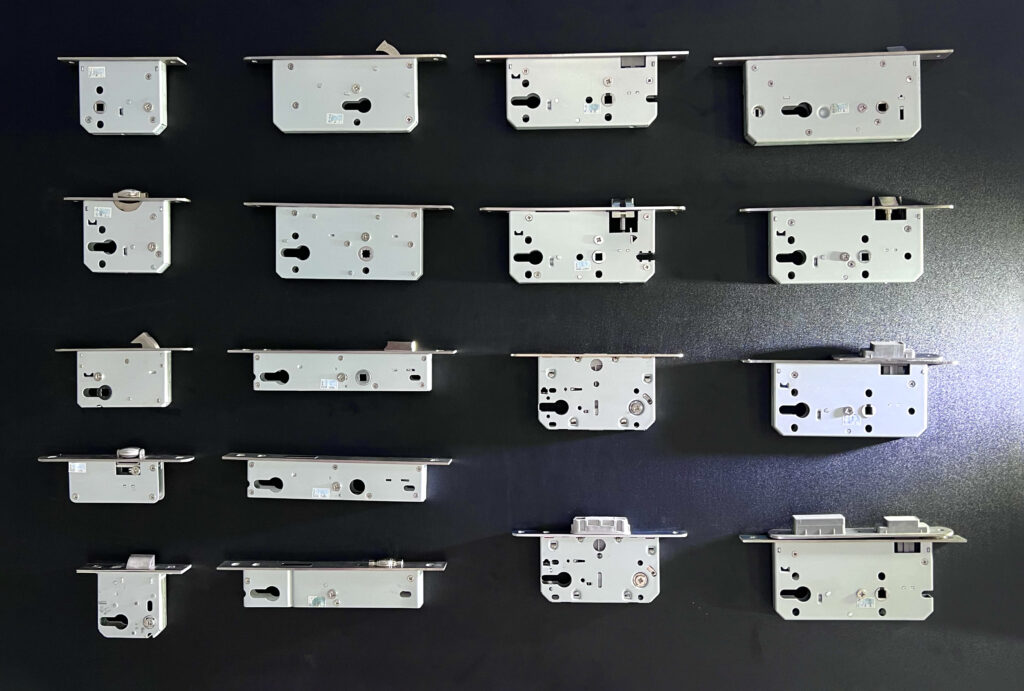
Mortise locks are one of the oldest and most secure locking mechanisms available. Typically, a mortise lock combines a deadbolt with a latch, which is installed into the door itself, providing an extra layer of protection that cannot be easily tampered with or bypassed.
Due to its strength and durability, mortise locks are often used in commercial buildings and hotels, where security is paramount. With its multiple layers of protection, it’s no wonder why mortise locks are so popular for those who take their safety and security seriously. Not only do they provide an extra layer of security, but the fact that it also requires a physical key to open makes them extremely difficult to pick or duplicate. As such, you can rest assured that your property is secure when using a mortise lock. All in all, the popularity and longevity of the mortise lock speaks to its effectiveness as a locking mechanism, making it a great choice for those who want an extra layer of security.
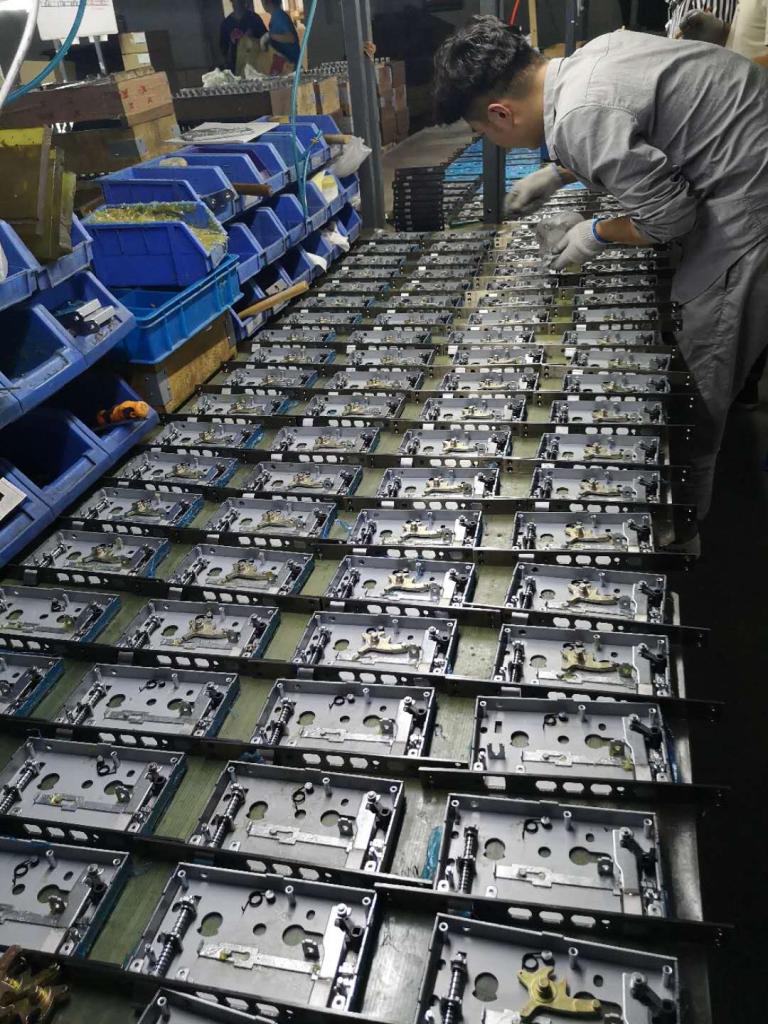
What is a Mortise Lock?
A mortise lock is a type of door lock which typically combines a latch and deadbolt in one unit. It requires a pocket, or mortise, to be cut into the edge of the door for installation. The locking components are usually contained inside the door itself, providing an aesthetically pleasing design with no visible hardware from the outside. Mortise locks offer increased security and privacy compared to other types of door locks, as their internal mechanisms are not visible from the outside. Many mortise locks contain a built-in cylinder that can be used with a key for added security. Mortise locks are typically more difficult to install than other types of door locks, but they provide greater protection for any home or business.
The Interaction of the Mortise Lock Components
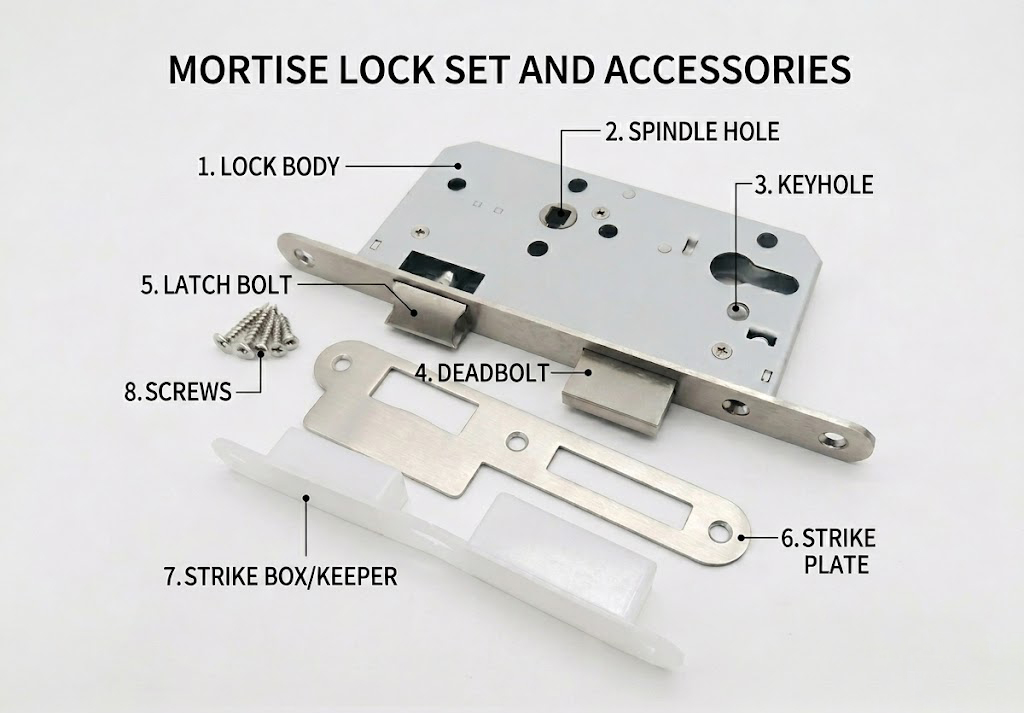
- Lock Body
The main chassis of the mortise lock that houses the internal mechanical components. It is installed inside a pocket (mortise) cut into the edge of the door. - Spindle Hole
A square aperture where the handle spindle is inserted. Rotating the door handle turns the spindle, which retracts the latch bolt to open the door. - Keyhole
The opening designed to accommodate a Euro-profile cylinder. This is where the locking cylinder is installed, allowing the key to operate the deadbolt. - Deadbolt
A heavy-duty rectangular bolt that provides the primary security. It is extended or retracted manually by turning a key or a thumb-turn. - Latch Bolt
A spring-loaded, beveled bolt that automatically engages with the strike plate when the door is pushed shut, holding the door in place without the need for a key. - Strike Plate
A metal plate fixed to the door frame. It protects the frame from wear and provides the recessed slots for the latch and deadbolt to secure into. - Strike Box / Keeper
A plastic or metal casing fitted behind the strike plate. It creates a clean pocket for the bolts to rest in and prevents dust or debris from interfering with the locking mechanism. - Screws
The hardware fasteners used to secure the lock body into the door and the strike plate onto the door frame.
How does a Mortise Lock work?
The latch usually comes in two pieces: one part that is permanently mounted to the door frame and another that is attached to the door itself. When the door locks, these two parts come together to keep it securely locked. The deadbolt has a cylinder that fits into an indentation located in the door jamb. The cylinder holds the bolt firmly in place when not engaged but can be turned by inserting and turning a key.
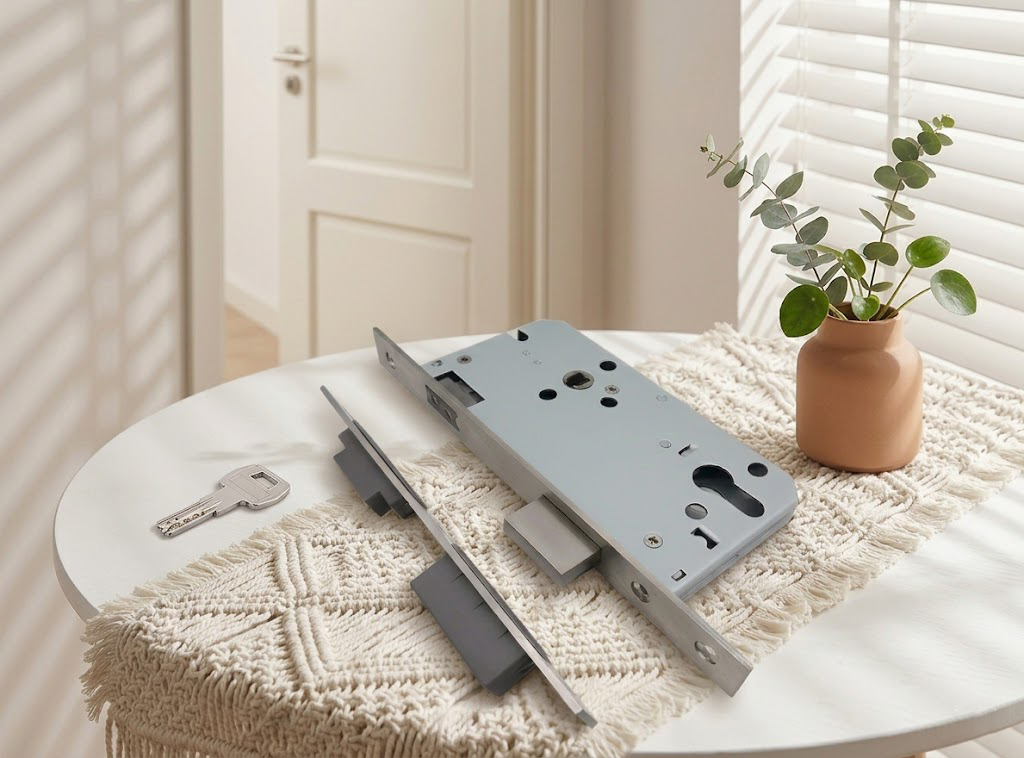
The third component of a mortise lock is its framework, which serves as its housing unit and is usually made of metal or hard plastic. This framework holds all the other pieces together and attaches to the door frame with screws or nails depending on its size and type. The framework also has a faceplate, which helps protect the latch and deadbolt from being bumped out of place by an intruder. Once installed, a mortise lock is able to securely keep doors closed until someone with a key opens them.
What are the advantages of using a Mortise Lock?
| Enhanced Security | They are generally considered to be more robust and durable, making them more difficult to pry open, force open, or drill through. This makes them an ideal choice for high-security applications. |
| Dual-Locking Mechanism | Most mortise locks integrate the deadbolt and latch into a single unit, providing dual security protection within a single housing. |
| Aesthetics and Design | They offer a wider variety of classic and vintage designs that can be coordinated with specific hardware styles, making them particularly suitable for historic or high-end residences. |
| Versatility | They are highly adaptable and can be configured for various functions—such as passage, privacy, or secure entry—simply by replacing the lock cylinder. |
| Durability | The internal mechanical components are typically constructed from heavier-gauge metal, thereby extending their service life and enhancing their wear resistance. |
| Easier to maintain | Since the various components are mounted within a removable cartridge structure, individual parts can typically be replaced or repaired without the need to replace the entire lock assembly. |
Types of Mortise Locks
Mortise locks come in various configurations to suit different needs. Here are the most common types:

1. Sashlock
Incorporates both a spring latch and a deadbolt, commonly used on exterior doors.

2. Passage Lock
Features only a latch operated by handles, used where privacy or security isn’t needed (e.g., hallways).
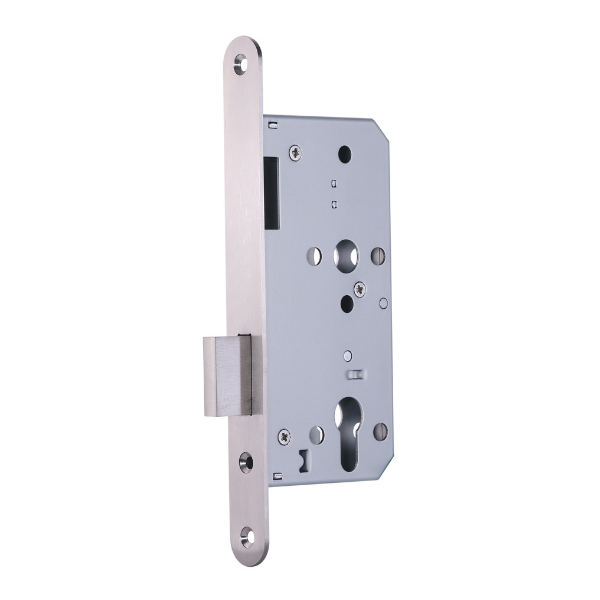
3. Deadbolt Lock
Contains only a deadbolt for security, often used alongside other latches or on storage doors.
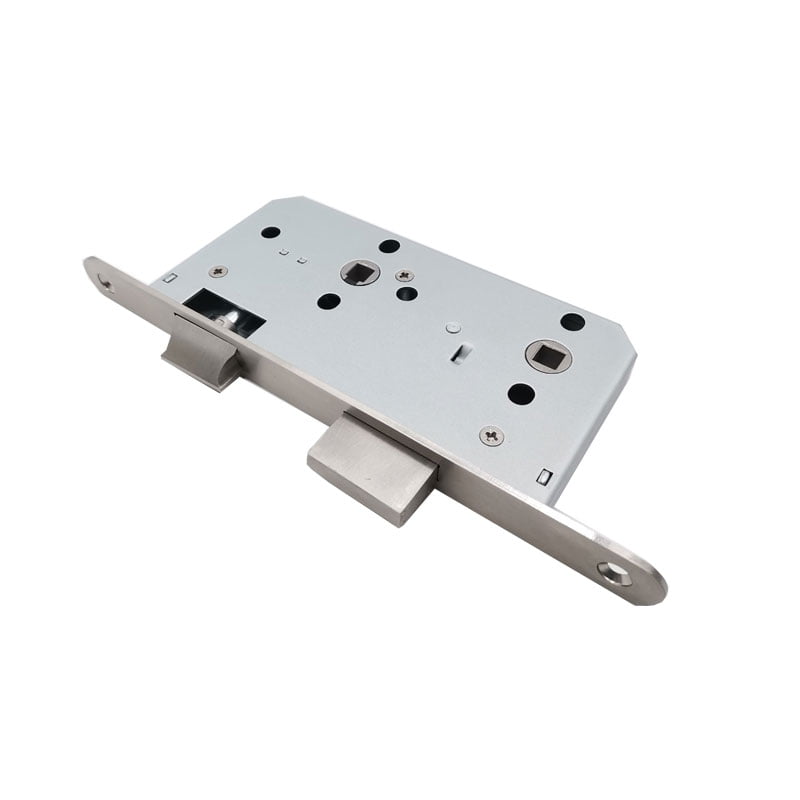
4. Bathroom Lock / Privacy Lock
Has a thumb turn on the inside for privacy and an emergency release on the outside.
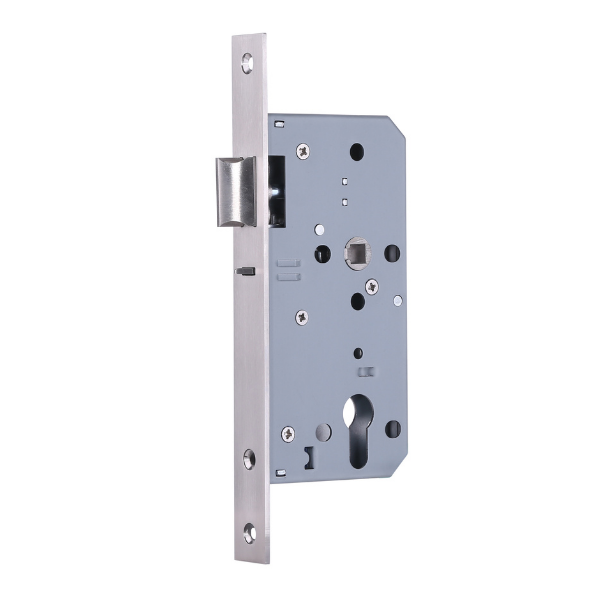
5. Night Latch Lock
A spring latch that automatically locks upon closing, opened with a key outside and handle inside.
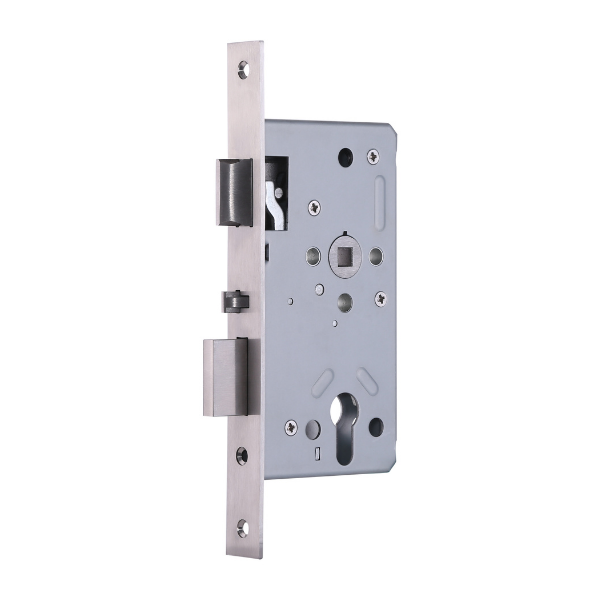
6. Anti-panic Lock
Designed for emergency exits, allowing immediate exit from the inside even when locked from the outside.

7. Classroom Lock
The outside handle can be locked or unlocked by key, while the inside handle always allows egress.
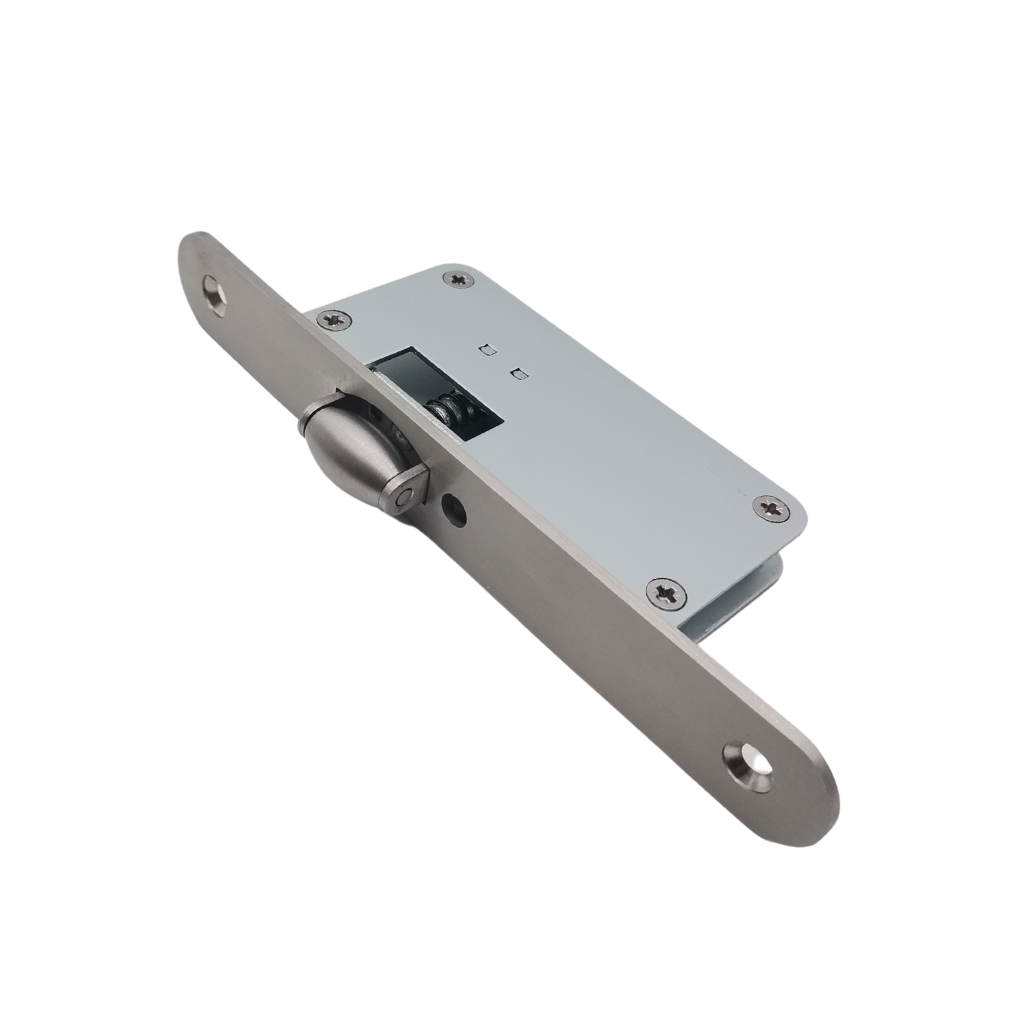
8. Roller Lock
Uses a spring-loaded roller instead of a traditional latch, often used with push/pull handles.
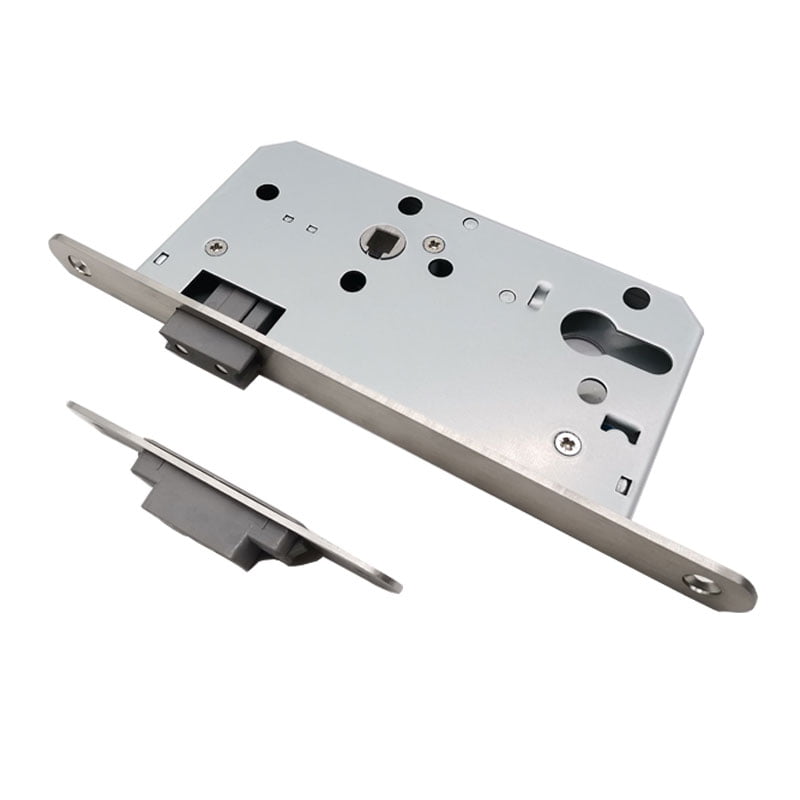
9. Magnetic Lock
Utilizes magnets to keep the latch retracted when open and engage it silently when the door is closed.
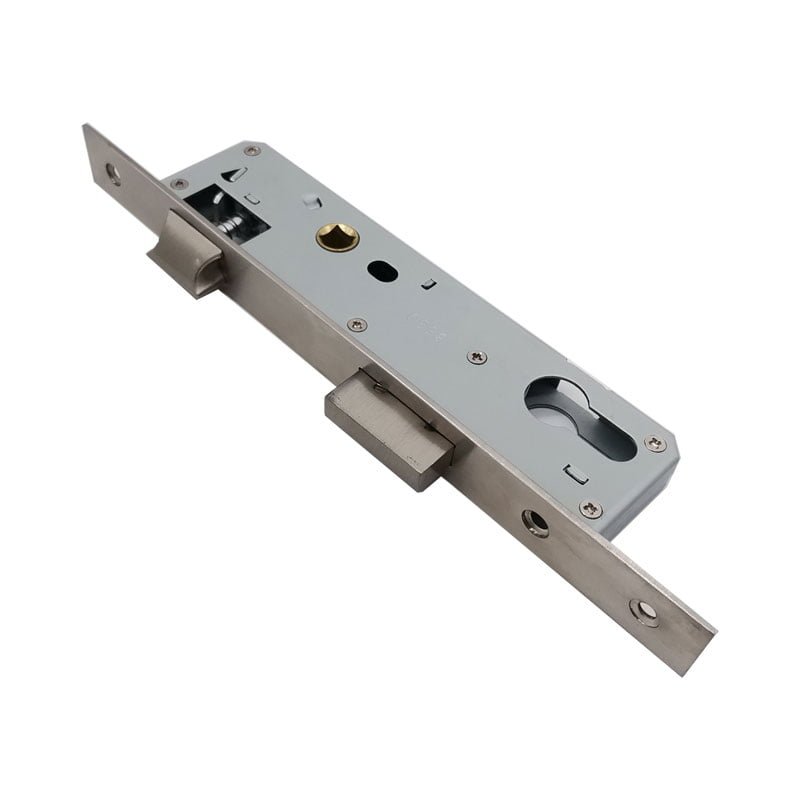
10. Narrow Lock
Designed with a very small backset for use in narrow stile doors, like aluminum storefront doors.
🏆 Star Products · Classic Recommendations
Among the wide array of lock bodies available, these three models have emerged as enduring best-sellers and classics over the years, distinguished by their exceptional mechanical performance, extreme durability, and broad applicability across diverse settings:
🥇 European Standard All-Rounder: Classic Sashlock-72Z
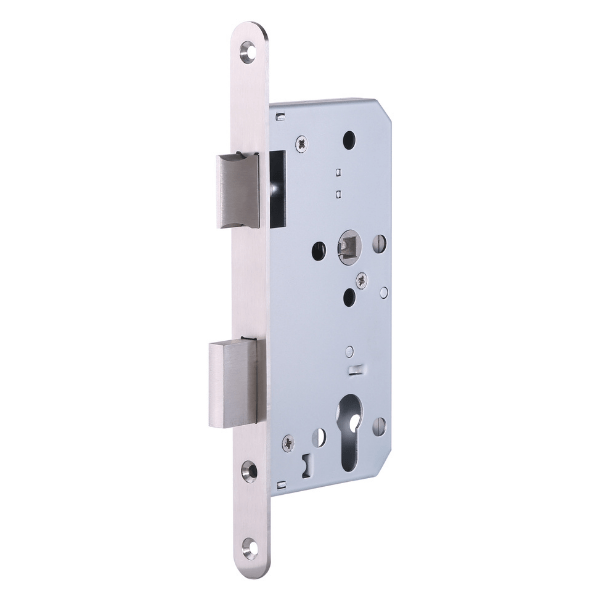
Sashlock-72Z
According to EN12209, DIN18251-1
Latchbolt, forend and strike plates made of SUS304
Suitable for sprung and most unsprung lever handles
Prepared for profile cylinders
With key action, deadbolt 2-turn
🥈 High-Traffic Champion: Passage lock-72ZL
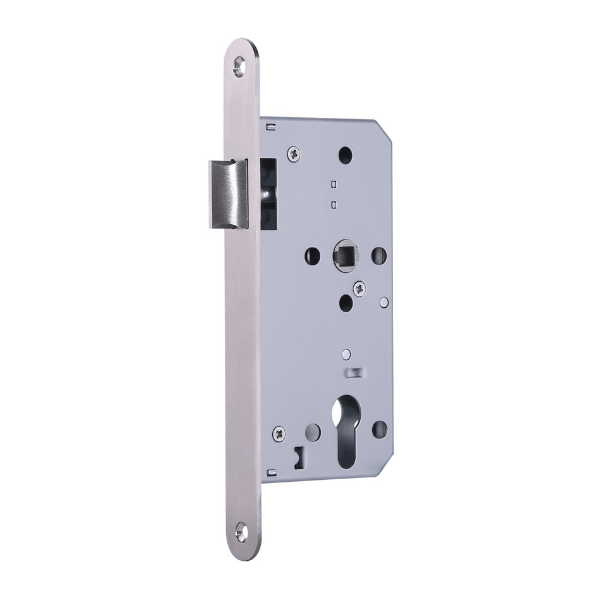
Passage lock-72ZL
According to EN12209, DIN18251-1
Latchbolt, forend and strike plates made of SUS304
Suitable for sprung and most unsprung lever handles
🥉 Modern Minimalist Style: Narrow lock-92K
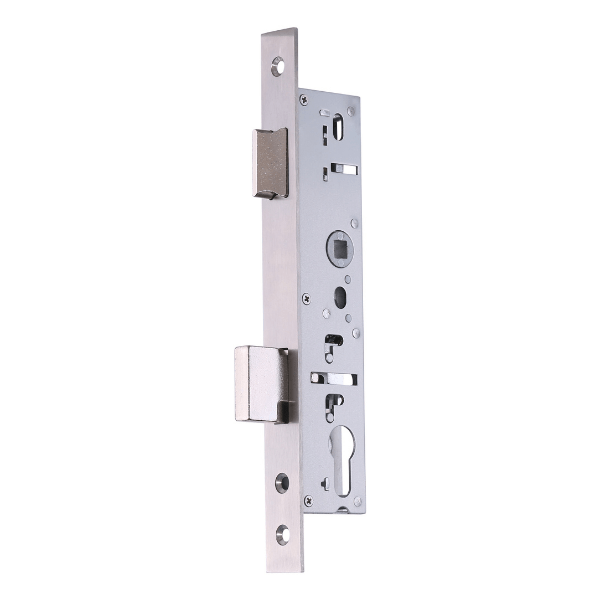
Narrow lock-92K
According to EN12209
Forend and strike plates made of SUS304
Latch and deadbolt, made of zinc alloy
Suitable for sprung and most unsprung lever handles
Prepared for profile cylinders
With key action, deadbolt 2-turn
Conclusion
In summary, a mortise lock is far more than a mere security device; it represents a perfect fusion of architectural safety and mechanical aesthetics. By concealing its intricate mechanical mechanisms within the door itself, it preserves the exterior’s visual purity and elegance while providing an impenetrable, robust defense from within.
Whether for commercial spaces demanding the utmost security or high-end residences where attention to detail and quality is paramount, selecting a high-standard mortise lock constitutes a long-term investment—one that safeguards your peace of mind and serves as a testament to uncompromising quality. It allows security to remain invisible to the eye, yet omnipresent in its protection.
Whether you are responsible for bulk procurement for engineering projects, seeking customized hardware solutions, or require sample testing and technical support, our professional team is dedicated to serving you. We warmly invite you to contact us at any time to embark on a partnership built on quality.
📞 Contact Us
📍 R2111, Shuntai plaza No.2 building, High-tech zone, Jinan, Shandong, China
📧 info@sdhhardware.com
📱 0086-13693395023