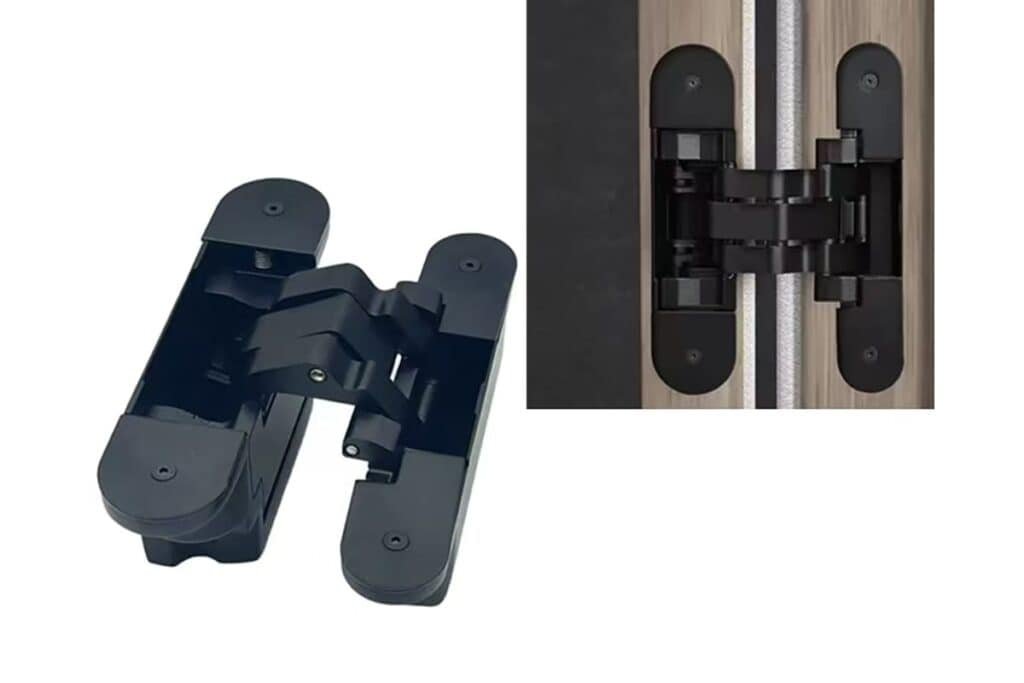
Hinge Buying Guide: How Do I Choose Concealed Hinges For Door Projects?
A wrong concealed hinge can make a good door look poor, work badly, and create complaints after delivery.
I choose concealed hinges by matching the hinge to the door size, door weight, material, finish, 3D adjustment needs, and supplier reliability. I never choose only by price, appearance, or brand name, because the hinge must fit the real door and the real project.
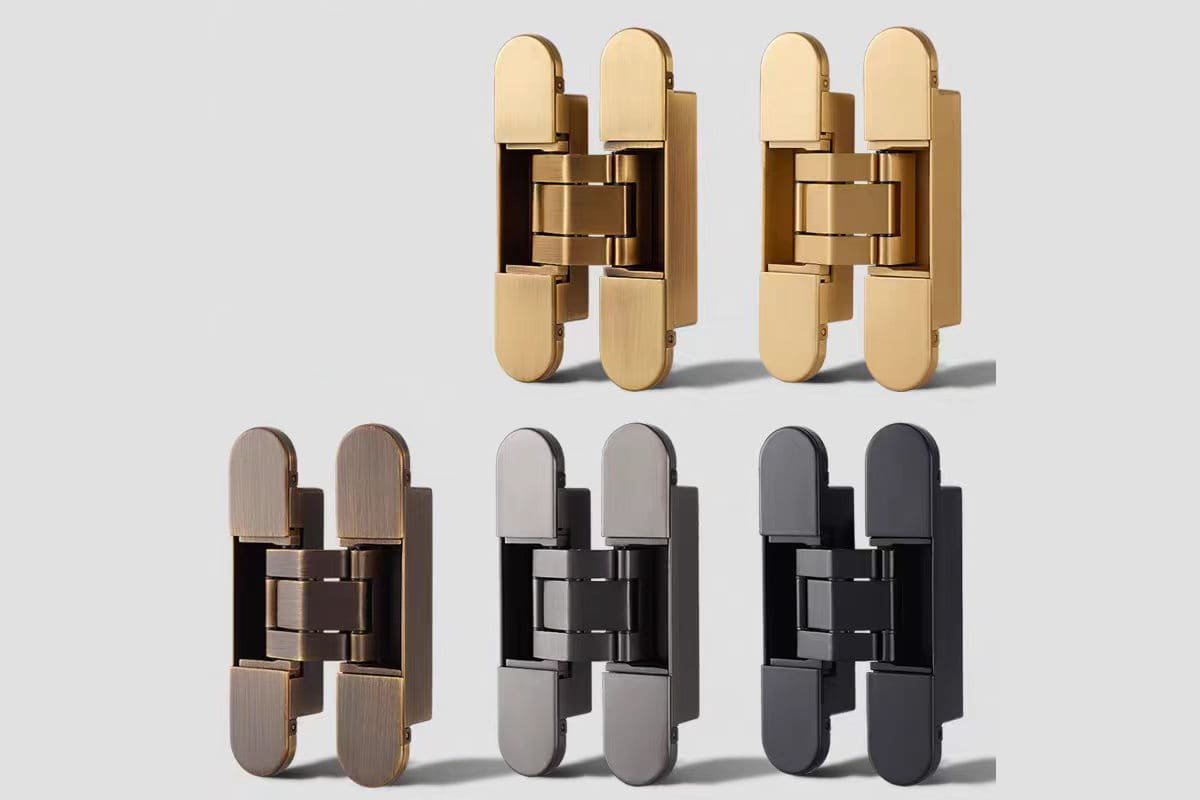
I have seen buyers lose time because they selected a hinge from a catalog photo before checking the door. I have also seen installers solve many problems because the hinge had the right structure and enough adjustment space. In my work at a door hardware factory, I always start with one simple idea. The concealed hinge is small, but it carries the door every day, so I must choose it with the same care as the door itself.
Why Should I Start Concealed Hinge Selection From The Door?
A hinge mistake often starts before the buyer checks the hinge. It starts when the buyer does not fully check the door.
I start concealed hinge selection from the door because the door height, width, thickness, material, and weight decide the hinge load requirement, hinge size, fixing method, and adjustment need.
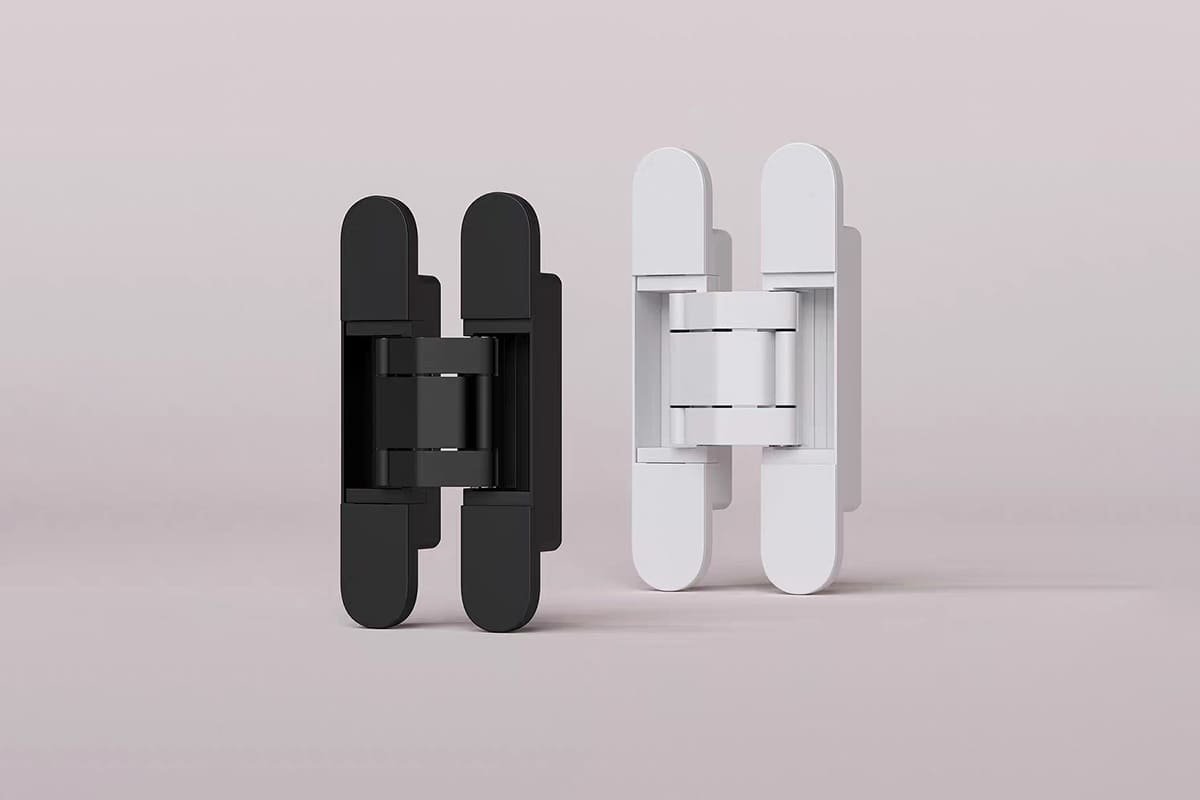
What I check before I choose a concealed hinge
I do not ask for a hinge model first. I ask for the door details first. This habit saves time for my team and for the buyer. A wooden door, a steel door, and an aluminum door may look similar in a drawing, but they may need different hinge structures. A tall door may also put more stress on the hinge, even when the door weight looks acceptable. A thick door may need a different routing depth and different fixing screws. I have seen a project delay happen because the hinge body could not sit correctly inside the door and frame. The buyer had chosen the hinge too early.
| Door detail I check | Why I check it | What it affects |
|---|---|---|
| Door height | A taller door creates more leverage1 | Hinge size and quantity |
| Door width | A wider door pulls harder on the hinge side2 | Load matching and stability |
| Door thickness | The hinge must fit inside the door edge | Hinge body depth and routing |
| Door material | Each material holds screws in a different way3 | Fixing method and screw choice |
| Door weight | The hinge must support daily opening and closing | Load specification |
I treat the door as the starting point because a concealed hinge is not a decoration part. It is a working part. It must carry weight, keep the door aligned, and stay stable after many open and close cycles. When a buyer gives me clear door data, I can help match the hinge more accurately. When the buyer gives only a photo, I can only make a rough guess, and I do not like rough guesses in bulk orders.
How Do I Match Concealed Hinge Load Capacity To Door Size And Weight?
A weak hinge can sag. An oversized hinge can raise cost and create installation trouble if the door cannot accept it.
I match concealed hinge load capacity by checking the complete door data first, then I compare that data with the hinge specification, installation position, and project use conditions.
Why I do not choose load capacity from weight alone
I do not confirm a concealed hinge only by asking, “How many kilograms can it carry?” That question is useful, but it is not enough. Door weight is only one part of the decision. Door height, width, thickness, material, usage frequency, and installation quality also matter. In one project conversation, I remember a buyer asking for a hinge only by the door weight. I asked for the door height and width. The door was wider than normal, so the force on the hinge side was higher. The hinge choice had to be safer and more suitable for that door.
| Buying question | My factory view |
|---|---|
| What is the door weight? | I use it as the basic load reference. |
| What is the door height? | I use it to judge leverage and stability. |
| What is the door width? | I use it to check side pull on the hinge. |
| How often will the door be used? | I use it to judge long-term working pressure.4 |
| How many hinges will be used?5 | I use it to spread the load correctly. |
| What is the frame material? | I use it to check fixing strength. |
I also look at the installation environment. A hotel room door, an apartment door, and a public building door may not work in the same way every day. Some doors open only a few times a day. Some doors open many times. Some users close doors gently. Some users do not. Because of this, I prefer to match the concealed hinge with a practical safety margin. I do not want the buyer to save a small amount on the hinge and then spend more money on service calls, rework, and customer complaints.
Which Concealed Hinge Material Should I Choose?
A poor material choice can cause loose fitting, unstable movement, and inconsistent quality across a large order.
I choose concealed hinge material by looking at the door type, project market, required precision, finish demand, and cost target. Stainless steel and zinc alloy are common choices for stable concealed hinge supply.
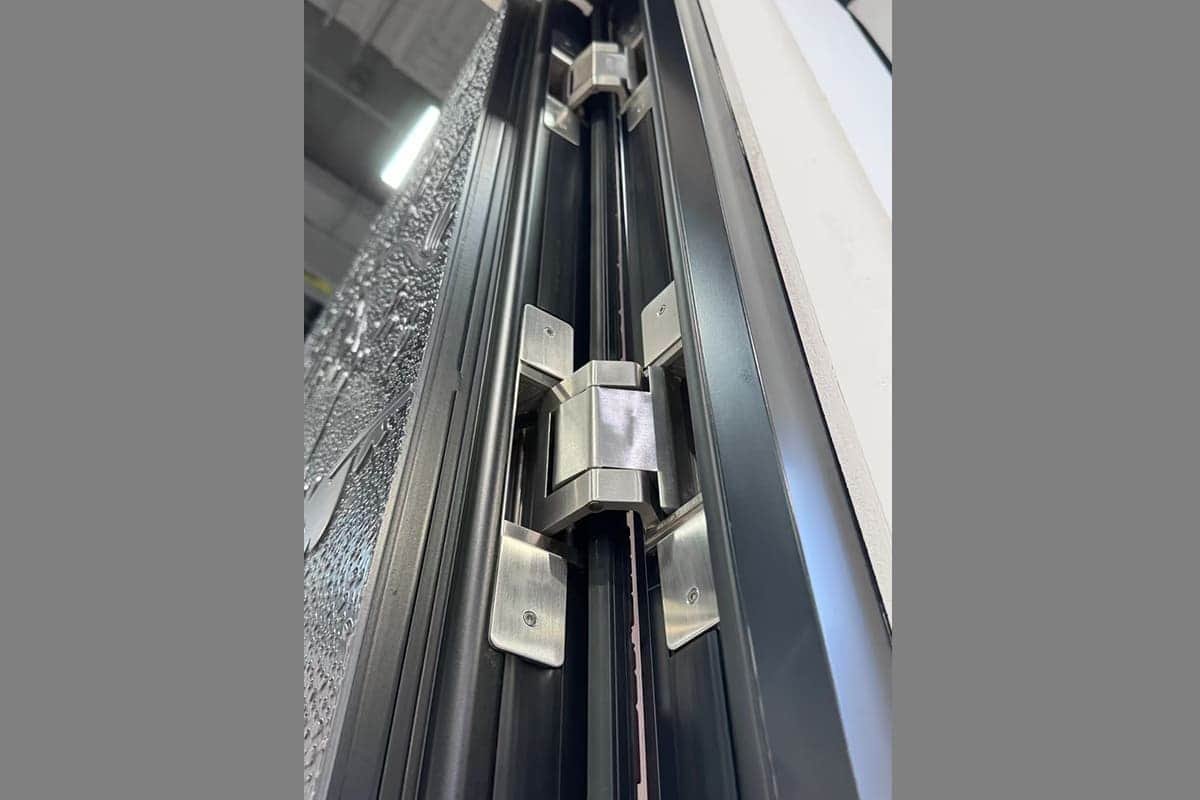
How I think about stainless steel and zinc alloy concealed hinges
I do not say one material is always best for every buyer. I think that kind of advice is too simple. I look at the buyer’s real use case first. Stainless steel can be a strong option when the buyer needs good strength, stable structure, and better corrosion resistance in many normal applications.6 Zinc alloy can also be a good option when the buyer needs precise shaping, smooth appearance, and stable dimensional control in volume production.7 The final choice should match the door, the market, and the budget.
| Material option | Why I may choose it | What I still check |
|---|---|---|
| Stainless steel | It can support strength and stable use | Grade, thickness, machining, finish |
| Zinc alloy | It can support accurate shape and clean appearance | Casting quality, structure, coating |
| Mixed structure | It can balance function and cost | Key stress points and assembly quality |
In our factory work, I pay close attention to dimensional accuracy. Concealed hinges need accurate fit because they sit inside the door and frame. A small size error can become a visible gap problem after installation.8 I also check whether the hinge opens smoothly and whether the screw holes are clean. When a buyer orders in batches, material stability becomes even more important. The buyer does not only need one good sample. The buyer needs many pieces that look and work the same. That is why I see material choice as a production decision, not only a catalog decision.
Why Does Surface Treatment Matter For Concealed Hinges?
A nice finish can look good on day one, but a weak finish can create complaints after the door reaches the customer.
I treat concealed hinge surface finish as a durability and appearance decision. Electroplated finishes are often more stable than basic spray coating9, but the right choice depends on use conditions and buyer standards.
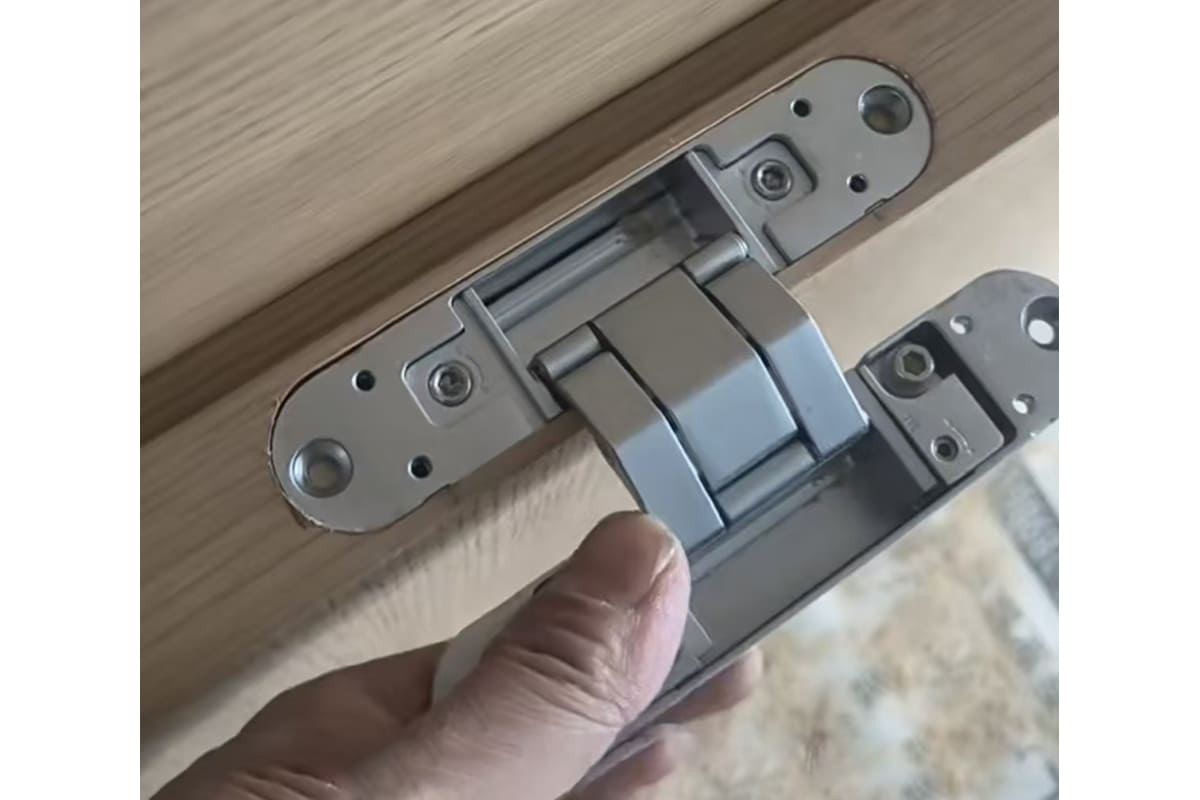
How I compare finish options in real purchasing
I always ask what finish the buyer needs and where the door will be used. A concealed hinge is not always fully visible, but its finish still matters. The finish can affect corrosion resistance, color matching, surface consistency, and customer confidence.10 In many B2B orders, the buyer wants the hinge finish to match handles, locks, cylinders, or other door hardware. If the finish color changes from batch to batch, the buyer may face complaints from door factories, brand clients, or project sites.
| Finish point I check | Why it matters |
|---|---|
| Color consistency | The full order should look uniform. |
| Surface smoothness | A rough surface looks cheap and may affect movement. |
| Coating adhesion | A weak coating may peel or mark easily. |
| Corrosion resistance | The hinge must fit the use environment. |
| Batch control | Repeat orders should match the approved sample. |
I often position electroplated finishes as more durable and stable than basic spray coating in many normal supply situations. I still avoid making absolute claims without test data. A finish choice should match the environment, the buyer’s standard, and the price level. For example, a high-end door brand may need a more stable surface and stricter color control. A price-sensitive wholesale line may accept a simpler finish if the market allows it. I ask the buyer to approve samples before bulk production. I also suggest that buyers keep a reference sample, so both sides can compare later production with the approved standard.
Why Is 3D Adjustability Important For Concealed Hinges?
Even a good door can have small gaps after installation. Without adjustment, small errors can become big site problems.
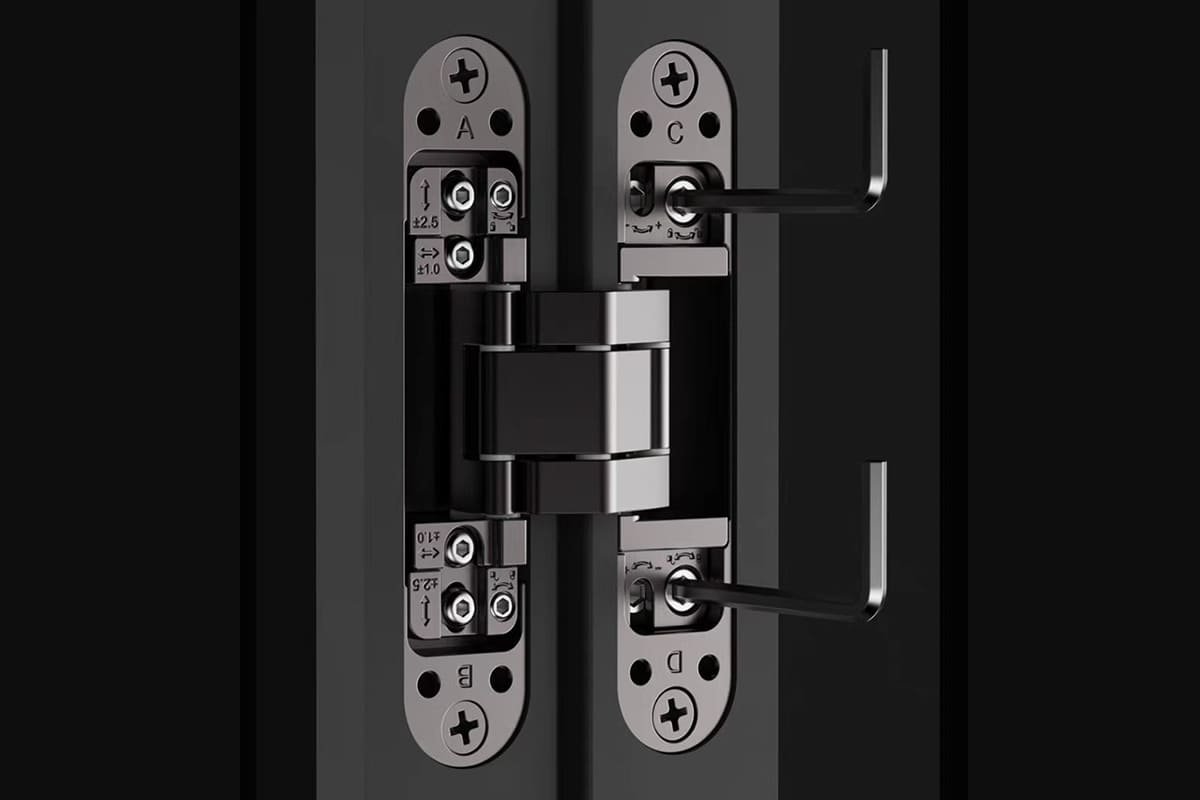
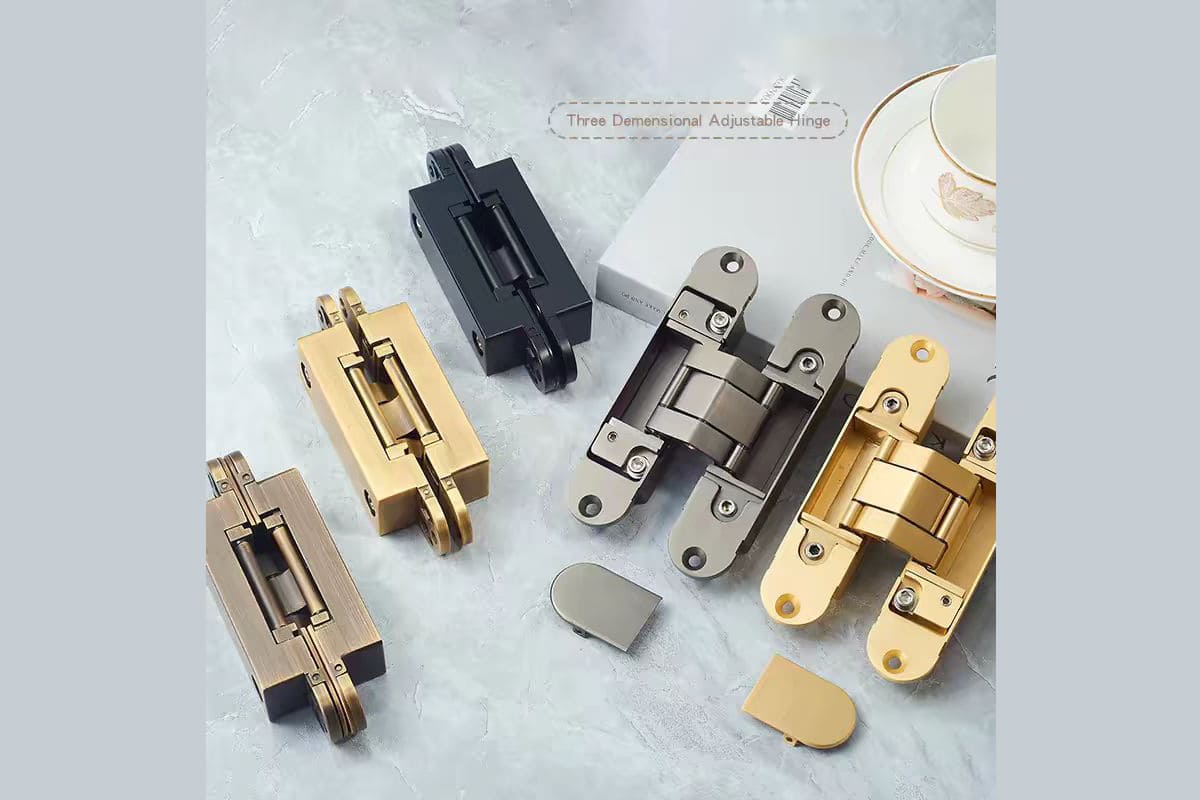
I value 3D adjustable concealed hinges because they allow up and down, left and right, and in and out adjustment after installation.11 This helps installers correct gaps and alignment.
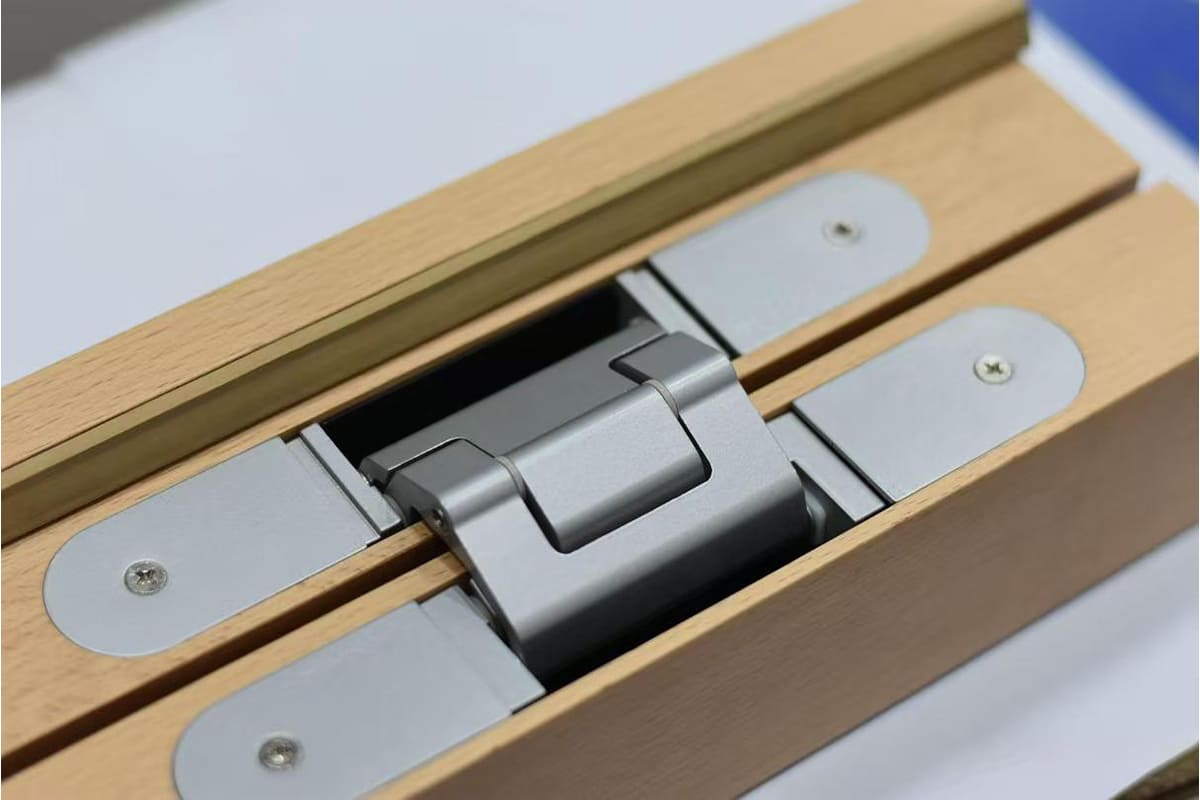
How 3D adjustment helps installers on site
I see 3D adjustability as one of the most important buying points for concealed hinges. Door production, frame installation, wall condition, and site handling can all create small errors. If the hinge has no good adjustment structure, the installer may need to remove the door, rework the frame, or accept uneven gaps. That result is bad for the door factory and bad for the final user. A 3D adjustable hinge gives the installer a better way to fine tune the door after it is already fitted.
| Adjustment direction | What it helps correct |
|---|---|
| Up and down | It helps align the top and bottom gaps. |
| Left and right | It helps correct the side gap near the frame. |
| In and out | It helps set the door flush with the frame surface. |
I also check whether the adjustment screws are easy to access. A hinge can be called adjustable, but the installer may still struggle if the screw position is hard to reach. I prefer an adjustment system that feels clear and stable. The screw should move smoothly. The hinge should hold its position after adjustment. The door should not shift again after normal use. In project supply, this point is very practical. A small installation saving on each door can become a large saving across hundreds or thousands of doors. I think buyers should ask for installation guidance, drawings, or sample testing before confirming a large order.
How Should I Judge A Concealed Hinge Supplier?
A low price can look attractive before the order. A weak supplier becomes expensive after defects, delays, and complaints appear.
I judge a concealed hinge supplier by production stability, quality control, finish consistency, technical support, certificate readiness, delivery control, and after-sales response.
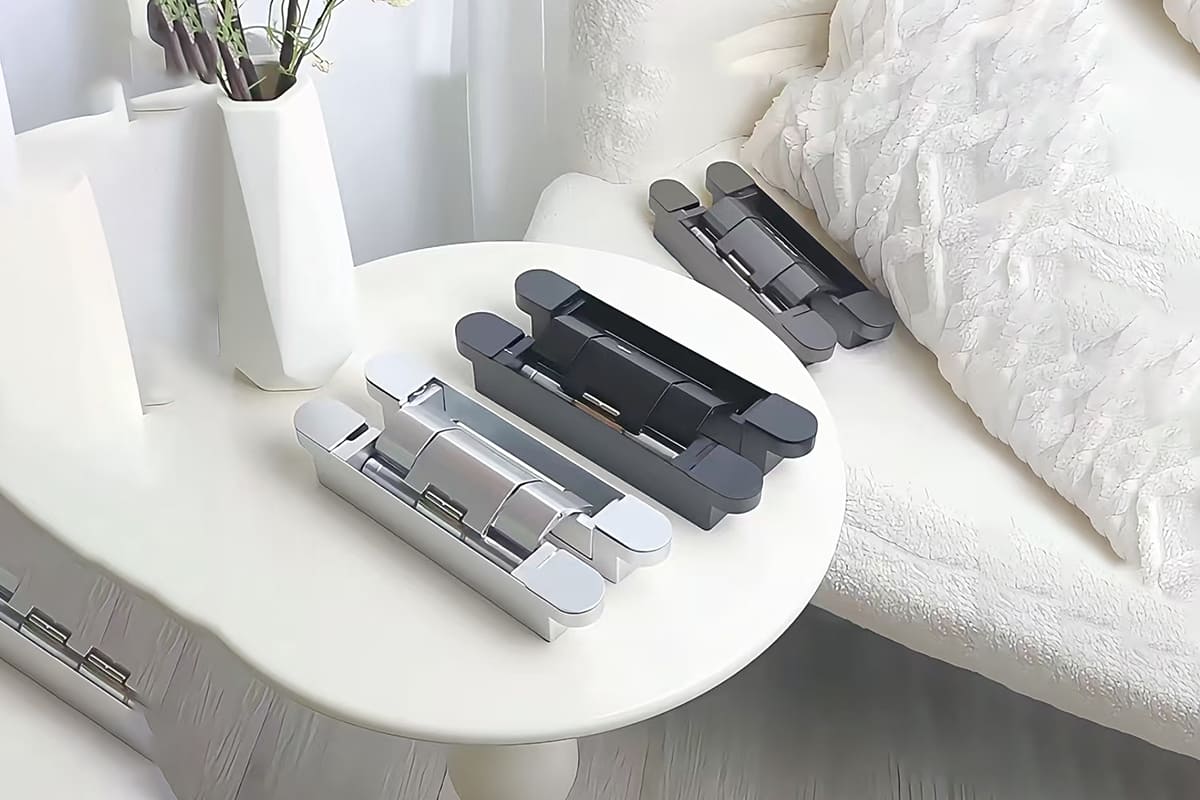
What I look for beyond the hinge sample
I never judge a concealed hinge supplier only by one good sample. A sample can look fine, but the real test is stable batch production. I want to know whether the supplier can keep dimensions, finish, packaging, and function consistent across the full order. I also want to know whether the supplier can answer technical questions before and after delivery. This matters a lot for door factories, hardware brands, wholesalers, and project buyers. Their risk does not end when the hinge leaves the factory. Their risk ends only when the door works well in the market.
| Supplier factor | Why I care |
|---|---|
| In-house production | The supplier can control process and schedule better. |
| Quality inspection | The supplier can reduce defects before shipment. |
| Drawing and sample support | The buyer can confirm fit before bulk order. |
| Finish control | The buyer can keep product appearance stable. |
| Certificate support12 | The buyer can meet project or market requirements. |
| After-sales response | The buyer can solve problems faster. |
From my manufacturing side, I see after-sales support as part of the product. A concealed hinge may face installation questions, door matching questions, or adjustment questions. A responsive supplier can help the buyer reduce confusion and protect the project schedule. SDH Hardware is one example of a manufacturer that directly produces concealed hinges and supports buyers with product matching, finish options, and after-sales communication. I mention this not to say every buyer must choose us. I mention it because supplier structure matters. When the factory understands the product and controls production, the buyer can get clearer answers and more stable support.
What Mistakes Should I Avoid When Buying Concealed Hinges?
A fast buying choice can feel efficient, but it can create hidden cost when the hinge does not match the door.
I avoid buying concealed hinges only by price, photo, brand name, or a single load number. I check the full door data, hinge structure, finish, adjustment, and supplier capability first.
The buying habits that I try to correct
I have seen several common mistakes in concealed hinge purchasing. The first mistake is choosing the cheapest hinge without checking whether it suits the door. The second mistake is choosing a hinge because it looks good in a photo. The third mistake is asking only for load capacity and not giving full door data. The fourth mistake is ignoring the finish until the goods arrive. The fifth mistake is forgetting after-sales support. Each mistake may seem small at the beginning. Each mistake can become expensive during installation or after market sale.
| Mistake | Better action |
|---|---|
| I choose only by lowest price | I compare price with structure, material, finish, and service. |
| I choose from photo only | I request drawings, samples, and installation details. |
| I ask only about load | I provide door height, width, thickness, material, and weight. |
| I ignore finish control | I approve finish samples before bulk production. |
| I ignore adjustment | I check 3D adjustment range and screw access. |
| I ignore supplier support | I check production, inspection, delivery, and after-sales response. |
I treat concealed hinge buying as a risk control task. A good hinge should support the door, fit the routing, adjust cleanly, and keep stable after delivery. It should also come from a supplier that can repeat the same quality in bulk orders. When I work with buyers, I like clear information and clear standards. This makes the quotation more accurate. It also makes production easier to control. The best buying result is not the cheapest hinge on paper. The best result is a hinge that fits the door, installs smoothly, reduces complaints, and protects the buyer’s long-term market work.
Conclusion
I choose concealed hinges by starting from the door, then checking load, material, finish, adjustment, and supplier reliability before any bulk order.
"[DOC] Section 08 71 00 - Door Hardware", https://www.vendorportal.ecms.va.gov/FBODocumentServer/DocumentServer.aspx?DocumentId=796073&FileName=VA259-13-R-0534-A00003003.doc. Industry references such as SDI-100 hinge selection tables and ANSI/BHMA A156.1 indicate that as door height increases, additional hinges are commonly recommended to control moments and prevent sag, reflecting the greater leverage of taller leaves. Evidence role: expert_consensus; source type: institution. Supports: That increasing door height typically requires additional or stronger hinges due to increased moments and risk of sag.. Scope note: These documents provide general guidance and test regimes rather than calculating leverage for a specific door geometry or construction. ↩
"Torque (Moment) - NASA Glenn Research Center", https://www.grc.nasa.gov/www/k-12/airplane/torque.html. In rigid-body mechanics, torque equals the applied force multiplied by the perpendicular distance to the pivot; as a door’s center of mass is farther from the hinge axis on a wider leaf, the moment acting on the hinges increases. Evidence role: mechanism; source type: encyclopedia. Supports: That the moment at a pivot increases with the perpendicular distance of the force, so greater door width increases the moment imposed on the hinge axis.. Scope note: This is a simplified static model and does not account for hinge spacing, door closers, dynamic loads, or material deflection. ↩
"[PDF] Fastener Design Manual (NASA)", https://web.mae.ufl.edu/designlab/Lab%20Assignments/Fastener%20Design%20Manual%20(NASA).pdf. Engineering references show that fastener withdrawal and pull-out strength depend strongly on the substrate’s material and thickness; for example, the NASA Fastener Design Manual and the AWC NDS provide different design equations for screws in metals and in wood, respectively, reflecting material-dependent holding behavior. Evidence role: mechanism; source type: institution. Supports: That screw pull-out/withdrawal strength depends on substrate material properties and thickness, requiring different design considerations for wood versus metals.. Scope note: Exact holding values vary widely with alloy/wood species, density, pilot-hole size, thread geometry, and installation quality. ↩
"[PDF] 087100 – door hardware part 1 - general 1.01 summary", https://fcs.cornell.edu/sites/default/files/imce/site_contributor/Design_Standards/087100_Door%20Hardware.pdf. ANSI/BHMA A156.1 classifies hinges by endurance, with grades defined by passing specified numbers of opening and closing cycles under load, indicating that anticipated use frequency is integral to hinge selection. Evidence role: statistic; source type: institution. Supports: That hinge standards classify products by required cycle endurance under load, linking expected frequency of use to hinge grade selection.. Scope note: Laboratory cycle tests represent controlled conditions and may not capture all variables present in field usage. ↩
"ANSI/SDI A250.8 Steel Door Standard | SDI Specifications", https://steeldoor.org/ansi-250-8/. Hinge selection tables in SDI-100 and similar guides recommend adding hinges as door height and weight increase to distribute the load more evenly and reduce stresses at the door edge and frame. Evidence role: expert_consensus; source type: institution. Supports: That guidance tables recommend increasing hinge count with door height/weight to distribute load and limit edge stresses.. Scope note: These tables are typical for conventional doors and frames; bespoke constructions and hardware configurations may require project-specific engineering. ↩
"Stainless steel - Wikipedia", https://en.wikipedia.org/wiki/Stainless_steel. Stainless steels contain sufficient chromium to form a passive chromium-oxide film that imparts corrosion resistance, and common grades exhibit high strength appropriate for structural components. Evidence role: general_support; source type: encyclopedia. Supports: That stainless steels derive notable corrosion resistance from a chromium-oxide passive layer and provide high strength suitable for structural hardware.. Scope note: Performance varies by stainless grade, heat treatment, and service environment; not all stainless steels outperform every alternative in all conditions. ↩
"Die Casting Surface Finish 101 - Moldiecasting", https://moldiecasting.com/blog/die-casting-surface-finish/. Zinc die-casting alloys such as Zamak are noted for excellent castability, thin-wall capability, good dimensional accuracy, and smooth as-cast surfaces suitable for decorative finishing in high-volume production. Evidence role: general_support; source type: encyclopedia. Supports: That zinc die-casting alloys (e.g., Zamak) are widely used for precise, thin-wall, smooth-surface components with good dimensional accuracy in mass production.. Scope note: Actual dimensional control depends on die design, process parameters, and post-processing, not alloy choice alone. ↩
"[PDF] STANDARD STEEL DOORS AND FRAMES", https://www.plu.edu/construction/wp-content/uploads/sites/128/2014/10/div-008.pdf. Standards from bodies such as the Steel Door Institute and WDMA specify uniform door and frame clearance tolerances on the order of a few millimeters, indicating that small dimensional errors can result in visible, uneven gaps. Evidence role: expert_consensus; source type: institution. Supports: That door/frame standards specify tight reveal tolerances, implying small dimensional errors can produce noticeable gaps.. Scope note: Clearance tolerances vary by door type, material, and regional standard; not all projects adopt identical criteria. ↩
"Electroplating - Wikipedia", https://en.wikipedia.org/wiki/Electroplating. Electroplating deposits a metallic layer that can improve corrosion resistance, wear, and hardness compared with unplated or simply painted substrates under many service conditions. Evidence role: general_support; source type: encyclopedia. Supports: That electroplating can enhance corrosion resistance and surface hardness relative to simple paint films in many applications.. Scope note: Comparative performance depends on the specific plating metal, thickness, pretreatment, coating chemistry, and environment; some paint systems can outperform plating in particular exposures. ↩
"Evaluation of Protective Coatings for High-Corrosivity Category ...", https://pmc.ncbi.nlm.nih.gov/articles/PMC6515464/. International standards such as ISO 9227 (neutral salt spray) are used to assess the corrosion performance of protective coatings, reflecting the established role of finish systems in durability and visual consistency. Evidence role: mechanism; source type: institution. Supports: That protective coatings are evaluated for corrosion resistance using standardized tests, underscoring the finish's role in durability and appearance retention.. Scope note: Accelerated salt-spray tests are comparative and do not provide direct predictions of service life in specific environments. ↩
"Three-Way Adjustable Concealed Door Hinge - Sold Individually", https://www.hingeoutlet.com/products/three-way-adjustable-concealed-hinge-multiple-finishes-available-sold-individually-1?srsltid=AfmBOoo4KGUh1R2MpyvtHlfyROjeCP2Jvb_e3hj-IeXh2mNG03kGVrB-. Architectural hardware education materials (e.g., Door and Hardware Institute coursework) describe three-way adjustable hinges that provide vertical, lateral, and depth adjustments to correct clearances after installation. Evidence role: general_support; source type: institution. Supports: That '3-way adjustable' hinges are designed to permit vertical, lateral, and depth adjustments to tune door clearances after hanging.. Scope note: Specific adjustment ranges, mechanisms, and accessibility vary by product design and manufacturer. ↩
"Decoding Hinge Markings: A Simple Guide - Phoenix Hinges", https://phoenix-hinges.com/blogs/hinge-hub/decoding-hinge-markings?srsltid=AfmBOoqB8v2AHlCsBF86Okx2_cAnjKPT2onHsyUYKNthZR3rQzF3vmzb. Within the European Union, single-axis hinges for pedestrian doorsets are covered by EN 1935 as a harmonized standard under the Construction Products Regulation, so projects may require documented conformity (e.g., CE marking) for applicable hinge products. Evidence role: historical_context; source type: institution. Supports: That in the EU, certain hinges are assessed against EN 1935 under the Construction Products Regulation and may require CE marking for market compliance.. Scope note: Requirements apply to specific hinge types and markets (e.g., EU) and may not cover all concealed hinge designs or non-EU jurisdictions. ↩