How Should I Choose Commercial Door Handles for High-Traffic Doors?
I see many projects lose money when a weak handle meets a busy door. The problem looks small, then complaints, repairs, and delays grow.
I choose commercial door handles for high-traffic doors by checking use frequency, door function, certification needs, lock compatibility, material structure, surface finish, and batch quality. I do not judge only by style or price, because busy public doors expose weak hardware fast.
I have handled many customer discussions where the first question is simple. The buyer asks me for a stainless steel lever handle price. I can quote a price, but that answer is not enough for a hotel, mall, hospital, school, or office project. A high-traffic door is not a quiet bedroom door. It works all day. It faces different hands, different force, cleaning chemicals, door closers, locks, fire rules, and project inspection. I need to understand the door before I suggest the handle. If I skip that step, the cheapest handle can become the most expensive one after installation.
Why Do I Need Commercial-Grade Handles for High-Traffic Doors?
I often see buyers choose by appearance first. The handle looks good in a sample box, but a busy door soon shows weak structure and poor fit.
I need commercial-grade handles for high-traffic doors because frequent use quickly tests strength, fixing stability, finish wear, grip comfort, and lock matching. Public doors need handles built for repeated operation, not only for showroom appearance.
I Look at Real Door Use Before I Look at Style
When I discuss a project with a door factory or hardware brand, I first ask where the handle will be used. A hotel room door, a school classroom door, a hospital corridor door, and a mall toilet door do not face the same traffic. I also ask if the door has a closer, if the door is heavy, if the user group includes children or elderly people, and if cleaning is frequent. These simple questions help me avoid wrong selection.
| Door Scene | Main Risk I See | Handle Point I Check |
|---|---|---|
| Hotel corridor door | High daily use and finish wear | Stable surface finish and good spring return |
| Mall public door | Rough operation and many users | Strong fixing and easy grip |
| Hospital door | Hygiene and frequent cleaning | Stainless steel surface and smooth edges |
| School door | Impact and misuse | Strong lever body and secure rose fixing |
| Office door | Many cycles and appearance needs | Consistent finish and lock match |
I do not say one handle can solve every problem. I prefer to match the handle to the door use. A light residential lever may feel fine on day one, but it may loosen, shake, discolor, or feel unstable when many people use it every day. In factory production, I also pay attention to the tube shape, welding point, spindle hole, rose fixing, spring structure, and finish control. These small details are not exciting in a catalog, but they decide if the handle feels stable after installation. For high-traffic doors, I always treat the handle as a working part, not only as a decorative part.
Which Standards Should I Check Before I Buy Commercial Door Handles?
I see risk when a buyer asks only for “good quality.” That phrase sounds clear, but it does not give a project team a testable reference.
I check the market standard before selection. For American-standard projects, buyers often ask for ANSI Grade 1. For European-standard projects, EN1906 Grade 4 is often used as a high-duty reference. I always verify certificates and exact project requirements.

I Use Standards as a Buying Language
In cross-border door hardware supply, standards help buyers, factories, inspectors, and project owners speak the same language. I do not use standards as a slogan. I use them as a checklist. If a customer serves the American market, the project may ask for ANSI grade information. If a customer serves the European market, the project may ask for EN1906 grade information. The exact requirement still depends on the tender, door type, building code, and local inspector. I always ask the buyer to share the required standard before mass production.
| Market Direction | Common Reference I Discuss | What I Still Need to Confirm |
|---|---|---|
| American-standard project | ANSI Grade 1 is often requested for heavy-duty use | Certificate scope, lockset type, and project text |
| European-standard project | EN1906 Grade 4 is often used for high-duty lever furniture | Classification details and door application |
| Middle East project | EU or mixed project standards may appear | Consultant requirement and fire-door needs |
| Southeast Asia project | EN, ANSI, or local project rules may appear | Import documents and project acceptance rules |
I also tell customers that a grade is not just a name printed on a box. The certificate should match the product type, construction, material, and use. If the customer changes the rose, spindle, fixing system, spring, or lever design, the old certificate may not cover the new product. This point matters for brand operators and wholesalers. They may buy one style today and change details later to reduce cost. That change can affect performance or compliance. I prefer to confirm the standard at the sample stage. I also prefer to keep a clear bill of materials for bulk orders. This makes inspection easier, and it keeps the product more stable from batch to batch.
How Do I Select Handles for Fire Doors and Escape Routes?
I feel careful when a customer says, “This is for a fire door.” A normal handle cannot become fire-rated because it looks strong.
I select handles for fire doors and escape routes only after checking fire-rated suitability, lock compatibility, and required certificates. For European-standard fire doors, EN1906 alone is not enough. I also need to consider EN1634-related fire testing requirements.

I Never Treat Fire Doors Like Normal Doors
Fire doors carry a safety role. I cannot recommend an ordinary lever handle for a fire-rated door unless the product has the proper fire-rated support for that use. In European-standard projects, I often see customers ask about EN1906 for lever handle performance. That is useful, but fire performance is another issue. If the handle will be installed on a fire-rated door, I need to check whether the handle set, lock body, cylinder, door leaf, and other accessories fit the tested fire-door system. EN1634-related fire test requirements may be involved. I do not claim fire suitability without documents.
| Door Type | My Main Question | My Selection Rule |
|---|---|---|
| Normal office door | Is high traffic the main issue? | I focus on duty grade, finish, and lock fit |
| Fire-rated door | Is the hardware covered by fire-rated evidence? | I check certificate scope before recommendation |
| Escape route door | Is fast exit required? | I check escape lock or panic device compatibility |
| Stairwell door | Is this part of a fire escape path? | I confirm fire and exit requirements together |
I also pay attention to panic locks, escape locks, and emergency exit devices. A lever handle may look compatible from the outside, but the spindle, follower, rose, fixing screws, and lock case can create problems. If the door needs emergency exit function, I want the handle and lockset to be selected as a compatible system. I do not want a buyer to mix parts from different sources and discover the problem during site testing. This is one reason I like early project discussion. I can help the customer check handle design, lock case, cylinder, spindle length, and screw position before production. It saves time, and it lowers safety risk.
Why Do I Often Recommend U-Shaped Lever Handles for Public Buildings?
I see some beautiful handles that are not easy to use. In public buildings, a handle must work for many hands, not only for a catalog photo.
I often recommend U-shaped lever handles for public buildings because the return end supports safer gripping, easier operation, and better daily use. It is a practical design for many high-traffic doors, especially when matched correctly with the lockset.
I Choose Shape by User Safety and Daily Comfort
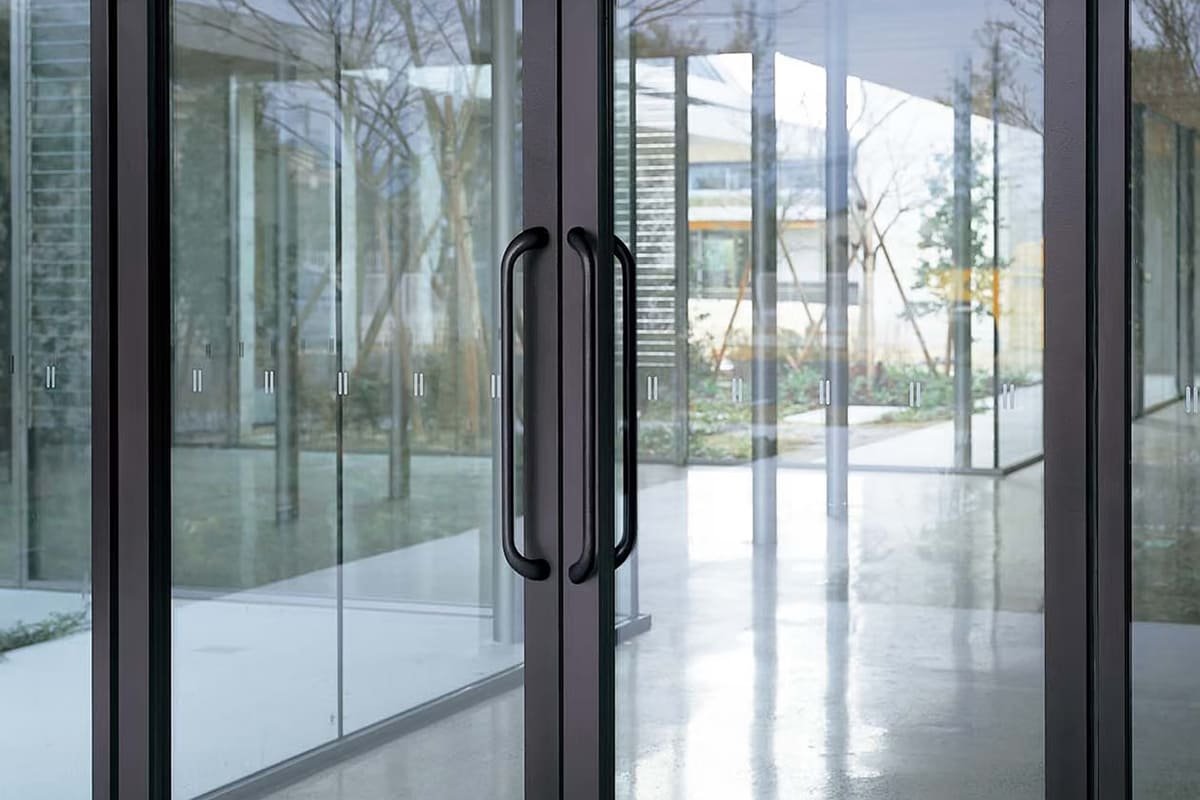
A U-shaped lever handle has a return end that curves back toward the door. I like this design for many commercial projects because it reduces the chance of clothing, bags, or sleeves catching on the lever end. It also gives users a clear and easy grip. This matters in hospitals, schools, offices, public toilets, hotel corridors, and shared service areas. The user may push, pull, carry something, or move fast. The handle should help the user, not fight the user.
| Lever Shape | Where I Often Consider It | What I Check |
|---|---|---|
| U-shaped lever | Public buildings and busy corridors | Return clearance, grip comfort, and lock match |
| Straight lever | Office and simple commercial doors | End safety and user comfort |
| Curved lever | Hotels and premium spaces | Appearance and hand feel |
| Custom lever | Brand projects and special doors | Tooling, test needs, and certificate effect |
I do not say U-shaped levers are always required. Some projects want a straight line style for design reasons. Some hotel brands want a special handle shape. That is normal. I still ask the same questions. Is the door high traffic? Is it a fire door? Is it an escape route? Does it use a mortise lock, tubular lock, panic device, or access-control lock? Does the lever return spring need to match heavy use? Does the rose or backplate need through-bolt fixing? These details matter more than style words. In production, I also check edge smoothness, welding polish, hand feel, and finish consistency. A public-building handle must feel safe and stable in the user’s hand.
What Material and Structure Give Me a Practical Cost Balance?
I often see two wrong choices. Some buyers buy too cheap for a heavy-use door. Some buyers over-spec a product without checking the real need.
I often choose 304 stainless steel hollow tube lever handles with about 1.0 mm wall thickness for many high-traffic commercial projects. This option can balance durability, corrosion resistance, appearance stability, and price when the project conditions are suitable.
I Balance Strength, Finish, and Budget
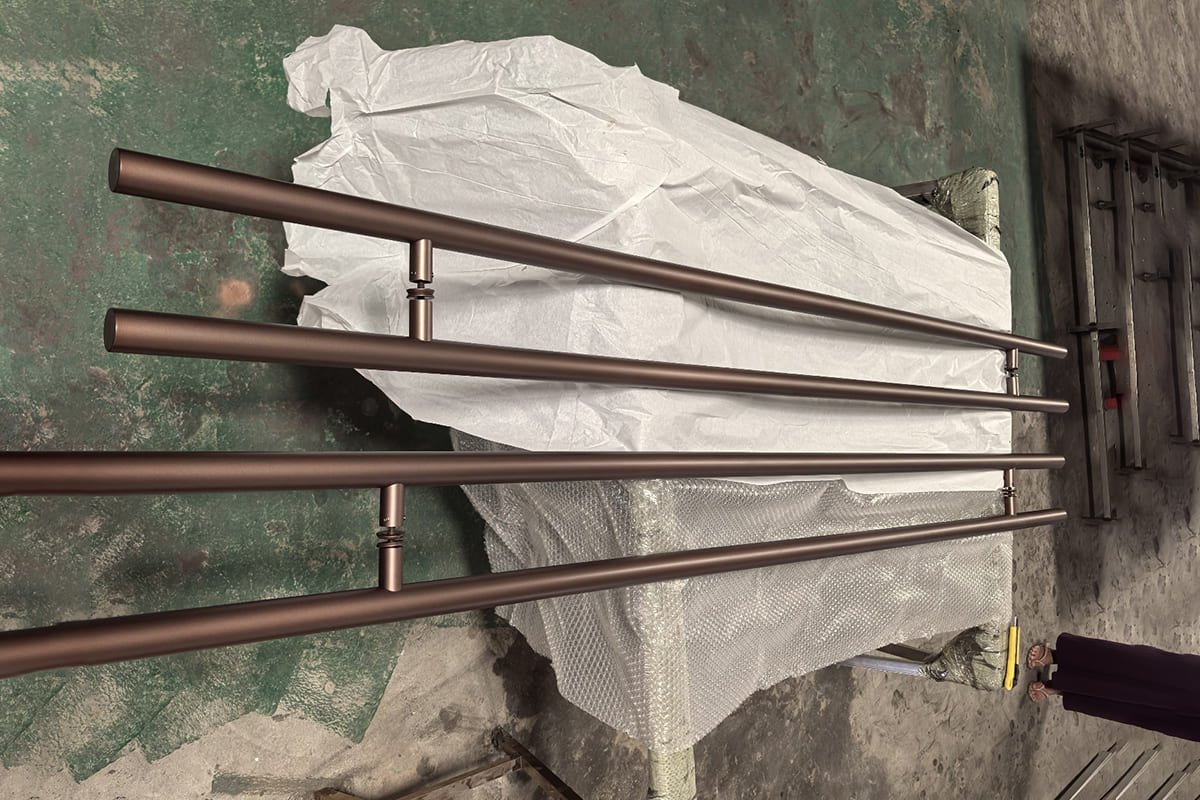
304 stainless steel is a common material for commercial door lever handles because it has good corrosion resistance and stable appearance for many indoor and semi-public uses. A hollow tube lever with around 1.0 mm material thickness is also a practical option for many bulk projects. It can control cost better than many solid designs, and it can still offer a stable hand feel when the structure, welding, fixing, and production process are well controlled. I present this as a practical choice, not as the only correct choice.
| Option | Main Advantage I See | Main Point I Still Check |
|---|---|---|
| 304 stainless steel hollow tube | Good cost and corrosion balance | Tube thickness, welding, and fixing strength |
| 304 stainless steel solid lever | Stronger hand feel in some designs | Cost, weight, and project budget |
| Zinc alloy handle | Flexible shape and finish choices | Coating quality and use environment |
| 316 stainless steel | Better corrosion resistance in harsh areas | Higher cost and real environment need |
I do not tell every customer to buy 304 stainless steel without context. If the project is near the sea, in a harsh chemical area, or in a very humid environment, I may discuss 316 stainless steel or a stronger surface requirement. If the project is a budget hotel or office building, I may discuss a 304 hollow tube option with controlled thickness and a stable satin finish. If the customer is a brand operator, I also discuss package protection, logo marking, finish code, and batch color control. In factory work, the material name alone does not guarantee a good handle. The tube wall, welding quality, polishing level, drilling accuracy, spindle fit, spring function, and inspection process all affect the final result.
How Do I Control Finish Consistency and Batch Quality for Bulk Orders?
I know one sample can look perfect. The real challenge starts when a buyer needs thousands of handles with the same surface, size, and hand feel.
I control bulk order quality by locking samples, confirming finish standards, checking key dimensions, inspecting assembly fit, and keeping batch records. For commercial projects, consistent finish and stable function are as important as the first sample.
I Treat the Approved Sample as the Production Base
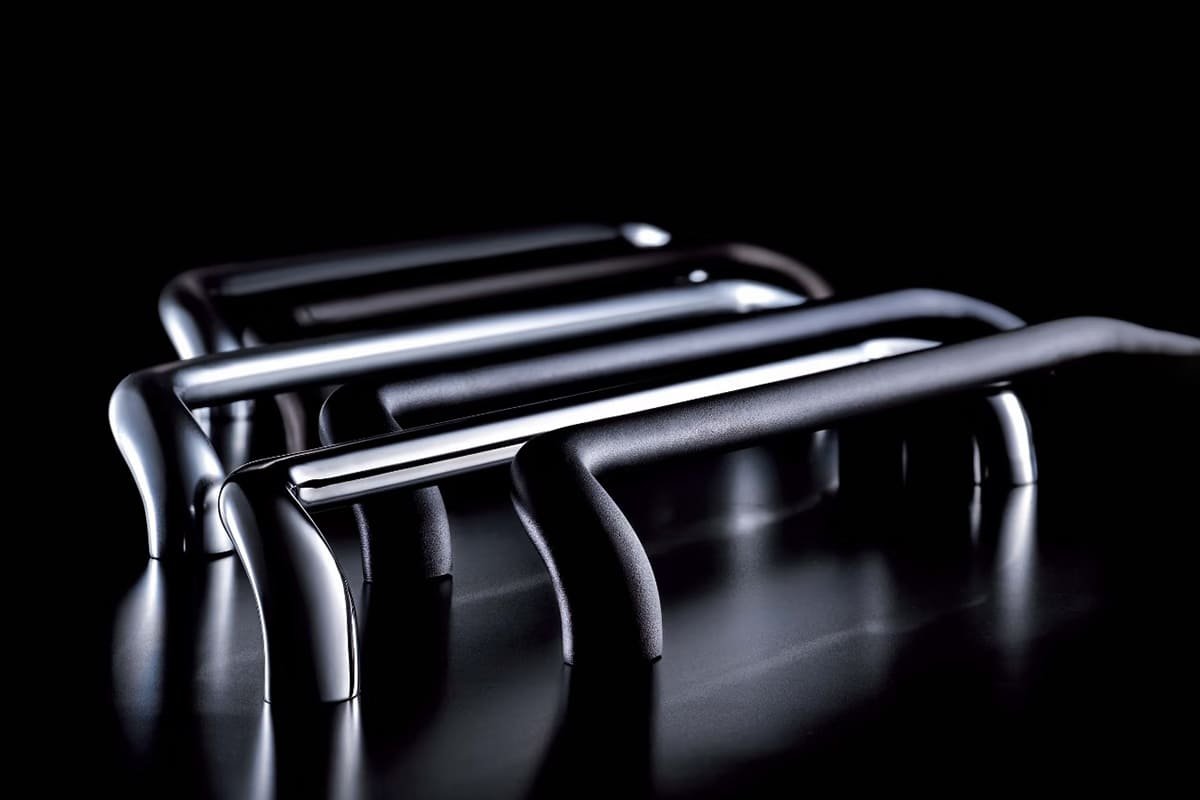
For high-traffic commercial door handles, I do not separate quality from procurement risk. A buyer may win a project based on one approved sample. If the bulk order arrives with color difference, loose rose fitting, rough edges, wrong spindle length, or unstable spring return, the project team will face site pressure. This is why I always want the approved sample, drawing, finish code, packing method, and accessory list to be clear before production. I also want the customer to confirm if the handle will match a specific mortise lock, cylinder, escutcheon, or door thickness.
| Quality Point | What I Check in Production | Why It Matters |
|---|---|---|
| Surface finish | Color, brushing direction, gloss, and scratches | The installed doors must look consistent |
| Lever structure | Tube wall, welding, polishing, and edge safety | The handle must feel stable and safe |
| Dimension | Hole position, spindle size, screw center, and rose size | The handle must fit the lock and door |
| Assembly | Spring return, fixing tightness, and movement | The user should feel smooth operation |
| Packing | Separation, label, and carton strength | The finish must survive transport |
I have learned that bulk commercial projects need boring discipline. The buyer may care most about price at the start, but the site team cares about fit and consistency at the end. If one carton has a different finish tone, the installer will notice. If one batch has a different spindle size, the door factory will stop assembly. If the handle screws are weak, the end user will complain later. I prefer to solve these risks before shipment. This is where factory-side control helps. I can connect the customer’s project requirement with material purchase, surface treatment, assembly, inspection, and packing. That makes the handle easier to sell, install, and maintain.
Conclusion
I choose commercial door handles by matching traffic, standards, fire needs, lock systems, material, finish, and batch control before I discuss price.