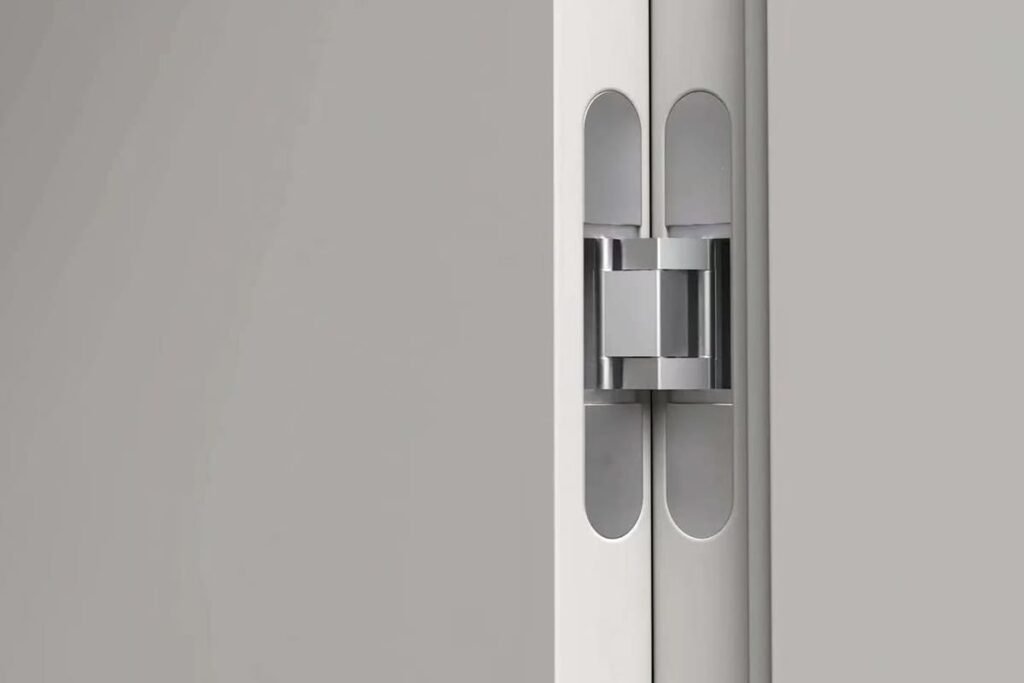
Stainless Steel Hinges: Types, Uses and Benefits
A wrong hinge can make a good door fail early. I have seen buyers lose time, money, and trust because the hinge was chosen too simply.
Stainless steel hinges are useful for demanding doors, but I should choose them by door type, load, environment, fire or acoustic needs, opening method, and maintenance risk. The right choice depends on grade, thickness, structure, finish, test evidence, and the real use condition.
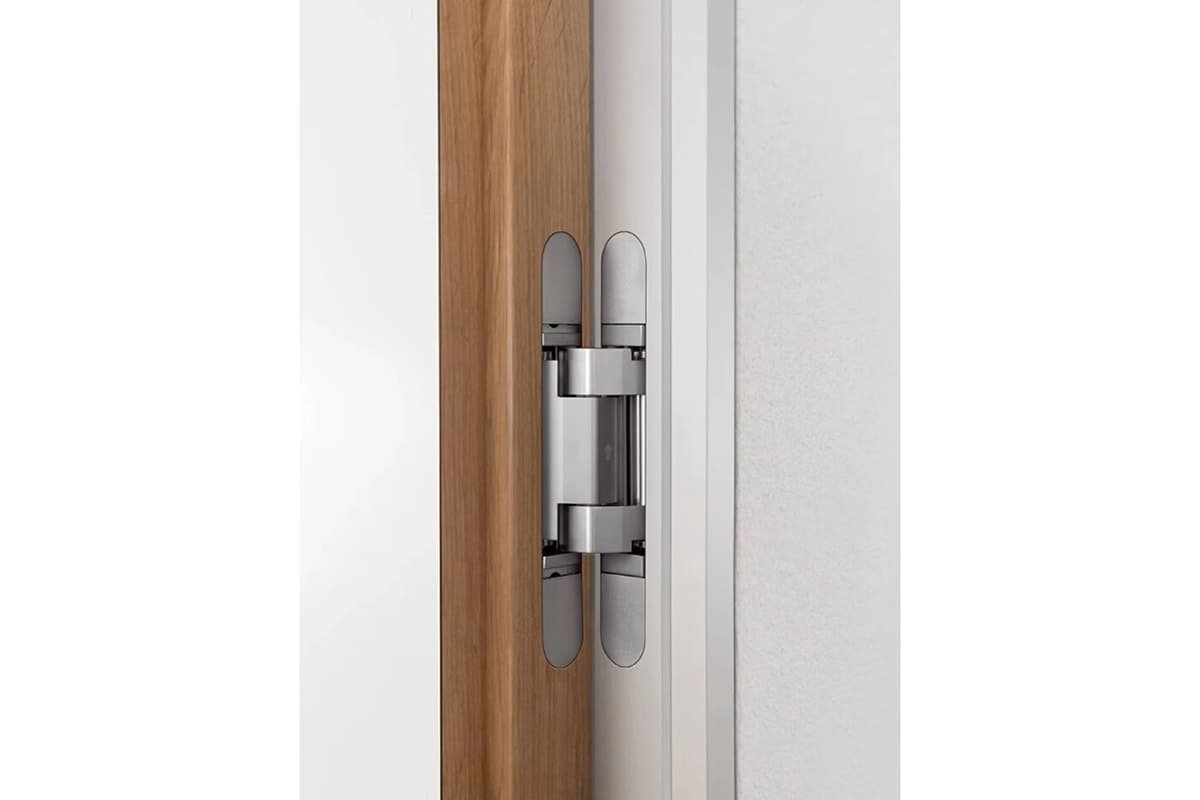
I work with door factories, hardware brands, and project buyers who need hinges for real buildings. I do not see stainless steel hinges as one simple product. I see them as a group of parts that must match the door, the site, and the buyer’s risk level. When I discuss hinge selection with a customer, I always start with the door. I ask about weight, thickness, traffic, fire rating, acoustic sealing, moisture, salt, chemical cleaning, and expected service life. This simple process often prevents a costly mistake.
Why should I choose stainless steel hinges by application, not only by name?
A hinge name can sound correct, but the door can still fail. I have seen the same hinge type work well in one project and fail in another.
I should choose stainless steel hinges by application because each door has different load, movement, safety, and environment needs1. A fire door, glass door, acoustic door, factory door, and removable service door all need different hinge structures, even when the material is stainless steel.
How I read the door before I read the hinge name
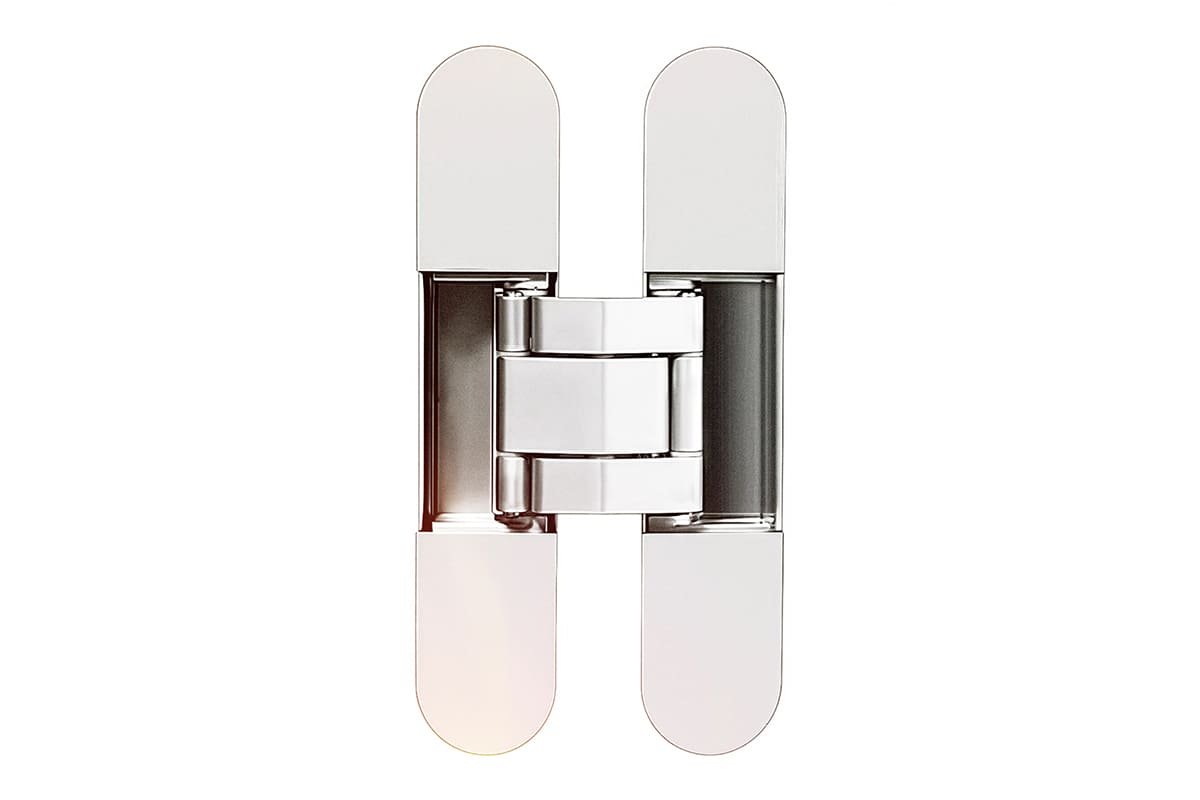
I always start with the job of the door. A normal wooden internal door often uses stainless steel butt hinges. A fire-rated steel door may also use butt hinges, but I must check the tested hinge model, screw pattern, thickness, and fire report2. An acoustic or airtight door may need a concealed hinge, because the seal line and door appearance matter. A food processing plant may need 304 or 316 stainless steel because water, cleaning liquid, and humidity can attack weak material3. A coastal hotel may need 316 because salt can make low-grade stainless steel rust faster4.
| Door or site condition | I usually check first | Common hinge direction |
|---|---|---|
| Common wooden or steel door | I check weight, thickness, and traffic | Stainless steel butt hinge |
| Fire-rated door | I check test report and door system | Tested fire-rated butt hinge |
| Acoustic or airtight door | I check seal design and clearance | Stainless steel concealed hinge |
| Food factory or wet area | I check cleaning process and humidity | 304 or 316 stainless steel hinge |
| Coastal or salt area | I check salt exposure | 316 stainless steel hinge |
| Heavy commercial door | I check load and opening frequency | Heavy-duty butt, pivot, or continuous hinge |
I do not choose stainless steel only because it is “durable.” That word is too broad. A hinge can use stainless steel and still be too thin. A hinge can look good and still use the wrong pin or weak bearing. A hinge can also be strong but not tested for a fire door. I treat the hinge as a working part, not as a label. This is the main reason I ask buyers to send door data before they confirm a model.
Which stainless steel hinge type fits each door use?
A hinge type should solve a door problem. If I only compare product names, I may miss load support, closing control, access need, or appearance demand.
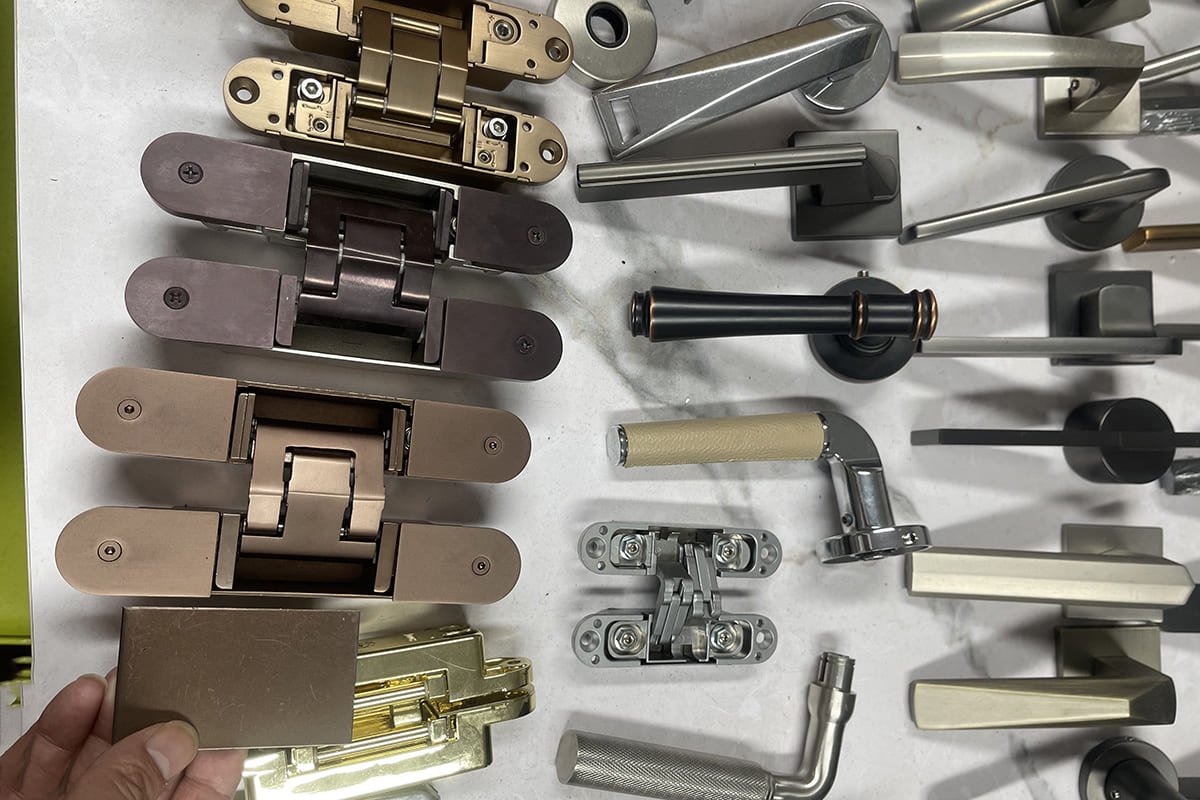
Common stainless steel hinge types include butt hinges, concealed hinges, spring hinges, glass hinges, continuous hinges, pivot hinges, lift-off pin hinges, single flag hinges, stone door hinges, and stainless steel concealed hinges5. Each type fits a different door movement and project need.
How I match hinge type with real door work
I see butt hinges as the most common choice for wooden doors, steel doors, and many fire-rated doors. They are mature, easy to source, and price competitive. I use concealed hinges when the customer wants a cleaner appearance or when the door needs better sealing support, such as acoustic or airtight doors. I use spring hinges when the door must self-close6, but I still check whether the closing force fits the door weight. I use glass hinges for glass doors because the structure must hold glass without normal screw fixing into wood or steel. I use continuous, or piano, hinges when the full door height needs support7. I use pivot hinges when the door load and rotation point are special. I use lift-off pin hinges when a service door must be removed often. I use single flag hinges, stone door hinges, and stainless steel concealed hinges when the door design is more specific.
| Hinge type | I use it when | Main buyer concern |
|---|---|---|
| Butt hinge | I need a common, strong, mature door hinge | Thickness, grade, bearing, certification |
| Concealed hinge | I need hidden hardware or acoustic sealing | Load, adjustment, clearance |
| Spring hinge | I need self-closing action | Door weight and closing force |
| Glass hinge | I need hardware for glass doors | Glass thickness and clamp strength |
| Continuous hinge | I need full-length load support | Straightness and screw spacing |
| Pivot hinge | I need special rotation or heavy load path | Load rating and floor or frame support |
| Lift-off pin hinge | I need removable access doors | Pin design and security risk |
| Single flag hinge | I need a special swing or frame design | Mounting direction and clearance |
| Stone door hinge | I need hardware for heavy stone or special panels | Load, fixing method, and support point |
I also remind buyers that the same hinge type can have different quality levels. A stainless steel butt hinge can be light-duty or heavy-duty. A concealed hinge can be stable or loose after cycles. A spring hinge can close smoothly or slam the door. I look at the structure, material thickness, pin, bearing, hole position, and finish consistency. These details matter more than the category name.
How should I compare 201, 304, and 316 stainless steel?
A stainless steel label can hide risk. I have seen buyers ask for “stainless steel” and later discover that the grade did not match the building environment.
I should compare stainless steel grades by corrosion risk and cost target. 304 is a common practical choice. 316 gives stronger corrosion resistance for salt, high humidity, and alkaline areas. 201 can reduce cost, but it is more prone to rust and should not be treated as equal8.
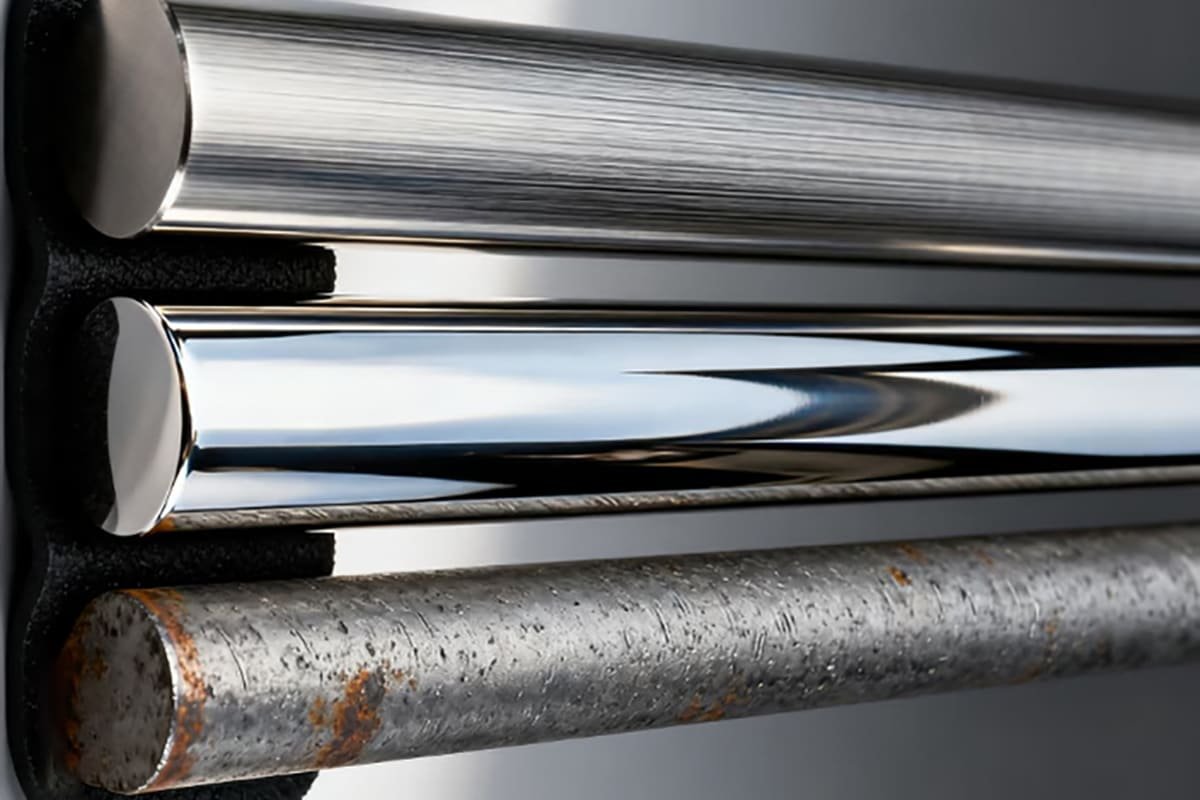
How I explain grade choice to buyers
I usually present 304 and 316 as the main choices for serious projects. 304 stainless steel is widely used because it gives a good balance between corrosion resistance, strength, appearance, and price9. It suits many commercial buildings, indoor doors, and general humid areas. 316 stainless steel is a better choice when the site has stronger corrosion pressure10. Coastal buildings, high-humidity places, salt exposure, some cleaning chemicals, and alkaline conditions can all make 316 more practical. I do not say 316 is always needed. I say 316 is safer when the cost of rust or replacement is high.
| Stainless steel grade | I see this as | Better use case | Main warning |
|---|---|---|---|
| 201 | I see it as a cost-driven choice | Low-risk and dry environments | It is more prone to rust |
| 304 | I see it as the common project choice | Most indoor and normal commercial doors | It still needs the right finish and care |
| 316 | I see it as the stronger corrosion choice | Salt, humidity, alkaline, coastal sites | It costs more than 304 |
I also tell buyers that stainless steel can rust under some conditions11. This surprises some people. Stainless steel resists corrosion, but it is not magic. Surface contamination, salt, poor cleaning, wrong grade, deep scratches, and chemical exposure can all create rust marks. A buyer should not ask only for “stainless steel hinges.” A buyer should ask for the material grade, thickness, surface finish, and supporting test or inspection evidence. When I supply bulk hinge orders, I pay close attention to material consistency because mixed grade risk can damage the whole order. A low price is not always bad, but a vague material claim is always a warning sign.
What benefits should I expect from a good stainless steel hinge?
A buyer may pay more for stainless steel and still not receive real value. The benefit must show up in load, corrosion resistance, maintenance, and service life.
A good stainless steel hinge can offer high load capacity, corrosion resistance, low maintenance, stable appearance, good heat resistance, and suitability for some fire-rated applications when the specific product has valid test evidence. These benefits depend on grade, structure, and production control.
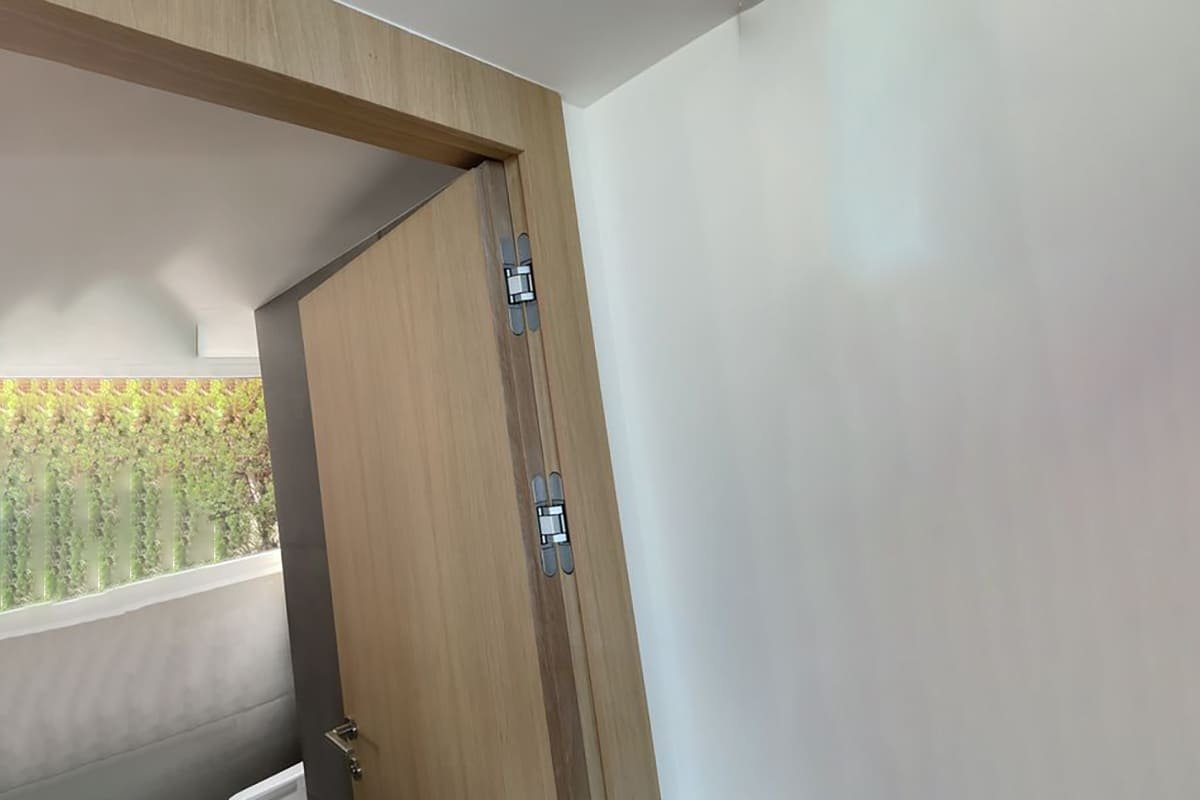
How I define real value in hinge production
I do not measure hinge value only by unit price. I measure it by how long the hinge supports the door with stable movement and limited maintenance. Stainless steel can be a strong choice because it often does not need extra electroplating. This helps reduce plating defects and finish peeling risk. A well-made stainless steel hinge can keep a clean surface for a long time. It can also perform better in humid, salty, or alkaline environments when the right grade is used. A heavy-duty stainless steel hinge can support high load when the leaf thickness, pin, bearing, and screw holes are designed well.
| Benefit | What I check in the factory | What the buyer gains |
|---|---|---|
| High load capacity | I check thickness, pin, bearing, and structure | The door works more smoothly for longer |
| Corrosion resistance | I check grade, finish, and surface cleaning | The hinge has lower rust risk |
| Low maintenance | I check movement and assembly tolerance | The project has fewer service calls |
| Stable appearance | I check brushing, polishing, and finish consistency | The batch looks unified |
| Heat resistance | I check material and tested structure | The hinge can suit some demanding doors |
| Fire-rated use | I check product-specific fire test reports | The buyer avoids false fire claims |
I also need to be careful with fire-related language. I never say every stainless steel hinge is fire-rated. Fire performance must come from a tested product and a valid report12. For example, one SDH stainless steel butt hinge model has test documentation showing it passed a 260-minute fire test under the applicable test condition. I would only use that claim for the tested model, matching specification, and supported standard. I would not apply it to all stainless steel hinges. This is important for door factories and project buyers because a false fire claim can create safety and compliance problems.
How should I judge stainless steel butt hinges in a mature market?
A very low price can be risky, but a low price does not always mean poor quality. Stainless steel butt hinges are already a mature and competitive product.
I should judge stainless steel butt hinges by material grade, leaf thickness, pin and bearing structure, hole accuracy, finish consistency, cycle performance, packaging, and test evidence. Price matters, but it should not be the only proof of quality.
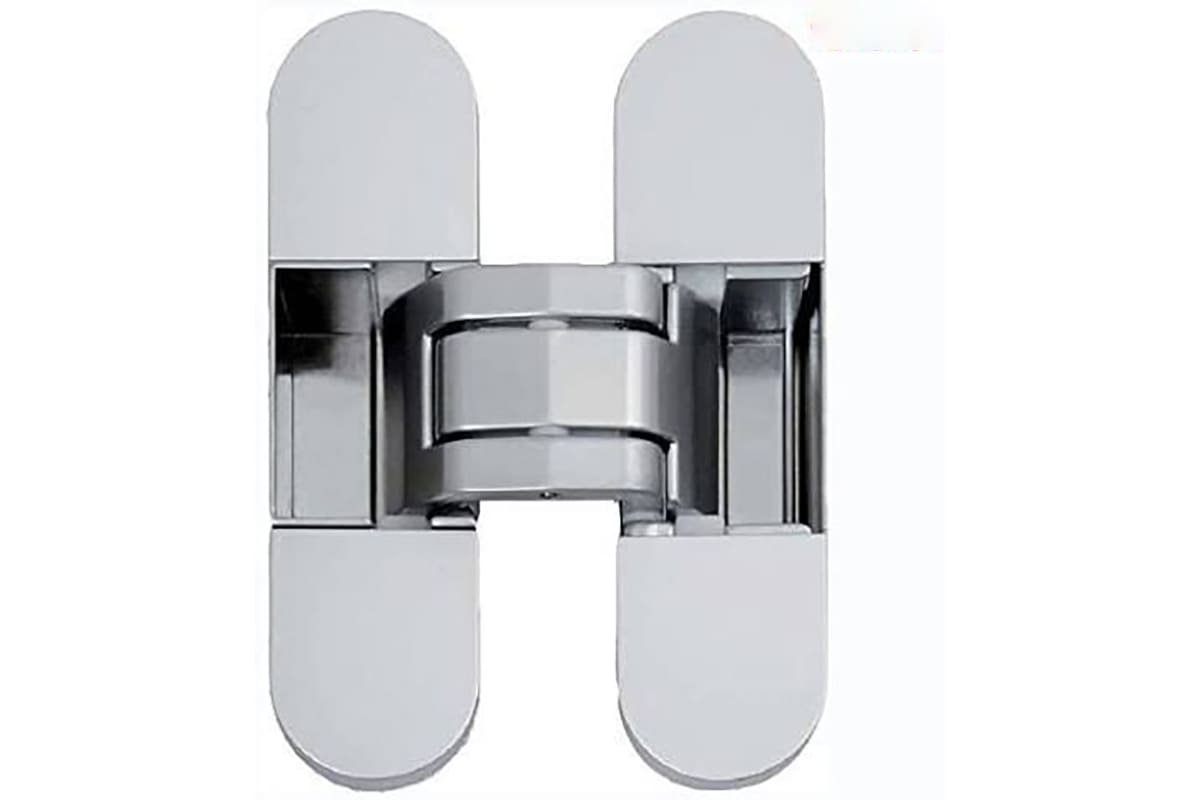
How I separate normal competition from hidden risk
I see many buyers compare stainless steel butt hinges only by size and price. This is not enough. A 4-inch hinge can have different thickness, different stainless steel grade, different pin strength, different washer or bearing design, and different finish control. Two hinges can look similar in a catalog, but one may work better after many opening cycles. A mature market also means factories can control cost through scale, tooling, stable production, and material planning. So I do not say a competitive price is automatically bad. I only say the buyer must know what the price includes.
| Check point | What I ask for | Why I care |
|---|---|---|
| Material grade | I ask for 201, 304, or 316 confirmation | The environment must match the grade |
| Thickness | I ask for actual measured thickness | Load capacity depends on real material |
| Pin structure | I check pin size and fitting | Door movement depends on the pin |
| Bearing or washer | I check support design | Heavy or frequent doors need smoother action |
| Finish | I check batch color and surface marks | Door factories need consistent appearance |
| Hole accuracy | I check punching and countersink | Fast installation needs stable holes |
| Test report | I check model and standard | Fire or durability claims need proof |
| Packaging | I check separation and protection | Surface scratches can cause disputes |
I also look at production consistency. A buyer may approve one good sample and then receive a weaker bulk order from an unstable supplier. This is why I value in-house production control. At SDH Hardware, I connect hinge choice with material control, stamping or machining control, surface finishing, and final inspection. I still tell customers to define the required level clearly. If a buyer needs a fire door hinge, I need the fire standard and tested model. If a buyer needs a coastal project hinge, I need the corrosion environment. If a buyer needs a cheap internal door hinge, I can suggest a different cost plan.
How should I choose hinges for fire-rated, acoustic, and heavy doors?
A special door places special stress on the hinge. If I choose a normal hinge for a special door, the whole door system can lose performance.
For fire-rated, acoustic, and heavy doors, I should choose hinges based on verified door system needs. I must check fire reports, load capacity, door weight, door thickness, seal clearance, opening frequency, and whether the hinge model is suitable for the tested or designed application.
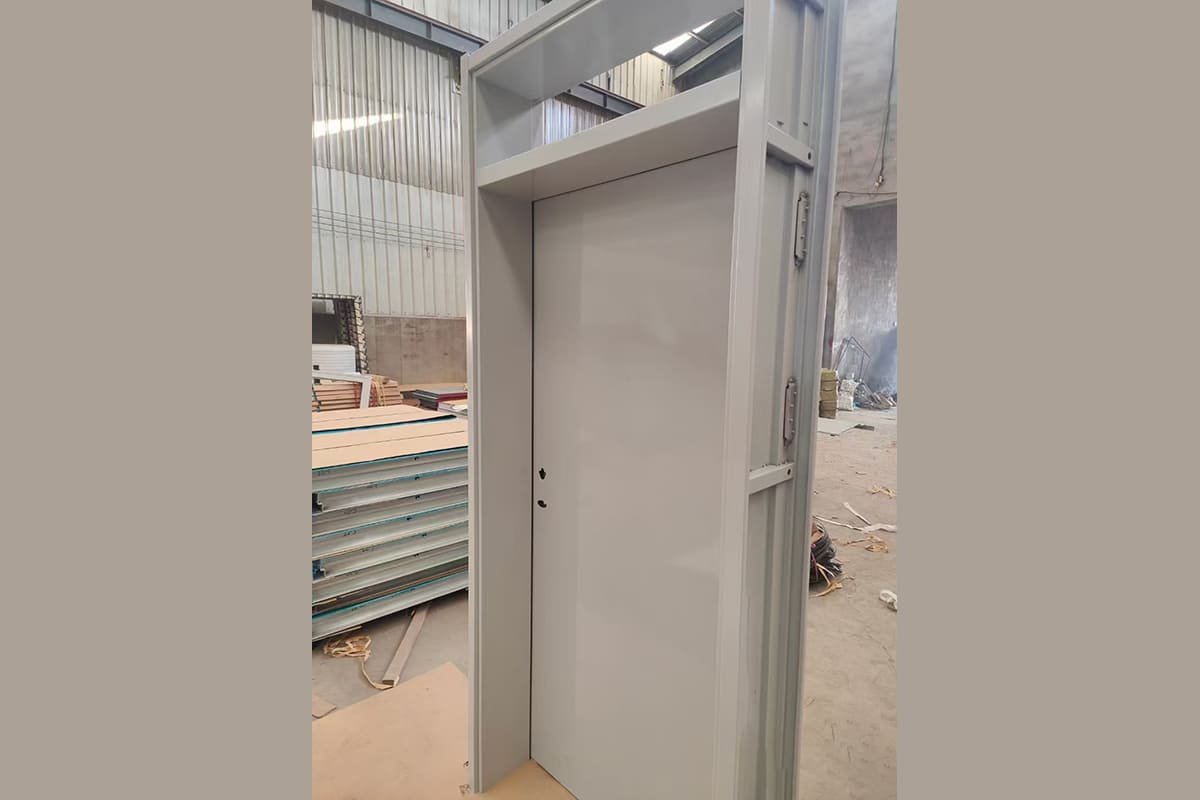
How I connect the hinge to the door system
I treat fire-rated doors as a system, not as a single hinge purchase. A hinge can be stainless steel and still not be approved for a fire door. I must check the tested model, size, quantity, screw fixing, door material, and standard. If the buyer needs project compliance, I ask for the target fire rating and required documents before I recommend a hinge. Acoustic and airtight doors need another kind of thinking. The hinge must allow the door to close into the seal in a stable way. A concealed hinge can help with clean appearance and sealing design, but it must match the door weight and adjustment need. Heavy doors need enough hinge support, and sometimes the correct choice is not just a thicker butt hinge. A pivot hinge or continuous hinge may handle the load better in some designs.
| Door type | My main concern | Common hinge direction |
|---|---|---|
| Fire-rated door | I need valid fire test evidence | Tested stainless steel butt hinge |
| Acoustic door | I need seal alignment and stable closing | Concealed hinge or suitable butt hinge |
| Airtight door | I need clearance and seal pressure control | Concealed hinge with proper adjustment |
| Heavy door | I need load path and long-term movement | Heavy-duty butt, pivot, or continuous hinge |
| High-traffic door | I need cycle performance | Bearing hinge or stronger structure |
I often ask buyers to share the door weight per leaf, door size, door thickness, frame material, opening frequency, and certification need. This basic data helps me avoid guesswork. A hinge that works on a light hotel room door may not work on a heavy steel fire door. A concealed hinge that looks beautiful may not suit a very heavy panel unless its load rating and installation condition are correct. I prefer to solve these questions before the order, not after a site complaint.
What buyer checklist should I use before I place a bulk order?
Bulk hinge orders can look simple, but one missing detail can create finish problems, installation delays, or certification risk.
Before I place a bulk stainless steel hinge order, I should confirm door type, door weight, door thickness, opening frequency, environment, stainless steel grade, hinge structure, surface finish, fire or acoustic requirement, test reports, packaging, and delivery capacity.
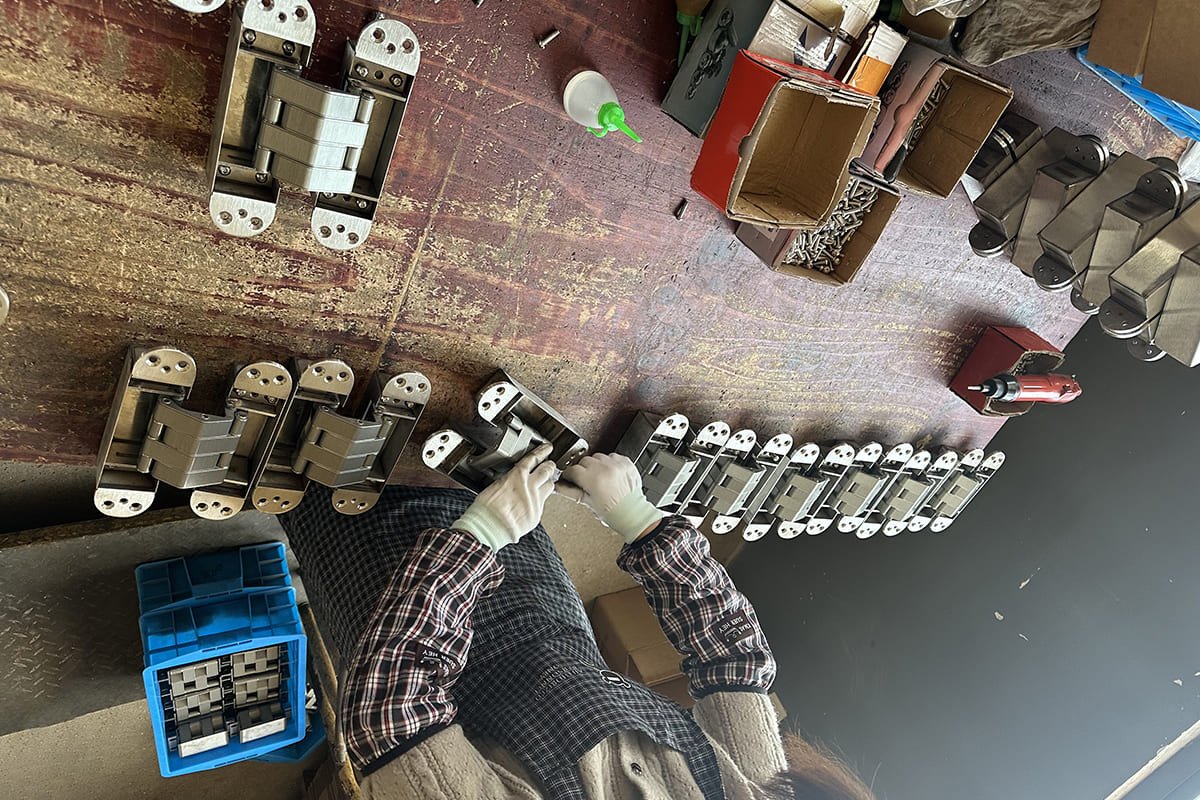
How I reduce procurement risk before production
I use a checklist because hinge problems often come from unclear requirements. The buyer may only send a photo or size. That is not enough for a project order. I need to know if the hinge is for a wooden door, steel door, fire door, glass door, acoustic door, factory door, or service panel. I need the weight because load changes the hinge thickness and structure. I need the environment because 304 and 316 do not serve the same risk level. I need the finish requirement because a door factory may assemble many hinges into one batch of doors, and a small color difference can be visible. I need test report needs because certificates must match product models and standards.
| Checklist item | My question | My reason |
|---|---|---|
| Door type | I ask what door the hinge supports | The application decides the hinge type |
| Door weight | I ask for weight per leaf | Load decides thickness and structure |
| Door thickness | I ask for exact thickness | Screw and leaf size must match |
| Opening frequency | I ask if the door is high traffic | Cycle performance matters |
| Environment | I ask about humidity, salt, and chemicals | Grade choice depends on corrosion risk |
| Stainless steel grade | I ask for 201, 304, or 316 | Material must match the project |
| Fire requirement | I ask for target standard and rating | Fire claims need model-based reports |
| Acoustic requirement | I ask about seal and clearance | Hinge movement affects sealing |
| Finish | I ask for satin, polished, or other finish | Batch appearance must be stable |
| Packaging | I ask about export and storage needs | Surface protection reduces claims |
| Delivery plan | I ask for order quantity and schedule | Factory planning protects lead time |
I also advise buyers to test samples before large orders when the project has special conditions. A sample check should include size, finish, hole position, smooth movement, material confirmation, and packing method. For door factories, I also suggest trial assembly. A hinge may be good by itself, but the door and frame can still create fit issues. When I work on ODM or customized stainless steel hinge orders, I confirm drawings, tolerance, surface finish, accessory configuration, and inspection standard before mass production. This step saves time for both sides.
Conclusion
I choose stainless steel hinges by door need, material grade, structure, environment, and proof. This method helps me reduce failure risk and procurement waste.
"[PDF] DOOR HARDWARE (SCHEDULED BY DESCRIBING PRODUCTS)", https://fpm.usc.edu/wp-content/uploads/2021/11/087102-USC-HSC-door-hardware-Guide-Specification_1.pdf. Architectural-hardware guidance classifies hinges by door application, duty level, dimensions, and performance requirements, supporting the view that hinge selection should be tied to the door’s load, use, and environment rather than to the product name alone. Evidence role: expert_consensus; source type: institution. Supports: The source should support that hinge choice depends on door mass, use frequency, installation conditions, and performance requirements.. Scope note: Such guidance supports the general selection principle but does not validate any specific hinge model. ↩
"Fire Doors and NFPA 80 FAQs", https://www.nfpa.org/news-blogs-and-articles/blogs/2025/04/11/fire-doors-faqs. Fire-door regulations and inspection guidance treat hinges and their fixings as components of a rated door assembly, so the listed or tested hardware configuration must be verified against the applicable fire rating. Evidence role: expert_consensus; source type: government. Supports: The source should support that fire-door hardware must match the tested or listed fire-door assembly and that substitutions can affect compliance.. Scope note: This supports the compliance logic for fire doors but does not prove that any particular hinge has passed a fire test. ↩
"Study of the Corrosion Behavior of Stainless Steel in Food Industry", https://pmc.ncbi.nlm.nih.gov/articles/PMC11012613/. Food-equipment hygiene and materials guidance commonly identifies 304 and 316 austenitic stainless steels as suitable materials where cleanability and resistance to moisture and cleaning agents are required. Evidence role: mechanism; source type: institution. Supports: The source should support that austenitic stainless steels such as 304 and 316 are commonly used in food-processing equipment because of corrosion resistance and cleanability under wet or chemically cleaned conditions.. Scope note: The support is contextual for food-processing material selection and does not test hinge performance specifically. ↩
"[PDF] 1 Corrosion of 316L Stainless Steel Under the Natural Circulation of ...", https://www.osti.gov/pages/servlets/purl/3002381. Materials references attribute the improved chloride-corrosion resistance of type 316 stainless steel to its molybdenum-bearing composition, making it more suitable than lower-alloy grades in salt-exposed environments. Evidence role: mechanism; source type: research. Supports: The source should support that 316 stainless steel has improved resistance to chloride-induced corrosion compared with 304 or lower-alloy stainless steels.. Scope note: This supports material selection for chloride exposure but does not determine the correct hinge design or load rating. ↩
"Hinge - Wikipedia", https://en.wikipedia.org/wiki/Hinge. General hinge references distinguish common hinge forms such as butt, continuous, pivot, spring, concealed, and lift-off hinges, supporting the article’s use of these as functional hardware categories. Evidence role: definition; source type: encyclopedia. Supports: The source should define common hinge categories such as butt, continuous, pivot, spring, and concealed hinges.. Scope note: An encyclopedia source can verify terminology but may not cover every specialized trade term or stainless-steel variant. ↩
"How it Works and How2 Install It-Spring Loaded Hinge - YouTube",
Architectural-hardware definitions describe spring hinges as hinges incorporating a spring mechanism to move a door toward the closed position, supporting their use for self-closing applications. Evidence role: definition; source type: institution. Supports: The source should define spring hinges as hinges containing a spring mechanism that returns or closes a door.. Scope note: This verifies the mechanism but not whether a given spring hinge supplies sufficient closing force for a specific door. ↩"Continuous Piano Hinges - HingeOutlet", https://www.hingeoutlet.com/collections/continuous-piano-hinges?srsltid=AfmBOoqaqnbhranCBixQfuWAJcWt8W8rsYJR5CozAYjNLO7FkdxFEtYA. Hardware references define continuous or piano hinges as long hinges extending along the length of a door or panel, a configuration that distributes support over more fixing points than discrete butt hinges. Evidence role: mechanism; source type: institution. Supports: The source should support that continuous hinges run along most or all of a door’s height and can distribute load over that length.. Scope note: This explains the structural concept but does not establish the load capacity of a particular continuous hinge. ↩
"18-8 Stainless Steel vs 201: Differences, Corrosion Resistance ...", https://www.ryerson.com/metal-resources/metal-market-intelligence/18-8-stainless-steel-vs-201. Materials references describe type 201 as a lower-nickel austenitic stainless steel developed as a cost-saving alternative, with corrosion resistance generally below that of type 304 in comparable conditions. Evidence role: mechanism; source type: research. Supports: The source should support that 201 stainless steel substitutes manganese and nitrogen for part of the nickel content and generally has lower corrosion resistance than 304 in many environments.. Scope note: The comparison is general; actual corrosion depends on environment, finish, fabrication quality, and maintenance. ↩
"Corrosion Behavior of Sensitized AISI 304 Stainless Steel in Acid ...", https://pmc.ncbi.nlm.nih.gov/articles/PMC9740934/. Materials-education sources describe type 304 as a widely used austenitic stainless steel with good general corrosion resistance and mechanical properties, consistent with its use as a general-purpose project material. Evidence role: general_support; source type: education. Supports: The source should support that 304 is one of the most widely used stainless steels and is valued for corrosion resistance, formability or strength, and general-purpose suitability.. Scope note: The source supports the grade’s general properties, not its suitability for every hinge installation. ↩
"[PDF] Stainless Steel - Office of Research Facilities", https://orf.od.nih.gov/TechnicalResources/Documents/Technical%20Bulletins/16TB/Stainless%20Steel%20October%202016%20Technical%20Bulletin_508.pdf. Corrosion references explain that the molybdenum content of type 316 stainless steel improves resistance to localized corrosion, especially in chloride-containing environments, compared with type 304. Evidence role: mechanism; source type: research. Supports: The source should support that molybdenum in 316 improves resistance to pitting and crevice corrosion compared with 304, particularly in chloride environments.. Scope note: The material comparison does not by itself account for hinge geometry, surface finish, installation, or maintenance. ↩
"Revealing the Corrosion Resistance of 316 L Stainless Steel by an ...", https://pmc.ncbi.nlm.nih.gov/articles/PMC9920300/. Corrosion-education sources explain that stainless steel resists corrosion through a passive chromium oxide film, but staining or rusting can occur when the film is damaged or attacked by contaminants such as chlorides. Evidence role: mechanism; source type: education. Supports: The source should explain that stainless steel relies on a passive chromium oxide film and can corrode when that film is damaged or exposed to aggressive conditions.. Scope note: This explains the corrosion mechanism broadly and does not diagnose any specific rusting incident. ↩
"A Specifier's Guide to Fire Door Hardware - dormakaba", https://go.dormakaba.com/en/articles/a-specifiers-guide-to-fire-door-hardware. Fire-door testing and certification guidance states that fire-resistance performance is established through standardized tests or listings for specified products and assemblies, so hinge fire claims should correspond to the tested model and documented configuration. Evidence role: expert_consensus; source type: institution. Supports: The source should support that fire-resistance ratings are established through standardized testing of assemblies or listed components, and that claims must match the tested configuration.. Scope note: This supports the evidentiary requirement for fire claims but does not verify the article’s example of a 260-minute test. ↩