What Is a Concealed Hinge for a Wooden Door?
A clean door can still fail if the hinge is wrong. I see this problem when beauty hides poor structure.
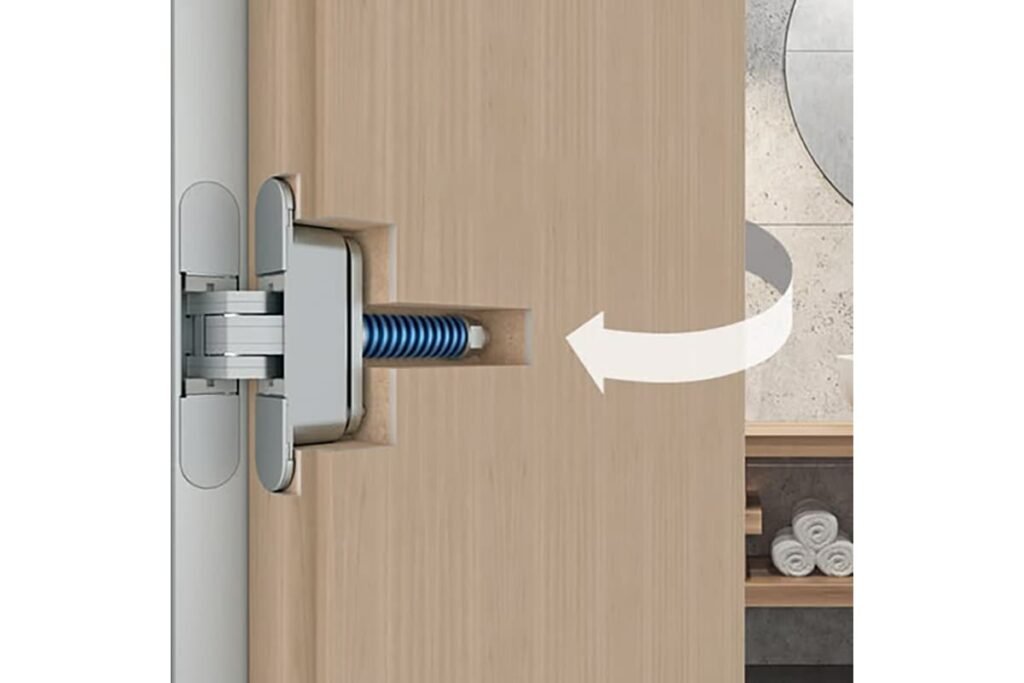
A concealed hinge for a wooden door is a mortised hinge system recessed into both the door leaf and frame.1 When the door closes, the hinge is not visible. Its suitability depends on door structure, hinge body size, load capacity, adjustment, and certified use conditions.
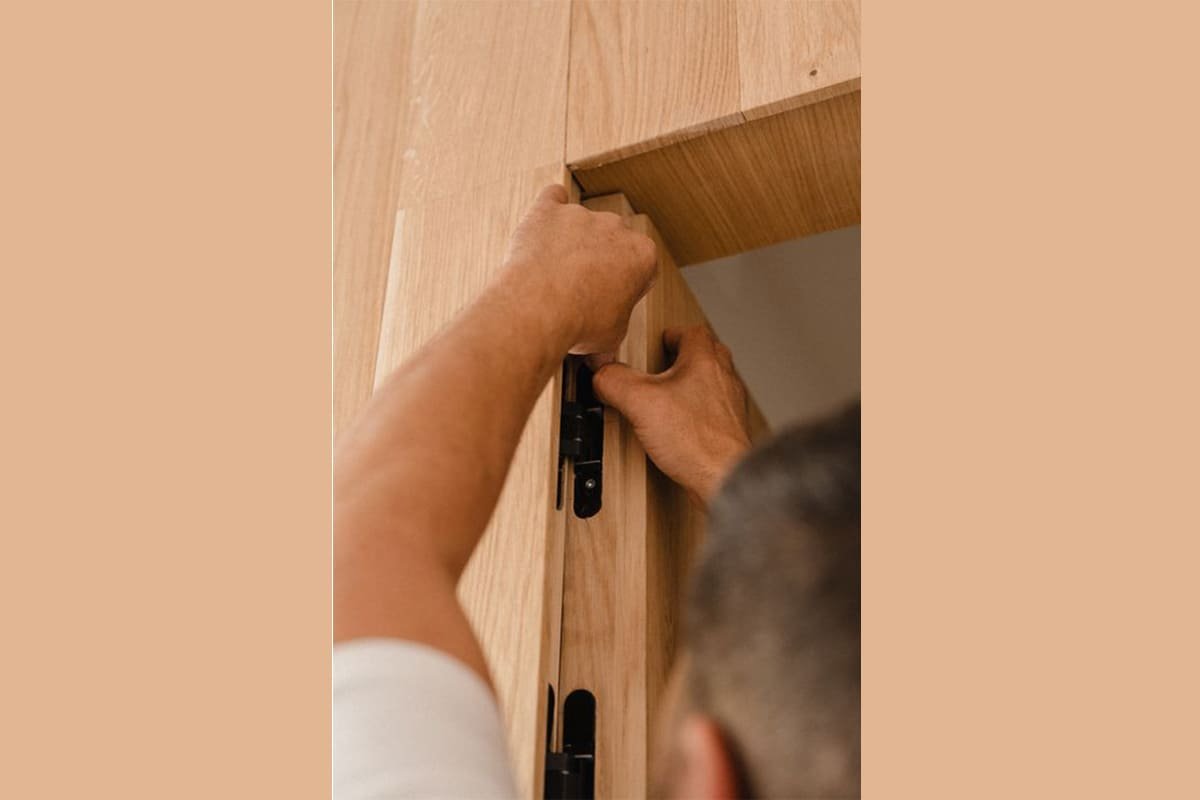
When I discuss concealed hinges with wooden door factory customers, I do not start with appearance only. I first check whether the door leaf and frame can hold the hinge body. Then I check door weight, opening angle, adjustment need, finish demand, and certificate requirement. A concealed hinge can give a very clean look, but it also asks for better door design and more accurate mortising.2
How Does a Concealed Hinge Work on a Wooden Door?
A hidden hinge looks simple after installation. But I often see buyers miss the real structure behind the clean surface.
A concealed hinge works by sitting inside mortised pockets in the door leaf and frame. The hinge arms and body connect both sides, allow door rotation, and stay hidden when the door is closed.
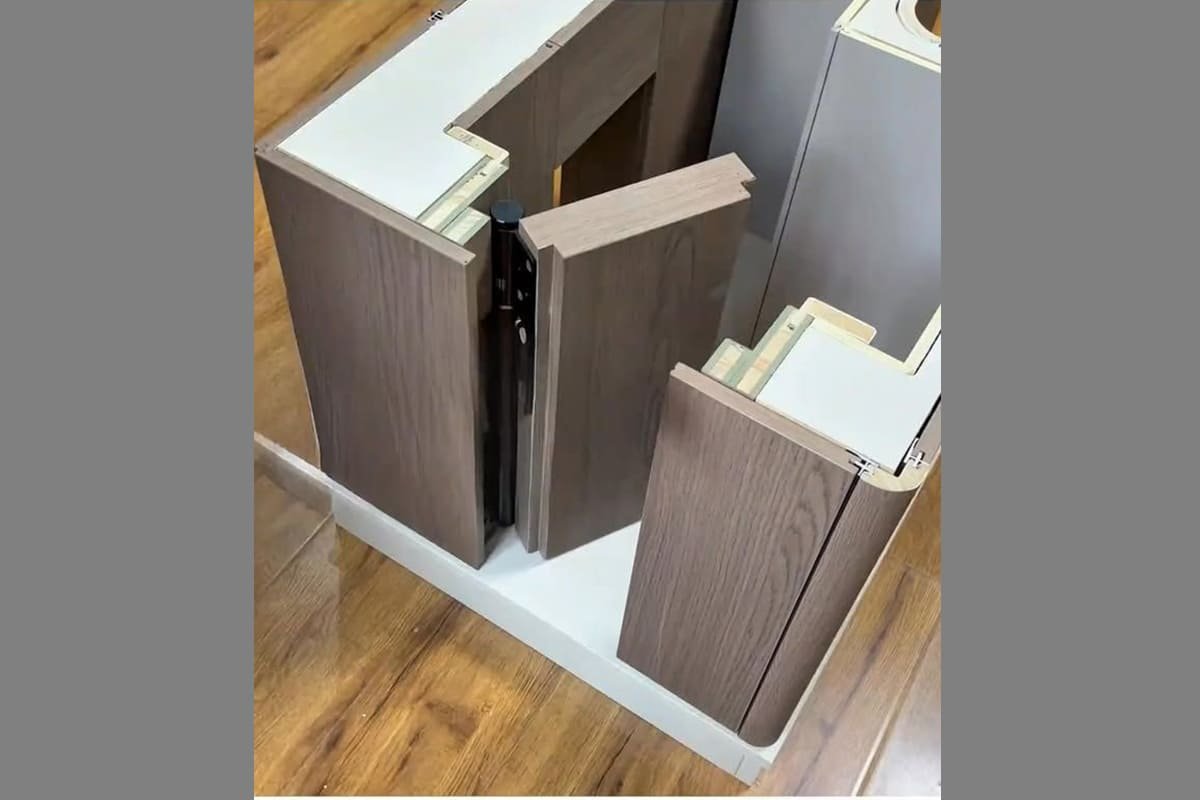
I describe a concealed hinge as a structural hinge first, and a visual hinge second. A butt hinge is usually mounted on the door edge and frame surface or partly recessed. Its knuckle is visible when the door is closed. A concealed hinge is different. It needs two accurate pockets. One pocket is in the wooden door leaf. The other pocket is in the wooden frame. The hinge body sits inside these pockets.
I usually explain the basic difference to door factory customers with this table:
| Item I Check | Concealed Hinge | Visible Butt Hinge |
|---|---|---|
| Closed-door look | I see no exposed hinge part | I see the hinge knuckle |
| Installation method | I need deeper mortising | I need simpler edge fixing |
| Door design demand | I need enough width and depth | I need less internal space |
| Adjustment after fitting | I can adjust many quality models | I may have limited adjustment |
| Visual style | I get a clean and modern line | I get a traditional hardware look |
I do not tell every customer to use concealed hinges. I first ask about the door structure. A concealed hinge gives value only when the wooden door and frame can support it. If the frame is too narrow, the hinge body may damage the wood.3 If the mortise is not accurate, the door may bind or sag. So I treat the hinge as part of the door system, not as a separate small accessory.
Can Every Wooden Door Use a Concealed Hinge?
A concealed hinge can look perfect in a catalog. But I know a real wooden door may not have enough material to hold it.
Not every wooden door can use a concealed hinge. The door leaf and frame must have enough width and depth to contain the hinge body, screws, and working clearance.
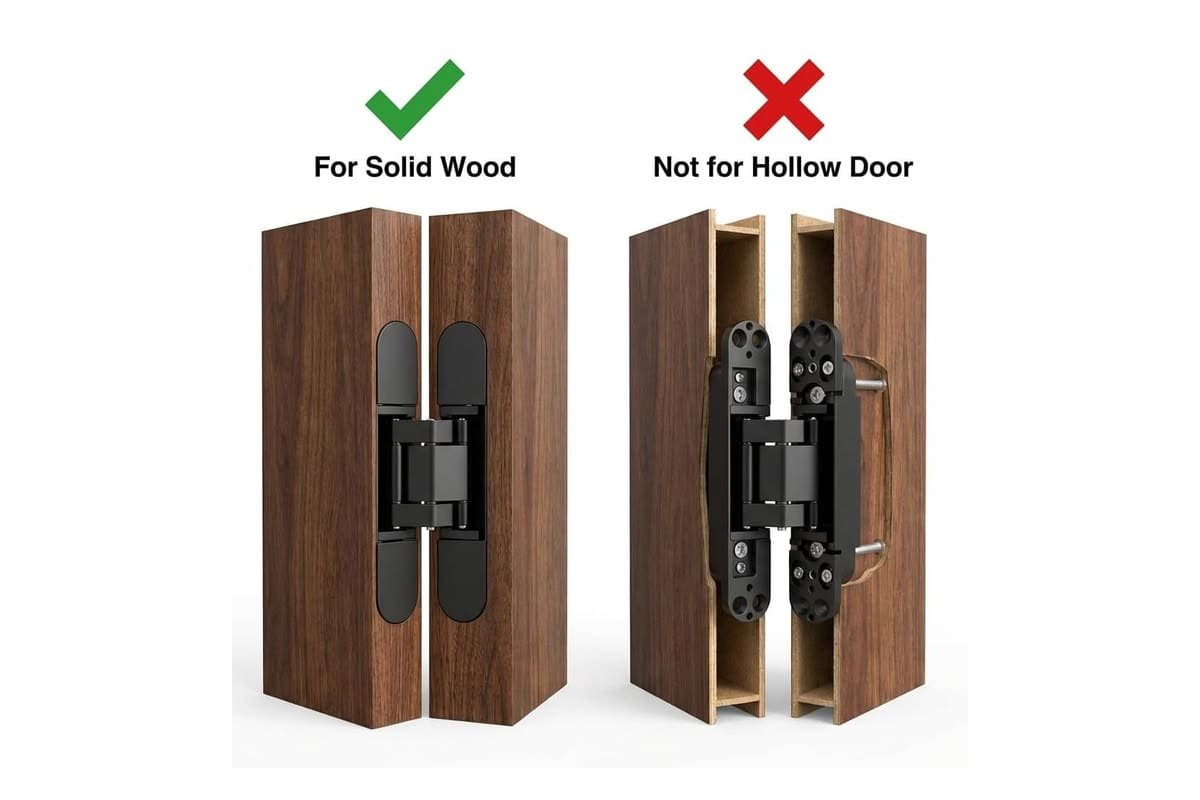
When I check a wooden door drawing, I look at the hinge size before I talk about price. The hinge body has a width, height, and depth. The door leaf edge and frame section must be large enough to receive it. If the door has a narrow stile, a glass panel, or a thin frame, the concealed hinge may not have a safe place to sit.
From my factory communication experience, I often use one practical guideline. I prefer the door leaf and frame to be at least 10 mm wider than the concealed hinge body.4 This allows about 5 mm margin on each side. I do not call this an international standard. I use it as a practical selection check before we confirm a model drawing.
| Door Structure Point | My Practical Check | Risk If Ignored |
|---|---|---|
| Door leaf edge width | I check if it is wider than the hinge body | The wood may crack or weaken |
| Frame width | I check if the frame can hold the hinge pocket | The hinge may not sit firmly |
| Mortise depth | I check if depth matches the hinge drawing | The door may not close well |
| Glass panel door | I check if solid wood fully contains the hinge | The hinge may enter weak area |
| Screw position | I check if screws bite into solid material | The hinge may loosen early |
For solid wood composite doors with a solid wood frame and glass panel, I pay special attention to the solid wood area. The solid wood frame must fully contain the hinge body. If the hinge pocket cuts into a weak filler or near the glass area, the door may not support long-term opening and closing.5 This is why I always ask for a door section drawing before I suggest a concealed hinge model.
Why Is Adjustment Important After Installation?
A door may look straight on day one. But I know wood, weight, and daily use can change the fit over time.
Adjustment is important because a quality concealed hinge can help realign the door leaf and frame after installation. This can correct small gaps, rubbing, or sagging without replacing the hinge.
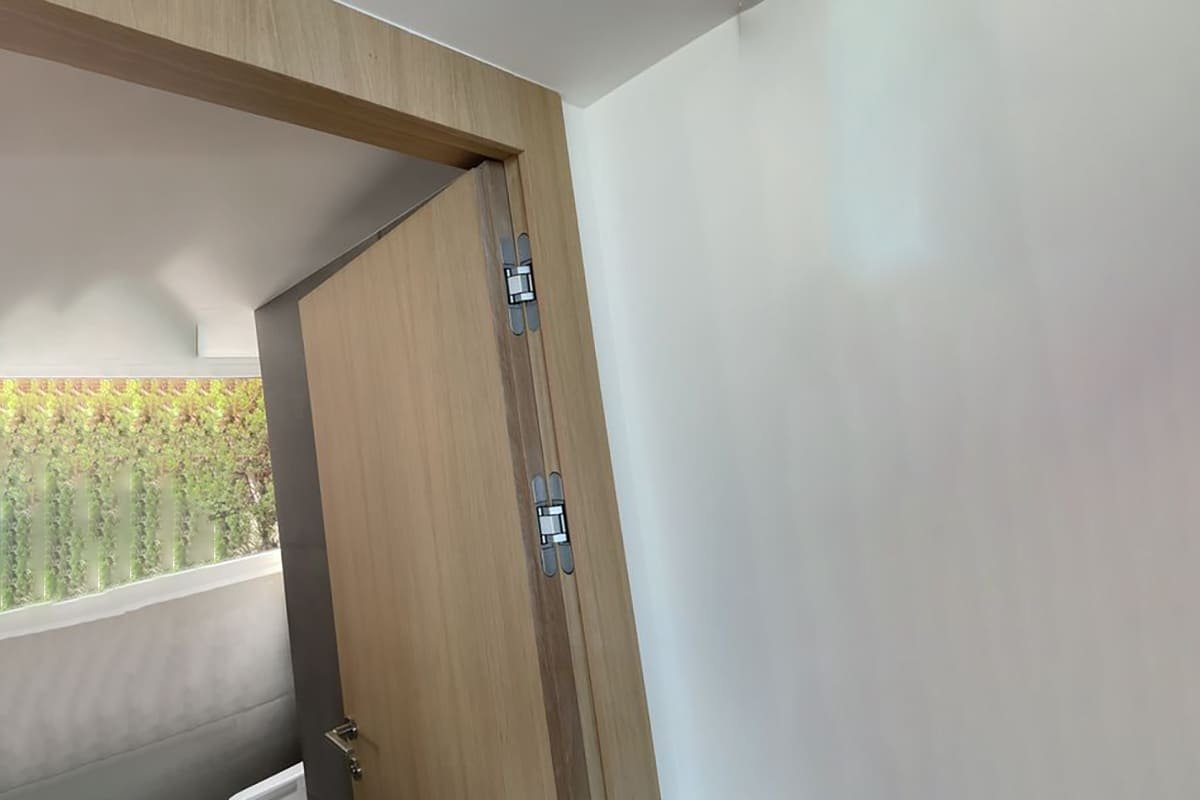
I treat adjustment as one of the most important reasons to choose a concealed hinge. Wooden doors can change a little because of humidity, site installation, frame movement, or long-term use. A heavy door can also pull downward after many cycles. If the hinge has proper adjustment, the installer can fine-tune the door position.
I usually ask customers what kind of adjustment they need. Some projects need three-dimensional adjustment. Some projects only need basic side and height correction. The final choice depends on the door weight, frame design, installation skill, and project quality level.
| Adjustment Area | What I Use It For | Common Site Problem |
|---|---|---|
| Height adjustment | I raise or lower the door leaf | The door rubs on the floor |
| Side adjustment | I move the door left or right | The gap is uneven |
| Depth adjustment | I move the door in or out | The door is not flush |
| Gap control | I balance door and frame reveal | The door looks misaligned |
| Post-use correction | I correct minor sagging | The door changes after use |
I do not see adjustment as a way to hide bad production. The mortise still needs accuracy. The door and frame still need correct size. But adjustment gives the installer a second chance. It helps a door factory reduce after-sales trouble. It also helps a brand keep the door appearance stable after delivery. In bulk projects, this point matters because small site errors can become large service costs.
What Materials and Structure Details Should I Check?
A hinge may have a clean cover and nice finish. But I know the inside structure decides how it feels after months of use.
I check material, shaft design, friction points, washers, screws, and surface finish. Many wooden door concealed hinges use zinc alloy, and some quality designs use POM washers to reduce friction and maintenance needs.
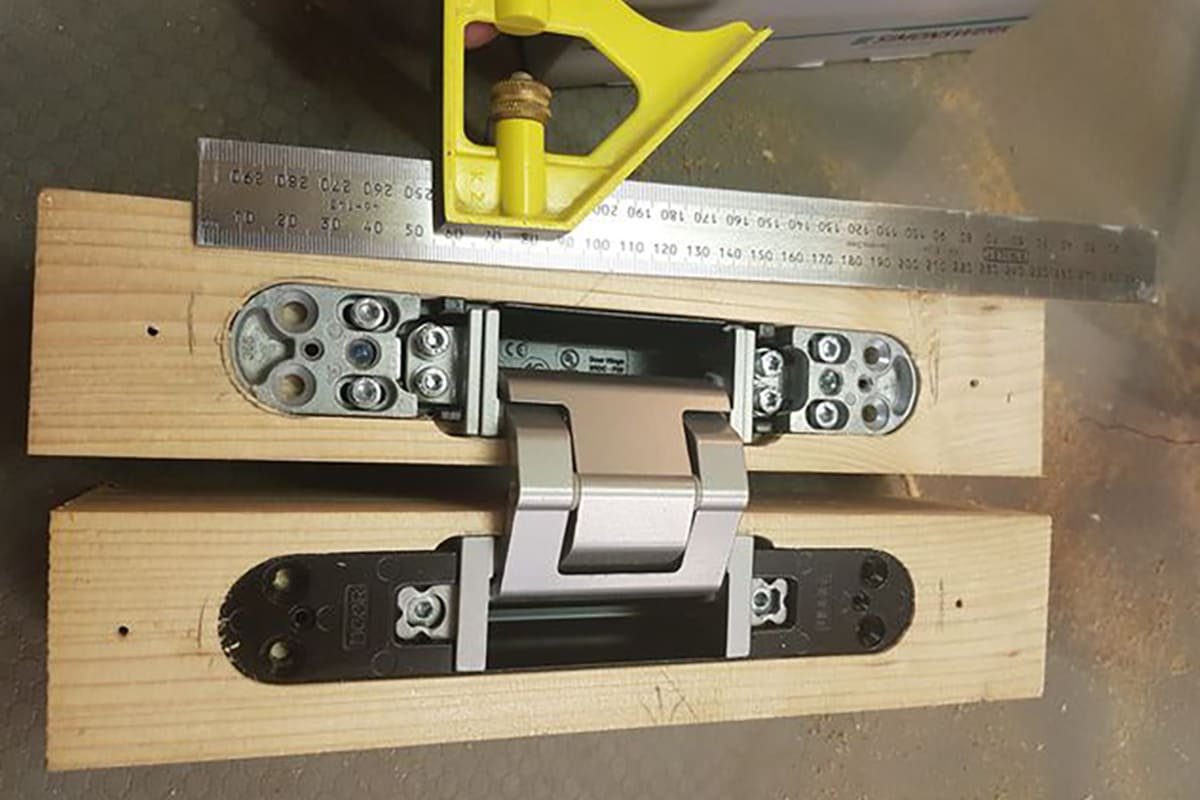
Many concealed hinges for wooden doors use zinc alloy. I do not oversell zinc alloy as magic. I explain it in a practical way. Zinc alloy has good fluidity for die casting. It can form complex hinge shapes. It has a lower melting point than some other metals, so mold wear can be lower.6 It also helps control manufacturing cost. With proper design and qualified material, it can be a good choice for many wooden door applications.
But the material name alone is not enough. I check the structure. Some quality concealed hinge models use POM washers at shaft friction points. I value this detail because it can help reduce metal-to-metal rubbing. It can also help reduce oil leakage and maintenance needs in suitable designs.7 I describe this as a product-structure advantage, not as a promise for every hinge in the market.
| Part I Check | Why I Check It | What I Want to See |
|---|---|---|
| Hinge body material | I need strength and stable shape | Qualified zinc alloy or specified material |
| Shaft area | I need smooth rotation | Stable pin and correct fit |
| POM washer | I want lower friction in some designs | Clean washer position at friction point |
| Screw quality | I need strong fixing | Correct screw size and material |
| Surface finish | I need batch consistency | Same color and texture across orders |
| Product drawing | I need installation control | Clear width, depth, and screw position |
I also remind customers that finish consistency matters in bulk orders. A concealed hinge is hidden when closed, but it is visible when the door opens. If a project uses many doors, unstable finish can still create complaints. So I check surface treatment, batch control, and packaging. These details may look small, but I see them become serious when one order has thousands of hinges.
When Should I Consider Fire-Rated Concealed Hinges?
A fire-rated door project can fail even when the hinge looks strong. I always treat fire claims with clear limits.
I consider fire-rated concealed hinges only when the exact hinge model has the needed certificate or test report. Some tested models may support 30–60 minute fire-rated applications under stated conditions.8
I never say all zinc alloy concealed hinges are fire-rated. That would be wrong. Fire-rated use must be tied to the tested model, the test report, the door type, the frame type, and the installation condition. Some concealed hinge models may pass 30-minute or 60-minute fire-rated testing when supported by the relevant certificate. But the certificate must match the product and the application.
When a wooden door factory asks me about fire-rated concealed hinges, I first ask where the door will be sold and which standard the project needs. Then I ask about door thickness, door weight, leaf material, frame material, and seal system. The hinge cannot be checked alone. A fire door is a full assembly.
| Compliance Point | My Question | Why It Matters |
|---|---|---|
| Certificate | I ask if the model has a valid report | The claim must be proven |
| Fire duration | I ask for 30, 60, or other minutes | The project requirement must match |
| Door construction | I ask about core and thickness | Test result depends on door design |
| Frame material | I ask about wood or metal frame | The hinge fixing condition changes |
| Installation method | I ask for mortise and screw details | Wrong fitting can break compliance |
| Market | I ask about Europe, Middle East, or other region | Local requirements may differ |
I also tell customers to confirm this before bulk production. A late change from standard concealed hinge to certified fire-rated concealed hinge can affect pocket size, screw position, cost, and lead time. It can also affect the door test plan. If the factory confirms the hinge only after the door design is fixed, the frame may not have enough material for the certified model. So I prefer to check compliance at the drawing stage, not after samples are finished.
How Do I Select the Right Concealed Hinge Before Bulk Production?
A wrong hinge sample may still work on one door. But I know bulk production exposes every weak detail.
I select the right concealed hinge by checking door drawings, hinge dimensions, door weight, opening angle, adjustment range, material, finish, certificate needs, and production consistency before the order is fixed.
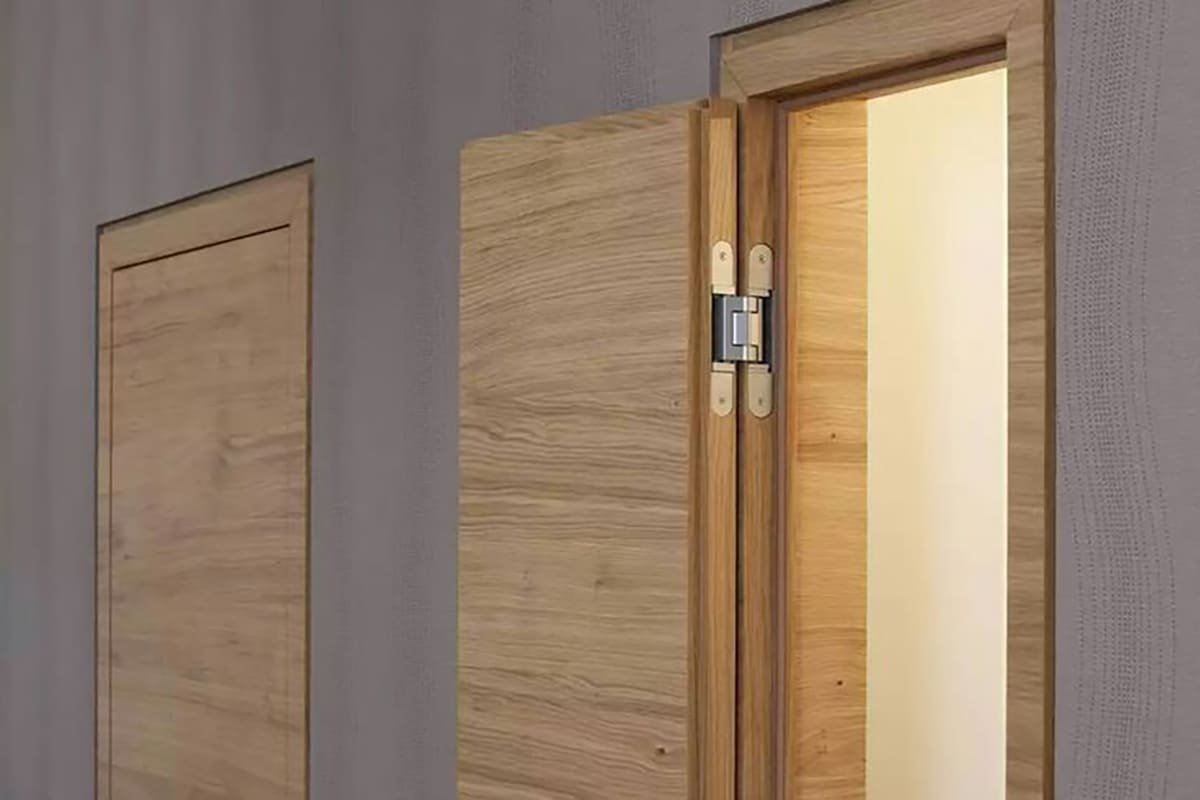
When I work with wooden door factory customers, I use a simple process. I first ask for the door leaf and frame section. I check whether the hinge body can fit with enough margin. I then check door height, width, thickness, and weight. A tall and heavy door needs a different hinge plan than a small interior door.9 I also ask how many hinges the customer plans to use per door. Two hinges may work for some doors, but heavier or taller doors may need more support.10
Then I check the opening angle. Some customers need a wide opening. Some only need a standard indoor opening. The opening requirement changes the hinge choice and mortise position. I also check the finish. A door brand may need satin nickel, black, gold, or customized color. I care about finish because bulk buyers need stable appearance from batch to batch.
| Selection Step | What I Ask For | My Reason |
|---|---|---|
| Door section drawing | I ask for leaf and frame size | I need to confirm physical fit |
| Door weight | I ask for real or estimated weight | I need correct load capacity |
| Door size | I ask for height, width, thickness | I need correct hinge quantity |
| Opening angle | I ask for site use requirement | I need correct hinge movement |
| Adjustment need | I ask about installation tolerance | I need suitable adjustable model |
| Finish sample | I ask for color target | I need batch finish control |
| Certificate | I ask for CE or fire-rated need | I need correct tested model |
I also check the factory process. A concealed hinge needs accurate routing or CNC mortising. If the mortise is loose, the hinge may move. If the mortise is too tight, the hinge may not sit flat.11 If the pocket depth is wrong, the door gap may fail.12 So I often suggest that the customer confirms the hinge drawing and makes a trial door before mass production. This step saves time. It also reduces claims after shipment.
Conclusion
I see a concealed hinge as a hidden structural system, not just a hidden look. I always judge fit, adjustment, load, material, and certificates first.
"Full Mortise vs Non Mortise Hinge: What is The Difference", https://watersonusa.com/solutions/full-mortise-vs-non-mortise-hinge. Architectural hardware guides define a concealed hinge as a hinge mortised into both the door edge and frame, rendering it invisible when the door is closed. Evidence role: definition; source type: encyclopedia. Supports: Provides a formal definition of a concealed hinge as a mortised system that is hidden when the door is closed.. ↩
"Kreg Concealed Hinge Jig - How To Easily Install Hinges - YouTube",
. Industry reports note that the installation of concealed hinges demands precise mortising to avoid binding or misalignment, as the hinge body must fit entirely within the door and frame. Evidence role: general_support; source type: research. Supports: Supports the idea that concealed hinges require more precise machining due to the need for fully recessed pockets.. Scope note: The claim is generally true but the degree of 'better design' is anecdotal and may vary by hinge model. ↩"Types, Parts, and Requirements of Concealed Hinges - IQS Directory", https://www.iqsdirectory.com/articles/hinges/concealed-hinge.html. Building hardware guidelines recommend that the frame width be at least 10 mm greater than the hinge body width to allow safe mortising and avoid wood damage. Evidence role: general_support; source type: institution. Supports: Supports that insufficient frame width can compromise hinge installation and lead to wood splitting.. Scope note: The specific risk depends on wood density and hinge design; the claim is a general precaution. ↩
"How to Choose & Install Concealed Hinges | Cabinet Door Series ...",
. Technical guides for concealed hinge installation commonly advise leaving at least 5 mm of solid wood on each side of the mortise to prevent cracking. Evidence role: general_support; source type: education. Supports: Supports that manufacturers often recommend a minimum clearance around the hinge body to avoid structural weakness.. Scope note: The exact 10 mm total margin is not universally standard; it is a conservative approximation. ↩"How to Choose & Install Concealed Hinges | Cabinet Door Series ...",
. Studies in door construction emphasize that hinge mortises must be located in solid timber or engineered wood to resist the cyclic loads of opening and closing, especially near glass panels. Evidence role: mechanism; source type: research. Supports: Supports that hinge loads must be transferred to solid material to avoid premature failure.. Scope note: The extent of long-term failure depends on door design and hinge weight; the claim is a general design principle. ↩"Development of Zinc Die Casting Alloys with Improved Fluidity", https://www.academia.edu/31434605/Development_of_Zinc_Die_Casting_Alloys_with_Improved_Fluidity_Progress_in_Thin_Section_Zinc_Die_Casting_Technology. Materials science literature notes that zinc alloys offer excellent fluidity for die casting and a melting point around 390 °C, reducing mold wear compared to higher-melting metals. Evidence role: mechanism; source type: research. Supports: Confirms that zinc alloys have good castability, low melting point, and are commonly used for complex hinge geometries.. Scope note: The claim does not compare with other alloys (e.g., stainless steel) in terms of strength or corrosion resistance. ↩
"Friction Joint Washer Material : r/MechanicalEngineering - Reddit", https://www.reddit.com/r/MechanicalEngineering/comments/1giv6ao/friction_joint_washer_material/. Engineering studies show that POM washers in hinge assemblies lower friction coefficients and reduce the need for external lubricants, thereby decreasing maintenance. Evidence role: mechanism; source type: research. Supports: Supports that POM (polyoxymethylene) washers are used in hinges to provide low friction and self-lubrication, reducing metal contact and oil leakage.. Scope note: The actual effect depends on washer quality and hinge design; not all hinges with POM washers guarantee reduced leakage. ↩
"Fire Rated Concealed Door Hinges: A Comprehensive Guide", https://www.mckinneyhinge.com/en/resource-library/knowledge-center/blog/blog-post.aehdynamic-fire-rated-concealed-door-hinges-a-comprehensive-guide-650c3a3f9bc9de00014c211c_mckinney.html. Fire testing standards such as EN 1634-1 allow concealed hinges to achieve fire resistance ratings when tested as part of a complete door assembly. Evidence role: general_support; source type: government. Supports: Supports that some concealed hinges are certified for fire-rated applications with durations of 30 or 60 minutes under prescribed door and frame conditions.. Scope note: The rating is specific to the tested assembly; hinges alone cannot guarantee fire performance without matching door/frame construction. ↩
"Concealed Hinges - HingeOutlet", https://www.hingeoutlet.com/collections/concealed-hinges?srsltid=AfmBOorPPwqCyc1L1m-koqFprAy9nzfIFJvVtsysgbAt9beFjdZxe3mB. Hardware engineering literature states that tall, heavy doors require hinges with higher load ratings and often additional hinges to distribute weight. Evidence role: general_support; source type: research. Supports: Supports that hinge selection must account for door dimensions and weight to ensure proper support and function.. Scope note: The exact 'different hinge plan' depends on specific weight thresholds; no universal rule is provided. ↩
"CLIP top BLUMOTION Number of hinges", https://ea.blum.com/en/number-of-hinges/. Industry standards (e.g., ANSI/BHMA) recommend using three hinges for doors taller than 90 inches or heavier than 100 pounds to ensure proper load distribution. Evidence role: general_support; source type: institution. Supports: Supports that building guides often recommend three hinges for doors over a certain height or weight to prevent sagging.. Scope note: The specific thresholds vary; two hinges may still be adequate for some heavy doors if hinge capacity is sufficient. ↩
"North America Door Invisible Hinges Market Size Report, 2034", https://www.gminsights.com/industry-analysis/north-america-door-invisible-hinges-market. Precision machining studies emphasize that concealed hinge mortises must be within ±0.5 mm of specified depth and width to ensure proper seating and function. Evidence role: mechanism; source type: research. Supports: Supports that mortise dimensions must match hinge body within tight tolerances to prevent movement or misalignment.. Scope note: Exact tolerances vary by hinge model; the claim is generally correct but underspecified. ↩
"Concealed hinges sticking out too far, looking for advice - Reddit", https://www.reddit.com/r/cabinetry/comments/1et7hkc/concealed_hinges_sticking_out_too_far_looking_for/. Architectural carpentry manuals note that hinge pocket depth determines the door's standoff from the frame; excessive depth can cause the door to rub, while insufficient depth can leave an uneven gap. Evidence role: mechanism; source type: education. Supports: Supports that incorrect mortise depth directly affects the door's position relative to the frame, leading to gap issues.. Scope note: The term 'fail' is broad; minor depth errors may be correctable with adjustable hinges. ↩