Hidden Hinges: The Invisible Solution for Seamless Design?
A clean door design can fail when the hinge does not match the door. I have seen beautiful samples turn into costly rework.
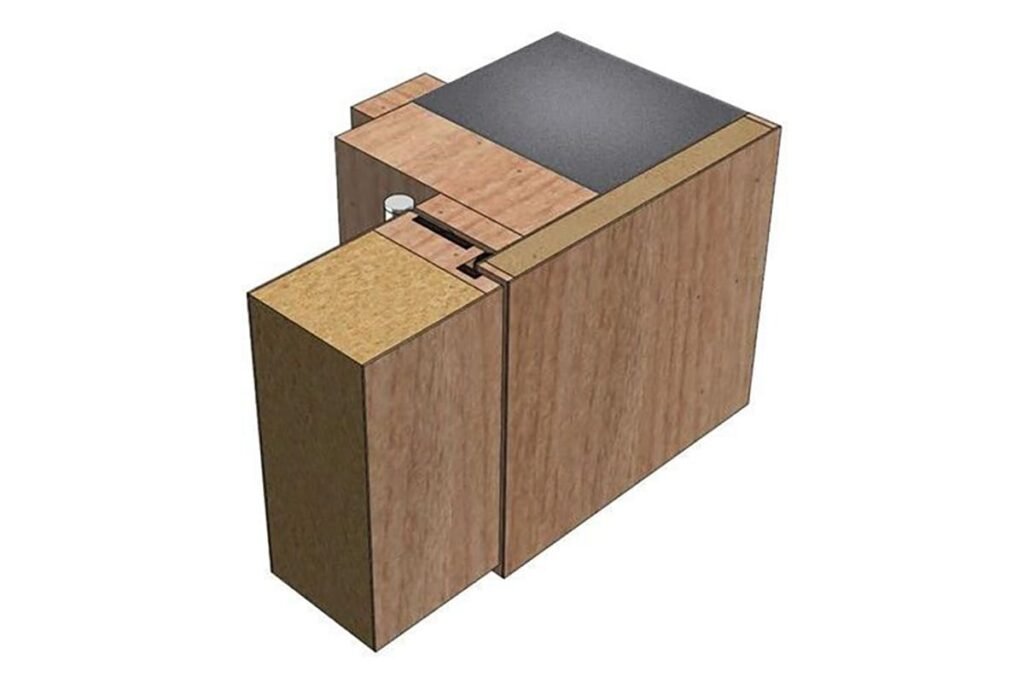
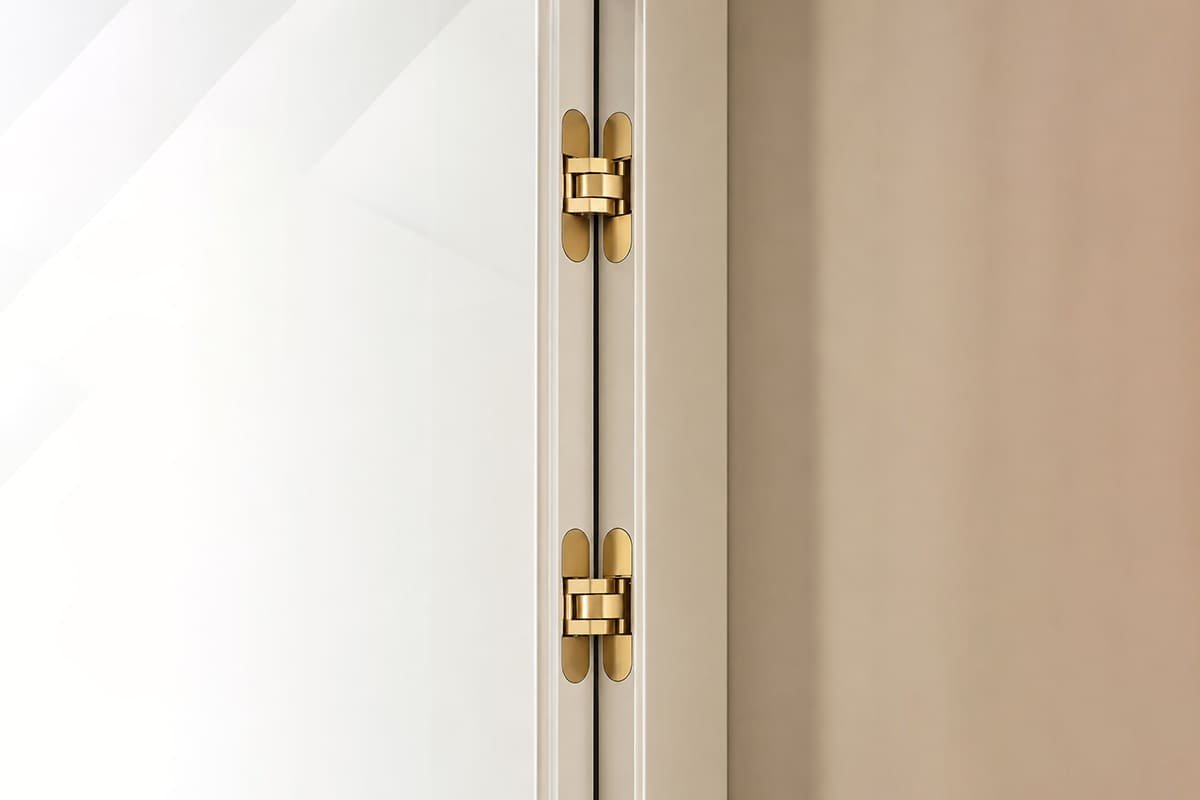
Hidden hinges help create a seamless door look because the hinge body is installed inside the door leaf and frame. The best result comes when the hinge, door thickness, door weight, frame structure, slotting space, and load need match correctly.
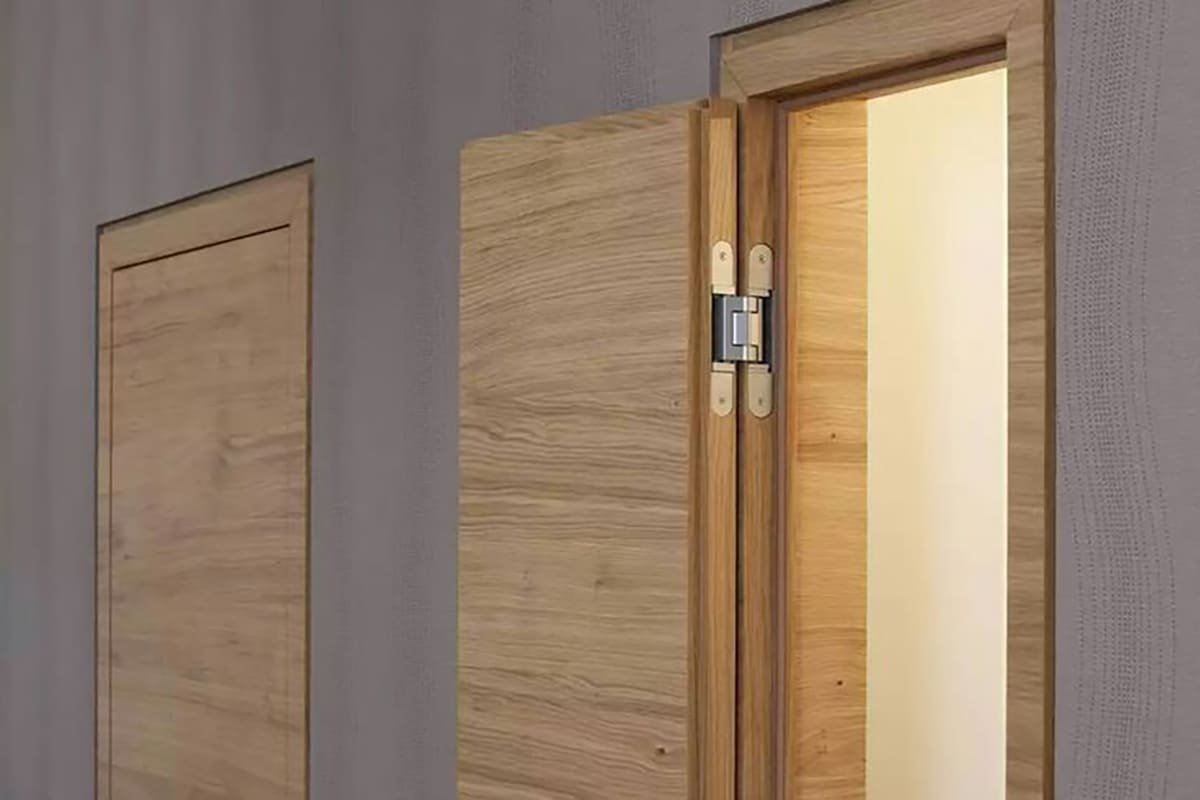
I look at hidden hinges as both a design part and a technical part. The clean look is important. The hidden structure is also important. A buyer cannot judge this product only by photos. A door factory cannot judge it only by the sample in hand. I always want to know the door weight, door thickness, frame type, opening angle, and project need before I recommend one model. This simple step can reduce many later problems.
What Are Hidden Hinges?
A hidden hinge looks simple from the outside, but the wrong match can damage the door edge, frame, and installation schedule.
Hidden hinges are concealed door hinges installed inside the door leaf and frame.1 When the door is closed, the hinge body is not visible from the outside.2 They need correct matching with the door, frame, slotting space, and load requirement.
I define hidden hinges by structure, not only by appearance
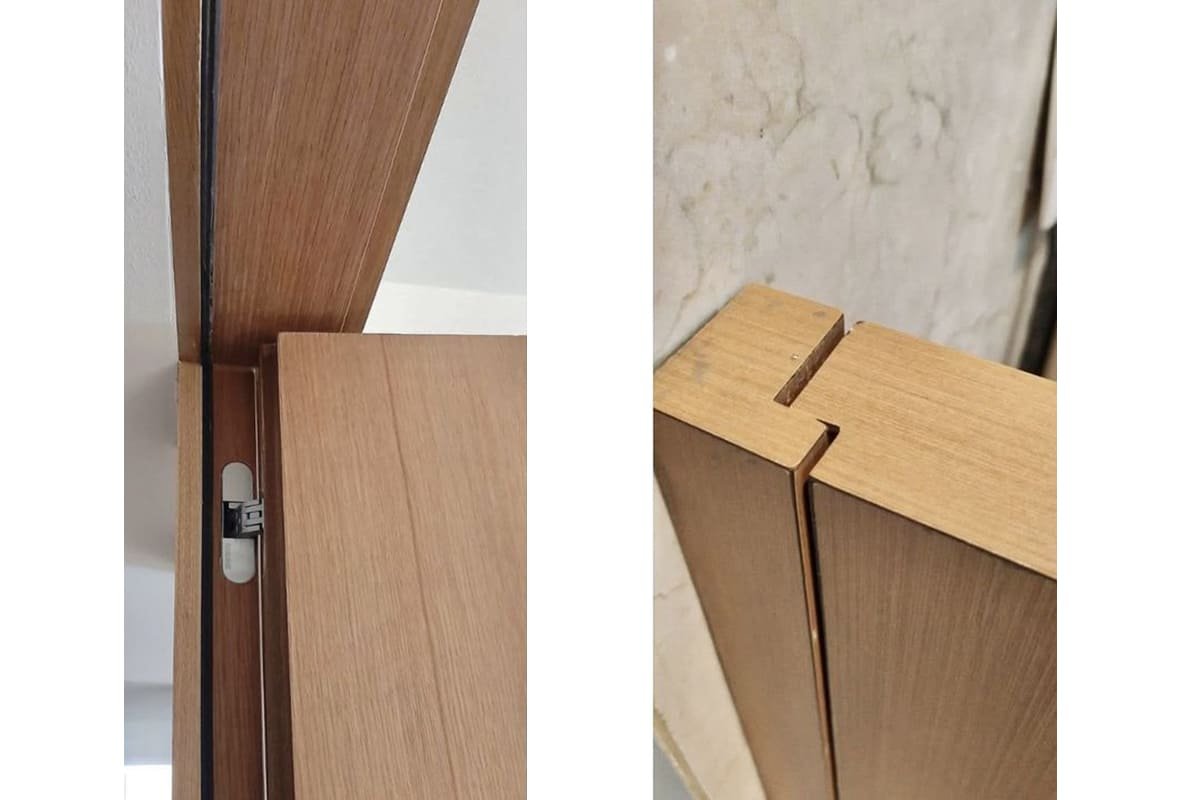
I do not see hidden hinges as only “invisible hardware.” I see them as a full door hardware solution. The hinge body is recessed into the door leaf and the frame.3 This means the door and frame must have enough material and enough cutting space. If the door is too thin, the hinge body may not fit.4 If the frame structure is weak, the fixing screws may not hold well.5 If the door is heavy, the hinge must have enough load capacity and stable internal structure.6
| Item I check | Why I check it | Risk if I ignore it |
|---|---|---|
| Door thickness | It decides the slotting depth | The hinge may not fit |
| Door weight | It decides load requirement | The door may sag |
| Frame structure | It decides fixing strength | Screws may loosen |
| Slotting space | It decides installation accuracy | The door gap may become uneven |
| Hinge model | It decides opening and adjustment | The door may not align well |
I usually ask for a drawing before bulk order confirmation. I also ask the customer to test the sample on the real door structure. A concealed hinge can look good on a table, but the real judgment happens after it is installed on a door.
Why Do Hidden Hinges Support Seamless Design?
A modern flat door can lose its clean look when visible hinges break the line. I have seen this issue in many hotel and apartment projects.
Hidden hinges support seamless design because they hide the hinge body inside the door and frame. This helps create a cleaner wall-door line. Depending on the model, they may also support wider opening angles, 2D or 3D adjustment, and better door alignment.

I focus on controlled design value, not exaggerated claims
I do not like to say that all hidden hinges are silent, safer, or always open to 180 degrees. That is not accurate. The final result depends on the hinge structure, door weight, installation quality, and the selected model. Some concealed hinges support a wider opening angle. Some support 2D adjustment. Some support 3D adjustment.7 Some are made for standard interior doors. Some are made for heavier project doors.
| Design need | How hidden hinges may help | Condition I confirm first |
|---|---|---|
| Minimal door face | The hinge is not visible when closed | Door and frame can be slotted |
| Door-wall alignment | Adjustment may help fine tuning | Model supports 2D or 3D adjustment |
| Wider opening | Some models allow larger opening | Opening angle matches the layout |
| Clean project style | Hardware does not interrupt the line | Finish and installation are stable |
| Batch door production | Same hinge can be used across many doors | Door specs are consistent |
For a door factory, the main value is not only the clean look. The value is repeatable production. If the hinge position, slotting size, and screw fixing are stable, the door assembly becomes easier. If the hinge has adjustment, the installer can fine tune the door gap after installation.8 This can reduce small errors from door leaf production, frame installation, and wall condition. I see this as a practical benefit for bulk door supply.
Is the Hidden Hinge Suitable for My Door?
A hidden hinge may look perfect in a catalog, but it can fail when the door weight, thickness, or frame does not support it.
I judge hidden hinge suitability by door weight, door thickness, door material, frame structure, slotting space, opening angle, and use frequency. The right hinge is not the prettiest model. It is the model that fits the real door condition.
I start with door weight and door thickness
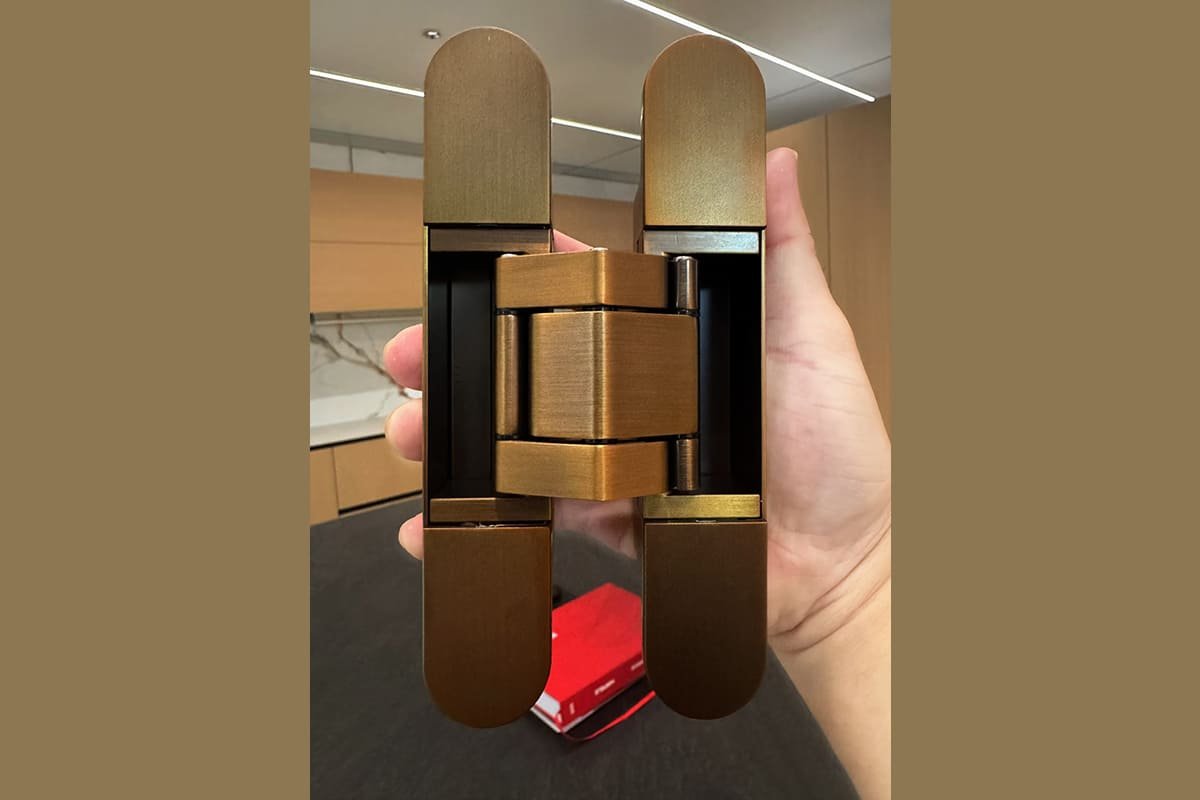
I always start with door weight and door thickness. These two points decide most of the selection direction. A heavier door needs a stronger hinge body, better load structure, and more accurate installation.9 A thin door may not have enough space for the concealed hinge body. Many interior door projects use common door thickness ranges, such as 35 mm to 40 mm10, but I still check the exact hinge specification. I do not treat one range as a universal rule.
| Selection point | What I ask | Why it matters |
|---|---|---|
| Door weight | How many kilograms is each door leaf? | It decides hinge load level |
| Door thickness | What is the exact thickness? | It decides if the hinge can fit |
| Door height | Is it standard or tall? | Tall doors may need more support |
| Door width | Is the door wider than normal? | Wider doors create more force11 |
| Use frequency | Is it hotel, apartment, office, or home? | High use needs more stable hardware |
I also check material and frame structure
Wood doors, composite doors, and metal doors do not behave the same. The cutting method is different. The screw holding strength is different.12 The frame design is also different. A hinge that works well on one wooden door may not be suitable for a metal frame without adjustment to fixing parts. I ask for the door section drawing because the section tells me more than a product photo. If the project needs a special frame, I want to see the frame profile before I confirm the hinge model.
What Mistakes Should I Avoid When Choosing Hidden Hinges?
The most common mistake is simple. I see buyers choose a hidden hinge by appearance or price before they confirm the door condition.
I avoid four mistakes when selecting hidden hinges: judging only by appearance, comparing only unit price, assuming all models fit all doors, and checking load capacity without confirming slotting space and frame structure.
I treat hidden hinge selection as a matching process
I have seen projects where the sample looked fine, but the bulk installation had problems. The reason was not always poor product quality. Sometimes the hinge model was not matched to the door structure. Sometimes the door factory changed the door thickness after sample approval. Sometimes the frame supplier changed the section. These small changes can create real problems.
| Mistake | What it looks like | Better action |
|---|---|---|
| Only checking appearance | The buyer chooses the cleanest photo | I check drawings and test samples |
| Only comparing price | The buyer chooses the lowest quote | I compare structure, tolerance, and life use |
| Assuming universal fit | One hinge is used for many door types | I match each door type separately |
| Only checking load number | The buyer sees enough kilograms | I also check slotting and screw fixing |
| Ignoring batch consistency | One sample looks good | I check bulk size, finish, and packaging |
Price is important. I understand this clearly because many of my customers need a strong market margin. But the lowest unit price can become expensive when the door needs rework. A hidden hinge is installed inside the door and frame, so correction can cost more than visible hinge correction. If the slot is wrong, the door leaf may need repair. If the hinge cannot adjust enough, the installer may spend more time on each door. For a factory, this means labor cost. For a wholesaler, this may mean after-sales claims. For a brand owner, this may hurt product trust.
How Should Door Manufacturers and Buyers Select Hidden Hinges?
A buyer can reduce risk when the selection process starts with door data, not with a product photo or a simple price list.
I select hidden hinges by confirming door conditions first, then choosing load capacity and adjustment function, then checking samples, drawings, tolerances, finish consistency, delivery time, and needed certification documents.
I use a step-by-step selection process
For door manufacturers and hardware buyers, I suggest a clear process. First, I confirm the door weight, thickness, height, width, material, and frame structure. Second, I choose a hinge model that fits the load and slotting need. Third, I confirm whether the door needs 2D or 3D adjustment. This adjustment is not only a selling point. It helps installers adjust the door gap, height, and side position after installation. This can reduce rework in batch assembly.
| Step | What I confirm | What I expect from the supplier |
|---|---|---|
| 1 | Door technical data | Correct model suggestion |
| 2 | Load and size | Clear specification sheet |
| 3 | Slotting position | Accurate installation drawing |
| 4 | Sample test | Real door trial before bulk order |
| 5 | Finish and tolerance | Stable batch production |
| 6 | Delivery plan | Clear lead time and packing method |
| 7 | Compliance need | CE, fire-rated, or other documents if required |
I never skip sample confirmation
Before bulk purchasing, I want to confirm the sample, drawing, dimension, tolerance, slotting need, screw type, and delivery time. If the product is used in a hotel, school, hospital, apartment, or public building project, I also ask whether CE, fire-rated, or other compliance files are needed. Not every project needs the same documents. But if the project requires them, they must be checked before the order.
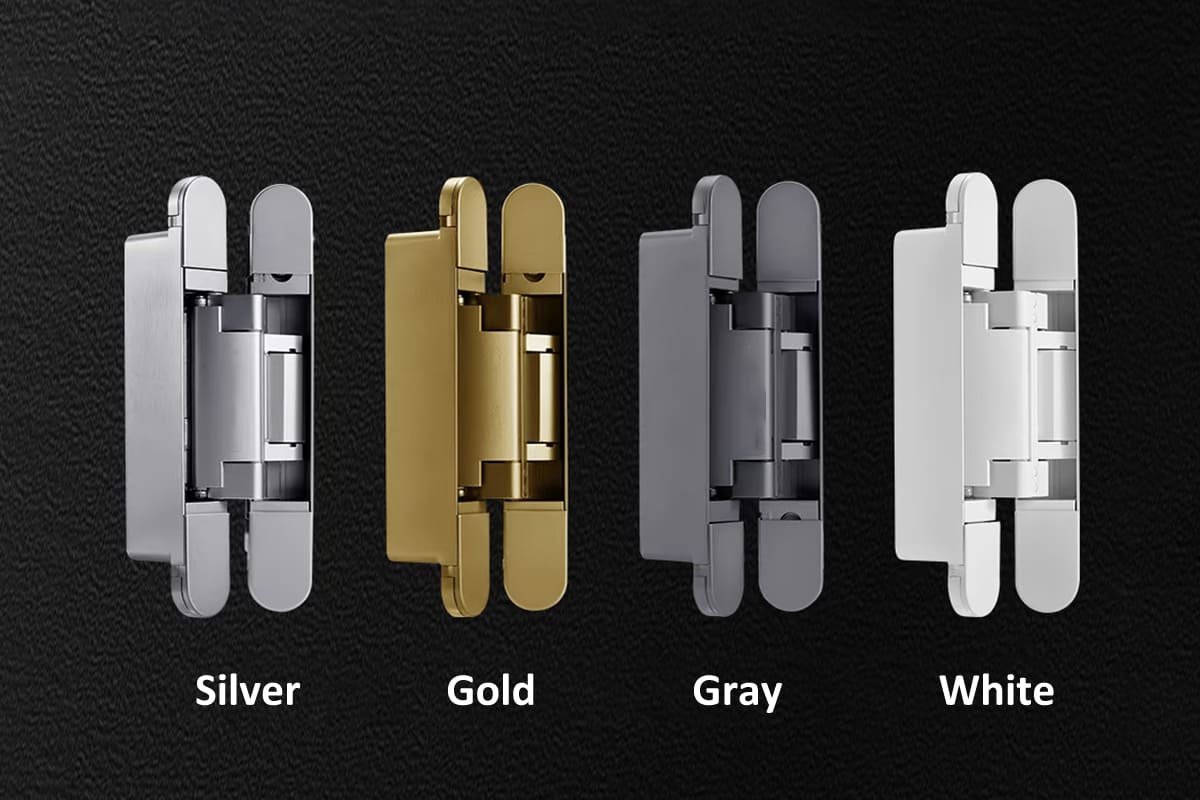
Finish consistency also matters. A hidden hinge has fewer exposed parts than a visible hinge, but the exposed parts still need a stable color and texture. For a brand customer, one good sample is not enough. The real test is whether the full batch keeps the same finish, same size, and same function. I prefer to control this point early, because finish difference is hard to solve after shipment.
What Should I Ask a Hidden Hinge Supplier Before Bulk Order?
A weak supplier can make a good hinge design risky. I have learned to ask technical and production questions before I talk about bulk quantity.
I ask the supplier for specifications, drawings, material details, load information, finish samples, tolerance control, production capacity, packaging method, lead time, and certification documents when the project requires them.
I look for stable production, not only a low price
A hidden hinge supplier should help me reduce risk. I want clear product data. I want stable batch production. I want honest advice when a model does not fit the door. This is very important for door factories, hardware brands, and wholesalers. A supplier should not only sell one item. A supplier should support the full order process from sample to delivery.
| Question I ask | Why I ask it | Good answer should include |
|---|---|---|
| What door thickness does this model fit? | I need to avoid slotting problems | Exact thickness range and drawing |
| What is the recommended door weight? | I need correct load matching | Load data and hinge quantity advice |
| Does it support 2D or 3D adjustment? | I need installation flexibility | Clear adjustment direction and range |
| What finish options are stable? | I need batch consistency | Finish samples and process limits |
| Can I get installation drawings? | I need accurate machining | PDF, CAD, or detailed size sheet |
| What certificates are available? | I need project compliance | CE or fire-rated documents if available |
| What is the lead time? | I need supply chain planning | Sample time and bulk order time |
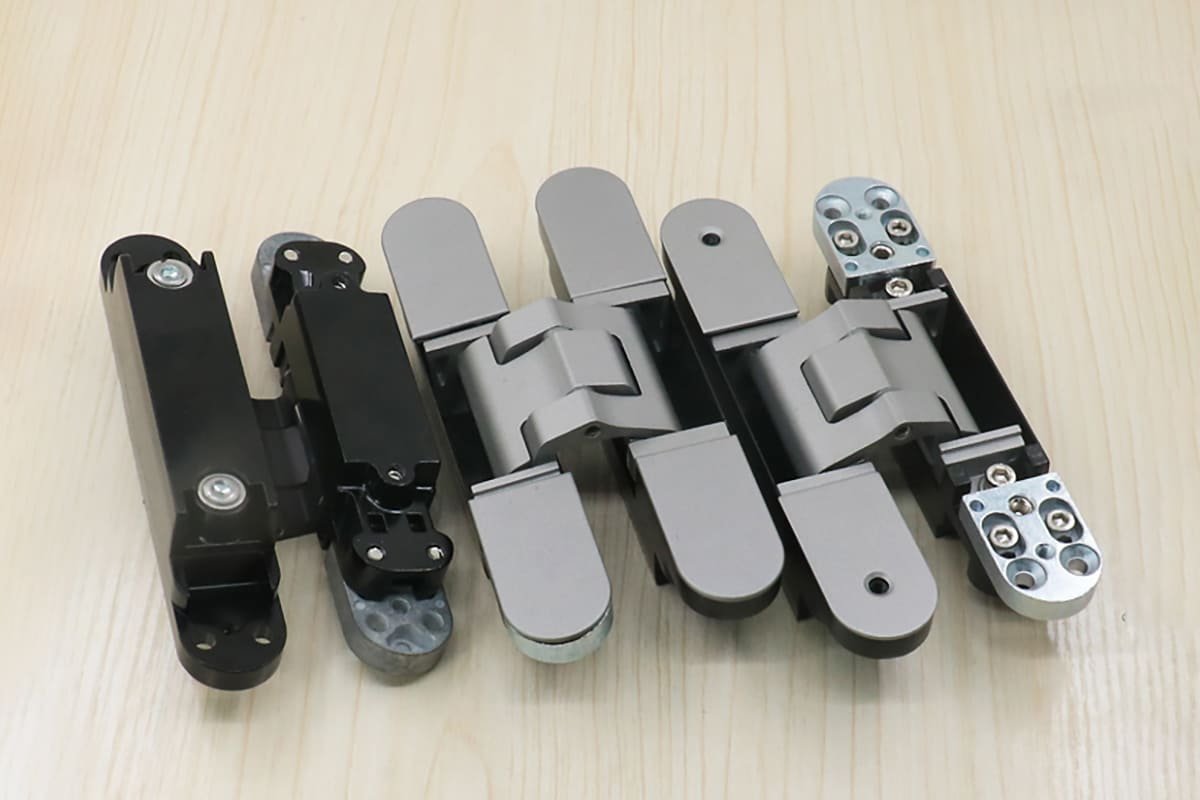
I also care about packaging. Hidden hinges have precise parts, so poor packaging can damage corners, screws, covers, or surface finish. I ask how the hinges are packed for export. I also ask whether the supplier can keep the same accessories across repeat orders. Small changes in screws or covers can create trouble for a door factory. Stable supply is not a slogan. It is made from repeated control of size, finish, accessory, packing, and lead time.
Conclusion
Hidden hinges can create a clean door look, but I get the best result through correct matching, stable production, and careful sample confirmation.
"Hinge - Wikipedia", https://en.wikipedia.org/wiki/Hinge. A neutral reference on hinges should support that concealed hinges are designed so that the hinge mechanism is recessed or hidden within the door and frame assembly when the door is closed. Evidence role: definition; source type: encyclopedia. Supports: The source should define concealed or hidden hinges as hardware recessed into or mounted within the door and frame rather than exposed on the door face.. Scope note: General hinge references may describe concealed hinges broadly and may not use the exact commercial term “hidden hinge.” ↩
"Concealed hinge jig - Wikipedia", https://en.wikipedia.org/wiki/Concealed_hinge_jig. Reference descriptions of concealed hinges support that their defining feature is that the hinge mechanism is hidden from view when the door or panel is closed. Evidence role: definition; source type: encyclopedia. Supports: The source should state that concealed hinges are hidden from view when the door, cabinet, or panel is closed.. Scope note: Some sources discuss cabinet hinges rather than full-size architectural doors, so the support may be definitional rather than door-project-specific. ↩
"Concealed Hinge | Innovative Door Hardware | Sugatsune", https://www.sugatsune.com/hes-concealed-hinge-line/?srsltid=AfmBOorrEnOHraiXrExQEtvUh6nLSWHPGB9A1qxMa4yzMjGeG4BdowM6. Technical installation references for concealed door hinges support that the hinge body is typically housed in mortised or recessed pockets in both the door leaf and the frame. Evidence role: mechanism; source type: institution. Supports: The source should explain that concealed door hinges are installed by cutting recesses or mortises in the door leaf and frame to house the hinge body.. Scope note: Installation details vary by hinge model, so the source should be used to support the general mechanism rather than a universal installation dimension. ↩
"Types, Parts, and Requirements of Concealed Hinges - IQS Directory", https://www.iqsdirectory.com/articles/hinges/concealed-hinge.html. Concealed-hinge specification references support that installation depends on dimensional limits such as hinge body depth, mortise size, and minimum door thickness. Evidence role: mechanism; source type: institution. Supports: The source should show that concealed hinges have dimensional requirements, including minimum door thickness or mortise depth, that determine whether the hinge body can fit.. Scope note: The exact minimum thickness is model-specific; a general source supports the selection principle, not a single universal threshold. ↩
"Fastenings | US Forest Service Research and Development - USDA", https://research.fs.usda.gov/treesearch/7144. Wood engineering references, including government materials handbooks, support that screw withdrawal resistance depends on substrate properties such as density, grain direction, embedment, and the condition of the member receiving the fastener. Evidence role: mechanism; source type: government. Supports: The source should explain that screw holding or withdrawal resistance depends on material properties, density, embedment, and structural condition.. Scope note: Such sources generally address fastener mechanics rather than concealed hinges specifically, so they provide contextual support for the fastening-risk claim. ↩
"A156.1 - 2025 Butts and Hinges", https://buildershardware.com/ANSI-BHMA-Standards/Hardware-Highlights/A1561-2021-Butts-and-Hinges. Architectural hardware standards and guidance support that hinge selection is tied to door weight, size, usage level, and performance rating, because the hinge must carry the imposed load throughout service. Evidence role: expert_consensus; source type: institution. Supports: The source should show that door hinges are selected or rated according to load, door size, duty cycle, or performance grade.. Scope note: Standards may define performance grades and tests rather than prescribing one hinge model for every door weight. ↩
"[PDF] 3D Adjustable Concealed Hinges - Assa Abloy", https://www.assaabloy.com/ae/en/product-assets/architectural-hardware/door-hinges/concealed-hinges/assets/documents/3D_Adjustable_Concealed_Hinges_Brochure_ME.pdf. Technical references on concealed hinges support that models differ in opening angle and may provide multi-axis adjustment, commonly described as two-dimensional or three-dimensional adjustment. Evidence role: general_support; source type: institution. Supports: The source should document that concealed hinge designs may include different opening angles and adjustment mechanisms in multiple axes.. Scope note: The availability and adjustment range are model-specific, so the source supports variability within the category rather than a capability of every concealed hinge. ↩
"Adjusting cup hinges and doors: Do-It-Yourself with Hettich - YouTube",
. Concealed-hinge installation references support that adjustable hinge mechanisms permit post-installation correction of door position, including gap, height, or lateral alignment within the stated adjustment range. Evidence role: mechanism; source type: institution. Supports: The source should show that adjustable hinges allow movement in height, lateral, or depth directions to correct door alignment and gaps after installation.. Scope note: Adjustment can compensate only within the hinge’s designed range and does not correct major errors in machining, framing, or door construction. ↩"How Washing Machine Door Hinges Are Engineered for Heavy Loads", https://mansfieldec.com/feeds/blog/washing-machine-door-hinge-engineering. Statics-based engineering references support that a door’s weight and geometry create hinge reactions and moments, so heavier or wider doors increase the structural demand on the hinge assembly and its installation. Evidence role: mechanism; source type: education. Supports: The source should explain, using statics or door-hardware guidance, that door weight and geometry create loads and moments that hinges must resist.. Scope note: General mechanics sources support the load principle but may not address concealed hinge product construction directly. ↩
"Standard Door Sizes: The Complete Guide", https://www.jbkind.com/info-centre/useful-door-information/standard-door-sizes. Building and door-dimension references support that many interior doors are manufactured in standard thicknesses around the mid-30 mm to 40 mm range, depending on market and door type. Evidence role: statistic; source type: institution. Supports: The source should identify common or standard interior door thicknesses in the 35 mm to 40 mm range.. Scope note: Door thickness standards vary by country, material, fire rating, and manufacturer, so the range should be presented as common rather than universal. ↩
"Hinge Load Capacity: How to Calculate It - Weber Knapp Blog", https://blog.weberknapp.com/hinge-load-capacity-calculation. Elementary statics supports that, for a given door weight, increasing door width increases the moment arm from the hinge axis to the center of mass, thereby increasing the moment imposed on the hinge system. Evidence role: mechanism; source type: education. Supports: The source should show that increasing the distance from the hinge axis to the door’s center of mass increases the moment that must be resisted by the hinges.. Scope note: This is a mechanical principle applied to doors; actual hinge loads also depend on hinge spacing, number of hinges, installation accuracy, and door construction. ↩
"Mechanical properties of wood-based composite materials", https://research.fs.usda.gov/treesearch/37420. Materials research supports that wood, engineered wood products, composites, and metals differ in machinability and fastener-holding behavior, which affects how hinge pockets and screw fixings should be designed. Evidence role: mechanism; source type: research. Supports: The source should explain that different substrates have different machining characteristics and fastener holding or withdrawal performance.. Scope note: A general materials source may not compare complete door assemblies directly, so it provides contextual support for the need to match hinge installation to door material. ↩