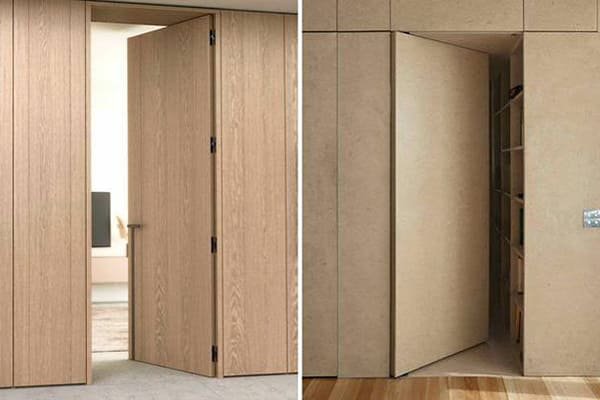
What are some clever hidden door ideas?
Many hidden doors look smart in photos. They disappoint buyers when gaps show, doors sag, and locks feel rough. I have seen this many times.
Clever hidden door ideas include same-color wall doors, wood-veneer wall-panel doors, cabinet doors, and bookcase doors. I make each idea work by planning the concealed hinge, handle, lock, frame, closing method, and finish together before production starts.
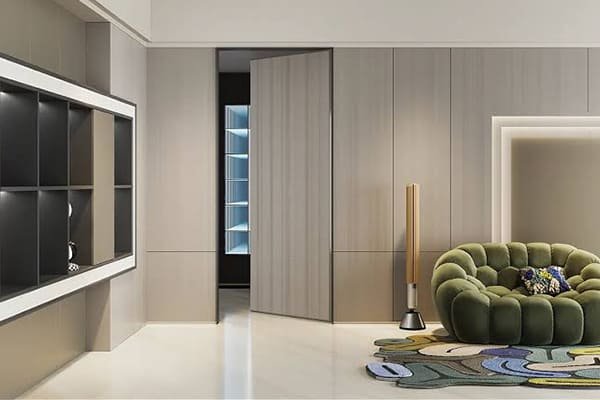
I do not treat a hidden door as only a design surface. I treat it as a full hardware system. When I speak with door factories, I usually ask about door weight, thickness, opening direction, wall finish, frame structure, bottom clearance, and locking needs first. The answer decides whether the hidden door will stay flush, close quietly, and keep the same clean look after daily use.
A same-color wall door looks simple. The problem starts when the door edge moves, the handle stands out, or the closing force feels cheap.
A same-color hidden door works best when I combine a flush frame, 3D adjustable concealed hinges, a recessed handle or push latch, and a lock that does not break the surface line.
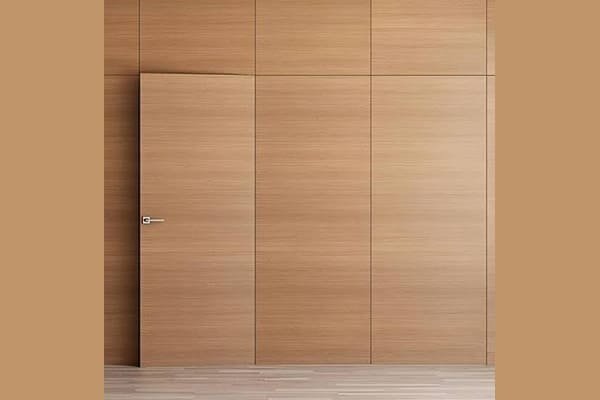
I like same-color wall hidden doors because they are easy for many projects to understand. A painted wall and a painted door can blend well. Still, I never call this idea “invisible” before I check the structure. Paint cannot hide a wrong gap. Paint cannot fix a hinge that has no adjustment. Paint also cannot make a loud closing system feel premium.
For this door type, I usually focus on flushness first. A 3D adjustable concealed hinge is useful because I can correct the door position in several directions after installation.1 This helps when the door leaf is slightly low, when the reveal is not even, or when the wall panel line needs a small correction. If the hinge also has hydraulic damping, the closing feel can become quieter and more controlled.2 Some models may provide 90-degree hold-open or automatic closing within a certain angle, but I always confirm the exact hinge specification before I promise it to a customer.
| Item I confirm | Why I confirm it |
|---|---|
| Door weight and thickness | I need the hinge load range to match the door |
| Frame depth and wall finish | I need the door surface to sit flush with the wall |
| Handle type | I need to avoid a visible handle breaking the clean surface |
| Lock type | I need the lock to close well without visible hardware |
| Paint process | I prefer final paint after installation when the project allows it |
For this idea, I use a recessed flush handle when the user needs a clear grip. I consider a push latch when the buyer wants a cleaner face. I still remind the buyer that push latches may limit opening direction and may not suit every family or public project. If children use the area, I ask more questions before I choose it.
Wood veneer hidden doors can look expensive. They also show every small color difference, grain change, and uneven joint very clearly.
I make wood-veneer hidden doors more stable by using the same veneer batch, matching panel direction, planning concealed hinges, and confirming the handle and lock before the veneer layout is cut.
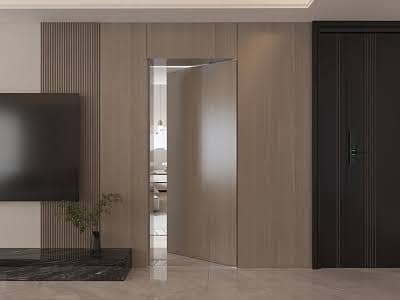
I have handled many finish questions from buyers. The hardware is important, but the veneer system is just as important for this door type. A wood-veneer wall-panel door needs the door leaf, frame, and wall panel to read as one surface. If the veneer comes from different batches, the color may shift.3 If the grain direction changes without planning, the hidden effect becomes weak.4
I usually ask the customer to confirm the veneer layout before production. I also ask whether the door needs to open inward or outward. This choice changes the hinge model, the frame detail, the lock position, and sometimes the edge treatment. If the door is heavy because of the panel build-up, I need to check the concealed hinge load capacity. I do not rely on a generic hinge. I match the hinge to the real door leaf and project condition.
| Veneer detail I check | Hardware detail I check |
|---|---|
| Same veneer batch | Concealed hinge load capacity |
| Grain direction | Door opening angle |
| Panel thickness | Frame and hinge pocket depth |
| Edge banding color | Recessed handle or push latch position |
| Final coating method | Magnetic lock or latch compatibility |
For this idea, I often prefer a concealed hinge with 3D adjustment. Veneer doors can be less forgiving because the panel lines make small misalignment easy to see. If the hinge can adjust after installation, the installer has a better chance to make the panel line clean. I also use magnetic locks when the project needs a cleaner look, but I always check the lock body, strike plate, and emergency access need. A bedroom, office, or service room may need different access rules.
A cabinet hidden door can look clever. It can also become heavy, noisy, and hard to align if I choose hardware too late.
A cabinet or bookcase hidden door needs load-matched concealed hinges, controlled closing, a safe opening method, and a lock plan that fits the real weight and user behavior.
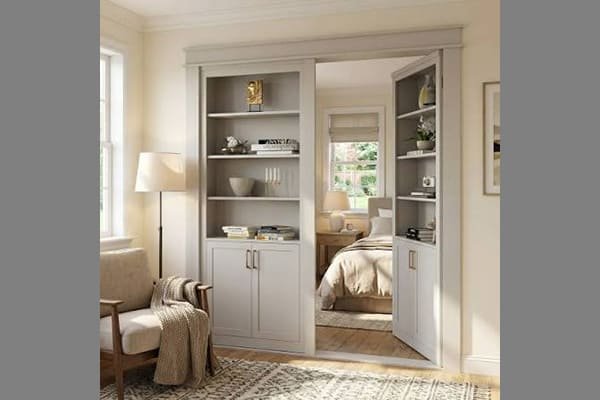
I never treat a bookcase hidden door as a normal light interior door. Shelves, panels, decorative frames, and stored items can add weight.5 The center of gravity can also change.6 This is why I ask the customer whether the shelves are real load-bearing shelves or only decorative panels. This answer changes the hinge choice.
For a premium cabinet-style hidden door, I usually avoid ordinary spring hinges unless the project really accepts the result. I do not say spring hinges are always wrong. I say they need care. In many cases, they can close with more noise, hit the door leaf harder, and reduce the premium feeling7. If the buyer wants quiet movement, I look at concealed hydraulic hinges or a separate damping system. I also check if the hinge can hold position at a required angle. Some hinge models may hold around 90 degrees, while some may not. I confirm this by product model.
| Risk I see | What I check before production |
|---|---|
| Door sagging | Total door weight and hinge quantity |
| Loud closing | Hydraulic damping or controlled closing function |
| Uneven shadow gap | 3D hinge adjustment range |
| Hard opening | Handle position and user grip |
| Unsafe access | Emergency release or external key option |
For a cabinet hidden door, a push latch can be attractive because the surface stays clean. Still, I ask where the door is used. If it is used often, the user may prefer a small recessed handle. If children are present, I am careful with push-to-open designs because accidental opening may be a problem. If the door hides a storage room, mechanical reliability may matter more than perfect surface cleanliness.
A hidden door may look premium on day one. It feels cheap when it drops, rubs the frame, or closes with a sharp bang.
I usually choose 3D adjustable concealed hydraulic hinges for premium hidden doors when the door weight, thickness, frame, opening direction, and project standard allow them.
In my factory work, I see one clear pattern. Buyers often spend much time on surface finish. Then they ask about hinges near the end. I think this order creates risk. The hinge decides the door movement, the reveal, the closing feel, and the service adjustment after installation. A hidden door with a poor hinge can lose its clean look very quickly.
A 3D adjustable concealed hinge gives the installer more control. The door can be adjusted up and down, left and right, or in and out depending on the hinge structure. This is useful because wall openings and door leaves are not always perfect. A hydraulic concealed hinge can also make closing softer. This can reduce impact and make the door feel more refined. Yet I do not treat every hinge as the same. I confirm load capacity, door thickness range, minimum frame size, opening angle, and whether the hinge works with the selected lock.
| Hinge question I ask | Reason I ask it |
|---|---|
| What is the finished door weight? | I need to avoid sagging and hinge stress |
| What is the door thickness? | I need to confirm hinge pocket depth |
| Is the door inward or outward opening? | I need the correct hinge and frame detail |
| Does the door need hold-open? | I need to check model-specific function |
| Does the door need fire rating? | I need certified hardware if the project requires it |
I also warn buyers about ordinary spring hinges. They may be cost-friendly and simple. Yet they may close too fast or create impact noise if they are not matched well. For a hidden door that aims at a high-end wall effect, this can damage the user experience. I prefer to discuss this risk before quotation, not after complaints start.
Should I use recessed handles, push latches, or magnetic locks?
A hidden door can fail because of one small handle. A visible grip, loud latch, or wrong lock can expose the whole idea.
I choose recessed handles for practical use, push latches for cleaner surfaces, and magnetic locks for a neat closing line, but I confirm user safety and access first.
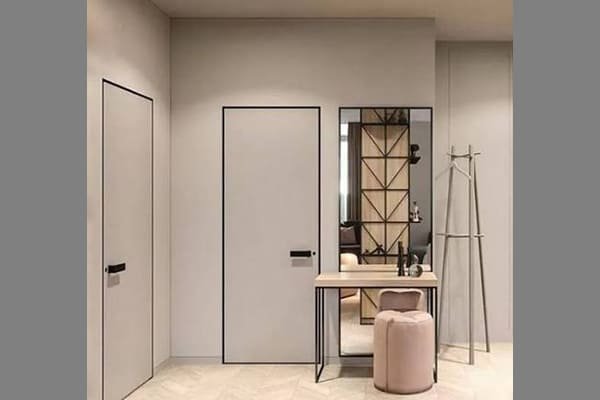
Handles and locks decide how invisible the door remains in daily life. I have seen beautiful wall doors lose their effect because the handle was selected like a normal door handle. A standard lever handle is useful for many doors, but it can break the hidden surface. A recessed flush handle keeps the surface cleaner. It also gives the user a real grip.8 This is useful for doors used often.
A push latch can make the face cleaner because the user pushes the door to open it. It can work well for some storage doors, display spaces, and light hidden doors. Still, I do not suggest it blindly. The opening direction may be limited. The internal space must allow the push movement. The user must understand how the door opens. In homes with children, I ask if accidental opening is a concern.9 In public projects, I ask about safety and access rules.
| Option | Best use in my view | Main caution |
|---|---|---|
| Recessed flush handle | Frequent use and clear grip | It still creates a visible detail |
| Push latch | Clean surface and light use | It may limit opening direction |
| Magnetic lock | Cleaner closing and simple look | It must match the door and frame |
| Emergency keyhole | Service rooms or private rooms | It may add a visible point |
| Standard lever handle | Clear function and strong daily use | It weakens the hidden effect |
Magnetic locks can support a cleaner door edge and a softer visual result. Yet I still check the full system. The lock body, strike plate, frame material, door gap, and emergency access all matter. If the door is for a bathroom, bedroom, office, or equipment room, the lock choice changes. I often tell door manufacturers to confirm the lock before they cut the door leaf. A late lock change can affect the edge, the veneer, the paint, and the frame.
A hidden door can have good hardware and still look wrong. Color mismatch, uneven gloss, and mixed batches can expose it quickly.
I control the finish by matching color systems, using the same veneer batch, planning final paint timing, and checking hardware finish against the door and wall.
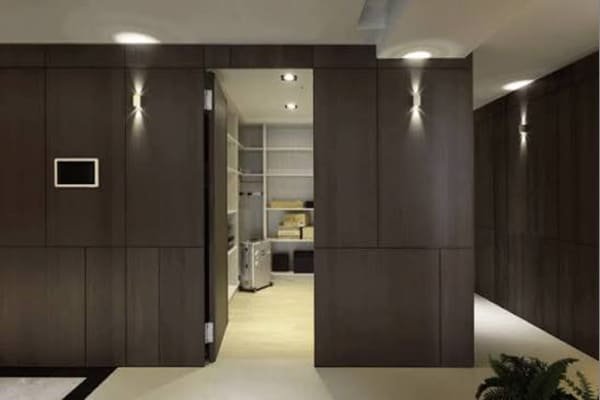
Finish consistency is the final test of a hidden door. I often tell customers that hardware makes the door work, but finish makes the door disappear as much as the project allows. If the wall is matte and the door is semi-gloss, the door will show.10 If the veneer batch is different, the panel line will show. If the frame edge uses a different color, the shadow line may become more obvious.
For painted hidden doors, I prefer a shared color system for the door, frame, and wall. When the project allows it, final paint after installation can reduce color difference11. This is not always possible because factories, job sites, and schedules vary. Still, it is a useful point to discuss early. For wood veneer, I ask the buyer to reserve enough material from the same batch for the door, frame, and nearby wall panels.
| Finish item I confirm | Practical reason |
|---|---|
| Paint color code | I need a clear standard for production |
| Gloss level | I need wall and door reflection to match |
| Veneer batch | I need color and grain to stay consistent |
| Hardware finish | I need hinges, locks, and handles to fit the design |
| Installation sequence | I need to reduce visible difference after fitting |
I also remind buyers that “absolute invisibility” is not a safe promise. Lighting, wall flatness, door gap, user angle, and material behavior all affect the final result. A smart hidden door is not magic. It is a controlled result. I can improve the result when the door leaf, frame, hinge, lock, handle, and finish are planned as one system.
What should I confirm before production or quotation?
A hidden door quote can look complete but still miss key risks. Missing details can become rework, delay, or after-sales complaints.
Before I quote or produce a hidden door, I confirm door size, weight, thickness, opening direction, hinge model, lock type, handle method, finish, certification, and installation limits.
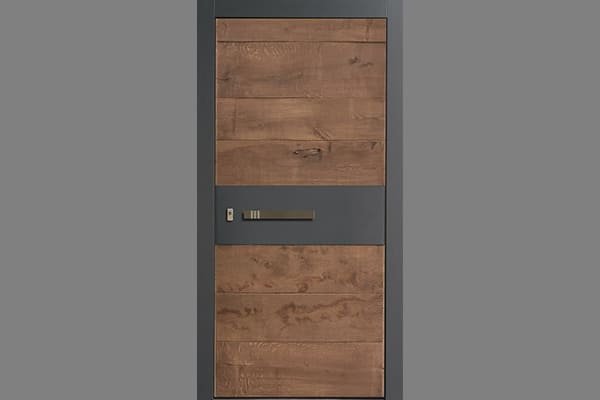
I see hidden-door projects become easier when I ask practical questions early. A customer may send a nice drawing and ask for a hinge price. I cannot give a safe answer from a drawing alone. I need to know the finished door weight, not only the door size. I need to know whether the door is solid wood, composite, metal, glass, veneer panel, or cabinet structure. I also need to know if the project needs CE certification, fire-rated certification, or other local standards.
If the project needs fire rating, I do not assume that every concealed hinge or lock is acceptable. I ask for the project standard and then match certified hardware if available.12 If the customer mentions a bottom clearance such as under 7 mm, I treat it as project and product dependent. I confirm it with the hinge, frame, floor finish, and door swing condition. I avoid universal numbers because real projects vary.
| Production detail | I confirm this before quotation |
|---|---|
| Door size and finished weight | Hinge load, hinge number, and frame strength |
| Door thickness and material | Hinge pocket, lock body, and screw holding |
| Opening direction | Hinge type, lock side, and push latch fit |
| Required closing function | Hydraulic damping, hold-open, or auto-closing angle |
| Handle and access | Recessed grip, push latch, keyhole, or emergency release |
| Finish system | Paint code, veneer batch, gloss, and hardware color |
| Certification | CE, fire-rated, or project-specific documents |
This checklist helps door manufacturers build repeatable hidden-door products. It also helps buyers reduce complaints about gaps, sagging, loud closing, hard opening, color mismatch, and poor lock feel. I do not push one hardware solution for every hidden door. I match the hardware to the door type and use case. This is the safest way to turn a clever idea into a product that can be produced again and again.
Conclusion
I build clever hidden doors by planning hinges, handles, locks, frames, and finishes together before production, not by relying on surface design alone.
"HES3D - V135 3D adjustable concealed hinge", https://www.sugatsune.com/content/site-assets/Instructions/hes3dv135in.pdf?srsltid=AfmBOoqD0wNevjOpqDJhG4qaC3Rg0TqG8gqcz8IcX3LpSSvQSxnzaNGd. Architectural hardware guidance describes three-dimensional concealed hinges as permitting post-installation adjustment of the door leaf in height, lateral position, and depth, which supports the mechanism described here. Evidence role: mechanism; source type: institution. Supports: A neutral architectural hardware or standards source should explain that adjustable concealed hinges can provide height, lateral, and depth adjustment for installed doors.. Scope note: This would support the general hinge mechanism, not the performance of any specific hinge model. ↩
"Door closer - Wikipedia", https://en.wikipedia.org/wiki/Door_closer. Engineering references on damping explain that hydraulic dampers dissipate kinetic energy and slow motion near closure, supporting the claim that a damped hinge can produce more controlled and potentially quieter closing. Evidence role: mechanism; source type: education. Supports: A source should explain that hydraulic damping dissipates motion energy and slows closing, reducing impact at the end of travel.. Scope note: The source would establish the physical mechanism; actual noise reduction depends on door mass, installation, latch type, and surrounding materials. ↩
"Requirement Analysis and Augmented Reality Interface Design ...", https://bioresources.cnr.ncsu.edu/wp-content/uploads/2026/05/BioRes_21_3_5785_Chen_Requirement_Augment_Reality_Wood_Veneer_Cabinet_25807.pdf. Wood science guidance notes that natural veneer appearance varies with log source, cut, grain, and finishing conditions, supporting the caution that different veneer batches may not match exactly. Evidence role: general_support; source type: education. Supports: A wood science or university extension source should confirm that veneer color and appearance vary with species, log source, cut, and batch.. Scope note: This is contextual support for material variability rather than proof that every mixed-batch veneer installation will show visible color shift. ↩
"Veneer Matching 101: How to Achieve Stunning Wood Grain Patterns", https://www.forteopenings.com/blog/veneer-matching-101-how-to-achieve-stunning-wood-grain-patterns. Architectural woodwork guidance treats veneer grain matching and panel layout as key factors in achieving visual continuity across adjacent surfaces, supporting the claim that unplanned grain-direction changes can weaken concealment. Evidence role: general_support; source type: institution. Supports: An architectural woodwork or veneer-matching standard should describe how grain matching and layout affect visual continuity across panels.. Scope note: The source would support the design principle generally, while the visual result in a specific door also depends on lighting, finish, and panel geometry. ↩
"Should we consider furniture and book shelves kept in ...", https://www.quora.com/Should-we-consider-furniture-and-book-shelves-kept-in-library-dead-load-or-live-load. Furniture and structural design references distinguish the self-weight of shelves and panels from the live load of stored objects, supporting the point that a bookcase-style door may impose greater hinge loads than a plain interior door. Evidence role: mechanism; source type: education. Supports: A furniture engineering or structural design source should support that shelving systems must account for dead load and live load from contents.. Scope note: This supports the load principle, not a specific allowable weight for any hidden-door assembly. ↩
"Center of Gravity | Glenn Research Center - NASA", https://www1.grc.nasa.gov/beginners-guide-to-aeronautics/center-of-gravity/. Classical mechanics texts explain that an object's center of gravity depends on the distribution of mass, supporting the claim that shelves and stored items can shift the effective balance of a bookcase-style door. Evidence role: mechanism; source type: education. Supports: A physics or engineering source should explain that the center of gravity of a body changes when added mass is distributed away from the original center.. Scope note: This provides a general mechanics basis and does not calculate hinge loads for a specific door. ↩
"Waterson Hinges for Interior Soundproof Door: Limits and Fixes", https://watersonusa.com/solutions/interior-soundproof-door. Research and technical literature on door-closing dynamics links closing speed, impact at the stop or latch, and resulting noise, supporting the caution that an undamped or poorly matched spring hinge may feel harsher in use. Evidence role: mechanism; source type: research. Supports: A source should explain how uncontrolled or insufficiently damped closing can increase impact force and noise at the stop or latch.. Scope note: The source would support the mechanism; it would not establish that all spring hinges perform poorly. ↩
"2 Pack Stainless Steel Recessed Pocket Door Pull Handle, Flush ...", https://villageofgreenwoodlake.gov/products/2-pack-stainless-steel-recessed-pocket-door-pull-handle-flush-mount-sliding-door-hardware-with-hidden-finger-design-used-for-modern-furniture-interior-doors-brushed-brass/218814487/. Architectural hardware references define recessed or flush pulls as pull fittings set into the door face, supporting the statement that they reduce surface projection while still providing a grip point. Evidence role: definition; source type: institution. Supports: A source should define recessed or flush pulls as handles set into the door surface and describe their function as hand grips.. Scope note: This supports the functional description, not the suitability of a particular handle for every door size or accessibility requirement. ↩
"Childproofing Your Home - Several Safety Devices to Help ...", https://www.cpsc.gov/safety-education/safety-guides/kids-and-babies/Childproofing-Your-Home. Government child-safety guidance commonly recommends securing cabinets, doors, and storage areas to limit unsupervised child access, supporting the article's caution about accidental opening in homes with children. Evidence role: general_support; source type: government. Supports: A public health or government source should support that child safety planning often includes preventing unsupervised access through doors, cabinets, or latches.. Scope note: This is contextual child-safety support and may not address push-latch hidden doors specifically. ↩
"[PDF] sheen and gloss guide - Sherwin-Williams", https://images.sherwin-williams.com/content_images/sw-pdf-sheen-gloss-guide.pdf. Coatings literature describes gloss as a measure of directional light reflection from a surface, supporting the claim that mismatched matte and semi-gloss finishes can make adjacent surfaces appear different. Evidence role: mechanism; source type: research. Supports: A coatings or materials source should explain that gloss is related to surface reflectance and affects visual appearance under light.. Scope note: The degree of visibility depends on lighting angle, color, surface flatness, and viewing distance. ↩
"[PDF] FINISHES Section 09 91 23 – Interior Painting PART 1", https://digitalcommons.imsa.edu/cgi/viewcontent.cgi?article=1025&context=facility_in2_manuals. Architectural painting guidance notes that final coat timing, substrate conditions, and application method influence color and sheen uniformity, supporting the practice of considering final paint after installation to reduce visible differences. Evidence role: general_support; source type: institution. Supports: A painting or architectural finishing source should support that final coating sequence and substrate conditions affect color and finish consistency.. Scope note: This is contextual support; it does not guarantee a perfect match if substrates, lighting, or coating batches differ. ↩
"Fire Doors and NFPA 80 FAQs", https://www.nfpa.org/news-blogs-and-articles/blogs/2025/04/11/fire-doors-faqs. Fire-door standards and building-code guidance treat hinges, latches, locks, and other hardware as components of the rated opening that must be suitable for the applicable fire-rating requirements, supporting the need to match certified hardware to the project standard. Evidence role: expert_consensus; source type: government. Supports: A building-code, fire-safety, or standards source should confirm that fire-door hardware must be listed, labeled, or otherwise compatible with the rated door assembly.. Scope note: Specific certification requirements vary by jurisdiction, project type, and the named standard. ↩