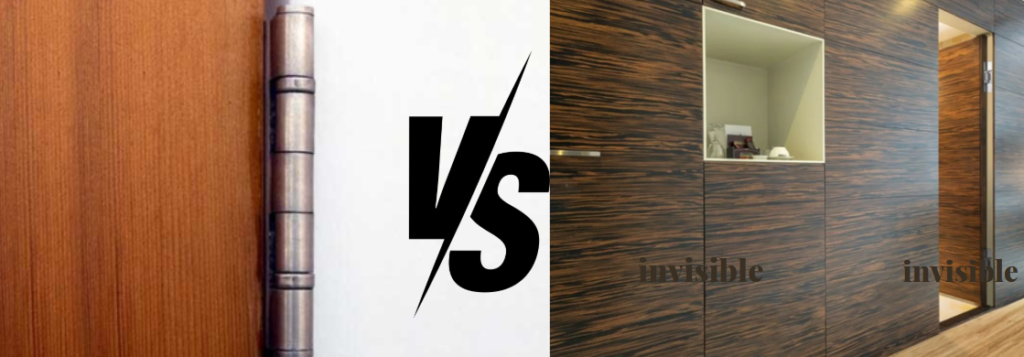
Are concealed hinges stronger than regular hinges?
Choosing the right door hinge can be tricky, especially when you need to balance durability with aesthetics. Are you struggling to decide if a hidden hinge is truly better than a visible one for strength, or are you worried about costly product failures later? This is a common challenge for buyers like us.
Concealed hinges are not inherently stronger than regular hinges; their "strength" depends on many factors. These include the hinge's material, its specific structure, the door's weight, how often it is used, how precisely it is installed, and the door or frame application itself.1

As a manufacturer who sees hinges built from the ground up, I have learned that judging strength is complex. It involves looking beyond just appearance. We need to break down what "stronger" truly means in the world of door hardware. This helps us make the best choices for our projects.
What Does "Stronger" Really Mean for a Door Hinge?
You might think "stronger" just means holding a heavy door. But this single idea can lead to bad choices. Are you making decisions based on vague ideas of strength? This can hide many important performance factors.
For door hinges, "stronger" involves multiple performance aspects. These include a hinge's ability to carry weight without sagging, its resistance to deformation under stress, its durability over many opening and closing cycles, and its stability once installed.2

When we talk about a "stronger" hinge, I know we are usually not just talking about one thing. From our factory perspective, we break strength down into several key areas. First, there is load-bearing capacity. This is about how much static weight a hinge can hold without bending or breaking. It means preventing the door from sagging over time. Second, we consider deformation resistance. This is about how well the hinge keeps its shape under dynamic forces, like when a heavy door swings open or closes. We also look at durability over cycles. A hinge might hold a lot of weight, but can it do so reliably for hundreds of thousands of openings? This includes resistance to wear on moving parts. Then there is installation stability. A hinge is only as strong as its connection to the door and frame. Poor installation can weaken even the best hinge. Finally, resistance to vandalism or forced entry3 can also be part of "strength" in some applications. Each of these aspects needs careful thought. It is not enough to just say a hinge is "strong." We must be specific about what kind of strength we mean. We also must remember that each hinge type has its own way of achieving these different strengths.
How Do Regular Butt Hinges Handle Strength?
Butt hinges are common, often seen as simple. You might think they are only for light doors. But are you overlooking their specific strengths and ideal uses? This can lead to wrong assumptions.
Regular butt hinges, with their simple pin-and-knuckle design, offer stable force distribution along a single axis. This makes them reliable and cost-effective for many lighter to medium-weight interior wooden doors, especially in standard opening and closing scenarios.4
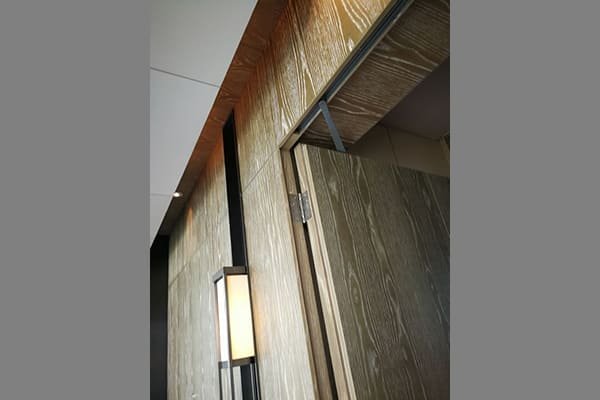
From a manufacturing view, the regular butt hinge has a straightforward design. It typically has two leaves joined by a pin and knuckles. This simple structure means the load is directly transferred through the hinge leaves into the door and frame. The force acts along a clear, single axis of rotation. This direct force path gives butt hinges good stability for their intended use. For many standard interior doors, particularly those made of wood, butt hinges are more than enough. They are often made from steel, stainless steel, or brass. The material choice greatly affects their strength. For example, a heavy-gauge stainless steel butt hinge will certainly be stronger and more durable than a thin steel one. They are also easier to install because they require less precise routing of a mortise compared to more complex hinges. However, butt hinges have limits. Their exposed design means the pin can sometimes be removed. Also, for very heavy doors or doors with high frequency use, the wear on the pin and knuckles can become an issue over time. This can lead to sagging if the hinge is not robust enough for the door's weight and usage. When selecting butt hinges, we always look at the thickness of the material, the size of the pin, and the quality of the bearings. These details make a big difference in how well they perform.
How Do Concealed Hinges Provide Strength?
Concealed hinges look sleek and modern, often making us think they are superior. But do you truly understand how their complex design affects their real-world strength? This lack of understanding can cause problems.
Concealed hinges use a multi-linkage mechanism that changes the force direction during movement. Their strength relies heavily on high-quality materials, extreme machining precision, accurate mortise cuts, robust frame support, and consistent installation to perform correctly.5
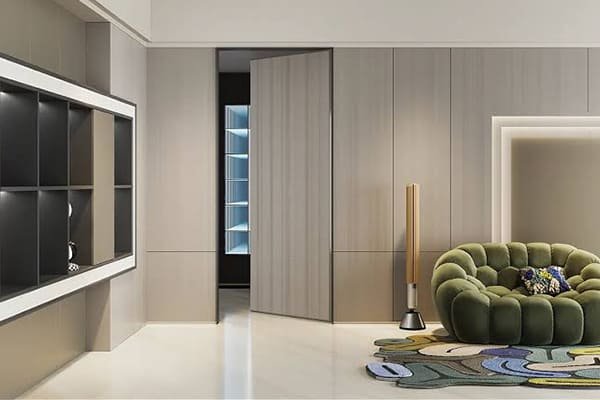
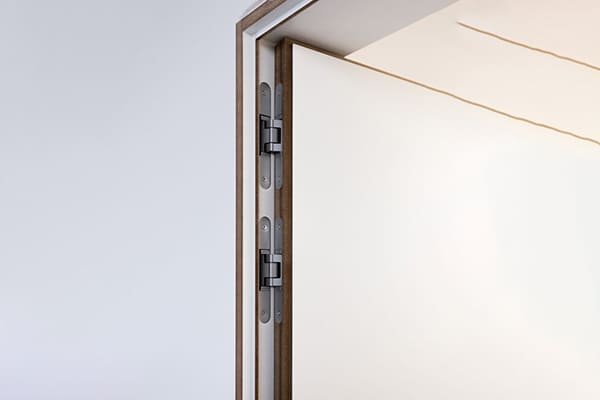
Concealed hinges, often called invisible hinges, have a much more intricate design than butt hinges. Instead of a simple pivot, they use a series of interconnected links. These links allow the hinge to fold completely into the door and frame, making it hidden when the door is closed. This complex linkage structure means that the forces on the hinge change as the door opens and closes. Unlike the direct path of a butt hinge, the load is distributed across multiple pivot points and links. This complexity demands very high levels of manufacturing precision. Any small error in machining or assembly can significantly affect its load-bearing capacity and durability.6 For instance, if the pivot pins are not perfectly aligned or if the material thickness is uneven, the hinge will wear out faster or fail under stress. This is why material quality is critical. High-grade stainless steel is often preferred for its strength and resistance to corrosion. The installation process is also far more critical. Accurate mortising in both the door and the frame is essential. If the mortises are not precise, the hinge will not sit correctly. This can put undue stress on the links and fasteners.7 When correctly specified and installed, high-quality concealed hinges can carry heavy doors and offer excellent long-term performance. However, these specific performance claims, like "up to 200 kg load capacity" or "200,000 opening cycles," always depend on the exact model and must be verified by supplier data and test reports. We see how critical every detail is in our production line.
What Factors Truly Impact Hinge Performance and Strength?
You might focus only on hinge type, but many other things affect how strong a hinge really is. Are you forgetting the deeper details that truly impact a hinge's life? This oversight can lead to unexpected failures.
Beyond hinge type, several key factors significantly impact a hinge's actual strength and performance. These include the hinge's material, its manufacturing precision, the quality of installation, the door's weight, and the specific application or usage environment.
From my experience in manufacturing, I know that many elements combine to define a hinge's true strength. It is never just about whether it is concealed or exposed. First, material quality is paramount. A hinge made from high-grade stainless steel will always outperform one made from lower-grade steel or zinc alloy, assuming all other factors are equal. Stainless steel offers better tensile strength and corrosion resistance.8 Second, manufacturing precision is extremely important. This covers the accuracy of cutting, drilling, and assembling components. For concealed hinges, tiny deviations can cause excessive wear or premature failure. For butt hinges, precise pin fitting matters. Third, installation accuracy plays a massive role. Even the strongest hinge will fail if it is not properly secured to the door and frame. This includes using the correct fasteners and ensuring the mortises are cut perfectly. Fourth, door weight and dimensions are obvious factors. A hinge designed for a light interior door will not hold up a heavy solid wood or armored door. The weight must be within the hinge's tested load capacity. Fifth, usage frequency and environment affect durability. A hinge in a high-traffic public building needs to withstand many more cycles than one in a residential closet.9 Also, harsh environments (e.g., coastal areas) demand corrosion-resistant materials. Finally, door and frame material and construction matter. A strong hinge mounted on a weak door or frame will not perform well. Here's a table summarizing these points:
| Factor | Impact on Hinge Strength | Why it matters |
|---|---|---|
| Material Quality | Load-bearing, durability, corrosion resistance | High-grade stainless steel offers superior strength and longevity. |
| Manufacturing Precision | Smooth operation, consistent load distribution | Reduces wear, prevents premature failure, especially in complex designs. |
| Installation Accuracy | Prevents sagging, ensures proper alignment, extends life | Improper installation negates hinge quality, causes stress points. |
| Door Weight/Dimensions | Determines required load capacity | Overloading leads to failure; hinges must match door specifications. |
| Usage Frequency | Affects long-term durability and wear | High-traffic areas demand robust hinges with high cycle ratings. |
| Application Environment | Corrosion resistance, temperature stability | Outdoor or humid conditions require specific materials and finishes. |
Understanding these details helps us make truly informed choices.
How Do I Make the Right Hinge Choice for My Project?
You need to pick the perfect hinge, but the options feel endless and the "stronger" debate confusing. Are you struggling to balance cost, aesthetics, and performance without over-specifying? This is a common purchasing challenge.
Making the right hinge choice means aligning door weight, budget, aesthetic needs, and performance demands with verifiable product specifications. It is about selecting a hinge that meets certified standards for the application, not simply choosing between "concealed" or "regular."
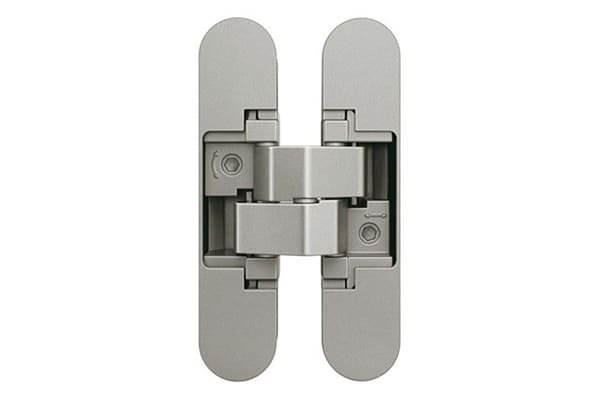
When it comes to purchasing hinges for your projects, the decision is rarely "concealed versus regular." Instead, it is about matching the hinge to the specific requirements. First, consider the door weight and usage frequency. This is your starting point. If you have a light-duty, low-budget, standard interior door, a well-selected regular butt hinge, especially a high-quality stainless steel one with good bearings, may be perfectly adequate. There is no need to over-specify and spend more than necessary. However, if your project demands a higher aesthetic requirement, perhaps for a minimalist design, or you are dealing with a heavier door, or there is a more demanding performance requirement like a high-traffic area, then a properly specified concealed hinge might be more suitable. It is crucial to look at the specifications and certifications. Any claims like "up to 200 kg" load capacity or "200,000 cycles" should be tied to a specific model, test method, and verified by relevant certificates, such as CE or fire-rated certifications.10 Do not take general statements at face value. Also, consider the installation complexity and cost. Concealed hinges often require more precise installation, which can increase labor costs. Finally, always engage with your supplier. Discuss your project's specific needs. Ask for detailed product data sheets, test reports, and installation guides. This helps ensure that the hinge you choose not only looks good but also performs reliably, avoiding after-sales issues and ensuring long-term satisfaction for your customers. As manufacturers, we always recommend verifying suitability for your specific application.
Conclusion
Ultimately, a hinge's strength is not just about being hidden or visible. It depends on material, design, precision, and proper installation. Choose the right hinge by matching its proven capabilities to your door's exact needs and project demands.
"How Much Weight Can Door Hinges Hold? - YAKO Hardware", https://www.yako-hw.com/news/140/. Research on door hinge mechanics indicates that hinge strength is a multifaceted concept, influenced by material composition, structural design, installation precision, and application-specific variables such as door weight and usage frequency. Evidence role: general_support; source type: research. Supports: the various factors that determine the strength and performance of door hinges. ↩
"optimization of hinge configuration of furniture doors using ...", https://bioresources.cnr.ncsu.edu/BioRes_07/BioRes_07_Unsecured/BioRes_07_4_5809_Zhou_HHYJ_Hinge_Config_Doors_FiniteElement_3335.pdf. Engineering principles and industry standards for door hardware define hinge strength as a combination of load-bearing capacity, resistance to deformation, cyclic durability, and installation stability. Evidence role: definition; source type: research. Supports: the comprehensive definition of 'strength' in the context of door hinges. ↩
"Security Hinges - NRP and Sec Tab - HingeOutlet", https://www.hingeoutlet.com/collections/security-hinges-nrp-and-sec-tab/size-3-5-inch?srsltid=AfmBOopHq58vIWY78kD6DmqnBzMhfE5JecsZzWUFvPJKGnfxQt7X0Yiq. Building security standards and guidelines for high-security applications often include resistance to vandalism and forced entry as a critical performance metric for door hinges. Evidence role: general_support; source type: government. Supports: the inclusion of resistance to vandalism and forced entry as a strength criterion for hinges in security applications. ↩
"A Guide to Butt Hinges | MRO Hardware", https://mrohardware.com/2025/03/12/a-guide-to-butt-hinges/?srsltid=AfmBOoonA9EmQqRwTJX0Bnl-KHtszYfco-Qr7AYcQHnm63HlxmUae3Sy. Engineering analyses of door hardware confirm that the simple pin-and-knuckle design of butt hinges provides stable force distribution, making them a reliable and cost-effective solution for many standard interior door applications. Evidence role: general_support; source type: research. Supports: the mechanical characteristics and typical applications of regular butt hinges. ↩
"Types, Parts, and Requirements of Concealed Hinges - IQS Directory", https://www.iqsdirectory.com/articles/hinges/concealed-hinge.html. Mechanical engineering studies on concealed hinges detail their multi-linkage mechanism and emphasize that their structural integrity and performance are critically dependent on high-quality materials, precise manufacturing, and accurate installation. Evidence role: mechanism; source type: research. Supports: the operational mechanism and critical factors influencing the strength and performance of concealed hinges. ↩
"Manufacturing Tolerance - an overview | ScienceDirect Topics", https://www.sciencedirect.com/topics/engineering/manufacturing-tolerance. Manufacturing engineering principles indicate that even minor deviations in machining or assembly tolerances for complex mechanisms like concealed hinges can lead to substantial reductions in their intended load-bearing capacity and long-term durability. Evidence role: general_support; source type: research. Supports: the significant impact of manufacturing and assembly precision on the load-bearing capacity and durability of concealed hinges. ↩
"How to Install Cabinet Hinges in 4 Easy Steps - Eagle Woodworking", https://www.eaglewoodworking.com/blog/how-to-install-cabinet-hinges. Installation guidelines for concealed hinges consistently highlight that precise mortising in both the door and frame is essential to prevent misalignment, which can induce excessive stress on the hinge's internal components and fasteners. Evidence role: general_support; source type: research. Supports: the critical importance of accurate mortising for concealed hinges to prevent undue stress and ensure proper function. ↩
"Zinc Alloy vs Stainless Steel: The Differences & Benefits", https://www.patriotfoundry.com/news/zinc-alloy-vs-stainless-steel/. Material science research confirms that high-grade stainless steel exhibits superior tensile strength and corrosion resistance compared to lower-grade steels or zinc alloys, leading to enhanced performance and longevity in hinge applications. Evidence role: general_support; source type: research. Supports: the superior performance of high-grade stainless steel in hinge manufacturing compared to lower-grade materials, citing its enhanced tensile strength and corrosion resistance. ↩
"Standard Door Hinge Dimensions: 3.5" to 6" Sizing Guide", https://doorsforpros.com/blog/post/standard-door-hinge-dimensions?srsltid=AfmBOopbMKzFMUNZy3rh-kQ_SAk8TpqfvZAZTrdTFj5fn0i-5BzWYDOi. Building codes and industry standards for door hardware specify significantly higher cycle durability ratings for hinges installed in high-traffic public buildings compared to those used in residential applications. Evidence role: general_support; source type: government. Supports: the differing durability requirements for hinges based on usage frequency in commercial versus residential settings. ↩
"What Is a CE-Compliant Door Hinge? A Complete Guide ...", https://www.marchry.com/what-is-a-ce-compliant-door-hinge-a-complete-guide-to-the-en1935-certification-standard/. Industry best practices and regulatory bodies, such as those governing CE marking and fire safety, mandate that door hinge performance claims, including load capacity and cycle ratings, must be substantiated by specific test methods and verified through relevant certifications. Evidence role: expert_consensus; source type: institution. Supports: the necessity of verifying hinge performance claims (e.g., load capacity, cycle durability) through specific test methods and recognized certifications. ↩