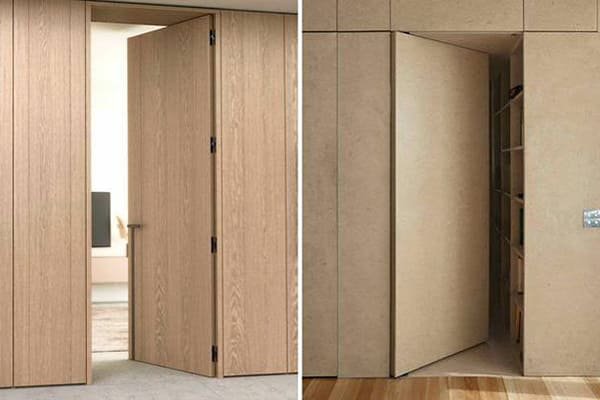
What Are the Different Types of Mortise Door Locks?
I see buyers waste money when they choose a mortise lock by name only. The wrong structure can cause wrong fitting, weak function, and delayed delivery.
I classify mortise door locks first by latch and bolt function: single deadbolt, single latch, latch with button, and double-bolt lock with latch and deadbolt. I then confirm door use, door data, material, cylinder, handle, and regional standard before I recommend a type.
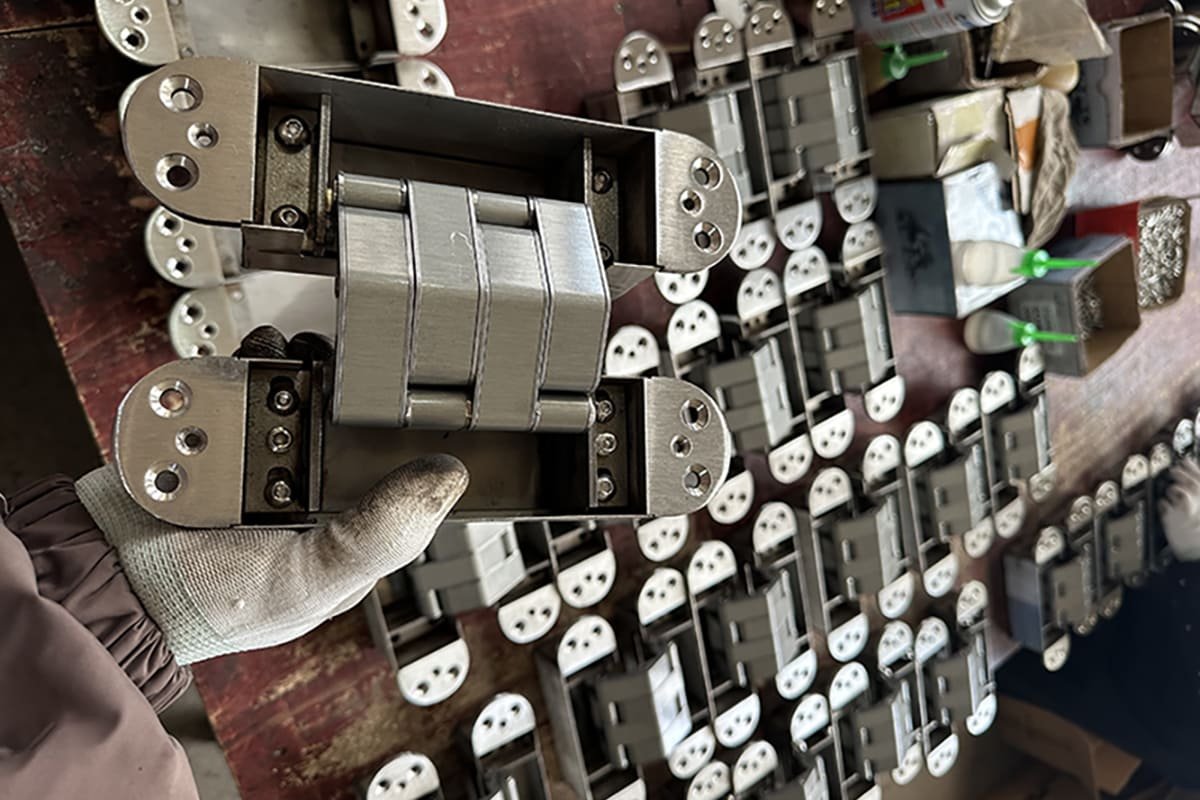
I have handled many mortise lock inquiries from door factories, hardware brands, and wholesalers. I rarely start with a simple catalog name. I first ask what the door needs to do. I ask if the door needs privacy, passage, entrance security, or bathroom emergency release. I also ask about door thickness, backset, centre distance, forend size, cylinder type, handle hole, and market standard. If I skip these questions, I may quote a lock body that looks right but cannot work on the real door. So I want to explain mortise lock types from a factory-side view, not from a simple shopping list view.
How Should I Classify Mortise Door Locks By Latch And Bolt Function?
I see confusion when buyers ask for “one mortise lock” without a function. The door may close, lock, or both, so the inner structure matters.
I classify mortise locks by how the latch and deadbolt work. A single latch lock mainly closes the door. A single deadbolt lock mainly locks the door. A latch-with-button lock adds simple inside privacy. A double-bolt lock combines daily closing with key locking.
Main Function Types I Use In Product Confirmation
| Mortise lock type | Main structure | Main use | Key point I confirm |
|---|---|---|---|
| Single latch mortise lock | Latch only | Passage doors | Handle operation and latch direction |
| Single deadbolt mortise lock | Deadbolt only | Extra locking point | Cylinder or thumbturn operation |
| Latch-with-button mortise lock | Latch plus inside button | Bedroom or privacy doors | Emergency release and handle match |
| Double-bolt mortise lock | Latch plus deadbolt | Entrance or higher security doors | Backset, centre distance, cylinder, handle |
I use latch and bolt function as the first classification because the function decides how the door works every day. A latch is a spring-loaded part.1 It helps the door close when the handle is released. A deadbolt is a locking part. It usually moves by key, cylinder, thumbturn, or similar control.2 A single latch lock can make a door stay closed, but it does not give the same locking effect as a deadbolt.3 A single deadbolt lock can add locking, but it does not offer normal handle latch operation by itself. A latch-with-button lock is common when the user needs easy privacy from inside. A double-bolt lock is common when the door needs both normal closing and stronger locking. In my factory quotation work, this first step removes many mistakes. It tells me which lock body drawing, which strike plate, and which accessory set may be needed.
Which Mortise Lock Type Fits Entrance, Bedroom, Bathroom, And Passage Doors?
I see many wrong orders because the buyer starts with room names only. A bedroom lock and a bathroom lock can look similar but need different release functions.
I match the lock structure to the door use. Entrance doors often need latch and deadbolt. Bedroom doors need privacy. Bathroom doors need inside locking and outside emergency release.4 Passage doors usually need only latch and handle operation.
How I Match Door Use With Lock Function
| Door application | Common lock function | What I pay attention to | Common risk |
|---|---|---|---|
| Entrance door | Double-bolt or multi-bolt structure | Security level, cylinder, handle strength | Buyer chooses passage lock by mistake |
| Bedroom door | Latch with privacy function | Inside lock, outside release need | Button type does not match market habit |
| Bathroom door | Privacy latch or bathroom lock body | Emergency release from outside | No release function in public projects |
| Passage door | Single latch | Smooth handle operation | Buyer pays for locking function not needed |
I treat application as the second step after function. I do not say that one name always fits one door because markets use different standards. For entrance doors, many buyers ask for higher security. I then check if they need a double-bolt mortise lock, a cylinder-operated deadbolt, or a multi-point system. I do not claim a lock is fit for anti-theft or fire-rated use unless the exact model and certificate are confirmed.5 For bedrooms, I focus on privacy and simple use. The user needs to lock from inside, and the outside may need an emergency opening method. For bathrooms, I pay more attention to emergency release because locked bathroom doors can create real service problems. For passage doors, I usually recommend a single latch lock body when the door only needs closing and handle movement. This approach helps my customers avoid over-specification and under-specification at the same time.
Why Are Mortise Locks Not Interchangeable Even If They Look Similar?
I often receive samples that look close to our lock bodies. The outer shape can match, but one small dimension can stop assembly.
I do not treat mortise locks as interchangeable. I must confirm door thickness, door material, opening direction, backset, centre distance, forend size, latch and bolt layout, cylinder type, handle compatibility, and regional standard.6
Parameters I Confirm Before Production
| Parameter | Why I check it | Example of possible problem |
|---|---|---|
| Door thickness | The spindle, cylinder, and screws must fit | Cylinder length is too short or too long |
| Door material | Wood, steel, aluminum, and fire door structures differ | Screw fixing is weak or wrong |
| Opening direction | Latch direction and handing may matter | Latch bevel faces the wrong side |
| Backset | Handle and cylinder position depend on it | Door machining holes do not match |
| Centre distance | Handle and cylinder spacing must align | Lever handle plate cannot fit |
| Forend size | The lock front must fit the door edge | Forend is too wide or too narrow |
| Cylinder type | Euro, oval, profile, or other types differ | Cylinder cannot enter the lock body |
| Regional standard | EU, UK, and other standards use different dimensions | Accessories from another market do not match |
I see many buyers compare mortise locks only by photos. I understand why they do this because photos are fast. Still, photos cannot show all working dimensions. A 72 mm centre distance lock is not the same as an 85 mm centre distance lock.7 A 50 mm backset lock is not the same as a 55 mm backset lock. A lock body for a euro profile cylinder may not match a different cylinder style. A narrow forend may not fit a door that was machined for a wider forend. I also check handle compatibility because the spindle hole, follower size, and handle plate design must work together. In real production, one wrong parameter can create a full batch problem. My best practice is simple. I ask for the door drawing, lock drawing, handle drawing, cylinder requirement, and market standard before I confirm the final item.
How Does Material Affect Mortise Door Lock Selection?
I see buyers focus on material first because material affects price. I understand that need, but material cannot replace function and size confirmation.
I treat material as a secondary classification. Brass, stainless steel, zinc alloy, and steel parts affect cost, corrosion resistance, strength, finish stability, and market position8, but the lock function and compatibility still come first.
Material Factors I Usually Discuss With Buyers
| Material or part choice | Main value | Typical concern |
|---|---|---|
| Brass or copper parts | Good feel and corrosion resistance in some parts | Higher cost |
| Stainless steel forend or parts | Better rust resistance and stable surface | Processing cost and grade selection |
| Zinc alloy parts | Good shape forming and cost control | Strength depends on design and usage |
| Steel lock case | Common structure and cost efficiency | Surface treatment and corrosion control |
| Plated or coated finish | Matches handle and door hardware set | Finish consistency in bulk orders |
I discuss material after I understand the door function. A bathroom or coastal market may need better corrosion resistance.9 A budget product line may need a more cost-effective lock case and trim choice. A brand project may need a stable finish across the lock forend, strike plate, lever handle, hinge, and cylinder. I also remind buyers that the visible finish and the inner structure are different topics. A stainless steel forend does not mean every inner part is stainless steel. A brass cylinder does not mean the mortise lock body is brass. In factory production, material selection affects stamping, casting, machining, plating, assembly, and cost. It also affects how stable the finish looks in bulk orders. I prefer to connect material with market position. For a wholesale line, cost control may be more important. For a project or brand line, finish consistency and long-term supply may be more important. I still keep the first rule. The lock must fit the door and function first.
What Should B2B Buyers Confirm Before Ordering Mortise Door Locks?
I see the largest losses happen before production starts. A buyer may approve a price but forget the data that decides whether the lock can be installed.
I ask B2B buyers to confirm the lock structure, door application, door data, accessory matching, certification needs, finish, packing, and delivery plan before ordering. This reduces wrong purchases and protects batch assembly.
My Factory-Side Order Checklist
| Confirmation item | What I need from the buyer | Why it matters |
|---|---|---|
| Lock function | Latch only, deadbolt only, privacy, or double-bolt | It decides the lock body structure |
| Door application | Entrance, bedroom, bathroom, passage, or project door | It decides security or privacy need |
| Door data | Thickness, material, edge machining, opening direction | It decides installation fit |
| Lock dimensions | Backset, centre distance, forend, case size | It decides compatibility |
| Accessories | Cylinder, handle, spindle, screws, strike plate | It decides full set matching |
| Standard and certificate | CE, fire-rated, or market standard if required | It decides compliance path |
| Finish | SS, satin, polished, PVD, plated, or custom | It decides appearance consistency |
| Packing and quantity | Bulk, brand box, neutral box, or project packing | It decides delivery and warehouse work |
I use this checklist because B2B orders are not the same as one-time retail purchases. A door factory needs lock bodies that fit the door machining line.10 A hardware brand needs a stable product line that can be reordered without sudden changes. A wholesaler needs common dimensions that match local cylinders and handles. A project buyer may need certificates, but I always ask for the exact requirement before I make any statement. CE and fire-rated needs depend on the product model, testing scope, and project document.11 I also check surface finish early because a lock forend may sit beside a lever handle, a hinge, and a cylinder escutcheon. If the finish tone is not consistent, the buyer may face customer complaints. I also confirm packing because large orders need clear labels, strong cartons, and easy warehouse handling. These small points look basic, but they help prevent big problems.
How Do I Choose The Right Mortise Lock For A Product Line?
I see product managers face a hard task. They need enough lock types for the market, but too many sizes create inventory pressure.
I build a mortise lock product line by starting with common door uses, then selecting a few stable lock structures, standard dimensions, matching handles and cylinders, and finishes that fit the target market.
A Simple Product Line Logic I Use
| Product line level | Lock function | Matching hardware | Buyer goal |
|---|---|---|---|
| Basic passage line | Single latch | Simple lever handle | Low cost and fast turnover |
| Privacy line | Latch with button or privacy function | Bedroom or bathroom handle set | Clear room function |
| Entrance line | Latch plus deadbolt | Euro cylinder and stronger handle set | Better security and market value |
| Project line | Confirmed lock model with documents | Full door hardware package | Stable supply and compliance support |
I do not advise buyers to collect too many mortise lock types at the start. A wide range looks good in a catalog, but it can create high stock pressure and slow moving items.12 I usually help buyers find the common backset, centre distance, and cylinder type in their market first. Then I suggest a passage lock, a privacy lock, and an entrance lock as a basic structure. If the buyer serves door factories, I ask for their door machining data. If the buyer serves wholesalers, I ask which handle and cylinder sizes sell best in their market. If the buyer serves projects, I ask for document requirements, finish samples, and delivery schedule. A stable product line is not built by names only. It is built by lock body function, matching accessories, repeated production, and clear drawings. This is why I always connect product planning with real installation data.
Conclusion
I choose mortise locks by function, door use, dimensions, material, and matching hardware. I do not rely on names alone because batch fit matters.
"Latch", https://en.wikipedia.org/wiki/Latch. The source defines a latchbolt as a spring-actuated bolt that holds a door in the closed position, supporting the article’s distinction between latching and locking functions. Evidence role: definition; source type: encyclopedia. Supports: A neutral definition should confirm that a latch or latchbolt is spring-actuated and used to hold a door closed.. ↩
"Deadbolt", https://en.wikipedia.org/wiki/Deadbolt. The source defines a deadbolt as a locking bolt operated mechanically rather than by a spring latch, commonly by a key or thumbturn, supporting the article’s functional classification. Evidence role: definition; source type: encyclopedia. Supports: A neutral source should define a deadbolt as a locking bolt that is not spring-latched and is commonly operated by a key or thumbturn.. ↩
"Physical Security Toolbox: Types of Locks - USDA Forest Service", https://www.fs.usda.gov/t-d/phys_sec/deter/types.htm. The cited security guidance distinguishes spring latches from deadbolts and describes deadbolts as the primary locking element for resisting unauthorized entry. Evidence role: general_support; source type: government. Supports: A government or university security guide should explain that deadbolts are used for locking/security while latchbolts mainly keep doors closed.. Scope note: The source would support the general functional distinction, not the performance of any specific mortise lock model. ↩
"Chapter 6: Toilet Rooms", https://www.access-board.gov/ada/guides/chapter-6-toilet-rooms/. Building-code and accessibility guidance for sanitary facilities commonly addresses privacy locking together with emergency access from outside, supporting the article’s distinction between bathroom and ordinary privacy locks. Evidence role: general_support; source type: government. Supports: Building-code or accessibility guidance should support the need for sanitary-room privacy locks to be releasable from outside in emergencies.. Scope note: Exact requirements depend on country, building type, and project specification. ↩
"Fire Doors and NFPA 80 FAQs", https://www.nfpa.org/news-blogs-and-articles/blogs/2025/04/11/fire-doors-faqs. Door-hardware and fire-door standards evaluate locks within defined product classifications, test scopes, and intended uses, supporting the need to verify the exact certified model before claiming fire-rated or burglary-resistant suitability. Evidence role: expert_consensus; source type: institution. Supports: A standard or certification body should show that fire or burglary performance is assessed for specified products, uses, and test scopes.. Scope note: The source would support the compliance principle, not certify any lock discussed in the article. ↩
"A156.13 - 2022 Mortise Locks", https://buildershardware.com/ANSI-BHMA-Standards/Hardware-Highlights/A15613-2022-Mortise-Locks. Door-hardware standards specify mortise locks by installation dimensions and component interfaces, supporting the article’s claim that lock selection requires more than visual comparison. Evidence role: general_support; source type: institution. Supports: A door-hardware standard should document that mortise locks are specified by dimensions such as backset, door preparation, cylinder type, and related compatibility data.. Scope note: Different standards use different terminology and dimensional conventions across regions. ↩
"How to measure and choose the right mortise lock size", https://www.blue-id.com/en/blog/mortise-lock-mass. Technical lock-case specifications identify centre distance as a defined dimension, with values such as 72 mm and 85 mm corresponding to different door and hardware preparations. Evidence role: general_support; source type: institution. Supports: A lock-case standard or technical reference should show that 72 mm and 85 mm are distinct centre-distance dimensions used in mortise lock specifications.. Scope note: The source would confirm dimensional distinction, not determine interchangeability for every manufacturer’s product. ↩
"High-temperature corrosion-resistant alloy for waste-to-energy ...", https://pmc.ncbi.nlm.nih.gov/articles/PMC11068605/. Materials-engineering references describe brass, stainless steel, zinc alloys, and steels as having different corrosion resistance, mechanical properties, manufacturability, and cost profiles, supporting the article’s material-selection discussion. Evidence role: general_support; source type: education. Supports: A materials engineering source should explain that metal selection affects corrosion behavior, strength, processing, surface finish, and cost.. Scope note: The source would support general material behavior, while actual lock performance also depends on alloy grade, design, finish, and environment. ↩
"Corrosion Protection for Metal Connectors and Fasteners ...", https://www.fema.gov/sites/default/files/2020-07/tb8-corrosion_protection_metal_connectors_coastal_areas.pdf. Corrosion research identifies humidity and chloride deposition in marine or wet environments as major drivers of metal corrosion, supporting the need to consider corrosion resistance for bathroom and coastal hardware. Evidence role: mechanism; source type: research. Supports: A corrosion source should explain that moisture and chloride-rich coastal environments accelerate corrosion and can require more corrosion-resistant materials or finishes.. Scope note: The source would support environmental risk generally, not specify the correct alloy or coating for a particular lock. ↩
"1530 and 1530F Mortise Exit Devices with ANSI A115.1 ...", https://resources.locksandsafes.com/wp-content/uploads/ASSA-ABLOY-ACCENTRA-1500-Series-1530F-Wide-Stile-Mortise-ANSI-A115.1-Strike-Optional-SNB-Pair_7415-1031.pdf. Door-preparation standards define cutouts and hardware locations for mortise locks, supporting the article’s claim that factory machining must match the selected lock body. Evidence role: general_support; source type: institution. Supports: A door-preparation standard should show that mortise lock installation depends on standardized cutouts, backsets, faceplate dimensions, and hardware templates.. Scope note: The source would support dimensional dependency, while each factory may use its own tooling and tolerances. ↩
"Frequently asked questions", https://single-market-economy.ec.europa.eu/sectors/construction/construction-products-regulation-cpr/frequently-asked-questions_en. Official CE-marking guidance links construction-product compliance to declared performance, intended use, and applicable assessment standards, supporting the article’s caution that certification must match the specific lock model and project scope. Evidence role: general_support; source type: government. Supports: An official CE or construction-products source should show that compliance is tied to declared performance, intended use, harmonized standards, and tested product scope.. Scope note: The source would explain the compliance framework, while project documents may impose additional local or contractual requirements. ↩
"The Effect of Product Variety and Inventory Levels on Retail ...", https://www.hbs.edu/faculty/Pages/item.aspx?num=37388. Operations-management research links increased product variety with greater inventory complexity and higher stockholding risk, providing contextual support for the article’s caution against overexpanding a mortise lock range. Evidence role: general_support; source type: paper. Supports: An operations-management paper should support the relationship between product variety, inventory complexity, and higher inventory or slow-moving stock risk.. Scope note: The evidence is likely general to product-line and inventory management rather than specific to mortise locks. ↩