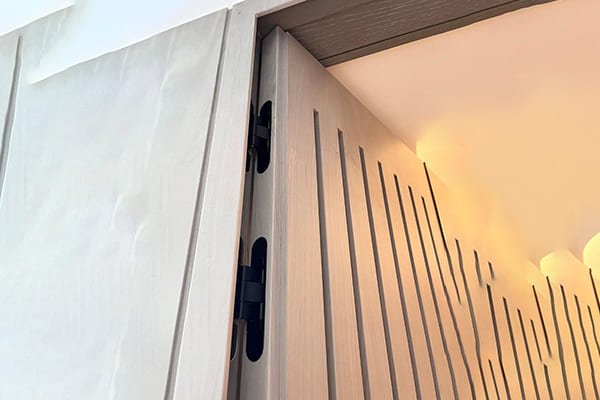
What Is a Concealed Door Hinge With Soft Close?
A concealed door hinge with soft close can look simple from the outside, but choosing the wrong one can cause noisy closing, poor alignment, weak load support, or installation problems. I have seen buyers focus only on the “soft close” label, then face complaints later. The solution is to understand the full hinge system before purchasing.
A concealed door hinge with soft close is a hidden hinge system mortised into the door leaf and frame, with internal closing force and hydraulic damping.1 The concealed structure hides the hinge when the door is closed, while the soft-close damping slows the final closing movement to reduce slamming, noise, impact, and finger-pinch risk2.
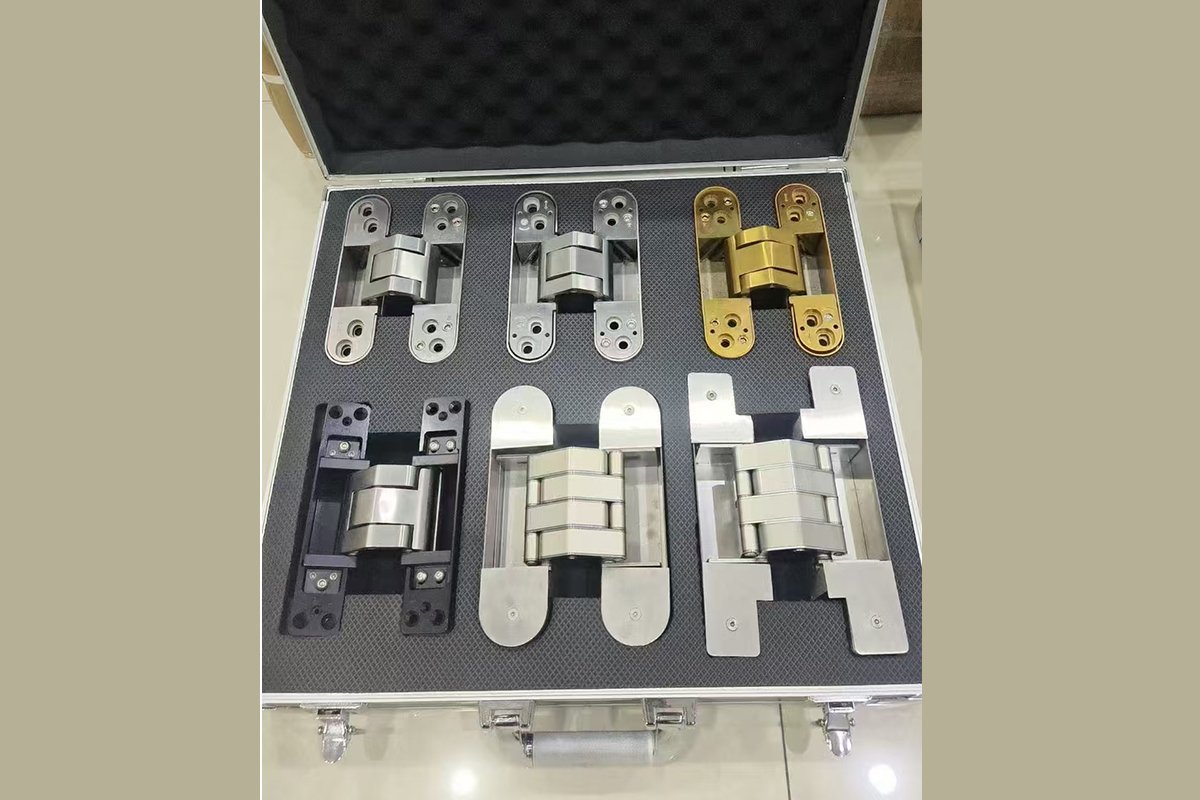
This type of hinge is popular in invisible doors, hotel rooms, libraries, medical spaces, children’s rooms, and high-end residential projects.3 However, it is not a universal hinge. Door weight, thickness, frame structure, opening frequency, and installation accuracy all decide whether it will perform well.
How Does a Concealed Door Hinge With Soft Close Work?
Many buyers ask for a quiet hidden hinge, but they do not always separate the different functions inside the product. This creates risk. If the hinge has hidden installation but weak damping, the door may still slam. If the hinge has return force but poor adjustment, the door may not align correctly.
A concealed door hinge with soft close works through three main functions: concealed installation, self-closing force, and hydraulic damping. The hinge body is mortised inside the door and frame. A spring or internal mechanism pulls the door toward closing, while hydraulic oil damping slows the closing speed near the final angle.
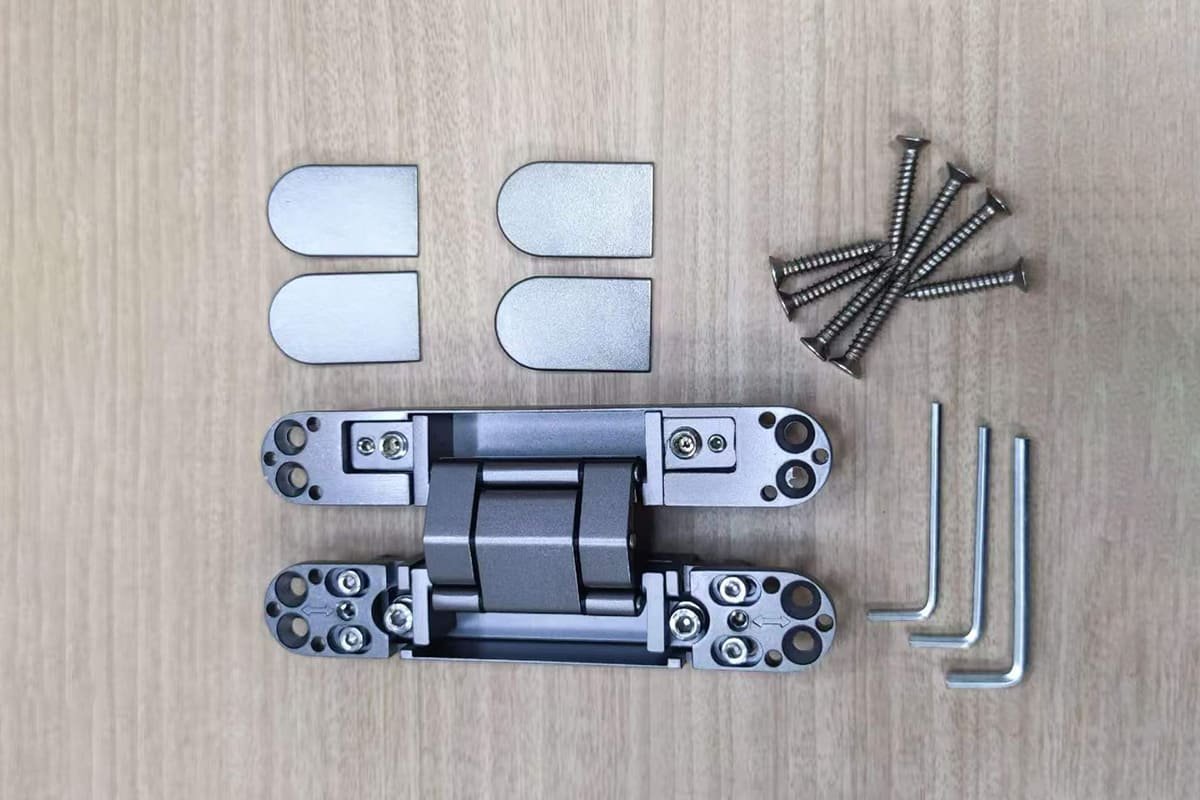
Concealed installation is about appearance and structure
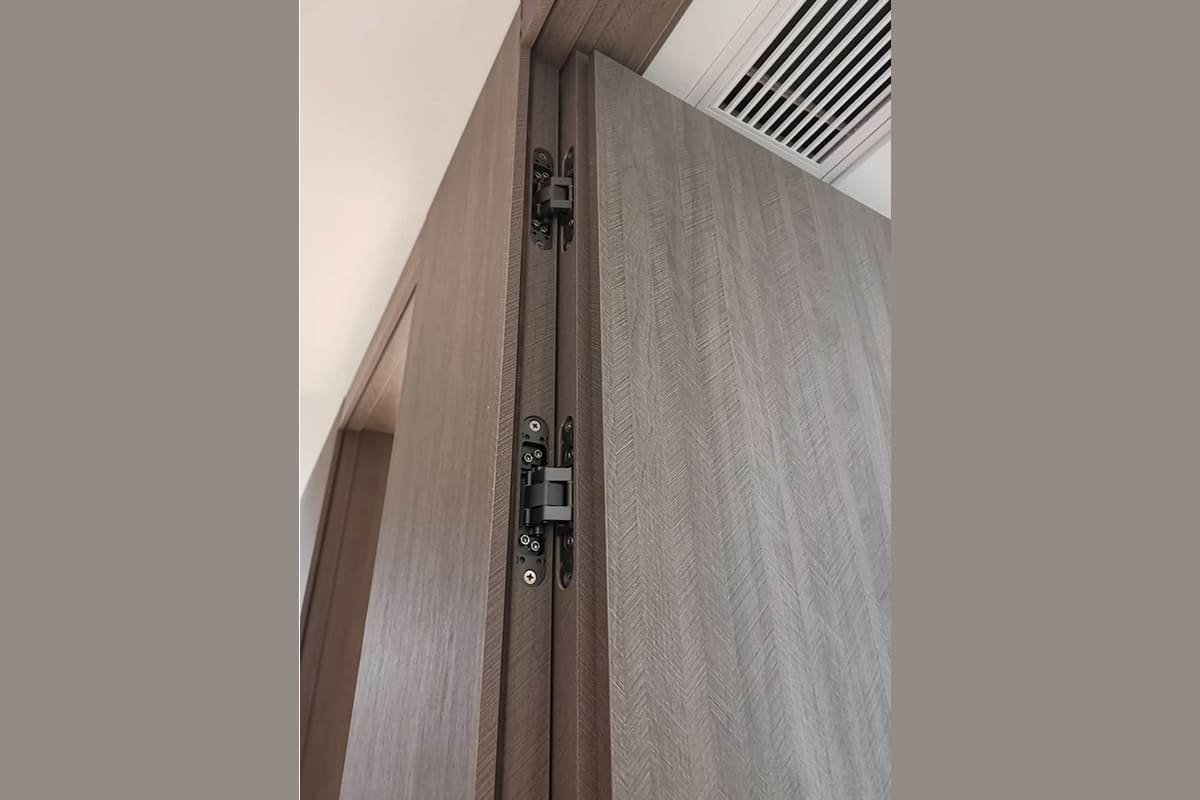
“Concealed” means the hinge body is hidden inside the door leaf and door frame. When the door is closed, the hinge is usually invisible from the outside. This creates a clean wall-door design, especially for flush doors, invisible doors, and modern interior systems.
From a manufacturing point of view, concealed installation requires accurate machining4. The hinge pocket must match the hinge body. If the mortise is too shallow, the hinge may protrude. If it is too deep, the door position may shift. If the frame is not stable, the hinge may lose alignment after repeated use.
In our factory communication with door manufacturers, I often ask for these details before recommending a model:
- Door height and width
- Door thickness
- Door weight
- Door material, such as wood, aluminum, steel, or composite
- Frame structure
- Opening angle requirement
- Usage frequency
- Fire-rated or CE compliance requirements
These details matter because hidden hinges carry the door load through a compact mortised structure. A small error can become a big issue after installation.
Self-closing and soft close are not the same5
This is one of the most important points. Many people use “self-closing” and “soft close” as if they mean the same thing. They do not.
| Function | What it means | Main component | Main benefit |
|---|---|---|---|
| Concealed | Hinge is hidden when the door is closed | Mortised hinge body | Clean appearance |
| Self-closing | Door is pulled back toward closed position | Spring or return mechanism | Automatic closing force |
| Soft close | Closing speed is slowed near the end | Hydraulic damping system | Less slamming and noise |
| 3D adjustment | Door can be aligned after installation | Adjustment screws | Better fitting accuracy |
A self-closing mechanism provides the return force. It moves the door toward the closed position. Soft close controls the closing speed. It cushions the movement. A hinge can be self-closing without being soft close. It can also be concealed without having either self-closing or soft-close damping.
Hydraulic damping reduces impact
The soft-close function usually depends on hydraulic oil damping.6 When the door moves toward the closing position, internal resistance slows the motion. This reduces the final impact between door and frame.
In real projects, this can help with:
- Noise reduction in hotels, libraries, offices, and clinics
- Lower impact on the lock, latch, frame, and wall system
- Improved user safety in children’s rooms and elderly rooms
- Better user experience in high-end spaces
- Potentially less maintenance caused by repeated slamming
However, I always use careful wording with buyers. A soft-close concealed hinge may reduce the need for a separate door closer in some interior applications, but it does not automatically replace a door closer in every project. Fire doors, heavy commercial doors, and high-frequency public doors may still require a certified door closer depending on project standards.7
What Should Buyers Check Before Choosing a Concealed Door Hinge With Soft Close?
It is easy to ask, “Do you have soft close?” It is harder, but much safer, to ask whether the hinge fits the actual door system. I have seen good hinges perform poorly because the door was too heavy, the frame was weak, or the mortising was inaccurate.
Before choosing a concealed door hinge with soft close, buyers should confirm door weight, door size, door thickness, frame material, mortising accuracy, opening frequency, adjustment range, and certification requirements. The hinge should match the door system, not just the buyer’s preferred appearance or quiet-closing expectation.
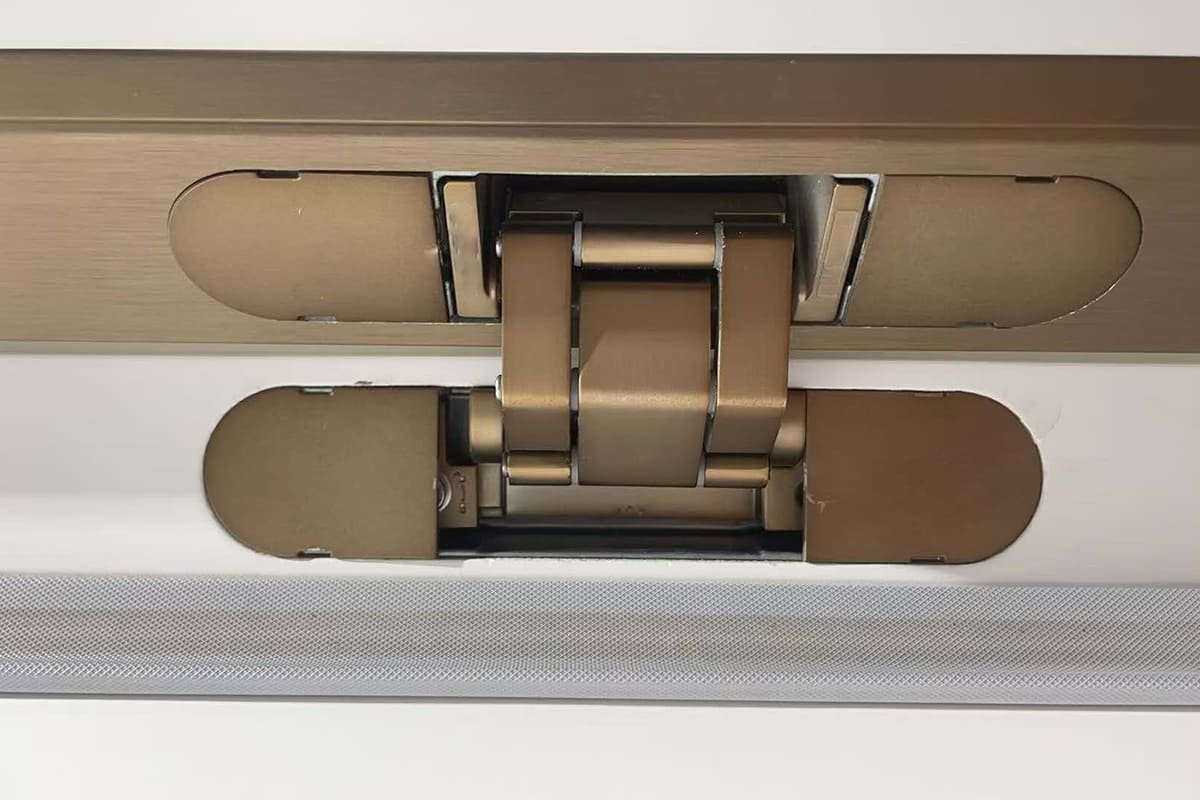
Start with door weight and size
Door weight is the first technical checkpoint. A hinge is a load-bearing component. If the door is too heavy for the hinge model, the door may sag, rub the floor, or fail to close smoothly.
For example, a tall solid wood door needs a different hinge solution than a lightweight hollow-core interior door. A wide door also creates greater leverage on the hinge side. This increases stress even if the total weight looks acceptable.
Buyers should confirm:
- Single door weight
- Door height
- Door width
- Number of hinges per door
- Expected opening angle
- Daily opening frequency
A common mistake is checking only door weight and ignoring width. A wider door creates higher torque on the hinge.8 This is why factory-side selection should consider both weight and size.
Check the door thickness and mortising depth
A concealed hinge needs enough space inside the door and frame. If the door is too thin, the hinge pocket may weaken the door edge. If the frame is narrow or unstable, the screws may not hold properly.
This is especially important for:
- Flush wooden doors
- Aluminum frame doors
- Steel internal doors
- Hotel room doors
- Invisible wall-door systems
- Fire-rated door assemblies
Door factories should check technical drawings before confirming the hinge. The drawing should show the hinge body size, screw position, opening clearance, and mortise depth.
3D adjustment is not optional for many projects
A high-quality hidden hinge often provides 3D adjustment9:
| Adjustment direction | What it corrects | Why it matters |
|---|---|---|
| Up / down | Door height alignment | Prevents rubbing at top or bottom |
| Left / right | Side gap adjustment | Helps maintain even reveal lines |
| Front / back | Door flushness | Keeps door surface aligned with wall or frame |
For invisible doors, the visual gap is extremely important. Even a small alignment issue can ruin the clean design. In my experience, product managers for door factories care about this because installation teams need room to correct small site errors.
Without adjustment, the installer must rely only on perfect cutting and perfect frame position. That is risky in real construction conditions.
Match the hinge to usage scenario
A soft close hidden door hinge used in a hotel room faces different conditions than one used in a private bedroom. A clinic, school, apartment project, or office may also have different requirements.
Here is a simple selection view:
| Application | Key concern | Selection focus |
|---|---|---|
| High-end hotel room | Quiet closing and durability | Stable damping and finish consistency |
| Library or office | Low noise | Smooth soft close and reliable alignment |
| Children’s room | Finger-pinch risk and impact | Controlled closing speed |
| Elderly room | Ease of use and safety | Moderate closing force |
| Invisible door | Clean design | Concealed structure and 3D adjustment |
| Fire-rated door | Compliance | Certified system compatibility |
A concealed hinge with damping should be selected by door system data, not by catalog photos alone.
Why Is a Concealed Door Hinge With Soft Close Useful for Modern Door Systems?
A modern door is not only a panel that opens and closes. It is part of the interior design, acoustic comfort, safety expectation, and hardware supply chain. If the hinge does not support these needs, the final product feels unfinished.
A concealed door hinge with soft close is useful because it combines hidden appearance, controlled closing, alignment adjustment, and quieter operation. It supports clean architectural design while reducing door slamming and impact. Its value is strongest when the door size, hinge capacity, frame structure, and installation accuracy are correctly matched.
It supports clean visual design
For invisible doors and flush wall systems, exposed butt hinges can break the design line. A concealed hinge solves this by hiding the pivot system inside the door and frame.
This matters in projects such as:
- Luxury apartments
- Boutique hotels
- High-end villas
- Office meeting rooms
- Wall panel door systems
- Minimalist interior projects
The clean appearance is not just about beauty. It can also help door manufacturers offer higher-value product lines. Many brand operators use concealed hinges as part of their premium door system package.
It reduces closing noise and impact
The soft-close function is helpful in quiet-use spaces. In hotels, a slamming door can disturb guests. In medical rooms, sudden noise can affect patient comfort. In children’s rooms, fast closing may create safety concerns.
Hydraulic damping can reduce the final impact. This can also protect related components:
- Mortise lock latch
- Strike plate
- Door frame
- Wall finish
- Hinge screw connection
- Decorative surface finish
A small reduction in impact can matter over thousands of cycles. For distributors and wholesalers, this can reduce after-sales complaints when the hinge is correctly matched and installed.
It may reduce the need for separate hardware in suitable cases
Some buyers ask whether a concealed hinge with soft close can replace a door closer. My practical answer is: sometimes, but not always.
It may be suitable when:
- The door is an interior door.
- The door weight is within the hinge capacity.
- The project does not require a separate certified closer.
- The usage frequency is moderate.
- The closing force and latch engagement are tested on the actual door.
It may not be suitable when:
- The door is very heavy.
- The door is used in high-traffic public areas.
- Fire regulations require a certified closer.
- The door needs strong latching force.
- Air pressure affects closing performance.
- The hinge model does not provide enough return force.
This is why I prefer to discuss the full door application before giving a recommendation. A hinge is not only a product. It is part of a door system.
It improves product differentiation for buyers
For door factories and hardware brands, this type of hinge can create a clear selling point. Buyers can position it as:
- A premium hidden hinge system
- A quiet-closing door hardware solution
- A minimalist interior door component
- A safer hinge option for residential spaces
- A value-added upgrade for hotel and apartment projects
However, the product must be consistent. If the finish varies between batches, or if the damping force is unstable, the market advantage disappears quickly. This is why supplier selection is important.
What Materials and Manufacturing Details Matter?
A hinge may look small, but its performance depends on material, machining precision, damping stability, and surface treatment. If these details are weak, the door may sag, corrode, squeak, or close unevenly after months of use.
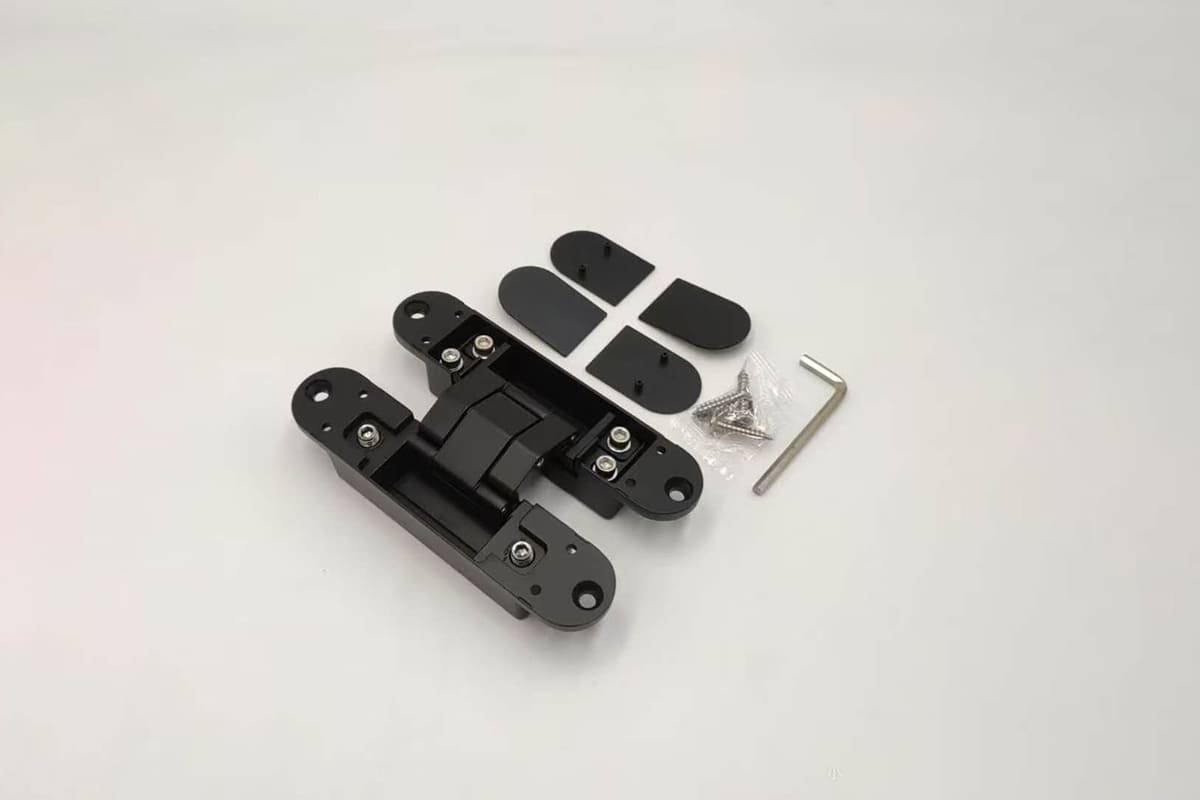
For a concealed door hinge with soft close, buyers should evaluate the hinge body material, shaft strength, screw quality, hydraulic damping consistency, surface finish, corrosion resistance, and production tolerance. A reliable supplier should provide stable batch quality, clear technical drawings, and support for customized door-system requirements.
Material selection affects strength and durability
Common materials include zinc alloy, stainless steel, steel, and aluminum alloy, depending on the hinge design and target application. Each material has different advantages.
| Material | Strength | Corrosion resistance | Common use |
|---|---|---|---|
| Stainless steel | High | High | Humid areas, premium hardware |
| Zinc alloy | Medium to high | Depends on finish | Interior concealed hinge bodies |
| Steel | High | Needs protection | Load-bearing components |
| Aluminum alloy | Medium | Good | Lightweight door systems |
Stainless steel is often valued for corrosion resistance and durability.10 Zinc alloy can support complex shapes and attractive finishes.11 Steel may be used where strength is important, but surface protection is critical.
In my manufacturing work, I pay close attention to material consistency. One batch of poor raw material can affect machining, screw holding, surface finish, and long-term performance.
Machining precision controls installation quality
Concealed hinges require accurate dimensions. The hinge body must fit the mortised pocket. The pivot movement must remain smooth. The adjustment screws must work without looseness or binding.
Important production details include:
- CNC machining accuracy
- Stable hole position
- Smooth pivot movement
- Accurate hinge body thickness
- Consistent screw thread quality
- Burr control on machined edges
- Repeatable damping installation
For door factories, consistency is more important than one perfect sample. A buyer may receive a beautiful sample, but the real test is whether 5,000 pieces match the same standard in bulk production.
Surface treatment affects both appearance and protection
Architectural hardware buyers often care about finish consistency. A concealed hinge is mostly hidden, but visible parts may still appear when the door is open. The finish also protects the material.
Common finishes may include:
- Satin stainless steel
- Brushed nickel
- Matte black
- Satin chrome
- Polished chrome
- Custom project finishes
For bulk orders, the finish should remain stable across batches. This is important for door manufacturers that assemble doors in volume. If the hinge color changes from one shipment to another, the final door product may look inconsistent.
Damping quality must be stable
Soft close depends on the damping system. If the hydraulic damping is too weak, the door may still slam. If it is too strong, the door may not close fully. Temperature, door weight, installation angle, and seal resistance can also affect performance.12
A good supplier should help buyers confirm:
- Recommended door weight range
- Recommended door thickness
- Number of hinges per door
- Closing angle range
- Adjustment method
- Installation drawing
- Test sample process before bulk order
I usually suggest that buyers test samples on their real door system, not only by hand on a desk. A hinge can feel smooth in hand but behave differently when mounted on a full-size door.
How Should You Install and Test a Concealed Door Hinge With Soft Close?
Even a good hinge can fail if the installation is poor. A concealed hinge needs accurate cutting, stable screw fixing, correct door clearance, and careful adjustment. If the installer treats it like a simple butt hinge, the result may disappoint the buyer.
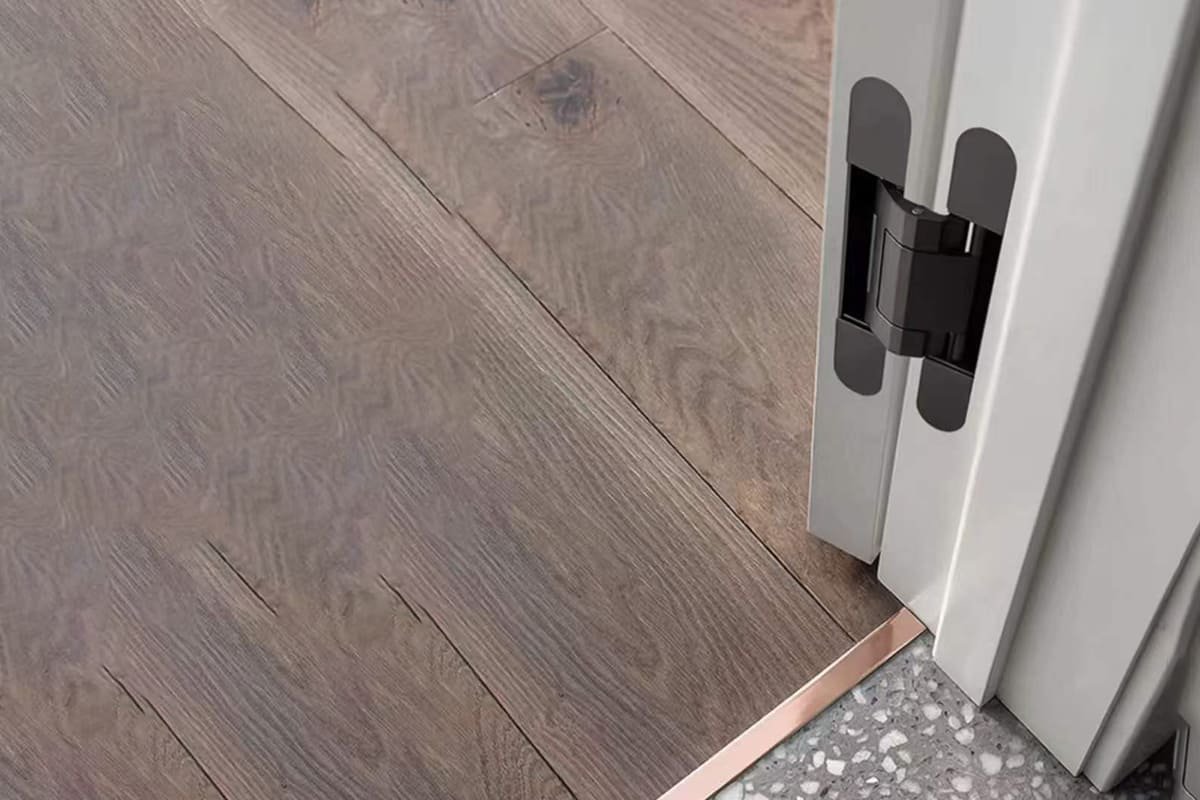
To install a concealed door hinge with soft close, the door factory or installer should follow the hinge drawing, cut accurate mortises in the door and frame, fix screws firmly, adjust the door in three directions, and test closing speed, latch engagement, clearance, and repeated operation before final delivery.
Prepare the door and frame correctly
The first step is checking whether the door and frame can support the hinge. The door edge should be strong enough after mortising. The frame should hold screws firmly. The installer should not cut by estimation.
A practical installation checklist includes:
- Confirm the hinge model and drawing.
- Mark the hinge position on door and frame.
- Check the mortise depth and width.
- Use accurate routing or CNC cutting where possible.
- Keep the hinge body flush with the surface.
- Use the correct screws.
- Avoid forcing misaligned parts into position.
For door factories, CNC preparation usually improves consistency. For site installation, skilled routing and careful measurement become more important.
Set the door gaps before final tightening
Door gaps affect both appearance and function. If the gap is too small, the door may rub. If the gap is too large, the door may look poor and may not seal correctly.
Typical gap checks include:
| Position | What to check |
|---|---|
| Top gap | Door does not touch frame |
| Side gap | Reveal line is even |
| Bottom gap | Door clears floor finish |
| Lock side | Latch enters strike smoothly |
| Front/back plane | Door is flush with wall or frame |
A 3D adjustable concealed hinge helps correct small issues. However, adjustment cannot fix a badly cut frame or a door that exceeds the hinge load capacity.
Test the soft close function on the real door
The soft-close action should be tested after the door is fully installed. The test should include different opening angles and repeated closing cycles.
I recommend checking:
- Does the door start closing from the expected angle?
- Does the damping slow the door near the final position?
- Does the latch enter the strike plate fully?
- Does the door stop before closing because of excessive damping?
- Does the door slam because damping is too weak?
- Does the hinge make abnormal noise?
- Does the door remain aligned after repeated use?
This kind of testing is especially important before bulk production. A hotel project with hundreds of doors cannot afford to discover performance issues after installation.
Consider the full hardware set
A hinge does not work alone. The lock, latch, seal, frame, door closer, and handle all affect the final closing experience.
For example, a strong door seal can create resistance. A misaligned mortise lock can prevent smooth latching. A heavy lever handle may influence door balance slightly. Air pressure in rooms can also affect closing behavior.
As a hardware manufacturer, I prefer a one-stop door hardware view. When the hinge, mortise lock, lever handle, lock cylinder, and accessories are selected together, the buyer can reduce compatibility risk. This is especially useful for door factories and project procurement teams.
Frequently Asked Questions
Is a concealed door hinge with soft close the same as a self-closing hinge?
No. A concealed hinge refers to hidden installation. A self-closing hinge uses spring or internal force to pull the door closed. A soft-close hinge uses hydraulic damping to slow the closing speed. Some hinges combine all three functions, but the terms are not identical.
Can a soft-close concealed hinge replace a door closer?
It may replace a separate door closer in some suitable interior doors, but not in every case. Door weight, usage frequency, latch resistance, air pressure, and fire safety requirements all matter. Fire-rated or high-traffic doors may still require a certified door closer.
What doors are suitable for concealed hinges with soft close?
They are commonly used for invisible doors, flush doors, hotel room doors, office doors, libraries, children’s rooms, and elderly rooms. Suitability depends on door thickness, weight, width, frame strength, mortising accuracy, and the hinge model’s rated capacity.
Why does my soft-close concealed hinge not close fully?
The hinge may be overloaded, the damping may be too strong, the door may be misaligned, or the latch and seal may create too much resistance. Installation accuracy also matters. You should test adjustment, door gaps, strike plate position, and hinge capacity.
What should I ask a supplier before ordering in bulk?
You should ask for load capacity, door thickness range, technical drawings, material details, finish options, adjustment range, certification support, sample testing guidance, and bulk production consistency. A reliable supplier should also provide after-sales support for installation and performance questions.
Conclusion
A concealed door hinge with soft close is an integrated hinge system, not just a hidden hinge with a quiet label. It combines concealed mortised installation, possible self-closing force, hydraulic damping, and adjustment. The best choice depends on door weight, size, thickness, frame structure, usage frequency, and installation accuracy. If you are sourcing for door production, hotel projects, or hardware distribution, I recommend testing samples on real door systems first. Contact SDH Hardware if you need factory-direct concealed hinge support, OEM/ODM customization, or complete architectural door hardware sourcing.
"Door closer", https://en.wikipedia.org/wiki/Door_closer. A recognized architectural-hardware standard or technical reference defines concealed hinges as hidden door-support hardware and treats closing force and closing control as distinct hinge functions; this supports the terminology used here but does not verify the design of any specific product model. Evidence role: definition; source type: institution. Supports: A neutral hardware standard or technical reference should define concealed hinges as hidden or mortised hardware and distinguish closing force from damping.. Scope note: Contextual support for terminology rather than direct proof that every soft-close concealed hinge uses the same internal construction. ↩
"Anti Slam Door With Heavy Duty Soft Close Door Hinges", https://watersonusa.com/solutions/5-inch-spring-hinge. Public safety guidance on door-related finger entrapment identifies uncontrolled or forceful door closing as a hazard and supports the use of controlled closing to reduce impact-related risk; this evidence is general and does not quantify the risk reduction for a particular hinge. Evidence role: general_support; source type: government. Supports: A public safety or injury-prevention source should support that slower or controlled door closing can reduce impact and finger-entrapment hazards.. Scope note: Supports the safety rationale broadly, not a measured performance claim for this hinge type. ↩
"Frameless Doors: Concealed Door Frames | Frameless ...", https://flushwalldoors.com/. Architectural design guidance describes concealed hinges as hardware used to maintain flush or visually uninterrupted door surfaces, which is consistent with their use in premium and quiet-use interiors; the source supports the design context rather than providing market-share data. Evidence role: general_support; source type: education. Supports: An architectural or interior-design educational source should show that concealed hinges are associated with flush, invisible, or minimalist door applications in premium interiors.. Scope note: Contextual support only; it does not prove popularity across all listed project types. ↩
"Common Concealed Hinge Installation Mistakes and How DIY ...", https://www.tambee.com/blogs/news/common-concealed-hinge-installation-mistakes-and-how-diy-users-can-avoid-them. Architectural-hardware installation guidance explains that mortised concealed hinges require correctly sized and aligned recesses in both the door and frame for proper fit and movement; this supports the need for machining accuracy but does not establish a universal tolerance for all hinge models. Evidence role: mechanism; source type: institution. Supports: A neutral architectural-hardware guide should explain that concealed hinges require accurately cut mortises for the hinge body to sit correctly and operate smoothly.. Scope note: Supports the installation principle, while exact tolerances remain product-specific. ↩
"A156.17 - 2025 Self Closing Hinges & Pivots", https://buildershardware.com/ANSI-BHMA-Standards/Hardware-Highlights/A15617-2019-Self-Closing-Hinges-Pivots. Architectural-hardware standards distinguish devices that provide closing force from devices or features that control closing speed, supporting the distinction between self-closing and soft-close functions; the distinction is functional and does not determine whether a given product includes both features. Evidence role: definition; source type: institution. Supports: A standards or architectural-hardware source should distinguish a self-closing force mechanism from a controlled or damped closing mechanism.. Scope note: Supports terminology, not the configuration of any specific hinge. ↩
"Door closer", https://en.wikipedia.org/wiki/Door_closer. Engineering literature on hydraulic damping explains that fluid resistance dissipates kinetic energy and slows mechanical motion, supporting the use of oil dampers in soft-closing hardware; this evidence explains the mechanism generally rather than documenting every commercial soft-close hinge design. Evidence role: mechanism; source type: paper. Supports: An engineering paper or technical reference should explain that hydraulic dampers dissipate motion energy through fluid resistance and are used to slow closing motion.. Scope note: Mechanism-level support, not a product-category survey. ↩
"Fire Doors and NFPA 80 FAQs", https://www.nfpa.org/news-blogs-and-articles/blogs/2025/04/11/fire-doors-faqs. Fire-door standards require fire doors to close and latch reliably and commonly govern the approved closing devices used in rated assemblies, supporting the caution that a soft-close hinge is not automatically a substitute for a certified closer; the exact requirement depends on jurisdiction and door assembly listing. Evidence role: expert_consensus; source type: institution. Supports: A fire-safety code or standards source should support that fire doors require reliable self-closing/latching hardware and that project standards govern approved devices.. Scope note: Compliance varies by code jurisdiction, rating, and listed assembly. ↩
"28.18 -- Open door to demonstration preparation area", https://web.physics.ucsb.edu/~lecturedemonstrations/Composer/Pages/28.18.html. Introductory mechanics sources define torque as the product of force and lever-arm distance, supporting the statement that a wider door creates a larger moment about its hinges for a given load; the source provides the physical principle rather than hinge-specific design limits. Evidence role: mechanism; source type: education. Supports: A university physics or engineering source should explain that torque increases as the perpendicular distance from the pivot increases.. Scope note: General mechanics support; actual hinge loading also depends on door mass distribution and installation details. ↩
"3D Adjustable Concealed Hinges", https://www.assaabloy.com/ae/en/product-assets/architectural-hardware/door-hinges/concealed-hinges/assets/documents/3D_Adjustable_Concealed_Hinges_Brochure_ME.pdf. Architectural-hardware references describe three-dimensional adjustable concealed hinges as allowing vertical, horizontal, and depth corrections after installation, supporting the article's explanation of alignment adjustment; the presence and range of adjustment remain model-specific. Evidence role: definition; source type: institution. Supports: A hardware reference should describe 3D adjustable concealed hinges and the directions of adjustment they provide.. Scope note: Defines the feature generally, not evidence that all high-quality hidden hinges include it. ↩
"Material Properties: 304 Stainless (UNS S30400)", https://trc.nist.gov/cryogenics/materials/304Stainless/304Stainless_rev.htm. Materials-science sources explain that stainless steels form a chromium-rich passive surface layer that improves corrosion resistance, supporting their use where durable hardware finishes are desired; performance still depends on alloy grade, environment, and maintenance. Evidence role: mechanism; source type: government. Supports: A government or materials-science source should explain that stainless steel resists corrosion because of its chromium-containing passive layer.. Scope note: General material-property support; corrosion resistance varies among stainless-steel grades. ↩
"The Practical Ultimate Guide to Zinc Die Casting", https://www.ptsmake.com/the-practical-ultimate-guide-to-zinc-die-casting/. Manufacturing references on zinc die casting note that zinc alloys can reproduce complex geometries with good dimensional accuracy and surface finish, supporting their use in shaped hardware components; this does not by itself establish suitability for any particular load rating. Evidence role: mechanism; source type: research. Supports: A materials or manufacturing research source should describe zinc alloys as suitable for die casting complex geometries with good surface finish.. Scope note: Supports manufacturability and finish potential, not structural capacity in a specific hinge. ↩
"Theoretical Investigation of the Viscous Damping Coefficient ...", https://ui.adsabs.harvard.edu/abs/2017ChJME..30..829H/abstract. Engineering studies of hydraulic dampers show that damping force depends on fluid viscosity and operating conditions, including temperature, supporting the statement that soft-close performance can vary in real door assemblies; door weight, angle, and seal resistance are application-specific factors that require installation testing. Evidence role: mechanism; source type: paper. Supports: Engineering literature should support that hydraulic damping varies with fluid viscosity and operating conditions, and door-system resistance can affect closing behavior.. Scope note: Directly supports temperature-sensitive damping behavior and contextually supports the broader door-system factors. ↩