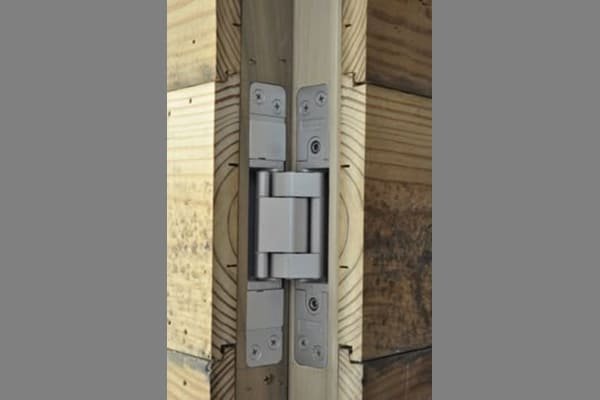
What Are Heavy Duty Hidden Door Hinges?
Heavy duty hidden door hinges are often misunderstood as simply “bigger concealed hinges,” and that mistake can lead to door sagging, uneven gaps, installation rework, and after-sales complaints. I see this often when buyers only ask for “100 kg hinges.” The better solution is to match the hinge system to the full door condition.
Heavy duty hidden door hinges are high-strength concealed hinge systems designed to carry heavier doors while staying invisible when the door is closed. They are commonly used for solid wood doors, entrance doors, tall doors, and other large door applications, but correct selection depends on door weight, size, material, frame strength, hinge quantity, and installation accuracy.
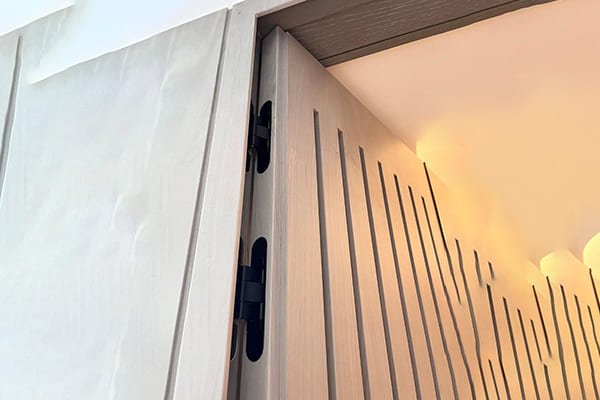
From a factory and product development perspective, I always look beyond the load number printed on a catalog page. A strong concealed hinge must work as part of the door system. The hinge, door leaf, frame, screws, machining depth, and installer’s adjustment all affect final performance.
What Are Heavy Duty Hidden Door Hinges Used For?
Heavy duty hidden door hinges are used when a standard concealed hinge may not safely support the door over time. The problem is that many doors look similar in drawings, but their real weight, height, width, and usage frequency can be very different. If the hinge is under-specified, the door may drop or rub.
Heavy duty hidden door hinges are used for heavier or larger doors where clean appearance and higher load support are both required. Common applications include solid wood doors, tall interior doors, apartment entrance doors, hotel room doors, villa doors, and commercial doors where the hinge should remain concealed after closing.
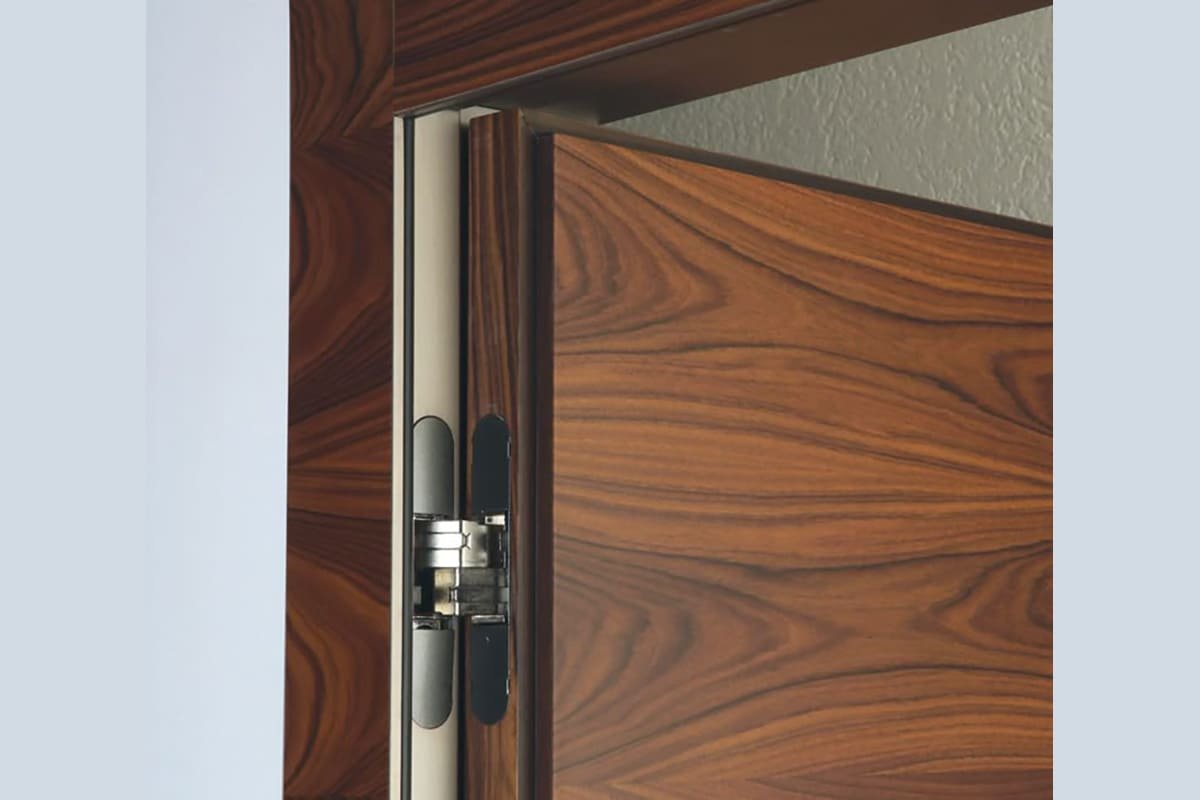
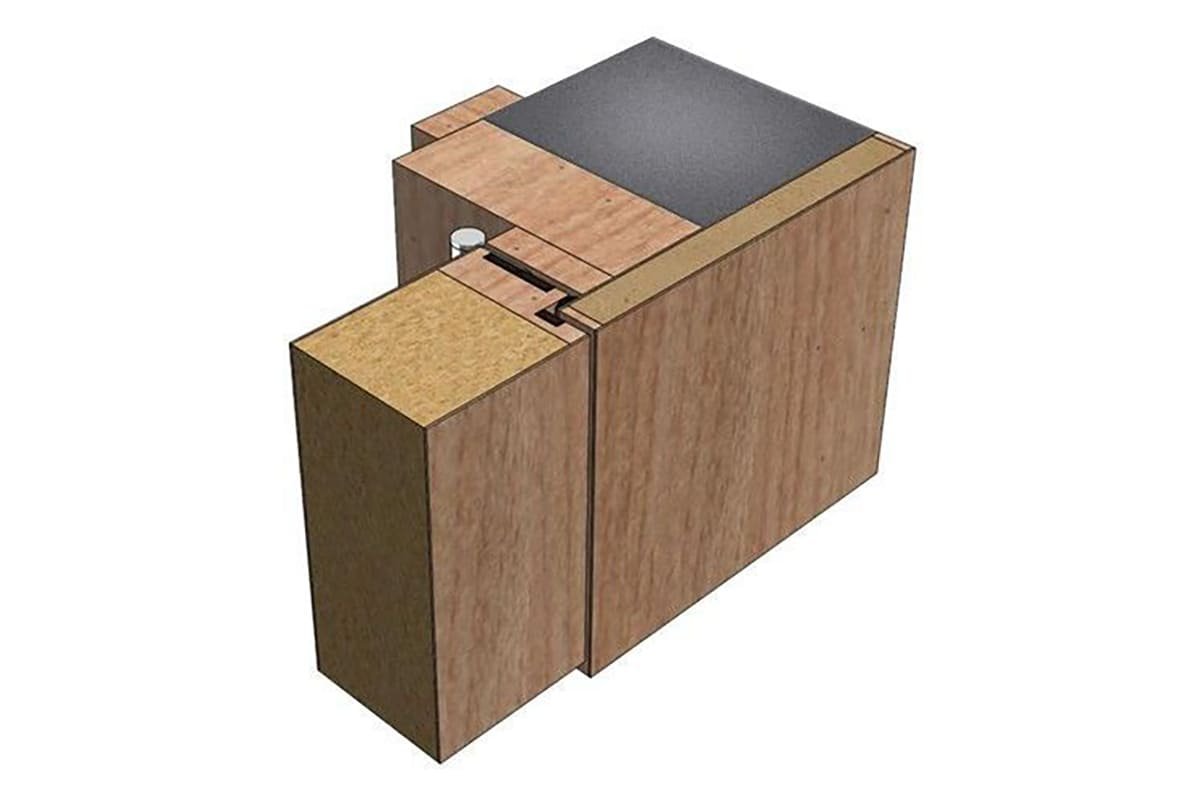
In the door hardware industry, a hidden hinge is usually selected for both appearance and function. The hidden design keeps the door surface clean because the hinge body is mortised into the door and frame. When the door closes, the hinge is not visible from the outside.
However, once the door becomes taller, wider, thicker, or heavier, the hinge needs more than a concealed look. It needs a stronger internal structure.
Common door applications
I usually see heavy-duty concealed hinges specified for:
- Solid wood doors
- Engineered timber doors
- Fire-rated wooden doors
- High-end apartment entrance doors
- Hotel doors
- Oversized interior doors
- Flush doors with premium minimalist design
- Commercial or project doors with frequent use
Some buyers also ask about glass doors, metal doors, or aluminum profile doors. I always recommend checking the hinge model carefully in these cases. Not every heavy-duty concealed hinge is suitable for every door material. The mounting method, screw holding strength, and frame structure can change the result.
Why standard hidden hinges may fail
A standard concealed hinge may work well on a light interior door. But it may not perform well on a heavy, tall door because the forces are different.
The hinge must resist:
- Vertical load from the door weight
- Pulling force from the door width
- Twisting force during opening and closing
- Impact force from fast closing or heavy traffic
- Long-term fatigue from repeated movement
This is why I do not like selecting hinges only by appearance. Two hinges can look similar from the outside, but the internal pivot, link arm, material thickness, bearing design, and machining precision may be completely different.
A simple comparison
| Door condition | Standard concealed hinge | Heavy-duty concealed hinge |
|---|---|---|
| Light interior door | Usually suitable | May be unnecessary |
| Solid wood door | Sometimes suitable | Often recommended |
| Tall door over 2 meters | Risk depends on weight | Often safer with correct model |
| Entrance door | Usually needs checking | Commonly used |
| High traffic door | May wear faster | Better if properly rated |
| Premium flush design | Suitable for light doors | Better for large doors |
In my experience, buyers often say, “I need a concealed hinge for a wooden door.” That is not enough information. A 35 kg hollow-core door and a 90 kg solid wood door are both “wooden doors,” but they need very different hardware decisions.
Are Heavy Duty Hidden Door Hinges Only About Load Capacity?
Heavy duty hidden door hinges are not only about load capacity, although load rating is important. The problem is that many buyers focus only on “80 kg,” “100 kg,” or “120 kg.” That can be risky because the same load rating may perform differently depending on door height, width, frame condition, and installation accuracy.
Heavy duty hidden door hinges should be judged by load capacity, hinge structure, material strength, pivot design, bearing stability, machining precision, installation depth, screw holding strength, and long-term resistance to sagging. A high load number is useful, but it does not replace correct selection based on the whole door system.
Many heavy-duty hinge sets start from around 80 kg load capacity per set, but I treat that number as a reference, not a universal rule. The exact rating must always be checked against the supplier’s specification and the actual door condition.
Why the load number can mislead buyers
A hinge may be tested under controlled conditions. But real job sites are not always controlled. The door frame may be weaker than expected. The mortise pocket may be too deep or uneven. The screw hole may not hold properly. The installer may use the wrong screw length. The door may be wider than the hinge was designed for.
All these factors can reduce real performance.
For example, I once discussed a project where the buyer requested a “100 kg concealed hinge.” After checking the door details, the issue was not only weight. The door was tall, wide, and installed in a frame material with limited screw holding strength. In that case, simply choosing a higher load rating would not solve the whole risk.
What “heavy duty” really includes
A good heavy-duty hidden hinge usually has stronger design features, such as:
- Thicker hinge body or reinforced structure
- High-strength link arms
- Stable pivot or bearing system
- Accurate CNC machining
- Tight movement tolerance
- Deeper mortise installation
- Larger screw fixing area
- Better adjustment mechanism on some models
These details affect whether the door continues to move smoothly after months or years of use.
Key selection data buyers should provide
When I communicate with door factories or hardware buyers, I prefer to receive this information before recommending a model:
| Information needed | Why it matters |
|---|---|
| Door weight | Basic load calculation |
| Door height | Affects leverage and sagging risk |
| Door width | Wider doors create more pulling force |
| Door thickness | Determines hinge body fit |
| Door material | Affects screw holding and machining |
| Frame material | Weak frames reduce hinge performance |
| Opening angle required | Some models have angle limits |
| Door usage frequency | High traffic needs stronger durability |
| Certification need | Fire-rated or CE requirements may apply |
| Quantity of hinges | Load distribution changes by quantity |
This is why I often tell buyers that asking for “heavier duty” is not a full specification. It is only the beginning of the selection process.
Load rating should match the real installation
If a catalog says a hinge set supports 80 kg, the buyer still needs to ask:
- Is that rating based on two hinges or three hinges?
- What door height and width were assumed?
- What material was used for the door and frame?
- Was the hinge tested with standard screws?
- Does the rating apply to fire-rated doors?
- Is the rating for frequent-use commercial doors or normal residential use?
I do not recommend guessing. In bulk procurement, a wrong hinge model can create expensive after-sales problems. A small saving on hinge cost can disappear quickly if doors need to be adjusted, replaced, or repaired on site.
What Materials Are Best for Heavy Duty Hidden Door Hinges?
Heavy duty hidden door hinges can be made from zinc alloy, stainless steel, aluminum alloy, or other reinforced metal structures. The problem is that buyers often ask which material is “best,” but the better question is which material fits the door type, environment, budget, finish requirement, and expected durability.
For heavy duty hidden door hinges, 304 stainless steel or stronger alloy structures are often preferred for higher strength, corrosion resistance, and long-term durability. Zinc alloy and aluminum alloy may also be suitable for certain applications, but the final choice should depend on door weight, environment, usage frequency, and cost target.
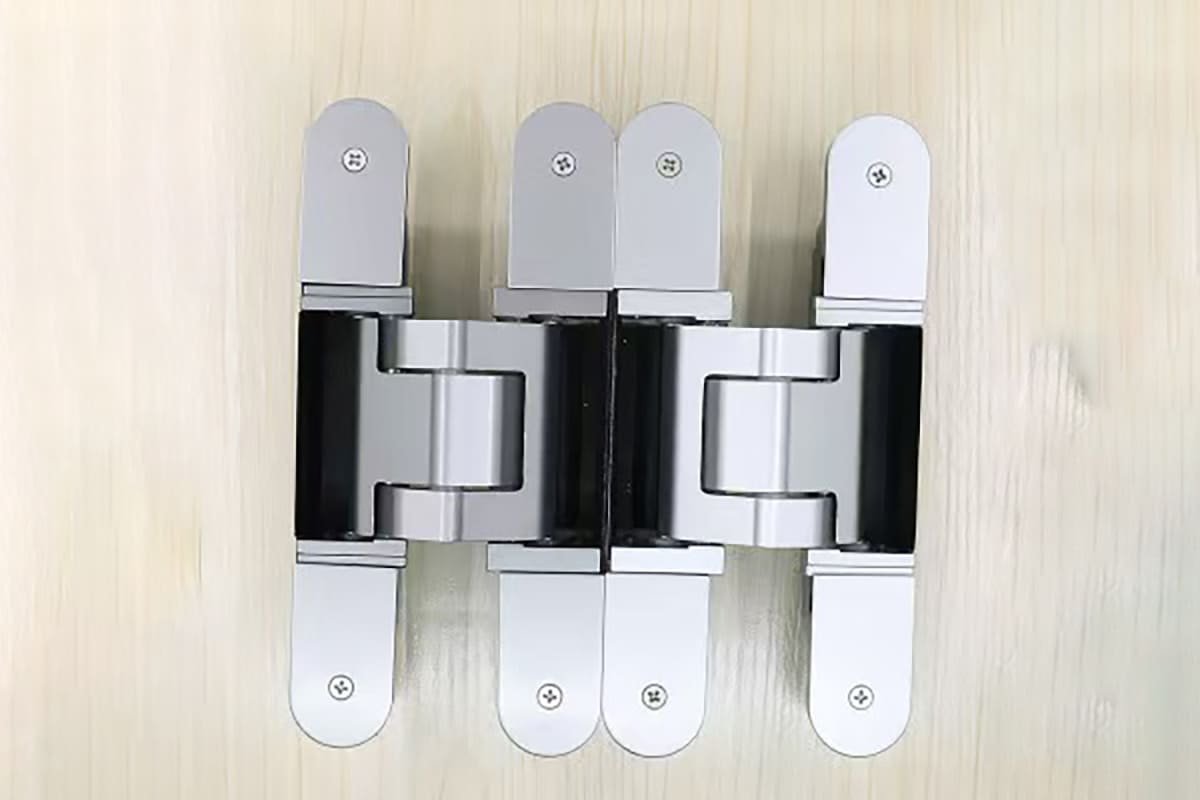
Material selection is important because hidden hinges work inside a mortised pocket. Once installed, the hinge is not easy to inspect every day. If the material is weak, the finish is poor, or the internal movement wears too quickly, the user may only notice the problem after the door starts sagging or making noise.
Common material choices
| Material | Common advantage | Common limitation | Typical use logic |
|---|---|---|---|
| Zinc alloy | Good forming ability, cost-effective | Strength and corrosion resistance depend on grade and design | Medium-duty interior applications |
| Aluminum alloy | Lightweight, good machining | May not be ideal for very high load without reinforcement | Selected designs and modern doors |
| 304 stainless steel | Strong corrosion resistance, durable | Higher material cost | Premium, humid, or stronger applications |
| Reinforced steel/alloy structures | High mechanical strength | Finish and corrosion protection must be managed | Heavy or project doors |
I avoid saying one material is always the best. A high-quality zinc alloy hinge may outperform a poorly designed stainless hinge in a wrong application. But for demanding environments, higher-strength stainless steel or reinforced alloy designs are often safer.
Strength is not only material name
The material name matters, but it is not enough. The hinge design must also support the load.
Important factory-side details include:
- Wall thickness of the hinge body
- Size and shape of the link arms
- Pivot pin diameter
- Bearing or washer design
- Screw hole layout
- Machining accuracy
- Surface treatment quality
- Assembly tolerance control
In production, I pay close attention to movement consistency. A hinge may feel smooth when new, but batch quality matters more for wholesalers and door manufacturers. If one batch has uneven movement or inconsistent adjustment screws, installation teams will complain quickly.
Finish and corrosion resistance
For hidden hinges, the visible finish may seem less important because the hinge is concealed when closed. But corrosion protection still matters. The hinge body sits inside the door and frame. Moisture, construction dust, and chemicals from finishing work can affect metal parts.
Common finish or treatment considerations include:
- Satin stainless steel appearance
- Black finish for modern doors
- Nickel or silver tone
- Protective coating
- Salt spray performance, where required
- Finish consistency across bulk orders
For buyers in the Middle East, Southeast Asia, or coastal regions, I usually pay extra attention to corrosion resistance. Humidity and temperature changes can expose weak materials faster.
What I check during development
When I review a heavy-duty concealed hinge sample, I usually check:
- Whether the hinge opens smoothly without shaking
- Whether the pivot points feel stable
- Whether the adjustment screws are easy to access
- Whether the hinge body dimensions match the drawing
- Whether the finish is consistent
- Whether the screw holes are clean and accurate
- Whether the hinge can be installed without excessive frame cutting
A heavy-duty hinge should not only be strong on paper. It should also be practical for production, installation, and long-term service.
How Do 3D Adjustment Features Help Heavy Duty Hidden Door Hinges?
Heavy duty hidden door hinges often need precise installation because heavier doors leave less room for error. The problem is that even a small machining or frame tolerance can create uneven gaps. If the hinge has no adjustment function, installers may need to re-cut the door or frame.
Many heavy-duty hidden door hinges offer 3D adjustment, although not every model has it. 3D adjustment allows installers to fine-tune height, lateral position, and depth. This helps align door gaps, reduce rubbing, improve closing performance, and correct small installation tolerances after the door is already mounted.
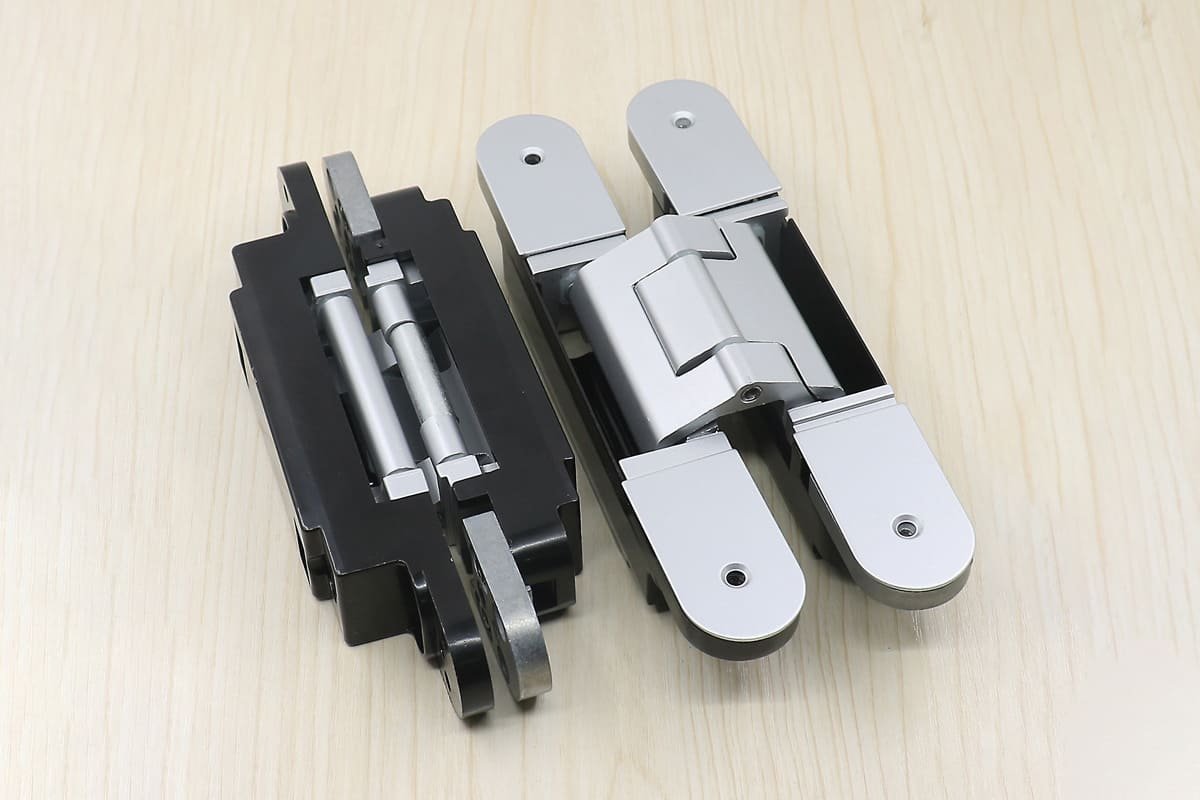
I see 3D adjustment as a very practical feature, especially for door factories that ship pre-machined doors or support project installation. It gives installers some flexibility after the hinge is already fixed.
What 3D adjustment usually means
3D adjustment normally refers to three directions:
| Adjustment direction | What it changes | Why it helps |
|---|---|---|
| Height adjustment | Moves door leaf up or down | Corrects top and bottom gaps |
| Lateral adjustment | Moves door left or right | Aligns side gaps |
| Depth adjustment | Moves door in or out | Improves flush alignment and closing |
The exact adjustment range depends on the hinge model. Some hinges may offer only small fine-tuning. Others may provide wider adjustment. Buyers should check the supplier’s technical drawing before ordering.
Why adjustment matters more on heavy doors
A light door is more forgiving. An installer can sometimes correct small errors by adjusting screws or slightly modifying the pocket. A heavy solid wood door is different. Once the door is mounted, it is harder to lift, hold, and rework.
3D adjustment helps reduce:
- Uneven reveal gaps
- Door rubbing against frame
- Poor flush alignment
- Latch misalignment
- Installation labor time
- After-sales service calls
This does not mean adjustment can fix every problem. If the hinge model is too weak, the frame is poor, or the mortise pocket is badly cut, 3D adjustment will not solve the root cause.
Installation accuracy still matters
A hidden hinge requires accurate mortising. The hinge body must sit at the correct depth in both the door and the frame. If the pocket is too shallow, the door may not close properly. If the pocket is too deep, the hinge may sit loose or create alignment problems.
I usually recommend that door factories confirm these points before mass production:
- CNC machining dimensions
- Door thickness compatibility
- Frame pocket depth
- Screw type and screw length
- Opening clearance
- Hinge adjustment access
- Installer training or instruction sheet
For bulk orders, a sample installation is always valuable. I prefer to test one real door before confirming a full shipment. This simple step can prevent many problems later.
A concealed hinge is only as good as its installation environment. Strong hardware still needs accurate machining and a stable frame.
How Many Heavy Duty Hidden Door Hinges Should a Door Use?
Heavy duty hidden door hinges must be installed in the right quantity because load distribution affects long-term performance. The problem is that some buyers use two hinges on a tall or heavy door to reduce cost, but that choice can increase sagging risk and create warranty issues later.
For heavy duty hidden door hinges, two hinges may be enough for some doors, but doors higher than 2 meters often use three hinges to improve load distribution and reduce sagging risk. Final hinge quantity should depend on door weight, width, height, hinge rating, frame strength, and manufacturer guidance.
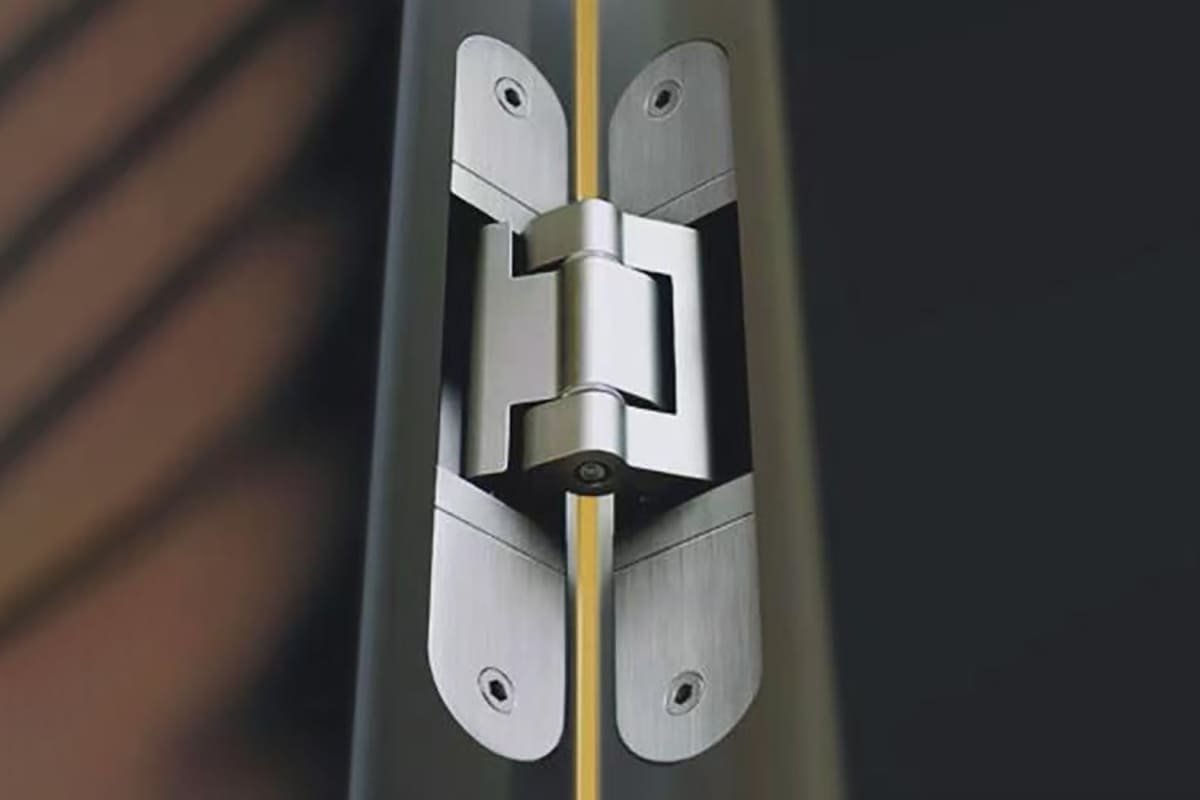
I do not treat “two hinges” or “three hinges” as an absolute rule. Instead, I treat hinge quantity as part of the load calculation and installation design.
Why taller doors often need more support
A tall door creates more leverage. Even if the door weight is within the hinge rating, the height and width can increase stress on the hinge set. The top hinge often carries a large pulling force, while the lower hinge supports alignment and movement.
Adding a third hinge can help by:
- Sharing vertical load
- Reducing stress on the top hinge
- Improving door stability
- Reducing long-term sagging risk
- Helping maintain consistent gaps
- Supporting higher traffic use
For doors over 2 meters, three hinges are often recommended in project practice. But the final decision still needs hinge specification, door data, and frame condition.
Typical hinge quantity logic
| Door condition | Common hinge quantity approach |
|---|---|
| Light standard interior door | Often 2 hinges |
| Medium solid wood door | 2 or 3 hinges depending on weight and height |
| Door higher than 2 meters | Often 3 hinges |
| Heavy entrance door | Usually checked carefully; often 3 hinges |
| Oversized or high-traffic door | May require 3 or more, based on engineering guidance |
The hinge rating must also be read correctly. Some suppliers state capacity per pair. Some state capacity per set. Some may test under specific door dimensions. Buyers should never assume the meaning without confirmation.
Placement also matters
Hinge quantity is important, but hinge placement also affects performance. Poor placement can reduce the benefit of using three hinges.
A common practice is to position:
- The top hinge near the upper part of the door
- The bottom hinge near the lower part of the door
- The middle hinge closer to the upper hinge or around the central load area, depending on door design
However, placement should follow the hinge supplier’s recommendation and door factory standard. Fire-rated doors may also have stricter requirements.
What buyers should confirm before ordering
Before ordering concealed hinges for heavy doors, I suggest confirming:
- Door weight after finishing
- Door height and width
- Door thickness
- Door core material
- Frame material and thickness
- Required opening angle
- Hinge quantity per door
- Screw specification
- Certification requirement
- Installation drawing approval
This may look like extra work, but it saves time later. In bulk procurement, wrong model selection can affect hundreds or thousands of doors.
Frequently Asked Questions
Are heavy duty concealed hinges visible when the door is closed?
No. Heavy duty concealed hinges are designed to stay hidden when the door is closed. The hinge body is mortised into the door and frame. When installed correctly, the door surface looks clean, which is why many premium flush door and entrance door projects use them.
Is 80 kg the standard definition of heavy duty hidden door hinges?
No. Around 80 kg per set is a common starting point for many heavy-duty models, but it is not a universal definition. Buyers should check the supplier’s specification and confirm door weight, height, width, material, frame strength, hinge quantity, and installation conditions.
Can I use two heavy duty hidden hinges on a door over 2 meters?
Sometimes, but I usually recommend checking carefully. Doors over 2 meters often use three hinges to improve load distribution and reduce sagging risk. The final quantity should depend on door weight, width, hinge rating, frame structure, and manufacturer guidance.
Are stainless steel hidden hinges always better than zinc alloy hinges?
Not always. Stainless steel, especially 304 stainless steel, is often preferred for corrosion resistance and demanding applications. However, zinc alloy may still be suitable for some interior doors. The best material depends on door type, environment, strength requirement, finish, and budget.
Why do heavy doors sag even when the hinge load rating looks correct?
Heavy doors may sag because of weak frames, poor screw holding, wrong hinge quantity, inaccurate mortising, wide door leaves, or incorrect model selection. Load rating is only one factor. The whole door system must be checked to maintain stable long-term performance.
Conclusion
Heavy duty hidden door hinges are high-strength concealed hardware systems, not just thicker versions of standard hinges. I recommend selecting them by door weight, height, width, thickness, material, frame strength, hinge quantity, adjustment needs, and installation accuracy. If you are sourcing for door production, wholesale supply, or project work, share your door specifications first. SDH Hardware can help review the application and support suitable concealed hinge solutions for bulk orders and customized requirements.