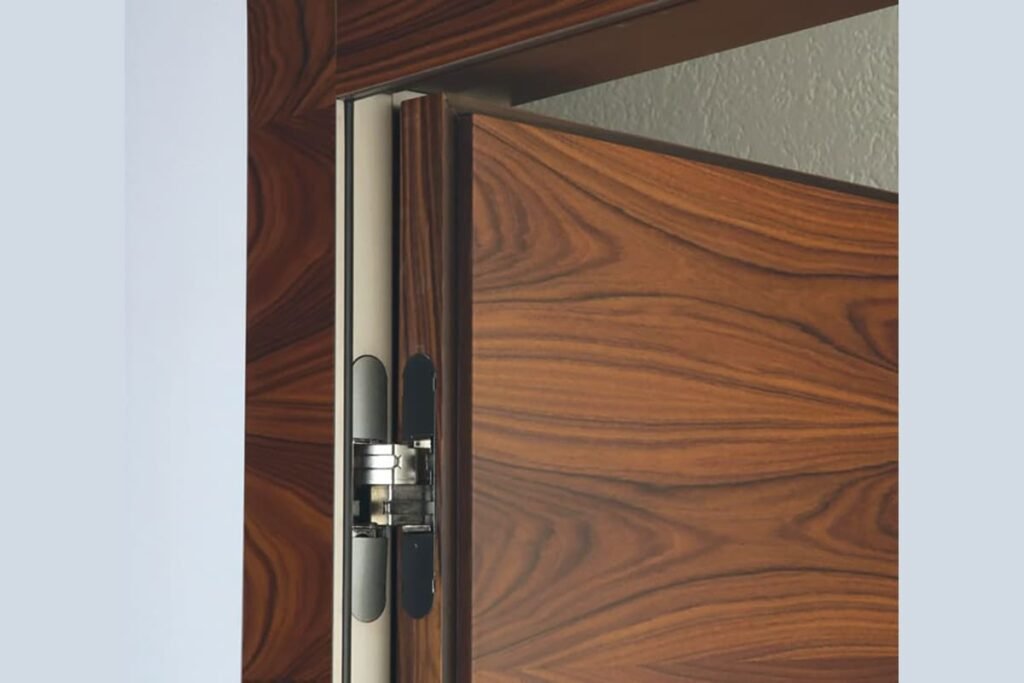
Types, Parts, and Requirements of Concealed Hinges?
Concealed hinges can solve many appearance and security problems, but they can also create fitting problems when buyers choose them only by size or finish. I have seen doors bind, sag, or lose alignment because the hinge was not matched to the door structure. The solution is simple: select concealed hinges by type, parts, load, material, certification, and installation method.
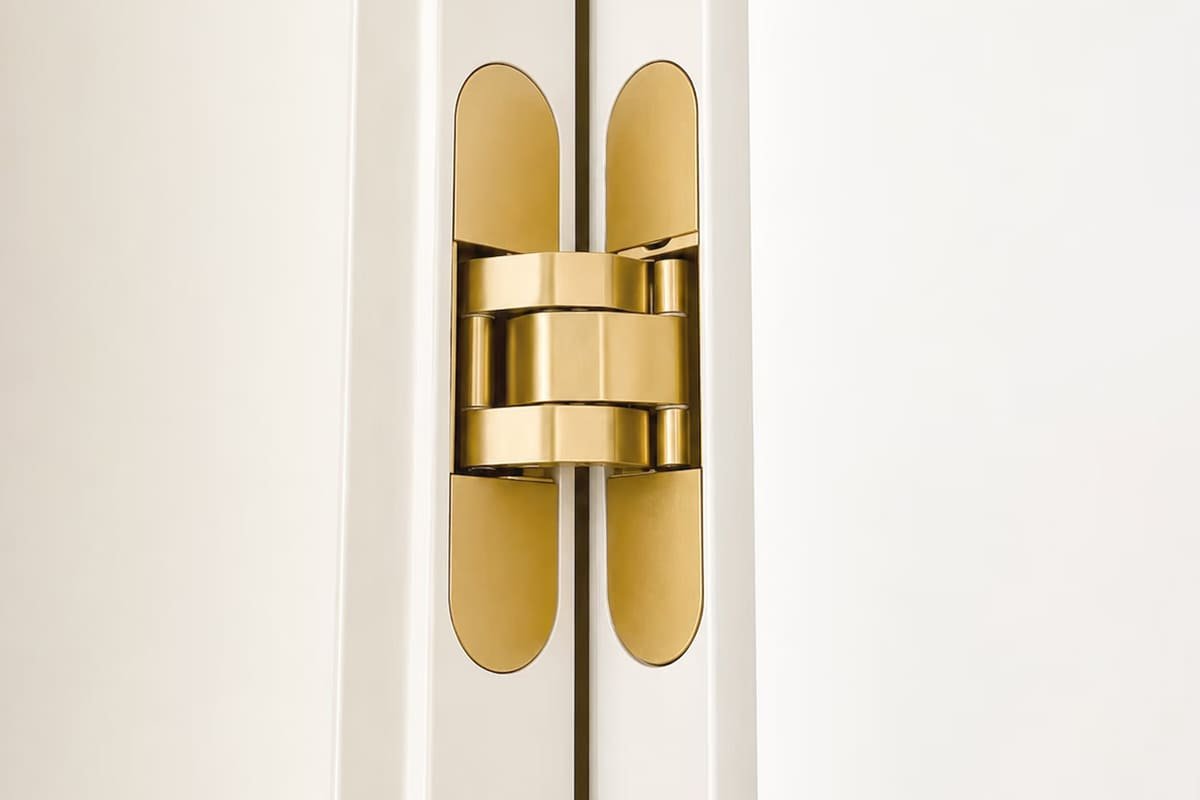
Concealed hinges are hidden door hinges installed inside the door edge and frame, so they remain invisible or nearly invisible when the door is closed. The main types include 3D adjustable concealed hinges, heavy-duty concealed hinges, fire-rated concealed hinges, and cabinet-style concealed hinges. Correct selection depends on door weight, door thickness, opening frequency, material, finish, and required certificates.
I manufacture and configure architectural door hardware, so I do not treat hinges as generic accessories. A hinge decides how the door hangs, moves, closes, and performs over time. Below, I will break down concealed hinge types, critical parts, and practical selection requirements for professional buyers.
What Are Concealed Hinges and How Are They Different From Butt Hinges?
Many buyers ask for “hidden hinges,” “invisible hinges,” or “full-sized hinges” as if these terms mean the same thing. They do not. This confusion can lead to wrong routing, wrong screw positions, and poor door movement. I always start by defining the hinge type before discussing price or finish.
Concealed hinges are recessed into the door and frame so the hinge body is hidden when the door is closed.1 A full-mortise butt hinge is also recessed, but its pin knuckle remains visible.2 Non-mortise and light-duty hinges are different again because they use simpler installation methods and lower structural requirements.
The Main Difference Is Visibility and Structure
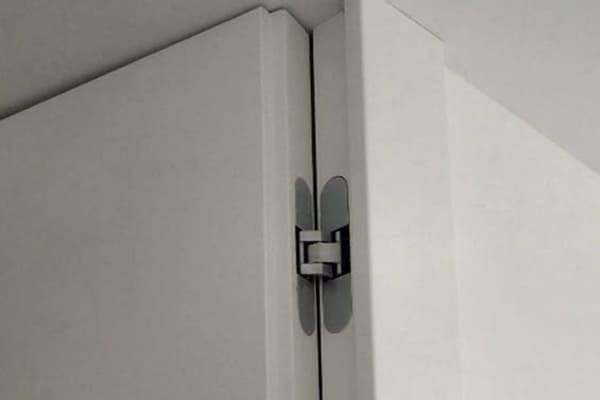
A concealed hinge sits inside routed pockets in the door edge and frame. When the door closes, the hinge mechanism folds into the gap. This gives the door a clean, modern look. It also makes the hinge less accessible from the exposed side.
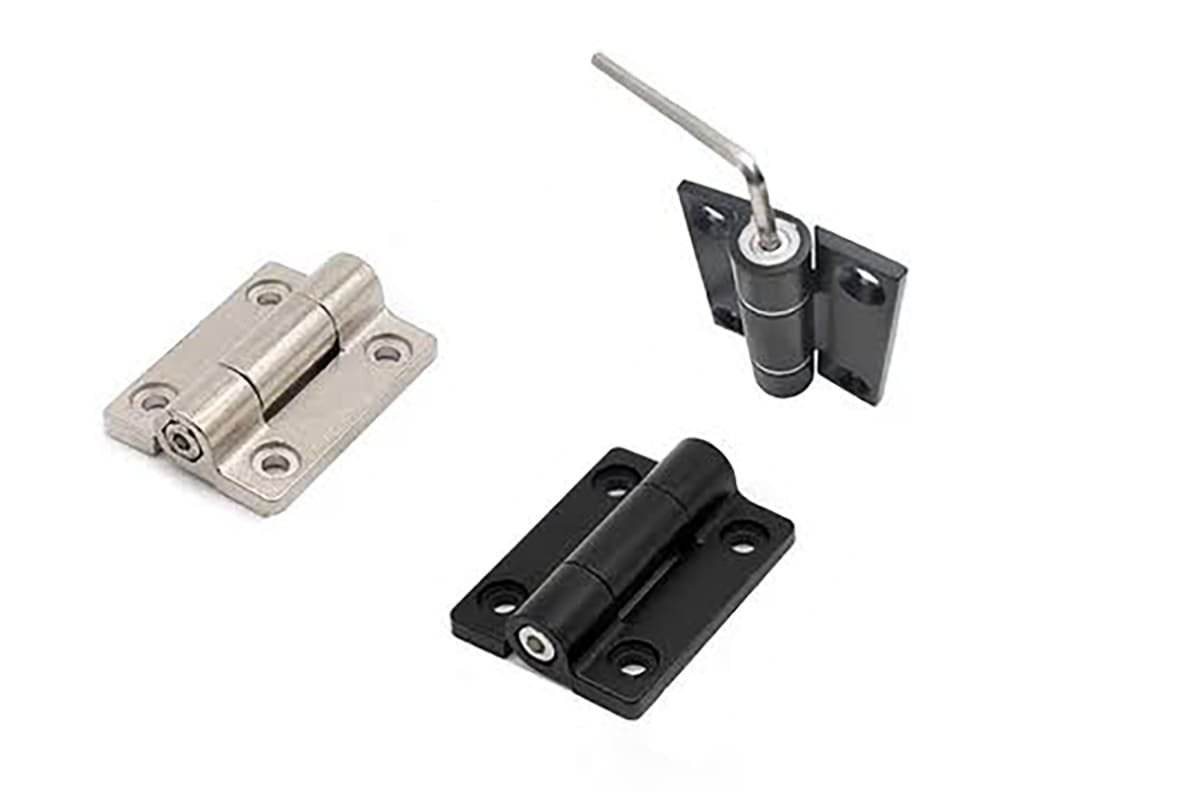
A full-mortise butt hinge, often called a contract butt hinge in project hardware, has two flat leaves. One leaf is recessed into the door edge, and the other leaf is recessed into the frame. When the door closes, both leaves sit inside the door gap, but the pin and knuckle are still visible.
That definition matters because I often see buyers mix these terms:
| Hinge Type | Installation Method | Visible When Door Is Closed? | Common Use |
|---|---|---|---|
| Concealed hinge | Mortised into door and frame | Usually hidden | Modern timber doors, flush doors, premium interiors |
| Full-mortise butt hinge | Leaves recessed into door and frame | Pin/knuckle visible | Contract doors, interior doors, commercial doors |
| Non-mortise hinge | Usually surface-mounted or minimal routing | Visible | Light-duty doors, simple installation |
| Small/light-duty hinge | Surface or shallow fixing | Visible | Cabinets, small panels, lightweight applications |
Why I Separate Concealed Hinges From Full-Mortise Butt Hinges
In factory-side configuration, I do not choose a hinge by name only. I first check the door structure:
- Door thickness
- Door width and height
- Door core material
- Frame material
- Door weight
- Opening angle
- Expected daily usage
- Fire-rating or CE requirement
- Finish requirement
- Installation equipment available at the customer’s factory
This matters because concealed hinges usually require more accurate routing than butt hinges3. If the pocket depth or frame position is wrong, the door may rub, sit proud, or fail to close evenly. A butt hinge is more forgiving in many standard door factories, especially where installers are already familiar with full-mortise preparation.
A Practical Example From Production
I once worked with a buyer who wanted to replace visible butt hinges with concealed hinges on a flush interior door series. The drawing looked simple, but the door thickness was not enough for the hinge body they selected. The frame also had limited routing depth. We had to change the hinge model and adjust the door machining template.
That case reminded me of one rule:
A hidden hinge is not only a design choice. It is also a machining and load-bearing decision.
For standard contract doors, a quality full-mortise butt hinge may still be the best solution. For premium flush doors, hotel doors, and minimalist interiors, concealed hinges can offer a better visual result. The right choice depends on the door system, not only the buyer’s preference.
What Types of Concealed Hinges Are Used for Architectural Doors?
Concealed hinges look similar in photos, but their internal structures and applications are not the same. A buyer who selects only by outer dimensions can miss important details. The wrong type may fit the pocket but fail to support the expected door movement or adjustment range.
The main types of concealed hinges for architectural doors include 3D adjustable concealed hinges, heavy-duty concealed hinges, fire-rated concealed hinges, and standard interior concealed hinges. Some are designed for timber doors, while others support aluminum frames, steel frames, or customized door systems.
1. 3D Adjustable Concealed Hinges
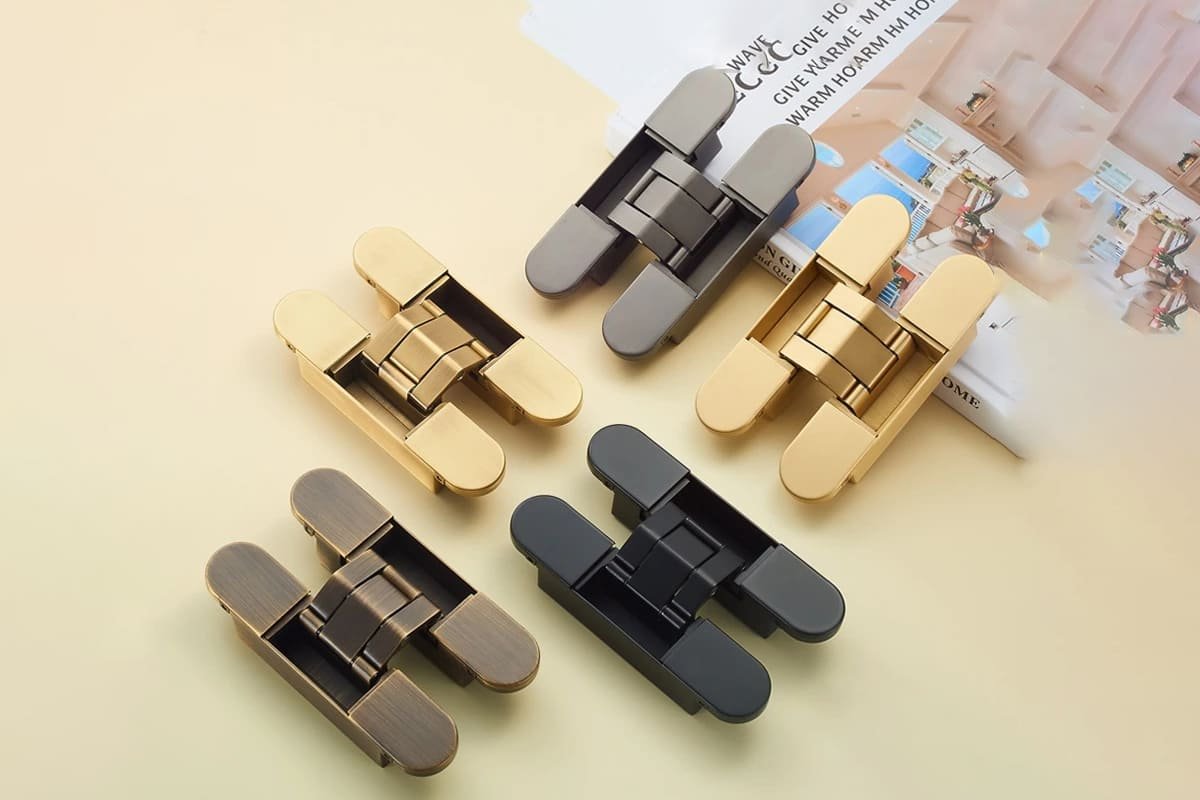
A 3D adjustable concealed hinge allows adjustment in three directions:
- Vertical adjustment – moves the door up or down
- Horizontal adjustment – moves the door left or right
- Depth adjustment – moves the door inward or outward
This type is popular for higher-end interior doors because installation tolerances are easier to correct after hanging the door. I usually recommend 3D adjustment when the project requires a clean door reveal, flush wall design, or consistent gaps across many doors.
2. Heavy-Duty Concealed Hinges
Heavy-duty models use stronger hinge bodies, larger fixing areas, and more robust internal movement parts. They may be suitable for taller, wider, or heavier doors, but I avoid giving universal load ratings unless the model has clear test data.
In professional purchasing, “heavy-duty” should never be accepted as a vague promise. Buyers should ask for:
- Model-specific door weight recommendation
- Door thickness requirement
- Screw specification
- Material specification
- Test report if available
- Fire-rated certificate if needed
- Installation drawing
3. Fire-Rated Concealed Hinges
Fire-rated concealed hinges are used when the door assembly must meet fire performance requirements. However, the hinge alone does not make a door fire-rated4. The full door set must be tested or approved according to the relevant standard.5
I normally tell buyers to check three things:
| Requirement | Why It Matters |
|---|---|
| Fire certificate | Confirms tested performance under specific conditions |
| Compatible door material | The hinge must match the tested door construction |
| Intumescent protection | Some applications require fire pads or intumescent kits |
Fire-rated hardware selection is serious. I do not recommend substituting hinge models casually after certification.
4. Standard Interior Concealed Hinges
Standard concealed hinges are used for normal interior timber doors where the main goals are clean appearance and smooth movement. These hinges usually cost less than heavy-duty or fire-rated versions. They can work well when the door is not oversized and the opening frequency is moderate.
5. Cabinet-Style Concealed Hinges Are Different
Cabinet concealed hinges, such as cup hinges, are common in furniture. They are not the same as architectural concealed hinges.6 I mention this because some buyers search the same keyword for both products. Door manufacturers should not use cabinet hinge logic for full-size interior doors.
Quick Selection Table
| Door Situation | Suitable Hinge Direction |
|---|---|
| Premium flush interior door | 3D adjustable concealed hinge |
| Tall or heavy timber door | Heavy-duty concealed hinge with verified data |
| Fire-rated door project | Certified fire-rated concealed hinge system |
| Standard light interior door | Standard concealed hinge or butt hinge |
| High-frequency commercial door | Consider bearing type, test data, and stronger hinge structure |
The key point is simple. Different types serve different door systems. A concealed hinge should match the door, frame, routing process, and project requirement.
What Parts of Concealed Hinges Matter Most?
Some buyers focus on the visible finish, but concealed hinges perform through their internal parts. If the hinge body, pin, screws, and adjustment system are weak, the door will not stay aligned. A beautiful hidden hinge can still create after-sales problems when its structure is not suitable.
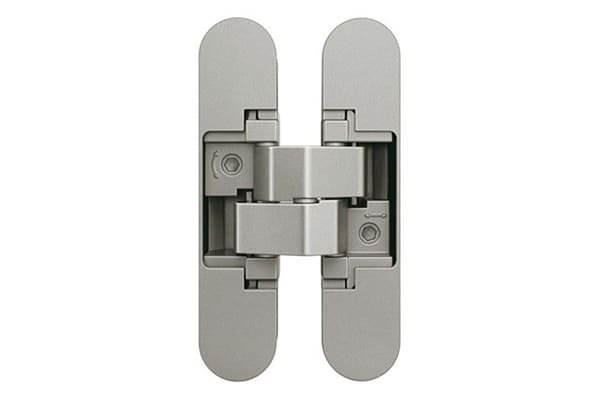
The most important parts of concealed hinges include the hinge body, moving arms, pins or shafts, bushings or bearings, adjustment screws, fixing screws, cover plates, and mounting plates. These parts control load transfer, movement smoothness, installation accuracy, and long-term door alignment.

Hinge Body
The hinge body is the main structural housing. It is usually recessed into the door and frame. Its size affects the required routing depth and the door thickness limit.
When I check a concealed hinge body, I look at:
- Casting or machining quality
- Wall thickness
- Pocket depth
- Screw hole layout
- Surface treatment
- Fit between moving parts
- Compatibility with the frame profile
A larger hinge body may support more demanding use, but it also requires more door material to be removed. That can weaken narrow door stiles if the door design is not suitable.
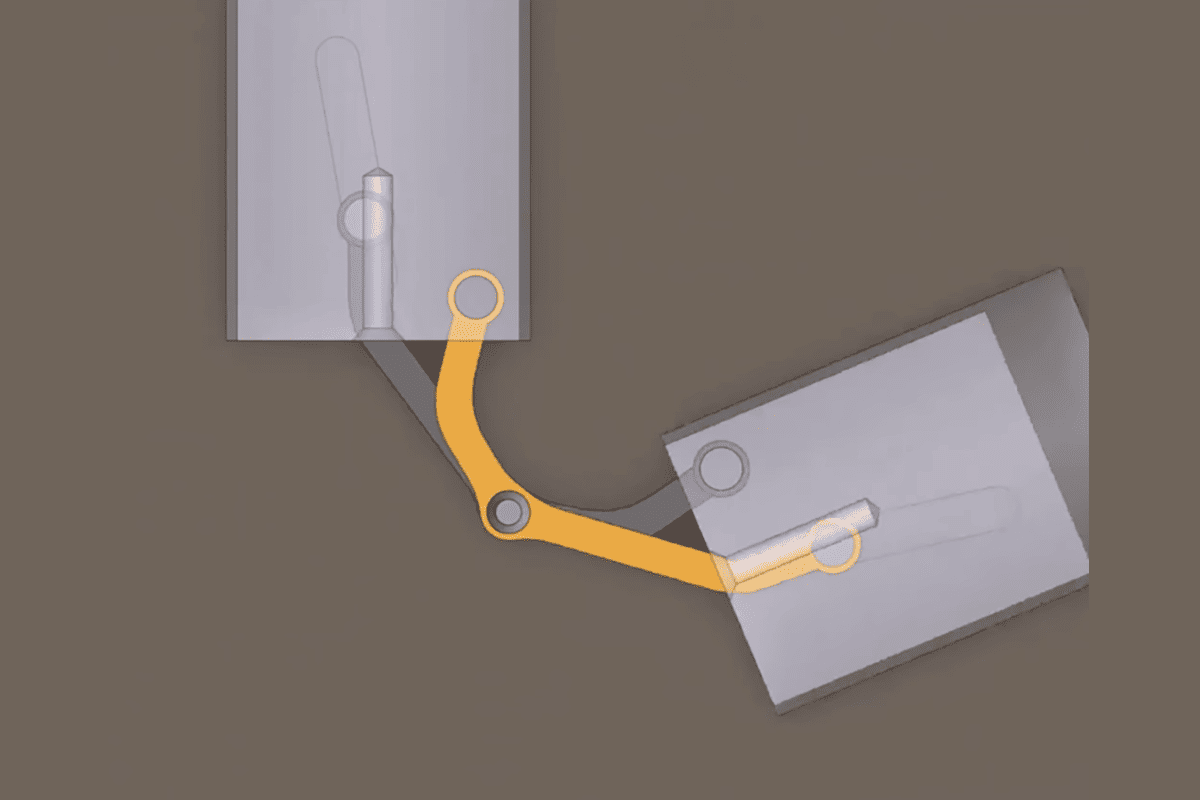
Moving Arms or Links
Many architectural concealed hinges use an internal arm system. These arms fold as the door opens and closes. Their geometry affects the opening angle and clearance.
Important questions include:
- Can the door open to the required angle?
- Will the door edge hit the frame?
- Does the hinge allow the desired flush position?
- Is the arm structure strong enough for expected use?
- Does the movement feel stable?
Pins, Shafts, Bushings, and Bearings
The moving system depends on pins or shafts. Some hinges use plain pivoting surfaces, while others use bearing-supported movement. This is similar to the logic behind butt hinges.
For full-mortise butt hinges, ball bearing hinges reduce friction and metal wear. They help heavier or frequently used doors open more smoothly over time. However, ball bearing hinges are not always necessary. Plain bearing or standard bearing butt hinges may be suitable for lighter interior doors with lower opening frequency.
For concealed hinges, the same idea applies in principle: the movement structure must match the load and usage. I do not say every door needs the most expensive movement system. I say the movement system must be appropriate.
Adjustment Screws
Adjustment screws are the practical advantage of many concealed hinges. They allow installers to correct small deviations after installation.
Common adjustment directions include:
- Height
- Side gap
- Compression or depth
This is valuable in batch installation. Door factories and project installers often need to keep consistent gaps across many rooms. Adjustment reduces rework, but it does not replace correct machining.
Fixing Screws and Mounting Plates
Fixing screws transfer load from the hinge into the door and frame. If the screw quality is poor or the frame material is weak, the hinge may loosen.
I always check:
- Screw diameter
- Screw length
- Screw material
- Countersunk fit
- Thread holding strength
- Frame reinforcement if needed
For MDF, solid wood, aluminum, or steel frames, the fixing method may change. Buyers should confirm the fixing solution before mass production.
Cover Plates and Surface Finish
Cover plates improve appearance and protect adjustment areas. The finish may include satin nickel, polished chrome, black, bronze, gold, or custom colors. For bulk orders, finish consistency is very important.
At our factory, I pay attention to batch color difference because wholesalers and door manufacturers often install hardware sets together. A hinge, lever handle, lock body, and cylinder should look compatible in the final door set.
What Requirements Should Concealed Hinges Meet Before Purchase?
A concealed hinge can look correct on a sample table and still fail in real installation. This happens when buyers skip door weight, door thickness, routing dimensions, or certification. I prefer a checklist because it prevents emotional or price-only purchasing.
Concealed hinges should meet requirements for door weight, door size, door thickness, frame material, routing depth, screw fixing strength, opening frequency, surface finish, corrosion environment, and certification. Professional buyers should confirm drawings, test data, samples, and installation templates before bulk orders.
Start With Door Weight and Size
Door weight and size come first. A taller or wider door creates more leverage on the hinge side.7 Even if the total weight seems acceptable, the door geometry can increase stress on the hinge and fixing screws.
I usually ask buyers for:
- Door height
- Door width
- Door thickness
- Door core material
- Door weight
- Frame material
- Number of hinges per door
- Required opening angle
For example, a standard interior timber door and a tall solid-core hotel door should not automatically use the same hinge. They may need different hinge sizes, screw systems, and installation positions.
Confirm Hinge Size and Routing Dimensions
Concealed hinges need accurate mortising. The routing pocket must match the hinge body. If the pocket is too shallow, the hinge may sit proud. If the pocket is too deep, the door gap may be wrong.
Buyers should request:
- Technical drawing
- CNC routing dimensions
- Door-side pocket depth
- Frame-side pocket depth
- Screw hole positions
- Minimum door thickness
- Recommended gap dimensions
This is where concealed hinges differ from simpler non-mortise hinges. They reward accurate production but punish careless installation.
Choose Material and Finish According to Environment
Common hinge materials may include zinc alloy, stainless steel, carbon steel, or other engineered metal structures depending on the model. Each material has different cost, strength, machining, and finish characteristics.
Surface finish matters for both appearance and market acceptance. For example:
| Finish | Common Market Use | Buyer Concern |
|---|---|---|
| Satin nickel | Europe, Middle East, Southeast Asia | Color consistency |
| Matt black | Modern interiors | Scratch visibility |
| Polished chrome | Commercial projects | Surface brightness |
| Bronze or antique | Regional decorative markets | Batch matching |
| Stainless steel finish | Durable appearance | Grade and finish process |
I avoid broad claims such as “never rusts” because corrosion resistance depends on material grade, coating quality, environment, salt exposure, humidity, and maintenance.8
Match Opening Frequency
A door used 10 times per day is different from a door used hundreds of times per day.9 Residential bedrooms, hotel corridors, school rooms, offices, and public buildings all have different usage patterns.
For high-frequency doors, buyers should pay closer attention to:
- Internal movement system
- Bearing or bushing design
- Screw holding strength
- Hinge body strength
- Test reports
- Maintenance access
- Supplier consistency
This is also where ball bearing butt hinges may be worth comparing. If the project does not require hidden hardware, a high-quality ball bearing full-mortise butt hinge can be practical, durable, and easier to install.
Check Certification and Compliance
For international buyers, certificates are not decoration. They affect customs, project approval, brand trust, and tender qualification.
Common requirements include:
- CE certification10
- Fire-rated certification
- Material reports when required
- Factory inspection procedures
- Project-specific compliance documents
At SDH Hardware, we serve buyers in the Middle East, Europe, and Southeast Asia. I see that different markets emphasize different documents. European buyers often ask for precise standards and test references. Middle East project buyers often focus on fire-rated certificates, finish consistency, and stable bulk delivery. Southeast Asian wholesalers usually care about practical quality, price competitiveness, and repeatable supply.
A Practical Procurement Checklist
Before placing a bulk order, I recommend this sequence:
- Confirm door weight and size.
- Confirm door thickness and frame material.
- Select hinge type and size.
- Check routing drawings.
- Confirm material and finish.
- Review opening frequency.
- Confirm certification.
- Test samples on real doors.
- Lock production specifications.
- Approve bulk finish sample before mass production.
This order reduces risk. It also helps buyers compare suppliers fairly.
When Are Ball Bearing Butt Hinges Better Than Concealed Hinges?
Some projects do not need hidden hardware. Buyers may still choose concealed hinges because they look modern, but appearance is not the only goal. If installation speed, cost control, maintenance access, and heavy traffic matter more, a butt hinge may be the smarter option.
Ball bearing butt hinges can be better than concealed hinges when the door is heavy, frequently used, cost-sensitive, or installed in a standard contract door system where visible knuckles are acceptable. Ball bearings reduce friction and metal wear11, while full-mortise installation remains familiar to many door factories and installers.
Understand the Full-Sized Door Hinge
A full-sized door hinge usually refers to a full-mortise butt hinge in architectural hardware. It is not a small lightweight hinge. It is also not the same as a non-mortise hinge.
A full-mortise butt hinge has:
- Two flat leaves
- A central pin or knuckle
- Screw holes in each leaf
- One leaf recessed into the door
- One leaf recessed into the frame
When the door is closed, the leaves are hidden in the gap, but the knuckle remains visible. This hinge type is common in contract doors because it is practical, standardized, and easy for many installers to understand.
Plain Bearing vs Ball Bearing Butt Hinges
The bearing type affects movement.
| Bearing Type | Best For | Main Advantage |
|---|---|---|
| Plain bearing butt hinge | Light to medium interior doors | Lower cost and simple structure |
| Ball bearing butt hinge | Heavier or high-frequency doors | Smoother movement and reduced friction |
| Concealed hinge with adjustable system | Flush premium doors | Hidden appearance and post-install adjustment |
A ball bearing hinge places bearing units between hinge knuckles. These bearings reduce friction as the door swings. This can help heavier or frequently used doors operate more smoothly over time. However, I do not recommend ball bearing hinges for every door. For a light interior room door, a standard plain bearing hinge may be enough.
When I Recommend Butt Hinges Instead
I often recommend full-mortise butt hinges when:
- The project does not require invisible hardware.
- The door factory already has butt hinge machining.
- The buyer needs a cost-effective solution.
- The door is standard size and standard thickness.
- Maintenance access is important.
- Installers need a familiar hinge type.
- The project uses contract-grade door hardware.
This does not mean butt hinges are “better” in every case. It means they are better for certain project conditions.
When I Recommend Concealed Hinges Instead
I recommend concealed hinges when:
- The project requires a clean minimalist appearance.
- The door must sit flush with the frame or wall panel.
- Visible hinge knuckles are not acceptable.
- 3D adjustment is valuable.
- The buyer can control machining accuracy.
- The door thickness supports the hinge body.
- The budget allows more precise hardware.
The most important question is not “Which hinge is best?” The better question is:
Which hinge matches the door structure, usage frequency, installation method, and market expectation?
Why This Matters for Buyers and Wholesalers
For wholesalers, the wrong hinge creates returns. For door manufacturers, the wrong hinge creates assembly delays. For project buyers, the wrong hinge creates installation complaints. I have learned that a small hardware decision can affect the whole door system.
That is why I always suggest a practical comparison before purchase. A buyer should not treat all butt hinges as interchangeable, and the buyer should not treat all concealed hinges as premium by default. The correct hinge depends on measurable requirements.
How Should Buyers Test Concealed Hinges Before Bulk Orders?
I recommend testing with:
- Actual door thickness
- Actual frame profile
- Actual screws
- Actual door weight or close equivalent
- Planned finish
- Planned seals or gaskets
- Related lock and handle hardware
Check Door Gaps After Adjustment
The door gap should be even after installation and adjustment. I normally check:
- Top gap
- Lock-side gap
- Hinge-side gap
- Bottom clearance
- Flushness with frame
- Closing position
Compare Finish With Other Door Hardware
For batch procurement, I suggest keeping an approved finish sample. This helps control color consistency across repeat orders.
Review Packaging and Accessories
Buyers should confirm:
- Screws included or not
- Screw material and finish
- Allen keys or adjustment tools
- Fire pads if required
- Installation instructions
- Carton strength
- Labeling and model identification
This process protects both sides. It reduces misunderstanding and supports stable long-term supply.
Frequently Asked Questions
Are concealed hinges suitable for all doors?
Are ball bearing hinges always better than standard hinges?
No. Ball bearing hinges are useful for heavier or frequently used doors because they reduce friction and metal wear. However, plain bearing hinges can be suitable for lighter interior doors. The correct choice depends on door weight, opening frequency, budget, and installation requirements.
Can concealed hinges be fire-rated?
Yes, some concealed hinges are fire-rated, but the hinge alone does not make the whole door fire-rated. The complete door assembly must match the tested configuration. Buyers should request valid certificates and confirm whether fire pads or additional components are required.
What information should I send before requesting a concealed hinge quotation?
You should send door height, width, thickness, weight, frame material, door material, finish requirement, opening angle, certification requirement, order quantity, and market destination. If possible, send drawings or photos. This helps the supplier recommend the correct concealed hinge model instead of guessing.
Conclusion
Concealed hinges are excellent for clean, modern, and premium door designs, but they must be selected with technical discipline. I always check hinge type, door weight, door thickness, routing depth, material, finish, bearing structure, certification, and installation conditions before recommending a model. Buyers should also compare concealed options with full-mortise butt hinges when appearance is not the only priority. If you need factory-side support for hinge selection, drawings, finishes, CE certification, or customized bulk supply, contact SDH Hardware for a practical door hardware solution.
"Concealed hinge jig", https://en.wikipedia.org/wiki/Concealed_hinge_jig. A neutral reference source defines concealed or invisible hinges as hinge mechanisms installed so that the hardware is not visible, or is minimally visible, when the door is in the closed position. Evidence role: definition; source type: encyclopedia. Supports: The source should define concealed or invisible hinges as hinges mounted so that their mechanism is hidden when the door is closed.. ↩
"The Basics of Door Hinges", https://www.seclock.com/education/entry/the-basics-of-door-hinges. Architectural hardware references describe full-mortise butt hinges as hinges whose leaves are mortised into the door and frame while the hinge barrel, knuckle, or pin remains visible at the door edge. Evidence role: definition; source type: institution. Supports: The source should explain the structure of a full-mortise butt hinge, including recessed leaves and the visible knuckle or pin.. ↩
"Router For Fitting Hinges FR129VB Special router for ...", https://www.instagram.com/reel/DO9a7lCEvnM/. Technical woodworking and door-installation guidance indicates that concealed hinges depend on accurately routed pockets and alignment because the hinge body is housed within the door and frame. Evidence role: mechanism; source type: education. Supports: The source should support that concealed hinges require accurately cut mortises or routed pockets to function and align correctly.. Scope note: The source may support the need for precise routing without directly ranking every concealed hinge as less forgiving than every butt hinge. ↩
"Fire Doors and NFPA 80 FAQs", https://www.nfpa.org/news-blogs-and-articles/blogs/2025/04/11/fire-doors-faqs. Fire-door guidance from standards bodies treats fire resistance as a property of the tested door assembly, including the door leaf, frame, hardware, seals, and installation conditions, rather than as a result of a single rated hinge. Evidence role: expert_consensus; source type: institution. Supports: The source should support that fire-door ratings apply to a complete tested door assembly, not to an individual hardware component alone.. ↩
"EN 1634-1", https://www.architecturalarmour.com/tech-spec/security-glass/en1634-1. Recognized fire-door standards, such as EN 1634-1, NFPA 80, and UL 10C, evaluate or regulate fire-door assemblies under specified test and installation conditions rather than treating hardware selection as independent of the assembly. Evidence role: general_support; source type: institution. Supports: The source should identify standards or certification schemes requiring fire doors and associated hardware to be tested or listed as part of a specified assembly.. Scope note: The exact applicable standard depends on jurisdiction, building type, and project specification. ↩
"Concealed Cabinet Door Hinges - Everything You Need to ...",
. Reference descriptions of cup hinges classify them as concealed hinges used primarily in cabinet and furniture doors, which places them in a different application category from architectural hinges for full-size building doors. Evidence role: definition; source type: encyclopedia. Supports: The source should define cup hinges as cabinet or furniture hinges and distinguish their use from full-size architectural door hinges.. Scope note: The source supports the application distinction, but it may not compare engineering load ratings for every product type. ↩"28.18 -- Open door to demonstration preparation area", https://web.physics.ucsb.edu/~lecturedemonstrations/Composer/Pages/28.18.html. Basic mechanics defines torque as the product of force and moment arm distance, providing the engineering basis for why larger door geometry can increase hinge-side loading even when the nominal door weight is unchanged. Evidence role: mechanism; source type: education. Supports: The source should explain that torque or moment increases with force and perpendicular distance from the pivot, which applies to wider or taller doors loading hinges.. Scope note: This supports the mechanical principle; actual hinge stress also depends on hinge spacing, door mass distribution, fasteners, and frame construction. ↩
"Moisture Testing Coating Performance on Metal Materials", https://www.waru.edu/sites/default/files/Migrated/CopDocuments/Moisture%20Testing%20Coating%20Performance%20on%20Metal%20Materials.pdf. Government and materials-science references describe corrosion as an electrochemical process affected by alloy composition, protective coatings, moisture, chloride or salt exposure, and maintenance or surface condition. Evidence role: mechanism; source type: government. Supports: The source should explain that corrosion behavior is influenced by material composition, protective coatings, and environmental conditions such as moisture and chloride exposure.. ↩
"A156.1 - 2025 Butts and Hinges", https://buildershardware.com/ANSI-BHMA-Standards/Hardware-Highlights/A1561-2021-Butts-and-Hinges. Door-hardware performance standards such as ANSI/BHMA A156.1 and EN 1935 use durability, cycle testing, and grading concepts, supporting the view that higher-use doors require different hinge performance considerations than low-use doors. Evidence role: expert_consensus; source type: institution. Supports: The source should show that hinge standards classify or test hinges using durability cycles, grades, or usage categories.. Scope note: The standards support the duty-cycle principle but do not validate the article's illustrative numbers of 10 versus hundreds of uses per day. ↩
"CE marking", https://en.wikipedia.org/wiki/CE_marking. European Commission guidance states that CE marking indicates that a product has been assessed as meeting applicable EU safety, health, and environmental protection requirements within the relevant product scope. Evidence role: general_support; source type: government. Supports: The source should support that CE marking indicates conformity with applicable EU health, safety, and environmental protection legislation for products within its scope.. Scope note: This supports CE marking as a European compliance mechanism, but applicability depends on the specific hardware product and the EU directives or regulations that cover it. ↩
"Ball bearing", https://en.wikipedia.org/wiki/Ball_bearing. Mechanical references define ball bearings as rolling-element bearings that reduce rotational friction and help limit wear between moving parts by replacing sliding contact with rolling contact. Evidence role: mechanism; source type: encyclopedia. Supports: The source should explain that ball bearings reduce rotational friction and wear by using rolling elements between moving surfaces.. ↩