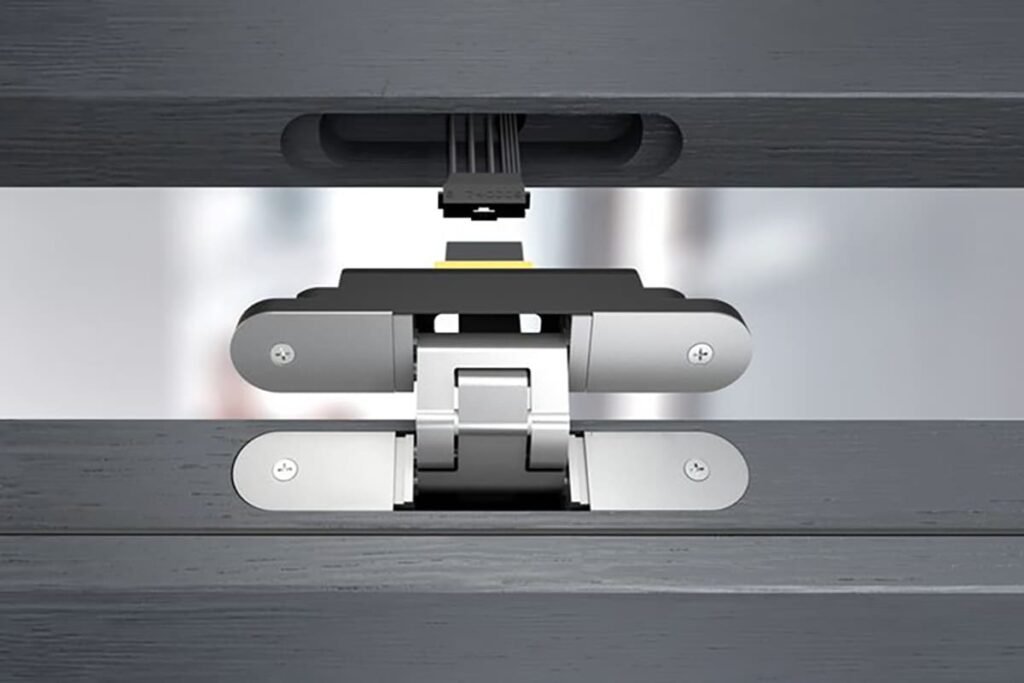
Types of Hinges: A (Very) Comprehensive Guide
Types of hinges can look simple on a drawing, but they become risky when a buyer selects them only by name or size. A wrong hinge can cause alignment problems, weak load support, finish mismatch, or installation delays.1 The safer solution is to match hinge type with door function, material, application, load, and market requirements.
The main types of hinges include butt hinges, concealed hinges, pivot hinges, lift-off hinges, hydraulic self-closing hinges, T-hinges, welded hinges, cabinet hinges, and cup concealed hinges. For B2B buyers, the best hinge is not the most popular name, but the one that matches the door weight, frame structure, usage frequency, installation method, material, finish, and target market standard.
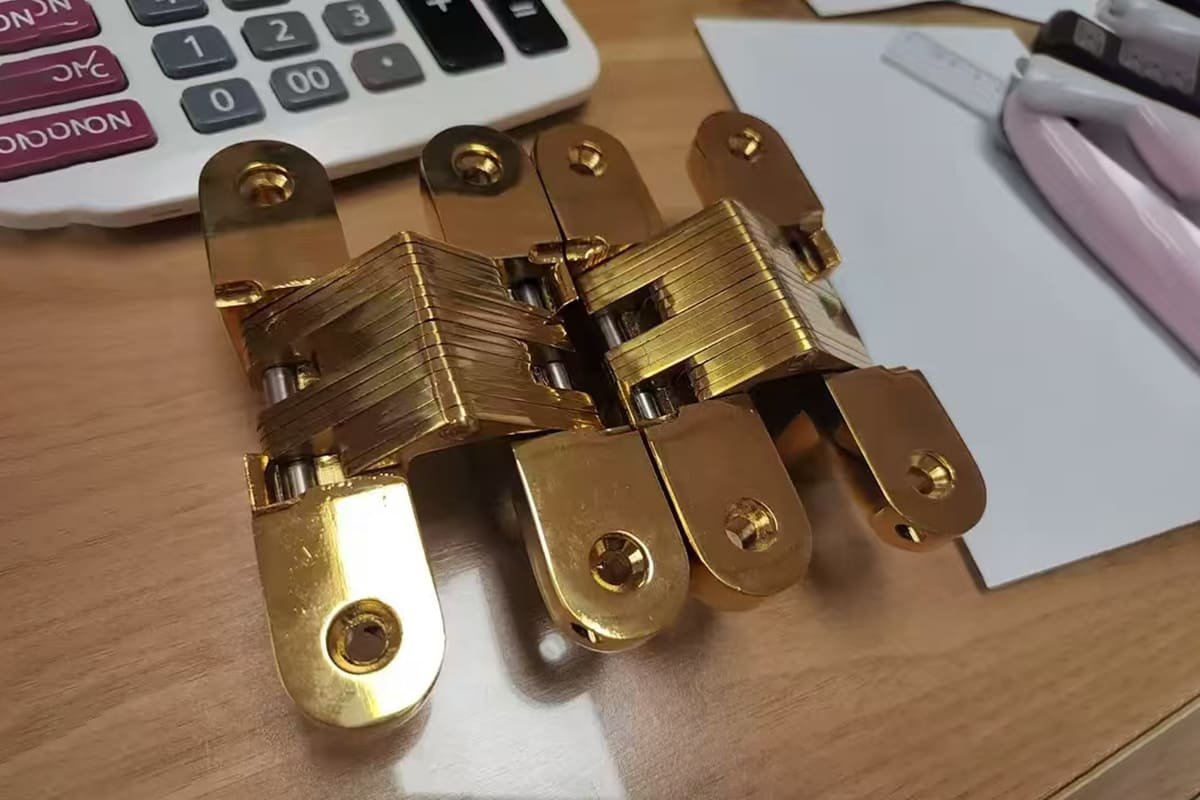
I often see buyers ask for “standard hinges” or “one hinge size,” but that is rarely enough for factory-side confirmation. A door hinge connects two structures, carries weight, controls movement, and sometimes supports safety requirements.2 So, let’s break hinge selection into three practical paths: function, material, and application scenario.
What Are the Main Types of Hinges by Function?
Choosing types of hinges by function is often the first step, but it can also be the most misunderstood step. A hinge name does not automatically tell you whether it fits your door. If the buyer ignores load, movement, safety, and installation details, the hinge may look correct but fail in real use.
The main functional hinge categories include butt hinges, concealed hinges, lift-off hinges, hydraulic self-closing hinges, 3D adjustable hinges, pivot hinges, fire-rated hinges, and security hinges. Each type solves a different problem, such as load-bearing, appearance, removable installation, controlled closing, alignment correction, wide door movement, fire safety, or anti-theft protection.
Butt Hinges: The Practical Standard for Many Doors
Butt hinges are among the most common architectural door hinges.3 They usually consist of two leaves and a pin. One leaf fixes to the door, and the other fixes to the frame. Door manufacturers often use them because they are familiar, cost-effective, and suitable for many wooden, metal, and composite doors.
However, “butt hinge” is not one single specification. Buyers still need to confirm:
- Door weight
- Door thickness
- Hinge size
- Leaf thickness
- Pin structure
- Bearing design
- Screw hole pattern
- Finish
- Fire-rated or non-fire-rated requirement
For example, a light interior wooden door and a heavier commercial door may both use butt hinges, but they may need very different thicknesses, materials, and bearing structures.
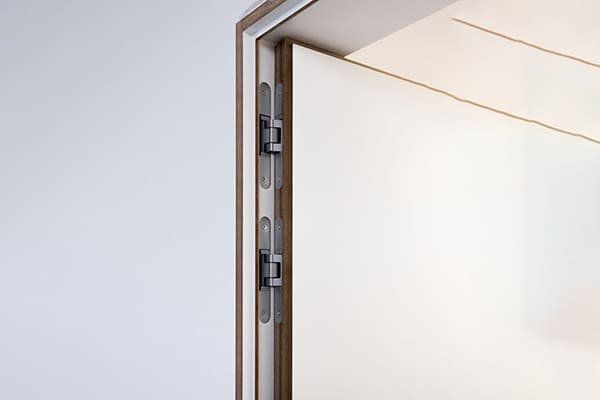
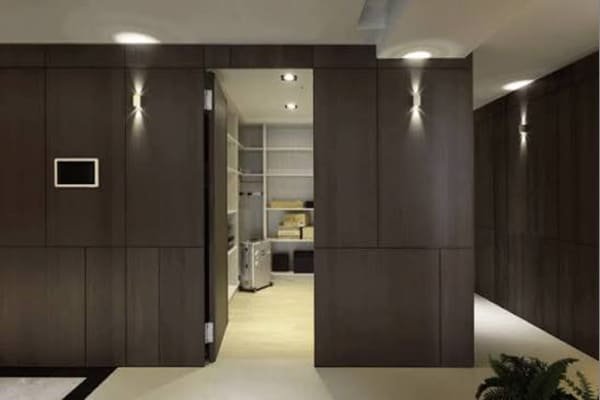
Concealed Hinges: Better Appearance, More Installation Control
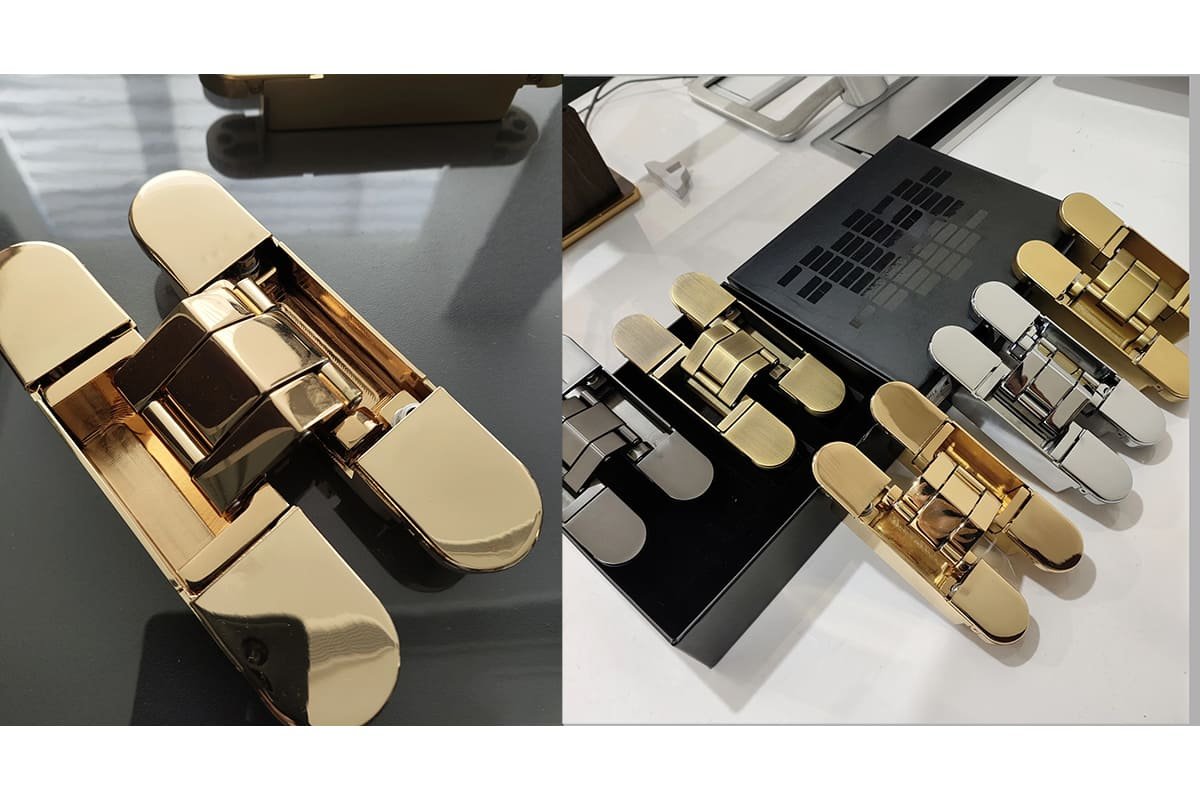
Concealed hinges are selected when the buyer wants a cleaner door appearance. In many modern interior door systems, the hinge stays hidden when the door is closed. This creates a flat, minimalist look.
But concealed hinges demand more precision. The door leaf, frame, and hinge pocket must match correctly. If the factory or installer does not control the cutting position, depth, and alignment, the door may not close smoothly.
A common buyer mistake is to select a concealed hinge by appearance only. I always prefer to confirm:
- Door thickness
- Frame structure
- Opening angle
- Adjustment range
- Door weight
- Screw fixing method
- Finish and visible cover requirement
Lift-Off Hinges: Useful When Doors Need Removal
Lift-off hinges allow the door to be removed without unscrewing the hinge leaves.4 This is useful for maintenance, machinery covers, access panels, and some special doors. They can reduce service time because the door can be lifted away from the frame.
Still, buyers should confirm the handing direction and installation orientation. A left-hand and right-hand lift-off hinge may not be interchangeable. If the order includes mixed door directions, the purchasing team should clearly separate quantities before production.
Hydraulic Self-Closing Hinges: Controlled Closing, Not Magic
Hydraulic self-closing hinges help doors close automatically and more smoothly. They are often used where users may forget to close the door. Some interior doors, apartment doors, office doors, and light commercial doors may use this type.
However, the buyer should not assume every hydraulic hinge can replace a door closer. The closing force, door weight range, adjustment method, and climate conditions all matter. In bulk procurement, I would confirm whether the buyer expects:
- Soft closing
- Automatic closing
- Speed adjustment
- Hold-open function
- Fire-rated compatibility, if needed
- Quiet operation for residential use
3D Adjustable Hinges: Better Alignment After Installation
3D adjustable hinges allow adjustment in three directions, usually vertical, horizontal, and depth.5 This is useful for door systems where fine alignment matters, especially concealed door systems and higher-end interior doors.
These hinges can help correct small installation deviations. But they are not a solution for a badly designed door frame. Buyers should still confirm machining accuracy and installation tolerances.
Fire-Rated and Security Hinges: Special Requirements Need Proof
Fire-rated hinges and security hinges are used when safety and compliance matter. Fire door projects may require hinge materials, structures, and certificates that match local rules. Security doors may require anti-theft pins, non-removable pins, or reinforced structures.
Here, buyers should be careful. A hinge should not be called “fire-rated” or “security” just because it looks strong.6 The procurement team should request proper documentation and confirm whether the hinge is suitable for the door set and market standard.
| Functional Hinge Type | Main Use | Why Choose It | What to Confirm Before Buying |
|---|---|---|---|
| Butt hinge | General doors | Familiar, stable, widely used | Size, thickness, material, load, finish |
| Concealed hinge | Modern interior doors | Hidden appearance | Door/frame machining, opening angle, adjustment |
| Lift-off hinge | Removable doors | Easy maintenance | Handing, orientation, pin direction |
| Hydraulic hinge | Self-closing doors | Controlled closing | Door weight, closing speed, installation condition |
| 3D adjustable hinge | Precision door systems | Alignment correction | Adjustment range, door thickness, frame design |
| Fire-rated hinge | Fire door projects | Safety compliance | Certification, door set requirement, material |
| Security hinge | Exterior/security doors | Anti-removal support | Pin design, fixing method, frame strength |
The key point is simple: function-based selection should begin with the door problem you want to solve, not with a catalog name.
How Do Types of Hinges Differ by Material?
Material choice can look like a price decision, but it affects corrosion resistance, strength, surface finish, durability, and market positioning. If buyers treat material as a minor detail, they may face rust complaints, inconsistent finishes, or poor product fit for the target region.
Types of hinges commonly use stainless steel, brass, galvanized iron, aluminum, and zinc alloy. Stainless steel is often chosen for corrosion resistance and durability.7 Brass supports premium appearance and smooth machining. Galvanized iron is cost-conscious. Aluminum is lightweight. Zinc alloy is common in specific hardware parts where casting and finish flexibility matter.
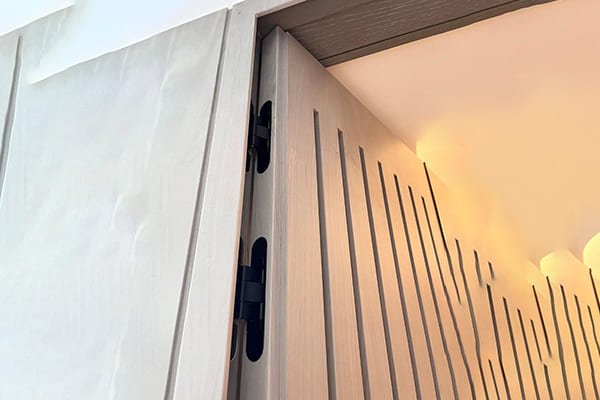
Stainless Steel Hinges
Stainless steel hinges are widely used in architectural hardware because they offer a strong balance of corrosion resistance, durability, and finish stability. For many export markets, stainless steel is a common choice for door hinges, especially when buyers want a long service life and a more reliable surface.
Common stainless steel grades may include 201, 304, and 316, depending on the market and application. Buyers should not assume all stainless steel performs the same way.
- 201 stainless steel is usually more cost-effective.
- 304 stainless steel is commonly used for better corrosion resistance.
- 316 stainless steel is often selected for harsher environments, such as coastal or high-humidity regions.
The right grade depends on the door location and target market expectation.
Brass Hinges
Brass hinges are often used in higher-end decorative or traditional hardware applications. Brass has a warm appearance and can support attractive finishes. It also machines well, which can be useful for certain premium product lines.
However, brass is usually more expensive than many steel options. It may not be the first choice for cost-sensitive bulk projects unless the buyer’s market specifically values brass appearance and positioning.
Galvanized Iron Hinges
Galvanized iron hinges can be suitable for projects where cost is important and the environment is not highly corrosive. The zinc coating helps reduce rust risk compared with plain iron.8
Still, buyers need to confirm coating quality, surface consistency, and intended use. If a galvanized iron hinge is used in a humid or exterior environment without proper finish protection, complaints may increase.
Aluminum Hinges
Aluminum hinges are lightweight and corrosion-resistant in many normal environments.9 They may be used in lightweight doors, panels, or specific aluminum door systems.
The limitation is strength. Aluminum may not be suitable for heavy-duty doors unless the design and specification are carefully engineered. Buyers should confirm load requirements and fixing strength before choosing aluminum.
Zinc Alloy Hinges
Zinc alloy is common in some hardware components because it supports die-casting and flexible design shapes. It is often used for smaller hardware, furniture hardware, or decorative parts.
For architectural door hinges, buyers should confirm whether zinc alloy is suitable for the expected load and usage frequency. It is not automatically equal to stainless steel or brass in durability.
| Material | Main Strength | Typical Positioning | Main Procurement Risk |
|---|---|---|---|
| Stainless steel | Corrosion resistance, durability | Mid to high architectural hardware | Grade confusion, finish mismatch |
| Brass | Premium look, good machinability | Decorative or premium doors | Higher cost |
| Galvanized iron | Cost-effective | Budget or general use | Rust risk if coating/use is wrong |
| Aluminum | Lightweight, corrosion resistance | Light doors or panels | Lower load capacity |
| Zinc alloy | Flexible casting, decorative shapes | Furniture or selected hardware parts | Strength and durability limits |
From a factory sourcing view, material is not just a line in the quotation. It affects raw material cost, production process, polishing result, finish consistency, packaging protection, and final market perception. When I discuss hinge orders with buyers, I prefer to confirm the application first, then recommend material options. That way, the buyer can compare real trade-offs instead of choosing only the lowest unit price.
A useful material checklist includes:
- Is the hinge for interior or exterior use?
- Is the region humid, coastal, dry, or temperature-variable?
- Does the buyer need satin stainless steel, polished brass, black, PVD, antique, or another finish?
- Will the hinge be installed on wooden, steel, aluminum, or composite doors?
- Is the product for project use, wholesale distribution, or a branded retail line?
- Does the target market require CE, fire-rated, or other documentation?
Material selection should protect both the door performance and the buyer’s margin.
Which Types of Hinges Fit Interior Doors?
Interior doors seem easier than exterior doors, but they still create sourcing problems when the hinge does not match the door structure. A beautiful hinge can still be wrong if the door is too heavy, the frame is too narrow, or the finish does not match the lock and handle.
Types of hinges for interior doors usually include butt hinges, concealed hinges, 3D adjustable hinges, and hydraulic self-closing hinges. The best option depends on the door style, weight, thickness, frame design, appearance requirement, installation accuracy, and user experience expected in the final market.
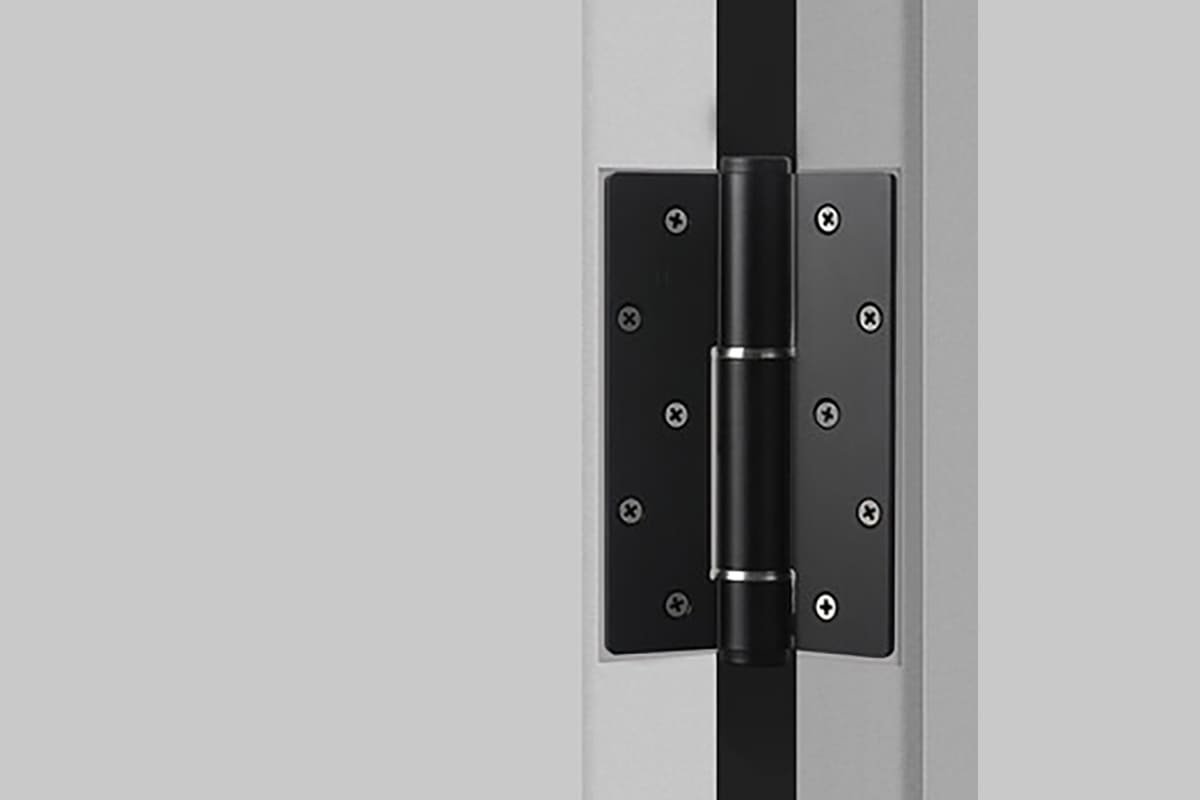
Standard Interior Wooden Doors
For standard interior wooden doors, butt hinges remain a practical choice. They are simple to install, easy to source, and familiar to many door factories. If the buyer serves wholesalers or regional door manufacturers, butt hinges can be a reliable product-line foundation.
However, buyers should avoid assuming one size fits all. For example, door height and weight affect the number and size of hinges. Some doors may use two hinges, while taller or heavier doors may need three or more.10 The exact decision depends on the door system and local practice.
Modern Flush Doors and Minimalist Doors
For modern flush doors, concealed hinges are often preferred. These hinges help create a cleaner appearance when the door is closed. Many brands use them to position the door as more modern or premium.
The challenge is installation. Concealed hinges require accurate mortising or routing. Door factories need stable machining. Hardware buyers need clear drawings and samples before bulk orders. I have seen quotation discussions slow down because the buyer only provided a photo, while the factory still needed door thickness, frame profile, and opening angle.
Interior Doors That Need Automatic Closing
Hydraulic self-closing hinges may be used for doors that should close after use. This can be helpful in offices, apartments, shared spaces, or certain service areas.
Still, buyers should confirm whether the hinge alone can meet the closing expectation. A heavy door may require a door closer instead of only a hydraulic hinge. A quiet residential door may require smoother damping. A commercial door may require higher durability and stronger closing force.
3D Adjustable Hinges for Better Installation Tolerance
3D adjustable hinges help installers adjust the door after installation. This matters for higher-end door systems because even a small gap difference can affect appearance.
They are especially useful when:
- The door has a concealed hinge design.
- The buyer sells premium interior door systems.
- The frame and door leaf require fine alignment.
- The project has strict reveal gap requirements.
- The installer needs post-installation correction.
| Interior Door Scenario | Suitable Hinge Type | Why It Works | Important Confirmation |
|---|---|---|---|
| Standard wooden door | Butt hinge | Simple, common, economical | Door weight, size, finish |
| Minimalist flush door | Concealed hinge | Hidden appearance | Mortise size, frame structure |
| Premium interior door | 3D adjustable hinge | Fine alignment | Adjustment range, drawings |
| Self-closing room door | Hydraulic hinge | Controlled closing | Door weight, closing speed |
| Fire-rated interior door | Fire-rated hinge | Compliance support | Certification and door set match |
Interior door hinge selection should also consider the complete hardware set. If the project uses stainless steel lever handles, mortise locks, and cylinders, the hinge finish should match them. A satin stainless steel handle with a mismatched hinge finish can reduce the perceived quality of the full door set.
For B2B buyers, I recommend building an interior hinge range in layers:
- Basic range: standard butt hinges for volume sales
- Mid-range: better stainless steel butt hinges with stable finish
- Premium range: concealed or 3D adjustable hinges
- Functional range: hydraulic or fire-rated options where needed
This structure helps door factories and wholesalers serve different customer budgets without creating too many random SKUs.
Which Types of Hinges Fit Exterior Doors?
Exterior doors face more demanding conditions than interior doors. They may carry more weight, face weather exposure, and require better security. If buyers choose only by appearance, they may get early corrosion, door sagging, or security complaints from end users.
Types of hinges for exterior doors often include heavy-duty butt hinges, security butt hinges, T-hinges, welded hinges, pivot hinges, and sometimes fire-rated hinges. The right choice depends on door material, frame structure, exposure level, security requirement, opening direction, load, finish durability, and local market expectations.
Heavy-Duty Butt Hinges
Heavy-duty butt hinges are common for exterior doors because many entry doors are heavier than interior doors. They may use thicker leaves, stronger pins, or bearing designs depending on the requirement.
Buyers should confirm:
- Door weight and height
- Door material, such as steel, wood, or composite
- Frame material
- Hinge leaf thickness
- Pin diameter and structure
- Screw type and fixing depth
- Finish and corrosion resistance
- Security pin or non-removable pin requirement
A heavy-looking hinge is not always a heavy-duty hinge. The internal structure and material thickness matter.
Security Hinges
Security hinges are selected when the hinge side may be exposed or vulnerable. Exterior doors that open outward may need anti-removal features. These can include non-removable pins, security studs, or special pin designs.
However, a security hinge is only one part of the door security system. The frame, lock, cylinder, strike plate, screws, and door material also matter. Buyers should not rely on hinge claims alone.
T-Hinges for Gates and Traditional Exterior Use
T-hinges are often used on gates, sheds, barn-style doors, and traditional exterior applications. Their long strap helps distribute force across the door surface. They also have a visible decorative style.
The limitation is that T-hinges are not suitable for every architectural door. They may not match modern door aesthetics or concealed frame systems. Buyers should confirm the door style and fixing surface before sourcing.
Pivot Hinges
Pivot hinges allow the door to rotate around a pivot point, often at the top and bottom rather than along a side leaf like a butt hinge. They may be used for heavy or wide doors, glass doors, or special architectural entrances.
| Exterior Door Need | Possible Hinge Type | Main Benefit | Procurement Warning |
|---|---|---|---|
| Heavy entry door | Heavy-duty butt hinge | Load support | Confirm real door weight and leaf thickness |
| Outward-opening door | Security hinge | Anti-removal support | Confirm pin/security design |
| Gate or shed door | T-hinge | Wide surface support | Not ideal for all modern doors |
| Steel gate or panel | Welded hinge | Strong fixed connection | Harder replacement and adjustment |
| Large entrance door | Pivot hinge | Special movement and design | Needs coordinated installation system |
| Fire door | Fire-rated hinge | Compliance support | Verify documentation and compatibility |
A simple exterior hinge sourcing checklist looks like this:
- What is the door weight?
- Is the door inward-opening or outward-opening?
- Is the hinge exposed to rain, humidity, or salt air?
- Does the door require anti-theft features?
- Does the project require fire-rated documentation?
- What finish must match the lock, handle, and cylinder?
- Is the hinge screwed, welded, mortised, or surface-mounted?
Cabinet Butt Hinges
Piano Hinges
Piano hinges, also called continuous hinges, run along a long section of the door or panel. They distribute load across a longer length. They are used on piano lids, storage boxes, access panels, and some light-duty doors.
For procurement, buyers should confirm length, thickness, hole pattern, material, and cutting requirements. Continuous hinges may need custom lengths depending on the furniture or panel design.
| Furniture Application | Common Hinge Type | Main Feature | What to Confirm |
|---|---|---|---|
| Kitchen cabinet | Cup concealed hinge | Hidden, adjustable | Cup diameter, overlay, soft-close |
| Wardrobe door | Cup hinge or specialty hinge | Clean appearance | Door thickness, opening angle |
| Wooden box | Small butt hinge | Simple visible hinge | Leaf size, finish |
| Long access panel | Piano hinge | Continuous support | Length, thickness, hole pattern |
| Drop-down flap | Flap hinge | Controlled panel movement | Panel weight, angle, stay support |
If a buyer operates a door hardware brand, I suggest separating product lines clearly:
- Architectural door hinges
- Cabinet and furniture hinges
- Specialty hinges
- Accessories and screws
How Should Buyers Compare Types of Hinges Before Sourcing?
Many sourcing problems begin when buyers compare hinges only by unit price. That approach feels efficient, but it can hide major differences in material, thickness, finish, installation method, and application. A cheaper hinge may become expensive if it causes rework, returns, or customer complaints.
Buyers should compare types of hinges by application, door weight, door thickness, material, finish, installation method, opening angle, usage frequency, certification needs, packaging, and delivery stability. A complete comparison protects project quality and helps product managers build a more sellable and reliable hardware range.
Start With the Door, Not the Hinge Name
A practical door confirmation list includes:
- Door type: interior, exterior, fire door, security door, cabinet, gate
- Door material: wood, steel, aluminum, composite, glass
- Door weight and size
- Door thickness
- Frame material and structure
- Opening angle
- Installation method: mortised, surface-mounted, welded, concealed, pivot
- Usage frequency: residential, commercial, public area, industrial
- Finish requirement
- Market standard or certification requirement
It may include:
- Sampling cost
- Testing or approval time
- Rework risk
- Finish inconsistency
- Packaging damage
- Delayed delivery
- Customer complaints
- Replacement cost
- Inventory confusion from too many similar SKUs
A simple hinge specification sheet should include:
| Item | Example Information to Confirm |
|---|---|
| Product name | Stainless steel butt hinge |
| Application | Interior wooden door |
| Size | Length, width, leaf thickness |
| Material | SS201, SS304, brass, iron, etc. |
| Finish | SSS, PSS, black, antique, PVD, etc. |
| Pin structure | Fixed pin, loose pin, non-removable pin |
| Bearing | Plain bearing or ball bearing, if applicable |
| Screw holes | Quantity, position, countersunk type |
| Certification | CE/fire-rated if required and verified |
| Packaging | Pcs/box, boxes/carton, label requirement |
| Order quantity | Trial order and bulk order plan |
How do I choose the right hinge type for a door?
I choose the hinge type by confirming the door weight, door thickness, frame structure, opening angle, installation method, usage frequency, material, finish, and market requirements. The hinge name alone is not enough for accurate sourcing or bulk procurement.
Conclusion
Types of hinges should be selected through a matching process, not by name, appearance, or one simple size. Buyers should compare function, material, application, load, installation method, finish, usage frequency, and market requirements before confirming samples or bulk orders. This approach reduces specification mismatch and protects long-term product quality. If you are building a door hardware range or sourcing hinges for a project, I can help review your hinge requirements and match suitable factory production options from SDH Hardware.
"SECTION 087111 - DOOR HARDWARE (SCHEDULED BY ...", https://fpm.usc.edu/wp-content/uploads/2021/11/087102-USC-HSC-door-hardware-Guide-Specification_1.pdf. Technical guidance on door hardware selection identifies hinge size, type, fixing method, and load capacity as factors that affect door alignment, installation fit, and service performance. Evidence role: general_support; source type: education. Supports: Hinge selection affects door alignment, load-bearing capacity, installation fit, and long-term door operation.. Scope note: Such sources usually support the general mechanism and risk factors rather than documenting the specific procurement outcomes listed in this article. ↩
"Hinge", https://en.wikipedia.org/wiki/Hinge. Reference definitions of hinges describe them as mechanical bearings connecting two solid objects while permitting rotation, which supports the article's description of a hinge as a load-carrying movement-control component. Evidence role: definition; source type: encyclopedia. Supports: A hinge is a mechanical bearing that connects two solid objects and permits limited rotation between them.. Scope note: The safety-requirement aspect is contextual and may require a separate fire-door or security-hardware standard for direct support. ↩
"SECTION 087111 - DOOR HARDWARE (SCHEDULED BY ...", https://fpm.usc.edu/wp-content/uploads/2021/11/087102-USC-HSC-door-hardware-Guide-Specification_1.pdf. Architectural hardware references commonly list butt hinges as a standard door-hinge form, supporting the article's characterization of them as a common architectural door hinge. Evidence role: general_support; source type: education. Supports: Butt hinges are commonly used in door and architectural hardware applications.. Scope note: This supports common use qualitatively, not a quantified market share. ↩
"Self-Closing Hinge - ScholarWorks", https://scholarworks.boisestate.edu/cgi/viewcontent.cgi?article=1003&context=bsu_patents. Hardware reference definitions describe lift-off hinges as separable hinge assemblies that allow a door or panel to be lifted off while the hinge leaves remain attached. Evidence role: definition; source type: encyclopedia. Supports: Lift-off hinges permit removal of a door or panel by separating the hinge parts without removing the fixed leaves.. ↩
"How to Adjust in 3D", https://www.tectushinges.com/how-to-adjust-in-3d. Technical descriptions of three-dimensional adjustable hinges define their adjustment functions as vertical, lateral or horizontal, and depth adjustment of the door leaf relative to the frame. Evidence role: definition; source type: other. Supports: 3D adjustable hinges are designed to adjust door position in three axes after installation.. Scope note: Terminology and adjustment range vary by hinge design, so the source supports the general feature rather than every model. ↩
"Important Tips for Specifying Fire Door Assemblies", https://steeldoor.org/tips-for-specifying-fire-door-assemblies/. Fire-door inspection and standards guidance treats hinges and related hardware as components that must be suitable for the rated door assembly and supported by listing, certification, or documented compliance. Evidence role: expert_consensus; source type: institution. Supports: Fire-door hardware performance depends on tested and listed components or assemblies, not visual strength alone.. Scope note: The citation directly supports fire-rated hardware; the security-hinge portion may require a separate security standard or police/government security guidance. ↩
"Revealing the Corrosion Resistance of 316 L Stainless Steel ...", https://pmc.ncbi.nlm.nih.gov/articles/PMC9920300/. Materials references explain that stainless steels contain chromium that forms a passive oxide layer, providing corrosion resistance and supporting their use where durable hardware surfaces are required. Evidence role: mechanism; source type: government. Supports: Stainless steel resists corrosion because chromium forms a protective passive oxide film, contributing to durability in suitable environments.. Scope note: The source supports the material property generally; actual hinge durability depends on alloy grade, fabrication, finish, and exposure conditions. ↩
"Corrosion Protection of Steel", https://orf.od.nih.gov/TechnicalResources/Documents/Technical%20Bulletins/18TB/Corrosion%20Protection%20of%20Steel%20February%202018%20Technical%20Bulletin_508.pdf. Corrosion-control references explain that galvanized zinc coatings protect underlying iron or steel by barrier protection and sacrificial action, reducing rusting compared with uncoated metal. Evidence role: mechanism; source type: government. Supports: Zinc coatings protect iron or steel from corrosion by acting as a barrier and sacrificial coating.. Scope note: The level of protection depends on coating thickness, coating continuity, environment, and damage during use. ↩
"In Situ Synthesis of Oxide Film on Aluminum Alloy for ...", https://ui.adsabs.harvard.edu/abs/2026JMEP..tmp..113L/abstract. Materials science references describe aluminum as a low-density metal that forms a protective oxide film, explaining its combination of light weight and corrosion resistance under many ordinary exposure conditions. Evidence role: mechanism; source type: education. Supports: Aluminum's low density and naturally forming oxide layer make it lightweight and corrosion-resistant in many environments.. Scope note: The source supports the material property generally; load capacity and corrosion performance still depend on alloy, hinge geometry, surface treatment, and exposure. ↩
"Everything you need to know about Commercial Door Hinges", https://www.mckinneyhinge.com/en/resource-library/knowledge-center/blog/blog-post.aehdynamic-everything-you-need-to-know-about-commercial-door-hinges-top-10-commercial-contractors-hinge-installation-questions-633f18001fa7df003d7c229b_mckinney.html. Architectural hardware guidance commonly bases hinge quantity and specification on door height, weight, thickness, and use conditions, supporting the practice of using additional hinges for taller or heavier doors. Evidence role: general_support; source type: institution. Supports: Door hinge quantity is commonly determined by door size, weight, and application, and taller or heavier doors may require additional hinges.. Scope note: Exact hinge counts vary by standard, door construction, hinge grade, and local practice. ↩