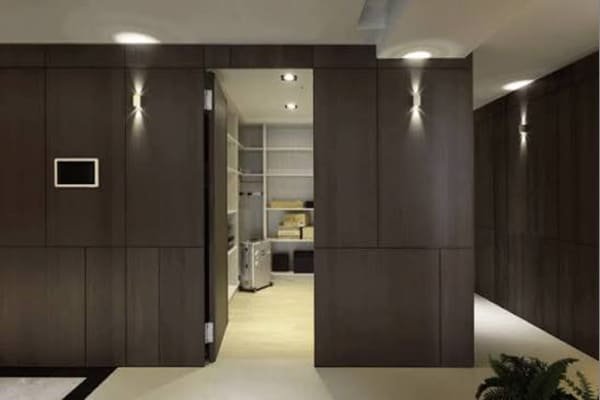
What Are the Hidden Hinges for Secret Doors?
Hidden hinges for secret doors are easy to misunderstand because “invisible” does not always mean “suitable.” A poor hinge choice can leave gaps, misalignment, handle problems, or a door that will not sit flush. I usually solve this by looking for a fully concealed, self-closing, three-way adjustable hinge matched to the real door conditions.
Hidden hinges for secret doors are usually fully concealed hinges that disappear inside the door leaf and frame after installation.1 For architectural secret doors, I often recommend a self-closing, three-way adjustable concealed hinge2 because it helps the door close without a visible handle3 and lets installers fine-tune the door until it sits flush with the wall or panel system.
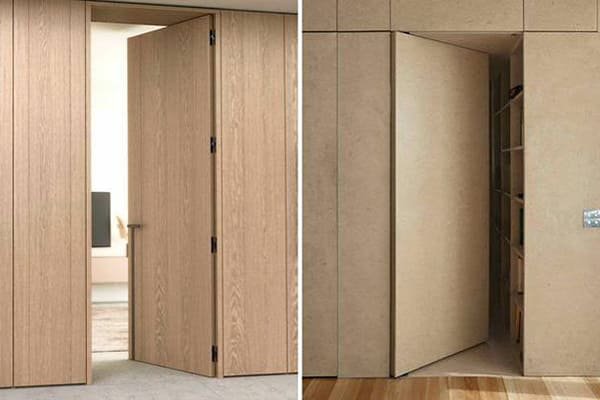
A secret door is not only a door. It is also part of the wall, cabinet, bookshelf, or decorative panel. That means the hinge must support both movement and visual concealment. I will break down what matters most before you choose one for production, wholesale, or a project order.
Why Do Hidden Hinges for Secret Doors Need to Be Fully Concealed?
A secret door fails quickly when the hinge is visible, even if the door itself is beautifully finished. The problem becomes worse when the wall panel is clean and minimal, because any exposed barrel, knuckle, or screw line attracts attention. I always start by asking whether the hinge truly disappears after installation.
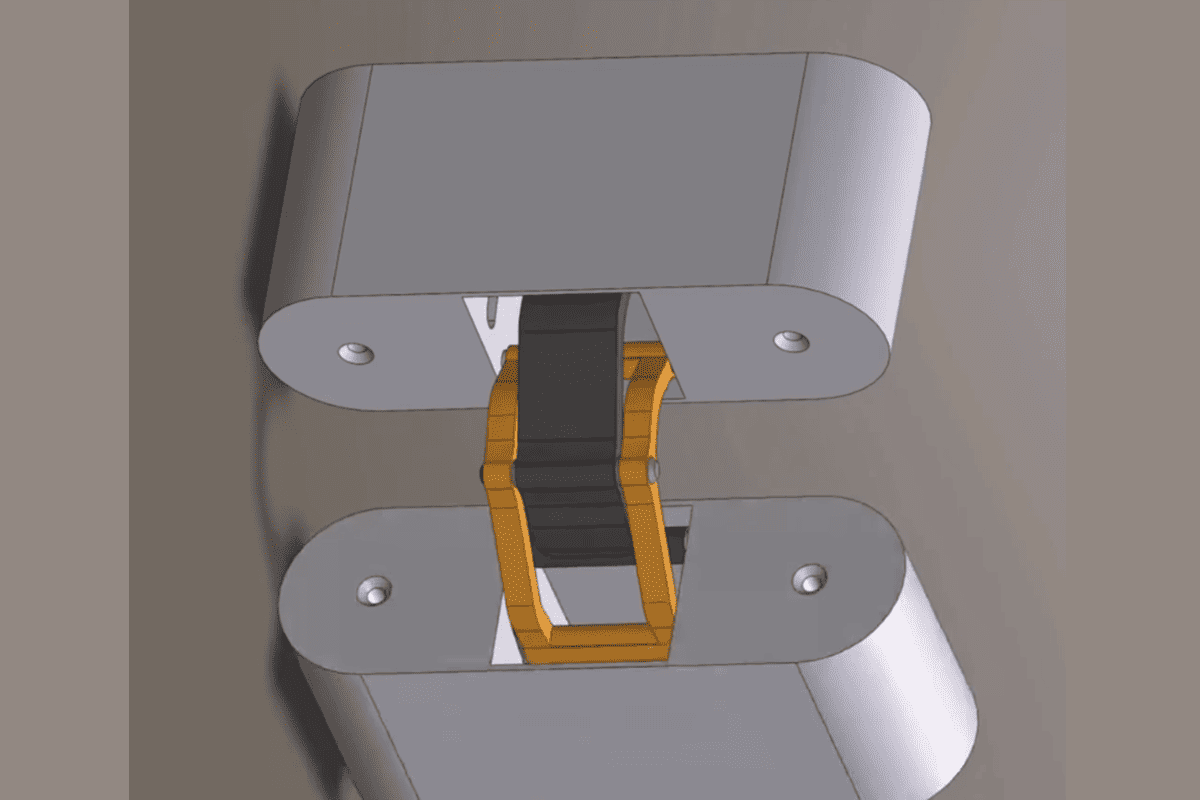
Hidden hinges for secret doors need to be fully concealed because the door leaf must visually blend into the wall, panel, or furniture surface. A suitable concealed hinge has no exposed hinge barrel when the door is closed.4 This allows the door edge, wall gap, and finish line to remain clean and discreet.
Fully Concealed Does Not Mean “Any Concealed Hinge”
I have seen buyers use the word “concealed hinge” very broadly. Some mean a cabinet-style hinge. Some mean a door hinge with a partially hidden barrel. Some mean a hinge that is only hidden from one side. For secret doors, this loose definition creates risk.
A true secret door hinge should normally meet three basic visibility requirements:
- No exposed barrel when the door is closed
- No visible hinge leaf on the face side
- A clean reveal line between the door and surrounding wall or panel
- A hinge body recessed into the door leaf and frame
- Compatibility with the intended wall, jamb, or concealed frame structure
This matters because secret doors are often installed in high-visibility areas. A hotel suite, villa wall panel, showroom partition, or office feature wall needs a consistent surface. If the hinge gives away the opening side, the hidden effect becomes weak.
The Hinge Must Match the Door Construction
I do not recommend choosing hidden hinges for secret doors only by appearance. The door construction controls the hinge choice. A lightweight MDF panel door, a timber veneer door, an aluminum-frame hidden door, and a fire-rated interior door may all need different hinge bodies and fixing methods.
Here is a simple comparison I use when discussing concealed hinge selection with door factories and project buyers:
| Door condition | Hinge concern | Why it matters |
|---|---|---|
| Thick solid door leaf | Mortise depth and load support | The hinge body must fit without weakening the door5 |
| Thin panel door | Fixing strength | Screws and hinge cups may not hold securely |
| Wall panel secret door | Flush alignment | The hinge must support precise depth adjustment |
| Heavy architectural door | Verified capacity | The hinge model must be confirmed for the real door weight6 |
| High-use commercial door | Maintenance and stability | Adjustment and closing performance must remain reliable |
The Reveal Line Is Part of the Secret
A hidden door is usually recognized by its gaps before it is recognized by its hardware. If the top, side, or bottom reveal is uneven, people notice the door outline. The hinge must allow the door to swing cleanly while keeping the surface alignment tight.
I often tell buyers that the hinge is not just a moving part. It is also a visual alignment component.
For this reason, I prefer to evaluate the hinge together with:
- Door weight
- Door thickness
- Frame material
- Panel finish
- Opening angle
- Required gap size
- Installation tolerance
A concealed hinge that works well on a standard interior door may still fail on a secret wall panel if the installer cannot adjust the door leaf flush after hanging. That is why full concealment is only the first requirement, not the complete answer.
Why Should Hidden Hinges for Secret Doors Often Be Self-Closing?
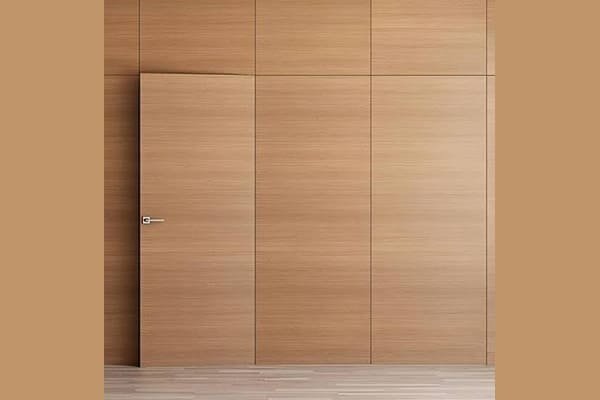
Many secret doors avoid visible handles because handles reveal the door. That creates a new problem. If the user pushes the door open, the door still needs to return neatly to the closed position. Without controlled closing, the hidden door can stay slightly open and destroy the concealed effect.
Hidden hinges for secret doors often need a self-closing function because many secret doors do not use visible handles, latches, or pull hardware. A spring or hydraulic self-closing mechanism can help the door return to the closed position7, but the correct choice depends on door weight, size, usage frequency, and installation structure.
Why Self-Closing Matters in a No-Handle Door
A standard interior door usually has a visible lever handle, pull handle, lock body, or latch. These parts help the user close the door and keep it shut. A secret door often tries to remove those visual clues. That is good for design, but it puts more responsibility on the hinge system.
In many hidden door applications, the buyer may want:
- Push-to-open access
- No visible lever handle
- A flush wall surface
- A magnetic catch or concealed latch
- Automatic return to the closed position
- No exposed closer arm
A normal concealed hinge can hide the hinge line, but it may not close the door. If the door has no handle and no surface-mounted closer, the user may leave it slightly ajar. Even a small gap can reveal the secret door.
Spring vs. Hydraulic Self-Closing
Self-closing concealed hinges usually rely on spring force, hydraulic damping, or a combined mechanism. I avoid saying one is always better, because the right answer depends on the door and project.
| Self-closing type | Main benefit | Main concern | Best checked before ordering |
|---|---|---|---|
| Spring mechanism | Simple closing force | May close too sharply if not controlled | Door weight and closing speed need confirmation |
| Hydraulic mechanism | Smoother controlled closing | Must match hinge design and door load | Hydraulic performance should be verified by model |
| Spring + damping | Balanced feel in some designs | More complex structure | Maintenance and adjustment access matter |
| Non-self-closing concealed hinge | Simple hidden movement | Door may stay open | Usually needs latch, closer, or handle solution |
From our manufacturing and supply discussions, I see the same question repeatedly: “Can this invisible door close by itself?” My answer is always conditional. I want to confirm the door leaf weight, door size, installation direction, frame structure, and expected use before recommending a self-closing hinge.
The Closing Force Must Not Fight the Door Design
Self-closing is useful, but too much force can create other problems. A strong spring may make the door difficult to open. A weak mechanism may fail to pull the door into the final closed position.8 A hydraulic system may work smoothly on one door size but feel wrong on another.
A project buyer should confirm:
- Is the door inward-opening or outward-opening?
- Does the door need soft closing or only self-return?
- Will the door use a magnetic catch, roller latch, or concealed lock?
- Does the hinge need hold-open function?
- Will the door be opened frequently every day?
- Can the user service or adjust the hinge after installation?
I also like to ask whether the secret door is decorative or functional. A private study door may have low daily use. A hotel service panel may be used many times each day. A showroom hidden door may need a very smooth user experience. These cases should not use the same hinge without checking performance.
Self-Closing Supports the Hidden Effect
The main reason I like self-closing hidden hinges for secret doors is simple: the hinge helps the door return to the same visual position again and again. A secret door must look intentional when it is closed. It should not look like a loose panel.
However, the hinge is only one part of the system. The final closing result also depends on:
- Frame accuracy
- Door flatness
- Wall finish thickness
- Floor clearance
- Air pressure in the room
- Latch or catch strength
- Hinge mortising precision
So I treat self-closing as a practical function, not a magic feature. It improves the hidden effect when the door and frame are prepared correctly.
Why Does Three-Way Adjustment Matter for Hidden Hinges for Secret Doors?
A secret door can look perfect in drawings and still look wrong after installation. Walls are not always perfectly straight. Door leaves can vary slightly. Frames can shift during fitting.9 If the hinge cannot be adjusted, the installer may struggle to make the surface sit flush.
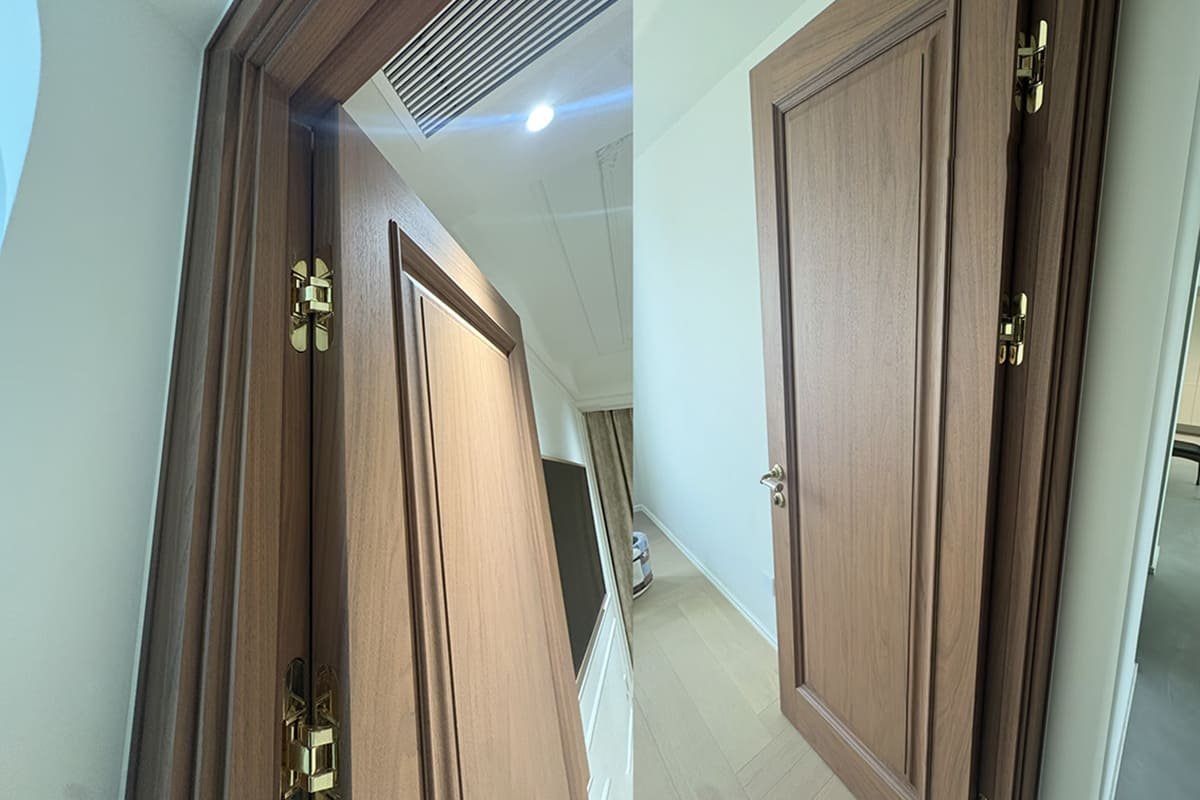
Three-way adjustment matters for hidden hinges for secret doors because it allows the installer to fine-tune the door leaf in height, side gap, and depth after installation. This helps the door align with the wall surface, correct uneven reveals, and improve the hidden visual effect without removing the entire door.
The Three Directions of Adjustment
When I discuss three-way adjustable concealed hinges with customers, I usually explain the function in simple terms. The installer needs to move the door in three directions.
| Adjustment direction | What it controls | Why it matters for secret doors |
|---|---|---|
| Height adjustment | Moves the door up or down | Corrects top and bottom gaps |
| Lateral adjustment | Moves the door left or right | Balances side reveal lines |
| Depth adjustment | Moves the door in or out | Makes the door surface flush with the wall |
The depth adjustment is especially important for secret doors. A normal door can sit slightly proud of the frame and still function. A secret door cannot. If one side sits 2–3 mm proud or recessed, the shadow line may reveal the door immediately.10
Flushness Is Not Decoration
I never treat three-way adjustment as a premium decoration. I treat it as a practical installation tool. Secret doors need precise alignment because their purpose is visual concealment. A fixed concealed hinge may look clean in theory, but it gives the installer fewer options when the wall and door are not perfect.
Common site and production issues include:
- The frame opening is slightly out of square.
- The wall panel thickness varies.
- The door leaf has a small bow.
- The floor level affects bottom clearance.
- The finish layer changes the final surface depth.
- The door weight causes minor sag after hanging.
A three-way adjustable hinge helps correct some of these issues after the door is installed. It does not replace accurate production or skilled installation, but it reduces risk.
Why Bulk Buyers Should Care
For door manufacturers, hardware brands, and wholesalers, adjustment is also a commercial issue. If a hinge is hard to adjust, customers may complain. If a door cannot be aligned after delivery, the buyer may face returns, site delays, or after-sales costs.
I often recommend that bulk buyers evaluate concealed hinges with these practical questions:
- Can the installer adjust the hinge after the door is hung?
- Does adjustment require removing the door leaf?
- Are the adjustment screws easy to access?
- Does the hinge hold its position after adjustment?
- Is the adjustment range enough for the target door system?
- Are instructions clear enough for local installers?
For OEM and ODM supply, these details matter. A beautiful hinge sample is not enough. The hinge must support repeatable installation in real projects.
Adjustment Helps Maintain the Door Over Time
Door systems can move slightly over time. Wood can respond to humidity.11 Buildings can settle. Hinges can experience wear. A three-way adjustable concealed hinge gives the end user or service team a way to restore alignment without replacing the hardware.
This is especially useful in regions with different climate conditions. SDH Hardware supplies architectural door hardware to markets such as the Middle East, Europe, and Southeast Asia. In my experience, buyers from different regions often care about different details. Some focus on heat and dust. Some focus on fire-rated project requirements. Some focus on premium interior finish consistency. But all of them care when a hidden door does not close flush.
For secret doors, the best hinge is not only invisible on day one. It must help the door remain visually hidden after installation, adjustment, and repeated use.
How Should Buyers Choose Hidden Hinges for Secret Doors?
Choosing the wrong hinge can create production delays, installation problems, or warranty claims. It is tempting to choose by catalog photo, but secret doors need a more careful process. I prefer to build the selection around real door data instead of only the hinge appearance.
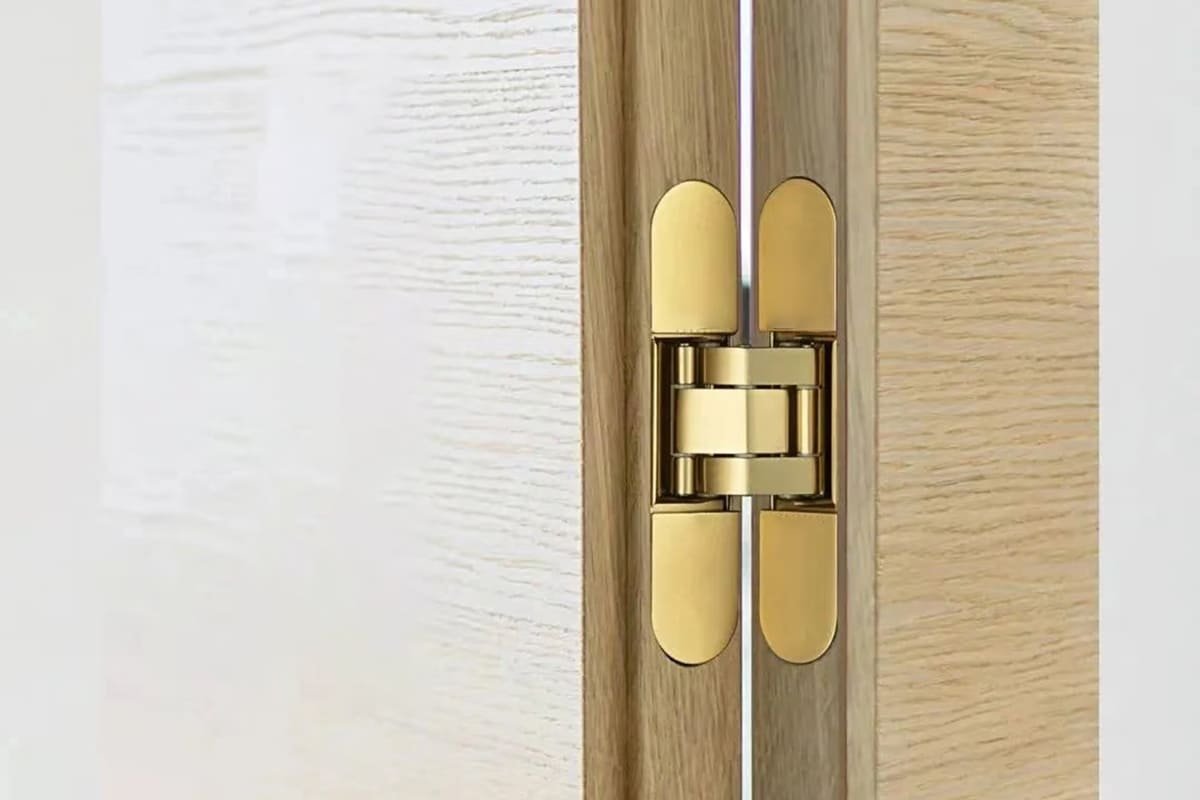
Buyers should choose hidden hinges for secret doors by confirming door weight, door thickness, opening angle, frame structure, closing requirement, adjustment needs, and maintenance access. A fully concealed, self-closing, three-way adjustable hinge is often the best direction, but the final model must match the actual door and project conditions.
Start With the Door, Not the Hinge
A hinge is a load-bearing and movement-control component. It cannot be selected correctly without the door information. When a buyer asks me for a concealed hinge, I usually ask for the following details first:
- Door leaf height and width
- Door thickness
- Door weight or estimated material structure
- Frame material and frame profile
- Opening direction
- Required opening angle
- Wall or panel finish thickness
- Self-closing requirement
- Latch, lock, or catch type
- Certification or project compliance needs
- Surface finish requirement
- Order quantity and customization needs
These details help narrow the hinge choice. They also prevent overpromising. For example, I would not claim a hinge’s load capacity, cycle life, hydraulic performance, or certification unless it is tied to a verified product model and confirmed test or certificate data.
A Practical Selection Checklist
For architectural secret doors, I like to use this checklist:
| Selection point | What to confirm | Why it matters |
|---|---|---|
| Full concealment | No exposed hinge when closed | Protects the secret door effect |
| Self-closing | Spring, hydraulic, or no self-close | Helps no-handle doors close reliably |
| Three-way adjustment | Height, lateral, and depth control | Supports flush wall alignment |
| Door compatibility | Weight, thickness, size | Prevents sagging or poor movement |
| Frame compatibility | Timber, aluminum, steel, concealed frame | Ensures secure fixing |
| Opening angle | Required access clearance | Avoids movement conflict |
| Surface finish | Color and consistency | Matches project hardware set |
| Maintenance access | Adjustment after installation | Reduces after-sales difficulty |
| [Certification | CE or fire-rated where required | Supports market access and project compliance](https://www.intertek.com/building/ce-marking/)%%%FOOTNOTE_REF_12%%% |
Do Not Ignore the Rest of the Hardware System
A secret door hinge works with other hardware. The best result usually comes from a complete hardware plan. Depending on the project, the door may also need:
- Concealed magnetic latch
- Push latch
- Roller catch
- Mortise lock with hidden operation
- Door stop
- Seals
- Concealed frame
- Matching lever handle for non-secret side
- Fire-rated hardware package where required
At SDH Hardware, we manufacture and supply several architectural door hardware categories, including concealed hinges, mortise locks, butt hinges, lever handles, and lock cylinders. That gives us a practical view of how one hardware decision affects the rest of the door system. I do not see a hinge as an isolated product. I see it as part of a complete door solution.
When Customization Makes Sense
Bulk buyers may need customized hinge finishes, accessories, packaging, screw configurations, or product branding. Customization can be useful when the project or market has specific requirements. However, customization should not weaken the basic hinge function.
For secret door applications, I would prioritize customization in this order:
- Mechanical fit
- Load and movement suitability
- Adjustment function
- Closing function
- Finish consistency
- Branding and packaging
This order protects the buyer from choosing a visually attractive product that does not perform well.
What I Would Ask Before Recommending a Model
If I were reviewing your secret door hinge requirement, I would ask:
- Is the door a timber door, metal door, or composite panel door?
- Is the door intended to disappear into a flat wall or decorative panel?
- Will the door have a visible handle on either side?
- Does the door need self-closing?
- Should the closing action be soft, firm, or assisted by a latch?
- What is the actual door weight?
- What is the door thickness?
- How many hinges will be used per door?
- Does the project require CE or fire-rated certification?
- Will the buyer need ODM branding or bulk supply?
These questions make the selection more accurate. They also help avoid the common mistake of treating every concealed hinge as suitable for a secret door.
Frequently Asked Questions
Are all concealed hinges suitable for secret doors?
No. All concealed hinges are not suitable for secret doors. A secret door usually needs a hinge with no exposed parts when closed, enough load support, proper opening geometry, and adjustment capability. If the door has no visible handle, self-closing may also be important.
Do hidden hinges for secret doors need self-closing?
Hidden hinges for secret doors often need self-closing when the design avoids visible handles or closers. A spring or hydraulic mechanism can help the door return to the closed position. However, the hinge must match the door weight, size, frame structure, and expected usage.
Why is three-way adjustment important for a secret door?
Three-way adjustment is important because it lets the installer correct height, side gap, and depth after installation. This helps the secret door sit flush with the wall or panel. Without adjustment, small installation errors can create visible shadow lines or uneven gaps.
Can I use a standard butt hinge for a secret door?
A standard butt hinge is usually not ideal for a true secret door because the hinge knuckle is visible when the door is closed. It may work for some hidden rooms with decorative cover methods, but a fully concealed hinge usually gives a cleaner architectural hidden-door effect.
What information should I provide before ordering hidden door hinges in bulk?
You should provide door size, door weight, door thickness, frame material, opening angle, self-closing needs, finish requirements, certification requirements, and order quantity. This information helps the supplier recommend a suitable concealed hinge model instead of guessing from photos.
Conclusion
Hidden hinges for secret doors should do more than disappear. They should help the door close reliably, align flush with the wall, and stay adjustable after installation. In most architectural secret door projects, I look first at fully concealed construction, self-closing function, and three-way adjustment. Then I confirm the real door weight, thickness, frame, opening angle, and compliance needs. If you need a factory-direct concealed hinge solution for bulk supply, ODM customization, or project matching, contact SDH Hardware and share your door specifications.
"Concealed hinge jig", https://en.wikipedia.org/wiki/Concealed_hinge_jig. A general reference on hinge types describes concealed hinges as hardware designed to be hidden when the door is closed, supporting the article’s description of hidden hinges as recessed components rather than visible hinge leaves or barrels. Evidence role: definition; source type: encyclopedia. Supports: A neutral source should define concealed hinges as hinges designed to be hidden from view when the door is closed, often recessed into the door and frame.. Scope note: This would support the general definition of concealed hinges, not the suitability of any specific hinge model for secret doors. ↩
"How to Adjust in 3D", https://www.tectushinges.com/how-to-adjust-in-3d. Technical literature on three-dimensional concealed hinges describes adjustment in vertical, lateral, and depth directions, supporting the article’s use of three-way adjustment as a post-installation alignment feature. Evidence role: definition; source type: research. Supports: A source should document that some concealed hinges provide three-dimensional adjustment, commonly covering vertical, horizontal/lateral, and depth movement.. Scope note: This would verify the general hinge function, not the adjustment range or performance of any particular product. ↩
"Door closer", https://en.wikipedia.org/wiki/Door_closer. Technical descriptions of spring and self-closing hinges explain that these devices apply a closing force to return a door toward its closed position, which supports the article’s claim that self-closing hardware can assist hidden doors that lack visible pull hardware. Evidence role: mechanism; source type: education. Supports: A source should explain that self-closing hinges or spring hinges use stored spring force, sometimes with damping, to return a door toward the closed position.. Scope note: This would support the mechanism generally and would not prove that every no-handle secret door will close reliably without a separate latch, catch, or closer. ↩
"Concealed Hinge | Innovative Door Hardware", https://www.sugatsune.com/hes-concealed-hinge-line/?srsltid=AfmBOopFp5HhqS8_DY3JnfdLEfX9SkWiDB6lXQ0IH1HxvdahuZfMH8ls. Reference descriptions of concealed hinges distinguish them from exposed-barrel hinges by noting that the hinge mechanism is hidden when the door is closed, supporting the article’s visibility criterion for secret-door hardware. Evidence role: definition; source type: encyclopedia. Supports: A source should support the distinction that concealed or invisible hinges are designed so hinge barrels or knuckles are not visible in the closed position.. Scope note: This would establish terminology and visual function, not installation quality or long-term durability. ↩
"Wood Handbook--Chapter 7--Fastenings", https://research.fs.usda.gov/download/treesearch/7144.pdf. Wood engineering guidance notes that member dimensions, fastener placement, and removed material affect the strength of wood assemblies, providing contextual support for checking hinge mortise depth against the door’s thickness and construction. Evidence role: mechanism; source type: research. Supports: A source should explain that removing material or placing fasteners in wood components affects strength, especially when the remaining section is thin.. Scope note: This would provide contextual structural support rather than a door-specific calculation for concealed hinge mortising. ↩
"A156.1 - 2025 Butts and Hinges", https://buildershardware.com/ANSI-BHMA-Standards/Hardware-Highlights/A1561-2021-Butts-and-Hinges. Architectural hardware standards such as ANSI/BHMA hinge classifications evaluate hinge performance under defined service conditions, supporting the article’s recommendation to match a hinge model to the actual door weight and application. Evidence role: expert_consensus; source type: institution. Supports: A source should show that architectural hinge standards classify hinges by performance, load, and use conditions, making door weight relevant to selection.. Scope note: This would support the selection principle but would not certify any untested hinge model. ↩
"Door closer", https://en.wikipedia.org/wiki/Door_closer. Educational and technical descriptions of door closers explain that spring force can drive a door closed while hydraulic damping controls closing speed, supporting the article’s statement that spring or hydraulic mechanisms can assist self-closing action. Evidence role: mechanism; source type: education. Supports: A source should explain that springs provide closing force and hydraulic damping can regulate the speed of closing in door hardware.. Scope note: This would support the operating principle generally, not the closing performance of any specific concealed hinge. ↩
"Chapter 4: Entrances, Doors, and Gates", https://www.access-board.gov/ada/guides/chapter-4-entrances-doors-and-gates/. Accessibility guidance on door operation recognizes opening force and closing behavior as functional performance factors, supporting the article’s caution that self-closing hardware must be strong enough to close while not making the door unreasonably difficult to open. Evidence role: expert_consensus; source type: government. Supports: A source should establish that door-opening force and self-closing behavior are regulated or evaluated because they affect usability and accessibility.. Scope note: Accessibility standards may address public or regulated doors more directly than private residential secret doors. ↩
"Buildings and construction | NIST", https://www.nist.gov/buildings-and-construction. Construction tolerance guidance recognizes that built components may deviate from nominal dimensions and alignment, providing contextual support for the article’s claim that walls, door leaves, and frames can require post-installation adjustment. Evidence role: general_support; source type: institution. Supports: A source should document that building components are subject to allowable tolerances and field variation, including alignment and plumbness deviations.. Scope note: Such guidance supports the general existence of field tolerances, not the exact tolerances for a particular secret-door project. ↩
"The influence of a stationary single line in darkness on the visual perception ...", https://pubmed.ncbi.nlm.nih.gov/8160367/. Research on visual perception of edges, contrast, and surface discontinuities shows that small geometric offsets can become noticeable when they create shadow or contrast cues, providing contextual support for the article’s warning about proud or recessed secret-door edges. Evidence role: general_support; source type: paper. Supports: A source should show that human observers can detect small surface offsets, edge discontinuities, or shadows under typical lighting conditions.. Scope note: This would support the visual-perception principle, not validate the specific 2–3 mm threshold for all lighting, materials, and viewing distances. ↩
"Drying and control of moisture content and dimensional changes", https://research.fs.usda.gov/treesearch/7143. The USDA Forest Products Laboratory explains that wood exchanges moisture with the surrounding air and undergoes dimensional changes as moisture content changes, supporting the article’s statement that wood doors can move in response to humidity. Evidence role: mechanism; source type: government. Supports: A source should explain that wood absorbs and releases moisture with changes in relative humidity, causing shrinkage, swelling, or movement.. ↩
"CE Marking for Construction Products", https://www.intertek.com/building/ce-marking/. Official guidance on CE marking for construction products and fire-door hardware standards shows that certain door components must meet documented conformity or fire-performance requirements in regulated applications, supporting the article’s inclusion of certification in hinge selection. Evidence role: expert_consensus; source type: institution. Supports: A source should explain that construction products or door hardware may be subject to CE marking in relevant markets and that fire-door assemblies require appropriately tested or listed hardware.. Scope note: This would support the compliance principle generally; the exact requirement depends on jurisdiction, product category, and project specification. ↩