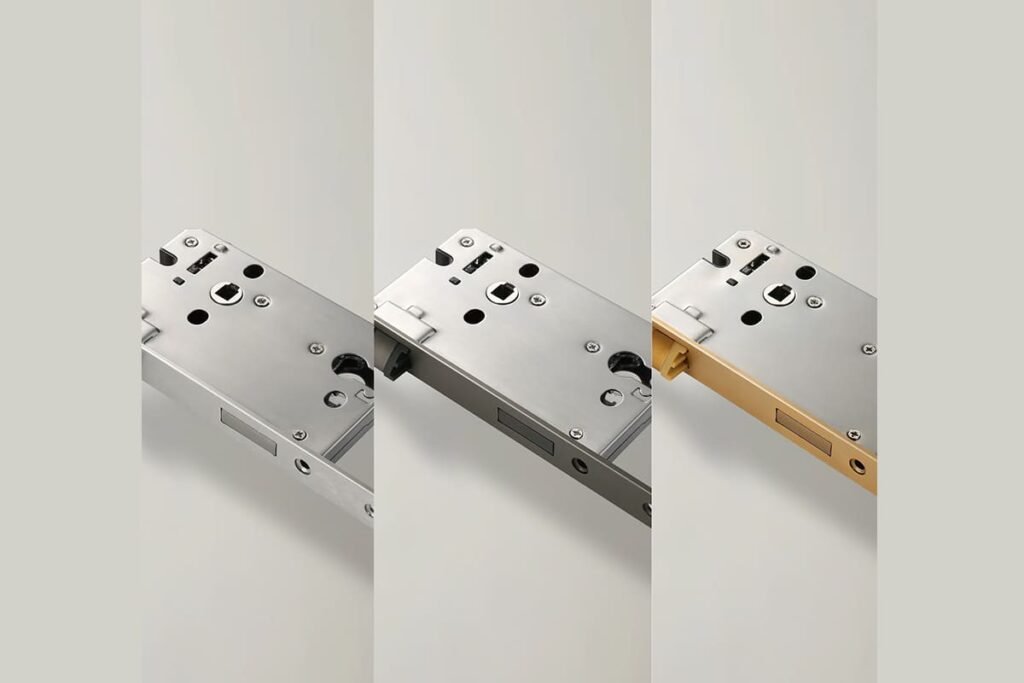
What are mortice locks?
Mortice locks are often misunderstood as complete locksets, and that confusion can create expensive sourcing mistakes. If a buyer orders only by product name, the lock body may not fit the door, cylinder, handle, or market standard. The solution is to treat a mortice lock as a door hardware specification decision, not just a lock purchase.
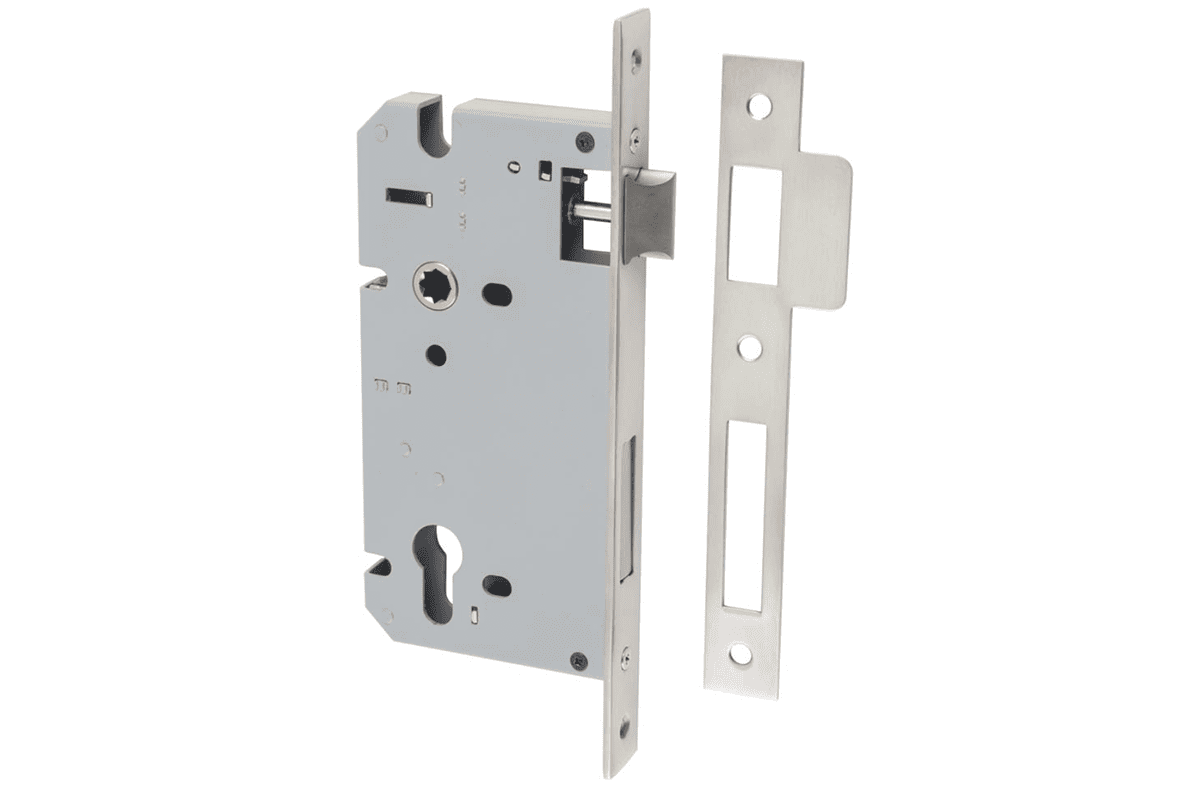
Mortice locks are lock bodies installed inside a recessed cut-out in the door leaf.1 They are different from surface-mounted locks because the main mechanism sits inside the door, not on the door face.2 A mortice lock usually works with a separate cylinder, lever handle, escutcheon, strike plate, and accessories.3
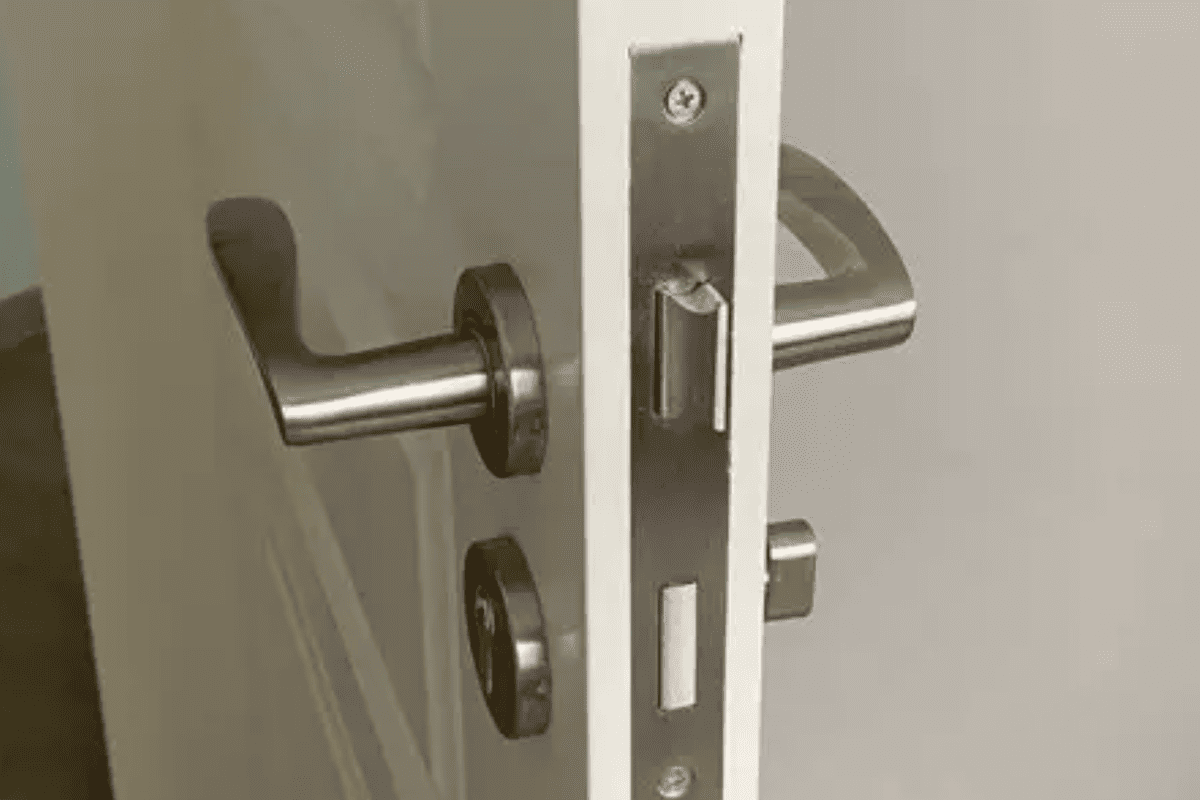
I manufacture DIN 18251 standard lock bodies, so I look at this question from the factory side. A correct mortice lock order depends on dimensions, function, standards, door preparation, cylinder type, handle compatibility, and project use. Let me break that down in a practical way.
What makes mortice locks different from surface-mounted locks?
Many buyers compare locks only by appearance, and that can be risky. A surface-mounted lock may look easier to install, while a mortice lock looks hidden and clean. However, the real difference is not style alone. The difference is where the mechanism is installed and how the whole door system is prepared.
Mortice locks are installed into a pocket cut inside the door leaf, while surface-mounted locks are fixed onto the door surface.4 This means mortice locks require accurate door machining, correct lock body dimensions, matching handles, compatible cylinders, and a suitable strike plate.5 They are more integrated into the door construction.
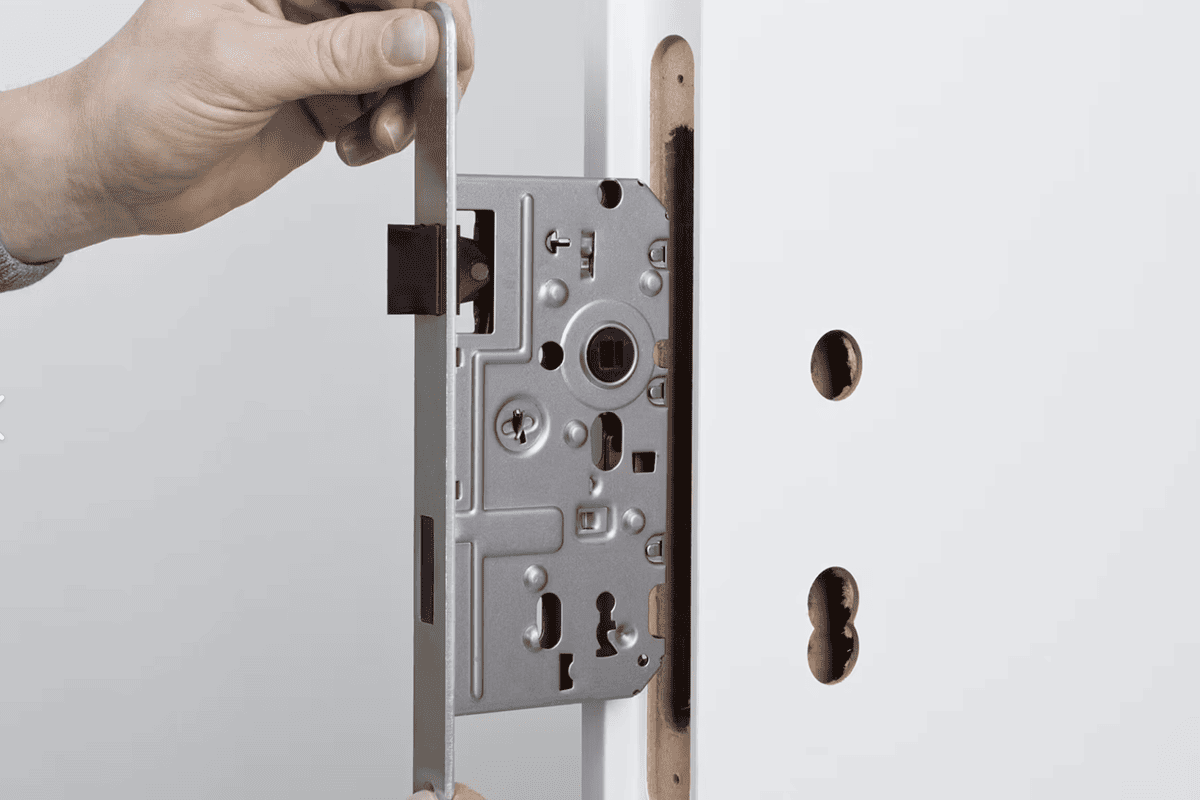
The lock body sits inside the door
A mortice lock is not mounted on top of the door face. The installer cuts a recess, or “mortice,” into the edge of the door. The lock case then slides into that pocket. Only the faceplate, latch bolt, deadbolt, handle spindle hole, and cylinder area remain visible after installation.
From a manufacturing point of view, this matters because the lock body must match the door preparation. I have seen buyers send a sample door drawing but forget to confirm the backset or center distance. That small omission can create a full batch mismatch.
Common specification points include:
- Lock case height
- Lock case depth
- Faceplate length and width
- Backset
- Center distance
- Follower size
- Cylinder profile
- Latch direction
- Door thickness
- Strike plate position
Mortice locks are part of a system
A mortice lock body usually does not work alone. It needs other components to become a complete working door hardware set.
| Component | Role in the door system | Usually separate from lock body? |
|---|---|---|
| Mortice lock body | Contains latch, deadbolt, spring, follower, and internal mechanism | Yes |
| Cylinder | Operates the deadbolt or locking function | Yes |
| Lever handle | Operates the latch through the spindle | Yes |
| Escutcheon or plate | Covers cylinder and handle openings | Yes |
| Strike plate | Receives latch and deadbolt on the frame | Often supplied separately or matched |
| Screws and accessories | Support installation | Depends on supplier package |
This is why I avoid calling mortice locks “complete door locksets” unless the package clearly includes all matching accessories. In B2B procurement, that distinction protects both sides. A door factory may already buy handles from one supplier, cylinders from another, and lock bodies from us. In that case, every interface must match.
Why surface-mounted locks are different
A surface-mounted lock is attached to the outer face of the door. It normally needs less internal door machining, but it changes the appearance and may not meet the same design expectations for architectural doors. Surface locks can be useful in some renovation or utility applications, but they are not the same category as European-style internal lock bodies.
For door manufacturers, mortice locks are often preferred because they support a cleaner finished appearance and better integration with modern handle and cylinder systems. However, they also require more precise production control. If the CNC routing, drilling template, or frame preparation is wrong, the lock may not operate smoothly.
My practical rule is simple: before discussing price, I first confirm the door preparation and hardware combination. That prevents most lock body sourcing problems.
Why are mortice locks a specification decision for buyers?
A buyer may think mortice locks are simple catalog items, but that is not how they behave in real production. If one dimension is wrong, the lock body may fail to fit the door. If one function is wrong, the door may fail to serve its intended use. The problem becomes larger in bulk orders.
Mortice locks are specification decisions because they must match the door leaf, frame, cylinder, handle, market standard, and application scenario. Buyers should confirm dimensions, function, backset, center distance, door thickness, lock direction, finish, accessories, and testing documents before placing volume orders.
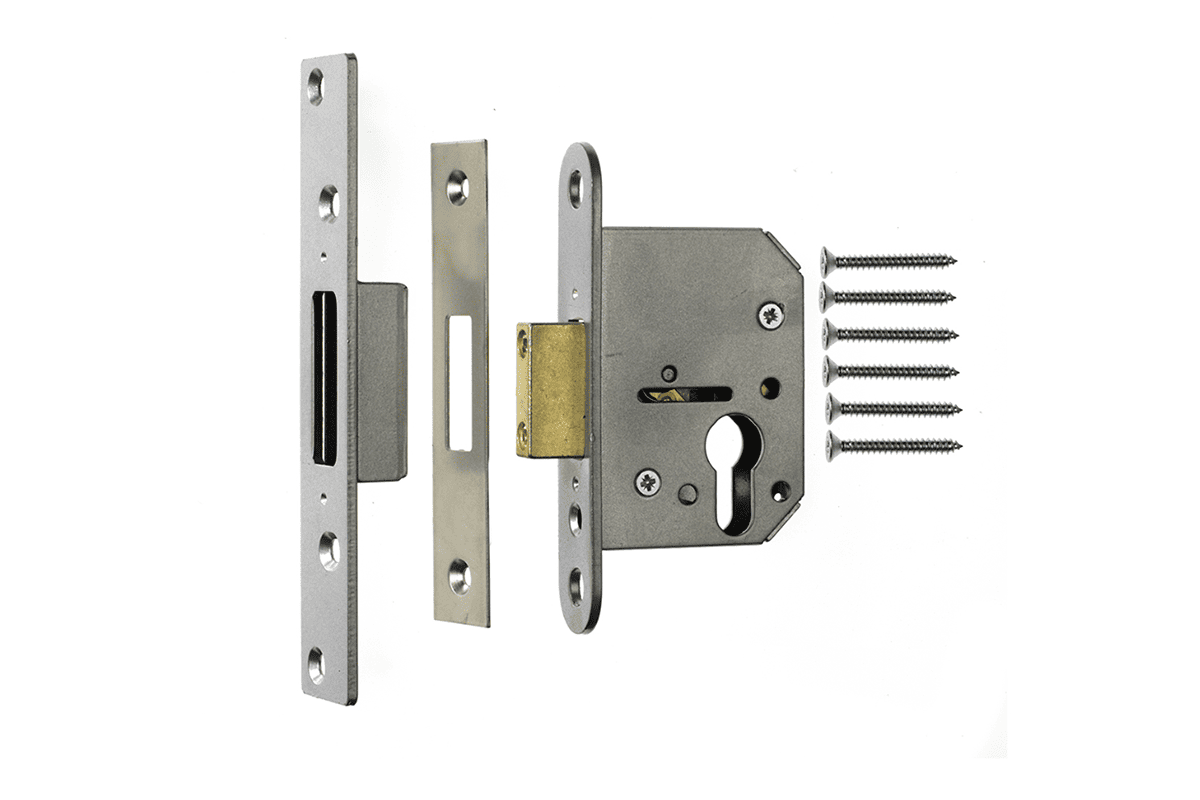
Key dimensions buyers should confirm
When I review an inquiry, I do not only ask, “How many pieces do you need?” I ask for drawings, samples, or target standard references. That is because a mortice lock body is controlled by several dimensions at the same time.
Important dimensions include:
Backset
The distance from the door edge to the center of the keyhole or handle follower. Common European backsets may vary by application and standard.6Center distance
The distance between the handle spindle center and the cylinder center. This must match the handle plate or escutcheon layout.Lock case depth
The full depth of the lock body that enters the door. It must fit the door stile width.Faceplate size
The visible metal plate on the door edge. It must match the door edge routing.Follower size
The square hole that receives the handle spindle. Common sizes can vary by region and product line.Door thickness
The lock body, cylinder length, screws, and handles must all work with the door thickness.
Specification mistakes create batch problems
For a single door, an installer may adjust small errors on site. For a door factory producing hundreds or thousands of doors, that is not acceptable. A wrong backset can affect the CNC template. A wrong center distance can make the handle plate unusable. A wrong latch direction can delay assembly.
Here is a simple procurement risk table I often use when discussing lock body orders:
| Specification item | If buyer does not confirm it | Possible result |
|---|---|---|
| Backset | Lock hole does not align with door machining | Rework or rejected doors |
| Center distance | Handle plate or escutcheon does not fit | Assembly delay |
| Door thickness | Cylinder or screws are unsuitable | Poor installation |
| Function | Door does not operate as intended | Project complaint |
| Standard | Product does not match market expectation | Resale difficulty |
| Finish | Visible parts differ from other hardware | Appearance inconsistency |
| Latch direction | Wrong handing for door opening | Installation failure |
Cylinder and handle compatibility matters
A mortice lock body normally works with a cylinder and handle, but those parts are not automatically universal. For example, a European profile cylinder must match the cylinder cut-out. A lever handle spindle must match the follower. The handle spring strength and lock body spring design should also work together, especially when buyers use heavy stainless steel handles.
In our factory communication, I prefer to check the full hardware combination early:
- What cylinder profile will be used?
- What is the cylinder length?
- Will the handle use rose or long plate?
- What spindle size is required?
- Is the latch reversible?
- Is the strike plate standard or customized?
- Is the door wood, steel, aluminum, or composite?
This may sound detailed, but it saves time. I once saw a buyer approve a lock body sample but later change the handle plate design. The center distance stayed the same, but the plate screw positions changed. The lock still worked, yet the complete door hardware set no longer assembled cleanly. That is why I treat mortice locks as part of a coordinated system.
Which standards matter when sourcing mortice locks?
Standards can help buyers compare products, but they can also create confusion. Some buyers ask for “European standard,” while others ask for DIN, EN, CE, fire-rated, or UL documents. These terms do not mean the same thing. A careful buyer should verify what each document covers before making a sourcing decision.
For European-style mortice locks, DIN 18251 is commonly associated with lock dimensions, while EN 12209 relates to mechanical lock performance requirements.7 American UL-standard mortice locks also exist for certain markets. Buyers should verify exact certificates, test reports, product scope, and project requirements with qualified professionals.
DIN 18251 and dimensional expectations
DIN 18251 is important in many European-style lock body discussions because it relates to dimensional structures and lock types. When buyers ask us for DIN standard mortice locks, they usually care about compatibility with door preparation, cylinder position, handle position, and lock case format.
From a factory perspective, DIN-style consistency helps door manufacturers build repeatable production systems. If the lock body dimensions are stable, the door machining can also be stable. That matters for batch production.
However, I always recommend that buyers confirm the exact lock drawing instead of relying only on the phrase “DIN standard.” The reason is simple. Market language can be loose. Two suppliers may both say “DIN lock,” but small differences in case depth, faceplate details, latch design, or accessories can still exist.
EN 12209 and performance context
EN 12209 is often discussed in relation to mechanical locks and latches in Europe. It addresses performance classification areas such as durability, door mass, fire/smoke suitability where applicable, safety, corrosion resistance, security, and other aspects.8
I do not present our factory as a certification laboratory. I treat certificates and test reports as documents that buyers should request, read, and verify. If a project has fire door, escape door, public building, or regulated market requirements, the buyer should involve a qualified testing body, code consultant, or project engineer.
That careful approach protects everyone. A lock may have a test report for one configuration, but the actual project may use a different door material, strike plate, cylinder, handle, or fire door assembly. In many regulated applications, the full door assembly matters, not only the lock body.9
CE, fire-rated, and UL document checks
Many international buyers ask about CE certification, fire-rated certification, or UL requirements. These documents are important for market access and project approval, but buyers should check scope carefully.
Useful document checks include:
- Product model covered: Does the report name the exact lock body?
- Standard version: Which standard and edition were used?
- Test configuration: Was the lock tested with a specific door type?
- Fire rating scope: Does it apply to the full assembly or only one component?
- Validity and issuer: Is the document current and issued by a recognized body?
- Market relevance: Does the document match the destination market?
American UL-standard mortice locks exist, especially in markets where UL-listed door hardware is required.10 However, European DIN lock bodies and American UL mortise locksets are not automatically interchangeable. Buyers should avoid assuming that one standard family satisfies another market’s requirements.
Practical standard comparison
| Standard or document | What buyers often expect | What buyers should verify |
|---|---|---|
| DIN 18251 | Dimensional compatibility for European-style lock bodies | Exact drawing, lock type, backset, center distance |
| EN 12209 | Mechanical performance classification | Model scope, grade, test report details |
| CE-related documents | Market compliance support | Applicable directive or regulation, product scope |
| Fire-rated report | Suitability for fire door projects | Full assembly conditions and rating scope |
| UL listing | North American project acceptance | Exact listed model and application limits |
In my experience, the best buyers do not only ask, “Do you have certificates?” They ask, “Which exact model is covered, and does it match my door system?” That question leads to better procurement decisions.
What functions can DIN 18251 mortice locks support?
Some buyers choose mortice locks only by size and price, but function is just as important. A classroom door, apartment entrance door, passage door, bathroom door, and escape route door may all need different operating logic.11 If the lock function is wrong, the door may fit physically but fail operationally.
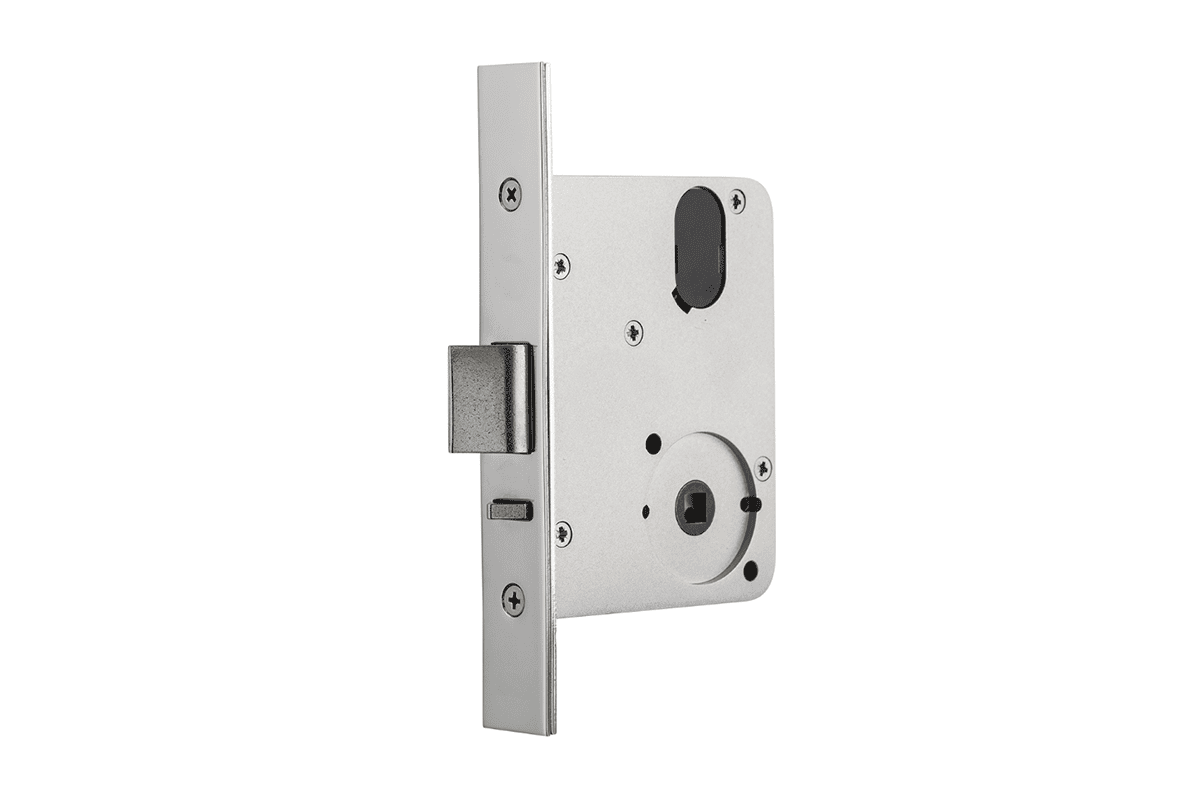
DIN 18251 mortice locks can be supplied for different application-based functions, including passage locks, classroom locks, escape-door locks, bathroom locks, entrance locks, and other project-specific uses. The correct function depends on how the door is used, who controls access, and what safety or market requirements apply.
Function is not the same as dimension
A lock body can share similar dimensions with another lock body but operate differently. This is a common point of confusion. Buyers may approve the size and faceplate, then later discover that the door needs a different locking function.
For example:
- A passage lock may only latch the door without key locking.
- A bathroom lock may use a privacy turn and emergency release.
- A classroom lock may require controlled locking behavior.
- An entrance lock may use a cylinder-operated deadbolt.
- An escape-door lock may require specific egress behavior depending on project rules.
The names and exact functions can vary by market. That is why I prefer to confirm the use scenario instead of relying only on a short product name.
Common functional categories
| Function type | Typical use | Key buyer question |
|---|---|---|
| Passage function | Interior doors, corridors, non-locking rooms | Does the door only need latching? |
| Privacy function | Bathrooms, restrooms, private rooms | Is emergency release required? |
| Cylinder lock function | Apartment, office, entrance doors | What cylinder type and security level are needed? |
| Classroom function | Education buildings | Who locks and unlocks the door? |
| Escape-door function | Emergency exit routes | What local code and tested hardware assembly apply? |
| Roller latch function | Pull-handle doors, some commercial entrances | Is handle operation required? |
Escape and fire applications need extra care
When buyers mention escape doors or fire-rated doors, I slow the conversation down. These applications are not only procurement decisions. They may involve local building codes, tested door assemblies, panic or emergency exit devices, certified hardware combinations, and installation rules.
A mortice lock body may be one component in that system. The door leaf, frame, hinges, seal, strike plate, closer, cylinder, handle, and signage can all matter. Buyers should ask qualified professionals to confirm the final hardware schedule for regulated projects.
I can provide manufacturing information, product drawings, samples, and available documents for verification. But I do not recommend that buyers treat a lock body certificate as a substitute for full project compliance review.
How I help buyers choose the right function
When a buyer asks for DIN 18251 mortice locks, I usually ask a few simple questions:
Where will the door be installed?
Residential, commercial, school, hotel, hospital, warehouse, or public building?Who needs access control?
Owner, tenant, teacher, staff, visitor, or emergency personnel?How should the door open from inside?
By lever, thumb turn, key, panic device, or free egress?What hardware will be combined with the lock?
Cylinder, lever handle, escutcheon, pull handle, closer, or access control trim?What market documents are required?
CE, EN-related test reports, fire-rated documents, or other regional approvals?
This process feels slower at the start, but it makes mass production smoother. For wholesalers and brand owners, it also reduces after-sales complaints because the lock body is matched to the real application.
Frequently Asked Questions
Are mortice locks the same as complete locksets?
No. Mortice locks usually refer to the lock body installed inside the door. A complete lockset may also include the cylinder, lever handle, escutcheon or plate, strike plate, screws, and accessories. Buyers should confirm the package content before ordering.
What is the difference between mortice and mortise locks?
“Mortice” and “mortise” often refer to the same lock concept. “Mortice” is common in British English, while “mortise” is common in American English.12 In procurement, the more important issue is the drawing, standard, function, and compatibility, not the spelling.
Do mortice locks need a cylinder?
Many mortice locks use a separate cylinder, especially European profile cylinder models, but not every function needs one. Passage, privacy, roller latch, and some special-function locks may use different operating methods. Buyers should confirm the locking function and cylinder profile before sourcing.
Which dimensions are most important when ordering mortice locks?
The most important dimensions usually include backset, center distance, lock case depth, faceplate size, follower size, cylinder position, and door thickness. For batch production, buyers should also confirm strike plate position, latch direction, screw locations, and door preparation drawings.
Are DIN 18251 mortice locks suitable for all markets?
DIN 18251 mortice locks are widely used in European-style door hardware systems, but they are not automatically suitable for every market or project. Buyers should verify local standards, required test documents, fire or escape requirements, and compatibility with the complete door hardware system.
Conclusion
Mortice locks are internal lock bodies installed inside prepared door leaves, not complete locksets and not surface-mounted locks. A good sourcing decision depends on dimensions, standards, function, cylinder compatibility, handle matching, and the final door application. In my factory work, I have learned that clear drawings and early specification checks prevent most procurement problems. If you need DIN 18251 standard mortice locks for door manufacturing, wholesale, or brand programs, contact SDH Hardware with your drawings, target market, and function requirements so we can help you evaluate the right lock body.
"Mortise lock", https://en.wikipedia.org/wiki/Mortise_lock. A general reference on mortise locks defines the lock as one fitted into a mortise, or pocket, cut into the edge of a door, supporting the article’s definition of the installation method. Evidence role: definition; source type: encyclopedia. Supports: A neutral reference should define a mortice or mortise lock as a lock installed in a mortise cut into the edge of a door.. ↩
"What do I need, a Rim Lock or Mortice Latch?", https://www.suffolklatchcompany.com/blogs/news/what-do-i-need-a-rim-lock-or-mortice-latch?srsltid=AfmBOopzrlqOulNRb8A5onTis6a0HUpOjC-7OJxYqWtitPkHEYYAC7Xb. Reference descriptions of mortise and rim locks distinguish mortise locks as recessed into the door edge and rim locks as mounted on the door surface, supporting the article’s installation-based comparison. Evidence role: definition; source type: encyclopedia. Supports: A neutral source should distinguish mortise locks from rim or surface-mounted locks by where the lock case is installed.. ↩
"Mortise Lock Bodies and Replacement Parts", https://www.factorydirecthardware.com/collections/mortise-lock-bodies?srsltid=AfmBOooMJZNjDodzmWsLCoR5OnkALx3FCHXCUCiRx_YQ4DRD0Gb--jxQ. Educational door-hardware references describe mortise lock installations as assemblies that can include the lock case, cylinder or keying device, trim, handles, and strike, supporting the article’s treatment of the lock body as one component in a system. Evidence role: general_support; source type: education. Supports: A technical or educational source should describe mortise lock assemblies as involving a lock case plus related operating and finishing components.. Scope note: The exact accessory package varies by manufacturer and product configuration, so the source would support the general component relationship rather than every purchase package. ↩
"Mortise lock", https://en.wikipedia.org/wiki/Mortise_lock. General door-hardware references describe mortise locks as recessed into a pocket in the door and rim locks as mounted on the surface, supporting the article’s distinction between the two lock types. Evidence role: definition; source type: encyclopedia. Supports: A reference source should confirm the installation difference between mortise locks and surface-mounted or rim locks.. ↩
"How to measure and choose the right mortise lock size", https://www.blue-id.com/en/blog/mortise-lock-mass. Technical door-hardware guidance identifies mortise preparation, backset, strike alignment, cylinder preparation, and trim compatibility as installation variables, supporting the article’s claim that mortice locks require coordinated machining and hardware dimensions. Evidence role: mechanism; source type: institution. Supports: A technical installation or architectural hardware source should explain that mortise locks require prepared door cut-outs and aligned related hardware.. Scope note: Such guidance supports the installation mechanism generally; it does not verify the frequency or cost of procurement errors in the article’s commercial context. ↩
"DIN 18251: The German Standard for Mortise Locks", https://umaylocks.com/din-18251/. Standards-related descriptions of European mortice locks indicate that dimensional characteristics such as backset are specified by lock type and intended application, supporting the article’s warning that buyers should confirm the exact backset. Evidence role: general_support; source type: institution. Supports: A standards-related source should show that mortice lock dimensions, including backset, are specified by type or application rather than being universally fixed.. Scope note: The source would provide contextual support for dimensional variation; the precise available backsets still depend on the particular standard edition and product design. ↩
"Mortise Lock Manufacturer & Supplier", https://www.dirock.com/Mortise-Lock-pl47667787.html. Standards summaries identify DIN 18251 with mortise-lock types and dimensional requirements and EN 12209 with mechanically operated locks, latches, and locking plates, supporting the article’s distinction between dimensional and performance standards. Evidence role: general_support; source type: institution. Supports: A standards source should distinguish the scope of DIN 18251 from EN 12209 and confirm EN 12209’s role in classifying mechanical lock and latch performance.. Scope note: The source would support the broad scope distinction; exact compliance can only be determined from the applicable standard text and product test documentation. ↩
"Classification Code for Mechanically Operated Lock", https://www.dirock.com/EN12209-Classification-Code-for-Mechanically-Operated-Lock-id43533806.html. Published summaries of EN 12209 describe classification for mechanically operated locks and latches across categories including use, durability, door mass, fire or smoke resistance, safety, corrosion resistance, and security, supporting the article’s performance-context description. Evidence role: definition; source type: institution. Supports: A standards source should confirm the EN 12209 classification categories for mechanically operated locks and latches.. Scope note: The source would confirm the classification framework, not that any specific lock model meets a given grade. ↩
"Fire-Rated Door Assemblies FAQ: Ratings, Requirements & Compliance", https://www.cdfdistributors.com/blog/post/fire-rated-door-assemblies-faq. Fire-door and building-code guidance treats the door leaf, frame, hardware, and installation as parts of a rated or approved assembly, supporting the article’s caution that a lock body certificate alone may not establish project compliance. Evidence role: expert_consensus; source type: government. Supports: A government or code-related source should support the principle that fire-door or regulated door performance depends on the complete assembly and listed hardware configuration.. Scope note: The source would support the compliance principle generally; applicable requirements vary by jurisdiction, occupancy, and the exact door assembly. ↩
"9000 | 9100 UL Listed Mortise Lock", https://accuratelockandhardware.com/product/9000-9100-ul-listed-mortise-lock/. UL and related listing information identify door hardware, including locksets used in regulated assemblies, as products that may be evaluated and listed for specified applications, supporting the article’s statement that UL-standard mortise hardware exists for markets requiring listed hardware. Evidence role: general_support; source type: institution. Supports: An institutional source should show that UL listing applies to certain door hardware, including mortise locks or locks used in fire-door assemblies.. Scope note: The source would support the existence and role of UL-listed hardware; it would not show that European DIN lock bodies are interchangeable with UL-listed mortise locksets. ↩
"Understanding Lock Functions", https://lockdontblock.org/wp-content/uploads/2017/07/Understanding-Lock-Functions-DH-May-2015.pdf. Architectural hardware references classify lock functions such as passage, privacy, classroom, entrance, and egress-related functions according to how the door must be operated, supporting the article’s claim that different applications require different operating logic. Evidence role: general_support; source type: education. Supports: A neutral architectural hardware source should explain that lock functions are selected according to door use, access control needs, and egress requirements.. Scope note: Terminology and functional definitions can vary by market and standard, so the source would support the general selection principle rather than every regional naming convention. ↩
"MORTICE | definition in the Cambridge English Dictionary", https://dictionary.cambridge.org/us/dictionary/english/mortice. Dictionary references identify “mortice” as a chiefly British spelling variant and “mortise” as the standard American spelling, supporting the article’s note that procurement should focus on drawings and standards rather than spelling. Evidence role: definition; source type: encyclopedia. Supports: A dictionary or language reference should confirm the British and American spelling variants of mortice/mortise.. ↩