Commercial Mortise Lock Function Guide: How Should Buyers Choose the Right Function?
A commercial mortise lock function can create real procurement risk when buyers choose it only by model number, case size, or catalog wording. The problem grows when the lock reaches the jobsite and does not match the door use. I use this guide to help buyers connect function, door scenario, and complete hardware configuration before ordering.
A commercial mortise lock function should be selected by matching the lock case operation, latch bolt, deadbolt, cylinder, strike plate, handle set, door thickness, and handing to the door’s actual use scenario. Common functions include Passage, Privacy, Entry, Storeroom, Deadlock, Sashlock, and Bathroom lock, but names alone are not enough for accurate procurement.
In discussions with door factories, hardware brands, and importers, I often see the same issue. The buyer asks for a “commercial lock,” but the room use is still unclear. So, before confirming SKUs, I prefer to slow down and review the lock structure, door type, and access requirement.
What Is a Commercial Mortise Lock Function?
A commercial mortise lock function becomes confusing when buyers treat it as only a catalog name. The risk is simple. Two locks may look similar from outside, but they may behave very differently after installation. The solution starts with understanding what a mortise lock actually is.
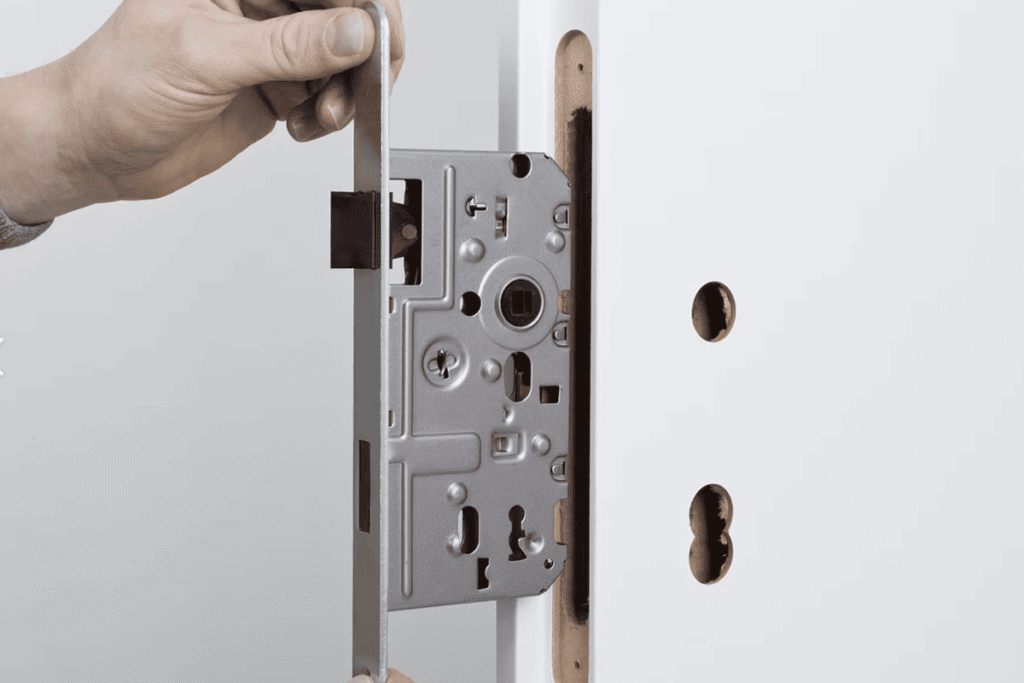
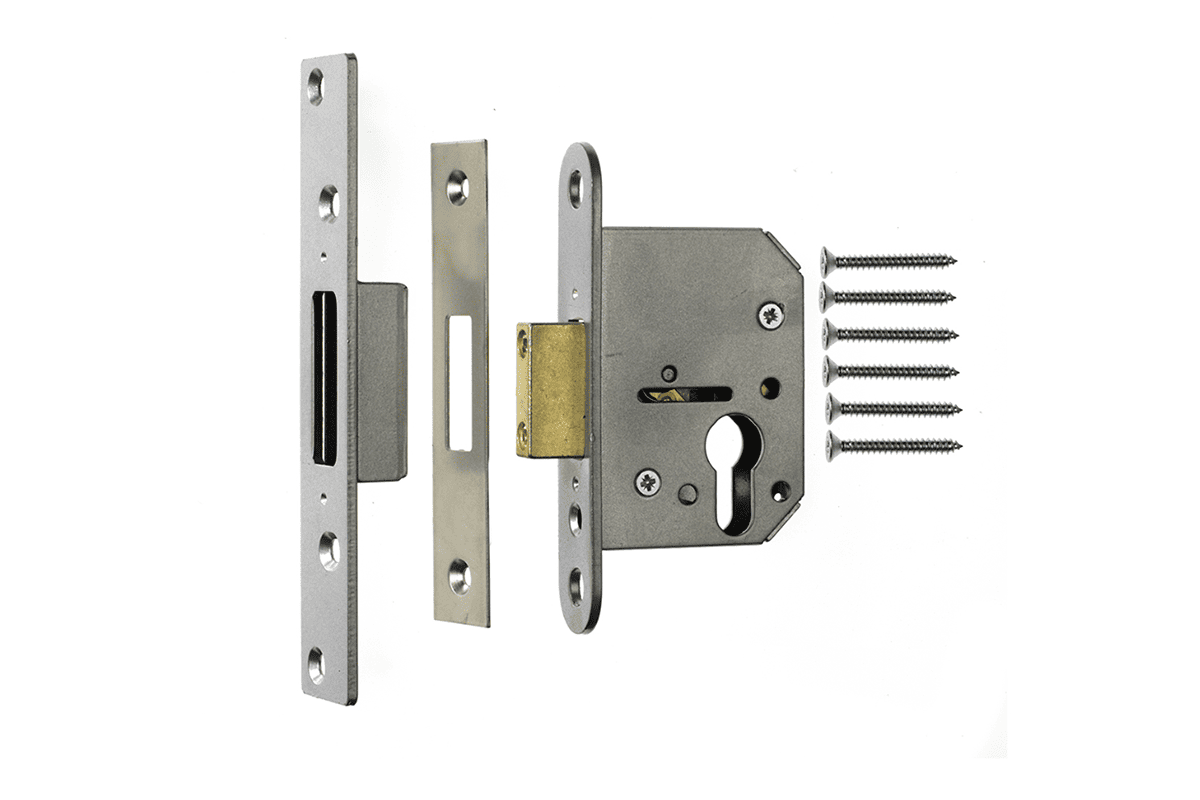
A commercial mortise lock is a lockset whose lock case is installed inside a rectangular pocket cut into the door edge. Its function describes how the latch, deadbolt, cylinder, handle, and strike plate work together for a specific door use, such as passage, privacy, entry control, storage, or bathroom locking.
The basic definition buyers should know
A mortise lock is different from a cylindrical lock. A mortise lock case sits inside a rectangular recess, or mortise, cut into the edge of the door. A cylindrical lock usually passes through round holes drilled through the door face.1
That difference matters for commercial projects. Since the mortise case is embedded inside the door, the lock structure can support more complex internal mechanisms and stronger hardware configurations than many simple surface-mounted or light-duty options2. However, I do not suggest using this point to make broad security claims unless the product has verified test data for the intended standard.
In our sales and pre-sales discussions, buyers often ask, “Is this lock suitable for a commercial door?” I usually ask back:
- What room is the door used for?
- Does the door need free exit?
- Does it require a key from outside?
- Does it need a deadbolt?
- Is it paired with a lever handle, pull handle, thumbturn, or cylinder?
- What is the door thickness and material?
- Does the project require CE, fire-rated, or local market documents?
The answer to these questions defines the correct commercial mortise lock function better than a model name alone.
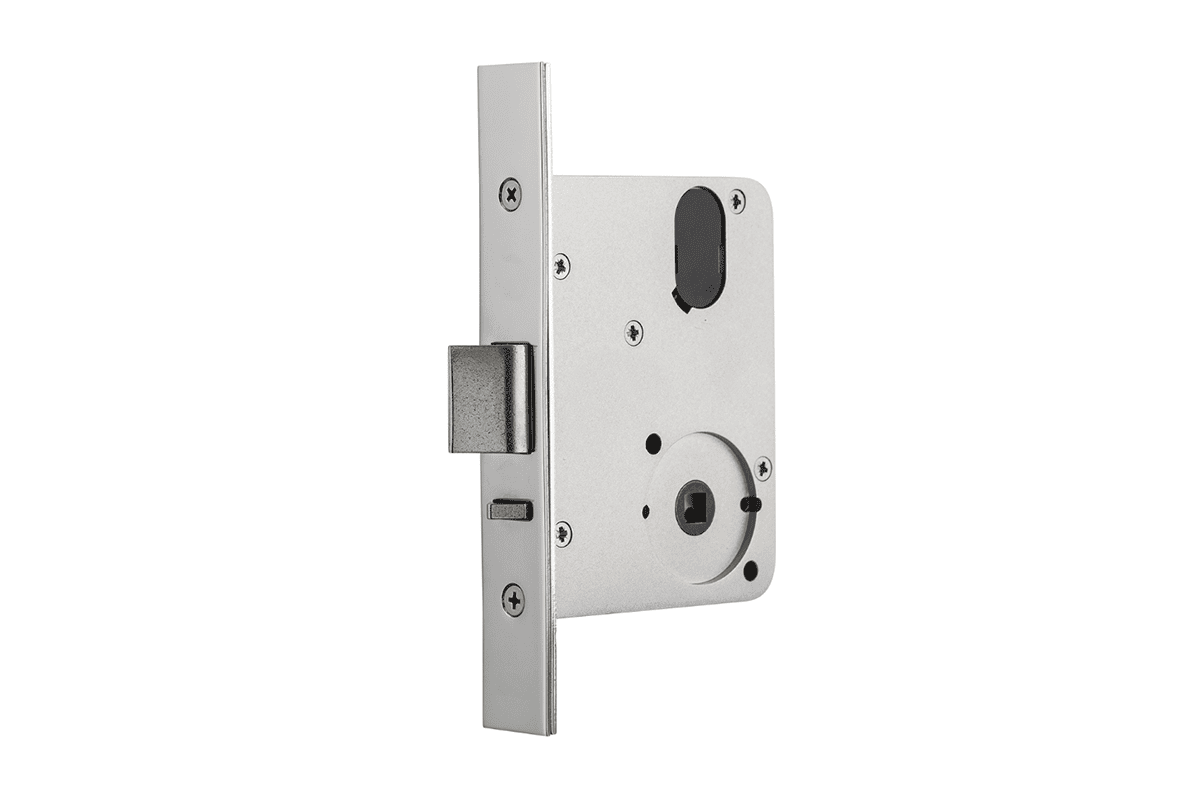
Main mortise lock components
Buyers do not need to become lock engineers. But they should recognize the main components because function depends on these parts working together.
| Component | What it does | Why buyers should care |
|---|---|---|
| Lock case | Main body installed inside the door edge | Determines function, size, backset, and compatibility |
| Latch bolt | Holds the door closed during normal use | Works with lever handle or knob operation |
| Deadbolt | Provides additional locking when thrown | Needed for many entry or secure-room applications |
| Strike plate | Mounted on the frame to receive latch/deadbolt | Affects alignment, closing feel, and installation quality |
| Cylinder | Operates locking by key | Must match key system, profile, length, and market standard |
| Forend/faceplate | Visible plate on the door edge | Must match door finish and preparation |
| Spindle/follower | Connects handle operation to lock case | Must match handle and lock case dimensions |
Why “function” is more than a word
A function is not only the label printed in a catalog. It is the working logic of the complete lockset.
For example:
- A Passage lock may allow free handle operation without key locking.
- A Privacy lock may allow inside locking for bathroom or private-room use.
- An Entry lock may combine latch operation with cylinder control.
- A Storeroom lock may keep the outside always locked while allowing free exit inside.
- A Deadlock may use only a deadbolt without latch function.
- A Sashlock may combine latch and deadbolt in one case, common in some UK-style catalogs.
- A Bathroom lock may use a thumbturn and emergency release instead of a keyed cylinder.
If a buyer selects the wrong function, the problem appears later as wrong SKUs, mismatched handles, missing cylinders, wrong strike plates, rework at the door factory, or end-user complaints. This is why I see function selection as a procurement control point, not just a technical detail.
How Does a Commercial Mortise Lock Function Work Through Lock Components?
A commercial mortise lock function can fail in practice when the lock case, cylinder, handle, latch, and strike plate are selected separately. The buyer may think each item is correct, but the installed door may still not work correctly. The better approach is to evaluate the lock as a system.
A commercial mortise lock function works through the interaction of the lock case, latch bolt, deadbolt, cylinder, strike plate, handle spindle, door preparation, and handing. If one part does not match the others, the function may not perform as expected, even when the lock size or finish looks correct.
Lock case operation controls the function
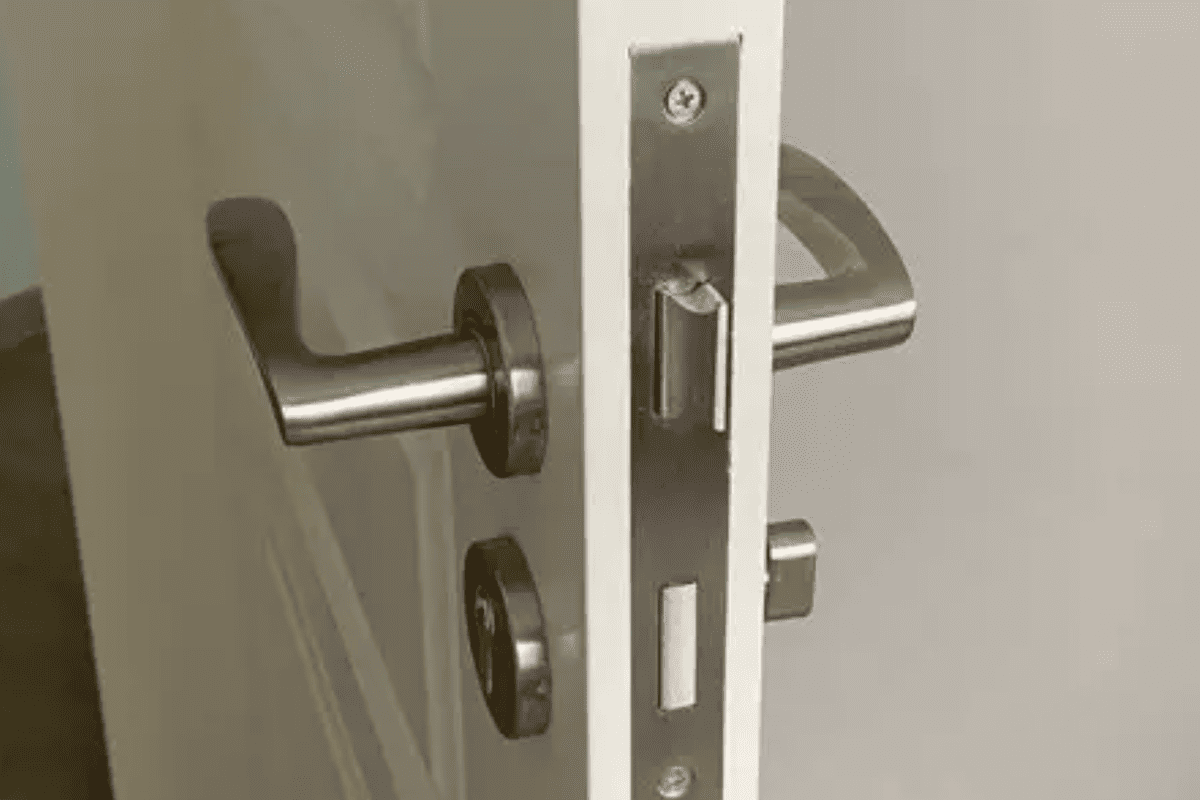
The lock case is the center of the system. It decides whether the handle retracts the latch, whether the deadbolt is included, whether a cylinder is needed, and whether the door can be opened freely from inside.
For commercial procurement, I suggest buyers confirm at least these lock case details:
Backset
This is the distance from the door edge to the spindle or cylinder center. Common European-style mortise locks may use backsets such as 45 mm, 50 mm, 55 mm, or 60 mm3, depending on market and door design.Center distance
This is the distance between handle spindle center and cylinder center. A common Euro standard dimension is 72 mm4, but buyers should verify the required specification.Forend size
The visible faceplate must match the door edge preparation and visual requirement.Latch direction and handing
Some latch bolts are reversible. Some projects still require left-hand or right-hand confirmation.Follower size
The follower must match the handle spindle, often 8 mm in many Euro-style configurations5, but this should be confirmed.Cylinder type
Euro profile cylinders are common in many export markets6, but cylinder length and cam compatibility still matter.
Latch, deadbolt, and cylinder must match the door use
The latch bolt is used for daily closing. The deadbolt is used for locking. The cylinder controls key operation. When buyers do not define the door use, they may choose the wrong combination.
| Door requirement | Latch needed? | Deadbolt needed? | Cylinder needed? | Common direction |
|---|---|---|---|---|
| Corridor passage | Yes | Usually no | Usually no | Passage function |
| Office entry | Yes | Often yes | Often yes | Entry or sashlock style |
| Storage room | Yes | Depends | Yes | Storeroom function |
| Bathroom | Yes | Privacy bolt or deadbolt | Usually no key cylinder | Bathroom/privacy function |
| Utility room | Yes | Often yes | Yes | Entry, storeroom, or deadlock depending on access |
| Controlled access door | Yes | Project-specific | Often yes | Must match access system |
I often remind buyers that a cylinder does not automatically define the whole function. A lock can have a cylinder hole but still differ in how the handle operates from each side. A handle set also does not define the full function by itself. The lock case mechanism controls much of the behavior.
Strike plate and door preparation affect performance
The strike plate receives the latch and deadbolt. If the strike is not aligned, the best lock case may still feel poor. In bulk door production, a small dimensional mismatch can become a large after-sales issue.
For example, if a door factory prepares 2,000 doors for one faceplate dimension but the final lock case has a different forend or strike position, the result can be costly. The team may need to rework the door edge, replace strike plates, or delay shipment.
I have seen buyers focus heavily on lock finish and price but confirm strike dimensions too late. That creates avoidable communication after production starts.
Practical procurement checklist
Before confirming a commercial mortise lock function, I recommend a simple checklist:
- Confirm the room name and use scenario.
- Confirm whether the door needs key locking.
- Confirm whether the door needs inside free exit.
- Confirm whether a deadbolt is required.
- Confirm door thickness and door material.
- Confirm backset and center distance.
- Confirm handle spindle size.
- Confirm cylinder profile and cylinder length.
- Confirm strike plate type.
- Confirm finish, such as SS, PVD, satin nickel, black, or other project finish.
- Verify required CE, fire-rated, or market compliance documents for the actual product and project.
This process helps buyers reduce wrong-SKU risk. It also makes supplier communication faster because every part of the lockset is discussed as one configuration.
Which Commercial Mortise Lock Function Fits Each Door Scenario?
A commercial mortise lock function should always connect to the door’s job. If the buyer starts only from catalog terms, the selection may become vague. The same word may also mean different things across regions. So, I prefer to begin with the room scenario and then match the function.
Common commercial mortise lock functions include Passage for non-locking doors, Privacy or Bathroom for private-use rooms, Entry or Sashlock for keyed access doors, Storeroom for rooms that stay locked from outside, and Deadlock for doors needing deadbolt-only locking. Buyers should verify terminology with the supplier before ordering.
Passage function: for movement, not locking
A Passage function is usually used where people need to move through the door without key control. The latch keeps the door closed, and the lever handle retracts the latch. It is common for internal corridor doors, meeting-room doors, or general access areas where locking is not needed.
Typical use cases include:
- Internal office corridors
- Non-secure meeting rooms
- Shared service passages
- Public internal doors where access control is not required
The procurement risk is ordering Passage where the end user expects locking. The door may install correctly, but the customer will complain that the room cannot be secured.
Privacy and Bathroom function: for temporary inside locking
Privacy function is often used for rooms where users need temporary privacy but not key-controlled security. Bathroom locks are similar in many catalogs, but the exact configuration may differ by region. Some use a thumbturn and emergency release. Some use a bathroom indicator set. Some use a special lock case with privacy bolt operation.
Common scenarios include:
- Commercial bathrooms
- Toilet cubicles with solid doors
- Changing rooms
- Staff rest areas
- Private consultation rooms, depending on project rules
The buyer should confirm whether the project needs an emergency release from outside7. This detail is important for public buildings and commercial facilities. However, buyers should verify local code or project requirements with qualified professionals because bathroom access and safety rules can vary by market.
Entry function and Sashlock: for keyed access
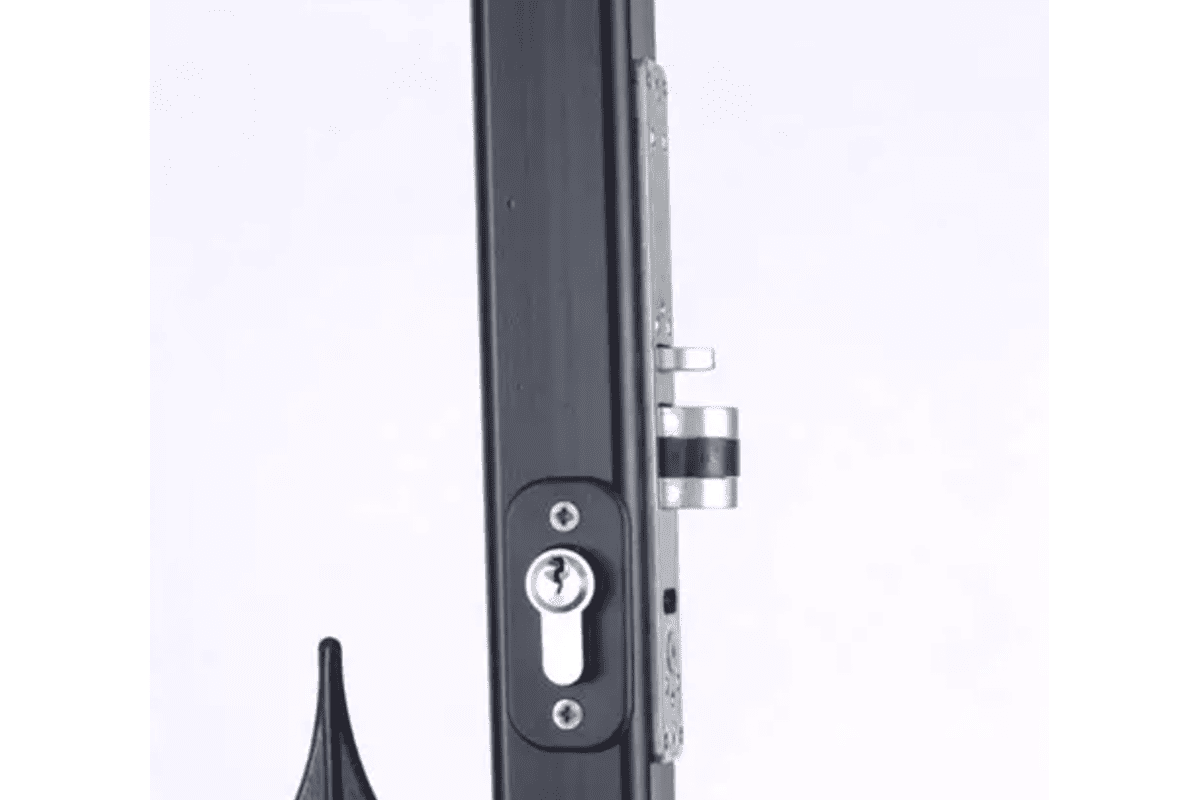
Entry function usually means that the door can be locked and unlocked with a key from outside. In many Euro-style or UK-style catalogs, a sashlock refers to a mortise lock case with both latch and deadbolt. The latch works with the handle, while the deadbolt works with the cylinder or key.
This configuration is common for:
- Office doors
- Apartment entrance doors in some markets
- Hotel back-of-house doors
- Management rooms
- Utility rooms
- Commercial tenant doors
The risk is assuming all Entry or Sashlock items are identical. Buyers should confirm:
| Item | Why it matters |
|---|---|
| Cylinder profile | Euro profile, oval, or other standard must match market |
| Cylinder length | Must match door thickness and escutcheon/rose thickness |
| Deadbolt throw | Must match frame and project requirement |
| Handle operation | Outside/inside operation must match access need |
| Fire-rated version | Must be verified by valid documents for that exact product configuration |
At SDH Hardware, when we discuss mortise locks with importers, we usually request drawings or samples if the buyer has an existing SKU. This helps avoid silent differences in center distance, faceplate, or cylinder position.
Storeroom function: for controlled access and free exit
Storeroom function is often used for spaces where outside access should remain controlled, while inside exit should be simple. In many commercial settings, the outside lever may be fixed or always locked, and the key controls entry. The inside handle can allow exit.8
Common scenarios include:
- Storage rooms
- Janitor rooms
- Inventory rooms
- Staff-only service rooms
- Maintenance rooms
This function can reduce the risk of doors being accidentally left unlocked from outside. But buyers must confirm the exact operation because “storeroom” can be interpreted differently in different catalogs.
For procurement teams, Storeroom function can create SKU confusion when the same door series includes both standard Entry and Storeroom versions. I suggest using clear SKU descriptions such as:
- “Mortise lock, storeroom, outside key access, inside free exit”
- “Mortise lock, entry, both sides handle operation, cylinder deadbolt”
- “Mortise lock, passage, latch only, no cylinder”
These descriptions are more useful than short internal codes when multiple teams handle purchasing, warehouse storage, and after-sales service.
Deadlock: for deadbolt-only applications
A Deadlock usually refers to a lock with a deadbolt but no latch operation. It may be used together with a pull handle or in applications where latch function is not required. In some markets, deadlocks are common for certain entrance or security doors.
However, buyers should avoid assuming a deadlock provides a certain security level. The actual performance depends on the lock case design, cylinder, strike, door material, frame structure, installation quality, and tested standard. If a project has forced-entry or fire requirements, the buyer should request relevant test reports and professional evaluation.
A simple function matching table
| Door scenario | Recommended function direction | Main risk if wrong |
|---|---|---|
| Internal corridor | Passage | End user may expect locking |
| Office room | Entry or Sashlock | Wrong cylinder or deadbolt configuration |
| Bathroom | Privacy or Bathroom lock | Missing emergency release or indicator |
| Storage room | Storeroom | Door may be left unlocked or access may be inconvenient |
| Utility room | Entry, Storeroom, or Deadlock | Function may not match maintenance access |
| Public access door | Project-specific | Compliance and access rules may be missed |
The key point is simple. A commercial mortise lock function should follow the door scenario first. The catalog term should confirm the selection, not lead it blindly.
How Should Buyers Evaluate Suppliers Before Confirming a Commercial Mortise Lock Function?
A commercial mortise lock function is not only a product choice. It is also a supplier coordination issue. If the supplier cannot confirm drawings, finishes, cylinders, certificates, and production consistency, even the correct function may create problems during bulk purchasing.
Buyers should evaluate suppliers by checking technical drawings, lock case samples, function descriptions, finish consistency, production capacity, inspection process, certificate documents, packaging, lead time, and after-sales support. A reliable supplier should help confirm the complete lock configuration before mass production, not only quote a unit price.
Start with drawings and samples
For commercial door hardware, I strongly prefer to confirm drawings before talking about large quantities. A drawing helps both sides align on dimensions.
Important drawing details include:
- Lock case height and depth
- Backset
- Center distance
- Faceplate length, width, and thickness
- Strike plate dimensions
- Latch and deadbolt position
- Spindle follower size
- Cylinder hole type
- Screw hole locations
- Door thickness range
- Handing or reversible latch details
Samples are also useful because they show what drawings cannot fully explain. Buyers can check handle feel, latch spring strength, finish tone, packaging, and compatibility with existing door preparation.
Confirm the complete hardware configuration
A mortise lock is rarely purchased alone in commercial projects. It usually works with other door hardware.
A complete configuration may include:
- Mortise lock case
- Euro profile cylinder or other cylinder
- Lever handle set
- Escutcheon or rosette
- Strike plate
- Screws and accessories
- Door hinges
- Door closer or stopper, depending on project
- Fire-rated accessories, if required by the project
When we support overseas buyers, we often help them check whether the lock case matches the lever handle, cylinder, and door thickness. This avoids a common issue: the lock case is correct, but the cylinder is too short, the spindle is wrong, or the escutcheon does not cover the preparation.
Review quality control points
Commercial buyers should not evaluate only the outside appearance. The internal operation also affects complaints and service cost.
Useful inspection points include:
| QC item | What to check | Why it matters |
|---|---|---|
| Material | Lock case, latch, deadbolt, faceplate material | Affects durability and market positioning |
| Dimensions | Backset, center distance, faceplate, strike | Prevents installation mismatch |
| Surface finish | Color consistency and coating quality | Supports brand image and batch consistency |
| Latch operation | Smooth retraction and return | Affects daily user experience |
| Deadbolt operation | Smooth throw and alignment | Reduces key operation complaints |
| Cylinder fit | Cam operation and length | Prevents access and installation issues |
| Packaging | Label, SKU, protection | Reduces warehouse and shipping mistakes |
For bulk orders, finish consistency is especially important. A buyer may accept a sample, but the real challenge is keeping the same surface appearance across hundreds or thousands of pieces. This is why standardized production supervision and finished product inspection matter.
Verify certification documents carefully
Many buyers ask for CE or fire-rated documents, especially for Europe, the Middle East, and project channels. I recommend treating certificates as documents to verify, not as marketing decoration.
Buyers should check:
- Whether the certificate applies to the exact product type
- Whether the tested configuration matches the project configuration9
- Whether the document is still valid
- Whether the issuing body is accepted in the target market
- Whether the door assembly requires additional testing or approval
A mortise lock function does not automatically comply with CE, fire-rated, or local project requirements. Compliance depends on the product, test scope, installation condition, and market rules.10 For application-specific decisions, buyers should involve qualified project consultants, test laboratories, or local compliance professionals.
Evaluate production capacity and customization ability
For importers, wholesalers, and brand operators, stable supply is as important as the first sample. A supplier should support repeat orders with consistent dimensions and finish.
In SDH Hardware’s manufacturing context, we focus on mortise locks, stainless steel lever handles, butt hinges, concealed hinges, and cylinders. That one-stop category support can help buyers coordinate complete door hardware sets instead of sourcing each part from a separate factory.
Commercial buyers should ask suppliers about:
- Monthly production capacity
- Standard lead time
- MOQ for standard and customized items
- Finish options
- OEM or ODM support
- Inspection process
- Packaging customization
- Spare parts support
- Reorder consistency
- Export market experience
The goal is not to find the lowest quote only. The goal is to reduce total procurement risk. A slightly cheaper lock can become expensive if it causes rework, delayed replenishment, mixed SKUs, or customer complaints.
Frequently Asked Questions
What is the difference between a mortise lock and a cylindrical lock?
A mortise lock has a lock case installed inside a rectangular pocket cut into the door edge. A cylindrical lock usually passes through round holes drilled through the door face. Mortise locks are often selected for commercial-duty doors because they support more complex lock case configurations.
Is a commercial mortise lock function the same as the handle function?
No. The handle is only one part of the system. A commercial mortise lock function depends on the lock case, latch, deadbolt, cylinder, strike plate, spindle, door thickness, and handing. Buyers should confirm the complete configuration before ordering handles and lock bodies separately.
Which mortise lock function is best for storage rooms?
Storeroom function is often suitable for storage rooms because it can keep outside access controlled while allowing inside exit. However, buyers should confirm the exact operation with the supplier because catalog terms may vary by region and manufacturer.
Do mortise locks automatically meet fire-rated or CE requirements?
No. A mortise lock does not automatically meet fire-rated, CE, or local project requirements just because it is a mortise type. Buyers should verify valid certificates, test scope, product configuration, and local market acceptance before using the lock in regulated projects.
What information should I send before requesting a mortise lock quotation?
You should send the door scenario, required function, drawings or samples, door thickness, backset, center distance, faceplate size, finish, cylinder type, handle type, quantity, target market, and certification requirements. This information helps the supplier quote the correct commercial configuration.
Conclusion
A commercial mortise lock function should be chosen by door scenario, access requirement, and full hardware configuration, not by model name alone. Buyers should understand the mortise lock structure, confirm latch and deadbolt operation, match cylinders and handles, and verify drawings, samples, finishes, and compliance documents. If you are planning bulk sourcing for door factories, hardware brands, or import channels, SDH Hardware can support function selection, ODM customization, and complete architectural door hardware supply for your market.
"Bored cylindrical lock", https://en.wikipedia.org/wiki/Bored_cylindrical_lock. Door-hardware reference materials define cylindrical, or bored, locks as locksets installed through bored openings in the door, supporting the article’s distinction from mortise locks. Evidence role: definition; source type: institution. Supports: The source should explain that cylindrical or bored locks are installed through holes bored in the door.. Scope note: The source establishes the installation method, not comparative performance or security. ↩
"087100 – DOOR HARDWARE - Facilities and Campus Services", https://fcs.cornell.edu/087100-door-hardware. Institutional door-hardware guidance commonly describes mortise locks as heavy-duty locksets capable of incorporating latch and deadbolt functions within a mortised case, providing contextual support for the article’s claim about configuration complexity. Evidence role: general_support; source type: institution. Supports: The source should indicate that mortise locks are commonly used in heavy-duty or commercial applications and can integrate multiple locking functions.. Scope note: This would provide contextual support only; product-specific strength still depends on tested standards and configuration. ↩
"Mortise Lock", https://zhigaohardware.com/mortise-lock. Technical references for European mortise locks list metric backsets, including dimensions in the 45–60 mm range, supporting the article’s statement that these are common specification values. Evidence role: general_support; source type: institution. Supports: The source should document common metric backset dimensions used in European mortise lock cases.. Scope note: The source would support common market dimensions rather than proving that all European-style locks use these exact backsets. ↩
"How to measure and choose the right mortise lock size", https://www.blue-id.com/en/blog/mortise-lock-mass. European mortise-lock technical references identify 72 mm as a common spindle-to-cylinder center distance, supporting the article’s dimensional example. Evidence role: general_support; source type: institution. Supports: The source should identify 72 mm as a common distance between handle follower and cylinder center in European mortise locks.. Scope note: The source would support the commonness of the dimension, while individual projects may require other center distances. ↩
"Standard Door Handle / Knob Square Spindle 8mm / Bundle", https://affdoorhardware.com/standard-door-handle-knob-square-spindle-8mm-bundle/?srsltid=AfmBOoqcS_SupbYtMPy1g5uIECJCNVM_3-yyq80krLg2RT7mVMLhU_4W. Technical door-hardware references describe 8 mm square spindles as common in European lever-handle and mortise-lock assemblies, supporting the article’s compatibility note. Evidence role: general_support; source type: institution. Supports: The source should show that 8 mm square spindles or followers are commonly used in European lever-handle and mortise-lock systems.. Scope note: The source would support a common configuration, not guarantee compatibility with every lock case or handle set. ↩
"Pin tumbler lock", https://en.wikipedia.org/wiki/Pin_tumbler_lock. Standards and technical references identify the Euro profile cylinder as a recognized cylinder format used with European locksets, providing contextual support for its prevalence in export-oriented hardware specifications. Evidence role: general_support; source type: institution. Supports: The source should establish that Euro profile cylinders are a recognized and widely used cylinder format, especially in European-standard locksets.. Scope note: The source would support broad recognition of the format, not quantify its share in each export market. ↩
"Chapter 6: Toilet Rooms", https://www.access-board.gov/ada/guides/chapter-6-toilet-rooms/. Government building or accessibility guidance addresses safety and accessibility requirements for toilet or bathroom doors, providing contextual support for verifying whether an outside emergency release is required. Evidence role: general_support; source type: government. Supports: The source should show that toilet, bathroom, or privacy door hardware can be subject to emergency access, accessibility, or safety requirements.. Scope note: The source would be jurisdiction-specific and should not be treated as universal code advice. ↩
"Back-to-basics: Lock functions", https://us.allegion.com/content/dam/allegion-us-2/web-files/allegion/information-documents/Allegion_Basics_of_Lock_Functions_Article_109884.pdf. ANSI/BHMA-style lock-function descriptions define storeroom functions as configurations in which outside entry is key-controlled while the inside lever permits egress, supporting the article’s operational description. Evidence role: definition; source type: institution. Supports: The source should define storeroom lock function as having controlled outside entry and free inside exit.. Scope note: The source supports the general function category; exact operation can still vary by lock series and regional catalog terminology. ↩
"Fire Doors and NFPA 80 FAQs", https://www.nfpa.org/news-blogs-and-articles/blogs/2025/04/11/fire-doors-faqs. Fire-door certification and listing guidance states that hardware must be used in accordance with the tested or listed configuration, supporting the article’s instruction to compare certification scope with the project configuration. Evidence role: general_support; source type: institution. Supports: The source should support that listed or certified fire-door hardware must be installed in accordance with the tested or listed configuration.. Scope note: The source would support the verification principle, while specific acceptance depends on the local authority and certification scheme. ↩
"Doors, Windows and Related Hardware Application Guide", https://www.ul.com/thecodeauthority/knowledge/ul-fire-rated-doors-guide. Official CE-marking and fire-door guidance links product compliance to applicable standards, declared performance, intended use, and tested installation conditions, supporting the article’s caution that compliance is configuration-specific. Evidence role: general_support; source type: government. Supports: The source should explain that compliance or CE marking depends on intended use, applicable standards, declared performance, and tested configurations.. Scope note: The source would provide regulatory context rather than evaluate any particular mortise lock. ↩