How Does a Mortise Lock Work Explained?
A mortise lock can look simple from the outside, but wrong matching can create sticking latches, poor handle return, difficult locking, and after-sales complaints. Buyers often compare only faceplate size or finish, then miss the internal function. I explain the mechanism so procurement teams can confirm compatibility before bulk orders.
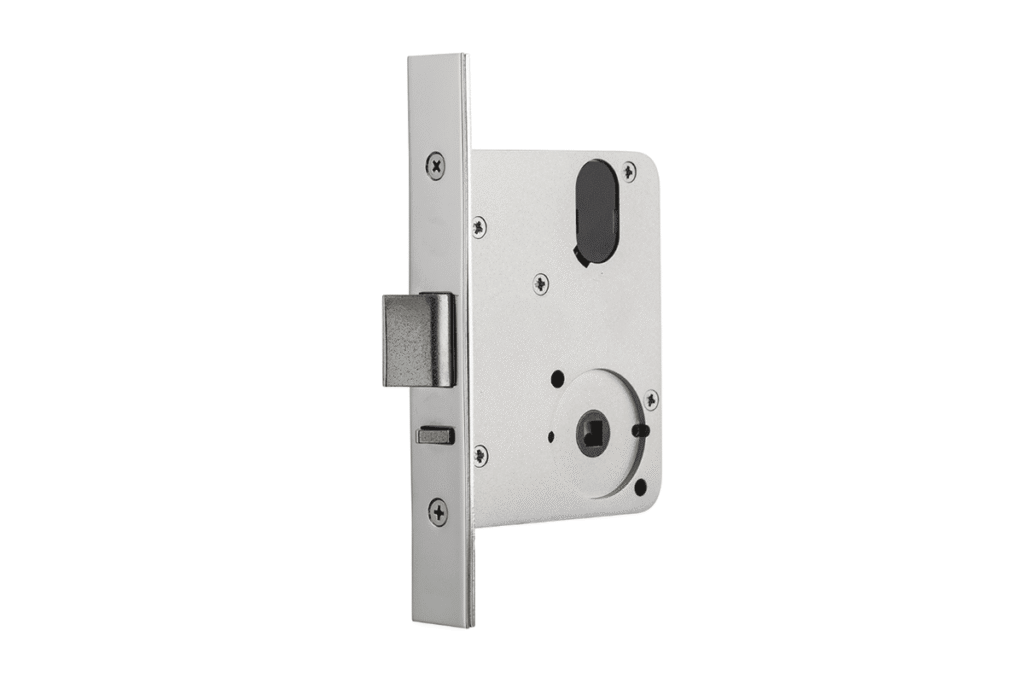
A mortise lock works by embedding one metal lock body inside the door edge1. The latch bolt holds the door closed during daily opening and closing, while the deadbolt creates the locked state.2 The lever handle retracts the latch through the spindle and follower3, and the key cylinder or thumb turn controls the deadbolt.
In our production and assembly discussions with overseas door factories, I often see one root problem: similar-looking lock bodies are treated as interchangeable. They are not.4 The details below connect each working part to the buyer decisions that affect installation, performance, and long-term supply stability.
What Parts Make a Mortise Lock Work as One Mechanism?
A mortise lock causes problems when buyers treat it as a single metal case instead of a coordinated hardware system. One wrong spindle size, cylinder length, backset, or strike position can turn a good lock body into a poor installation. The solution starts with understanding each functional part.
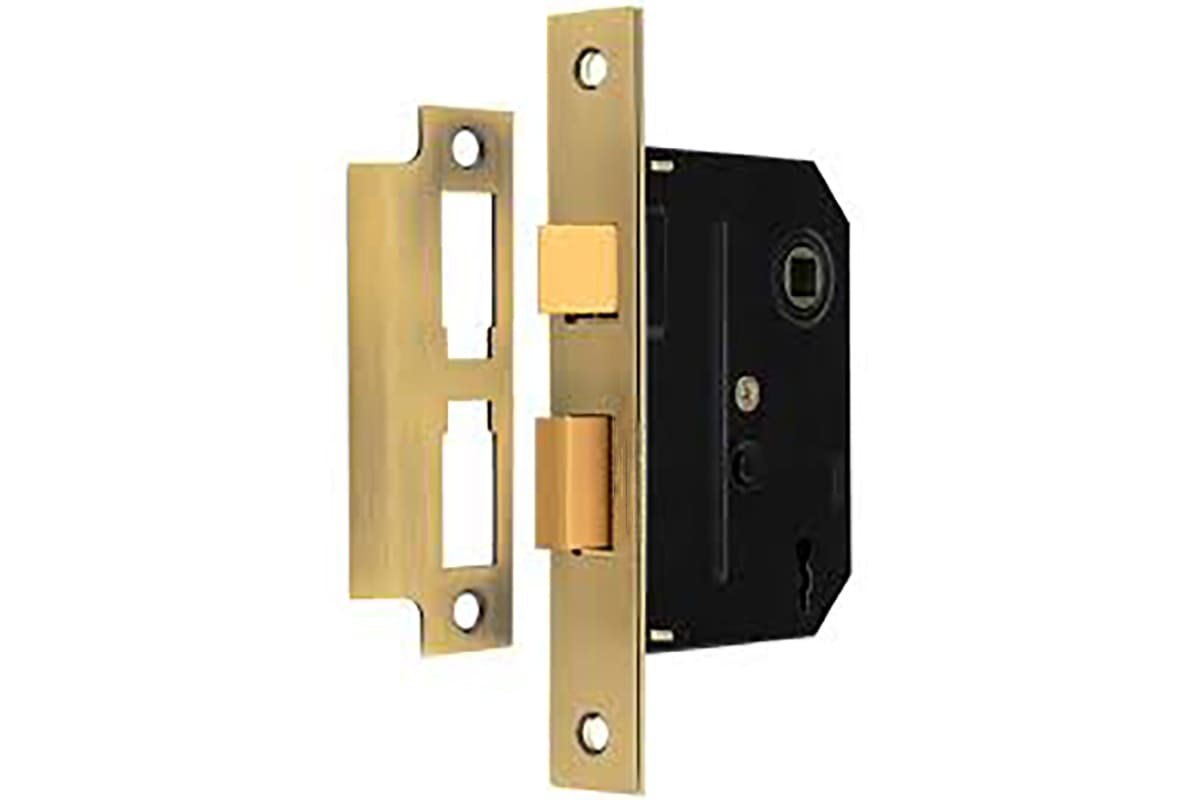
A mortise lock usually includes a lock case, latch bolt, deadbolt, follower, spindle hole, forend plate, strike plate, springs, transmission parts, and cylinder or thumb turn interface. These parts work together, so buyers should confirm full hardware matching instead of checking only the visible faceplate and finish.
The lock body is the operating center
The lock body is installed into a cut-out, or mortise pocket, inside the door edge. This embedded body is why the product is called a mortise lock. From a buyer’s view, the lock body controls the whole hardware relationship:
- Door processing accuracy
- Handle and spindle compatibility
- Cylinder or thumb turn matching
- Strike plate position
- Door thickness
- Faceplate size and finish
- Latch direction and handing
- Backset and center distance
I always ask customers to confirm drawings before production because the same outside appearance can hide different internal dimensions. For example, two lock bodies may both use a stainless steel forend, but one may have a 50 mm backset and another may use 55 mm. That small difference changes the handle hole and cylinder hole position on the door.
Main parts and buyer risks
| Part | Function | Buyer decision | Common risk if mismatched |
|---|---|---|---|
| Latch bolt | Holds the door closed during daily use | Latch shape, direction, spring return, strike position | Door does not close smoothly or latch sticks |
| Deadbolt | Creates locked state | Throw length, cylinder compatibility, strike depth | Key turns hard or bolt cannot enter strike |
| Follower | Receives handle spindle rotation | Spindle size, handle spring strength, square hole standard | Handle feels loose or does not retract latch |
| Lock case | Holds internal transmission parts | Case size, material, production consistency | Installation cut-out does not fit |
| Forend plate | Visible edge plate on door | Length, width, radius/square corner, finish | Door edge machining mismatch |
| Strike plate | Receives latch and deadbolt | Plate dimensions, box depth, screw position | Closing noise, scraping, poor locking |
| Cylinder interface | Allows key operation | Euro profile, length, cam position, screw hole | Cylinder cannot operate deadbolt correctly |
Why B2B buyers should not evaluate by photos only
A product photo shows the faceplate, latch, and bolt. It does not prove internal compatibility. In our daily specification work, I prefer to exchange technical drawings, door samples if needed, and accessory lists. This avoids many problems before mass production.
For a door factory, the lock body must match CNC or manual routing. For a hardware brand, it must match the existing handle range and cylinder range. For a wholesaler, it must fit the regional market’s common door thickness and installation habits.
A similar-looking lock body is not automatically interchangeable. Buyers should confirm the full assembly: lock body, handle, spindle, cylinder, strike plate, screws, and door preparation.
When I review a buyer inquiry, I usually check these basic points first:
- Backset: distance from faceplate edge to handle spindle center.5
- Center distance: distance between handle spindle center and cylinder center.
- Forend size: width, length, thickness, and corner type.
- Case depth and height: required door pocket size.
- Spindle size: commonly 8 mm in many lever handle systems6, but it must be confirmed.
- Cylinder type and length: especially for different door thicknesses.
- Latch direction: reversible or fixed, depending on model.
- Finish standard: stainless steel, plated surface, or customer-specific finish.
This part-level thinking helps procurement teams reduce wrong orders, installation delays, and after-sales arguments.
How Does a Mortise Lock Latch Bolt Close the Door?
A mortise lock closes smoothly only when the latch bolt, spring return, strike plate, and door gap work together. If one of these details is wrong, the door may bounce, scrape, or fail to catch. Buyers often notice the problem only after assembly, when correction becomes costly.
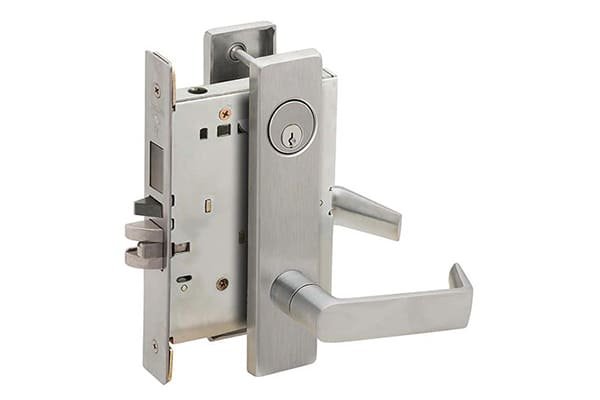
The latch bolt closes the door by sliding back when its sloped face touches the strike plate or frame.7 Once the door reaches alignment, the spring pushes the latch bolt outward into the strike opening. This holds the door closed without using the deadbolt or key.
The latch is for daily closing, not final locking
The latch bolt is the part that users operate many times each day. It keeps the door closed when the door is not deadlocked. It is usually spring-loaded and has a sloped face. When the door swings shut, the sloped face contacts the strike plate. This contact pushes the latch back into the lock case. When the latch reaches the opening in the strike plate, the spring pushes it out again.
This simple movement creates several important buyer checkpoints.
Latch operation depends on alignment
The latch bolt must meet the strike opening at the right position. If the door gap is too wide, too narrow, or inconsistent, the latch may not enter properly.8 If the strike plate is mounted too high or too low, the latch may rub against the edge.
Common symptoms include:
- Door needs extra force to close
- Latch makes a scraping sound
- Door closes but does not stay closed
- Latch sticks inside the lock case
- Handle must be lifted or pressed to align the latch
- After-sales complaints about “bad lock quality” when the root cause is installation tolerance
In our factory conversations, I have seen buyers send videos where the latch seemed defective. After checking the door sample, the issue was often strike position or door warpage, not the internal lock body. This is why I ask for door thickness, door material, frame type, and installation drawings when the project requires stable batch assembly.
Spring return matters
The spring inside the lock body must push the latch out reliably. However, spring return does not work alone. The latch surface finish, internal friction, faceplate clearance, and handle load all affect the final feeling.
A buyer should evaluate latch movement in three conditions:
| Test condition | What to observe | Why it matters |
|---|---|---|
| Lock body alone | Latch pushes and returns by hand | Checks basic spring return |
| Lock body with handle | Handle retracts latch and returns | Checks follower and spindle match |
| Installed on door | Door closes into strike plate | Checks real alignment and processing |
For mass production, I recommend checking pre-production samples on the actual door structure. A lock body that feels smooth on a desk may behave differently after installation because wood doors, steel doors, aluminum doors, and fire-rated door assemblies can have different tolerances.
Latch shape and strike plate are a pair
The sloped latch face must match the closing direction. Some products use reversible latches, while others need left-hand or right-hand confirmation. A reversible latch can reduce inventory pressure, but buyers still need to confirm the method of reversing and whether workers can do it correctly on the assembly line.
The strike plate also deserves attention. It is not just an accessory. It decides where the latch and deadbolt enter the frame. The strike plate must match:
- Latch position
- Deadbolt position
- Plate length and width
- Screw hole position
- Strike box depth
- Frame material
- Required finish
If the latch is the daily closing part, the strike plate is the receiving part that makes daily closing possible. Buyers who source them separately should confirm drawings carefully.
How Does a Mortise Lock Open With a Lever Handle?
A mortise lock opens with a lever handle only when the handle, spindle, follower, latch bolt, and spring return are correctly matched. If the handle feels heavy or does not return, the buyer should not assume one part is responsible. The whole handle-lock assembly must be checked.
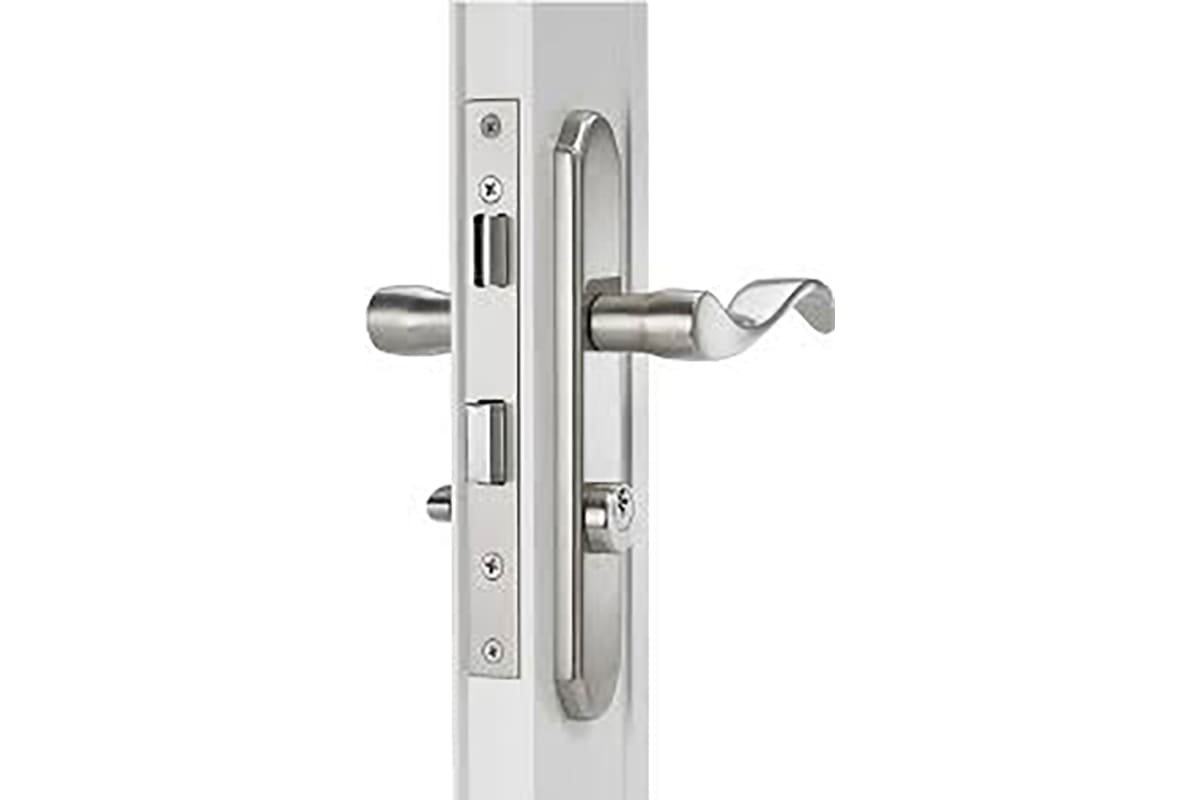
When the lever handle is pressed down, it rotates the square spindle. The spindle turns the follower inside the lock body. This movement retracts the latch bolt into the case. If the deadbolt is not engaged, the door can open. The handle normally controls the latch, not the deadbolt.
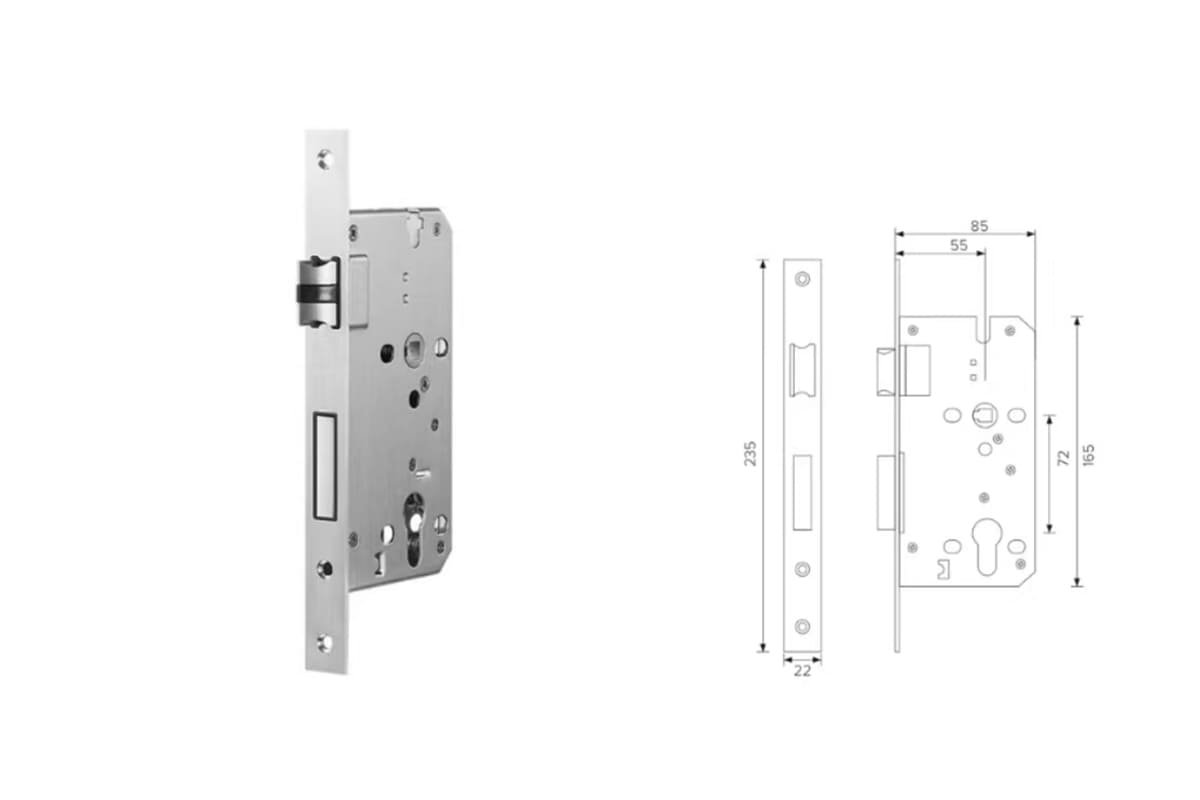
The handle does not perform every function
This distinction is important for product managers and buyers. The lever handle usually retracts the latch bolt. It does not normally unlock the deadbolt unless the lock has a special panic, classroom, hotel, or function-specific design.9 For standard architectural hardware supply, buyers should separate these questions:
How does the user open the unlatched door?
The handle retracts the latch.How does the user lock or unlock the door?
The cylinder, key, thumb turn, or other locking device controls the deadbolt.Can the handle operate when the deadbolt is engaged?
This depends on the lock function and should be confirmed by specification.
The spindle and follower connection
The spindle is usually a square bar that passes through the handle set and the follower hole of the lock body. When the user pushes the lever down, the spindle rotates. The follower transfers that rotation to the internal latch retraction mechanism.
Several buyer decisions affect this movement:
- Spindle size: The square size must match the follower hole and handle set.
- Spindle length: It must suit the door thickness and handle structure.
- Handle spring design: Some handles include return springs, while some rely more on the lock body.
- Follower material and tolerance: Loose tolerance can create play; tight tolerance can create friction.
- Escutcheon or rosette thickness: This affects the installed spindle engagement.
A poor match can create a problem that users describe as “the lock is bad,” but the actual cause may be the handle spring, spindle length, or door thickness. In B2B orders, this is why one-stop matching can reduce risk. When the lock body, lever handle, spindle, and cylinder are supplied as a coordinated set, the supplier can check the relationship before shipment.
Handle return and user feeling
Handle return is one of the most common after-sales topics. The handle should return to its normal horizontal position after operation. If it sags, buyers should inspect the complete assembly.
Possible causes include:
| Symptom | Possible cause | Buyer check |
|---|---|---|
| Handle does not return fully | Weak handle spring or high internal friction | Test handle alone and with lock body |
| Latch retracts partly | Wrong spindle length or loose spindle fit | Confirm spindle engagement |
| Handle feels heavy | Misaligned door cut-out or overtightened screws | Test before and after installation |
| Handle has excessive play | Follower tolerance or spindle mismatch | Confirm square hole and spindle size |
| Latch returns slowly | Internal friction, finish burr, or spring issue | Inspect sample batch consistency |
Installation pressure can change operation
A lock body may work smoothly before installation. Then it may feel tight after workers tighten screws or install the handle. This happens because the door cut-out may press the case, the faceplate may not sit flush, or the handle fixing screws may pull parts out of alignment.
For procurement teams, I suggest adding a practical sample approval step:
- Test the lock body by hand.
- Test it with the selected handle and spindle.
- Install it into the actual door cut-out.
- Operate the door at least several times from both sides.
- Check latch return, handle return, and strike engagement.
- Record any adjustments needed before mass production.
This process is simple, but it prevents many repeat complaints. It also gives the supplier clear feedback instead of vague comments like “not smooth.”
How Does a Mortise Lock Deadbolt Lock and Unlock?
A mortise lock uses the deadbolt for the locked state, but many buyers still confuse latch function with deadbolt function. This confusion can lead to wrong product selection, wrong cylinder matching, and incorrect customer instructions. The answer is clear: the deadbolt needs a locking mechanism.
The deadbolt locks and unlocks when a key cylinder, thumb turn, or similar mechanism moves the internal transmission parts. The deadbolt extends into or retracts from the strike plate. The lever handle usually retracts only the latch bolt, while the cylinder or thumb turn controls the deadbolt.
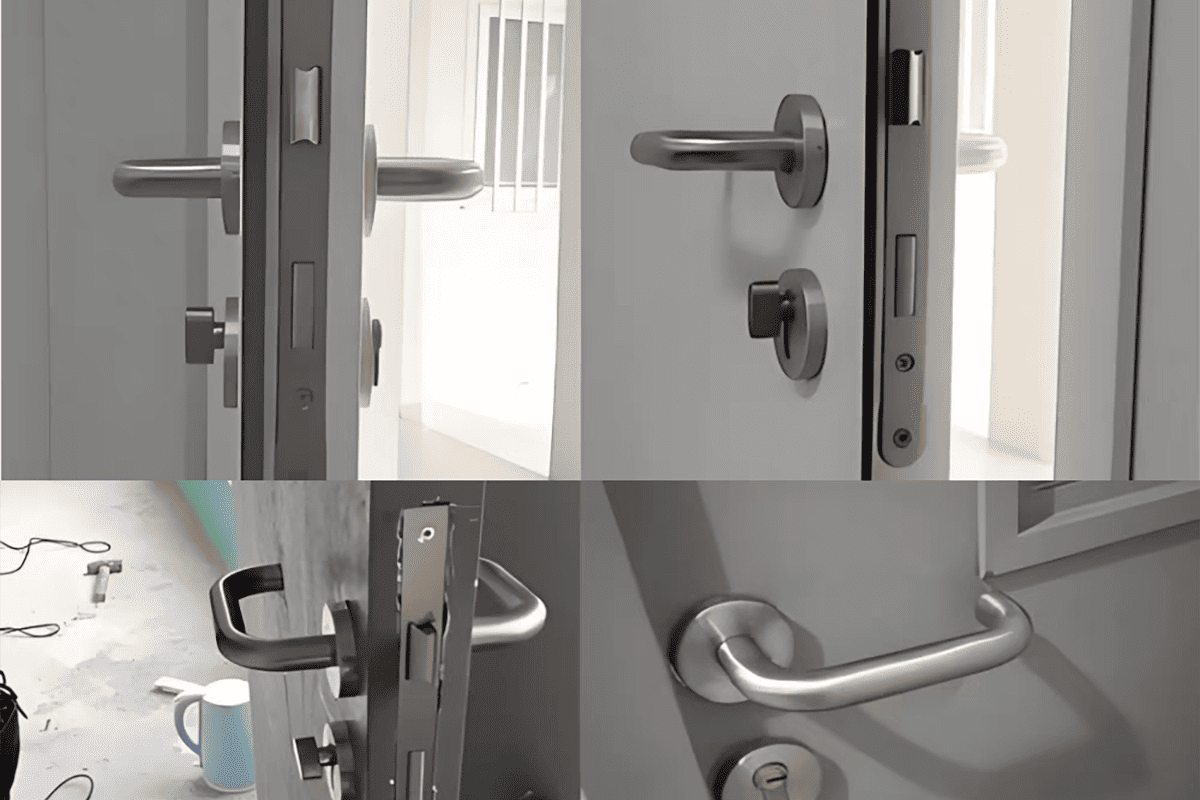
The deadbolt is different from the latch bolt
The latch bolt is spring-loaded and supports daily closing. The deadbolt is more rigid in function and is extended or retracted by a deliberate locking action. This action may come from:
- Euro profile cylinder with key
- Cylinder plus thumb turn
- Bathroom turn and release
- Project-specific locking function
- Other regional lock configurations
For B2B buyers, this distinction affects product description, packaging, installation instructions, and customer education. If a distributor sells a lock set without explaining this difference, end users may expect the handle to unlock everything. That expectation may be wrong for the selected lock function.
Cylinder matching is critical
Many architectural hardware markets use Euro profile cylinders10, but the details still need confirmation. Buyers should verify the cylinder length, cam position, screw hole alignment, and door thickness. A cylinder that is too short may be difficult to operate. A cylinder that is too long may project too far from the door surface. Both situations can create appearance issues and user complaints.
Important cylinder checks include:
| Checkpoint | Why it matters |
|---|---|
| Door thickness | Determines cylinder length |
| Escutcheon or rosette thickness | Adds to required cylinder projection |
| Cylinder cam type | Must operate lock transmission correctly |
| Fixing screw position | Must align with lock case |
| Keyway type | Affects regional market preference |
| Thumb turn option | Important for interior escape or privacy use, depending on application |
I avoid making universal recommendations here because project requirements vary. For fire-rated doors, escape doors, hotel doors, and regulated buildings, buyers should verify certificates, local standards, and professional project requirements separately. A general mechanism explanation does not prove compliance.
Deadbolt throw and strike depth
The deadbolt must enter the strike plate and frame pocket with enough clearance. If the pocket is shallow, the bolt may hit the back and prevent full locking. If the strike opening is misaligned, the key may feel hard to turn. Users may think the cylinder is defective, but the deadbolt may simply be rubbing against the strike.
Common deadbolt-related complaints include:
- Key turns halfway and stops
- Thumb turn feels too tight
- Deadbolt extends when door is open but not when door is closed
- Door must be pushed or pulled to lock
- Strike plate shows scraping marks
- Cylinder cam rotates but bolt does not move smoothly
A practical way to diagnose this is to test the deadbolt with the door open first. If it works smoothly when open but not when closed, the issue is usually alignment or strike depth. If it does not work smoothly even before installation, the buyer should inspect the lock body, cylinder cam, fixing screw, and internal movement.
Do not equate deadbolt presence with certified security
A deadbolt is the locking part, but that does not automatically mean the product meets a specific security grade, CE requirement, fire-rated requirement, or project standard.11 Those claims require documents, test reports, and application-specific evaluation. In our own supply discussions, I treat certificates as documents buyers should verify against the exact model, size, function, and intended application.
This restrained approach protects both sides. The supplier avoids overclaiming. The buyer avoids assuming that one technical feature equals full project suitability.
What Should Buyers Check Before Ordering a Mortise Lock in Bulk?
A mortise lock bulk order should not be confirmed by price and surface finish alone. Small specification errors can multiply across thousands of doors. The best solution is a structured approval process that checks drawings, samples, accessories, certificates where required, and real installation performance.
Before ordering in bulk, buyers should confirm lock body dimensions, latch and deadbolt function, handle and spindle compatibility, cylinder matching, door thickness, strike plate alignment, finish standard, packaging, and inspection requirements. Buyers should also verify any CE or fire-rated certificates against the exact product and project requirement.12
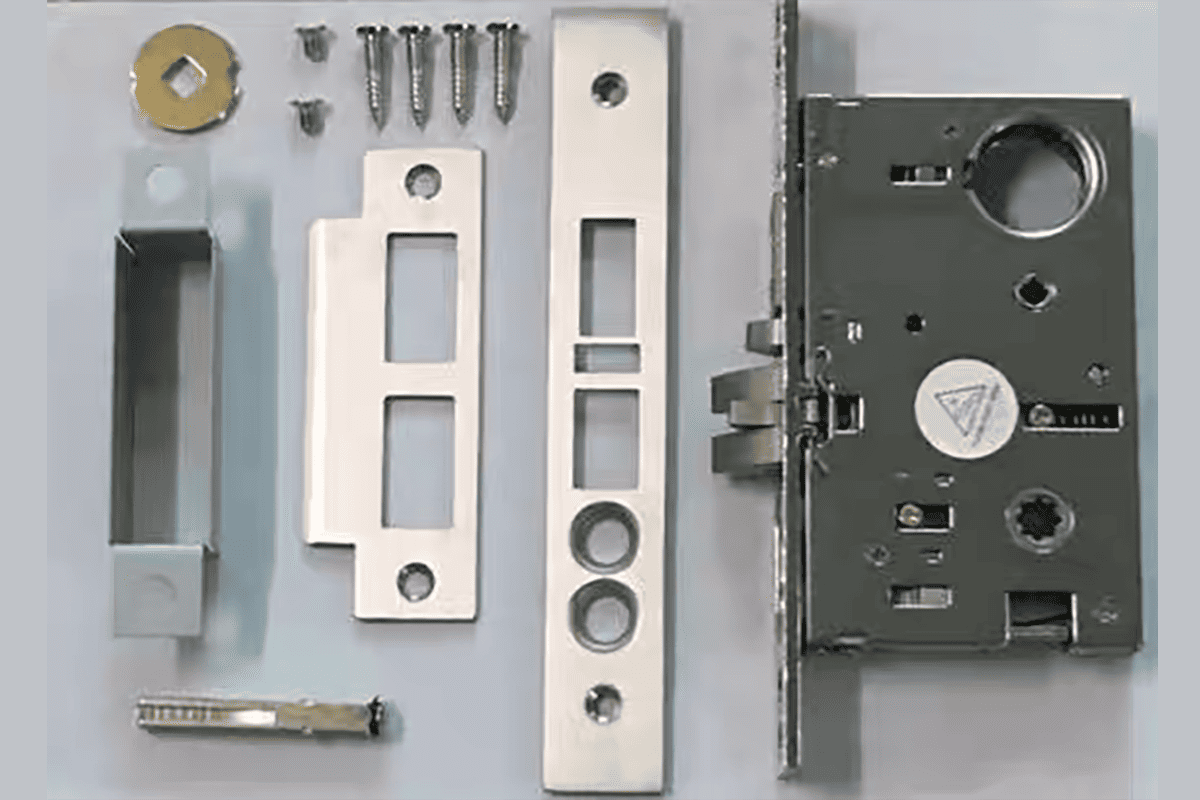
Start with the door, not only the lock
The door structure decides many lock requirements. A wooden door, steel door, aluminum door, or fire-rated door assembly may require different cut-outs, screws, faceplate shapes, and accessory configurations. When I discuss specifications with overseas buyers, I prefer to start with the door drawing. The lock drawing comes next.
Key door details include:
- Door thickness
- Door material
- Door edge construction
- Frame material
- Door gap tolerance
- Opening direction
- Required handle type
- Required cylinder type
- Project or market standard
- Finish expectation
This approach reduces wrong assumptions. It also helps the supplier recommend a suitable standard product or ODM adjustment.
Bulk order checklist
| Category | What to confirm | Why it matters |
|---|---|---|
| Lock body | Backset, center distance, case size, forend size | Ensures door processing match |
| Latch | Direction, reversibility, spring return | Ensures smooth daily closing |
| Deadbolt | Throw, movement, strike pocket depth | Ensures locking operation |
| Handle match | Spindle size, handle spring, rosette/plate | Prevents poor handle return |
| Cylinder match | Length, cam, fixing screw, key/thumb turn | Prevents locking failure |
| Strike plate | Size, hole position, finish, box depth | Prevents scraping and misalignment |
| Finish | Stainless steel grade, plating color, sample approval | Keeps batch appearance consistent |
| Certification | CE/fire documents if required | Must be verified for exact model and application |
| Packaging | Inner box, labels, accessory bags | Helps wholesalers and assembly lines |
| Inspection | AQL level or agreed inspection method | Reduces batch quality disputes |
Sample approval should be practical
A sample should not stay in a showroom drawer. Buyers should install it on the real door structure or a production-equivalent sample. I recommend testing at least these points:
Visual finish consistency
The faceplate, latch, deadbolt, strike plate, and screws should match the approved finish standard.Dimension check
The lock body should match the drawing. The door cut-out should not need unplanned modification.Latch closing test
The door should close without abnormal force.Handle operation test
The handle should retract the latch and return smoothly.Deadbolt locking test
The deadbolt should extend and retract smoothly with the selected cylinder or thumb turn.Strike plate test
The latch and deadbolt should enter the strike openings without scraping.Accessory completeness
Screws, spindle, cylinder screw, strike plate, and packaging labels should match the order.
Supplier evaluation points
For a manufacturer, stable production matters as much as a good sample. SDH Hardware operates with in-house production and assembly experience for mortise locks, lever handles, butt hinges, concealed hinges, and related door hardware. From my perspective, buyers should ask suppliers about:
- Production capacity
- Material control
- In-process inspection
- Finished product inspection
- Surface finish control
- Drawing control
- ODM customization ability
- Certificate availability for verification
- Export packaging
- After-sales response process
However, buyers should still verify certificates and project suitability independently. A supplier can provide documents and technical support, but the final application decision may require professional evaluation, especially for regulated construction projects.
Communication saves cost
Clear inquiry communication is one of the easiest ways to reduce procurement risk. A complete inquiry should include:
- Product drawing or target standard
- Photos of current lock body if replacing an existing model
- Door thickness and material
- Handle model or spindle size
- Cylinder type and length
- Required finish
- Quantity and delivery schedule
- Market or project region
- Certification requirements
- Packaging and logo requirements
When buyers send this information early, the supplier can quote more accurately and identify risks before production. This helps both sides avoid repeated sample changes, delayed shipments, and customer complaints.
Frequently Asked Questions
What is the main function of a mortise lock?
A mortise lock combines daily door closing and locking in one embedded lock body. The latch bolt holds the door closed during normal use, while the deadbolt creates the locked state. Buyers should evaluate both functions separately because they depend on different parts and matching requirements.
Conclusion
A mortise lock works as a coordinated door hardware mechanism, not as an isolated metal case. The latch bolt supports daily closing, the lever handle retracts the latch, and the cylinder or thumb turn controls the deadbolt. For B2B buyers, smooth operation depends on matching the lock body with the handle, spindle, cylinder, strike plate, door thickness, and door processing accuracy. If you are comparing lock bodies for bulk sourcing, SDH Hardware can help review drawings, samples, finishes, and ODM requirements before production.
"Mortise lock", https://en.wikipedia.org/wiki/Mortise_lock. A general reference on mortise locks defines the device as a lock whose case is fitted into a mortise cut in the door edge, supporting the description of the embedded lock body. Evidence role: definition; source type: encyclopedia. Supports: A source should define a mortise lock as a lock case installed in a mortise pocket cut into the edge of a door.. ↩
"Guide to Builders Hardware Terminology - Types of Locks", https://buildershardware.com/Resources/Guide-to-Builders-Hardware-Terminology/Types-of-Locks. Door-hardware terminology sources distinguish latch bolts, which hold a closed door by spring action, from deadbolts, which are projected or withdrawn by a locking mechanism. Evidence role: definition; source type: institution. Supports: A source should define latch bolts and deadbolts and distinguish routine latching from deliberate locking.. ↩
"What is a Spindle and what kind do I need? - Our Blog", https://www.morehandles.co.uk/blog/more-handles-technical-guides-what-is-spindle-and-how-do-i-know-what-kind-i-need/. Technical descriptions of lever-operated mortise locks identify the spindle and follower as the components that transmit handle rotation to the latch-retraction mechanism. Evidence role: mechanism; source type: institution. Supports: A source should explain the role of the spindle and follower in converting lever rotation into latch retraction.. ↩
"SECTION 08 71 00 – DOOR HARDWARE", https://design.missouristate.edu/_Files/Standards/Division8/087100DoorHardware.pdf. Building-hardware standards and technical specifications describe mortise locks by dimensional parameters such as backset, centres, case depth, and forend size, supporting the point that visual similarity alone does not establish interchangeability. Evidence role: general_support; source type: institution. Supports: A source should show that lock cases are specified by dimensions such as backset, centres, case depth, and forend size, which affect interchangeability.. Scope note: The source would support the dimensional basis for non-interchangeability, not prove that every similar-looking pair of lock bodies is incompatible. ↩
"How to Determine the Backset of Your Door", https://www.lowes.com/n/how-to/determine-the-backset-of-your-door. Door-hardware glossaries define backset as the distance from the edge or face of the door to the centerline of the lock hub, spindle, or similar operating point. Evidence role: definition; source type: institution. Supports: A source should define backset as the distance from the lock or door edge to the relevant spindle, hub, or cylinder centerline.. ↩
"Standard Door Handle / Knob Square Spindle 8mm / Bundle", https://affdoorhardware.com/standard-door-handle-knob-square-spindle-8mm-bundle/?srsltid=AfmBOoq5aPx1CTbP95xFIC23nJDx15hikbfXcVvnnSi-ENrrdhbwpDv8. European door-hardware standards and product specifications commonly reference 8 mm square spindles for lever-handle operation, supporting the compatibility warning in contexts where those standards apply. Evidence role: general_support; source type: institution. Supports: A source should document the use of 8 mm square spindles in common lever-handle or European door-hardware standards.. Scope note: This support is contextual because spindle sizes vary by region, lock type, and project specification. ↩
"A door latch works with a simple push and spring action that locks ...", https://www.facebook.com/theeducatedmonkey/posts/a-door-latch-works-with-a-simple-push-and-spring-action-that-locks-and-unlocks-e/1263938189207265/. Technical explanations of spring latches describe the beveled latch face as retracting against the strike during door closing and re-extending into the strike opening under spring force. Evidence role: mechanism; source type: education. Supports: A source should explain that a beveled spring latch is pushed back by the strike or frame and then extends into the strike opening.. ↩
"QQ/WWYD? Excessive Clearance on Fire Doors", https://idighardware.com/2017/06/qq-wwyd-excessive-clearance-on-fire-doors/. Door installation and inspection guidance treats clearance, frame alignment, and strike placement as factors in proper latch engagement, supporting the article's explanation of alignment-related latch failures. Evidence role: general_support; source type: institution. Supports: A source should show that door clearances, frame alignment, and strike position affect latching performance.. Scope note: Such guidance supports the general relationship between clearance and latch engagement, not the diagnosis of any specific installation defect. ↩
"A156.13 - 2022 Mortise Locks", https://buildershardware.com/ANSI-BHMA-Standards/Hardware-Highlights/A15613-2022-Mortise-Locks. Lock-function standards distinguish ordinary lever latch operation from deadbolt locking functions, while separately defining special functions that may combine or alter those operations. Evidence role: expert_consensus; source type: institution. Supports: A source should describe standard lock functions and distinguish latch operation by lever from deadbolt operation by key, thumb turn, or special function.. Scope note: The source would support the general functional distinction; individual lock models may implement nonstandard or project-specific behavior. ↩
"Pin tumbler lock", https://en.wikipedia.org/wiki/Pin_tumbler_lock. Standards and technical references for cylinder locks identify the Euro profile cylinder as a standardized cylinder form used in many architectural door-lock applications. Evidence role: general_support; source type: institution. Supports: A source should establish that Euro profile cylinders are standardized and commonly used in European-style architectural locking systems.. Scope note: This supports broad usage in relevant markets but does not quantify global market share or prove prevalence in every region. ↩
"EN12209 - Classification Code for Mechanically Operated Lock", https://www.dirock.com/amp/EN12209-Classification-Code-for-Mechanically-Operated-Lock-id43533806.html. Building-hardware standards classify locks by tested attributes such as durability, security, and fire or smoke performance, supporting the point that a deadbolt feature alone is not evidence of compliance with a specified grade or certification. Evidence role: expert_consensus; source type: institution. Supports: A source should show that lock compliance is determined by tested classifications, certificates, or declarations rather than by the mere presence of a deadbolt.. Scope note: Standards establish the need for testing and classification but do not assess any particular product unless the exact model is covered by a valid certificate or report. ↩
"081173", https://online2.ogs.ny.gov/dnc/masterspec24/docs/Division08Openings/081173.0SlidingMetalFireDoors.docx. Official construction-product and fire-safety guidance links compliance claims to product-specific documentation and intended application, supporting the need to verify certificates against the exact lock model and project requirement. Evidence role: general_support; source type: government. Supports: A source should explain that regulated construction products require applicable documentation, such as declarations, certificates, or test evidence tied to the product and intended use.. Scope note: The source would support the verification principle, not determine whether any specific certificate is valid for a given project. ↩