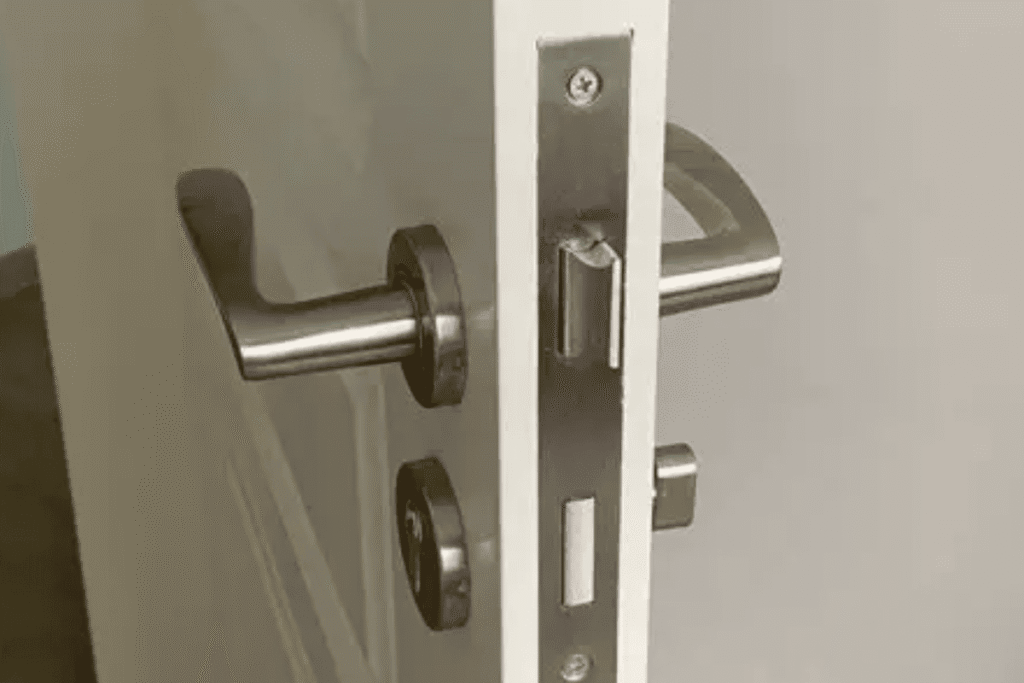
What Type of Door Lock Is Most Secure?
A secure door lock can reduce risk, but the wrong lock on the wrong door can create a false sense of protection1. I often see buyers compare lock names before checking the door, frame, cylinder, and installation conditions. The better solution is to match the lock type to the real security requirement.
The most secure door lock is not one universal product. For many exterior doors, a high-quality mortise lock with a reliable cylinder, strong strike plate, solid door/frame structure, and correct installation offers stronger security potential than a basic tubular lock. For higher-risk applications, multipoint locking may add extra resistance when properly matched.
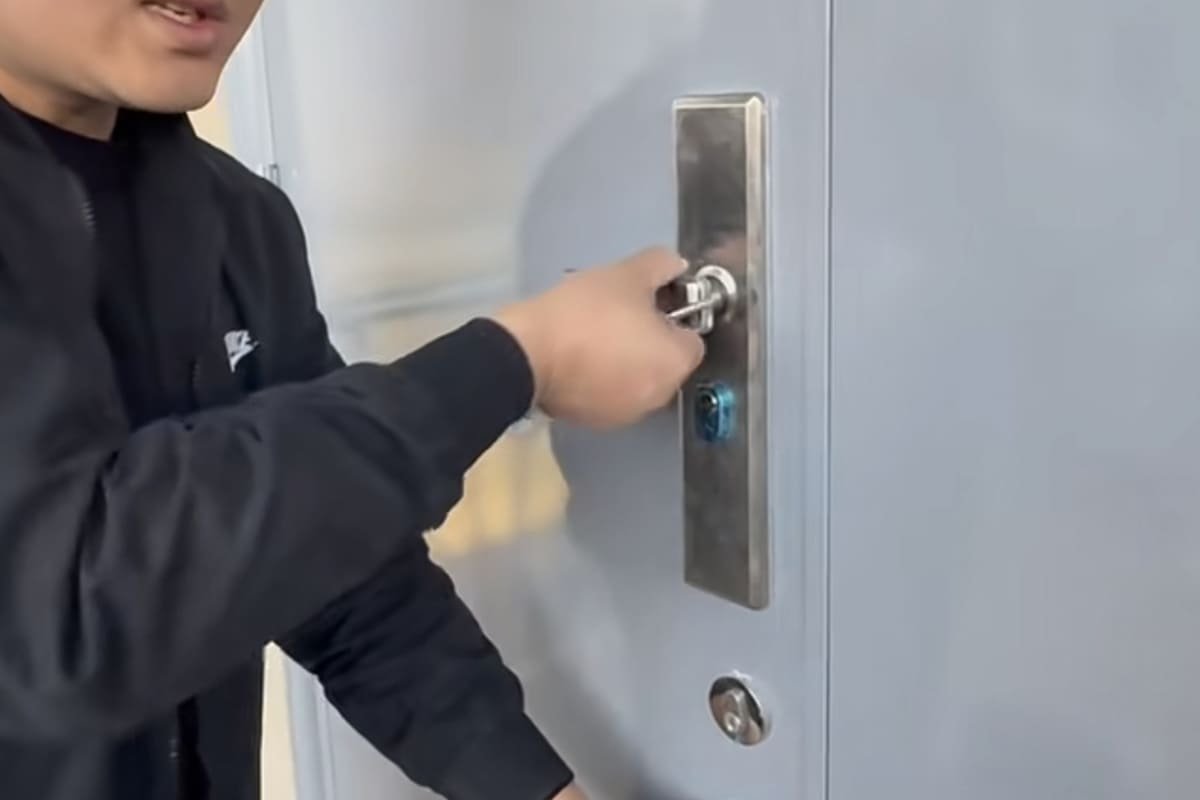
In my customer selection discussions, the strongest projects usually start with better questions. Instead of asking only, “Which lock is most secure?”, I prefer to ask: What door is this for, what risk must it reduce, and what budget or grade level is appropriate?
How Should I Define a Secure Door Lock for a Specific Door?
A secure door lock sounds simple, but the buying decision becomes risky when the door type is unclear. I have seen product teams choose a strong lock body, then install it on a weak door or frame. That mismatch increases after-sales problems and customer complaints.
A secure door lock should match the door material, door thickness, frame strength, cylinder quality, locking points, usage frequency, and local compliance requirements2. Buyers should define the risk level first, then choose the lock structure and grade that suit the application, instead of selecting by product name alone.
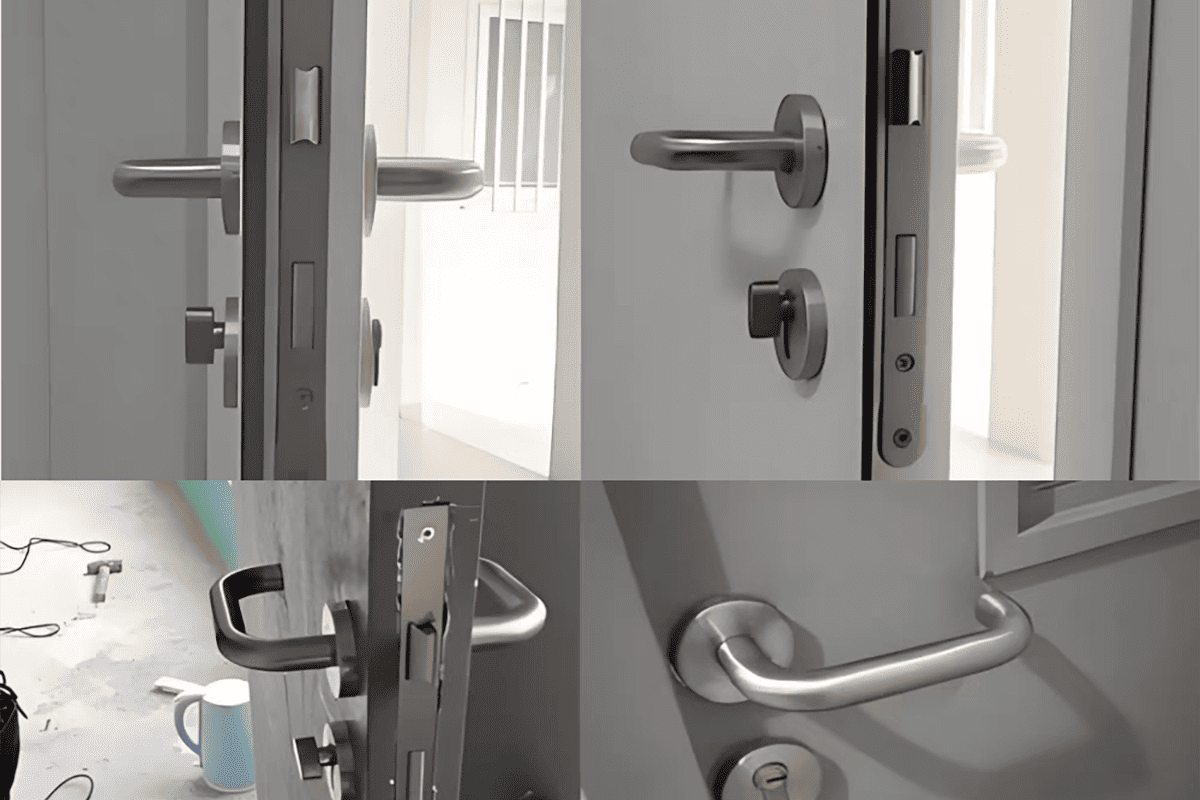
Start With the Door, Not the Lock Name
I usually ask buyers to describe the door before I discuss the lock. A lock cannot perform well if the door leaf, frame, hinges, and installation screws cannot support the force applied during use or forced entry attempts.
A practical evaluation should include:
- Door material: steel, wooden, aluminum, fire-rated, composite, or security door
- Door thickness: common lock body and spindle dimensions must match
- Door opening direction: left/right, inward/outward, single/double leaf
- Frame strength: weak frames reduce the benefit of stronger locks3
- Usage environment: residential, hotel, office, school, apartment, villa, or commercial entrance
- Security concern: forced entry, prying, picking, bumping, durability, or misuse
- Certification needs: CE, fire-rated documentation, or other market-specific standards buyers must verify
I always remind buyers that a lock is only one part of a door security system4. The door leaf, frame, hinges, strike plate, cylinder, screws, and installation quality all matter.
Key Security Factors Buyers Should Compare
A secure door lock is not only about anti-pry strength. In procurement, buyers usually need to control both security risk and after-sales risk. A lock that feels strong in a sample may still fail if the latch, spring, cylinder, or finish is unstable in bulk production.
| Evaluation Factor | Why It Matters | Buyer Checkpoint |
|---|---|---|
| Lock body structure | Affects strength, stability, and service life | Check material thickness, internal parts, latch/deadbolt design |
| Cylinder quality | Affects resistance to picking, bumping, and key control risk | Verify cylinder type, key system, pins, material, and test documents |
| Deadbolt projection | Affects engagement with strike plate and frame | Confirm projection length and frame compatibility |
| Strike plate | Often becomes the weak point in forced entry5 | Check plate thickness, screw length, and fixing position |
| Door/frame strength | Determines how much force the whole system can resist | Match lock with proper door construction |
| Installation accuracy | Poor cutting or misalignment causes failure | Use installation templates and quality checks |
| Compliance documents | Supports market access and project requirements | Verify CE, fire-rated, or grade documents for the target market |
A Better Question for Product Managers
For door manufacturers and hardware brand managers, I suggest replacing “What is the most secure lock?” with these questions:
- What door line or project will use this lock?
- What security level does the end customer expect?
- What lock grade or certification does the market require?
- What price point must the product line hit?
- Can the factory install this lock consistently at scale?
- Can the supplier keep finish, size, and performance stable across bulk orders?
This framework prevents overengineering and underengineering. A high-end villa entrance door may justify a heavy mortise lock or multipoint lock. A standard interior office door may not. A hotel room may prioritize durability, key control, and smooth operation. A fire-rated project may require verified fire-rated lock documentation and professional review.
I have found that buyers who define the door and risk first usually make better long-term decisions. They reduce product returns, installation disputes, and unnecessary cost increases.
Is a Mortise Lock Usually a More Secure Door Lock for Exterior Doors?
A secure door lock for an exterior door often needs stronger integration with the door leaf. Basic tubular or cylindrical locks can be suitable for many light-duty applications, but buyers may need more structure for higher-security entrances. This is where mortise locks often enter the discussion.
For many exterior doors, a quality mortise lock is generally stronger than a basic tubular lock because it uses a larger lock body installed inside the door edge.6 When paired with the right cylinder, strike plate, door, and frame, it can offer better strength, durability, and security potential.
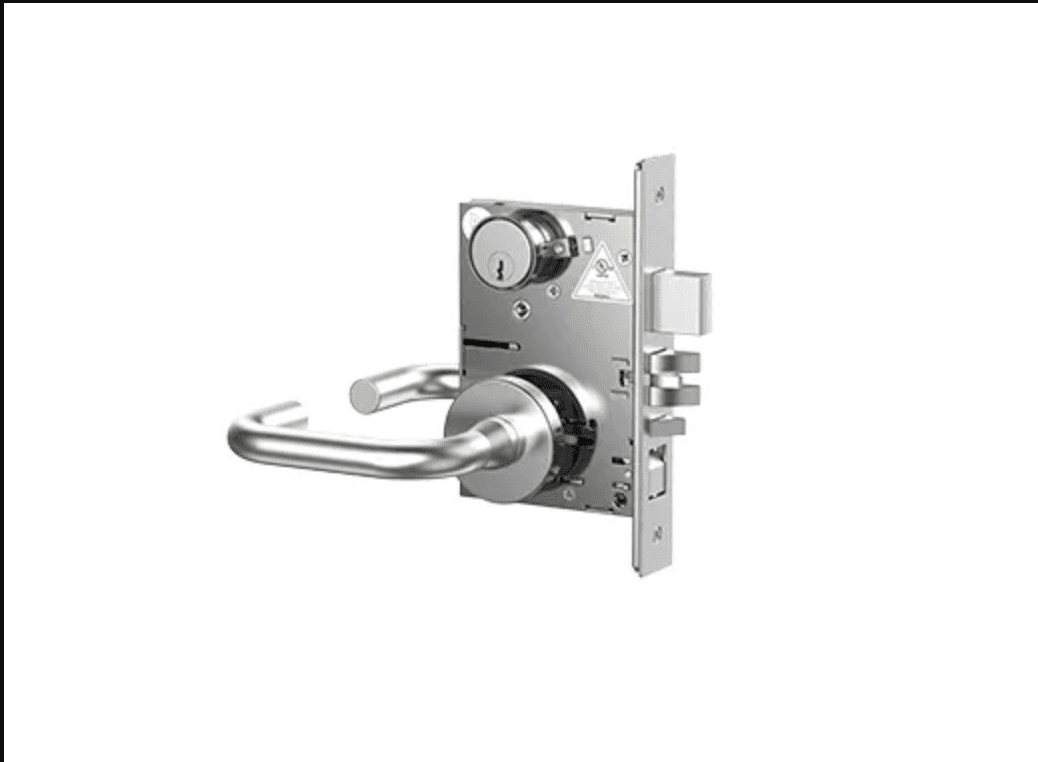
Why Mortise Locks Are Often Preferred for Stronger Doors
A mortise lock is installed into a pocket cut inside the door.7 This design allows the lock body to sit deeper in the door structure. In many projects, this creates a more integrated hardware system than a simple bored lock.
Common advantages include:
- Larger lock case: The internal body can support more robust mechanisms.
- Separate latch and deadbolt functions: Many mortise locks include both in one case.
- Better handle and cylinder integration: The lock can support lever handles, cylinders, escutcheons, and accessories.
- More specification options: Buyers can choose backset, center distance, latch type, deadbolt type, and faceplate size.
- Suitable for project supply: Standardized mortise locks can support door factories and bulk hardware brands.
However, I do not recommend saying a mortise lock is always the most secure choice. The final result depends on material quality, cylinder level, machining accuracy, strike fixing, and door construction.
Mortise Lock vs. Tubular Lock vs. Cylindrical Lock
The table below gives a practical buyer-side comparison. Exact performance depends on the product standard, grade, and test documents used in the target market.
| Lock Type | Typical Use | Security Potential | Buyer Notes |
|---|---|---|---|
| Tubular lock | Interior doors, light residential use | Basic to medium | Easy installation, but limited structure for high-security exterior use |
| Cylindrical lock | Offices, commercial interiors, some exterior doors | Medium to high depending on grade | Buyers should verify grade and market standard |
| Mortise lock | Exterior doors, apartments, villas, commercial doors | Medium to high | Stronger structural integration when matched correctly |
| Multipoint lock | High-security doors, large doors, premium entrances | High when properly installed | Requires compatible door structure and precise installation |
What I Check in a Mortise Lock Body
As a manufacturer, I look beyond the outside finish. The internal structure matters more for security and stability.
I usually check:
Lock case material and thickness
A stronger lock case can support better durability. Buyers should ask for material details and sample inspection.Latch and deadbolt design
The shape, projection, and engagement depth affect performance. A deadbolt that does not enter the strike properly loses value.Follower strength
The spindle area must handle repeated handle operation. Weak followers can cause loose handles and after-sales issues.Spring quality
The handle return spring affects long-term user experience. Poor springs create sagging handles.Faceplate and strike plate finish
Bulk orders need consistent color and surface quality. This matters for brand owners and door factories.Cylinder compatibility
A strong lock body with a weak cylinder creates an unbalanced system. Buyers should select the cylinder carefully.
A Note on Lock Grades
Some buyers ask for “Grade 1” locks. In certain markets, Grade 1 is used as a high-security or heavy-duty reference under relevant lock standards.8 However, I always recommend verifying the exact applicable standard, test scope, and issuing body before using grade claims in product catalogs or project submissions.
For example, a buyer should confirm:
- Which standard defines the grade
- Whether the grade applies to the lock body, complete lockset, or cylinder
- Whether the test includes cycle durability, strength, security, corrosion, or fire performance
- Whether the document is valid for the target market
This protects both the supplier and the buyer. It also avoids exaggerated claims that may create legal or project acceptance risks.
When Does a Multipoint System Become the Most Secure Door Lock Option?
A secure door lock may need more than one locking point when the door is tall, exposed, or used in a higher-risk location. I often see buyers consider multipoint systems for premium entrance doors, but the system only works well when the door and installation can support it.
A multipoint locking system can improve security because one locking action secures the door at several points, usually top, middle, and bottom9. This makes forced prying more difficult.10 However, it requires a compatible door leaf, accurate routing, strong frame fixing, and careful installation.
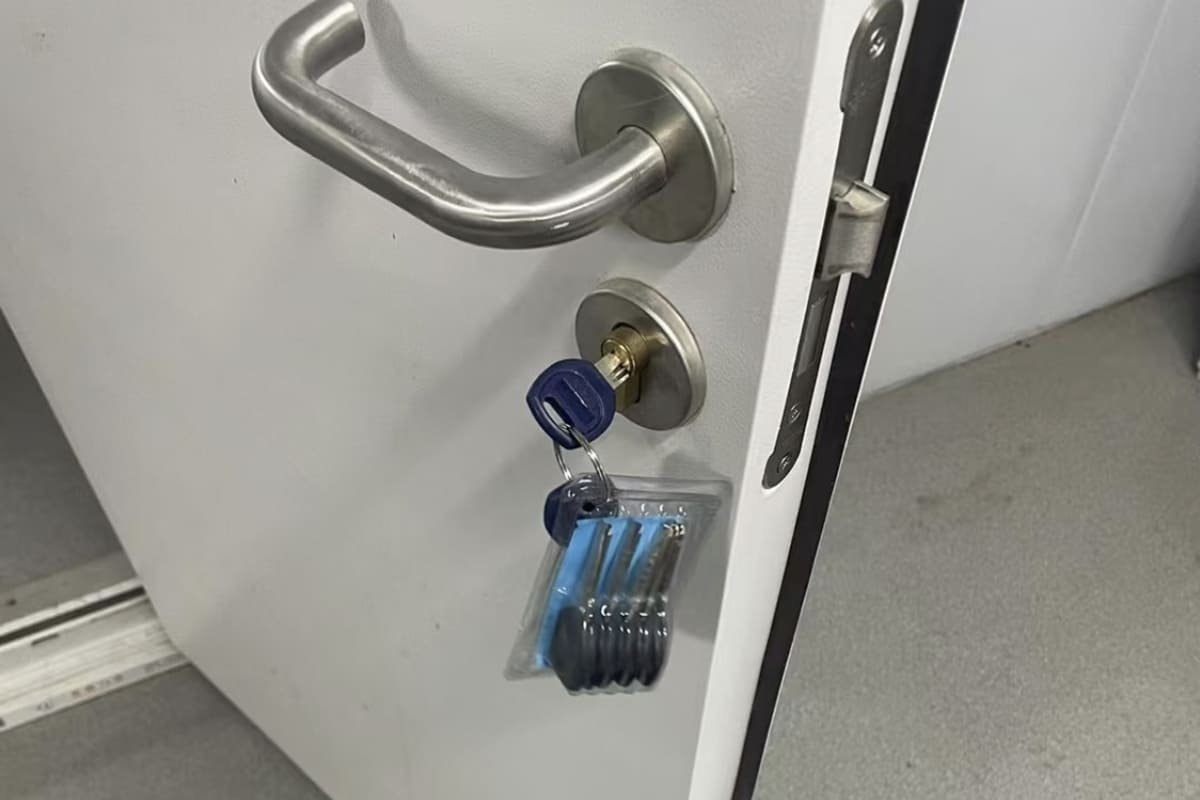
What a Multipoint Lock Actually Does
A multipoint system connects several locking points through one central mechanism. When the user lifts the handle or turns the key, the system can engage bolts, hooks, rollers, or shoot bolts at different positions along the door edge.
Common locking point layouts include:
- Three-point locking: top, center, bottom
- Five-point locking: additional hook bolts or rollers
- Hook bolt systems: useful for resisting separation between door and frame
- Shoot bolt systems: common on tall doors or double doors
- Roller cam systems: often used for compression and sealing
This system can help reduce the risk of the door being pried open from one weak point. The load spreads across more contact areas, assuming the frame and keep plates are properly fixed.
When Multipoint Locking Makes Sense
I usually recommend considering multipoint locking when the project has one or more of these conditions:
- The door is a main entrance door
- The door is tall, wide, or heavy
- The project needs a more premium security configuration
- The market expects multipoint hardware for security doors
- The door structure can support long lock rails and keeps
- The factory has enough installation accuracy and quality control
- The buyer can accept higher hardware and machining costs
When Multipoint Locking May Not Be the Best Choice
A multipoint lock can create problems if buyers select it only because it sounds more secure. More locking points mean more components, more machining, and more installation sensitivity.11
Possible risks include:
| Risk | What Can Go Wrong | How Buyers Can Reduce It |
|---|---|---|
| Poor alignment | Bolts fail to engage smoothly | Use accurate routing and installation jigs |
| Weak frame | Keeps pull out under force | Reinforce frame and use proper screws |
| Door warping | Locking points become hard to operate | Control door material quality and moisture stability |
| Higher cost | Product line becomes less competitive | Match system to market segment |
| More after-sales work | Users complain about stiffness or jamming | Test full door assembly before bulk launch |
Multipoint Locks Need System Thinking
I have learned that multipoint locking is not just a lock purchase. It is a door system decision. The lock rail, cylinder, handle, strike keeps, hinges, frame reinforcement, and gasket compression must work together.
For door manufacturers, I suggest testing the complete door assembly before approving mass production. A sample lock on a table does not show real performance. The real test is how the hardware behaves after installation, adjustment, repeated operation, and transport.
A basic test plan can include:
- Sample fitting test on the actual door profile
- Repeated opening and closing test under normal user force
- Frame engagement inspection for all locking points
- Handle operation check before and after door adjustment
- Surface finish comparison across handle, cylinder, faceplate, and hinges
- Packaging and transport test for bulk delivery
Multipoint systems can be a strong solution, but they are not automatically the best solution for every door. They should be selected when the door structure, market price, installation ability, and security expectation all support the choice.
How Should Buyers Evaluate a Secure Door Lock Supplier?
A secure door lock is only as reliable as the supplier’s manufacturing control. I have seen buyers approve a good sample, then face problems in bulk orders because finish consistency, dimensions, or internal parts changed. Supplier evaluation is therefore part of security selection.
Buyers should evaluate a secure door lock supplier by checking production capability, material control, sample consistency, certification documents, inspection procedures, customization ability, delivery stability, and after-sales response. A strong supplier should help match the lock to the door, not just quote the cheapest unit price.12
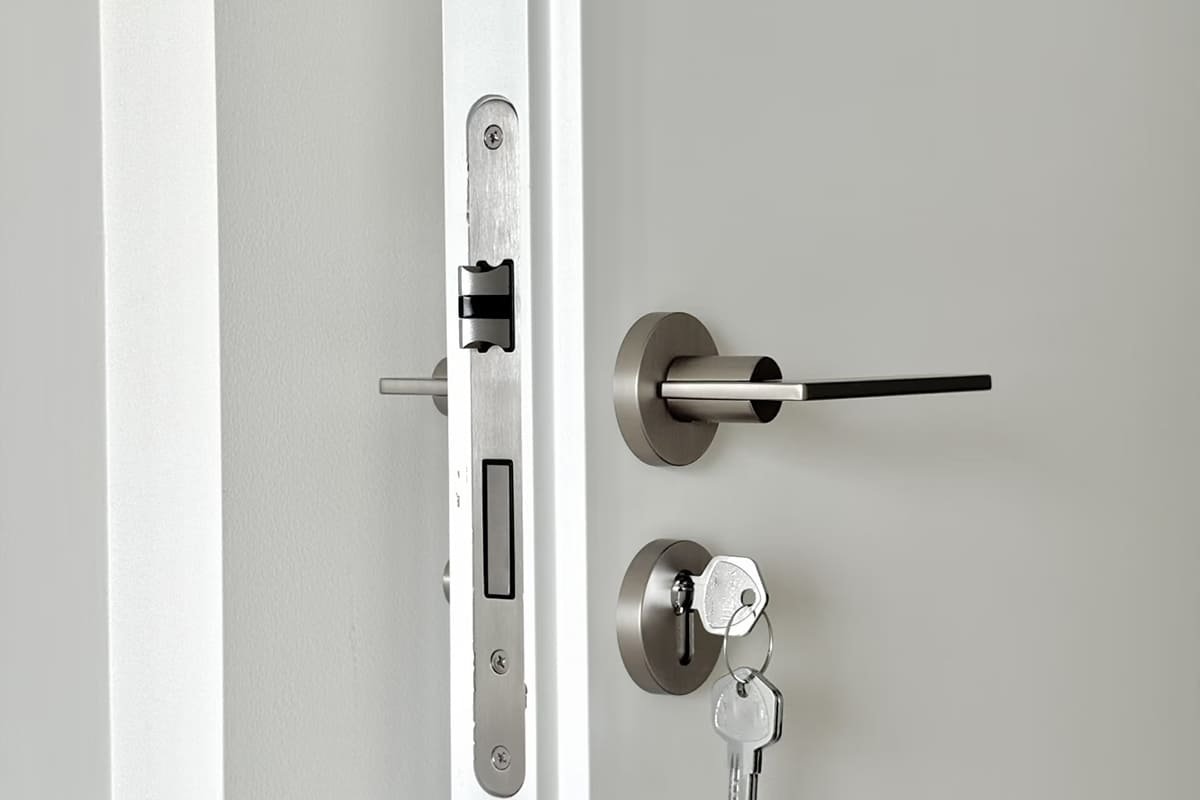
Key Supplier Checks Before Bulk Orders
For door factories, brand operators, and wholesalers, supplier risk often becomes product risk. A lock can look correct in photos but fail in assembly if the dimensions are unstable.
I suggest checking these areas:
Factory ownership and production lines
Buyers should know whether the supplier manufactures directly or only trades.Product category depth
A one-stop supplier can help match mortise locks, cylinders, handles, hinges, and accessories.Material and component control
Lock bodies, springs, cylinders, screws, and faceplates should follow consistent specifications.Finish consistency
Bulk architectural hardware must match across batches. This is critical for brand image.Inspection procedures
Buyers should ask how the supplier checks dimensions, function, finish, packaging, and performance.Certification support
CE, fire-rated, or other documents should be verified for the exact product and target market.Customization ability
ODM requests may include backset, center distance, faceplate, latch direction, finish, logo, packaging, and cylinder configuration.
Practical Procurement Checklist
| Procurement Stage | What I Would Check | Why It Matters |
|---|---|---|
| Initial inquiry | Door type, market, quantity, target price, certification need | Prevents wrong product recommendation |
| Sample stage | Dimensions, operation, finish, cylinder matching | Confirms basic suitability |
| Technical review | Drawings, installation template, door thickness, backset | Reduces assembly problems |
| Document review | CE, fire-rated, grade, material reports if required | Supports market access and project approval |
| Pre-production | Approved sample, finish standard, packaging standard | Locks the bulk order reference |
| In-process QC | Material, machining, assembly, finish inspection | Reduces batch variation |
| Final inspection | Function, appearance, quantity, packaging | Protects buyer before shipment |
| After-sales review | Feedback tracking and improvement | Supports long-term cooperation |
Questions Buyers Should Ask Suppliers
I encourage buyers to ask direct questions. A professional supplier should be able to answer them clearly.
- Which door types is this lock body designed for?
- What door thickness range does it support?
- Which cylinder types are compatible?
- What is the deadbolt projection?
- What material and thickness are used for the lock case and faceplate?
- Can you provide drawings and installation dimensions?
- Which certifications or test documents apply to this exact model?
- Can you keep the same finish across handles, hinges, locks, and cylinders?
- What is the normal lead time for bulk production?
- How do you control quality before shipment?
How I Think About Cost vs. Security
The cheapest lock is not always the lowest-cost lock. If a weak lock causes returns, installation rework, customer complaints, or project rejection, the total cost increases quickly.
At the same time, the most expensive lock is not always necessary. A buyer should match the lock to the application. For example:
- Interior bedroom door: smooth operation and finish may matter more than high-security structure.
- Apartment entrance door: mortise lock body, reliable cylinder, and strong strike fixing become more important.
- Commercial project door: durability, compliance documents, and consistent dimensions are critical.
- Premium villa door: multipoint locking, higher-grade cylinder, and strong door/frame structure may be justified.
- Fire-rated door: verified fire-rated hardware documentation and professional evaluation are essential.
As SDH Hardware, we manufacture architectural door hardware for global buyers, including mortise locks, concealed hinges, butt hinges, lever handles, and lock cylinders. From our production perspective, I believe the best lock decision comes from balancing security performance, door compatibility, compliance documents, production stability, and price control.
Frequently Asked Questions
Is a mortise lock the most secure door lock?
A mortise lock is often a strong choice for exterior doors because it has a larger lock body and better structural integration than many basic tubular locks. However, it is not automatically best for every door. The cylinder, strike plate, door frame, material, and installation quality also matter.
Are multipoint locks more secure than single-point locks?
Multipoint locks can improve resistance to prying because they secure the door at several points. They work best on compatible doors with strong frames and precise installation. If the door is weak, warped, or poorly installed, extra locking points may not deliver the expected benefit.
What does Grade 1 mean for door locks?
Grade 1 is used as a high-security or heavy-duty reference in some market standards, but buyers must verify the exact standard, product scope, and test report. The grade may apply to a lockset, lock body, or other component depending on the standard and certification system.
Can a strong lock make a weak door secure?
No lock can fully compensate for a weak door or poorly fixed frame. A strong lock needs a solid door leaf, reinforced frame, correct strike plate, proper screws, suitable hinges, and accurate installation. Door security should always be evaluated as a complete system.
What should bulk buyers check before ordering door locks?
Bulk buyers should check samples, drawings, dimensions, finish consistency, cylinder compatibility, certification documents, packaging, and supplier quality control. They should also test the lock on the actual door type before mass production to reduce installation and after-sales risks.
Conclusion
The secure door lock is not a single universal lock type. It is the lock that fits the door, risk level, budget, compliance requirement, and installation condition. For many exterior doors, a quality mortise lock with the right cylinder and strike plate is a strong option. For higher-risk doors, a multipoint system may help when the structure supports it. If you are comparing locks for bulk supply or a new door product line, I recommend reviewing the full door system first. Contact SDH Hardware to discuss lock bodies, cylinders, handles, hinges, finishes, and project-specific hardware matching.
"Doors and locks - King County, Washington", https://kingcounty.gov/en/dept/sheriff/courts-jails-legal-system/crime-prevention-safety/home-security/door-locks. Government or public-safety guidance on residential or facility door security supports the view that lock performance must be considered with the door, frame, hinges, strike hardware, and installation; this is contextual support rather than proof about any specific lock model. Evidence role: general_support; source type: government. Supports: Door security depends on the combined performance of the lock, door, frame, hinges, strike, and installation rather than the lock alone.. Scope note: The source would support the system-level principle, not quantify the risk created by a particular mismatched lock. ↩
"087100 – DOOR HARDWARE - Facilities and Campus Services", https://fcs.cornell.edu/087100-door-hardware. Door-hardware standards and specification guidance support that lock selection is tied to door dimensions, duty level, component compatibility, and applicable compliance requirements; the support is general and does not validate every item in the article’s list for every jurisdiction. Evidence role: general_support; source type: institution. Supports: Door hardware standards and specification guidance consider door dimensions, usage class, frame/strike compatibility, cylinders, and compliance requirements when selecting locksets.. Scope note: Different standards address different product categories, so the cited source may not cover all listed factors in one document. ↩
"How to Reinforce Doors for Maximum Security: An Expert Guide", https://premierbodyarmor.com/blogs/pba/reinforce-door-for-security?srsltid=AfmBOoo0VVO4psyWJaTC-Z93dFX-Qevjs-yWbfS4Bagq2SiXoDXV3AEl. Public-safety or building-security guidance supports that the frame and strike area are critical to forced-entry resistance and that inadequate framing can limit the benefit of stronger locks; the source would describe the mechanism rather than test the article’s specific products. Evidence role: mechanism; source type: government. Supports: Forced-entry resistance depends partly on the frame and strike area, so weak framing can undermine stronger locking hardware.. Scope note: The degree of reduction depends on door construction, fasteners, frame material, and attack method. ↩
"The StrikeMaster II Pro", https://asafehome.net/PAGES/Safe-Homes-International-StrikeMaster-II-Pro.html?srsltid=AfmBOoqnUxCT163r1oYTwy5Fp77MCJUUrcNHHCTqtH7fi_Ydom3whECa. Door-security and forced-entry standards commonly assess the door opening as an assembly that includes the door leaf, frame, locks, hinges, and strike hardware; this supports the system-level claim without proving performance for a particular installation. Evidence role: expert_consensus; source type: institution. Supports: Security evaluation of door openings commonly treats the door, frame, locking hardware, hinges, and strike as a combined assembly.. Scope note: Assembly standards may apply only to tested configurations and should not be generalized to untested field installations. ↩
"Locks, Strike Plates & Hinges | Brevard, NC - Official Website", https://www.cityofbrevard.com/428/Locks-Strike-Plates-Hinges. Public-safety guidance on door reinforcement supports that the strike plate, fasteners, and surrounding frame are common points of failure in forced-entry scenarios; this is contextual support and does not establish that the strike is the weak point in every door assembly. Evidence role: mechanism; source type: government. Supports: The strike plate and its attachment to the frame can be a common failure point when a door is kicked or pried.. Scope note: Failure location varies with the door material, frame construction, fastener length, lock type, and force applied. ↩
"Mortise Lock Suppliers - Lock Manufacturers", https://lockmanufacturers.org/mortise-locks/. Architectural-hardware educational material supports that mortise locks use a larger case recessed into the door edge and are commonly specified for heavier-duty openings than basic tubular locks; this supports the comparison in general terms, not the performance of all mortise locks over all tubular locks. Evidence role: general_support; source type: education. Supports: Mortise locks use a larger case installed into the door edge and are commonly described as more robust than simpler bored or tubular locksets in suitable applications.. Scope note: Actual strength depends on the product grade, cylinder, strike, fasteners, door, frame, and installation. ↩
"See What Mortise Door Locks Tricks The Celebs Are Using", https://wiki.eternagame.org/wiki/See_What_Mortise_Door_Locks_Tricks_The_Celebs_Are_Using. A neutral encyclopedia entry defines a mortise lock as a lock installed in a mortise, or pocket, cut into the edge of a door; this supports the terminology rather than any claim of superior security. Evidence role: definition; source type: encyclopedia. Supports: A mortise lock is fitted into a mortise or pocket cut into the door.. ↩
"What Do ANSI Grade Levels Mean?", https://blog.ansi.org/ansi/ansi-grade-levels-bhma-locks-hardware-tests/?amp=1. ANSI/BHMA lock standards support that Grade 1 is the highest performance classification for covered lock categories, including durability and strength criteria; this applies only within the relevant standard and tested product scope. Evidence role: definition; source type: institution. Supports: ANSI/BHMA standards use Grade 1 to indicate the highest performance level for specified lock categories.. Scope note: Grade terminology is not universal across all countries, standards, or lock components. ↩
"Multi-Point Lock Systems", https://www.betterdoor.com/product-category/locks-and-hardware/multi-point-lock-systems/?srsltid=AfmBOoqtUOSMnbZn_Qdiptr6J8_R1N-g7K0fKg_WL-sYx0tzQwl6Alku. A neutral technical reference defines multipoint locking as a system in which a single mechanism engages multiple locking points along the door, commonly including upper, central, and lower positions; this supports the functional description rather than any measured security rating. Evidence role: definition; source type: encyclopedia. Supports: A multipoint locking system operates multiple locking points along the door edge through one mechanism.. Scope note: Locking-point layouts vary by manufacturer, standard, and door type. ↩
"What Is a Multipoint Locking System and Why It Matters for Exterior Doors", https://grandentrydoors.com/blog/what-is-a-multipoint-locking-system-and-why-it-matters-for-exterior-doors/?srsltid=AfmBOoq2px0sG7KtHd5o3EYqRIRc7sd9Ud-3FgUz-iL2uaTENxRD9cML. Research or standards-based testing on door forced-entry resistance supports the mechanism that multiple engaged locking points can distribute load and reduce vulnerability to localized prying; the support is conditional on compatible frames, keep plates, and installation quality. Evidence role: mechanism; source type: research. Supports: Multiple locking points can distribute resistance along the door edge and make localized prying less effective when the frame and keeps are properly installed.. Scope note: The source would not prove that every multipoint lock is more secure than every single-point lock. ↩
"Interior wooden door installation – Part 4: Installing the door ...", https://www.instagram.com/reel/DbBM33mTYLa/. Technical guidance for multipoint locking systems supports that multiple bolts, hooks, rollers, or keeps must align correctly along the door edge and frame; this supports the claim of greater installation sensitivity without quantifying failure rates. Evidence role: mechanism; source type: institution. Supports: Multipoint locking systems require multiple components to align with corresponding keeps, making installation accuracy important.. Scope note: Installation complexity varies by product design, door material, and installer training. ↩
"Procedure for Purchasing and Supplier Evaluation", https://www.nist.gov/document/procedure-supplier-evaluation-20180101doc. Supplier-selection literature supports that purchasing decisions commonly evaluate quality capability, technical competence, delivery reliability, and cost, rather than unit price alone; this is general procurement support and not specific to door-lock suppliers. Evidence role: general_support; source type: research. Supports: Supplier selection frameworks commonly consider quality capability, technical fit, delivery performance, and cost together.. Scope note: The cited framework may apply broadly to manufacturing procurement and may not address architectural hardware directly. ↩