A Buyer’s Guide to Choosing Commercial Door Hardware?
Commercial door hardware can look simple on a quote sheet, but the wrong set can create safety, installation, and maintenance problems after the project starts. I have seen buyers compare only price, finish, or model numbers, then discover that the lock, hinge, closer, or cylinder does not match the door structure, traffic level, or compliance need.
Buyers should choose commercial door hardware by matching the full hardware set to the door type, building use, traffic frequency, safety function, certification scope, and installation condition. Price matters, but it should come after verifying durability, load capacity, escape requirements, door material compatibility, and supplier consistency for bulk orders.
In my daily work with door factories, hardware brands, importers, and project buyers, I usually start with one question: “Where will this door be used?” That answer tells me far more than a product photo or a target price ever can.
How Should Commercial Door Hardware Match Building Density and Safety Function?
Commercial buildings carry more people, more movement, and more risk than residential spaces.1 If a buyer treats a main entrance, office room, escape route, and service door the same way, the hardware schedule can become weak. The result may be poor access control, faster wear, or compliance gaps.
Commercial door hardware should match the safety role of each opening. Main entrances usually need stronger access control and durable closers. Escape routes may require panic or escape functions.2 Fire-rated or CE-marked items should be checked against the exact product, certificate scope, door type, and local market requirement.3
Start with the door’s role, not the product name
When I review a buyer’s bill of materials, I do not first ask whether they want a certain handle design. I ask what the door must do. A commercial project usually includes several door functions:
- Main entrance doors with frequent use and stronger security expectations
- Internal office doors with moderate traffic and privacy requirements
- Aluminum-profile partition doors with narrow frame limits
- Fire-rated doors that may need listed or tested hardware combinations
- Escape-route doors that may need panic or emergency escape function
- Service doors that need durability more than decorative appearance
Each opening has a different risk profile. A hotel corridor door, a shopping mall back exit, and a meeting room glass partition do not need the same lock body, hinge type, cylinder grade, or closer force.
I often tell buyers that commercial door hardware is a “system decision,” not a single-item purchase.
Safety and compliance checkpoints
For entrances, exits, and escape routes, buyers should pay special attention to hardware functions such as:
Escape locks or panic hardware
These should be selected according to the door direction, occupancy condition, and local code requirement. If a supplier presents CE certification or an EN test reference, I recommend checking whether the exact model, size, function, and application are covered.Door closers
A closer helps control door closing speed, latching performance, and safety.4 On fire doors or controlled access doors, the closer is not just an accessory. It may affect the whole door assembly performance.5Lock cylinders and key control
Commercial buyers often need master key systems, keyed-alike groups, or different cylinder security levels. The cylinder should match the access plan, not just the lock case.Fire-rated door hardware
Fire-rated certification should never be assumed. Buyers should verify the tested door type, material, fire duration, hardware position, and whether the certificate is valid for their market.
Simple comparison by door function
| Door location | Main concern | Hardware focus | Buyer verification point |
|---|---|---|---|
| Main entrance | Security and traffic | Strong lock, durable handle, closer, cylinder | Cycle test, finish consistency, access plan |
| Escape route | Life safety | Panic/escape lock, closer, correct handing | Certificate scope and local code fit |
| Office room | Privacy and appearance | Mortise lock, lever handle, cylinder or thumbturn | Door thickness and latch function |
| Aluminum partition | Frame compatibility | Narrow-body lock, suitable hinge | Profile size and machining method |
| Fire-rated door | Fire performance | Tested lock, hinge, closer, seal compatibility | Exact fire test report and door assembly |
A price-only comparison misses these differences. A low-cost lock may be acceptable for a low-traffic storeroom, but it may be a poor choice for a busy commercial entrance. In the same way, a premium-looking concealed hinge may not be suitable if the door frame cannot accept the required machining or load.
How Do I Choose Commercial Door Hardware for Aluminum-Profile and Glass Partition Doors?
Aluminum-profile and glass partition doors create a common procurement problem. The buyer may like a standard mortise lock, but the frame is too narrow. The hinge may look good, but the profile cannot support the installation. Then the factory must rework the door or change hardware late.
For aluminum-profile partition doors, buyers should choose commercial door hardware that fits the profile width, glass structure, machining method, and appearance target. Narrow-body locks are often more suitable. Flag-type or mother-child hinges may simplify installation, while concealed hinges offer a cleaner look and post-installation adjustment at a higher cost.
Why aluminum-profile doors need different lock thinking
Many office partitions use aluminum frames with glass panels. These doors are slim, clean, and popular in commercial interiors. However, their structure limits the hardware space. A standard lock body for a wooden or steel door may be too wide for the aluminum profile.6
In my manufacturer-side conversations, this issue appears often. A buyer sends a lock model they used on a timber door and asks for the same style on an aluminum-frame glass partition. I usually ask for:
- Profile width
- Door thickness
- Backset requirement
- Lock body depth
- Handle rose or plate size
- Glass position
- Cut-out drawing
- Opening direction
- Cylinder type
For many aluminum-profile doors, a narrow-body lock is a better starting point. It uses a slimmer lock case that fits narrower frame structures. However, buyers still need to confirm the actual profile drawing before ordering in bulk.
Hinge options for aluminum-profile doors
Hinge choice also depends on profile design and installation condition. I usually compare three broad options with buyers.
| Hinge type | Main advantage | Main limitation | Best use case |
|---|---|---|---|
| Mother-child hinge | Easier installation, may require less machining | Not always ideal for heavy or premium doors | Faster installation on moderate-use doors |
| Flag-type hinge | Simple mounting and practical adjustment options | Appearance may be more visible | Aluminum-profile doors where easy fitting matters |
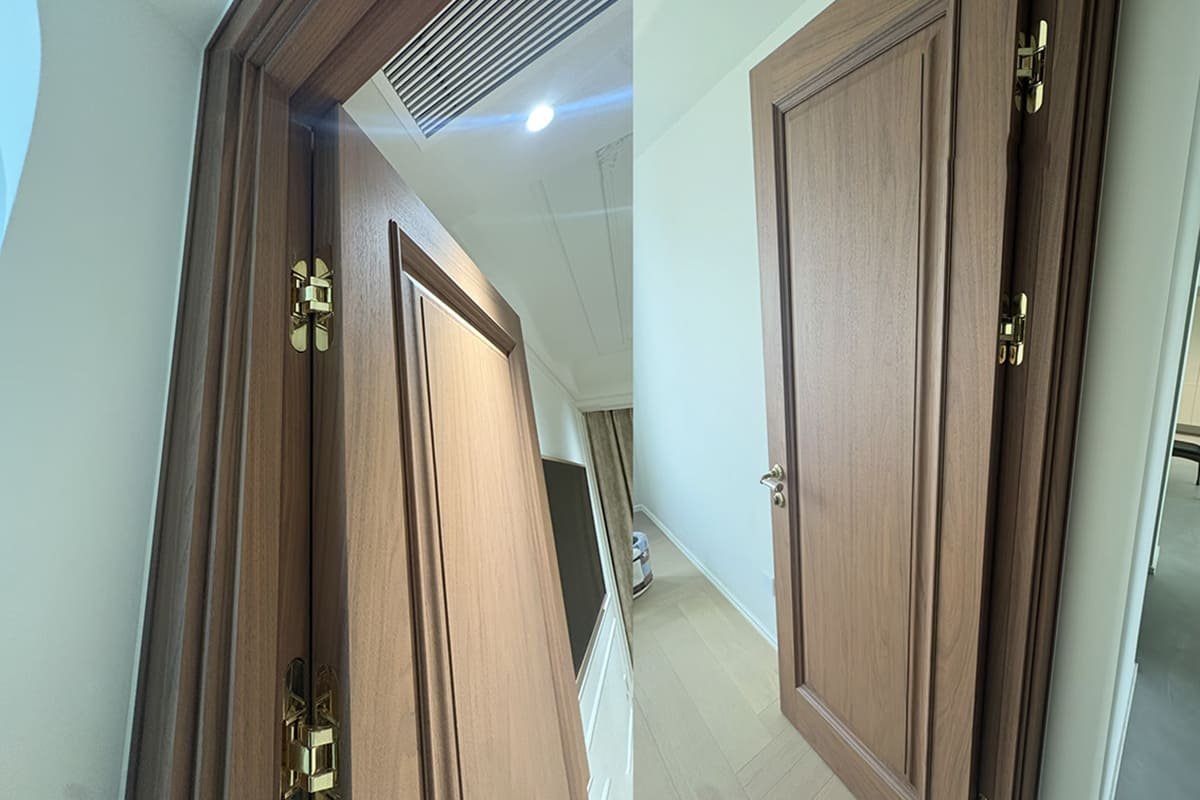
| Concealed hinge | Clean appearance, hidden hardware, often adjustable | Higher cost and more precise machining | Premium office partitions and design-focused interiors |
A mother-child hinge can reduce installation complexity because one hinge leaf fits within the other. In some applications, it may need less routing or frame preparation. A flag-type hinge can also simplify site fitting and maintenance. These are useful when the project values speed, stable installation, and practical cost control.
A concealed hinge for aluminum-profile doors gives a cleaner visual result. It also often allows adjustment after installation, which helps align the door leaf. But it usually requires tighter machining control and a higher budget. If the profile is too narrow or weak, the concealed hinge may not be the best answer.
Do not select by appearance alone
Aluminum and glass systems punish guesswork. A beautiful hinge or lock can fail the project if it does not match the structure. Before requesting a quote, I recommend that buyers prepare:
- Door section drawing
- Frame profile drawing
- Door leaf weight
- Glass thickness and type
- Desired lock function
- Finish requirement
- Installation method
- Target market certification requirement
This information helps the supplier judge whether the selected commercial door hardware can be produced consistently and installed without rework. It also helps avoid a common bulk-order problem: the sample works after hand adjustment, but mass installation becomes difficult.
What Durability Checks Matter for Commercial Door Hardware Locks, Cylinders, and Handles?
High-traffic commercial doors expose weak products quickly. A handle may feel smooth in the showroom, but after months of heavy use, the spring can sag, the latch may stick, or the cylinder may become rough. These failures create complaints, returns, and maintenance cost.
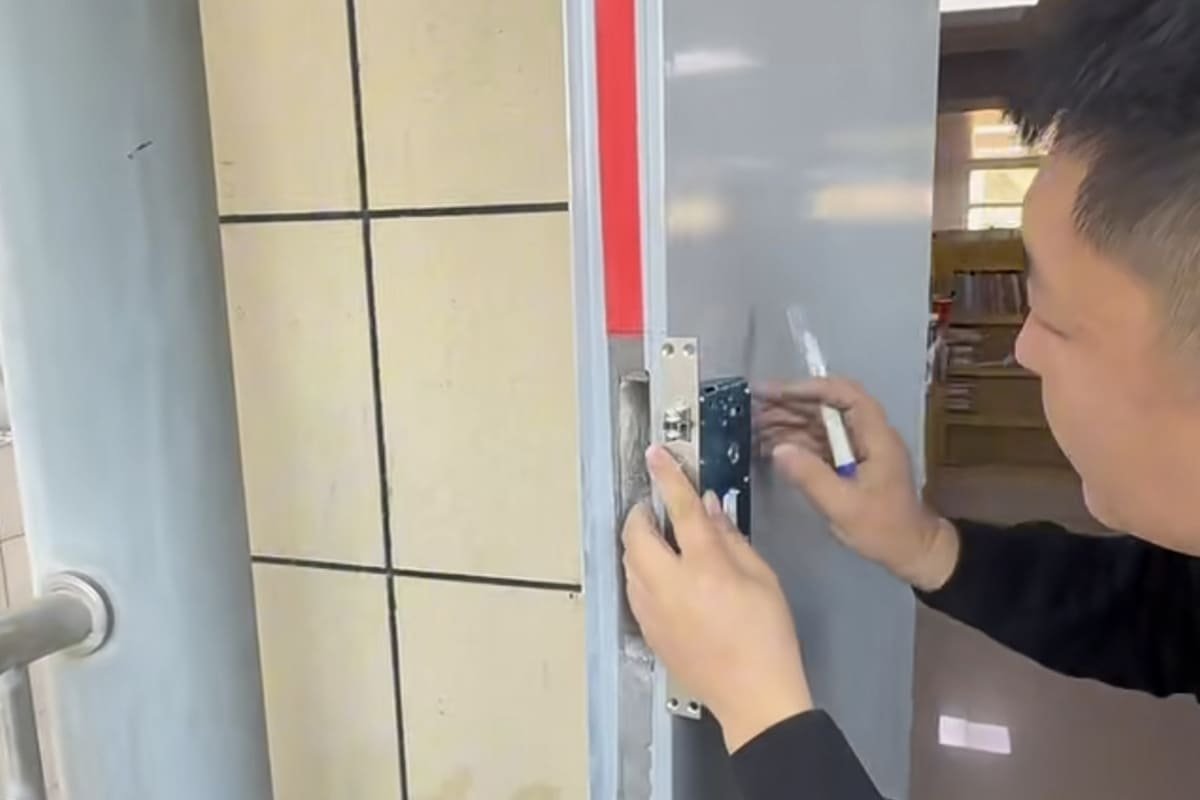
For locks, cylinders, and handles, buyers should verify commercial door hardware durability through relevant cycle-test reports, material checks, finish stability, and function testing. As a practical checkpoint, latch bolt and handle operation may require 200,000 cycles, while deadbolt and cylinder operation may require 50,000 cycles, depending on the exact EN standard and test report to be verified.
Use cycle testing as a buyer checkpoint
Commercial hardware must survive repeated operation.7 For mortise locks and cylinders, I encourage buyers to ask for relevant test information. A common procurement checkpoint is:
- Latch bolt and handle operation: may need 200,000 cycles8
- Deadbolt and cylinder operation: may need 50,000 cycles9
These numbers should be treated as verification points, not blanket claims. The buyer should check the exact EN standard, product category, test method, test laboratory, and test report model coverage. Different lock functions and markets may require different standards.
This careful wording matters. I am a manufacturer, not a certification body. I can guide buyers on what to ask and what documents to review, but the final project suitability should be confirmed by qualified professionals and local code requirements.
What to inspect beyond cycle numbers
Cycle count is important, but it is not the only sign of durability. A commercial lock set includes several parts that must work together.
Key areas to check include:
Lock case material and thickness
A stronger lock case helps maintain internal alignment under repeated use.Latch and deadbolt material
The latch must resist wear from repeated closing. The deadbolt must support security expectations.Handle spring performance
Lever sag is a common complaint in lower-quality sets.Cylinder precision
A rough or loose cylinder can damage the user experience and reduce perceived quality.Spindle and follower fit
Poor fit can create handle looseness after frequent operation.Strike plate alignment
Even a good lock can perform badly if the strike is installed poorly.
Commercial lock evaluation table
| Component | Buyer risk | What I check in factory consultation | Document or sample proof |
|---|---|---|---|
| Mortise lock body | Latch sticking, noisy action | Case structure, spring force, latch movement | Sample test and cycle report |
| Lever handle | Sagging, loose return | Spring structure, spindle fit, base fixing | Function test and finish sample |
| Cylinder | Key jamming, low security | Pin precision, key control, cam type | Cylinder test data and keying plan |
| Strike plate | Poor latching | Door/frame gap and strike position | Installation drawing |
| Finish | Color variation, corrosion | Plating or coating control | Salt spray test if required |
Bulk order consistency matters
For importers and wholesalers, durability is not only about one sample. It is about whether 500, 5,000, or 50,000 pieces remain consistent. I have seen buyers approve a good sample, then suffer when bulk goods have a slightly different surface finish or spring feeling.
For that reason, I suggest these bulk-order controls:
- Approve a golden sample before mass production.
- Confirm material and finish codes in writing.
- Request pre-shipment inspection for function, finish, and packaging.
- Check certificate model coverage before using claims in the target market.
- Separate high-traffic specifications from low-traffic product lines.
Commercial projects often fail at the details. A lock with acceptable cycle data can still create trouble if the finish is inconsistent, the strike plate is wrong, or the cylinder cam does not match the lock body. Good procurement connects test data with installation reality.
How Should Commercial Door Hardware Hinges Be Selected for Weight, Thickness, and Traffic?
Hinges are often treated as simple metal parts, but they carry the entire door leaf every day. If the hinge is too small, too weak, poorly matched to thickness, or not tested for the traffic level, the door may sag, rub, or fail to close correctly.
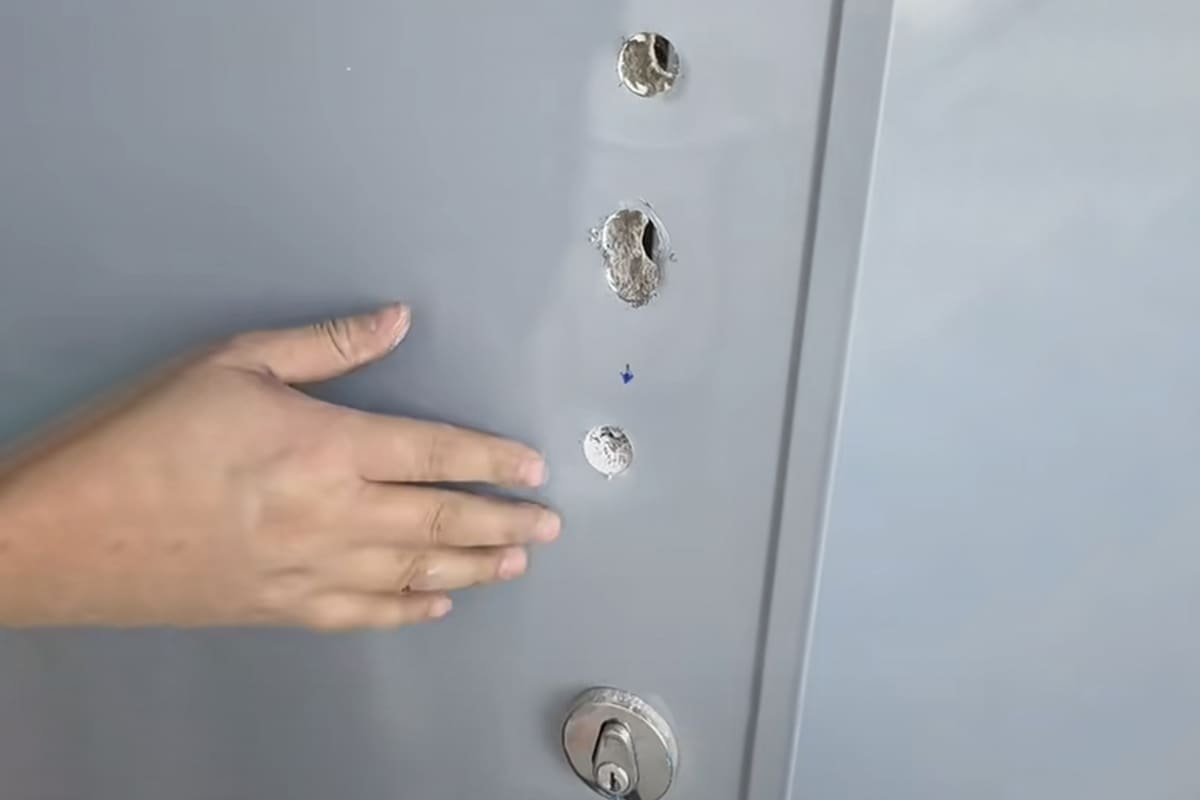
Commercial door hardware hinges should be selected by door thickness, door weight, hinge load rating, opening frequency, frame material, and installation method. As a practical rule, the door leaf thickness should generally exceed hinge width by about 5–6 mm, and the hinge load rating should be higher than the actual door weight.
Hinge width and door thickness
One practical rule I use in early matching is that the door leaf thickness should generally exceed hinge width by about 5–6 mm. This helps the hinge sit correctly and supports stable movement. However, this is a general procurement guideline. The final choice should still follow the door construction, hinge drawing, frame condition, and installation method.
For example, a thinner door leaf may not accept a wide heavy-duty hinge cleanly. A thick commercial door may need a wider hinge to support swing clearance and load. If the buyer selects only by appearance, the installer may discover the mismatch too late.
Load capacity must exceed actual door weight
A hinge should not be selected at the exact door weight limit. I prefer a safety margin. If a door weighs 60 kg, I do not like seeing a hinge set rated for only 60 kg under ideal conditions. Real projects include:
- Opening force
- Door closer resistance
- Misalignment
- Frame movement
- User abuse
- Wind pressure at entrances
- Frequent opening cycles
The hinge load rating should be higher than the actual door weight.10 The number of hinges also matters. A tall or heavy door may need three or more hinges, depending on the door design and manufacturer recommendation.
Opening frequency and cycle testing
For high-traffic commercial openings, buyers should ask whether the hinge meets relevant high-cycle opening tests. A common checkpoint is 200,000 cycles where required11, but the exact standard, hinge size, load, and test report should be verified.
This is especially important for:
- School doors
- Hospital doors
- Office tower entrances
- Hotel corridor doors
- Public restroom doors
- Retail back-of-house doors
- Commercial fire doors
Comparing common hinge types
| Hinge type | Strength | Installation | Appearance | Buyer focus |
|---|---|---|---|---|
| Stainless steel butt hinge | High when sized correctly | Requires mortising | Visible, standard | Door weight, thickness, cycle test |
| Ball bearing butt hinge | Better for heavier traffic | Requires accurate installation | Visible, commercial style | Smooth movement and load |
| Mother-child hinge | Moderate to good by design | Easier, less machining in some cases | Visible | Speed and installation simplicity |
| Concealed hinge | Depends on model and structure | Requires precise machining | Hidden, premium | Adjustability, load, profile fit |
| Flag hinge | Practical for profiles | Often easier to fit | Visible | Aluminum-profile compatibility |
Finish and corrosion resistance
Hinge finish should match both appearance and environment. Stainless steel is common for commercial use because it offers practical corrosion resistance and stable appearance.12 However, stainless steel grade, surface treatment, and polishing quality still matter.
For bulk buyers, I recommend checking:
- Material grade
- Surface finish sample
- Salt spray requirement, if applicable
- Bearing structure
- Screw quality
- Packaging protection
A hinge is a small part of the door cost, but it can create a large after-sales problem. Door sag often leads to lock misalignment, closer failure, frame rubbing, and user complaints. That is why hinge selection should be done early, together with lock and closer selection.
What Should Buyers Ask Before Requesting a Commercial Door Hardware Quote?
Many quote requests start with a model photo and target price. That approach can work for simple repeat orders, but it creates risk for commercial projects. The supplier may quote a product that looks similar but does not fit the door, certificate need, traffic level, or installation method.
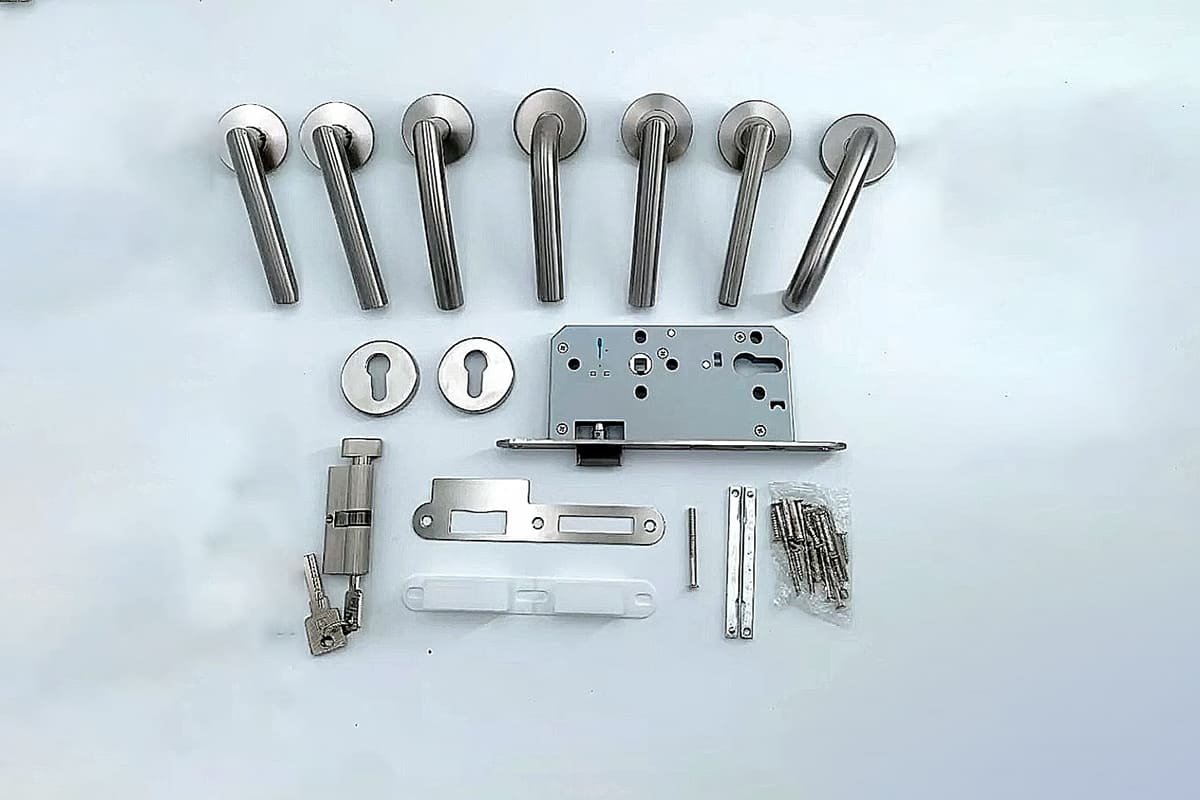
Before requesting a commercial door hardware quote, buyers should define the door type, door material, traffic level, safety function, certification need, thickness, weight, finish, installation method, and order quantity. Better questions produce better specifications, more accurate pricing, and fewer sample or bulk-order problems.
My practical quote checklist
When I advise buyers, I like to slow down the quote process for a few minutes. A clearer brief usually saves days later. Before asking for price, buyers should answer these questions:
What type of commercial door is this?
Is it a wooden door, steel door, aluminum-frame door, glass partition door, or fire-rated door?Where is the door located?
Is it a high-traffic entrance, escape route, office room, restroom, corridor, or service area?What function is required?
Does the door need privacy, passage, deadlocking, panic escape, access control, or fire-rated use?What certification is required?
Does the market require CE, fire-rated documentation, EN test reports, or other local approval? The exact certificate scope should be checked.What are the door dimensions and weight?
Door thickness, height, width, and weight affect locks, hinges, closers, and screws.What is the door material and frame structure?
Aluminum profiles, glass doors, steel frames, and wooden doors all require different matching.What finish is required?
Satin stainless steel, polished stainless steel, PVD, powder coating, and other finishes need clear reference samples.What is the installation method?
Mortised, surface-mounted, concealed, adjustable, left-hand, right-hand, or reversible products must be confirmed.What is the expected traffic level?
High-cycle doors need different durability expectations from low-use office doors.What is the order plan?
Sample order, trial order, project order, or long-term wholesale supply each needs different quality control planning.
Why quote accuracy depends on complete information
A supplier can quote faster with less information, but the quote may not be useful. For example, a buyer may ask for a concealed hinge. The price depends on load rating, adjustability, material, machining tolerance, door profile, finish, packaging, and quantity. Without that information, the supplier may quote a cheaper product that cannot support the actual door.
The same problem happens with mortise locks. A euro standard mortise lock for a wooden door may not fit an aluminum-profile partition. A fire-rated lock body may need specific test evidence. A cylinder may need a certain cam, length, key system, or finish. A lever handle may need a different spindle, rose, or plate design.
A better inquiry format
Buyers can use this simple format when contacting a manufacturer:
| Information | Example |
|---|---|
| Project or market | Office building, Middle East market |
| Door type | Aluminum-profile glass partition |
| Door size | 45 mm thick, 900 mm wide, 2200 mm high |
| Door weight | Approx. 55 kg |
| Function | Office privacy lock with cylinder |
| Traffic | Medium to high |
| Finish | Satin stainless steel |
| Certification | CE or EN documents to be verified |
| Hardware needed | Narrow lock, lever handle, cylinder, hinges, closer |
| Quantity | 2,000 sets initial order |
This format helps the manufacturer recommend a complete hardware set, not just one product. It also helps buyers compare suppliers more fairly. If Supplier A quotes a heavy-duty tested hinge and Supplier B quotes a light-duty decorative hinge, the prices should not be compared as equal.
In commercial door hardware procurement, clear specifications protect both sides. The buyer reduces risk, and the manufacturer can control production, quality, and delivery more accurately.
Frequently Asked Questions
What is the most important factor when choosing commercial door hardware?
The most important factor is matching the hardware set to the door’s function and environment. Buyers should consider door type, traffic level, safety role, material, certification need, installation method, and durability. Price should come after confirming that the hardware fits the project conditions.
Are CE-certified locks suitable for every commercial project?
No. CE certification should be verified against the exact product model, function, certificate scope, door type, and market requirement. A CE-marked product may be suitable for one application but not another. Buyers should review documents carefully and consult qualified professionals for code-specific decisions.
What hardware is best for aluminum-profile office partition doors?
Narrow-body locks are often more suitable for aluminum-profile partition doors because the frame is usually slim. Hinge choice depends on profile structure, weight, and appearance goals. Mother-child or flag-type hinges may simplify installation, while concealed hinges offer a cleaner look but usually cost more.
How many cycles should commercial locks and hinges withstand?
Cycle requirements depend on the product category, standard, and project requirement. As buyer checkpoints, latch bolt and handle operation may need 200,000 cycles, while deadbolt and cylinder operation may need 50,000 cycles. Hinges may also need 200,000-cycle verification where required. Exact EN standards and reports should be checked.
How can bulk buyers reduce commercial door hardware quality risk?
Bulk buyers can reduce risk by approving golden samples, confirming drawings and finish codes, checking certification scope, reviewing test reports, and arranging pre-shipment inspection. They should also separate high-traffic and low-traffic specifications instead of using one low-cost product across every door.
Conclusion
Choosing commercial door hardware is really about matching the complete hardware set to the door’s structure, safety role, traffic level, certification need, and long-term durability risk. I always recommend that buyers verify certificates, cycle-test reports, hinge load ratings, door thickness, installation drawings, and finish samples before bulk ordering. If you are selecting locks, cylinders, hinges, handles, closers, or escape hardware for a commercial project, contact SDH Hardware to review specifications, certification documents, and bulk-order matching before you request final pricing.
"13VAC5-63-210. Chapter 3 Use and occupancy classification.", https://law.lis.virginia.gov/admincode/title13/agency5/chapter63/section210/. Building-code occupant-load and means-of-egress provisions support the article’s distinction between commercial and residential safety demands, although the level of risk varies by occupancy type, building size, and local code adoption. Evidence role: general_support; source type: government. Supports: Commercial occupancies are regulated through occupant-load and egress provisions that differ from residential dwellings and reflect higher public-use safety considerations.. Scope note: Contextual support; it does not prove that every commercial building has higher risk than every residential building. ↩
"[BE] 1010.1.10 Panic and fire exit hardware. - ICC Digital Codes", https://codes.iccsafe.org/s/IFC2015NY/chapter-10-means-of-egress/IFC2015-Pt03-Ch10-Sec1010.1.10. Means-of-egress codes and exit-device standards support the need for panic or emergency escape functions on specified escape-route doors, with applicability determined by occupancy, occupant load, door use, and local adoption. Evidence role: general_support; source type: government. Supports: Life-safety codes and exit-device standards require panic or emergency escape hardware for specified occupancies, occupant loads, and exit conditions.. Scope note: Direct requirement varies by jurisdiction and building classification. ↩
"081173", https://online2.ogs.ny.gov/dnc/masterspec24/docs/Division08Openings/081173.0SlidingMetalFireDoors.docx. European construction-product rules and fire-door certification practices support checking the declared performance, intended use, model coverage, and tested application of door hardware before relying on compliance claims. Evidence role: general_support; source type: government. Supports: CE marking and fire-rated documentation are product- and application-specific, and buyers must verify intended use, declared performance, and certificate scope.. Scope note: The source would support the verification principle; specific approval still depends on the local market and the exact certificate. ↩
"BS EN 1154 Door Closer Delay: Maximum Closing Time Explained", https://www.danddhardware.com/amp/bs-en-1154-door-closer.html. Door-closer performance standards such as EN 1154 or ANSI/BHMA A156.4 support the claim that closers regulate door closing and latching behavior, although the safety effect depends on correct sizing, installation, and adjustment. Evidence role: mechanism; source type: institution. Supports: Door-closer standards describe controlled closing, latch action, and related performance characteristics.. Scope note: Contextual support; the standard does not prove performance for an untested closer installation. ↩
"Incidents - CAL FIRE - CA.gov", https://www.fire.ca.gov/incidents. Fire-door assembly standards support the view that door closers and latching hardware can affect rated assembly performance because fire doors must close and latch as tested or listed. Evidence role: mechanism; source type: institution. Supports: Fire-door assembly standards require self-closing and latching performance and treat hardware as part of the rated assembly.. Scope note: The support is strongest for fire-rated assemblies; controlled-access applications may require separate access-control and egress-code analysis. ↩
"SECTION 087111 - DOOR HARDWARE (SCHEDULED BY ...", https://fpm.usc.edu/wp-content/uploads/2021/11/087102-USC-HSC-door-hardware-Guide-Specification_1.pdf. Architectural hardware guidance on narrow-stile aluminum doors supports the need to match lock case depth and backset to the available stile width, although exact compatibility must be confirmed from the door profile and hardware drawings. Evidence role: mechanism; source type: education. Supports: Narrow aluminum stiles impose lock-case and backset constraints that differ from typical wood or hollow-metal door preparations.. Scope note: Contextual support; it does not validate any specific lock model. ↩
"Door Hardware Cycle Testing: What 200000 Cycles Really Means", https://www.dndhardware.com/amp/door-hardware-cycle-testing-what-200-000-cycles-really-means.html. Architectural hardware standards from CEN and ANSI/BHMA support the use of repeated-operation cycle testing as a core durability measure for commercial door hardware. Evidence role: expert_consensus; source type: institution. Supports: Architectural hardware standards use cycle testing and durability classifications to evaluate repeated operation.. ↩
"CE BS EN12209 Door Lock", https://www.danddhardware.com/amp/CE-BS-EN12209-Door-Lock-id3776880.html. EN 12209 durability classifications support using 200,000 cycles as a verification benchmark for specified mechanically operated lock and latch functions, subject to the product category and test conditions stated in the report. Evidence role: statistic; source type: institution. Supports: Relevant lock standards include durability classifications that can involve 200,000-cycle testing for latch operation in specified categories.. Scope note: The cited threshold may not apply to every lock function, grade, or market. ↩
"BS EN 12209:2016 Mechanically operated locks, latches and ...", https://www.acornironmongery.com/2022Standards/GAI-Guide-to-standards-8-BSEN12209-2016-22-final%20(1).pdf. European standards for mechanically operated locks and cylinders support cycle-count verification for deadbolt and cylinder functions, including 50,000-cycle benchmarks in relevant classifications. Evidence role: statistic; source type: institution. Supports: Lock and cylinder standards define durability tests for deadbolt and cylinder operation, including cycle-count classifications.. Scope note: The exact cycle requirement depends on the standard edition, product grade, function, and test report scope. ↩
"Understanding BS EN 1935:2002 single-axis hinge grades - SFS", https://uk.sfs.com/resources/article/understanding-bs-en-1935. Hinge standards such as EN 1935 and ANSI/BHMA A156.1 support matching hinge grade and rated door mass to the application, although they do not prescribe a universal safety margin for every installation. Evidence role: mechanism; source type: institution. Supports: Hinge standards classify products by door mass and performance, supporting selection based on rated load rather than appearance alone.. Scope note: Contextual support; final selection depends on door height, closer force, usage, frame condition, and manufacturer instructions. ↩
"Understanding BS EN 1935:2002 single-axis hinge grades - SFS", https://uk.sfs.com/resources/article/understanding-bs-en-1935. EN 1935 supports 200,000-cycle durability testing as a recognized benchmark for specified single-axis door hinges, with applicability determined by hinge grade, load, size, and test conditions. Evidence role: statistic; source type: institution. Supports: Recognized hinge standards include durability classifications based on 200,000 test cycles for relevant hinge grades.. Scope note: The benchmark does not apply automatically to every hinge type or concealed-profile system. ↩
"The role of passive film growth kinetics and properties in stress corrosion ...", https://nvlpubs.nist.gov/nistpubs/Legacy/IR/nbsir74-583.pdf. Materials references on stainless steel support the claim that chromium-containing stainless steels resist corrosion through a passive surface film, although performance depends on alloy grade, finish, environment, and maintenance. Evidence role: mechanism; source type: encyclopedia. Supports: Stainless steel corrosion resistance is associated with chromium content and formation of a passive oxide layer.. Scope note: Contextual support; it does not establish suitability of a particular stainless steel grade for every commercial environment. ↩