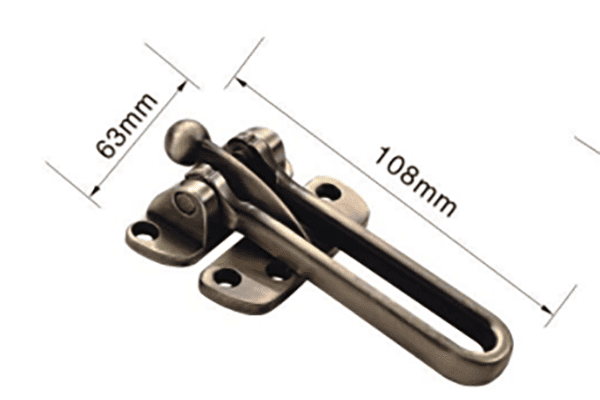
What Are the Chains and Guards on Doors For?
Chains and guards on doors are often misunderstood because they look small compared with the main lock. Many people expect them to stop a forced entry, then feel disappointed when they learn their limits. The better view is simple: they are auxiliary inside-door fittings1 that help you open the door more carefully.
Chains and guards on doors are used to allow controlled partial opening2, so a resident can check, speak to, or receive limited interaction from a visitor without fully opening the door. They add a secondary safety buffer inside the room, but they should not replace the main lock, door viewer, deadbolt, or a complete door security setup3.
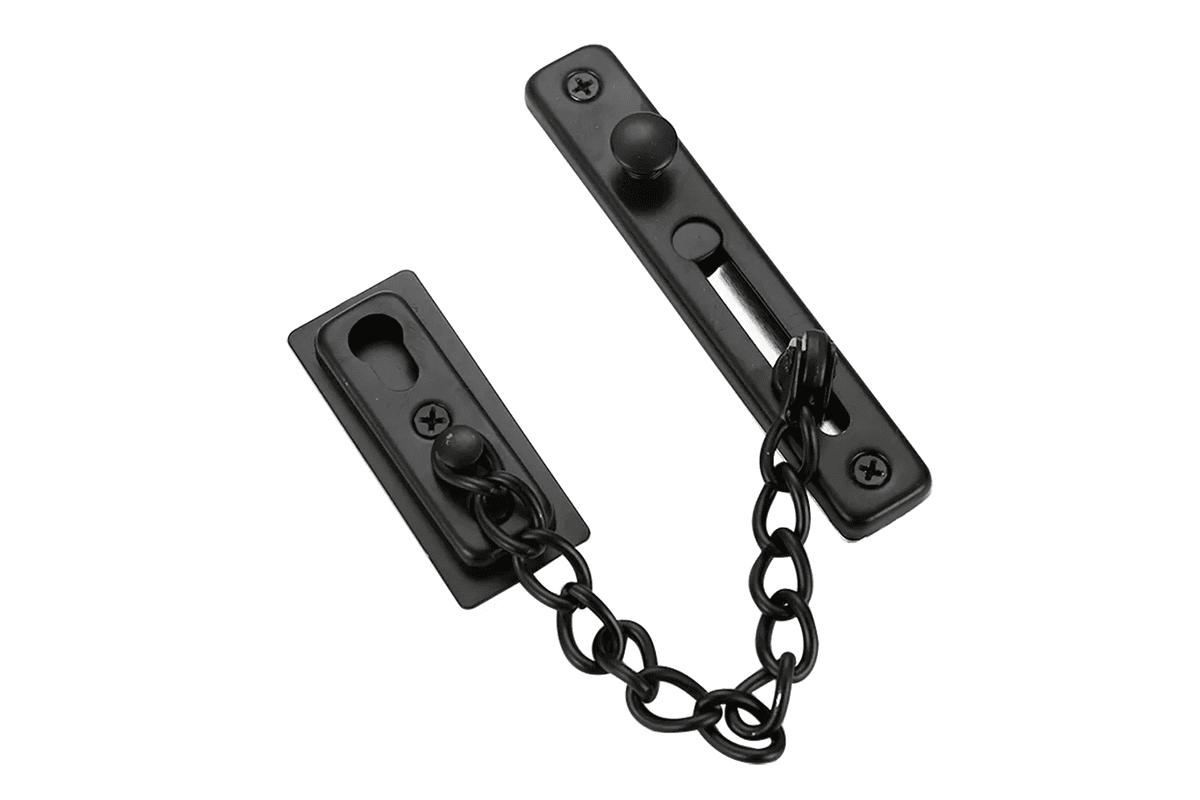
I explain these fittings often because buyers, hotel operators, apartment managers, and homeowners all ask the same thing: “Do I really need one?” The answer depends on the door, the user, the lock set, the opening direction, and the expected security level.
How Do Chains and Guards on Doors Control Partial Opening?
A door can feel risky when you must fully open it before knowing who is outside. That risk becomes more uncomfortable at night, in rental units, or in hotels. Chains and guards on doors help by limiting how far the door can open from the inside.
Chains and guards on doors control partial opening by creating a short, inside-mounted restraint between the door leaf and the frame. The user can open the door slightly, verify the visitor, speak through the gap, and then decide whether to close the door or release the fitting for full access.
The main job is not “locking” the door
In my work with architectural door hardware, I usually describe these fittings as controlled-opening devices, not primary locks. That distinction matters. The main lock keeps the door secured when it is closed4. The chain or guard helps manage a short interaction after the door is already unlocked or partly opened.
This is why these fittings are common in:
- Apartments, where residents may not know every visitor.
- Hotels, where guests want extra privacy inside the room.
- Rental homes, where users may want a simple internal safety buffer.
- Dormitories and staff housing, where controlled interaction matters.
- Residential entrance doors, especially in urban buildings.
The device gives the person inside a moment to think. That moment can be valuable. It can prevent a visitor from pushing the door fully open during a conversation. It can also make the resident feel more comfortable when checking deliveries, maintenance workers, or unexpected guests.
How the partial opening works
The exact structure depends on the type.
| Device type | Basic structure | How it limits opening | Typical use |
|---|---|---|---|
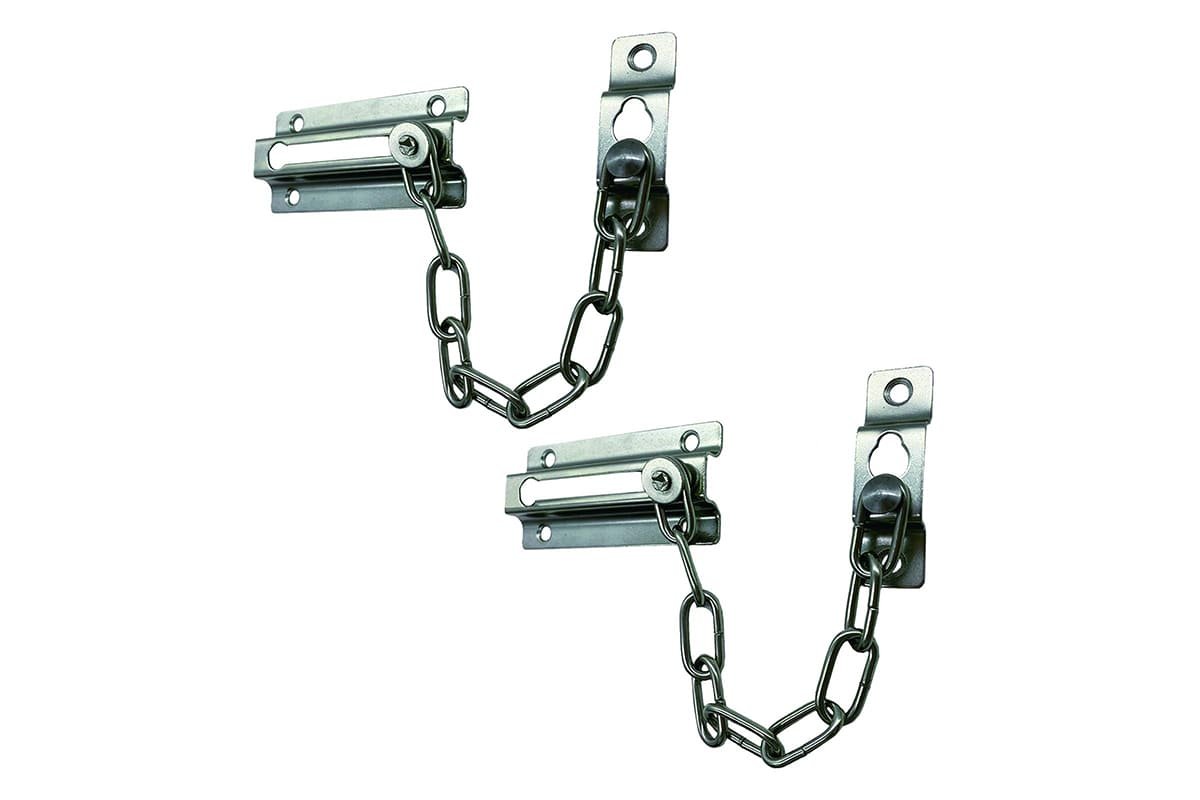
| Door chain | Chain fixed between frame plate and door slide plate | Chain reaches its limit when the door opens slightly | Homes, rentals, light residential use |
| Swing door guard | Rigid arm or latch fixed between door and frame | Metal arm blocks the door from opening wider | Hotels, apartments, higher-use residential doors |
| Security latch guard | More enclosed or reinforced latch form | Restricts movement with a more rigid structure | Multi-family housing, commercial lodging, managed properties |
A chain has flexibility. A guard has a more rigid metal arm or latch body. That is why a guard often feels more stable during normal use. Still, the real performance depends on installation quality, screw fixing, frame strength, door material, and product design.
The gap is a practical detail
Many buyers ask me how wide the opening gap should be. I avoid giving a universal number because the gap depends on the product geometry and installation position. In procurement, the gap should be checked against:
- Visitor communication needs
- Risk of hand reach-through
- Door thickness and frame layout
- Whether the door opens inward or outward
- Local safety or building requirements
- Children, elderly users, or emergency access needs
A small gap can support conversation and visual checking. However, a poorly positioned fitting can create a gap that is too large. In some cases, the visitor may be able to reach toward the inside hardware. That is not ideal.
A simple configuration logic
When I help customers think through door hardware combinations, I use this logic:
- Main lock: primary locking function.
- Door viewer or peephole: identity checking before opening.
- Door chain or guard: controlled partial opening.
- Night latch, bolt, or secondary lock: additional internal locking, depending on door type.
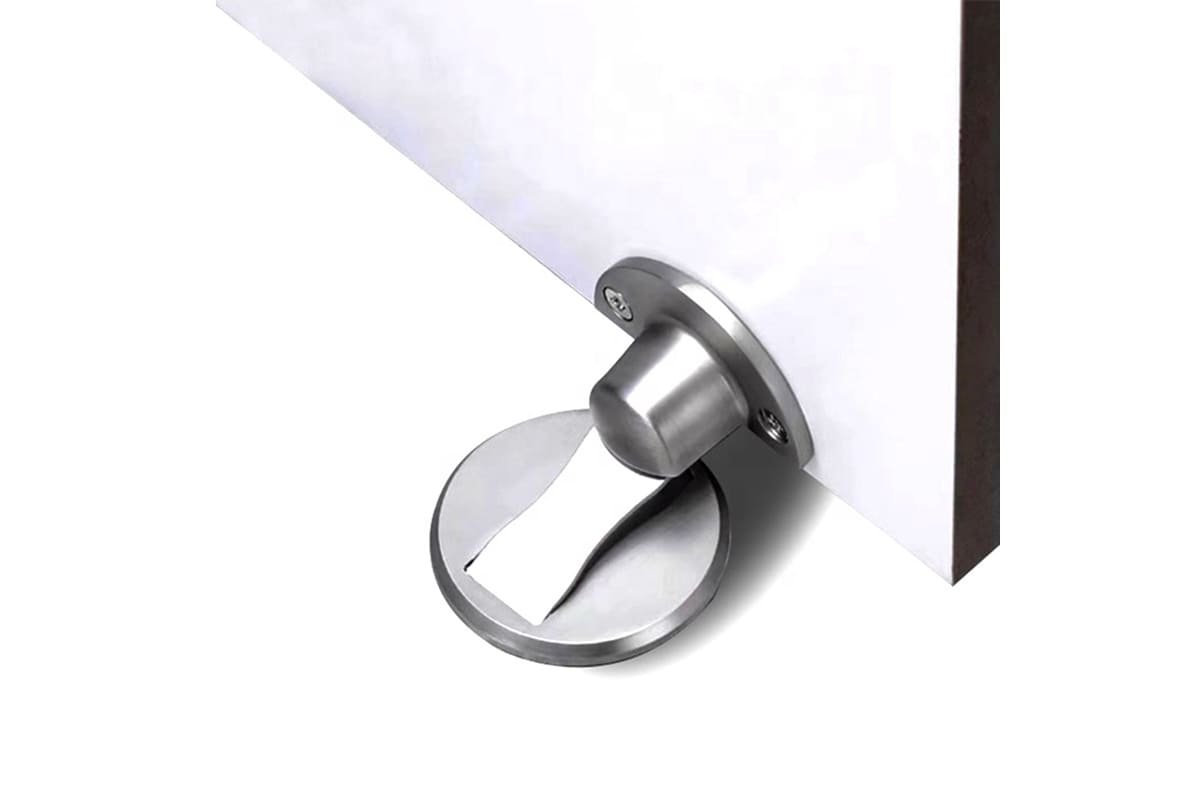
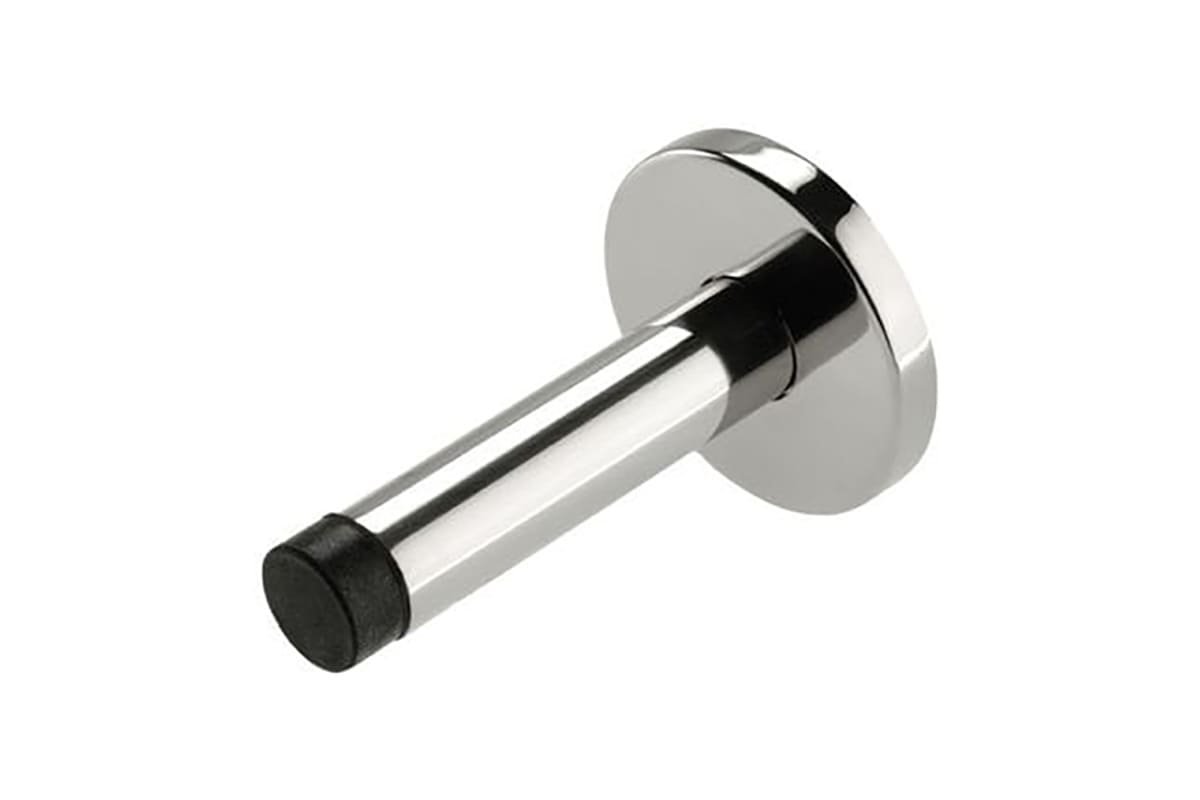
- Door stopper: prevents impact and supports user convenience, but it is not a lock.
This system view is important. Chains and guards on doors work best when they are part of a complete door set, not when they are expected to solve every security concern by themselves.
Are Chains and Guards on Doors the Same as Main Locks?
A common mistake is to treat auxiliary fittings as if they perform the same job as the mortise lock, deadbolt, or cylinder lock. This can create a false sense of security. Chains and guards on doors help after partial opening, while the main lock secures the closed door.
Chains and guards on doors are not the same as main locks. A main lock is designed to secure the door in the closed position. A chain or guard is an internal auxiliary device that limits opening after the door is partly opened, mainly for visitor verification and short controlled interaction.
Different hardware, different responsibility
I prefer to explain door security as a layered system. Each fitting has one job. If one product is asked to do another product’s job, the whole setup becomes weaker.
A main lock usually includes components such as:
- Lock body or mortise case
- Latch bolt
- Deadbolt, depending on model
- Cylinder
- Strike plate
- Handle or lever trim
- Key, thumbturn, or access control interface
A chain or guard is much simpler. It is normally mounted on the inner side of the door and frame. Its job starts only when the door is partially open.
Main lock versus chain or guard
| Feature | Main lock | Door chain or door guard |
|---|---|---|
| Primary purpose | Lock the closed door | Limit partial opening |
| Operating position | Door closed | Door slightly opened |
| User location | Inside or outside, depending on lock | Inside only, usually |
| Security role | Primary access control | Auxiliary safety buffer |
| Replacement for the other? | No | No |
| Best paired with | Cylinder, strike, handle, viewer | Viewer, main lock, bolt, stopper |
This comparison helps buyers avoid overestimating a chain or guard. A door chain may give comfort during a conversation, but it does not turn a weak lock into a strong lock. A rigid door guard may feel more secure, but it still depends on the door and frame.
Why the main lock still matters most
The main lock takes the most important load during normal security use. If the door is closed and locked, the lock body, bolt, cylinder, strike plate, screws, and frame all work together. If those components are weak, a chain or guard cannot fully compensate.
For example, if a residential entrance door has:
- A poor-quality lock body
- Loose strike plate screws
- A weak wooden frame
- Misaligned latch engagement
- Thin or damaged door material
Then adding a chain may improve controlled opening, but it will not correct the core lock problem.
Why the door viewer matters too
I often recommend pairing a chain or guard with a door viewer. The viewer allows identification before the door is opened5. The chain or guard then supports controlled communication if the user chooses to open slightly.
This sequence is safer:
- Look through the peephole or video viewer.
- Keep the main lock engaged if the visitor is suspicious.
- Open only if needed.
- Use the chain or guard during limited conversation.
- Close and relock if the interaction feels unsafe.
This process sounds simple, but user habits matter. A strong hardware setup can be undermined if the resident opens the door fully out of habit.
Procurement note for hotels and apartments
For hotel rooms and apartment projects, I suggest project buyers evaluate the full door set. They should not select chains and guards on doors only by price or appearance. They should check:
- Door opening direction
- Door leaf thickness
- Frame material
- Screw length and fixing method
- Frequency of use
- Noise during operation
- Finish consistency with handles and hinges
- Maintenance and replacement process
- Any applicable local fire, accessibility, or safety requirements
For commercial procurement, documented product specifications matter. If a supplier claims a specific resistance level, the buyer should ask for test reports or certificates from a qualified source. I avoid treating marketing words as technical proof.
Which Is Stronger: a Door Chain or a Door Guard?
Many people ask whether a chain or a guard is stronger. The question is reasonable, but the answer is not absolute. A weak guard can perform poorly, and a well-installed chain can be useful for light-duty control. Structure and installation both matter.
A door guard is generally more rigid than a door chain because it uses a solid metal arm or latch structure instead of a flexible chain.6 However, neither should be described as guaranteed forced-entry protection unless the specific product, door, frame, screws, and test data support that claim7.
Structural differences
A door chain normally includes a small frame plate, a length of chain, and a sliding plate on the door. It is simple, familiar, and easy to install. It is also cost-effective, which is one reason it is common in residential and rental settings.
A door guard usually has a more rigid body. Many models use a swing arm, loop, bar, or latch design. The user swings the arm into a receiving part, and the door can open only until the guard blocks further movement.
Here is a practical comparison:
| Factor | Door chain | Door guard |
|---|---|---|
| Structure | Flexible chain | Rigid arm or latch |
| Feeling during use | More movement | More stable |
| Installation difficulty | Usually simple | Usually simple to moderate |
| Common application | Homes, rentals | Hotels, apartments, residential entrances |
| Visual style | Traditional | More modern or commercial |
| Durability under frequent use | Depends on chain and screws | Often better, depending on design |
| Security claim | Should be modest | Should still be verified |
Why rigidity matters
A rigid structure can reduce movement when the door is pushed from outside. This is one reason many hotel rooms use swing guards instead of basic chains. A guard can also feel more controlled in daily operation because it does not dangle or twist.
However, rigidity alone is not enough. The fixing points may fail if the screws are short, the frame is weak, or the installation location is poor. I have seen project discussions where the metal part looked strong, but the door frame material was the weak point. In that case, the stronger-looking fitting did not solve the real issue.
Door chain advantages
A chain can still make sense in many situations. Its strengths include:
- Low cost
- Easy replacement
- Simple user operation
- Traditional appearance
- Compatibility with many timber doors
- Good enough for light controlled-opening needs
For a renter who wants a basic inside-door safety buffer, a chain may be suitable if the landlord allows installation and the frame supports proper fixing.
Door guard advantages
A guard may be preferred when the door has higher traffic or when the user wants a more stable feel. Its strengths include:
- More rigid structure
- Cleaner operation
- Better suitability for hotel-style use
- Less chain movement and noise
- Potentially stronger resistance, depending on design
- More modern appearance
For apartments, hotels, serviced residences, and managed rental units, a guard often matches the expected durability and user experience better.
What I would not claim without proof
I would not say, “This chain prevents break-ins,” or “This guard is anti-burglary,” unless there is verified test data for that exact product and installation condition. Door security is too dependent on the whole assembly.8
Before accepting a performance claim, I would ask:
- What standard was used?
- Was the test done on the fitting alone or the full door assembly?
- What door material and frame were used?
- What screws and fixing method were used?
- Was the opening direction the same as my project door?
- Is there a test report from a qualified laboratory?
- Does local code affect the use of this device?
This cautious approach protects buyers. It also keeps expectations realistic. Chains and guards on doors can help, but they should not be sold as magic security devices.
Where Do Chains and Guards on Doors Make the Most Sense?
A product can be useful in one setting and unnecessary in another. That is why I always ask where the door is installed before recommending auxiliary fittings. Chains and guards on doors make the most sense when controlled visitor interaction is common.
Chains and guards on doors are most useful for inward-opening residential, apartment, hotel, dormitory, and rental doors9 where the person inside may need to speak with a visitor without giving full access. They are less useful when door design, building rules, or emergency access needs make partial-opening hardware unsuitable.
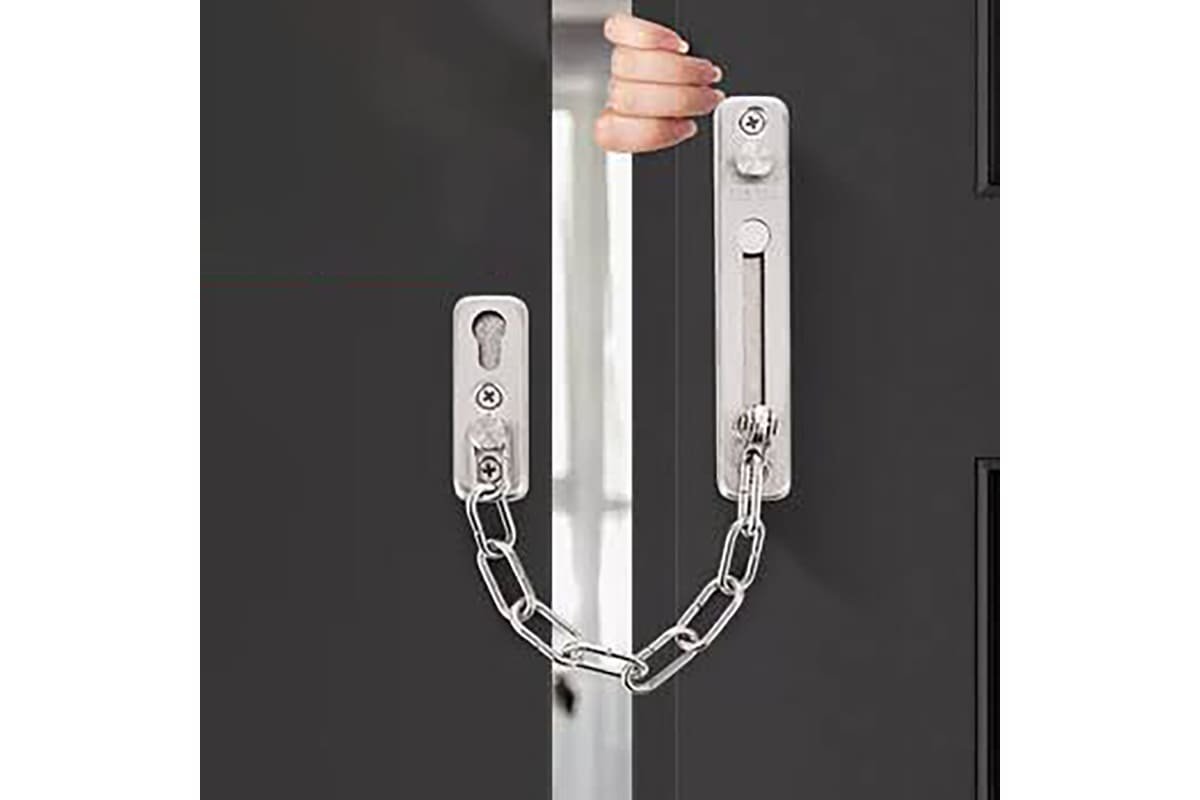
Residential entrance doors
For homeowners, a chain or guard can provide everyday reassurance. It is especially useful when the door does not have a video doorbell or when family members want an extra step before opening.
A typical residential setup may include:
- Mortise lock or deadbolt
- Door viewer or smart viewer
- Door chain or guard
- Door stopper
- Optional night latch or internal bolt
This configuration supports both identification and controlled access.
Rental apartments
Renters often want simple security improvements. However, they must check the lease rules before drilling into doors or frames. A landlord may also require a specific finish or product type.
In rental units, I would evaluate:
- Whether drilling is allowed
- Whether the door is solid enough
- Whether the frame can hold screws properly
- Whether the fitting could block emergency access
- Whether the device is easy to remove or replace
- Whether children or elderly residents can operate it safely
A chain may be easier to install, but a guard may feel sturdier. The correct choice depends on the door and permission to modify it.
Hotels and serviced apartments
Hotels use auxiliary door guards because guests want privacy from staff, service personnel, and unexpected visitors. A hotel room door has frequent use, so durability matters more than in a low-traffic home.
For hotel procurement, I would consider:
| Evaluation item | Why it matters |
|---|---|
| Cycle durability | Guests operate the guard frequently |
| Noise | Loud fittings affect user experience |
| Finish consistency | Hardware should match handles, hinges, and locks |
| Screw fixing | Weak fixing causes complaints and maintenance |
| Emergency procedure | Staff may need defined access protocols |
| Fire and safety rules | Local requirements must be checked |
| Replacement availability | Maintenance teams need standard parts |
A door guard is often selected for hotels because it looks cleaner and feels more rigid. Still, the hotel should verify local safety rules and emergency access policies.
Elderly users and children
Auxiliary devices can help, but they can also create usability issues. An elderly person may struggle with a stiff guard. A child may accidentally engage a latch and prevent a caregiver from entering. These cases need careful thought.
For family homes, I suggest considering:
- Operating height
- Hand strength needed
- Visibility of the fitting
- Risk of accidental locking
- Emergency release needs
- Whether users understand how to operate it
Safety is not only about keeping unwanted people out. Safety also means allowing trusted people to help during emergencies.
Commercial and office doors
Chains and guards are less common on standard office entrance doors because commercial spaces usually rely on access control, panic hardware, closers, and code-compliant lock systems. However, some private rooms, staff dormitories, small clinics, or back-office residential-style doors may use them.
For commercial doors, buyers should be careful. They should check:
- Fire exit requirements10
- Accessibility rules
- Emergency escape paths
- Door closer compatibility
- Access control system design
- Building manager approval
I do not recommend adding inside-mounted restraints to any egress door without professional review.11 The wrong hardware can create a safety or compliance problem.
How Should Chains and Guards on Doors Be Installed and Evaluated?
Even a good fitting can fail or become inconvenient if it is poorly installed. This is one of the most important lessons I have learned as a hardware supplier. Chains and guards on doors depend heavily on the door leaf, frame, screws, alignment, and user behavior.
Chains and guards on doors should be installed on a sound door and frame with proper alignment, suitable screws, and a position that limits opening without creating excessive reach-through risk. Buyers should evaluate the full door assembly, not only the metal fitting, and should seek qualified advice for application-specific safety decisions.
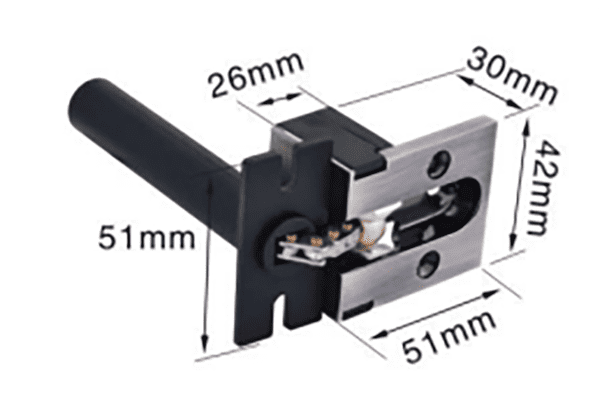
Installation points that matter
The best product can perform badly if it is fixed into weak material. I always encourage buyers to inspect the door and frame before choosing the device.
Key installation checks include:
Door material
Solid timber, metal, composite, and hollow-core doors hold screws differently.12Frame strength
A weak or cracked frame can become the failure point.Screw length and type
Screws must match the substrate. Short decorative screws may not be enough.Alignment
Misalignment can make the chain bind or the guard operate roughly.Opening direction
Many common chains and guards are designed for inward-opening doors.Mounting height
The fitting should be reachable for users but not easily manipulated from outside.Gap control
The final opening gap should be checked after installation.Interference
The fitting should not hit the handle, closer, frame trim, viewer, or door stopper.
A practical evaluation checklist
For procurement or project evaluation, I like to use a simple scoring approach. It helps buyers compare products without relying only on price.
| Evaluation factor | What to check | Why it matters |
|---|---|---|
| Base material | Stainless steel, zinc alloy, steel, brass, or other material | Affects strength, corrosion resistance, and cost |
| Finish | Satin, polished, PVD, powder coating, plated finish | Must match other door hardware |
| Structure | Chain, swing arm, latch guard, reinforced type | Affects feel and controlled-opening performance |
| Screw fixing | Screw size, quantity, substrate compatibility | Often determines real-world reliability |
| Door compatibility | Thickness, frame type, opening direction | Prevents installation problems |
| User group | Guests, tenants, children, elderly users | Affects height and operation choice |
| Maintenance | Replacement parts, cleaning, looseness inspection | Important for hotels and apartments |
| Documentation | Specification sheet, drawings, test reports if claimed | Supports responsible purchasing |
Material and finish considerations
For residential interiors, finish may be the first thing users notice. For project buyers, finish consistency matters even more. If handles, hinges, locks, cylinders, and guards all have different tones, the door set looks unprofessional.
Common finish concerns include:
- Color difference between batches
- Surface scratches after installation
- Corrosion in humid regions
- Fingerprint visibility
- Compatibility with stainless steel lever handles
- Matching with hinges and lock faceplates
As a manufacturer, I pay close attention to batch finish consistency because wholesalers and door factories often buy full door hardware sets. A small mismatch can create many complaints after installation.
Maintenance and user habits
Chains and guards on doors are simple, but they still need occasional inspection. This is especially true in hotels and rental apartments.
A basic maintenance routine can include:
- Checking screws every few months
- Replacing loose or bent parts
- Cleaning dust or corrosion from moving areas
- Confirming smooth operation
- Checking that the door still closes properly
- Training staff or tenants on correct use
A fitting that is left loose can become noisy, ineffective, or annoying. A guard that is slammed repeatedly may bend or loosen. Good hardware helps, but user habits still matter.
When to ask a professional
Some situations deserve qualified evaluation. I would recommend professional review when:
- The door is a fire-rated door.
- The door is part of an emergency exit route.
- The building is a hotel, hospital, dormitory, or public facility.
- The door has electronic access control.
- The frame is damaged or non-standard.
- The user needs elderly care or child safety planning.
- A buyer wants verified security performance.
For product-specific performance, buyers should request drawings, material information, installation instructions, and any valid test documents from the supplier. If a security rating is important, the full door assembly should be evaluated under relevant standards.
Conclusion
Chains and guards on doors are useful auxiliary fittings for controlled partial opening, visitor verification, and short inside-door interaction. They can help create a safety buffer, but they do not replace the main lock, door viewer, bolt, or a well-built door and frame. I suggest evaluating the full hardware setup before choosing a chain or guard. If you are sourcing door hardware for residential, hotel, apartment, or wholesale projects, SDH Hardware can help you compare suitable configurations and request the right product specifications.
"Door chain", https://en.wikipedia.org/wiki/Door_chain. A neutral reference defines a door chain as an auxiliary interior fitting that permits a door to be opened only partly, supporting the article’s classification of chains and guards as controlled-opening hardware rather than primary locks. Evidence role: definition; source type: encyclopedia. Supports: A source should define door chains or similar door guards as interior auxiliary devices used to restrict opening rather than as primary locks.. Scope note: The source may define door chains specifically and may not cover every rigid door-guard design. ↩
"Door chain", https://en.wikipedia.org/wiki/Door_chain. Public-safety guidance describes door chains or similar restraints as devices that permit limited opening while occupants check or speak with a visitor, supporting the article’s description of controlled partial opening. Evidence role: general_support; source type: government. Supports: A government or public-safety source should state that door chains, viewers, or similar devices help occupants verify or communicate with visitors without fully opening the door.. Scope note: Such guidance usually supports the general use case and may not evaluate the performance of a specific product. ↩
"Burglary | Lago Vista, TX", https://www.lagovistatexas.gov/551/Burglary. Crime-prevention guidance treats door chains as supplementary to stronger door-security measures such as deadbolts, viewers, and reinforced locking hardware, supporting the article’s warning that chains and guards should not replace the main security setup. Evidence role: expert_consensus; source type: government. Supports: A public crime-prevention or building-security source should support the view that chains are supplementary and that robust locks, strike plates, and viewers remain important.. Scope note: The source may discuss residential door security broadly rather than the exact combination of hardware listed in the article. ↩
"Lock Functions Lesson by Gordon Malczewski | Schlage", https://allegion.ca/en/resources/education/leading-the-industry/back-to-basics/lock-functions.html. Technical door-hardware references describe locksets and deadbolts as devices that secure a closed door through latch or bolt engagement with a strike, supporting the article’s distinction between main locks and partial-opening devices. Evidence role: definition; source type: education. Supports: A university, technical education, or standards-oriented source should describe locksets, latches, deadbolts, and strike plates as hardware that secures a closed door.. Scope note: The source would support the general mechanical role of locks and may not address door chains directly. ↩
"ARTIBETTER Security Door Peephole Viewer with Heavy ...", https://www.amazon.com/ARTIBETTER-Security-Peephole-Viewer-Privacy/dp/B0F2TG9KVJ. Public home-safety guidance recommends using a peephole or door viewer to identify visitors before opening, supporting the article’s claim that the viewer performs the first verification step. Evidence role: general_support; source type: government. Supports: A public-safety source should state that peepholes or door viewers are used to identify visitors before opening the door.. ↩
"[DOC] 087100.docx - Office of Construction and Facilities Management", https://www.cfm.va.gov/til/spec/087100.docx. Technical descriptions of door chains and swing door guards distinguish flexible chain restraints from rigid swing-arm guards, supporting the article’s mechanical comparison of the two device types. Evidence role: mechanism; source type: other. Supports: A neutral hardware reference or standards-related description should explain that door chains rely on a flexible chain while swing guards use a rigid bar or arm.. Scope note: The evidence would support structural rigidity in general terms, not prove that every door guard is stronger than every door chain. ↩
"Forced-Entry-Resistance of Fenestration Systems After ...", https://www.tn.gov/content/dam/tn/thec/bureau/fiscal_admin/safety/F3561_Standard%20Test%20Method%20for%20Forced-Entry-Resistance%20of%20Fenestration%20Systems%20After%20Simulated%20%20Active%20Shooter%20Attack.pdf. Forced-entry test standards evaluate security performance under specified assembly and installation conditions, supporting the article’s caution that a chain or guard should not be described as guaranteed forced-entry protection without relevant test evidence. Evidence role: expert_consensus; source type: institution. Supports: A standards organization or testing laboratory source should show that forced-entry resistance is evaluated under defined test conditions involving assemblies or specified hardware configurations.. Scope note: Standards demonstrate the need for controlled testing but may not mention residential door chains or guards specifically. ↩
"Front Door Security Strike Plate | Easy Install - YouTube",
. Government crime-prevention guidance treats door security as an assembly issue involving the lock, strike plate, frame, fasteners, and door construction, supporting the article’s claim that security cannot be inferred from one fitting alone. Evidence role: mechanism; source type: government. Supports: A public security guide should explain that effective door security depends on several components, including lock, strike plate, frame, hinges, and fasteners.. ↩"Door chain", https://en.wikipedia.org/wiki/Door_chain. Door-hardware references commonly describe chains and swing guards as interior restraints for inward-opening residential or lodging doors, supporting the article’s application guidance for homes, apartments, hotels, dormitories, and rentals. Evidence role: general_support; source type: other. Supports: A neutral hardware or building-security source should state that common door chains and swing guards are intended for interior use on inward-opening doors, often in residential or hotel settings.. Scope note: This support is contextual; specific suitability still depends on the product, installation, and local building requirements. ↩
"[PDF] Means of Egress (EXIT) Hardware Requirements - Brighton, NY", https://www.brightonny.gov/DocumentCenter/View/4580/Means-of-Egress-EXIT-Hardware-Requirements. Life-safety and building codes require egress doors to be openable under specified conditions and restrict hardware that could impede escape, supporting the article’s statement that fire-exit requirements must be checked before adding inside restraints. Evidence role: general_support; source type: institution. Supports: A life-safety code or standards source should show that egress doors must meet requirements for opening, latching, and unobstructed escape.. Scope note: The code source establishes the compliance issue generally; whether a particular chain or guard is permitted depends on jurisdiction and door function. ↩
"[PDF] 4101:1-10-01 Means of egress. - Ohio Laws", https://codes.ohio.gov/assets/laws/administrative-code/rules/4101/1/4101$1-10-01_eff_10_15_25.pdf. Building and life-safety codes regulate locking and latching arrangements on egress doors, supporting the article’s caution that additional inside-mounted restraints should be reviewed by a qualified professional before installation. Evidence role: expert_consensus; source type: institution. Supports: A building-code, fire-code, or life-safety source should support that egress-door hardware is regulated and may not include devices that delay or obstruct exit.. Scope note: The source would support the compliance rationale, not provide project-specific approval or disapproval. ↩
"Wood handbook: Wood as an engineering material", https://research.fs.usda.gov/treesearch/62200. Engineering research on fastener withdrawal shows that screw-holding strength varies with substrate material, density, and construction, supporting the article’s warning that solid timber, metal, composite, and hollow-core doors do not hold screws equivalently. Evidence role: mechanism; source type: research. Supports: A research or engineering source should explain that screw withdrawal or holding strength depends on substrate material, density, and construction.. Scope note: The source may address fastener mechanics broadly rather than door chains or guards specifically. ↩