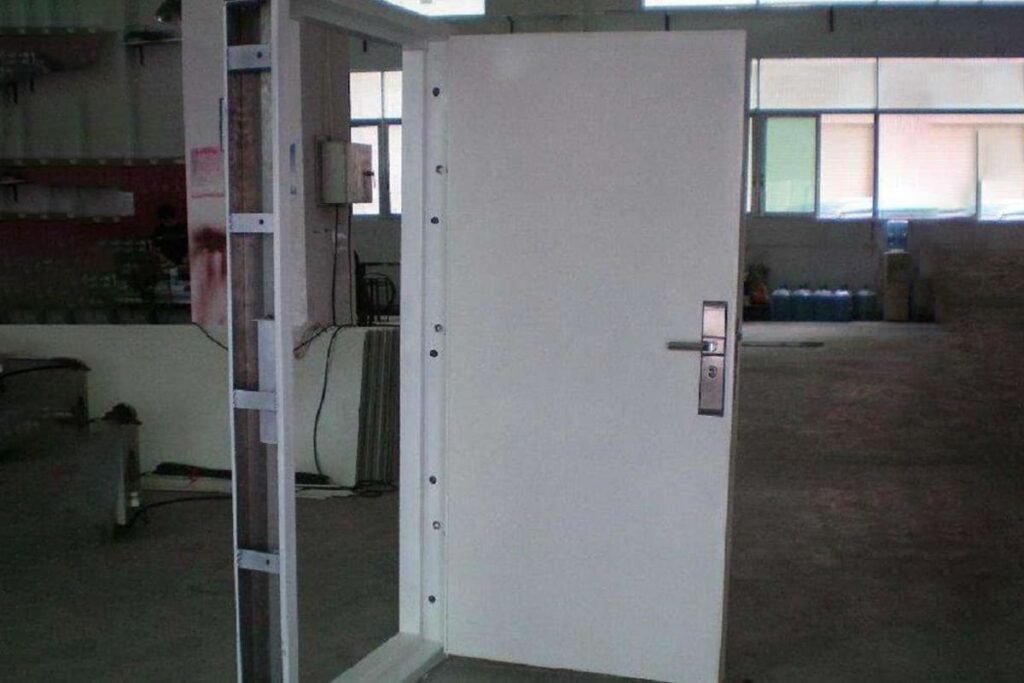
How Does a Magnetic Door Lock Work?
A magnetic door lock can look simple from the outside, but buyers often misjudge how it works, where it fits, and what can go wrong. That creates selection risk, installation complaints, and after-sales cost. I use this guide to explain the mechanism in practical procurement terms, especially for door factories, hardware brands, and wholesalers.
A magnetic door lock works by using magnetic force to secure or release a door. Surface-mounted electromagnetic locks use an energized coil and armature plate to create holding force, while magnetic mortise locks use a magnet to drive or retract a latch bolt inside the door leaf. The correct type depends on door material, installation method, safety requirements, and project standards.
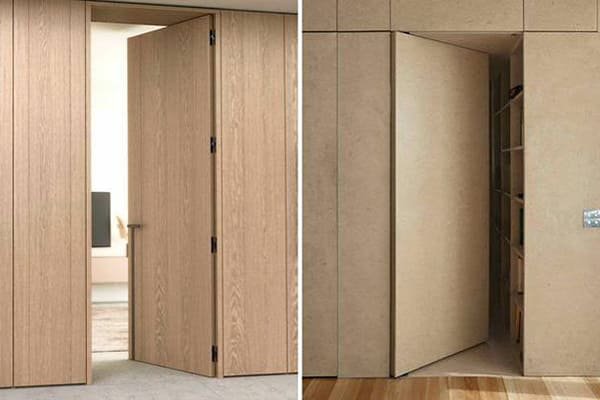
Many customers first ask me about holding force or product appearance. Those details matter, but they are not enough. A reliable choice also depends on door structure, climate, usage frequency, certification needs, and whether the lock is for access control or mechanical silent closing.
How Does a Magnetic Door Lock Work in Basic Terms?
A magnetic door lock becomes confusing when people use one name for several different products. That confusion can lead to wrong quotations, wrong samples, and delayed projects. I have seen buyers compare a surface access-control magnet with a magnetic mortise sashlock, even though they solve different problems.
A magnetic door lock works in one of two common ways. An electromagnetic lock uses electric current to create a magnetic field that holds an armature plate.1 A magnetic mortise lock uses permanent magnetic attraction to move a latch bolt when the door meets the strike plate.2 Both use magnetism, but their structure, installation, and applications differ.

Two meanings behind the same product name
In B2B door hardware procurement, the phrase magnetic door lock usually refers to one of two categories:
| Type | Main Working Method | Installation | Common Use |
|---|---|---|---|
| Surface-mounted electromagnetic lock | Electric current creates magnetic holding force | Mounted on frame and door surface | Access control doors, offices, public buildings |
| Magnetic mortise lock | Magnet drives latch bolt when door closes | Recessed inside door leaf | Interior doors, hotel doors, residential doors, bathroom doors |
This difference matters because the buyer’s evaluation logic changes completely.
A surface-mounted electromagnetic lock is usually part of an electronic access control system. It often works with a power supply, exit button, access reader, controller, and emergency release system.3 When power is supplied, the magnet holds the armature plate and keeps the door locked. When power is cut, the door releases. This is why many electromagnetic locks are described as fail-safe.4
A magnetic mortise lock works more like a mechanical lock body. It sits inside the door, similar to a standard mortise lock. However, instead of a traditional spring latch constantly protruding from the lock case, the latch can stay hidden until it meets the magnetic strike plate. When the door closes, the magnet pulls the latch bolt out and into the strike. This creates quieter closing and a cleaner appearance5.
Why buyers should not mix the two
I often explain this distinction during pre-sales calls because the purchasing consequences are very real.
If a customer wants access control, a magnetic mortise sashlock may not solve the requirement by itself. If a customer wants silent interior door closing, a surface-mounted electromagnetic lock may be excessive, visible, and unsuitable for the design.
Here is a simple way I classify the request:
Does the project need electronic access control?
If yes, evaluate electromagnetic locks or electric mortise lock systems.Does the project need quiet, flush, modern mechanical locking?
If yes, evaluate magnetic mortise locks.Does the door need fire-rated performance?
If yes, ask for test reports and certificates that match the complete door assembly requirement6.Does the buyer need a European-style product line?
If yes, compare dimensions, forend sizes, strike plates, cylinder holes, and handle compatibility.
In my experience, the best procurement result comes when the buyer describes the door, project, and end market before asking for price.
That small step prevents wrong specification and improves supplier selection.
How Does a Magnetic Door Lock Differ From a Magnetic Mortise Lock?
A magnetic door lock is not always an access-control magnet. This misunderstanding can cause serious product mismatch, especially for door manufacturers developing interior door sets. A magnetic mortise lock, such as a magnetic sashlock, bathroom lock, or BB key lock, has a different working principle and a different commercial value.
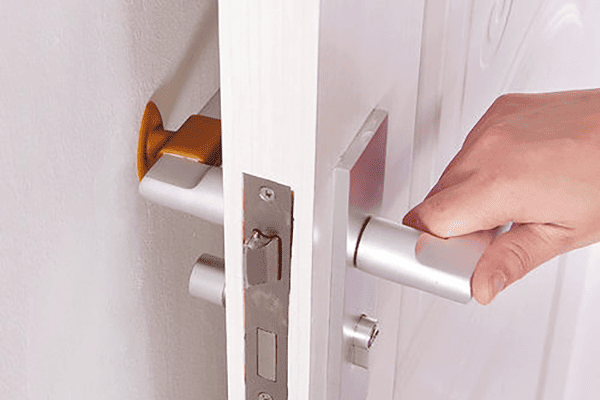
A magnetic mortise lock is installed inside the door leaf. Its latch bolt usually remains retracted when the door is open. When the door closes, a magnet in the strike plate attracts and activates the latch bolt. This creates smoother closing, less latch noise, and a cleaner edge appearance than many traditional mechanical latches.
Common magnetic mortise lock types
Magnetic mortise locks are especially relevant for architectural door hardware brands and door factories. They are not all the same. Common versions include:
Magnetic sashlock
Usually supports lever handle operation and cylinder locking.Magnetic bathroom lock
Usually supports privacy locking with thumb turn and emergency release.Magnetic BB key lock
Usually supports a simple key function for interior doors.Magnetic passage lock
Usually supports latch function without key locking.
These categories may vary by market, standard, and manufacturer. For procurement, I suggest confirming the lock case dimensions, forend design, backset, center distance, follower size, strike plate type, and compatible cylinders or accessories.
Practical difference in operation
A traditional mortise lock often has a spring latch that projects from the door edge. When the door closes, the latch hits the strike plate and compresses. That creates the familiar “click” sound. It also causes visible wear on the strike area over time.
A magnetic mortise lock changes that experience. The latch stays inside the lock body while the door is open. When the door approaches the frame, the magnetic strike pulls the latch out. The door closes more softly because the latch is not constantly scraping against the strike plate.
For product managers, this creates several selling points:
| Buyer Concern | Magnetic Mortise Lock Advantage |
|---|---|
| Interior door noise | Quieter closing feel |
| Door edge appearance | Cleaner look when door is open |
| Premium positioning | More modern and refined product story |
| Customer complaints | Less latch-strike impact if installed correctly |
| Door factory assembly | Consistent with European-style door hardware sets |
Where magnetic mortise locks fit best
In my work with door hardware buyers, I see magnetic mortise locks used most often in:
- Apartment interior doors
- Hotel room interior doors
- Villa and residential projects
- Office wooden doors
- Bathroom and privacy doors
- High-end flush door systems
They are usually not selected only because they “lock.” Buyers select them because they improve the feel of the door set. The product becomes part of the customer experience.
Limits buyers should understand
Magnetic mortise locks are not magic. They still require correct door machining and alignment. If the door leaf warps, the frame shifts, or the strike plate is poorly positioned, the latch may not engage smoothly.
Important checks include:
Door gap control
The gap between door leaf and frame must support magnetic attraction.7Strike plate position
Small misalignment can reduce smooth engagement.Door material stability
Wood, MDF, aluminum, and composite doors behave differently under humidity and temperature.8Handle and cylinder compatibility
A lock body may not match every lever handle, spindle, escutcheon, or profile cylinder.Market standard compatibility
European markets may expect different dimensions from Middle East or Southeast Asia projects.
Established European market players such as AGB, KFV, STV, and BONAITI have helped shape buyer expectations for smooth movement, accurate dimensions, and premium interior-door experience. A supplier does not need to copy these brands, but buyers often use them as quality references when comparing product positioning.
For SDH Hardware, this is where factory capability becomes important. A buyer should verify whether the supplier can maintain stable dimensions, finish consistency, latch movement, and strike matching across bulk orders. Samples may look good, but mass production consistency decides the real procurement outcome.
What Parts Make a Magnetic Door Lock Function Properly?
A magnetic door lock can fail even when the lock body itself is acceptable. The problem may come from the armature plate, strike plate, power supply, door alignment, or installation tolerance. Buyers who only inspect the visible lock case may miss the parts that actually determine field performance.
The key parts of a magnetic door lock depend on the type. An electromagnetic lock needs a magnet body, armature plate, power input, mounting bracket, and control accessories. A magnetic mortise lock needs a lock case, magnetic latch bolt, strike plate, follower, forend, and compatible handles or cylinders. Every part must match the door system.
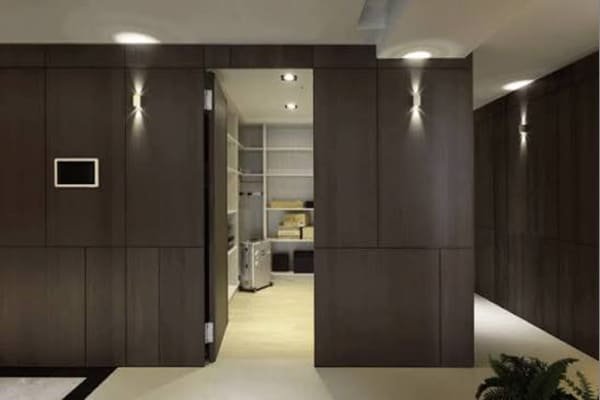
Components of a surface-mounted electromagnetic lock
For access control applications, the basic system includes:
| Component | Function | Buyer Checkpoint |
|---|---|---|
| Magnet body | Creates magnetic holding force | Housing quality, coil stability, voltage |
| Armature plate | Receives magnetic force | Flatness, surface treatment, thickness |
| Mounting bracket | Supports installation | L/Z/U bracket availability |
| Power supply | Energizes the magnet | Voltage, backup power, protection |
| Access controller | Controls locking signal | System compatibility |
| Exit button or reader | User operation | Project requirement |
| Release device | Emergency safety | Local code compliance |
The lock may be advertised with holding force such as 280 kg, 350 kg, 500 kg, or higher9, depending on model and test method. Buyers should treat these values as supplier-stated specifications and request supporting test data where needed. Holding force can be affected by plate contact, installation flatness, voltage stability, and surface contamination.10
Components of a magnetic mortise lock
For a magnetic mortise lock, the quality checkpoints are different:
- Lock case thickness and material
- Forend plate material and finish
- Latch bolt movement
- Magnet strength and strike matching
- Follower durability
- Deadbolt function if included
- Cylinder hole accuracy
- Bathroom turn function if included
- Screw quality and accessory packaging
A buyer should not evaluate only the outer finish. The inside structure affects long-term reliability. During sample review, I usually suggest testing the lock with the actual door material or a door mock-up. This gives more realistic feedback than holding the lock body in hand.
Inspection ideas for bulk procurement
For door factories and wholesalers, I recommend a simple incoming inspection checklist:
Visual inspection
- Surface finish consistency
- Scratches, burrs, and deformation
- Color matching across batches
Dimension inspection
- Backset
- Center distance
- Forend size
- Case depth
- Strike plate dimensions
Function inspection
- Latch attraction
- Handle return
- Cylinder operation
- Bathroom privacy turn
- Closing smoothness
Assembly inspection
- Screw fit
- Accessory completeness
- Packaging protection
- Label and model consistency
Document inspection
- CE certificate, if required
- Fire-rated documents, if required
- Test reports
- Warranty terms
- Material or finish confirmation
Why small parts create big after-sales issues
A lock body may pass basic testing, but the final door set may still disappoint the end customer. This often happens when the lock, handle, cylinder, and strike plate come from different sources without dimensional coordination.
For example, a lever handle with poor spring return can make buyers think the lock body is defective. A weak door frame can affect the strike position. A surface finish that looks acceptable in one batch may vary in a later shipment if the supplier lacks controlled finishing processes.
This is why I prefer one-stop door hardware sourcing for projects that need consistency. When mortise locks, lever handles, cylinders, hinges, and accessories are coordinated by one capable factory, the buyer has fewer matching risks. That does not remove the need for inspection, but it makes responsibility clearer.
At SDH Hardware, our business context focuses on standardized and customized door hardware, including mortise locks, lever handles, hinges, concealed hinges, and lock cylinders. For buyers, the practical benefit is not just product range. The benefit is easier coordination, more stable finish matching, and better batch control when the supplier’s production and quality process are mature.
What Should Buyers Check Before Choosing a Magnetic Door Lock?
A magnetic door lock should not be selected only by price, holding force, or catalog image. That approach may work for a small trial, but it creates risk in bulk procurement. The correct selection depends on door type, installation environment, market standards, certification requirements, and supplier quality control.
Before choosing a magnetic door lock, buyers should check the application, door material, installation method, operating environment, certification documents, finish requirements, warranty terms, and supplier production capability. For B2B procurement, the best lock is not always the strongest one. It is the one that fits the door system and target market reliably.
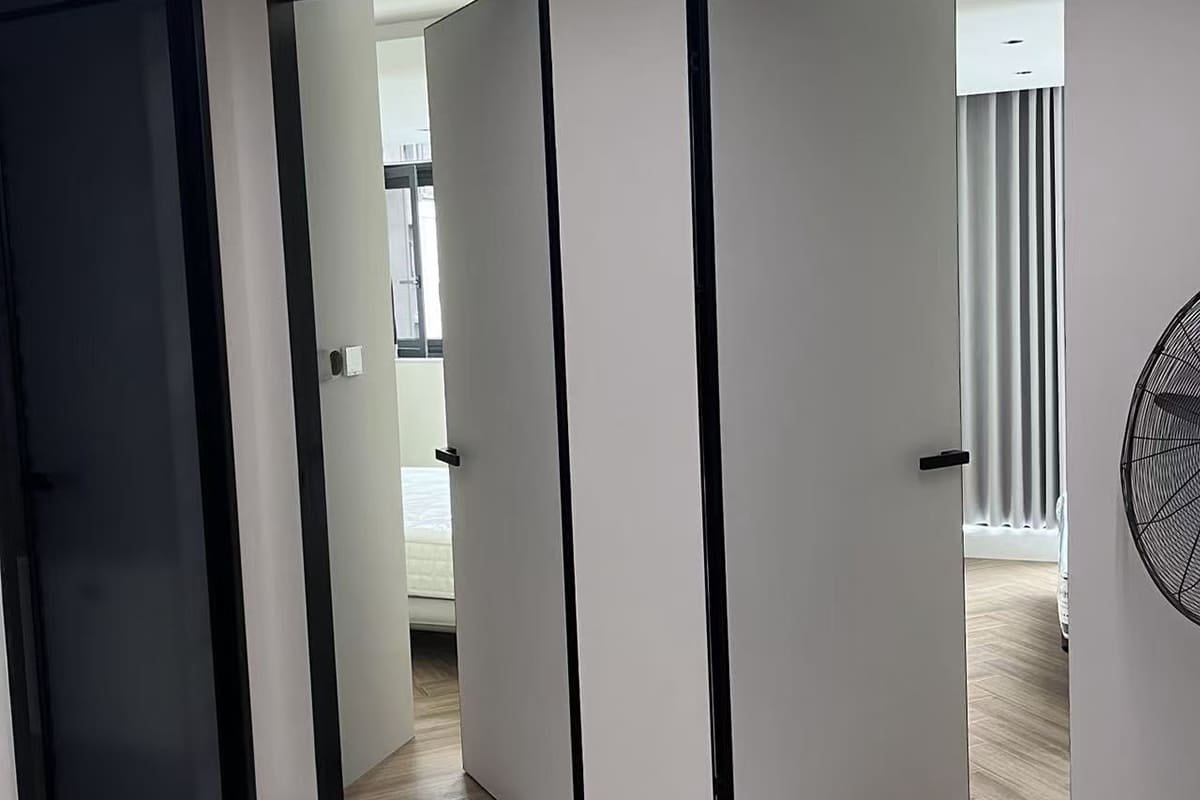
Application comes first
The first question should be simple: Where will the lock be used?
Different applications create different requirements:
| Application | Better Fit | Main Reason |
|---|---|---|
| Access-controlled office entrance | Electromagnetic lock | Works with reader and controller |
| Interior wooden bedroom door | Magnetic mortise lock | Quiet closing and clean appearance |
| Bathroom privacy door | Magnetic bathroom lock | Privacy function and smooth latch |
| Fire door project | Certified lock system | Compliance and safety requirements |
| Hotel interior door | Magnetic mortise lock or electronic system | Depends on door function |
| Aluminum glass door | Electromagnetic lock or special hardware | Mounting compatibility |
What Common Problems Happen With Magnetic Door Locks?
A magnetic door lock often receives blame when the real issue is installation, power supply, door alignment, or incorrect product selection. This matters for wholesalers and hardware brands because end customers rarely separate product defects from application mistakes. They simply report that “the lock does not work.”
Common magnetic door lock problems include weak holding force, poor latch engagement, noisy closing, misalignment, corrosion, finish inconsistency, power failure, and wrong product selection. Many issues can be prevented by matching the lock type to the application, checking installation tolerance, verifying accessories, and testing samples under realistic door conditions.
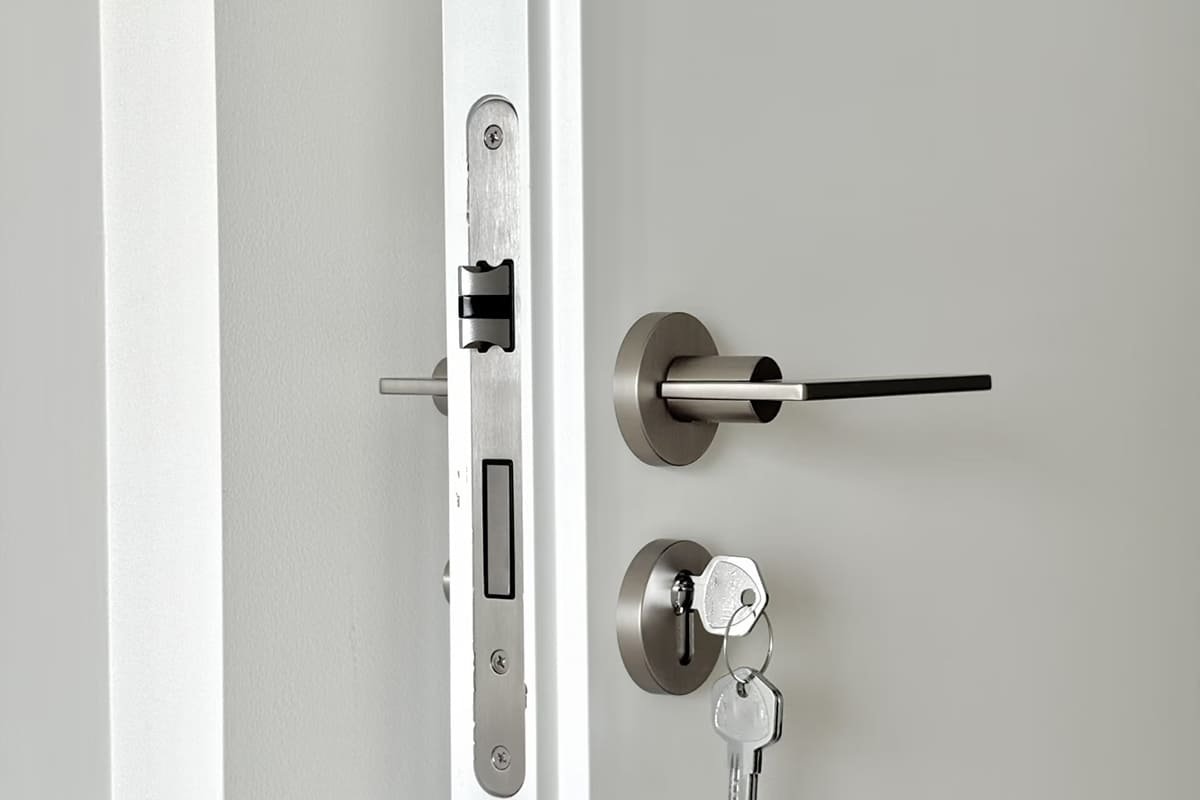
Problem 1: Weak holding force in electromagnetic locks
Weak holding force can happen even when the lock model is correct. Typical causes include:
- Armature plate not fully contacting the magnet
- Door frame not rigid enough
- Incorrect bracket installation
- Low or unstable voltage
- Dirt, paint, or protective film on contact surfaces
- Wrong lock size for door weight or traffic level
For buyers, the solution is not always to choose the highest holding force. A stronger magnet may still perform poorly if installation is wrong. I recommend reviewing the complete installation method and requesting test data from the supplier when the project is sensitive.
Problem 2: Magnetic mortise latch does not engage smoothly
For magnetic mortise locks, latch engagement issues usually come from alignment.
Common causes include:
- Strike plate installed too high or too low
- Door gap too large
- Door leaf warped after installation
- Frame not square
- Incorrect machining depth
- Wrong strike plate paired with lock body
A magnetic latch needs the correct distance to activate. If the gap is outside the working range, the user may feel weak attraction or inconsistent closing. This is why door factories should test locks on real door samples before mass production.
Problem 3: Noise remains after switching to magnetic locks
Many customers choose magnetic mortise locks for quieter closing. However, the door may still make noise if other parts are not controlled.
Noise can come from:
- Hinges
- Door seals
- Frame impact
- Loose handles
- Poorly fixed strike plate
- Door closer speed
- Hollow door structure
A magnetic mortise lock reduces latch impact, but it does not silence the entire door system. For premium projects, the buyer should evaluate the complete door set.
Problem 4: Corrosion and finish complaints
Corrosion can damage both appearance and function. It is more common in coastal regions, high-humidity buildings, and projects with aggressive cleaning chemicals.11
Problem 5: Wrong product sold into the wrong project
This is one of the most expensive problems because it is preventable.
Examples include:
| Wrong Selection | Likely Result |
|---|---|
| Magnetic mortise lock sold as access-control lock | Function does not meet project requirement |
| Electromagnetic lock used on design-focused interior door | Poor appearance and over-specification |
| Non-fire-rated model used for fire-door project | Compliance risk |
| Indoor finish used in humid market | Corrosion complaints |
| Incompatible backset or center distance | Door machining rework |
I have learned to slow down at the quotation stage. A few extra questions can prevent a costly shipment mistake. Buyers should do the same when they source from new suppliers.
How Can Understanding Magnetic Door Lock Operation Improve Procurement Decisions?
A magnetic door lock becomes easier to buy when the buyer understands how the mechanism creates value. The goal is not to become an engineer. The goal is to ask better questions, compare suppliers more fairly, and avoid products that look similar but perform differently in real projects.
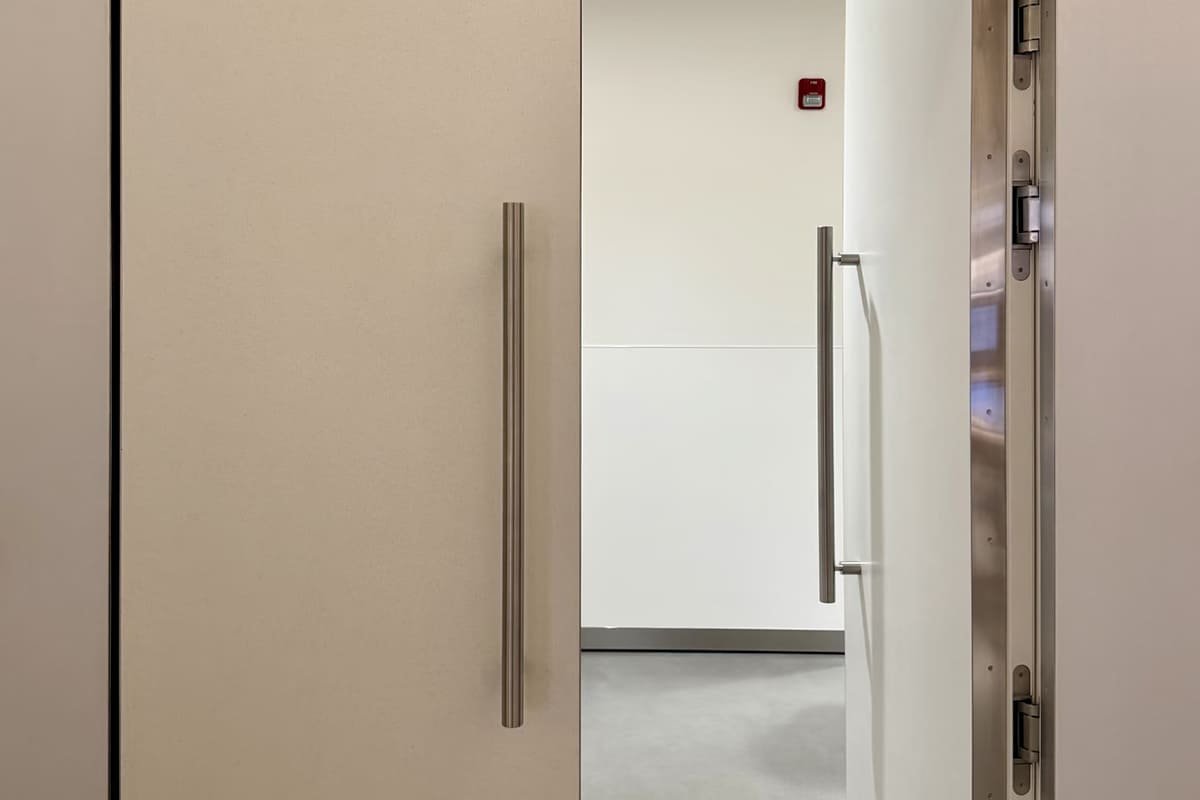
Better questions create better quotations
When buyers understand the working principle, they can send clearer inquiries. A strong inquiry saves time for both sides.
A useful inquiry should include:
- Lock type needed
- Door material
- Door thickness
- Backset and center distance
- Forend size
- Finish requirement
- Function type: sashlock, bathroom, BB key, passage, access control
- Required certificates
- Target market
- Order quantity
- Packaging needs
- Sample testing plan
This allows the supplier to recommend accurately. It also reduces the chance of comparing two products that are not equivalent.
Better comparison improves product positioning
Many magnetic locks look similar in photos. The real difference may be inside the lock case, in the magnet, in the latch precision, in the finish process, or in the consistency of bulk production.
For product managers, comparison should include:
| Evaluation Area | Low-Risk Question |
|---|---|
| Mechanism | Does the latch move smoothly after repeated use? |
| Finish | Can the supplier keep color consistent across batches? |
| Compatibility | Does it match our handles, cylinders, and door machining? |
| Certification | Are documents valid for our market and model? |
| Packaging | Can it protect the finish during sea freight? |
| Customization | Can the supplier adjust forend, strike, finish, or branding? |
| Supply | Can the factory support repeat orders on schedule? |
Better training reduces customer complaints
Wholesalers and brand owners also need to explain the product to their customers. A simple training script helps sales teams avoid overpromising.
For magnetic mortise locks, the sales message can be:
- The latch stays hidden when the door is open.
- The magnetic strike activates the latch when the door closes.
- The door should be machined and aligned correctly.
- The lock improves closing feel but does not replace full door-system quality control.
- The correct model depends on door function and market standard.
For electromagnetic locks, the sales message can be:
- The magnet holds the door while powered.
- The system usually releases when power is cut.
- The holding force depends on correct installation and voltage.
- The lock must match access-control and safety requirements.
- Emergency release rules should be checked by qualified professionals.12
Better supplier selection protects long-term business
For B2B procurement, the supplier relationship often matters more than a single order. A low-cost supplier with unstable quality can damage the buyer’s brand. A capable factory with consistent production can support long-term channel growth.
I usually advise buyers to look for suppliers who can provide:
- Standardized product drawings
- Clear specification sheets
- Sample support
- Batch inspection process
- Finish control
- ODM customization
- Certificate documents for verification
- Responsive communication
- Realistic delivery commitments
SDH Hardware’s strength is aligned with this type of buyer need. The company focuses on architectural door hardware manufacturing, including mortise locks, lever handles, butt hinges, concealed hinges, and lock cylinders. For buyers in the Middle East, Europe, and Southeast Asia, this can support one-stop procurement and coordinated product series development.
"Electromagnetic lock", https://en.wikipedia.org/wiki/Electromagnetic_lock. A technical reference on magnetic locks describes electromagnetic door locks as devices in which electric current energizes an electromagnet that attracts an armature plate to secure the door. Evidence role: mechanism; source type: encyclopedia. Supports: The source should explain that an electromagnetic lock uses current through an electromagnet to attract an armature plate and hold a door closed.. ↩
"door lock with integrated door position sensor", https://patents.justia.com/patent/20140292001. Patent literature for magnetic latch locks describes mechanisms in which magnetic attraction between the strike region and the latch assembly moves the latch bolt as the door closes. Evidence role: mechanism; source type: government. Supports: The source should describe a mortise or latch lock in which a magnet associated with the strike interacts with a movable latch bolt when the door reaches the closed position.. Scope note: Patent evidence supports the mechanical concept but does not prove that all commercial magnetic mortise locks use the same construction. ↩
"physical access control system - Glossary | CSRC", https://csrc.nist.gov/glossary/term/physical_access_control_system. Government guidance on physical access-control systems describes architectures that combine credentials or readers, controllers, electronic locking devices, and supporting egress or release functions. Evidence role: general_support; source type: government. Supports: The source should identify common physical access-control system components such as readers, controllers, electronic locks, power, and egress devices.. Scope note: The guidance supports typical system architecture and may not prescribe the exact components required for every electromagnetic-lock installation. ↩
"Code Requirements for Electromagnetic Locks", https://idighardware.com/2012/02/locksmith-ledger-code-requirements-for-electromagnetic-locks/. Model life-safety and building-code references describe fail-safe electromagnetic locking arrangements as releasing when power to the locking device is interrupted. Evidence role: definition; source type: institution. Supports: The source should define fail-safe electrically locked doors or electromagnetic locks as releasing upon loss of power.. Scope note: Specific egress requirements depend on the jurisdiction and the edition of the adopted code. ↩
"Magnetic Door Latch vs Traditional Latch - Zuperior Hardware", https://www.zuperiorhardware.com/blogs/diy-tips-interior-door-hardware-zuperior-blog/magnetic-door-latch-vs-traditional-latch-why-zuperior-hardware-is-the-quiet-choice-for-modern-homes?srsltid=AfmBOooic-IPOSmdzIyGDo2BjnDvD8AB7C303wg2QEgdm_WRdSYYuLZ2. Patent descriptions of magnetic latch locks explain that the latch may remain retracted until it aligns with a magnetic strike, providing contextual support for reduced latch-strike contact and a flush door-edge appearance. Evidence role: general_support; source type: government. Supports: The source should show that magnetic latch designs can keep the latch retracted until magnetic engagement with the strike, which contextualizes reduced scraping and a cleaner door edge.. Scope note: Such sources support the design rationale but may not provide independent measurements of perceived noise reduction. ↩
"Fire Doors and NFPA 80 FAQs", https://www.nfpa.org/news-blogs-and-articles/blogs/2025/04/11/fire-doors-faqs. Fire-door standards and certification guidance treat fire doors as listed assemblies and require hardware to be suitable for the labeled assembly, supporting the need to verify reports and certificates against the complete door system. Evidence role: general_support; source type: institution. Supports: The source should explain that fire-door hardware must be compatible with the fire-door assembly listing or certification.. Scope note: The exact documentation required depends on the applicable fire standard, certification scheme, and local authority having jurisdiction. ↩
"Electrical Tech Note — 317", https://www.maec.msu.edu/download_file/view/156. Educational physics and engineering references describe magnetic attraction as dependent on the separation or air gap between magnetic components, supporting the installation concern about door-to-frame spacing. Evidence role: mechanism; source type: education. Supports: The source should explain that magnetic attraction depends strongly on separation distance or air gap.. Scope note: This supports the physical principle rather than a specific manufacturer’s tolerance for a particular lock model. ↩
"Chapter 4: Moisture relations and physical properties of wood", https://research.fs.usda.gov/treesearch/62243. Government materials references document that wood-based products change dimension with moisture content while metals such as aluminum are governed primarily by thermal expansion, supporting the claim that door materials behave differently under humidity and temperature. Evidence role: mechanism; source type: government. Supports: The source should document that wood-based products and metals respond differently to moisture and temperature through swelling, shrinkage, or thermal expansion.. Scope note: The materials data provide context and do not predict the movement of a specific installed door assembly. ↩
"Electromagnetic lock - Wikipedia", https://en.wikipedia.org/wiki/Electromagnetic_lock. General references on magnetic locks describe electromagnetic locks as being rated by holding force, commonly expressed in pounds or kilograms, with standard commercial ratings equivalent to several hundred kilograms. Evidence role: statistic; source type: encyclopedia. Supports: The source should show that electromagnetic locks are specified by holding force and commonly appear in ratings equivalent to several hundred kilograms.. Scope note: Such a source contextualizes the stated range but does not verify any individual supplier’s tested holding-force claim. ↩
"Electromagnetic lock - Wikipedia", https://en.wikipedia.org/wiki/Electromagnetic_lock. Access-control installation guidance states that electromagnetic lock holding force depends on correct armature contact, alignment, clean mating surfaces, and appropriate power supply conditions. Evidence role: mechanism; source type: institution. Supports: The source should document that electromagnetic lock holding force depends on proper armature contact, alignment, clean surfaces, and correct electrical supply.. Scope note: Installation guidance may be general and may not quantify the loss of holding force for every condition. ↩
"Marine Atmospheric Corrosion of Carbon Steel: A Review - PMC - NIH", https://pmc.ncbi.nlm.nih.gov/articles/PMC5506973/. Corrosion standards and technical references identify humidity, chloride-rich coastal atmospheres, and chemically aggressive exposures as factors that accelerate corrosion and coating degradation. Evidence role: mechanism; source type: institution. Supports: The source should explain that humidity, chloride exposure, and aggressive chemicals accelerate corrosion of metals and coatings.. Scope note: The source would support environmental risk factors generally, not the corrosion resistance of a specific lock finish. ↩
"Sensor release of electrically locked egress doors", https://dps.mn.gov/divisions/sfm/fire-code/fire-code-information-topic/sensor-release-electrically-locked-egress-doors. Model building and life-safety codes specify conditions for electrically locked egress doors, including release methods and loss-of-power behavior, supporting the need for qualified code review. Evidence role: general_support; source type: institution. Supports: The source should show that building and life-safety codes regulate electrically locked egress doors and emergency release conditions.. Scope note: Code obligations vary by local adoption, occupancy type, door function, and code edition. ↩