Stainless Steel 316 Security Heavy Duty Lever Handle: How Should Buyers Evaluate It?
A Stainless Steel 316 Security Heavy Duty Lever Handle can look impressive on a specification sheet, but buyers still face real risks. Corrosion complaints, loose handles, poor spring return, and lock mismatch can damage a project fast. I evaluate this handle as a complete performance component, not only as a premium stainless steel label.
A Stainless Steel 316 Security Heavy Duty Lever Handle should be evaluated by material suitability, structural durability, lock compatibility, fixing method, surface consistency, and supplier quality control. 316 or 316L stainless steel can improve corrosion resistance in humid, coastal, public-use, or frequently cleaned environments, but the handle still needs correct maintenance and system-level matching.
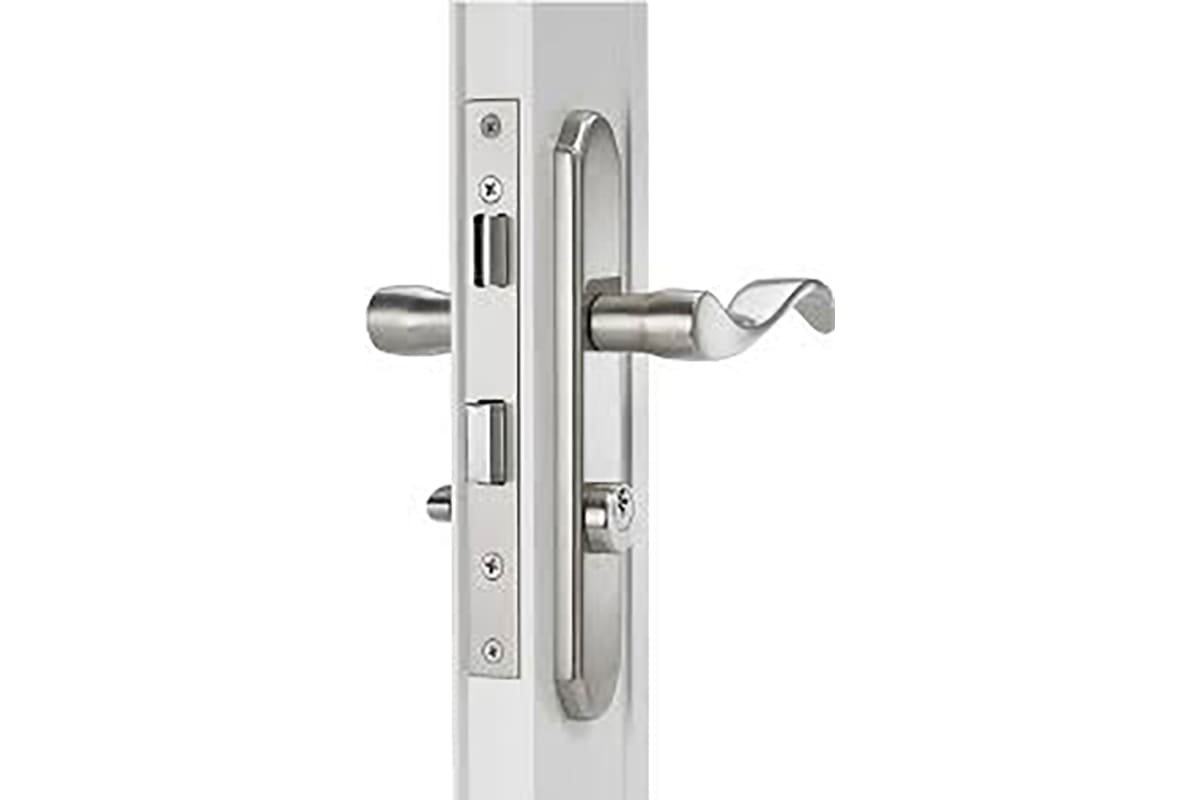
I have seen buyers focus only on “316” and miss the details that decide long-term performance. The better approach is to connect the handle to the real door environment, the lock body, the fixing design, the usage frequency, and the procurement risk.
What Is a Stainless Steel 316 Security Heavy Duty Lever Handle?
A buyer can easily read the product name and assume it means “best quality.” That assumption creates problems. If the material, structure, and application are not clearly defined, the same handle can perform well in one project and disappoint in another.
A Stainless Steel 316 Security Heavy Duty Lever Handle is a door lever handle made from 316 or 316L stainless steel, designed for higher corrosion resistance, stronger daily-use durability, and better support in security-oriented door hardware systems. It should be matched with the correct lock, cylinder, door structure, and installation method.
The name includes three different buying decisions
I like to separate this product name into three procurement questions:
| Term | What buyers often think | What I recommend checking |
|---|---|---|
| Stainless Steel 316 | Premium stainless steel | Confirm 316 or 316L grade, surface process, and environment suitability |
| Security | Stronger door protection | Check lock body, cylinder, fixing method, door type, and installation quality |
| Heavy Duty | Thick and heavy handle | Check spindle fit, spring return, base strength, screw design, and cycle performance |
This separation is important. A handle can be made from 316 stainless steel but still have poor internal structure. A heavy handle can still sag if the spring cassette, spindle, or fixing screws are weak. A “security” handle can still fail to protect the door if it is paired with a low-grade lock or installed into a weak door leaf.
Why 316 and 316L matter
In my production experience, lever handles face tougher daily exposure than many buyers expect. A hinge may move often, but a handle is touched directly by people every day. Human sweat, moisture, dust, and cleaning chemicals all contact the surface. In public buildings, handles may also be cleaned many times per day with disinfectants.
316 stainless steel contains molybdenum, which generally improves resistance to chloride-related corrosion compared with standard 304 stainless steel.1 316L has lower carbon content, which can be useful in certain fabrication and corrosion-sensitive contexts.2 However, I never describe 316 or 316L as “rust-proof.” Stainless steel still needs suitable surface finishing, correct cleaning, and realistic maintenance.3
What “security” should mean
A lever handle supports security, but it does not create security alone. I usually ask buyers to confirm:
- Door type: wooden door, steel door, fire-rated door, aluminum door, or composite door
- Door thickness: common project ranges may include 35–55 mm, but this must be confirmed
- Lock body: euro mortise lock, tubular lock, panic function, or project-specific lock
- Cylinder type: euro profile cylinder, thumbturn cylinder, or special key system
- Fixing method: through-bolt fixing, concealed fixing, visible screw fixing, or back-to-back setup
- Escutcheon or rose design: long plate, short plate, round rose, square rose, or security plate
I treat the lever handle as one part of the door hardware system. That mindset helps reduce procurement mistakes.
When Should Buyers Choose a Stainless Steel 316 Security Heavy Duty Lever Handle?
Choosing too low a material grade can cause surface complaints. Choosing an over-specified product can hurt project cost. The challenge is to match the handle to the real exposure level, not only to the buyer’s wish for a premium product line.
Buyers should choose a Stainless Steel 316 Security Heavy Duty Lever Handle for high-contact public doors, humid regions, coastal markets, premium buildings, and projects with frequent cleaning or disinfectant exposure. It is especially relevant when corrosion complaints, finish consistency, and long-term handle stability are major procurement concerns.
Common environments where 316 makes sense
I usually recommend serious evaluation of 316 or 316L stainless steel in these conditions:
Coastal markets
Salt in the air can accelerate surface corrosion, especially near the sea.4Humid regions
High humidity increases the risk of spotting, staining, and maintenance complaints.5Public buildings
Airports, hospitals, schools, hotels, malls, and office buildings create high hand-contact frequency.Buildings with frequent cleaning
Disinfectants and chemical cleaners can be harsh on metal surfaces.6Premium product lines
Hardware brands may use 316 handles to position a higher-grade series.High-value project bidding
Some project specifications may request 316, 316L, or a defined corrosion resistance level.
304 vs 316 vs 316L: a practical buying comparison
| Material | Typical procurement use | Strengths | Cautions |
|---|---|---|---|
| 304 stainless steel | General architectural hardware | Cost-effective, widely used, good general corrosion resistance | May be less suitable for coastal or chemical-heavy cleaning environments |
| 316 stainless steel | Humid, coastal, public, premium projects | Better chloride corrosion resistance than 304 in many conditions | Still requires maintenance and correct surface finish |
| 316L stainless steel | Corrosion-sensitive or fabrication-sensitive requirements | Lower carbon content, often preferred for certain demanding specifications | Buyers should confirm actual grade and documents |
I do not push every buyer into 316. That would not be honest or cost-effective. A dry indoor residential project may not need it. A wholesale product line for a price-sensitive market may use 304 successfully if the finish, structure, and maintenance instructions are reasonable.
Cleaning exposure is often underestimated
In recent years, many public buildings have increased cleaning frequency. A lever handle may be wiped many times per day. Some cleaning agents contain chemicals that can damage surface appearance if used incorrectly. Even strong stainless steel can develop marks if aggressive chemicals remain on the surface.
I suggest that buyers ask three simple questions before confirming the material:
- How often will the handle be cleaned?
- What cleaning agent will the building use?
- Will the handle be exposed to sweat, salt air, or moisture daily?
These questions sound basic, but they prevent many complaints later.
A simple procurement decision matrix
| Project condition | 304 may be enough | 316/316L should be considered |
|---|---|---|
| Dry indoor office | Yes | Optional |
| Coastal hotel | Risky | Strongly recommended |
| Hospital corridor | Possible | Recommended due to cleaning frequency |
| School public door | Possible | Recommended for durability and finish stability |
| Budget residential interior | Yes | Usually unnecessary |
| Premium commercial project | Possible | Often preferred |
I use this kind of matrix when discussing specifications with buyers. It keeps the conversation practical. The goal is not to sell the most expensive handle. The goal is to reduce corrosion complaints, warranty risk, and brand damage.
How Should “Heavy Duty” Be Verified in a Stainless Steel 316 Security Heavy Duty Lever Handle?
Many suppliers describe handles as “heavy duty” because the handle feels thick or heavy in the hand. That is not enough. A handle may feel solid on day one but become loose after repeated use if the structure is poorly designed.
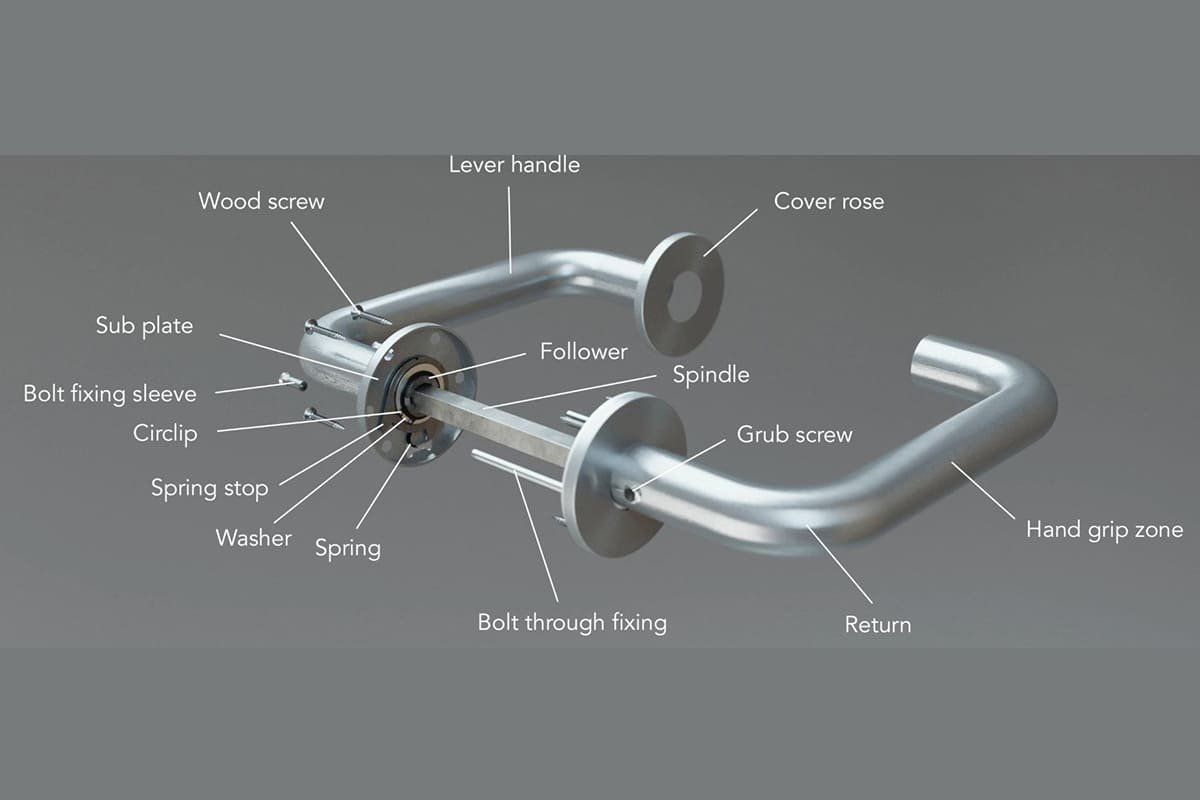
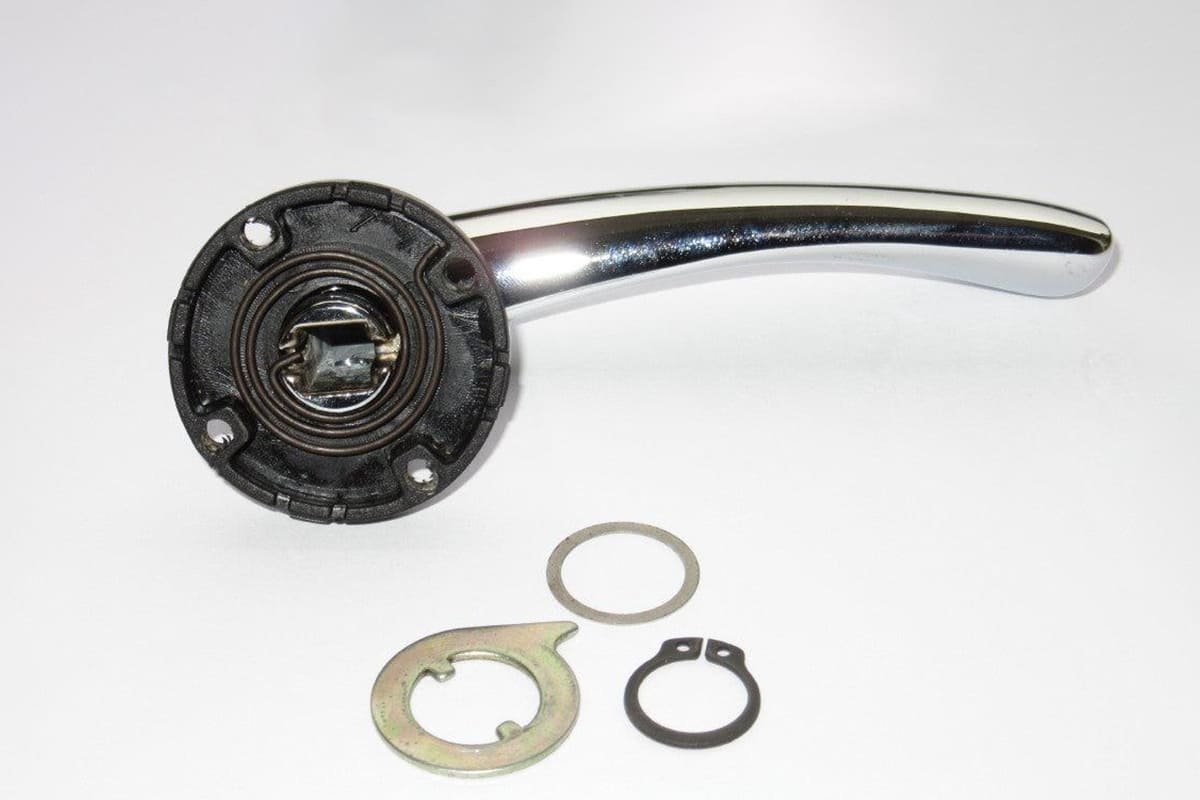
“Heavy duty” in a Stainless Steel 316 Security Heavy Duty Lever Handle should be verified through measurable structure and performance factors: base strength, spindle fit, spring return, screw fixing, installation hole accuracy, handle sag resistance, lock compatibility, and relevant durability or torque testing where applicable.
Weight is not the same as durability
I have handled samples that felt heavy but did not feel stable. I have also seen lighter designs perform well because the internal fit was accurate. For professional procurement, I suggest checking these points:
- Handle wall thickness
- Rosette or plate thickness
- Spindle size and tolerance
- Grub screw position
- Spring cassette quality
- Return angle stability
- Fixing screw material
- Through-bolt alignment
- Lock body follower compatibility
- Surface finishing process
A good heavy-duty handle should return smoothly, stay level, and resist looseness under repeated use.
Key structure points buyers should inspect
1. Spindle and follower fit
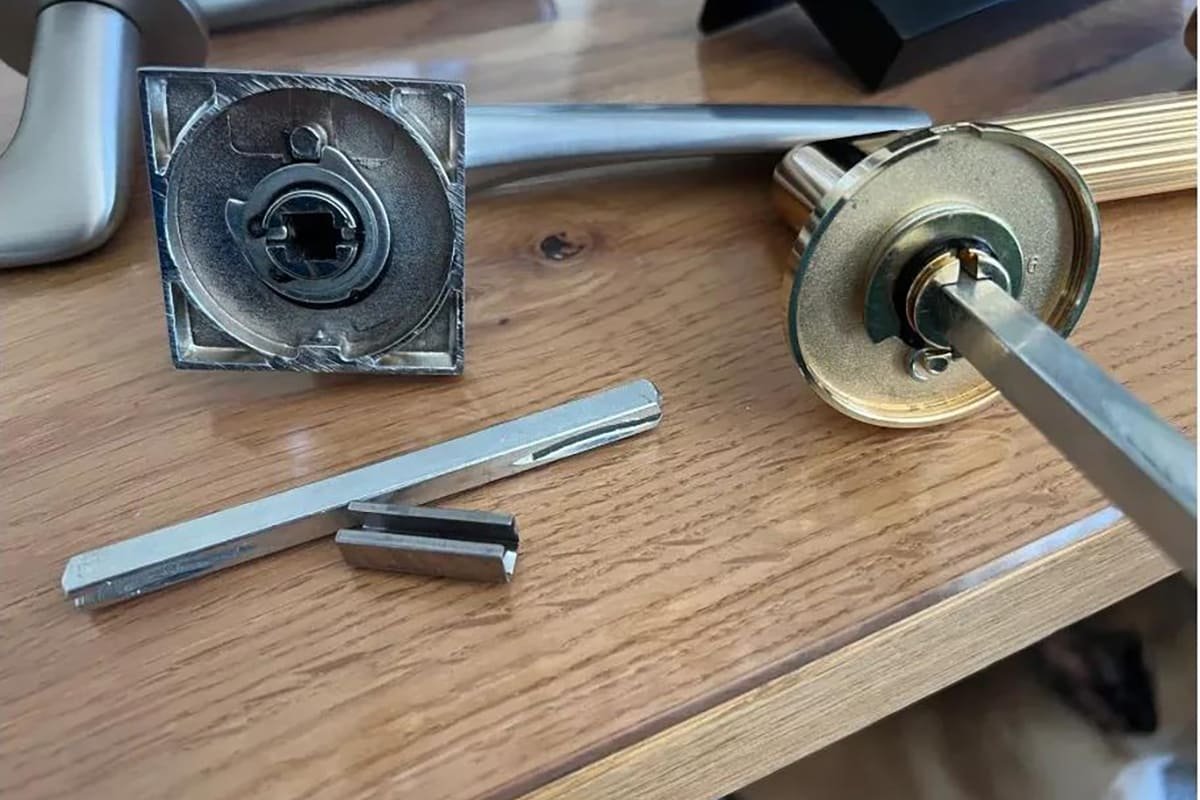
The spindle transfers hand force into the lock body. If the spindle is loose, undersized, or poorly matched with the lock follower, the handle can feel shaky. Over time, this can create sagging or poor latch retraction.
Common spindle sizes vary by market and lock system. Buyers should confirm the lock body first, then confirm spindle size and accessory configuration.
2. Spring return quality
A lever handle should return to its horizontal position after use. Poor spring return causes a “tired handle” appearance. In public buildings, this problem becomes visible quickly.
I usually pay close attention to:
- Spring strength
- Spring cassette material
- Internal friction
- Return consistency
- Left/right reversible structure
- Performance after repeated operation
3. Fixing strength
A heavy-duty lever needs strong fixing. Decorative screws alone may not be enough for public-use doors. Through-bolt fixing can improve stability because the two sides of the handle are connected through the door leaf.7
Buyers should confirm:
| Fixing item | Why it matters |
|---|---|
| Screw diameter | Affects pull-out resistance |
| Screw material | Affects corrosion and strength |
| Through-bolt distance | Must match lock body and door preparation |
| Hole position | Reduces installation errors |
| Plate or rose design | Affects load distribution |
4. Handle sag risk
Handle sag is one of the most common complaints in high-frequency use. It can come from several causes:
- Weak internal spring
- Poor spindle tolerance
- Heavy lever arm without support
- Low-quality lock body follower
- Incorrect installation
- Door misalignment
- Over-tightened or under-tightened screws
This is why I do not evaluate the handle alone. I always ask about the lock body and door preparation.
What about EN 1906-style evaluation?
For lever handles in European-style markets, buyers may refer to EN 1906 performance classifications for lever handles and knob furniture.8 This standard can include durability, mass of door, fire resistance suitability, safety, corrosion resistance, security, and type of operation classifications.9
However, I recommend that buyers verify the exact standard number, grade, torque value, cycle count, and security classification with the supplier’s documents before publishing or submitting claims. If a supplier claims a certain cycle test or torque performance, the buyer should request valid test reports from a qualified testing body.
I do not treat “tested” as a marketing word. I treat it as a document that must match the product model, material, finish, and configuration.
How Does Security Work with a Stainless Steel 316 Security Heavy Duty Lever Handle?
Security language can create misunderstanding. A strong lever handle can support a stronger door hardware system, but it cannot compensate for a weak lock, poor cylinder, thin door leaf, or incorrect installation.
Security in a Stainless Steel 316 Security Heavy Duty Lever Handle works only as part of a complete system. Buyers should evaluate the handle together with the mortise lock, cylinder, strike plate, door material, fixing screws, escutcheon design, and installer quality before assigning any security expectation.

A lever handle is not a lock
I often remind buyers that the handle operates the latch or lock mechanism. The lock body and cylinder provide much of the actual locking function. The door frame and strike plate also matter because they resist forced entry at the closing edge.10
A security-oriented handle may include:
- Stronger base plate or rose
- Concealed fixing
- Through-bolt installation
- Drill-resistant escutcheon features, if specified
- Better spindle engagement
- More robust lever construction
- Compatibility with security mortise locks
But the handle does not replace a certified lockset or a high-security cylinder.
System components to evaluate together
| Component | Security relevance | Buyer action |
|---|---|---|
| Lever handle | Controls operation and user contact | Check structure, fixing, spindle, and finish |
| Mortise lock | Provides latch and deadbolt function | Confirm lock standard, backset, center distance, and function |
| Cylinder | Controls key access | Confirm cylinder profile, key system, and security grade |
| Strike plate | Receives latch/deadbolt | Check thickness, screw length, and frame compatibility |
| Door leaf | Resists impact and deformation | Match hardware with door material and thickness |
| Installation | Determines final performance | Use correct drilling, alignment, and tightening |
Lock body compatibility matters
For many export orders, I ask buyers to confirm details such as:
- Center distance: for example, 72 mm, 85 mm, or project-specific spacing
- Backset: common values may include 45 mm, 50 mm, 55 mm, or 60 mm, depending on market
- Follower size: often square spindle sizes differ by lock system
- Door thickness: the accessory kit must match real door thickness
- Handle direction: left hand, right hand, or reversible
- Plate or rose style: long plate may cover more holes; rose design may need separate escutcheons
A beautiful handle becomes a problem if it does not fit the lock. In bulk orders, this mismatch creates rework, shipment delays, and field complaints.
Security claims should be bounded
I avoid phrases like “anti-theft handle” unless the product design and testing documents support that claim. A safer and more accurate statement is:
“This handle is designed for use in security-oriented door hardware systems when matched with a suitable lock body, cylinder, door structure, and fixing method.”
That wording protects both the buyer and the supplier. It also helps procurement teams write clearer specifications.
Project examples without overclaiming
I cannot claim a project performance result unless documents support it. However, from a factory discussion perspective, I often see similar requirements from buyers in:
- Hotel corridor doors
- Apartment entrance doors
- School classroom doors
- Hospital public doors
- Commercial office doors
- Coastal resort facilities
Each project needs a different balance of corrosion resistance, user comfort, durability, and system security. A hospital may care more about cleaning exposure and touch comfort. A coastal hotel may care more about salt air. A school may care more about impact, heavy use, and easy replacement.
How Can Buyers Control Quality for Stainless Steel 316 Security Heavy Duty Lever Handle Orders?
Bulk orders create another layer of risk. A sample may look acceptable, but mass production must stay consistent. If finish color, handle feel, screw packs, or hole positions vary, buyers may face assembly delays and customer complaints.
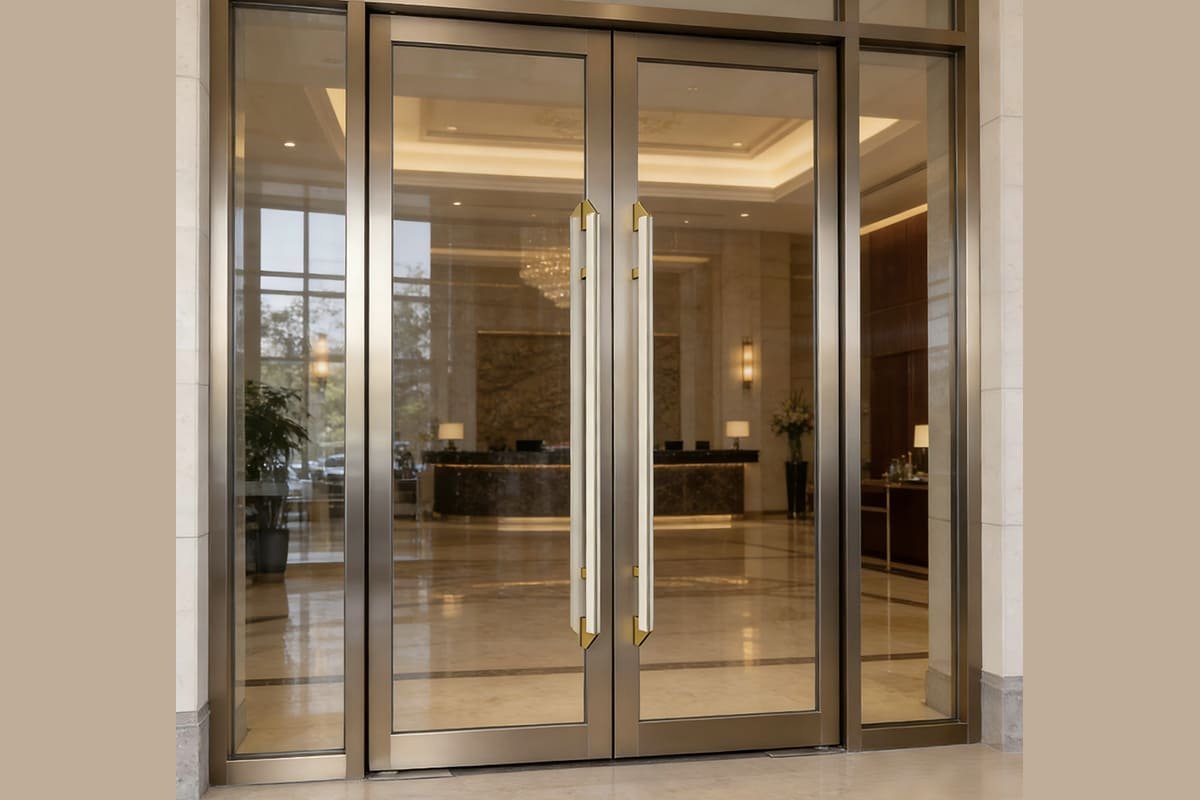
Buyers can control quality for Stainless Steel 316 Security Heavy Duty Lever Handle orders by confirming material grade, drawings, finish samples, lock compatibility, inspection standards, packaging method, certificate documents, and pre-shipment checks before mass production. A factory with stable process control can reduce variation across bulk orders.11
My usual pre-order confirmation list
In my factory work, I prefer to confirm technical details before production instead of solving problems after shipment. A clear confirmation sheet should include:
Material grade
- 316 or 316L stainless steel
- Confirmation method or supplier declaration
- Any requested material documents
Surface finish
- Satin stainless steel
- Polished stainless steel
- PVD finish, if required
- Brushed direction and gloss level
Handle design
- Lever shape
- Rose or plate type
- Escutcheon matching
- Hollow or solid design, if applicable
Lock compatibility
- Mortise lock model
- Center distance
- Backset
- Spindle size
- Cylinder hole type
Door condition
- Door thickness
- Door material
- Fire-rated door requirement, if any
- Project region and climate
Accessory pack
- Screws
- Spindle
- Through bolts
- Allen key
- Installation instructions
- Individual bag or box
Inspection criteria
- Finish defects
- Dimension tolerance
- Assembly stability
- Spring return
- Screw fitting
- Packaging strength
Bulk finish consistency is not automatic
Stainless steel handles can vary in surface appearance if polishing, brushing, or cleaning is not controlled. For brand importers and wholesalers, this is a serious issue because customers may compare multiple pieces on the same project.
I recommend confirming a sealed golden sample before mass production. This sample becomes the reference for:
- Surface texture
- Gloss level
- Edge polishing
- Welding or joint appearance
- Plate and handle color consistency
- Logo position, if customized
- Packaging label style
At SDH Hardware, our production background is focused on standardized and customized architectural door hardware, including stainless steel lever handles, mortise locks, butt hinges, concealed hinges, and lock cylinders. I still advise buyers to verify order-specific documents, certificates, and inspection results before final approval.
Quality control checkpoints
| Stage | What I check | Why it matters |
|---|---|---|
| Raw material | Grade, thickness, surface condition | Prevents wrong material and early finish issues |
| Machining | Hole position, spindle fit, edge condition | Reduces installation problems |
| Surface treatment | Brushing, polishing, cleaning | Improves appearance consistency |
| Assembly | Spring return, screw fit, lever alignment | Prevents sagging and loose feeling |
| Final inspection | Visual defects, function, packing | Reduces claims after shipment |
| Pre-shipment | Quantity, cartons, labels, accessories | Prevents logistics and warehouse problems |
Certification and fire-rated documents
Some door hardware projects require CE documents, fire-rated certificates, or other compliance files. I recommend that buyers treat these as documents to verify, not slogans to trust. The certificate should match:
- Product category
- Product model or series
- Material and configuration
- Test standard
- Validity period
- Issuing organization
- Intended application
For fire-rated doors, professional evaluation is especially important. A lever handle may be only one component in a tested door assembly.12 The door leaf, lock body, hinges, seals, closer, frame, and installation method may all affect compliance. Buyers should involve qualified professionals for application-specific decisions.
What Specifications Should Be Confirmed Before Ordering?
Specification gaps often look small at first. Then they create large problems during installation. A missing spindle size or wrong center distance can stop a door factory’s assembly line and delay container shipment.
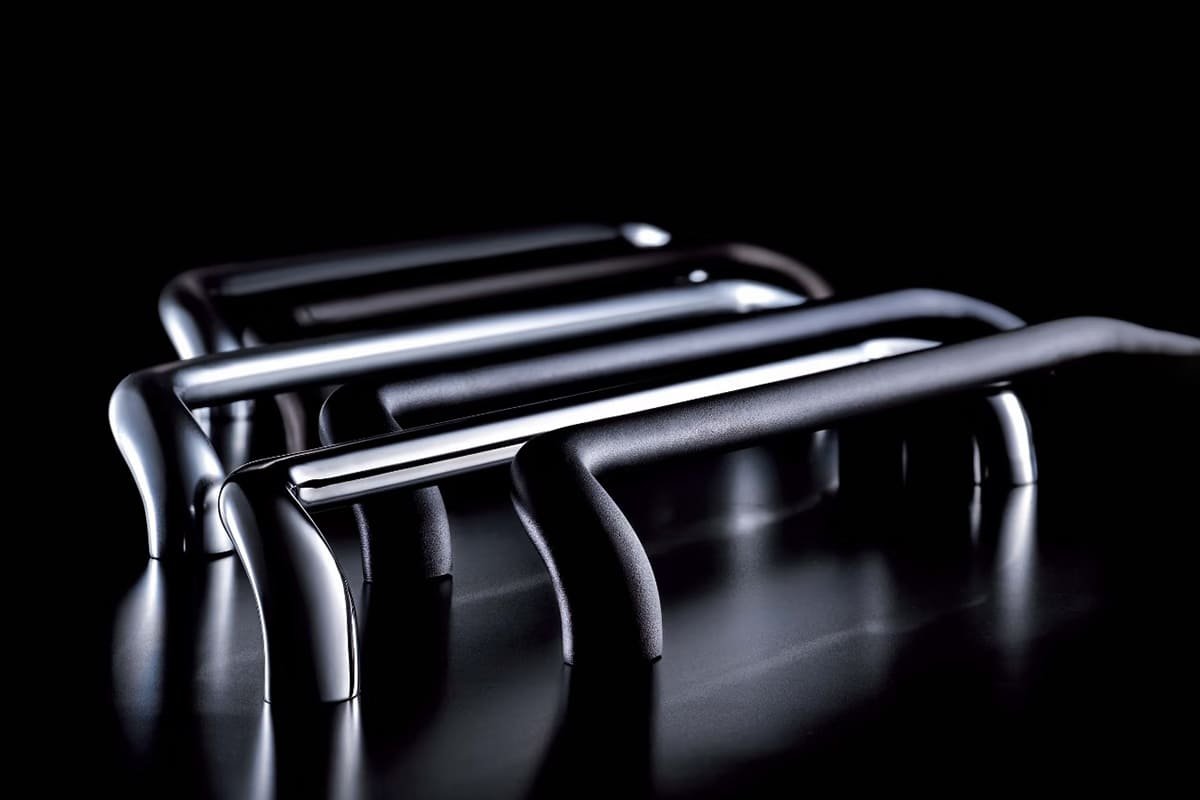
Before ordering a Stainless Steel 316 Security Heavy Duty Lever Handle, buyers should confirm the material, finish, handle dimensions, plate or rose design, door thickness, lock body details, spindle size, screw pack, packaging, test documents, and delivery schedule. These details should be written into drawings or order confirmation files.
A practical specification table
| Specification item | Example of what to confirm | Procurement risk if missed |
|---|---|---|
| Material | 316 or 316L stainless steel | Wrong corrosion expectation |
| Finish | Satin, polished, PVD color | Inconsistent appearance |
| Lever length | Project drawing dimension | Poor user feel or mismatch |
| Rose/plate size | Round rose, square rose, long plate | Hole coverage problem |
| Door thickness | 35–45 mm, 45–55 mm, custom | Screws or spindle too short |
| Lock type | Euro mortise lock, bathroom lock, passage lock | Function mismatch |
| Center distance | 72 mm, 85 mm, custom | Plate hole mismatch |
| Backset | 45 mm, 50 mm, 55 mm, 60 mm | Door preparation error |
| Spindle | Size and length | Loose operation or no fit |
| Fixing | Through-bolt, concealed, visible | Stability issue |
| Packaging | Inner box, master carton, labels | Warehouse and resale problems |
Drawings reduce interpretation problems
I like drawings because they prevent vague communication. A buyer may say “standard euro handle,” but standards vary across markets. A drawing should show:
- Front view
- Side view
- Hole distance
- Lever projection
- Rose or plate thickness
- Screw position
- Spindle details
- Cylinder or keyhole position
- Logo or branding placement
- Finish code
For ODM orders, drawings are even more important. Custom lever shape, special surface finish, and branded packaging need clear approval steps.
Sample approval should include function
Some buyers approve a sample only by appearance. I think this is risky. A proper sample review should include:
- Does the lever return smoothly?
- Does the handle stay level?
- Does the spindle fit the lock body?
- Do the screws match the door thickness?
- Does the surface show scratches or color variation?
- Does the packaging protect the finish?
- Does the handle feel comfortable in daily use?
Conclusion
A Stainless Steel 316 Security Heavy Duty Lever Handle should be selected through practical evaluation, not material branding alone. I recommend checking corrosion exposure, handle structure, lock compatibility, fixing method, finish consistency, certificates, and supplier process control before placing bulk orders. If you source lever handles for door factories, hardware brands, wholesalers, or project supply, contact SDH Hardware to discuss drawings, samples, ODM requirements, and factory-direct production options.
"SAE 316L stainless steel", https://en.wikipedia.org/wiki/SAE_316L_stainless_steel. A metallurgical reference identifies molybdenum as a principal alloying addition in 316 stainless steel and explains that it improves resistance to chloride-induced pitting relative to 304 stainless steel. Evidence role: mechanism; source type: encyclopedia. Supports: The source should support that 316 stainless steel includes molybdenum and that molybdenum-bearing austenitic stainless steels generally show improved resistance to chloride pitting compared with 304.. ↩
"The Effect of Sensitization on the Susceptibility of AISI 316L ...", https://pmc.ncbi.nlm.nih.gov/articles/PMC10456642/. An institutional materials reference defines 316L as the low-carbon variant of 316 stainless steel and notes that reduced carbon content can lessen sensitization-related corrosion concerns after welding. Evidence role: definition; source type: institution. Supports: The source should confirm the lower carbon specification of 316L and explain its relevance to weldability or reduced sensitization risk.. ↩
"A Manual of Stainless Steel - Data for Meat and Poultry", https://nvlpubs.nist.gov/nistpubs/Legacy/IR/nbsir76-1185.pdf. A stainless-steel industry technical guide notes that stainless steels are corrosion-resistant rather than corrosion-proof and that surface condition, cleaning practice, and contamination influence staining and corrosion outcomes. Evidence role: general_support; source type: institution. Supports: The source should support that stainless steel can stain or corrode under unsuitable conditions and that cleaning and maintenance affect performance.. Scope note: This supports the general maintenance principle for stainless steel rather than proving the performance of a specific lever-handle model. ↩
"Marine Atmospheric Corrosion of Carbon Steel: A Review - PMC", https://pmc.ncbi.nlm.nih.gov/articles/PMC5506973/. Atmospheric-corrosion studies describe marine chloride deposition from sea-salt aerosols as a major factor accelerating corrosion of exposed metal surfaces in coastal environments. Evidence role: mechanism; source type: paper. Supports: The source should explain that chloride-containing marine aerosols increase corrosion risk in coastal atmospheres.. Scope note: The source would support the environmental mechanism, not the corrosion rate of this particular handle design. ↩
"Influence of Rust Layer on Corrosion-Critical Humidity ... - PMC", https://pmc.ncbi.nlm.nih.gov/articles/PMC12113476/. Research on atmospheric corrosion shows that elevated relative humidity can promote electrolyte film formation on metal surfaces, increasing the likelihood of corrosion products or staining under contaminated conditions. Evidence role: mechanism; source type: paper. Supports: The source should support the relationship between humidity, surface electrolyte formation, and increased corrosion or staining risk.. Scope note: This is contextual support for humidity as a risk factor and does not quantify complaint frequency in door-hardware projects. ↩
"Chemical Disinfectants | Infection Control", https://www.cdc.gov/infection-control/hcp/disinfection-sterilization/chemical-disinfectants.html. Government disinfectant and safety guidance recognizes that certain disinfectant chemistries can be corrosive or damaging to materials, including metals, when used at unsuitable concentrations or contact times. Evidence role: general_support; source type: government. Supports: The source should support that some disinfectants or cleaning chemicals may be corrosive or damaging to metal surfaces depending on formulation and use conditions.. Scope note: This supports the general compatibility concern and does not identify which cleaner will affect a specific stainless-steel finish. ↩
"[PDF] The Effects of Row Spacing and Bolt Spacing in 6-Bolt and 4-Bolt Wood ...", https://cmec.wsu.edu/documents/2016/04/the-effects-of-row-spacing-and-bolt-spacing-in-6-bolt-and-4-bolt-wood-to-steel-connections.pdf/. Architectural-hardware guidance describes through-bolting as a fixing method that connects hardware through the door thickness, providing greater mechanical retention than fixings relying only on one face of the door. Evidence role: mechanism; source type: institution. Supports: The source should explain that through-bolted hardware provides a load path through the door and can improve resistance to loosening compared with surface-only fixing.. Scope note: The support is mechanical and contextual; actual stability still depends on screw size, door substrate, installation quality, and handle geometry. ↩
"BS EN 1906 – Lever Handle and Knob Furniture - HOPPE", https://www.hoppe.com/gb-en/contacts-service/standards/bs-en-1906/. The EN 1906 standard is described by standards bodies as specifying requirements and classification methods for lever handles and knob furniture used in building hardware. Evidence role: definition; source type: institution. Supports: The source should verify that EN 1906 covers lever handles and knob furniture and provides a classification framework.. ↩
"BS EN 1906 – Lever Handle and Knob Furniture - HOPPE", https://www.hoppe.com/gb-en/contacts-service/standards/bs-en-1906/. Standards-body summaries of EN 1906 identify a multi-category classification system for lever furniture, including durability, door mass, fire resistance, safety, corrosion resistance, security, and type of operation. Evidence role: definition; source type: institution. Supports: The source should confirm the classification categories used in EN 1906 for lever furniture.. ↩
"Physical Access Control Systems - NIST Risk Management ...", https://csrc.nist.gov/projects/risk-management/sp800-53-controls/overlay-repository/government-wide-overlay-submissions/physical-access-control-systems. Government physical-security guidance treats door security as a system involving the lock, cylinder, strike plate, frame, door construction, and installation, rather than as a function of the operating handle alone. Evidence role: expert_consensus; source type: government. Supports: The source should support that effective door security requires evaluating locks, cylinders, strikes, frames, and installation as a system.. Scope note: The source would support the system-security principle, not certify the security level of the article’s specific handle. ↩
"Statistical Process Monitoring for Autocorrelated Data", https://www.nist.gov/programs-projects/statistical-process-monitoring-autocorrelated-data. Quality-management guidance such as ISO 9001 and statistical process-control literature links controlled, monitored production processes with improved consistency and reduced process variation. Evidence role: general_support; source type: institution. Supports: The source should support that documented process control and quality-management systems are intended to improve consistency and reduce variation in production.. Scope note: This is general quality-management support and does not verify the process capability of any named factory. ↩
"Fire Doors and NFPA 80 FAQs", https://www.nfpa.org/news-blogs-and-articles/blogs/2025/04/11/fire-doors-faqs. Fire-door standards and guidance define fire doors as assemblies whose rated performance depends on the combined door, frame, hardware, seals, and installation conditions. Evidence role: expert_consensus; source type: institution. Supports: The source should support that fire-door performance is evaluated at the assembly level, including door leaf, frame, hardware, seals, and installation.. Scope note: This supports the assembly-level compliance concept and does not determine whether any particular lever handle is approved for a given fire-rated door. ↩