School Door Lock Systems for Classrooms and Campuses: How Should Buyers Configure Them?
School door lock systems can reduce safety risk1, but they can also create confusion when buyers treat every door the same. A classroom, exit route, and storage room do not have the same job. I prefer to start with door function, then match the lock, cylinder, handle, hinge, finish, and certification documents.
School door lock systems should be configured by campus area and safety task. Classrooms need safe inside opening2, teaching building exits need verified emergency egress functions, and storage rooms need controlled staff access. Buyers should evaluate the complete door hardware set, including lock body, cylinder, lever handle, hinges, accessories, finish, installation fit, and compliance documents.
In school door hardware project discussions, I often see one problem appear early: the buyer asks for “the best lock,” but the door schedule needs several answers. The better question is this: what should each door allow, prevent, and withstand during daily use and emergencies?
How Should School Door Lock Systems Be Selected for Different Campus Areas?
A campus has many door types, and each door carries a different risk. If I select school door lock systems only by price or appearance, I may solve one problem while creating another. The result can be installation rework, poor user experience, or failed project acceptance.
School door lock systems should be selected by door location, user group, safety purpose, and maintenance plan. Classroom doors should prioritize inside release. Exit doors should support verified escape requirements. Storage rooms should control materials and staff permissions. Procurement teams should map every door type before confirming lock bodies, cylinders, handles, hinges, and accessories.
Start With the Door Schedule, Not the Lock Catalog
I always recommend that buyers start with a door-by-door function list3. A lock catalog shows models, finishes, and dimensions. A door schedule explains what the building actually needs.
For school projects, I usually divide the campus into these groups:
| Campus Area | Main Safety Task | Common Procurement Focus | Risk If Misconfigured |
|---|---|---|---|
| Classrooms | Safe inside opening and controlled outside access | Classroom lock function, lever handle, cylinder compatibility | Students may be trapped, or teachers may struggle with operation |
| Teaching building entrances | Controlled entry and daily traffic durability | Lock body strength, cylinder quality, handle durability | High maintenance, loose handles, unreliable locking |
| Exit routes | Emergency escape from inside | Panic-style or escape-compatible locking, local code documents | Egress failure, project rejection, safety risk |
| Storage rooms | Asset and material control | Cylinder hierarchy, master-key-style planning, key control | Lost keys, uncontrolled access, poor accountability |
| Offices and staff rooms | Balanced privacy and authorized entry | Cylinder control, finish consistency, serviceability | Too many key variants, difficult replacement |
| Laboratories | Controlled access and safety support | Durable locksets, cylinder planning, possible restricted access | Unauthorized access to equipment or materials |
This classification helps buyers avoid a common mistake: using one product for every door because it simplifies ordering. A school may need standardized appearance, but it does not always need identical lock functions.
Match Safety Task to Hardware Function
A classroom is not only a private room. It is a teaching space used by children, teachers, cleaners, maintenance staff, and sometimes emergency responders. A storage room is not only a locked room. It may hold chemicals, electrical parts, teaching devices, or cleaning supplies. An exit door is not only a door to the outside. It may become a life-safety route during a fire or evacuation.
So I separate the decision into four layers:
User operation
Who opens the door daily? Teachers, students, cleaning staff, security personnel, or maintenance teams?Emergency operation
Can people open the door from the inside quickly when needed? Does the project require a panic exit device or another egress-rated solution?Access control level
Does the door need a normal cylinder, keyed alike system, master-key-style management, or a more controlled cylinder hierarchy?Installation compatibility
Does the door thickness, door material, backset, latch direction, faceplate size, strike plate, hinge size, and handle spindle match the product?
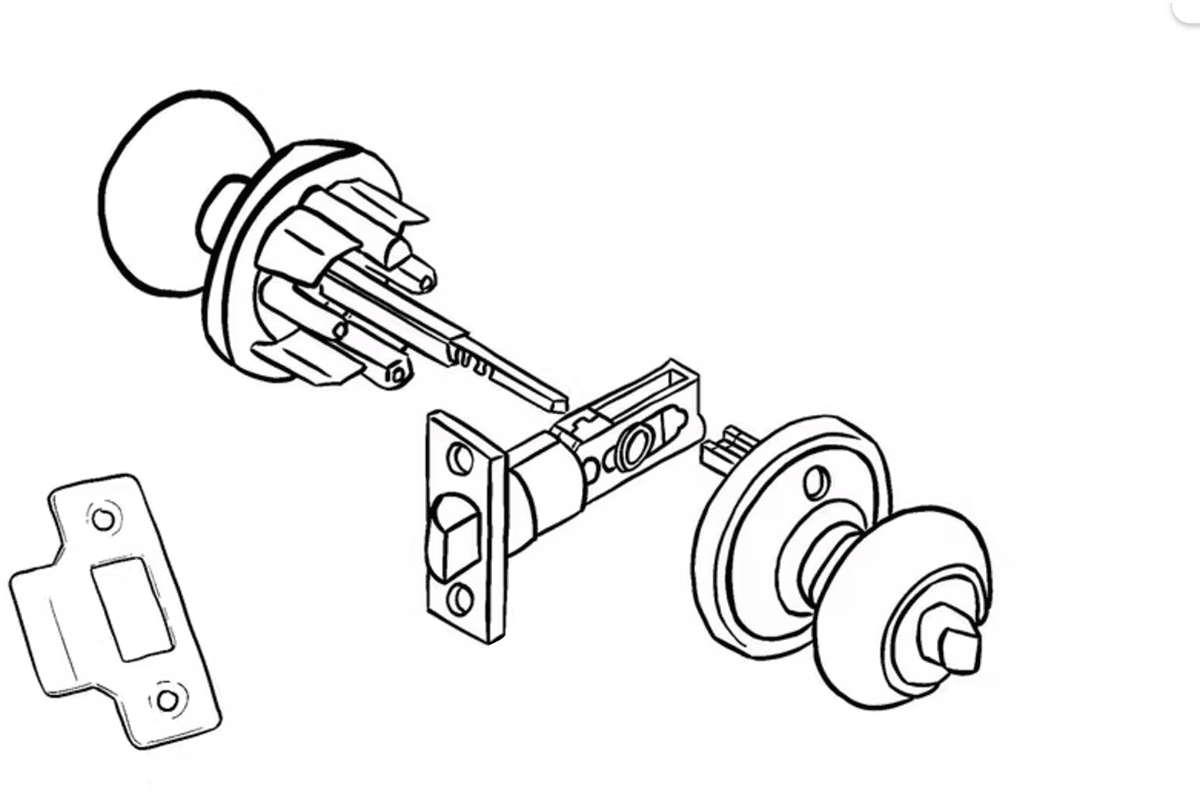
From a manufacturer perspective at SDH Hardware, I pay close attention to this fourth layer. A well-chosen lock function can still fail in the field if the door thickness, handle spindle, cylinder length, or strike plate does not match.4 For bulk procurement, small mismatches become expensive very quickly.
I do not treat school door lock systems as a single product. I treat them as a coordinated hardware package for different door duties.
What Should School Door Lock Systems Do for Classroom Safety?
Classroom doors carry a simple but serious requirement. If the door closes, people inside the classroom should not be accidentally trapped because of the lock function. If buyers ignore this point, a lock that looks strong on paper may create daily safety and management problems.
School door lock systems for classrooms should allow safe opening from the inside after the door closes, while outside access can remain controlled by key or authorized operation. Buyers should confirm the lock function, latch behavior, lever operation, cylinder type, and local project requirements before approving classroom hardware for bulk production.
Inside Opening Is a Core Functional Requirement
When I discuss classroom locks with buyers, I always ask one question first: What happens if the door closes while students are inside? The answer should be clear before price negotiation begins.
A proper classroom lock configuration usually needs:
- Inside lever operation that allows people to open the door from inside.
- Outside controlled access by key, cylinder, or authorized staff operation.
- Reliable latch engagement so the door closes securely during normal use.
- Smooth handle operation for frequent daily opening.
- Durable finish because schools create heavy contact wear.
- Compatible hinges to keep the door aligned with the latch and strike.
This does not mean one universal lock model is correct for every school. It means the classroom lock function must be selected to support safe occupancy and practical staff control.
Classroom Lock Evaluation Checklist
Buyers can use a checklist during supplier discussions:
| Evaluation Item | What I Would Verify | Why It Matters |
|---|---|---|
| Inside release | Can the door open from inside without special tools? | Reduces accidental lock-in risk |
| Outside access | Does the cylinder match teacher or staff key planning? | Supports controlled classroom entry |
| Lever durability | Does the handle pass relevant cycle or strength expectations5? | Reduces maintenance in high-use areas |
| Lock body compatibility | Does the mortise size fit the door preparation? | Prevents installation rework |
| Cylinder length | Does the cylinder suit door thickness and escutcheon/rose? | Avoids poor appearance and weak operation |
| Finish consistency | Are bulk finishes uniform across locks, handles, hinges? | Improves project acceptance |
| Documentation | Are CE, fire-rated, or other certificates available when required? | Supports buyer verification |
At SDH Hardware, I have seen that bulk school projects often fail in small details, not in the main product name. For example, the buyer may confirm a mortise lock body, but the final site needs a different cylinder length because the door thickness or handle plate differs. The lock is not “wrong,” but the set is not complete.
Do Not Separate the Lock From the Door
Classroom doors usually experience high cycle frequency. Students open and close doors many times each day. Teachers may carry books, laptops, or supplies while operating the handle. Cleaning staff may use the door after school hours. This daily pattern puts stress on the full hardware set.
I suggest that procurement teams review:
Door material
Timber, steel, aluminum, and fire-rated doors may require different lock cases, screws, strikes, or accessories.6Door thickness
Common project doors may use different thicknesses, and cylinder length must match.Handing and direction
Left-hand and right-hand doors must be confirmed before production or packing.Backset and center distance
European standard mortise locks, for example, need correct dimensional matching.Handle and lock pairing
The lever handle spindle, spring, rose, escutcheon, and lock follower should work together.Hinge alignment
Poor hinge selection can cause sagging, which makes the latch hit the strike plate incorrectly.7
For classroom safety, I do not only look for “a strong lock.” I look for a lockset that remains easy to operate after repeated use, supports inside release, and fits the door preparation correctly. This is how school door lock systems become reliable in real buildings, not only in quotations.
How Should School Door Lock Systems Support Exits and Emergency Escape?
Exit doors create higher responsibility because they may become emergency routes. If buyers choose normal locking without checking egress needs, the project can face serious safety and compliance problems. I always treat exit locking as a separate decision from classroom locking.
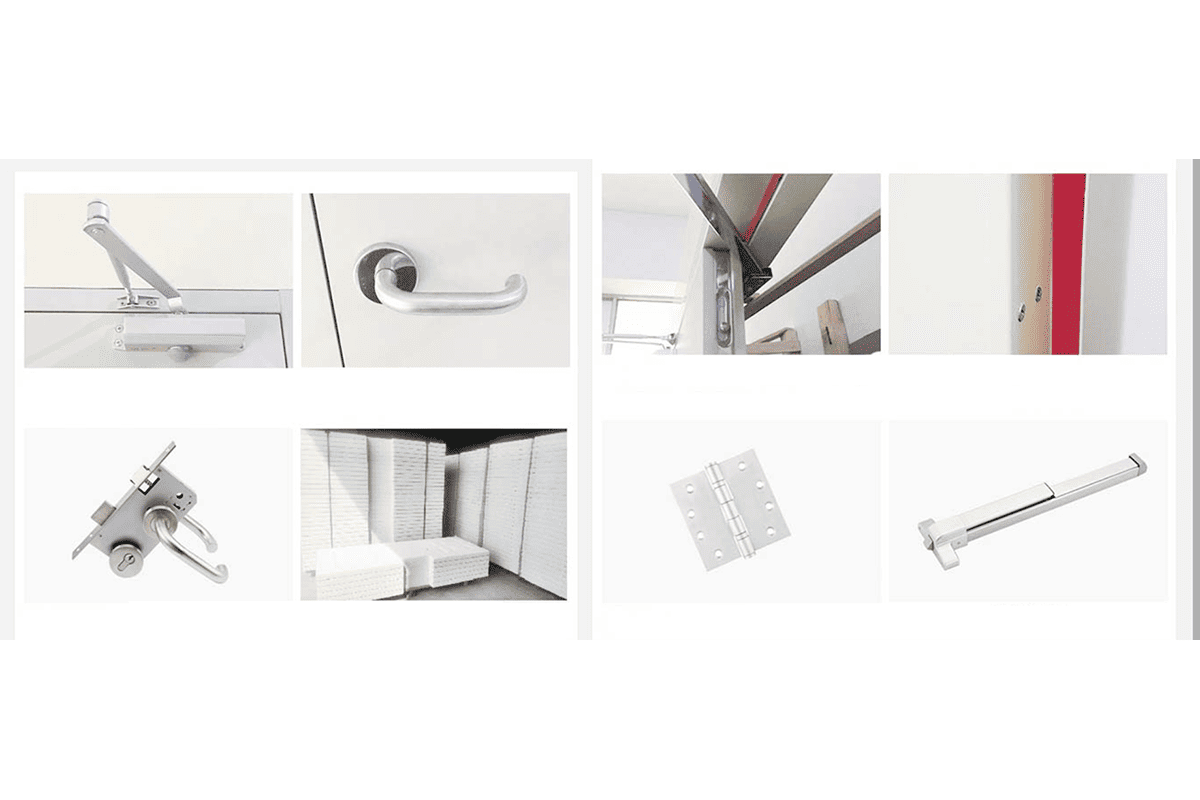
School door lock systems for exits should allow fast opening from the inside during emergencies, while outside entry may remain controlled after locking. Panic-style or escape-compatible hardware may be required depending on local regulations, building type, occupancy, and project documents.8 Buyers should verify fire, egress, CE, and certification requirements with qualified professionals.
Emergency Exit Function Must Be Verified Locally
I need to be careful here because egress rules vary by country, region, building type, and project specification.9 A manufacturer can provide hardware and documents for verification, but local fire-code compliance should be confirmed by qualified professionals, consultants, or project authorities.
In many school building discussions, buyers ask for doors that meet two goals:
- People inside can leave quickly in an emergency.
- People outside cannot enter freely after the door is secured.
This is why panic-style hardware, escape locks, or other egress-compatible solutions may appear in the door schedule. The exact product selection depends on the local standard and the project drawings.
Common Exit Door Considerations
| Exit Door Factor | Buyer Question | Procurement Risk |
|---|---|---|
| Inside escape | Can users open quickly without a key? | Dangerous delay during emergency |
| Outside security | Can outside entry stay controlled? | Unauthorized access |
| Door rating | Is the door fire-rated or smoke-control related? | Wrong hardware may affect approval |
| Hardware certification | Are documents valid for the requested standard? | Failed compliance review |
| Door width and traffic | Does the device suit the opening and occupancy? | Poor operation under crowd pressure |
| Installation details | Are strikes, rods, screws, and accessories included? | Site delays and missing components |
When I review exit hardware procurement, I ask buyers to share the door schedule, application area, and required certificates early. This helps prevent quoting a product that looks acceptable but does not match the project’s regulatory path.
Panic Hardware Is Not Just a Product Name
Some buyers use “panic lock” as a broad term. However, a real project may require specific test standards, product classifications, installation directions, and fire-rated compatibility. The product name alone does not prove suitability.
A more disciplined approach includes:
Confirm the required standard
The buyer should identify whether the project requires CE-related documents, EN panic exit standards, fire-rated certificates, or other local approvals.Verify the certificate scope
A certificate may apply to a specific model, size, door type, or installation condition.10 Buyers should not assume it covers all variations.Match the hardware to the door
A panic device or escape lock must match door width, door height, leaf type, frame, strike, and opening direction.Check the complete set
Exit hardware may require outside trim, cylinder, strike plate, rods, covers, screws, and signage depending on the design.Plan maintenance access
Schools need hardware that can be inspected, adjusted, and replaced without long downtime.
From my manufacturer-side experience, missing accessories are a common source of delay in export school projects. A buyer may approve the main exit device but forget the outside trim, cylinder option, or strike type. The goods arrive, the installer opens the carton, and the site cannot finish the door. That mistake is avoidable.
Balance Escape and Controlled Entry
School exit doors should not be treated as normal entrance doors. However, they still need security planning. A side exit, stairwell door, or teaching building emergency exit may need to open from inside but restrict outside entry.
This balance may involve:
- Escape lock function
- Panic exit hardware
- Outside lever trim with cylinder
- Pull handle outside with no re-entry
- Fire-rated lock or hinge package where required
- Door closer and coordinator for certain double doors
I recommend that buyers include fire and egress requirements in the RFQ, not after sample approval. If the requirements arrive late, the supplier may need to change the lock body, handle trim, cylinder, strike, or even the complete hardware group.
How Can School Door Lock Systems Manage Storage Rooms and Staff Permissions?
Storage rooms seem simple, but they often create long-term management problems. Schools store teaching supplies, laboratory equipment, sports items, cleaning materials, maintenance tools, and documents. If every room uses unrelated keys, staff management becomes messy and replacement costs increase.
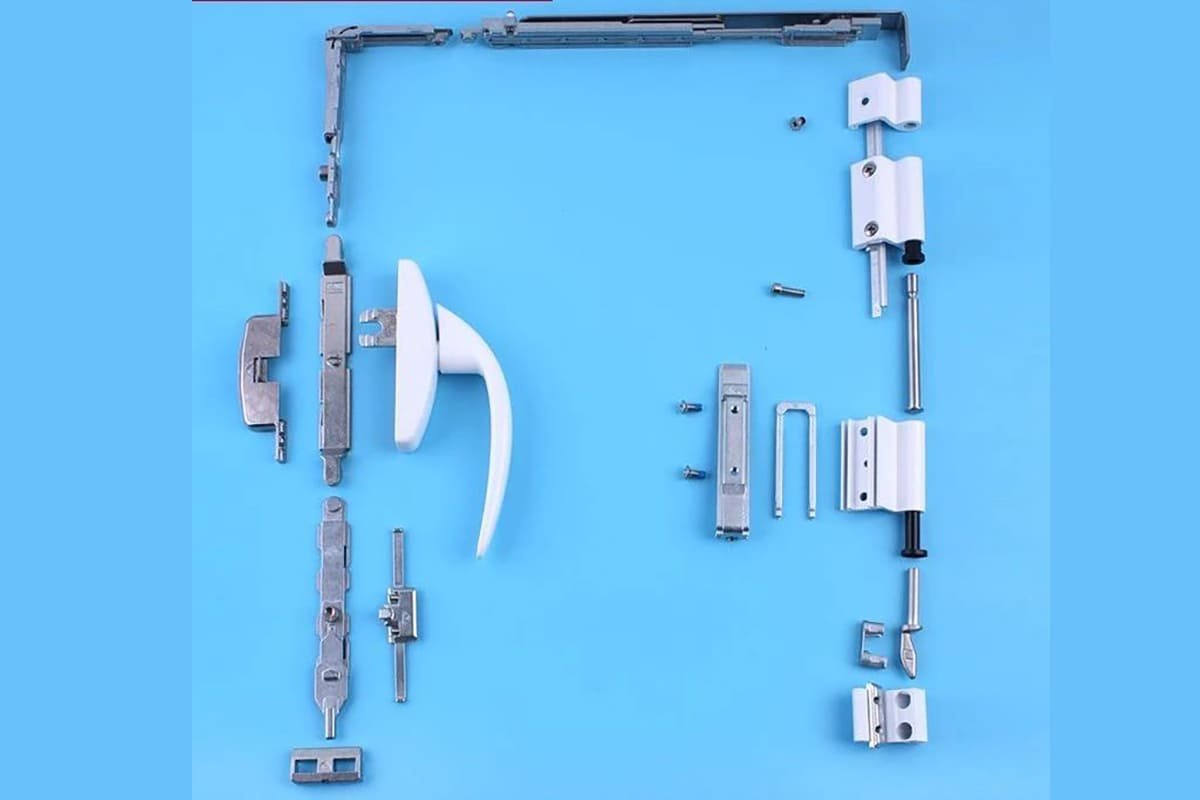
School door lock systems can manage storage rooms through hierarchical cylinder planning, keyed-alike groups, or master-key-style access control. This allows different staff members to access only the spaces they need. Buyers should define room categories, permission levels, cylinder quality, key control rules, and replacement procedures before placing bulk orders.
Storage Access Should Be Planned Before Key Cutting
I have seen many projects treat cylinders as small accessories. In reality, cylinder planning can decide whether campus access remains manageable after installation. For storage rooms, key management matters because the users are different.
A school may need access levels such as:
- Principal or facility manager: access to most storage and office-related rooms.
- Science department staff: access to laboratory storage only.
- Cleaning staff: access to janitorial rooms only.
- Sports department: access to sports equipment rooms.
- Maintenance team: access to mechanical or service rooms.
- General teachers: access to teaching supply rooms.
This does not always require electronic access control. For many procurement projects, a well-planned mechanical cylinder hierarchy is practical, cost-effective, and easier to maintain.
Common Cylinder Management Options
| Cylinder Plan | How It Works | Best Use Case | Limitation |
|---|---|---|---|
| Different key cylinders | Each room has its own key | Small projects with few rooms | Many keys become hard to manage |
| Keyed alike groups | Several rooms use the same key | Similar storage rooms or department rooms | Access may be too broad |
| Master-key-style system | Individual keys open assigned rooms; master key opens multiple rooms | Larger campuses or grouped buildings | Needs careful planning and supplier control |
| Restricted key profile | Key blanks are controlled more strictly | Higher access control needs | Availability and cost must be checked |
| Replaceable cylinder planning | Cylinders can be changed by group | Long-term maintenance | Requires consistent product platform |
Do Not Overcomplicate the System
I do not suggest making every school storage room part of a complex access structure. Complexity increases cost, and it can confuse staff. The goal is not to create an impressive key chart. The goal is to reduce unauthorized access and make daily operation easier.11
A practical plan may look like this:
Group rooms by material type
Teaching supplies, cleaning materials, laboratory tools, sports equipment, office documents, and maintenance spaces should not automatically share access.Define staff permission levels
The buyer should decide which roles need access to which room groups.Choose cylinder quality and key profile
Brass profile cylinders, euro profile cylinders, and other formats should match the lock body, door thickness, and regional market preference.Document key quantities
Each cylinder group should have a clear number of keys, spare keys, and replacement rules.Control future replacement
The buyer should know whether replacement cylinders can be ordered later with matching finishes, dimensions, and keying requirements.
At SDH Hardware, we manufacture and supply locks, cylinders, handles, hinges, and related door hardware for bulk buyers. In school hardware discussions, I often remind customers that a cylinder is not only a component. It is part of the school’s daily management system.
Storage Doors Still Need Complete Hardware Matching
Storage rooms may have lower traffic than classrooms, but some storage doors carry heavier security and durability expectations. A laboratory storage room or cleaning chemical room may need stronger access control than a normal teaching supply closet.12 A sports equipment room may face frequent opening during school activities.
For these doors, buyers should check:
- Lock case strength
- Cylinder security level
- Key duplication policy
- Lever or pull handle choice
- Door closer requirement
- Hinge durability
- Finish resistance
- Strike plate reinforcement
- Labeling and packing accuracy
For bulk procurement, I also recommend room-number-based packing or at least clear carton labels. This helps installers match cylinders and locksets to the correct rooms. A master-key-style plan can fail on site if cartons are mixed and cylinders are installed randomly.
Why Should School Door Lock Systems Be Purchased as Complete Door Hardware Sets?
A lock body alone cannot make a school door safe, durable, or project-ready. If the cylinder, lever handle, hinges, screws, finish, and door preparation do not match, the door may perform poorly. I see this risk most often in bulk procurement.
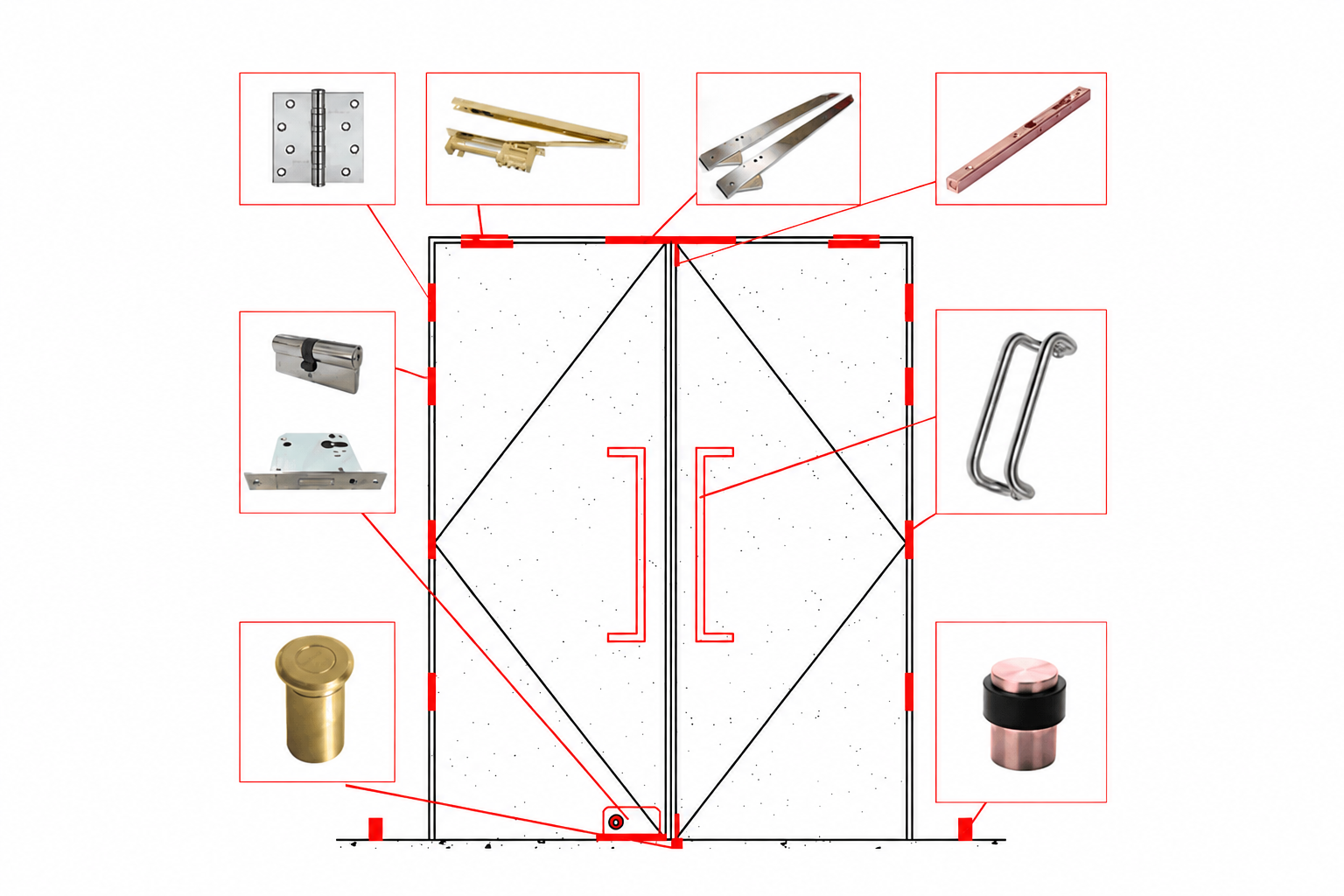
School door lock systems should be purchased as complete hardware sets because every component affects function, installation, durability, and project acceptance. Buyers should evaluate lock bodies, cylinders, lever handles, butt hinges or concealed hinges, strike plates, screws, accessories, finish consistency, door thickness, and certification documents as one coordinated package.
A Door Lock System Is a Set, Not a Single Item
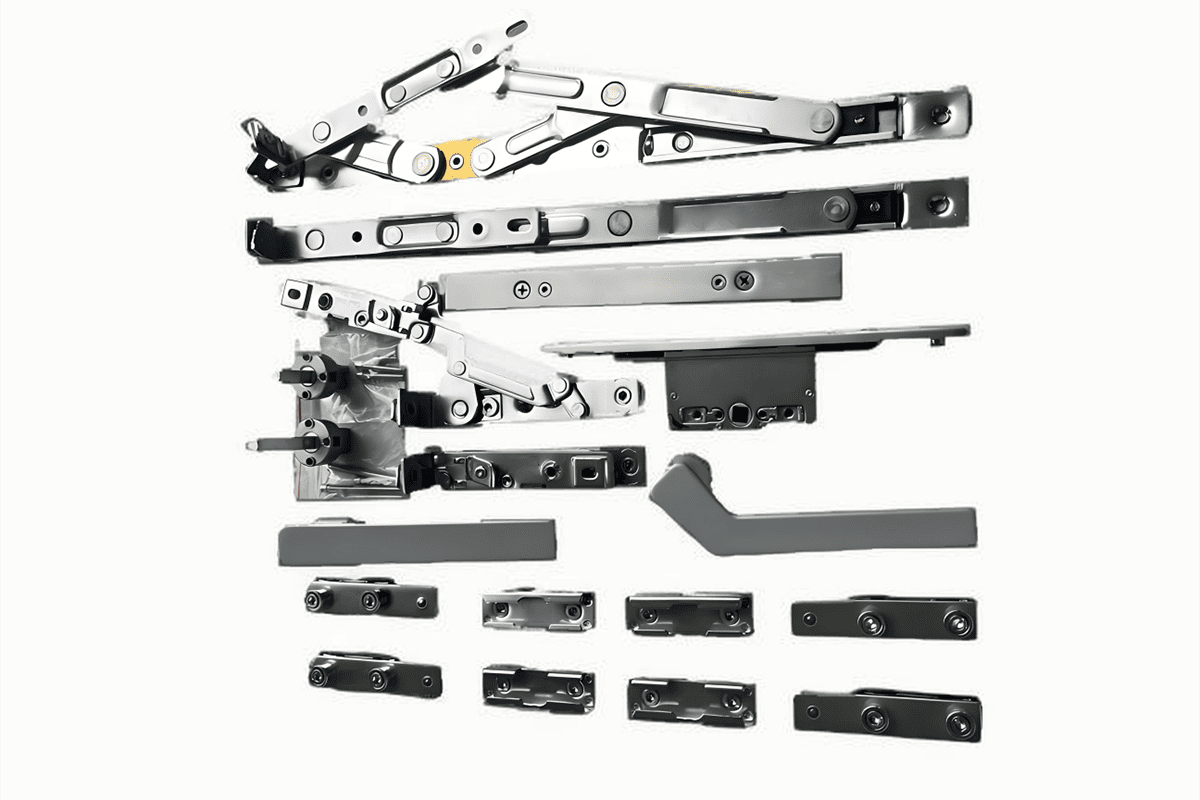
When a buyer sources school door lock systems, the purchase list may include many items:
- Mortise lock body
- Euro profile cylinder or other cylinder type
- Lever handle set
- Escutcheon or rose
- Strike plate
- Spindle and screws
- Butt hinges or concealed hinges
- Door closer, where needed
- Panic or escape hardware, where specified
- Accessories and fixing parts
- Finish samples
- Certification documents
- Packing labels and installation instructions
If one part does not fit, the installer may need to drill again, modify the frame, change the cylinder, or delay acceptance. These costs often exceed the savings from choosing the cheapest component.
Key Compatibility Points for Bulk Buyers
| Component | Compatibility Check | Common Problem |
|---|---|---|
| Lock body | Backset, center distance, faceplate, latch direction | Door cutout does not match |
| Cylinder | Length, cam type, keying plan, finish | Cylinder sits too long or too short |
| Lever handle | Spindle size, spring strength, rose or plate dimension | Loose handle or poor return |
| Hinges | Size, load rating, finish, screw pattern | Door sag affects latch operation |
| Strike plate | Frame type, latch position, fixing holes | Door cannot close smoothly |
| Finish | Color consistency across batches | Visible mismatch in installed project |
| Certification | Model scope, validity, project relevance | Documents do not satisfy review |
| Packing | Door mark, room number, accessory list | Wrong product installed in wrong place |
Finish Consistency Matters More Than Buyers Expect
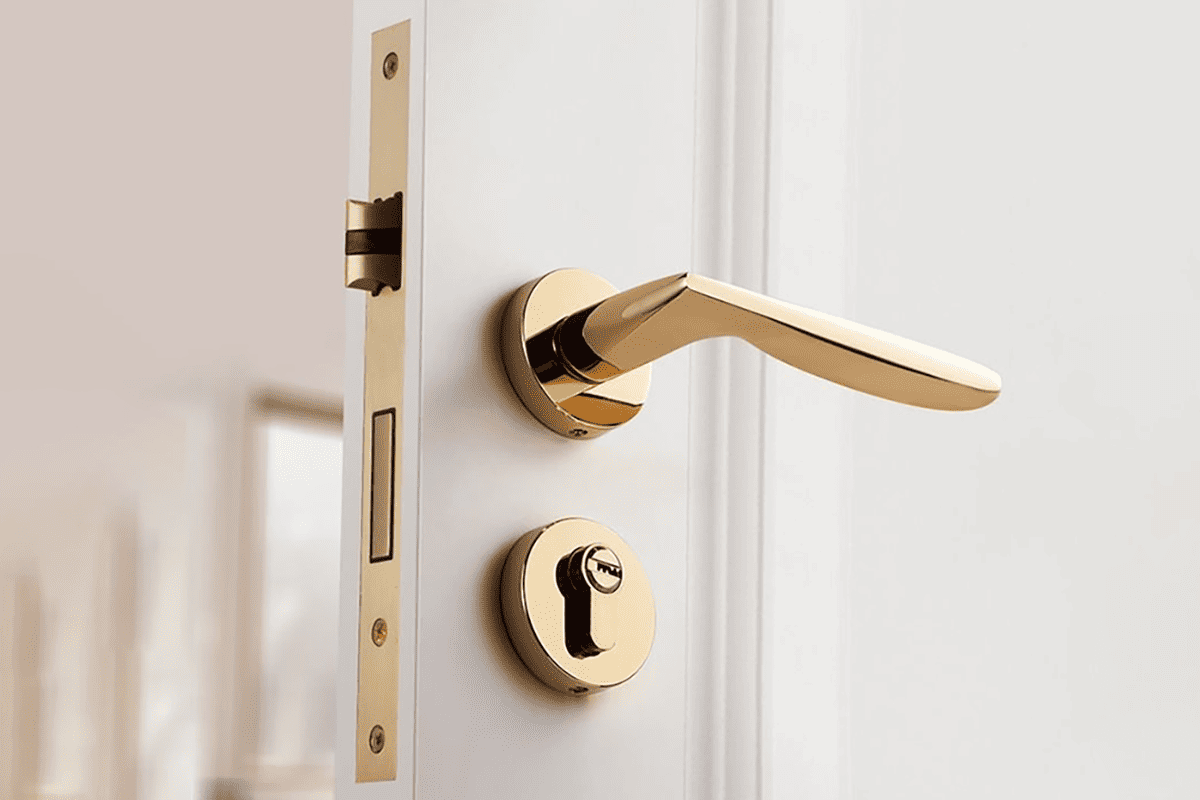
School projects often require consistent appearance across many doors. A campus may use stainless steel lever handles, satin finishes, black finishes, brass-tone finishes, or project-specific surface treatments. Even if every lock works correctly, visible finish differences can lead to complaints.
I pay attention to finish consistency because it affects brand perception and project acceptance. Buyers should ask suppliers about:
- Finish sample approval before mass production.
- Batch control for handles, hinges, cylinders, and faceplates.
- Salt spray or surface testing, where relevant to the market.
- Packaging protection to reduce scratches during sea shipping.
- Replacement consistency for future maintenance orders.
Use a Pre-Production Confirmation List
Before bulk production, I recommend a written confirmation list. This list should be shared among the buyer, supplier, project contractor, installer, and quality team where possible.
A practical list includes:
Door type and quantity
- Classroom doors
- Exit doors
- Storage doors
- Office doors
- Laboratory doors
- Toilet or service area doors
Lock function
- Inside release requirement
- Outside key control
- Privacy or passage function
- Escape or panic function where required
Cylinder plan
- Keyed different
- Keyed alike groups
- Master-key-style hierarchy
- Spare keys
- Key labeling method
Hardware set
- Lock body
- Cylinder
- Lever handle
- Hinges
- Strike plate
- Screws
- Accessories
Door details
- Door thickness
- Door material
- Opening direction
- Backset
- Center distance
- Frame type
Compliance documents
- CE documents where required
- Fire-rated documents where required
- Panic exit documents where required
- Test reports or declarations requested by the project
Finish and packing
- Approved finish sample
- Batch consistency requirement
- Carton labeling
- Door number labels
- Accessory checklist
What documents should buyers request for school door lock systems?
Buyers may request specifications, installation drawings, finish samples, inspection reports, CE certificates, fire-rated certificates, or panic exit documents where relevant. The exact
"K-12 School Security Guide Product Suite - CISA", https://www.cisa.gov/topics/physical-security/school-safety/k-12-school-security-guide-product-suite. Government school-safety guidance identifies door locking and access-control measures as elements of a layered physical-security strategy for schools; this supports the risk-reduction rationale in context, but does not prove that any specific lock configuration will prevent a particular incident. Evidence role: general_support; source type: government. Supports: Door locks and access-control measures are recognized components of layered school physical security and can contribute to risk reduction when properly planned.. Scope note: Contextual support only; effectiveness depends on design, installation, policies, training, and local risk conditions. ↩
"[PDF] FLS Security vs Exiting: Door Locking Hardware for Schools - DGS.ca.gov", https://www.dgs.ca.gov/-/media/Divisions/DSA/Publications/fls/FLSSecurityvsExiting.pdf. Life-safety and building-code provisions commonly require egress doors to be openable from the egress side without a key, tool, or special knowledge, supporting the need for classroom hardware that permits safe inside opening. Evidence role: expert_consensus; source type: institution. Supports: Life-safety codes generally require egress doors to be openable from the egress side without keys, tools, or special knowledge.. Scope note: Exact requirements vary by adopted code edition, jurisdiction, occupancy classification, and approved hardware exceptions. ↩
"087100 – DOOR HARDWARE - Facilities and Campus Services", https://fcs.cornell.edu/087100-door-hardware. Architectural hardware guidance describes door hardware schedules as opening-by-opening documents that coordinate lock functions, hardware sets, and project requirements, supporting a door-by-door approach to school hardware selection. Evidence role: general_support; source type: institution. Supports: Door hardware schedules and specifications are used to assign hardware functions, sets, and requirements by opening rather than by generic product selection.. Scope note: This supports the planning method generally, not the specific product choices in the article. ↩
"[PDF] door hardware - SMU", https://www.smu.edu/-/media/site/businessfinance/facilitiesmanagementsustainability/design_guidelines2021/08---x---appendix-8-a---door-hardware.pdf. Door-hardware installation guidance treats lock case preparation, door thickness, spindle dimensions, cylinder projection, and strike alignment as coordinated requirements, supporting the claim that a correct lock function can still perform poorly if components are dimensionally mismatched. Evidence role: mechanism; source type: institution. Supports: Door hardware performance depends on dimensional compatibility among the lock, cylinder, spindle, strike, and door preparation.. Scope note: This is mechanism-based support and does not quantify the frequency of such failures in school projects. ↩
"A156.2 - 2022 Locks and Latches", https://buildershardware.com/ANSI-BHMA-Standards/Hardware-Highlights/A1562-2022-Locks-and-Latches. ANSI/BHMA builders-hardware standards include performance classifications and tests such as operational cycling and strength-related evaluations for locksets and associated hardware, supporting the use of cycle and strength expectations in procurement. Evidence role: definition; source type: institution. Supports: ANSI/BHMA standards define performance tests for builders hardware, including operational cycle and strength-related criteria for locksets and related hardware.. Scope note: The cited standards define test methods and classifications; they do not determine which grade is required for every classroom. ↩
"Important Tips for Specifying Fire Door Assemblies | Steel Door Institute", https://steeldoor.org/tips-for-specifying-fire-door-assemblies/. Fire-door assembly standards require hardware such as locks, latches, hinges, strikes, and fasteners to be suitable for the labeled fire-door assembly and installed according to applicable listings and requirements, supporting the claim that fire-rated doors may need different hardware components or accessories. Evidence role: expert_consensus; source type: institution. Supports: Fire-door standards require hardware to be suitable for the rated assembly and installed according to listings and standard requirements.. Scope note: The specific permissible hardware depends on the door assembly listing, rating, and authority having jurisdiction. ↩
"How to fix a misaligned strike plate on an old door?", https://www.facebook.com/groups/1706748102970911/posts/4358076424504719/. Facilities-maintenance guidance explains that hinge wear, inadequate hinge support, or misalignment can cause a door to sag and prevent the latch from meeting the strike correctly, supporting the mechanical link between hinge selection and latch performance. Evidence role: mechanism; source type: education. Supports: Door maintenance guidance explains that hinge wear, poor hinge support, or misalignment can cause sagging and interfere with latch engagement at the strike.. Scope note: This supports the mechanism generally; actual field failure may also involve frame movement, installation quality, or door abuse. ↩
"[BE] 1010.1.10 Panic and fire exit hardware. - ICC Digital Codes", https://codes.iccsafe.org/s/IFC2015NY/chapter-10-means-of-egress/IFC2015-Pt03-Ch10-Sec1010.1.10. Building and life-safety codes require panic or fire-exit hardware in specified occupancies and occupant-load conditions, including certain educational or assembly contexts, supporting the statement that school exit hardware requirements depend on regulation, building type, occupancy, and project documentation. Evidence role: expert_consensus; source type: institution. Supports: Building and life-safety codes can require panic or fire-exit hardware for certain occupancies, occupant loads, and door conditions.. Scope note: The exact threshold and hardware type depend on the locally adopted code edition and authority having jurisdiction. ↩
"Building Codes, Standards, and Regulations: Frequently ...", https://www.congress.gov/crs-product/R47665. Code-adoption guidance notes that building and fire-safety requirements are adopted, amended, and enforced by jurisdictions and are applied according to occupancy and project conditions, supporting the article’s caution that egress rules vary by location and building type. Evidence role: general_support; source type: institution. Supports: Building and fire codes are adopted and amended by jurisdictions and apply different provisions depending on occupancy, use, and project conditions.. Scope note: This supports variability in code application generally; it does not identify the rule for any particular school project. ↩
"[PDF] DOOR HARDWARE (SCHEDULED BY DESCRIBING PRODUCTS)", https://fpm.usc.edu/wp-content/uploads/2021/11/087102-USC-HSC-door-hardware-Guide-Specification_1.pdf. Product certification and listing systems define the specific products, configurations, standards, and conditions covered by a certificate, supporting the warning that a door-hardware certificate may not apply automatically to every size, model, door type, or installation variation. Evidence role: general_support; source type: institution. Supports: Certification and listing schemes generally define the products, configurations, standards, and conditions covered by a certificate or listing.. Scope note: The scope must be checked against the actual certificate or listing for the product in question. ↩
"SP 800-53 Rev. 5, Security and Privacy Controls for ...", https://csrc.nist.gov/pubs/sp/800/53/r5/upd1/final. Access-control guidance commonly applies the principle of least privilege and formal key-control procedures to limit access to authorized personnel, supporting the claim that a planned permission structure can reduce unauthorized access and improve day-to-day manageability. Evidence role: expert_consensus; source type: government. Supports: Access-control principles such as least privilege and key control limit access to authorized users and support manageable operations.. Scope note: This supports the management principle rather than proving a quantified reduction in unauthorized entry for a specific school. ↩
"School Chemistry Laboratory Safety Guide | Publications", https://www.cdc.gov/niosh/publications/numbered/2007-107.html. Government laboratory and chemical-safety guidance emphasizes secure storage and controlled access for chemicals and hazardous materials in educational settings, supporting the view that laboratory or cleaning-chemical rooms may need stronger access control than ordinary supply closets. Evidence role: general_support; source type: government. Supports: School laboratory and chemical safety guidance emphasizes secure storage and controlled access to chemicals and hazardous materials.. Scope note: The cited guidance supports the access-control principle; the required lock grade or keying method depends on the materials stored and local rules. ↩