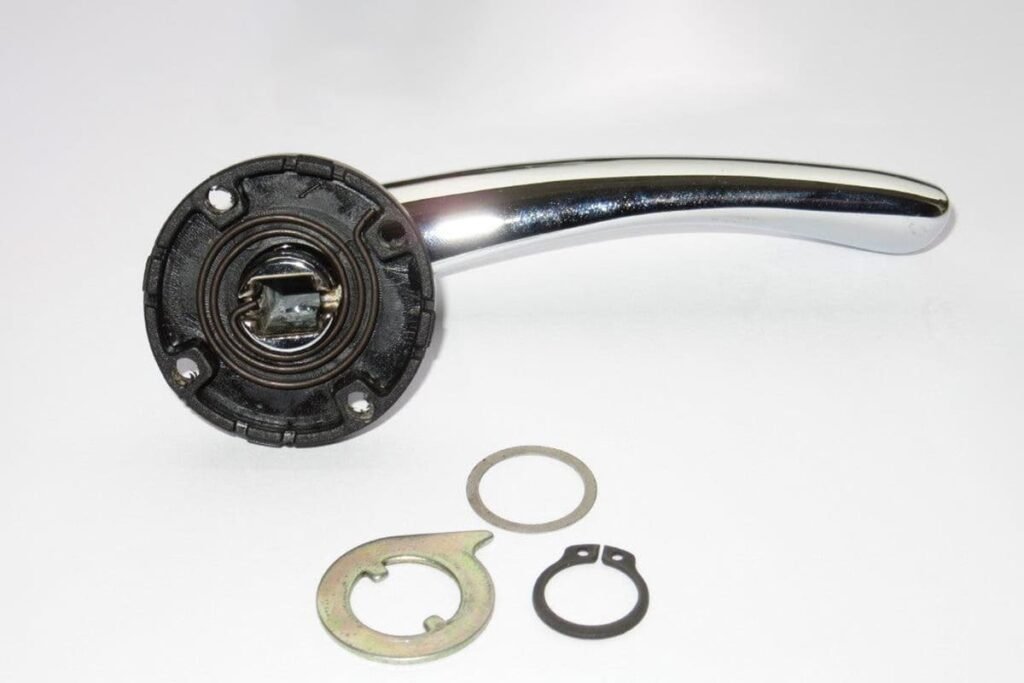
What Should I Know About Metal Door Handles?
Metal door handles look simple, but the wrong choice can create corrosion, loose installation, finish complaints, lock mismatch, and after-sales cost. Many buyers focus first on appearance or unit price. I prefer to start with the door type, market level, lock specification, and long-term use conditions before choosing the handle.
Metal door handles should be selected by matching the material, finish, structure, corrosion resistance, lock compatibility, and price level to the door application and target market. Stainless steel, zinc alloy, aluminum alloy, and other lower-cost materials each have suitable uses, so the “best” handle depends on the door, environment, and procurement risk.

In my factory work with door manufacturers, hardware brands, and wholesalers, I have seen that small specification details often decide whether a handle performs well in bulk supply. The sections below explain how I usually evaluate metal door handles before quoting, sampling, or confirming production.
What Are Metal Door Handles Best Used For?
Many buyers ask which handle is best, but that question is too broad. A good handle for an interior apartment door may not suit a fire-rated door, public passage door, or coastal market. If the door application is unclear, the material choice becomes a guess.
Metal door handles are best used when the door requires strength, stable installation, repeated daily operation, and a more durable appearance than plastic or light-duty alternatives. The correct handle should match the door material, usage frequency, environment, lock body, target price level, and local market expectations.
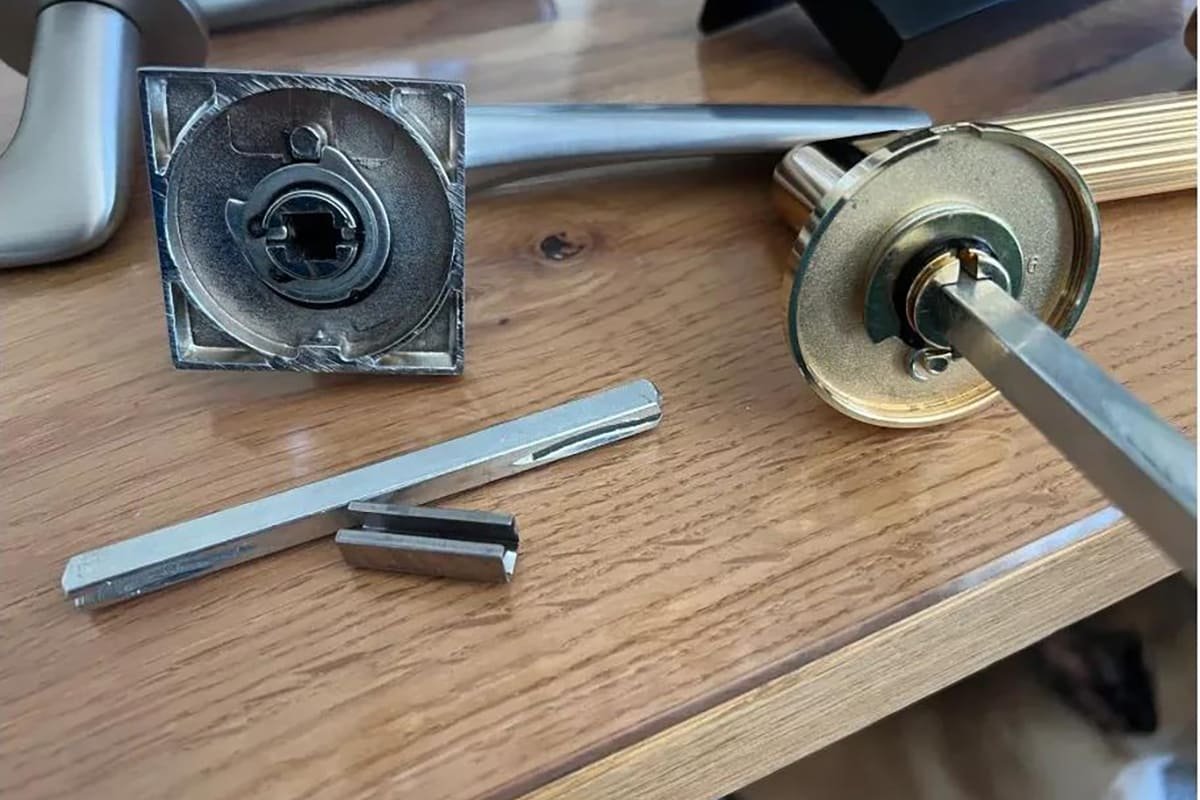
Start With the Door, Not the Metal
I do not like to begin with the sentence, “Stainless steel is best,” or “Zinc alloy is cheaper.” That shortcut causes problems. I first ask what door the handle will be installed on.
Common door categories include:
- Fire-rated doors
- Entrance doors
- Public building passage doors
- Hotel room doors
- Apartment interior doors
- Office doors
- School, hospital, or commercial doors
- Light-duty residential doors
Each door has a different use pattern. A public passage door may be opened hundreds of times per day.1 An interior bedroom door may be used less often and may place more importance on style and finish. A fire-rated door may require hardware that fits the full door assembly and project requirements.2 Buyers should verify all relevant compliance documents and installation requirements before final selection.
Match Use Conditions to Handle Structure
In bulk procurement, I usually divide the handle evaluation into three layers:
| Evaluation Layer | What I Check | Why It Matters |
|---|---|---|
| Door application | Entrance, interior, fire-rated, public passage | The handle must match strength and use frequency |
| Market positioning | Economy, mid-range, premium | The material and finish must fit the selling price |
| Installation system | Mortise lock, rose, plate, spindle, screws | The handle must fit the lock and door structure |
This method helps buyers avoid a common mistake: selecting a handle by catalog photo only. A nice design can fail if the spring is weak, the base is thin, the screws do not match, or the finish is unsuitable for the market.
Where Different Metal Door Handles Usually Fit
From a manufacturing and supply perspective, I often see these general patterns:
- Stainless steel handles are commonly used for fire-rated doors, entrance doors, public passage doors, and commercial projects where corrosion resistance and strength matter.
- Zinc alloy handles are often selected for interior doors because they support more decorative shapes, rich finishes, and flexible market designs.
- Aluminum alloy handles can be suitable for cost-sensitive projects or lighter-duty applications, depending on structure and finish quality.
- PBS material handles may be considered in some lower-cost sourcing discussions, but buyers should verify the exact material term, composition, and application before publishing specifications or placing orders.
The practical question is not “Which metal is best?” The practical question is “Which handle reduces risk for this door, this market, and this order quantity?”
That shift makes procurement more accurate. It also helps suppliers recommend a realistic option instead of simply quoting the lowest price.
Which Metal Door Handle Material Fits Your Market?
Material selection creates pressure because every market wants durability, attractive design, and competitive pricing at the same time. If the material is over-specified, the buyer loses margin. If it is under-specified, the buyer may face complaints, returns, or damaged brand reputation.
The right metal door handle material depends on the door type, environment, design requirement, price level, and expected service life. Stainless steel suits higher corrosion-resistance needs, zinc alloy supports more decorative interior designs, aluminum alloy can serve cost-sensitive projects, and other economical materials require careful verification.
Stainless Steel Handles
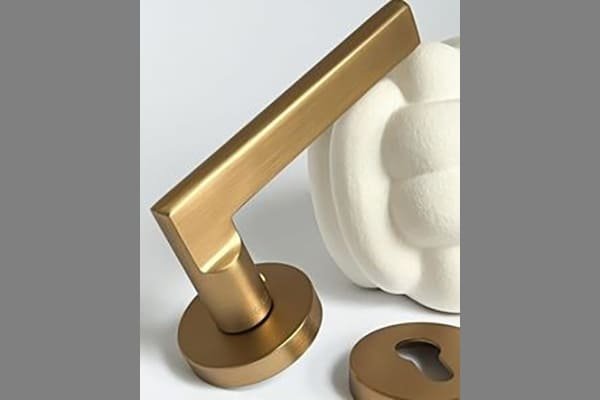
Stainless steel is a common choice when buyers care about corrosion resistance, clean appearance, and stable long-term use. In many door hardware markets, 304 stainless steel is preferred for general corrosion resistance. 316 stainless steel may be considered when the environment is more aggressive, such as coastal areas or locations with higher chemical exposure.
Handles are touched by hands many times per day. They may also be cleaned with chemical agents.3 This means corrosion resistance is not just about rain or humidity. It is also about sweat, cleaning liquid, and long-term surface exposure.
For stainless steel handles, I usually pay attention to:
- Stainless steel grade, such as 201, 304, or 316, depending on buyer requirements
- Tube wall thickness, often such as 0.8 mm or 1.0 mm for hollow tube handles, depending on design and target cost
- Surface finish, such as satin, polish, PVD, or other finishes
- Welding and polishing quality
- Spring and base structure
- Accessory quality, including spindle and screws
Some stainless steel handles use hollow tube construction. This can be cost-effective and stable when the structure is suitable. More complex shapes may require stainless steel casting, which can support different forms but usually changes cost, weight, and production process.
Zinc Alloy Handles
Zinc alloy is popular because it supports many shapes and decorative styles.4 It is often used for interior door handles, especially where the market wants modern design, curved shapes, or coordinated finishes.
Zinc alloy handles can be a strong commercial choice when:
- The door is mainly for interior use
- The market values appearance and design variety
- The buyer needs multiple finish options
- The target price cannot support stainless steel casting
- The project does not require high corrosion resistance
However, zinc alloy still needs careful checking. A poor base structure, weak spring, low-quality plating, or inconsistent finish can create problems in bulk orders.
Aluminum Alloy and Other Lower-Cost Options
Aluminum alloy can be attractive when buyers need lighter weight and cost performance.5 It may fit certain residential or light-duty applications. However, buyers should check surface treatment, structure strength, and market expectations before deciding.
For materials such as PBS, I would be cautious in public specification documents unless the term is clearly defined by the supplier and verified by the buyer. Different markets may use material names differently. Procurement teams should confirm:
- Exact material composition or supplier definition
- Suitable door application
- Finish process
- Strength and installation structure
- Expected use environment
- Any relevant compliance or customer requirements
Practical Material Comparison
| Material | Common Strength | Common Limitation | Typical Fit |
|---|---|---|---|
| Stainless steel | Corrosion resistance, clean look, durable image | Higher cost for better grades or complex shapes | Entrance, public, fire-rated, commercial doors |
| Zinc alloy | Design variety, decorative finish options | Needs good plating and structure control | Interior doors, residential markets, design-focused brands |
| Aluminum alloy | Lightweight, cost performance | May be less suitable for heavy-duty use | Cost-sensitive or light-duty applications |
| PBS or other economical materials | Potential low cost | Must verify exact term and application | Only after careful supplier confirmation |
A good buyer does not choose material by habit. A good buyer chooses material by matching the handle to the door and the market.
How Should Metal Door Handles Be Checked for Corrosion Resistance and Finish?
Finish problems can become expensive because they are visible immediately. A handle may operate well, but if the color varies across a batch or the surface corrodes too quickly, the buyer still receives complaints. Surface quality is both a technical issue and a sales issue.6
Metal door handles should be checked for corrosion resistance, surface finish consistency, cleaning exposure, and batch color control before bulk production. Buyers should confirm material grade, surface treatment, sample approval standard, packaging protection, and inspection method with the supplier instead of relying only on catalog photos.

Why Corrosion Resistance Matters
Door handles are high-contact products. They are touched by many users, cleaned often, and exposed to skin oils, moisture, dust, and chemical agents. In some regions, humidity and salt air can make corrosion risk higher.7 In public buildings, cleaning frequency may also be higher.
For stainless steel handles, 304 or 316 stainless steel should be considered when corrosion resistance matters. This does not mean every order needs 316 stainless steel. It means buyers should connect the stainless steel grade to the real environment.
For example:
- A dry indoor residential market may not need the same grade as a coastal public building.
- A hospital or school may have more frequent cleaning than a private apartment.
- A high-end hardware brand may need stricter finish consistency than an economy wholesale channel.
Finish Consistency in Bulk Orders
In bulk supply, finish consistency is one of the most important details. A sample can look perfect, but a 5,000-piece batch can still create problems if production control is weak.
I usually recommend that buyers confirm these points before mass production:
- Approved sample finish
- Color range tolerance
- Surface texture requirement
- Gloss level expectation
- Visible defect standard
- Packaging method
- Inspection quantity and process
- Handling rules during assembly and packing
A finish issue may come from polishing, plating, PVD coating, painting, anodizing, or poor handling. It may also come from mixing production lots without clear color control.
Useful Finish Evaluation Checklist
| Checkpoint | What Buyer Should Ask | Why It Matters |
|---|---|---|
| Base material | What material and grade are used? | Material affects corrosion and finish behavior |
| Surface process | Is it brushed, polished, plated, PVD, painted, or anodized? | Different processes have different risks |
| Sample standard | Which approved sample controls bulk production? | Prevents disputes during inspection |
| Batch consistency | How is color difference controlled? | Helps protect brand image |
| Packaging | How are handles separated and protected? | Reduces scratches during shipment |
| Cleaning exposure | Will the handle face chemical cleaning? | Helps choose suitable material and finish |
Do Not Treat Finish as Decoration Only
Many buyers view finish as appearance. I see it as part of quality control. The surface finish affects customer perception, corrosion resistance, cleaning behavior, and after-sales risk.
A low-price handle may look acceptable at first. But hidden cost can appear later if:
- The surface scratches easily
- The color varies between batches
- The plating peels or stains
- The handle corrodes in humid markets
- The packaging allows rubbing during transport
- The finish does not match other door hardware
For hardware brands and wholesalers, these problems are serious because customers often compare products visually. If a handle, hinge, lock body, and cylinder have inconsistent finishes, the full door set looks poorly controlled.
This is why I prefer to confirm finish requirements together with the full hardware package. When possible, buyers should evaluate the handle together with the mortise lock faceplate, hinge, cylinder, escutcheon, and other visible accessories.
Why Do Metal Door Handles Need Mortise Lock Compatibility Checks?
A handle can be made from the right material and still fail at installation. Lock compatibility is often treated as a small detail, but it can stop assembly lines, delay shipments, or create field installation complaints. For door factories, this risk is very real.
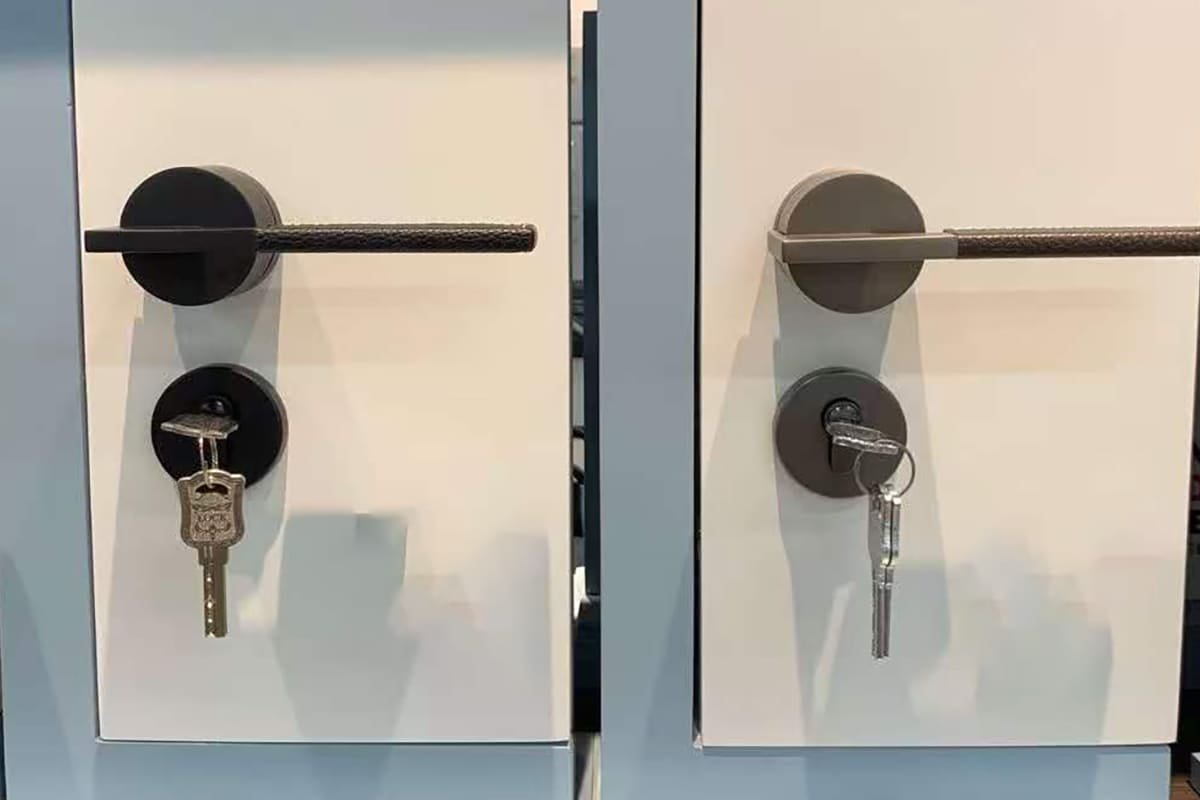
Metal door handles need mortise lock compatibility checks because screw hole distance, spindle size, lock center distance, door thickness, rose or plate design, and installation accessories must match the lock body.8 For DIN 18251 mortise locks, a 38 mm handle screw hole distance is commonly used9, but buyers should verify specifications before ordering.
Compatibility Is a Procurement Checkpoint
In my experience, buyers sometimes approve a handle design before confirming the lock body. This creates unnecessary risk. The handle and lock work as a system. If one part does not match, the installer may need to modify the door, change screws, or reject the hardware.
Important compatibility points include:
- Mortise lock standard
- Handle screw hole distance
- Spindle size
- Door thickness
- Backset and center distance
- Rose or plate size
- Through-bolt position
- Cylinder or keyhole position
- Left-hand or right-hand door requirements
- Accessory package
For DIN 18251 mortise locks, the handle screw hole distance is commonly 38 mm. However, this should not be copied blindly into every order. Buyers should verify the lock drawing, handle drawing, and installation method before confirming samples or publishing a specification.
Why Screw Hole Distance Matters
The screw hole distance affects whether the handle can be fixed correctly through the lock area. If the distance is wrong, the installer may find that the handle cannot align with the mortise lock. This problem is especially costly for door factories because it can interrupt production.
A wrong hole distance can cause:
- Assembly delay
- Extra drilling or modification
- Poor handle stability
- Misalignment with the lock body
- Loose installation
- Customer complaints
- Rework cost
Mortise Lock Matching Table
| Item | What to Confirm | Common Risk if Ignored |
|---|---|---|
| Lock standard | DIN, Euro, regional specification, or project drawing | Handle may not fit lock body |
| Screw hole distance | Example: commonly 38 mm for DIN 18251, but verify | Installation misalignment |
| Spindle size | Confirm square spindle dimension | Loose or blocked operation |
| Door thickness | Confirm required screw and spindle length | Accessories may be too short or too long |
| Rose or plate | Confirm size and fixing method | Visible gaps or poor appearance |
| Handing | Left, right, reversible | Incorrect operation or wrong stock |
Ask for Drawings Before Bulk Confirmation
I recommend that buyers request drawings before confirming metal door handles for bulk orders. A drawing does not need to be complicated, but it should show key dimensions.
A basic handle drawing should include:
- Overall length and projection
- Rose or plate diameter and thickness
- Screw hole distance
- Spindle size
- Fixing method
- Door thickness range
- Accessory list
- Finish and material notes
For door factories, I also suggest trial installation before mass order confirmation. A sample handle should be tested with the actual mortise lock and door thickness. This practical step prevents many avoidable problems.
A handle sample that looks good on a table is not fully approved until it fits the door and lock system.
That sentence has saved many buyers from trouble. Compatibility is not a detail. It is part of procurement risk control.
How Can Buyers Control Quality and Cost When Sourcing Metal Door Handles?
Low price is attractive, especially for wholesalers and brand operators competing in price-sensitive markets. But if the handle creates installation issues, surface complaints, or early failure, the real cost becomes much higher than the purchase price.
Buyers can control quality and cost by defining the door application, target price level, material, structure, finish, accessory standard, lock compatibility, sample approval process, and inspection criteria before bulk sourcing. A slightly cheaper handle is not always lower cost if it increases after-sales risk.
The Hidden Cost of a Cheap Handle
A low unit price can hide several risks. I have seen buyers compare two handles only by weight and price. That comparison is incomplete. A handle includes many cost-related parts.
The real cost drivers include:
- Material grade
- Tube wall thickness or casting process
- Spring structure
- Base design
- Screw and spindle quality
- Surface finish process
- Packaging protection
- Inspection standard
- Production consistency
- Supplier communication and delivery control
A cheaper handle may reduce initial purchase cost, but it can increase after-sales cost10 if the structure, spring, base, screw accessories, surface finish, corrosion resistance, or lock compatibility are not suitable.
Quality Control Points for B2B Buyers
For bulk metal door handles, I recommend a simple but strict quality control process.
1. Confirm the Application
The buyer should define the door type first. A handle for an interior wooden door is not the same as a handle for a public steel door.
2. Confirm the Material and Structure
The buyer should confirm whether the handle is stainless steel tube, stainless steel casting, zinc alloy die casting, aluminum alloy, or another material. If it is a hollow stainless steel tube handle, the buyer should confirm wall thickness, such as 0.8 mm or 1.0 mm where applicable.
3. Confirm the Finish
The buyer should approve a finish sample and define whether small color differences are acceptable. This is important for repeat orders.
4. Confirm the Lock Matching
The buyer should match the handle with the mortise lock before bulk production. Screw hole distance, spindle size, and door thickness must be checked.
5. Confirm Accessories
The handle is not complete without accessories. Screws, spindle, spring cassette, and fixing parts affect installation quality.
6. Confirm Inspection and Packaging
The buyer should agree on inspection checkpoints and packaging method before shipment.
Supplier Evaluation Table
| Supplier Capability | Why It Matters | Buyer Question |
|---|---|---|
| Direct production | Better control of structure, finish, and lead time | Does the supplier manufacture or only trade? |
| Material control | Reduces wrong-grade and inconsistent quality risk | How is material verified before production? |
| Finish control | Supports batch consistency | How is the approved finish sample used? |
| Lock knowledge | Prevents installation mismatch | Can the supplier check mortise lock compatibility? |
| Customization ability | Supports brand and market positioning | Can material, finish, and accessories be adjusted? |
| Inspection process | Reduces bulk order complaints | What is checked before packing? |
How I Usually Approach Cost Control
I do not recommend choosing the most expensive handle for every door. That is not professional procurement. I also do not recommend choosing the lowest offer without understanding what changed in the product.
A better approach is to define acceptable risk.
For example:
- If the buyer supplies fire-rated doors or public doors, the handle should be selected more carefully with the full door hardware system and required documents.
- If the buyer sells interior door sets in a decorative market, zinc alloy may provide better design flexibility.
- If the buyer competes in economy wholesale channels, aluminum alloy or other lower-cost options may be considered after structure and finish verification.
- If the buyer serves coastal markets, corrosion resistance should move higher in the decision process.
This approach helps buyers balance cost and reliability. It also helps suppliers quote correctly. Without clear requirements, suppliers may quote different structures under the same product photo. That makes price comparison unfair and risky.
Frequently Asked Questions
Are stainless steel metal door handles always better?
No. Stainless steel handles are often preferred when corrosion resistance, strength, and commercial durability matter. However, zinc alloy handles may offer more design variety for interior doors. The better choice depends on the door type, environment, target price, finish requirement, and lock compatibility.
What stainless steel grade should I choose for door handles?
Buyers commonly consider 304 stainless steel when corrosion resistance is important. 316 stainless steel may be considered for more demanding environments, such as coastal or high-humidity areas. The final choice should match the actual use environment, cleaning exposure, budget, and market expectation.
Why is screw hole distance important for metal door handles?
Screw hole distance affects whether the handle can be installed correctly with the mortise lock. For DIN 18251 mortise locks, 38 mm is commonly used, but buyers should verify the lock drawing and handle drawing before ordering. A mismatch can cause assembly delays and rework.
Should I choose hollow stainless steel tube or stainless steel casting?
Hollow stainless steel tube handles can be cost-effective for simpler designs, with wall thickness such as 0.8 mm or 1.0 mm depending on requirements. Stainless steel casting may suit more complex shapes. Buyers should compare structure, cost, weight, finish, and application before deciding.
What should I check before placing a bulk order?
Buyers should check door type, use environment, material, finish, structure, spring, base, accessories, mortise lock matching, screw hole distance, door thickness, packaging, sample approval, and inspection standard. These details reduce the risk of installation problems, finish complaints, and after-sales cost.
Conclusion
Choosing metal door handles is not about finding one perfect metal. It is about matching the handle to the door, market, environment, lock system, and price level. Before you confirm an order, I suggest preparing an inquiry checklist: door type, usage environment, target market, price level, preferred material, stainless steel grade, tube wall thickness or casting requirement, finish, batch color consistency, mortise lock standard, screw hole distance, door thickness, installation method, sample approval, and bulk order confirmation. If you need factory input, send your specifications for a practical sourcing review.
"A STUDY OF REVOLVING DOOR USAGE ON THE ...", https://web.mit.edu/~slanou/www/shared_documents/366_06_REVOLVING_DOOR.pdf. Building-use studies and door-hardware cycle standards document that doors in public or commercial circulation areas can experience substantially higher operating cycles than residential interior doors; this supports the article’s high-use distinction, although it may not prove the exact daily count for every site. Evidence role: statistic; source type: research. Supports: Evidence should show typical or measured door-use frequency in public or commercial buildings, or accepted cycle-test expectations for high-use door hardware.. Scope note: Contextual support only, because actual daily openings vary by building type, occupancy, and location. ↩
"Fire Doors and NFPA 80 FAQs", https://www.nfpa.org/news-blogs-and-articles/blogs/2025/04/11/fire-doors-faqs. Fire-door standards such as NFPA 80 treat door hardware as part of the fire door assembly and require installed components to maintain the assembly’s rated performance; this supports the need to verify hardware against project requirements rather than treating the handle as an isolated component. Evidence role: general_support; source type: institution. Supports: A fire-door standard should support that hardware is part of the rated door assembly and must be installed consistently with the listing and code requirements.. ↩
"When and How to Clean and Disinfect a Facility", https://www.cdc.gov/hygiene/about/when-and-how-to-clean-and-disinfect-a-facility.html. Public-health cleaning guidance commonly identifies door handles and doorknobs as high-touch surfaces subject to routine cleaning or disinfection, supporting the article’s statement that handle finishes may be exposed to chemical agents. Evidence role: general_support; source type: government. Supports: A public-health cleaning source should identify door handles or doorknobs as high-touch surfaces that may be cleaned or disinfected.. ↩
"Zinc Die Casting in Automotive Manufacturing", https://www.jonesandwilkinson.co.uk/zinc-die-casting-in-automotive-manufacturing/. Die-casting references describe zinc alloys as suitable for producing intricate shapes with good dimensional accuracy and surface finish, supporting their use in decorative hardware; this is contextual evidence and does not show market popularity by sales volume. Evidence role: mechanism; source type: institution. Supports: A die-casting or materials institution should support that zinc alloys can be cast into intricate shapes with good surface finish for decorative products.. Scope note: Contextual support only, because the source would explain manufacturing suitability rather than quantify popularity. ↩
"Aluminum Alloy | MATSE 81: Materials In Today's World", https://courses.ems.psu.edu/matse81/node/2143. Materials education sources describe aluminum alloys as low-density metals widely used where weight reduction is important, supporting the article’s reference to lighter-weight handle options; the evidence does not by itself prove lower total cost in a specific procurement case. Evidence role: definition; source type: education. Supports: A materials education source should support that aluminum has low density relative to steel and is commonly used for lightweight applications.. Scope note: Contextual support only, because cost performance depends on alloy, finish, production volume, and market pricing. ↩
"A Survey of Surface Defect Detection of Industrial Products ...", https://arxiv.org/pdf/2203.05733. Manufacturing and consumer-perception studies link surface finish and visible defects with perceived product quality, while surface-engineering literature links finish condition with corrosion or wear behavior; this supports treating handle finish as both a technical and commercial quality factor. Evidence role: general_support; source type: paper. Supports: Research should support that surface condition affects either technical performance, perceived quality, or both.. Scope note: Contextual support only, because the evidence may concern manufactured products generally rather than door handles specifically. ↩
"Marine Atmospheric Corrosion of Carbon Steel: A Review - PMC - NIH", https://pmc.ncbi.nlm.nih.gov/articles/PMC5506973/. Atmospheric corrosion literature identifies relative humidity and chloride deposition from marine aerosols as major factors that accelerate metal corrosion, supporting the article’s warning about humid and salt-air environments. Evidence role: mechanism; source type: paper. Supports: A corrosion study should support that moisture and chloride deposition accelerate atmospheric corrosion of metals.. ↩
"087100 – DOOR HARDWARE - Facilities and Campus Services", https://fcs.cornell.edu/087100-door-hardware. Architectural-hardware standards and mortise-lock installation references specify coordinated dimensions such as spindle size, fixing positions, backset or center distance, and door thickness, supporting the claim that handle components must match the lock body and door configuration. Evidence role: general_support; source type: institution. Supports: A door-hardware standard or technical reference should show that lock and handle installation depends on coordinated dimensions such as spindle size, door thickness, fixing positions, and center distances.. ↩
"DIN 18251: The German Standard for Mortise Locks - umaylocks.com", https://umaylocks.com/din-18251/. Standards-related references for DIN 18251 mortise locks identify the relevant handle fixing geometry, including the commonly cited 38 mm screw-hole distance, supporting the article’s dimensional compatibility warning; the source should still be checked against the exact lock model used. Evidence role: definition; source type: institution. Supports: A standards-related source should confirm the dimensional convention associated with DIN 18251 mortise locks.. Scope note: Contextual support only if the source summarizes the standard rather than reproducing the official DIN text. ↩
"Applying Cost of Quality to a Service Business", https://sloanreview.mit.edu/article/applying-cost-of-quality-to-a-service-business/. Cost-of-quality literature distinguishes purchase or prevention costs from internal and external failure costs such as rework, returns, warranty service, and complaints, supporting the article’s claim that a cheaper handle can create higher after-sales cost if quality problems occur. Evidence role: general_support; source type: research. Supports: Quality-management literature should support that internal and external failure costs can outweigh initial savings from lower-cost components.. ↩