What Should I Know About Door Hardware Kits for Small Apartments?
Door hardware kits for small apartments can create problems when buyers treat them as simple matching sets. A compact room makes every mistake more visible: noisy locks, oversized handles, weak hinges, or poor corrosion resistance. I usually solve this by matching each hardware part to the door size, room function, installation condition, and procurement budget.
Door hardware kits for small apartments should be selected according to door thickness, door weight, opening direction, room function, moisture exposure, noise requirements, handle projection, hinge load capacity, lock type, finish consistency, and accessory placement. A good kit reduces collision, noise, installation mismatch, corrosion risk, and unnecessary cost in batch apartment projects.
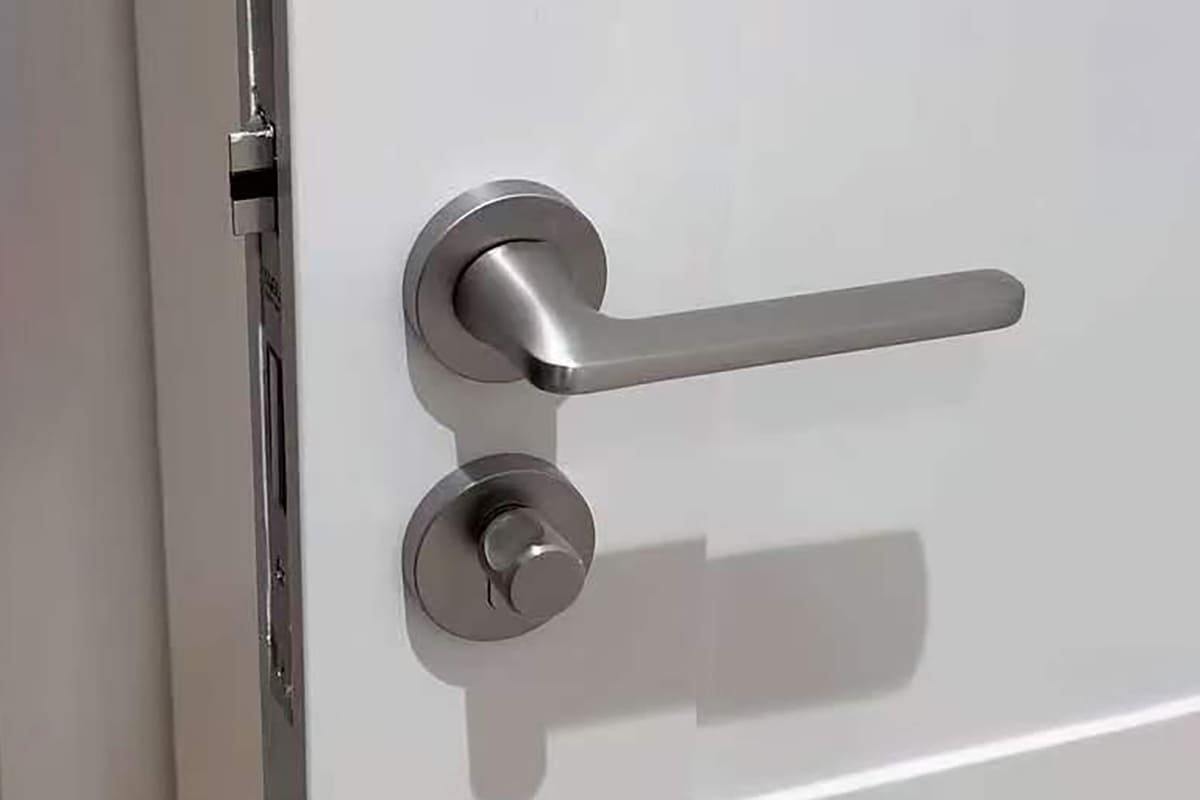
Many buyers first ask me, “What parts are included in one kit?” I think the better question is, “What problems must this hardware solve in a limited apartment space?” Once that question is clear, the hinge, handle, lock, cylinder, and accessories become practical decisions instead of random components.
Why Should Door Hardware Kits for Small Apartments Start With Door Conditions?
A small apartment door leaves little room for error. If the door is too heavy for the hinge, the handle hits furniture, or the lock body does not match the door preparation, the whole project becomes difficult. I always start with the actual door condition before discussing finishes or packaging.
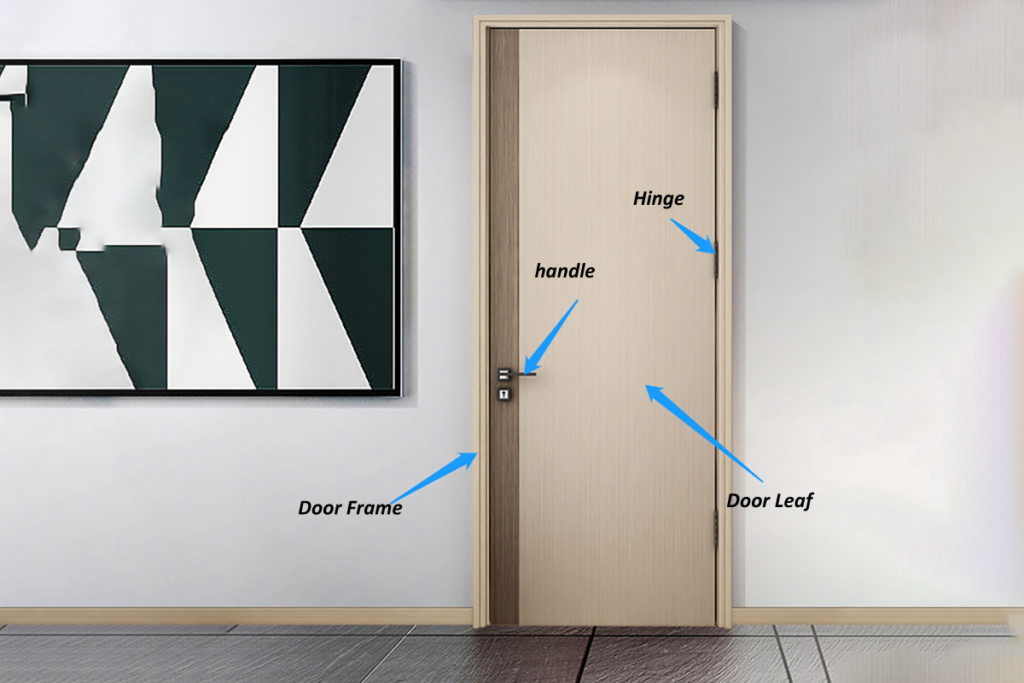
Door hardware kits for small apartments should start with door conditions because the door thickness, weight, material, opening style, and installation environment determine which hinges, locks, handles, cylinders, and accessories can work safely and consistently1. Buyers should verify these details before confirming batch procurement or customized production.
The door specification controls the whole kit
In my experience supporting door factories and project buyers, the most expensive problems often come from early assumptions. A buyer may say, “This is only an interior apartment door.” However, interior doors still vary widely. A hollow-core wooden door, solid timber door, MDF door, aluminum-framed door, and fire-rated apartment door can all need different hardware decisions.
Before I recommend any kit, I usually ask for several basic details:
- Door material: wooden, steel, aluminum, composite, or glass-framed
- Door thickness: common interior ranges may vary by market, so the project drawing should confirm it
- Door weight: this affects hinge size, quantity, and load rating
- Door height and width: taller doors may need stronger hinge support2
- Opening direction: left-hand, right-hand, inward, outward, or sliding arrangement
- Room type: bedroom, bathroom, kitchen, utility room, or apartment entrance
- Installation method: factory pre-drilling, site drilling, or mixed installation
- Market standard: EU specification, local project standard, or brand-specific requirement
I do not treat a compact apartment as a “small project.” In batch supply, a small mismatch repeated across 500 doors becomes a large cost problem.
Common door condition checks for procurement teams
| Check Item | Why It Matters | Procurement Risk If Ignored |
|---|---|---|
| Door thickness | Determines lock body, spindle, screws, and cylinder size | Lock may not fit or may feel loose |
| Door weight | Determines hinge load capacity and quantity | Door sagging, rubbing, or early failure |
| Door opening angle | Affects handle collision and door stop placement | Wall damage or furniture impact |
| Room function | Determines privacy, moisture, and noise needs | Wrong lock function or poor user experience |
| Finish requirement | Controls visual consistency across sets | Color differences in batch delivery |
Small-space performance matters more than decoration
A large apartment may hide minor hardware inconvenience. A small apartment does not. A projecting lever handle can hit a wardrobe. A loud latch can disturb a bedroom3. A bathroom lock without emergency release can create a safety concern4. A door stop placed too late can damage tile, skirting, or furniture.
For this reason, I advise buyers to define the performance target first:
- Easy daily use for tenants or end users
- Quiet door closing where bedrooms and shared spaces are close
- Space-saving movement with controlled handle projection
- Stable finish consistency across all visible hardware
- Corrosion resistance in bathroom and kitchen areas
- Cost control without reducing essential function
For technical procurement, I also recommend sample testing. A sample kit should be installed on the actual door or a representative mock-up. Buyers should check opening feel, handle grip, latch engagement, door swing, hinge alignment, and final appearance before mass order confirmation.
Which Hinges Work Best in Door Hardware Kits for Small Apartments?
Hinges look simple, so buyers sometimes treat them as basic accessories. That approach can create sagging doors, poor closing, uneven gaps, and after-sales complaints. In compact apartment projects, I see hinges as load-bearing components that control both durability and daily comfort.
The best hinges in door hardware kits for small apartments depend on door weight, thickness, opening style, appearance requirement, and closing function. Butt hinges, butterfly hinges, and concealed hydraulic self-closing hinges can all be suitable, but buyers should verify hinge size, material, load capacity, screw fixing, and installation compatibility.
Hinges should match the door, not just the catalog
For many apartment interior doors, buyers often compare three hinge categories: butt hinges, butterfly hinges, and concealed hinges. Each option has a place. The right choice depends on the actual door and the desired user experience.
| Hinge Type | Common Use Case | Main Advantage | Key Check Before Buying |
|---|---|---|---|
| Butt hinge | Standard wooden interior doors | Stable, familiar, cost-effective | Door weight, hinge thickness, screw strength |
| Butterfly hinge | Light interior doors or decorative applications | Easy installation, visible style | Load capacity and long-term alignment |
| Concealed hinge | Modern flush doors or higher-end apartments | Clean appearance, hidden hardware | Door preparation, adjustment range, load rating |
| Concealed hydraulic self-closing hinge | Doors needing controlled closing | Better closing control and visual simplicity | Closing force, installation space, maintenance needs |
Door weight and hinge load capacity must be checked
I avoid giving one universal hinge recommendation because door weight changes everything. A light hollow-core door may work well with a simpler hinge, while a heavier solid door needs a stronger specification. A tall door may also need more hinge support even if the width looks standard.
Buyers should request or verify:
- Rated load per hinge or per door set
- Recommended door size range
- Number of hinges per door
- Material grade, such as stainless steel where corrosion resistance is needed
- Pin structure and washer design
- Screw specification and fixing depth
- Cycle testing information, if available from the supplier
- Surface finish consistency with handles and locks
As a supplier, I usually ask whether the door manufacturer will pre-cut hinge positions. If yes, the hinge dimension and leaf thickness must be controlled tightly. If site workers will install the hinge manually, the hardware should allow practical tolerance without causing visible gaps.
Butt hinges are often practical for batch apartment projects
Butt hinges remain common because they are familiar to installers and relatively efficient in mass production. For many interior wooden doors, they offer a good balance of cost, strength, and repair convenience. Stainless steel butt hinges are also useful for buyers who need better corrosion resistance in humid climates.
However, buyers should not choose butt hinges only by size. Two hinges may look similar but perform differently because of:
- Steel thickness
- Bearing structure
- Pin quality
- Screw hole position
- Surface treatment
- Polishing quality
- Production tolerance
Concealed hinges support a cleaner small-space look
Concealed hinges can make a small apartment feel visually cleaner because the hinge is hidden when the door is closed. They are often chosen for modern interiors and flush door systems. However, they require more accurate door and frame preparation.
Before specifying concealed hinges, buyers should confirm:
- The door and frame can be routed accurately.
- The door thickness supports the hinge body.
- The installer understands adjustment requirements.
- The hinge load rating matches the actual door.
- The opening angle does not cause wall or furniture collision.
In short, hinge selection is both a design and engineering decision. For door hardware kits for small apartments, I prefer to confirm door samples, drawings, and expected usage before finalizing the hinge type.
How Should Handles and Locks Be Chosen for Small Apartment Door Hardware Kits?
Handles and locks affect the user every day. If the handle is too bulky, it may hit furniture or feel uncomfortable. If the lock is noisy, it may disturb nearby rooms. I always treat handles and locks as usability components, not only visible decoration.
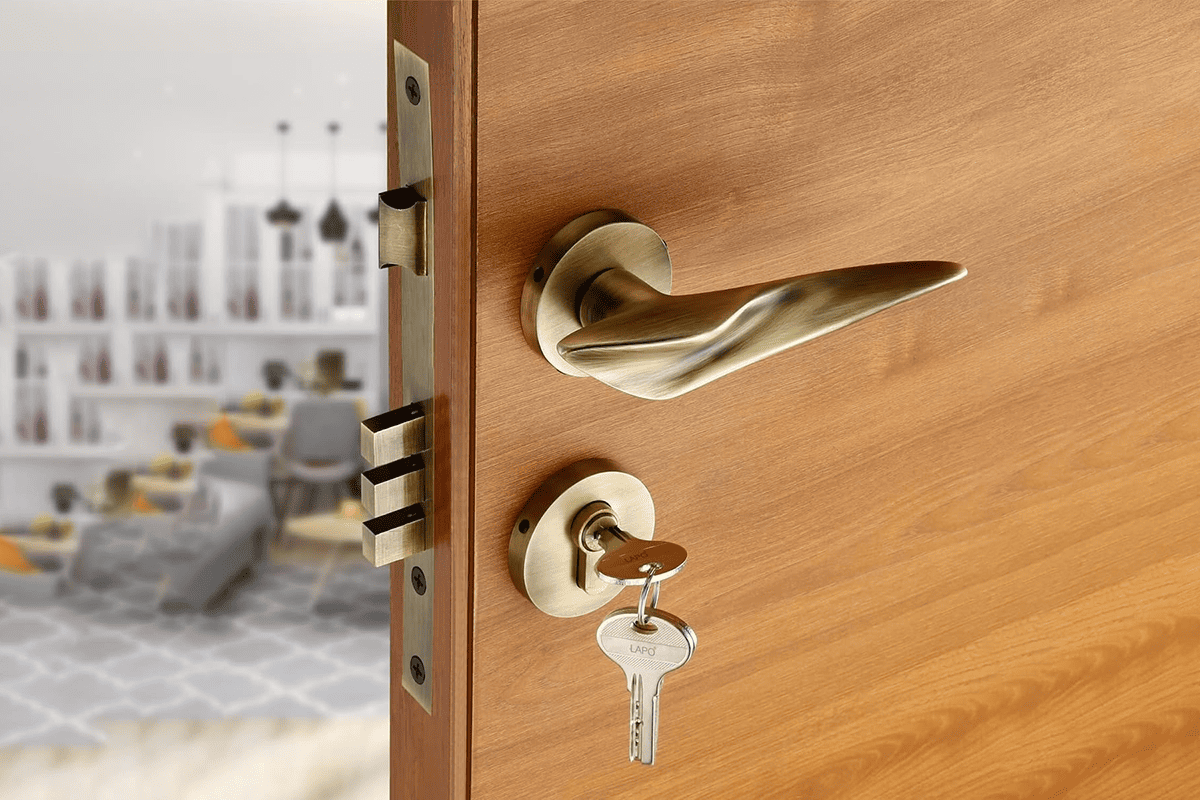
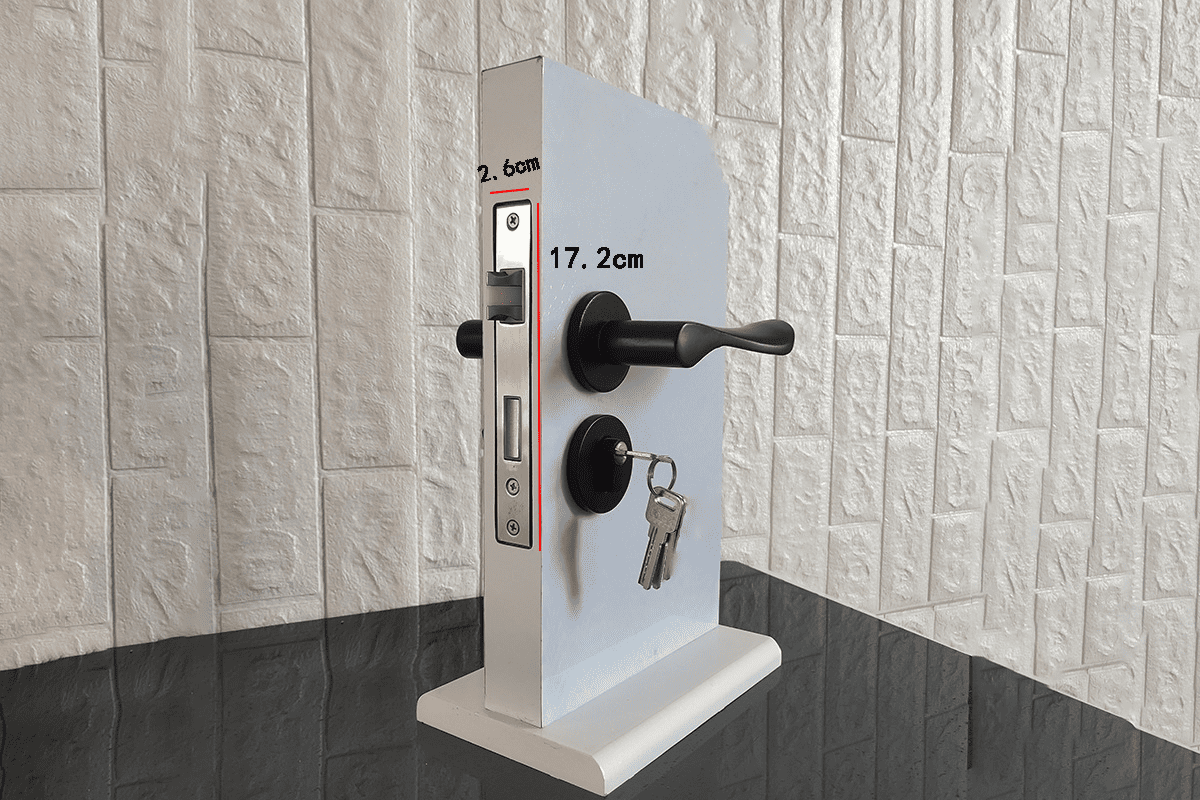
Handles and locks for small apartment door hardware kits should be compact, comfortable, quiet, and suitable for each room function. Bedrooms may need privacy locks, bathrooms may need emergency release, and shared spaces may benefit from quieter magnetic locks. Buyers should verify lock body size, backset, spindle, cylinder, and finish matching.
Handles should reduce collision risk
In small apartments, the handle projection matters. A long or highly decorative handle may look attractive in a showroom, but it can become inconvenient beside wardrobes, narrow corridors, or bathroom fixtures. I often recommend simple lever handles with clean lines because they are easier to match, easier to clean, and safer in tight spaces.
Important handle checks include:
- Projection from the door surface
- Grip comfort for daily use
- Lever return strength
- Rosette or plate size
- Edge finishing and corner softness
- Material, such as stainless steel or zinc alloy
- Finish consistency with hinges, lock faceplates, and accessories
- Screw fixing method
- Compatibility with lock body and spindle
A compact handle does not mean a weak handle. Buyers should still evaluate material thickness, spring mechanism, spindle quality, and salt spray or finish test information where relevant.
Lock choice should follow room function
Different apartment doors need different lock functions. I do not recommend using one lock type blindly for every door unless the project standard requires it and the function is suitable.
| Room Type | Common Hardware Need | Practical Selection Point |
|---|---|---|
| Bedroom | Privacy and quiet operation | Privacy lock or cylinder option with smooth latch |
| Bathroom | Privacy plus emergency access | Thumbturn with emergency release where required |
| Kitchen | Moisture and grease resistance | Corrosion-resistant finish and easy-clean handle |
| Utility room | Simple closing or privacy | Cost-effective latch or privacy function |
| Interior passage door | Quiet passage | Magnetic lock or silent latch where suitable |
Magnetic locks can help reduce closing noise
Quiet closing is important in compact apartments because rooms are close together. A traditional latch can create a noticeable “click” when the door closes. A magnetic lock can reduce this sound because the latch engages differently5. This can be helpful for bedrooms, shared apartments, hotels, and serviced apartments.
However, buyers should still verify the product carefully. A magnetic lock must match the door preparation, strike plate position, and installation tolerance. If alignment is poor, the quiet function may not perform well. I usually suggest testing the lock on a real door sample before large orders.
Bathroom locks need extra attention
Bathroom doors face two special issues: moisture and safety access. Moisture can affect surface finish, lock movement, screws, and internal parts over time6. Safety access matters because a bathroom privacy lock should often allow emergency opening from outside, depending on the project requirement and local standard.
For bathrooms, buyers should consider:
- 304 stainless steel handles or suitable zinc alloy finishes
- PVD or other durable finishes, where appropriate and verified
- Emergency release function for privacy locks
- Smooth thumbturn operation
- Corrosion-resistant screws and accessories
- Clear installation instructions for site teams
Finish matching affects the whole apartment set
Small apartment interiors often use fewer materials and simpler visual lines. Because of that, mismatched finishes are easier to notice. A handle in satin nickel, a hinge in brighter stainless steel, and a lock faceplate in a different tone can make the door set look unprofessional.
For batch procurement, I recommend confirming:
- Master finish sample
- Acceptable color tolerance
- Packaging method to avoid scratches
- Batch production control
- Surface inspection standard
- Replacement policy for finish defects
At SDH Hardware, we handle many standardized and customized door hardware products, so I pay close attention to finish consistency across hinges, lever handles, mortise locks, cylinders, and accessories. Buyers should still verify samples and documents according to their project and market requirements.
What Accessories and Materials Matter in Door Hardware Kits for Small Apartments?
Accessories are easy to ignore until the door hits a wall, scratches furniture, or rusts near a bathroom. In small apartments, the accessory plan should be part of the first hardware discussion. I see door stops, cylinders, screws, strike plates, and finishes as small parts with large consequences.
Door hardware kits for small apartments should include properly matched accessories and materials because small rooms increase the risk of wall collision, moisture damage, visible scratches, and installation failure. Door stops, strike plates, screws, cylinders, and corrosion-resistant materials should be selected according to room layout, climate, and project standard.
Door stops prevent expensive small-space damage
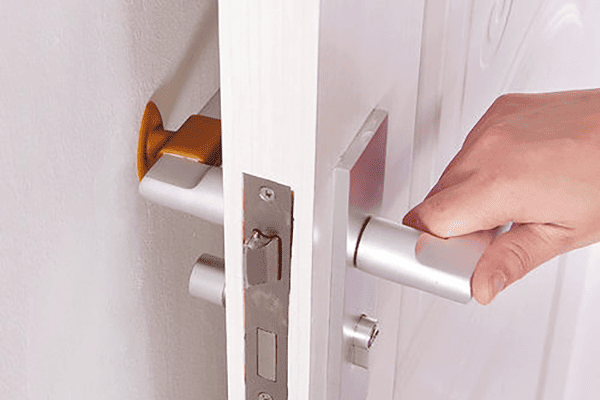
A door stop looks minor, but it protects walls, tiles, cabinets, glass partitions, and furniture7. In small apartments, doors often open close to beds, wardrobes, kitchen cabinets, or bathroom fixtures. Without a planned stop, the handle may become the “stop,” which can damage both the door hardware and the wall.
Common door stop options include:
| Door Stop Type | Best Use Case | Buyer Check |
|---|---|---|
| Floor-mounted stop | Strong stopping point, common in interiors | Floor material and drilling permission |
| Wall-mounted stop | Prevents handle impact on wall | Wall strength and exact handle position |
| Magnetic stop | Holds door open in selected areas | Holding force and installation alignment |
| Concealed or soft stop | Cleaner appearance | Compatibility and maintenance access |
The correct position should be checked with the actual door opening angle. I recommend confirming the furniture layout before deciding the stop location. If buyers order complete kits for a project, door stop type and finish should be included in the hardware schedule.
Cylinders and keys should fit the project security level
For interior apartment doors, some rooms only need privacy, while others may need key control. Entrance doors are different and usually require higher security specifications, stronger locks, and sometimes certified fire-rated or security-rated products8. Buyers should avoid mixing interior door assumptions with entrance door requirements.
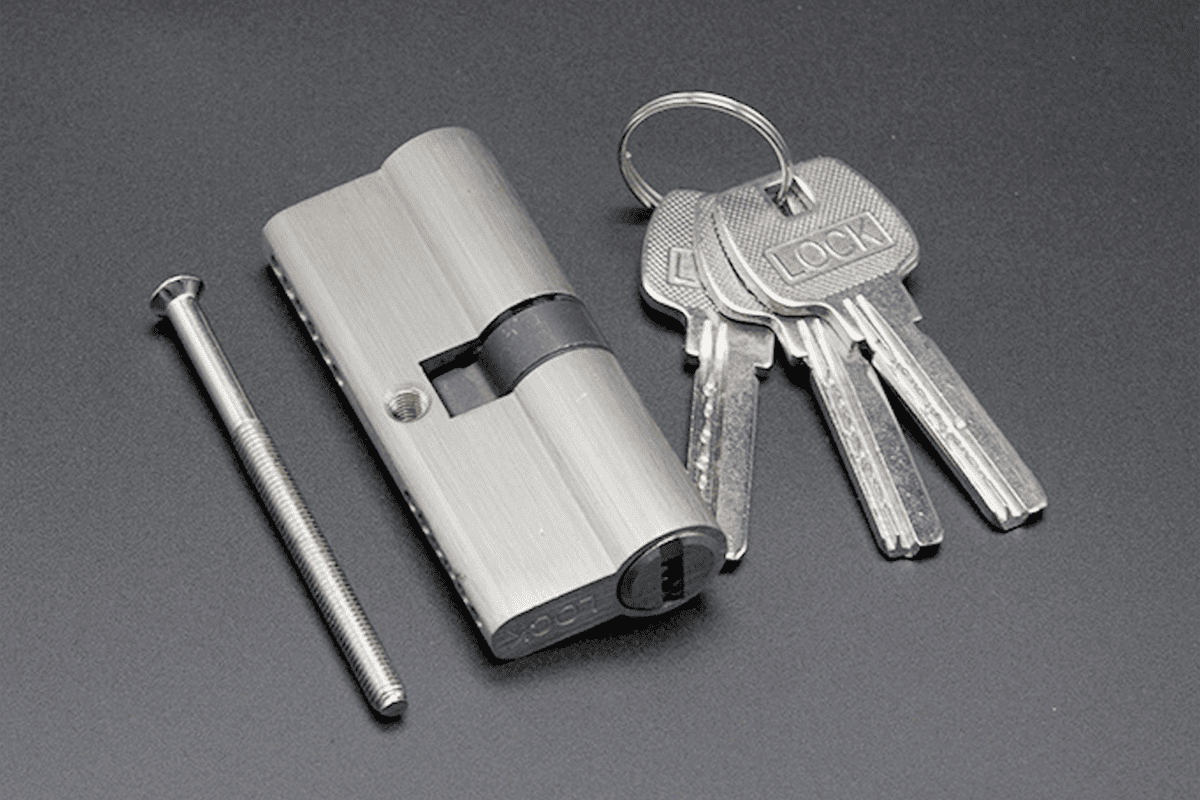
For cylinders, buyers should confirm:
- Cylinder profile, such as euro profile where applicable
- Cylinder length according to door thickness and escutcheon
- Keying system, such as keyed alike or keyed different
- Thumbturn requirement
- Finish matching
- Packaging and labeling for project installation
- Certification documents if required by the market
SDH Hardware manufactures brass profile cylinders as part of complete hardware supply. Still, I advise buyers to verify cylinder specification, security grade, and market compliance with their local regulations and project documents.
Materials should respond to moisture and cleaning conditions
Small apartments often place kitchens, bathrooms, and living areas close together. Moisture, cleaning chemicals, and ventilation conditions can influence hardware life. In humid spaces, material selection becomes more important.
Common material considerations include:
- 304 stainless steel: often preferred for better corrosion resistance in humid areas
- Zinc alloy: useful for many handle designs and finishes when properly produced
- Brass: commonly used for cylinders and some premium components
- Steel components: may be suitable when protected by proper plating or coating
- PVD finishes: can provide strong surface performance when correctly specified and verified
No finish is magic. Corrosion resistance depends on base material, surface process, coating thickness, environment, maintenance, and quality control9. Buyers should request test information where relevant, such as salt spray test references, but they should also judge whether the test condition matches the real application.
Screws and strike plates should not be afterthoughts
A complete kit must install cleanly. Poor screws can strip. Weak strike plates can deform. Wrong spindle length can delay installation. Missing accessories can stop a project line.
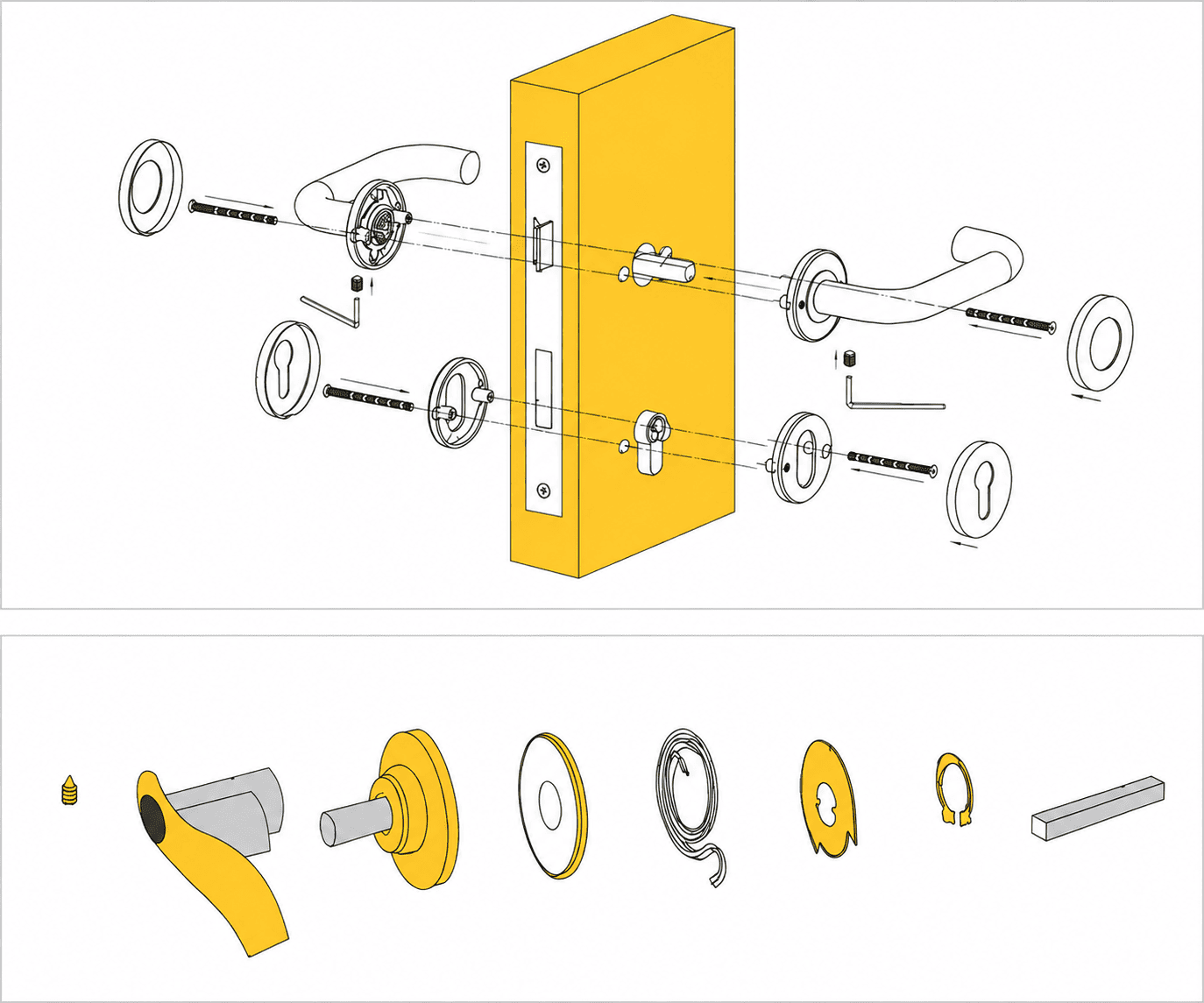
For batch apartment projects, I suggest checking the full accessory list:
- Hinges and screws
- Lever handles and fixing kits
- Lock body and strike plate
- Cylinder or privacy turn
- Spindle and through bolts
- Door stop
- Escutcheon or rosette
- Allen key or installation tool if needed
- Installation drawing
- Packaging label by room or door type
This level of detail reduces site confusion. It also helps door manufacturers pre-install hardware or prepare machining accurately.
How Can Buyers Compare Suppliers for Door Hardware Kits for Small Apartments?
A low unit price may look attractive, but small apartment projects depend on repeatability. If the first shipment looks good but the second shipment has different finishes or unstable lock operation, the buyer loses time and credibility. I evaluate suppliers by production control, documentation, customization ability, and delivery stability.
Buyers should compare suppliers for door hardware kits for small apartments by checking factory capability, product range, sample accuracy, quality inspection process, finish consistency, certification documents, customization support, packaging control, delivery capacity, and after-sales response. A qualified supplier should help match hardware to door specifications rather than only quote parts.
A complete supplier reduces coordination cost
A small apartment hardware kit includes several categories. If a buyer sources hinges from one supplier, handles from another, locks from a third, and accessories from a fourth, the price may look competitive at first. However, coordination becomes harder.
Possible issues include:
- Different finish tones
- Incompatible screws or spindles
- Lock and handle mismatch
- Packaging confusion
- Longer sample approval process
- More suppliers to audit
- Difficult responsibility tracking after installation
A one-stop supplier can reduce these risks when the factory has real production and quality control capability. At SDH Hardware, our product range includes concealed hinges, butt hinges, euro standard mortise locks, stainless steel lever handles, lock cylinders, and customized accessories. That makes it easier for buyers to evaluate a full matching set rather than isolated parts.
Conclusion
Door hardware kits for small apartments should be selected as practical solutions, not only matching product sets. I recommend starting with door thickness, weight, opening style, room function, moisture exposure, noise control, and installation method. Then buyers can choose suitable hinges, compact handles, quiet locks, cylinders, door stops, and corrosion-resistant materials. If you need complete apartment door hardware kits with stable quality, finish consistency, ODM support, and factory-direct supply, SDH Hardware can help you configure and evaluate the right solution for your project.
"087100 – DOOR HARDWARE - Facilities and Campus Services", https://fcs.cornell.edu/087100-door-hardware. Building-hardware standards and specification guides describe hinges, locks, cylinders, and related fittings as components selected according to door dimensions, mass, material, handing, and service conditions; this supports the article’s general specification logic, although it does not validate any particular kit configuration. Evidence role: general_support; source type: institution. Supports: A neutral building-hardware standard or institutional guide should support that door hardware specification is governed by door dimensions, weight, material, handing, use conditions, and installation constraints.. Scope note: The support is contextual because standards usually address component selection criteria rather than the specific phrase 'small apartments.' ↩
"087100 – DOOR HARDWARE - Facilities and Campus Services", https://fcs.cornell.edu/087100-door-hardware. Facilities and architectural-hardware specifications commonly relate hinge quantity and placement to door height as well as door weight, supporting the statement that taller doors can require stronger hinge support; the source provides general specification context rather than a calculation for every door type. Evidence role: general_support; source type: education. Supports: A university facilities standard or architectural hardware guide should support that taller doors often require additional or more robust hinge support.. Scope note: The evidence is contextual because exact hinge requirements vary by door construction, hardware grade, and local standard. ↩
"Guidance on environmental noise", https://www.who.int/tools/compendium-on-health-and-environment/environmental-noise. Public-health guidance on environmental noise identifies sleep disturbance and annoyance as established effects of unwanted noise exposure, supporting the article’s concern about audible latches near bedrooms; the evidence concerns noise exposure generally rather than measuring door-latch sounds specifically. Evidence role: general_support; source type: institution. Supports: A public-health or acoustics source should support that indoor or environmental noise can disturb sleep and occupant comfort.. Scope note: The source would support the broader noise-sleep relationship, not direct acoustic testing of a particular latch. ↩
"Chapter 6: Toilet Rooms - Access-Board.gov", https://www.access-board.gov/ada/guides/chapter-6-toilet-rooms/. Government accessibility and building guidance often requires or recommends that toilet-room privacy locks be operable or releasable from outside in emergencies, supporting the article’s safety concern; applicability depends on jurisdiction, building type, and whether the door is subject to accessibility rules. Evidence role: general_support; source type: government. Supports: A government building-code or accessibility document should support the need for emergency release or emergency access features on certain bathroom or toilet-room locks.. Scope note: The requirement is jurisdiction-specific and may not apply to every private residential bathroom. ↩
"Acoustic Door Latch Detector (Smart Latch™)", https://www.srnl.gov/tech_briefs/acoustic-door-latch-detector-smart-latch/. Technical descriptions of magnetic door latches explain that the latch engages magnetically when aligned with the strike rather than by the same protruding spring-latch action used in conventional mechanisms, supporting the proposed noise-reduction mechanism; the source does not establish acoustic performance for all magnetic locks or installations. Evidence role: mechanism; source type: other. Supports: A technical source should explain that magnetic door latches operate by magnetic engagement rather than continuous mechanical latch protrusion, which can reduce impact noise under proper alignment.. Scope note: The evidence is mechanistic and may not include comparative sound-level measurements. ↩
"[PDF] Coatings for corrosion protection - NIST Technical Series Publications", https://nvlpubs.nist.gov/nistpubs/Legacy/SP/nistspecialpublication1035.pdf. Corrosion science references identify moisture and humidity as key contributors to electrochemical corrosion and coating degradation in metals, supporting the claim that bathroom moisture can affect finishes, screws, lock movement, and internal hardware over time. Evidence role: mechanism; source type: research. Supports: A corrosion science source should support that moisture and humidity contribute to corrosion and degradation of metal components and coatings.. ↩
"University Office Door Hinges: The Self-Closing & Anti ...", https://watersonusa.com/solutions/university-office-door-hinges. Facilities-maintenance standards describe door stops as hardware used to limit door swing and protect adjacent walls, doors, or fixtures from impact, supporting the article’s statement about their protective role; the source does not quantify the cost of avoided damage in small apartments. Evidence role: general_support; source type: education. Supports: A facilities standard or maintenance guide should support that door stops are used to limit door travel and prevent damage to walls, doors, and adjacent surfaces.. Scope note: The evidence supports the protective function generally, not the specific severity of damage in every apartment layout. ↩
"Fire Door Latching", https://idighardware.com/2025/10/fire-door-latching-2/. Fire-door and security standards specify performance and certification requirements for door assemblies and associated hardware, supporting the distinction between ordinary interior doors and apartment entrance doors; exact requirements depend on jurisdiction, occupancy classification, and the door’s rated function. Evidence role: general_support; source type: institution. Supports: A fire-door or security standard should support that entrance and fire-rated door assemblies may require certified hardware, latching, and lock performance beyond ordinary interior doors.. Scope note: The source provides code or standards context rather than a universal requirement for every apartment entrance. ↩
"ISO 9223:2012(en), Corrosion of metals and alloys", https://www.iso.org/obp/ui/fr/#iso:std:iso:9223:ed-2:v1:en:fig:1. International corrosion standards classify corrosivity using environmental variables such as humidity and pollutants and treat material and protective systems as central to corrosion performance, supporting the article’s multi-factor explanation; maintenance and quality-control effects are consistent with this framework but may be addressed in separate technical guidance. Evidence role: expert_consensus; source type: institution. Supports: An international corrosion standard or corrosion institution should support that corrosion behavior depends on material, protective systems, coating characteristics, and environmental corrosivity factors.. Scope note: The source may address atmospheric corrosion generally rather than door hardware specifically. ↩