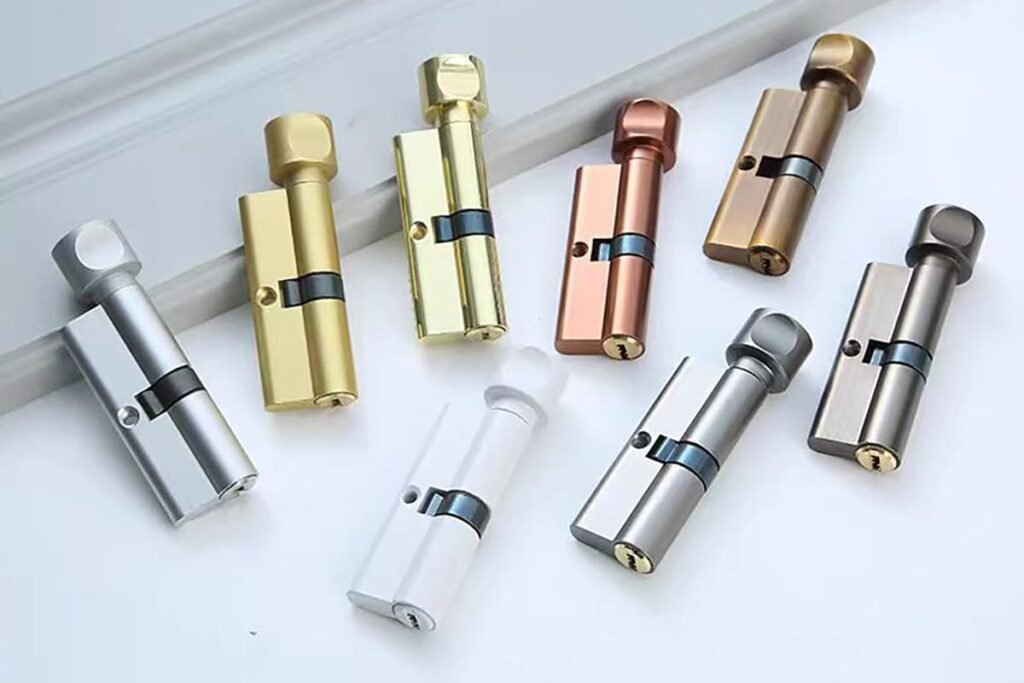
What Should I Know About European Cylinder Locks?
European cylinder locks can look simple on a quotation sheet, but I have seen many buyers face fit problems, weak security positioning, and after-sales complaints because they selected only by “type + length.” The better solution is to evaluate the cylinder together with the door, mortise lock, handle set, security requirement, certification documents, and batch supply plan.
European cylinder locks should be selected by application fit, not size alone. Buyers should confirm door thickness, escutcheon or cylinder cover thickness, Euro mortise lock compatibility, keying requirements, security features, certification needs, finish consistency, packaging, and delivery stability before placing bulk orders for door production, resale, or project supply.
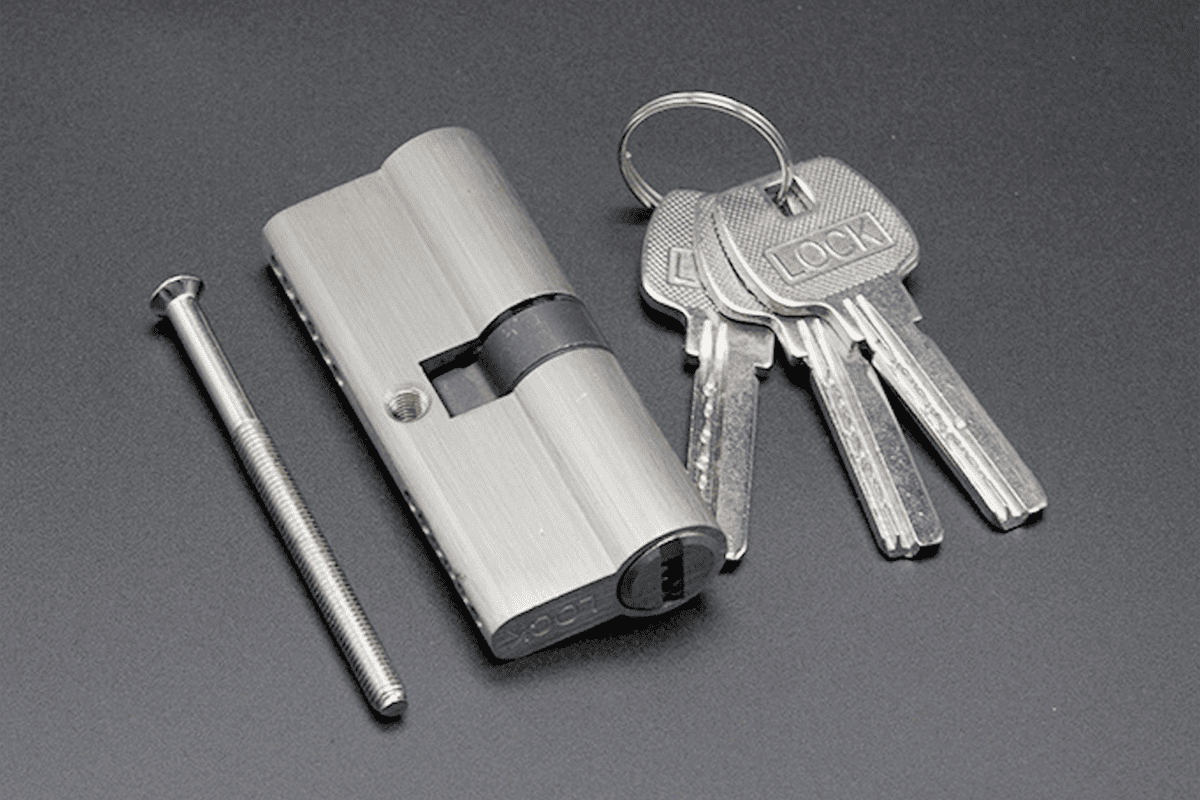
In my work with door factories and hardware brands, the same mistake appears often: the buyer asks for “70 mm double cylinder” before confirming the door system. That shortcut can work for samples, but it becomes risky in mass production. Let’s break down the practical selection logic.
How Should I Choose European Cylinder Locks for the Right Door Fit?
A European cylinder lock may fail in a project even when the length appears correct. The problem becomes worse when the buyer checks the cylinder alone and ignores the door thickness, lock body position, handle plate, and escutcheon height. I always start with the complete door hardware set.
The correct way to choose European cylinder locks is to calculate cylinder length from the door thickness plus both outside and inside escutcheon or cylinder cover thicknesses1. Then buyers should verify the cylinder projection, Euro mortise lock compatibility, handle alignment, fixing screw position, and final assembled appearance before confirming bulk production.
Dive deeper: why “70 mm” is not enough
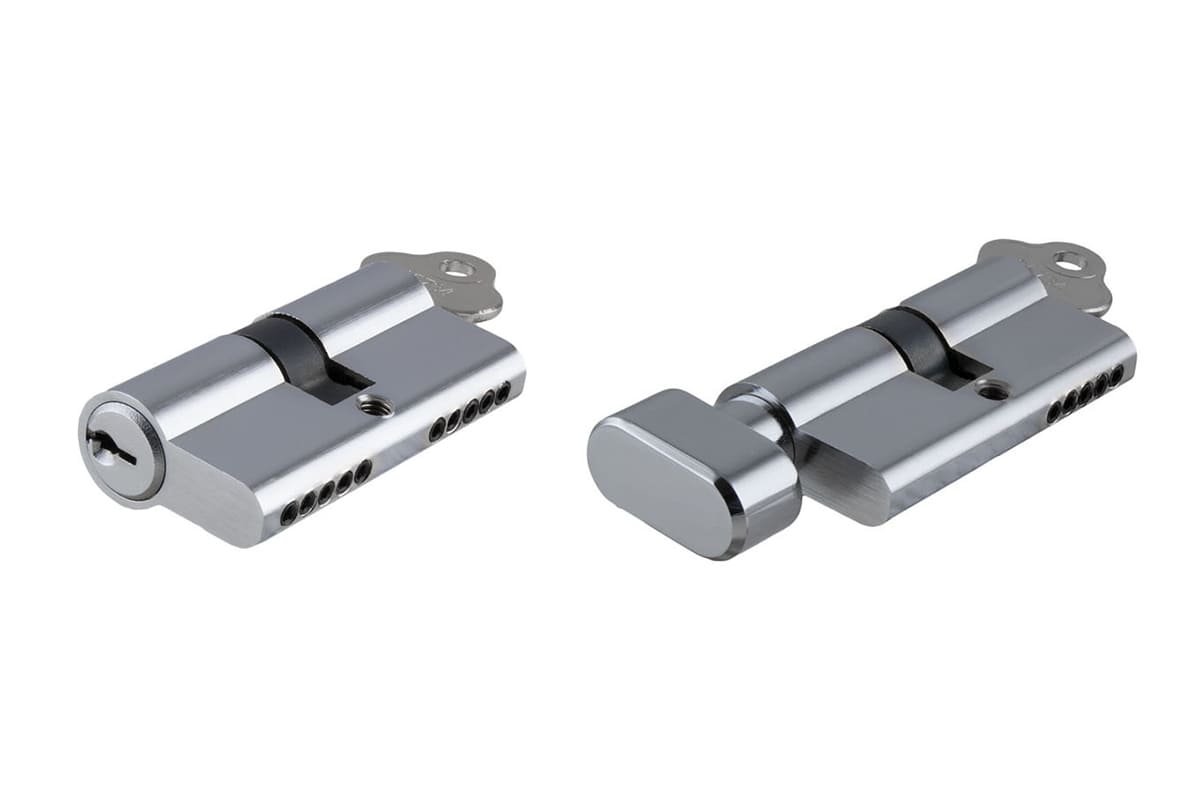
When I receive a cylinder inquiry, the first number I usually see is the total length: 60 mm, 70 mm, 80 mm, 90 mm, or another common size. That number matters, but it does not tell the full story. A Euro profile cylinder works as part of a door hardware system. The cylinder must sit correctly through the Euro mortise lock and the handle or escutcheon set.
A simple calculation should include:
- Door leaf thickness
- Outside escutcheon, rosette, or cylinder cover thickness
- Inside escutcheon, rosette, or cylinder cover thickness
- Cylinder projection requirement
- Lock body centerline and fixing screw position
- Handle plate or rosette design
- Market preference for appearance and security
For example, a 45 mm door with 10 mm outside cover and 10 mm inside cover may need a different cylinder length than a 45 mm door with thin 3 mm escutcheons. If the cylinder is too short, the key may not insert smoothly or the cover may interfere. If the cylinder projects too much, the appearance looks poor and the exposed body may increase attack risk in some applications2.
In our factory discussions, I often ask buyers to send the door section drawing, lock body drawing, and handle set drawing together. That one step prevents many repeated sample changes.
Here is a practical measurement table I use when checking a new order:
| Check Point | Why It Matters | Buyer Action |
|---|---|---|
| Door thickness | Controls base cylinder length | Measure actual production door, not only catalog value |
| Escutcheon thickness | Adds length on both sides | Confirm inside and outside thickness separately |
| Mortise lock compatibility | Ensures cam and fixing screw fit | Match with Euro standard mortise lock drawings |
| Cylinder projection | Affects appearance and risk exposure | Define acceptable projection, often minimal but functional |
| Handle/rosette design | May interfere with key or thumb-turn | Test with complete handle set |
| Finish match | Impacts visual consistency | Compare finish samples under the same light |
For procurement teams, I recommend requesting assembled samples, not loose parts only. A cylinder that looks acceptable in a box may create problems after installation. This is especially true for door factories that ship complete door sets to Europe, the Middle East, or Southeast Asia.
Buyers should also avoid assuming that all Euro cylinders fit all Euro mortise locks. Many products follow common dimensional practices, but tolerance, cam design, fixing screw length, and body shape still need confirmation. If a project has fire-rated doors, acoustic doors, hotel doors, or high-traffic commercial doors, the buyer should involve qualified technical personnel before final selection.
Which European Cylinder Locks Types Match Different Use Cases?
A poor cylinder type choice creates daily user problems. A double cylinder may be wrong for a door that needs easy internal exit. A thumb-turn cylinder may be wrong for some security-controlled doors. I prefer to connect each cylinder type to the door scenario, not just list names.
European cylinder locks include double cylinders, single cylinders, half cylinders, thumb-turn cylinders, bathroom or privacy cylinders, high-security cylinders, keyed-alike systems, master key systems, and temporary construction cylinders. The right type depends on access direction, privacy need, emergency exit requirement, user management, and project security level.
Dive deeper: selection by door function, not catalog category
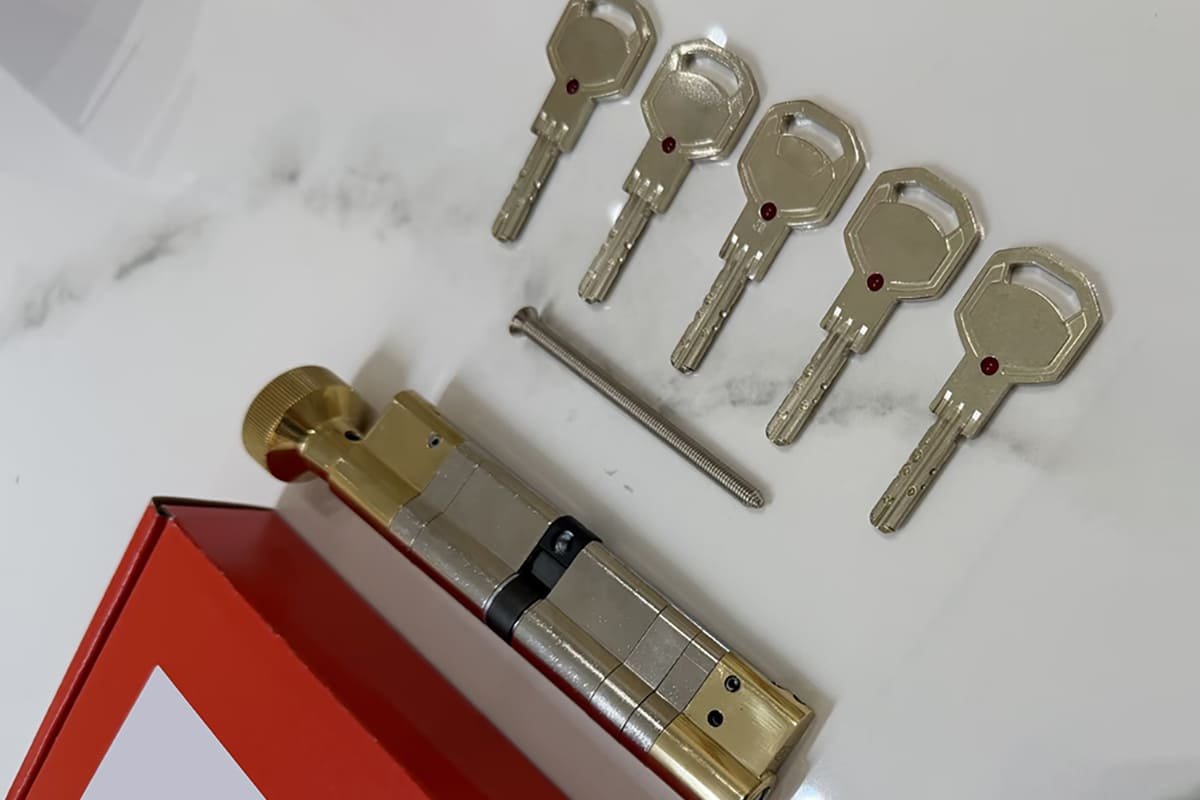
Many cylinder catalogs show neat product categories. That is useful, but buyers need to ask a more practical question: Who uses the door, from which side, and under what control requirement?
Here is how I usually explain the main cylinder options to buyers.
| Cylinder Type | Typical Use Case | Buyer Consideration |
|---|---|---|
| Double cylinder | Key operation from both sides | Suitable where both sides need controlled access |
| Single cylinder | Key operation from one side only | Common where one side does not need key access |
| Half cylinder | Cabinets, shutters, special control points | Confirm cam position and application design |
| Thumb-turn cylinder | Key outside, turn knob inside | Useful for convenience, but confirm safety and regulations |
| Bathroom/privacy cylinder | Interior privacy doors | Confirm local terminology and compatible lock function |
| High-security cylinder | Higher-risk entrance doors | Verify actual tested features and documents |
| Keyed alike | Multiple cylinders opened by one key | Good for property convenience and small systems |
| Master key system | Hierarchical access control | Requires careful keying plan and factory management |
| Construction cylinder | Temporary access during building work | Confirm handover process and final replacement plan |
Double cylinder and single cylinder
A double cylinder is often selected for entrance doors where both sides require key control. A single cylinder may be suitable where only one side needs key access. Buyers should check local safety requirements, because some doors require easy egress from the inside3. I do not recommend making this decision only by price.
Thumb-turn cylinder options
A thumb-turn cylinder improves convenience because the inside user can lock or unlock without a key4. However, it also changes the security and safety profile. Buyers should evaluate:
- Door location
- Glass panel distance
- Escape route requirements
- Local building rules
- User behavior
- Project specifications
A thumb-turn may be practical for apartments, offices, or internal controlled areas. It may be unsuitable for certain security-sensitive doors. I usually ask buyers to confirm the project requirement before choosing this option.
Keyed alike and master key systems
For hardware brands and wholesalers, keying is more than a technical detail. It affects packaging, labeling, after-sales service, and customer trust. A keyed-alike system lets several cylinders work with one key. A master key system allows different access levels, such as tenant keys, floor master keys, and building master keys.
The procurement risk is not only mechanical. The risk is also administrative. Buyers should define:
- Key code structure
- Quantity per key group
- Number of keys per cylinder
- Master key hierarchy
- Labeling format
- Replacement key policy
- Packaging separation
- Confidentiality requirements
In our production planning, a keying plan must be confirmed clearly before mass production. One wrong group code can create costly sorting problems. This is why I encourage buyers to treat keying plans as controlled documents, not casual notes in email threads.
What Security Features Should European Cylinder Locks Have?
Security claims can sound impressive but unclear. Buyers may see terms like anti-snap, anti-drill, anti-pick, anti-bump, and high security without understanding the protection layer. I prefer to explain these features as risk-reduction measures, not as absolute guarantees.
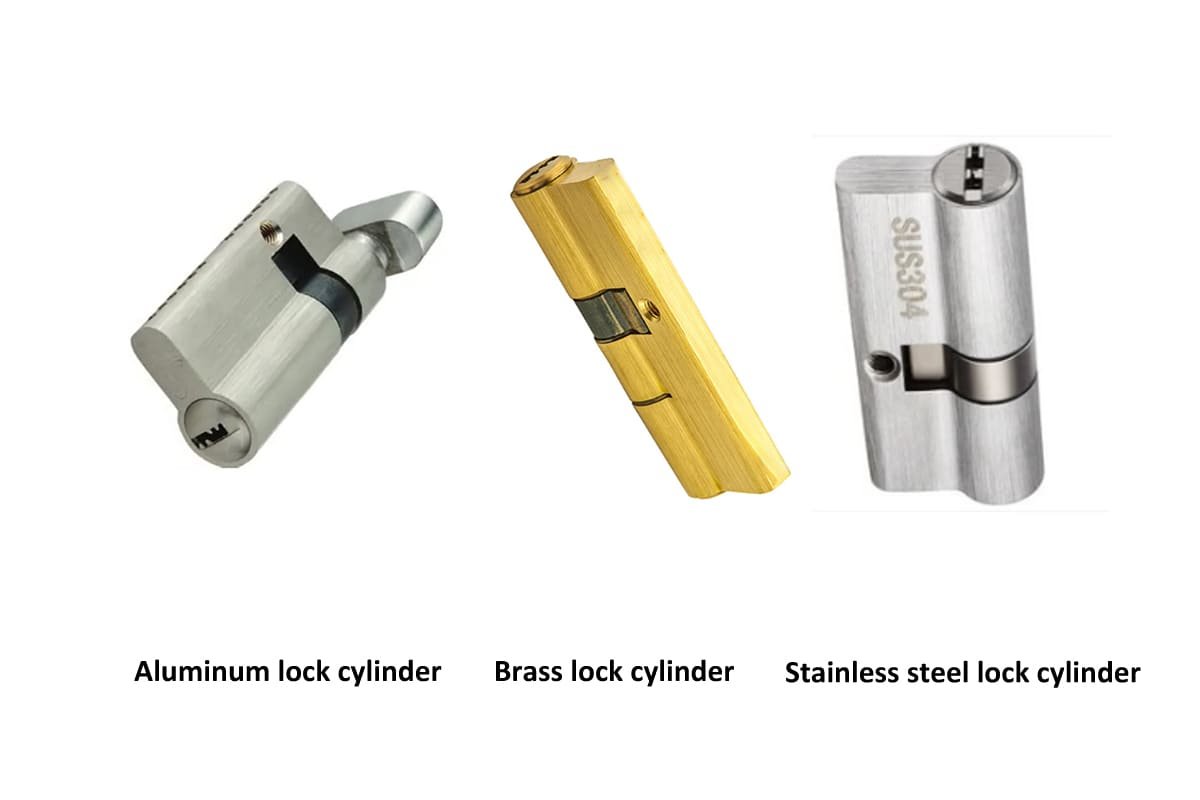
European cylinder locks may include anti-snap, anti-drill, anti-pick, anti-bump, and anti-pry design features5. Each feature addresses a different attack method. Buyers should compare the internal structure, material choices, tested performance, and applicable certification documents before using “high security” claims in sales or project bidding.
Dive deeper: security is a layered evaluation
A cylinder is one part of door security. The door leaf, frame, strike plate, mortise lock, handle set, escutcheon, installation quality, and wall condition also matter. I avoid saying one cylinder “solves” security. A more accurate view is that security features reduce specific risks.
Here are common security terms and what buyers should check.
| Feature | Risk It Addresses | What Buyers Should Verify |
|---|---|---|
| Anti-snap | Cylinder body breaking attack | Break line design, reinforced section, tested model claims |
| Anti-drill | Drilling into pins or body | Hardened inserts, material position, test evidence |
| Anti-pick | Manipulation of pins | Pin design, key profile, tolerance control |
| Anti-bump | Bump key attack | Pin system design, test references |
| Anti-pry support | Force around cylinder area | Escutcheon strength, projection, door hardware design |
| Restricted key profile | Unauthorized key copying | Key blank control and supply policy |
Anti-snap protection
Anti-snap features are often requested for certain European and UK-related markets. The purpose is to reduce the risk of breaking the cylinder and exposing the mechanism. However, buyers should not accept a vague label alone. They should confirm the specific product model, test basis, and certificate validity if a graded claim is required.
Anti-drill and anti-pick features
Anti-drill protection often uses hardened pins, inserts, or reinforced parts6. Anti-pick protection depends more on pin structure, machining tolerance, and keyway design. These are not just marketing words. They are manufacturing and design choices. In bulk procurement, buyers should ask for stable structure across production batches, not only one excellent sample.
Anti-bump and key control
Anti-bump design is another common request. Buyers should verify whether the cylinder design has been tested under the relevant standard. For brand owners, key control is also important. If replacement keys can be copied easily anywhere, the product may not support a premium security position7.
Practical security positioning for buyers
I suggest buyers divide cylinder security into three levels for internal decision-making:
Basic residential or interior use
The buyer focuses on fit, smooth operation, finish, and cost control.Standard entrance or commercial use
The buyer adds better material structure, stronger key security, and basic attack resistance features.Higher-risk or project-specified use
The buyer requires verified test reports, certificates, controlled key systems, and stronger door set compatibility.
This approach helps avoid overbuying and underbuying. A low-risk interior door may not need the most expensive security cylinder. A project entrance door should not rely on the lowest-cost cylinder without checking structure and documentation.
Buyers should also remember that security performance depends on installation8. A good cylinder installed with excessive projection and a weak cover can perform below expectation. I always recommend checking the cylinder with the final handle or security escutcheon, especially for entrance door programs.
Which Standards and Certifications Matter for European Cylinder Locks?
Certification language can reduce buyer risk, but it can also create confusion. Some suppliers mention DIN, EN, CE, fire-rated, 1-star, or 3-star without showing model-specific documents. I treat certificates as items to verify, not decorations for a catalog page.
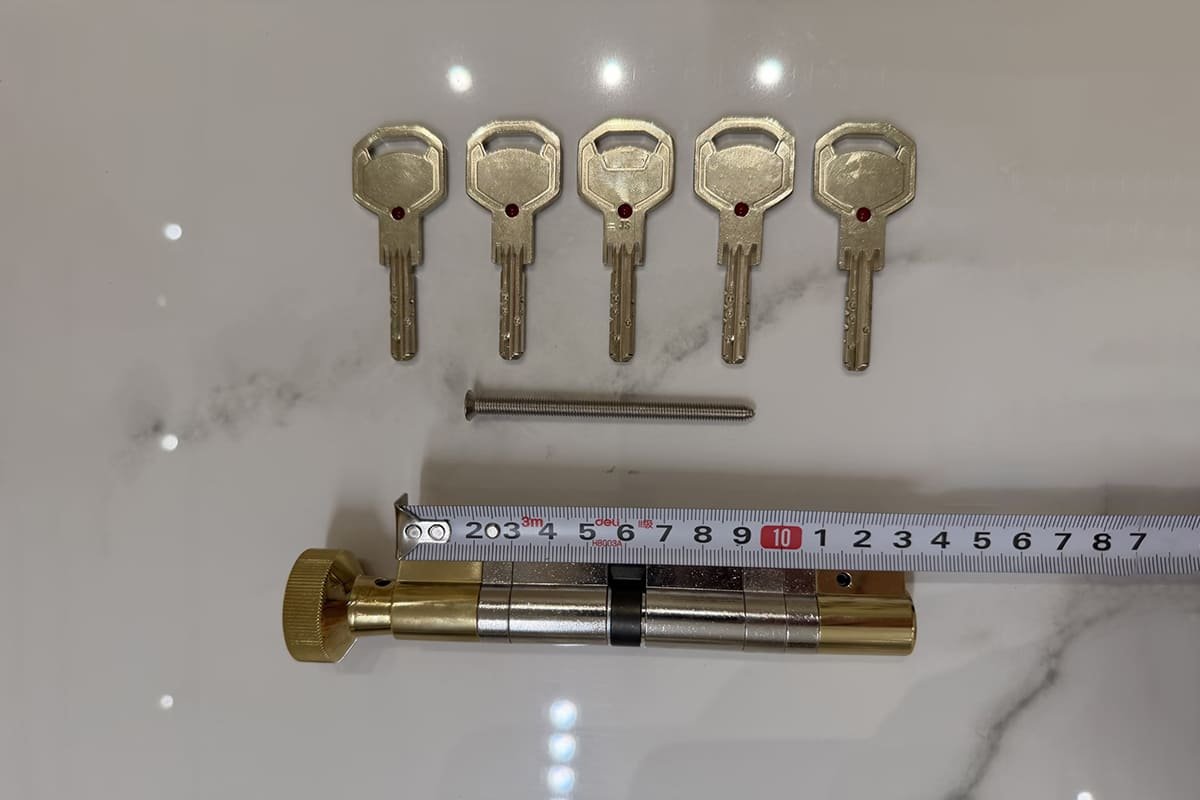
For European cylinder locks, buyers may review DIN 18252 dimensional references, EN 1303 performance grades, and market-specific claims such as UK 1-star or 3-star ratings. However, every claim should be checked against the exact product model, test standard, certificate number, validity period, and project requirement.
Dive deeper: how buyers should verify documents
Standards are useful because they create a shared language between buyers, factories, inspectors, and project owners. But buyers should use them carefully. A standard reference does not automatically mean every product variation has the same tested performance.
For Euro profile cylinders, buyers often discuss DIN 18252 and EN 1303. DIN 18252 is commonly associated with profile cylinder dimensions and related requirements9. EN 1303 is commonly used for cylinder classification, including areas such as durability, key-related security, and attack resistance10. Buyers should fact-check the latest grade positions and meanings before publishing claims or submitting project documents.
Fact-check before publishing: confirm the current DIN 18252 dimensional reference and the common Euro profile description, often stated as approximately 17 × 33 × 10 mm11 in market discussions.
Document verification checklist
I recommend buyers request documents in a structured way:
| Verification Item | What to Check | Why It Matters |
|---|---|---|
| Product model | Model number on certificate matches quotation | Prevents using one certificate for another product |
| Test standard | Standard name and version are clear | Avoids vague “tested” language |
| Grade or classification | Grade positions are correctly explained | Prevents misleading sales claims |
| Certificate holder | Company name and factory link are clear | Confirms document relevance |
| Validity period | Certificate is current if validity applies | Reduces project audit risk |
| Product scope | Finish, size, and structure variations are included | Avoids overextending the claim |
| Testing body | Recognized lab or certification body | Supports buyer confidence |
| Application limit | Door type or installation condition | Helps match project requirement |
CE and fire-rated documents
In architectural door hardware procurement, CE and fire-rated documents may be required depending on the product type and project. Buyers should not assume one certificate covers all cylinders, all locks, all handles, or all door sets. Fire performance is especially application-specific. It may depend on the complete door assembly, not only one hardware component.
At SDH Hardware, we work with buyers who need CE and fire-rated documentation for specific hardware programs. I always recommend verifying the exact model, document scope, and intended application before making a compliance statement. A procurement team should keep these files organized because project auditors and brand customers may request them later.
UK 1-star and 3-star claims
Some buyers ask about UK 1-star or 3-star cylinder claims. These claims can be valuable in the right market, but they must be handled carefully. The buyer should verify:
- Exact certification scheme
- Standard reference
- Product model
- Test report or certificate number
- Validity
- Whether the complete door hardware combination is required
- Whether the claim applies to the cylinder alone or cylinder plus security hardware
I do not recommend printing star claims on packaging until all documents are checked. One incorrect claim can create customer disputes, rejected shipments, or compliance problems.
Why Do European Cylinder Locks Need Batch Consistency in Bulk Orders?
A sample can be good while the mass order creates problems. Door factories and hardware brands need stable finish, smooth key operation, accurate keying, correct labeling, complete accessories, and predictable delivery. I see batch consistency as a procurement requirement, not only a factory preference.
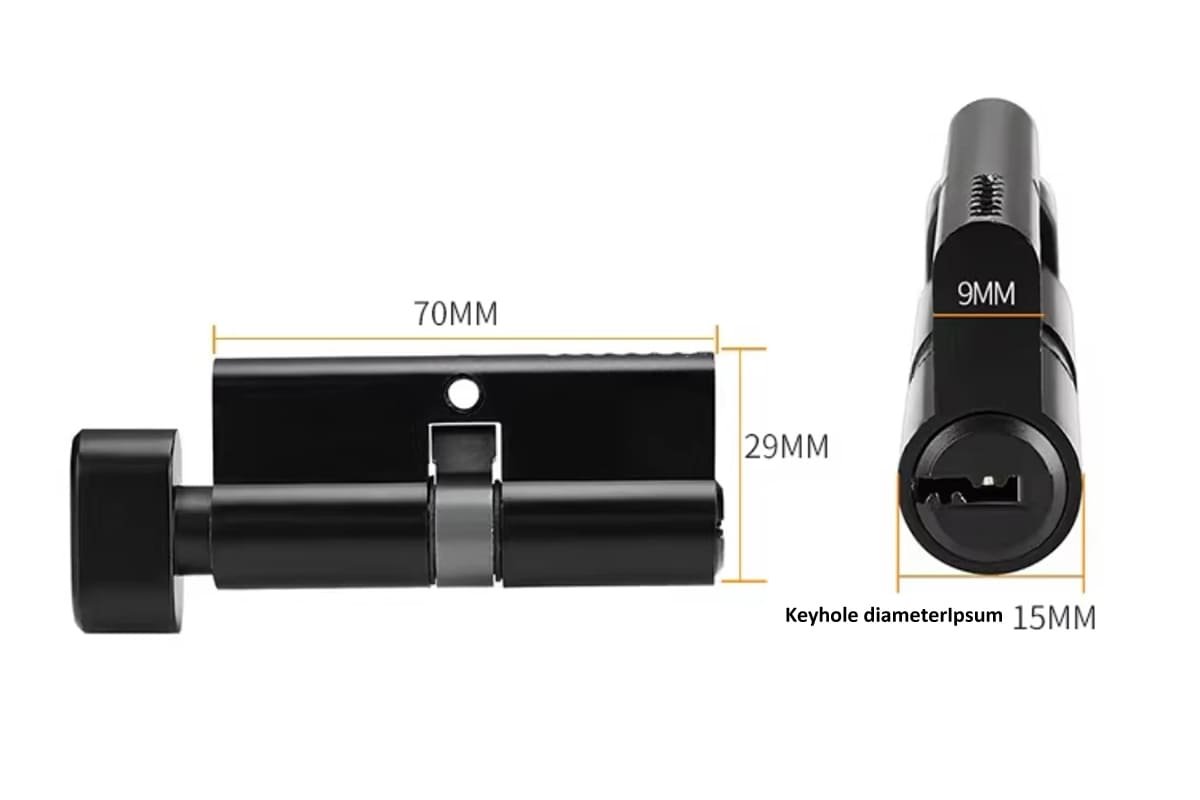
European cylinder locks need batch consistency because door factories and hardware brands install, resell, or distribute them in volume. Buyers should confirm finish standards, keying plans, packaging labels, accessory sets, inspection criteria, mortise lock compatibility, and delivery schedule before mass production to reduce assembly issues and after-sales complaints.
Dive deeper: what bulk buyers should control before production
Bulk cylinder orders involve more than machining and assembly. They involve repeatable process control. A door factory may install thousands of cylinders into door sets. A hardware brand may distribute cylinders across many retail or wholesale channels. A small inconsistency can become expensive when repeated across a full container or multiple project phases.
Finish consistency
Finish is one of the first things customers notice. Common finishes may include satin nickel, polished brass, antique brass, black, chrome, or other project-specified surfaces. The buyer should approve a finish sample and define the inspection method.
I suggest confirming:
- Finish name and code
- Base material
- Surface treatment process
- Color tolerance
- Salt spray requirement, if applicable
- Packaging protection
- Approved sample retention
A finish may look different under warehouse light, daylight, and showroom light. I have seen buyers approve a sample quickly, then raise concerns after installation because the handle, lock faceplate, and cylinder face did not match. The better approach is to compare the full hardware set together.
Keying and labeling control
Keying mistakes create serious after-sales problems. A buyer may need cylinders keyed different, keyed alike, or arranged under a master key system. The factory must control the key codes, labels, cartons, and shipment list.
A practical keying table should include:
| Field | Example | Purpose |
|---|---|---|
| Order line | Line 01 | Connects cylinder to PO item |
| Door/customer group | Building A / Floor 3 | Supports sorting |
| Cylinder size | 30/40 mm | Confirms asymmetric length |
| Keying type | KD / KA / MK | Prevents mix-up |
| Key code | K-1035 | Supports replacement |
| Quantity | 200 pcs | Confirms production count |
| Label format | Barcode + code | Helps warehouse handling |
Accessories and packaging
Buyers should confirm the full accessory set before ordering. A cylinder may need:
- Fixing screw
- Standard keys
- Key card, if applicable
- Decorative ring or cover, if included
- Instruction sheet
- Individual box
- Bulk carton
- Barcode label
- Brand packaging
For wholesalers, packaging affects shelf sales. For door factories, packaging affects assembly efficiency. If cylinders arrive without clear labels, workers may install the wrong size or key group. That creates rework.
Compatibility with Euro mortise locks
Because SDH Hardware manufactures Euro standard mortise locks and related door hardware, I always look at cylinder compatibility from the complete set perspective. The cylinder cam must operate smoothly with the lock body. The fixing screw must align correctly. The handle or escutcheon must not interfere with key rotation.
Before mass production, buyers should test:
- Cylinder with selected mortise lock
- Cylinder with selected handle or escutcheon
- Cylinder on the actual door thickness
- Key insertion and rotation after installation
- Locking and unlocking force
- Door closing condition
- Finish match across the full hardware set
This simple pre-production test can prevent many quality disputes.
Delivery stability
Finally, delivery matters. A cheap cylinder is not cheap if it delays a door production line. Buyers should confirm production lead time, sample approval schedule, inspection date, packaging method, and shipment plan. For repeated orders, buyers should also check whether the supplier can maintain the same structure, keying rules, and finish standard over time.
At SDH Hardware, our role as a manufacturer is to support buyers with factory-direct production, customization, and bulk supply coordination. Still, I advise every buyer to define the acceptance criteria clearly before production starts. Clear criteria protect both sides.
Frequently Asked Questions
What is the most common mistake when buying European cylinder locks?
The most common mistake is buying by cylinder type and length only. Buyers should also check door thickness, escutcheon thickness, mortise lock compatibility, handle alignment, cylinder projection, keying plan, security features, certificates, packaging, and delivery consistency before confirming a mass order.
How do I measure the correct Euro cylinder length?
I measure from the cylinder fixing screw centerline to each side of the door hardware assembly. Buyers should include door thickness plus inside and outside escutcheon or cylinder cover thicknesses. The final cylinder should fit neatly without excessive projection or interference.
Are anti-snap cylinders always necessary?
Anti-snap cylinders are useful for higher-risk entrance doors and certain markets, but they are not always required for every door. Buyers should evaluate door location, security level, local market expectation, project specification, and verified test documents before choosing anti-snap or high-security models.
Can one certificate cover all cylinder models?
Usually, buyers should not assume that. A certificate should be checked against the exact model, structure, size range, finish scope, test standard, grade, and validity. If the product changes significantly, the original document may not apply to the new configuration.
Should I choose keyed alike or a master key system?
Keyed alike is suitable when one user needs one key for multiple cylinders. A master key system is better when a building needs access hierarchy. Buyers should prepare a clear keying schedule, labeling rule, and replacement key policy before production.
Conclusion
European cylinder locks should be evaluated as part of the complete door hardware system, not as isolated small parts. I recommend checking door fit, lock compatibility, handle and escutcheon dimensions, use scenario, security features, certificates, keying plans, finish consistency, packaging, and delivery before mass production. If you source Euro cylinders for door factories, hardware brands, or wholesale programs, SDH Hardware can help you review specifications and develop a stable bulk supply plan.
"Euro Cylinder Sizes Explained: 30/30, 35/45, 40/40 and More", https://www.welock.com/blogs/news/euro-cylinder-sizes-explained?srsltid=AfmBOooVwEltB9nOP66dcM6raKTJJn-KsHyXqYK-dVtL4p26E_WE1epe. A technical reference on profile-cylinder installation supports measuring cylinder length against the complete door and trim assembly, including the distances from the fixing screw position to each face; this supports the sizing method but does not prove that every manufacturer's cylinder uses identical tolerances. Evidence role: mechanism; source type: institution. Supports: A neutral technical source should explain that profile cylinder sizing is determined by the distance from the fixing screw or cam position to each side of the installed door hardware, not by nominal total length alone.. Scope note: Contextual support: installation guidance may vary by manufacturer and national standard. ↩
"What is Lock Snapping with Prevention Tips (Expert Advice)", https://www.locksmiths.co.uk/faq/lock-snapping/. Crime-prevention guidance on Euro-profile cylinders identifies excessive cylinder projection as a factor that can make snapping or gripping attacks easier, supporting the article's warning about exposed cylinder bodies. Evidence role: mechanism; source type: government. Supports: A public security or crime-prevention source should state that cylinders projecting beyond the door hardware can be more vulnerable to snapping, gripping, or force attacks.. ↩
"CHAPTER 10 MEANS OF EGRESS - ICC Digital Codes", https://codes.iccsafe.org/content/IBC2021P2/chapter-10-means-of-egress. Building and fire-safety codes commonly require egress doors to be readily openable from the egress side without a key, tool, or special knowledge, supporting the need to consider internal exit requirements when selecting cylinder type. Evidence role: expert_consensus; source type: government. Supports: A building-code or fire-safety source should support the principle that egress doors must generally be openable from the egress side without keys, tools, or special knowledge.. Scope note: Contextual support: exact requirements depend on jurisdiction, occupancy type, and door location. ↩
"Euro Cylinders thumb turn or not? : r/DIYUK - Reddit", https://www.reddit.com/r/DIYUK/comments/17nj2kk/euro_cylinders_thumb_turn_or_not/. A locksmithing reference defines a thumb-turn cylinder as a lock cylinder that can be operated by a key on one side and a turn piece on the other, supporting the article's description of keyless interior operation. Evidence role: definition; source type: education. Supports: A neutral locksmithing or building-hardware source should define a thumb-turn cylinder as a cylinder operated by key on one side and by a turn knob on the other.. ↩
"Understanding Cylinder Security Standards, Tests and Certifications", https://www.duffells.com/blog/products/understanding_cylinder_security_standards_tests_and_certifications/. Cylinder-security standards and certification schemes evaluate lock cylinders against forms of manipulation and physical attack, supporting the article's treatment of anti-snap, anti-drill, anti-pick, anti-bump, and related features as distinct risk-reduction measures. Evidence role: general_support; source type: institution. Supports: A standards or certification source should show that cylinder security can be evaluated against manipulation and force-resistance criteria, including drilling, picking, bumping, or related physical attacks.. Scope note: Contextual support: the exact attack categories and terminology differ between standards and certification schemes. ↩
"Is anti-drill useless? : r/lockpicking - Reddit", https://www.reddit.com/r/lockpicking/comments/mtx05d/is_antidrill_useless/. Technical literature on lock-cylinder construction notes that hardened inserts, pins, or reinforced components can be positioned to impede drilling attacks, supporting the article's description of anti-drill design mechanisms. Evidence role: mechanism; source type: research. Supports: A technical or research source should explain that hardened steel inserts, pins, or plates are used in lock cylinders to resist drilling into the plug, pins, or body.. ↩
"24. Key and Building Security Guidelines", https://www.nic.edu/asogm/24-key-and-building-security-guidelines/. Physical-security references describe restricted keyways and controlled key systems as methods for limiting unauthorized key duplication, supporting the article's link between key-copy control and a stronger security position. Evidence role: mechanism; source type: education. Supports: A neutral source should explain that restricted keyways or controlled key systems reduce the risk of unauthorized duplication by controlling key blanks and authorization procedures.. Scope note: Contextual support: restricted key systems reduce duplication risk but cannot by themselves guarantee overall door security. ↩
"Learn about standard settings for our door lock cylinder", https://www.eraeverywhere.com/news/setting-the-standard-for-your-door-lock-cylinder/. Crime-prevention and door-security guidance treats the lock, cylinder, door, frame, and installation as an integrated system, supporting the article's statement that security performance depends on installation. Evidence role: expert_consensus; source type: government. Supports: A public security or building-safety source should support that locks perform as part of an installed door set and that poor installation can reduce security.. ↩
"DIN 18252 - 2006-12", https://www.dinmedia.de/en/standard/din-18252/93456562. Standards references identify DIN 18252 as a German standard for profile cylinders, supporting the article's statement that it is commonly used as a dimensional and requirement reference for Euro-profile cylinders. Evidence role: historical_context; source type: institution. Supports: A standards-related source should confirm that DIN 18252 concerns profile cylinders and is used as a reference for their dimensions or requirements.. Scope note: Contextual support: access to the full DIN text may be restricted, and market summaries may not reproduce all requirements. ↩
"EN 1303:2026 - Cylinders and Master-Key-Systems for ...", https://standards.iteh.ai/catalog/standards/cen/bff2e636-92e6-474b-a6e0-fa3f5c0ce3ec/en-1303-2026?srsltid=AfmBOooEl8fSksy9_q2gYCVFoNut6PRdYUCDiqZjuMRtnbyn06pAumZ_. EN 1303 classifies mechanically operated lock cylinders using performance categories that include durability, key-related security, and attack resistance, supporting the article's explanation of the standard's role. Evidence role: definition; source type: institution. Supports: An authoritative standards or certification source should describe EN 1303 as a classification standard for lock cylinders covering durability, key security, and attack resistance.. ↩
"Profile Cylinder | Architectural Supplier - Dirock", https://www.dirock.com/Profile-Cylinder-pl45667787.html. Technical summaries of the Euro-profile cylinder describe its standardized cross-section with approximate dimensions around 17 mm by 33 mm with a 10 mm lower section, supporting the article's dimensional reference. Evidence role: definition; source type: encyclopedia. Supports: A neutral technical or encyclopedic source should describe the Euro profile cylinder shape and commonly cited approximate dimensions.. Scope note: Contextual support: the cited dimensions are a simplified profile description and should not replace the current full standard for manufacturing tolerances. ↩