
Designer Door Handles That Elevate Modern Interiors?
Designer door handles can make a modern interior look complete, but a good-looking handle can also create procurement problems if it does not match the door, lock body, finish standard, or market use. I have seen buyers approve a beautiful sample, then struggle with bulk color variation. The safer path is to evaluate design and production together.
Designer door handles elevate modern interiors when their shape, material, surface finish, hand feel, installation dimensions, and bulk consistency work together. Buyers should not select them by appearance alone. The right handle must fit the door type, lock system, project environment, target market, and long-term supply plan.
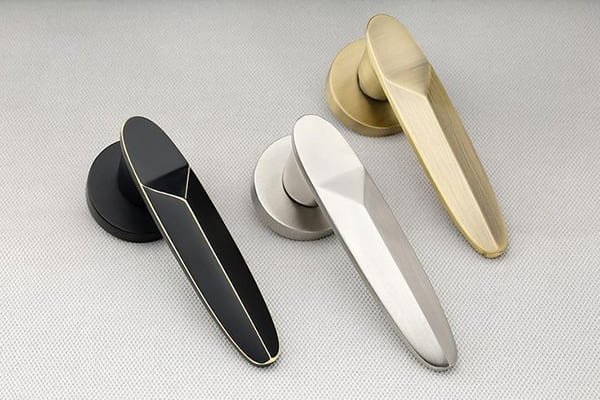
A handle is a small product, but it affects the whole door experience. It is touched every day, seen from every angle, and judged by both appearance and performance. Below, I will explain how I evaluate designer door handles from a manufacturing and bulk procurement point of view.
How Should Buyers Define Designer Door Handles?
A buyer may see “designer” as a visual style, but that creates risk. A handle may look modern in a catalog and still fail in real assembly. The problem grows when the order moves from one showroom sample to hundreds or thousands of sets.
Designer door handles should be defined as handles that combine visual appeal, correct material, suitable finish, comfortable hand feel, accurate dimensions, and stable bulk production. For B2B buyers, “designer” is not just a style label. It is a product selection standard that must support installation, durability, branding, and repeat supply.

“Designer” Starts With Product Fit
In my work with door factories and hardware buyers, I usually see one mistake first: the handle is selected before the full hardware system is checked. That creates avoidable problems.
A handle should be checked together with:
- Door type: wooden door, metal door, fire-rated door, hotel room door, apartment door, or commercial interior door
- Door thickness: common project doors may vary by region and manufacturer
- Lock body: euro standard mortise lock, tubular latch, magnetic lock, or project-specific lock case
- Cylinder and escutcheon: profile cylinder, bathroom turn, keyhole, or privacy function
- Backset and center distance: these must match the lock and drilling layout
- Hinge finish: concealed hinge, butt hinge, or pivot hardware should not visually clash
- Installation accessories: spindle, screws, fixing bolts, rosettes, and templates
A handle can be stylish, but if the spindle size does not match the lock body, the buyer still has a problem. A long lever can look impressive, but it may feel heavy if the spring system and lock follower are not suitable. A square rosette can support a minimalist look, but it must cover drilling tolerances properly.
What Makes a Handle “Designer” in Procurement?
I prefer to break the word “designer” into measurable selection points.
| Selection Point | What Buyers Should Check | Why It Matters |
|---|---|---|
| Shape | Lever line, rosette shape, edge radius | Controls visual style and hand comfort |
| Material | 304 stainless steel, 316 stainless steel, zinc alloy, aluminum, brass | Affects appearance, weight, corrosion resistance, and price |
| Finish | Brushed, mirror, PVD Gold, Black Chrome, Rose Gold, Antique Finish | Affects market positioning and maintenance expectations |
| Dimensions | Lever length, rosette size, spindle size, screw position | Affects installation compatibility |
| Function | Passage, privacy, entrance, hotel, project use | Affects accessory configuration |
| Bulk consistency | Color, gloss, texture, packaging, tolerance | Affects brand reputation and after-sales cost |
A Good Sample Is Only the First Step
A sample tells buyers what is possible. A bulk order tells buyers what the supplier can control.
For door hardware brands and wholesalers, consistency often matters more than a single perfect sample. If a buyer sells matching handles, hinges, lock cylinders, and mortise locks, the finish must look like one system. A slight difference between a brushed stainless steel handle and a brushed stainless steel hinge can become visible after installation.
I usually advise buyers to approve a sample with written standards, not only photos. The approval should include:
- Material grade or material specification
- Surface finish name and reference sample
- Gloss range or visual acceptance standard where available
- Key dimensions and tolerance requirements
- Packaging method
- Accessory configuration
- Inspection method before shipment
This approach treats designer door handles as engineered architectural hardware, not decorative objects alone.
Which Materials Work Best for Designer Door Handles?
Material choice can look simple, but it affects cost, hand feel, finish result, corrosion behavior, and target market. If the wrong material is selected, the handle may look acceptable at first, then create complaints after installation or resale.
The best material for designer door handles depends on the environment, door type, budget, and market positioning. 304 stainless steel is a common option for modern interior handles. 316 stainless steel may be considered for coastal or more corrosive environments. Zinc alloy, aluminum, and brass can also fit certain design and price needs.

Stainless Steel: A Common Modern Choice
For modern interior projects, 304 stainless steel is often selected because it offers a clean appearance, stable structure, and good general corrosion resistance for many indoor applications1. It works well with brushed, matte, and polished finishes. It also supports a simple and refined design language that many door manufacturers and hotel project buyers prefer.
316 stainless steel may be considered when the environment is more demanding, such as coastal areas or locations with higher humidity and corrosive exposure2. I would not say 316 is always necessary. I would first ask where the product will be used, what cleaning chemicals may be used, and whether the buyer has specific corrosion test requirements.
Any salt-spray performance, corrosion grade, or project compliance claim should be verified with the supplier’s test report and actual product specification before procurement approval.
Zinc Alloy, Aluminum, and Brass
Stainless steel is not the only option. Other materials can be suitable depending on the product line.
| Material | Common Advantage | Common Limitation | Suitable Buyer Scenario |
|---|---|---|---|
| 304 stainless steel | Clean modern look, strong structure, good indoor suitability | May cost more than some economy materials | Door factories, brands, hotel projects |
| 316 stainless steel | Higher corrosion-resistance positioning | Higher cost; still needs verified specs | Coastal or more corrosive environments |
| Zinc alloy | Good forming flexibility and decorative surface options | Plating quality control is critical3 | Fashion-oriented product lines |
| Aluminum | Lightweight and cost-efficient in some designs | Denting and finish wear must be evaluated | Economy or light-duty interior use |
| Brass | Solid feel and classic positioning | Higher cost and finish maintenance concerns | High-end or classic design ranges |
Material Affects Hand Feel
Buyers sometimes focus only on the surface. End users feel the material every day. A handle that looks slim but feels too light may not match a premium door. A handle that feels heavy but has a sharp edge may create discomfort.
When I evaluate a sample, I like to check:
- Grip thickness
- Edge radius4
- Lever return smoothness
- Weight balance
- Surface temperature feel5
- Finger clearance from the door
- Whether the rosette or backplate feels stable
These details are hard to judge from a catalog photo. They are also important for hotel projects, apartment doors, and brand product lines where many people will touch the handle before making a purchase decision.
Match Material to the Business Purpose
A showroom sample may need strong visual impact. A wholesale product line may need a balance between cost, durability, and inventory turnover. A hotel project may need consistent finish and reliable supply over phased installation. A door factory may care most about assembly efficiency and stable dimensions.
That is why I do not recommend one universal “best” material for designer door handles. I recommend a material decision based on use case, quantity, installation environment, finish requirement, and after-sales risk.
Which Finishes Make Designer Door Handles Look Modern?
Finish selection is where many buyers get excited, but it is also where bulk quality problems often appear. A finish can look impressive on a small sample and still be difficult to keep consistent across repeat orders or mixed hardware categories.
Modern designer door handles often use brushed or matte stainless steel for a minimalist look, mirror polish for a brighter effect, and decorative tones such as Bright Gold, PVD Gold, Rose Gold, Black Chrome, or Antique Finish for specific market styles. The best finish depends on use case, maintenance expectations, and supplier process control.
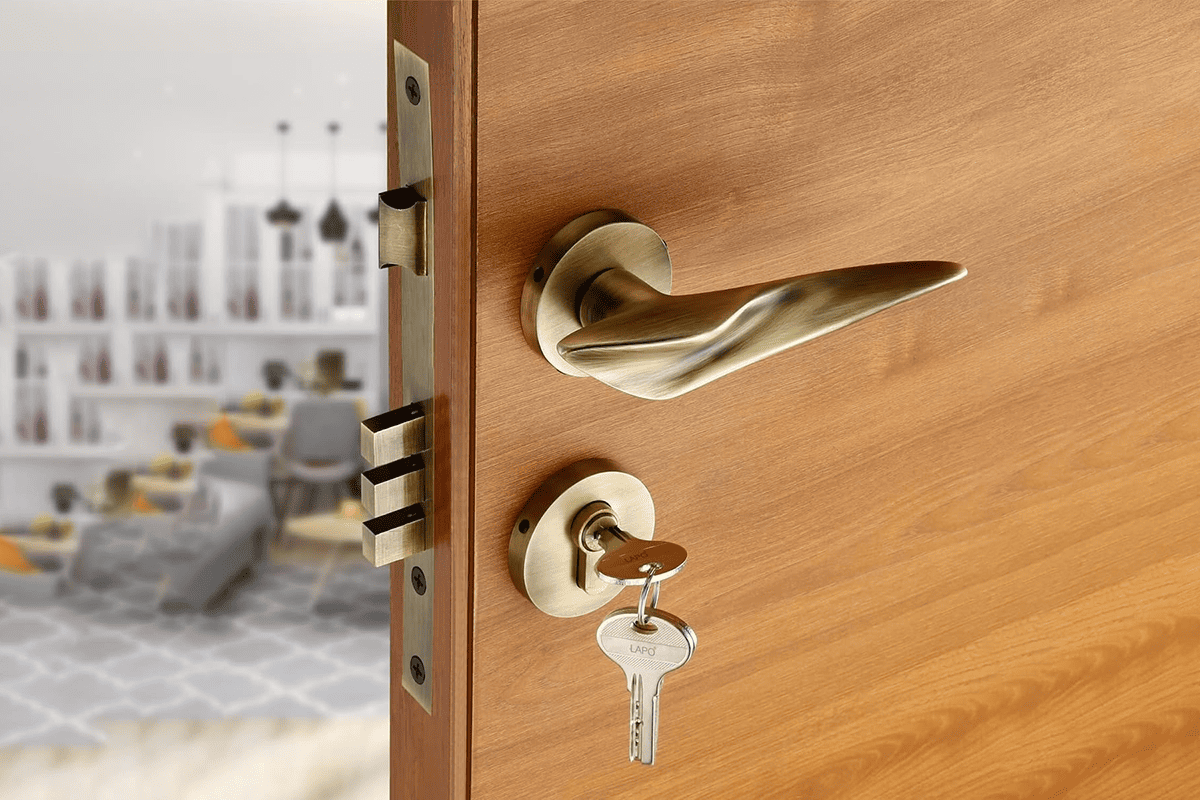
Brushed and Matte Stainless Steel
Brushed stainless steel is one of the most practical finishes for modern interiors. It gives a restrained appearance and can hide small fingerprints better than very bright finishes6. It is often suitable for apartments, office interiors, door factory standard lines, and many contemporary residential projects.
Matte stainless steel supports a soft minimalist look. However, buyers should check the surface texture carefully. A matte finish from one factory may look different from another supplier’s matte finish. If the handle must match hinges, locks, and cylinders, the buyer should request matched samples before confirming bulk production.
Mirror Polish
Mirror polish creates a brighter and more delicate visual effect. It can work well in spaces where the buyer wants more visual reflection. However, it may show fingerprints, scratches, and handling marks more clearly than brushed surfaces7. Packaging and installation protection become more important.
For bulk buyers, mirror polish should be checked under consistent lighting. A sample can look clean under showroom lights but show polishing waves or small marks under project-site lighting.
Decorative Finishes
Decorative finishes can help a product line stand out in a crowded market. Still, they require stricter control.
| Finish | Visual Effect | Common Use Case | Procurement Note |
|---|---|---|---|
| Bright Gold | Strong luxury impression | Hotels, villas, commercial interiors | Check color consistency across batches |
| PVD Gold | Premium gold positioning | Higher-end product lines | Verify supplier specs and wear-resistance claims |
| Rose Gold | Soft light-luxury tone | Modern residential and boutique projects | Market preference varies by region |
| Black Chrome | Deep contemporary tone | Minimalist and dark interior schemes | Check fingerprints and surface uniformity |
| Antique Finish | Classic or retro character | Traditional doors, heritage-style projects | Must match project style and other hardware |
Color Consistency Is a Business Issue
For a single home, a small color difference may be acceptable. For a wholesaler or brand owner, color inconsistency can damage trust. Buyers may receive complaints when a customer buys 20 handles in one month and 20 more later, only to find the second batch looks slightly different.
This is especially important for:
- PVD Gold handles
- Rose Gold handles
- Black Chrome handles
- Antique Finish handles
- Mixed orders with hinges, locks, and cylinders
- Long-term replenishment programs
In factory production, finish consistency depends on surface preparation, polishing quality, plating or coating process, bath control, hanging method, operator control, and final inspection8. I always suggest that buyers keep an approved “golden sample” for comparison. This sample should be stored safely and used during future inspections.
Do Not Choose Finish by Photo Alone
Product photos are useful, but they are not enough. Screen brightness, camera settings, and lighting can change the appearance of metal finishes.9 I recommend buyers request physical samples and compare them under:
- Natural daylight
- Warm indoor light
- Cool white commercial light
- Door panel color samples
- Matching hinges and lock faceplates
This simple process can prevent many costly misunderstandings before mass production begins.
How Do Designer Door Handles Affect Installation Compatibility?
A handle can look perfect on a table and still create trouble on the production line. Installation compatibility becomes critical when buyers supply door factories, hotel projects, or regional wholesalers that need fast and repeatable assembly.
Designer door handles affect installation compatibility through spindle size, screw distance, rosette or backplate dimensions, lock body matching, door thickness range, and accessory configuration. Buyers should confirm these details before bulk ordering. A modern handle should not only look good. It should install smoothly with the selected lock and door system.
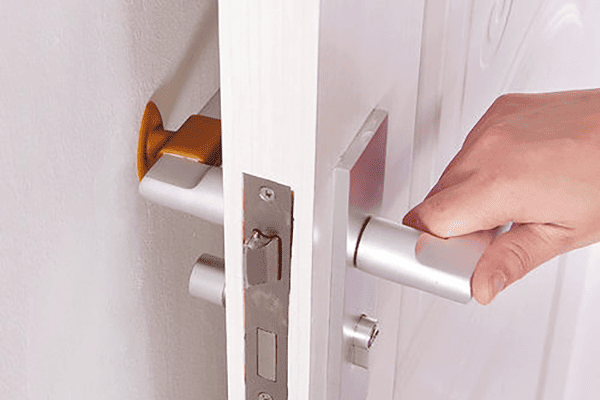
Key Dimensions to Confirm
I often tell buyers that installation drawings are as important as product photos. For architectural hardware, a 2 mm mismatch can create real assembly problems.10
Important dimensions include:
- Lever length
- Projection from door surface
- Rosette diameter or square rosette size
- Backplate length and width
- Spindle size
- Screw hole distance
- Door thickness range
- Lock follower size
- Center distance between handle and cylinder
- Escutcheon size
- Faceplate finish matching
- Required drilling pattern
If the handle is used with a euro standard mortise lock, the buyer should confirm the lock case dimensions, follower, backset, center distance, and cylinder type. If the handle is used on a fire-rated door, the buyer should verify all required project documentation and test scope with qualified professionals. I avoid making assumptions because fire-rated assemblies depend on the full door system, not the handle alone.11
Compatibility With Door Factories
Door factories usually care about repeatable installation. They need hardware that fits their machining process and does not slow down assembly. A handle with unstable screw positions or inconsistent accessory packs can create line delays.
For door factory supply, buyers should request:
| Item | Why It Matters |
|---|---|
| Technical drawing | Confirms machining and drilling |
| Installation template | Reduces worker error |
| Accessory list | Prevents missing parts during assembly |
| Bulk dimension tolerance | Supports repeatable production |
| Packaging label system | Helps warehouse and line management |
| Sample trial installation | Finds hidden fit issues before mass order |
A trial installation is very useful. I have seen cases where the handle looked good, the lock worked well, and the door was correct, but the screw length was not suitable for the actual door thickness. This small issue caused unnecessary repacking and delay.
Compatibility With Hinges and Other Hardware
Modern interiors often require a full hardware package. The handle should coordinate with:
- Concealed hinges
- Butt hinges
- Mortise locks
- Lock cylinders
- Escutcheons
- Door viewers
- Door stops
- Bathroom turns
- Pull handles where needed
The issue is not only color. The visual language should also match. A rounded lever may not work well with a very sharp square hinge design. A black handle may look inconsistent if the hinge is satin stainless steel. A Bright Gold handle may look wrong if the cylinder trim is a different gold tone.
Installation Risk Becomes After-Sales Cost
For wholesalers and brand operators, installation problems often appear as customer complaints. The end user may not understand the technical cause. They may simply say, “The handle does not fit,” or “The handle feels loose.”
These complaints can come from:
- Wrong lock matching
- Incorrect spindle length
- Poor screw fixing
- Door thickness mismatch
- Weak spring return
- Unclear installation instructions
- Mixed accessories in cartons
A responsible buyer should check these points before placing a bulk order. Designer door handles should support the installation process, not complicate it.
How Can B2B Buyers Control Bulk Quality for Designer Door Handles?
A beautiful sample can win attention, but bulk quality wins repeat business. The real challenge starts when the buyer needs stable finish, dimensions, packaging, delivery, and replenishment across repeated orders.
B2B buyers can control bulk quality for designer door handles by setting clear material specs, approving physical finish samples, confirming technical drawings, defining inspection standards, checking packaging, and verifying supplier production capacity. They should also evaluate long-term supply stability, not only the first order price.
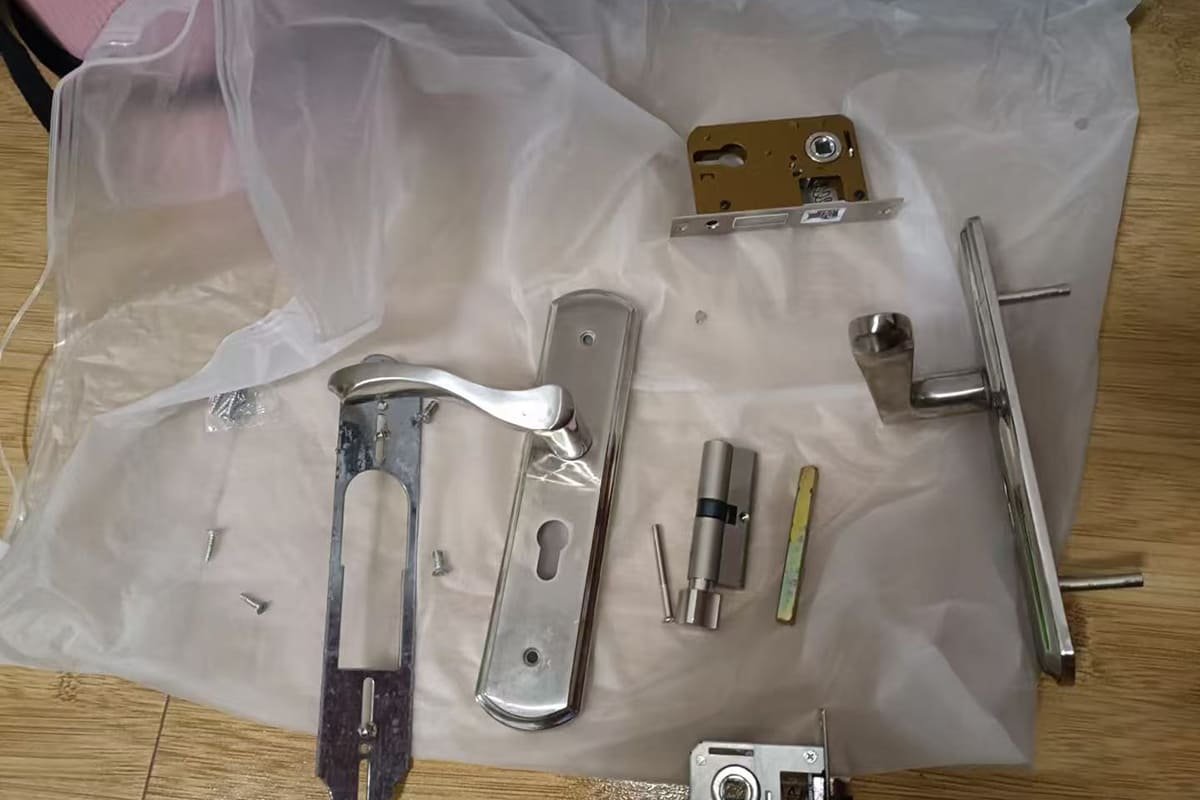
Sample Approval Should Be Structured
A sample should not be approved with only a simple message such as “looks good.” That is too vague for production.
A better sample approval file includes:
- Product code
- Material specification
- Finish name and reference sample
- Dimensions and tolerance
- Lock compatibility details
- Door thickness range
- Accessory list
- Packaging method
- Logo or branding requirement
- Carton marking requirement
- Inspection checklist
This may seem detailed, but it protects both the buyer and the supplier. When requirements are written clearly, production teams can follow them, and inspection teams can check them.
What to Inspect Before Shipment
For bulk designer door handles, I recommend checking both appearance and function. The exact inspection level depends on the order size and buyer policy12, but the checklist should be practical.
| Inspection Area | What to Check |
|---|---|
| Surface finish | Color, gloss, scratches, stains, polishing marks |
| Dimensions | Lever length, rosette size, screw distance, spindle size |
| Function | Lever return, spring action, smooth movement |
| Accessories | Screws, spindle, Allen key, fixing parts, instructions |
| Packaging | Inner box, protection bag, carton strength, labels |
| Quantity | Set count, carton count, mixed model accuracy |
| Branding | Logo position, laser mark, box label, barcode if required |
Bulk Consistency Across Reorders
Many buyers focus on the first order. However, wholesalers and hardware brands also need future replenishment. If the second order does not match the first order, the buyer may face dead stock or customer returns.
Long-term consistency depends on supplier management. Buyers should ask:
- Does the supplier keep production records by batch?
- Does the supplier keep approved finish samples?
- Does the supplier control raw material sourcing?
- Does the supplier have in-house production or only trading capacity?
- Can the supplier repeat the same surface finish after several months?
- Can the supplier support spare parts or accessory replenishment?
- Can the supplier maintain packaging consistency for brand channels?
As a manufacturer, I see these questions as normal and useful. A serious buyer should not feel shy about asking them.
Certifications and Compliance Need Verification
For commercial projects, buyers may request CE certification, fire-rated documentation, or other compliance files. These documents can be important, but they must be checked correctly.
Buyers should verify:
- Certificate holder name
- Product model scope
- Test standard
- Validity period
- Issuing laboratory or authority
- Whether the document applies to the exact product and assembly
- Whether local regulations require additional approval
I recommend qualified professional evaluation for application-specific decisions, especially fire-rated doors, public buildings, hotel projects, and regulated markets. Hardware performance is often part of a larger door assembly. A handle alone does not guarantee whole-system compliance.
Supplier Selection Is Part of Product Quality
The right supplier should help reduce risk, not only quote a low price. For designer door handles, buyers should evaluate:
- Production experience
- Material control
- Surface treatment capability
- Dimensional consistency
- ODM customization ability
- Quality inspection process
- Delivery stability
- Communication speed
- Market experience
- Long-term replenishment support
Price matters. I understand that every buyer has a margin target. But the cheapest handle can become expensive if finish variation, wrong accessories, installation delays, or returns occur. A stable handle program usually creates better value than a one-time low-cost purchase.
Frequently Asked Questions
What are designer door handles?
Designer door handles are door handles selected for both visual style and product performance. They should match the door, lock body, material requirement, finish standard, and installation dimensions. For B2B buyers, the term should mean controlled design, stable quality, and repeatable supply.
Are 304 stainless steel handles good for modern interiors?
304 stainless steel handles are commonly used for modern interior doors because they offer a clean appearance and reliable general indoor suitability. Buyers should still confirm finish quality, wall thickness, dimensions, and installation compatibility. For harsher environments, 316 stainless steel may be considered with verified specifications.
Which finish is best for modern door handles?
There is no universal best finish. Brushed or matte stainless steel often suits minimalist interiors. Mirror polish gives a brighter effect. Bright Gold, PVD Gold, Rose Gold, Black Chrome, and Antique Finish can fit specific markets. Buyers should choose based on use case, maintenance expectations, and bulk consistency.
How can I avoid color differences in bulk handle orders?
You can reduce color differences by approving a physical finish sample, keeping a golden sample, defining inspection standards, and checking batch consistency before shipment. For decorative finishes such as PVD Gold, Rose Gold, and Black Chrome, buyers should confirm supplier process control and replenishment capability.
What should I check before ordering designer door handles in bulk?
You should check material, finish, technical drawing, lock compatibility, door thickness, spindle size, screw positions, accessory list, packaging, certifications where required, production capacity, and inspection process. A trial installation before mass production is also useful for door factories and project buyers.
Conclusion
Designer door handles elevate modern interiors only when buyers select them as complete hardware products, not isolated decorative items. The right choice balances style, material, finish, hand feel, installation compatibility, bulk consistency, and long-term supply stability. I suggest buyers compare samples carefully, verify drawings and documents, and test installation before large orders. If you are sourcing stainless steel or customized door handles for door factories, brands, or wholesale channels, SDH Hardware can support your evaluation with manufacturing-focused guidance and sample development.
"Corrosion Behavior of 304 Stainless Steel During Three-Year ... - PMC", https://pmc.ncbi.nlm.nih.gov/articles/PMC13362558/. A materials reference supports that Type 304 stainless steel has good general corrosion resistance in many atmospheric and indoor service conditions; it does not establish suitability under aggressive cleaning chemicals or unusually corrosive indoor exposures. Evidence role: general_support; source type: institution. Supports: Type 304 stainless steel is widely described as having good general corrosion resistance in many atmospheric and indoor service environments.. Scope note: Contextual support only, because actual handle performance also depends on grade verification, fabrication, finish, and use environment. ↩
"Marine grade stainless - Wikipedia", https://en.wikipedia.org/wiki/Marine_grade_stainless. A stainless-steel materials source supports that Type 316 stainless steel generally offers improved resistance to chloride-containing environments relative to Type 304, which explains its consideration for coastal or more corrosive locations. Evidence role: mechanism; source type: institution. Supports: 316 stainless steel is commonly described as having improved resistance to chloride-related corrosion compared with 304 stainless steel because of its molybdenum content.. Scope note: The source would support grade selection context, not guarantee performance for a specific door handle, coating, maintenance practice, or salt-spray result. ↩
"Compliance and Technical Assistance: Plating", https://www.in.gov/idem/ctap/guidance-for-industry-sectors/plating/. A technical source on electroplating supports that coating adhesion, thickness, substrate preparation, and bath control are key determinants of plated surface quality and corrosion resistance. Evidence role: mechanism; source type: education. Supports: Electroplating quality depends on surface preparation, coating thickness, adhesion, bath chemistry, and process control, all of which influence corrosion resistance and appearance.. Scope note: The source would explain the plating mechanism generally and may not address zinc alloy door handles specifically. ↩
"The effect of ergonomic laparoscopic tool handle design on ...", https://pubmed.ncbi.nlm.nih.gov/25537377/. Ergonomic research on handle and hand-tool design supports that handle geometry, including edge shape and contact area, affects grip comfort and localized hand pressure. Evidence role: mechanism; source type: paper. Supports: Ergonomic handle design literature links handle geometry, edge shape, contact pressure, and user comfort.. Scope note: The evidence is likely based on general handle or tool ergonomics and may not directly test architectural door handles. ↩
"Thermal effusivity of different tabletop materials in relation to users ...", https://pubmed.ncbi.nlm.nih.gov/34890830/. Research on tactile thermal perception supports that materials with different thermal effusivity and conductivity can feel warmer or colder to the touch even at the same ambient temperature. Evidence role: mechanism; source type: paper. Supports: Human perception of surface temperature is influenced by thermal properties such as thermal conductivity and thermal effusivity, which vary by material.. Scope note: This supports the tactile mechanism generally, not a quantified comfort threshold for a specific handle design. ↩
"Surface-specific performance of metal and metal oxide ... - PMC", https://pmc.ncbi.nlm.nih.gov/articles/PMC12508418/. Research on surface appearance supports that gloss, reflectance, and texture affect the visibility of smudges and fingerprints, providing context for why brushed finishes may conceal minor marks better than highly reflective finishes. Evidence role: general_support; source type: paper. Supports: Surface gloss, reflectance, and texture influence how visible fingerprints and smudges appear.. Scope note: Contextual support only, because visibility also depends on lighting, oil residue, viewing angle, and the exact brushing pattern. ↩
"How to Remove Scratches From Stainless Steel - Topson", https://www.topsonstainless.com/how-to-remove-scratches-from-stainless-steel.html. Surface-appearance research supports that gloss and specular reflection can increase the perceptibility of scratches, smudges, and handling marks compared with more diffuse textured surfaces. Evidence role: general_support; source type: paper. Supports: Highly reflective or glossy surfaces tend to reveal surface defects and contamination more readily under many lighting conditions.. Scope note: The evidence is contextual and does not quantify defect visibility for every stainless-steel polishing process. ↩
"Electroplating: Metal Coating Process & Applications - Linde AMT", https://www.linde-amt.com/resource-library/articles/electroplating. Technical literature on metal finishing supports that surface preparation, polishing, coating parameters, bath control, fixturing, and inspection practices influence coating appearance and consistency. Evidence role: mechanism; source type: education. Supports: Metal finishing outcomes are affected by substrate preparation, polishing, coating parameters, bath chemistry, fixturing, operator control, and inspection practices.. Scope note: The evidence would explain common manufacturing variables and may not directly measure color variation in door-handle production. ↩
"Effect of camera distance and angle on color of diverse skin tone-based ...", https://pmc.ncbi.nlm.nih.gov/articles/PMC10247498/. Color-science sources support that perceived color and brightness vary with illuminant, viewing conditions, camera processing, and display calibration, which explains why metal finishes may differ between photographs and physical samples. Evidence role: mechanism; source type: research. Supports: Color appearance is affected by illumination, viewing conditions, capture settings, and display calibration.. Scope note: This supports the mechanism generally, not the magnitude of variation for a particular product image. ↩
"087100 – DOOR HARDWARE - Facilities and Campus Services", https://fcs.cornell.edu/087100-door-hardware. Architectural hardware standards and installation guidance support that locksets and handles depend on specified drilling, spindle, backset, and screw-center dimensions for proper assembly. Evidence role: general_support; source type: institution. Supports: Door hardware installation relies on specified dimensions and alignment, so mismatches in spindle, screw, backset, or center distances can interfere with assembly.. Scope note: The source may support the importance of dimensional alignment generally rather than proving that exactly 2 mm is always problematic. ↩
"Fire Doors and NFPA 80 FAQs", https://www.nfpa.org/news-blogs-and-articles/blogs/2025/04/11/fire-doors-faqs. Fire-door standards support that a fire rating applies to the tested door assembly and its required components, so a handle by itself does not establish whole-system compliance. Evidence role: expert_consensus; source type: institution. Supports: Fire-door ratings apply to tested assemblies, including doors, frames, hardware, glazing, and installation conditions.. Scope note: The source would support compliance principles; project approval still depends on local code, listed products, and the exact assembly. ↩
"ASQ/ANSI Quality Standards Z1.4 & Z1.9", https://asq.org/quality-resources/z14-z19?srsltid. Sampling inspection standards such as ISO 2859-1 or ANSI/ASQ Z1.4 define inspection levels and sample sizes according to lot size and specified quality criteria. Evidence role: definition; source type: institution. Supports: Sampling inspection standards use lot size, inspection level, and acceptance-quality criteria to determine sample size and acceptance rules.. Scope note: The source explains sampling methodology and does not prescribe the correct acceptance level for a specific buyer or product category. ↩