How to Choose the Right Door Stopper?
A door stopper looks simple, but the wrong one can create wall damage, loose fixing, noisy impact, and customer complaints. I have seen buyers choose by appearance first, then discover installation problems later. The better solution is to select by door type, opening position, fixing surface, material, and batch supply needs.
To choose the right door stopper, first confirm where the door or handle contacts the wall or floor when opened. Then match the stopper type, material, mounting position, finish, and fixing accessories to the door weight, usage frequency, installation surface, and purchasing quantity. For bulk orders, also verify finish consistency, dimensions, packaging, and supplier stability.
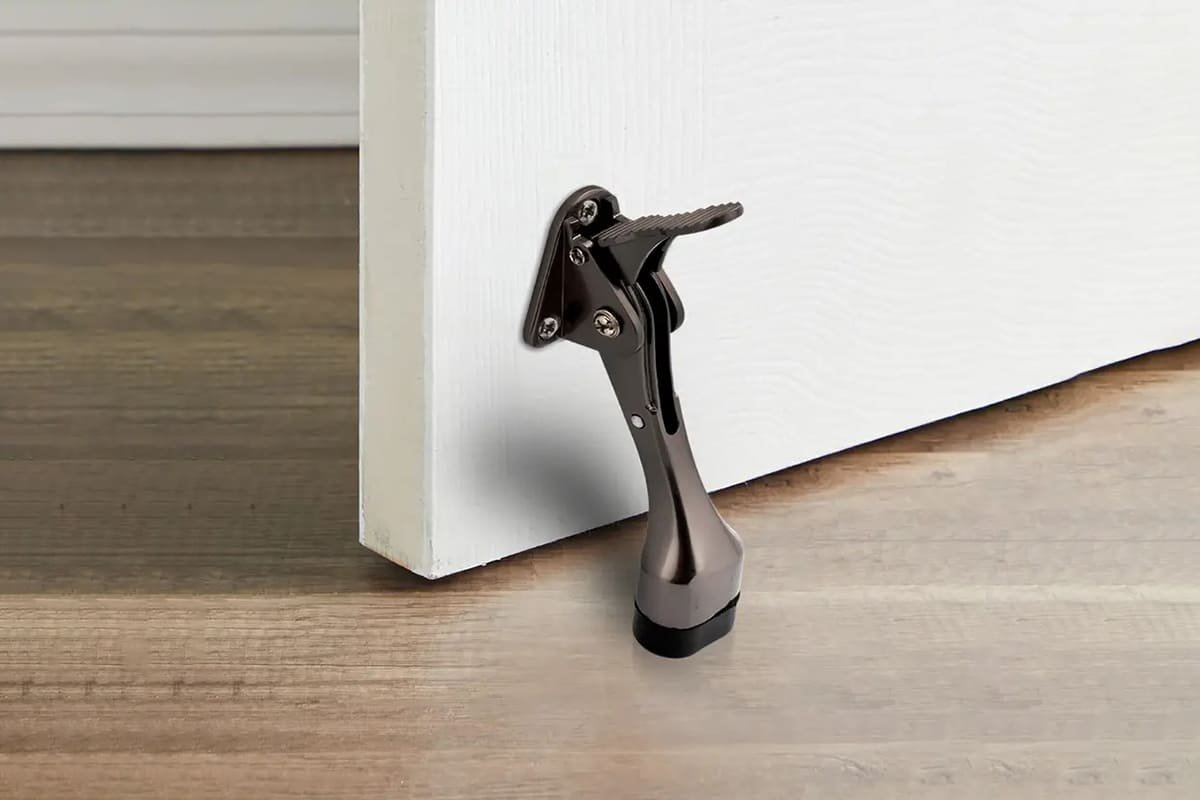
In my factory-side experience, a good sample is only the beginning. A buyer also needs to know whether the product will install smoothly, look consistent across cartons, and perform reliably after repeated use. The following sections explain how I usually help overseas buyers evaluate this small but important door hardware item.
What Should a Door Stopper Actually Do?
A door stopper should solve a real contact problem, not just fill a line in a hardware list. If the door opens too far, the handle, lock body, door edge, or glass panel may hit the wall.1 That small impact can become a repeated after-sales issue.
A door stopper mainly prevents the door leaf or door handle from damaging the wall, skirting board, furniture, or nearby hardware.2 Some models only absorb impact, while others also hold the door open. The correct choice depends on the door’s stopping point, opening angle, installation surface, and expected user behavior.
Start With the Real Opening Position
I always suggest checking the actual door movement before choosing the product shape. Many buyers ask for a common model first, but the correct selection starts with one question:
Where does the door actually stop when it opens?
The answer may be different from what appears on a drawing. The handle may touch the wall before the door leaf reaches 90 degrees. A thick skirting board may change the contact point. A door closer may limit the opening angle.3 A narrow corridor may require a compact design.
For product managers and buyers, this first step prevents a common mistake: choosing a nice-looking stopper that does not contact the door at the right point.
Key Functions to Define
Before comparing materials or prices, I would define the function clearly:
Impact protection only
The product absorbs contact and prevents wall or handle damage.Door holding function
A magnetic or mechanical holder keeps the door open when needed.Hidden or low-profile protection
A concealed or floor-mounted style reduces visual impact.Heavy-use protection
A stronger fixing method may be needed for public areas or frequent opening.Brand line matching
The finish and design must match handles, hinges, lock cylinders, and other door hardware.
Simple Evaluation Table
| Selection Question | Why It Matters | Buyer Checkpoint |
|---|---|---|
| Where does the door touch first? | Defines mounting position | Test with full door set |
| Does the door need to stay open? | Defines normal stop vs holder | Confirm user habit |
| Is the floor or wall suitable for fixing? | Affects screw and anchor choice | Check surface material |
| Is the opening area visible? | Affects shape and finish | Match hardware series |
| Is the order for retail or project supply? | Affects packaging and consistency | Confirm carton and labeling needs |
Practical Manufacturer-Side Note
From a supplier’s view, the most common selection problem is not material. It is wrong positioning. A product can be well made, but it still fails if the door never contacts the rubber buffer correctly.
For example, if the stopper is too short, the handle may still hit the wall. If it is too tall, it may interfere with door movement or create an awkward contact point. If it is mounted on a weak wall surface, the screws may loosen after repeated impact.
So I treat the door stopper as part of the whole door set. I look at:
- Door thickness
- Door weight
- Handle projection
- Opening angle
- Wall or floor material
- Skirting board height
- Usage frequency
- Expected finish
- Quantity and packaging requirements
This approach is especially useful for door manufacturers, hardware brands, and wholesalers. They are not choosing one item for one room. They are choosing a repeatable product for many doors, cartons, batches, and customers. That is why the first step should always be function and installation fit.
Which Door Stopper Type Fits Your Installation Scene?
The wrong door stopper type can create installation trouble even when the material and finish look acceptable. I have seen buyers compare only shape and price, then discover that the product does not suit the wall, floor, or user requirement. Type selection should follow the scene.
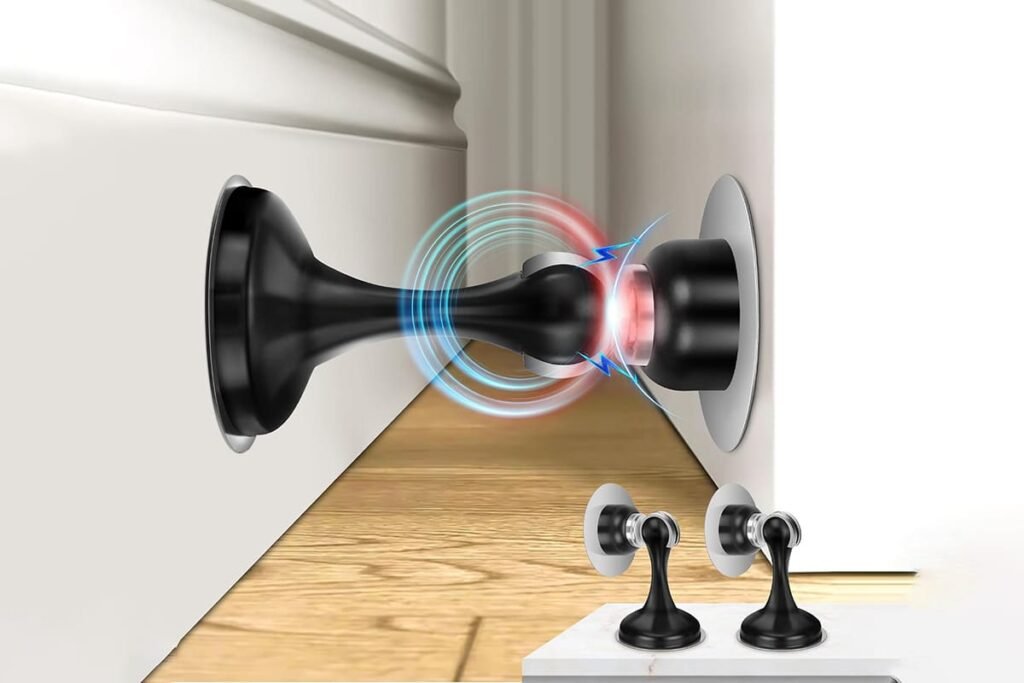
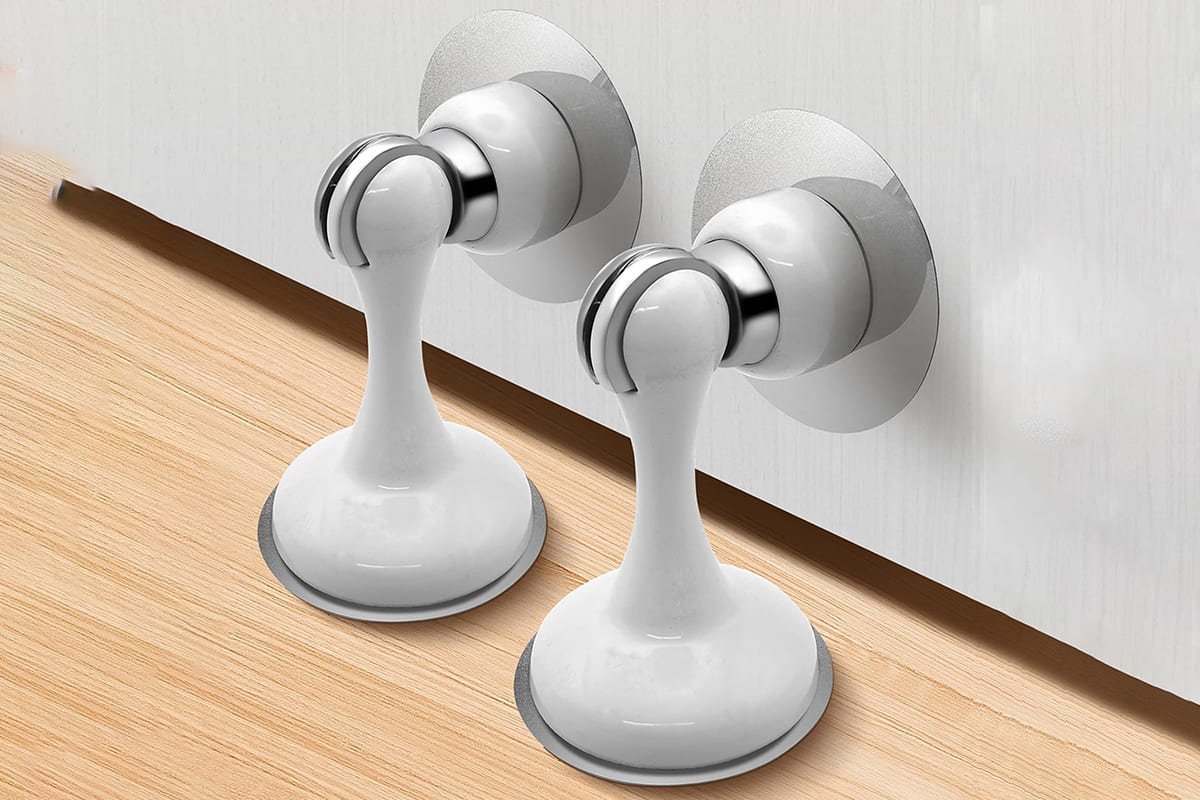
Common door stopper types include hemisphere stops, cylindrical stops, magnetic door holders, and concealed floor stops. Hemisphere and cylindrical types are often used for simple impact protection. Magnetic holders help keep doors open.4 Concealed floor stops suit cleaner designs, but they require more careful installation planning.
Common Types and Best-Fit Uses
There is no single best model for all markets. The right product depends on what the buyer wants the stopper to do.
| Type | Main Function | Typical Advantage | Buyer Should Check |
|---|---|---|---|
| Hemisphere stop | Simple impact protection | Compact and common | Door contact height |
| Cylindrical stop | Impact protection with clear projection | Easy visual matching | Length and buffer position |
| Magnetic door holder | Stops and holds door open | Useful for ventilation or access | Magnetic strength and fixing surface |
| Concealed floor stop | Hidden or low-profile stopping | Cleaner appearance | Floor drilling and alignment |
| Wall-mounted stop | Protects wall from handle impact | Good when floor drilling is not wanted | Wall strength and mounting height |
| Floor-mounted stop | Controls door leaf movement | Stable when installed correctly | Floor material and trip risk |
Hemisphere Door Stops
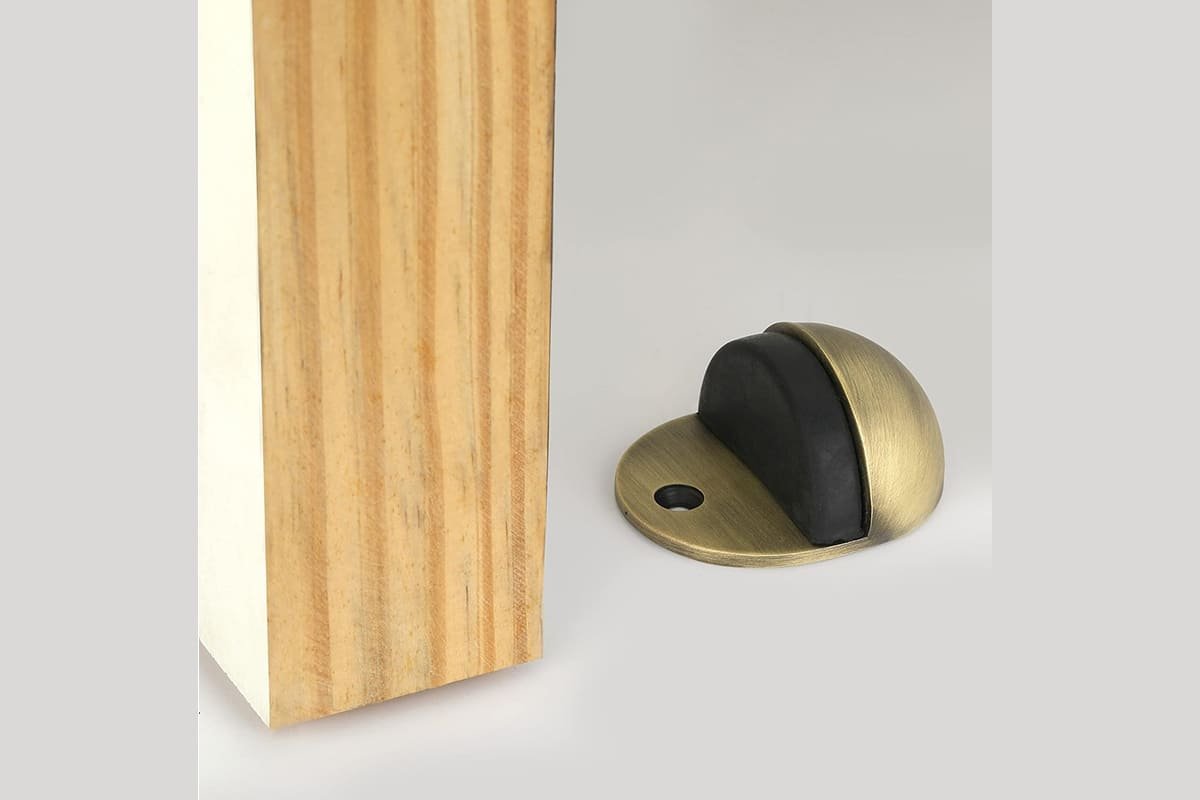
Hemisphere models are simple and widely used. They are usually floor-mounted and provide a rounded contact point. Buyers often choose them for residential doors, interior doors, and cost-sensitive product lines.
Advantages:
- Compact appearance
- Simple structure
- Easy to pack and ship
- Suitable for many standard interior doors
Points to confirm:
- The rubber buffer position must meet the door correctly.
- The height must suit the bottom clearance.
- The screw and plug must match the floor condition.
- The finish should match the handle and hinge series.
I see hemisphere styles used often in wholesale orders because they are easy to understand and stock. However, they still need correct dimensions. A small change in height or diameter can affect installation feel.
Cylindrical Door Stops
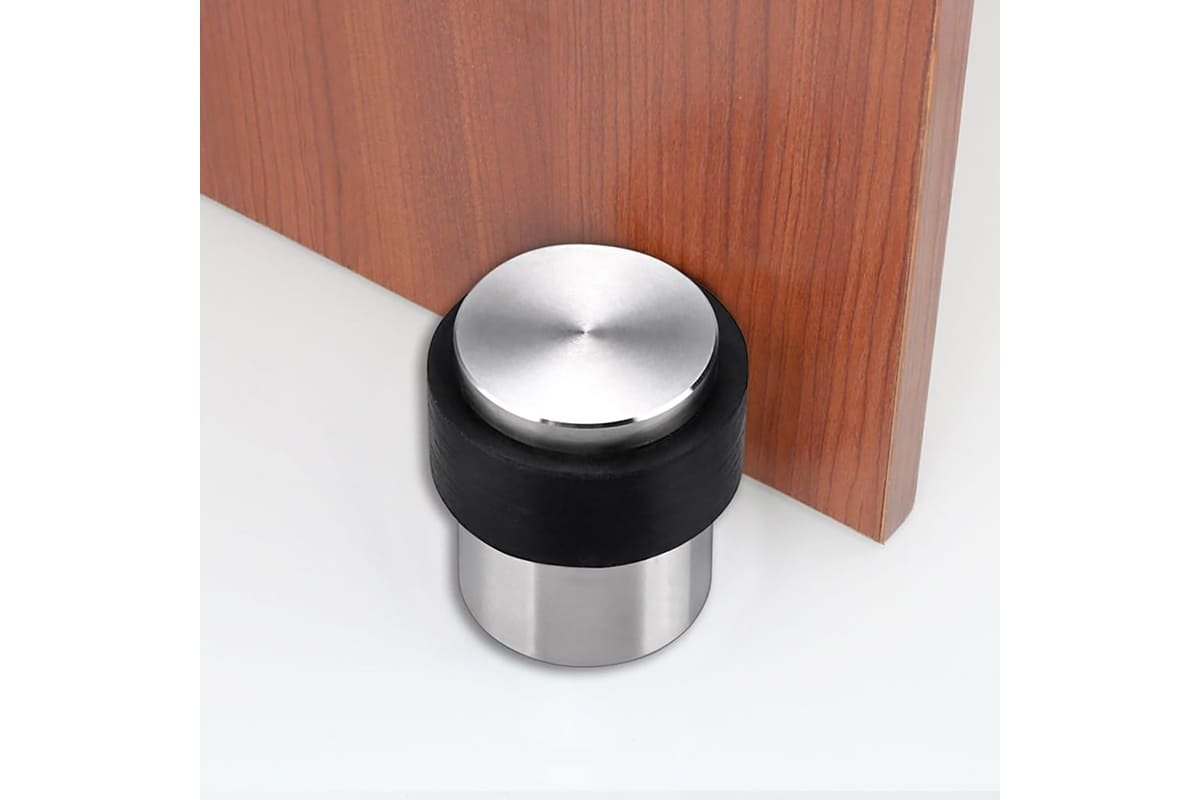
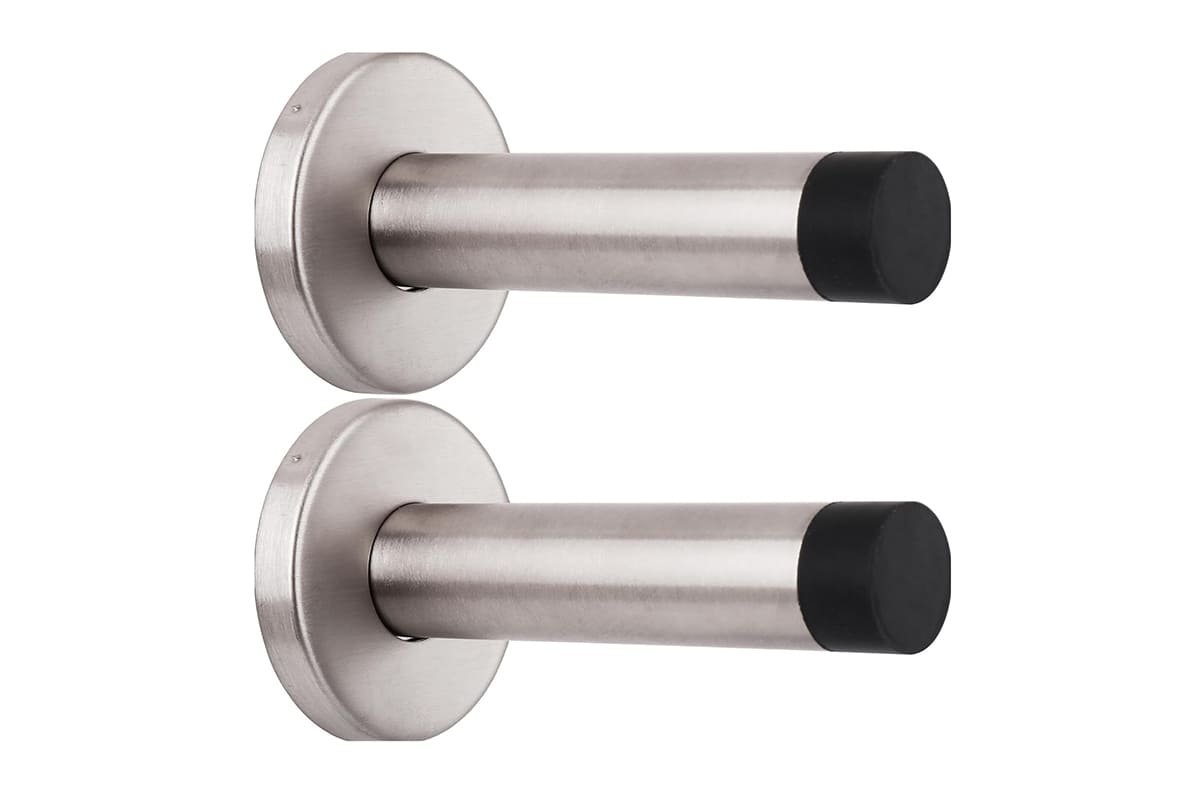
Cylindrical styles usually have a straight body and a rubber tip. They may be mounted on the wall or floor, depending on the design. Buyers often select them when they want a more visible, modern, or matching hardware look.
Good applications include:
- Commercial interior doors
- Door sets with modern lever handles
- Projects needing coordinated finishes
- Hardware brand product lines
The main advantage is control. A cylindrical body can provide more projection than a small hemisphere model.5 This helps when the handle extends far from the door leaf. However, buyers should confirm the total length carefully. If the body is too long, it may look bulky or create foot obstruction on the floor.
Magnetic Door Holders
A magnetic model does more than stop impact. It also holds the door in the open position. This can help in rooms where users often carry goods, improve ventilation, or need temporary open access.
But I never suggest selecting magnetic holders only by appearance. Buyers should check:
- Door weight
- Expected holding force
- Wall or floor fixing strength
- Alignment between magnet and plate
- Frequency of door opening
- User safety and release force
A magnetic holder can work well when installed correctly. Yet it may disappoint customers if the door closer force, door weight, or installation angle is not considered.
Concealed Floor Stops
Concealed or low-profile floor stops are used when buyers want a cleaner look. They may suit premium product lines, hotel-style interiors, or projects where visible hardware should be minimized.
However, concealed installation requires more planning. The installer may need accurate drilling, proper floor preparation, and correct door alignment. For bulk supply, the buyer should confirm installation instructions and accessory packs clearly.
My Practical Type Selection Rule
When I help buyers narrow down options, I usually ask three direct questions:
- Do you only need to prevent impact, or do you also need to hold the door open?
- Can the stopper be fixed to the floor, or must it be fixed to the wall?
- Should the product be visible, decorative, compact, or hidden?
These questions save time. They also reduce sample confusion. A buyer may request five different styles, but after answering these questions, only two may be truly suitable.
Which Door Stopper Material Should You Choose?
A door stopper material should match the use condition, price level, finish requirement, and market positioning. I do not treat stainless steel, zinc alloy, brass, or copper as universally best. Each material has its own balance of durability, cost, surface finish, and customer expectation.
Stainless steel is often selected for corrosion resistance and stable appearance.6 Zinc alloy can support flexible shapes and cost-effective production.7 Brass or copper may suit higher-positioned hardware lines. The best material depends on the installation environment, finish requirement, budget, order quantity, and brand positioning.
Material Comparison for Procurement
| Material | Common Strength | Common Limitation | Suitable Buyer Focus |
|---|---|---|---|
| Stainless steel | Durable appearance, good corrosion resistance | Shape flexibility may be more limited | Long-term supply, modern finish |
| Zinc alloy | Flexible design and cost control | Finish quality depends heavily on process | Decorative and price-sensitive lines |
| Brass / copper | Premium feel and good market positioning | Higher material cost | Higher-end product series |
| Rubber / plastic buffer | Impact absorption | Aging depends on quality and environment8 | Replacement stability and noise reduction |
Stainless Steel
Stainless steel is popular in architectural hardware because it can provide a clean, modern appearance. It is often used when buyers want a stable finish and a durable impression. For markets such as Europe, the Middle East, and Southeast Asia, stainless steel finishes can match many lever handles, hinges, and lock accessories.
However, buyers should still check the specific grade, surface treatment, wall thickness, and manufacturing consistency. A stainless body does not automatically guarantee perfect performance. The rubber insert, screw quality, base design, and polishing consistency also matter.
For bulk orders, I would check:
- Surface brushing direction
- Color difference between batches
- Edge finishing
- Rubber buffer hardness and fit
- Screw material and length
- Salt or humidity expectations for the target market, where applicable
Zinc Alloy
Zinc alloy is useful when buyers need shape variety, decorative designs, or cost-effective product positioning. It can support many forms that may be harder or more expensive to make from stainless steel.
The key issue is finish control. Zinc alloy products often rely on plating, painting, or other surface treatments. If the process is unstable, the buyer may see color variation, weak adhesion, or inconsistent appearance across batches.
I suggest buyers ask suppliers about:
- Surface treatment method
- Standard finish samples
- Acceptable color tolerance
- Packaging protection
- Minimum order quantity for custom finishes
- Lead time for repeat orders
Zinc alloy can be a very practical choice, especially for wholesalers and brands that need design variety. But the buyer should not approve a sample without confirming mass production consistency.
Brass or Copper
Brass and copper are often associated with higher-end hardware lines.9 They can provide a premium feel and a distinct market image. Buyers may choose them when the door stopper must match brass cylinders, luxury handles, or specific regional preferences.
The main consideration is cost. Raw material cost and surface finishing may increase the final price. For project buyers, this may be acceptable if the product supports a premium specification. For price-sensitive wholesale channels, it may not be the best fit.
I recommend comparing brass or copper options only after confirming the target market. A premium material may help a brand line, but it may reduce competitiveness in a cost-driven channel.
Do Not Forget the Buffer
The body material receives most attention, but the rubber or plastic buffer often decides the user experience. A poor buffer can create noise, fall off, harden, or leave marks.
Buyers should check:
- Whether the buffer is firmly fitted
- Whether replacement parts are available
- Whether the color matches the design
- Whether the buffer contacts the door at the correct point
- Whether packaging protects the buffer from deformation
In my view, a good door stopper is a small assembly, not just a metal part. The body, base, screws, rubber, finish, and packaging all work together. This is why material selection should be practical, not emotional.
How Should B2B Buyers Evaluate a Door Stopper Before Bulk Ordering?
A door stopper sample can look good on a desk, but a bulk order must perform across hundreds or thousands of installations. I have learned that buyers should evaluate both the product and the supply process. This reduces installation failure, finish complaints, and reorder problems.
Before bulk ordering, B2B buyers should confirm door material, door weight, opening angle, fixing surface, finish, accessories, packaging, and order quantity. They should also ask the supplier about dimensional consistency, finish control, production capacity, inspection process, and repeat-order stability.
Sample Approval Is Not Enough
A sample tells you the design direction. It does not fully prove mass production quality.10 In architectural hardware procurement, I often see buyers approve one beautiful sample but forget to define the batch standard.
For bulk purchasing, the buyer should confirm:
- Exact dimensions with tolerance expectations
- Material and surface treatment
- Finish code or approved color sample
- Rubber buffer material and fit
- Screw and anchor specifications
- Inner box and master carton packaging
- Labeling requirements
- Quantity per carton
- Inspection method before shipment
- Spare parts or accessory policy
This level of detail may seem basic, but it prevents many disputes.
Batch Consistency Matters
For hardware brands and wholesalers, finish consistency is critical. A door stopper may be displayed beside hinges, handles, lock cylinders, and other accessories. If the finish does not match, the whole product line looks less professional.
I recommend buyers keep an approved control sample. The supplier should also keep one. Both sides can use it for future comparison.
Important batch checks include:
| Item | What to Check | Why It Matters |
|---|---|---|
| Finish | Color, gloss, brushing, plating quality | Maintains brand appearance |
| Dimension | Height, diameter, screw hole position | Supports easy installation |
| Rubber | Fit, hardness, color, alignment | Controls impact and noise |
| Accessories | Screws, plugs, plates, magnets | Prevents installer complaints |
| Packaging | Protection, labeling, carton strength | Reduces shipping damage |
| Quantity | Packing count and order accuracy | Supports warehouse control |
Fixing Accessories Are Part of the Product
A buyer may focus on the metal body, but installers often complain about screws and anchors first. If the fixing accessories are weak or unsuitable, the product may loosen even if the main body is good.11
Different surfaces require different fixing consideration:
- Concrete floor: usually needs proper plugs and screws.
- Wood floor: may require suitable screw length and thread.
- Tile floor: needs careful drilling and may need stronger anchors.
- Gypsum wall: may not hold impact well without proper reinforcement.
- Metal frame or partition: may need specific fastening solutions.
A supplier cannot know every jobsite condition unless the buyer provides details. For project-specific decisions, I recommend that buyers consult qualified installers or technical professionals before final confirmation.
Packaging for Wholesale and Project Supply
Packaging is not only about appearance. It affects delivery condition, warehouse handling, retail display, and installation efficiency.
For B2B orders, I would confirm:
Individual packaging
Each unit should protect the finish and buffer.Accessory bag
Screws, plugs, and plates should not scratch the product.Labeling
Labels should match SKU, finish, quantity, and customer system.Carton strength
Export cartons should suit long-distance shipment.Mixed model control
If the order includes several finishes or sizes, carton marking must be clear.
These details help supply chain managers reduce receiving errors and after-sales confusion.
Supplier Evaluation Questions
When selecting a supplier, I suggest asking direct questions instead of only negotiating price:
- Can you provide consistent finish across repeat orders?
- Can you customize size, finish, or packaging for my market?
- What materials and surface treatments are available?
- What inspection steps do you use before shipment?
- Can you supply matching door hardware items?
- What is the normal lead time for bulk orders?
- Can you keep approved samples for future production comparison?
- What information do you need from me before quoting?
For buyers who source complete hardware sets, a one-stop supplier can reduce communication cost. At SDH Hardware, for example, our broader factory experience covers concealed hinges, euro standard mortise locks, butt hinges, lever handles, cylinders, and related hardware. This helps me think about the stopper as part of the whole door system, not as an isolated small item.
Compliance and Documentation
Door stoppers themselves may not always be the main certified component in a door set, but buyers should still manage documentation carefully. If the product is used with fire-rated doors or regulated projects, the buyer should verify the complete door assembly requirements and relevant certificates with qualified professionals.
I avoid making general certification promises for application-specific use. Instead, I suggest buyers request valid documents, confirm the scope of each certificate, and check whether the hardware is suitable for the intended door system.
How Can You Match a Door Stopper to Door Type, Finish, and Market Position?
A door stopper should fit the door set visually and practically. If the handle is satin stainless steel and the stopper is glossy chrome, the mismatch may look careless. If the door is heavy and the stopper is too light, the product may feel under-specified.
To match a door stopper correctly, buyers should align it with the door type, handle projection, hinge swing, finish family, usage frequency, and target market. For wholesale or brand supply, the stopper should also match the broader hardware series in style, color, packaging, and price position.
Door Type and Weight
Different doors create different impact conditions. A light interior timber door does not behave like a heavy solid door. A door with a closer may push against the stopper differently from a free-swinging door.
Buyers should classify the door first:
| Door Type | Typical Concern | Selection Focus |
|---|---|---|
| Light interior door | Basic wall protection | Simple stop, clean finish |
| Solid wooden door | Stronger impact | Better fixing and buffer |
| Metal door | Weight and hardware matching | Stronger body and accessories |
| Glass door | Edge protection and aesthetics | Careful contact point |
| Fire-rated door assembly | Compliance requirements | Professional verification |
I recommend buyers avoid using one model across all door types unless installation conditions are similar. Standardization is useful, but over-standardization can create problems.
Finish Matching
Finish consistency matters more than many buyers expect. A small product can still affect the perceived quality of the whole door set.
Common finish considerations include:
- Satin stainless steel
- Polished stainless steel
- Brushed nickel-style finishes
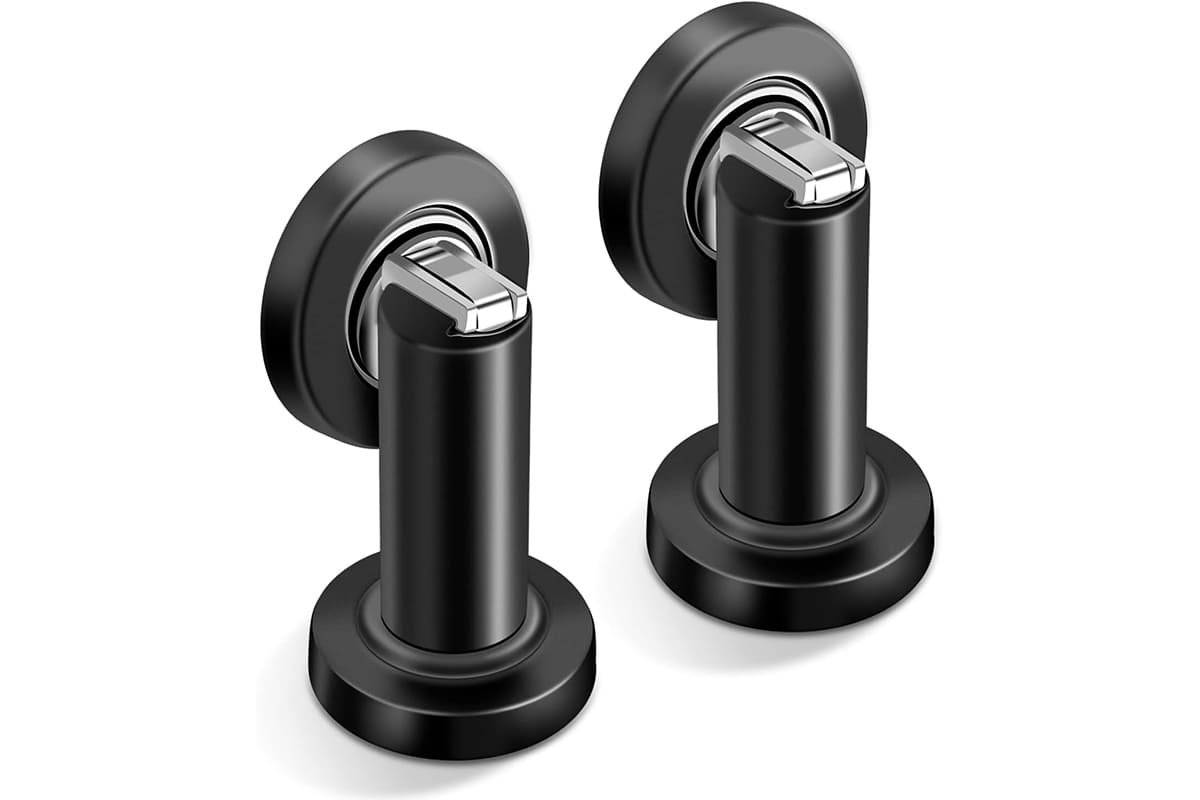
- Black finishes
- PVD-style tones
- Antique or brass tones
- Custom brand finishes
For bulk orders, I suggest approving the finish against real matching hardware, not only a catalog photo. Lighting, surface direction, and material base can change how the color appears.
Market Position
A wholesaler serving cost-sensitive markets may need a simple, reliable model with competitive pricing. A brand operator may need a stronger design identity and better packaging. A door factory may need stable dimensions and fast assembly compatibility.
Conclusion
Choosing the right door stopper is a practical fit-for-purpose decision. I would not start with shape alone. I would first confirm the door’s stopping point, required function, installation surface, material, finish, accessories, and bulk supply needs. For B2B buyers, batch consistency and reliable supplier communication matter as much as the sample appearance. If you are selecting door hardware for a product line, project, or wholesale order, confirm your door type, installation position, finish, and order quantity with your supplier before purchasing.
"Silicone Wall Protectors from Door knobs - Self Adhesive ...", https://www.amazon.com/Silicone-Wall-Protectors-Door-knobs/dp/B07F5ZXKHB. A facilities or building-hardware reference describing door stops as devices that limit door travel supports the claim that uncontrolled opening can bring the handle or door edge into contact with a wall. Evidence role: general_support; source type: institution. Supports: Door stops are used in building hardware to limit door travel and prevent contact between doors or hardware and surrounding surfaces.. Scope note: The source would provide general support for limiting door travel rather than proving every listed component will contact the wall in all installations. ↩
"Doorstop - Wikipedia", https://en.wikipedia.org/wiki/Doorstop. An encyclopedic definition of a doorstop describes it as a device used to stop a door from opening too far or to hold it open, supporting the functional description of impact prevention. Evidence role: definition; source type: encyclopedia. Supports: A doorstop is a device used to stop a door from opening too far or to hold it open, thereby preventing impact with adjacent surfaces.. Scope note: The source would support the general definition of a doorstop, not the article's specific examples of skirting boards, furniture, or nearby hardware. ↩
"Chapter 4: Entrances, Doors, and Gates", https://www.access-board.gov/ada/guides/chapter-4-entrances-doors-and-gates/. A technical reference on door closers explaining backcheck or opening-control functions supports the statement that a closer can affect a door's opening angle. Evidence role: mechanism; source type: institution. Supports: Door closers may include functions such as backcheck or hold-open features that influence how far and how quickly a door opens.. Scope note: The source would explain the mechanism in general; the actual limiting angle depends on the closer model, adjustment, and installation. ↩
"Electromagnetic door holder", https://en.wikipedia.org/wiki/Electromagnetic_door_holder. A building-hardware reference defining magnetic door holders as devices that retain doors in an open position supports the functional distinction between simple stops and hold-open hardware. Evidence role: definition; source type: institution. Supports: Magnetic door holders are hardware devices designed to retain a door in an open position by magnetic attraction.. Scope note: The source would support the category function, not the adequacy of any particular magnet strength or installation. ↩
"Hemispheres Door Stop", https://petrahardware.com/products/hemispheres-doorstop. An architectural-hardware reference comparing door-stop forms and dimensions would support the general point that body geometry changes the projection and contact location. Evidence role: general_support; source type: institution. Supports: Different door-stop geometries provide different offsets or projections from the wall or floor, affecting where the door makes contact.. Scope note: The support would be contextual because projection varies by individual product dimensions rather than by type alone. ↩
"Stainless steel - Wikipedia", https://en.wikipedia.org/wiki/Stainless_steel. A materials reference explaining the chromium-rich passive film in stainless steel supports the claim that stainless steel is selected for corrosion resistance and durable appearance. Evidence role: mechanism; source type: encyclopedia. Supports: Stainless steel resists corrosion because chromium forms a passive oxide layer, making it suitable for applications requiring durable surface appearance.. Scope note: The source would support the material property generally; actual performance depends on grade, environment, fabrication, and maintenance. ↩
"Zinc die casting carves new space in manufacturing. - ASME", https://www.asme.org/topics-resources/content/todays-zinc-casting-technology-for-tomorrows-markets. A materials or industry reference on zinc die casting supports the statement that zinc alloys can be used to manufacture complex shapes efficiently. Evidence role: mechanism; source type: institution. Supports: Zinc alloys are widely used in die casting because they can be formed into complex shapes with good dimensional accuracy and efficient production.. Scope note: The source would support zinc alloy manufacturing characteristics generally, not the cost structure of a specific door-stopper supplier. ↩
"Weathering Plastic Waste with the NIST SPHERE", https://www.nist.gov/el/mssd/infrastructure-materials-group/weathering-plastic-waste-nist-sphere. A polymer-degradation study showing that rubber aging is affected by environmental exposure and material formulation supports the table's statement that buffer aging depends on quality and environment. Evidence role: mechanism; source type: paper. Supports: Rubber and polymer materials degrade through environmental factors such as heat, oxygen, ozone, light, and mechanical stress, with degradation rates depending on composition and formulation.. Scope note: The source would support the degradation mechanism generally, not the service life of a specific door-stopper buffer. ↩
"SOLID BRASS VS. STAINLESS STEEL HARDWARE - Mi & Gei", https://miandgei.com/blogs/journal/solid-brass-vs-stainless-steel-hardware-which-premium-metal-is-best?srsltid=AfmBOoqfR02EUYolBzulSGHEQMbZduxXXiiXNoh9CjaKZ3aPa4njWHVU. An architectural-materials reference discussing brass or copper alloys in decorative hardware supports the contextual claim that these materials are associated with higher-positioned hardware lines. Evidence role: general_support; source type: institution. Supports: Brass and copper alloys are used in decorative and architectural hardware for their appearance, workability, and corrosion-related properties.. Scope note: The source would not prove consumer willingness to pay in every market; it would support the material's common decorative and architectural use. ↩
"Questions and Answers on Current Good Manufacturing ...", https://www.fda.gov/drugs/guidances-drugs/questions-and-answers-current-good-manufacturing-practice-regulations-production-and-process. A quality-control standard or statistical sampling reference supports the statement that a single approved sample cannot fully establish mass-production quality. Evidence role: general_support; source type: institution. Supports: Quality-control standards use sampling plans and lot inspection because individual samples do not by themselves demonstrate production-batch conformity.. Scope note: The source would support the general quality-assurance principle rather than specifying door-stopper inspection criteria. ↩
"Anchor Bolts for Robust Construction", https://www.boltproducts.com/anchor-bolts-c-699_233_234.html. A construction-engineering reference on fastener performance supports the claim that unsuitable fixing accessories can loosen even when the hardware body itself is sound. Evidence role: mechanism; source type: education. Supports: Fastener holding capacity depends on the anchor type, screw design, installation method, load direction, and substrate material.. Scope note: The source would explain fastening principles generally; actual loosening risk depends on impact load, installation quality, and the specific wall or floor material. ↩