What Is the Best Material for a Door Handle?
The best material for a door handle is a common question because the wrong choice can create finish problems, loose fitting, corrosion complaints, and unnecessary after-sales cost. I see this often in bulk procurement. The practical solution is not to choose the most expensive material, but to match the handle material to the project.
The best material for a door handle depends on where and how the handle will be used. Stainless steel is usually the balanced choice for public and high-use projects.1 Zinc alloy works well for indoor decorative applications.2 Aluminum alloy and PBS-type materials can fit lower-budget basic projects when performance expectations are clearly limited.
Material selection looks simple on a quotation sheet, but it affects production stability, surface consistency, product positioning, and complaint risk. As a China-based door hardware manufacturer, I usually evaluate handle material through the buyer’s real application first, then discuss cost and design.
How Should Buyers Choose the Best Material for a Door Handle?
Choosing the best material for a door handle becomes difficult when the buyer compares only unit price. A cheap handle can become expensive if it causes project rejection, color variation, weak durability, or customer complaints after installation.
The best way to choose door handle material is to evaluate five factors: usage environment, traffic frequency, door type, project budget, and after-sales risk. For B2B procurement, the right material is the one that keeps quality stable across the whole batch while meeting the project’s functional and appearance requirements.
Material choice starts with the application
I usually begin with one simple question: Where will this handle be installed? A handle for a hotel corridor, school classroom, office washroom, apartment bedroom, and low-cost interior door does not need the same material. The use environment controls the real technical requirement.
For example:
- A public building door handle faces higher traffic and rougher use.
- A coastal or humid market needs better corrosion resistance.
- A hotel or apartment project may require finish consistency across many doors.
- A retail hardware brand may need more design variety and attractive packaging.
- A budget project may prioritize cost, but it still needs basic strength and stable assembly.
This is why I avoid saying one material is always the winner. In production and export supply, the “best” material is the one that creates the fewest quality surprises after installation.
Key decision factors for B2B buyers
| Evaluation factor | Why it matters | Typical buyer concern |
|---|---|---|
| Usage environment | Indoor, outdoor, humid, dry, public, private | Will the handle corrode or fade too quickly? |
| Traffic frequency | Low-use bedroom vs high-use public door | Will the handle stay stable under repeated use? |
| Door type | Wood door, metal door, fire-rated door, commercial door | Is the handle compatible with the lock and door structure? |
| Surface finish | Satin, polished, PVD, painted, electroplated | Will the finish remain consistent across bulk orders? |
| Budget level | Economy, mid-range, project-grade, premium | Can the buyer protect margin and reduce complaints? |
| Compliance documents | CE, fire-rated reports, project documentation | Are certificates valid and applicable to the exact product? |
Do not evaluate material alone
The base material is only one part of the decision. I have seen buyers choose a good material but still face problems because the structure, spring mechanism, spindle fit, plating process, or packaging protection was not controlled well.
A strong procurement review should include:
Base material confirmation
The supplier should state whether the handle is stainless steel, zinc alloy, aluminum alloy, brass, or another material.Surface treatment method
A stainless steel handle with poor polishing can look worse than a well-finished zinc alloy handle.Batch color control
This matters when 500, 2,000, or 10,000 sets must look uniform.Accessory matching
Screws, spindle, rose, escutcheon, and lock body must work together.Inspection process
Buyers should ask how the factory checks appearance, dimensions, assembly, and packaging before shipment.
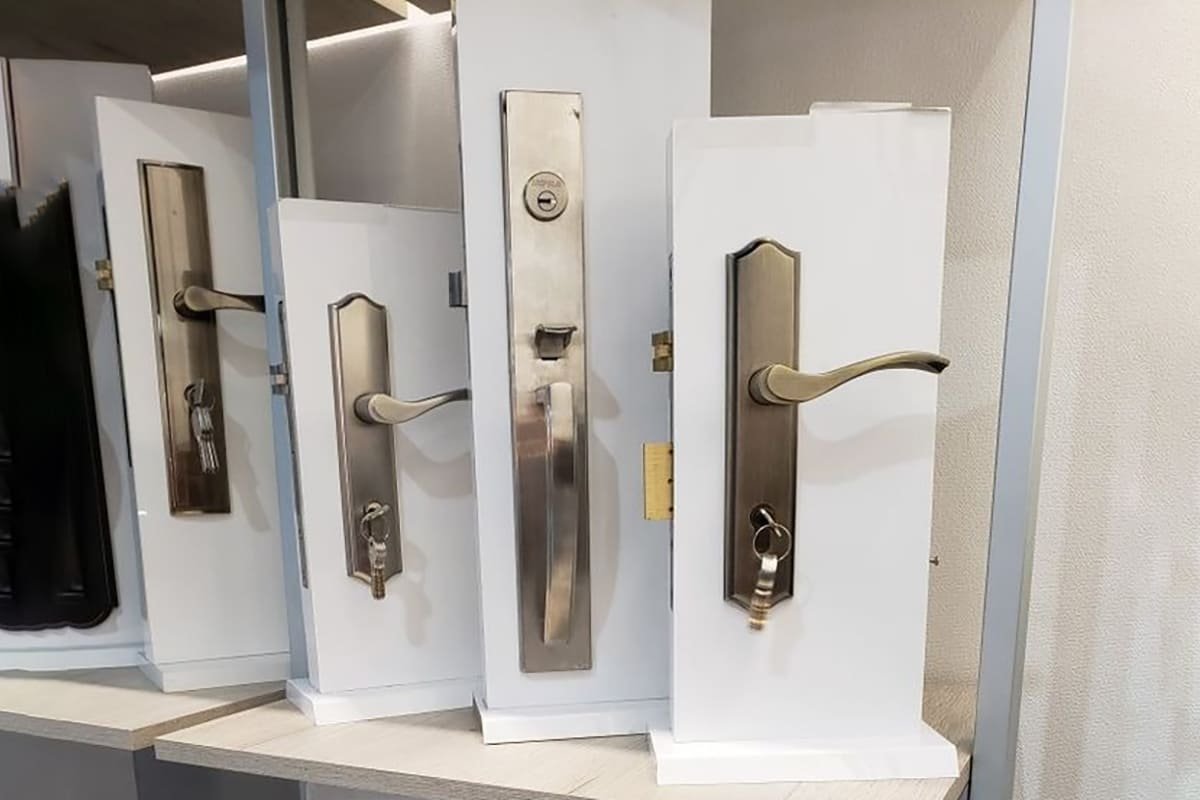
My practical rule is simple: I do not choose a handle material only from a catalog picture. I match the material to the door, project, market, and expected service level.
Is Stainless Steel the Best Material for a Door Handle in Public Projects?
Stainless steel is often considered the best material for a door handle in demanding projects, but buyers still need to check grade, structure, finish, and supplier control. A stainless steel label alone does not guarantee a stable commercial product.
Stainless steel is usually the most balanced door handle material for public buildings, commercial doors, and higher-demand projects because it offers good durability, corrosion resistance, clean appearance, and strong cost performance. It is especially suitable where buyers want long-term stability and lower complaint risk.
Where stainless steel performs well
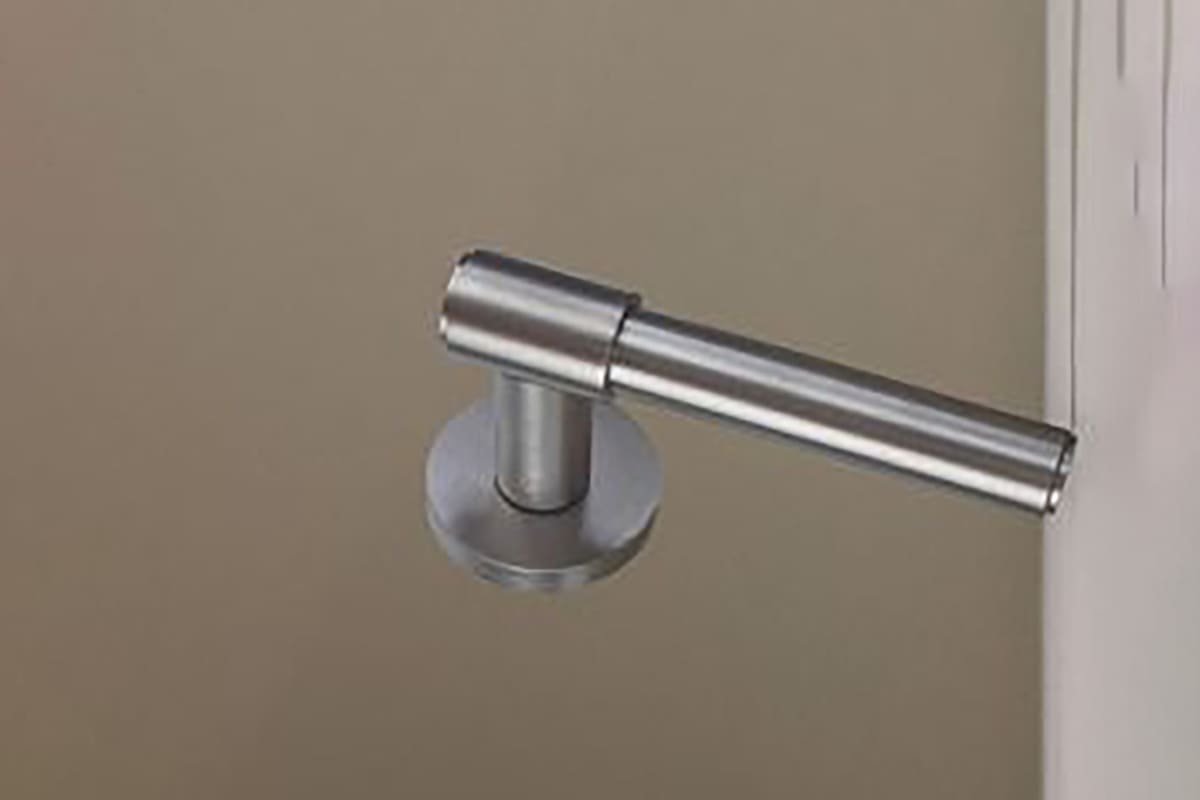
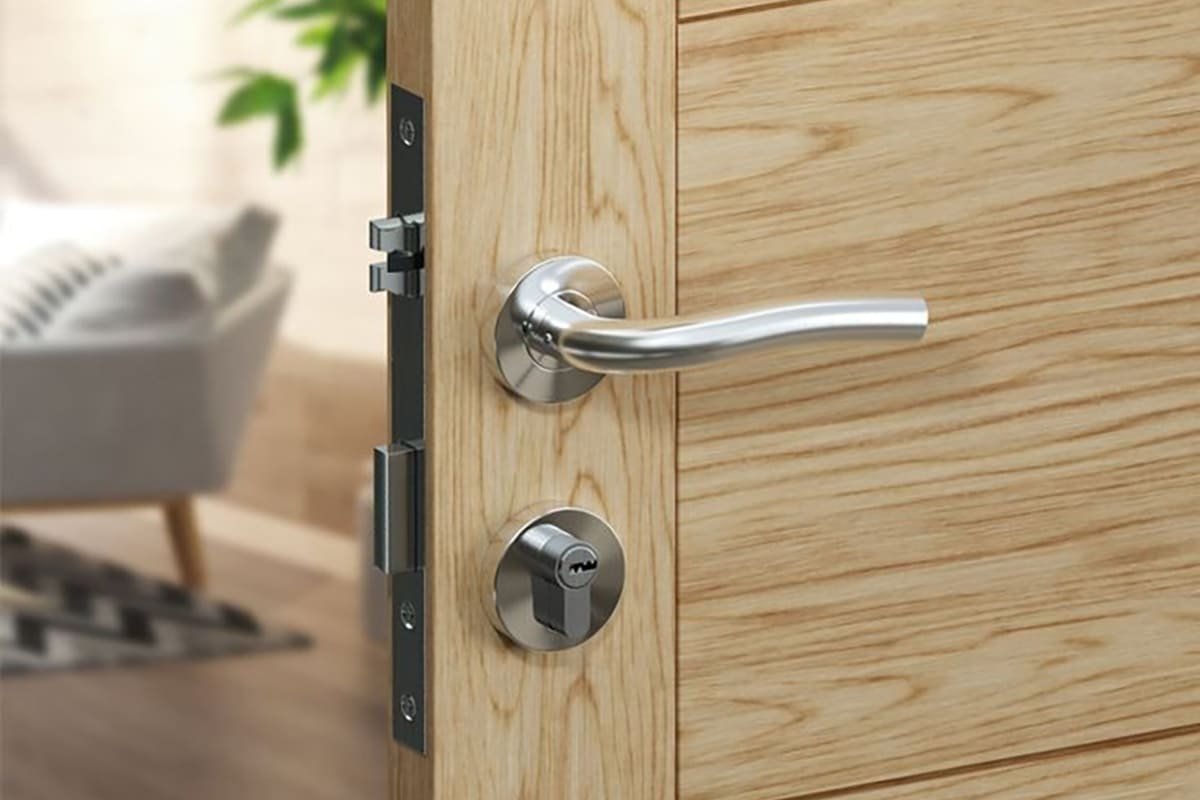
In my manufacturing experience, stainless steel is a strong choice when the buyer wants a reliable handle for medium- to high-use applications. It is common in offices, public buildings, hospitals, schools, hotels, apartments, and commercial door systems.
Stainless steel handles are often selected because they offer:
- Good corrosion resistance compared with many lower-cost materials
- Stable mechanical feel when the structure and accessories are well designed
- Clean modern appearance for commercial and residential projects
- Better suitability for high-traffic areas
- Good compatibility with fire-rated or project-grade door hardware systems, when supported by proper test documents
However, stainless steel is not automatically perfect. Buyers should confirm the stainless steel type, production method, welding quality, wall thickness, surface polishing, and passivation or finishing process where applicable.
Stainless steel grades and buyer checks
Many buyers ask about stainless steel grades such as 201, 304, or 3163. I recommend treating these as procurement specifications, not marketing slogans.
| Stainless steel type | Common use direction | Buyer note |
|---|---|---|
| 201 stainless steel | Cost-sensitive indoor or general applications | Lower cost, but buyers should check corrosion expectations carefully |
| 304 stainless steel | General project and commercial applications | Often a balanced option for durability and cost |
| 316 stainless steel4 | Harsh or coastal environments | Higher corrosion resistance, but higher cost |
The exact grade should match the project environment. For example, a humid coastal project may need stronger corrosion resistance than an inland apartment project. If a supplier claims a specific grade, buyers should request material declarations, test reports, or agreed inspection standards.
What stainless steel does not solve by itself
A stainless steel handle can still fail in the market if the factory does not control key details. I pay attention to these points in production:
- Surface consistency: Satin stainless steel should not show obvious shade differences across cartons.
- Edge finishing: Poor edge polishing can hurt user experience and reduce perceived quality.
- Tube or lever structure: Thin or weak construction may feel light and unstable.
- Welding and joining: Bad welding can create appearance marks or strength concerns.
- Accessory quality: A good lever can still feel poor if the spring or spindle is weak.
A note on standards and testing
Some suppliers mention European standards or cycle testing in their marketing. For door lever handles, buyers may see references to standards such as EN 19065 in the market, but the exact standard, grade, and test result must be verified against the supplier’s real certificate or test report before use in project documentation.
I would not publish or rely on claims such as “200,000-cycle tested” unless the actual document confirms:
- The tested product model
- The applicable standard
- The testing laboratory
- The test date and validity
- The grade or performance class achieved
For project procurement, stainless steel is often a safe direction, but verified documentation is still necessary when compliance matters.
Is Zinc Alloy the Best Material for a Door Handle for Interior Doors?
Zinc alloy can be the best material for a door handle when the project needs design variety, decorative shapes, and indoor use. The risk comes when buyers use zinc alloy in harsh environments without considering corrosion resistance, plating quality, or traffic level.
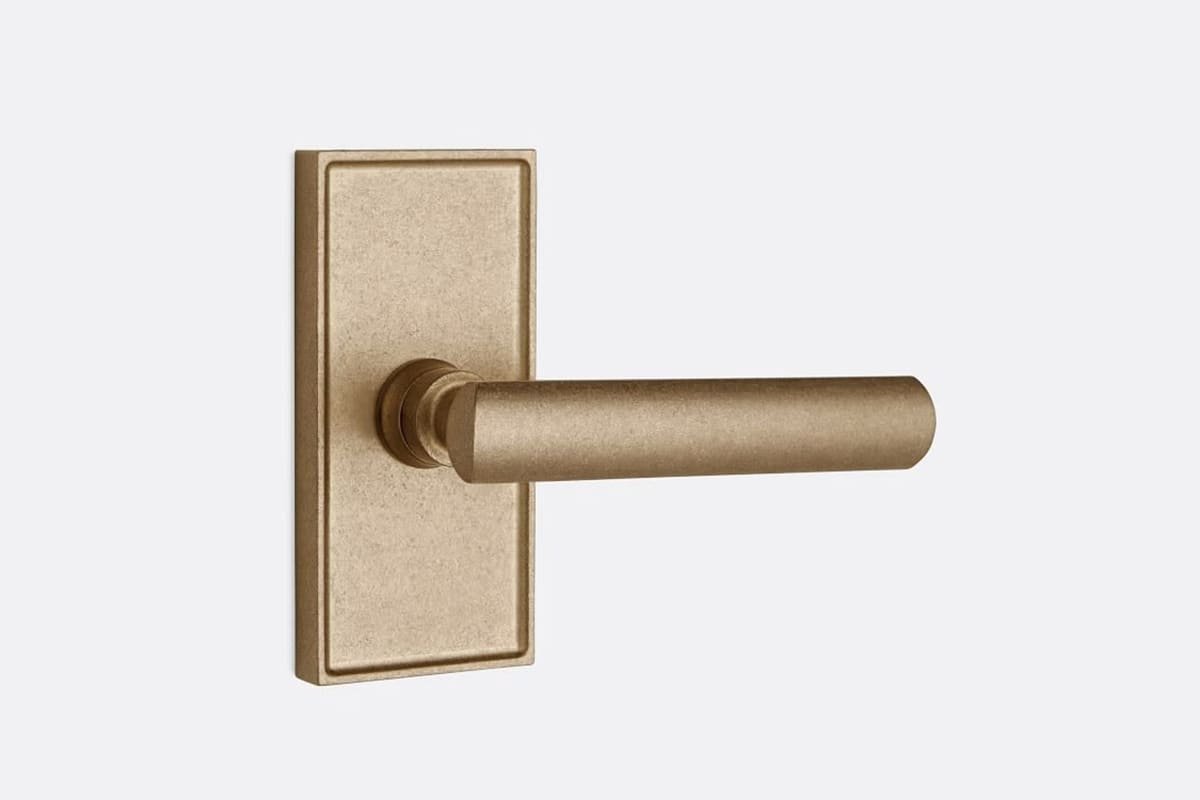
Zinc alloy is a strong choice for interior door handles because it has good casting and processing performance. It allows flexible shapes, detailed designs, and many decorative finishes. It is best suited for indoor residential, hotel, apartment, and style-focused product lines where appearance variety matters.
Why zinc alloy is popular for interior handles
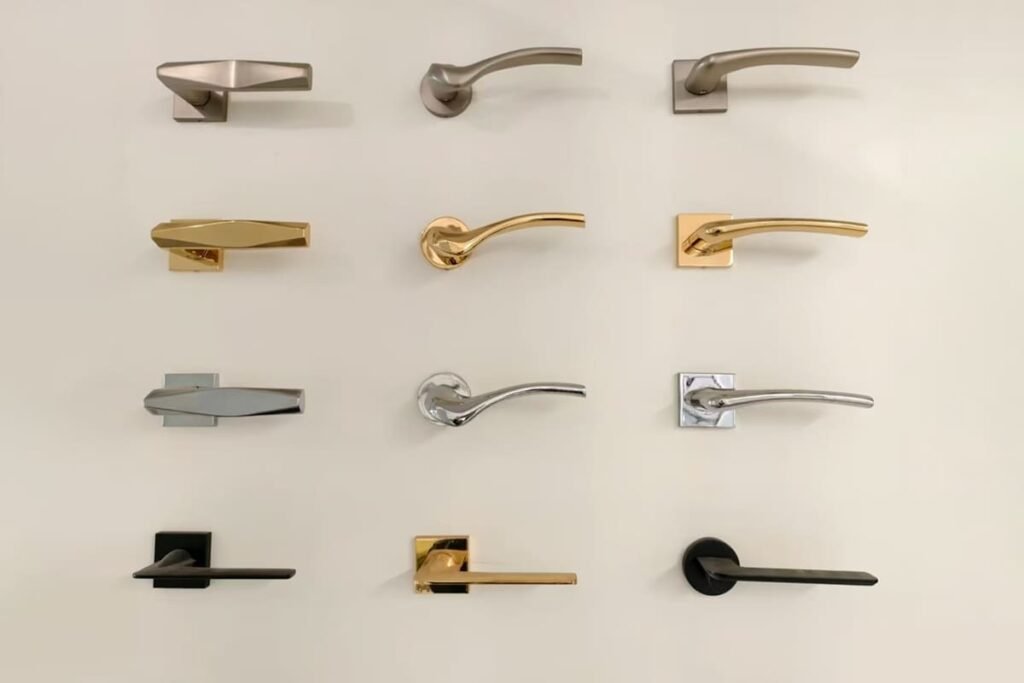
Zinc alloy is widely used in the door handle industry because it is easy to cast into complex shapes. This makes it attractive for brands that sell many styles and finishes. If a buyer wants curved designs, decorative patterns, heavier visual forms, or special rosette shapes, zinc alloy often gives more design freedom than stainless steel tube construction.
I often see zinc alloy used for:
- Interior wooden doors
- Apartment bedroom doors
- Hotel room doors
- Decorative residential hardware
- Retail hardware product lines
- Mid-range design-focused collections
The main advantage is manufacturing flexibility. A zinc alloy handle can be produced with more shape detail6, and the surface can be electroplated, painted, or treated in different decorative finishes.
Zinc alloy strengths and limits
| Point | Zinc alloy advantage | Buyer caution |
|---|---|---|
| Design flexibility | Excellent for complex shapes | Mold cost and style planning matter |
| Surface options | Many decorative finishes possible | Plating quality decides long-term appearance |
| Indoor suitability | Good for dry interior applications | Not ideal for harsh or corrosive environments |
| Product positioning | Attractive for retail and brand lines | Quality varies widely between factories |
| Cost control | Often competitive for styled products | Low-cost versions may reduce structure strength |
Plating and surface treatment are critical
For zinc alloy, the finish process is often as important as the base material7. A well-made zinc alloy handle can look premium. A poorly plated one can create complaints quickly.
Buyers should ask suppliers about:
- Plating thickness or surface treatment control, where applicable
- Salt spray test claims, if the supplier provides them
- Color consistency between production batches
- Scratch resistance expectations
- Packaging protection during export shipping
I recommend that buyers approve a golden sample before mass production. The approved sample should define shape, weight, surface color, gloss, texture, and assembly feel. For bulk orders, buyers should also compare production pieces against the golden sample before shipment.
When zinc alloy is not the right answer
Zinc alloy is not my first recommendation for severe public use, highly humid outdoor exposure, coastal conditions, or projects that require strong fire-rated hardware documentation unless the supplier has exact product testing and documentation.
This does not make zinc alloy “bad.” It means the buyer must use it in the right place. For indoor design-driven projects, zinc alloy can be a very practical door handle material. For heavy public doors, stainless steel may reduce after-sales risk.
When Are Aluminum Alloy or PBS-Type Materials the Best Material for a Door Handle?
Aluminum alloy and PBS-type materials may be the best material for a door handle in budget-sensitive projects, but only when the buyer understands the application boundary. Problems happen when economy materials are pushed into high-demand project conditions.
Aluminum alloy and PBS-type handle materials are suitable for basic, lower-budget applications where the priority is cost control and simple function. They are not equal substitutes for stainless steel or zinc alloy in demanding commercial projects, but they can work for light-duty indoor use and price-sensitive product lines.

Where aluminum alloy makes sense
Aluminum alloy is lightweight and can be cost-effective. It is often used where the buyer needs a simple handle with acceptable appearance and lower material cost. It can also support certain surface treatments, such as anodizing or painting8, depending on the product design and supplier capability.
Aluminum alloy may be suitable for:
- Basic interior doors
- Light-duty residential projects
- Economy hardware lines
- Price-sensitive wholesale markets
- Temporary or low-spec building applications
The buyer should not judge aluminum only by weight. A lighter handle can still be acceptable if the project requirement is modest. However, if the customer expects a heavy, premium hand feel, aluminum may not match that positioning.
PBS-type materials and application boundaries
Some markets use PBS-type or similar material descriptions for low-cost handle solutions. Because material naming can vary by supplier and region, I recommend that buyers ask for a clear written material specification before ordering.
PBS-type materials may fit:
- Very cost-sensitive indoor doors
- Basic functional applications
- Low-traffic areas
- Projects where replacement cost is acceptable
- Markets that prioritize price over premium feel
They are not usually my recommendation for high-traffic public doors, fire-rated door sets, premium hotel projects, or harsh environments unless the product has reliable testing and documentation for that exact application.
Budget materials need stricter expectation control
Economy materials can be useful, but buyers must define the performance level clearly. If the buyer expects stainless steel performance at a low-budget material price, the project will likely face disappointment.
I suggest checking these points before approving aluminum alloy or PBS-type handles:
| Checkpoint | Why it matters |
|---|---|
| Handle weight and feel | The customer may associate heavier handles with better quality |
| Surface durability | Low-cost coatings may scratch or fade more easily |
| Screw and spindle strength | Accessories can fail before the lever body |
| Door compatibility | Light handles must still fit the lock and door thickness |
| Packaging | Budget handles still need protection during bulk shipping |
| Replacement plan | Low-cost projects may need easier after-sales replacement |
How I position budget materials
I do not reject aluminum alloy or PBS-type materials. I position them honestly. They are not the right answer for every project, but they can help buyers build a complete product range.
A hardware brand, for example, may need:
- Stainless steel handles for project-grade sales
- Zinc alloy handles for decorative interior lines
- Aluminum alloy handles for economy indoor doors
- PBS-type handles for basic low-cost market demand
This kind of product segmentation helps buyers protect both quality reputation and profit margin.
Why Is Surface Finish as Important as the Best Material for a Door Handle?
The best material for a door handle can still disappoint if the surface finish is unstable. Buyers often focus on base metal first, but customers usually notice color, scratches, stains, and texture differences before they understand material details.
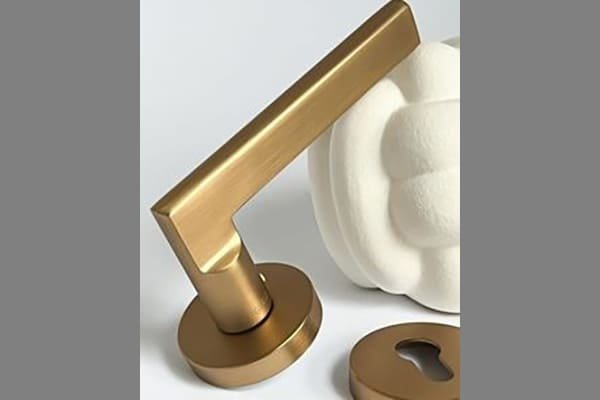
Surface finish is as important as door handle material because it controls appearance, corrosion protection, brand positioning, and batch consistency.9 In bulk procurement, a stable finish can reduce customer complaints, simplify installation matching, and protect the buyer’s market reputation.
Finish consistency affects real sales
In my export supply work, surface finish is one of the most sensitive quality points. A buyer may accept a small internal structure difference, but they rarely accept visible color variation on the same project.
This is especially true for:
- Hotel projects
- Apartment buildings
- Door factory assembly lines
- Retail hardware brands
- Distributor inventory programs
- Project packages with hinges, locks, and handles together
If the handle finish does not match the hinge, lock body faceplate, cylinder escutcheon, or other visible hardware, the full door set may look inconsistent.
Common finish considerations
| Finish issue | Buyer risk | Procurement suggestion |
|---|---|---|
| Color variation | Different cartons do not match | Approve golden sample and batch standard |
| Scratches | Customer rejects visible defects | Define acceptable inspection criteria |
| Poor polishing | Product looks cheap | Review pre-production samples |
| Weak plating | Finish may peel or discolor | Ask for process details and test documents |
| Inconsistent texture | Satin or matte surfaces look uneven | Inspect multiple pieces from bulk production |
| Packaging marks | Product damaged before installation | Improve inner bags, foam, or carton layout |
Material and finish must work together
Different materials need different finishing methods. Stainless steel may use polishing, brushing, PVD, or other treatments. Zinc alloy often depends heavily on plating or painting. Aluminum alloy may use anodizing, painting, or powder coating depending on design. PBS-type materials may have molded colors or surface coatings.
The buyer should not ask only, “What is the material?” A better question is:
“Can this supplier keep the same finish quality across my whole order and future repeat orders?”
For wholesale and brand buyers, repeatability is often more valuable than a perfect sample. A sample can be made carefully by hand. A bulk order needs stable process control.
Practical inspection points
Before shipment, buyers can request inspection based on:
- Color match against approved sample
- Visible scratches, dents, stains, and polishing marks
- Handle assembly feel
- Lever return movement
- Screw hole and spindle fit
- Packaging protection
- Carton labeling and batch traceability
At SDH Hardware, our business context focuses on full-process quality control, including raw material screening, production supervision, and finished product inspection. For buyers, I still recommend verifying samples, specifications, certificates, and inspection results for the exact order before large-scale shipment.
How Should Buyers Evaluate a Door Handle Material Supplier?
The best material for a door handle is easier to choose when the supplier can explain production, inspection, customization, and documentation clearly. A weak supplier can turn a good material choice into unstable delivery and avoidable quality complaints.
Buyers should evaluate a door handle material supplier by checking factory capability, product range, quality control process, surface finish stability, customization support, documentation, and delivery reliability. Supplier selection should focus on repeatable bulk quality, not only sample appearance or the lowest quotation.
What I would check before placing a bulk order
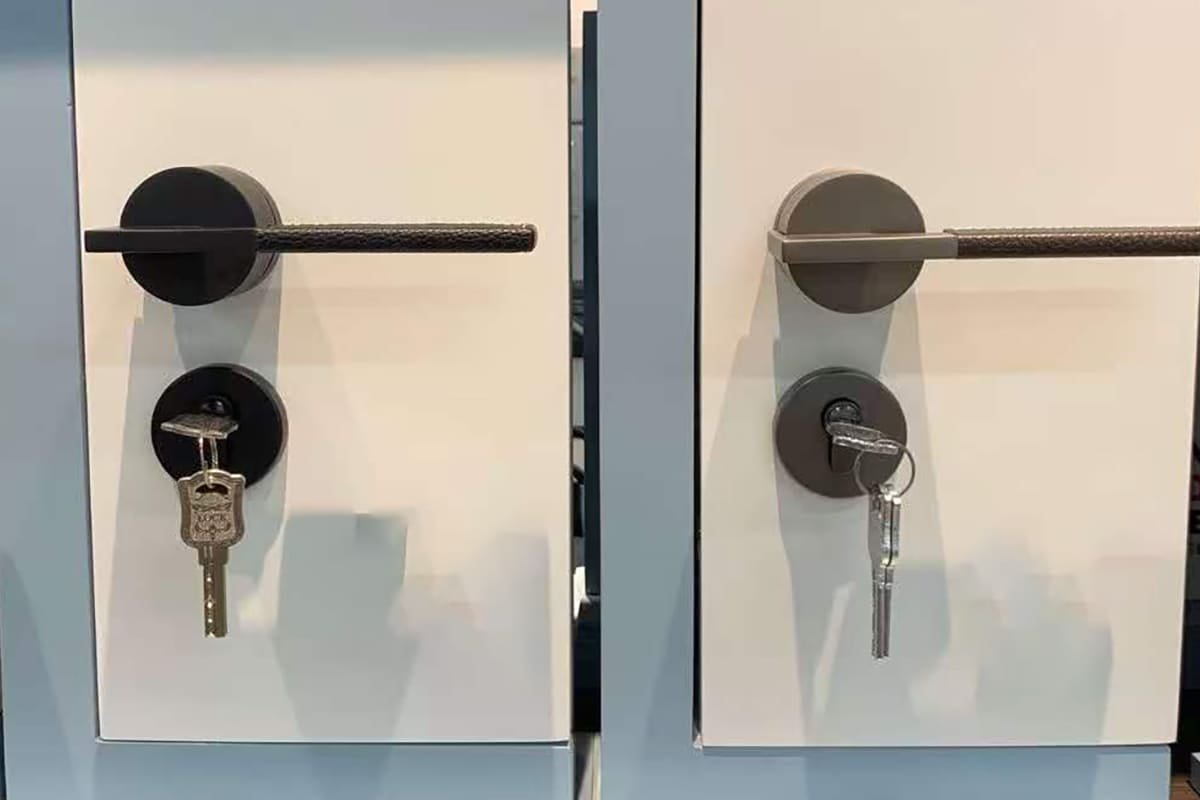
For B2B buyers, supplier evaluation is not just about price. A low unit cost can disappear quickly if the buyer faces delayed shipment, color inconsistency, missing accessories, or high customer complaint rates.
I suggest reviewing these points:
Factory ownership and production control
Does the supplier operate its own production lines, or does it only trade from different factories?Product category support
Can the supplier provide matching handles, locks, hinges, cylinders, and accessories?Material options
Can the supplier explain stainless steel, zinc alloy, aluminum alloy, and other options clearly?Surface treatment control
Can the supplier keep finishes consistent across repeated orders?Customization ability
Can the supplier adjust size, finish, accessories, packaging, or product structure?Inspection procedure
Does the supplier check raw materials, semi-finished products, assembly, appearance, and packaging?Certification documents
Are CE, fire-rated, or other documents valid, current, and applicable to the exact product?
Supplier comparison table
| Supplier factor | Strong supplier signal | Risk signal |
|---|---|---|
| Production capacity | Clear factory process and stable output | Vague production source |
| Quality control | Written inspection steps and records | Only visual sample approval |
| Material knowledge | Gives application-based advice | Pushes one material for every use |
| Finish control | Uses approved samples and batch checks | Cannot explain color variation |
| Documentation | Provides product-specific certificates | Sends unrelated or expired documents |
| Customization | Offers ODM support with clear drawings | Changes specs without approval |
| Delivery | Gives realistic lead time | Promises everything too quickly |
Ask for documents, then verify them
For project buyers, certification can be important. However, certification should be treated as a document to verify10, not a sentence in a brochure. Buyers should confirm that each certificate or test report matches:
- The exact product type
- The model number
- The material or construction
- The applicable standard
- The test laboratory
- The validity period
- The project requirement
This is especially important for fire-rated applications. A door handle used in a fire-rated door set may need to be considered together with the full door hardware system, door type, lock body, hinge, closer, and local regulations. Buyers should involve qualified professionals for application-specific decisions.
My practical supplier advice
I usually tell buyers to start with a trial order or controlled batch when they are building a new product line. This allows them to test:
- Market acceptance
- Finish consistency
- Installation feedback
- Packaging strength
- Customer complaint rate
- Supplier response speed
After that, the buyer can scale up with more confidence. A good supplier should help the buyer reduce uncertainty, not add more risk.
Conclusion
The best material for a door handle is not one universal material. It is the material that fits the door type, traffic level, environment, budget, finish expectation, and after-sales risk. Stainless steel is usually the balanced choice for public and higher-demand projects. Zinc alloy is practical for indoor decorative handles. Aluminum alloy and PBS-type materials can serve budget applications with clear limits. If you are sourcing door handles in bulk, contact SDH Hardware to discuss material selection, finish consistency, customization, and project-based procurement support.
"04 Division 8 - Openings", https://www.odu.edu/sites/default/files/documents/04-division-08-openings.pdf. A neutral reference on stainless steel supports that its corrosion resistance and mechanical durability make it suitable for architectural and hardware uses; this provides contextual support for selecting stainless steel in high-use door-handle projects rather than direct testing of any specific handle model. Evidence role: general_support; source type: encyclopedia. Supports: Stainless steel is widely used where corrosion resistance, strength, and durability are needed, including architectural and hardware applications.. Scope note: Contextual support; it does not prove the performance of a particular door handle design or supplier batch. ↩
"Low Pressure Die Casting Process", https://exhibits.wilson.edu/url/short/hs/537H167S87260712/low__pressure_die__casting__process.pdf. A technical reference on zinc alloys and die casting supports that zinc alloys are suitable for producing detailed cast components, providing contextual support for their use in decorative interior door-handle designs. Evidence role: mechanism; source type: encyclopedia. Supports: Zinc alloys are commonly used in die casting because they can reproduce detailed shapes and support decorative manufactured components.. Scope note: Contextual support; indoor door-handle performance still depends on alloy specification, plating, and use conditions. ↩
"SAE steel grades", https://en.wikipedia.org/wiki/SAE_steel_grades. Materials-science references support that 201, 304, and 316 are distinct stainless steel grades with different compositions and corrosion-resistance profiles, supporting their use as procurement specifications rather than interchangeable marketing labels. Evidence role: definition; source type: education. Supports: 201, 304, and 316 are distinct stainless steel grades with different alloying compositions and corrosion-resistance characteristics.. Scope note: General grade comparison; actual performance also depends on manufacturing, surface treatment, and exposure conditions. ↩
"Marine grade stainless - Wikipedia", https://en.wikipedia.org/wiki/Marine_grade_stainless. Materials references support that 316 stainless steel contains molybdenum and generally offers improved resistance to chloride-related pitting corrosion, which explains its common selection for harsher or coastal environments. Evidence role: mechanism; source type: education. Supports: 316 stainless steel’s molybdenum content improves resistance to chloride-induced pitting compared with common lower-alloy stainless steels.. Scope note: General alloy behavior; suitability for a specific handle still depends on design, finish, maintenance, and chloride exposure level. ↩
"BS EN 1906 – Lever Handle and Knob Furniture - HOPPE", https://www.hoppe.com/gb-en/contacts-service/standards/bs-en-1906/. Standards information for EN 1906 supports that it concerns building hardware such as lever handles and knob furniture, explaining why buyers may see this standard referenced in door-handle procurement. Evidence role: definition; source type: institution. Supports: EN 1906 specifies requirements and test methods for lever handles and knob furniture for doors.. Scope note: Standard summaries identify the scope but may not provide the full technical requirements without purchasing the standard. ↩
"Precision Zinc Die Casting - USA Manufacturing - Deco Products", https://decoprod.com/zinc-die-casting-capabilities-and-services/precision-die-casting/. Technical sources on zinc die casting support that zinc alloys can be cast into complex and detailed shapes, providing a manufacturing basis for using zinc alloy in decorative door-handle designs. Evidence role: mechanism; source type: institution. Supports: Zinc die casting is suitable for producing complex, precise shapes with fine detail.. Scope note: Contextual manufacturing support; final design quality depends on tooling, alloy choice, casting control, and finishing. ↩
"Zinc Electroplating — J&M Plating Blog", https://www.jmplating.com/blog/tag/Zinc+Electroplating. Research on coatings and electroplated finishes supports that surface-treatment quality strongly influences corrosion resistance and appearance retention of zinc alloy components, which contextualizes why finishing is critical for zinc alloy door handles. Evidence role: mechanism; source type: paper. Supports: Surface coatings and plating affect corrosion resistance, appearance retention, and durability of zinc alloy components.. Scope note: Mechanistic support; it does not validate any particular plating thickness, process, or supplier claim. ↩
"Anodic aluminium oxide - Wikipedia", https://en.wikipedia.org/wiki/Anodic_aluminium_oxide. References on aluminum finishing support that anodizing is commonly used on aluminum to improve surface protection and appearance, providing contextual support for the article’s statement that aluminum handles may use anodizing or painting. Evidence role: definition; source type: encyclopedia. Supports: Anodizing is a common electrolytic surface treatment for aluminum that improves corrosion resistance and can provide decorative finishes; painting is also a common coating method.. Scope note: General finishing support; suitability depends on alloy, coating specification, exposure, and process control. ↩
"Performance evolution, predictive modeling and smart ...", https://www.sciencedirect.com/science/article/pii/S2667266926000691. Coatings and metal-finishing literature supports that surface treatments affect corrosion protection and visual appearance, giving technical context for treating finish quality as a major factor in door-handle procurement. Evidence role: general_support; source type: paper. Supports: Metal surface treatments and coatings influence corrosion protection and visual appearance of finished products.. Scope note: General support; it does not specifically quantify complaint reduction or batch consistency for door handles. ↩
"Certificates of Compliance", https://www.federalregister.gov/documents/2025/01/08/2024-30826/certificates-of-compliance. Conformity-assessment guidance supports that certificates and test reports should be checked for scope, applicability, issuing body, and validity, supporting the article’s advice to verify documentation against the exact product and project requirement. Evidence role: expert_consensus; source type: institution. Supports: Conformity-assessment and accreditation guidance emphasizes verifying the scope, applicability, and validity of certificates and test reports.. Scope note: General procurement and conformity-assessment support; document requirements vary by standard, jurisdiction, and project contract. ↩