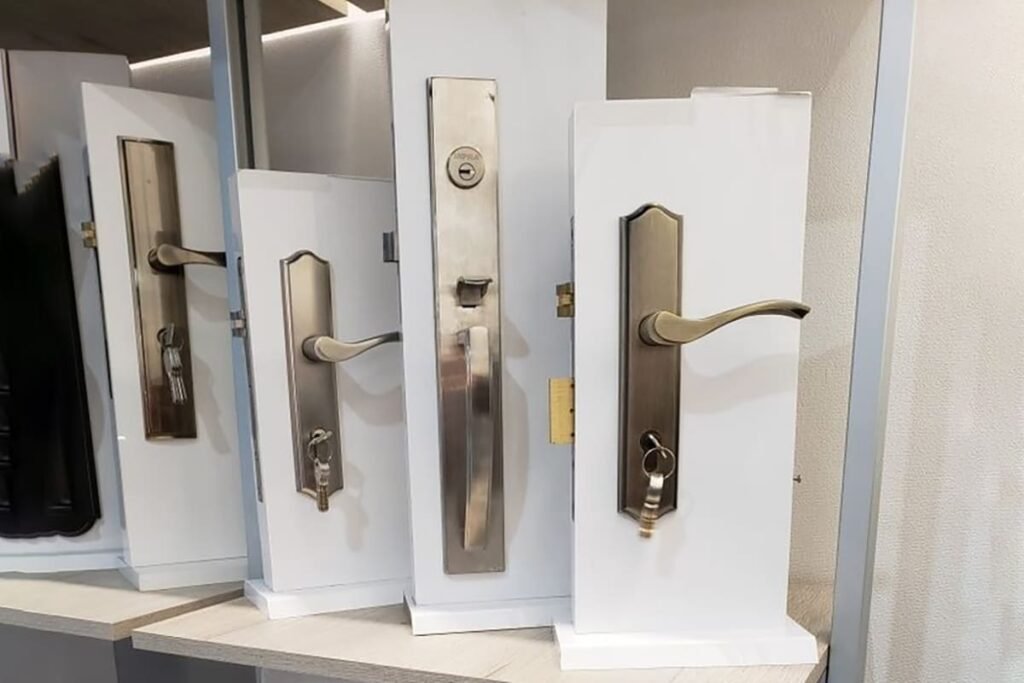
Best Materials for Door Handles: Stainless Steel vs Brass vs Zinc Alloy?
The best materials for door handles can be confusing when stainless steel, brass, and zinc alloy all look attractive in a catalog. If I choose only by appearance or unit price, I may increase maintenance cost, finish complaints, or after-sales risk. The better solution is to match material choice with door type, traffic level, finish expectations, and supply-chain needs.
The best material for door handles depends on the application. Stainless steel suits high-use, outdoor, fire door, and public projects.1 Brass fits premium wooden doors and decorative projects. Zinc alloy works well for modern indoor doors with complex designs and cost-sensitive positioning. For B2B buyers, supplier consistency matters as much as material properties.
I do not see this as a “best to worst” decision. I see it as a purchasing decision with technical, commercial, and market factors. Below, I will compare stainless steel, brass, and zinc alloy in the same way I would advise a door factory buyer or hardware brand operator.
Are Stainless Steel Handles One of the Best Materials for Door Handles in High-Traffic Projects?
Stainless steel looks like the safest answer when a project needs strength, clean appearance, and low maintenance. However, I still need to check the environment, grade, finish process, and supplier quality. If I ignore these details, even a strong material can create procurement problems.
Stainless steel handles are a strong option for high-traffic public doors, fire doors, outdoor entrance doors, hospitals, shopping malls, and commercial buildings. I usually recommend them when buyers care about durability, corrosion resistance, easy cleaning, stable appearance, and lower long-term maintenance risk.

Why I Often Recommend Stainless Steel for Demanding Use
In my experience with architectural door hardware supply, stainless steel handles are often selected when the buyer wants long-term stability more than decorative complexity. Door factories and project buyers usually consider stainless steel for:
- Public buildings with frequent opening and closing
- Hospitals and schools that need easy cleaning
- Shopping malls and office buildings with heavy daily use
- Fire doors where hardware must match project requirements
- Outdoor entrance doors where weather exposure is a concern
- Wholesale product lines where stable finish and repeat orders matter
I do not call stainless steel “rust-proof” in every condition. That would be too broad. Stainless steel can still be affected by coastal environments, chemical cleaning agents, poor surface treatment, or unsuitable grade selection2. I prefer to say it has good corrosion resistance when the right grade, finish, and maintenance conditions are selected3.
Common Stainless Steel Handle Considerations
| Factor | What I Check | Why It Matters |
|---|---|---|
| Material grade | 201, 304, or other requested grades | Different markets and environments need different specifications |
| Surface finish | Satin, polished, PVD, black, or custom finishes | Finish consistency affects bulk order acceptance |
| Tube thickness or structure | Hollow or solid construction | It affects feel, strength, and price |
| Welding and polishing | Smooth joints and uniform surface | Poor processing creates visual defects |
| Packaging | Scratch protection and separation | Stainless steel can still be damaged during transport |
Where Stainless Steel Performs Well
I see stainless steel as practical because it balances appearance and performance. It has a clean, modern look that works in many markets. It is also easier to explain to project buyers because many procurement teams already understand stainless steel as a durable material.
For B2B buyers, the biggest value is not only the material itself. It is the ability to repeat the same product with the same finish over many purchase orders. A door factory does not want the first container to look different from the second container. A distributor does not want customers to complain that the same model has a different color tone.
At SDH Hardware, I pay close attention to raw material screening, production control, surface finish inspection, and finished product checking for stainless steel handles. I would still advise buyers to verify project-specific documents, including CE certificates, fire-rated documentation, or test reports when these are required for the market. The material choice should support compliance, but certificates should always be checked as actual documents, not accepted as a general claim.
Are Brass Handles the Best Choice for Premium Door Handle Materials?
Brass handles can create a premium impression quickly. The problem is that a premium look also brings higher expectations for finish, touch, packaging, and maintenance. If I choose brass only because it feels luxurious, I may overlook cost, scratching, and polishing requirements.
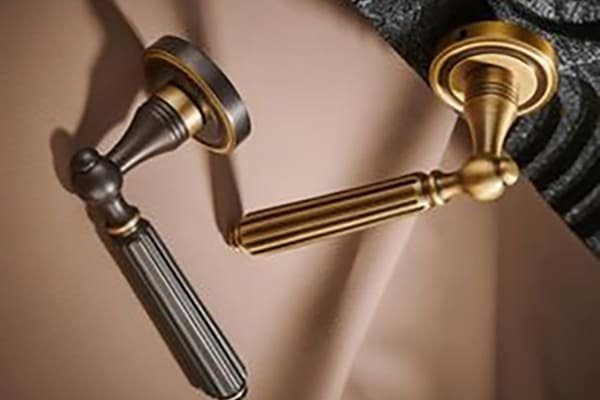
Brass handles are suitable for wooden doors, luxury residences, villas, hotels, and high-end decorative projects. I consider brass a strong material choice when the buyer wants a solid hand feel, premium appearance, durability, recyclability, and classic design value, while accepting higher cost and maintenance needs.
Why Brass Feels Premium
Brass has a different market position from stainless steel and zinc alloy. I usually see it used in projects where the handle is part of the interior identity, not just a functional component. It fits:
- Solid wooden doors
- Luxury residential projects
- Heritage-style interiors
- Boutique hotels
- Premium hardware brands
- Decorative architectural projects
Brass also has a warm color tone that many buyers associate with traditional quality. It can support classic shapes, polished finishes, antique finishes, and high-end decorative design. When a customer holds a solid brass handle, the weight and touch can feel more substantial4.
Brass Strengths and Limitations
| Item | Brass Handle Advantage | Buyer Caution |
|---|---|---|
| Appearance | Warm, premium, decorative | Finish expectations are high |
| Hand feel | Solid and heavy | Weight may increase cost and shipping |
| Durability | Good material stability when properly produced | Surface may scratch |
| Maintenance | Can be polished or protected | May need lacquer, polishing, or care |
| Cost | Supports premium positioning | Usually more expensive than zinc alloy |
| Sustainability | Brass is recyclable5 | Recycling claims should be handled responsibly |
How I Advise Buyers to Evaluate Brass
I do not oversell brass as a universal answer. Brass can be an excellent choice, but it needs the right customer and project level. If a wholesaler serves a price-sensitive market, brass may reduce margin flexibility. If a hotel project requires a luxury appearance, brass may support the brand value.
I usually ask buyers several questions before recommending brass:
Is the door wooden, metal, or aluminum?
Brass often pairs well with wooden doors, especially in premium interiors.Is the project decorative or functional-first?
Decorative projects may justify the higher material cost.Can the end user accept maintenance?
Brass may need polishing, lacquer protection, or careful cleaning depending on the finish.6Will scratches cause complaints?
Brass surfaces can show marks, especially in high-touch areas.Is the price point aligned with the market?
Brass is often better for premium channels than basic wholesale lines.
From a procurement view, brass also needs careful supplier evaluation. Buyers should check sample consistency, finish stability, machining quality, coating protection, packaging, and batch color control. Since SDH Hardware’s direct manufacturing strength is mainly in stainless steel and zinc alloy handles, I treat brass insights as market and buyer-comparison knowledge. I would recommend that buyers verify actual brass production capability, material certificates, and sample testing with the supplier before placing bulk orders.
Are Zinc Alloy Handles Among the Best Materials for Door Handles for Modern Interior Doors?
Zinc alloy handles often receive unfair judgment when buyers describe them only as “cheap.” I think that view is too simple. The real issue is whether the buyer needs complex design, rich finishes, and indoor decorative value, or whether the application requires impact resistance and heavy-duty strength.
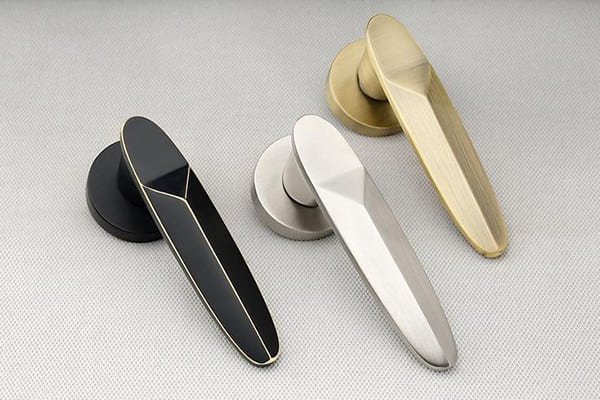
Zinc alloy handles are well suited for modern interior doors, apartment doors, decorative hardware lines, and design-driven products. I recommend zinc alloy when buyers need flexible shapes, electroplated finishes, attractive pricing, and stable indoor appearance, while understanding that zinc alloy is more brittle than stainless steel or brass7.
Why Zinc Alloy Works Well for Decorative Designs
Zinc alloy has a strong advantage in die casting. This means manufacturers can create more varied shapes and decorative details8 compared with many stainless steel handle structures. For hardware brands, this is important because product design can help a brand stand out in a competitive market.
I often see zinc alloy handles used for:
- Modern interior wooden doors
- Apartment doors
- Bedroom and bathroom doors
- Retail hardware collections
- Design-focused residential projects
- Cost-effective decorative product lines
Zinc alloy also works well with surface finishes such as:
- Black nickel
- Gunmetal
- Rose gold
- Satin nickel
- Chrome
- Antique finishes
- Matte black, depending on process and project requirements
These finishes can help buyers build a wider product range without moving into the higher cost structure of brass.
Zinc Alloy Benefits and Risks
| Factor | Zinc Alloy Advantage | Procurement Risk to Control |
|---|---|---|
| Design flexibility | Good for complex shapes | Mold quality affects details |
| Finish variety | Supports many electroplated colors | Color consistency must be checked |
| Cost position | More cost-effective than brass | Low-cost suppliers may reduce plating quality |
| Indoor use | Good for decorative interiors | Not ideal for rough handling |
| Strength | Suitable for normal indoor use | More brittle under impact |
| Branding | Easy to create unique styles | Need stable ODM support |
What I Check in Zinc Alloy Handle Production
Because SDH Hardware has direct production and bulk supply experience with zinc alloy hardware, I pay close attention to details that buyers may not see in a catalog photo. A zinc alloy handle can look excellent in a sample, but bulk quality depends on process control.
I usually focus on:
Mold precision
Poor molds create uneven edges, shrinkage marks, or inconsistent shape.Casting control
Stable die casting helps reduce surface defects and weak points.Polishing quality
The surface must be prepared well before plating.Electroplating process
Finish adhesion, color tone, and surface smoothness are important.Assembly fit
Spindle, spring, rosette, and screw alignment must be checked.Packaging protection
Decorative finishes can be damaged if parts rub during shipping.
I do not recommend zinc alloy for every application. If the door is in a school corridor, public hospital entrance, or heavy commercial site where rough handling is expected, I would compare stainless steel first. Zinc alloy is more brittle, so it is not the best material for impact-prone use. However, for indoor decorative doors and brand collections, it can be a smart balance of design, cost, and finish variety.
How Should B2B Buyers Choose the Best Materials for Door Handles?
Material selection can look like a technical decision, but I see it as a supply-chain decision too. If I choose the wrong material for the target market, I may face finish variation, high maintenance complaints, slow delivery, and weak after-sales control.
B2B buyers should choose door handle materials by matching door type, traffic level, environment, design style, budget, finish requirement, certification need, and supplier reliability.9 The best decision reduces total procurement risk, not only unit price.
A Practical Selection Matrix
I like to start with the door and market first, then select the material. This avoids a common mistake: choosing the material from a sample board without thinking about real use.
| Buyer Scenario | Better Material Direction | Why I Would Consider It |
|---|---|---|
| Shopping mall public doors | Stainless steel | High traffic, easy cleaning, stable use |
| Hospital or school doors | Stainless steel | Frequent contact and maintenance demands |
| Outdoor entrance doors | Stainless steel, with correct grade and finish | Better corrosion resistance when properly specified |
| Luxury wooden doors | Brass | Premium feel and decorative value |
| Villa or high-end residence | Brass or premium zinc alloy | Depends on budget and design style |
| Modern apartment interior doors | Zinc alloy | Design flexibility and cost control |
| Hardware brand decorative series | Zinc alloy or brass | Depends on target price and brand positioning |
| Fire door projects | Stainless steel or project-approved material | Buyers should verify fire-rated documents and project requirements10 |
Questions I Ask Before Recommending a Material
When buyers ask me for “the best handle,” I usually ask for project details first. A generic answer is rarely useful. I ask:
- What is the door type: wooden, steel, aluminum, or fire door?
- Is the door used indoors or outdoors?
- What is the expected traffic level?
- Is the project residential, commercial, hospital, hotel, or public building?
- What is the target market: Middle East, Europe, Southeast Asia, or another region?
- What finish is required: satin, black, PVD, rose gold, gunmetal, antique, or custom?
- What quantity and delivery cycle does the buyer need?
- Does the buyer need CE, fire-rated, or other compliance documents?
- What is the acceptable balance between unit price and after-sales risk?
Why Supplier Control Matters as Much as Material
A good material from a weak supplier can still create problems. I have seen buyers focus on material name but forget bulk consistency. For wholesalers and door factories, consistency is often the real profit protector.
A reliable supplier should help control:
- Raw material consistency
- Surface finish uniformity
- Dimensional accuracy
- Accessory matching
- Packaging quality
- Batch color stability
- Delivery schedule
- Document traceability
- After-sales response
At SDH Hardware, I approach door handle orders as part of a full door hardware solution. Many buyers also need mortise locks, butt hinges, concealed hinges, lock cylinders, and matching accessories. When these items come from one coordinated supply chain, buyers can reduce communication cost and improve appearance consistency across a project.
Still, I always recommend that buyers verify certificates, samples, drawings, finish boards, and test documents before committing to bulk production. For application-specific decisions, especially fire doors, public buildings, coastal environments, or special regulations, I suggest qualified professional evaluation rather than relying only on general material descriptions.
Frequently Asked Questions
What is the most durable material for door handles?
I usually consider stainless steel a strong choice for durability in high-use commercial and public applications. However, durability depends on grade, construction, finish, environment, installation, and maintenance. Brass can also be durable in premium interiors, while zinc alloy suits normal indoor decorative use.
Are brass door handles better than stainless steel?
Brass is not automatically better than stainless steel. I recommend brass for premium wooden doors, luxury interiors, and decorative projects. I recommend stainless steel more often for high-traffic, public, outdoor, or low-maintenance applications. The better choice depends on project positioning and user expectations.
Are zinc alloy door handles good quality?
Zinc alloy door handles can be good quality when the casting, polishing, plating, and assembly are well controlled. I see zinc alloy as a practical material for modern indoor doors and decorative product lines. Buyers should avoid rough-use applications where impact resistance is a major concern.
Which door handle material is best for outdoor doors?
I often compare stainless steel first for outdoor doors, but I do not treat it as automatically suitable for every environment. Buyers should confirm the stainless steel grade, surface finish, local climate, cleaning conditions, and supplier test documents. Coastal or chemical environments may need stricter evaluation.
How should wholesalers choose door handle materials for different markets?
Wholesalers should match material to market price level, door type, finish trends, and after-sales tolerance. I suggest stainless steel for stable commercial lines, brass for premium decorative ranges, and zinc alloy for modern interior collections. Sample approval and bulk finish consistency are essential before large orders.
Conclusion
The best materials for door handles are not decided by material name alone. I compare stainless steel, brass, and zinc alloy by door type, traffic level, environment, design style, maintenance expectation, price range, finish requirement, and supplier reliability. Stainless steel fits demanding use, brass supports premium decoration, and zinc alloy offers design flexibility for indoor doors. If you are selecting handles for a project or bulk order, share your door type, usage environment, project level, target market, quantity, budget, and desired finish with SDH Hardware. I can help recommend a suitable handle material instead of giving a generic answer.
"Custom Stainless Steel Door Frames: Precision & Performance", https://www.millsnebraska.com/blog/custom-stainless-steel-door-frames-precision-performance-and-compliance. The cited source describes stainless steel as a corrosion-resistant and durable material for architectural hardware, while noting that use on fire-door assemblies depends on the relevant listing, testing, or code requirements. Evidence role: general_support; source type: institution. Supports: The source should support stainless steel's durability and corrosion resistance in architectural or high-use hardware applications, and clarify that fire-door suitability depends on listed or approved hardware.. Scope note: This would support the material rationale contextually, not prove that every stainless steel handle is suitable for every fire-door or public-project specification. ↩
"Examining the Relationship Between Post-Build Microstructure and the ...", https://www.nist.gov/publications/examining-relationship-between-post-build-microstructure-and-corrosion-resistance. The cited source documents that stainless steel may suffer pitting or surface degradation in chloride-rich or chemically aggressive environments, particularly where grade selection or surface condition is inappropriate. Evidence role: mechanism; source type: paper. Supports: The source should support the mechanisms by which chloride-rich environments, chemical exposure, surface condition, and alloy selection can lead to stainless steel pitting, staining, or corrosion.. ↩
"How to protect stainless steel from chloride corrosion? - Stalatube", https://stalatube.com/2025/08/16/how-to-protect-stainless-steel-from-chloride-corrosion/. The cited source explains that stainless steel corrosion resistance is governed by alloy composition and passive-film stability, and that finish condition, chloride exposure, and maintenance practices can affect performance. Evidence role: mechanism; source type: research. Supports: The source should explain that stainless steel corrosion resistance comes from a passive chromium oxide film and is affected by alloy composition, finish condition, chlorides, and maintenance.. ↩
"Brass vs Stainless Steel: Comprehensive Comparison", https://www.partmfg.com/brass-vs-stainless-steel-comprehensive-comparison-properties-and-applications/. The cited source provides comparative density data showing that brass is a relatively dense copper alloy, which can contribute to a heavier feel in similarly sized hardware components. Evidence role: general_support; source type: education. Supports: The source should provide density data for brass and comparable metals, supporting the statement that brass hardware can have a heavier or more substantial feel when dimensions are similar.. Scope note: The source would support the weight component, while perceived touch and premium feel remain subjective and design-dependent. ↩
"Overview of flow studies for recycling metal commodities in the United ...", https://www.usgs.gov/publications/overview-flow-studies-recycling-metal-commodities-united-states. The cited source states that copper alloys such as brass are recyclable and are commonly recovered through scrap-metal recycling systems. Evidence role: general_support; source type: government. Supports: The source should confirm that brass, as a copper alloy, is recyclable and commonly recovered through metal scrap recycling streams.. Scope note: This supports recyclability as a material property, not the recycled content or recycling outcome of any specific handle. ↩
"The Cleaning, Polishing and Protective Waxing of Brass and ...", https://www.canada.ca/en/conservation-institute/services/conservation-preservation-publications/canadian-conservation-institute-notes/care--brass-copper.html. The cited source explains that brass can tarnish through surface reactions and that polishing, careful cleaning, or protective lacquer coatings are used in selected maintenance contexts. Evidence role: mechanism; source type: government. Supports: The source should explain that brass can tarnish or discolor and that cleaning, polishing, or protective coatings such as lacquer may be used depending on the finish and preservation goal.. ↩
"Zamak - Wikipedia", https://en.wikipedia.org/wiki/Zamak. The cited source provides mechanical-property data indicating that common die-cast zinc alloys can have lower ductility or impact tolerance than many stainless steels and brasses. Evidence role: general_support; source type: paper. Supports: The source should provide comparative mechanical-property data, such as elongation, impact strength, or fracture behavior, for common zinc alloys relative to stainless steel or brass.. Scope note: The comparison is alloy- and process-dependent, so it should be used as contextual support rather than a universal ranking for all zinc, brass, and stainless steel products. ↩
"Zinc Die Casting Design Guidelines for Thin Walls, Threads ...", https://www.newaydiecast.com/blogs/zinc-die-casting-design-guidelines-for-thin-walls-threads-ribs-and-complex-shapes. The cited source explains that zinc die casting supports complex geometries and fine surface details, which provides a technical basis for using zinc alloys in design-focused hardware components. Evidence role: mechanism; source type: research. Supports: The source should show that zinc die casting can produce complex shapes, fine details, and repeatable surface features, supporting its use in decorative hardware designs.. Scope note: This supports the manufacturing capability generally and may not compare directly with every possible stainless steel handle construction method. ↩
"Material selection - Wikipedia", https://en.wikipedia.org/wiki/Material_selection. The cited source describes material selection as a multi-criteria process involving performance requirements, service environment, cost constraints, and manufacturing or supply considerations. Evidence role: general_support; source type: education. Supports: The source should support a structured material-selection approach that weighs performance requirements, service environment, cost, compliance constraints, and supply considerations.. Scope note: This supports the decision-making framework generally, not a door-handle-specific procurement rule. ↩
"Fire Doors and NFPA 80 FAQs", https://www.nfpa.org/news-blogs-and-articles/blogs/2025/04/11/fire-doors-faqs. The cited source states that hardware used on fire-door assemblies must comply with the applicable listing, labeling, and standard requirements for the rated assembly. Evidence role: expert_consensus; source type: institution. Supports: The source should support that fire-door hardware must comply with the door assembly listing, applicable standards, and project or code requirements.. ↩