Concealed Hinges vs Visible Hinges: What to Choose?
Concealed hinges vs visible hinges can become a difficult decision when a door series must balance appearance, installation, strength, cost, and certification. If the wrong hinge type is selected, production delays, alignment problems, or after-sales complaints may follow. I recommend comparing the application conditions first, then matching the hinge structure to the real door requirement.
Choose concealed hinges when hidden hardware, clean design, adjustable alignment, and reduced hinge exposure are important. Choose visible hinges when standardized installation, mature specifications, easy replacement, and cost-efficient bulk use matter more. The better option depends on door weight, thickness, frame structure, machining accuracy, usage frequency, environment, and certification needs.
I have seen many buyers begin with appearance or unit price. That is understandable, but it is incomplete. A hinge is a structural and functional component.1 It affects machining, assembly, packaging, installation, maintenance, and market positioning. So the better question is not “Which hinge is better?” The better question is “Which hinge fits this door system?”
How Should Concealed Hinges vs Visible Hinges Be Evaluated for Door Projects?
Many buyers compare hinges only by price or style. That creates risk because a hinge must work with the door leaf, frame, opening direction, installer skill, and project standard. If these factors are ignored, a good-looking hinge can still become the wrong choice.
Concealed hinges vs visible hinges should be evaluated by total application fit. Buyers should check door structure, door weight, door thickness, frame design, machining method, adjustment needs, installation speed, certification requirements, maintenance access, finish consistency, and target market positioning before confirming the hinge type.
Start with the door system, not the hinge catalog
In product selection and customer communication, I usually check the door system first. A hinge cannot be evaluated in isolation. The same hinge may perform well on one door but create installation problems on another door because the frame rebate, leaf thickness, or machining tolerance is different.
For B2B buyers, the decision should connect to the whole supply chain:
Door design
The hinge must match the door leaf, frame, opening angle, and expected appearance.Factory machining
Concealed hinges often require more accurate mortising.2 Visible hinges are usually easier to process with mature production steps.Installation conditions
Some projects have trained installers and controlled job sites. Others need simple, fast, repeatable installation.Usage environment
Interior rooms, commercial corridors, hotels, hospitals, humid areas, and high-traffic public spaces can all require different hinge materials or finishes.Compliance documents
Fire-rated doors, CE-related requirements, or project specifications should be verified with actual certificates, test reports, and technical data sheets.3
A practical comparison table for buyers
| Evaluation factor | Concealed hinges | Visible hinges |
|---|---|---|
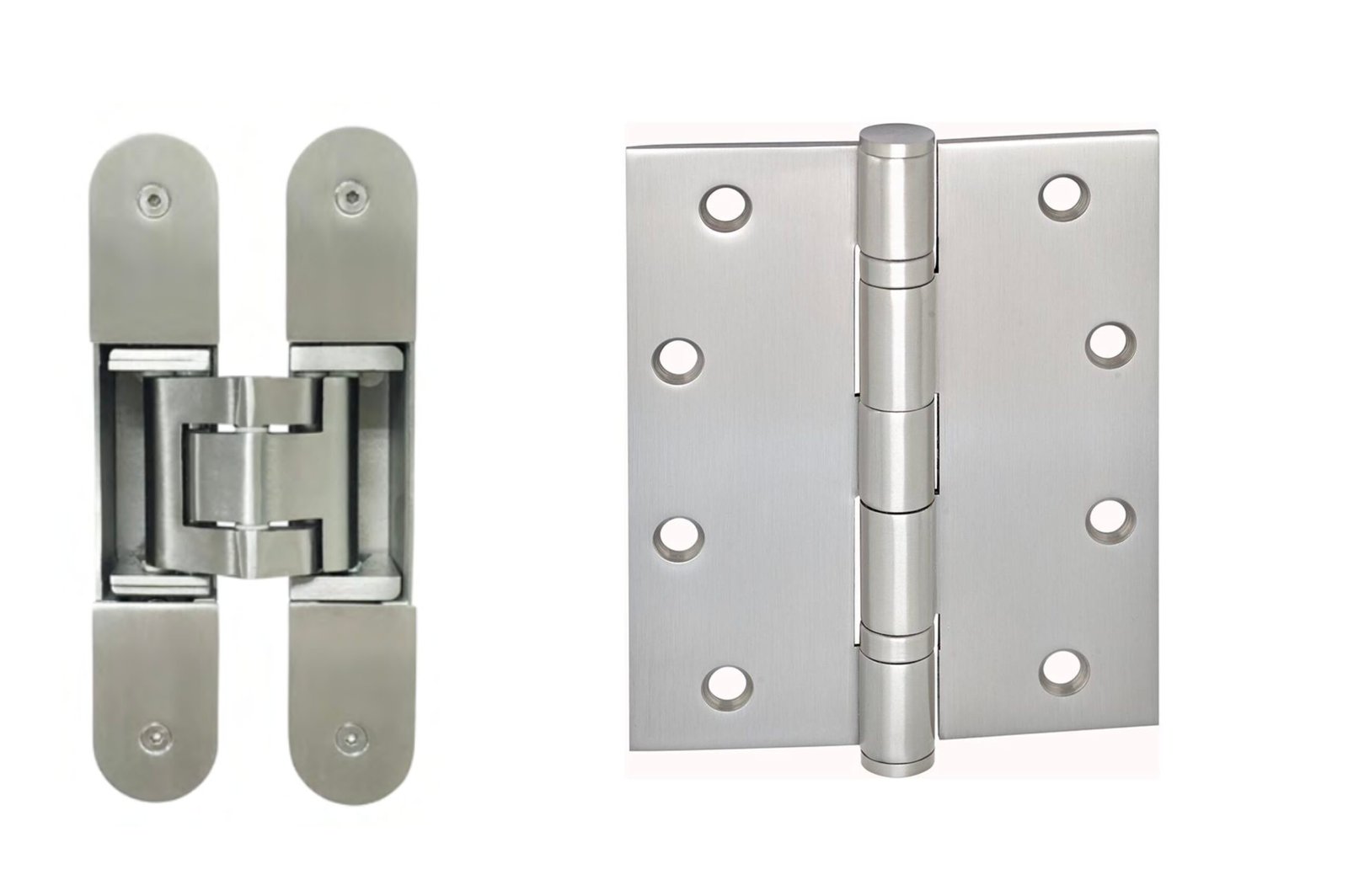
| Appearance | Hidden when the door is closed; supports minimalist design | Exposed knuckle or leaf; can be decorative or standard |
| Installation difficulty | Usually higher; requires accurate mortising | Usually lower; mature and familiar installation |
| Adjustment | Many models offer 3D adjustment, depending on design | Some types allow adjustment, but many standard butt hinges do not |
| Maintenance | May require more careful access and matching parts | Easier to inspect, replace, and service |
| Cost structure | Higher product and machining cost in many cases | Often cost-efficient for bulk standardized doors |
| Security exposure | Less visible from outside in some configurations | Exposed hardware may need security pin or application-specific design |
| Fire-rated use | Must be verified by product certificate and door assembly testing | Must also be verified by certificate and door assembly testing |
| Best fit | Premium interior doors, flush doors, hidden-frame concepts | Standard doors, commercial doors, utility doors, broad product lines |
The decision should include production risk
A door manufacturer does not only buy hinges. A door manufacturer buys repeatability. If the hinge requires high machining accuracy, the factory must be able to control tolerance across large batches.
For example, a concealed hinge may need accurate pocket depth, clean edge machining, and stable door thickness. If the door leaf varies too much, the hinge may be harder to align. If the frame design changes between markets, the same hinge model may not fit every version.
Visible hinges are often preferred in standardized product lines because the production process is familiar. Installers understand them. Replacement parts are easier to identify. This does not make visible hinges low-end. It makes them practical, mature, and efficient for many door applications.
My practical view is simple: the better hinge is the one that reduces total risk across production, installation, use, and after-sales service.
For procurement teams, I suggest creating a hinge selection checklist before requesting quotations. That checklist should include:
- Door material: wood, steel, aluminum, composite, or fire-rated core
- Door leaf weight and size
- Door thickness and edge structure
- Frame material and rebate design
- Opening angle requirement
- Indoor or outdoor environment
- Finish requirement, such as SS, PVD, satin nickel, matte black, or custom color
- Expected usage frequency
- Certification or test report requirements
- Target market and price positioning
- Installation tools and installer experience
This approach helps buyers compare concealed hinges and visible hinges in a structured way. It also helps suppliers recommend the correct specification instead of only quoting the cheapest model.
When Do Concealed Hinges vs Visible Hinges Make Concealed Hinges the Better Fit?
Concealed hinges attract attention because they create a clean door surface. However, appearance alone is not enough. If the door and frame cannot support accurate installation, the concealed hinge may increase production difficulty and after-sales risk.
Concealed hinges are often a better fit when the project requires hidden hardware, minimalist design, flush door appearance, adjustable alignment, and reduced hinge visibility. They are most suitable when the door thickness, frame structure, machining accuracy, installer skill, and hinge load rating all match the selected model.
Where concealed hinges create real value
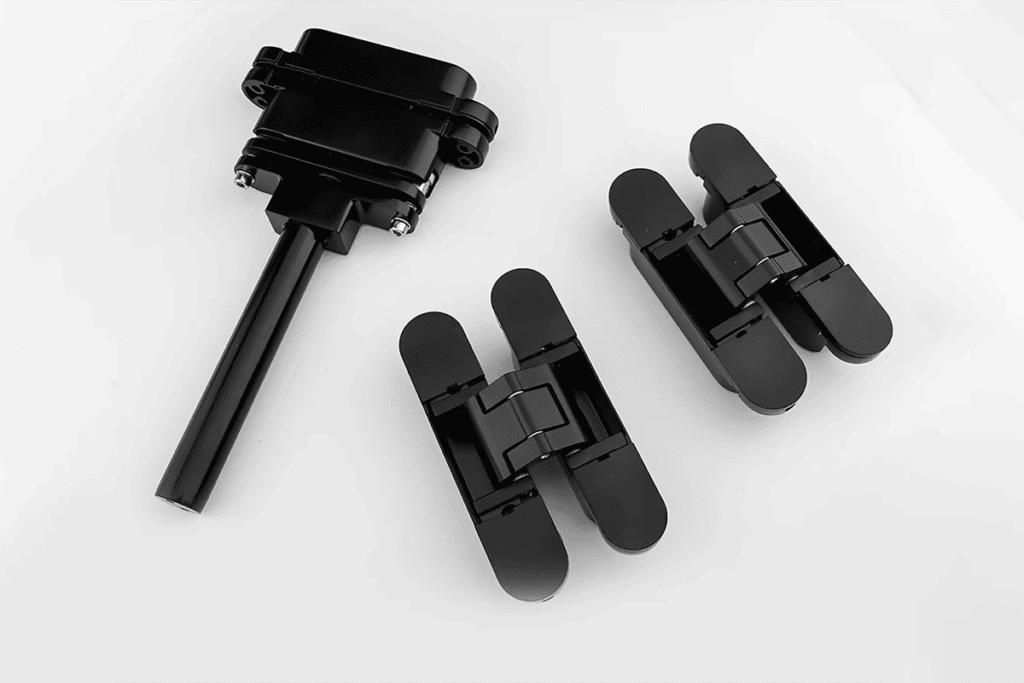
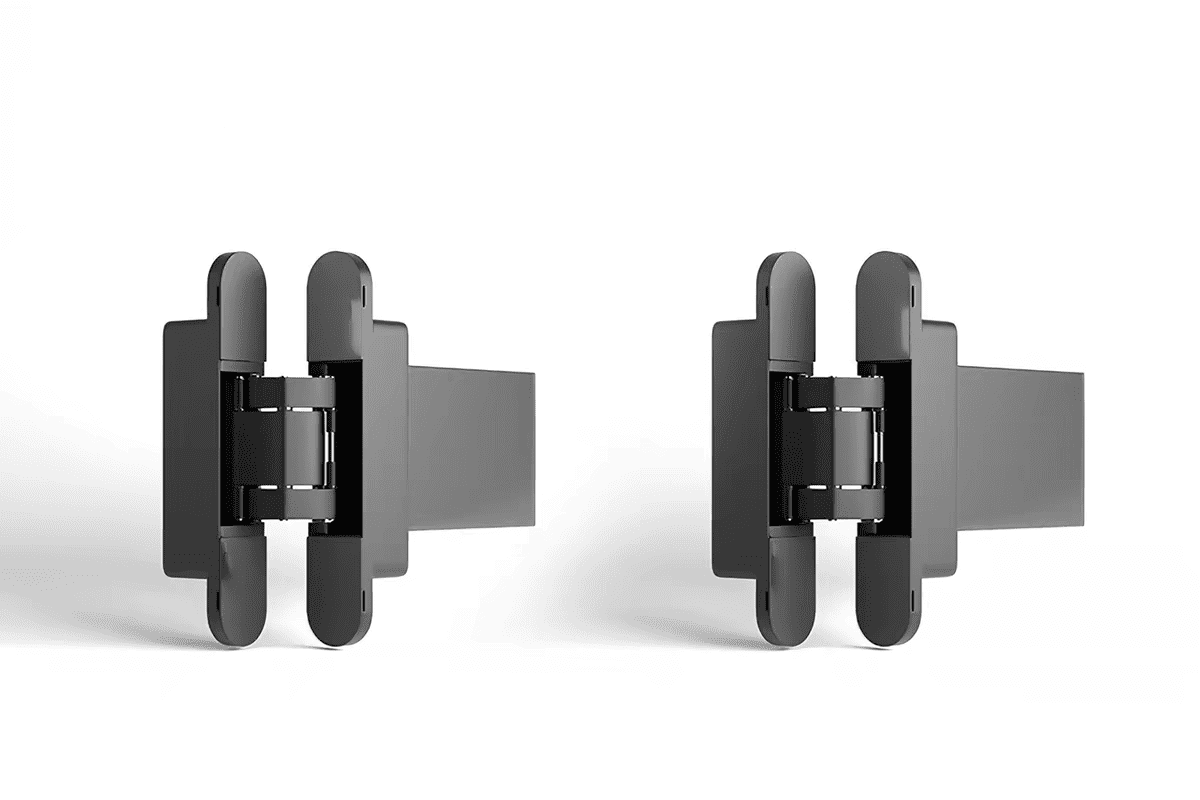
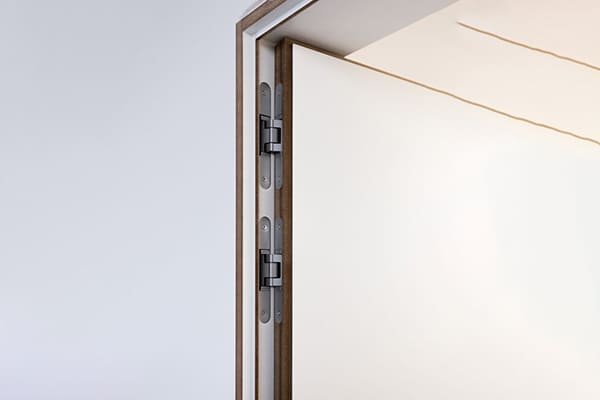
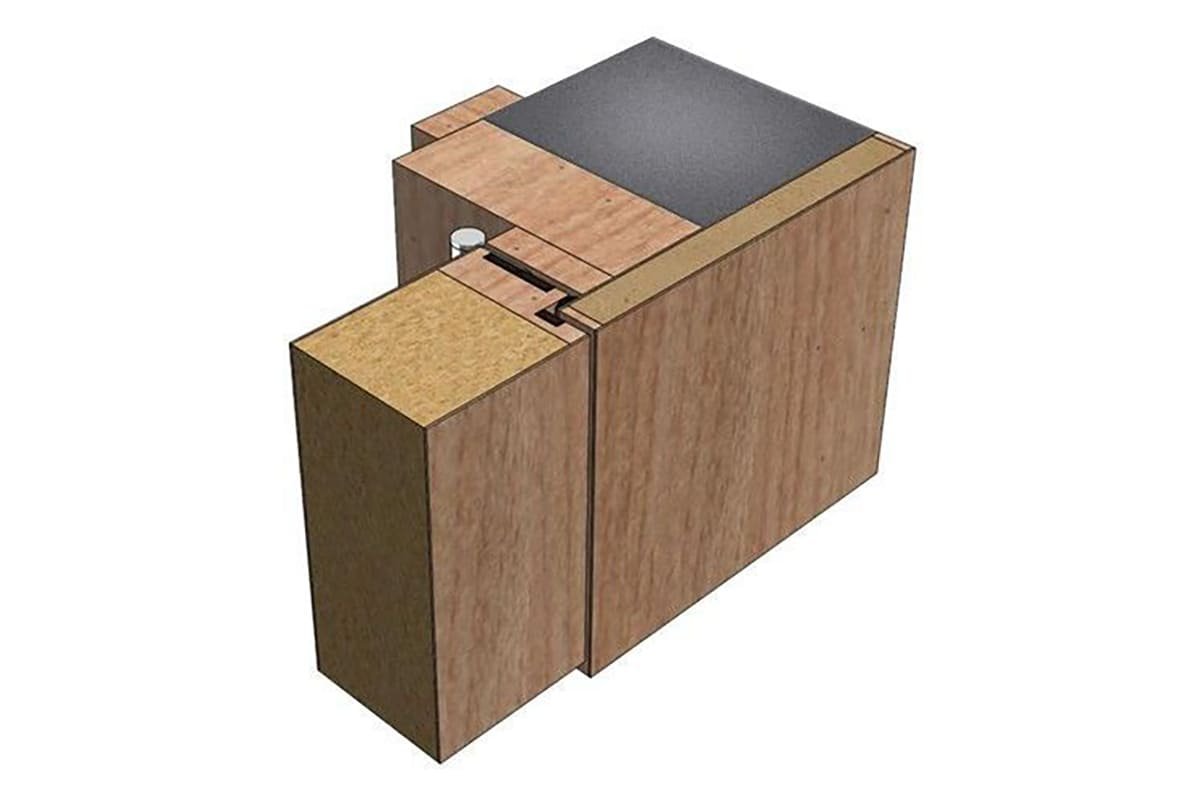
Concealed hinges are commonly selected for projects where visual design is important. When the door is closed, the hinge body is hidden inside the door and frame.4 This creates a clean surface and supports modern architectural styles.
I often see concealed hinges considered for:
- Flush interior doors
- High-end apartment doors
- Hotel room doors
- Office partition doors
- Minimalist wooden doors
- Hidden-frame door systems
- Custom brand product lines
In these cases, the hinge supports the product story. The buyer is not only purchasing a mechanical component. The buyer is creating a door system that looks refined, consistent, and modern.
Concealed hinges need correct preparation
The main point is that concealed hinges demand more from the door factory and installer. The hinge pocket must usually be machined into the door edge and frame. If the mortising is not accurate, the door may not close smoothly. The gap may become uneven. The door may rub against the frame.5
Important conditions include:
| Condition | Why it matters |
|---|---|
| Door thickness | The hinge body needs enough internal space |
| Frame depth | The frame must accept the hinge pocket |
| Mortising accuracy | Poor cutting causes alignment problems |
| Door weight | The hinge load rating must match the door |
| Opening angle | The hinge design must support the required swing |
| Installation skill | Adjustment requires correct procedure |
| Certification need | Fire or CE claims must be verified by documents |
Many concealed hinges include adjustment functions. Depending on the product design, some models allow adjustment in three directions. This can help installers fine-tune the door gap after mounting. However, I do not treat adjustability as a cure for poor preparation. Adjustment helps only when the basic structure is correct.
Security and exposure should be discussed carefully
Some buyers ask whether concealed hinges are more secure. I usually answer carefully. Because the hinge is hidden when the door is closed, it may reduce direct hinge exposure in some door configurations. However, anti-pry or security performance is not universal.6 It depends on the whole door assembly, hinge design, locking system, frame strength, fixing screws, and test standard.
So I suggest buyers verify:
- Hinge material and structure
- Screw size and fixing method
- Door and frame reinforcement
- Lock position and lock type
- Application side: interior, entrance, utility, or fire-rated door
- Available test reports or project references
A concealed hinge should not be selected only because someone says it is “more secure.” It should be selected because the complete door system supports the intended security level.
Concealed hinges also affect branding
For hardware brand customers, concealed hinges can help build a differentiated product line. A door series with hidden hinges can be positioned for modern interiors, premium apartments, or architectural projects. The product can support higher visual value.
However, the buyer must also consider stock management. Concealed hinges may have different sizes, load capacities, finishes, and adjustment structures. If a brand sells to multiple door factories, it must make sure the hinge specification is easy to explain and repeat.
For bulk procurement, I recommend asking the supplier for:
- Technical drawings
- Door thickness recommendations
- Load rating data
- Installation instructions
- Material and finish details
- Packaging method
- Certificate copies when required
- Sample testing before batch order
This helps reduce uncertainty before mass production. In our work with door manufacturers and hardware brands, I find that early sample confirmation saves more time than solving alignment problems after shipment.
When Do Concealed Hinges vs Visible Hinges Make Visible Hinges the Better Fit?
Visible hinges are sometimes misunderstood as basic or old-fashioned. That view is too simple. Many door systems use visible hinges because they are reliable, standardized, easy to install, and easy to replace across large production and project channels.
Visible hinges are often the better fit when a project needs mature specifications, simple installation, fast replacement, broad installer familiarity, strong load-bearing options, and cost-efficient bulk supply. They suit standard doors, commercial doors, utility doors, and product lines where maintenance access and repeatable assembly are important.
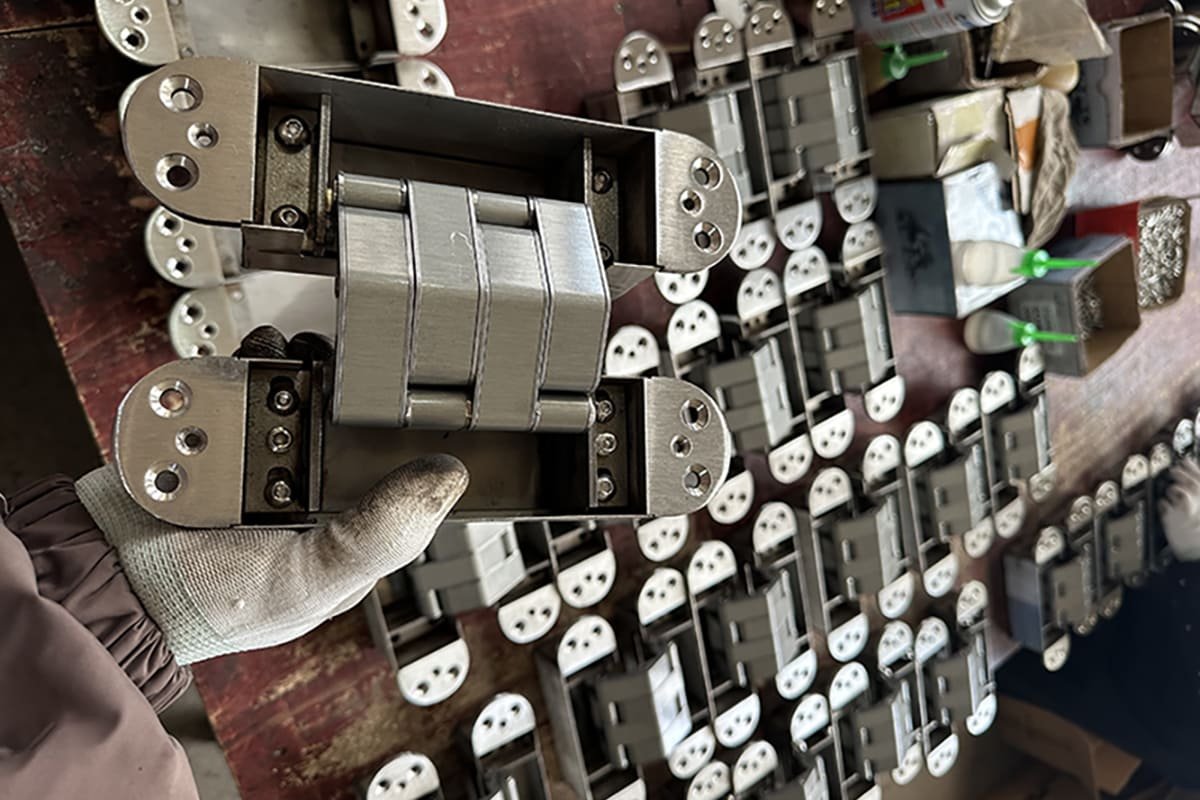
Visible hinges are not one product type
When buyers say “visible hinge,” they may be referring to several hinge formats. The most common category is the butt hinge, but other types are also used depending on the door and market.
Common visible hinge types include:
Butt hinges7
Widely used for wooden doors, metal doors, and standard architectural doors.Ball bearing hinges8
Often selected for smoother operation and heavier use, depending on specification.Lift-off hinges
Useful where the door leaf may need to be removed more easily.Flag hinges
Common in certain aluminum, PVC, and regional door systems.Parliament hinges or projection hinges
Used when the door needs to open wider or clear a trim condition.
Each type has its own purpose. This is why visible hinges remain common in global door hardware markets. They are not outdated. They are practical, flexible, and easy to standardize.
Visible hinges support efficient production
For door manufacturers, production speed matters. Visible hinges usually require simpler preparation than concealed hinges. Many factories already have jigs, templates, and trained workers for butt hinge installation.
This creates several benefits:
| Production factor | Visible hinge advantage |
|---|---|
| Machining | Usually simpler mortising or surface fixing |
| Training | Installers are familiar with the process |
| Replacement | Easy to identify and change |
| Inventory | Standard sizes are easier to stock |
| Cost control | Competitive options exist across material grades |
| Batch consistency | Easier to inspect visually |
This is especially useful for wholesalers and distributors. A visible hinge can serve multiple door lines if the size, material, finish, and screw pattern match market expectations.
Visible hinges can carry serious door requirements
A visible hinge can be simple, but it can also be engineered for demanding use. For example, some ball bearing butt hinges are designed for higher usage frequency. Some stainless steel hinges are selected for corrosion-sensitive environments.9 Some fire-rated door hinges may be supplied with certificates.
However, these claims must always be verified. A buyer should not assume that every stainless steel hinge is suitable for every humid environment. A buyer should not assume that every hinge used on a fire door has fire-rated certification.10 The correct approach is to check the actual product documents.
For visible hinges, I suggest reviewing:
- Material grade, such as stainless steel 201, 304, 316, steel, brass, or zinc alloy
- Bearing structure, such as plain bearing, washer, or ball bearing
- Leaf thickness and knuckle diameter
- Pin design and security features, if needed
- Screw type and screw quantity
- Surface finish process
- Salt spray test data, if corrosion resistance is important
- Fire-rated certificate, if used for fire door assemblies
- Load capacity data from the supplier
Maintenance is a major reason to choose visible hinges
After-sales service is often underestimated during sourcing. In a real project, a hinge may need adjustment, lubrication, tightening, or replacement. Visible hinges are easy to inspect because the hardware is exposed. Maintenance teams can quickly identify whether screws are loose, the pin is worn, or the hinge leaf is damaged.
This matters in:
- Schools
- Hospitals
- Office buildings
- Warehouses
- Public facilities
- Rental apartments
- Commercial projects with many doors
If a project has hundreds or thousands of doors, simple maintenance can reduce long-term service cost.11 This is one reason visible hinges remain popular among project contractors and wholesalers.
Visible hinges can also support brand positioning
Visible hinges do not have to look cheap. A good butt hinge with clean stamping, stable surface finish, strong pin structure, and consistent packaging can support a professional brand line. Finish consistency is especially important for hardware brands. If the hinge color differs between batches, the final customer may complain even if the function is acceptable.
For bulk orders, I recommend confirming:
- Finish sample before production
- Material thickness tolerance
- Pin and bearing structure
- Logo or packaging customization
- Screw color matching
- Inspection standard
- Carton strength for export shipment
From a procurement view, visible hinges are attractive because buyers can build stable product families around them. A brand can offer different grades, such as economy, standard, heavy-duty, stainless steel, and fire-rated series, while keeping market education simple.
What Procurement Checks Matter Before Choosing Concealed Hinges vs Visible Hinges?
A hinge choice can look correct on paper but fail during batch production. Procurement teams need a verification process before confirming the order. Without this step, small differences in door weight, frame design, or certificate scope can create expensive problems.
Before choosing concealed hinges vs visible hinges, buyers should verify door weight, door thickness, frame structure, hinge load rating, machining method, finish requirement, corrosion environment, installation capability, maintenance plan, sample test results, and certification documents. The best sourcing decision is based on application evidence, not catalog appearance alone.
Step 1: Confirm the door data
The supplier needs accurate door information. If the buyer only asks for a “good hinge,” the recommendation will be incomplete. I prefer to receive clear technical details before suggesting a model.
Useful door data includes:
- Door leaf height and width
- Door weight
- Door thickness
- Door material
- Frame material and section drawing
- Opening direction
- Opening angle
- Door closer use
- Usage frequency
- Indoor or outdoor location
- Fire-rated or non-fire-rated application
- Target market standard
Door weight is especially important.12 A heavier door may require more hinges, a thicker hinge leaf, a larger concealed hinge body, or a stronger bearing design. The final decision should follow technical data and professional evaluation for the specific application.
Step 2: Match the hinge to manufacturing capability
Concealed hinges usually need more precise machining. If the door factory has CNC equipment, stable fixtures, and trained operators, this may not be a problem. If the production line is mainly built for standard visible hinges, the change may increase cost and defect rate.
Visible hinges are often easier to introduce into existing production. However, they still require correct positioning, screw quality, and surface protection.
A simple capability comparison can help:
| Factory capability | Concealed hinge suitability | Visible hinge suitability |
|---|---|---|
| CNC mortising available | Stronger fit | Also suitable |
| Manual installation only | Higher risk | Usually easier |
| High-end flush door production | Strong fit | Depends on design |
| Standard door mass production | Possible, but needs control | Strong fit |
| Limited installer training | Higher risk | Strong fit |
| Strict visual minimalism | Strong fit | Weaker fit |
Step 3: Verify certificates and test documents
For technical industrial products, I always recommend document verification. A certificate is not only a marketing statement. It has a scope. Buyers should check whether the document applies to the exact hinge model, size, material, and intended door assembly.
This is important for:
- CE certification
- Fire-rated certification
- Salt spray or corrosion test reports
- Load capacity data
- Cycle test data
- Material declarations
- Project compliance requirements
For fire-rated doors, buyers should be especially careful. A hinge may be part of a certified fire door assembly only under specific conditions. The door leaf, frame, intumescent material, lock, closer, and hinge must be evaluated according to the relevant standard and certificate scope. A qualified professional or testing body should confirm application-specific fire requirements.
Step 4: Test samples before batch orders
A sample test is not optional for serious procurement. It is the fastest way to discover mismatch problems before mass production.
I suggest testing samples for:
- Fit with actual door and frame
- Opening and closing smoothness
- Gap adjustment range
- Screw holding strength
- Finish consistency
- Packaging protection
- Installer feedback
- After repeated opening cycles, where practical
For concealed hinges, the sample should be installed in the real door structure, not only inspected on a table. For visible hinges, the buyer should check pin movement, leaf flatness, screw alignment, and finish quality.
Step 5: Compare total cost, not only unit price
The cheapest hinge can become expensive if it creates machining difficulty, high rejection rates, slow installation, or frequent after-sales replacement. The most expensive hinge can also be a poor choice if the target market does not value its design.
A better cost comparison includes:
- Unit price
- Machining cost
- Installation labor
- Defect rate risk
- Packaging cost
- Stock complexity
- Replacement cost
- Certification cost
- Customer complaint risk
- Brand positioning value
This is where experienced supplier communication becomes useful. As a manufacturer supplying architectural door hardware, I find that buyers reduce risk when they share the full application. A hinge recommendation becomes more accurate when the supplier understands the door series, market, and project requirement.
Frequently Asked Questions
Are concealed hinges always better than visible hinges?
No. Concealed hinges are better for hidden hardware and clean design when the door and frame support accurate installation. Visible hinges are better for many standard doors because they are familiar, cost-efficient, easy to install, and easy to replace. The better choice depends on application fit.
Are visible hinges suitable for high-quality door products?
Yes. Visible hinges can be used in high-quality door products when the material, thickness, bearing structure, finish, and certification match the requirement. A well-made butt hinge or ball bearing hinge can support a professional door series and stable B2B product line.
Can concealed hinges be used on fire-rated doors?
They may be used only when the specific hinge model and door assembly are supported by valid fire-rated documentation. Buyers should verify certificates, test reports, and application scope. Fire performance is not universal and should be confirmed by qualified professionals for the specific project.
What information should I send before asking for a hinge recommendation?
You should provide door weight, door size, door thickness, frame structure, door material, opening angle, usage frequency, installation method, environment, finish requirement, certification needs, and target market. These details help the supplier recommend a hinge that fits the real application.
Do concealed hinges require more installation skill?
Usually, yes. Concealed hinges often need accurate mortising and careful adjustment. Many models offer alignment adjustment, but the door and frame must still be prepared correctly. Visible hinges are generally easier for installers because the installation process is more standardized and familiar.
Conclusion
Concealed hinges vs visible hinges is not a simple premium-versus-basic decision. Concealed hinges suit projects where hidden hardware, minimalist appearance, and careful alignment matter. Visible hinges suit applications where standardization, easy installation, mature specifications, and maintenance access are priorities. I recommend choosing by door structure, production capability, compliance documents, and total application cost. If you are selecting hinges for a door series or project, send us your door type, weight, thickness, frame structure, usage environment, certification needs, and target market. SDH Hardware can help match the hinge solution to the actual application.
"Hinge", https://en.wikipedia.org/wiki/Hinge. An encyclopedic engineering reference defines a hinge as a bearing or joint that connects two objects while permitting rotation, supporting the characterization of a door hinge as functional hardware; the definition is general and does not evaluate specific hinge models. Evidence role: definition; source type: encyclopedia. Supports: A hinge is a mechanical bearing or joint that connects two objects and permits limited rotation, which supports the article's description of it as functional hardware.. Scope note: Defines hinge function generally; it does not directly assess architectural door-hinge performance. ↩
"Concealed Hinge | Innovative Door Hardware | Sugatsune", https://www.sugatsune.com/hes-concealed-hinge-line/?srsltid=AfmBOorfczqWjmzzoqm3M-Bz_oeLb_UQnCmrX7L65385HKHRctIH-JD4. Institutional door-hardware guidance describes concealed hinges as requiring prepared pockets or mortises in the door and frame, supporting the statement that installation accuracy is important; the source provides contextual installation support rather than comparative production data for all hinge types. Evidence role: general_support; source type: institution. Supports: Concealed hinges are installed into recesses or pockets in the door and frame, making accurate preparation important for fit and alignment.. Scope note: Supports the installation principle, but may not quantify accuracy requirements across all concealed hinge designs. ↩
"Declaration of Performance and CE marking", https://single-market-economy.ec.europa.eu/sectors/construction/construction-products-regulation-cpr/declaration-performance-and-ce-marking_en. Regulatory guidance on CE marking and fire-door standards requires that product performance claims be traceable to applicable documentation, listings, labels, or declarations, supporting the need to verify certificates and test reports before use. Evidence role: expert_consensus; source type: government. Supports: Regulatory and standards frameworks require product performance claims to be supported by applicable documentation, labeling, or declarations.. ↩
"Concealed hinge jig - Wikipedia", https://en.wikipedia.org/wiki/Concealed_hinge_jig. A neutral reference defining concealed hinges explains that they are hidden from view when the door or panel is closed, supporting the article's description of the hinge body being concealed within the door and frame. Evidence role: definition; source type: encyclopedia. Supports: Concealed or hidden hinges are designed so that the hinge is not visible when the door or panel is closed.. ↩
"Hinges too deep, door won't shut? : r/DIYUK - Reddit", https://www.reddit.com/r/DIYUK/comments/13qfw2c/hinges_too_deep_door_wont_shut/. Construction education materials on door installation explain that incorrect hinge mortise depth or hinge placement can affect door clearances and cause binding or rubbing, supporting the mechanism described in the article. Evidence role: mechanism; source type: education. Supports: Door installation references connect hinge positioning and mortise depth with door alignment, clearances, binding, and smooth closing.. Scope note: The support is based on general door-installation principles and may not address every concealed hinge product. ↩
"[PDF] PHYSICAL SECURITY OF DOOR ASSEMBLIES AND COMPONENTS", https://ojp.gov/pdffiles1/nij/32269.pdf. Door-security standards evaluate resistance at the assembly level, including the door, frame, locks, hinges, and fasteners, supporting the article's caution that anti-pry performance is not universal from hinge type alone. Evidence role: expert_consensus; source type: institution. Supports: Door security is evaluated through assemblies and standards that consider hinges, locks, frames, fasteners, and construction rather than one component alone.. ↩
"Hinge - Wikipedia", https://en.wikipedia.org/wiki/Hinge. A reference entry on butt hinges identifies them as a common hinge form for doors, supporting the article's classification of butt hinges within visible architectural door hardware. Evidence role: definition; source type: encyclopedia. Supports: Butt hinges are a standard hinge form commonly used for doors and are typically visible when installed conventionally.. Scope note: The source supports common use but may not establish market share or frequency. ↩
"Ball Bearing Hinges vs. Regular Hinges -- Here's What You Need to ...", https://www.finsburyhardware.com/blogs/tips/ball-bearing-hinges-vs-regular-hinges-heres-what-you-need-to-know?srsltid=AfmBOoqrXuxxRfjgAwSnF9Zccsgz4hPywJXs7aC4lzCPUnBoUeQ0LgQy. Door-hardware standards and technical references describe bearing hinges as reducing friction in hinge movement and classify hinge performance by duty and application, supporting the article's statement about smoother operation and heavier use when the specification is appropriate. Evidence role: mechanism; source type: institution. Supports: Ball bearings reduce friction at the hinge knuckle and are commonly associated with heavier or higher-frequency door applications when specified accordingly.. Scope note: The support is conditional because performance depends on the specific hinge grade, material, size, and installation. ↩
"Revealing the Corrosion Resistance of 316 L Stainless Steel ...", https://pmc.ncbi.nlm.nih.gov/articles/PMC9920300/. Government materials references explain that stainless steel corrosion resistance arises from a chromium-rich passive film, supporting the selection of stainless steel hardware for corrosion-sensitive environments; the degree of resistance depends on alloy grade and exposure conditions. Evidence role: mechanism; source type: government. Supports: Stainless steels resist corrosion through chromium-based passive films, though resistance varies by grade and exposure environment.. Scope note: Supports the material rationale generally, but not the suitability of any specific hinge in a specific environment. ↩
"Decoded: NFPA 80 Requirements for Hinges, Pivots, and Continuous ...", https://idighardware.com/2016/07/decoded-nfpa-80-requirements-for-hinges/. Fire-door standards state that components used in rated door assemblies must be listed, labeled, or documented for the applicable use, supporting the article's warning that the presence of a hinge on a fire door does not by itself establish fire-rated certification. Evidence role: expert_consensus; source type: institution. Supports: Fire-door hardware must be listed, labeled, or otherwise documented for use in the applicable fire-door assembly.. ↩
"A systematic review of the life cycle cost estimation of ... - PMC", https://pmc.ncbi.nlm.nih.gov/articles/PMC12425850/. Research on building maintainability and life-cycle costing associates accessible, serviceable components with reduced maintenance burden over a building's operating life, supporting the article's claim in the context of projects with many doors. Evidence role: general_support; source type: paper. Supports: Facility-management and life-cycle-cost research links maintainability and accessibility of building components with maintenance burden and operating cost.. Scope note: The evidence is contextual and may not isolate door hinges as the sole cost driver. ↩
"A156.1 - 2025 Butts and Hinges", https://buildershardware.com/ANSI-BHMA-Standards/Hardware-Highlights/A1561-2025-Butts-and-Hinges. Architectural hardware standards and selection guides use door size, weight, frequency of operation, and hinge grade or quantity as hinge-selection factors, supporting the article's emphasis on door weight. Evidence role: general_support; source type: institution. Supports: Hinge selection guidance commonly considers door size, weight, frequency of use, and hinge grade or quantity.. Scope note: The source supports the selection factor generally; the exact hinge requirement still depends on the product and door assembly. ↩