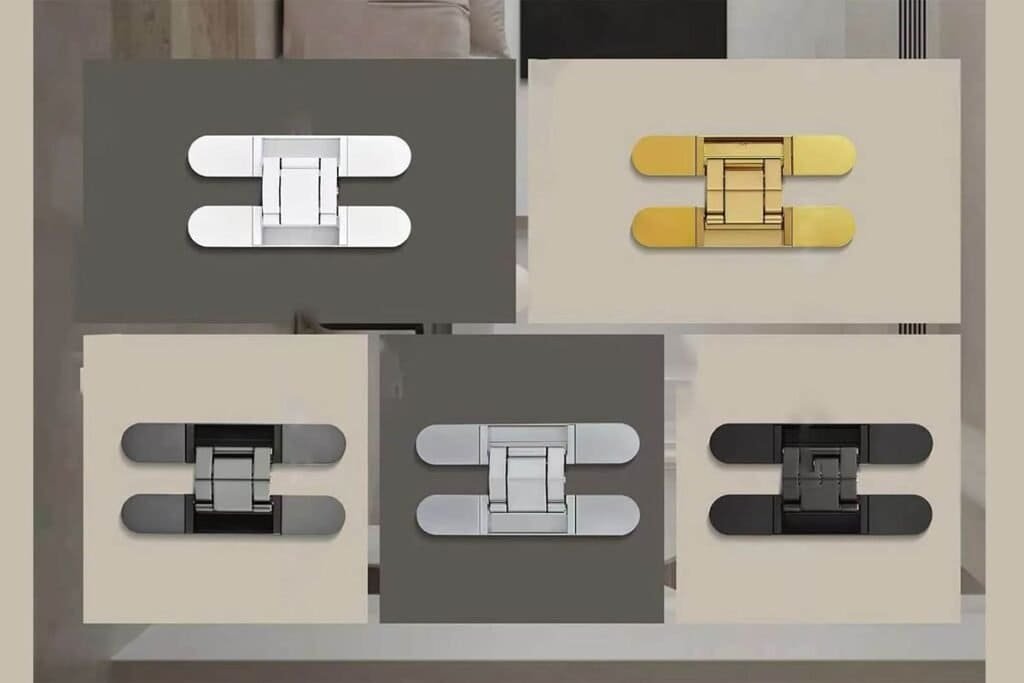
Choosing the Right Manufacturer for Custom Door Hinges?
Custom door hinges can solve real door design problems, but the wrong manufacturer can turn a good drawing into delayed samples, unstable finishes, poor installation fit, and costly after-sales claims. I have seen buyers struggle when price looked right but the development path was unclear. The better solution is to evaluate the factory’s engineering, process control, and support1 before ordering.
The right manufacturer for custom door hinges should be able to convert your drawing, sample, or reference style into a manufacturable hinge with stable structure, accurate tolerance, suitable material, consistent finish, verified quality documents where applicable, and reliable after-sales support for repeat orders and installation issues.
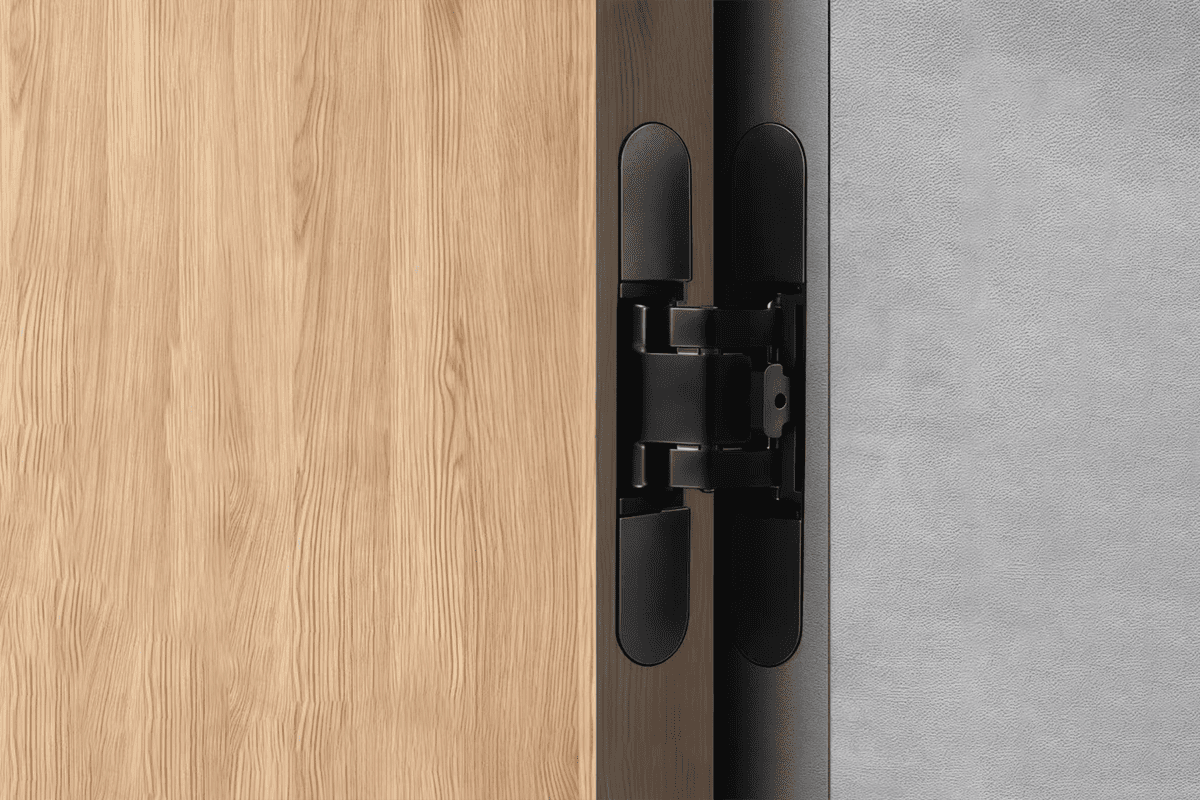
Many buyers start with a simple question: “Can you make this hinge?” In practice, the better question is: “Can you make this hinge repeatedly, safely, and consistently for my door system?” That difference changes how I evaluate a custom hidden hinge supplier.
Why Should Custom Door Hinges Start With Customization Capability?
A custom door hinges project often begins with a drawing, a sample, or a reference-style idea. The problem is that not every factory can turn that idea into stable production. If the supplier skips development steps, small errors can become large problems during door assembly, installation, or repeat purchasing.
A qualified manufacturer should offer a clear customization path: design confirmation, technical review, prototype or 3D sample confirmation, mold opening when needed, sample approval, and mass production control2. The factory should also explain what can be customized and what must be adjusted for strength, tolerance, tooling, and installation.
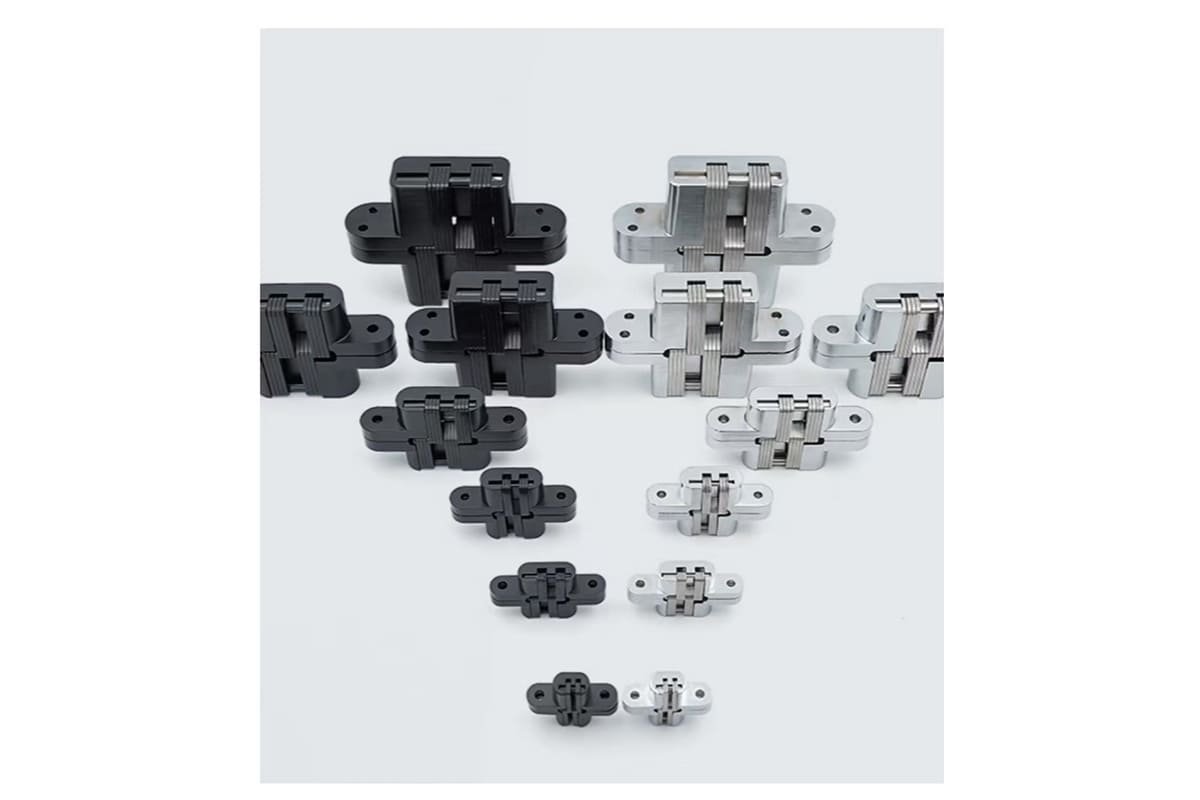
I look for a real development workflow
When a door manufacturer sends a hidden hinge drawing for customization, I do not treat it as only a quotation task. I first look at the door type, door thickness, opening direction, installation method, requested finish, and expected order volume. These details influence structure, tooling, and cost.
A reliable factory should be able to discuss the following steps clearly:
Drawing or sample review
The supplier checks dimensions, screw hole positions, hinge body structure, door/frame clearance, and installation depth.Feasibility confirmation
The engineering team confirms whether the hinge can be made with existing tooling, modified tooling, or new mold development.Prototype or 3D confirmation
A 3D printed part, CNC sample, or trial sample may be used to confirm shape, assembly, and installation logic.3Mold opening or tooling adjustment
If the structure requires a new mold, the supplier should explain the mold cost, lead time, maintenance responsibility, and ownership terms.Sample approval
The buyer should confirm dimensions, movement, finish, installation fit, and packaging before mass production.Batch production and inspection
The supplier should maintain the approved standard across large-volume orders.
Customization is more than size and color
Many buyers think custom door hinges mean changing the length, width, or finish. In hidden hinge projects, customization may involve much more:
| Customization area | Why it matters | Buyer risk if ignored |
|---|---|---|
| Hinge body shape | Affects door/frame fit | Installation interference |
| Opening angle4 | Affects usability | Door cannot open as planned |
| Screw hole layout | Affects assembly speed | Misalignment on production line |
| Material selection5 | Affects strength and corrosion resistance | Early failure or finish issues |
| Surface finish | Affects visual consistency | Mixed appearance in batch orders |
| Tooling design | Affects repeatability | Different sizes between batches |
| Accessory configuration | Affects installation | Missing screws, plates, or covers |
In my customer communication, I often ask for door parameters before discussing final pricing. This includes door thickness, frame structure, expected installation position, and whether the hinge will be used for residential doors, hotel doors, commercial doors, or project doors. I ask these questions because a hinge that looks correct on paper may not install smoothly on a real door.
Good suppliers challenge unclear drawings
A strong manufacturer does not simply say “yes” to every drawing. The factory should point out possible risks, such as thin wall sections, difficult surface treatment areas, weak screw positions, or mold limitations. That feedback is useful. It helps the buyer avoid expensive corrections after tooling has already started.
I prefer a supplier who asks practical engineering questions before quoting. A very fast quote without technical questions can be a warning sign.
For door manufacturers, customization capability is the first filter because it shows whether the supplier understands real production. A low price is not useful if the hinge cannot pass sample approval or if the second batch does not match the first batch.
How Do Materials and Processes Affect Custom Door Hinges?
Custom door hinges must balance strength, appearance, machining feasibility, and cost. The problem is that material and process choices are often hidden behind a simple product photo. If buyers do not ask technical questions, they may receive hinges that look acceptable at first but fail to meet long-term market expectations.
Material and process choices determine whether custom door hinges can achieve stable dimensions, suitable surface finish, reliable movement, and repeatable batch quality. Buyers should confirm whether the factory can work with zinc alloy, stainless steel, aluminum alloy, or other suitable materials, and whether the selected manufacturing process matches the hinge structure.
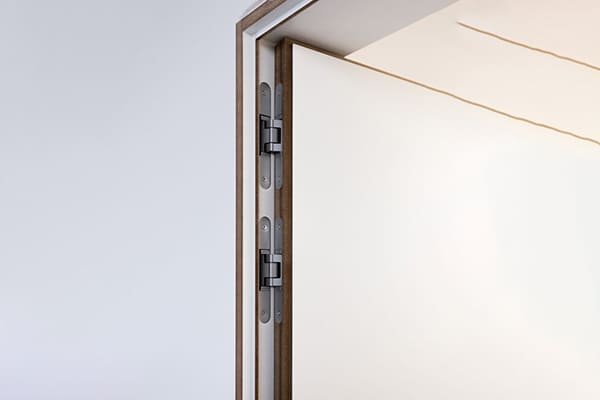
Material should match the application
A custom hidden hinge is not only a decorative item. It carries movement, supports alignment, and must survive repeated use. The right material depends on the door system, market positioning, target cost, finish requirement, and technical design.
Common material options include:
Zinc alloy
Zinc alloy can support complex shapes6 and is often used for concealed hinge bodies where casting or molding helps create detailed structures. It can also support many decorative finishes.Stainless steel
Stainless steel is often valued for corrosion resistance and strength.7 It may be suitable for certain visible components, plates, covers, or hinge structures, depending on the design.Aluminum alloy
Aluminum alloy can be useful where weight, machining, or surface treatment requirements make sense. However, the exact grade and structure must be reviewed.Brass or steel components
Some hinge systems may include pins, screws, bushings, or internal parts made from different materials. These small parts can affect long-term performance.
The buyer should not choose material based only on catalog descriptions. The supplier should explain why the material is suitable for the design and production process.
Process control affects tolerance
For custom door hinges, tolerance is not an academic detail. It affects installation, door gap, opening smoothness, and assembly speed.8 If the hinge body is too thick, too thin, or slightly misaligned, the door manufacturer may spend extra time adjusting the door leaf or frame.
Typical processes may include:
| Process | Common purpose | Evaluation point |
|---|---|---|
| CNC machining | Precision dimensions and small-batch samples | Check tolerance and machining marks |
| Stamping | Plates and high-volume metal parts | Check burrs and flatness |
| Cutting | Material preparation and profile shaping | Check size consistency |
| Die casting or molding | Complex hinge bodies | Check shrinkage, mold accuracy, and surface defects9 |
| Polishing | Surface preparation | Check edges and consistency |
| Plating, painting, PVD, or other finish treatment | Appearance and corrosion resistance | Check color difference and adhesion |
| Assembly inspection | Movement and fit | Check looseness, noise, and missing accessories |
In my experience, buyers often focus on the visible finish first. That is understandable because finish affects the selling point of the door. However, I also recommend checking dimensions and movement before approving appearance. A beautiful hinge is still a problem if the door cannot close correctly.
Finish consistency matters in bulk orders
For door hardware wholesalers and brand operators, finish consistency is a serious procurement issue. A sample may look good, but a mass production batch can show color variation if surface treatment is not controlled well.
Buyers should request:
- A master sample for color and texture approval
- Clear finish names or codes
- Packaging methods that protect the surface
- Batch inspection photos or reports
- Agreement on acceptable color tolerance
- Confirmation that accessories match the hinge finish
This is especially important for stainless steel, zinc alloy, and mixed-material assemblies. Different materials may react differently during surface treatment.10 A capable manufacturer should know how to reduce visible differences or explain the limitation before production.
Ask process questions before final quotation
A serious supplier should be able to answer questions like:
- Which material do you recommend for this hinge structure?
- Can this design use existing tooling, or does it need a new mold?
- Which dimensions are critical for installation?
- What surface finishes are stable for batch production?
- How do you control color consistency?
- What inspection steps are used before shipment?
These questions help buyers evaluate whether the manufacturer understands the complete product, not just the exterior style. For custom door hinges, the material and process decision should support the real door application.
What Quality Control Should a Custom Door Hinges Manufacturer Prove?
A custom door hinges supplier may claim strong quality, but buyers need proof. The problem is that “good quality” can mean different things to different factories. Without inspection standards, test documents, and production control, quality depends too much on verbal promises.
A reliable manufacturer should prove quality through raw material control, in-process inspection, finished product checking, sample approval records, and applicable test documents. Buyers should verify any CE, fire-rated, salt spray, cycle test, or other certificate against the exact hinge model, material, finish, and intended application.11
Factory strength is proven by specialization
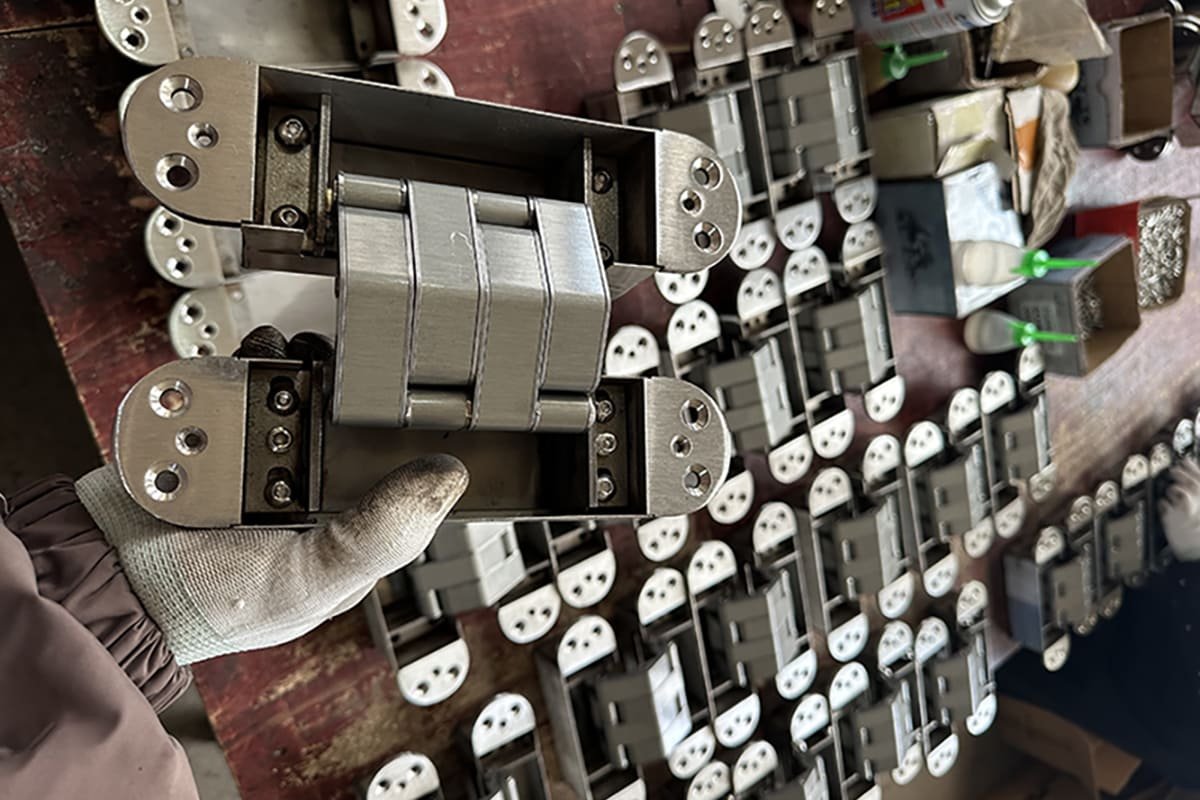
Large factory size can help, but it is not the only sign of strength. For custom hidden hinge projects, I pay closer attention to specialization. A factory with focused hinge production experience usually understands tooling, structure, assembly, finish, and batch repeatability better than a general trading supplier.
Useful signs include:
- Independent or stable production lines
- Engineering support for drawings and samples
- Experience with concealed hinges or related door hardware
- In-house or closely managed surface treatment partners
- Clear inspection procedures
- Ability to support ODM customization
- Stable repeat-order supply
At SDH Hardware, our business context includes architectural door hardware manufacturing, including concealed door hinges, mortise locks, lever handles, butt hinges, and lock cylinders. I mention this carefully because buyers should still verify every product specification and certificate for their own project. Factory experience is valuable, but product-specific confirmation is always necessary.
Quality control should cover the full process
For custom door hinges, quality control should not begin only after assembly. It should begin before production starts.
A practical quality control flow may include:
Incoming material inspection
The factory checks material type, thickness, hardness where relevant, and supplier consistency.Tooling and first-piece inspection
The team checks the first output against the approved drawing or sample before mass production continues.In-process dimensional inspection
Critical dimensions are checked during machining, stamping, casting, or assembly.Surface inspection
Inspectors check scratches, bubbles, color difference, plating defects, and coating uniformity.Function inspection
The hinge is checked for opening movement, looseness, abnormal noise, and installation fit.Packaging inspection
The supplier checks quantity, accessories, labels, cartons, and surface protection.Final shipment inspection
The batch is reviewed before loading or export.
Test documents need careful verification
Buyers often ask for CE certification, fire-rated reports, salt spray tests, or opening/closing cycle test reports. These documents can be important, but they should not be treated as universal proof for every custom hinge.
Before relying on a test report, buyers should check:
| Document type | What buyers should verify |
|---|---|
| CE-related document | Product model, standard, scope, issuing body, validity |
| Fire-rated report | Door system, hinge model, installation condition, rating scope |
| Salt spray test | Material, finish, test duration, test method, visible result |
| Cycle test | Load condition, opening angle, cycle count, pass criteria |
| Material report | Material grade, supplier source, batch relevance |
I avoid claiming any exact performance number unless the report is available for that exact product and use case. This is important because one hinge model may pass a test under one condition but not automatically qualify for another door system.12
Sample approval should become the production standard
Sample approval is one of the most important stages in custom door hinges procurement. The approved sample should define the standard for:
- Dimensions
- Surface finish
- Movement feel
- Accessory configuration
- Logo or marking if required
- Packaging
- Labeling
- Installation details
I recommend keeping at least two signed samples: one with the buyer and one with the manufacturer. This simple habit can prevent many disputes. When both sides compare mass production goods against the same standard, communication becomes much easier.
Quality control is not only about rejecting bad products. It is about creating a repeatable system. For door manufacturers, that system protects assembly efficiency, brand reputation, and long-term customer satisfaction.
How Should Buyers Evaluate After-Sales Support for Custom Door Hinges?
Custom door hinges may look like a one-time purchase, but they often become long-term supply items. The problem is that after-sales support is usually discussed too late. If installation issues, finish complaints, or repeat-order changes happen, weak communication can turn a small problem into a serious supply chain risk.
Buyers should evaluate after-sales support by checking warranty terms, installation guidance, quality issue response time, replacement or return handling, spare part support, repeat-order stability, and the supplier’s ability to adjust designs after market feedback. Strong support reduces long-term procurement risk.
Installation guidance reduces field problems
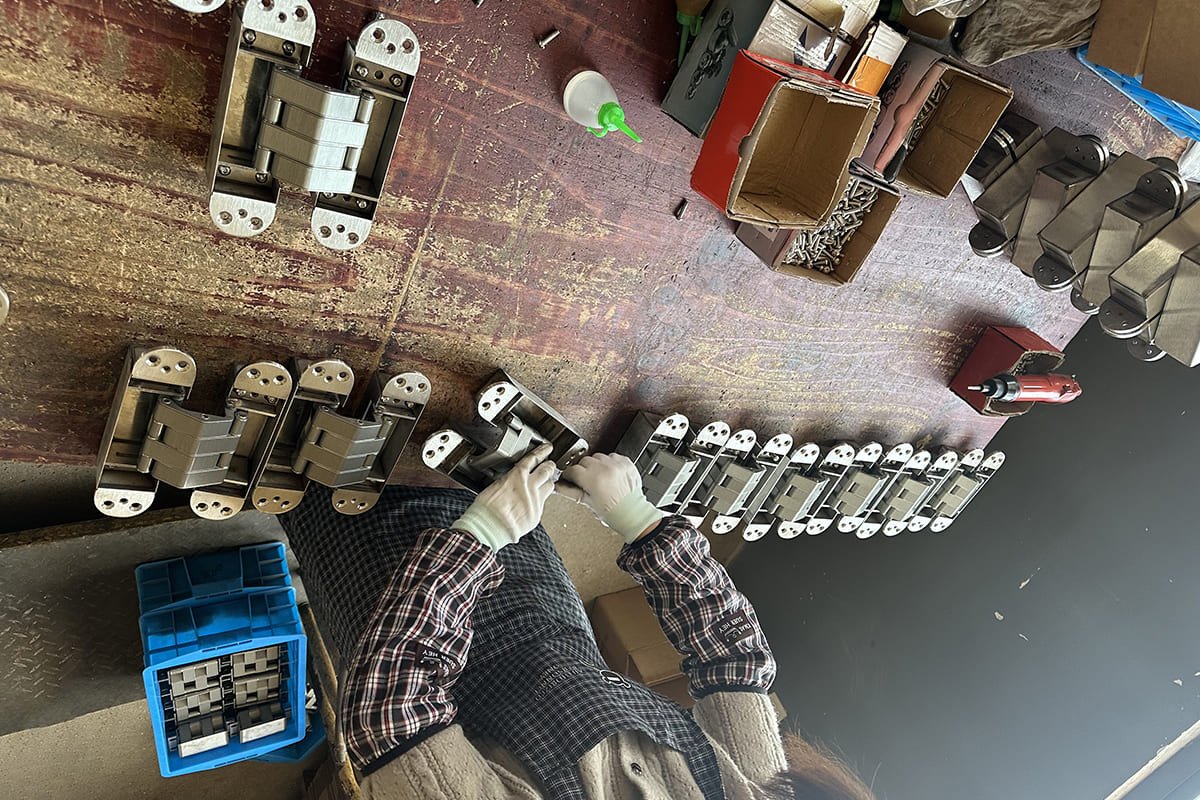
Many custom hidden hinge complaints are not caused by the hinge alone. Some problems come from installation errors, door tolerance issues, frame preparation, wrong screw selection, or unclear cutting details. A good manufacturer should help buyers reduce these risks before goods reach the market.
Helpful support materials may include:
- Installation drawings
- Hole position diagrams
- Door and frame preparation guidance
- Screw and accessory lists
- Product photos or videos
- Sample installation feedback
- Packaging labels for easy assembly
When I communicate with door manufacturers, I often ask how the hinge will be installed on their production line. Some factories need fast assembly. Some need adjustable installation. Some need special covers or screw positions. These requirements affect the hinge design and accessory package.
Warranty terms should be specific
A vague warranty promise is not enough. Buyers should ask what the warranty covers and what it excludes. The supplier should clearly define how quality claims are handled.
Important warranty questions include:
- What defects are covered?
- What installation conditions are required?
- What photos, videos, or samples are needed for a claim?
- How quickly will the supplier respond?
- Will replacements be sent with the next order or separately?
- Who pays freight for confirmed quality issues?
- Are finish issues handled differently from structural issues?
A good supplier will not promise impossible coverage. Instead, the supplier will explain reasonable terms and support evidence-based problem solving.
Repeat-order stability is part of after-sales service
For door manufacturers and hardware brands, the second and third orders are often more important than the first order. The market expects the same hinge, same finish, same packaging, and same installation fit. If the supplier cannot repeat the approved standard, the buyer may face complaints from distributors or project customers.
Buyers should confirm:
| Repeat-order item | Why it matters |
|---|---|
| Tooling maintenance | Prevents dimensional drift |
| Finish formula or reference sample | Supports color consistency |
| Drawing version control | Avoids wrong structure updates |
| Packaging standard | Keeps brand and assembly consistent |
| Accessory list | Prevents missing screws or covers |
| Production lead time | Supports supply planning |
| Minimum order quantity | Helps stock control |
I suggest buyers maintain a version-controlled file for each custom hinge project. This file should include the approved drawing, sample photos, finish standard, packaging details, test documents, and communication records. This makes future reorders faster and safer.
Future design adjustment should be possible
Real market feedback often arrives after the first batch. A door manufacturer may find that an installation slot needs adjustment. A wholesaler may request a different finish. A brand customer may want packaging changes. A project buyer may require an additional test document.
A flexible manufacturer should be able to support reasonable design adjustments without losing control of the original standard. This is where independent R&D or engineering support becomes valuable. The supplier can review the change, estimate cost, confirm tooling impact, and produce revised samples.
For custom door hinges, after-sales support is not only complaint handling. It is also long-term product management. The best supplier helps buyers protect market continuity.
Frequently Asked Questions
What information should I send to a custom door hinges manufacturer first?
You should send drawings, photos, samples if available, door thickness, frame details, installation method, finish requirement, expected order quantity, target market, and any certificate requirements. This helps the manufacturer judge feasibility, tooling needs, material choice, and sample development time more accurately.
Are custom hidden hinges always more expensive than standard hinges?
Custom hidden hinges usually cost more at the development stage because they may require engineering review, prototypes, mold opening, special finishes, or small-batch sampling. However, the final unit cost depends on material, structure, tooling, order volume, finish process, and inspection requirements.
How can I verify hinge quality before mass production?
You can verify quality by approving samples, checking critical dimensions, testing installation on the real door, reviewing surface finish consistency, confirming movement, and requesting applicable inspection or test documents. Any certificate or test report should match the exact product model and intended application.
Should I choose zinc alloy, stainless steel, or aluminum alloy for custom door hinges?
The best material depends on the hinge structure, door application, finish requirement, cost target, and performance expectations. Zinc alloy can support complex shapes, stainless steel may support corrosion resistance and strength, and aluminum alloy may suit certain lightweight or machined designs. A qualified engineer should review the final choice.
Why is after-sales support important for custom door hinges?
After-sales support helps solve installation questions, quality claims, replacement needs, repeat-order consistency, and future design adjustments. For door manufacturers and wholesalers, this support reduces procurement risk and protects long-term market reputation.
Conclusion
Choosing the right manufacturer for custom door hinges is not only about price, delivery time, or factory size. I recommend checking customization capability, material and process control, quality inspection, verified documents, and after-sales support before placing a bulk order. A good supplier should help turn your drawing or sample into a durable, manufacturable, and repeatable hinge solution. If you are evaluating custom hidden hinge options for door production or wholesale supply, contact SDH Hardware to discuss your drawings, samples, finishes, and project requirements.
"ISO 9001 supplier management - Ideagen", https://www.ideagen.com/thought-leadership/blog/iso-9001-supplier-management-your-step-by-step-guide. ISO 9001:2015 describes quality-management requirements for process control, documented information, supplier-related controls, and corrective action, supporting the article’s emphasis on evaluating engineering, process control, and support before placing production orders; it does not verify the capability of any specific hinge manufacturer. Evidence role: expert_consensus; source type: institution. Supports: Recognized quality-management frameworks emphasize controlled processes, documented procedures, supplier evaluation, and corrective action as foundations for consistent manufacturing quality.. Scope note: The support is contextual because ISO 9001 addresses quality-management systems generally, not custom door hinges specifically. ↩
"Product Design, Prototyping, and Testing", https://product.umd.edu/certificates/courses/product-design-prototyping-and-testing. Engineering design-for-manufacture literature describes staged review, prototyping, tooling validation, and production planning as standard mechanisms for translating a design into repeatable manufacture, supporting the article’s proposed custom-hinge development sequence; it does not prescribe the exact workflow for every hinge project. Evidence role: mechanism; source type: education. Supports: Engineering design and design-for-manufacture references describe iterative review, prototyping, tooling, validation, and production planning as mechanisms for reducing manufacturing risk.. Scope note: The evidence would support the general development mechanism rather than proving that every qualified hinge factory uses this exact sequence. ↩
"What is Rapid Prototyping? Methods, Tools and Examples", https://formlabs.com/blog/ultimate-guide-to-rapid-prototyping/. Studies of rapid prototyping in product development report that physical prototypes are used to evaluate form, fit, assembly interactions, and design feasibility before production, supporting the article’s statement that 3D-printed, CNC, or trial samples can confirm shape and installation logic; the evidence is general and not limited to hinge manufacturing. Evidence role: mechanism; source type: paper. Supports: Research on rapid prototyping and product development supports the use of prototypes to evaluate geometry, fit, assembly, and design feasibility before production.. Scope note: The support is contextual because prototyping research covers many manufactured products, not only concealed door hinges. ↩
"Chapter 4: Entrances, Doors, and Gates", https://www.access-board.gov/ada/guides/chapter-4-entrances-doors-and-gates/. The ADA Standards for Accessible Design measure door clear width with the door open 90 degrees, illustrating that door opening geometry affects usable passage and accessibility; this supports the article’s point that opening angle matters, although it does not specify hinge design requirements for custom hidden hinges. Evidence role: general_support; source type: government. Supports: Accessibility standards link door opening geometry to usable clear width, showing that the angle and movement of a door affect usability.. Scope note: The evidence is contextual because accessibility standards address door usability rather than hinge engineering directly. ↩
"Material selection", https://en.wikipedia.org/wiki/Material_selection. Materials-selection references in engineering design identify strength, corrosion resistance, manufacturability, density, and cost as core criteria for choosing component materials, supporting the article’s claim that hinge material must match the application; the source would not determine the correct material for a specific hinge without load and environment data. Evidence role: mechanism; source type: education. Supports: Materials-engineering sources explain that mechanical properties, corrosion behavior, density, manufacturability, and cost are core criteria in selecting materials for structural components.. Scope note: The support is general because actual hinge suitability depends on the precise alloy, geometry, load, finish, and service environment. ↩
"Engineering Characteristics of Zinc Die Castings - Eastern Alloys Inc.", https://www.eazall.com/engineering-characteristics-of-zinc-die-castings. Technical literature on zinc die casting describes zinc alloys as suitable for producing intricate shapes with relatively close dimensional control, supporting the article’s statement that zinc alloy can be used for complex concealed-hinge bodies; the specific suitability still depends on alloy grade, part geometry, tooling, and load requirements. Evidence role: mechanism; source type: institution. Supports: Technical sources on zinc die casting describe zinc alloys as suitable for producing intricate, close-tolerance cast components.. Scope note: The evidence supports zinc die casting generally and does not prove that a given zinc-alloy hinge design will meet structural requirements. ↩
"Stainless steel - Wikipedia", https://en.wikipedia.org/wiki/Stainless_steel. Reference works on stainless steel describe it as an iron-based alloy family characterized by corrosion resistance and useful mechanical strength, supporting the article’s explanation of why stainless steel may be selected for hinge components; the exact performance depends on grade, heat treatment, finish, and environment. Evidence role: definition; source type: encyclopedia. Supports: Neutral materials references define stainless steels as iron-based alloys known for corrosion resistance and useful mechanical properties.. Scope note: The support is general because stainless-steel grades vary substantially in strength and corrosion behavior. ↩
"How Dimensional Tolerances Impact Manufacturing And ...", https://www.thermalspray.com/how-dimensional-tolerances-impact-manufacturing-and-production-efficiency/. Engineering tolerancing references explain that dimensional variation affects fit, function, interchangeability, and assembly performance, supporting the article’s claim that hinge tolerances influence installation, gaps, movement, and assembly speed; the source would not quantify acceptable tolerances for a particular custom hinge without its drawing and door system. Evidence role: mechanism; source type: education. Supports: Engineering references on tolerancing explain that dimensional variation affects fit, function, interchangeability, and assembly performance.. Scope note: The evidence supports the general mechanism, while project-specific tolerance limits require product drawings and installation conditions. ↩
"Casting defect - Wikipedia", https://en.wikipedia.org/wiki/Casting_defect. Manufacturing research on casting and molding identifies shrinkage, die or mold condition, dimensional accuracy, porosity, and surface defects as recurring quality-control concerns, supporting the article’s inspection focus for cast or molded hinge bodies; the relevance depends on the specific process and alloy used. Evidence role: mechanism; source type: research. Supports: Manufacturing research identifies shrinkage, die or mold condition, dimensional accuracy, porosity, and surface defects as common quality concerns in casting and molding processes.. Scope note: The evidence is process-specific in general terms and may not apply equally to all hinge manufacturing methods. ↩
"Evaluation of Adhesion Properties of Electrodeposited Copper ...", https://pmc.ncbi.nlm.nih.gov/articles/PMC12156451/. Surface-engineering studies show that coating adhesion, appearance, and corrosion behavior depend on substrate composition, surface preparation, and treatment parameters, supporting the article’s claim that mixed materials may respond differently during finishing; the evidence does not predict color consistency for a specific batch without process data. Evidence role: mechanism; source type: paper. Supports: Surface-engineering literature shows that coating adhesion, appearance, and corrosion performance depend on substrate composition, pretreatment, and surface condition.. Scope note: The support is contextual because actual finish consistency depends on the selected coating system, pretreatment, process controls, and inspection criteria. ↩
"Frequently asked questions", https://single-market-economy.ec.europa.eu/sectors/construction/construction-products-regulation-cpr/frequently-asked-questions_en. European Commission guidance on CE marking for construction products links conformity and declared performance to the product covered, applicable technical specification, and intended use, supporting the article’s warning that certificates should be checked against the exact hinge model and application; it does not address every non-CE test document listed in the article. Evidence role: expert_consensus; source type: government. Supports: Regulatory guidance on CE marking and construction products connects conformity claims to declared performance, relevant standards, intended use, and the product covered.. Scope note: The evidence directly supports CE-scope verification and only contextually supports verification of other reports such as salt spray or cycle tests. ↩
"Fire Doors and NFPA 80 FAQs", https://www.nfpa.org/news-blogs-and-articles/blogs/2025/04/11/fire-doors-faqs. Fire-door assembly standards and listing practices treat performance ratings as dependent on the tested door assembly, hardware set, and installation conditions, supporting the article’s statement that a hinge passing one test condition is not automatically qualified for another system; the principle is clearest for fire-rated assemblies and may be less direct for non-fire performance tests. Evidence role: expert_consensus; source type: institution. Supports: Fire-door and building-hardware standards treat ratings and listings as dependent on the tested assembly, hardware, installation method, and conditions of use.. Scope note: The support is strongest for fire-rated door assemblies and more contextual for other hinge tests. ↩