Door Concealed Hinge Finishes: The Ultimate Guide?
Door concealed hinge finishes can look simple on a color card, but the wrong choice can create corrosion complaints, visible mismatch, and costly rework. I have seen buyers approve a beautiful sample, then struggle when bulk parts looked slightly different. The safer solution is to evaluate finish, material, process, and application together.
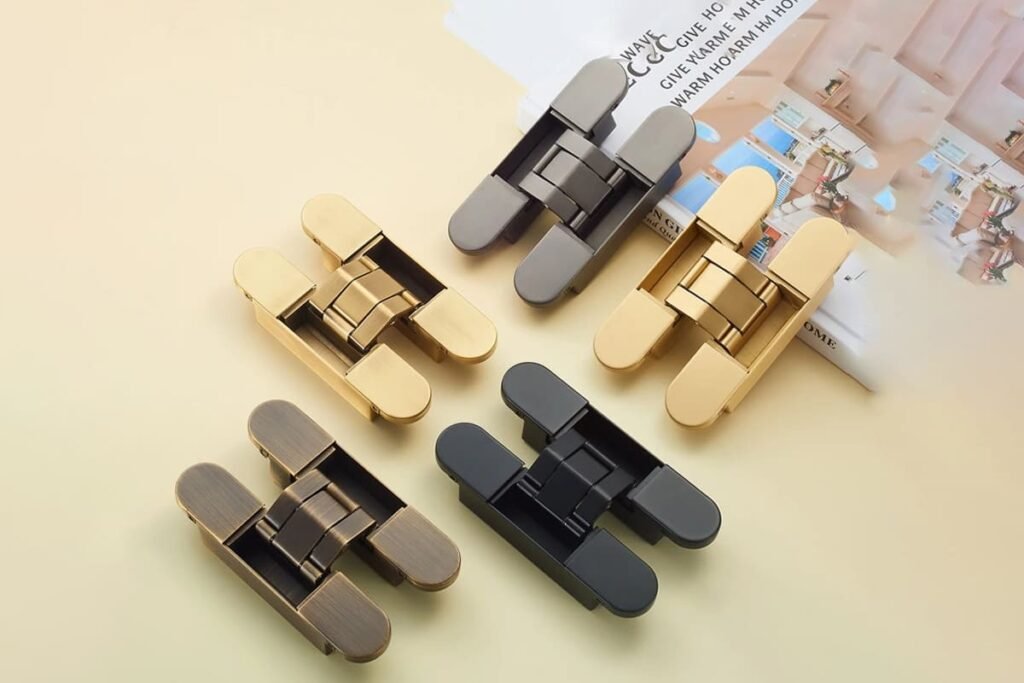
Door concealed hinge finishes should be selected by first checking the hinge material, then matching the surface treatment process, gloss level, color, and visible hardware set. The best finish is not one universal color. It is the finish that fits the base material, door design, corrosion environment, market preference, and bulk quality-control requirements.
A concealed hinge is partly hidden, but its visible panels, cover caps, and matching hardware still matter. In this guide, I will explain how I evaluate finishes from a factory and quality-control perspective, so buyers can reduce sample mistakes and bulk-order risks.
Why Should Door Concealed Hinge Finishes Start With Base Material?
Many finish problems begin before the color is chosen. Buyers may ask for matte black, satin nickel, or polished brass without confirming the hinge material. That creates risk because each base material accepts surface treatment differently, and not every process suits every part.
Door concealed hinge finishes should start with base material because zinc alloy, steel, stainless steel, and plastic-matched components may require different coating or plating methods. The material affects adhesion, corrosion resistance, surface smoothness, cost, and final appearance.1 A good finish decision always begins with the substrate.
Material Comes Before Color
In my work with concealed hinge production, I always ask one question before discussing finish: what is the visible part made from? A finish is not floating on its own. It bonds to a base material. If the material is unsuitable, even a good-looking finish may create problems later.
Common concealed hinge materials include:
- Zinc alloy for die-cast visible covers or hinge bodies
- Carbon steel for structural strength and cost control
- Stainless steel for stronger corrosion resistance expectations
- Aluminum alloy in some specialized designs
- Plastic or nylon components for caps, bushings, or decorative covers
Each material has a different surface condition. Zinc alloy may provide good shaping detail, but it needs proper pre-treatment before plating or coating.2 Carbon steel can be strong and economical, but it usually needs reliable anti-corrosion treatment. Stainless steel already has better corrosion behavior than ordinary steel3, but the buyer still needs to consider the desired color and surface effect.
How Base Material Affects Finish Choice
| Base Material | Common Finish Options | Buyer Concerns | Practical Procurement Note |
|---|---|---|---|
| Zinc alloy | Electroplating, powder coating, some decorative coatings | Adhesion, surface defects, color stability | Confirm pre-treatment and sample appearance before bulk order |
| Carbon steel | Electroplating, powder coating, anti-rust coating | Corrosion protection, edge coverage, coating damage | Suitable process depends on indoor/outdoor use and cost target |
| Stainless steel | Brushed, satin, polished, PVD in some cases | Color matching, surface scratch visibility | Check grade, surface preparation, and matching with handles |
| Plastic covers | Color-matched injection or spraying | Color difference, aging, gloss mismatch | Confirm with hinge panels and other visible hardware |
Do Not Treat “Concealed” as “Invisible”
Some buyers think concealed hinge finishes are less important because the hinge body sits inside the door and frame. I understand that logic, but I do not fully agree. The visible parts may include:
- Hinge cover plates
- Adjustment access panels
- Decorative caps
- Visible edge lines when the door opens
- Matched screws or accessories
A small mismatch can look obvious on a premium door. This matters even more for hotels, villas, office projects, and branded door sets. Buyers often evaluate the whole hardware package, not just one part.
A Simple Factory-Side Selection Flow
When I help a buyer review concealed hinge finish options, I usually follow this order:
- Confirm the hinge model and load requirement
- Confirm visible and hidden material types
- Define the application environment
- Choose a suitable surface treatment process
- Select color and surface effect
- Approve samples under real lighting
- Set bulk inspection standards
This process prevents the common mistake of starting with a color name only. “Satin nickel” can mean different things across suppliers. “Matte black” can be powder coated, plated, or coated by another method. Without material and process confirmation, the name alone is not enough for serious procurement.
Which Surface Treatment Process Is Best for Door Concealed Hinge Finishes?
Surface treatment choices can feel confusing because suppliers may promote one process as the best. That can mislead buyers. A process that works well for one concealed hinge material, price level, or market may not be suitable for another project.
The best process for door concealed hinge finishes depends on material, target appearance, durability expectations, cost, and inspection requirements. Electroplating, PVD vacuum coating, and powder coating can all be useful. Buyers should compare process suitability instead of assuming one surface treatment is always superior.
Electroplating
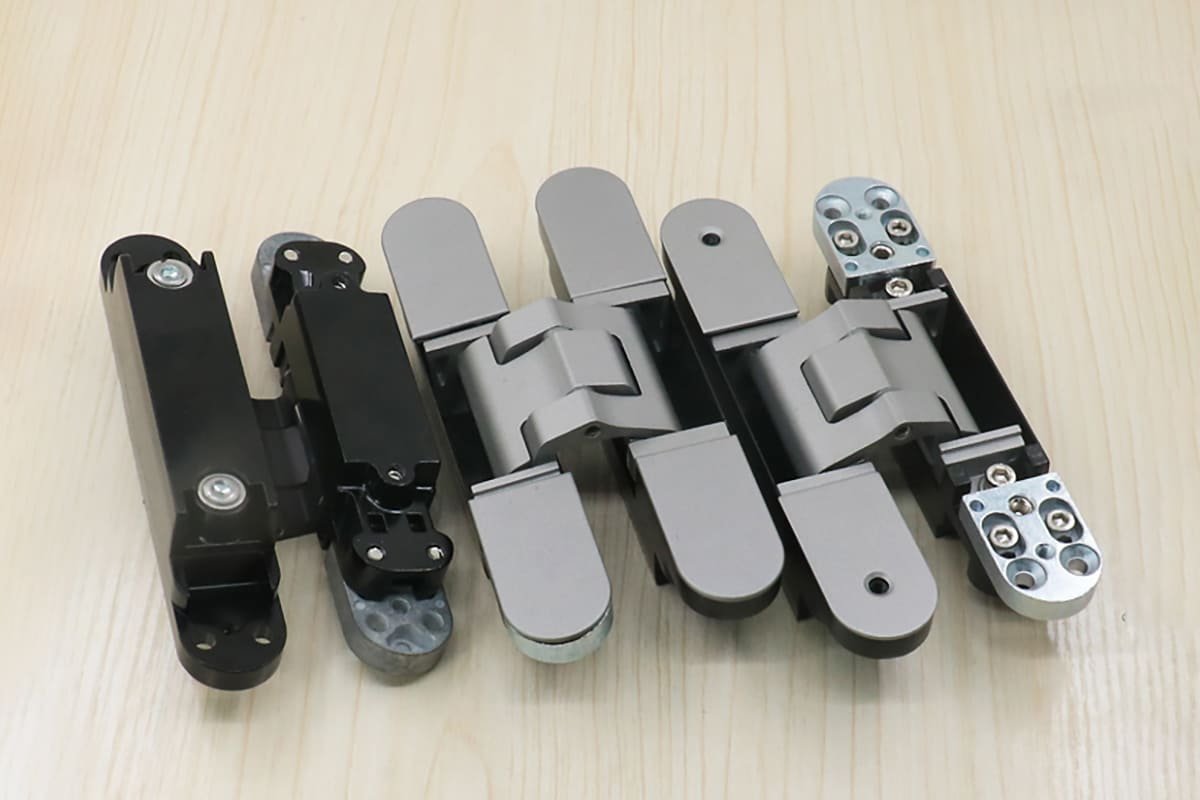
Electroplating is widely used for decorative and protective finishes in door hardware.4 It can create common effects such as chrome, nickel, brass tone, and other metallic appearances. It often provides a smooth, bright, or satin surface depending on polishing and process control.
For concealed hinges, electroplating may be used on visible metal parts when the material and pre-treatment are suitable. Buyers should pay attention to:
- Surface cleaning and preparation
- Plating layer uniformity
- Edge and recess coverage
- Color consistency between batches
- Salt spray or corrosion test requirements, if specified
- Packaging protection during transport
I avoid saying electroplating is always better or worse. It can produce attractive finishes, but it requires process control. A poorly prepared surface may show pits, peeling, or uneven color.5 Buyers should request real production samples, not only catalog photos.
PVD Vacuum Coating
PVD, or physical vapor deposition, is often used for decorative metal finishes with good surface hardness and premium appearance.6 It is common in higher-end hardware categories, especially where buyers want metallic tones such as gold, champagne, black, or brass-like finishes.
However, PVD depends heavily on the base surface. If the substrate is rough, scratched, or poorly polished, the final finish can still look poor.7 PVD also needs proper equipment, process control, and suitable materials.
Buyers should evaluate:
- Base material suitability
- Polishing quality before coating
- Color target and tolerance
- Cost impact
- Batch-to-batch color control
- Compatibility with handles, locks, and cover caps
PVD can be a strong option for premium visual positioning, but I would still verify samples and supplier capability before committing to bulk orders.
Powder Coating
Powder coating is common for matte black, white, grey, and custom RAL color finishes.8 It can provide good coverage and a uniform decorative surface when applied properly. It is often practical for door hardware buyers who need a stable color family and cost-effective production.
For concealed hinge finishes, powder coating may be suitable for certain steel, zinc alloy, or aluminum parts, depending on design and surface preparation. It can create a smooth matte or textured look. However, buyers need to consider coating thickness, fitting tolerance, and wear points.
A concealed hinge has moving areas and precision gaps. If the coating is too thick on functional surfaces, it may affect assembly, adjustment, or movement.9 That is why I prefer to define which areas are decorative and which areas are functional before coating approval.
Process Comparison for Buyers
| Process | Typical Appearance | Common Strengths | Common Risks | Best Buyer Practice |
|---|---|---|---|---|
| Electroplating | Chrome, nickel, brass tones, polished or satin | Smooth metallic finish, widely available | Color difference, poor adhesion if pre-treatment is weak | Confirm material, sample, and corrosion requirement |
| PVD | Premium metallic tones, decorative black/gold/brass | Attractive appearance, often used for high-end hardware | Higher cost, substrate defects remain visible | Check polishing and batch color tolerance |
| Powder coating | Matte black, white, grey, custom colors | Good color coverage, flexible color options | Thickness may affect fit, edge wear concerns | Define functional masking and coating thickness expectations |
Ask Better Procurement Questions
Instead of asking, “Can you make this finish?” I suggest asking:
- What is the base material of each visible component?
- Which surface treatment process will be used?
- What sample standard will bulk goods follow?
- What corrosion or adhesion checks are available?
- Can the supplier match the handle and lock finish?
- What packaging protects the finish during shipment?
These questions help buyers move from a color conversation to a manufacturing-quality conversation.
How Do Gloss and Texture Change Door Concealed Hinge Finishes?
A buyer may choose the correct color but still dislike the final look. This often happens because gloss and texture were not defined. Polished chrome, satin chrome, brushed nickel, and matte nickel can look very different, even if the basic color family sounds similar.
Door concealed hinge finishes are affected by surface effect as much as color. Mirror, polished, satin, matte, and brushed effects change light reflection, scratch visibility, perceived quality, and matching with other hardware. Buyers should approve both color and gloss before bulk production.
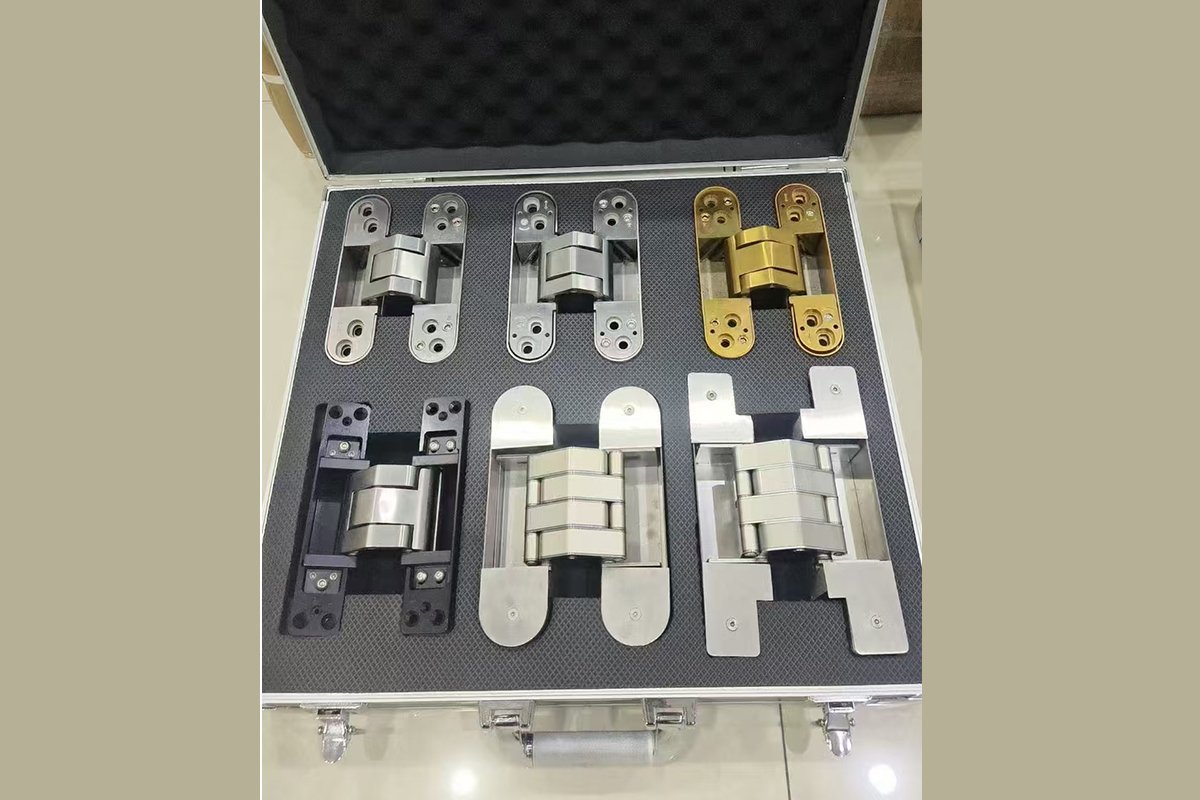
Finish Color Is Not the Same as Finish Effect
I often see buyers use color names as if they define everything. They may say “black hinge” or “brass hinge,” but that is not enough. A black finish can be:
- Matte black
- Semi-matte black
- Gloss black
- Textured black
- Black nickel
- Black PVD
A brass finish can be:
- Polished brass
- Satin brass
- Antique brass
- Champagne brass
- Brushed brass
- PVD brass tone
These variations can belong to different processes, price levels, and market styles. More importantly, they can look different beside door handles and lock plates.
Gloss Level Affects Visual Positioning
Gloss changes how the product feels in the market. A mirror or polished surface reflects light strongly. It can look bright, classic, and formal. A matte or satin surface feels softer and more modern. Brushed surfaces can hide light scratches better than mirror finishes, but they require consistent brushing direction.10
Here is a simple comparison:
| Surface Effect | Visual Style | Scratch Visibility | Matching Difficulty | Common Use |
|---|---|---|---|---|
| Polished / mirror | Bright, classic, premium | Higher visibility | Medium to high | Chrome, polished brass |
| Satin | Soft, modern, balanced | Moderate | Medium | Nickel, brass, stainless tones |
| Brushed | Linear, architectural | Lower for fine scratches | Direction must match | Handles, hinges, plates |
| Matte | Minimal, modern | Dust and rub marks may show | Color consistency matters | Black, grey, white |
| Textured | Industrial, practical | Can hide small marks | Texture must be controlled | Powder-coated finishes |
Lighting Can Change the Result
A finish can look different under factory light, showroom light, and outdoor light.11 I have seen a satin brass sample look warm and attractive in the office, then appear too yellow under strong project lighting. That does not mean the finish was defective. It means the sample approval condition was incomplete.
For serious bulk orders, I suggest buyers check finish samples under:
- Natural daylight
- Warm indoor light
- Cool white LED light
- Beside the door panel material
- Beside handles, locks, cylinders, and cover caps
This step is especially important for hardware brand operators. Their customers usually judge the complete set by visual harmony. If the hinge cover cap is slightly warmer than the handle rose, the complete product can look uncoordinated.
Texture Must Match the Hardware Family
A brushed stainless lever handle may not match a satin nickel concealed hinge if the tone and line direction differ too much. A matte black mortise lock faceplate may not match a semi-gloss black hinge cover if the gloss level is different.
That is why I recommend a finish approval board for large programs. The board can include:
- Concealed hinge visible cover
- Lever handle
- Mortise lock faceplate
- Cylinder escutcheon
- Screws
- Door panel sample
- Edge banding or frame material
This approval board gives the buyer, factory, and QC team one physical reference. It reduces subjective arguments later.
What Are the Most Popular Door Concealed Hinge Finishes for Bulk Orders?
Popular finishes can help buyers match market demand, but popularity does not remove technical risk. Matte black may sell well in modern markets, while satin nickel may fit broad commercial use. Still, every color needs process, material, and QC confirmation.
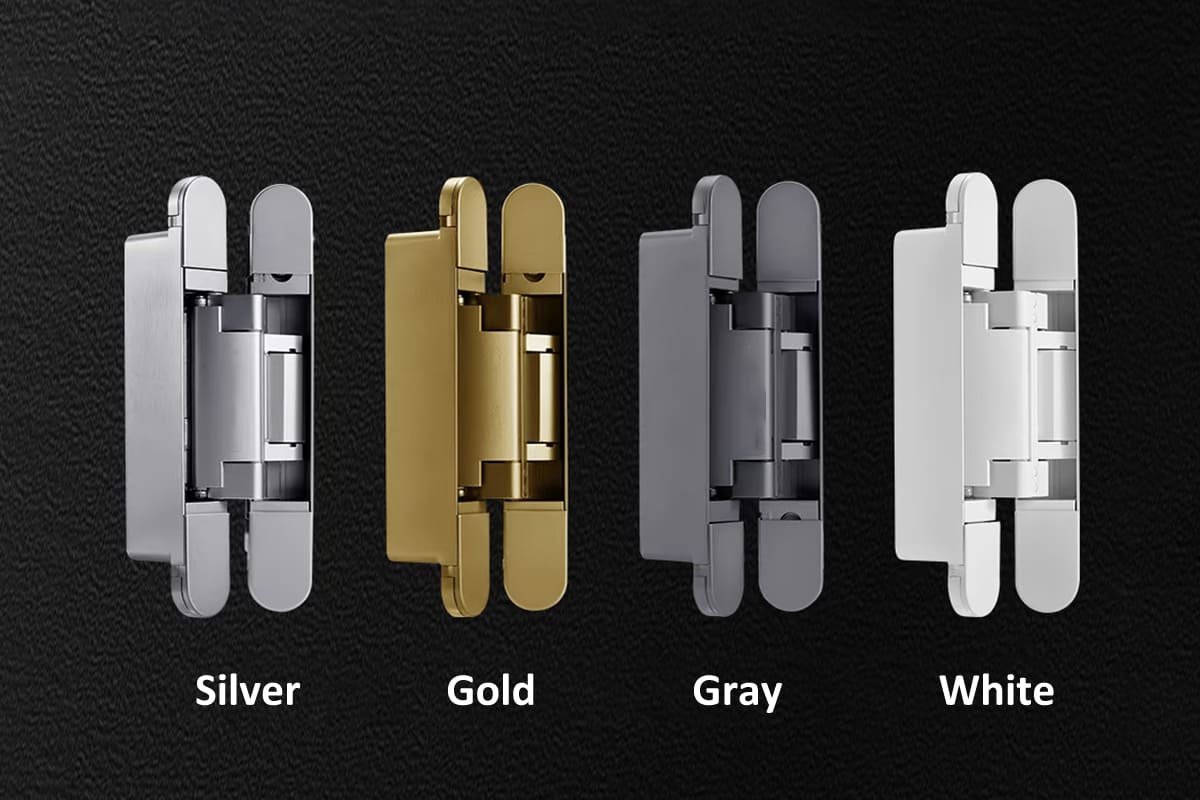
The most popular door concealed hinge finishes include matte black, satin or brushed nickel, polished chrome, satin brass, and polished brass. Each finish serves different visual markets and has different procurement concerns, including color consistency, scratch visibility, corrosion environment, and matching with locks and handles.
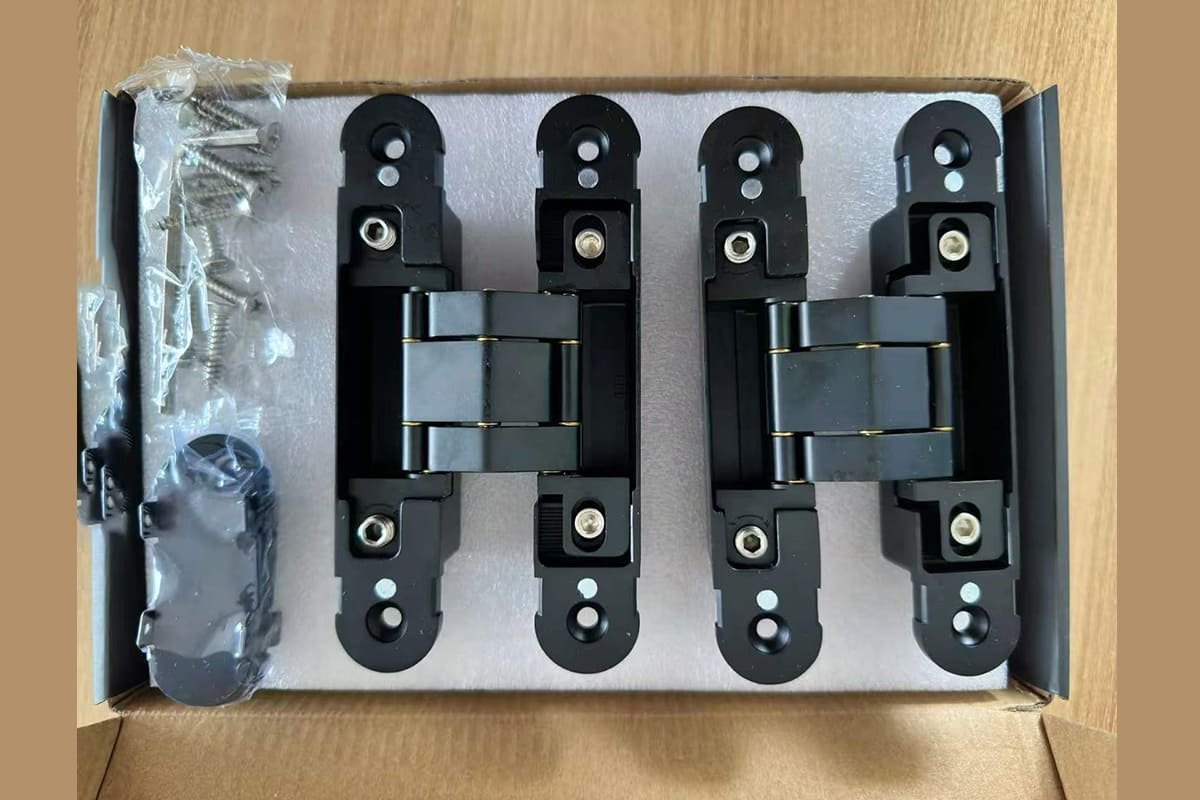
Matte Black
Matte black is one of the most requested finishes for modern interiors. It works well with minimalist doors, dark handles, black lock faceplates, and contemporary hotel or residential projects.
Buyer concerns include:
- Color consistency across batches
- Gloss level control
- Finger marks and rub marks
- Edge wear in contact areas
- Matching with black handles and lock plates
Matte black is often achieved through powder coating or other coating processes, depending on the component material. Buyers should not assume all black finishes are equal. A deep matte black and a soft satin black can look different when installed together.
Satin or Brushed Nickel
Satin nickel and brushed nickel are strong choices for commercial and residential hardware. They are neutral, familiar, and easier to match with many door styles. They often pair well with stainless steel lever handles, mortise lock faceplates, and cylinders.
Key concerns include:
- Warm vs cool nickel tone
- Brushing direction
- Surface uniformity
- Fingerprint resistance expectations
- Consistency between hinge and handle suppliers
Satin nickel is practical because it does not look as reflective as polished chrome. However, buyers still need a clear reference sample. A slightly yellow nickel and a cooler silver nickel may both be called “satin nickel” by different suppliers.
Polished Chrome
Polished chrome is bright, reflective, and traditional. It is common in many door hardware markets because customers understand it easily. It can make hardware look clean and sharp, especially on white or light-colored doors.
Buyer concerns include:
- High scratch visibility
- Surface polishing quality
- Fingerprint marks
- Packaging protection
- Matching with chrome handles and cylinders
Polished finishes require a good base surface. If the part has pits, waves, or poor polishing, chrome can reveal defects rather than hide them.
Satin Brass
Satin brass is popular in premium interiors. It gives warmth without the strong reflectivity of polished brass. It pairs well with wood doors, warm neutral panels, and high-end residential or hospitality projects.
Buyer concerns include:
- Tone control: yellow, champagne, or warm brass
- Color difference between PVD and plated parts
- Matching with brass handles
- Market preference in the target region
- Protection against scratches during assembly
Satin brass can look very different across suppliers. I always recommend physical sample approval before bulk production.
Polished Brass
Polished brass has a classic, decorative look. Some markets still prefer it for traditional doors, luxury interiors, and specific regional styles. It can be visually strong, so it must match the rest of the hardware set carefully.
Buyer concerns include:
- Strong reflectivity
- Fingerprint visibility
- Color tone stability
- Packaging marks
- Compatibility with door design
Polished brass can look premium, but it may not suit every modern design. Buyers should check target market demand before ordering large quantities.
Quick Finish Selection Table
| Finish | Visual Positioning | Typical Buyer Use | Main Risk to Control |
|---|---|---|---|
| Matte black | Modern, minimal | Hotels, apartments, modern doors | Gloss and color consistency |
| Satin / brushed nickel | Neutral, commercial | Broad market door sets | Tone and brushing consistency |
| Polished chrome | Bright, classic | Standard hardware programs | Scratches and surface defects |
| Satin brass | Warm, premium | Villas, hotels, high-end interiors | Color matching with handles |
| Polished brass | Decorative, traditional | Regional classic markets | Fingerprints and tone control |
The right finish depends on the door style, market, and hardware package. A finish that sells well in Europe may not be the best choice for the Middle East or Southeast Asia. Buyers should combine market knowledge with technical evaluation.
How Should Door Concealed Hinge Finishes Be Controlled From Sample to Shipment?
Even when the finish choice is correct, quality problems can still happen during bulk production. A sample may be approved, but mass production may show color difference, surface scratches, coating defects, or inconsistent gloss. This creates after-sales pressure.
Door concealed hinge finishes should be controlled with approved reference samples, clear finish standards, process confirmation, in-process checks, final inspection, and protective packaging. Buyers should define acceptable color, gloss, surface defects, and matching requirements before bulk production starts.
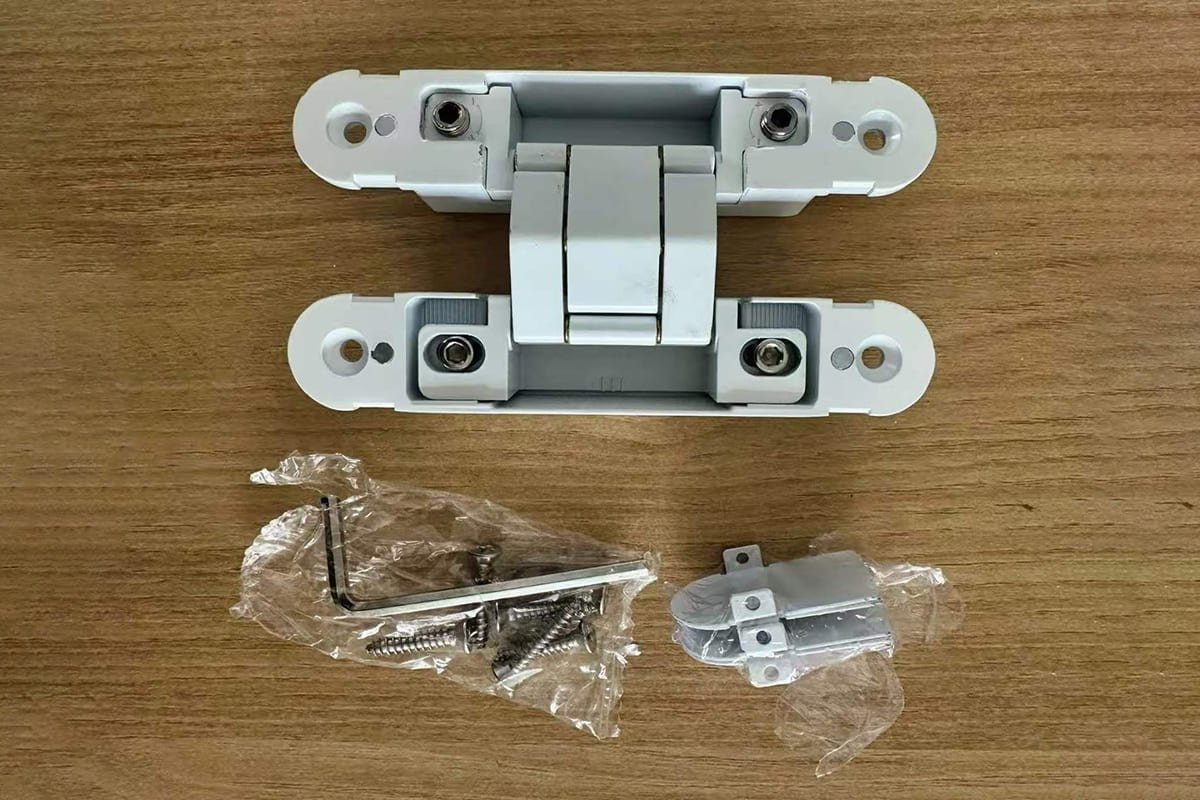
Sample Approval Should Be Specific
A sample approval should not only say “approved.” It should record the finish details clearly. I prefer to keep one approved sample at the factory and one with the buyer when possible. This gives both sides the same physical reference.
A good finish approval record may include:
- Product model and material
- Finish name
- Surface treatment process
- Gloss level or visual effect
- Approved sample date
- Matching hardware reference
- Packaging requirement
- Special inspection points
If the buyer needs CE documents, fire-rated documentation, or project compliance files, those should be verified separately. A finish sample does not prove certification performance. For application-specific requirements, buyers should consult qualified professionals and check valid documents from the supplier.
Define Acceptable Surface Defects
Not every tiny mark has the same impact. A visible cover plate needs stricter appearance control than a hidden internal arm. This is why inspection areas should be defined.
For example:
| Area Type | Example Part | Suggested Inspection Focus |
|---|---|---|
| Primary visible surface | Cover plate, cap | Color, scratches, stains, dents, gloss |
| Secondary visible surface | Side edge, screw area | Burrs, coating coverage, obvious marks |
| Functional surface | Pivot, adjustment zone | Coating interference, movement, assembly |
| Hidden surface | Internal body | Anti-corrosion coverage, structural defects |
This approach helps buyers avoid unrealistic inspection standards while still protecting market appearance.
Control Sample-to-Bulk Difference
Color difference is one of the most common finish complaints. It can happen because of raw material variation, polishing difference, bath condition, coating thickness, curing condition, or supplier changes.12
To reduce this risk, I suggest:
- Use sealed approval samples
- Avoid changing process suppliers without notice
- Inspect the first bulk batch before full packing
- Compare bulk parts under consistent lighting
- Check matching parts together, not separately
- Keep retention samples for future orders
Conclusion
Door concealed hinge finishes should never be treated as a simple color choice. Buyers need to start with base material, then review surface treatment process, gloss level, finish color, matching hardware, and bulk inspection standards. This approach reduces corrosion risk, appearance mismatch, sample-to-bulk difference, and avoidable after-sales cost. If you are sourcing concealed hinges for a door factory, hardware brand, or wholesale program, I can help you review finish options, samples, and customization requirements for your target market.
"Effects of Substrate Surface Characteristics on the Adhesion ...", https://pmc.ncbi.nlm.nih.gov/articles/PMC9016865/. Surface-engineering literature explains that coating adhesion, corrosion performance, and final appearance are functions of substrate composition and surface preparation, providing general technical support for treating base material as a primary finish-selection variable. Evidence role: mechanism; source type: research. Supports: The source should explain that coating performance and appearance depend on substrate composition, surface preparation, and surface condition.. Scope note: The support is general to coated metal products rather than specific to concealed door hinges. ↩
"Special Aspects of Electrodeposition on Zinc Die Castings", https://www.pfonline.com/articles/special-aspects-of-electrodeposition-on-zinc-die-castings. Technical references on zinc die castings note their suitability for detailed shapes and describe surface cleaning and pretreatment as necessary steps for reliable plating or coating adhesion. Evidence role: mechanism; source type: research. Supports: The source should support that zinc die castings are used for detailed components and that cleaning, activation, or other pretreatment steps are important before plating or coating.. Scope note: The evidence concerns zinc die cast components generally and may not test concealed hinge covers specifically. ↩
"Stainless steel", https://en.wikipedia.org/wiki/Stainless_steel. General materials references describe stainless steel as more corrosion resistant than plain carbon steel because chromium enables formation of a protective passive oxide film. Evidence role: mechanism; source type: encyclopedia. Supports: The source should explain that stainless steel owes improved corrosion resistance to chromium-containing passive films compared with ordinary steels.. Scope note: Actual corrosion performance still depends on stainless grade, environment, fabrication, and surface condition. ↩
"The Advantages of Decorative Electroplating for Industrial ...", https://masterfinishco.com/the-advantages-of-decorative-electroplating-for-industrial-and-consumer-products/. Reference works define electroplating as the electrodeposition of a metal coating and describe nickel and chromium plating as common decorative and protective applications. Evidence role: definition; source type: encyclopedia. Supports: The source should define electroplating and describe its use for decorative and protective metallic coatings such as nickel or chromium.. Scope note: The source supports electroplating's general function and common uses, not the prevalence of electroplating in every door-hardware market. ↩
"What causes pitting in powder coating? - Facebook", https://www.facebook.com/groups/1078288554175390/posts/1164659802204931/. Coating-failure literature identifies inadequate surface preparation as a frequent cause of adhesion loss, pitting, and nonuniform coating appearance. Evidence role: mechanism; source type: research. Supports: The source should connect inadequate cleaning or surface preparation with coating adhesion failures and visible defects.. Scope note: The mechanism is general to coatings and electroplated parts rather than documented through concealed hinge field failures. ↩
"PVD for Decorative Applications: A Review - PMC - NIH", https://pmc.ncbi.nlm.nih.gov/articles/PMC10381906/. Reviews of physical vapor deposition describe PVD as a thin-film process used for decorative and functional coatings, including applications where increased surface hardness and wear resistance are desired. Evidence role: general_support; source type: paper. Supports: The source should describe PVD as a thin-film coating process used for decorative coatings and improved surface hardness or wear resistance.. Scope note: The literature supports PVD properties generally; appearance quality and durability depend on coating system, substrate, and process control. ↩
"Influence of Surface Roughness on the Dynamics and Crystallization of ...", https://pmc.ncbi.nlm.nih.gov/articles/PMC9574919/. Thin-film coating studies report that substrate roughness and surface preparation influence PVD coating morphology, adhesion, and visual quality, supporting the need to polish and inspect the base surface before coating. Evidence role: mechanism; source type: paper. Supports: The source should show that substrate roughness and surface preparation affect PVD film quality, adhesion, and visible surface results.. Scope note: Most studies address coating physics or industrial substrates generally, not decorative door-hinge samples specifically. ↩
"RAL Color System Powder Collection", https://powdercoatings.ppg.com/collections/ral-colors?srsltid=AfmBOoq9FHnv5nC2MyDjpCYMlL4d5HXAm3ij4EY4krcpSB3fXL3TbYiz. Institutional coating and color-standard sources describe powder coating as a decorative and protective finishing method for colored metal surfaces and identify RAL systems as standardized color references used in industrial specification. Evidence role: general_support; source type: institution. Supports: The source should support that powder coating is used for decorative colored metal finishes and that RAL color references are commonly used for specifying colors.. Scope note: This supports the general use of powder coating and RAL color specification, not the exact frequency of each color in concealed hinge orders. ↩
"The Importance of Tight Tolerances | Orion Industries, Ltd.", https://orioncoat.com/blog/tight-tolerance/. Manufacturing references on coatings and tolerances explain that coating layers add dimensional thickness and may reduce clearances on functional surfaces, which can affect assembly or movement where gaps are small. Evidence role: mechanism; source type: education. Supports: The source should explain that applied coatings add measurable thickness and can affect dimensional tolerances, clearances, and mechanical fit.. Scope note: The principle is general to coated mechanical parts and does not quantify acceptable thickness for a particular concealed hinge design. ↩
"Impact of different polishing techniques on surface roughness ...", https://pmc.ncbi.nlm.nih.gov/articles/PMC12297648/. Research on surface texture and gloss shows that roughness and directional finishing alter reflected light and can reduce the salience of fine scratches compared with highly specular mirror surfaces. Evidence role: mechanism; source type: paper. Supports: The source should explain how surface roughness and directional texture affect light reflection and perceived scratch visibility.. Scope note: The evidence supports the optical mechanism; consumer perception may vary with lighting, material, and scratch type. ↩
"A Standard for Lighting Color Preference? | NIST", https://www.nist.gov/news-events/news/2017/03/standard-lighting-color-preference. Color-science sources explain that perceived color depends on the illuminant and viewing conditions, and that metamerism can make materials that match under one light appear different under another. Evidence role: mechanism; source type: research. Supports: The source should explain that illuminant spectral power distribution and viewing conditions affect perceived color and can cause metameric differences.. Scope note: The source supports the general color-perception mechanism, not the specific satin brass example in the article. ↩
"[PDF] Evaluation of the Effects of Powder Coating Cure Temperatures on the ...", https://digitalcommons.lmu.edu/cgi/viewcontent.cgi?referer=&httpsredir=1&article=1009&context=mech_fac. Coating-process literature identifies substrate condition, pretreatment, coating thickness, bath or application parameters, and curing conditions as variables that can affect final color and appearance consistency. Evidence role: mechanism; source type: research. Supports: The source should identify process parameters such as substrate condition, coating thickness, bath chemistry, curing, or application conditions as causes of color variation.. Scope note: The source can substantiate mechanisms of variation, but the claim that color difference is among the most common hinge-finish complaints would require field complaint data. ↩