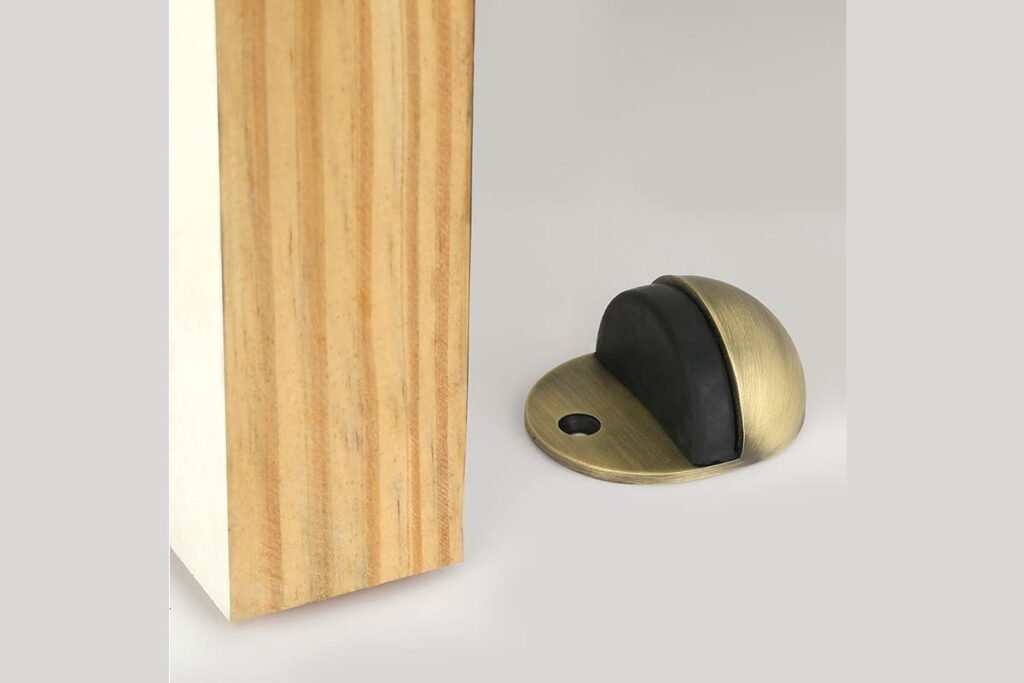
What Are the 5 Benefits of Installing a Door Stopper?
A door stopper looks small, but I often see it affect the whole door hardware system. When a door opens too far, the handle, lock, hinge, wall, and door leaf can all suffer repeated impact.1 A well-matched door stopper gives buyers a simple way to control movement, reduce damage, and lower after-sales complaints2.
The 5 main benefits of installing a door stopper are impact buffering, door fixing, added convenience, safer space control, and opening-angle limitation. For door factories, wholesalers, and project buyers, a door stopper is not only a wall-protection accessory. It is a practical door-control component that helps protect the door leaf, handle, lock body, hinges, wall surface, and surrounding furniture.
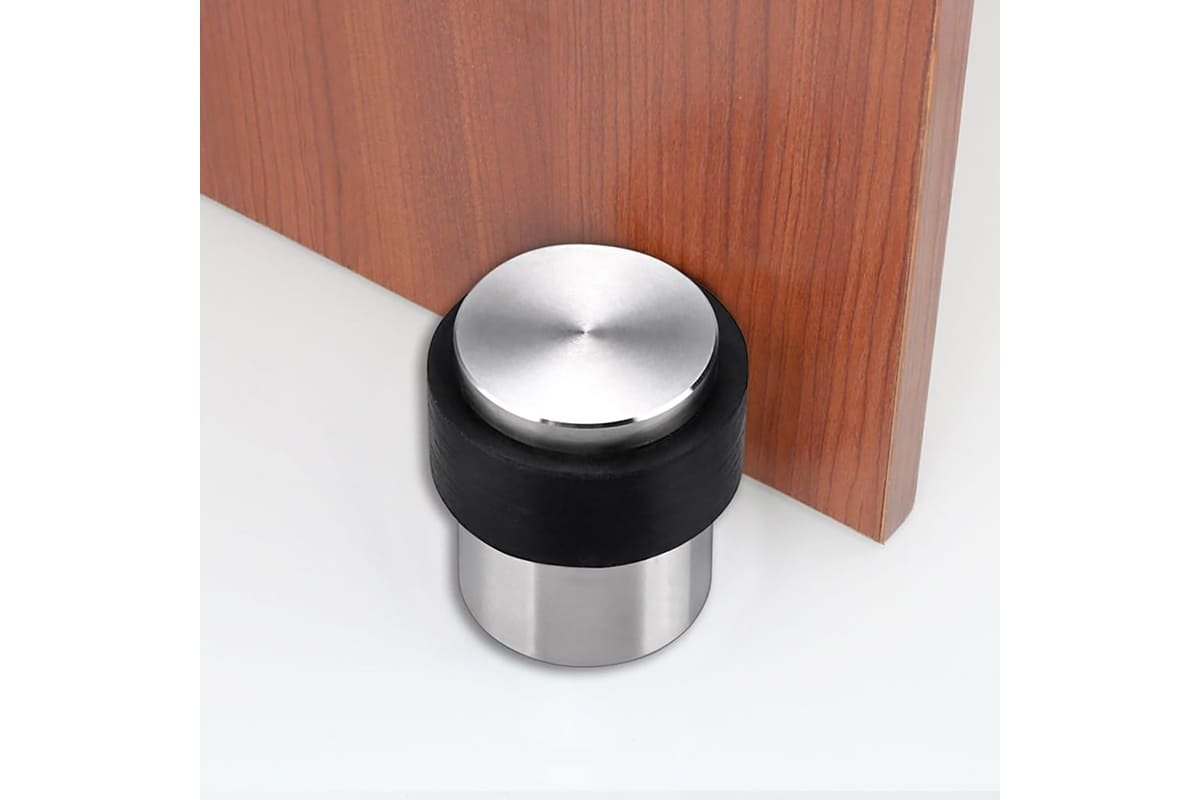
In my experience communicating with door factories and hardware wholesalers, the best door hardware packages are not built from major items only. They also include the small parts that reduce friction in daily use. A door stopper is one of those parts, especially when buyers want fewer complaints after installation.
How Does a Door Stopper Provide Impact Buffering and Hardware Protection?
A door often suffers damage because nobody controls the final part of its swing. The door opens normally at first, then the handle hits the wall, the lock area shakes, or the hinge receives extra stress. I see this issue often in projects where the door stopper was treated as optional.
A door stopper provides impact buffering by absorbing or limiting the force when the door opens3. It helps protect the door leaf, lever handle, lock body, hinge screws, wall surface, skirting line, and nearby fixtures from repeated collision. It also helps reduce noise when users open the door with excessive force4.
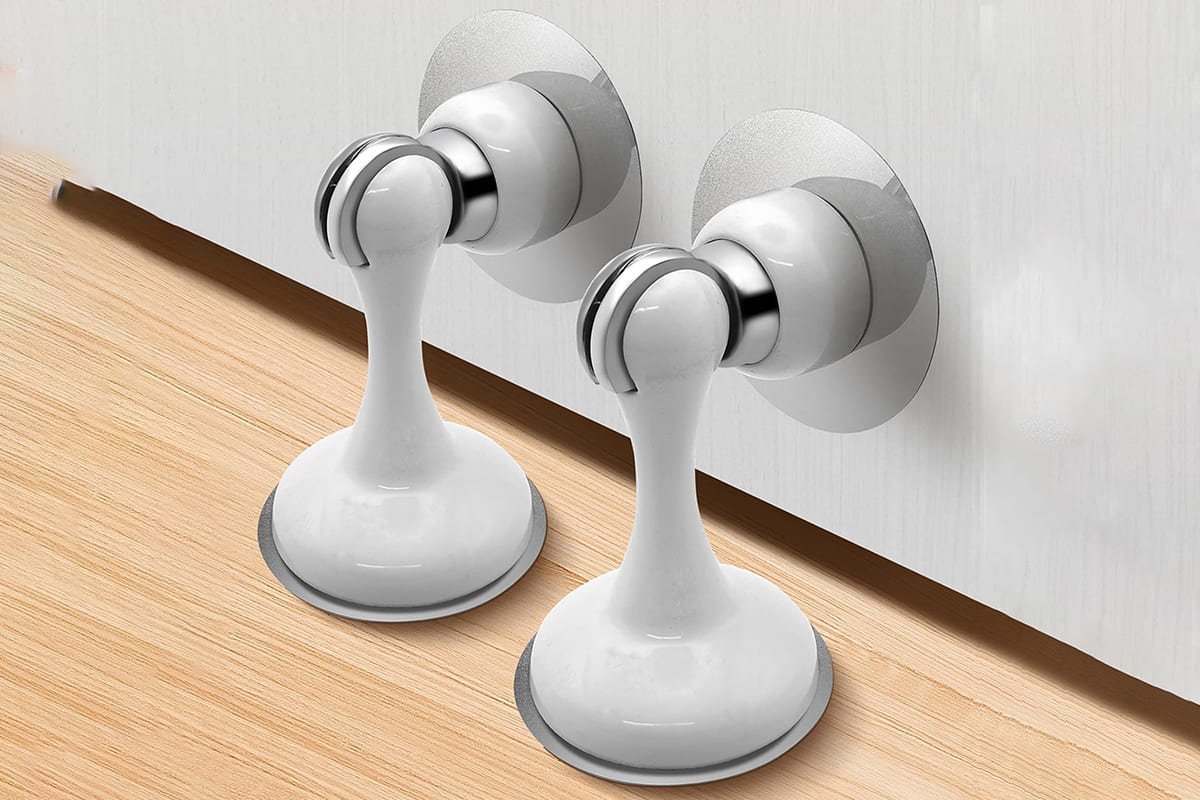
Why impact buffering matters for the full door system
Many buyers think the wall is the only part that needs protection. I see the issue differently because I work with complete door hardware matching. When a door opens too far, the impact path often travels through several connected parts.
A typical impact can affect:
- Lever handle: The handle may hit the wall or furniture first.
- Lock body: The vibration can transfer into the mortise lock area.
- Door leaf: The surface may dent, crack, or show edge damage.
- Hinges: Repeated over-swing can add stress to hinge screws and alignment.
- Wall surface: Paint, plaster, tiles, and panels may suffer visible marks.
- Adjacent hardware: Nearby door closers, frames, cabinets, or trims may be damaged.
This is why I treat a door stopper as part of the door-control system, not as a decoration item. It can reduce direct collision and help the door operate within a safer movement range.
Common impact points buyers should check
Before including door stoppers in a bulk hardware package, I usually suggest buyers review the real door environment. Different rooms create different collision risks.
| Area to Check | Common Risk | Door Stopper Value |
|---|---|---|
| Behind the handle | Handle dents wall surface | Buffers or stops handle impact |
| Door edge | Door leaf hits furniture | Limits swing range |
| Lock side | Lock body receives vibration | Reduces repeated shock |
| Hinge side | Door opens beyond intended range | Helps control stress |
| Wall finish | Paint, plaster, tile, or panel damage | Reduces visible maintenance issues |
Noise reduction is also a practical benefit
In hotels, offices, apartments, schools, and commercial buildings, repeated door impact creates noise. A door stopper cannot make every door silent, but it can reduce the harsh collision sound that happens when the door is pushed open quickly.
For wholesalers and distributors, this matters because end users often describe hardware quality based on daily feeling. A complete door hardware set with a proper stopper can feel more controlled, more finished, and more reliable.
I often remind buyers that one small missing accessory can make an otherwise good lock, handle, and hinge system feel incomplete.
How Can a Magnetic Door Stopper Help Fix the Door Open?
A door that will not stay open can disturb cleaning, moving goods, ventilation, and daily access. Users may use cartons, stones, or wedges as temporary fixes. I do not like this approach because it looks unprofessional and can damage the door surface or floor finish.
A magnetic door stopper helps hold the door open by using magnetic attraction between the door-mounted plate and the stopper body5. It is useful for ventilation, temporary passage, cleaning work, goods movement, and areas where users need the door to remain open for short periods.
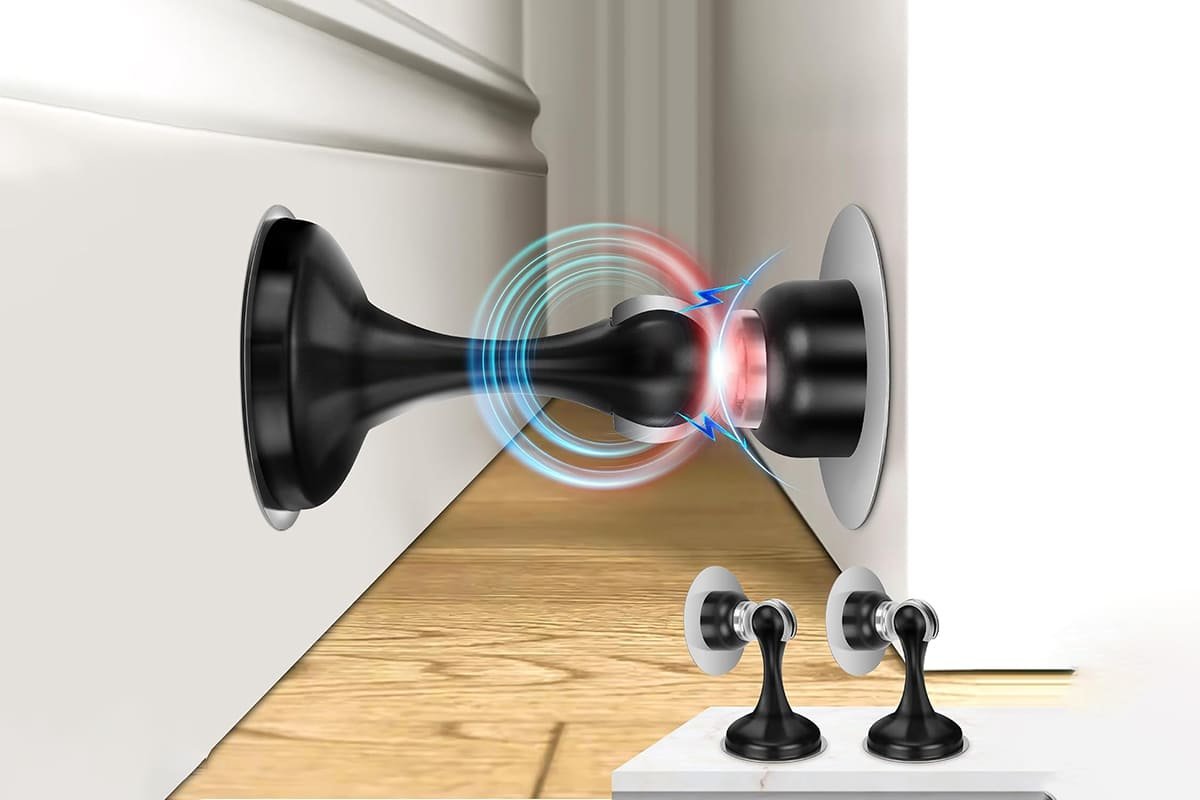
Why door fixing matters in daily use
The second major benefit is door fixing. In many buildings, users do not only need a door to close securely. They also need it to stay open when the situation requires it.
This matters in places such as:
- Apartment corridors
- Office rooms
- Hotel service areas
- Warehouse doors
- School rooms
- Retail back rooms
- Door factory showrooms
- Project sample rooms
A magnetic door stopper gives the door a resting point. It reduces uncontrolled swinging caused by airflow6, user movement, or uneven installation conditions. I would not claim that it replaces professional door closers or hold-open systems in every application. Still, for many ordinary interior doors, it adds useful control.
Magnetic, wall-mounted, floor-mounted, and concealed options
Different door stopper types support different use scenarios. I usually explain the choice by looking at the space, traffic level, floor condition, wall structure, and door hardware package.
| Door Stopper Type | Typical Position | Main Advantage | Buyer Consideration |
|---|---|---|---|
| Magnetic door stopper | Floor or wall | Holds door open | Magnet strength and alignment matter |
| Wall-mounted door stopper | Wall behind door | Keeps floor clear | Wall material must support fixing |
| Floor-mounted door stopper | Floor behind door | Strong stop point | May create tripping concern in some spaces |
| Concealed door stopper | Hidden or low-visibility area | Cleaner appearance | Needs correct matching and planning |
Magnetic models are especially useful when the buyer wants both stopping and holding functions. The door opens, reaches the stopper, and stays in place until the user pulls it away.
Ventilation and temporary access
Ventilation is a simple but important use case. In many markets, users like to keep internal doors open to improve airflow. This can be common in residential buildings, offices, and light commercial spaces.
Door fixing also supports short-term tasks:
- Moving goods through the doorway
- Cleaning floors or rooms
- Keeping service passages open
- Allowing staff to pass repeatedly
- Displaying doors in a showroom
For door set assemblers, this is useful because the door feels more complete when every daily movement has been considered. For wholesalers, it creates a better selling story without making exaggerated claims.
Can a Wall-Mounted Door Stopper Add Extra Functional Value?
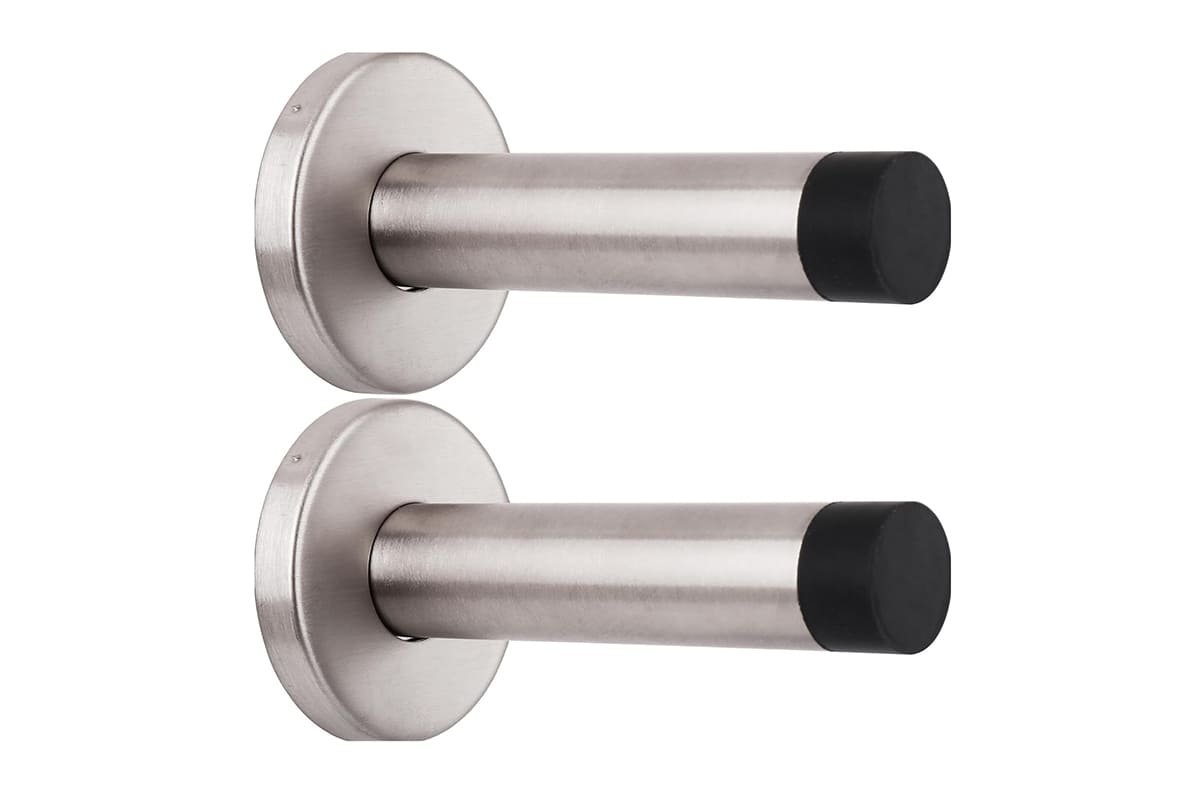
Some accessories create small practical advantages beyond their main function. A wall-mounted door stopper is designed to stop door movement first. However, I have seen certain higher-position designs also work as a simple hook for light daily items, depending on shape, fixing strength, and usage conditions.
A wall-mounted door stopper may provide extra convenience when installed at a suitable height and designed with a hook-like shape. This secondary function can support light hanging needs, but buyers should treat it as added convenience, not the main reason to specify the product.
Extra value should stay secondary
I prefer to be careful with this benefit. A door stopper is not a professional load-bearing hook unless the product is designed, specified, and tested for that purpose7. Still, some wall-mounted stoppers have shapes that allow users to hang a light item, such as:
- A cap
- A small cloth
- A light bag
- A cleaning cloth
- A temporary sign
This can be useful in some interior spaces. However, I would not advise buyers to sell this as the primary feature unless the supplier provides clear load information and the fixing method supports that use.
Why this matters for wholesalers
Wholesalers often compete in markets where many products look similar. Small functional differences can help a product line feel more thoughtful. A clean stainless steel or zinc alloy wall-mounted stopper, matched with the handle finish, can support both appearance and usability.
For example, a distributor may offer a complete hardware package that includes:
- Stainless steel lever handle
- Mortise lock body
- Lock cylinder
- Butt hinges or concealed hinges
- Door stopper in matching finish
- Screws and accessories
When the door stopper finish matches the handle, hinge, and lock plate, the final door set looks more unified. This is important in bulk projects because inconsistent surface color often becomes a complaint even when the product function is acceptable.
Finish consistency is part of functional quality
Many buyers focus only on material and price. I also suggest checking finish consistency, especially for bulk orders. A stopper that looks different from the handle or hinge can weaken the perceived quality of the whole door set.
Common finishes include:
| Finish | Common Use | Buyer Checkpoint |
|---|---|---|
| Satin stainless steel | Modern doors and commercial interiors | Surface grain and color consistency |
| Polished stainless steel | Decorative interior doors | Scratch visibility and packaging protection |
| Black finish | Modern residential and hotel doors | Batch color stability |
| Brass tone | Classic or premium door sets | Color matching with handle and cylinder |
| Nickel or chrome | General hardware markets | Plating consistency and corrosion resistance |
I have seen buyers pay attention to the handle finish but ignore the stopper finish. That creates a mismatch. If the goal is a complete hardware package, the small accessory should follow the same finish logic as the main hardware.
Material and fixing still matter
A wall-mounted stopper must match the wall condition. Lightweight partitions, solid concrete, tile walls, and wooden panels behave differently.8 The product itself may be good, but poor scenario matching can cause loosening or damage.
For procurement teams, the safe approach is to ask suppliers about:
- Main material
- Surface treatment
- Screw specification
- Rubber or buffer material
- Packaging protection
- Recommended use scenario
- Available matching finishes
This keeps the conversation professional and avoids treating the product as only a small add-on.
How Does a Door Stopper Help Improve Safety and Space Control?
A door without movement control can create small but repeated safety concerns. The door may swing suddenly, hit nearby objects, or close the gap too quickly. I avoid saying any stopper can remove all risk, but I do see clear value in controlling door movement.
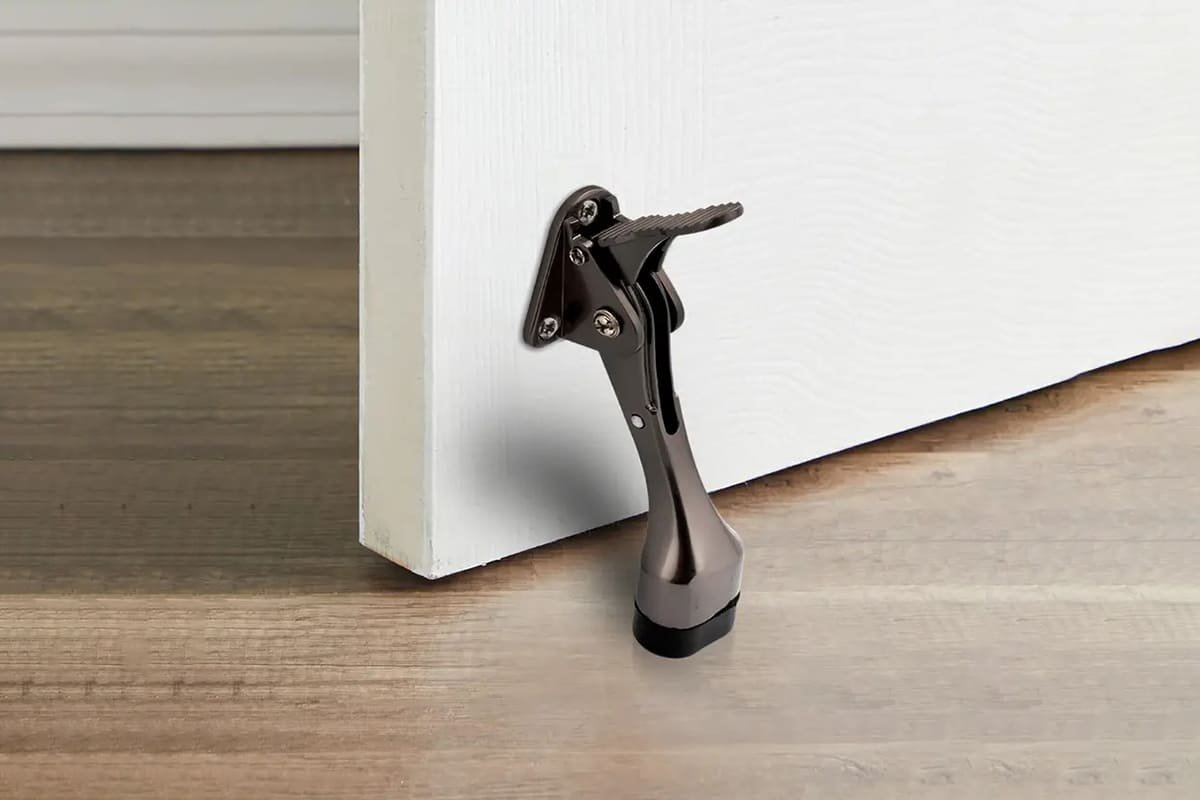
A door stopper helps improve safety and space control by limiting uncontrolled door swing9. It can help reduce finger-pinching risk, protect nearby users, and keep the door from entering unwanted space. Hidden or concealed door stoppers may also reduce tripping concerns compared with exposed floor-mounted designs.
Safety benefit should be described carefully
In B2B procurement, safety language should be accurate. A door stopper does not guarantee that fingers will never be pinched10. It also does not replace all safety devices required in special buildings. However, it can help control swing range, and better control can help reduce common risks.
The main safety-related values include:
- Reduced over-swing: The door does not move endlessly into nearby space.
- Less sudden impact: The stopper creates a defined contact point.
- Better gap awareness: Users can predict where the door will stop.
- Lower risk of hitting furniture: The door does not collide with objects behind it.
- Cleaner passage planning: The door movement fits the room layout.
This is especially important in areas with children, elderly users, high traffic, or narrow spaces. For project-specific decisions, buyers should always consider local building requirements and consult qualified professionals where safety compliance is involved.
Floor-mounted versus concealed designs
Floor-mounted stoppers are common because they are visible, direct, and often strong. However, they can create concerns in some traffic areas. If the stopper sits in a walking path, people may kick it or trip over it11.
Concealed or hidden door stoppers can reduce visual obstruction and help keep the walking area cleaner. They may be useful in higher-end interiors or spaces where appearance and traffic flow both matter.
| Design Choice | Strength | Possible Concern |
|---|---|---|
| Floor-mounted stopper | Strong stopping point and easy to understand | May be exposed in walking path |
| Wall-mounted stopper | Keeps floor clear and protects handle area | Needs suitable wall structure |
| Concealed stopper | Cleaner appearance and less visible obstruction | Needs better planning and matching |
| Magnetic stopper | Holds door open and controls swing | Requires correct door alignment |
I do not recommend one type for every project. I prefer to match the stopper to the door weight, usage frequency, room layout, and customer expectations.
Space control protects the door package
A controlled door swing protects the products that buyers already paid for. This includes lever handles, mortise locks, lock cylinders, hinges, and the door leaf itself. When a door swings violently, the issue may appear as a handle complaint, hinge loosening, or wall damage. The root cause may simply be poor movement control.
For door factories, adding a suitable door stopper can reduce the chance that the end user blames the whole door set for damage caused by repeated impact. For wholesalers, it can reduce small but costly after-sales discussions.
I have learned that buyers often remember the problem part, not the missing accessory. If the handle hits the wall, they complain about the handle finish. If the hinge loosens, they complain about hinge quality. A suitable stopper helps reduce this chain reaction.
Why Is Opening-Angle Control One of the Key Door Stopper Benefits?
Door opening angle is easy to ignore during product selection. However, once the door is installed, the wrong swing range can cause damage every day. The door may hit a cabinet, another door, a glass panel, a radiator, or a wall corner.
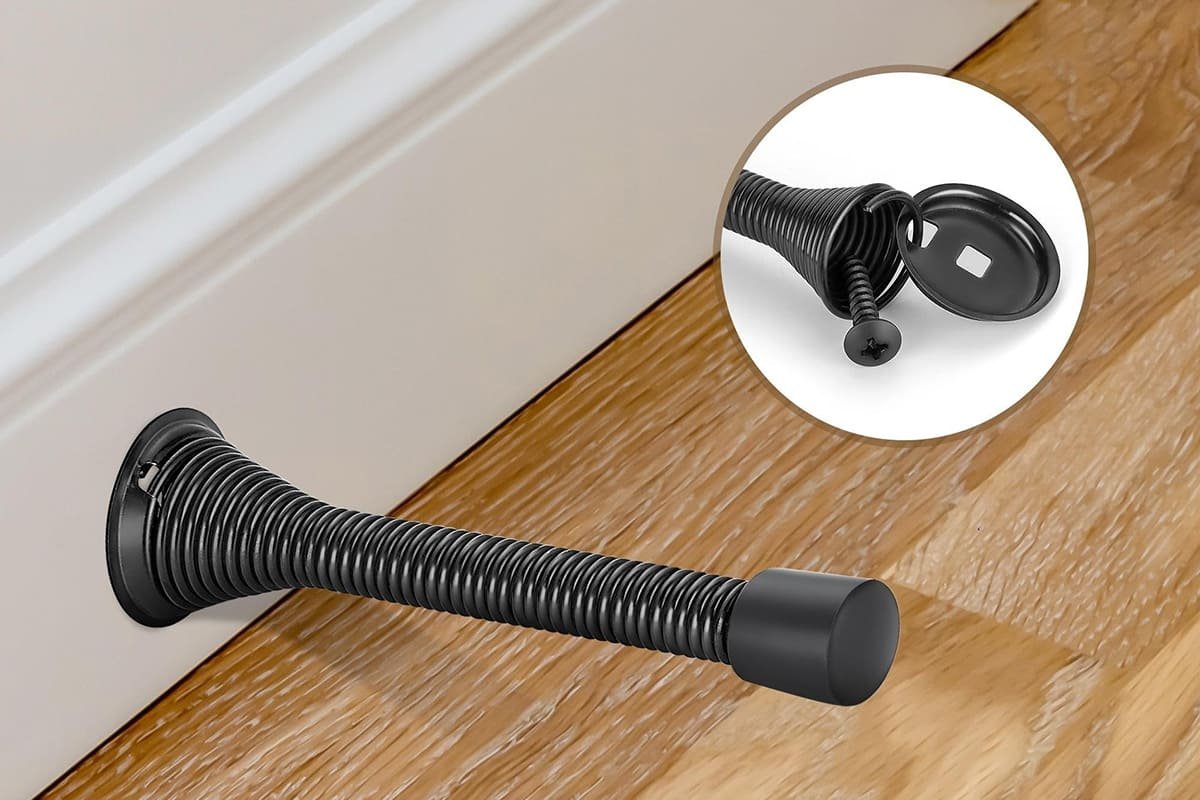
A door stopper controls the door opening angle by creating a fixed stop position12. It helps prevent the door from hitting furniture, walls, adjacent fixtures, nearby hardware, or another door. This benefit is especially useful in narrow rooms, corridors, apartments, hotels, and commercial interiors.
Opening angle affects layout quality
Door hardware works inside a real space. The best handle and lock can still create problems if the door opens into the wrong area. This is why I see opening-angle control as one of the most practical benefits for project buyers.
A door stopper helps define the door’s final position. This supports better planning for:
- Furniture placement
- Wall protection
- Cabinet clearance
- Adjacent door movement
- Corridor traffic
- Cleaning access
- Door handle protection
- User comfort
In apartment projects, a bedroom door may open near a wardrobe. In hotel rooms, a bathroom door may open near glass or tile. In offices, doors may open near desks, partitions, or other doors. In all these cases, the stopper can help prevent repeated contact.
Buyers should match the angle to the room
The right opening angle depends on the layout. A door does not always need to open to 180 degrees. In many rooms, 90 to 110 degrees is more practical. In other areas, wider opening may be required for moving goods or accessibility needs.
Procurement teams should consider:
- Door width and weight
- Door leaf material
- Handle projection
- Wall and floor material
- Traffic frequency
- Nearby furniture or fixtures
- Need for ventilation or hold-open function
- Regional user habits
- Project requirements
- Maintenance expectations
This is not an installation guide, but these factors affect product selection. A stopper that works well in a bedroom may not suit a warehouse passage. A floor-mounted model may be acceptable in one corridor but not in another.
Door stoppers and complete hardware packages
For door factories and wholesalers, the commercial value is clear. When buyers include door stoppers in the complete door hardware package, they reduce the risk of mismatched accessories later.
A complete package may include:
- Mortise lock
- Lever handle
- Lock cylinder
- Butt hinge or concealed hinge
- Door stopper
- Strike plate and screws
- Other matching accessories
This helps keep the finish, material level, and quality standard consistent. It also makes procurement easier because the buyer does not need to source the stopper separately from another supplier.
From a manufacturing perspective, I believe consistency is one of the strongest reasons to include this component. The stopper may be small, but if its color, rubber part, screw quality, or packaging is poor, it can reduce the perceived value of the whole door set.
A simple evaluation checklist
When sourcing door stoppers in bulk, I suggest using a simple checklist:
| Evaluation Item | Why It Matters |
|---|---|
| Type | Magnetic, wall-mounted, floor-mounted, or concealed options serve different spaces |
| Material | Stainless steel, zinc alloy, rubber, and magnetic parts affect durability |
| Finish | Finish should match handles, hinges, and lock plates |
| Buffer quality | Rubber or soft contact parts affect noise and impact control |
| Magnet strength | Magnetic models must hold the door reliably in normal use |
| Screw and accessory quality | Poor fixing parts can cause loosening |
| Packaging | Surface finish needs protection during transport |
| Supplier consistency | Bulk orders need stable dimensions and appearance |
This evaluation approach helps buyers avoid treating a door stopper as the cheapest possible accessory. The goal is not to over-specify. The goal is to match the correct quality level to the door set and market position.
Frequently Asked Questions
Is a door stopper necessary for every door?
A door stopper is not necessary for every door, but I recommend evaluating it for most interior door hardware packages. It is especially useful where the handle, wall, furniture, or adjacent fixture may be hit during opening. Buyers should match the type to the space and traffic condition.
What is the difference between a magnetic door stopper and a normal door stopper?
A magnetic door stopper can both stop the door and hold it open through magnetic attraction. A normal non-magnetic stopper mainly limits impact and opening range. Magnetic types are useful for ventilation, cleaning, temporary access, and spaces where users often need the door to remain open.
Are floor-mounted door stoppers better than wall-mounted door stoppers?
Floor-mounted door stoppers are not always better. They can provide a strong stop point, but they may be exposed in walking areas. Wall-mounted stoppers keep the floor clear, but the wall must support fixing. I suggest choosing based on layout, wall condition, floor condition, and user traffic.
Can a door stopper help protect hinges and locks?
Yes, a door stopper can help protect hinges and locks by reducing repeated over-swing and impact vibration. It does not replace correct hinge, lock, or door installation, but it supports the full hardware system by controlling the door’s final opening position.
What should bulk buyers check before sourcing door stoppers?
Bulk buyers should check type, material, surface finish, buffer part quality, magnet strength if applicable, screw accessories, packaging, finish consistency, and supplier production stability. They should also confirm whether the selected stopper matches the door weight, use scenario, and regional market expectations.
Conclusion
A door stopper is a small component with a practical role in the complete door hardware system. It buffers impact, helps fix doors open, adds secondary convenience, supports safer space control, and limits the opening angle. For door factories, wholesalers, and distributors, I suggest treating it as part of the hardware package rather than an afterthought. When sourcing in bulk, consider type, material, finish, durability, matching consistency, and use scenario. If you need complete door hardware matching support, SDH Hardware can help evaluate suitable options for your market and project requirements.
"STRONGEST HOME Door Stoppers (Medium) 2"", https://www.amazon.com/STRONGEST-HOME-Protector-Knobs-2-Inch/dp/B08958WBQN. Architectural-hardware guidance describes door stops as devices used to limit door travel and prevent damaging contact with adjacent walls, fixtures, or hardware, supporting the claim that uncontrolled over-opening can affect multiple parts of a door assembly. Evidence role: mechanism; source type: institution. Supports: A door stop or door holder is used to limit door travel and prevent contact between the door, hardware, and adjacent surfaces.. Scope note: The source would support the general damage mechanism rather than documenting every listed component in one empirical test. ↩
"Research on the influence of after-sales service quality ...", https://www.academia.edu/45436821/Research_on_the_influence_of_after_sales_service_quality_factors_on_customer_satisfaction. Research on product quality and service recovery links preventable defects and damage to customer complaints and warranty or after-sales costs, providing contextual support for the claim that damage-control accessories may reduce complaint frequency. Evidence role: general_support; source type: paper. Supports: Reducing preventable product damage or defects is associated with fewer maintenance issues, warranty claims, or customer complaints.. Scope note: This would be contextual support unless the source specifically measures door stopper use and after-sales complaint rates. ↩
"Experimental study on the energy absorption ...", https://ui.adsabs.harvard.edu/abs/2021E. Engineering literature on elastomeric impact buffers explains that rubber or similar viscoelastic materials dissipate part of the impact energy and can reduce peak contact force, supporting the stated buffering function of a door stopper. Evidence role: mechanism; source type: paper. Supports: Elastomeric or buffer components can dissipate impact energy and reduce peak contact forces.. Scope note: The source would explain the material mechanism generally and may not test the specific door stopper model discussed. ↩
"Simulation study on noise reduction of electric vehicle tire with ...", https://acta-acustica.edpsciences.org/articles/aacus/full_html/2025/01/aacus240033/aacus240033.html. Studies of impact damping and noise control show that compliant materials such as rubber can reduce vibration and impact sound at contact points, supporting the claim that a buffered stopper can lessen harsh door-impact noise. Evidence role: mechanism; source type: paper. Supports: Damping materials and soft contact surfaces can reduce impact vibration and associated noise.. Scope note: The evidence would support the acoustic mechanism generally, not guarantee a specific decibel reduction for all door installations. ↩
"Ferromagnetism", https://en.wikipedia.org/wiki/Ferromagnetism. A general reference on magnetism explains that magnets exert attractive forces on ferromagnetic materials, which supports the described mechanism by which a magnetic door stopper holds a door-mounted plate against the stopper body. Evidence role: definition; source type: encyclopedia. Supports: Magnetism produces attractive force between a magnet and a ferromagnetic plate or between magnetic components.. Scope note: The source would define the underlying physical principle rather than certify the holding strength of a particular product. ↩
"Airflow patterns through single hinged and sliding doors in hospital ... - PMC", https://pmc.ncbi.nlm.nih.gov/articles/PMC7115809/. Building-science sources describe how pressure differences and airflow across interior openings can exert forces on doors, providing support for the claim that airflow may contribute to uncontrolled door swinging. Evidence role: mechanism; source type: education. Supports: Air pressure differences and airflow in buildings can exert forces on doors and influence opening or closing movement.. Scope note: The source would support the airflow mechanism generally and may not address magnetic door stoppers specifically. ↩
"[PDF] TOPIC: Structural Design - IBC/16/#5 - Portland.gov", https://www.portland.gov/ppd/code-policy/documents/ossc-chapter-16-use-adhesive-anchors-existing-unreinforced-masonry-urm/download. Hardware and fastener guidance emphasizes that load-supporting products require appropriate design, rated capacity, and compatible installation conditions, supporting the caution that a door stopper is not a load-bearing hook unless specified and tested as one. Evidence role: expert_consensus; source type: institution. Supports: Hardware used to support loads should have stated load capacity and appropriate fastening for the substrate and intended use.. Scope note: The support would be based on general hardware-rating principles rather than on all wall-mounted stopper designs. ↩
"Glossary of Anchor Fasteners – Essential Components, Functions ...", https://www.facebook.com/civiltechtime/posts/-glossary-of-anchor-fasteners-essential-components-functions-applicationsanchor-/1394212479504097/. Construction and fastening references explain that anchor type and holding capacity depend strongly on the base material, supporting the claim that lightweight partitions, concrete, tile, and wood panels behave differently when fixing door hardware. Evidence role: mechanism; source type: education. Supports: Fastener holding strength and installation suitability vary across drywall, concrete, masonry, tile, and wood substrates.. Scope note: The source would support substrate-dependent fastening behavior generally, not the performance of a specific stopper or screw set. ↩
"Chapter 4: Entrances, Doors, and Gates - Access-Board.gov", https://www.access-board.gov/ada/guides/chapter-4-entrances-doors-and-gates/. Architectural planning guidance treats door swing and clearance as factors affecting circulation and collision avoidance, supporting the claim that limiting uncontrolled door swing can contribute to safer space control. Evidence role: general_support; source type: institution. Supports: Door movement and swing clearance are recognized planning factors in building safety and circulation.. Scope note: The source would support the planning rationale and may not prove a quantified injury reduction from door stoppers alone. ↩
"Door Finger Guards - ARTE VIVA - Finger Protectors for Doors", https://arteviva.com/door-finger-guards/. Public-safety guidance on door finger entrapment identifies multiple pinch points around doors, including hinge and closing edges, supporting the qualification that a door stopper cannot guarantee prevention of all finger-pinching injuries. Evidence role: expert_consensus; source type: government. Supports: Door-related finger injuries can occur at pinch points such as hinges and closing edges, and no single ordinary stopper eliminates all such risks.. Scope note: The source would address door-injury mechanisms generally and may not evaluate the protective effect of stoppers specifically. ↩
"1910.22 - General requirements. | Occupational Safety and ...", http://www.osha.gov/laws-regs/regulations/standardnumber/1910/1910.22. Government walking-surface safety guidance recognizes obstructions and projections in travel paths as potential trip hazards, supporting the concern that an exposed floor-mounted stopper may be kicked or tripped over if placed in a walking route. Evidence role: general_support; source type: government. Supports: Objects or obstructions in walking paths can contribute to trip hazards and should be considered in walkway design.. Scope note: The source would support the general hazard principle rather than classify every floor-mounted stopper as unsafe. ↩
"SAS-V | CONCEALED DOOR RESTRICTOR", https://global.sugatsune.com/global/en/arch/news/new-products/2025/sas-v. Reference descriptions of door stops define them as devices that stop or limit a door's movement, supporting the statement that a stopper controls opening angle by creating a fixed stop position. Evidence role: definition; source type: encyclopedia. Supports: Door stops are devices that stop or limit a door's movement at a chosen position.. Scope note: The source would support the functional definition and would not determine the correct angle for a particular room layout. ↩