How to Install Double Action Hinges: What Common Issues May Occur?
Double action hinges can create expensive rework when buyers treat every two-way swing system as the same product. The problem starts with wrong selection, gets worse during mortising or alignment, and ends as sagging, noise, or poor return performance. The solution is to match the hinge system, door condition, and installation method before production begins.
To install double action hinges correctly, first identify the system: spring-loaded double action butt hinge, floor/ceiling pivot hinge, or floor spring. Each requires different door preparation, load matching, alignment, and adjustment. Most common issues come from wrong product selection, poor mortising, weak frame or floor conditions, incorrect spring tension, or unsuitable door weight.
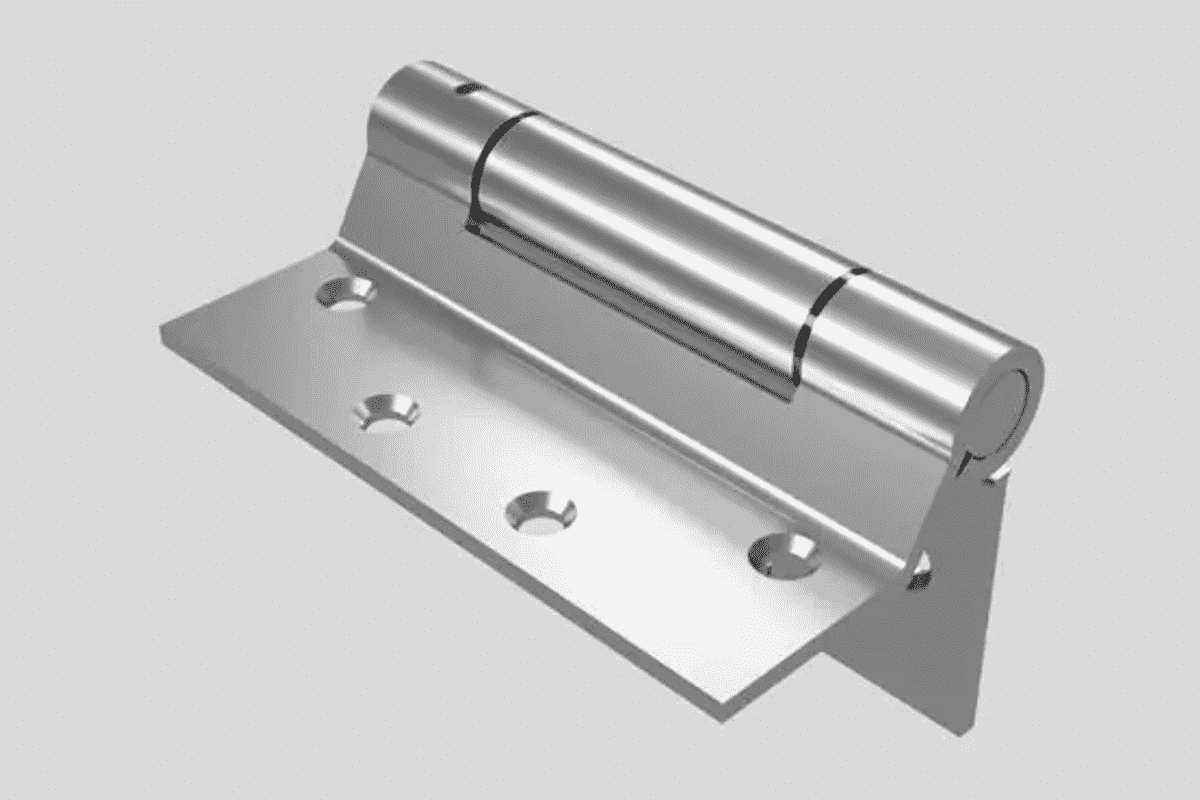
In my customer consultations, I often see one misunderstanding: buyers ask for “double action hinges” as if there is only one installation method. In real projects, the correct method depends on the door material, traffic frequency, weight, width, and commercial scene.
Which Double Action Hinges Are You Really Installing?
Double action hinges can solve two-way swing requirements, but the wrong type can create problems before the first screw is fixed. If a buyer selects only by appearance or price, the door may not return smoothly, may sag, or may fail under frequent use.
The first step is to separate the three common double-action systems: spring-loaded double action butt hinges, floor/ceiling pivot hinges, and floor springs. They are not interchangeable. Each system has different installation surfaces, load limits, door material suitability, and adjustment requirements.
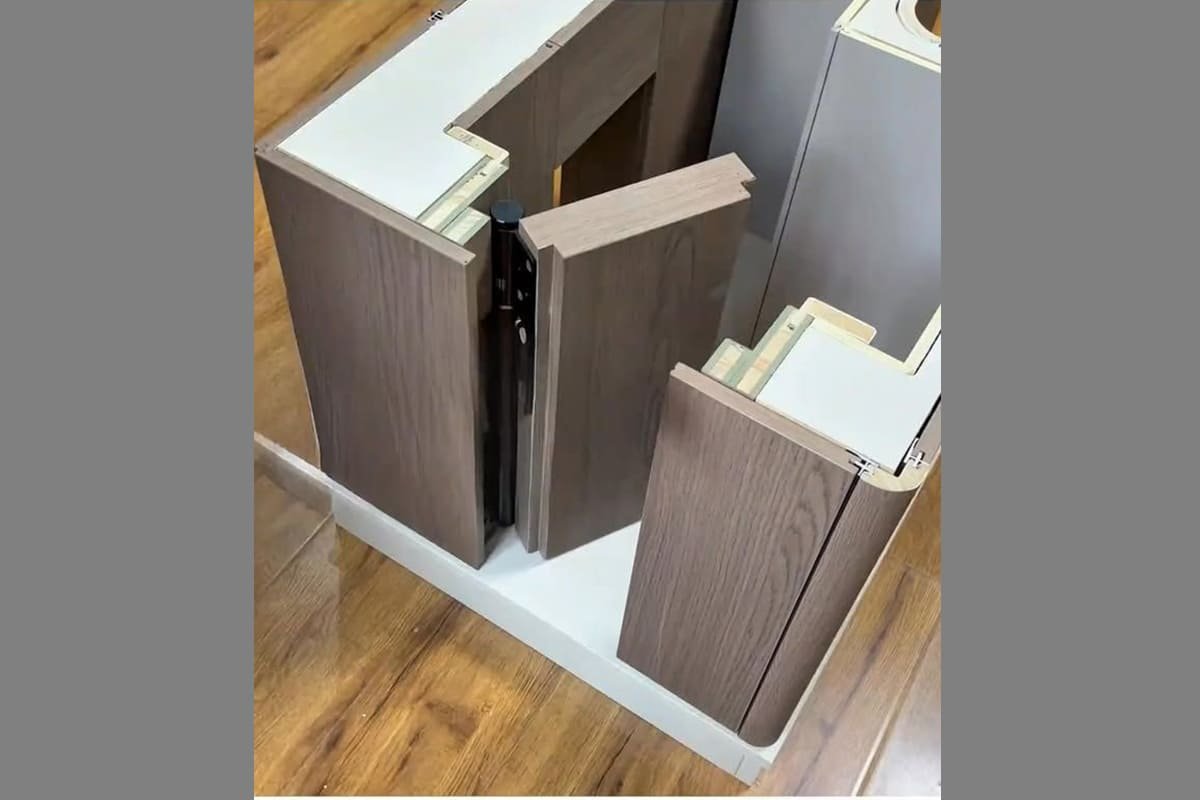
The three common double-action solutions
In procurement discussions, I usually ask customers one basic question first: “What kind of door are you using?” The answer changes everything. A light wooden swing door in a restaurant does not need the same hardware as a heavy entrance door or a commercial glass door.
Here is a simple comparison for B2B buyers:
| Double-action system | Common application | Main installation position | Typical buyer concern |
|---|---|---|---|
| Spring-loaded double action butt hinge | Wooden or metal swing doors in shops, kitchens, restaurants | Mortised into door leaf and frame | Door weight, spring tension, screw holding strength |
| Floor/ceiling pivot hinge | Heavier entrance doors or larger swing doors | Door top/bottom, floor, and upper frame/ceiling area | Vertical alignment, load bearing, floor preparation |
| Floor spring | Commercial glass doors, office entrances, building lobbies | Installed into floor box under door axis | Hold-open function, closing speed, floor cutting, waterproofing |
Why buyers should not use one installation rule
A spring double action butt hinge is closer to a traditional hinge, but it has a spring mechanism that allows the door to swing both ways and return toward center1. It usually needs accurate mortising on the door leaf and frame.2 The installer must also set spring tension according to door behavior.
A floor/ceiling pivot hinge carries the door through pivot points, not through a row of side hinges. It needs better control of the vertical axis. If the pivot line is off, the door may rub, swing unevenly, or drop over time.
A floor spring is different again. It is not simply a hinge replacement. It is usually installed inside the floor and often controls closing speed, positioning, and sometimes hold-open angle. Buyers should verify if the model is suitable for glass thickness, door width, door weight, traffic level, and project requirements.
What I check before recommending a type
When I help customers narrow down a choice, I usually look at:
- Door material: wood, steel, aluminum, glass, or composite
- Door thickness: whether the hinge body can be mortised safely
- Door weight and width3: whether the hardware rating is suitable
- Traffic frequency: light, medium, or high commercial use
- Opening angle requirement: free swing, hold-open, or controlled closing
- Frame or floor strength: whether the fixing base can support movement
- Compliance documents: CE, fire-rated, or other certificates4 when required by the market
For technical projects, I always suggest verifying ratings and certificates against the specific model, not just the product category. A double-action function does not automatically mean the product is suitable for heavy doors, fire-rated doors, or high-frequency commercial entrances.
How Do You Install Spring-Loaded Double Action Hinges Correctly?
Spring-loaded double action hinges look familiar, but they are not ordinary butt hinges. If the mortise is too deep, the frame is weak, or the door is too heavy, the spring function cannot compensate. The result may be noise, poor centering, or loose screws.
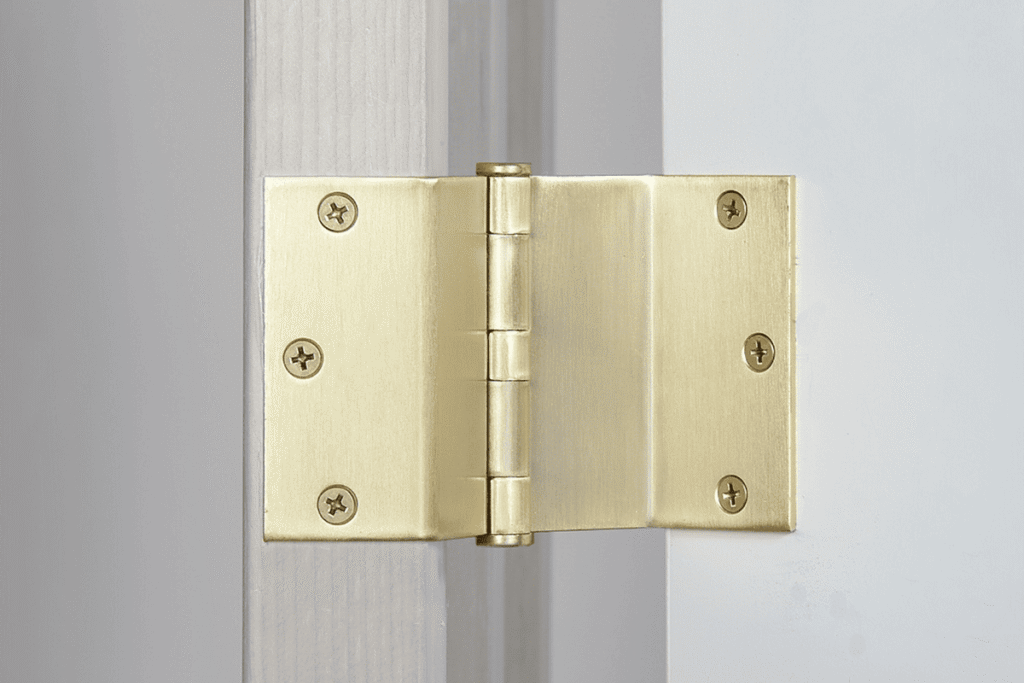
Spring-loaded double action hinges are usually installed by mortising the hinge leaves into the door edge and door frame, then fixing them with suitable screws. The installer checks door clearance, aligns all hinge barrels vertically, and adjusts spring tension after hanging the door.
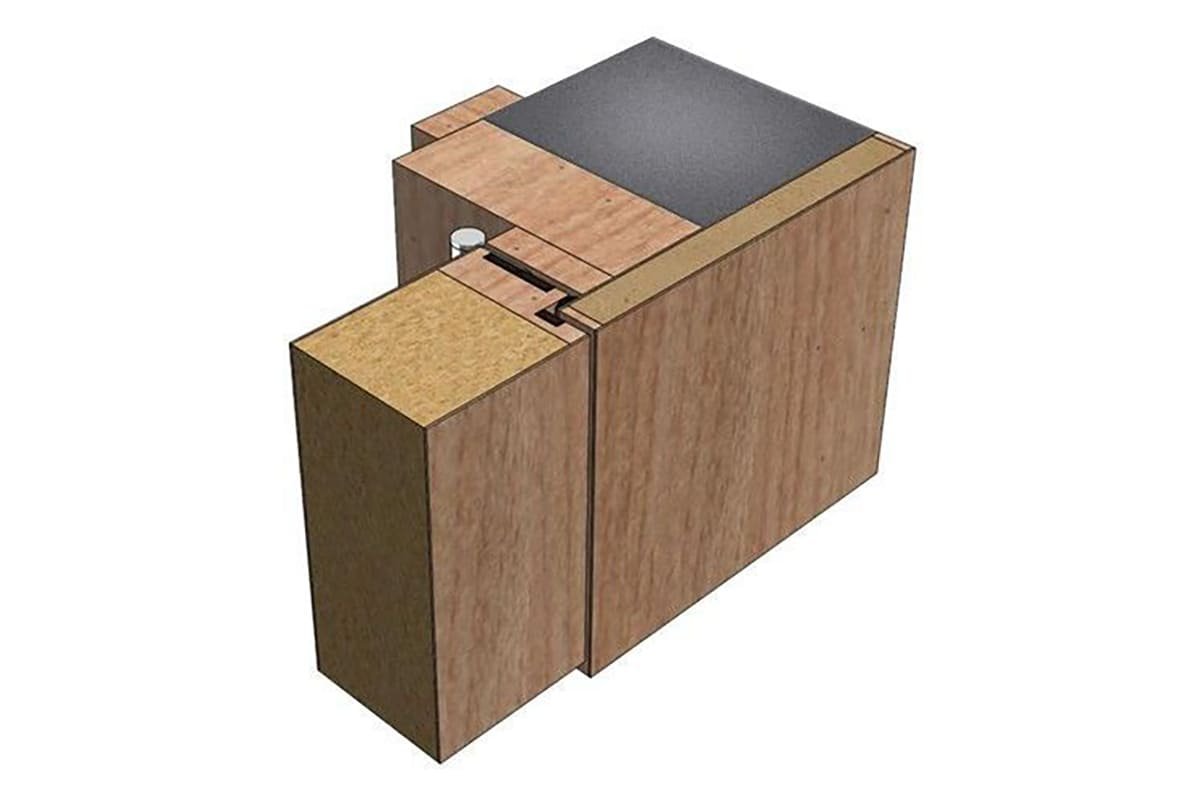
Typical installation sequence
I do not present this as a homeowner DIY guide. In factory production or commercial project work, a qualified installer should confirm the door, frame, and hinge specifications before cutting. However, the general process helps buyers understand where mistakes happen.
A typical sequence is:
Confirm hinge specification
- Check door weight range.
- Check door thickness.
- Check door width and height.
- Check required number of hinges.
Mark hinge positions
- Use consistent positions across batch production.
- Keep enough edge distance for screw strength.
- Avoid weak zones in hollow or filled doors.
Mortise the door and frame
- Cut the recess to match the hinge leaf.
- Keep mortise depth consistent.
- Avoid over-cutting, which can create looseness.
Fix hinges with proper screws
- Use screws matched to the door and frame material.
- Pre-drill where required.
- Avoid tilted screw fixing.
Hang and test the door
- Check equal gaps.
- Test swing in both directions.
- Adjust spring tension gradually.
Key details that affect performance
A spring double action butt hinge needs a stable fixing base. If the frame material is soft, thin, or poorly reinforced, the screws may loosen under repeated swinging.5 This issue is common in high-traffic spaces such as restaurant kitchens and shop entrances.
Buyers should also check whether the door is within the hinge’s rated capacity. A heavy or wide door creates higher leverage.6 Even if the door technically closes during the first test, repeated use can cause sagging or misalignment later.
In after-sales feedback, I have seen cases where the hinge was blamed first. After checking the photos, the real issue was often an oversized door, shallow screw holding, or inconsistent mortising across the batch.
Batch production control points
For door factories and processing companies, consistency matters more than one successful sample. I recommend controlling these points:
| Control point | Why it matters | Buyer inspection method |
|---|---|---|
| Mortise depth | Affects hinge seating and door gap | Use sample gauge or CNC program check |
| Hinge position | Affects alignment and swing path | Compare with approved technical drawing |
| Screw torque | Prevents stripping or under-tightening | Random pull and movement inspection |
| Spring tension | Affects return-to-center performance | Test both swing directions after adjustment |
| Finish protection | Prevents visible scratches during assembly | Use protective film or packing process |
If a customer plans to buy spring double action hinges in bulk, I always recommend sample testing on the real door construction. A catalog size is useful, but the actual frame density, screw holding power, and usage frequency decide the final performance.
How Do Double Action Hinges Differ From Pivot Hinges and Floor Springs?
Double action hinges are often confused with pivot hinges and floor springs because all can allow two-way door movement. This confusion creates specification errors. A buyer may order a side-mounted spring hinge when the project actually needs a floor-controlled system.
Spring double action hinges mount on the side of the door and frame. Pivot hinges carry the door through top and bottom pivot points. Floor springs are recessed into the floor and usually control closing speed and hold-open behavior, especially for glass doors.
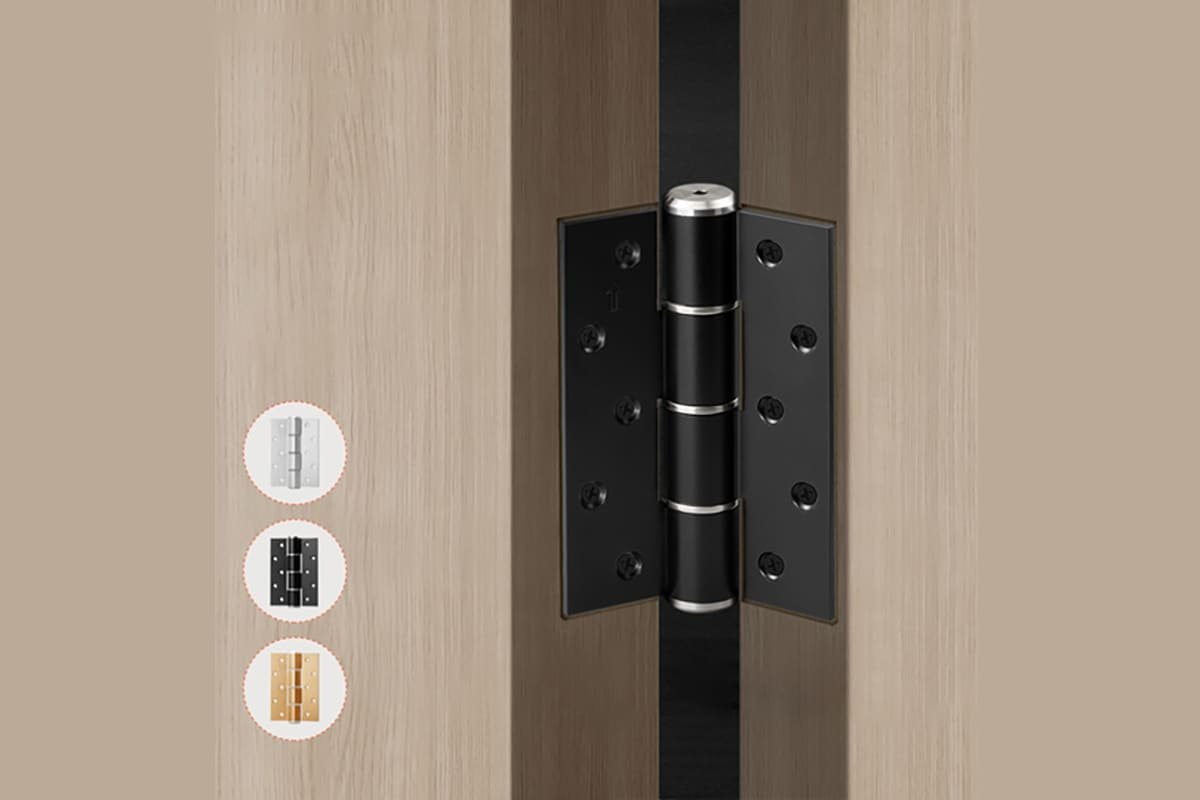
Pivot hinge installation logic
A floor/ceiling pivot hinge uses a different load path. The door weight is carried near the bottom pivot and controlled by the top pivot. This design is often used for heavier entrance doors, but it still must match the rated load and door size.
The most important installation factor is vertical alignment. The top and bottom pivot centers must be on the same axis.7 If the axis is not straight, the door may:
- Swing back unevenly
- Rub against the frame or floor
- Show unequal gaps
- Feel unstable during opening
- Sag after repeated cycles
The installer may need to prepare the door leaf, floor area, and upper frame or ceiling area. In some projects, the floor structure must be checked before installation8. I avoid giving structural advice beyond product scope, so I normally tell buyers to involve qualified installers or engineers when floor strength, entrance load, or public safety is involved.
Floor spring installation logic
A floor spring is common for glass doors in commercial buildings, office entrances, and shopfronts. It is installed into a floor box, usually below the door pivot axis. It can provide controlled closing, speed adjustment, and positioning functions depending on the model.
A floor spring project should consider:
- Door weight and width
- Glass thickness and patch fitting compatibility
- Maximum opening angle
- Hold-open or non-hold-open requirement
- Floor cutting depth
- Moisture, dust, and cleaning conditions
- Traffic frequency and closing speed expectations
Buyers should not treat a floor spring as a simple side hinge. It involves floor preparation and final adjustment. Poor floor cutting, uneven bedding, or wrong box position can cause the door to sit off center or close poorly.
Selection comparison for procurement
| Buyer scenario | Better starting option | Main reason |
|---|---|---|
| Light to medium wooden swing door | Spring-loaded double action butt hinge | Simple side installation and two-way swing |
| Heavier entrance door | Floor/ceiling pivot hinge | Better load path when correctly specified |
| Commercial glass door | Floor spring | Designed for floor control and glass door systems |
| High-frequency restaurant service door | Heavy-duty spring double action hinge or pivot solution | Must match traffic and door construction |
| Project requiring certificates | Model-specific verified product | Certification must match product and application |
When my team supports wholesalers or brand buyers, we often start with a door information form. It reduces mistakes because the hardware type is selected from application data, not from appearance alone.
What Common Issues Occur After Installing Double Action Hinges?
Double action hinges can fail in several visible ways after installation. Buyers often call these “quality problems,” but the cause may be selection, installation, adjustment, door construction, frame strength, floor condition, or an actual product defect.
Common issues include failure to return to center, uneven gaps, sagging, restricted swing angle, noise, loose screws, and unstable positioning.9 The cause should be diagnosed step by step before replacing the hardware or blaming one party in the supply chain.
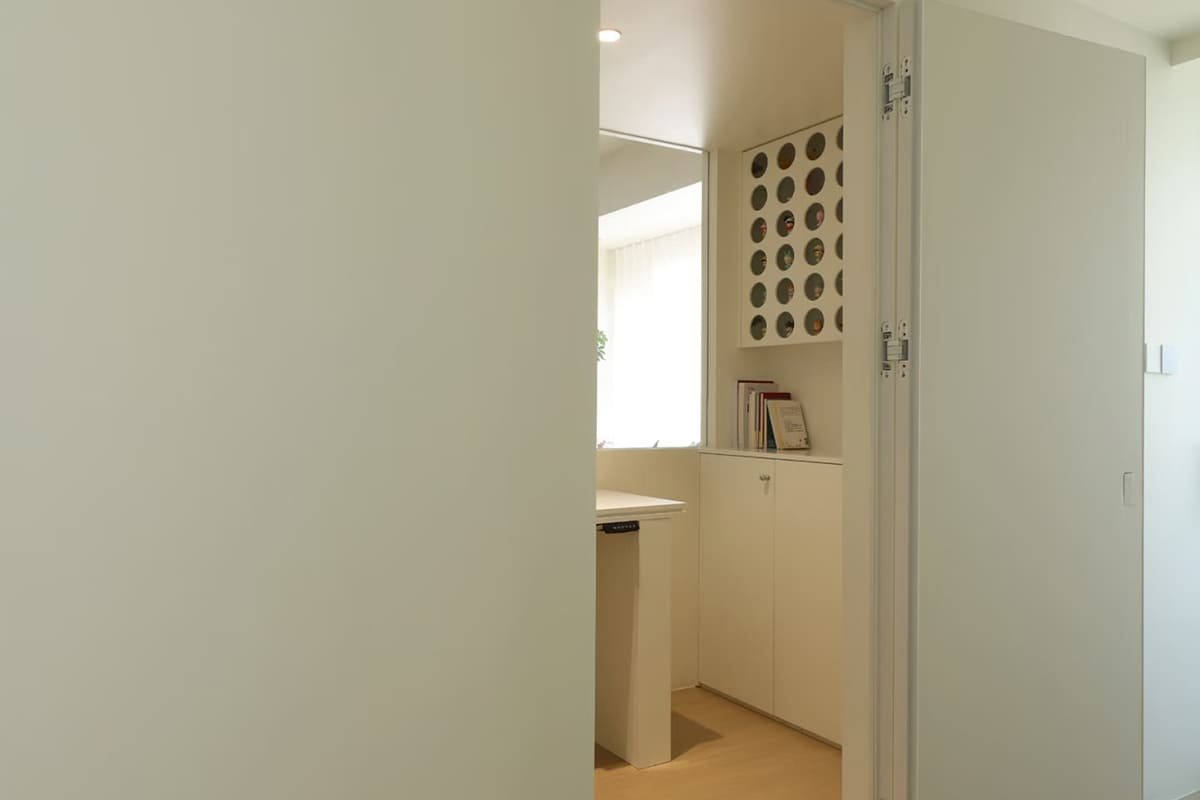
Issue 1: The door does not return to center
A door that stops short of center may have insufficient spring tension, excessive friction, poor vertical alignment, or an oversized door. With spring double action hinges, tension adjustment may improve the result. With floor springs, closing speed and latching speed settings may need professional adjustment.
Possible causes include:
- Spring tension set too low
- Hinge axis not aligned
- Door rubbing against floor or frame
- Door weight exceeding rating
- Floor spring not suitable for door width
- Internal mechanism defect, in rare cases
Issue 2: The door gaps are uneven
Uneven gaps usually point to alignment or preparation issues. The mortise may not be consistent, the frame may not be square, or the pivot axis may be off. In batch door production, this can happen when different workers use different templates or when door frames vary by supplier.
For buyers, the key question is: Does the problem appear on every door or only on some installations? If every door has the same issue, the specification may be wrong. If only some doors have the issue, installation consistency or frame condition is more likely.
Issue 3: The door sags after use
Sagging can happen when the door is too heavy, the screws do not hold, the hinge quantity is insufficient, or the pivot/floor hardware is not rated for the door. A heavier door also creates more force during frequent swinging. This is why I ask for door width as well as door weight.
Here is a practical diagnosis table:
| Symptom | Likely cause | What buyers should check |
|---|---|---|
| Door drops at handle side | Hinge overloaded or screws loosening | Door weight, hinge rating, screw holding |
| Door rubs floor | Poor alignment or sagging | Clearance, hinge axis, frame square |
| Door swings too fast | Spring/floor spring adjustment issue | Tension, closing speed, model function |
| Door makes noise | Friction, loose parts, poor fixing | Screw tightness, hinge seating, lubrication guidance |
| Door cannot open fully | Wrong hinge type or obstruction | Opening angle, frame stop, hardware clearance |
Issue 4: The door is noisy or loose
Noise is not always a sign of a defective hinge. It may come from metal friction, loose screws, an uneven mortise, or stress caused by misalignment. In some cases, the hinge leaf is not seated flat, so every swing creates movement between the hinge and door edge.
Loose hardware is more serious in commercial use. If a restaurant service door swings hundreds of times per day, small movement becomes bigger over time. Buyers should specify stronger door edges, proper screw types, and suitable hinge grades for high-frequency use.
Issue 5: The door cannot hold position
This issue is common when buyers expect every double-action product to hold open at a certain angle. Many spring butt hinges are designed mainly for two-way swing and return. A floor spring may offer hold-open depending on the model, but not every floor spring has the same function.
Before ordering, buyers should confirm:
- Does the door need hold-open?
- At what angle?
- Is hold-open allowed by project safety rules?
- Is the model designed for this function?
- Does the application involve fire-rated requirements?
For fire-rated or escape route doors, buyers should not assume hold-open is acceptable.10 They should verify the project requirement and the specific certified hardware system.
How Should Buyers Prevent Double Action Hinges Installation Problems in Bulk Orders?
Double action hinges are easier to manage when buyers treat installation as part of procurement planning. If the purchase team only checks unit price, the project may pay later through rework, complaints, and delayed delivery.
B2B buyers can reduce problems by confirming door data, selecting the correct hinge system, testing samples on real doors, checking certificates for the specific model, and standardizing installation drawings before mass production or project delivery.
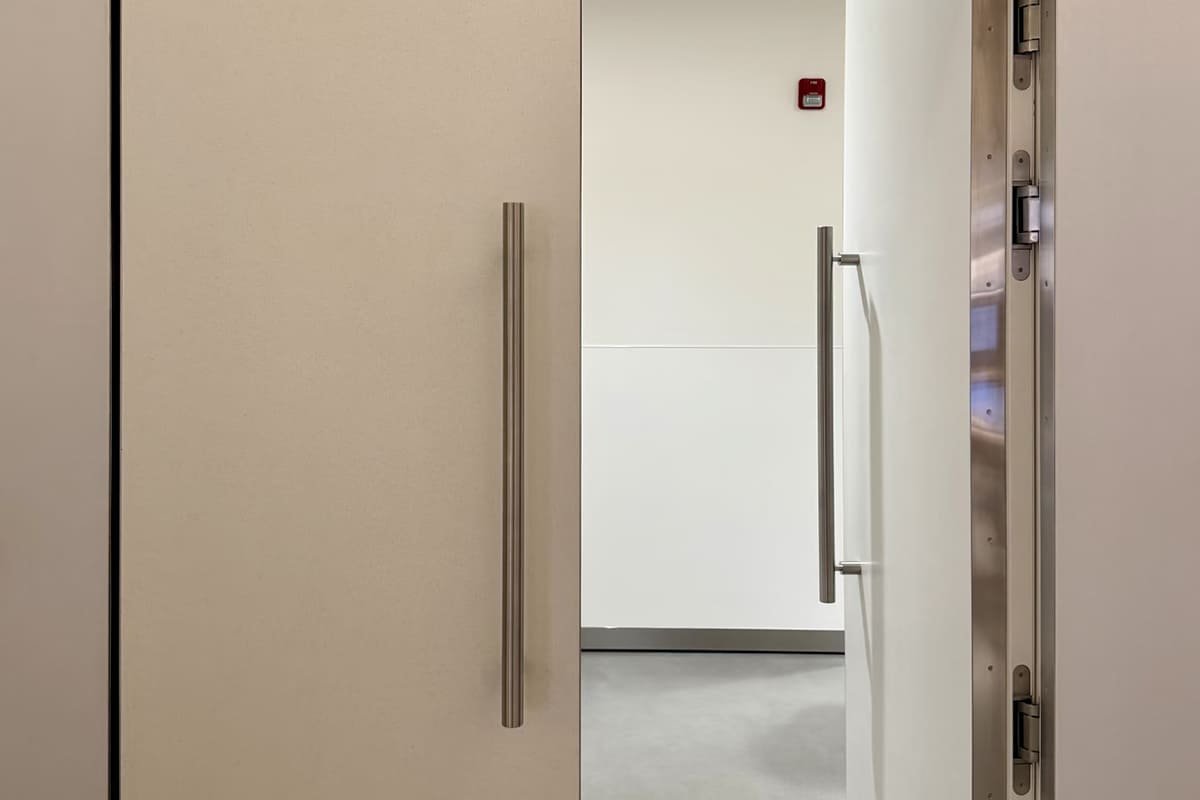
Build a clear specification before ordering
A good inquiry should include more than “Please quote double action hinge.” In my experience, a clear inquiry saves several rounds of correction and avoids wrong recommendations.
I suggest buyers prepare these details:
Door material
- Wooden door
- Steel door
- Aluminum door
- Glass door
Door size
- Height
- Width
- Thickness
Door weight
- Actual tested weight is better than estimated weight.
Usage scene
- Restaurant kitchen
- Retail shop
- Office entrance
- Hotel corridor
- Commercial lobby
Traffic frequency
- Occasional use
- Daily regular use
- High-frequency commercial use
Function expectation
- Two-way swing only
- Self-closing
- Hold-open
- Adjustable closing speed
- Fire-rated system requirement
Market compliance
- CE documentation
- Fire-rated test documents
- Regional project requirements
Use sample testing before mass production
For door factories, one sample door can reveal many problems. The sample should use the real door thickness, real frame material, real screws, and real installation method. If possible, the buyer should test repeated opening and closing, not only one visual inspection.
A simple sample test can check:
| Test item | What it shows |
|---|---|
| Two-way swing test | Whether the door moves freely in both directions |
| Return-to-center test | Whether the door closes as expected |
| Gap inspection | Whether mortising and alignment are correct |
| Screw holding check | Whether the fixing base is strong enough |
| Noise observation | Whether friction or looseness exists |
| Finish inspection | Whether bulk finish matches approved sample |
Separate supplier responsibility from installation responsibility
This point is sensitive, but it matters for long-term cooperation. Not every issue is a product defect. Also, not every issue is an installer mistake. A fair evaluation protects both buyer and supplier.
A useful after-sales review should collect:
- Clear photos of the hinge position
- Door size and weight
- Quantity of hinges used per door
- Frame material and thickness
- Installation drawing or template
- Video of the problem
- Batch number or purchase order
- Adjustment steps already attempted
As a manufacturer and supplier, I prefer this evidence-based approach. It helps us check whether the model was selected correctly, whether the installation matched the drawing, and whether a product-level defect may exist. It also helps buyers reduce repeated problems across future orders.
Verify certifications by model
Many buyers ask for CE or fire-rated certificates, which is reasonable in European, Middle East, and project markets. However, buyers should verify that the document applies to the exact product model, material, size, and intended application.
A certificate is not just a sales claim. It is a document buyers should review, file, and match with project requirements. For fire-rated door systems, I recommend professional evaluation because the full door assembly matters, not only one hinge.
Frequently Asked Questions
Are all double action hinges installed the same way?
No. Spring-loaded double action butt hinges, floor/ceiling pivot hinges, and floor springs require different preparation and installation methods. Buyers should confirm the door material, weight, width, traffic frequency, and required function before selecting the hardware.
Can double action hinges be used for heavy doors?
Some double-action systems can support heavier doors, but not every model is suitable. Buyers should verify the specific load rating, door width range, and installation method. For heavy entrance doors, pivot hinges or floor springs may be more suitable than spring butt hinges.
Why does my double action door not return to center?
The cause may be low spring tension, poor hinge alignment, friction, door sagging, wrong hardware specification, or floor spring adjustment problems. Buyers should diagnose the door, frame, and installation conditions before assuming the hinge is defective.
Do double action hinges work on glass doors?
Most side-mounted spring double action butt hinges are not the normal choice for glass doors. Commercial glass doors often use floor springs with compatible patch fittings.11 Buyers should confirm glass thickness, door weight, floor preparation, and project requirements before ordering.
Should I ask for CE or fire-rated certificates?
Yes, if your market or project requires them. However, you should verify that the certificate applies to the exact model and application. Fire-rated performance usually depends on the full door system, so qualified professional evaluation is recommended.
Conclusion
Installing double action hinges is not only a screw-fixing task. The best result starts with selecting the correct system for the door: spring butt hinge, pivot hinge, or floor spring. Most installation issues come from wrong specification, inaccurate mortising, weak fixing surfaces, poor alignment, or incorrect adjustment. If you are sourcing for door factories, hardware brands, wholesalers, or projects, I recommend confirming door data and testing samples before bulk orders. For model selection and customized door hardware supply, contact SDH Hardware for technical consultation and factory-direct support.
"Ranbo 5 Inch 304 Stainless Steel Double Action Spring Hinges, 1 Pair", https://www.amazon.com/Ranbo-Commercial-Stainless-Automatic-Adjustable/dp/B07DXM3LV3. A technical definition of double-acting spring hinges describes them as hinges that permit door movement in both directions and use spring force to return the door toward a closed position. Evidence role: definition; source type: encyclopedia. Supports: A neutral reference should define a double-acting spring hinge as a hinge that allows movement in both directions and uses spring force to return the door.. ↩
"How to Install a Butt Hinge Mortise - YouTube",
Educational guidance on butt-hinge installation notes that hinge leaves are commonly recessed into accurately cut mortises in both the door and frame so that the hinge seats flush and the door maintains proper clearance. Evidence role: mechanism; source type: education. Supports: An educational or technical source should explain that butt hinges are commonly recessed into matching mortises in the door edge and frame to seat the hinge leaves flush and maintain clearances.. Scope note: This supports the mortising principle for butt hinges generally; individual double-action hinge models may have different manufacturer-specific preparation requirements. ↩"Understanding BS EN 1935:2002 single-axis hinge grades", https://uk.sfs.com/resources/article/understanding-bs-en-1935. Door-hardware standards use door mass, size, and performance class as rating variables, supporting the practice of checking both door weight and width before selecting hinges or closing devices. Evidence role: general_support; source type: institution. Supports: A door-hardware standard should show that hinge or closer ratings are tied to door mass, door size, or related performance classes.. Scope note: The standards provide general rating logic; they do not determine the correct rating for a specific product without the product’s own test data. ↩
"Declaration of Performance and CE marking", https://single-market-economy.ec.europa.eu/sectors/construction/construction-products-regulation-cpr/declaration-performance-and-ce-marking_en. Regulatory guidance on construction products links market access and declared performance to product documentation such as CE marking and declarations of performance, while fire-door rules commonly require evidence that relevant components have been tested or certified for their intended use. Evidence role: general_support; source type: government. Supports: A government or regulatory source should explain that construction products placed on regulated markets may require CE marking or performance declarations, and that fire-door hardware may require evidence of tested performance.. Scope note: This directly supports regulated-market documentation in applicable jurisdictions; requirements vary by country, project specification, and product category. ↩
"[PDF] Wood Handbook, Chapter 08: Fastenings", https://research.fs.usda.gov/download/treesearch/37424.pdf. Research on screw withdrawal resistance shows that fastener holding capacity is influenced by substrate properties such as density, thickness, embedment, and loading conditions, which supports the concern that weak frames can allow hinge screws to loosen during repeated use. Evidence role: mechanism; source type: paper. Supports: A research paper should show that screw withdrawal or holding capacity depends on substrate density, thickness, embedment, or repeated loading.. Scope note: The evidence explains the fastening mechanism generally and may not test the exact hinge, frame material, or commercial traffic conditions described in the article. ↩
"Torque (Moment)", https://www.grc.nasa.gov/www/k-12/airplane/torque.html. Introductory mechanics defines torque as the product of force and the perpendicular distance from the pivot, supporting the statement that heavier or wider doors impose greater moment on hinge or pivot hardware. Evidence role: mechanism; source type: education. Supports: An educational physics source should explain that torque or moment increases with force and lever-arm distance from the pivot point.. Scope note: This establishes the mechanical principle; actual hinge loading also depends on door construction, number of hinges, placement, dynamic impacts, and installation quality. ↩
"Mastering Pivot Doors: A Comprehensive Technical Overview", https://www.doornmore.com/blog/mastering-pivot-doors-a-comprehensive-technical-overview/?srsltid=AfmBOoqCiZntlee_8T_FhCnZppTPp6uxcIJFILGffd_ugi8f4jwTs2QJ. Technical guidance on pivot-hung doors states that the upper and lower pivot points must be aligned on a plumb rotational axis, supporting the link between misalignment and binding or uneven swing. Evidence role: mechanism; source type: institution. Supports: A technical or institutional source should explain that pivot hardware must be aligned on a plumb axis so the door rotates correctly without binding.. Scope note: This supports the installation principle; tolerances and adjustment methods depend on the specific pivot system and door assembly. ↩
"minnesota rules 1991 - MN Revisor's Office", https://www.revisor.mn.gov/rules/1310/date/1991. Building-code guidance requires structural elements and anchorage conditions to be capable of supporting imposed loads, providing contextual support for checking floor structure before installing floor-mounted pivots or floor springs. Evidence role: general_support; source type: government. Supports: A building-code or government construction source should support the general requirement that building elements and anchorage conditions must be capable of resisting imposed loads.. Scope note: The source would support the structural principle rather than specifying when a particular door-hardware installation requires engineering review. ↩
"How to Fix a Sagging Door that Won't Close or is Rubbing - YouTube",
. Facilities-maintenance guidance identifies door sagging, binding, misalignment, loose hinge fasteners, and closing defects as recurring door-hardware problems, supporting the article’s list of common post-installation symptoms. Evidence role: general_support; source type: government. Supports: A government or facilities-maintenance source should document common door and hardware defects such as sagging, binding, poor alignment, loose screws, and closing problems.. Scope note: The source would support common door-hardware symptoms generally and may not focus specifically on double-action hinges. ↩"Fire Doors and NFPA 80 FAQs", https://www.nfpa.org/news-blogs-and-articles/blogs/2025/04/11/fire-doors-faqs. Fire-door standards require fire door assemblies to close and latch when needed and permit hold-open arrangements only where they meet specified automatic-release or closing requirements, supporting the warning not to assume hold-open is acceptable on fire-rated or escape-route doors. Evidence role: expert_consensus; source type: institution. Supports: A fire-code or life-safety standard should state that fire doors generally must be self-closing or automatic-closing and that hold-open devices are allowed only under specified conditions such as automatic release.. Scope note: Specific requirements depend on the adopted code edition, door location, occupancy, and local authority having jurisdiction. ↩
"Patch Fitting", https://www.allwinhardware.com/products/category/104. Architectural glazing guidance describes floor springs and compatible patch fittings as common hardware used to support and control commercial glass door assemblies. Evidence role: general_support; source type: institution. Supports: An architectural, glazing, or standards source should describe floor springs and patch fittings as common components in frameless or commercial glass door systems.. Scope note: This supports common practice for many glass door systems; it does not mean all glass doors require floor springs or that side-mounted options are never appropriate. ↩