
How to Pick Door Hardware for Mid-Century Modern Homes?
Door hardware for mid-century modern homes often fails when buyers focus only on a “retro” handle. That choice can create mismatched finishes, visible hinge conflicts, or incompatible lock parts. I usually recommend treating the handle, hinge, lock body, cylinder, escutcheon, and finish as one coordinated hardware system.
The best way to pick door hardware for mid-century modern homes is to choose clean geometric shapes, coordinated finishes, compatible lock and hinge specifications, and stable bulk supply. The hardware should support the door’s simple visual rhythm instead of becoming heavy decoration or a mismatched collection of separate parts.
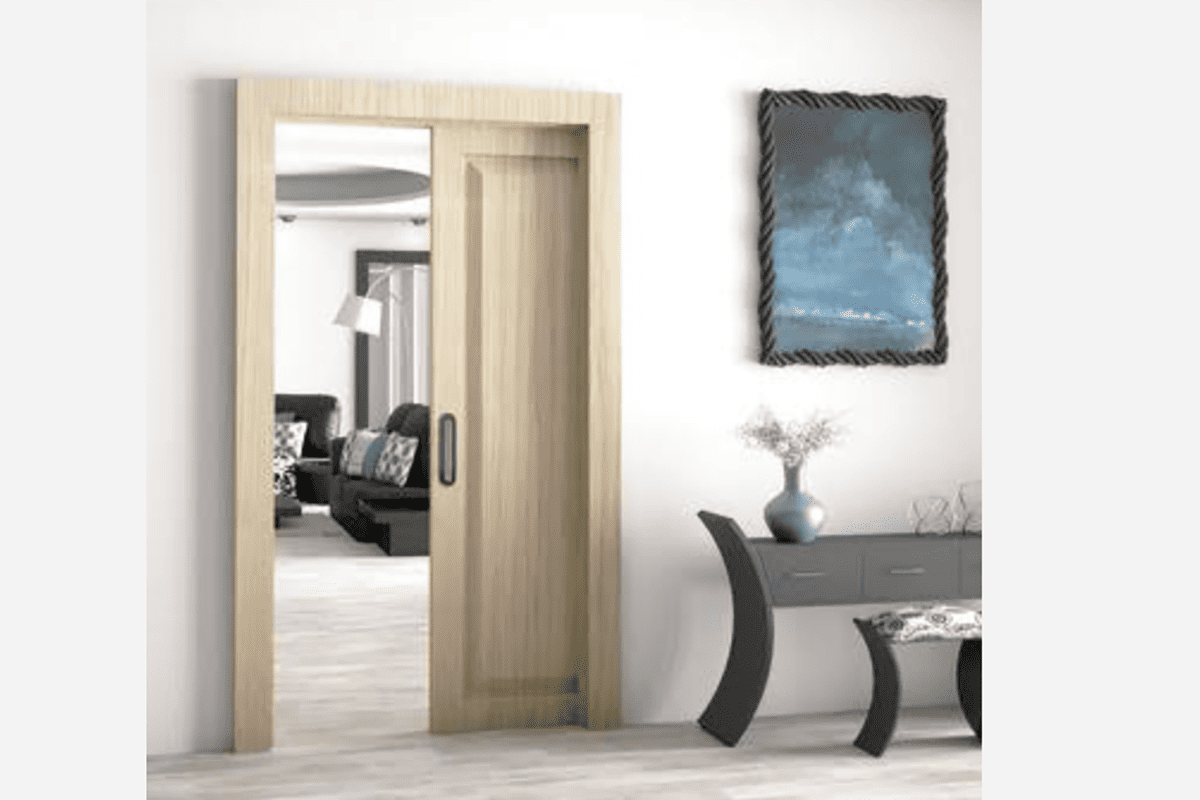
Many buyers start with color or handle shape. I understand why, because the handle is the first item people touch. However, in manufacturing and procurement, the final result depends on a complete set that works visually, mechanically, and commercially.
How should door hardware for mid-century modern homes match the door style?
A mid-century modern door can look simple in a catalog but become visually noisy after hardware is installed. The problem usually starts when the handle, hinge, cylinder, and plate are selected separately. I prefer to begin with the door style first, then narrow the hardware options.
Door hardware for mid-century modern homes should match the door’s clean lines, balanced proportions, and material character1. Buyers should choose hardware that looks simple, fluid, and geometric, while avoiding overly ornate vintage shapes that make the door feel heavy, decorative, or historically retro rather than modern.
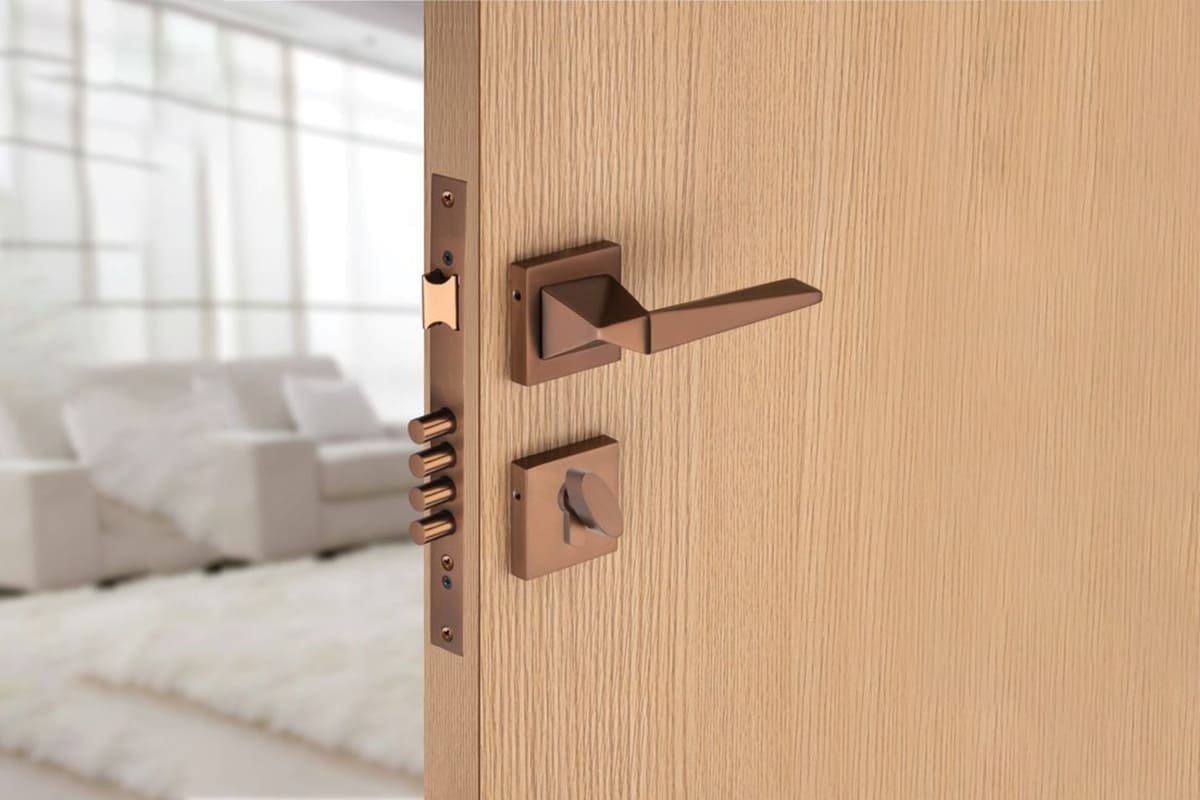
Start with the door, not the handle
In my work with door factories and hardware buyers, I often see one common mistake: the buyer asks for a “mid-century modern handle” before confirming the door surface, panel layout, edge preparation, lock standard, and hinge visibility. That sequence creates risk.
Mid-century modern style usually depends on visual calm2. The door may use:
- Flat wood veneer
- Vertical grain panels
- Flush painted surfaces
- Narrow glass inserts
- Warm natural tones
- Simple rectangular proportions
The hardware should follow this calm structure. It should not fight against it.
What visual qualities matter most?
I usually check four design points before suggesting a handle or hinge set:
| Design factor | What I look for | Why it matters |
|---|---|---|
| Door surface | Flat, grooved, paneled, or glazed | Hardware size must match visual weight |
| Door material | Wood, metal, composite, or painted finish | Finish color reacts differently on each surface |
| Door proportion | Tall, wide, narrow, or standard | Lever length and plate size must feel balanced |
| Hardware visibility | Exposed hinges or concealed hinges | Visible items must share one finish language |
Mid-century modern does not mean “old-looking.” It usually means restrained geometry3. A long slim lever, a neat bar pull, or a cylindrical knob can work better than an ornate antique handle.
Useful product directions
For a coordinated hardware set, I usually suggest shortlisting these product types:
Clean lever handles
A straight or lightly softened lever works well on interior and entrance doors. It feels practical and simple.Slim pull handles
A slim rectangular pull suits sliding doors, pivot-style doors, and some entrance applications.Cylindrical knobs
A simple round knob can work, but the rose and lock configuration must stay clean.Minimalist bar handles
A bar handle can be effective when the door has strong vertical or horizontal lines.Simple escutcheons or plates
A small round rose or clean rectangular plate usually works better than decorative backplates.
I usually remind buyers that the handle is only one visible part. The hinge, cylinder, lock faceplate, strike plate, and screw color can either support or damage the final door appearance.
For B2B buyers, this is also a procurement issue. If a door brand builds a product line around mid-century modern doors, the hardware must be repeatable across orders. A good-looking sample is not enough if the next batch has a slightly different finish, plate shape, or hinge tone.
Which handle shapes work best for door hardware for mid-century modern homes?
A handle can make a mid-century modern door feel refined or confused. The risk appears when a buyer chooses a decorative “vintage” handle instead of a modern geometric form. I recommend treating the handle as a proportional element, not a decorative object.
The best handle shapes for door hardware for mid-century modern homes are clean lever handles, slim pull handles, cylindrical knobs, and minimalist bar handles. These shapes support simple door lines and work better than ornate scrolls, heavy curves, oversized plates, or complicated retro decorative forms.
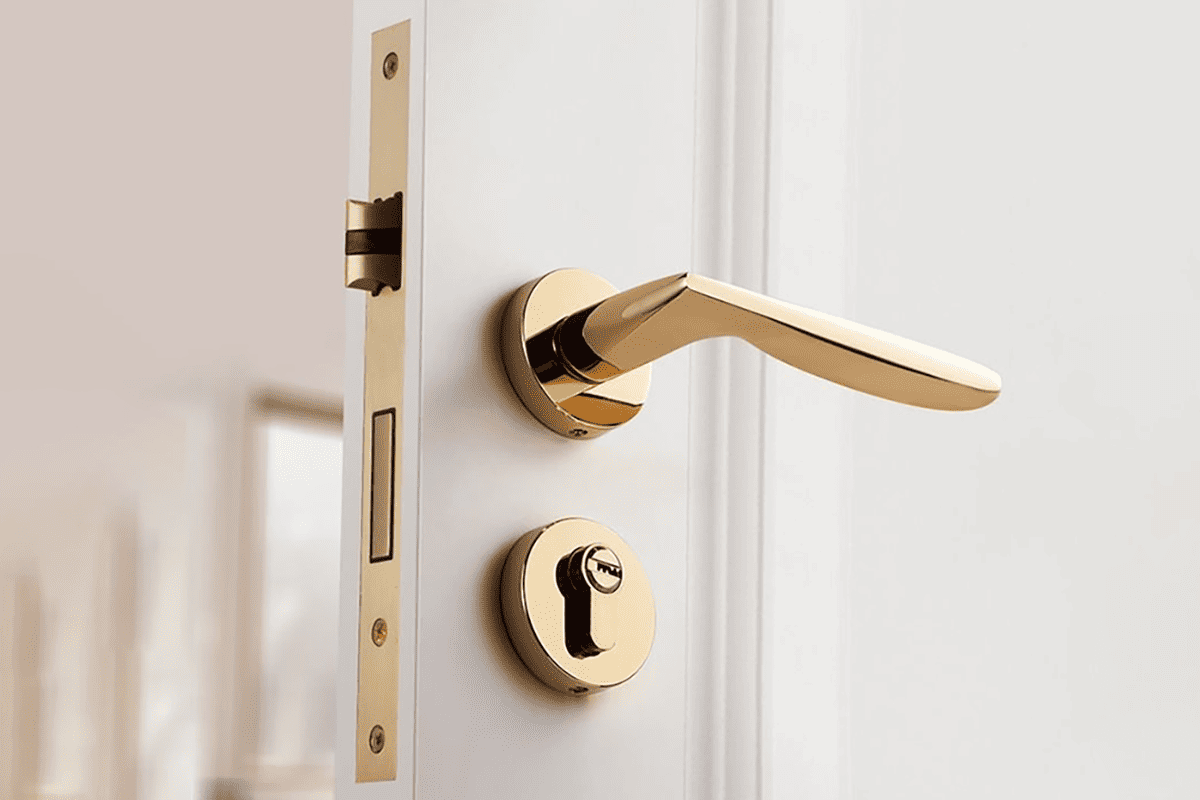
Choose geometry with controlled softness
Mid-century modern interiors often combine straight architecture with warmer materials4. Hardware should follow that same balance. I like handles that are geometric but not harsh. A lever can have a rectangular profile with softened edges. A pull handle can have a simple bar form with comfortable gripping space.
The shape should be easy to understand at a glance. Buyers should avoid handles with:
- Heavy carved details
- Excessive curves
- Ornate backplates
- Traditional floral patterns
- Mixed decorative textures
- Very thick profiles on slim doors
These details may look “classic,” but they usually push the door away from modern simplicity.
Compare common handle options
| Handle type | Best use | Visual effect | Procurement note |
|---|---|---|---|
| Straight lever handle | Interior doors, apartment doors, office doors | Clean and functional | Easy to match with mortise locks and cylinders |
| Slim pull handle | Entry doors, sliding doors, feature doors | Long, elegant, architectural | Confirm fixing method and door thickness |
| Cylindrical knob | Interior doors, simple residential lines | Soft geometric accent | Confirm lock function and regional habit |
| Minimalist bar handle | Modern entrance or commercial doors | Strong linear rhythm | Confirm length, center distance, and finish |
| Lever on rose | Clean residential applications | Minimal visual footprint | Requires neat cylinder or privacy function matching |
| Lever on plate | Doors requiring visible lock panel | More complete hardware expression | Plate size must not look too heavy |
Match handle shape to lock format
I rarely select handles without checking the lock body. For many overseas markets, the buyer must confirm whether the door uses a European standard mortise lock5, a tubular latch, a magnetic lock, or another local format. The handle and lock must match spindle size, center distance, cylinder position, and door preparation.
Common checks include:
- Door thickness, such as 35 mm, 40 mm, 45 mm, or project-specific thickness
- Backset, which affects handle location and latch position
- Center distance, especially for euro standard mortise locks
- Spindle size, often 8 mm in many lever handle systems
- Cylinder type, such as profile cylinder, thumbturn cylinder, or double cylinder
- Rose or plate size, which must cover the prepared holes properly
Think in product families
For wholesalers and door brands, one isolated handle model is less useful than a product family. I usually prefer a collection that can cover several functions:
- Passage doors
- Privacy doors
- Entrance doors
- Bathroom doors
- Fire-rated door projects, where applicable and verified
- Different cylinder and lock requirements
This makes the style easier to scale across SKUs. It also reduces the risk that one door line has four handle styles that look slightly different.
From a manufacturing perspective, the most reliable choice is often the one that combines simple shape, stable tooling, standard lock compatibility, and repeatable finish control. A buyer may see style first, but the supply chain must carry that style through hundreds or thousands of door sets.
What finishes are best for door hardware for mid-century modern homes?
A beautiful finish can still create problems when it does not match across handles, hinges, cylinders, and lock faceplates. The issue becomes worse in repeat orders. I always ask buyers to define both the design direction and the acceptable finish control standard before placing bulk orders.
The best finishes for door hardware for mid-century modern homes include matte black, brushed brass, antique bronze, and brushed stainless steel. The right finish depends on the door material, market preference, and whether the supplier can keep the finish consistent across complete hardware sets and future batches.
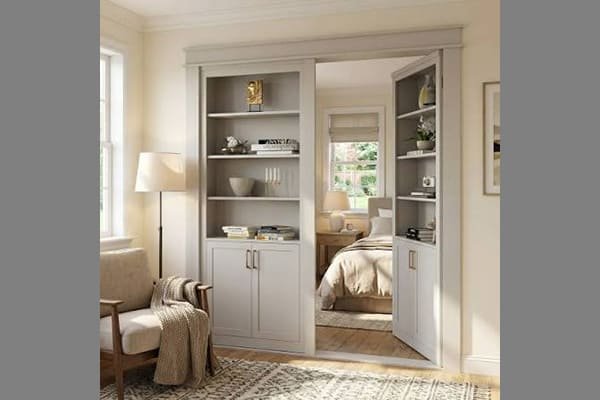
Popular finish directions
Mid-century modern homes often use warm wood, clean wall colors, and simple lines. Hardware finishes should support that palette.
| Finish | Best pairing | Visual character | Buyer risk to check |
|---|---|---|---|
| Matte black | Light wood, white doors, walnut, painted doors | Strong contrast, modern, simple | Surface scratch visibility and batch consistency |
| Brushed brass | Walnut, oak, warm veneer, cream interiors | Warm, refined, slightly vintage | Color tone variation between batches |
| Antique bronze | Dark wood, traditional-modern blends | Warm, deeper, mature | Over-darkening or uneven tone |
| Brushed stainless steel | Commercial doors, cool-toned interiors, modern apartments | Clean, neutral, durable-looking | Direction of brushing and matching accessories |
| Satin nickel | Light wood and contemporary residential doors | Soft, neutral, safe | Market preference and cylinder matching |
I do not treat finish as only a color. Finish is a manufacturing result. It depends on base material, polishing, plating, coating, surface preparation, and inspection procedure.
Finish consistency matters more than trend
For a single homeowner, a slight finish difference may be acceptable. For a door factory, hardware brand, or wholesaler, the same difference can become a return issue.
A complete mid-century modern hardware set may include:
- Lever handle or pull handle
- Rose or backplate
- Mortise lock faceplate
- Strike plate
- Profile cylinder
- Cylinder escutcheon
- Butt hinge or concealed hinge
- Screws and accessories
If the handle is brushed brass but the hinge is yellow-gold, the door loses coherence. If the cylinder escutcheon is shinier than the lever rose, the mismatch becomes visible at eye level. If the second shipment has a different matte black tone, the wholesaler may struggle to support repeat customers.
How I suggest buyers evaluate finishes
I usually recommend a practical finish approval process:
Approve a physical master sample
A photo is not enough. Lighting changes the finish appearance.6Compare all visible components together
Buyers should place handle, hinge, cylinder, lock faceplate, and screws on the same board or door sample.Check the finish under different light
Warm showroom lighting and daylight can show different tones.Define acceptable variation
The buyer and supplier should agree on finish expectations before mass production.Confirm reorder control
The supplier should explain how future orders will match the approved sample.Check packaging protection
Good finish control can be damaged by poor packing during bulk shipment.
Base material also affects finish
Different hardware items may use different base materials. For example, handles may be stainless steel or zinc alloy. Cylinders may use brass profiles. Hinges may be stainless steel. These materials do not always accept finishes in exactly the same way.7
That is why buyers should not only ask, “Can you make brushed brass?” They should ask, “Can you make brushed brass consistently across the handle, hinge, lock faceplate, cylinder escutcheon, and future orders?”
That question separates simple decoration buying from real hardware procurement.
Should visible or concealed hinges be used for mid-century modern doors?
A hinge may look like a small detail, but it can change the whole door face. Buyers often choose handles carefully and then ignore hinge visibility. I see this issue often because exposed hinge barrels can interrupt an otherwise clean modern door design.
Visible butt hinges can work when the hinge finish is intentionally matched to the handle and lock hardware. Concealed hinges work better when the goal is a cleaner and more minimal door surface. The right choice depends on door construction, load requirements, installation habit, and budget.
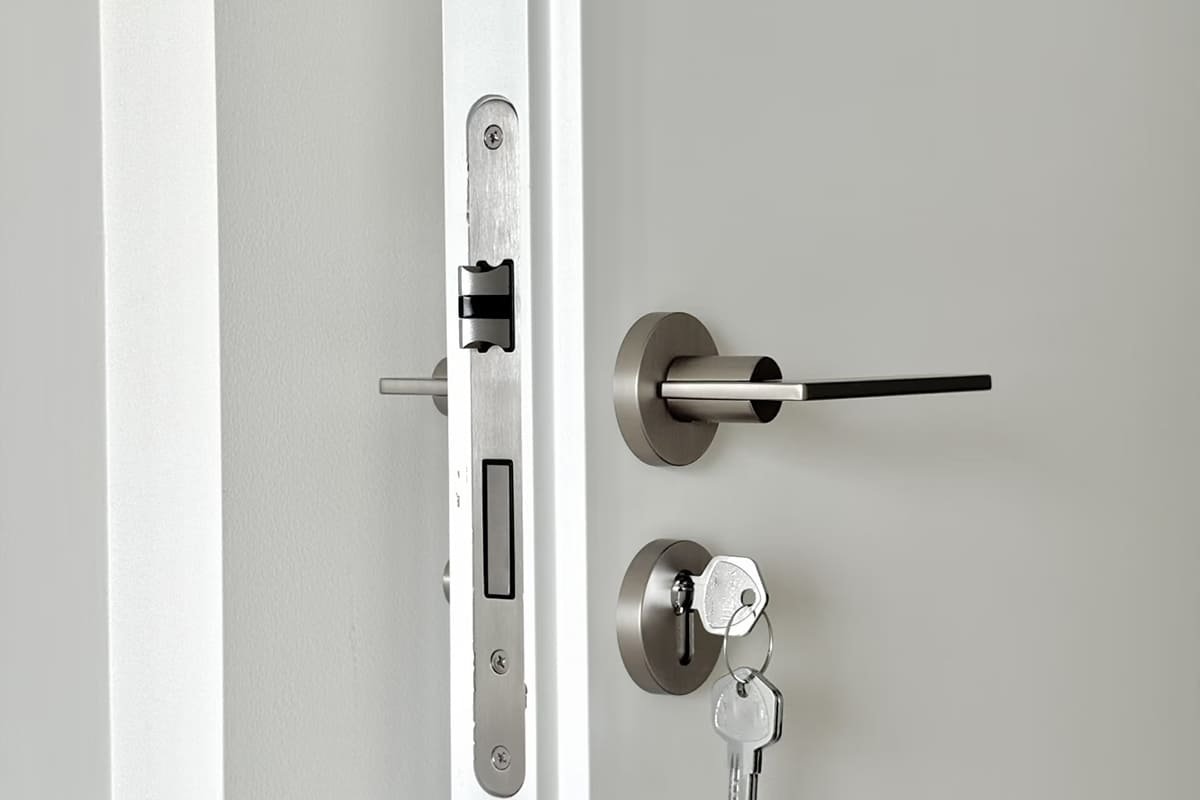
Visible hinges can be part of the design
Butt hinges are common, practical, and familiar to installers in many markets. They can suit mid-century modern doors when the finish is controlled and the hinge size matches the door.
A visible butt hinge works best when:
- The door design accepts visible hardware
- The hinge finish matches the lever or pull handle
- The hinge knuckle does not look oversized
- The screw color matches the hinge leaf
- The door edge preparation is standardized
- The market prefers easy installation and maintenance
In this situation, the hinge becomes part of the hardware rhythm. It should look deliberate, not like a leftover component.
Concealed hinges reduce visual interruption
Concealed hinges are useful when the buyer wants a cleaner door surface. They hide the hinge barrel when the door is closed. This creates a more minimal appearance and helps the handle become the main visible hardware element.
However, concealed hinges require more careful evaluation. Buyers should confirm:
Door weight and size
The hinge must support the door safely.8Door thickness
Concealed hinges need enough material for routing.9Opening angle
Different models support different opening requirements.Frame type
Wood, aluminum, and steel frames may need different preparation.Installation precision
Routing accuracy affects performance and appearance.Adjustment function
Some concealed hinges allow three-dimensional adjustment.Certification requirements
Fire-rated or project doors may require verified documentation.
Compare hinge choices
| Hinge type | Visual result | Main advantage | Main check |
|---|---|---|---|
| Butt hinge | Visible hardware line | Familiar installation and broad use | Finish matching and size selection |
| Ball bearing butt hinge | Visible but smoother for heavier doors | Better movement in many applications | Load rating and door weight |
| Concealed hinge | Clean, hidden appearance | Minimal door face | Door thickness, routing, adjustment |
| Fire-rated hinge | Project and fire door applications | Supports compliance needs | Valid certificate and door assembly suitability |
I avoid making universal claims about which hinge is “best” because hinge selection depends on the door system. For application-specific doors, buyers should consult qualified project engineers, door manufacturers, or local code professionals. Certification documents should also be verified for the exact product and intended use.
The hinge must match the full set
The hinge finish should not be an afterthought. In a complete hardware set, I like to check the hinge together with:
- Handle surface finish
- Lock body faceplate finish
- Strike plate finish
- Cylinder finish
- Screw color
- Door edge color
- Frame color
A concealed hinge may solve one visual problem, but it can create a procurement problem if the door factory cannot route the door consistently. A visible hinge may be easier to install, but it can damage the design if the finish is wrong. The best choice is the one that matches both the design language and the production reality.
How should locks, cylinders, and plates match the hardware set?
A door can have a beautiful handle and still look incomplete if the lock panel, cylinder, or escutcheon does not match. This problem appears often in bulk sourcing because buyers may purchase locks from one supplier and handles from another. I prefer to coordinate them at the selection stage.
Locks, cylinders, escutcheons, and plates should match the handle, hinge, door thickness, and market standard. For mid-century modern doors, buyers should keep these components simple, finish-consistent, and specification-compatible, so the complete set looks unified and installs correctly in the intended market.
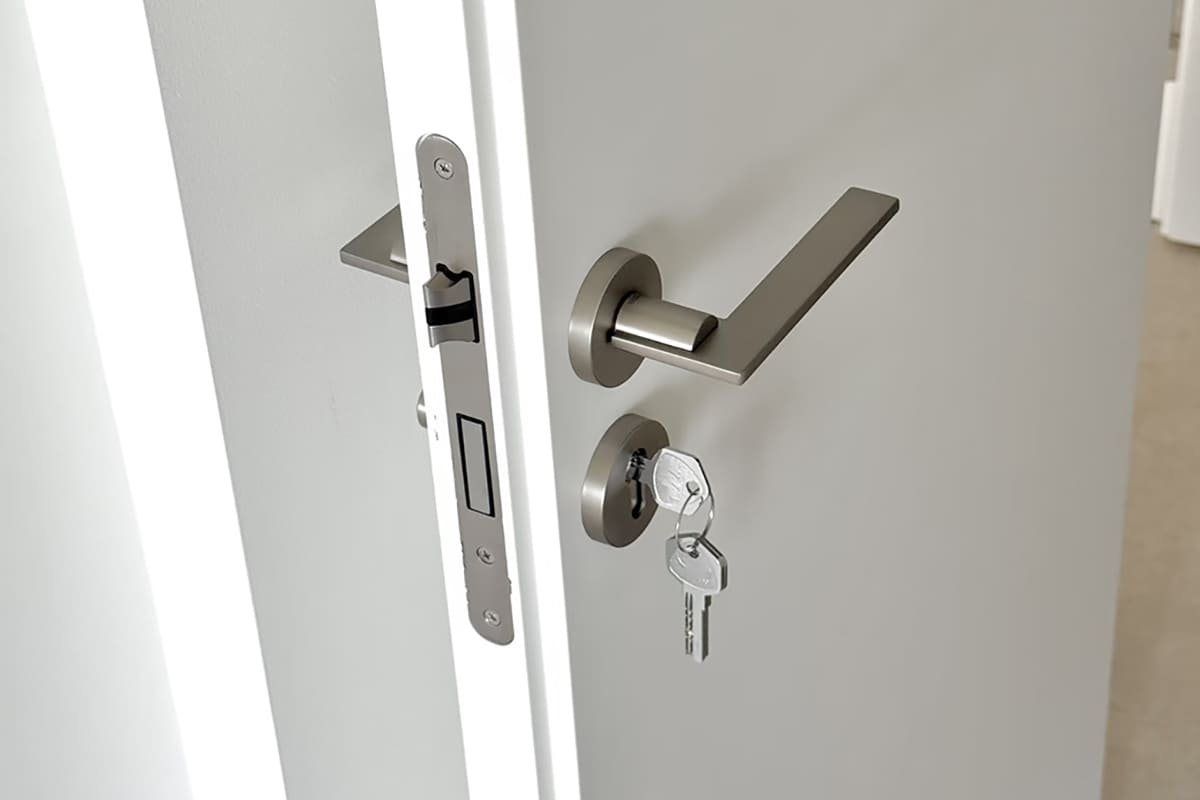
The lock body controls more than security
Many buyers think of the mortise lock as an invisible part. That is partly true. The lock case sits inside the door. However, the lock still affects visible details:
- Handle position
- Cylinder position
- Faceplate size
- Strike plate design
- Door edge appearance
- Locking function
- Installation preparation
For European-style doors, a euro standard mortise lock may be appropriate. For other markets, buyers may need different latch types or local standards. The key is to confirm the lock standard before finalizing the handle.
Cylinders must match function and appearance
The cylinder is both a functional and visible component. A profile cylinder can appear below the handle with an escutcheon. A thumbturn cylinder may appear on the interior side. A double cylinder may be required for certain entrance applications, depending on local habits and regulations.
Buyers should confirm:
| Component | Key question | Why it matters |
|---|---|---|
| Lock body | Does it match the door preparation and handle center? | Prevents installation failure |
| Cylinder | Is the length correct for door thickness? | Avoids protrusion or recessed fit |
| Escutcheon | Does it match the handle rose or plate? | Keeps the visible set unified |
| Strike plate | Does it match frame preparation? | Supports smooth closing |
| Faceplate | Does the finish match hinges and handle? | Protects door-edge appearance |
| Screws | Are screw heads finish-matched? | Avoids small but visible mismatch |
Plates and roses change the style
A lever on a round rose usually looks lighter and more minimal. A lever on a rectangular plate can look more complete but also heavier. Both can work for door hardware for mid-century modern homes, but the proportions must fit the door.
I usually ask these questions:
- Does the plate look too large for a narrow stile?
- Does the rose cover the prepared hole?
- Does the cylinder escutcheon match the rose shape?
- Does the lock faceplate match the handle finish?
- Does the backplate make the door feel more traditional than intended?
If the answer creates visual conflict, I adjust the hardware set before sampling.
Procurement risk appears in small parts
In bulk orders, small parts create big problems. A buyer may approve a handle sample and forget the cylinder escutcheon. Then the final shipment arrives with a different tone or shape. The door factory installs the hardware, and the mismatch becomes visible only after assembly.
I recommend creating a complete hardware set checklist for each door line:
- Handle model and finish
- Handle base material
- Rose or plate type
- Mortise lock model
- Lock faceplate finish
- Cylinder type and length
- Cylinder finish
- Escutcheon shape and finish
- Hinge type and finish
- Screw finish
- Door thickness range
- Packaging method
- Certificate documents, if required
This checklist prevents style selection from becoming a fragmented purchasing process. It also helps buyers communicate clearly with suppliers and internal quality teams.
What B2B checks are needed before ordering door hardware for mid-century modern homes?
A good sample does not always guarantee a successful bulk order. The risk increases when buyers need many SKUs, several finishes, and repeated shipments. I usually tell buyers that style approval is only the first gate. Specification, compliance, and supply stability must follow.
Before ordering door hardware for mid-century modern homes, B2B buyers should check door thickness, lock body standard, cylinder type, hinge compatibility, finish consistency, certificate documents, packaging, lead time, production capacity, and reorder reliability. These checks reduce installation issues, quality disputes, and supply interruption.
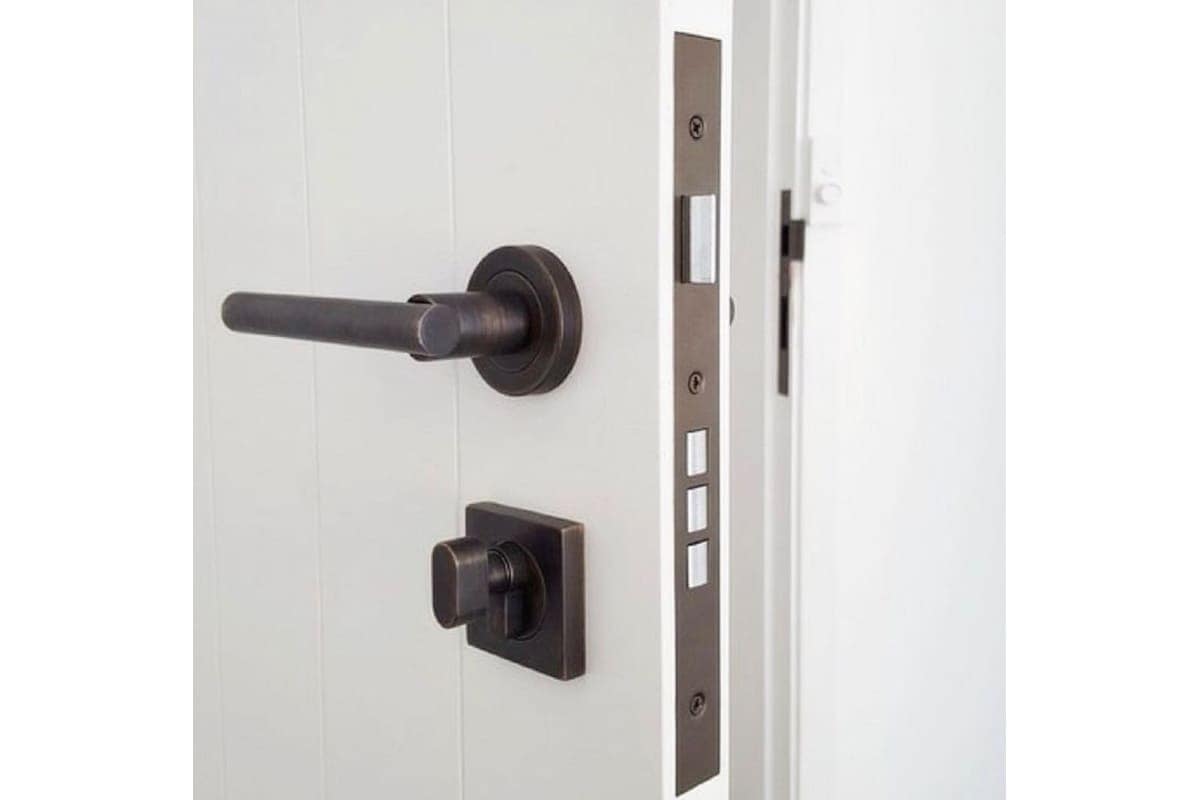
Style must become a specification
A product manager may begin with a design mood board. A buyer must convert that mood board into a purchase specification. This step is where many problems can be prevented.
A complete specification should include:
- Product drawings
- Material requirements
- Finish code or approved sample
- Door thickness range
- Lock center distance
- Backset
- Cylinder length
- Hinge size and type
- Screw and accessory list
- Packaging requirements
- Certification document requirements
- Inspection criteria
- Reorder matching rules
I prefer specifications that are simple but complete. A vague request like “modern brass handle set” leaves too much room for interpretation.
Certification documents should be verified
Some projects require CE documents, fire-rated certification, or other market-specific documentation.10 Buyers should not treat certificates as decoration in a catalog. They should verify the document scope, product model, validity, testing standard, and whether the certificate applies to the intended door assembly or application.
This is especially important for:
- Fire-rated doors
- Commercial buildings
- Apartment entrance doors
- Public projects
- Regional compliance-controlled markets
Conclusion
Choosing door hardware for mid-century modern homes is not just a style exercise. I see it as a complete hardware system decision. The best result comes from clean handle geometry, suitable finish selection, matching hinges, coordinated locks and cylinders, and verified installation specifications. For wholesalers, door factories, and hardware brands, reorder stability is just as important as the first sample. If you are developing a mid-century modern door line, I recommend preparing a complete hardware set checklist and comparing suppliers against it before ordering.
"Mid-century modern", https://en.wikipedia.org/wiki/Mid-century_modern. A design-history source describes mid-century modern architecture and furnishings as emphasizing clean lines, functional forms, and characteristic material expression, which contextualizes the recommendation to keep door hardware visually restrained. Evidence role: historical_context; source type: encyclopedia. Supports: A neutral design-history source should support that mid-century modern design is associated with clean lines, simple forms, functionalism, and characteristic material use.. Scope note: This supports the stylistic context rather than proving that any specific handle shape is correct. ↩
"Mid-century modern", https://en.wikipedia.org/wiki/Mid-century_modern. Museum and educational descriptions of mid-century modern design commonly emphasize simplicity, functional clarity, and restrained ornamentation, supporting the article’s use of “visual calm” as a design shorthand. Evidence role: general_support; source type: education. Supports: A university or museum source should support that mid-century modern design favors simplicity, open composition, and limited ornamentation.. Scope note: The term “visual calm” is the article’s wording and may not appear verbatim in the source. ↩
"Mid-century modern", https://en.wikipedia.org/wiki/Mid-century_modern. Institutional design sources characterize mid-century modern objects as using simple geometric forms and restrained decoration, providing context for selecting hardware with understated geometry. Evidence role: expert_consensus; source type: institution. Supports: An institutional design source should support that mid-century modern objects often use simple geometric forms and limited decoration.. Scope note: This supports the design rationale generally, not the performance of a particular hardware product. ↩
"Mid-century modern", https://en.wikipedia.org/wiki/Mid-century_modern. Reference sources on mid-century modern design associate the style with clean architectural lines and the use of natural materials, including wood, which contextualizes the pairing of geometric hardware with warm door finishes. Evidence role: historical_context; source type: encyclopedia. Supports: A neutral source should support that mid-century modern design is associated with clean architectural lines and materials such as wood or other natural finishes.. Scope note: The evidence is contextual and does not establish a universal rule for every mid-century modern interior. ↩
"EN 12209: Building Hardware - Mechanically operated ...", https://www.intertek.com/building/standards/en-12209/. European building-hardware standards such as EN 12209 define requirements for mechanically operated locks and latches, supporting the need to match lever furniture to the specified mortise-lock format. Evidence role: definition; source type: institution. Supports: A standards or institutional source should identify EN 12209 or related European standards for mechanically operated locks and latches used in building hardware.. Scope note: The standard supports the existence and technical relevance of standardized lock formats, not the suitability of a particular supplier’s lock. ↩
"Color appearance depends on the variance of surround colors", https://pubmed.ncbi.nlm.nih.gov/9382808/. Color-science research shows that perceived color and surface appearance vary with the illuminant and viewing conditions, supporting the need to evaluate hardware finishes under more than one light source. Evidence role: mechanism; source type: research. Supports: A color science source should support that perceived color and appearance depend on the illuminant and viewing conditions.. Scope note: The source explains the perception mechanism generally and may not test door hardware finishes specifically. ↩
"Surface Finishing and Coating Parameters Impact on ... - PMC", https://pmc.ncbi.nlm.nih.gov/articles/PMC10856629/. Surface-engineering literature explains that substrate material and preparation influence coating adhesion, color, and surface quality, supporting the caution that different hardware components may not finish identically. Evidence role: mechanism; source type: research. Supports: A materials or surface-engineering source should support that substrate composition and surface preparation affect coating adhesion, color, and finish quality.. Scope note: This provides general materials-science support rather than batch-specific evidence for any named finish. ↩
"A156.1 - 2025 Butts and Hinges", https://buildershardware.com/ANSI-BHMA-Standards/Hardware-Highlights/A1561-2025-Butts-and-Hinges. Door-hinge standards classify hinges by performance factors such as door mass, durability, and application, supporting the requirement to verify that a hinge can safely carry the intended door. Evidence role: general_support; source type: institution. Supports: A hinge standard or building-hardware institution should support that hinges are classified or selected according to door mass, usage, and performance requirements.. Scope note: The source supports selection criteria but does not calculate the correct hinge for a specific project. ↩
"How to Install Concealed Door Hinges? Installation Guide", https://sdhhardware.com/2026/06/16/how-to-install-concealed-door-hinges-installation-guide/. Technical guidance for concealed hinges describes routed recesses in the door and frame, supporting the article’s point that sufficient door thickness and material are necessary for installation. Evidence role: mechanism; source type: institution. Supports: A technical installation or building-hardware source should support that concealed hinges require routed recesses in the door and frame and therefore depend on door thickness and material.. Scope note: Specific routing dimensions vary by hinge model and must be checked against the exact product documentation. ↩
"CE Marking for Construction Products", https://www.intertek.com/building/ce-marking/. Regulatory guidance on construction products and fire-door assemblies indicates that applicable products may require documented conformity, such as CE marking or fire-performance certification, depending on market and application. Evidence role: general_support; source type: government. Supports: A government or regulatory source should support that construction products and fire-related door components may require documented conformity with applicable standards or regulations.. Scope note: The precise documentation required depends on jurisdiction, product category, and the complete door assembly. ↩