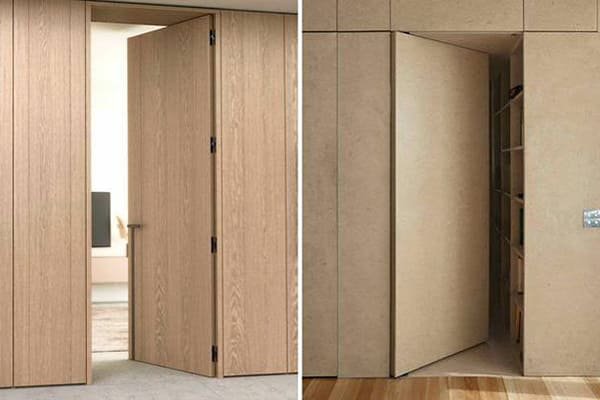
How Much Weight Can the Hinges Hold?
How much weight can the hinges hold is a common question, but it can lead buyers in the wrong direction. If I choose hinges only by a single weight number, the door may sag, rub, loosen, or fail during installation. The better solution is to match the hinge type to the door weight, structure, material, and usage scenario.
Hinges can hold anywhere from about 15 kg to 500 kg1 depending on the hinge category, material, size, thickness, installation method, and door application. A light double-action spring hinge may suit 20–60 kg doors, while pivot hinges and floor springs can support much heavier systems when properly specified and installed.
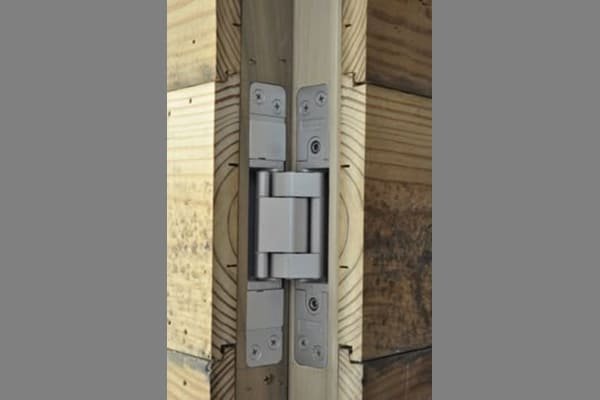
I often tell door manufacturers that hinge capacity is not only a product number. It is a door system decision. The same hinge category can perform very differently when the door height, width, material, fixing position, screw quality, frame strength, and opening frequency change.
How Much Weight Can the Hinges Hold by Hinge Type?
Many buyers feel pressure when a project has heavy doors, tight delivery time, and strict appearance requirements. If the hinge category is wrong, even a good-looking sample can create rework later. I solve this first by separating hinge types by application, not only by load rating.
Hinges can hold different weight ranges according to their structure and intended door scenario. As product-category guidance, oil-free heavy duty butt hinges may reach up to 160 kg2, 3D adjustable concealed hinges may cover 9–200 kg, pivot hinges may cover 45–500 kg, and floor springs may cover 80–480 kg.
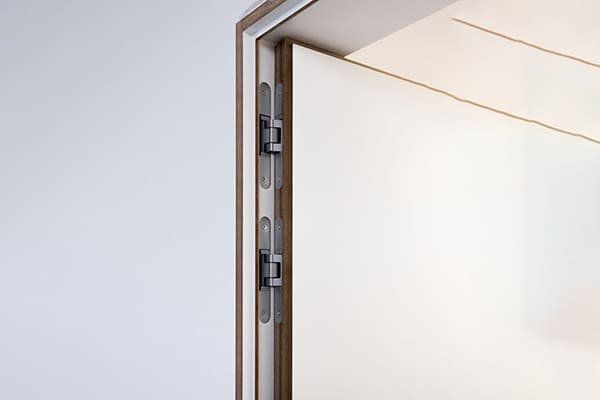
Product-category load range guide
In my daily work with door factories and hardware buyers, I usually start with a hinge category table. This helps the buyer avoid the most common mistake: asking one general question such as “how much weight can hinges hold?” and expecting one universal answer.
The ranges below are useful for early procurement evaluation. However, I always treat them as category guidance, not as a final engineering approval. Exact capacity must be checked against the specific model, size, material, hinge thickness, installation condition, hinge quantity, and test or specification documents supplied for that model.
| Hinge category | General load range | Common door application | Buyer notes |
|---|---|---|---|
| Oil-free heavy duty butt hinge | Up to 160 kg | Heavy timber doors, metal doors, commercial doors | Check leaf thickness, bearing structure, screw fixing, and door frame strength. |
| 3D adjustable concealed hinge | 9–200 kg | Interior doors, exterior doors, cleanroom doors, flush doors | Zinc alloy is more suitable for interior doors; stainless steel can reach higher demand applications up to 200 kg. |
| Pivot hinge | 45–500 kg | Offset pivot doors, concealed doors, large custom doors | The pivot position and door center of gravity are very important.3 |
| Hydraulic hinge | 60–100 kg | Interior hidden doors, invisible doors | Confirm closing function, adjustment range, and door thickness. |
| Floor spring | 80–480 kg | Glass doors, aluminum alloy doors, commercial entrance doors | Confirm door width, opening angle, floor preparation, and traffic frequency. |
| Piano hinge | 15–200 kg | Long panels, cabinet doors, special industrial doors | Capacity changes strongly by material, length, thickness, and screw spacing. |
| Stone door concealed hinge | 70–300 kg | Pipe shaft doors, stone-clad doors, heavy access doors | Check cladding weight, concealed installation depth, and frame reinforcement. |
| Double-action spring hinge | 20–60 kg | Light swing doors, service doors, small commercial doors | Best for light-to-medium doors where two-way swing is required. |
Why the same “kg number” does not mean the same performance
A 100 kg door is not always just a 100 kg door. I have seen buyers send only the weight and ask for a hinge recommendation. My first reply is usually a request for more details, because the load on the hinge changes with geometry4.
For example:
- A tall and narrow 100 kg door loads the hinge differently from a short and wide 100 kg door.
- A door with stone cladding can create a different center of gravity from a solid timber door.
- A concealed hinge needs enough installation depth and accurate machining.
- A floor spring depends heavily on floor box installation and door alignment.
- A pivot hinge can support high loads, but only when the pivot layout matches the door design.
I also avoid saying that a higher load capacity is always better. A 500 kg pivot hinge is not the correct answer for every 80 kg door. It may be oversized, too expensive, unsuitable for the appearance, or incompatible with the door structure. Good hinge selection balances capacity, function, finish, installation, cost, and market requirements.
For B2B procurement, I suggest using the table as a first filter. Then, I verify the exact product model with the supplier’s specification sheet and, when required, third-party certification or fire-rated documentation. Buyers should always check whether the documents match the product model, size, and intended use.
Why Is “How Much Weight Can the Hinges Hold” the Wrong First Question?
Many procurement teams ask how much weight can the hinges hold because they want a fast quotation. The problem is that a fast answer can hide a risky mismatch. If the door type, opening structure, and installation method are unclear, the hinge selection may look correct on paper but fail in production.
The better first question is: “Which hinge type is suitable for my door weight and application?” Hinge capacity depends on door weight, height, width, thickness, material, opening method, frame structure, hinge quantity, installation accuracy, and environment. The correct hinge is the one that fits the complete door system.
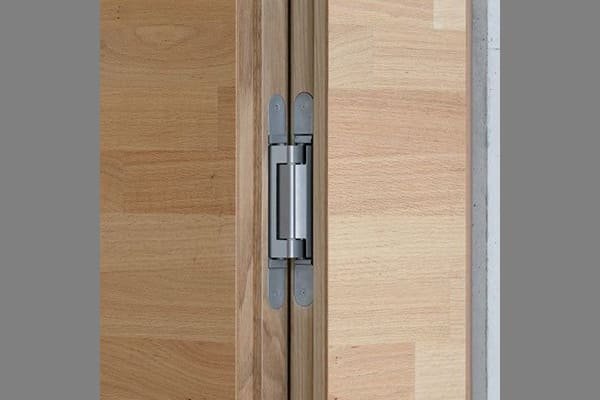
The selection question I ask before quoting
When a buyer sends me only a door weight, I usually cannot make a responsible recommendation. I may give a preliminary category, but I need more information before confirming a model. This is especially important for door manufacturers that produce in batches, because one wrong hinge decision can affect hundreds or thousands of sets.
Before I recommend a hinge, I ask for:
Door weight
The actual finished door weight should include glass, stone, metal cladding, accessories, lock body, handle, and any decorative panel.Door height and width
A wider door creates more leverage on the hinge side. This can increase sagging risk even when the total weight seems acceptable.Door thickness
Concealed hinges, pivot systems, and hydraulic hinges often require enough material depth for machining and fixing.Door material
Timber, steel, aluminum alloy, glass, stone-clad doors, and composite doors each need different fixing methods.Opening type
Side-hung, pivot, double-action, invisible, glass swing, and pipe shaft doors all use different hardware logic.Installation position
The hinge location, edge distance, and frame reinforcement affect the final bearing performance.Hinge quantity
A door with two hinges and a door with three or four hinges cannot be judged only by single-hinge capacity.Application environment
Interior, exterior, cleanroom, humid area, high-traffic project, fire door, or commercial entrance all need different evaluation.
A practical example from product matching
I once received an inquiry for a heavy concealed door where the buyer first asked for a “200 kg concealed hinge.” After we reviewed the drawings, the project was not a normal interior flush door. It had a larger size, special panel weight, and a more demanding installation environment. The conversation moved from “what is the load capacity?” to “which concealed hinge structure and material can match this door safely?”
That change in thinking helped narrow the options. Zinc alloy concealed hinges can be suitable for many interior doors. Stainless steel 3D adjustable concealed hinges are better for higher-demand applications such as exterior doors, cleanroom doors, and heavier flush doors. In some cases, a pivot hinge or stone door concealed hinge may be more suitable than a standard concealed hinge.
Why hinge quantity does not create a simple formula
Some buyers try to multiply the capacity of one hinge by the number of hinges. I understand why this seems logical. However, the door system does not always distribute weight equally.
Several factors affect load sharing:
- The top hinge often carries more stress because of door leverage.5
- Poor machining can cause one hinge to carry more load than others.
- Frame deformation can change the real bearing condition.
- Screw quality and fixing depth can become the weakest point.
- Door closers, seals, and wind pressure can add extra force.
Because of this, I do not treat single-hinge capacity as the full safe capacity of the installed door. I recommend checking the complete hinge set, installation drawing, door frame design, and product specification. For project doors, buyers should ask their qualified engineer, door system designer, or hardware specialist to confirm application-specific decisions.
Which Door Details Decide How Much Weight Can the Hinges Hold?
Door manufacturers often face customer complaints that sound simple: the door drops, the gap becomes uneven, or the hinge makes noise. These problems may start with small missing details during selection. I reduce that risk by checking the door data before confirming the hinge category.
The details that decide how much weight can the hinges hold include door weight, height, width, thickness, door material, frame strength, hinge size, hinge material, screw fixing, opening frequency, indoor or outdoor use, and whether the door has fire-rated, cleanroom, glass, stone, or concealed requirements.
Door weight is only the starting point
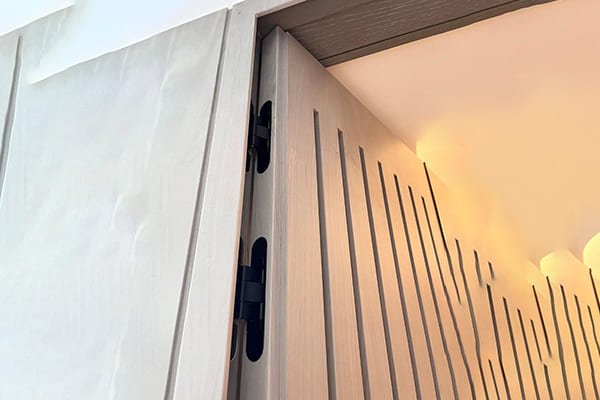
Door weight matters, but it is not enough. A 70 kg interior wood door and a 70 kg stone-clad pipe shaft door may need very different hinge solutions. The stone finish can increase thickness, change fixing conditions, and require a concealed structure that supports both function and appearance.
I normally group door weight into early selection levels:
| Door condition | Typical selection direction | Notes for buyers |
|---|---|---|
| Light interior doors | Butt hinge, concealed hinge, spring hinge | Check appearance, finish consistency, and simple installation. |
| Medium interior or commercial doors | Heavy duty butt hinge, 3D adjustable concealed hinge, hydraulic hinge | Check adjustability, cycle performance documents, and frame quality. |
| Heavy exterior or technical doors | Stainless steel concealed hinge, heavy duty butt hinge, pivot hinge | Check corrosion resistance, material grade, and application documents. |
| Very heavy or special doors | Pivot hinge, floor spring, stone door concealed hinge | Check complete door system design and installation conditions. |
Door width creates leverage
A wider door places greater turning force on the hinge side.6 Even if the door weight is within the hinge category range, a very wide door can still sag if the hinge size or frame strength is not suitable.
For this reason, I ask for both height and width. I also like to see a simple drawing. A drawing helps confirm:
- Hinge spacing
- Door edge construction
- Frame reinforcement
- Lock side clearance
- Floor gap
- Opening direction
- Whether the door has seals or closers
Door material changes the fixing method
Different door materials hold screws and fasteners differently.7 This can be more important than many buyers expect.
Common material considerations include:
- Solid wood doors: The screw holding power depends on wood density and edge preparation.8
- Steel doors: The internal reinforcement and screw thread engagement matter.
- Aluminum alloy doors: The profile thickness and internal structure affect fixing strength.
- Glass doors: Floor springs or patch fittings are often more suitable than conventional side hinges.
- Stone-clad doors: The cladding weight and concealed support structure must be reviewed carefully.
- Cleanroom doors: Stainless steel hardware and stable surface finish are often important for long-term use.
Installation quality affects real capacity
A hinge with a strong catalogue rating can still perform poorly if installation is inaccurate.9 This is why I often remind buyers that manufacturing tolerance and site installation are part of the product decision.
Important installation checks include:
- The hinge mortise should match the hinge body accurately.
- The door and frame should be aligned before final fixing.
- Screws should match the hinge material and frame structure.
- The number of hinges should follow the model recommendation.
- The installer should avoid forcing misaligned hinges into position.
- The door gap should be checked after repeated opening and closing.
For bulk door production, I suggest testing a pre-production sample. The sample should use the real door material, real finish, real hardware set, and real installation process. This step can prevent batch rework and reduce after-sales complaints.
How Should Buyers Verify How Much Weight Can the Hinges Hold Before Bulk Orders?
Bulk buyers cannot rely only on catalogue pictures or short messages. If the hinge fails after delivery, the cost is not only the hardware price. The buyer may face delayed projects, customer complaints, replacement labor, and damage to channel reputation. I treat verification as part of supplier selection.
Buyers should verify hinge weight capacity by checking the exact model specification, material, size, thickness, recommended door weight, hinge quantity, installation instructions, applicable door type, sample performance, and supporting documents such as CE or fire-rated certificates when relevant. The documents should match the product and project requirement.
Documents to request from the supplier
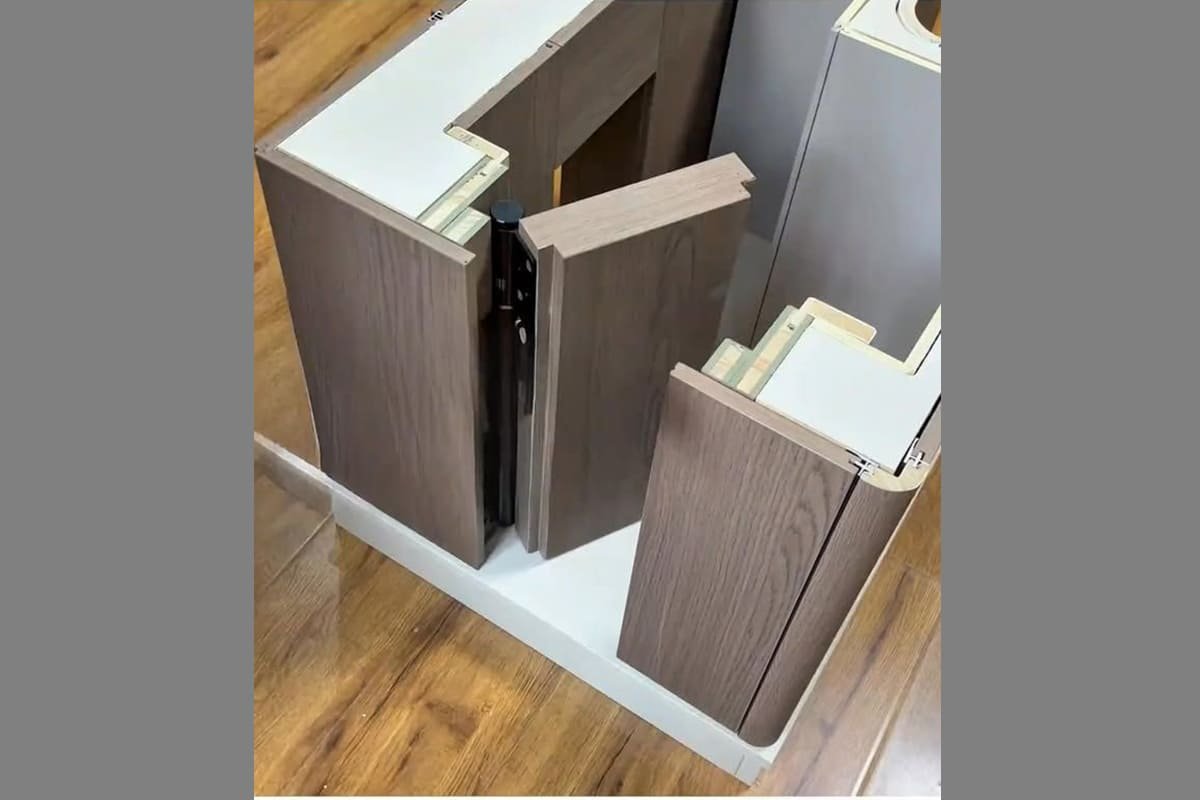
For procurement teams, the first step is to request clear product documentation. I recommend asking for documents before placing a large order, especially when the hinge is used for a project, export market, or branded hardware line.
Useful documents include:
- Product specification sheet
- Material description
- Size drawing
- Installation drawing
- Finish options and finish standard
- Recommended door weight range
- Recommended door thickness
- Recommended hinge quantity
- Test report or performance document, when available
- CE certificate, when applicable
- Fire-rated certificate, when applicable
- Packaging and labeling details
- Quality inspection standard
For CE or fire-rated claims, I recommend that buyers verify whether the document applies to the exact product model and configuration. A certificate is not just a marketing sentence. It should be a document that procurement teams can review and match against the product supplied.
Sample testing before mass production
I strongly prefer sample verification before batch production. A sample does not replace formal testing, but it helps buyers find practical problems early.
A useful sample check should include:
| Check item | What I look for | Why it matters |
|---|---|---|
| Fit with door thickness | The hinge installs without cutting too much material | Poor fit weakens the door edge. |
| Door gap after installation | Gaps remain even after opening and closing | Uneven gaps indicate sagging or alignment issues. |
| Surface finish consistency | Finish matches the buyer’s approved standard | Bulk orders need stable appearance. |
| Adjustment function | 3D adjustment works smoothly where applicable | Adjustment helps factories correct small tolerance issues. |
| Noise and movement | Door opens smoothly without abnormal sound | Noise can suggest friction, misalignment, or weak installation. |
| Packaging protection | Hinges arrive without scratches or deformation | Export orders need stable packaging. |
Supplier capability matters
Hinge capacity is not only about one model. It is also about the manufacturer’s ability to keep quality stable in repeat orders. At SDH Hardware, my business context is architectural door hardware manufacturing, so I look at production control from raw material to finished inspection. Buyers should evaluate any supplier with the same practical mindset.
Important supplier checks include:
- Does the supplier have experience with the hinge category?
- Can the supplier provide consistent material and finish?
- Can the supplier support ODM customization if the project needs special size or finish?
- Can the supplier explain the correct application range?
- Can the supplier provide valid documents for the target market?
- Can the supplier keep delivery stable for repeat orders?
- Can the supplier inspect dimensions, finish, and function before shipment?
I do not recommend choosing a supplier only because the quoted load number is higher. I recommend choosing a supplier who can explain why a hinge fits the door, what conditions must be met, and what documents support the selection.
Which Hinge Type Should I Choose for Common Door Applications?
Door manufacturers often need a fast selection direction before they request samples. If the starting category is wrong, the buyer wastes time comparing unsuitable products. I use application matching to make the first selection faster and more accurate.
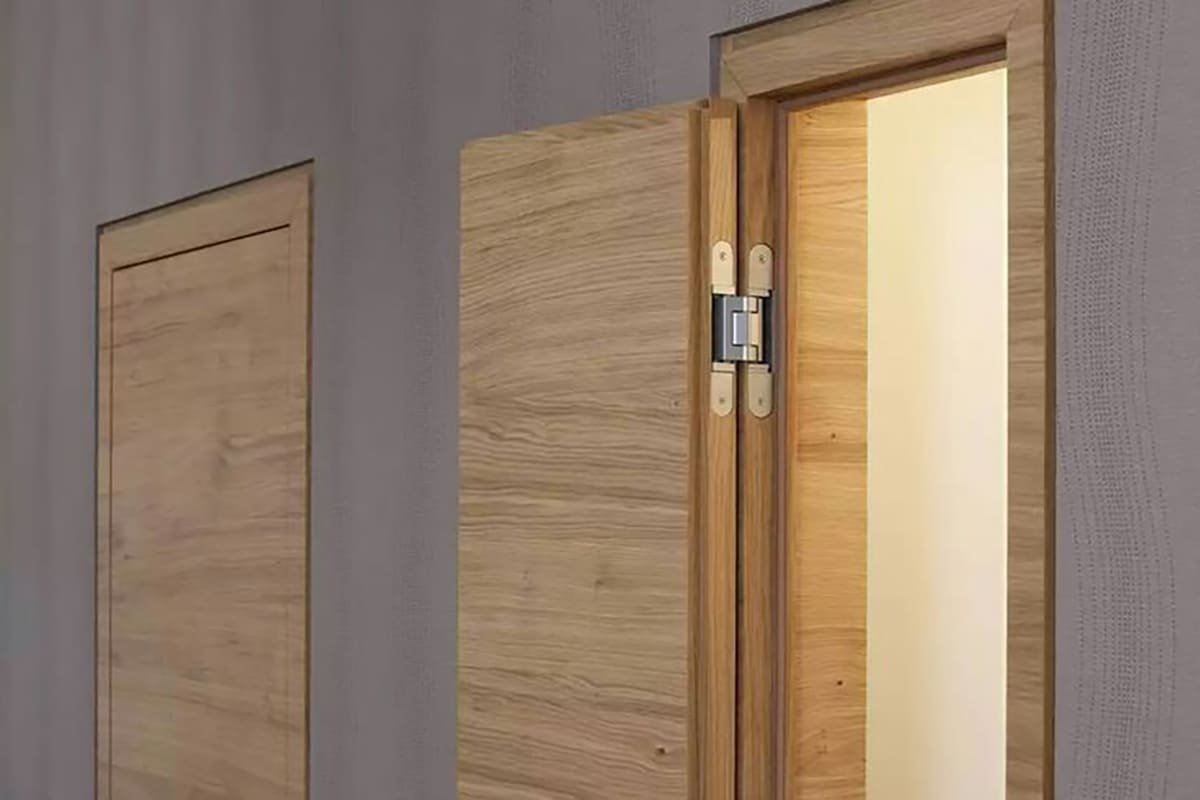
Choose the hinge type according to the door application first. Interior wood doors may use butt hinges or concealed hinges. Heavy flush doors may need stainless steel 3D concealed hinges. Glass and aluminum doors often need floor springs. Offset pivot doors need pivot hinges. Stone-clad doors need stone door concealed hinges.
Quick application guide
The table below gives a practical direction for common B2B door projects. The final decision should still be confirmed by the model specification, door drawing, installation method, and project requirements.
| Door application | Common hinge direction | Typical load range from category guidance |
|---|---|---|
| Standard interior door | Butt hinge or concealed hinge | Depends on model; concealed hinge 9–200 kg |
| Heavy timber or metal door | Oil-free heavy duty butt hinge | Up to 160 kg |
| High-end flush invisible door | 3D adjustable concealed hinge or hydraulic hinge | 9–200 kg or 60–100 kg |
| Exterior concealed door | Stainless steel 3D adjustable concealed hinge | Up to 200 kg depending on model |
| Cleanroom door | Stainless steel concealed hinge | Confirm model and environment needs |
| Offset pivot door | Pivot hinge | 45–500 kg |
| Glass door | Floor spring | 80–480 kg |
| Aluminum alloy commercial door | Floor spring or suitable hinge system | 80–480 kg for floor spring |
| Pipe shaft door | Stone door concealed hinge | 70–300 kg |
| Light two-way swing door | Double-action spring hinge | 20–60 kg |
| Long continuous panel | Piano hinge | 15–200 kg |
Interior doors
For standard interior doors, buyers often care about cost, finish consistency, and easy installation. Butt hinges and concealed hinges are common options. If the buyer wants a cleaner appearance, a concealed hinge may be better. If the buyer wants a simple and economical solution, a butt hinge may work well.
Zinc alloy concealed hinges are often suitable for many interior doors. They can support clean design and adjustable installation in many cases. However, the final capacity still depends on the model and the door data.
Exterior and higher-demand doors
For exterior doors, cleanroom doors, and heavier flush doors, I look more carefully at material and structure. Stainless steel 3D adjustable concealed hinges can be more suitable for higher-demand applications and may reach up to 200 kg in the right model and installation condition.
I also check corrosion resistance, finish durability, and environmental exposure. A hinge that works well indoors may not be suitable for humid, exterior, or high-traffic environments.
Glass and aluminum alloy doors
Glass doors and aluminum alloy entrance doors often use floor springs. The category guidance range can be 80–480 kg, but the final choice depends on door width, door height, floor preparation, opening angle, and traffic frequency.
For commercial projects, I also ask whether the entrance has high daily traffic. High-frequency use can change the hardware selection even when the door weight is within range.10
Stone-clad and pipe shaft doors
Stone door concealed hinges serve a more specialized market. Their category range can be 70–300 kg. They are often used for pipe shaft doors, stone-clad doors, and heavy access doors where the hinge should stay concealed and the door surface should match the wall finish.
These doors need careful review because the stone material adds weight and changes the fixing structure. I strongly recommend checking the door drawing before confirming the hinge.
Frequently Asked Questions
Can I calculate hinge capacity by multiplying one hinge rating by the number of hinges?
No. I do not recommend using simple multiplication as the final safe capacity11. Hinges may not share the load equally because of door width, installation accuracy, frame strength, screw fixing, and hinge spacing. Buyers should check the complete door system and model recommendation.
How many hinges should I use on a heavy door?
The correct hinge quantity depends on door height, weight, width, hinge type, and manufacturer guidance. Many heavy doors use three or more hinges, but the number alone does not guarantee performance. I recommend confirming hinge quantity with the specific product drawing and door design.
Are concealed hinges weaker than butt hinges?
Not always. Concealed hinges cover a wide range. Some light concealed hinges suit interior doors, while stainless steel 3D adjustable concealed hinges can support much heavier applications. The correct comparison depends on the exact model, material, size, installation depth, and door scenario.
What information should I send before asking for a hinge recommendation?
I suggest sending door weight, height, width, thickness, material, opening type, frame structure, installation position, hinge quantity preference, finish requirement, application environment, and any certification requirement. A drawing or photo helps the supplier recommend the correct hinge category faster.
Do CE or fire-rated certificates prove the hinge can hold my door weight?
Not by themselves. CE and fire-rated documents are important compliance references, but buyers should verify that the documents match the exact product model and intended use.12 Door weight capacity still needs to be checked through the model specification, installation condition, and project requirement.
Conclusion
How much weight can the hinges hold depends on the hinge type, door weight, door size, material, installation method, and application environment. I do not recommend choosing by one universal number or by the highest load rating alone. A better process is to match the hinge category to the door system, verify the exact model documents, and test samples before bulk orders. If you need help selecting door concealed hinges, butt hinges, pivot systems, or other architectural door hardware, I can review your door specifications and suggest a suitable procurement direction.
"Understanding BS EN 1935:2002 single-axis hinge grades - SFS", https://uk.sfs.com/resources/article/understanding-bs-en-1935. Standards for building hardware, such as EN 1935 and ANSI/BHMA hinge classifications, show that hinge performance is evaluated by grade, durability, door mass, and intended application; these standards provide contextual support for broad capacity variation but do not verify every kilogram value stated for each product category. Evidence role: general_support; source type: institution. Supports: Hinge load ratings are classified by standards and vary according to hinge type, grade, test door mass, and application conditions.. Scope note: Contextual support only; exact 15–500 kg limits require model-specific test reports. ↩
"Understanding BS EN 1935:2002 single-axis hinge grades - SFS", https://uk.sfs.com/resources/article/understanding-bs-en-1935. EN 1935 classifies single-axis building hinges by several performance characteristics, including test-door mass categories that extend to 160 kg, supporting the use of 160 kg as a recognized upper classification context for some hinge designs; the standard does not by itself certify any particular oil-free butt hinge model. Evidence role: general_support; source type: institution. Supports: Recognized hinge standards include classification by test door mass up to 160 kg for certain single-axis hinges.. Scope note: Supports the 160 kg classification context, not a specific manufacturer's product. ↩
"CENTER PIVOT ANALYSIS - Engineering Mechanics", http://emweb.unl.edu/mechanics-pages/JennieMartin/Pivot%20Analysis.htm. Statics references on rigid bodies show that moving a load's center of gravity relative to a pivot changes the moment and reaction forces at the support, providing the mechanical basis for considering pivot location in pivot-door hardware selection. Evidence role: mechanism; source type: education. Supports: The location of a load's center of gravity relative to a pivot affects moments and support reactions.. Scope note: Supports the engineering mechanism generally; it does not validate a specific pivot hinge capacity. ↩
"28.18 -- Open door to demonstration preparation area", https://web.physics.ucsb.edu/~lecturedemonstrations/Composer/Pages/28.18.html. Elementary statics describes the moment on a support as the product of force and perpendicular distance, explaining why a door's width, height, and hinge spacing affect hinge reactions even when total door weight is unchanged. Evidence role: mechanism; source type: education. Supports: The load transmitted to hinges depends not only on weight but also on the door's dimensions and lever arms.. Scope note: Provides the mechanical principle; actual hinge stresses still require door-specific calculations. ↩
"12.2 Examples of Static Equilibrium - UCF Pressbooks", https://pressbooks.online.ucf.edu/phy2048tjb/chapter/12-2-examples-of-static-equilibrium/. Engineering statics treatments of a door supported by multiple hinges show that the door's offset weight produces moments and reaction forces that are not necessarily shared equally among hinges, giving contextual support to the observation that the upper hinge can be highly stressed. Evidence role: mechanism; source type: education. Supports: Door weight acting away from the hinge line creates moments that can result in unequal hinge reactions.. Scope note: Contextual; the most stressed hinge may vary with hinge spacing, door stiffness, installation tolerance, and frame rigidity. ↩
"Torque (Moment)", https://www.grc.nasa.gov/www/k-12/airplane/torque.html. The torque relation τ = F × r shows that, for a given door weight, increasing the horizontal distance from the hinge line increases the moment resisted by the hinge side. Evidence role: mechanism; source type: education. Supports: A longer lever arm increases torque at the hinge side for the same door weight.. Scope note: Explains the principle; real installations also depend on hinge spacing, stiffness, fasteners, and frame construction. ↩
"Screw withdrawal strength of heat-treated and laminated veneer ...", https://bioresources.cnr.ncsu.edu/resources/screw-withdrawal-strength-of-heat-treated-and-laminated-veneer-lumber-reinforced-with-carbon-and-glass-fibers/. Research on mechanical fastening shows that screw and fastener performance depends on substrate properties such as density, thickness, thread engagement, and local reinforcement, supporting the claim that different door materials require different fixing considerations. Evidence role: general_support; source type: research. Supports: Fastener holding capacity varies with substrate material properties and connection design.. Scope note: General support; individual door constructions may differ significantly within the same material category. ↩
"Wood handbook: Wood as an engineering material", https://research.fs.usda.gov/treesearch/62200. The USDA Forest Products Laboratory's Wood Handbook reports that mechanical fastener performance in wood is influenced by specific gravity, fastener geometry, grain direction, and placement, supporting the role of wood density and edge preparation in hinge screw holding strength. Evidence role: mechanism; source type: government. Supports: Wood screw withdrawal and holding strength depend on wood specific gravity, grain, and connection details.. ↩
"Fire Doors and NFPA 80 FAQs", https://www.nfpa.org/news-blogs-and-articles/blogs/2025/04/11/fire-doors-faqs. Door and hardware standards commonly require hardware to be installed according to listings, specifications, or manufacturer instructions, indicating that catalogue ratings are contingent on correct installation conditions. Evidence role: general_support; source type: institution. Supports: Door hardware performance depends on correct installation and compliance with manufacturer instructions or applicable standards.. Scope note: Supports the dependency on installation quality generally; it does not quantify performance loss from any specific installation error. ↩
"A156.1 - 2025 Butts and Hinges", https://buildershardware.com/ANSI-BHMA-Standards/Hardware-Highlights/A1561-2025-Butts-and-Hinges. ANSI/BHMA and EN hardware standards include durability or cycle-test classifications for hinges and related door hardware, supporting the view that expected traffic frequency can affect hardware selection even when door weight is acceptable. Evidence role: general_support; source type: institution. Supports: Door hardware standards evaluate durability through cycle testing and usage classifications, not only static door mass.. Scope note: Contextual; the relevant cycle requirement depends on the specific hardware type and project standard. ↩
"Door Hinges (static equilibrium)", https://phy.duke.edu/~rgb/Class/review_53/review_53/node59.html. Structural mechanics literature on multiple supports and load sharing explains that reaction forces depend on stiffness, geometry, and alignment, so the capacity of an assembly cannot generally be inferred by simply multiplying a single support rating. Evidence role: mechanism; source type: research. Supports: Multiple supports may share load unevenly when alignment, stiffness, and tolerances differ.. Scope note: Provides a general engineering rationale; exact safe capacity requires testing or calculation for the specific door assembly. ↩
"Declaration of Performance and CE marking", https://single-market-economy.ec.europa.eu/sectors/construction/construction-products-regulation-cpr/declaration-performance-and-ce-marking_en. The EU Construction Products Regulation links CE marking to a product's declaration of performance and intended use, supporting the need to check that compliance documentation corresponds to the supplied model and application. Evidence role: expert_consensus; source type: government. Supports: Construction product compliance documentation is tied to product type, declared performance, and intended use.. Scope note: Directly supports CE documentation principles; fire-rated certification requirements may also depend on local codes and the specific test/listing body. ↩