How many concealed hinges should be installed on a door?
Concealed hinges are often selected too late in a door project, after the door size, weight, and finish have already been fixed. That creates risk because an under-rated hinge can cause sagging, rubbing, or after-sales complaints1. I usually recommend starting with load matching, then deciding whether 2, 3, or 4 hinges are suitable.
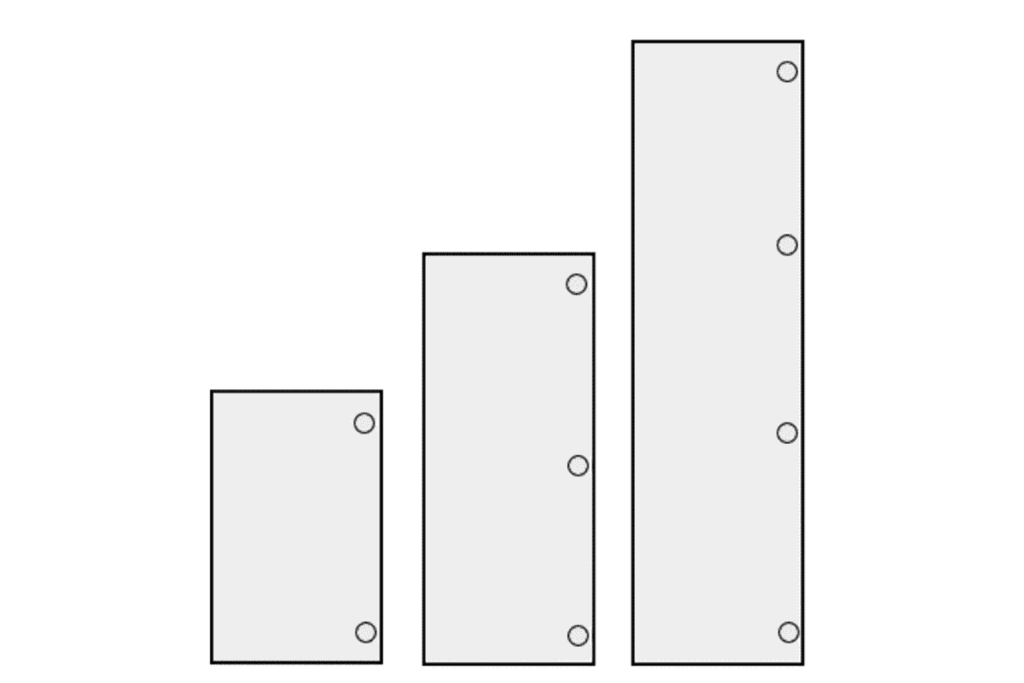
The number of concealed hinges depends first on the tested load capacity of the hinge model, then on door height, width, weight, thickness, and usage frequency.2 For many standard doors around 2100 × 900 mm, 2 hinges may be enough if the model is tested for that door weight under a 2-hinge setup. Larger or heavier doors may need 3 or 4.
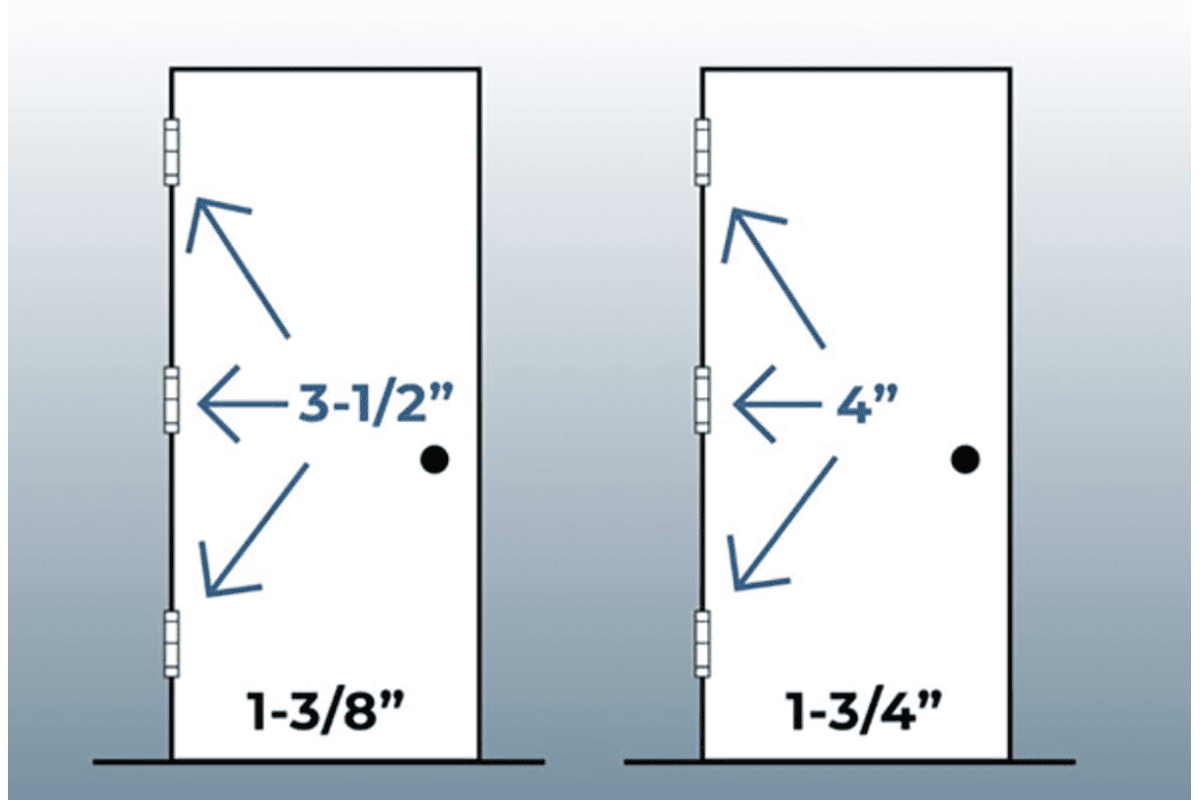
Many buyers ask me, “How many hinges should I install?” I understand why. It sounds like a simple configuration question. But in bulk door hardware procurement, the better question is: Does this concealed hinge model safely match this door under the real installation condition?
Why should concealed hinges be selected by door weight first?
Choosing concealed hinges by quantity alone looks convenient, but it can create a false sense of safety. If the hinge model is not rated for the door weight, adding one more hinge may not solve the core problem. I have seen buyers focus on hinge count while missing the tested capacity data.
The correct starting point is to choose a concealed hinge model whose tested load capacity is higher than the actual door weight. Hinge quantity should then be adjusted according to door size, usage frequency, and project requirements. Buyers should not assume that more hinges can compensate for a fundamentally under-rated product.
Load capacity is not just a number on a catalog
In procurement discussions, I often receive messages like:
“My door is 80 kg. How many concealed hinges do I need?”
That question is practical, but it is incomplete. The answer depends on the hinge model and the test condition behind its rating. A concealed hinge that is rated for 80 kg under a specific test setup is not automatically suitable for every 80 kg door in every application.
Buyers should ask these questions first:
- What is the actual door weight?
- What is the door height and width?
- What is the door thickness?
- Is the door wooden, steel, aluminum, or composite?
- Is the installation residential, commercial, hotel, school, office, or public building?
- Was the hinge load rating tested with 2 hinges, 3 hinges, or another setup?
- Does the project require CE, fire-rated, or other documentation?
For technical buying, the key point is simple: a hinge rating must be understood together with its test method3. Many concealed hinge load ratings are based on a standard door size and a specific number of hinges, commonly a 2-hinge installation. I never recommend multiplying one hinge’s rating by the number of hinges and treating that as the final door capacity.
Why simple multiplication can mislead buyers
Some buyers may think:
| Assumption | Why it is risky |
|---|---|
| One hinge is rated for 40 kg, so 2 hinges carry 80 kg | The rating may already be based on a 2-hinge door test |
| Adding a 3rd hinge increases capacity by exactly 50% | Load may not distribute evenly between hinges4 |
| Four hinges can fix a weak hinge model | Adjustment becomes harder, and stress may concentrate |
| Any tested hinge works for fire-rated doors | Certificates and test conditions must be checked |
Concealed hinge systems require accurate machining and alignment. If the mortise positions are slightly inconsistent, one hinge may carry more load than the others. This means the real load distribution can be different from the theoretical calculation.
What I recommend to buyers
When I help a door factory or hardware brand evaluate a hinge configuration, I prefer to start with a basic data sheet:
- Door height
- Door width
- Door thickness
- Door material
- Door weight
- Opening frequency
- Project type
- Target concealed hinge model
- Required finish
- Required certificates or test reports
This approach reduces after-sales risk. It also helps the supplier recommend a product that fits the door instead of forcing a standard hinge into a non-standard application.
Are 2 concealed hinges enough for a standard 2100 × 900 mm door?
Many standard interior doors can work well with 2 concealed hinges, but only when the selected hinge model is tested and rated for the actual door weight under a 2-hinge condition. I always check the door weight and hinge model first, because “standard size” does not always mean “standard load.”
For a door around 2100 × 900 mm, 2 concealed hinges are generally sufficient if the hinge model’s tested capacity safely exceeds the door weight. This is common for standard residential or light commercial doors, but buyers should still verify the hinge rating, door material, usage scenario, and any project compliance documents.
What “standard door” usually means in buying discussions
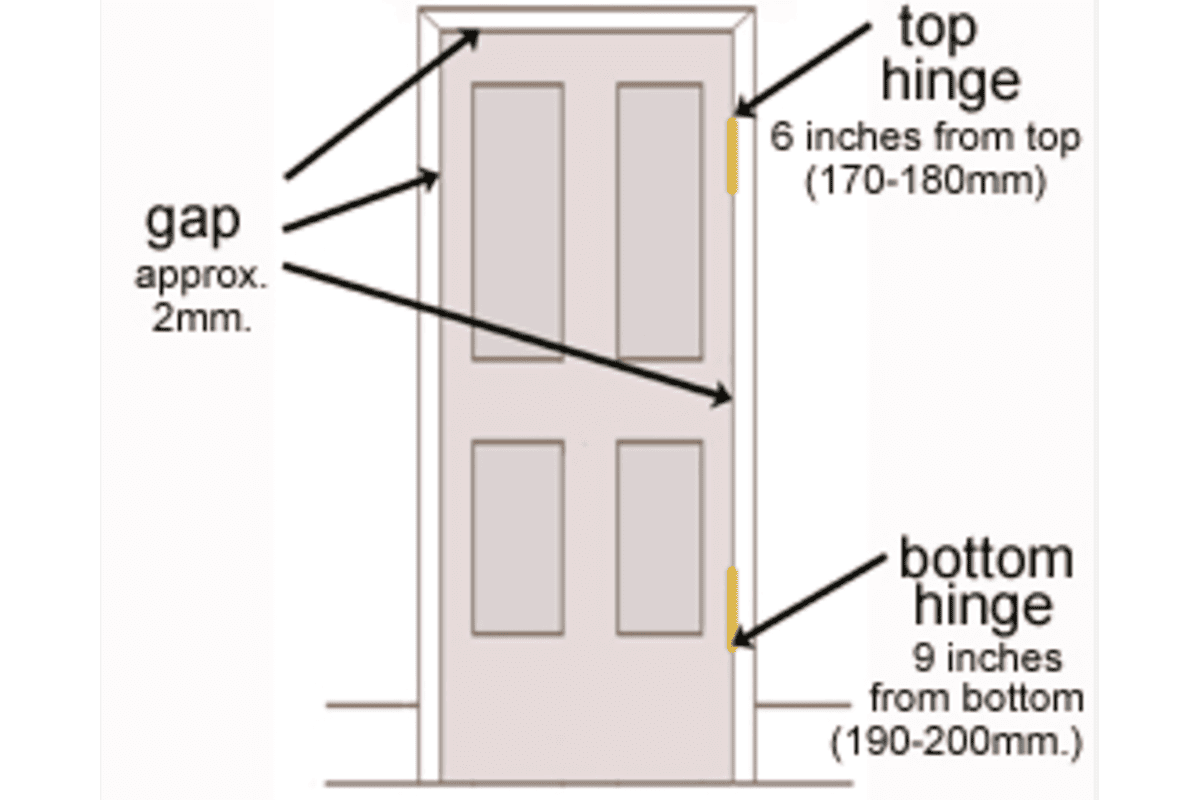
In many overseas markets, a standard door size is often close to5:
| Door parameter | Common reference range |
|---|---|
| Height | Around 2000–2100 mm |
| Width | Around 800–900 mm |
| Thickness | Around 35–45 mm |
| Usage | Residential, apartment, office, hotel room |
| Hinge quantity | Often 2, if tested and approved for the load |
This does not mean every door in this range automatically needs only 2 concealed hinges. A solid wood door, fire-rated core door, or heavy acoustic door may weigh much more than a hollow-core door with the same dimensions.6
That is why I treat size as a starting point, not a final answer.
Why 2 hinges are common on standard doors
A 2-hinge configuration is popular because it offers several practical advantages:
- Simpler installation
- Faster factory machining
- Easier adjustment
- Lower hardware cost
- Cleaner appearance
- Lower risk of hinge position conflict
- Better production efficiency for bulk orders
For door factories, this matters. If a production line is preparing hundreds or thousands of doors, each extra hinge adds machining time, accessory cost, inspection points, and adjustment work.
However, cost reduction should not override load safety. A cheaper 2-hinge setup becomes expensive if the door sags after installation or if the buyer receives complaints from the project site.
What buyers should verify before approving 2 hinges
Before confirming 2 concealed hinges for a standard door, I suggest checking:
The actual door weight
- I prefer actual weighing over estimation whenever possible.
- Material density can vary by supplier and internal construction.
The hinge model’s tested capacity
- Buyers should request the supplier’s technical data.
- Buyers should confirm whether the capacity refers to a 2-hinge setup.
The installation tolerance
- Concealed hinge cutouts must be accurate.
- Poor machining can create uneven load distribution.
The project usage condition
- A hotel room door and a public corridor door may have different duty cycles.7
- Higher frequency use may require a more conservative configuration.
Relevant certificates
- CE and fire-rated certificates should be checked against the specific model.
- Buyers should verify the tested door configuration, not just the certificate title.
A practical manufacturer’s view
From my manufacturing-side experience at SDH Hardware, many bulk customers first ask for a standard recommendation because they want a fast quotation. I understand that. But I still try to bring the discussion back to the door specification.
For a normal 2100 × 900 mm door, I may say that 2 hinges are often enough. Then I will immediately add: “Please send the door weight and target model so I can verify the configuration.”
That extra step protects both sides. The buyer gets a safer product recommendation. The supplier avoids over-promising. The project gets more stable hardware performance.
When should I consider 3 or 4 concealed hinges?
Some doors are too tall, too heavy, too wide, or too frequently used for a basic 2-hinge configuration. In these cases, adding another hinge can improve stability, but only after the selected hinge model already matches the door weight properly. Quantity should support the right hinge, not rescue the wrong one.
I usually consider 3 concealed hinges for taller, heavier, wider, or higher-frequency doors, especially when extra stability is needed. For very demanding non-standard doors, 4 hinges may be considered. However, I do not treat more than 4 as a normal solution because adjustment difficulty and deformation risk increase.
Common situations where 3 hinges may be suitable
A 3-hinge configuration often makes sense when the door is still within a reasonable range for the hinge model, but the application needs additional stability.
Common examples include:
- The door is taller than standard.
- The door is wider than standard.
- The door is heavier because of solid core material.
- The door is installed in a high-use area.
- The buyer wants better long-term alignment.
- The door has heavier decorative panels.
- The site has stricter performance expectations.
In many procurement cases, the 3rd hinge is not added because the first 2 hinges are “too weak.” It is added because the door or application benefits from better support and load distribution.
When 4 hinges may be considered
A 4-hinge setup may be considered for special doors, such as:
| Door condition | Why 4 hinges may be discussed |
|---|---|
| Extra-tall door | More support along the vertical edge |
| Heavy solid-core door | Better stability if the hinge model allows it |
| High-frequency commercial use | Reduced stress concentration when properly aligned |
| Large custom door | Better control of door movement |
| Project-specific requirement | Some specifications may request more support points |
Even then, I treat 4 as the upper practical limit in normal concealed hinge selection. More hinges may look stronger on paper, but concealed systems need precise alignment. Too many adjustment points can create new problems.
Why the 3rd hinge should be positioned carefully
The 3rd hinge is often installed around the middle area or slightly above the center, depending on the door design and manufacturer’s recommendation. The goal is to support the door leaf without creating conflict with locks, reinforcements, decorative grooves, or structural inserts.
Buyers should coordinate the hinge plan with:
- Door leaf internal structure
- Mortise lock position
- Edge sealing process
- CNC machining program
- Fire-rated core structure, if applicable
- Project drawing requirements
For a door factory, hinge quantity affects production planning. The machining template, packaging accessories, inspection checklist, and installation manual may all need updates.
More hinges do not mean unlimited load
This is the most important point. I do not recommend thinking like this:
“If 2 hinges can hold 80 kg, then 4 hinges can hold 160 kg.”
That logic is unsafe because the hinge rating may already come from a tested door set, not a single loose hinge. Also, real-world load distribution depends on machining precision, screw holding strength, frame stiffness, and door leaf structure.
A better way to think is:
- Select a hinge model with a suitable tested rating.
- Confirm the door weight is within a safe range.
- Use 3 or 4 hinges when door size or usage requires extra stability.
- Verify certificates and test reports if the project requires them.
- Ask the supplier for model-specific configuration guidance.
This method is more professional and more useful for bulk procurement.
Why should I avoid installing too many concealed hinges?
Adding more concealed hinges can seem like a safe choice, but it can make installation harder and performance less predictable. I have seen buyers request many hinges because they want “extra strength.” In practice, too many hinges can increase alignment pressure and may create stress in the door leaf.
I generally do not recommend more than 4 concealed hinges for normal door applications. Too many hinges are difficult to adjust evenly, and inaccurate alignment can cause binding, uneven load sharing, frame stress, or door leaf deformation.8 A stronger hinge model is usually better than excessive hinge quantity.
Concealed hinges require precise adjustment
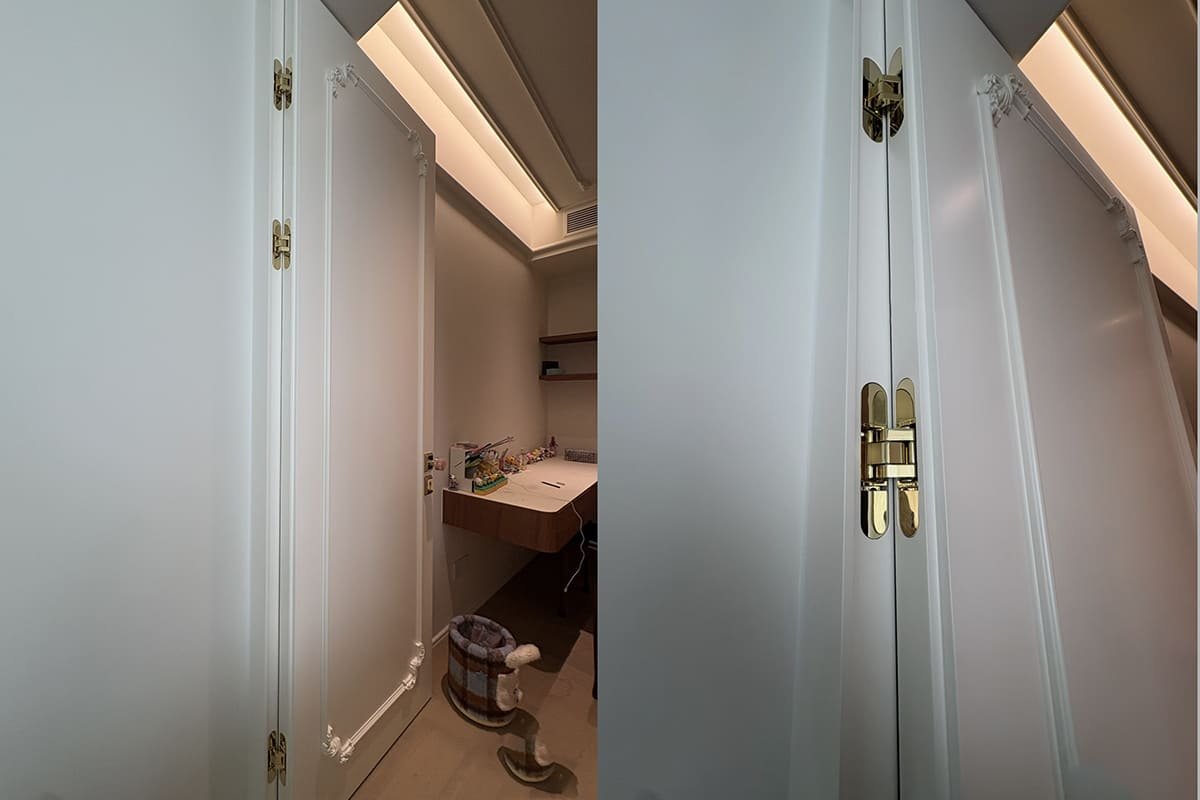
Unlike many visible butt hinges, concealed hinges are hidden inside the door and frame. They often allow 3D adjustment, which is useful. However, every extra hinge adds another adjustment point.
That sounds good until the installer or factory technician must align all hinges perfectly. If one hinge is slightly out of position, it may fight against the others. The result can be:
- Door rubbing at the frame
- Uneven gaps
- Hard closing
- Noise during movement
- Screw loosening
- Hinge stress
- Door edge deformation
- Higher after-sales service cost
For architectural door hardware buyers, this is not just a technical issue. It is a cost issue. A configuration that looks stronger during purchasing may increase labor cost and complaint risk later.
Too many hinges can create stress instead of support
A door is not a perfectly rigid object. Wood, composite panels, metal skins, and internal cores can react differently to stress. If too many hinge pockets are cut into the door edge, the structure may weaken in some areas.9
This is especially important for:
| Door type | Risk to check |
|---|---|
| Veneered wooden door | Edge cracking or finish damage |
| Fire-rated door | Certificate and tested structure may be affected |
| Acoustic door | Internal sealing and weight distribution may change |
| Metal door | Frame and reinforcement alignment become critical |
| Custom tall door | Door leaf flatness must be controlled |
If a project requires fire-rated performance, buyers should be especially careful. A hinge quantity change is not just a hardware decision. It may affect the tested door assembly. I recommend checking the relevant certificate, test report, and project specification before changing the hinge configuration.
Better solutions than adding more hinges
When a door seems too demanding for the current hinge plan, buyers have several options:
Choose a higher-capacity concealed hinge model
- This is often better than adding unnecessary hinges.
- The model should be tested for the target door weight.
Improve the door frame structure
- A weak frame can reduce real performance.
- Screw holding strength matters.
Check the door leaf construction
- Internal reinforcement may be needed.
- Heavy panels may require design adjustment.
Use the correct screw and accessory package
- Small details affect stability.
- Bulk orders should use consistent accessory standards.
Request a supplier configuration review
- A manufacturer can compare the door data with hinge specifications.
- This reduces trial-and-error procurement.
My practical rule for buyers
My practical rule is simple:
Use enough hinges to support the door properly, but do not use hinge quantity to hide a wrong model selection.
In most normal discussions, the range is 2, 3, or 4. If the door seems to need more than 4, I usually take that as a sign that the hinge model, door structure, or project requirement needs to be reviewed more carefully.
This approach helps buyers control risk without overcomplicating installation.
How should buyers verify concealed hinges with suppliers?
Supplier verification matters because catalog data alone may not show the full application condition. A buyer may see load capacity, finish, and certificate icons, but still miss the test setup. I always encourage buyers to send complete door data before confirming the order.
Buyers should verify concealed hinges by sharing door height, width, thickness, material, weight, usage scenario, required certificates, and target hinge model with the supplier. They should ask whether the rated capacity applies to the intended hinge quantity and whether CE or fire-rated documents match the exact product and configuration.
What information I ask from buyers
When I receive a configuration request, I prefer to collect details before recommending a quantity. This is especially important for door factories, wholesalers, and hardware brands that place bulk orders.
Here is the basic checklist I use:
| Information needed | Why it matters |
|---|---|
| Door height | Taller doors may need extra support |
| Door width | Wider doors increase leverage on the hinge side10 |
| Door thickness | Hinge body and mortise depth must match |
| Door weight | Main factor for load matching |
| Door material | Affects screw holding and structural stability |
| Door frame material | Influences fixing strength |
| Usage scenario | High-frequency doors need conservative selection11 |
| Finish requirement | Must match project or market demand |
| Target hinge model | Capacity depends on model, not only quantity |
| Certificate requirement | CE/fire-rated documents must be verified |
This information allows the supplier to make a more responsible recommendation. It also helps the buyer compare offers from different manufacturers more accurately.
What documents buyers should request
For professional procurement, I suggest requesting documents instead of relying only on sales statements. Depending on the project, buyers may ask for:
- Product technical drawing
- Load capacity data
- Installation instructions
- Material specification
- Finish sample or finish code
- CE certificate, if required
- Fire-rated certificate or report, if required
- Salt spray test report, if relevant
- Packaging and accessory list
- Quality inspection standard
For CE and fire-rated requirements, I recommend careful verification. The buyer should check whether the certificate applies to the exact hinge model, door type, installation method, and intended market requirement. A certificate should not be treated as a general guarantee for every possible door configuration.
How SDH Hardware supports configuration review
At SDH Hardware, I focus on architectural door hardware manufacturing, including concealed door hinges, euro standard mortise locks, butt hinges, lever handles, and lock cylinders. From the manufacturer’s side, I often help buyers compare standard and customized options for bulk projects.
I do not position myself as a project installer, testing laboratory, or building code authority. However, I can help buyers evaluate:
- Whether a hinge model is suitable for the stated door weight
- Whether 2, 3, or 4 hinges are more practical
- Whether the selected finish and accessory package match the order
- Whether the available certificates should be reviewed for the project
- Whether customization is needed for regional market requirements
This support is useful for door factories and hardware brands because configuration mistakes often become expensive after production starts. A small decision at the quotation stage can affect machining, installation, packaging, and after-sales service.
A better RFQ format for concealed hinge orders
Buyers can make supplier communication faster by using a complete RFQ format. For example:
| RFQ item | Example format |
|---|---|
| Door size | 2100 × 900 × 45 mm |
| Door weight | 65 kg |
| Door material | Solid wood composite |
| Application | Hotel room door |
| Opening frequency | Medium |
| Hinge model | SDH target model or equivalent |
| Hinge quantity request | Please verify 2 or 3 |
| Finish | Satin nickel / matte black / stainless steel |
| Certificate | CE or fire-rated document required |
| Order quantity | 5,000 sets |
This format allows the supplier to respond with a technical recommendation instead of a vague answer.
Frequently Asked Questions
Can I use 2 concealed hinges on every standard door?
No. Many standard doors can use 2 hinges, but the hinge model must be rated and tested for the actual door weight. Door material, thickness, usage frequency, and project requirements also matter. I recommend verifying the configuration with the supplier before bulk production.
Can I increase load capacity by adding more concealed hinges?
You should not calculate capacity by simply multiplying the hinge rating by the number of hinges. Load ratings are often based on a specific test setup. Extra hinges may improve stability in some cases, but they cannot fix a fundamentally under-rated hinge model.
When should I use 3 concealed hinges instead of 2?
You should consider 3 hinges when the door is taller, heavier, wider, or used more frequently than a standard interior door. The hinge model still needs to match the door weight first. The 3rd hinge should support stability, not compensate for poor product selection.
Is it safe to install 5 or more concealed hinges?
I do not recommend more than 4 as a normal solution. Too many hinges can make adjustment difficult and may create stress, binding, or door leaf deformation. If a door seems to need more than 4, the hinge model or door structure should be reviewed.
Do CE or fire-rated certificates decide hinge quantity?
No. Certificates are important documents, but buyers must verify the exact model, test condition, installation method, and project specification. A hinge quantity change may affect compliance.12 I recommend checking the certificate and consulting qualified professionals for application-specific requirements.
Conclusion
The right number of concealed hinges is not a fixed answer. I always start with the door weight and the tested capacity of the selected hinge model. For many standard 2100 × 900 mm doors, 2 hinges may be suitable. Taller, heavier, wider, or high-use doors may need 3 or 4. More than 4 is usually not a practical normal solution. If you are sourcing for a project or bulk order, send me the door height, width, thickness, weight, usage scenario, and target hinge model, and I can help verify the suitable configuration.
"How to Fix a Sagging Door that Won't Close or is Rubbing - YouTube",
. Technical building-maintenance sources describe door sagging and rubbing as common results of inadequate hinge support or hinge misalignment; this supports the mechanical risk described here, although it does not quantify after-sales complaint rates. Evidence role: mechanism; source type: education. Supports: A technical source should support that inadequate hinge capacity or poor hinge selection can cause door misalignment symptoms such as sagging or rubbing.. Scope note: Supports the failure mechanism, not the commercial complaint frequency. ↩"Understanding BS EN 1935:2002 single-axis hinge grades - SFS", https://uk.sfs.com/resources/article/understanding-bs-en-1935. Door-hinge standards classify hinges by load-bearing performance, durability cycles, and test conditions, supporting the principle that hinge quantity and model selection should be tied to door mass and use conditions rather than chosen arbitrarily. Evidence role: expert_consensus; source type: institution. Supports: An institutional standard should show that hinge performance is evaluated by door mass, durability cycles, and specified test conditions.. Scope note: Most hinge standards address hinge performance generally and may not provide a concealed-hinge quantity rule for every proprietary model. ↩
"Understanding BS EN 1935:2002 single-axis hinge grades", https://uk.sfs.com/resources/article/understanding-bs-en-1935. Hinge performance ratings in recognized standards are derived from prescribed test methods and classifications, so a stated load rating is meaningful only in relation to the conditions under which it was tested. Evidence role: definition; source type: institution. Supports: A standards source should define hinge performance ratings as results of specified test procedures and configurations.. ↩
"design, fabrication, and testing of mechanical hinges with ...", https://digitalcommons.calpoly.edu/cgi/viewcontent.cgi?params=/context/theses/article/4047/&path_info=Design__Fabrication__and_Testing_of_Mechanical_Hinges_with_Snap_Fit_Locking_Mechanisms_in_Rigid_Origami_Structures.pdf. Mechanical-engineering literature on multi-support assemblies shows that load sharing can be uneven when support positions, stiffness, or alignment vary; this provides contextual support for caution when estimating load distribution among multiple door hinges. Evidence role: mechanism; source type: paper. Supports: A mechanical engineering source should show that loads in multi-support systems can be uneven when supports are misaligned or stiffness differs.. Scope note: The evidence is likely contextual unless it tests concealed door hinges specifically. ↩
"Standard Door Sizes: The Complete Guide", https://www.jbkind.com/info-centre/useful-door-information/standard-door-sizes. Published building or housing guidance commonly lists internal door leaves in metric ranges near 2.0–2.1 m high and 0.8–0.9 m wide, supporting the article's use of these dimensions as a general purchasing reference. Evidence role: general_support; source type: government. Supports: A government or standards source should document common residential or interior door size ranges in metric markets.. Scope note: Door sizes vary by country, building type, accessibility requirements, and local market practice. ↩
"Doors weight chart - Portes Milette", https://www.portesmilette.com/en/doors-weight-chart. Educational construction references distinguish hollow-core doors from solid-core, fire-rated, and acoustic assemblies by core material and density, supporting the statement that doors of equal dimensions can differ substantially in weight. Evidence role: mechanism; source type: education. Supports: A construction or materials source should explain that denser cores and specialized fire or acoustic assemblies increase door mass compared with hollow-core construction.. Scope note: Specific weights depend on manufacturer construction, species, core composition, and facing materials. ↩
"Commercial Door Hardware: Types and Materials Guide", https://www.rockymountainhardware.com/how-to-choose-right-commercial-door-hardware/. Door-hardware standards use durability-cycle classifications to evaluate performance under repeated operation, supporting the relevance of different use frequencies for locations such as hotel rooms and public corridors. Evidence role: general_support; source type: institution. Supports: A standards source should support that door hardware is classified or tested by durability cycles reflecting different use intensities.. Scope note: Cycle classes do not directly assign a unique duty cycle to every room type. ↩
"Mechanical characteristics and design parameter analysis of ...", https://pmc.ncbi.nlm.nih.gov/articles/PMC11612417/. Research and engineering guidance on constrained mechanical assemblies indicate that multiple misaligned supports can introduce binding and uneven force transfer, providing contextual support for the risk of stress and deformation in multi-hinge door installations. Evidence role: mechanism; source type: research. Supports: A mechanical or building-science source should support that misaligned multiple supports can bind and create uneven forces.. Scope note: The support is contextual unless the source specifically studies concealed door hinges on architectural doors. ↩
"[PDF] Effect of Notches", https://ir.library.oregonstate.edu/downloads/9g54xn71w. Materials-engineering references describe notches and cutouts as reductions in cross-section that can introduce stress concentrations, supporting the view that repeated hinge pockets may weaken localized areas of a door edge. Evidence role: mechanism; source type: education. Supports: A materials or wood-engineering source should explain that notches, cutouts, or removed cross-section can create stress concentrations and reduce local strength.. Scope note: The magnitude of weakening depends on door material, reinforcement, pocket dimensions, and spacing. ↩
"28.18 -- Open door to demonstration preparation area", https://web.physics.ucsb.edu/~lecturedemonstrations/Composer/Pages/28.18.html. Basic statics defines torque as the product of force and moment arm, so a wider door places the door's weight and operating forces farther from the hinge axis and can increase the moment imposed on the hinge side. Evidence role: mechanism; source type: education. Supports: An engineering mechanics source should support that torque increases with force multiplied by perpendicular distance from the pivot.. Scope note: The exact hinge load also depends on door mass distribution, hinge spacing, frame stiffness, and installation geometry. ↩
"Top 5 McKinney Recommended Hinges", https://www.mckinneyhinge.com/en/resource-library/knowledge-center/blog/blog-post.html.aehdynamic-top-5-mckinney-recommended-hinges-633c303dd5c7b1003db5d7b0_mckinney. Recognized door-hardware standards grade hinges by durability testing over specified operating cycles, supporting the principle that high-frequency openings require hardware selected with greater durability margins. Evidence role: expert_consensus; source type: institution. Supports: A hinge or door-hardware standard should support that products are graded for repeated-use durability and that higher-use openings require higher durability performance.. Scope note: Standards support durability-based selection but may not prescribe the exact number of concealed hinges for a particular door. ↩
"Fire Doors and NFPA 80 FAQs", https://www.nfpa.org/news-blogs-and-articles/blogs/2025/04/11/fire-doors-faqs. Fire-door regulations and inspection guidance generally require rated door assemblies to retain hardware and installation conditions consistent with their listing or approved modifications, supporting the statement that changing hinge quantity can affect compliance. Evidence role: expert_consensus; source type: government. Supports: A fire-door code, regulator, or standards source should support that fire-rated door assemblies must maintain tested or approved hardware configurations.. Scope note: The compliance effect depends on the jurisdiction, certification scheme, listing details, and whether the change is formally approved. ↩