
Healthcare Facility Door Hardware Guide: How Should You Select a Door Lock for Medical Institutions?
A door lock for medical institutions can create problems when buyers treat every hospital door the same. The wrong function can slow staff movement, reduce hygiene control, or create installation conflicts. I use this healthcare facility door hardware guide to explain how I match lock function, door position, safety risk, and procurement verification before bulk purchasing.
Selecting a door lock for medical institutions means matching each door position with the correct lock function, handle type, latch or deadbolt design, hygiene requirement, and compliance boundary. Corridor doors, bathrooms, X-ray rooms, medicine rooms, and patient areas usually need different hardware sets, so buyers should verify function, certification, installation compatibility, and local project requirements before ordering.
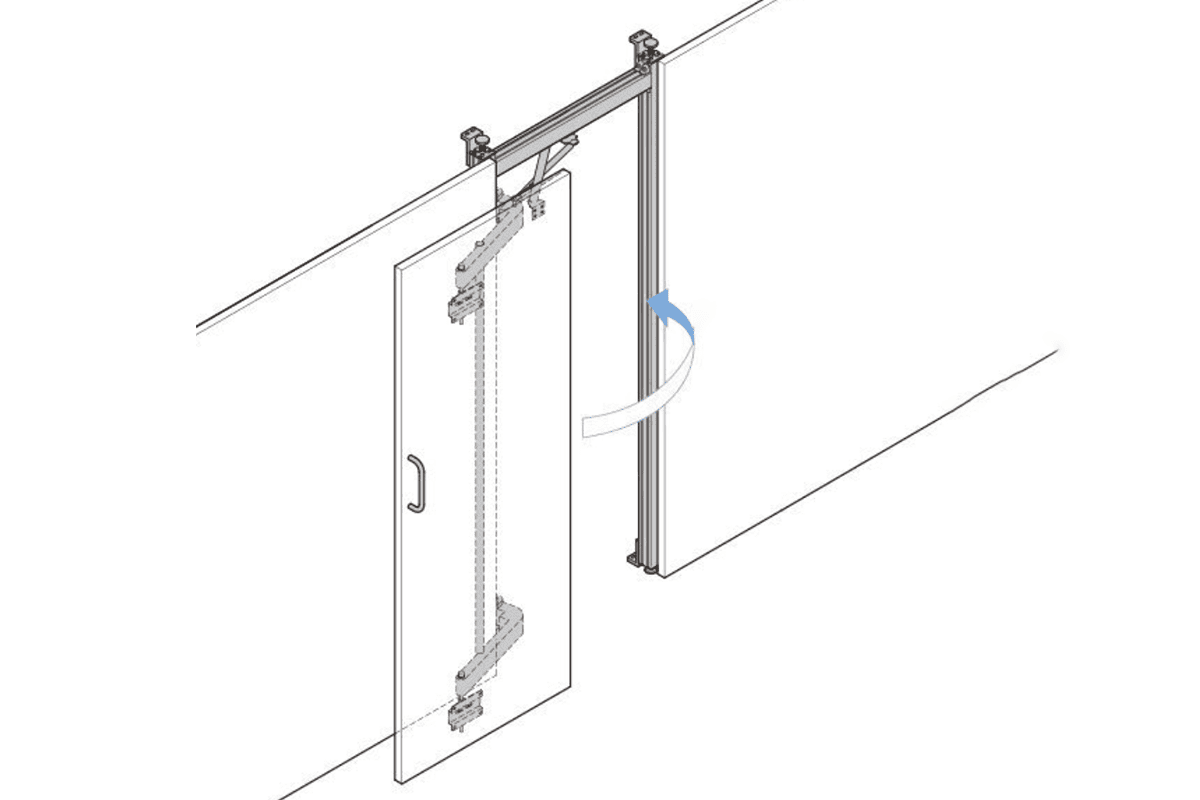
In my manufacturer-side consultation work, I rarely see healthcare buyers fail because they choose “cheap” hardware only. I see more problems when the lock body, handle, cylinder, indicator, hinge, and door opening are not planned as one system. That is where careful selection saves time.
Why Is a Door Lock for Medical Institutions Different From a Standard Commercial Lock?
A door lock for medical institutions faces more complicated expectations than a typical office lock. A normal commercial door may only need opening, closing, and basic security. A medical building also needs hygiene control, emergency usability, durability, patient privacy, staff workflow, and verified compliance1.
A healthcare lock should be selected by door position and function, not by a single “hospital-grade” label. Buyers should review user flow, privacy level, security risk, cleaning needs, fire-door requirements, accessibility rules, and installation dimensions before confirming the lock body, lever handle, cylinder, indicator, and related hardware.
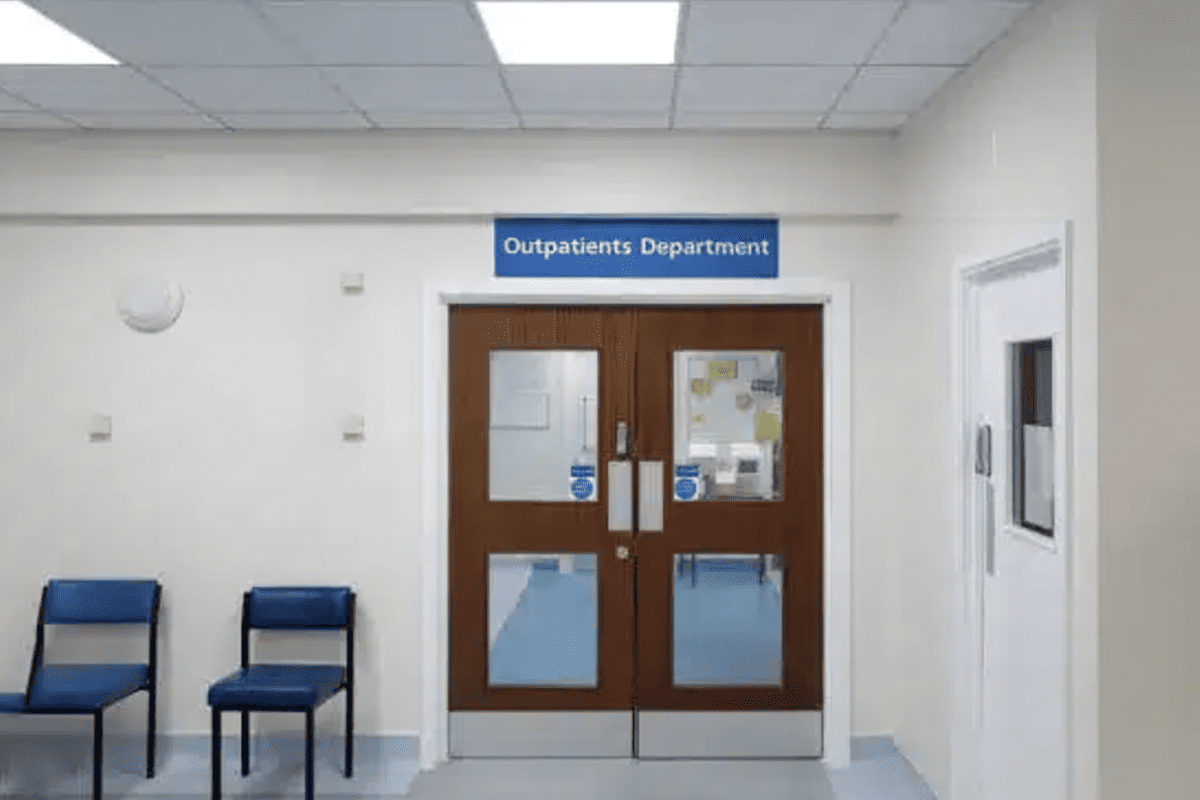
A medical door lock is part of a hardware set
I always remind buyers that a lock is not one isolated product. A working door set includes several parts that must align with each other:
- Lock body or mortise lock case
- Latch bolt and, where needed, deadbolt
- Cylinder hole, spindle hole, or indicator turn opening
- Lever handle or pull handle
- Escutcheon, rose, or plate
- Hinges, including butt hinges or concealed hinges
- Door leaf material and thickness
- Frame preparation and strike plate
- Project-specific accessories, such as door closers or seals
If one part is wrong, the whole door can fail in use. For example, a bathroom lock body with a cylinder keyhole may not match the required indicator turn. A lever handle may look correct but fail the buyer’s surface finish requirement. A fire-rated door may need hardware with documents that match the tested door assembly, not only a general product certificate.2
The main selection risks I see in healthcare projects
From my experience with door manufacturers, hardware brands, and project buyers, the common risk is not only product quality. The larger risk is configuration mismatch.
| Selection risk | What can go wrong | Buyer control point |
|---|---|---|
| Wrong lock function | Staff cannot move smoothly, or privacy is poor | Confirm room usage before ordering |
| Wrong opening design | Cylinder, spindle, or indicator does not fit | Check technical drawings and samples |
| Weak finish consistency | Batch doors look different | Approve finish samples and batch standard |
| Unverified claims | Certification does not match project need | Verify CE, fire-rated, hygiene, or other documents |
| Poor accessory matching | Hinges, handles, lock body, and strike plate conflict | Review full hardware schedule |
| Low durability | Frequent maintenance and complaints | Confirm material, cycle testing, and QC process |
Healthcare selection is a balance, not a single answer
A hospital corridor may need simple closing and easy passage. A public bathroom needs privacy indication and emergency release. A medicine storage room may need stronger access control. An X-ray room may require special consideration for lock openings and radiation leakage paths, but this must be confirmed by project consultants and local regulations.
That is why I avoid recommending one universal door lock for medical institutions. I prefer to classify the door first, then select the lock function. This method is more useful for procurement teams because it reduces rework, incorrect openings, and after-sales disputes.
My practical rule is simple: define the door position first, then define the lock function, then verify the complete hardware set.
How Should You Match a Door Lock for Medical Institutions to Each Door Position?
A door lock for medical institutions should follow the actual function of the door. If a buyer uses the same lock for corridors, toilets, treatment rooms, medicine rooms, and X-ray rooms, the project may face safety, privacy, or installation issues after delivery.
The best method is to divide healthcare doors by location and risk level. Corridor doors often use passage functions, public bathrooms use bathroom locks with indicator turns, restricted rooms may need cylinders or access control, and X-ray rooms require special project-level hardware confirmation.
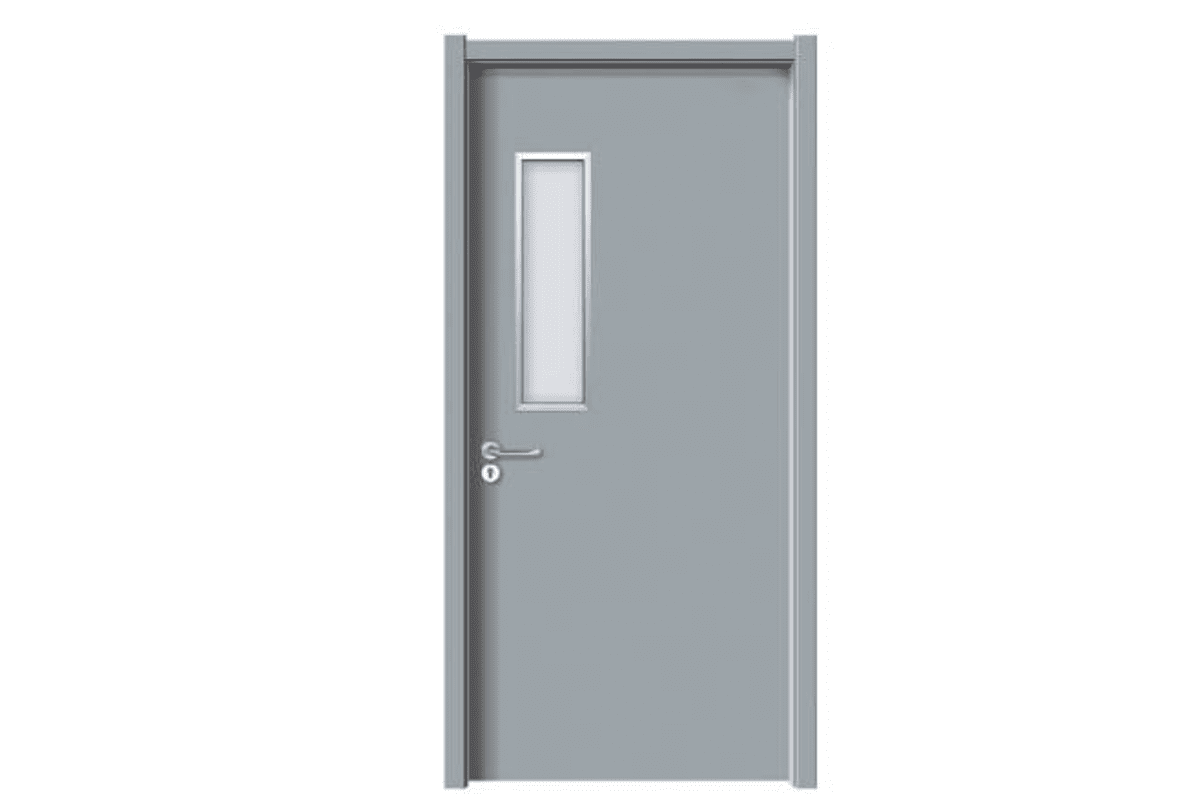
Common healthcare door positions and lock functions
The table below gives a practical starting point. It is not a replacement for local codes or project specifications, but it helps procurement teams build a clean hardware schedule.
| Door position | Common lock function | Key hardware point | Verification needed |
|---|---|---|---|
| Main corridor door | Passage lock or latch function | Easy traffic flow and stable closing | Fire rating if installed on fire door |
| Patient room door | Passage, privacy, or project-specific lock | Quiet operation and easy opening | Accessibility and emergency access |
| Public bathroom | Bathroom lock with indicator turn | Square spindle opening for turn/indicator | Emergency release and privacy function |
| Staff office | Passage or cylinder lock | Controlled access if needed | Keying plan and finish consistency |
| Medicine room | Cylinder lock, deadbolt, or access control support | Higher security level | Project security policy |
| Equipment room | Lock with controlled access | Durability and key management | Maintenance access plan |
| X-ray room | Specialized lock arrangement | Staggered openings may reduce direct leakage path | Radiation-safety consultant confirmation |
| Fire door area | Fire-rated compatible hardware | Lock, hinge, closer, and door assembly | Fire certificate and local rules |
Corridor doors: simple does not mean careless
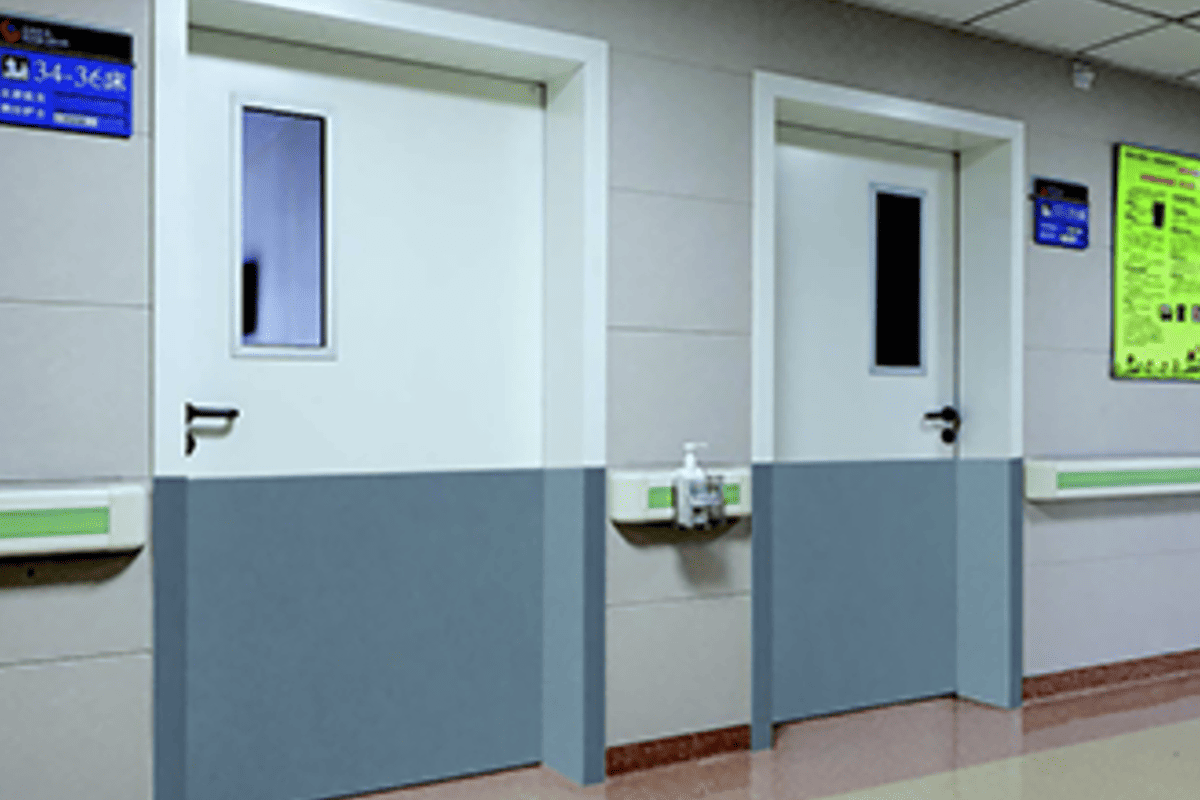
Corridor doors in healthcare buildings often need smooth passage. Many buyers use a passage lock or latch-only mortise lock for these areas. The goal is not high security. The goal is stable closing, basic air or wind control, and separation between functional zones.
For corridor applications, I usually ask these questions:
- Does the door need locking, or only latching?
- Is the door part of a fire-rated assembly?
- Does the lever handle need an easy-grip design?3
- Is the surface finish resistant to frequent cleaning?
- Will the door closer create extra latch pressure?
A passage function can be correct for many corridor doors. However, it still needs proper latch projection, strike alignment, hinge strength, and handle durability. A low-quality latch can cause noise, poor closing, or rapid wear under heavy traffic.
Public bathrooms: do not confuse bathroom locks with sash locks
Bathroom doors are a frequent source of procurement mistakes. A public bathroom lock usually needs a turn-and-indicator function.4 This means the lock body commonly has a square spindle opening for the bathroom turn mechanism and indicator, rather than a traditional cylinder keyhole.
A sash lock is different. It usually includes a latch and a key-operated deadbolt. That is not always the right choice for public healthcare bathrooms because privacy indication and emergency release may be more important than key locking5.
For bathroom locks, I check:
- Indicator visibility
- Emergency release method
- Turn mechanism compatibility
- Door thickness
- Spindle size
- Escutcheon or plate design
- Corrosion resistance in humid areas
This detail sounds small, but it affects installation directly. If the door factory has already drilled the wrong opening, the project may need rework, filler plates, or replacement door leaves.
Medicine and equipment rooms: access control matters
Medicine rooms, equipment rooms, record rooms, and staff-only areas may need more than a standard latch. These areas can require stronger control, a cylinder lock, a deadbolt, electronic access control preparation, or a project-specific keying system.6
I do not recommend a lock grade blindly here. Instead, I suggest that buyers confirm:
- Who can enter the room?
- How often does the door open each day?
- Is audit tracking needed?
- Is mechanical key override required?
- Does the lock need to coordinate with an access control system?
- Does local healthcare policy define a minimum security level?
This approach keeps the hardware decision tied to real risk. It also helps buyers avoid overbuying expensive hardware for low-risk doors or underbuying weak hardware for sensitive rooms.
What Hardware Components Matter Most When Selecting a Door Lock for Medical Institutions?
A door lock for medical institutions performs well only when the full hardware set is compatible. The lock body may be good, but the installation can still fail if the handle, cylinder, spindle, strike plate, hinge, door leaf, or opening position does not match the project.
Buyers should review the lock body structure, latch and deadbolt function, cylinder or spindle opening, lever handle material, indicator set, hinge capacity, door thickness, backset, center distance, and surface finish before approving samples or mass production.
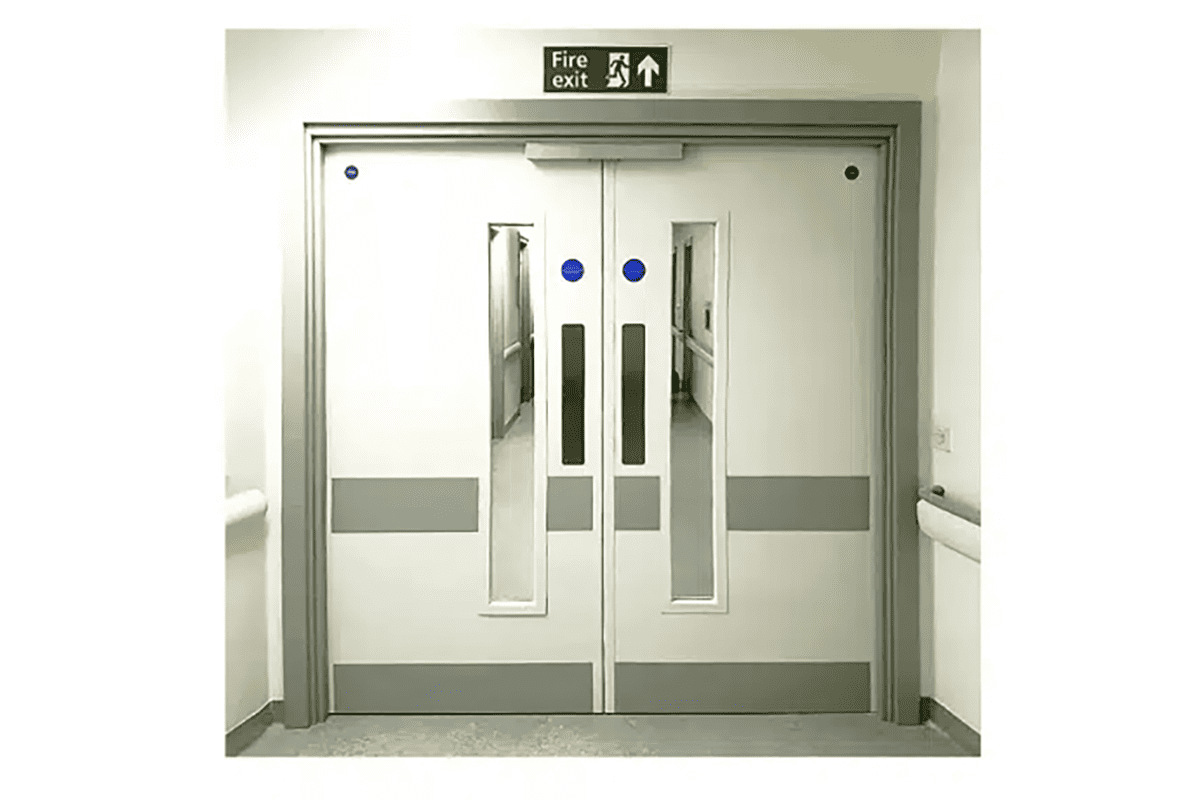
Lock body and latch design
The lock body is the center of the system. In many international projects, buyers use mortise lock bodies because they support different functions in a standardized door preparation. For healthcare projects, the lock body should match the door function clearly.
Important specifications include:
- Backset: The distance from the door edge to the handle or cylinder center.
- Center distance: The distance between handle spindle and cylinder or turn center.
- Latch bolt material: Often zinc alloy, brass, or stainless steel depending on product design.
- Deadbolt structure: Needed for higher privacy or security functions.
- Forend size: Must match the door edge preparation.
- Strike plate: Must align with the frame and latch projection.
When I review project inquiries, I always look at drawings before quoting final specifications. A buyer may say “mortise lock,” but the drawing reveals whether the project needs a passage lock, bathroom lock, sash lock, cylinder lock, or customized function.
Handle material and hygiene considerations
Healthcare doors are touched constantly. That makes handle design and surface finish important.7 Stainless steel lever handles are widely used because they are durable, familiar to contractors, and easy to clean.8 Zinc alloy handles can also be used depending on design and coating quality.
Some projects ask about nylon handles with antibacterial additives. These may be suitable for hygiene-oriented projects, but I treat antibacterial performance as a claim that must be verified9. Buyers should request test reports, certification documents, and clear performance standards before using antibacterial claims in sales or project submissions.
| Handle option | Common advantage | Buyer caution |
|---|---|---|
| Stainless steel handle | Durable, clean appearance, strong market acceptance | Confirm grade, finish, and wall thickness |
| Zinc alloy handle | Flexible shapes and finishes | Verify coating durability |
| Nylon handle | Warm touch and hygiene-oriented options | Verify antibacterial test data if claimed |
| Lever on plate | Covers larger door preparation area | Confirm screw position and plate size |
| Lever on rose | Modern appearance | Requires cleaner drilling accuracy |
Hinges and door movement
A lock does not work well if the door hangs poorly. Heavy healthcare doors need stable hinges. Butt hinges are common for many door systems. Concealed hinges may be used in higher-end designs or where a cleaner appearance is required.
For bulk procurement, hinge selection should consider:
- Door weight
- Door width and height
- Opening frequency
- Fire-door requirements
- Corrosion resistance
- Screw holding strength
- Door and frame material
A weak hinge can cause sagging. Then the latch may rub the strike plate, the handle may feel heavy, and the buyer may blame the lock. In reality, the door set was not balanced.
Finish consistency in bulk orders
Medical projects often include many doors in one building. A small color difference between batches can create visible quality complaints. I pay close attention to surface finish standards, especially for stainless steel, satin nickel, matte black, PVD, or powder-coated products.
For procurement buyers, I suggest a clear process:
- Approve a physical finish sample.
- Define the acceptable color range.
- Confirm packaging protection.
- Inspect pre-shipment samples.
- Keep a reference sample for future repeat orders.
This is not just an aesthetic issue. Consistent finish improves installation acceptance, brand image, and long-term maintenance planning.
How Should Buyers Evaluate Hygiene and Durability in Healthcare Door Hardware?
A door lock for medical institutions should support cleaning routines and long-term use, but buyers should be careful with broad hygiene promises. A smooth surface, suitable material, stable coating, and easy-grip handle often matter as much as marketing claims about antibacterial performance.
Buyers should evaluate hygiene by checking cleanability, handle shape, surface finish, corrosion resistance, test evidence, and maintenance requirements. Antibacterial nylon handles may be considered when supported by valid test reports, but any hygiene claim should match the project specification and local verification requirements.

Cleanability comes before slogans
In healthcare procurement, I prefer practical hygiene language. A handle should be easy to wipe. A lock plate should not trap dirt in unnecessary grooves. A finish should resist common cleaning conditions required by the project.
Useful design features include:
- Rounded lever edges
- Smooth plates or roses
- Minimal decorative grooves
- Corrosion-resistant finish
- Stable coating adhesion
- Proper gap control after installation
A product can look attractive in a catalog but collect dirt in real use. That is why I suggest buyers review samples with their cleaning and maintenance teams when possible.
Durability depends on traffic level
Healthcare buildings can have high door traffic. Corridors, public toilets, staff areas, and equipment rooms may open many times each day. Lock durability should therefore match actual use frequency.10
Buyers can ask suppliers for:
- Cycle test information
- Salt spray test data for finish or corrosion resistance
- Material specifications
- Spring performance details
- Handle return performance
- Latch operation testing
- Factory QC inspection procedure
At SDH Hardware, our work as a manufacturer includes full-process quality control, from raw material screening to finished product inspection. For buyer evaluation, I still recommend checking samples, drawings, and documentation before placing a bulk order.
Antibacterial nylon handles: useful option, but verify the evidence
Nylon handles with antibacterial additives can be discussed for healthcare projects because they may support a hygiene-oriented product strategy. However, I do not present them as automatically “safer” without evidence. Buyers should ask:
- Which antibacterial additive is used?
- Which test standard was applied?
- Which laboratory issued the report?
- Does the report cover the exact handle material and color?
- Does the performance remain after cleaning or abrasion?
- Is the claim allowed in the buyer’s target market?
This matters for hardware brands and wholesalers. If a product is promoted with an antibacterial claim in Europe, the Middle East, or Southeast Asia, the buyer may need documentation that supports that claim. A weak document can create market risk.
Maintenance cost is part of product cost
The lowest unit price does not always create the lowest project cost.11 If handles loosen, finishes vary, latches fail, or replacement parts are unavailable, the buyer pays later through complaints and maintenance.
A practical procurement comparison should include:
| Cost factor | Low initial focus | Better procurement focus |
|---|---|---|
| Unit price | Cheapest lock set | Cost-performance balance |
| Finish | Looks acceptable in sample | Consistent in batch supply |
| Function | General lock name | Door-position-specific function |
| Claims | Marketing words | Verified documents and tests |
| Delivery | Fast promise | Stable production schedule |
| After-sales | Reactive replacement | Spare parts and repeatable specs |
I often tell buyers that a healthcare facility door hardware guide should reduce future disputes, not just support the first order.
What Should Buyers Know About X-Ray Room Locks and Specialized Door Openings?
A door lock for medical institutions used on an X-ray room can require special hardware planning. X-ray doors are not ordinary doors because openings for handles, cylinders, spindles, and lock bodies may affect the protection strategy designed for that room.
For X-ray rooms, lock openings may be staggered or specially arranged to reduce a direct radiation leakage path because X-rays travel in straight lines.12 This is a specialized hardware consideration, not complete radiation-safety advice, and buyers should confirm all details with project consultants, door suppliers, and local regulations.
Why opening position matters
X-rays travel in straight lines. Because of this, some X-ray room door designs avoid direct alignment between inner and outer openings. The handle spindle position, cylinder position, and related openings may be arranged so that there is no straight-through path.
In product consultation, I treat this as a project-specific requirement. I can support hardware matching and manufacturing feasibility, but radiation-safety design should be confirmed by qualified specialists.
What buyers should confirm before ordering
X-ray room hardware should never be selected only from a standard lock catalog. Buyers should confirm several details first:
Door type and core structure
The door may include lead lining or other protective materials. Hardware installation must respect the door supplier’s design.Lock opening drawings
The position of handle, spindle, cylinder, and fixing screws should be reviewed carefully.Inside and outside hardware arrangement
The project may require staggered positions or special plates.Access control requirements
Some medical areas may require staff-only access or controlled entry.Local radiation-safety requirements
The final arrangement should be reviewed by project consultants or qualified professionals.Installation method
Incorrect drilling can damage the protective door structure and create costly rework.
A practical configuration example
A standard office lock may place the handle spindle and cylinder opening in a typical vertical line. For an X-ray room, the project may require a modified arrangement where inner and outer openings are not directly aligned. This can require a customized lock body, special plate, or adjusted installation template.
The buyer should not assume that any “hospital lock” can solve this. The supplier should be able to read drawings, discuss production feasibility, and provide samples or technical confirmation before mass production.
Procurement risk is high if drawings are unclear
X-ray room doors often involve several parties:
- Door manufacturer
- Hardware supplier
- Project contractor
- Radiation-safety consultant
- Hospital or clinic representative
- Local inspection authority
Conclusion
A door lock for medical institutions should never be selected by name alone. I recommend starting with the door position, then confirming the lock function, handle type, opening design, hygiene requirement, durability level, and compliance documents. This method helps buyers avoid wrong drilling, mismatched indicators, weak hygiene claims, and future maintenance problems. If you are sourcing healthcare door hardware for hospitals, clinics, nursing facilities, or medical projects, contact SDH Hardware to review your hardware schedule, drawings, and customized bulk supply requirements.
"Hospital design for better infection control - PMC - NIH", https://pmc.ncbi.nlm.nih.gov/articles/PMC2776365/. Healthcare facility design guidance treats doors and architectural hardware as part of a wider performance system involving infection control, life safety, accessibility, privacy, and clinical operations. Evidence role: expert_consensus; source type: institution. Supports: Healthcare facility door hardware decisions are shaped by infection prevention, life safety, accessibility, privacy, and operational requirements.. Scope note: Such guidance supports the general selection framework rather than proving that every listed factor applies to every medical door. ↩
"Alterations to Fire Door Assemblies", https://idighardware.com/wp-content/uploads/2014/10/Decoded-Dec14-Alterations-to-Fire-Doors.pdf. NFPA 80 and related listing practices support the principle that locks, latches, hinges, closers, and other hardware on a fire door must be compatible with the labeled fire-door assembly and its permitted preparations. Evidence role: general_support; source type: institution. Supports: Fire-door hardware must be compatible with the labeled fire-door assembly and its listing requirements.. Scope note: The standard gives the compliance framework; the exact acceptable documents depend on the local authority having jurisdiction and the specific tested assembly. ↩
"Chapter 4: Entrances, Doors, and Gates", https://www.access-board.gov/ada/guides/chapter-4-entrances-doors-and-gates/. The 2010 ADA Standards for Accessible Design specify that operable parts, including door hardware, must be usable without tight grasping, pinching, or twisting of the wrist, supporting the preference for easy-grip lever designs in accessible areas. Evidence role: definition; source type: government. Supports: Accessible door hardware must be operable without tight grasping, pinching, or twisting of the wrist.. ↩
"ADA Accessibility Standards", https://www.access-board.gov/ada/. Accessibility guidance for toilet and bathing facilities supports the use of door hardware that provides privacy while remaining readily operable by users with disabilities. Evidence role: general_support; source type: government. Supports: Public toilet and accessible restroom hardware should provide usable privacy latching while remaining operable under accessibility requirements.. Scope note: The source supports the need for accessible privacy hardware but may not prescribe a specific commercial 'turn-and-indicator' lock type. ↩
"Door locking Guide – Health Care Facilities", https://dial.iowa.gov/media/7392/download?inline. Institutional restroom design guidance commonly recognizes emergency access as a safety consideration for privacy locks, supporting the claim that emergency release can outweigh key security in public healthcare bathrooms. Evidence role: expert_consensus; source type: institution. Supports: Restroom privacy locks in public or institutional settings often need emergency access provisions so staff can respond when a user is unable to unlock the door.. Scope note: This is contextual support; local codes and project specifications determine the required emergency-release method. ↩
"S.C. Code Regs. § 61-13.1200.1206 - Medication Storage (I)", https://www.law.cornell.edu/regulations/south-carolina/R-61-13-1200.1206. Government guidance on controlled substances and healthcare security supports the need for restricted access and secure locking arrangements in medication-storage areas. Evidence role: general_support; source type: government. Supports: Certain healthcare spaces, especially medication or controlled-substance storage areas, require restricted access and secure storage controls.. Scope note: The source directly supports medication-security needs; its relevance to equipment rooms or staff offices is contextual and depends on the facility risk assessment. ↩
"Microbial Contamination of Door Handles: A Global ... - PMC", https://pmc.ncbi.nlm.nih.gov/articles/PMC12035165/. Studies of hospital environmental contamination identify door handles and other frequently touched surfaces as potential reservoirs for microorganisms, supporting attention to cleanable handle design and surface finish. Evidence role: mechanism; source type: paper. Supports: Door handles and similar high-touch surfaces in healthcare settings can become contaminated and are relevant to cleaning and infection-control strategies.. Scope note: Such studies support hygiene relevance but do not prove that a specific handle shape or finish will reduce infection rates without corresponding cleaning practices. ↩
"Cleaning Hospital Room Surfaces to Prevent Health Care ...", https://pmc.ncbi.nlm.nih.gov/articles/PMC4812669/. Materials guidance from educational and technical sources describes stainless steel as durable, corrosion resistant, and readily cleanable, which supports its common use for institutional door levers. Evidence role: general_support; source type: education. Supports: Stainless steel is valued in healthcare and institutional environments for durability, corrosion resistance, and cleanability.. Scope note: The source supports the material rationale; it may not independently quantify how widely stainless steel lever handles are used in healthcare projects. ↩
"PRN 2000-1: Applicability of the Treated Articles ...", https://www.epa.gov/pesticide-registration/prn-2000-1-applicability-treated-articles-exemption-antimicrobial-pesticides. ISO 22196 provides a standardized method for measuring antibacterial activity on plastics and other non-porous surfaces, supporting the need to verify antibacterial handle claims with test evidence. Evidence role: definition; source type: institution. Supports: Antibacterial performance claims for plastic surfaces are normally evaluated against defined test methods and claim limitations.. Scope note: The standard measures antibacterial activity under specified laboratory conditions and does not by itself prove clinical infection reduction in healthcare use. ↩
"A156.2 - 2022 Locks and Latches", https://buildershardware.com/ANSI-BHMA-Standards/Hardware-Highlights/A1562-2022-Locks-and-Latches. ANSI/BHMA lock standards classify lock hardware through performance criteria that include cycle testing, supporting the practice of matching lock durability to expected traffic levels. Evidence role: general_support; source type: institution. Supports: Locksets are evaluated by performance grades and cycle testing, making expected use frequency relevant to specification.. Scope note: The standards define test categories; the specifier must still estimate actual door-use frequency for the particular healthcare project. ↩
"Life Cycle Cost (LCC)", https://www.waru.edu/acquipedia-article/life-cycle-cost-lcc. Government life-cycle cost guidance explains that procurement decisions should consider acquisition, operation, maintenance, and replacement costs, supporting the claim that the lowest unit price may not yield the lowest total project cost. Evidence role: general_support; source type: government. Supports: Life-cycle costing considers acquisition, maintenance, replacement, and operating costs rather than initial price alone.. ↩
"Attenuation of Gamma Radiation using ClearView ... - PMC - NIH", https://pmc.ncbi.nlm.nih.gov/articles/PMC9396962/. Scientific reference sources describe X-rays as electromagnetic radiation that ordinarily travels in straight-line paths, supporting the line-of-sight concern in shielding design. Evidence role: definition; source type: encyclopedia. Supports: X-rays are electromagnetic radiation that generally propagate in straight lines unless absorbed, scattered, or refracted under special conditions.. Scope note: This supports the basic physical principle; detailed shielding design requires specialist calculations for scatter, attenuation, workload, and room geometry. ↩